Recorded back in 1999, 'Half a Dove in New York, Half a Dove in Buenos Aires' is the recorded debut of a NetCast improv between deep listening pioneer Pauline Oliveros and Argentinian free music trio Reynols >> a fascinating early example of the internet’s capacity to foster remote creativity in-the-moment that deploys the slowest electronics, accordion, voice, trombone and computer sounds on a next level ritual drone incantation recorded in another era, but made for our time.
As the story goes, Oliveros first met Reynols in the mid ‘90s at a Deep Listening workshop she held in their home city, Buenos Aires, where they impressed her with an improvised brass serenade. Years later, in 1999, they met again via NetCast - a series of very early online live improvisations - to explore the Internet’s potential for collaborations between artists thousands of miles apart. Finally mixed down in 2021 and mastered by Helge Sten (aka Deathprod) after marinating in the archive for 22 years, the album resonates with the late, great Oliveros’ legendary work in exploring alternate tunings, spatial dynamics and methods of intuitive performance - a remarkable slab of omnidirectional drone bearing traces of Miguel Tomasin's vox and Oliveros’ just-intoned accordion embedded in its cosmic roil.
Broadcasting from fabled record shop The Thing in NYC, with Oliveros (Accordion) joined by Jennifer McCoy (ICR), Kevin McCoy (Computer processing), and Monique Buzzarté (Trombone), and Reynols revolving Miguel Tomasin (Electronics, subliminal voice & Alclorse drums), Rob Conlazo electronics, leather gloves & e-gtr), and Anla Courtis (electronics, rubber foot & e-gtr) and dialling-in from Florida 943 in Buenos Aires, the results are an incredibly absorbing and consistently surprising testament to vanguard, experimental spirits prizing the internet’s nascent, unprecedented ability to connect minds and art across continents, language barriers, and modalities.
The album's first side, titled 'Micro Macro Wind Dance', puts Oliveros' accordion under a microscope, enhancing it with lower case rumble and noise from Reynolds' arsenal. Shifting glacially over 22-minutes, Oliveros plays subtly and slowly at first, letting the accordion breathe in-and-out like a sleeping mythical beast, before she transitions to fluttering bird-like phrases by the end of the side.
'Astral Netcast Pigeon' expands the dissonant drones to widescreen, submerging Oliveros' trills and drones beneath layers of dirt and grit. It's time-altering music that dissasembles yr head before you've completely worked out what's happening >> basically the perfect mid-point between Oliveros' deep listening practices and Reynols' wildly inspirational free-noise-drone freakouts.
Cerca:d lay
The Magic Movement marks its twenty-fifth release this May with Coss & Luca Musto's 'Remind Me Tomorrow' EP, comprised of three originals from the Berlin-based pair and a remix from label boss Noema.
Coss has been a mainstay at Berlin's Kater Blau club for some time now and just recently delivered an EP on the club's in-house imprint Kiosk ID as well as an EP for his own metanoia.
Italian rooted but Germany-based Luca Musto returns to the Magic Movement here following his 2018 'Parabel' EP and has since gone on to release further material with Cologne's Feines Tier and Laut & Luise in recent years.
Here joining forces with the 'Remind Me Tomorrow' EP the two artists deliver more of their distinctive tripped-out, dropped tempo club sound.
'Broken Promises' leads the way via dreamy dubbed out textures, gnarly bass tones, twinkling chimes and airy arpeggios atop a bumpy drum groove.
Title cut 'Remind Me Tomorrow' follows and brings modulating resonant synth lines into the forefront alongside elongated subs, cinematic pads, and circling sequences while Luca also stirs in his own rap/spoken word hip house style vocals.
The third original 'Concept Zero' follows next and lays down psychedelic guitars, choppy stabs, murky bass swells and dynamic delays before Noema rounds out the release with his take on 'Remind Me Tomorrow', flipping the switch to raw, crunchy drums and spoken word vocal chants amongst the original's chuggy arps and dreamy melodic elements.
Pachakuti is a musician and producer with family roots in Colombia. He plays keys, tenor saxophone and clarinet. While living and working in Berlin, he draws inspiration from the natural world, investigative travels, and ancestral traditions of Latin America and beyond. His expressive and rhythmical playing and his instantaneous compositions are directed at the human core, arousing subtle experiences. While not being conformed to one style, it always invokes a sense of liveliness and depth to be delved in. young.vishnu is a producer and DJ. He has studied philosophy and music in Hildesheim, Germany, which heavily influenced his views on meaning and mythology in music. In his DJ sets he selects and plays classic and contemporary Funk, Soul and Afrobeat. His practice as a DJ informs his work behind the boards directly, adding also more organic grooves and broader spectrum of musical styles to his in Hip-Hop based production. If you had to put one single tag on their forthcoming album Dédalo, the best choice would be Jazz. That being said, Pachakuti and young.vishnu's sound worlds might be better described in their own words: "We just make music and try to incorporate what we love about it". They are musical freethinkers with shared interests in eastern philosophy and botany who interweave Hip-Hop, Latin and Funk with musical storytelling and world mythology. Undoubtedly, their most ambitious work to date, Dédalo (Spanish synonym for labyrinth), recorded and produced over the course of a year, shows Pachakuti & young.vishnu's ambitions and growth. Where their debut work Semilla (2020) centered around the image of the seed, Dédalo takes on the entire garden. Besides playing multiple instruments by themselves, Pachakuti & young.vishnu invited a growing group of befriended musicians into the studio, including percussionist maestro Eric Owusu (Pat Thomas, Ebo Taylor, Jembaa Groove) and drummer Leon Raum (Bokoya, Wyl), as well as Brazilian newcomer vocalist Laíz, and members of their former band project Soularkestra. The 16 recorded songs, ranging from 1:19 to 14:58 minutes, take you on an emotionally honest, metaphoric journey through the maze of human existence, of modern society and mythic poetry. The mostly instrumental tracks build on expressive melodies, layered rhythms, and a wide range of musical instruments, merging the sounds of Jazz with the classical word of orchestras and choirs, and urban soundscapes with traditional instruments such as the Andean Kena and Charango, the Colombian Gaita and Marimba de Chonta, and an Indian harmonium. The Album thus weaves together past and future, and diverse cultural threads, sounds and ideas in an act of cultural appreciation and global conscience. Mixed and mastered by Roe Beardie at The Brewery Studios, Berlin. The album artwork itself merges the visionary art of Mexican painter Sergio Chávez Hollar with an original artwork-inlay of Brazilian artist Laíz and the work of Carsten Pölking of the Nima Compositions Archive.
Dédalo will be available digitally and on double-vinyl with inside-out print cover and colored inlay with credits and painting by Laís De Mello Barbero.
Astrel K is Rhys Edwards of Ulrika Spacek. Astrel K's debut single ‘You Could If You Can’ was released via Duophonic Super 45s - a label which has a history of releasing limited edition abstract releases from Stereolab, Broadcast & Yo La Tengo. 500 copies of the 7” were made, hand stamped and numbered, quickly selling out in selected record shops. Following the loss of KEN, a shared house in which Ulrika Spacek band members lived and worked from, Edwards relocated to Stockholm, Sweden where he began making music on his own: “At this time, I didn’t really know anyone in Stockholm so kinda retreated into making music just by myself. The album title definitely reflects this period; I was on my own making music and sometimes nothing would be happening and sometimes there would be little sparks of ideas that could keep me going” Edwards would spend nights writing and recording in a shared rehearsal space producing music rich with layers and texture, synonymous with the work of Ulrika Spacek but with perhaps a greater focus on the art of ‘song writing’. Tracks with verse’s and chorus’s are surrounded by instrumental interludes; inspired by old library music and compositions for film as well as being reminiscent of bands such as Broadcast. The album doesn’t sound like one made in either London or Stockholm, rather somewhere in the nether region. Written pre pandemic but mixed in the past year, the music led Edwards to finding like minded musicians from the Stockholm music scene: “Though I’m now glad I can say I wrote an album by myself, I was definitely confronted with my own musical strengths and weaknesses. Sometimes when you have an A/B decision you want some perspective and you’d be in the studio, turn around and no one is there. It really made me curious to bring in more people into the fold, not to compromise any original vision or anything, but to have other energy in the room, to exorcise out any lazy tricks I may fall into”. Stockholm musicians (including Lili Holényi, Milton Öhrström, Niklas Mellberg, Tomas Hellberg) played on the album and join Edwards in the live version of the project. UK and European live dates to follow.
Funny to think there was a time not so long ago when Stiff Richards was a name that required explanation - but not to you, of course, o punk connoisseur. This is your territory, after all. Music is your oxygen and the sound of the underground is your clarion call. You can explain the distinction between ‘Know Your Product’ and ‘No, You’re Product’. Hey, you’re probably pretty good-looking too. You know your shit, either way. So no wonder you’re drawn to this relative holy grail of modern garage rock - the 2017 self-titled debut album by the aforementioned Stiff Richards. Originally released on their own Stiff Records (and again by Legless in 2020), it lays down all the elements that made last year’s mighty ‘State of Mind’ LP such an instant classic. OK, we’ve established you know the drill, but let’s recap: scintillating Aus-punk that recalls the heroic high-speed riffs of their countrymen The Saints and Radio Birdman. It sounds like Royal Headache covering Motörhead, or maybe the other way around. It’s a full-on riot in 30 minutes - the rawest of rock’n’roll bleeding into the grimiest of power chords with hooks for days. You already know you’re gonna love it. Whether going full-throttle and aiming straight for the nerve receptors that get your head a-nodding and your toes a-tapping - like on sub-three-minute highlight ‘Strung Out’ - or sludgin’ their way through groovier cuts like ‘Bustin’ Out’, they’re never less than a treat that’s guaranteed to get your serotonin flowing and your speakers up to 11 (or beyond). As a certain similarly-named record label once said, if it ain’t Stiff, it ain’t worth a fuck. Frightfully rude, but that’s rock music for you, I suppose. Get it in your ears.
- A1: Popsicles
- A2: Whistleblower
- A3: Jolly Tumbleweed
- A4: Pockets (Feat Olivier St Louis)
- B1: Deep Color Jam
- B2: Ndidi (Feat Nneka)
- B3: Moonshine
- B4: Albatross (Feat Lui Hill)
- C1: He's Coming
- C2: The Center (Feat J Lamotta)
- C3: Pho Tang Clan
- C4: Wasting All Your Lovin' (Feat Bowie)
- D1: Rauschgift (Part Ii)
- D2: Rainbow Runners (Feat Flo Mega)
- D3: Abstract Light
Created in the middle of the pandemic this album celebrates the magic that happens when 4 very uniquely gifted, but very complementary, instrumentalists come together for a jam session. From hazy guitars & warm keys over to funky beats & psychedelic grooves to ease you into an album that circumnavigates 360 degrees of soulful music.
Adding some garnish to this rhythmic stew are an impressive
collection of special guests: Olivier St. Louis, Nneka, Lui Hill,
J.Lamotta, Bowie & Flo Mega.
The KBCS represent the musical coming together of four very uniquely gifted, but very complementary, instrumentalists from Hamburg, Germany. Color Box, their sophomore LP, happened almost by accident, born as it was out of a series of freestyle jams.
The album kicks off with three instrumental openers - the first of which, Popsicles, is best described by the band them- selves as “a late summer teenage adventure”. Hazy guitars and warm keys playfully amuse each other over a solid, funky beat on what is an evocative and vivid introduction to this talented foursome. It’s followed by Whistleblowers, a sweet and somewhat whimsical piece where another sturdy bottom end allows keys and strings to enjoy some lively interplay, and Jolly Tumbleweed which, with its optimistic yet melancholic feel, completes the trio of warm, hazy psychedelic grooves to ease you into an album that circumnavigates 360
degrees of soulful music.
Adding some garnish to this rhythmic stew are an impressive collection of special guests. Berlin based, and internationally adored vocalist Olivier St.
Louis sprinkles a little Cali sweetness with the head nodding Pockets - one of the most immediate and soulful cuts on the album. A guaranteed ear worm, bringing a little sunshine to the winter months to come.
Elsewhere, multi-talented Nigerian singer Nneka lends her distinctive voice to the very succinct but powerful Afro-soul of Ndidi; the enigmatic Lui Hill lays his soul bare with honesty and candor on the alluring Albatross; Tel Aviv born J. Lamotta gives The Center a somewhat delicate and fragile dimension that plays perfectly alongside graceful guitars and contrasts with a sturdy backbeat of bass and drum; and Viviane Ann, AKA Bowie, smooths out the rough edges on the very radio friendly Wasting All Your Lovin’.
This is indeed music from the heart; a document of their coming together; and music that needs to be heard live!
Dena Miller grew up on a diet of folk before spending 6 years writing and exploring projects through Philly's punk scene, Oberlin's conservatory experimentalist and NY's DIY history before arriving at her debut album 'Woodpecker' . Think Waxahatchee, Told Slant & Moldy Peaches...
Black vinyl with inner sleeve lyrics & download.
Deer Scout’s debut full length Woodpecker is a record about memory and the subconscious. And like an unforgettable dream that keeps you puzzling over its riddles for days, it’s as packed with direct symbols as it is with ruminative haze. “I approach songwriting as a process of boxing things up, or putting away a time capsule,” explains front person Dena Miller, who wrote the album over a period of six years. It’s a culminating collection of the project’s many sounds and influences to date, from Philly’s punk cooperatives to Oberlin’s conservatory experimentalism to New York’s DIY history. At the center is Miller’s assured guitar fingerpicking and boldly clear voice, firmly grounded even as it gently probes uncertain emotional and musical terrain.
Raised by two folk musicians in Yonkers, Miller began recording songs as Deer Scout her freshman year of college in Philadelphia. There, she wrote Woodpecker’s earliest song “Synesthesia” about a train ride home from a basement show: “Night in the city / Big house on the corner / Her voice has the timbre of summers ago,” recalls Miller resonantly. After Miller’s transfer to Oberlin College, Deer Scout began touring DIY venues around the country and sharing stages with favorite artists including Waxahatchee and Told Slant. The twinned intimacy and intricacy of those two influences is reflected in the carefully adventurous arrangements on Woodpecker, which features, among other contributors, bass from close collaborator Ko Takasugi-Czernowin, cello from Zuzia Weyman, drums from Madel Rafter, and guitar from Miller’s father Mark—who also wrote the song “Peace with the Damage” and originally released it with his band Spuyten Duyvil in 2011.
Many of the songs on Woodpecker were written during periods of grief or change. “I used to sing myself to sleep as a baby and I think music still plays the same role in my life—it’s a way of self-soothing or seeking comfort,” explains Miller. “But there’s also part of it that comes from wanting to connect with people." Recorded and mixed primarily by Heather Jones at So Big Auditory in Philly with overdubs by Miller at home, Woodpecker is an exercise in portraying the incommunicable. “Cup”—about a relational psychology test called “a walk in the woods” that turns encounters with symbols into meaning—uses watery arpeggios, wintry strings, and roving bass to create a liminal sonic space, optimistic but tense. “Cowboy,” with airy layers of acoustic guitar riffs and Miller’s charmingly double tracked voice, takes its little fish, big pond inspiration from the character Joe Buck in Midnight Cowboy. And “Afterthought,” with its unexpectedly bright resolutions, is about God, love, and the complexity of empathy; “Heaven isn’t watching us,” sings Miller candidly over pedal steel.
Though Woodpecker is a record about uncertainty and the unknown, it’s also about compassion and connection—as Miller was able to find over the course of writing and recording this next chapter for Deer Scout and first release for Carpark, which she’s excited to at last share with the world.
The debut album of Zasky & Smith, producers of New Blade Runners Of Dub. Built on the legacy of Zasky' s internationally known Dub Reggae Band Dubblestandart, New Blade Runners Of Dub blend Jed Smith's, LA native, composer/producer's new school visions of sound & Zasky's European shaped Dub Reggae background in a unique way. Call it Europe & America in a unity reconfiguring rhythm driven music for new generations: The Los Angeles based music group, combining cutting edge rhythm productions and up 2 the time sonic visions. It is a collaboration of international known musicians from the US, Europe, England & Jamaica. Altered concepts for new generations who identify through a new understanding of art, communication and therefor ultimately for the politics, that will shape their world. This is music for the 21st century. Decoding what lays ahead.
"This Is A Photograph", MORBYs siebtes Album, ist ein Loblied auf die Americana, das Leben und Tod und Blut auf der Leinwand zum Ausdruck bringt. Der kreativ gestärkte Songwriter hat es geschafft, seine besten Songs, seine besten Gesangsleistungen, seine prägnantesten Texte und seine üppigsten Arrangements auf "This Is A Photograph" zu vereinen. Dies ist zweifellos sein bisheriges Hauptwerk. Die Geschichte beginnt im Januar 2020, als MORBY im Keller seines Elternhauses in Kansas City geistesabwesend in einer Kiste mit alten Familienfotos blättert. Nur Stunden zuvor war sein Vater bei einem Familienessen vor seinen Augen zusammengebrochen und musste ins Krankenhaus gebracht werden. In dieser Nacht spürte MORBY noch immer den Schock und die Angst, die ihm in den Knochen steckten. Also sah er sich die Bilder an, bis ihm eines davon ins Auge sprang: sein Vater als junger Mann, stolz und stark und voller Selbstvertrauen, der mit freiem Oberkörper auf einer Wiese posiert. "In the photo he looks young and full of confidence, puffing his chest out at the camera as if he were looking for a fight," erklärt MORBY. "It was not lost on me that this was the same chest, just hours before, I had seen the ambulance put a stethoscope against as he lay on the kitchen floor of my sisters house." Während sein Vater wieder zu Kräften kam, grübelte er über diese Gedanken nach. Und dann machte er sich auf den Weg nach Memphis. Er zog in das Peabody Hotel und verbrachte seine Tage damit, den Träumern, die er bewunderte, Tribut zu zollen und sich vor ihnen zu verneigen; er ging hinunter zum Ufer des Mississippi, zu der Stelle, an der JEFF BUCKLEY sein Ende fand. Er schlenderte durch das Viertel, in dem JAY REATARD seinen letzten Tag verbrachte, und fuhr dann am Stax-Zelt vorbei, um seine Stimmung kurz aufzuheitern. Dann fuhr er an Graceland vorbei, bevor er den Highway 61 überquerte und die Geister zu sich rufen ließ, um seine eigenen Träume zu gestalten. Abends kehrte er in sein Zimmer zurück und hielt seine Ideen auf einem behelfsmäßigen Aufnahmegerät fest, das nur aus seiner Gitarre und einem Mikrofon bestand. Die schwermütigen Songs, die zu all dem passen, was er gesehen hatte, sprudelten nur so aus ihm heraus. Wiederum leitete Sam Cohen (der "Singing Saw" und "Oh My God" produziert hatte) das Projekt. Sie begannen in Cohens Studio im Bundesstaat New York, das sich noch im Bau befand, zusammen mit dem Schlagzeuger Nick Kinsey, und arbeiteten langsam an den Songs, da die Reise der Aufnahme der Start-Stopp-Qualität von 2021 selbst entsprach, mit magischen Momenten, die in die prekären Navigationen eingestreut waren. Mit der Zeit füllte sich die Besetzung. Der ehemalige Tournee-Pianist Oliver Hill sowie seine Mutter Meg und seine Schwester Charlotte sorgten für die Streicher. Die Tourneeleute Cochemea Gastelum (Saxophon), Jared Samuel (Orgel) und Alecia Chakour (Gesang, Tamburin) stießen zu den Sessions hinzu, ebenso wie Eric Johnson (Banjo). Und neue Mitstreiter*innen wie Schlagzeuger Josh Jaeger (Schlagzeug, Perkussion), Brandee Younger (Harfe), Makaya McCraven (Schlagzeug), Cassandra Jenkins (Gesang) und sogar Tim Heidecker und Alia Shawkat (die schrägen Lacher auf "Rock Bottom") fügten sich in das entstehende Bild ein. Und passenderweise fanden die letzten Sessions live in Memphis in Sam Philips Recording Co. statt, das von seinem Sohn Jerry Philips geleitet wird und das Erbe des ursprünglichen Sun Records Studios fortführt.
The dance floor as devotional is a trope as old as the club itself. But, with her new album, Jesus Was An Alien, Perel subverts the stakes of our collective communion: Who are our arms raised to? Who are we seeking salvation from?
“Jesus Was An Alien is a discourse about whether Jesus was an actual alien,” she explains, “but also a social debate about what is and implies religion today.” She offers up her provocative second record – her first on Kompakt – as a soundtrack for the listener’s own journey through the intricacies and ironies of modern belief.
Picking up on the themes she brought to her debut, the 2018’s LP Hermetica on DFA, Perel has created ten tracks rich with spirit and allusion. Her influences are myriad, from the indie dance hitmakers of the early 2000s – Hot Chip, Simian Mobile Disco, Justice – to rave compilations that predate her ascent to the DJ booth, to more abstract inputs. Living with synesthesia, she says, “I feel emotions and colors piling up inside me, then there’s a triggering sound or event that opens a valve. My tracks are color streams that tell a story.”
Jesus Was An Alien is not just multicolored – it’s multi-lingual too, slipping in and out of tongues in a single track, sometimes dispensing with words altogether (the ecstatic breakdown of “The Principle of Vibration”). The album features Perel’s voice almost entirely but for her special collaboration with Canadian songwriter Marie Davidson on the title track.
“Jesus Was An Alien” stirs like a late-night revelation, a heady discovery awakened in the dark. Perel lays out a fiercely disciplined electro pulse, with Davidson’s proclamations growing more fervent over the song’s sensual stride. “I already said everything with my synthesizers and the melodies I created,” Perel explains of the collaboration, but “somehow she gave the song a voice I couldn’t.”
Perel drives further not only spiritually but sonically across the ten tracks, taking thrilling production risks: standouts include her breathy vocals atop a melodic piano strut on “Matrix;” the delirious blur of ghostly chimes and disembodied voices of “Religion;” and the retro radiance of “The Principle of Vibration,” in which Perel exhorts us to “come on and vibe” over an athletic riff and shuffling percussion.
“Kill The System,” meanwhile, hits the listener with tense acid pulses, building to only an imagined release and calls out the end of patriarchy. Album closer “Am Kanal” starts as a pensive cloud of a track, finally breaking into a rich textural rain of synths and stabs.
The variety throughout Jesus Was An Alien underlines Perel’s purpose in this latest project; she’s experimenting her way to answers – or maybe just more questions. After all, she says, “questions are the beginning of something new.”
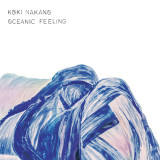
Following Pre-Choreographed released in April 2020 where he mixed his classical pieces with electronic sounds and started developing the relationship between dance and music, Japanese pianist Koki Nakano is back with Oceanic Feeling. The music deals with his inability to fully live in this so-called oceanic feeling, capturing thus the composer's longing, frustration and ultimately search for harmony within his own limitations. He composed much of Oceanic Feeling while watching dancers move to what he played and the album's singles come accompanied by mesmerizing videos featuring renowned choreographers and performers such as Tess Voelker and Marion Motin. Musically speaking, Nakano is constantly moving through the grey area between intellect and instinct on Oceanic Feeling. Tracks oftentimes feel simple, and in that simplicity, genuinely touching. Yet behind every piano key is a complex, layered recording system developed by the artist himself that gives sounds a unique depth. Oceanic Feeling is an impressive avantgarde journey that moves and stirs without ever losing balance.
Most known for his role as songwriter and lead singer of punk rock band
Pennywise, JIM LINDBERG has been making inspiring, thought-provoking
music since the 1990's
Musically, he is influenced by an array of genres from punk and folk music to old
school country and americana. Lyrically, Jim takes inspiration anywhere from
transcendental philosophers to real life events; seeking always to tell a story or
find the answers to life's big questions.
This acoustic solo project is the first from JIM LINDBERG. Produced and mixed
by Tedd Hutt (Gaslight Anthem, Lucero, Dropkick Murphys) it's full of heartfelt
songs, some rousing some sentimental, that are a departure for Jim but will
appeal to diehard Pennywise fans and fans of folky punk singers like Chuck
Regan and Frank Turner
The final installment of the electronic fusion projects that Walter Bachauer concocted for Klaus Schulze’s Innovative Communication label, Visions of Audio delves further into minimalist musique concrete, extending themes developed on Memorymetropolis in drawing on non-European vocal chants, here applied in dissociative layers. The diverse, complex arrangements include the symphonic synths of ‘Promised Land’ and the war-mode Sensurround of ‘1922 In Baku,’ as well as the obtuse loops of ‘The Final Ritual,’ the work inspiring future hitmaker Pilooski. Mondshine fans, Berlin School freaks and abstract electronica lovers should bag it.
Cocteau Twins, Jefre Cantu-Ledesma, Julia Holter, DIIV, Washed Out, Broadcast, Insides, Beach House, Drug Store Romeos. Introducing Beneather, a BAFTA-nominated composer from North London obsessively crafting sad, lo-fi, cinematic, ambient scandi-dreampop submerged in gently fuzzy tape loops. Much like the paintings of Gerhard Richter or a heavy mist rolling through a familiar landscape, the debut long player from Beneather obscures and blurs ten beautiful tracks beneath washes of cinematic, ambient scandi-dreampop – details emerge and fade, voices ooze and flow, tunes soothe and unnerve, metronomic beats click and swing. It would not be out of place on a David Lynch or Jim Jarmusch soundtrack. Inspired by the likes of Jefre Cantu-Ledesma, Hammock, Grouper, Low, GAS, Huerco S., Emeralds, Jenny Holzer, William Basinski & ABBA!! Beneather is the solo project of Lewis Young - composer and collaborator in The Leaf Library, drone pop from north London. As a composer, Lewis recently scored the British short ‘Lucky Break’ which found its way into the BAFTAs short list only to narrowly miss out on the gong. Lewis is a multi-instrumentalist, producer, designer and filmmaker currently living in Walthamstow, London. He started as a guitarist in noughties math-rockers Tea with the Queen, shifting to bass for multi-harmonied Naomi Hates Humans before returning to thumping roots as drummer for The Leaf Library. Objects Forever - the imprint label created by The Leaf Library - has provided Lewis with the vehicle to jump back into experimental song craft, inspiring the genesis of Beneather. “I just needed to make a project which spoke to all the aspects of music I’ve loved creating as a multi-instrumentalist. Plugging things into things to make satisfying little electronic loops, then layering extremely minimal bass and guitar lines with a lo-fi aesthetic. Melinda and I spent a few days in the studio - picking out objects, patterns… items that could inspire a thread of instinctive wordless melody. I took that expressionism and sliced it to pieces, rearranging it into ambient vocal hooks.” Beneather is an exercise in hypnotic simplicity. Experimental, dream-like music built on layers of scratchy electronic tape loops, chiming spacious guitars and abstract pulsing vocals. These cinematic songs combine Grouper's wistful deviations with the warm fuzz of Jefre Cantu-Ledesma, the nocturnal hum of Emeralds, the crackling collapse of William Basinski and Low's glacial pop melancholy. Outside of compositions for film, TV and Podcasts - Lewis plays with the indie drone-pop band The Leaf Library, featuring Matt Ashton from John Peel faves Saloon (“World-weary yet innocent, blissful dream-pop” - UNCUT - 8/10). Lewis has supported the likes of Lali Puna, Joanna Newsom, Lætitia Sadier & Alexis Taylor.
New Heavy Sounds is proud to present the new album by Mammoth Weed Wizard Bastard. now known simply as MWWB. There has been some speculation amongst fan circles that the final part of the trilogy of albums that preceded this, marked the end of Mammoth Weed Wizard Bastard’s five-year mission. Not so. We can categorically confirm that having officially slimmed their name down to the acronym, MWWB are continuing their voyage through the far reaches of the galaxy. The first phase of that journey is their new album ‘The Harvest’. ‘The Harvest’ is the band’s fourth album, and of course it is a record shot through with the trademark heavy MWWB sound, and their unique blend of metal and shoegaze. However it also sees the band adding more experimentation, a progressive approach, and going a bit more left field conceptually. To some extent, it shares similarities with Pink Floyd’s ‘Dark Side Of The Moon’. Not only by having the mix of experimentation and melodicism as that seminal record, but also in the way that it has been engineered and constructed as a seamless piece. Nine tracks flowing into one another. Space age riff monsters segueing into shorter musical interludes, where John Carpenter, rubs shoulders with Pink Floyd and a maelstrom of moog and mellotron. There are surprises, and of course a bucketload of heavy shit. With ‘The Harvest’ MWWB have refined and honed their sound, it’s a carefully crafted distillation of ideas, written, conceived and sequenced to be listened to in its entirety (preferably in one sitting). MWWB have always loved film scores and this new album is in many ways, the soundtrack to a film. MWWB provides the musical narrative (the song titles also provide a pointer) and the listener's imagination does the rest. ‘Oblok Magellana’ and its spooky atmospherics set the scene. before things really kick in with the riffs of title track ‘The Harvest’. A grooving Sabbathian chug intro’s Jessica Ball, who at the top of her game throughout. Her voice simultaneously sweet yet dark; almost neofolk; which when put against those riffs, is always a startling juxtaposition, nevertheless it perfectly crystallises MWWB’s distinctive dynamic. ‘Interstellar Wrecking’ is a succinctly crafted nugget of John Carpenter-esque drama, you can imagine the thundering mothership forging its way through the universe on some nameless quest before encountering ‘Logic Bomb’ and its fat fuzzed-up ride through light and shade guitar/vocal interplay. Ball’s voice soaring and shimmering throughout. ‘Betrayal’ gives a nod to Pink Floyd’s ‘On The Run’ but with its freaky spoken word and four on the floor kick it’s almost a dance track, yet there’s no incongruity here. ‘Altamira’ is epic MWWB, adding large doses of psych into a melodic concoction of dreampop and metal. Ball’s vocals here are many layered and textured effortlessly gliding through the weight of the backing. ‘Let’s Send The Bastards Whence They Came’ is another little gem. A plaintive repeating synth figure that builds with bass, drums, mellotrons and synths into ‘Strontium’ which rounds off the album’s ‘heavy’ numbers, a blend of monster grooves, and Ball’s swooning vocals. Finally, and outstandingly, Jessica strips things back to a distorted guitar and voice on ‘Moonrise’. Shorn of the layers of fuzz, it is a simple, beautiful and fitting catharsis to an epic voyage. MWWB are a thrilling proposition. They demonstrate that you can seamlessly mix crushing power, experimentation and delicate vulnerability into something that transcends any genre.
Other Joe is the pseudonym of producer, mastering engineer, and label-head Joe Buchan, an individual with a penchant for free-wheeling experimentation and genre-crossing musical tastes. Drawing upon a wide array of sounds that pay homage to his love of both the beautiful and the abrasive, Joe devours indiscriminately whatever sounds might cross his path, the result giving birth to the unique musical journey that is listening to an Other Joe record. After a few years spent playing in bands and releasing small bodies of work under different monikers, Joe released what many listeners know as his breakout record, Alien Haze, a beautiful collection of recordings that oscillate from collages of field recording and found sound, sublime balearic-era saxophone symphonies, and introspective neo-classical psychedelia. His latest work, blessing from th eheart (typo intentional), expands on Other Joe’s love for blending field recording and acoustic instruments with electronic processing. Beginning by reviewing the catalogue of creative notes he had archived since the release of Alien Haze in March 2019, Joe picked apart voice memos, Logic projects, iPhone videos and whatever else he could lay hands on. Says Joe, “looking over it all at once, the musical ideas I had been attracted to over the past eight or nine months started to make a bit more sense - I could see that there were instruments I was liking, or chord progressions that I kept coming back to, structures and forms that I had found engrossing. Sort of like putting together a jigsaw puzzle that I had made without realising.”
- 1: Intruh (Feat. Nui Moon)
- 2: 7Th Day (Feat. Kevin Mark Trail)
- 3: Loan-Sum (Feat. Mike Thesis And Thamson.p)
- 4: Beaut-I-Full World (Feat. Zima And Kalala)
- 5: Existential Lessons (Feat. Tiana Khasi)
- 6: Stars (Feat. Whosane And Pataphysics)
- 7: Full Moon (Feat. Ruru 432)
- 8: Sazon (Feat. Izy)
- 9: S.f Holiday (Feat. Izy)
- 10: Black Bond
- 11: Mercy
- 12: Us (Feat. Krown, Pookie, Nelson Dialect, 1/6, Mike Thesis, Tumi The Be, Clandestino, Jaal And Rara Zulu)
- 13: Hold On (To The Fallen Ones)
- 14: Fresh Gold Bloom-Age
- 15: This 2 (4 Moses)
- 16: Curtis On The Hiss
- 17: The Price Of Forgiveness (Feat. Dj Spell And Pataphysics)
Australian hip-hop/neo soul duo SO.Crates are a boom-bap prayer sent live and direct from the heart of two of the culture’s most committed students. The group features Melbourne based beatmaker and DJ Skomes alongside California-via-Adelaide MC & poet Cazeaux O.S.L.O, not to mention the MUSE, a forever changing third party who completes the creative trinity of the Crates. With a legacy built on releasing a steady flow of cold-crush records and delivering uplifting live performances to the party people, SO.Crates prove that hip-hop’s golden era is not a lost date in time, but a foundational state of mind. Functioning as a considered preview of what to expect from the album to follow, the hypnotic first release 'Stars' is an auditory exploration of what happens when two opposing charges collide; the joyful and the melancholy. Here, layers of instrumentation, samples and vocals sit atop a foundation of grounding beats — the track's roots from which piano samples, live trumpet and vocal embellishments spring. "When Skomes gets in his stride, it's always a bit of a happy/sad feeling. It can go either way, like a mood ring", says Cazeaux O.S.L.O. "I guess you could say we make mood ring beats, and 'Stars' is no exception".
"I wrote the album in a tiny apartment, at a time when everything felt big and overwhelming," says poet and songwriter Jenny Berkel about her new album, "These Are the Sounds Left From Leaving"
She was living in a brownstone walk-up full of radiant light and the ever-present soundscape of a leaky bath faucet. It was a sudden move at the time - a spontaneous departure from touring, bustling city life, being many things to many people'that landed Jenny in a space of self- imposed stillness. "The songs themselves are a study of proximity, bringing big fears into small spaces," says Jenny, reflecting on the album. "They're intimate examinations of a world that often overwhelms." The album features contributions from critically acclaimed folk duo Kacy & Clayton, and string arrangements by Colin Nealis (Andy Shauf) - the record was co- produced by Jenny alongside Dan Edmonds and Ryan Boldt (The Deep Dark Woods). Warm and dark, soft with stabs of madness, "These Are the Sounds Left From Leaving" is a cohesive collection of spare songs that bloom
lushly with detail. Whether you're reading Jenny's poetry or listening to her songs, you'll experience her drawing layers of far- reaching concern into particular moments, like concentric waves rippling inward toward a lone cast stone. "These Are the Sounds Left From Leaving" showcases the perspective of a unique storytelling artist, with an evocative practice that hinges powerful narratives on the intricacies of a multifaceted musicality. A songwriter immersed in poetry, a poet immersed in music'her work in all its forms is an invitation into a world of relatable introspection, in which even absences can be sculpted into vividly memorable verse.
Within Reason Records welcomes Hugh Mane to the fold with a four track EP that is his most polished work to date. Veering away from his usual club ready sound, Hugh takes a much more relaxed approach on 'Resonant Moods', choosing to focus on meticulous production techniques and textural layering to create an EP that transcends both time and space. Often the case with Hugh's music, you can be 6 minutes into a track and not know that any time has passed at all. 'Resonant Moods' is a wonderfully crafted EP that encapsulates emotive tonality and playful rhythms, whilst oozing spacious sub frequencies.