A huge part of this exploratory new era was Aaron Dessner, who produced Light Sleeper. His isolated cabin studio Long Pond, in Hudson Valley, was once Bess' desktop background, but she never thought she would end up star-gazing on its veranda and noodling away on the same instruments used by her heroes, not to mention a certain pop star... The immediate trust between the pair clicked the moment Atwell walked through the doors of the iconic recording space; Dessner showed her around and then promptly left her alone to play on the many instruments at the heart of her favourite The National songs. As Atwell puts it, they seemed to speak the same musical language. "I trust his ear and I knew we had the same vision" she says.
Buscar:d mention
- Hstjevndgn
- Salomonsens Hage
- Kjentmannen
- Heksejakt
- Age Of Iron Man
- Cycle Of The Gylfaginning
- Den Behornede Guden
En pakt med naturen is Tusmorke's first ever live album, recorded live at Oslo's biggest independent record store Big Dipper, as part of their 25th anniversary celebration last October. "We knew we had to do something special with Tusmorke. Benediktator and Krizla have since the early 2000s been building their record collections and releasing their own music simultaneously. We like to think the records we sold them in our store somewhat influenced their musical output, at least we know that the albums they released had a huge impact on us!" (Andreas Leine Jakobsen, Gerenal Manager, Big Dipper Musikk & Hi-Fi "Is this Folk Horror? Silly question, perhaps, but we need you to mutter certain phrases while listening: Bucoloc, acoustic, ancient, uncanny; acid, pagan, peasant, occult; wildness, wilderness, wildestness, Wicker Man. Ever since the start of Tusmorke, we've wanted to make an acoustic album. In Skien, Telemark in the 90s, we wanted to record in an ancient loghouse with an open hearth (årestue) in the local folk museum Brekkeparken. Years passed and line-ups changed. Then, when we supported Ved Buens Ende at Blå in the Autumn of 2021, we were joined by Åsa and Dauinghorn. They played some of the arrangements that we finally managed to record here, after several attempts to find a suitable time and place to make it happen. Again, time had passed and line-ups had changed, but the spirit of Folk Horror remained. We ask you to close your eyes and picture yourself in a windowless low dwelling, open to the sky through a hole in the roof. Acrid smoke curls upward and occasional sparks fly from the smoldering fire. Music wafts through the gloom in this serene scene of timeless primitivism. There is no electricity. There are no synthesizers. I won't even mention digital things, because they don't exist. There is only Folk Horror and you are in League with Nature." (Benediktator)
- Zen And The Art Of Nonsense
- Fun On The Floor
- The Blessed West
- Taken For Granted
- Looks Can Kill
- Sacred Measure
- Flare
- Black Five
- Vigilante
- Zor Gabor
- Tightrope
The Scream, Siouxsie & the Banshees' first album, was released late enough in the punk era to bear some claim as the first post-punk album, with only a minor traces of 'punk' (one lingering early song, "Carcass" comes to mind) and enough hints of what had come even earlier, Andy MacKay-like saxophone flourishes - to feel utterly new. Not to mention the effort producer Steve Lillywhite must have put into the album, his first fully-credited major label production. Siouxsie was clearly the focus of the band, with her unique vocal style and lyrics, but the real star, we've always known, was John McKay, who wrote most of the album's music (as well as singles like "Hong Kong Garden"), creating a wholly new guitar sound - harsh and brittle, yet melodically intoxicating . . . best articulated by a somewhat confounded Steve Albini years later ". . . only now people are trying to copy it, and even now nobody understands how that guitar player got all that pointless noise to stick together as songs". McKay's influence lives on; many of the most influential guitarists of the past four decades credit him as a major influence - Geordie from Killing Joke, Jim Reid of The Jesus And Mary Chain, U2's The Edge, Thurston Moore, Johnny Marr and even the two guitarists - The Cure's Robert Smith and Magazine's John McGeoch - who followed him in The Banshees. McKay's burgeoning status as the anti-guitar hero was halted when he and Banshees drummer Kenny Morris - at odds with Siouxsie and bassist Steve Severin - fled the band just after the start of a tour supporting the group's second album, Join Hands. It was a weekly music paper scandal, later the subject of a BBC documentary, and Siouxsie's vitriol working its way into the lyrics of a later Banshees b-side, "Drop Dead / Celebration". Aside from a solitary single on Marc Riley's In Tape label nearly a decade later, no music was heard from McKay again. So it comes as a major surprise to learn of a pile of excellent recordings made in the years just after he left The Banshees, unheard by all but a very few, some of which feature drummer Kenny Morris, plus Mick Allen from Rema Rema, Matthew Seligman of the Soft Boys and longer-term collaborator Graham Dowdall and John's wife Linda . . . the latter three of whom now all sadly deceased. Sixes And Sevens is an historic lost album. Brazenly genius and bearing fair claim as the lost treasure of the post-punk era, the album collects eleven studio tracks, carefully mastered from original tapes. It's a masterpiece which best speaks for itself.
The Scream, Siouxsie & the Banshees' first album, was released late enough in the punk era to bear some claim as the first post-punk album, with only a minor traces of 'punk' (one lingering early song, "Carcass" comes to mind) and enough hints of what had come even earlier, Andy MacKay-like saxophone flourishes - to feel utterly new. Not to mention the effort producer Steve Lillywhite must have put into the album, his first fully-credited major label production.
Siouxsie was clearly the focus of the band, with her unique vocal style and lyrics, but the real star, we've always known, was John McKay, who wrote most of the album's music (as well as singles like "Hong Kong Garden"), creating a wholly new guitar sound - harsh and brittle, yet melodically intoxicating . . . best articulated by a somewhat confounded Steve Albini years later ". . . only now people are trying to copy it, and even now nobody understands how that guitar player got all that pointless noise to stick together as songs". McKay's influence lives on; many of the most influential guitarists of the past four decades credit him as a major influence - Geordie from Killing Joke, Jim Reid of The Jesus And Mary Chain, U2's The Edge, Thurston Moore, Johnny Marr and even the two guitarists - The Cure's Robert Smith and Magazine's John McGeoch - who followed him in The Banshees.
McKay's burgeoning status as the anti-guitar hero was halted when he and Banshees drummer Kenny Morris - at odds with Siouxsie and bassist Steve Severin - fled the band just after the start of a tour supporting the group's second album, Join Hands. It was a weekly music paper scandal, later the subject of a BBC documentary, and Siouxsie's vitriol working its way into the lyrics of a later Banshees b-side, "Drop Dead / Celebration". Aside from a solitary single on Marc Riley's In Tape label nearly a decade later, no music was heard from McKay again. So it comes as a major surprise to learn of a pile of excellent recordings made in the years just after he left The Banshees, unheard by all but a very few, some of which feature drummer Kenny Morris, plus Mick Allen from Rema Rema, Matthew Seligman of the Soft Boys and longer-term collaborator Graham Dowdall and John's wife Linda . . . the latter three of whom now all sadly deceased.
Sixes And Sevens is an historic lost album. Brazenly genius and bearing fair claim as the lost treasure of the post-punk era, the album collects eleven studio tracks, carefully mastered from original tapes. It's a masterpiece which best speaks for itself. John McKay will be made available for a limited number of interviews . . . and yes, there are surprises in store.
Dave Lee continues to be one of Britain's most accomplished disco dons. An established remixing extraordinaire, proven once more here as he tackles some stunning Disco-Funk heaters. First is the Psychedelic Funk mix of '2001 Disco Party' a hypnotic, sweat inducing slab of frenzied funk-action, did we mention this release brings the funk enough? His Synth Vamp mix of 'Potion Of Love' is a must for hi-energy synth solo aficionados, backed up with glorious strings, pulsating guitar and classic disco diva vocals. Last of all his 'Strut Your Strat Dub' of the opener brings irresistible guitar frets to the party, doubling down on the groove factors for some serious heads down, hands up feet stomping.
- Psychopomp
- Sweet Relief
- Icon
To celebrate PigsX7 new album 'Death Hilarious', Rocket have reissued the bands long out of print debut album 'Feed The Rats' onto a special three colour splatter LP, so the 2025 repress comes on orange with red coloured plus black splatter on top vinyl. Playing their first gig supporting Goat at what was only the latter's second ever show, the band have gigged relentlessly with kindred spirits including The Cosmic Dead and Luminous Bodies, not to mention gracing festivals like Supernormal and Portugal's Reverence with their feral attack. This is their overwhelming first album - equal parts righteous repetition, bludgeoning brute force and Sabbathian squalor, its alchemical charge has the power to transform bleary-eyed abandon into small-hours revelation. This three-track, forty-minute monument of chaotic catharsis captures the spirit of the band's live manifestation whilst adding a level of finesse and texture. Channelling the grimy trip of Monster Magnet's pine Of God' through a prism of kraut-derived repetition and Part Chimp style bloodymindedness, the resulting hallucinatory vortex appears constantly on the realm of breaking point.Amps and brains alike, as these psychic omnivores bring seven times the joy, seven times the pain, seven times the dementia and deliverance.
- Collection 001 - 001 A 23:46
- Collection 001 - 001 B 23:48
- Collection 002 - 002 A 18:12
- Collection 002 - 002 B 20:54
- Collection 003 - 003 A 22:14
- Collection 003 - 003 B1 09:33
- Collection 003 - 003 B2 05:25
- Collection 004 - 004 A 16:11
- Collection 004 - 004 B1 07:08
- Collection 004 - 004 B2 09:52
- Collection 005 - 005 A1 08:38
- Collection 005 - 005 A2 08:54
- Collection 005 - 005 B1 07:14
- Collection 005 - 005 B2 03:53
- Collection 005 - 005 B3 03:57
- Collection 005 - 005 B4 04:03
- Collection 006 - 006 A1 17:35
- Collection 006 - 006 A2 05:12
- Collection 006 - 006 B 23:12
- Collection 007 - Merzrock B1 + Dubbing 5 11:21
- Collection 007 - Merzrock A1 + Anemic Pop 1 02:00
- Collection 007 - Merzrock A1 + Anemic Pop 2 08:32
- Collection 007 - E-Study #3-1 + Merzsolo 1 15:49
- Collection 007 - E-Study #3-1 + Merzsolo 2 05:58
- Collection 008 - Concrete Tape Ph#1~ 05:19
- Collection 008 - E8 A1 + 006 A1 06:03
- Collection 008 - Merzsolo 10/6.81 A1 10:36
- Collection 008 - E8 B2/Concrete Tape Ph#1~ 06:28
- Collection 008 - Sans Titre Merz 1 + Tape Loops 04:54
- Collection 008 E6 A3 + Concrete Tape Ph#1~ 06:46
- Collection 008 - Merzsolo 10/6.81 A5 + Violin 03:21
- Collection 009 - N.a.m.4 + E-8 06:11
- Collection 009 - Telecom 1/3 + N.a.m.5 17:32
- Collection 009 - E-3-1-1 11:24
- Collection 009 - E-3-1-2 01:50
- Collection 009 - Tape Loop + Noise 1 (Concrete Tapes) 02:39
- Collection 009 - Tape Loop + Noise 2 (Concrete Tapes) 04:25
- Collection 010 - 007 B1 + Ah Corps 11:47
- Collection 010 - E3 B2 + Ah Corps 11:28
- Collection 010 - N.a.m.6 With Radio & Tapes 22:47
Carrying on their longstanding dedication to the seminal output of Merzbow, Urashima returns with what is unquestionably their most ambitious release to date: “Collection 001-010”, a deluxe, 10 LP vinyl box set limited to 299 copies, gathering together the entirety of the project’s first ten releases, originally released in 1981. Encountering the band in its early incarnation of the duo of Masami Akita and Kiyoshi Mizutani, raw, exposed and bristling with energy, foreshadowing numerous trajectories they would follow over the coming years, these astounding full lengths - the majority of which have never been released on vinyl - come housed in a beautifully produced, deluxe wooden box, with each LP in its own individual sleeve reproducing the original artwork, and a LP-sized 32-page book containing reproductions of artworls and collages by Masami Akita, an interview conducted by Jim O'Rourke, and liner notes penned by Lasse Marhaug, Thurston Moore, and Akita himself, amounting to what is unquestionably one of the most historically significant releases we’re likely to encounter in 2025.
Deluxe Edition of 299 copies, remastered from the original analog tapes by Masami Akita, each LP comes in its individual sleeve reproducing the original artwork, also includes a LP-sized 32-page book. ** Since its founding during the late 2000s, the Italian imprint, Urashima, has become a definitive voice in the landscape of noise. Bringing forth beautiful limited edition releases, they’ve sculpted a singular vision of one of the most vibrant and revolutionary bodies of experimental sound to have graced the globe. Among the many projects that they have supported over the decades, there has been an undeniable dedication to the output of the seminal Japanese noise outfit, Merzbow, making a significant amount of the project’s out of print back catalog available across a range of formats. Now they return with what is arguably their most stunning and ambitious release dedicated to the project to date: “Collection 001-010”, gathering the entirety of Merzbow’s first ten releases, largely privately released by the band on cassette across 1981, in a deluxe, 10 LP vinyl box set. Representing what is effectively ground zero in Japanese noise and collectively amounting to some of the most sought after releases ever produced within that movement, Urashima’s truly beautiful collection comes fully remastered by Masami Akita himself from the original tapes, presenting all but a small number in their first ever vinyl pressings, with each LP housed in its own individual sleeve reproducing the original artwork, alongside a LP-sized 32-page book containing reproductions of artworks and collages by Masami Akita, an interview conducted by Jim O'Rourke, and liner notes penned by Lasse Marhaug, Thurston Moore and Akita himself. Towering with energy and groundbreaking creative vision, within the realms of noise and experimental music, releases don’t get more monumental or historically important than this!
Merzbow came roaring onto the Tokyo scene in 1979, and remains, to this day, one of the most prolific and aggressively forward-thinking projects in experimental music. Eventually becoming the solo vehicle for the efforts of Masami Akita, in its earliest incarnation the project was the duo of Akita and Kiyoshi Mizutani, taking their name from German artist Kurt Schwitters' pre-war architectural assemblage, The Cathedral of Erotic Misery or Merzbau, and quickly set out to challenge entrenched notions of what music could be. Embracing technology and the machine, even in its earliest iterations, Merzbow pushed toward new territories of the extreme, arriving at a space of pure, unadulterated sonic onslaught that has continued, for over 40 years, to set the pace for the entire genre of noise, and has remained one of the movement’s most important, definitive voices, continuously laying the groundwork for countless artists who have followed in its wake.
When dealing with historical gestures, there’s an invertible aura surrounding original line-ups and early statements, and rightfully so. It is often within a band’s debut that we catch the purest glimpse of the raw energy and creative ferment that made them what they are. This is certainly the case when regarding the coveted early releases of Merzbow, capturing the emergence of the project in its form as the duo of Masami Akita and Kiyoshi Mizutani as they helped set the blue print from the then emerging movement of Japanese noise. Over the course of its nearly five decades of activity, Merzbow has always been noted for how prolific and ambitious the project is. This was no less the case in the very beginning. While they were active for roughly two years prior, in 1981 alone they issued ten self-released cassettes numerically titled “Collection 001-010”, albums which have both individually and collectively become holy grails in the realms of noise, with only two - “Collection 007” and “Collection 009” - ever receiving vinyl reissues prior to now.
As Lasse Marhaug deftly articulates in the newly commissioned liner notes for “Collection 001-010”, despite having been recorded in different location across a span of time, the sum total of Merzbow’s first ten releases might be best regarded as a single release to be listened to in the same, durational sitting, with the material standing well apart from what most came to expect from Merzbow, while foreshadowing numerous trajectories the project would take over the coming years. Not only do these recordings feature a vast array of instrumentation - tapes, acoustic and electric guitar, violin, drums, voice, recorder, organ, found sounds, clarinet, homemade and prepared instruments, a vast arsenal of effects and electronics, and piano, to only begin to scratch the surface - the majority of which would disappear from the project’s active sources of sound generation over the subsequent years, but there is a slow pacing and raw sense of openness and exposure that reveals strong connections to the avant-garde improvisations of groups like AMM, Musica Elettronica Viva, and Gruppo di Improvvisazione Nuova Consonanza, the psychedelia of groups like Taj Mahal Travellers and Flower Traveling band (both of whom Akita mentions having seen in youth within his interview with Jim O’Rourke), and rock in general - albeit in fully abstracted forms - unspooling as brittle, pointillistic, textural, raw and abrasive forms, that occasionally flirts with unexpected tonal sensibilities. As Marhaug describes it in his excellent liner notes: «Sonically, “Collection” sounds more sparse and stripped. It’s dry sounding, up-front, no reverb, and there’s less heavy low-end grime and thin on the signature frequency sweeps. Viewed in a 1981 context, musically, it’s more akin to what the LAFMS (Los Angeles Free Music Society) pool of artists were doing at that time than what was happening in industrial music... There’s a strong playfulness throughout, like the sound objects are being explored for the first time, without neither restraint nor hurry. Events are allowed to be fully examined before the music moves on, or simply cuts off. To a large degree, the music on “Collection” feels acoustic in nature, although a Electro-Harmonix ring-modulator features prominently throughout.»
Easily described as a rarely encountered revelation into the original and earlier documented studio sound of Merzbow, “Collection 001-010” collectively amounts to an engrossing sonic journey in its own right, while also allowing for important, often overlooked connections drawn from numerous other creative wellsprings, notably free jazz, underground rock, the output of European and Japanese avant-garde music, as well as Dada, Fluxus, and Mail Art, much of which, beyond the illumination made possible by the sounds, Jim O’Rourke’s fantastic interview with Akita, published in the booklet, further explores, offering great insights into the origins of Merzbow and the thinking behind the project, as well as aspects of the earliest days of Japanese noise.
The British jazz/hip hop fusion collective Us3 founded in 1992 in London and its notable members included producers Mel Simpson and Geoff Wilkinson. The group scored a major hit in 1994 with “Cantaloop (Flip Fantasia)”, a track that displayed the group’s fondness for sampling classic recordings from the Blue Note label (in this case, Herbie Hancock’s “Cantaloupe Island’). The track was included on their debut album Hand On The Torch.
The album was a result of their connections with Blue Note owner Capitol Records, which gave Simpson and Wilkinson free rein to sample anything from the Blue Note catalog. Together with several musicians and rappers Kobie Powell and Rahsaan Kelly, they sampled a series of Blue Note classics, from Art Blakey and Thelonious Monk, to Horace Sylver and the previously mentioned Herbie Hancock. With the release of Hand On The Torch, Us3 had forged one of the most elaborate union between styles and became one of the best-selling jazz albums on the Blue Note label.
Dennis Brown has always been cited as Jamaica’s favourite singer. While Bob Marley set out to conquer the world, Dennis’s popularity on the island grew with every year. Overseas success also came Browns way with crossover hits like the massive ‘Money In My Pocket’. He will always be fondly remembered on the sound systems across the caribbean as the Crown Prince of Reggae.
Dennis Brown (b Dennis Emanuel Brown,1957, Kingston, Jamaica) began his illustrious career at the grand age of eleven like many of the other child singers at Coxsonne Dodds Studio One stable. His first hit in 1969 a cover of Van Dykes ‘No Man Is An Island’ still stands the tests of time and also its follow up cut ‘If I Follow My Heart’ as Reggae classics. The 1970’s saw Dennis build on his reputation by working with all the top Jamaican producers and
studio’s perfecting his sound. Lloyd Daley, Impact, Joe Gibbs, Aquarius and Derrick Harriott to name but a few. But it was his work with producer Winston ‘Niney’ Holness that he enjoyed the most success and many say recorded his best work for. Where many of the other producers stayed with the tried and tested Lovers Rock formula that did prove so popular with Dennis’s voice, producer Niney the Observer as he is fondly called, pushed him into a more roots led direction, over stark rhythms created by Niney’s studio band Soul Syndicate.
Two outstanding albums were put together ‘Just Dennis’ (1975) built on a collection of singles they had recorded together, ’Cassandra’, ’Westbound Train’, ’No More Will I Roam’ and ‘Conqueror’. The second 1977 set ‘Wolf and Leopards’ made up again of singles the prolific two had cut including, ‘Here I Come’ (a live favourite that Dennis always liked to start his set with) and ‘Children of Israel’ made these both strong roots era albums.
We have stayed with this period for our Dennis Brown album. Some of the above-mentioned cuts are present alongside the timeless crossover hit ‘Money In My Pocket’ (1979) produced by Niney but often credited as a Joe Gibbs production as it was released (and sweetened by adding Orchestration for the foreign market place) on his label. By the way this is the original Jamaican version (unsweetened) that you will find on this album a more truthful version in our humble opinion. His voice reigns supreme across these Niney produced cuts ‘Smile like An Angel’ ‘Silver Words’, ‘Play Girl’ and the fantastic ‘Poor Side Of Town’ (helped along by the great harmonies of the Heptones group), ‘Tribulation’ and ‘We Will Be Free’. Dennis Brown’s prolific catalogue of tunes that also found an outlet on his own DEB inprint (named after his initials) stands to show what a great artist he was and what a fine team he and Niney made when in the studio creating these magical moments. So sit back and enjoy a killer set of tunes compiled by Niney himself...Tribulation Times indeed and long may the records of the Crown Prince of Reggae Dennis Brown rule the world.....
Firstly, I want to thank Soulox & Soeneido for their patience because I have slept on their music for years haha
They have both been sending me music for a long time which I was pretty slack on checking (as a lot of people may have also noticed when sending me music, there's a huge backlog to get through and not enough hours in the day!) but it wasn't until Pete Dev/Null was in London for an event and we met up in person to record a mix for Blog To The Oldskool (our show on Jungletrain) that I realised what these two were capable of. Pete started the show with Lavish and I had to know what it was straight away, he told me it was by Soulox & Soeneido and I felt so bad that I had probably not bothered to check this tune if they had sent it to me, but I knew I had to have it!
I messaged Soen the next day asking about this tune and thankfully it was still available, one thing led to another and this release now exists. Big thanks to both of them for their wicked tunes, big up Comfort Zone on his quality remix of Lavish and a special mention to Jay Vaz (of Dreaming Vinyl) who did the design for the b-side of this release.
- Love In Store
- Can’t Go Back
- That’s Alright
- Book Of Love
- Gypsy
- Only Over You
- Empire State
- Straight Back
- Hold Me
- Oh Diane
- Eyes Of The World
- Wish You Were Here
If every significant artist has an underrated gem in its catalog, then Mirage is that album for Fleetwood Mac. An obvious return to relative simplicity after the dramatic tension of Rumours and experimental ambitions of Tusk, the 1982 album finds the band re-grouping after a brief hiatus and again climbing to the top of the charts. Extremely well-crafted, well-produced, and well-performed, the double-platinum effort distills the group’s hallmark strengths into a filler-free set that never runs short of addictive pop hooks or daft accents.
Sourced from the original analog master tapes, pressed at Fidelity Record Pressing in California, and housed in a Stoughton jacket, Mobile Fidelity’s numbered-edition 180g 45RPM 2LP set presents Mirage in reference sound for the first time. The efforts co-producers/engineers Ken Caillat and Richard Dashut went to capture the splintered albeit formidable band can be heard with stunning accuracy, range, depth, and detail.
Though Rumours understandably gets a permanent spot in the audiophile hall of fame, the smooth, clear, and dynamic sonics on Mirage confirm that the record that stood as Fleetwood Mac’s last effort for five years deserves a place in the same vaunted arena. The presence and imaging of Mick Fleetwood’s percussion alone on this reissue might have you wondering how this slice of soft-rock bliss has gone under-noticed for decades. Other prized aural aspects — separation, definition, impact, tonal balance — are also here in spades.
Like much surrounding Fleetwood Mac in the 1980s, arriving at Mirage was not easy. Caillat searched for studios located outside of Los Angeles on a mission to change up the vibe of the band’s prior recording sessions. Everyone settled on Le Chateau in France, where relations between some members remained icy — and cooperation with the producers strained. Battles with exhaustion, bitterness, and addiction further informed the proceedings at the 18th century complex in the French countryside, where even communal meals were allegedly eaten in silence.
Inevitably, the feelings that co-producer Lindsey Buckingham, Stevie Nicks, Christine McVie, and company harbored — as well as the situations in which they found themselves — drifted into the songwriting. In its rapid ascent to rock-star royalty status, Fleetwood Mac drifted apart, embarked on solo pursuits, and found it was lonely at the top. Emptiness, the illusion of dreams, the longing for love, the want to escape to bygone times of innocence and happiness: Such themes inform a majority of the narratives. Even if the lyrics regularly take a back seat to easygoing arrangements that allow Mirage to come on like a refreshing breeze on a sunny summer afternoon.
Home to three Top 25 singles in the U.S. and having occupied the pole position of the Top 200 album charts for five weeks, Mirage rightfully resonated with the mainstream and attracted listeners on both sides of the pond. And how, via a smart blend of sugary melodies, warm harmonies, interlaced notes, nimble rhythms, taut structures, and passionate vocals. Not to mention the presence of what arguably remains Nicks’ signature song, the biographical “Gypsy,” a meditation on the loss of her close friend Robin Anderson that teems with majesty, mystery, and mysticism — and which gets an assist from Buckingham’s shaded tack piano and richly strummed guitar chords.
Its ranking as an all-time classic aside, that No. 12 hit has plenty of company when it comes to brilliant pop turns on Mirage. On the subject of Nicks, the raspy singer gets a little bit country on “That’s Alright.” Its clip-clopping pace and two-stepping progression complement subtle vocal swells that emerge during the final verse of a tune that is ostensibly about leaving but still conveys forgiveness and grace. And what would a Fleetwood Mac record be without Nicks drawing on the tools of the supernatural — cards, dreams, wolves, and the like — on the twirling “Straight Back.”
Despite the potency of Nicks’ primary contributions, Mirage seemingly unfolds as a tight competition between Buckingham and McVie — and one that ultimately ends in a draw. Buckingham’s salvos include the contagious “Can’t Go Back,” a yearning to time-travel back to the past that’s complete with hall-of-mirrors backing vocals; “Oh Diane,” out-of- left-field ear candy sweetened with hiccupped vocals and salt-and-pepper-shaken grooves; the chiming “Eyes of the World”; and “Empire State,” a delightfully fluttering track whose high-range vocals, lap harp notes, and ringing xylophones hint at the galaxies of sound that would erupt on Tango in the Night.
Then there’s McVie. As elegant, understated, and coolheaded as she’s ever been on record, she pours her heart out on cuts that revolve around her inevitable split with Beach Boy Dennis Wilson. In the process, she punctuates Mirage with a characteristic not always associated with catchy pop music: emotional weight, and the sense of dreaded acceptance in the face of dreams deferred.
“I wish you were here/Holding me tight,” McVie sings over a delicate melody on the album-closing piano ballad “Wish You Were Here.” Though they hoped otherwise, for the members Fleetwood Mac, distance and separation were always close at hand. Believing otherwise, inviting nostalgia, and pretending everything was fine only amounts to a mirage.
- A1: Caravan (Tizol, Ellington) 5:50
- A2: Wishes (F. Sotgiu) 3:05
- A3: Ballad For Aisha (Tyner) 5:11
- A4: Stranatole (F. Sotgiu) 2:50
- B1: Black Bats And Poles (Walrath) 4:14
- B2: 7Th Street (F. Sotgiu) 4:48
- B3: Wise One (Coltrane) 3:24
- A1: Afro Blue (Santamaria) 3:37
- A2: Duke Ellington’s Sound Of Love (Miingus) 4:48
- A3: Take Five (Desmond) 5:00
- A4: Lotus Blossom (Strayhorn) 1:06
- B1: Passing (F. Sotgiu, L. Bonafede) 7:09
- B2: Calm (F. Sotgiu) 4:35
- B3: My Foolish Heart (Washington, Young) 6:37
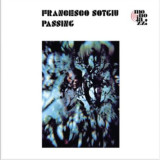
Francesco Sotgiu has forged a unique and very swinging project of songs. With a quintet consisting of Luigi Bonafede on piano, Emanuele Cisi and Riccardo Luppi on woodwinds, Salvatore Maiore on bass, Francesco on drums, and with special guest Paolo Fresu on trumpet to cap off this heartfelt collection. There is also a nice diversity of groups within this larger collection. A nice trio piece called “Calm” featuring Paolo Birro sitting in with Marco Micheli and Francesco. And one called “Lotus Blossom” where Francesco shows his considerable skills and soul on violin. But the bulk of the material is straight-ahead jazz and is totally swinging and soulful, proving that jazz has no borders and is a worldwide language to which Francesco has added to that tradition with this project and all the great voices he has included here. Bravo maestro.
This is the comment of Gil Goldstein, American accordion player who won 5 Grammys and collaborated with giants such as Gil Evans, Wayne Shorter, and Michel Petrucciani.
This record was recorded in the middle of the pandemic times, and most of the work for preparing this record took place via the telephone: the selection of the songs on paper, the exchange of ideas on arrangements, staff and instruments, a sort of “phone rehearsal” of the structure of the songs, with the choice of a solo; everything else, everything that will happen in the recording sessions, is the result of a controlled improvisation, a jam session masterfully captured in the studio through the use of well-positioned ribbon microphones.
This is why “Passing,” literally “passing” or “crossing”: because the musicians have gone through listening to these songs as teenagers, and find themselves today, as a mature meeting of old friends who create an informal game made of nostalgic fun, great personality, confrontation, and deep spirituality. In the classic “Caravan” by Ellington and Tizol or “Afro Blue” by Mongo Santamaria, Coltrane toning, the Latin accent of the rhythm section supports the interpretation of the theme and the interplay in the solos between the soprano and tenor saxophones by Cisi & Luppi, and the piano by Bonafede.
A certain elegance in the execution distinguishes pieces such as Duke Ellington’s “Sound of Love,” yet another tribute by Mingus to the Duke, with a calibrated solo on the double bass of Maiore and the flute by Luppi, the immortal “Take Five” by Paul Desmond, with the highlighted soprano by Cisi, “Wishes,” “7th Street,” and the eponymous “Passing,” all pieces composed by Sotgiu, characterized by the precise medium/fast drive of the drums and a certain “cinematic” taste of the main themes.
In songs such as “Black Bats and Poles,” composed by trumpeter Jack Walrath for the Mingus Orchestra, and in “Stranatole,” an original piece in which Sotgiu writes a theme of Monk’s influence and enjoys overturning the traditional “Anatole Jazz” structure, the quintet opts for an effective hard bop language, with exciting moments of dazzling virtuosity in Bonafede’s solo. While in Coltrane’s “Wise One” and McCoy Tyner’s “Ballad for Aisha,” we enter a modal, mystical, and ceremonial jazz, of a cosmic depth, which seems to hover in the sweet volume of the great hall of the recording studio. These are truly magnificent interpretations.
A special separate mention for two classics such as “My Foolish Heart” by Victor Young, performed in trio by Sotgiu, Maiore, and the unmistakable trumpet by Paolo Fresu, and the (unfortunately very short) “Lotus Blossom” by Billy Strayhorn and Duke Ellington, which in the piano-violin duo of Birro and Sotgiu, in a minute gives a suspended momentary magic, sums up the roots of African-American jazz music, and also referencing an old-fashioned Italian musical sensitivity, typical of Nino Rota’s music for Federico Fellini’s films.
JP’s historic restoration carpentry has continued to be a baseline for his relationship to music; the yin to his yang, the Burt to his Ernie, the Dolly to his Porter. It was through this concurrent line of work that he met another twice-initialed singer with a penchant for old Americana music, obscure film, and overly elaborate ethnic meal preparations: one JD McPherson. The two became fast friends and would eventually, through many twists, turns, false starts, and biblically-proportionate plagues, enter a modest studio in Nashville to record Harris’ latest album.
Over the course of nine months in 2023, they recorded a sometimes lush, sometimes sparse, and sometimes jarring country album of Harris’ originals, loudly and violently squelching any attempt to pigeon-hole a song into any subgenre of country music. Only albums by Lee Hazelwood and an obscure folk album Waylon Jennings made when his hair was still short were allowed to be mentioned in reference. Featuring the guest vocals of Erin Rae, The Watson Twins, Shovels & Rope, and producer JD McPherson himself, the record is equal parts satire, reflection, and apology to those that would listen.
In a musical landscape of period-correct reproduction, “outlaw” internet posturing, and flavor-of-the-month variants on country,
“JP Harris Is A Trash Fire” burns bright as a dumpster in a Walmart parking lot on a moonless night; some will fear it, some will gravitate to its acrid warmth, and most will have no idea what to make of the situation. Harris has been steadily elbowing the definitive boundaries of “country music” wider with every album, both sonically and lyrically, and his latest piece of self described “Avant-Country” is no exception.
- A1: The Milkman (Blackburn)
- A2: Campus Blues (Lancaster)
- A3: Castle Bandstand (Clitheroe)
- B1: What Lurks Behind Those Illuminations? (Blackpool)
- B2: Pass The Sushi Pon The Lef? Hand Side (Burnley)
- B3: Caribbean Club (Preston)
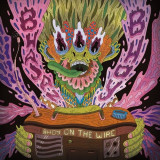
Ajay Saggar is BHAJAN BHOY. "With BHAJAN BHOY, Saggar synthesizes all of the stylistic approaches he’s explored over the years, swirling them into an intoxicating musical blend, with an earthy spirituality. Even the project’s name reflects the dual aspects of Saggar’s upbringing coming together in harmony. In Hindi, a “bhajan” is a devotional song, sung in the mandir, or temple, while “bhoy” is a Scottish and Irish derivation for a young man. There’s a searching quality to Bhajan Bhoy, as if Saggar is still hunting for transcendence with each track, whether through an expansive drone, an orchestral facility on the piano, or an electronics-augmented raga that threatens to dip into noise” (Erick Bradshaw / writer and WFMU DJ). This album presents a rich and varied set of compositions that showcase Saggar’s skills as an incredibly talented and accomplished composer and musician. With each and every Bhajan Bhoy LP, you are are carried to a higher place. With ‘Bhoy On The Wire’, the 35 minutes laid out unfolds like a cosmic tapestry, an extraordinary exploration that shimmers and reverberates with newfound vibrancy. The songs were broadcast as part of a session on Steve Barker’s “On The Wire” radio show in April 2024. They were a gift to Steve and his team for 40 years of broadcasting. “On The Wire” is simply the greatest radio show in the world. As Ajay explains in his own words : “In September 1984, I started a degree course at the University of Lancaster. On a wet and soggy Sunday afternoon towards the end of September, I sat in my room staring out at the grey Lancashire landscape, and decided to alleviate the boredom by seeing if there was anything to listen to on the radio. Most of the stations I tuned into were as dull as the weather outside. However, as I neared the end of the FM dial (and was about to give up hope), I chanced upon a station where I was taken by the music being played. That show was “On The Wire”, introduced by Steve Barker. From there on in, every Sunday, between 2-5pm, I tuned into Radio Lancashire to listen. Steve’s shows had an incredible and wide reaching selection of music and genres, that thrilled your ears and left you wanting more. Tied to that, his deep knowledge of the material he played helped the listener dig into the sounds even more, and also left you in admiration of this trait. In 1985, I started putting on DIY shows in Lancaster (inviting the likes of Bog-Shed, bIG fLAME, The Membranes, The Wedding Present, etc etc) and Steve was kind enough to mention the shows on-air, which helped in getting people from different parts of the county to come to the shows. At the tail-end of 1985, he invited me to the studio to come and hang out. When in 1988, the group I was in, Dandelion Adventure, released our first (demo) cassette, it was Steve, who not only played tracks off it, but invited the group to the studio for an interview. Now if you’re a young band, that is a massive thrill! And in 1990, when Dandelion Adventure did a John Peel session, I actually used “On The Wire” jingles (that Steve had put on a cassette and given to me a few years before) on the track “All the World’s A Lounge”. Since then, the show has been a mainstay for me, and so many others around the world, to get turned onto incredible sounds from around the world. And over the course of 40 years, Steve has always supported my music. These six tracks are a 40th birthday gift to the “On The Wire” team (Steve, Michael “Fenny” Fenton (an absolutely critical part of the show), and Jim Ingham (engineer who keeps the technical side of things going)) for sharing so much amazing music, and making the world a better place. They were originally broadcast as an exclusive session in April 2024 on “On The Wire", and are here for your listening pleasure. Music like shower”. Artwork by Jake Blanchard
"Formed by Brandon Hagen (guitar, vocals) and Drew McDonald (drums), and later joined by Zack Abramo (bass), Vundabar have always been imbued with a fiercely independent spirit, their sound forged in mythical underground Brooklyn venues such as Silent Barn and Shea Stadium. Musically, they exist almost as a fever dream of many genres, melding arty post-punk, tangled math-rock, sun-dappled surf-guitar, shimmering jangle-pop and grunge scuzz into sharp, compact songs. Across six albums the band have netted them a wide fan base and a reputation for a killer live show, not to mention a platinum record for their song 'Alien Blues'. "
- A1: Tokai No Ichinichi
- A2: Nostalgia
- A3: Megalopolis
- B1: Serenade
- B2: Tokai No Iradachi
1969 was the year of release of this one and only album by Japanese jazz pianist Hideo Ichikawa, vibraphonist Hiroshi Matsumoto, bassist Kunimitsu Inaba and drummer Motohiko Hino, all in collaboration. A one-off coming-together, it centred on the valerian vibes of Matsumoto, whose star instrument, the vibraphone, was bound to take centre stage for its comparative novelty, not to mention the fact that Matsumoto himself had been practicing before the others. An honorary work, this urbane masterpiece hears tasteful vibraphonic panning in full stereo, as blue passing notes collide with expert steel brushings and untied chord playing, resulting in a unique but salubrious listen.
Producer, songwriter and director Sevdaliza releases her highly anticipated sophomore album Shabrang in roaring 2020. Produced entirely by herself together with long-time collaborator Mucky, the 14- track album is the long awaited follow-up to the 2017 debut album ISON.
In just a few years time Sevdaliza established herself as an iconic, highly creative, versatile and independent artist who has landed on many celebrity moodboards. Her stunning visual for HUMAN of her debut album ISON has collected over 25 million YouTube views to date and masterpiece Shahmaran about mental slavery, won 2 UK Music Video Awards. Sevdaliza toured 35 countries in the last 2 years and amassed thousands of fans globally (Spotify 200.000, Youtube, 300.000, IG 230.000). In 2020 Sevdaliza will return with her follow up album Shabrang.
“Shabrang” is mentioned In Persian mythology, although there is no direct translation to capture it’s essence, the Farsi phrase Shabrang literally translates to color-palette of the night. This “palette” is visualized in the tones in Sevdaliza’s black eye on the album cover. The black eye represents the years of physical and emotional turbulence. In Sevdaliza’s words “This album represents to me that the essence of it all to me is love. It is a deep letter to myself, my own bible I have to write in order to trust and believe in life. Trust in myself and my character as a human being.”
Born in Iran and residing in the Netherlands, Sevdaliza has been a strong independent force in the creation of her art. She is a producer and engineer, an independent art director with critical eye for detail and storytelling and an unique songwriter. Her music has been described as “genre- bending”, drawing on various genres including alternative electronic, indie, triphop, alternative R&B and the avant-garde.
Shabrang is available on grey vinyl and the package contains a large poster and photograph ID-sheet.
- A1: Disco Fits
- A2: Someone To Love Me
- A3: Breakfast In Bed
- A4: Walking In The Sun
- A5: Jah Knows
- B1: Ice Cream
- B2: Sky At Night
- B3: Keep Him Strong
- B4: Tell Me A Lie
- B5: When The Big Day
The record you have in your hands is the sound of dreams fulfilled, dashed, then fulfilled again.
Candy McKenzie, a young singer from North West London, had endured a hard life before she flew to Jamaica in pursuit of a dream that she didn’t fully understand.
Candy McKenzie was a young talent in need of an experienced producer. Who better than Lee Perry, who had created international hits for another raw female talent, Susan Cadogan, not to
mention his brilliant work with Max Romeo, Junior Murvin and the Heptones? All the magic of Perry’s classics are here. Candy sadly passed away in 2003,
and it might appear she was an unfulfilled talent, but she and Lee Perry left us this beautiful hidden gem of an album.
The album is available as a limited numbered edition of 750 copies on orange coloured vinyl and includes an insert.
Bob Balch here. When Gary Arce mentioned that Yawning Man was gonna record and we should do another round of Yawning Balch jams I was super stoked. I'll always jam with those guys. Once the invite was extended I knew I had to drop some money on new pedals. Haha. Not that I don't have enough already but jamming with Yawning Man means you have to build a massive pedal board and try to get the most "out there" sounds you can. At least that's what it means to me. Another aspect is once we start jamming I like to improvise riffs but keep them in mind so I can return to them throughout the jam. It was an honor to share a few hours playing with those dudes and I'm always surprised how much material we get out of it. Volumes 3 and 4 were recorded in one five hour session April 20th, 2024 in Joshua Tree, CA.
Transparent Blue Vinyl.Limited to 300 copies. Bob Balch here. When Gary Arce mentioned that Yawning Man was gonna record and we should do another round of Yawning Balch jams I was super stoked. I'll always jam with those guys. Once the invite was extended I knew I had to drop some money on new pedals. Haha. Not that I don't have enough already but jamming with Yawning Man means you have to build a massive pedal board and try to get the most "out there" sounds you can. At least that's what it means to me. Another aspect is once we start jamming I like to improvise riffs but keep them in mind so I can return to them throughout the jam. It was an honor to share a few hours playing with those dudes and I'm always surprised how much material we get out of it. Volumes 3 and 4 were recorded in one five hour session April 20th, 2024 in Joshua Tree, CA.