Tim Green returns to All Day I Dream with his highly anticipated "Body Stars” EP
A deeply personal and sonically rich release that bridges dancefloor euphoria with introspective depth. As Tim puts it, “My Body Stars EP is the embodiment of every one of my influences in music up to this point in my life today.” Carefully crafted over the past year and tested in countless sets, the tracks balance vibrant musicality, emotive storytelling, and club-ready energy.
With intricate layers designed for both peak-time moments and intimate listening sessions, "Body Stars" is a timeless release that invites listeners to make lasting memories just as it did for Tim himself.
Suche:d minds
- A1: Snow Sniffing Matador (Glasgow) (10:13)
- A2: Tomorrow Never Ever Knows (Glasgow) (8:19)
- B1: Ayahuasca Witch Abduction (London) (24:19)
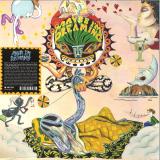
In November 2024, Japanese quartet Hibushibire flew into the UK for the third time. Heads were banged, minds were blown and a new legion of fans were made
During the tour, the band recorded several shows with the idea to release another of their legendary live bootleg albums if the performances were up to scratch
They were! This is a trimmed down version of their set, recorded in both Glasgow and London with no overdubs and no fancy production . It's 100% raw/live Hibushibire as God intended. Crank it up and freak out!
Produced by Joe Barresi (Queens of the Stone Age, Tool), The Dissent of Man finds Bad Religion pushing the boundaries of their music as much today as they did in their formative years as a genre defining punk band. Over the course of making the album, primary songwriters Greg Graffin and Brett Gurewitz"s songwriting was informed by life changing events, with Graffin writing his forthcoming book "Anarchy Evolution" and Gurewitz embarking on parenthood again. The result is one of the band"s most forward thinking and musically varied albums ever. The Dissent of Man is not only a snapshot of the band"s personal experiences of the past years but also of their continued maturity in songwriting, capturing an array of styles ranging from blazing punk rock songs like the opener "The Day That the Earth Stalled" and "Meeting of the Minds" and classic rock-tinged cuts like "Cyanide" and "Turn Your Back on Me" to radio rock ready hits like the first single "The Devil in Stitches." The Dissent of Man is a testament to why Bad Religion has remained relevant for the better part of three decades. Already having cemented their place in history as a groundbreaking band who helped create a movement in Los Angeles with classic releases like How Could Hell Be Any Worse?, Suffer, Recipe for Hate, Stranger Than Fiction and Process of Belief, Bad Religion continue to inspire and create with a unique style that continues to cross boundaries and transcends genres."
A1 FORWARD
Was inspired by the revolution of the year of 1988 also referred to as the 2nd summer of love. Revolutions great and small are happening all around us all the time, and they take place in the minds of individuals.
A2 CHARANJIT DRIVE
Describes the revolution i 've got in mind, angelic bass-string harmonic notes flying left and right, Indian-vocals, sudden sped-up dancehall baselines and breaks. Imagine a hippie a homeboy and a funky dread, hugging and dancing and telling their mates how much they love each other in a nice green field while this plays.
B1 HONDA WANDERER
A man in a blue honda civic is traveling through a misty world at a high velocity. Seeking that which is just hiding behind the next bend. I made this after a beautiful misty, raining/sunshine rainbow ride on the autobahn. I had just picked up a cheap mutron bi-phase which was sitting beside me in the passenger seat. It was amazing.
B2 MISTY VALLEY
It's time to get a little bit serious, this one feels like the place where i made all of this music, the village of Ruigoord, covered in a thick winter fog. The remnants of a possible previous reincarnation of myself as an 80s new-beat producer are haunting this music.
all music & artwork by Mozes Meijer, mastering: Wouter Brandenburg, cut: Dubplates & Mastering a&r: Arne Cinema Royale Visser.
- Kill Me Quickly
- A Subtle Dagger
- See You In The Shallows
- Betrayal Is A Symptom
- Deadbolt
- In Years To Come
- The Red Death
- A Living Dance Upon Dead Minds
- Where Idols Once Stood
- Trust
- To Awake And Avenge The Dead
- So Strange I Remember You
- The Beltsville Crucible
- That Hideous Strength (Bonus Track)
YELLOW VINYL[24,33 €]
Von Punk-/Hardcore-Clubs aller Altersgruppen in Orange County, Kalifornien, bis hin zum Headliner der größten Rockfestivals und Veranstaltungsorte der Welt - »The Illusion of Safety« gilt als Katalysator für den großen Erfolg der Band. Auch 20 Jahre und zehn Alben später kann man bei jeder Thrice-Show unweigerlich die Aufforderung hören, »Deadbolt« zu spielen - ein Beweis für das Durchhaltevermögen eines Albums, das die Screamo / Post-Hardcore-Ära definiert hat. Mit der Jubiläumsversion von »The Illusion of Safety« feiert die Band das Vermächtnis des Emo / Post-Hardcore-Klassikers, indem sie als Bonus die B-Seite »That Hideous Strength« zum ersten Mal auf Vinyl veröffentlicht. Electric Blue Vinyl LP mit Extratrack zum 20. Jubiläum!
- A1: The Watson Brothers Band - Justwhistle
- A2: Jim Huxley - Tessa On A Magazine
- A3: Rick Penta - My Story Changes
- A4: Mak - That's Life
- A5: Palm Pizazz! - Silent Letter
- A6: Twice As Nice - Thoughts Of You
- B1: Barracuda - Baby I Love You
- B2: Elderberry Jak - Forrest On The Mountain
- B3: Dennis - Walk With Me
- B4: Jim Ware - Green Eyed Gypsy
- B5: John Lyle - Oh My Wind
- C1: Peter Kraemer - Let The Light Slip
- C2: Brian Freel - Nightrider
- C3: Michael Moore - Holland
- C4: Clete Stallbaumer - John’s Song
- C5: Ronnie White - The Jump
- D1: David Owens - Take Off Your Armour
- D2: The Squad - D L.m.h.i.m.a
- D3: Christoph Spendel Group - Forever
- D4: Awakening - Gotta Do Somethin / Might As Well Cultivate
‘Maybe I’m Dreaming’ is the latest collection selected by Mikey Young (Total Control, EddyCurrent Suppression Ring) and Keith Abrahamsson (Founder and Head of A&R at AnthologyRecordings), the mangled minds behind the beloved ‘Follow the Sun’, ‘Sad About the Times’,and ‘…Still Sad’ compilations. The twenty tracks of ‘Maybe I’m Dreaming’ make a conscious(and unconscious) detour from its predecessors, sourced entirely from private press releases,spanning new decades and production modes within homespun folk, soft rock and otherwise70s and 80s FM radio adjacent music. The magic of ‘Maybe I’m Dreaming’ is the untold story of the artists behind these songs; thosewho missed the big time, but whose song craft and unrequited care hit the right notes, bothhigh and low.
Where ‘Follow the Sun’ and ‘Sad About the Times’ introduced us to the fame chasing, ambitioncrashing crooners who missed their shot in the mainstream, ‘Maybe I’m Dreaming’ delvesdeeper into the isolated wilds - a private world where production quirks, late-night tape hiss andone-man studio dreams were not necessarily a choice but the hand that was dealt.
With the parameters set to ‘private press only’, Young and Abrahamsson follow a circuitous trailof invention and emotion, documenting a spirit that’s more homespun, sometimes lonelier andoften a little weirder. The guitars still strum, but the keyboards’ hum is more prevalent andprecious; wistful harmonies brush up against lo-fi drum machines; a bittersweet fog lingeringover even the brightest melodies.
As with their previous collaborations, Young and Abrahamsson weren’t interested inconstructing a museum or drafting a historical survey. ‘Maybe I’m Dreaming’ is a sentimentalmixtape, assembled late at night when the mind wanders and old memories blur with imaginedfutures, those within reach and those far too mysterious to ever encounter. Songs wereunearthed in personal collections, deep YouTube burrows, dilapidated web archives and thedim corners of Discogs, with many selections tied not only to intuition but to personalconnection. Some tracks arrived via friends - Kelley Stoltz, a frequent guide for Young, tipped him off toboth Peter Kraemer’s lost gem ‘Let the Light Slip’ and Awakening’s revelatory closer - addingan unseen but deeply felt thread of camaraderie to the compilation.
The journey takes in a wide, strange sweep: The Watson Brothers Band’s ‘Just Whistle’ opensthe collection with a sigh and a shrug, a song that feels like it’s been waiting for decades to beheard again. Jim Huxley’s ‘Tessa on a Magazine’, rediscovered after a long and winding searchby Young, shimmers with a distinctly Australian melancholia. The heartbreak of Rick Penta’s‘My Story Changes’ and Twice As Nice’s delicate ‘Thoughts of You’ float easily alongside themore buoyant, radio-dream sheen of Barracuda’s ‘Baby I Love You’ and MAK’s sunshinedappled ‘That’s Life’.
Widening the aperture to the late 1970s and early 1980s allows for a deeper exploration intoevolving production techniques and musical technologies. The Squad’s ‘D.L.M.H.I.M.A.’ andChristoph Spendel Group’s ‘Forever’ crackle with the kind of bedroom synth warmth that couldonly come from the analogue age, while the soulful, yearning undercurrent of Awakening’s‘Gotta Do Somethin / Might As Well Cultivate’ caps the collection with a call for action - ormaybe just acceptance - in an accidental Brian Eno ‘Here Come the Warm Jets’ parroting.
While ‘Maybe I’m Dreaming’ moves away from the ‘sad man with guitar’ archetype that hoveredover its predecessors, it remains tethered to a familiar emotional gravity - a balance of longingand lightness that defines this corner of the musical universe. Each track shuffles gentlybetween resignation and hope, sadness and serenity, as if the artists themselves were chasinga dream just beyond reach, recording not for fame but for the simple act of getting it, thatprimal, creative itch, out into the world.
Available on CD and 2LP, featuring the third eye-opening artwork of Dang Wayne Olsen. Thedouble LP set arrives in an outrageous double-wide spine jacket with printed inners and adream journal entry by Pacific Northwest artifactual authority Josh Lewellen.
Old Juniper is a new album from The Down Hill Strugglers, their first in seven years and first to feature all original songs and tunes.
"These guys are a first rate string band! Walker, Jackson and Eli have absorbed the old tradition, and the songs and tunes they wrote for this album are outstanding."
- Tony Garnier
(Bob Dylan, Asleep at the Wheel)
"From the first track “I’m Gettin’ Ready to Go” to the last “Let the Rich Go Bust", this is a wonderful collection of original songs and tunes by The Down Hill Strugglers (Walker Shepard, Jackson Lynch and Eli Smith).
Based in NYC they have been playing and recording together for 15+ years—this is their first in seven years and it’s a doozy. Old and new, evocative, current—all original. And I, as one who’s always had one foot in “old weird America” and the other in new weird America, love this recording.
The Down Hill Strugglers have, as Nathan Salsburg put it in his notes, 'an exquisite sensitivity to the seam where collective tradition and individual artistry meet….' I couldn’t agree more."
- Alice Gerrard
"If it’s possible to be at the forefront of something old, The Down Hill Strugglers are right there with this new recording! Imaginative arrangements of interesting tunes played with soul, all while reaching back to the best of the old mountain sounds."
- Bruce Molsky
"Throughout the record, the musical texture of Old Juniper shifts and blooms. Eli, Jackson, and Walker exchange roles freely— the banjo, fiddle, and guitar change hands almost every track. No matter their instrument, the three fall into place with the tune their guide. As these dynamics build and transform, a sound raw and beautifully sincere appears.
This album of new old-time tunes and songs will surely be a welcome addition to the well loved canon of American traditional music."
- Nora Brown
"How wonderful is it that The Down Hill Strugglers are releasing a new album? I’ve been a fan of theirs from the beginning and will happily spend time with anything they put out!
I see The Down Hill Strugglers as the primary successors of the great and longstanding tradition of urban interpreter-performers of American vernacular string band music - They pick up where the NLCR left off, with Cohen’s considerable creative guidance ever in their hearts and minds. “Old Juniper” is a testament to the vibrancy of this legacy."
- Jake Xerxes Fussell
- 1: Pantomime Of Power
- 2: Suicide
- 3: Hate And Disdain
- 4: D.t.z.w.m
- 5: U.i.b
Scintillating 6 minute thrillride delivering booming flying acid guitars, illegibly distorted bass, unrelenting drums, and brutal borderline death metal vocals. Some of the minds who brought you Arms Race and The Flex bring you this music coming from the same filth at the earths core which defined the UK’s great contribution to exceptional ear damage across four decades — touching on Scandinavian speed a la Totalitär and Mob 47, the aching chaos of Disorder, the psychedelic noise bath of ENT, and the clean cut legacy annihilation of NWOBHC. Heavy and relevant political lyrics top this masterstroke of “no metal no melody no problem”
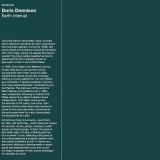
The discovery of Doris Dennison's score represents a genuine musicological breakthrough—what once would have been "a tree falling in the woods" thirty years ago now holds the potential to render "a thunderous clap in our minds." While researching Anna Halprin's lesser-known collaborators, scholar Tom Welsh uncovered the archives of AA Leath, one of Halprin's principal dancers. Buried within these materials was Dennison's handwritten score for Earth Interval, dated May 1956. Born in Saskatchewan, Canada, in 1908, and raised near Seattle, Dennison (1908-2009) encountered John Cage while teaching Dalcroze eurythmics at the Cornish College of the Arts. She joined Cage's earliest percussion quartet—alongside Margaret Jansen, the composer and his wife Xenia—in the group widely regarded as having performed the first complete concert of percussion music in the United States. This historic December 1938 concert was followed by tours and the landmark May 1941 performance at the California Club, comprising Cage and Lou Harrison's Double Music, the premiere of Cage's Third Construction, and Harrison's 13th Simfony.
As Bradford Bailey observes in his extensive liner notes, Earth Interval demonstrates "an extraordinary balance of elements that imbues the piece with a sense of clarity, directness, and constraint that is both distinct and ahead of its time." The work's most remarkable innovation lies in its approach to extended techniques, particularly Dennison's notation for the central movement: "In 2nd movement, 1st player lowers + raises a gong into a tub of water while beating." This technique, absorbed from Cage's experimental vocabulary, generates what Bailey describes as "fields of acoustic abstraction that bend and warp time through sustained resonances, beat, and space." The temporal sophistication of these manipulations anticipated Karlheinz Stockhausen's Mikrophonie I (1964) and Annea Lockwood's water-based sound investigations by over a decade. After joining Mills College as dance accompanist, Dennison maintained crucial connections to the Bay Area's experimental scene, collaborating with figures like Merce Cunningham and programming Cage's music throughout the 1950s.
Comprising three movements—Land Form, Air Tide, and Earth Play—Earth Interval is scored for recorder, drums, gongs, maracas, muted gongs, and bowl gongs. In total, the piece is just under eight minutes: "a fleeting glimmer of moment in time, a life spent at the cutting edge, and a singular creative vision that packs a powerful punch." When viewed in historical context, placed in contrast to roughly contemporaneous avant-garde percussion works by Cage, Harrison, Louis Thomas Hardin (Moondog), and Harry Partch, or important precursors like Edgard Varèse's Ionisation (1931) and Henry Cowell's Ostinato Pianissimo (1934), it's clear that Dennison was following her own path. Earth Interval is not derivative. It is a precursor to what was yet to come, alluding to developments of avant-garde and experimental music that wouldn't begin to appear on the cultural landscape until the 1970s and '80s, with the emergence of Post-Minimalism and more idiosyncratic artists and ensembles like Midori Takada, Ros Bandt, Peter Giger, Frank Perry, Christopher Tree, Michael Ranta, Gamelan Son of Lion, and Niagara.
This recording by Chicago's Third Coast Percussion, captured in March 2022, represents the first complete documentation of this pioneering work. The ensemble's interpretation reveals the piece's remarkable contemporaneity while maintaining its historical specificity. Where Cage, Harrison, and Partch employed "self-consciously off-kilter polyrhythms," Dennison's rhythmic sensibility anticipates minimalist developments by nearly a decade, yet integrates "forceful rests, as well as sharp shifts in sonic character, tempo, and meter, that break the momentum and breathe a sense of life into the piece's structure." This positions her work closer to Post-Minimalism decades before its emergence. The architectural approach demonstrates Dennison's understanding that "the composer almost entirely disappears" in favor of phenomenological listening experience, creating what might be called an egoless music that places its realities and meaning entirely in the ear of the beholder. The present recording, realized by Chicago's distinguished Third Coast Percussion ensemble, represents a significant achievement in experimental music scholarship and performance practice. As specialists in the Cage tradition and contemporary percussion repertoire, Third Coast Percussion approached Earth Interval with the historical sensitivity and technical precision required to illuminate Dennison's subtle compositional innovations. The March 2022 recording sessions, engineered by Colin Campbell, capture both the work's intimate chamber music qualities and its bold exploration of extended techniques. The ensemble's interpretation reveals the piece's remarkable contemporaneity—its ability to speak directly to current musical concerns while maintaining its historical specificity.
This recording serves multiple scholarly functions: it provides the first complete documentation of Dennison's compositional voice, offers insight into the broader network of experimental music practitioners surrounding Cage and Harrison, and demonstrates the sophisticated level of compositional thinking that was occurring within the Bay Area's dance-music collaborations of the 1950s. The work's emphasis on phenomenological listening—what might be called an "egoless" approach to musical experience—places it within a lineage of American experimental music that prioritizes perceptual process over compositional personality. The work's original obscurity—limited to AA Leath's performances at venues like the 1957 Pacific Coast Arts Festival at Reed College—paradoxically allowed it to remain "entirely on its own terms," free from the constraints of historical categorization. Drawing on Jacques Derrida's Archive Fever, the argument emerges that "the archive can acknowledge, celebrate, and resurrect" overlooked voices, transforming our understanding of experimental music history. The present Blume edition, featuring Third Coast Percussion's authoritative interpretation, includes a lavishly illustrated 16-page booklet designed by Bruno Stucchi / dinamomilano, containing complete scholarly apparatus, historical photographs, and detailed production notes. This recording enables "cross-temporal intersectionality," allowing Dennison to "belong to a newly formed and more dynamic understanding of the present and past," demonstrating how forgotten voices can reshape entire historical narratives when given proper scholarly attention and performance advocacy.
Alanis Morissette Delivers the Equivalent of a Spiritual Awakening on Supposed Former Infatuation Junkie:
Introspective Themes and Compassionate Emotions on Eastern-Tinged Album Have Grown More Relevant
1998 Smash Plays with Enhanced Detail, Rich Textures, and Sharp Focus on Mobile Fidelity’s 180g 33RPM 2LP Set:
First-Ever Audiophile Edition Strictly Limited to 3,000 Numbered Copies
1/2" / 30 IPS analogue master to DSD 256 to analogue console to lathe
Alanis Morissette refuses to adhere to convention on Supposed Former Infatuation Junkie. While most artists follow-up their breakthrough with an album that closely parallels the approaches that helped make them famous, the maverick singer-songwriter stayed true to herself and drew inspiration from travel to India before she began the recording sessions. As much as the preceding Jagged Little Pill put her on the global radar, Supposed Former Infatuation Junkie confirmed her role as a vital generational voice — and proved her blockbuster success was no fluke. Having set a mark for most sales of an LP in its debut week by a female artist, the 1998 smash remains a pop-rock staple.
Sourced from the original master tapes, strictly limited to 3,000 numbered copies, housed in a Stoughton jacket, and pressed at Fidelity Record Pressing, Mobile Fidelity’s 180g 33RPM 2LP set of Supposed Former Infatuation Junkie presents the triple-platinum LP in audiophile sound for the first time. Benefitting from defined grooves that befit the album’s nearly 72-minute length, this pressing plays with enhanced detail, refined clarity, sharper focus, and broader dynamics than prior versions.
Those traits are key given Morissette’s use of more textured and atmospheric soundscapes, not to mention her evolution into a more nuanced and controlled singer. Similarly, the scale and reach of David Campbell’s string arrangements come across as orchestrations should. Ditto the synth-based architecture shaped by producer and principal Morissette collaborator Glen Ballard. All in all, Mobile Fidelity’s collectible edition simply delivers more information via transparent means.
Notable for its balance, sophistication, and richness, Supposed Former Infatuation Junkie at heart finds Morissette pausing, taking a breath, and learning how to navigate life in a healthy manner after enduring one of the most exhausting and rocket-to-fame stretches any musician ever experienced. It’s the sonic equivalent of a spiritual awakening, a call to betterment, a brave assessment of the self and humanity as a whole. As such, the tunes on her second international (and fourth Canadian) release teem with gratitude, compassion, love, empathy — emotions that lend themselves to the largely mellow, contoured scope and Eastern-tinged melodies of the songs themselves.
“How ‘bout how good it feels to finally forgive you,” Morissette sings on the lead single “Thank U.” “How ‘bout grieving it all one at a time.” Those sentiments, and the vocalist’s embrace of concepts such as divinity and acceptance, not only provide a foundation on which Supposed Former Infatuation Junkie rests. They also reflect the personal maturation she gained from her embrace of Buddhist culture in India and a mindset bent toward notions of reconciliation, peace, and sensuality that were nearly absent in popular music in the late ‘90s.
Those themes continue on “That I Would Be Good,” a confident reflection that takes stock of one’s mental, physical, and emotional state in the face of both changing and unpleasant circumstances — and concludes with Morissette performing a flute solo, further exposing the raw intimacy of the introspective tune. She channels relatable simplicity and joy on “So Pure,” with her invocations of “dance” and “freestyle” speaking to the freedom of expression that courses throughout Supposed Former Infatuation Junkie. And perhaps no song finds Morissette showcasing her refreshed attitude toward life and opening up more than the relationship-themed “Unsent,” whose unconventional structures and lack of a chorus only add to its directness.
Akin to many albums that were ahead of their time, and despite the critical and commercial accolades afforded it upon release, Supposed Former Infatuation Junkie attracted new appreciation and perspective as it got older. Issued during an era where its ideas of serenity, absolution, tranquility, and contentment seemed largely alien, the record — akin to the ways its predecessor foreshadowed a movement — now functions as a visionary beacon that foretells of way to maintain sanity, dignity, and goodness amid a contemporary landscape filled with constant distractions, polarizing views, and incessant calls to purchase, promote, and produce without questioning the what-for purpose.
Supposed Former Infatuation Junkie dares to ask the questions and, at its best, supplies meaningful answers and alternatives that lead to longed-for enlightenment, healing, and laughter. For these reasons alone, it’s a record that never goes out of style.
A trippy and shadowy journey through leftfield techno and off-centre club territories. Pletnev crafts hypnotic, off-grid rhythms and analog textures soaked in psychedelic tension. Twisted grooves and eerie atmospheres collide in a sound that’s danceable, distinctive, and built for adventurous late-night floors.
2025 Repress
In an unprecedented international collaboration, Energy Exchange Records presents 'The Napoli Exchange' - the brainchild of Energy Exchange Records co-founders, Lewis and Ziggy, joining forces with producer and label boss Federico Gallotti (Tartelet / La Scimmia), the project was inspired by numerous visits to Naples, allured by the mediterranean breeze and of course the underground disco and funk forged by labels such as Early Sounds and Periodica Records. This meeting of minds created an opportunity to build bridges from the historic Italian city to the broader european scene of club crossover music.
Fresh from the lab, BLACK PRINT is finally here—a sonic formula meticulously crafted by Detroit’s SCAN 7 to awaken minds and ignite souls. This release delivers five distinct tracks, including a collaboration with acclaimed Detroit DJ/Producer AMX, aka The AM. Each track is a universe unto itself, bound together by rhythm and energy, guiding you toward a singular truth. To truly grasp the message, dive in. Listen deeply, surrender to the sound, and step into BLACK PRINT.
In 1995, when Cobweb-day was released, Fabrice Laureau was 24, Nicolas Laureau 21, Ludovic Morillon 22, and Quentin Rollet, who had just joined them on this new album, was 21. Prohibition, founded in 1989, had already released two albums: Turtle in 1993 and Nobodinside in 1994, on the Distorsion label. Cobweb-day, literally "Spider-web Day," is poetic, satirical, and libertarian. A title conceived by Nicolas to express all the feelings and themes explored on the album, this neologism also echoes the artwork on the cover. The lyrics describe, in vitriolic poetry and with a touch of self-deprecation, a world based on the powers of commodification and order, on submission to modern Molochs. Thirty years ago, it addressed themes such as the trade in minds and bodies, Kafkaesque justice, state violence, and Western blindness. Is this a coincidence that might raise a smile? Fabrice and Nicolas were both conscientious objectors at the time the album was written. The deceptively childish drawing that adorns the cover was created by Fabrice in 1989. It evokes African art and the skyscraper where the brothers grew up. Its title? "Glances on the Horizon." Yet, in these naive eyes, locked in a rhizomic matrix, there is the disturbing sensation of being observed, scrutinized, or perhaps imprisoned. This is Cobweb-day. During this period, the band spent its entire life touring with the British post-punk trio Headcleaner and the furious Lyon-based Condense. Their correspondence, followed by a meeting in 1994 with Guy Picciotto, singer-guitarist in Fugazi, led to a series of concerts with the Washington, DC quartet, around the time of the album's release in the spring of 1995. Quentin Rollet gradually joined the band, first on stage and then on the records. The concerts of this era often ended with long improvisations featuring saxophone, sitar, bass, and drums. Prohibition had emerged from the shadows, but chose to continue evolving underground, with the Laureau brothers creating their label Prohibited Records. Cobweb-day serves as the first reference. Thirty years ago, then. The album was recorded at Ark Studios near Paris in January 1995, along with eight other previously unreleased tracks. This new mix was created at Black Box Studios by Peter Deimel and Nicolas from 24-track analog tapes in August 1998, shortly before the release of 14 Ups & Downs, Prohibition's fifth and final album, and their US tour. All tracks were remastered by Fabrice and Nicolas Laureau in March/April 2025.
Renowned UK producer and Freerange co-founder Jimpster steps back into the spotlight with a brand-new 5 track EP that dives deep into the raw, emotional core of underground house music. Blending masterful production prowess with soulful storytelling, this latest release features standout collaborations with two celebrated spoken word artists namely NYC’s OVEOUS and Atlanta via Detroit’s rising star Ash Lauryn. The North Atlantic EP captures the essence of late-night dance floors and a fusion of sounds, all wrapped in Jimpster’s signature warm, analog textures and rolling groove science.
FLO opens the EP with a vibrant pulse - an up-beat groove that wraps around you like incense smoke and island vibes in a Brooklyn basement. Anchored by filtering stabs and a rubbery bassline, the track unfolds with the commanding presence of OVEOUS, whose spoken-word cuts through the haze with razor-sharp clarity. His voice rides the beat like a sermon for the dance floor; straight talk that’s spiritual, and defiantly alive, this is deep house as ceremony for the streets. The accompanying Dub strips back the vocal and introduces additional harmonic elements in the form of piano, strings, and synth washes bringing a warm and musical touch.
On Feel Me, Jimpster crafts a rolling groove built on punchy drums, shuffling percussion, and a soulful vibe which feels both classic and futuristic. Ash Lauryn’s voice glides across the track with cool authority, bringing a seductive vibe to the party. Her voice is perfectly balanced with Jimpster’s atmospheric pads and dubby flourishes creating a contemporary and irresistibly danceable house anthem for the heads.
Two additional mixes of Feel Me bolster an already sturdy package bringing a more straight up, bumpy version on the House Mix as well as a darker, heads down - eyes closed take on the Freakin’ Club Mix.
This EP is more than just a meeting of minds — it’s a dialogue between continents, generations, and frequencies. With FLO and Feel Me, Jimpster continues to affirm his place as a producer deeply rooted in tradition yet always striving to push his sound forward.
Peaceful electronic ambient and tribal echo environments. Music that explores feelings of calm, spirituality, and ceremony. Long-form voyages to temple meditations, “trips in search of something,” looking in as looking out.
The artist himself says: “This is an attempt to look into the heads and souls of "unnecessary" people, inconspicuous people, but striving to make the world a better place. People who have lost the horizon and the outlines of reality are desperate and stuck in the middle of nothing... people who cannot accept the rules of this world and unpleasant aspects of daily life, boring and unfair into unreality, other existence... it's all about escapism, rethinking their inner world, and discovering new facets of the soul.”
FFO Jon Hassell, O Yuki Conjugate, Bitchin Bajas, Laraaji, The Chi Factory…
"soft brushes of undefinable sounds and tropical field recordings that almost create ASMR-inducing vibrations in the minds of the listener" - Simon Eliasson
Repress!
In the mid-1970s, a force of nature swept across the continental United States, cutting across all strata of race and class, rooting in our minds, our homes, our culture. It wasn’t The Exorcist, Goodbye Yellow Brick Road, or even bell-bottoms, but instead a book called The Secret Life of Plants. The work of occultist/former OSS agent Peter Tompkins and former CIA agent/dowsing enthusiast Christopher Bird, the books shot up the bestseller charts and spread like kudzu across the landscape, becoming a phenomenon. Seemingly overnight, the indoor plant business was in full bloom and photosynthetic eukaryotes of every genus were hanging off walls, lording over bookshelves, and basking on sunny window ledges. The science behind Secret Life was specious: plants can hear our prayers, they’re lie detectors, they’re telepathic, able to predict natural disasters and receive signals from distant galaxies. But that didn’t stop millions from buying and nurturing their new plants.
Perhaps the craziest claim of the book was that plants also dug music. And whether you purchased a snake plant, asparagus fern, peace lily, or what have you from Mother Earth on Melrose Avenue in Los Angeles (or bought a Simmons mattress from Sears), you also took home Plantasia, an album recorded especially for them. Subtitled “warm earth music for plants…and the people that love them,” it was full of bucolic, charming, stoner-friendly, decidedly unscientific tunes enacted on the new-fangled device called the Moog. Plants date back from the dawn of time, but apparently they loved the Moog, never mind that the synthesizer had been on the market for just a few years. Most of all, the plants loved the ditties made by composer Mort Garson.
Few characters in early electronic music can be both fearless pioneers and cheesy trend-chasers, but Garson embraced both extremes, and has been unheralded as a result. When one writer rhetorically asked: “How was Garson’s music so ubiquitous while the man remained so under the radar?” the answer was simple. Well before Brian Eno did it, Garson was making discreet music, both the man and his music as inconspicuous as a Chlorophytumcomosum. Julliard-educated and active as a session player in the post-war era, Garson wrote lounge hits, scored plush arrangements for Doris Day, and garlanded weeping countrypolitan strings around Glen Campbell’s “By the Time I Get to Phoenix.” He could render the Beatles and Simon & Garfunkel alike into easy listening and also dreamed up his own ditties. “An idear” as Garson himself would drawl it out. “I live with it, I walk it, I sing it.”
But as his daughter Day Darmet recalls: “When my dad found the synthesizer, he realized he didn’t want to do pop music anymore.” Garson encountered Robert Moog and his new device at the Audio Engineering Society’s West Coast convention in 1967 and immediately began tinkering with the device. With the Moog, those idears could be transformed. “He constantly had a song he was humming,” Darmet says. “At the table he was constantly tapping.” Which is to say that Mort pulled his melodies out of thin air, just like any household plant would.
The Plantae kingdom grew to its height by 1976, from DC Comics’ mossy superhero Swamp Thing to Stevie Wonder’s own herbal meditation, Journey Through the Secret Life of Plants. Nefarious manifestations of human-plant interaction also abounded, be it the grotesque pods in Invasion of the Body Snatchers or the pothead paranoia of the US Government spraying Mexican marijuana fields with the herbicide paraquat (which led to the rise in homegrown pot by the 1980s). And then there’s the warm, leafy embrace of Plantasia itself.
“My mom had a lot of plants,” Darmet says. “She didn’t believe in organized religion, she believed the earth was the best thing in the whole world. Whatever created us was incredible.” And she also knew when her husband had a good song, shouting from another room when she heard him humming a good idear. Novel as it might seem, Plantasia is simply full of good tunes.
Garson may have given the album away to new plant and bed owners, but a decade later a new generation could hear his music in another surreptitious way. Millions of kids bought The Legend of Zelda for their Nintendo Entertainment System back in 1986 and one distinct 8-bit tune bears more than a passing resemblance to album highlight “Concerto for Philodendron and Pothos.” Garson was never properly credited for it, but he nevertheless subliminally slipped into a new generations’ head, helping kids and plants alike grow.
Hearing Plantasia in the 21st century, it seems less an ode to our photosynthesizing friends by Garson and more an homage to his wife, the one with the green thumb that made everything flower around him. “My dad would be totally pleased to know that people are really interested in this music that had no popularity at the time,” Darmet says of Plantasia’snew renaissance. “He would be fascinated by the fact that people are finally understanding and appreciating this part of his musical career that he got no admiration for back then.” Garson seems to be everywhere again, even if he’s not really noticed, just like a houseplant.
It happens everytime. As soon as we get the news that Lewis Fautzi, label owner, will release with us, his own imprint, the excitement is hard to describe. First of all, his vision makes him one of the most exciting artists in the scene and last but not least, he's always able to surprise us. Leading us through his own landscapes and rythms, Lewis creates a world which is very much of his, with a motion and a pace that are remarkable and hard not to notice. This release he's been preparing for a while is another masterpiece that will echo in our minds for a long time. Through beatless pads or fierceful kicks, the precise cutting edge of his creations are a delight to our ears and makes us all embark in a journey with no limits or boundaries.
- Not A Calculator
- Fantastic Dreams
- Beat Makers Boutique
- Let's Not Argue
- Copper Skin Moccasins
- Looking For Love
- Toothpaste
- A1: Freestyle
- No More Love
- Warrants
- Calrisian
- Six Speed Bicycle
- Don't Need U
- Skywalker
- Samurai Jack
- Frozen
- Sincerely Yours
- Bless The Youth
- Volume 2
- 40: Seconds Only
- Build A Universe
- On My Way
- Beat Makers Boutique Ii (Feat. Gritfall)
- K.o!
- Kilimanjaro
- The Operator Interlude
- Pops (Feat. T Gramz)
- Alphabet Soup
- If We Being Honest (Feat. Gawd5)
- Always Sunny (Feat. The 6Th Letter)
- Lift Your Hands (Feat. Funk Lo)
- Be Original Interlude
- Perfect Circuit
- Volume 3
- Breakfast In Berlin
- Lion In Lyon
- The Journey (Feat. Stevie Bucks)
- Large Amounts (Feat. John Robinson)
- We The Best Music (Feat. Gritfall)
- Tuttlingen
- Red Light District (Feat. Daniel Son)
- Ufos (Feat. Gritfall)
- Catching Z's
- Nights In Paris
- The Gospel (Feat. Ankhlejohn)
- Fickle
- Aquemini (Feat. Gritfall)
We’re thrilled to announce the ultimate collection for fans of Raz Fresco’s groundbreaking “Pocket Operations” album series! For the first time, all three volumes of this critically acclaimed series have been brought together into one seamless release. Featuring over 40 meticulously crafted tracks, this collection showcases Raz Fresco’s unique production skills, with every beat and sound created on the PO-33 – the world’s smallest sampler, designed by the innovative minds at Teenage Engineering.
This special release comes packaged in a stunning trifold jacket, making it a must-have for collectors and audiophiles alike. Available in your choice of vibrant colored vinyl or classic black vinyl, this exclusive edition is now open for pre-order. Don’t miss your chance to own this iconic compilation – secure your copy today!
- 1: Eating Etiquette
- 2: Golden Rules
- 3: Takes A Ten
- 4: The Outfit (Feat. Roc Marciano)
- 5: Magic & Kareem
- 6: Addicted To Danger
- 7: Ride Wit A P
- 8: Food For Thought
- 9: Forks And Knives
- 10: Gut Feeling
- 11: 1 On Me
- 12: Young Thugs
- 13: Servitude
- 14: Receipts
Knowledge The Pirate returns with a powerful new statement with his new album, The Round Table, which is now available. The Round Table is produced in its entirety by longtime collaborator and legend Roc Marciano through his Pimpire International imprint.
With roots in New York’s revered ‘90s hip-hop scene, Knowledge The Pirate has steadily built a reputation as one of the genre’s most consistent and authentic voices. A frequent Roc Marci collaborator and key figure in the modern un-derground renaissance, Knowledge fuses golden-age grit with new wave innovation—bridging generations while stay-ing firmly rooted in New York’s timeless sound.
Since his 2018 debut Flintlock, Knowledge has carved a lane entirely his own through his label Treasure Chest Enter-tainment, Inc. With five acclaimed projects under his belt, including the recent 5lbs of Pressure, he continues to deliver unfiltered street wisdom and personal reflection in every bar.
The Round Table stands as a testament to his evolution—an uncompromising body of work laced with Roc Marciano’s signature production and Knowledge’s lived-in lyricism. It’s not just a record—it’s a meeting of the minds, an audio council of kings.
“The Round Table is cinematic storytelling, teaching street knowledge, eating etiquette that will save your life” Knowledge professes. “This album is like an Honorable Elijah Muhammad book; How To Eat To Live. Produced fully by the true creator of the new wave sound, Roc Marciano, you are all invited to a seat at The Round Table; and break bread with the true Godfathers of this new wave rap renaissance.”