Suburban Base proudly welcomes John Rolodex to the label, a heavyweight of the Canadian Drum & Bass and Jungle scene with an international legacy. With past releases on iconic imprints including Metalheadz, V Recordings, Dread, and his own Machinist Music, John Rolodex now makes his Suburban Base debut.
His new 4–track EP, Teenage Ravers, is a powerful statement that bridges past and present. Channelling the raw energy and euphoria of the original rave and jungle movement, Rolodex pays tribute to the foundations while pushing the sound forward with his trademark weight and precision.
The EP features four distinct cuts:
- Teenage Ravers
- Hidden World
- Undignified Pt. 1
- Undignified Pt. 2
In true Suburban Base style, the vinyl release is something special: a limited–edition white pressing, complete with a unique ‘dove’ ecstasy tablet–style centre label, a nostalgic nod to the early rave era and a future collector’s piece.
Search:d part
"Bandleader Lina Langendorf has been known in Sweden for a long time as one of the most skilled and forward thinking saxophone players. She has been staying in both Mali and Ethopia for longer periods and has performed in concerts with legendary artists like Alemayehu Eshete, Vieux Farka Touré and...Mulatu Astatke who, at his club African Jazz Village (in Addis Ababa/Ethiopia), introduced Lina to people in the audience with the words: 'Amazing saxophone player, big respect! We should play together some day'. Some minutes later they go on stage together. Joined by the legendary piano player Dawit Yifru and the bass player from Roha Band, Giovanni Rico Bonsignori. 'Fantastic. You're so strong. Everybody loves you, they say you are ethio-jazz' was Mulatu's words after the jam session.
Lina has also been invited to the live club Le Hogon in Bamako numerous times for jam sessions and concerts with Toumani Diabaté and his band. And for Lina, these jam sessions in Addis and Bamako has been a crucial part of shaping (and sharpening) her musical vision. Last year she was also touring the UK as part of James Yorkston, Nina Persson and the second hand orchestra.
But it wasn't until feb 2023 we got to hear her own music. The debut album with her newly formed band Langendorf United was co-released between Italian label Black Sweat records and Swedish label Sing A Song Fighter and it immediately resonated with music lovers around the world (Radiohead drummer Philip Selway called it 'as if Tinariwen and Fela Kuti had a Blue Note session').
But the band is not just the composer/Saxophone star and band leader Lina Langendorf. Oh, no. The other four musicians are all highly praised musicians in various jazz bands in Sweden and Norway and together they form this sacred thythmic unity with the pulsating bass at the centre.
Langendorf United's music is vibrant and spiritual and on fire!"
Lina Langendorf - saxophone
Daniel Bingert (son of legendary South American musician Hector Bingert) - keys, guitars
Martin Hederos (The Soundtrack Of Our Lives, Tonbruket) - keys, viola
Ole Morten Vågan (Trondheim Jazz Orchestra) - upright bass
Andreas Werliin (Fire!, Wildbirds & Peacedrums) - drums
- 1: Chinatown-The Skatalites
- 2: The Reburial-The Skatalites
- 3: South China Sea-Johnny Moore
- 4: Determination-Roland Alphonso
- 5: Love In The Afternoon-Don Drummond
- 6: Confucius-The Skatalites
- 7: Live Wire-The Skatalites
- 8: Ska-Boo-Da-Ba-The Skatalites
- 9: A Shot In The Dark-The Skatalites
- 10: El Pussycat-The Skatalites
- 11: Ska-Ra-Van-The Skatalites
- 12: Smiling-The Skatalites
- 13: Ringo Rides-The Skatalites
- 14: Vc 10-Roland Alphonso
Ska was the name given to the music that came out of Jamaica between 1961/66.Based on the American R&B and Doo Wop records that the Sound Systems in Kingston Town used to play.But the American records style started to mellow out while the Jamaicans preferred a more upbeat sound.So the Sound System boss's became record producers to cater for this demand.Sir 'Coxonne'Dodd and Duke Reid led the way putting the top musicians on the island in the studio to make music,its subtle twist that had an emphasis placed on the offbeat made the music unmistakably Jamaican.
W.I.R.L Records(West India Records Limited) was set up by the Jamaican politician Edward Seaga in the late 1950's.He had supervised the recording of an album of Ethnic Jamaican music and needed an outlet for its eventual release.In 1962 the year of Jamaican Independence ,Seaga became a member of Parliament, representing the Jamaican Labour Party and then decided to sell the label to Bryon Lee,the sale led to a name change from W.I.R.L to Dynamic Sounds.
We have compiled some of the best SCORCHING SKA SOUNDS that came out of W.I.R.L vaults...and it still sounds as fresh today as the day it was recorded...hope you enjoy the set
We are honoured to work with Neil, who’s been an intrinsic part of the UK techno scene, especially with his devotion to experimentation within the genre! Sorry for the typo on the centre label mate. This release came out of the thirst for something very much outside the box.. literally! Fun fact: Fang Man was inspired by a breakdown driver who Neil met the day before signing this EP with us. Maximum respect to all DJs who picked this one up for the club circuit or radio spins! Thanks to everyone who’s been supporting the label and bought the wax, we’ve got plenty more in the works.
- A1: Slaughter 03 20
- A2: Dusk 01 50
- A3: Winter Clouds 01 28
- A4: Hollow Tree 01 56
- A5: Still Alive 01 11
- A6: The Cave 02 13
- A7: In Court 01 37
- A8: Hope Through Confusion 01 49
- A9: Not Guilty 51
- A10: Village Ceremony 51
- A11: Road Tension 01 22
- B1: Kneipe 01 18
- B2: Hunt Introduction 01 30
- B3: Rifle, Second Attempt 38
- B4: Hunt Epilogue 01 01
- B5: Confrontation 02 21
- B6: Judenfreund 01 19
- B7: Flashback 41
- B8: A True Friend 57
- B9: False Promises 01 39
- B10: How Do You Suffocate Weeds 01 55
- B11: Under The Masks We All Look The Same 02 58
- B12: Dream 01 32
- B13: Freedom 01 08
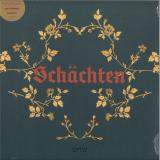
Erik K Skodvin's feature-length score to Thomas Roth's thriller "Schächten" feels like the epitome of all his musical projects, conjuring a dark cinematic trip through 1960's post-WWII Vienna in a film that touches on topics such as law, justice & revenge.
Releasing a soundtrack as a stand-alone album can be challenging; and "Schächten" is by no means a typical listening experience. The record contains 24 more or less short pieces evolving through dramatic movements, underlaying menace and deep emotive scenes. One thing that stands out is the linear atmosphere throughout the story which creates a wholeness that keeps your attention to the very end. Set in wintery Austrian landscapes in dimly saturated colours, the film's dramatic events with dark political undertones feels like a perfect situation for Skodvin's atmospheric collages - perhaps sounding closer than ever to his early works as Svarte Greiner or Deaf Center. Cello, violin, piano, analogue synth and plenty of hardly recognizable instrumentation come together in a record that feels very organic in its subdued tones. The score also features percussion by Andrea Belfi as well as a Chopin piano interpretation by Kelly Wyse to the bizarrely schizophrenic piece "Judenfreund".
With the contemporary world sliding into darkness again, listening to the soundtrack feels like coming to terms with ones own anxieties - something that in the end comes through as a cleansing experience. As quoted in the film "Everyone is their own devil. And we make this world our hell".
Short synopsis : "Vienna 1960s - The young Jewish business man Victor has to witness how the prosecution of a Nazi crime against his family fails. The political and legal system is still virtually run by former Nazis with large parts of society being entangled in the past. When Victor also loses his grief ridden father and his girlfriend’s family opposes their relationship and his identity, Victor begins to loose faith in formal justice and takes matters in his own hands."
- A1: Cadux Plectere I
- A2: Lacinia Off Axis
- A3: Maris Stella Plectere Ii
- A4: Ere
- B1: Arborea Plectere Iii
- B2: Eve
- B3: Sidereus Plectere Iv
- B4: Lacinia In Axis
- C1: Veris Plectere V
- C2: Nova Pt I
- C3: Eve For String Orchestra
- C4: Nova Pt Ii
- D1: Matrix Plectere Vi
- D2: Maris Stella Plectere Vii
- D3: Lacinia Off Axis
- D4: Cycle Plectere Viii
Returning to Die Schachtel with his fourth full-length with the label, the Genoa born, Bologna based, guitarist and electroacoustic composer, Stefano Pilia, delivers “Lacinia”, a new, immersive cycle of compositions, delving deeper into the realm of metaphysical, spiritual, and divine meaning, weaving astounding arrangements of sonority from a palette of synths, strings, brass, organ, various electroacoustic instruments, and percussion. Resting at a refined intersection of the acoustic and electroacoustic, drone, and chamber music - overwhelmingly beautiful, delicate, and bold, - “Lacinia” stands as a high-water mark in Pilia’s already remarkable and forward-looking career.
Since its founding in Milan during the early years of the new millennium, Die Schachtel has occupied a singular place in the landscape of experimental music, issuing a carefully curated body of reissues and archival releases by historically significant figures and projects like Christina Kubisch, Luciano Cilio, Marino Zuccheri, Prima Materia, Claudio Rocchi, Lino Capra Vaccina, Gruppo di Improvvisazione Nuova Consonanza, Roland Kayn, and numerous others, balanced against bristling contemporary counterparts by the likes of Jim O'Rourke, Giovanni Di Domenico, Nicola Ratti, Luigi ArchettI, Valerio Tricoli, etc. Running like a spine through the label’s output is a deep dedication to the work of the Italian guitarist and electroacoustic composer Stefano Pilia. Now Die Schachtel returns with “Lacinia”, Pilia’s forth full-length with the label and their first release of 2024. Building on the ground of deeply personal engagement with metaphysical, spiritual, and divine meaning, explored within his previous LP with Die Schachtel, 2022’s “Spiralis Aurea”, “Lacinia” encounters the composer working in close calibration with various ensembles, including the Bologna based Ensemble Concordanze and Comunale di Bologna String Orchestra, weaving synths, strings, brass, organ, various electroacoustic instruments, and percussion into an astounding reconfiguration of immersive, contemporary minimalism that stands among Pilia’s most noteworthy releases to date. Issued by Die Schachtel in two special double vinyl editions and a CD edition, “Lacinia” features artwork by Bruno Stucchi/Dinamomilano, and is an absolute marvel that draws you in and doesn’t let go.
First emerging during the early 2000s, over the past two decades – via solo releases and numerous collations with artists like Oren Ambarchi, Valerio Tricoli, Alessandra Novaga, Z'EV, Andrea Belfi, David Grubbs, and numerous others - the Genoa born, Bologna based, guitarist and electroacoustic composer, Stefano Pilia has presented a singular voice within Italian experimental music, harnessing visceral energy and hands-on immediacy within delicately woven tapestries of sonority, each investigating the sculptural properties of sound and illuminating its relationship to space, memory, and the suspension of time. “Lacinia”, Pilia’s forth solo venture with Die Schachtel, encounters the composer reentering his longstanding practice of collaboration with various ensemble forms, including the Bologna based Ensemble Concordanze, for the albums central piece, “Lacinia Off Axis”, spinning stunning string confirmations by Pietro David Carami and Elena Maury on violin, Alessandro Savio on viola, and Mattia Cipolli on cello.
A new, important cycle of compositions by Pilia, “Lacinia” (meaning "lace" in Latin) builds upon the exploration of the metaphysical, spiritual, and divine dimensions through numbers, geometry, and the creation of tonal forms explored by 2022’s “Spiralis Aurea”, mirroring archetypal, immutable forms at the juncture of the abstract realm of mathematics and architectural structures in the physical world, expands the poetics and compositional ideas featured in its predecessor. Regraded by Pilia as both a series of individual compositions and a single work, “Lacinia” was conceived to “define a circular path (a sort of "rhizomatic lace") where the beginning and end touch, suggesting the concept of time not only as linear but also cyclical and ritualistic—an eternal return, a process of transformation where matter changes, its state changes, but without altering the invisible internal principle of mutation”, embarking upon a a series of “steps, degrees, and energetic quanta in a progression of archetypal whole numbers and transcendent creation.”
The resulting 16 tracks unfold as a series of complex sonic meditations. While deeply resonant with the minimalism of composers like Arvo Pärt, LaMonte Young, Pauline Oliveros, and Eliane Radigue, Pilia digs deep and moves far beyond the predictable tonal relationships and structures of that idiom, echoing the ancient liturgical and devotional music of composers like Gesualdo da Venosa, Monteverdi, and John Dowland, at a refined intersection of the acoustic and electroacoustic, drone, and chamber music.
Fascinatingly structured as a whole to include a number of motif returns, across which we encounter works like “Lacinia Off Axis” appearing in slightly different rendering, states, or evolutions three times, and compositions like “Eve” appearing twice in subtly different forms and arrangements - first for four oscillators, guitar and voice and then for string orchestra - as well “Maris Stella”, which similarly makes two appearances, first for horn trio, organ and percussion, and then for string orchestra, with “Lacinia” Pilia delves further into the world of chamber music than ever before, creating a deeply inward, mediative body of work the totality of which, guided by its rich string arrangements of arching, sorrowful tone, feels almost like a mass for some unproclaimed loss; simultaneously locked in the nuances of a moment, while managing to suspend time.
Perhaps most remarkable is Pilia's ability to create a remarkable sense of sonic cohesion while using such a varied number of ensembles and instrumentation. From the sprawling string arrangements delivered by Comunale di Bologna String Orchestra, under the direction of Paolo Mancini, and Ensemble Concordanze, and a flute trio (Cadux / Plectere) brilliantly played by Manuel Zurria, to pieces for sax, organ and percussion, violin duo and percussion, organ and percussion, Pilia manages to create a sense of singular, encompassing world that flows forward like a shifting stream.
Overwhelmingly beautiful, delicate, and bold, “Lacinia” is unquestionably a high-water mark in Stefano Pilia’s already remarkable, forward-looking career. Nothing short of a marvel of contemporary Minimalism that, through its shifting arrangements of harmonics, tonality, and texture draws flickering images of ancient forms of music into the present day, “Lacinia” is Issued by Die Schachtel in two special editions on double vinyl and a CD edition, featuring artwork by Bruno Stucchi/Dinamomilano. This is an immersive all-consuming listen that can’t be missed.
Returning with its final instalments, Die Schachtel's Decay Music series extends its explorations of inspired contemporary experimental efforts of the ambient, ethereal, and emotively abstract with Luigi Turra and Elio Martusciello’s “Liminale” and Sergio Armaroli and David Toop’s “And I Entered Into Sleep”, two astounding electroacoustic gestures of blurred space and time, plumbing complexity of meaning bound to sonority. Creatively groundbreaking and inspired, radically rethinking the terms of what ambient music can be perceived to be, they stand among the most striking efforts to appear within the series to date.
An aural bridge between two distinct generations of Italian experimental musicians, “Liminale” is the debut collaborative outing from the creative partnership of Luigi Turra and Elio Martusciello. Active within the context for roughly two decades, Turra (b. 1975) is a reductionist/electroacoustic composer, noted from his tense deployment of concrete and acoustic sources — particularly small sounds and noises — whose work threads the balance between silence, tactile auditory perception, and aleatoric music. Martusciello (b. 1959), on the other hand, is a musician and composer working across the fields of acousmatic and electroacoustic composition, sound installation, multi-media and audiovisual art, and computer music improvisation, who is widely celebrated for both his solo efforts and his collaborations with Eugene Chadbourne, Mike Cooper, Alvin Curran, Chris Cutler, Rhodri Davies, Iancu Dumitrescu, Michel Godard, Tim Hodgkinson, Lawrence D. "Butch" Morris, Jérôme Noetinger, Tony Oxley, Evan Parker, Z'EV, and others.
A single, nearly 40 minute work, extending across the two sides of the LP, “Liminale” — as its title eludes — is an exploration of the liminal through sonic means: “places that exist on the threshold, transitional spaces suspended between a before and an after, between the real and the evanescent” conceiving the soundscape as “a liminal place, a space to be inhabited without the certainty of where it leads.” Unfurling like a labyrinth navigated in darkness, the piece’s first half is marked by sparseness and restraint, as slow-paced guitar tones and harmonics thread silences and resonant ambience within a sprawling sense of space, delicately populated by tiny sounds, fleeting punctuations drawn from undeterminable sources, vocal utterances, and the unexpected appearance of intoxicating piano tones.
As “Liminale” progresses into its second half, Turra and Martusciello enter a more densely populated notion of the in between. No less defined by the presence of space and mystery, discreet textures rustle and writhe within passages of pure concrete abstraction and a fragmented, stretched sense of musicality: long-tones, metallic pulses, minimal vibrations, processed vocalizations, guitar harmonics, and deconstructed piano melodies, buried in spectral, gauzy hazes drifting from beyond arm’s reach within an imagistic and immersive landscape of profoundly meditative scope, where each sonic element flirts the line between emergence and disappearance.
Intimate, fragile, and achingly beautiful, “Liminale”, Luigi Turra and Elio Martusciello’s debut collaboration, is a masterstroke in sound-craft and composition, revealing the potency of meaning locked within transitional spaces and the undefined, and imbuing silence with monumental gravity and weight. Mastered for vinyl by Giuseppe Ielasi, and taking electroacoustic minimalism to an etherial extreme, “Liminale” is issued as the ninth entry in Die Schachtel’s Decay Music series, highlighting inspired contemporary experimental efforts of the ambient, ethereal, and emotively abstract.
LIMITED ITALIAN IMPORT. 500 ONLY.
Introducing "BLACK WAVES", a cinematic soul journey rooted in social justice, love, and introspection.
From the vibrant streets of Rome, Luca Sapio crafts an evocative musical landscape that echoes the soulful activism of Marvin Gaye’s "What’s Going On", Curtis Mayfield’s "There’s No Place Like America Today", and Eugene Mac Daniels’ "Headless Heroes of the Apocalypse".
Infused with the timeless sounds of Italian vintage soundtracks—Piero Piccioni, Ennio Morricone, and their cinematic grandeur—this album is a powerful blend of social awareness and heartfelt emotion.
Among the guests legitimising the sound of the album are the legendary Dennis Coffey (Original Motown Funk Brother) Rob Harris (Jamiroquai) and the veteran Boston rapper Ed O.G. along with the same strings used by Ennio Morricone.
Record mastered by grammy winner Mike Bozzi
Hailing from Roma, Italy, Luca Sapio is a celebrated singer-songwriter and record producer, known for his soulful contributions to the music industry.
With a career spanning over a decade, in 2012, Luca released his debut solo album, "Who Knows", which achieved notable success on the German and French charts and was recognized as the best independent record by SIAE, Italy's copyright collecting agency.
In 2014, he solidified his partnership with producer Thomas Brenneck and released his sophomore album, "Everyday Is Gonna Be The Day” once more backed with members of the Dap-Kings and the Budos Band.
Jessica93, prodigal bastard of our glorious french squat scene, relocated on Born Bad : this is no picnic. Geoffroy Laporte, alone against all odds, alternates bass and guitar to build harsh loops with a drum machine spitting pre-Gulf War patterns. That’s where it gets tricky : every musical posse claims him. Grunge, sure, but Jessica doesn’t indulge in necrophilia. His circuit is punk, he doesn’t dress the part though. Cold wave, the atmosphere fits somehow, but the gear does not. The self-confident rock horde saw him playing with hair in his eyes… but he never joined the Party. Metal had something to say but sadly, nobody listened. Maybe it's time to give it a rest and let Jessica93 cook his great misery broth on her own, called « 666 tours de périph’ » (666 laps on the beltway). Witnessing Jessica93 live makes you dread that he'll get up the next morning, drive 200 miles and one nap later kick it again, when it takes us a good week to recover from the bad half of that same evening. Like so many other unknown soldiers during our very own world war of music, he patrols small venues relentlessly.
At the heart of this cultural pentacle painted by french weirdos Bryan's Magic Tears, and Carine Krinator, Jessica93 has built a sound validated by years of chosen vagrancy, birthing bands with joyously stupid monikers, in the humid jungle of small labels. Jessica93's debut album had a track celebrating Omar Little, HBO’s gay bandit from Baltimore. This story begins on the beltway, where Florence Rey, accidental copkiller turned to political icon of the 90’s. Geoffroy offers his brilliant analysis : " C’est la police qui nous tire d’ssus / C’est mon trou d’balle qui leur chie d’ssus « (Police shoots us down / my dripping asshole gets the job done).
A previous album was haunted by bedbugs, this one is essentially about love, a delicious scourge just as hard to eradicate. Two black diamonds peek out of the LP : ’’La colline du crack’’, heartbreak song about the ultimate temptation of violent delights, located on crackhead central in Paris. The brilliant chorus, ‘Take my hand and come with me to Crack Hill’ will put an end to the rumours, almost everything was really false. And Bébé Requin, alternative obituary that’ll make you shiver, where our nice couple states ‘’on kiffe la drogue dure et les ptits chiens’ (‘we love hard drugs and little dogs’). And that is the reason we face the wall of sound jostled by unnecessary shoulder thrusts: those nice fat chunks of charcoal poetry, hidden under light sarcasm.
The rest of the record demonstrates the know-how acquired in loop-by-loop construction of ruins that are pleasant to squat in together. There’s your classic doom delicatessen, with bits of heavy metal inside, crafted with the manic care typical of hard wankers. Arthur Satàn, who produced and mixed the album at home in Bordeaux, helped him get his head out of the reverb safe house. And Jessica93 took the opportunity to switch to the dark side of the language : french at last. Worth the wait ! Sing along : « nique sa mère / nique sa grosse mère » (translate that yourself).
Im Zuge der Louisville-via-Chicago-Post-Rock-Explosion des späten Millenniums kam Mercury Program mit einem Vibraphon in der Hand in einer amorphen ,Szene" im Umbruch an. Von The Vapors of Gasoline - ihrem 2000er Album für Tiger Style - war keineswegs ein Einbruch, sondern zehn intellektuelle und dissonante Jams, die verschämt die nie gestellte Frage beantworteten: Was wäre, wenn New Age und Posthardcore ein Haus in der Vorstadt kaufen würden? Diese Remaster-Version zum 25-jährigen Jubiläum offenbart das Genie eines übersehenen Triumphs in erstaunlich lebendigen Details und bietet atmosphärische Farbe für ehemalige Reptilien- und Periodensystem-Fans gleichermaßen.
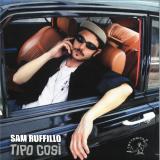
Italian producer, musician, DJ, and groove architect Sam Ruffillo drops his long-awaited debut album Tipo Così on Toy Tonics – a sun-drenched, genre-blurring statement that blends classic house with Mediterranean flair, romantic funk, and tongue-in-cheek Italo vibes. Over 11 expertly crafted tracks, Ruffillo delivers a dancefloor-ready, emotionally rich LP that connects deep musicality with irresistible rhythm and light-hearted elegance.
After three acclaimed EPs and collaborations with revered artists such as Barbara Boeing, Kapote, and Fimiani, Ruffillo has firmly cemented himself as a core artist on the Berlin-based label. Known for his unmistakable signature sound — a warm mix of vintage disco, 90s house, and Italian vocals — Sam’s music has garnered widespread DJ support from tastemakers like Gerd Janson, Palms Trax, Seth Troxler, and DJ Tennis, while becoming a staple on Italian airwaves. His infectious summer anthems like Danza Organica and Perfetta Così have soundtracked countless club nights and festivals, creating a loyal following that eagerly awaited this full-length debut.
Tipo Così is the natural culmination of a musical journey that’s both playful and profound — a travel diary written in grooves, synth stabs, and melodies that feel like postcards from a parallel Mediterranean universe. The album expands and deepens Ruffillo’s world into a fully immersive experience: lush emotional chords meet tight syncopated grooves, vintage synth textures collide with irresistibly catchy pop refrains, and the boundary between sincerity and playful irony is exquisitely blurred.
Entirely written, produced, and recorded in Italy, in his beloved hometown of Bologna, the album finds Ruffillo at the helm on keys, drum machines, and production, supported by a talented cast of musicians contributing live bass, guitar, and other organic elements — further enriching his trademark fusion of electronic grooves and natural instrumentation. There’s a tactile warmth in these tracks, a hands-on feel that adds soul and depth to every beat.
This album also marks Ruffillo’s heartfelt return to singing in Italian, with standout tracks like House Tipo Così, Mi Fa Volare, Ancora, and Dentro Di Me, where romantic naïveté meets pulsing club energy in a way that feels both timeless and refreshingly new. The vocal performances add an intimate, human touch to the music, reinforcing the personal stories woven into each song. There’s poetry in the casual, a bittersweet elegance in the way the lyrics float over groove-heavy production.
Having toured extensively across Europe, Australia, Indonesia, New Zealand, and Mexico — with sets at iconic venues like Panorama Bar and festivals such as Sónar Barcelona — Ruffillo has fine-tuned much of this album in front of live audiences. The real-world testing ground infused the record with a dynamic energy and immediacy that only comes from genuine crowd interaction. These songs weren’t just made in the studio — they were lived on dancefloors around the world.
Tipo Così is not just a collection of tracks. It’s a philosophy — playful, stylish and unmistakably personal. A modern club album bursting with heartfelt emotion and sophistication. Music for dancers with taste; for lovers of beauty, rhythm, and the little imperfections that make things feel real.
But what exactly is Tipo Così? More than just a phrase, it’s a way of being. It’s about embracing elegance without effort, mixing irony with sincerity, and letting nostalgia slip into the room without taking over the party. It’s Sam Ruffillo’s signature language: relaxed, confident, meticulous yet never rigid — where a chord progression can say as much as a lyric, and every beat carries intention.
The album’s visual identity complements this vision perfectly. The artwork and promotional materials lovingly reference Italian design from the ’80s and ’90s, combining bold graphic elements with playful pop culture nods. This aesthetic mirrors Ruffillo’s music — a fusion of vintage warmth and contemporary freshness, delivered with authenticity and charm.
Sam Ruffillo belongs to a new generation of European artists who are reshaping electronic music by blending past and present, analog and digital, groove and emotion — without nostalgia or pose. His artistic universe is coherent, vibrant, and alive; a rich tapestry of sound, images, and stories that coexist with lightness, precision, and a distinctive voice.
Reflecting on his artistic journey, Sam describes music as a vital, deeply human impulse — a tribal connection to rhythm and body that has driven him since he was a teenager. His creative process balances meticulous planning with room for spontaneity, usually sparked by clear melodic ideas that evolve naturally. Collaborations with close friends, especially vocalists like Ninfa, add warmth and authenticity, exemplified in tracks like “House Tipo Così.” For Sam, music is honest self-expression — crafted for listeners who crave memorable melodies and rhythms imbued with genuine feeling.
While technical perfection is tempting, Sam prioritizes emotion, knowing that what truly resonates is the soul behind the sounds. His long-standing partnership with Toy Tonics has been key in nurturing his vision, offering a blend of creative freedom and professional support. Looking ahead, Sam Ruffillo is excited to broaden his live performances, and release new projects that continue to blend electronic grooves with organic, heartfelt sounds — maintaining the delicate balance between playful irony and sincere emotion that defines Tipo Così.
Kurzversion:
Italian DJ, producer and musician Sam Ruffillo drops his debut album Tipo Così on Toy Tonics - a sunny blend of house, funk, Italo and pop, full of groove and emotion. Written and recorded in Bologna with live instruments and Italian vocals, it’s a playful, elegant journey shaped on dancefloors worldwide. A stylish, sincere club album where nostalgia, irony and rhythm meet in perfect harmony.
- Mi Fa Volare
Road-tested across continents and now finally released, “Mi Fa Volare” channels 90s uplifting euphoria with big breakbeats, lush chords, and Italian vocals built to stick. Somewhere between balearic bliss and piano house nostalgia, it’s a feel-good club weapon made for peak-time moments - already sung back by crowds after just one listen.
- Ancora
“Ancora” is a vibrant hi-NRG track inspired by 80s Italo disco, sung entirely in Italian. It blends driving rhythms with dreamy melodies, capturing the radiant spirit of the decade. This fresh yet nostalgic song delivers euphoric vibes and timeless energy, making it a perfect fit for both dancefloors and reflective listening moments worldwide.
- Dentro Di Me
“Dentro Di Me” channels ‘90s sensuality through a fast-paced, UK house-inspired lens. Entirely in Italian, it’s a bold and contemporary dance track where hypnotic vocals meet high-energy grooves. Blending nostalgic textures with forward-thinking production, the result is a seductive and euphoric trip - equal parts emotional and club-ready.
- Amigo
“Amigo” blends Latin groove, acoustic guitar-driven rhythm, and Mediterranean flair into a warm, magnetic, cross-cultural dance anthem. Sung in Spanish and Italian, it celebrates connection, inclusivity, and the joy of moving together - whether stranger or friend. With its unstoppable rhythm and vibrant energy, it’s a feel-good track with a unifying spirit.
- Ma Sei Fuori
“Ma Sei Fuori” is a tongue-in-cheek dancefloor bomb blending raw house energy with catchy vocal phrases and a nod to classic French touch. Driven by hypnotic vocal lines and a playful attitude, it doesn’t take itself too seriously - while still proving serious club impact. Built for late-night moments, it’s bold, bouncy, and impossible to ignore.
- Prudência
- Praga
"Prudência / Praga", or "Prudence / Plague", is a double single with these two songs that I composed and which were originally recorded by two of my heroes: Maria Bethânia and Alaíde Costa. Curiously, they are two sambas: although I come from the rock and roll scene in Sao Paulo, I wound up writing a samba as if it were the 50s. At the time of my first heartbreak, at the age of 17, I had the record Jamelao canta Lupicínio with the Orquestra Tabajara on my iPod, and I identified with those dramatic sorrows, almost a hundred years old. In a way, I felt that Lupicínio Rodrigues was bloody and direct, like Tarantino, and Nelson Cavaquinho, heavy metal like Black Sabbath. So, I feel it's a compact 45 of sambas but it's also very Rock n Roll to me. Raw and coming from hell. "Prudência" is that internal battle between the passionate side and the controlling side in the head of the former romantic bohemian. I wrote it for Bethânia to record on her album Noturno. Her version turned into a moving bolero. When I saw her singing it live and the audience singing along with her, I couldn't believe it. I cried, hidden in the audience. She said that when she showed the record to her brother, Caetano Veloso, he thought that "Prudência" was some old classic that she had dug up to bring back to light. Nothing could be a greater compliment than this mistake on Caetano's part. "Praga" also has to do with MPB heroes of mine that I never imagined I'd see up close or have any relationship with or any connection with. I was asked to write these lyrics in partnership with the main man Erasmo Carlos for Alaíde Costa's album! Surreal. Like many people, I got acquainted with Alaíde listening to "Clube da Esquina," her singing with Milton Nascimento. And the idea was to do a poisonous cabaret song samba. The curse of a woman who has dumped a drunk. I love it when Alaíde sings "BIBIDA" in her recording of the song_a total legend. I wanted to produce a kind of horror samba recording, because if it wasn't rock and roll, it wouldn't be much fun for me. I went over to Bielzinho's, and we recorded this chorus that explodes with the percussion and the choir of my friends Tulipa, Maria Beraldo, and Luiza Lian. This take of "Prudência" came from the unpretentiousness of recording two live sessions of the song with Fred Joseph with the cameras of the 70s' program "Ensaio" (MPB Especial) by the great Fernando Faro. The video take ended up being so unexpected and raw that it unseated the studio version, and that's what you hear on the single. The idea behind the video is a sort of this temporal mindfuck; like found lost tapes of the MPB Especial from the early the 70s. Same microphones, same cameras, that zoom_time travel. Between Mil Coisas Invisíveis, the end of the cycle with O Terno, and starting the new album process, I decided to take advantage of the respite to release this rock and roll 45 of sambas, without thinking too much or over-producing the thing. "Prudence? Don't talk to me about prudence!" ;) Tim Bernardes, 2025
- Tokyo 1
- Osaka
- Nagoya
- Matsumoto (Beginning)
- Matsumoto (Ending)
- Hokkaido
- Tokyo 2
- Each Story
Cloudy White Vinyl[31,89 €]
Emily A. Sprague's Cloud Time traces an audio-spiritual journey through time and place, recorded across a long-awaited debut tour of Japan in the fall of 2024. Compiled from environmental improvisations captured in and for the moment, material at once welcoming, responsive, and inimitable, the album distills a voyage guided by psychic wayfaring, unbound presence, and activating performance for a reciprocal exchange with space, listener, and each fully engaged instant. The Japanese tour documented on Cloud Time held an almost mythic significance for Sprague, taking on properties of her own sonic white whale. After many near-departures and dropped plans to play in the country, "the empty spaces of cancelled trips and forgotten music turned into strange little misty spirits that I felt followed by," she says. "When I began preparing for the tour, I couldn't shake a sense that the invitation to Japan was more about opening myself up to this new place instead of bringing something into it tightly under my control. Improvisation has always been such a pillar in my music practice, and I really wanted to meet the country, spaces and people through that process." To amplify these intuitive whispers on-stage, Sprague reimagined her time-tested live rig, designed to be as free from error as possible, as a looser, more flexible set up that would allow her to interface with what was essentially a blank sonic canvas every night. Each performance became a collaboration between environment and instinct, Sprague processing the events, energies, and emotions informing the evening through her new sound ecosystem, and projecting an entirely present and unique version of herself to each open-eared and hearted crowd. "It was very much more than just an act of playing for me, but a total experience of time and place," she says. The seven long-form pieces that plot the course of Cloud Time, excerpted from over eight hours of recordings archived on the artist's on-stage recorder and generously shared on the album with no additional mixing and only minimal editing, invite listeners to become still in these deep-rooted moments of presence as the album moves from city to city, venue to venue. Cloud Time chronicles material recorded at each tour stop, Sprague selecting and sequencing the album around mood-based storytelling more so than linear chronology. "I tried to make the whole album flow in the way that any one of the complete live performances did," she explains, "while also keeping the spirit of the whole thing as a journey." The result is equal parts travelog, love letter, and impressionistic collage channeled from the potent ferment of a now encased in the glowing amber of memory. Intrinsically inspired by kankyo ongaku, an environmental music philosophy, known both in and widely outside of Japan that tunes into the similarly expansive ethos as Pauline Oliveros' deep listening practice and posits the listener as composer, Cloud Time is ambient music that seems to be listening right back, grounded in heartfelt synthesized frequencies that abundantly hold and heal. Pieces like "Nagoya," "Tokyo 1," and the ten minute "Matsumoto" in particular hum with the atomic resonance of gently tended landscapes, offering space for tuning way in and dropping far out from perspectives that stifle and bind. Cloud Time is an invitation to embrace each moment as both fleeting and eternal, floating by with nothing to grasp onto and absolutely everything to gain. The exercise in acceptance and letting go that Sprague practiced throughout the tour deeply impacted her understanding of self as both a guest and venerable performer. "The process of loving wherever I am, being present and focusing on a clear channel of communication for mind and emotion, rooted so deeply in respect for the space, those within it, and myself, ended up being profoundly healing," she says. "My vision and hope is that this album can be released as a gift back to anyone who either was or wasn't there. A cloud time of life passing by." Emily A. Sprague's Cloud Time will be released Friday, October 10th in vinyl, Japanese import CD (via Plancha), and digital editions.
First official vinyl showcase from Untamed Sounds Studio featuring Lucadread on vocals. Digi Killer style.
Untamed Sounds Studio was established in 2015 in Northeast Italy as a sound system, hosting regular events for several years. In 2019, the physical system was sold, and the project moved to the UK, shifting its focus to music production. Since then, Untamed Sounds has collaborated with a wide range of sound systems, DJs, and singers, particularly in the dubplate field, providing exclusive tracks to sounds across the globe. Whether it's roots, dub, digital, or year 3000 style, Untamed Sounds continues to staying true to its foundation, rooted in Jamaican music.
Produced and Arranged by Untamed Sounds.
Mixed by Dougie Conscious at Conscious Sounds Studio, UK.
Mastered by Dubfiles.
Spots auf die Berliner íClubgeschichte. Neuausgabe als Klappenbroschur. Clubs und subkulturelle Freiräume prägen Berlin seit Jahrzehnten und machen die Stadt zu einem Sehnsuchtsort für Menschen aus aller Welt. Legendär sind zum Beispiel die Treffpunkte des Punk- und New-Wave-Untergrunds der 1980er Jahre oder die Technoclubs aus den 1990ern. Die Party- und Konzertlocations sind dabei oftmals auch Zeugen der bewegten Geschichte der Stadt, erzählen vom Kalten Krieg oder dem Fall der Berliner Mauer. Dieses Buch ist ihnen gewidmet, darunter berühmte Diskotheken, geheime Treffpunkte der DDR-Opposition und subkulturelle Abenteuerspielplätze verschiedenster Couleur. Viele dieser Orte existieren heute nicht mehr oder haben eine ungewisse Zukunft. Sie berichten von einem Berlin, das es nicht mehr gibt, und davon, wie stark die Club- und Subkultur von Verdrängung betroffen ist.
- Start Again (Prelude)
- Criminal
- Did It All
- Break The Silence Feat. Sleep Theory
- Good Intentions
- Sacrifice
- Losing Faith
- Miles Apart
- Some Things
- Icon
- Playground
- Starting Over
- Ever After
Nevertel, are set to release their Epitaph Records debut album, entitled Start Again. The Florida-based trio - comprised of vocalist Jeremy Michael, rapper/guitarist/producer Raul Lopez, and guitarist Alec Davis - are a rare breed in an era saturated with genre tags and algorithm-chasing playlists. Drawing on a cocktail of nu-metal nostalgia, hip-hop grit, and EDM adrenaline, their sound feels less like a blend and more like a carefully controlled detonation. It"s a vision honed through years of DIY hustle and an unshakable commitment to quality over trend. Bonded in adolescence over music and late-night gaming sessions, the trio turned those formative obsessions into a full-fledged project that has steadily built a digital groundswell. From self-releasing two fulllength albums and a pair of EPs to amassing over 1.5 million streams per week, Nevertel"s trajectory reflects a slow burn in a culture obsessed with instant virality. Citing touchstones like Linkin Park and Bring Me The Horizon, the band pays homage to the titans of their youth while shaping something unmistakably their own: emotionally raw lyricism, razor-edged riffs and breakdowns. It"s equal parts catharsis and chaos. Now signed to Epitaph Records as of 2023, Nevertel are poised to enter their next chapter with momentum at their backs.
In a changing, unpredictable and turbulent world, something we can always rely on is a new Orb album, with the next holiday-for-the-head never far away. On what is quite possibly the millionth longplayer helmed by electronic lifer Alex Paterson; partnered with the now firmly-entrenched boy wonder Michael Rendall; the inspirationally productive outfit yet again deliver the goods, with one of their best yet.
- A1: From Darkness 01 18
- A2: Disappearance 04 34
- A3: Past Into Presence 02 32
- A4: Search Party 02 58
- A5: Forest Manipulations 03 22
- A6: Miscarriage 01 17
- A7: Who’s There? 00 59
- A8: The Pond 02 02
- A9: Mindfuck 01 20
- A10: I'll Take Noah 00 55
- A11: Wall Paintings 02 45
- B1: Death And Confusion 04 23
- B2: Visions 01 20
- B3: The House 03 55
- B4: What Have You Become? 01 41
- B5: Alone In The Dark 01 50
- B6: Ritual 02 07
- B7: Theo 02 29
- B8: Reunification 03 58
- B9: Open Eyes 02 25
- B10: Past Darkness 04 11
Erik K Skodvin summons his alter ego Svarte Greiner for a dive into the dark, wintery Swedish forest with the score to the psychological thriller/horror film “From Darkness” (orig: Ur Mörkret).
The film is director Philip W. Da Silva's debut and is set largely at night, deep in a Swedish nature reserve where mining used to take place. Loss, mental health and Nordic mythology come together in a story that revolves around the search for a missing woman. The score follows an eclectic and atmospherical path throughout the narrative with an uneasy underlaying vibe; although one with occasional points of refuge in the otherwise vast darkness. There is a gloomy, barely tangible sound of Nordic folk tradition buried in the music, even if it comes across in a different, more abstract way, where the various instruments are often used more as sound sources that are improvised (and abused) into becoming their own element. Skodvin performed and recorded the majority himself. In addition, he commissioned free improviser Axel Dörner to participate with his unique, custom-built electro-acoustic interface, which, along with Claudio Puntin's processed reeds and additional electronics, has been built into the elaborate backdrops to create an entire world that balances on the border between the approachable and the elusive - not unlike the journey of the protagonists. Skodvin's partner in Deaf Center, Otto A Totland, appears on piano in the stand out piece “What have you become?”.
The result is a harrowing yet deeply melancholic journey through the human psyche. One that echoes through the dark forests, cabins and lost mines of the desolate Swedish woodlands.
“It is presumed that as humans mined ore in the 1800s, they had many mishaps and dug too deep, leading them to assume they had unleashed some evil spirit that was guarding the ore. She was referred to as "Cave Wraith". It was said that she employed darkness to lure miners to their deaths. They prohibited villagers from visiting during the darkest months of the year. Some used sacrifices to subdue the evil entity.”
The vinyl is released in an edition of 150 numbered copies, with screenprinted artwork on black cardboard inside a screenprinted PVC sleeve, incl. Riso-printed insert with liner notes by Mike Lazarev, 180g vinyl.
D: Mit „Le retour des beaux jours“ feiert Vanessa Paradis ihr grosses Comeback in der Musikszene.
Dieses achte Studioalbum ist das Ergebnis ihrer engen Zusammenarbeit mit Étienne Daho und Jean-Louis
Piérot. Es wurde in Paris (Motorbass Studio) und London (Abbey Road) aufgenommen, abgemischt und
produziert. Die erste Single „Bouquet final“, einer der Hits des Sommers 2025, kündigt ein mit Spannung
erwartetes Pop-Soul-Album an... Vanessa wird ab März 2026 auf Tournee sein. Live Schweiz: 23.04.26,
Arena Genf
F: ’Avec « Le retour des beaux jours », Vanessa Paradis fait son grand retour à la musique.
Ce 8ème album studio est le fruit de son étroite collaboration avec Étienne Daho et Jean-Louis Piérot. Il
a été enregistré, mixé et réalisé à Paris (Motorbass Studio) et Londres (Abbey Road). Le premier single «
Bouquet final », l’un des hits de l’été 2025, annonce un album pop soul très attendu... Vanessa sera en
tournée à partir de mars 2026. Live Suisse : 23.04.26, Arena Genève.