On his second Blue Note album Love Bug, organist Reuben Wilson fronted an exceptional quintet with Lee Morgan on trumpet, George Coleman on tenor saxophone, Grant Green on guitar, and Leo Morris (aka Idris Muhammad) on drums. The 1969 soul jazz date presented funky Wilson originals like “Hot Rod,” Back Out,” and the title track alongside R&B hits of the day like “I’m Gonna Make You Love Me,” “I Say A Little Prayer,” and “Hold On, I’m Comin’” . This Blue Note Classic Vinyl Edition is all-analog, mastered by Kevin Gray from the original master tapes, and pressed on 180g vinyl at Optimal
Search:d quin
- A1: Andromeda
- A2: English Rose
- A3: My Ever Changing Moods
- A4: On Sunset
- B1: Carnation
- B2: Glad Times
- B3: Broken Stones (Feat James Morrison)
- B4: Gravity
- B5: It's A Very Deep Sea
- C1: Bowie
- C2: Equanimity
- C3: You're The Best Thing (Feat Boy George)
- C4: Still Glides The Stream
- C5: Movin On
- D1: Wild Wood (Feat Celeste)
- D2: Rockets
- D3: You Do Something To Me
- D4: White Horses
"On May 15th 2021 Paul Weller performed an exceptional concert with the hugely talented BBC Symphony Orchestra and award winning arranger Jules Buckley.
This extraordinary performance was a first for Paul, performing with a full orchestra, and saw a quintessential selection of his vast catalogue exquisitely reworked and updated into 75 minutes of breath-taking music that was broadcast across the BBC.
- 5: Blue Sands
- 7: My Ding-A-Ling (Live At Fillmore Auditorium, San Francisco, Ca/196)
- 1: July Tree – Nina Simone
- 2: Stumblin’ In – Chris Norman & Suzi Quatro
- 3: Sometimes I’m Happy – Johnny Guarnieri
- 4: Ac–Cent–Tchuate The Positive (Single Version)
- 6: But You’re Mine – Sonny & Cher
- 8: Peace Frog – The Doors
- 9: Let Me Roll It – Paul Mccartney And Wings
- 10: Life On Mars? – David Bowie
- 11: Slip Away – Clarence Carter
- 12: Diamond Girl (Album Version) – Seals And Crofts
- 13: Greensleeves – Mason Williams
- 14: Barabajagal – Donovan
- 15: Softly Whispering I Love You – The Congregation
- 16: Licorice Pizza – Jonny Greenwood
- 17: If You Could Read My Mind – Gordon Lightfoot
- 18: Walk Away – The James Gang
- 19: Lisa, Listen To Me – Blood, Sweat & Tears
- 20: Tomorrow May Not Be Your Day – Taj Mahal
We are extremely excited to announce that Licorice Pizza: The Original Motion Picture Soundtrack will be released on Friday 10rd December 2021 on both CD + Vinyl. Licorice Pizza is the story of Alana Kane (Alana Haim) & Gary Valentine (Cooper Hoffman) who grow up & fall in love in San Fernando Valley (1973). Written & directed by filmmaker Paul Thomas Anderson. Sean Penn, Bradley Cooper, Tom Waits & Benny Safdi also star. Limited movie release in the U.S. Nov 26 and goes wide in US on Dec 25. Radiohead's Jonny Greenwood composed the film's score & Paul Thomas Anderson curated the soundtrack also features songs by David Bowie, Paul McCartney and many more to be revealed. The title pays homage to the California record store, Licorice Pizza.
d 4 Ac–Cent–Tchuate The Positive (Single Version) [feat. Vic Schoen & His Orchestra] – Bing Crosby & The Andrew Sisters
[e] 5 Blue Sands [feat. Buddy Collette] – Chico Hamilton Quintet
[g] 7 My Ding-A-Ling (Live At Fillmore Auditorium, San Francisco, CA/1967) [feat. Steve Miller Band] – Chuck Berry
One of the most important harmony groups in the entirety of Jamaican music, the Paragons have a long and complicated history. First formed in the ska years by Bob Andy and Tyrone Evans as the duo of Andy and Ronnie, the group soon expanded to a quartet through the addition of Howard Barrett and John Holt, the latter naturally assuming lead duties, following the subsequent departure of Andy, Holt, Evans and Barrett made the Paragons the quintessential rock steady trio. They had an incredible run of hits for Duke Reid and Coxsone during the mid-to-late '60s, and also issued some self-produced work, before Holt's solo career skyrocketed, leaving the group on the back-burner. Then, in the mid-1970s, the Paragons reformed, cutting material for New York-based labels such as Clocktower and Clintones, which led to this intriguing album, which saw material recorded in Jamaica at Harry J for Bunny Lee mixed with work cut at Bullwackie's studio in the Bronx, along with re-workings of classics such as 'Left With A Broken Heart' and 'Memories By The Score' is a whole range of new material, dealing with contemporary themes.
Deluxe LP edition, remastered using transfers from the original
tapes lifted from the Phillips vault by mastering legend Kevin Gray.
Pressed at Pallas on 180g heavyweight vinyl and housed in a thick
reverse-board sleeve with additional insert featuring photographs
and words by bassist on the session Bill Crow.
This session, recorded at New York’s Nola Penthouse Studios in
1963, is a little-known masterwork from the incredible Gerry
Mulligan catalogue.
Baritone saxophonist Gerry Mulligan was a true icon of jazz, being
one of the prominent figures in the West Coast scene through the
1950s until his death in 1996. Voted Number One musician in his
instrument by Downbeat Magazine for 42 years in a row, Mulligan
was one of the key players of his time and a figurehead who
helped shape the sound of jazz to come.
From periods in the ‘Birth Of The Cool’-era Miles Davis line up, as
well as forming a piano-less quartet with Chet Baker, Gerry was
always on the frontline of what was hip and happening in
America’s one true art form.
With its striking Oliver Hardimon designed cover, ‘Night Lights’ is
the very definition of refined cool jazz. Shimmering with a latenight beauty that perfectly evokes a sophisticated New York City in
the early 1960s, Gerry and his Sextet fuse slow burning jazz noir
alongside emerging contemporary Brazilian rhythms, with the
interplay between Mulligan and guitarist Jim Hall a particular
standout throughout.
Title track ‘Night Lights’ is a wonderfully smooth, low light tune,
while the Latin-tinged ‘Morning Of The Carnival’ really finds the
band in their finest and most swinging form. A cover of jazz
standard ‘In The Wee Small Hours Of The Morning’, followed by
Chopin’s ‘Prelude In E Minor’ continues the delightful groove
before we finish out with Mulligan originals ‘Festival Minor’ and
‘Tell Me When’.
For this version of the release, New Land have also included the
1965 version of ‘Night Lights’, which gives an interesting
comparison, performed by his later day Quintet featuring the
Wrecking Crew’s legendary Hal Blaine on drums, amongst others.
‘Paint It Blue’ is dedicated to the man who, for many still today embodies
the central figure at the genre’s source: Julian Edwin ‘Cannonball’
Adderley (1928 - 1975). Maybe he didn’t invent Funk. Together with his
co-musicians in his 60s quintet, Cannonball’s alto sax style, his attitude,
humour great musicality, and his love for his audience allowed him to
become a synonym for funk.
Nils Landgren, born in 1956, grew up between the music of his father, a
Jazz cornet-player, and the music of his grandfather, a pastor on the
island Gotland. He first heard Cannonball Adderley on ‘Kind Of Blue’. In
this Miles Davis Sextet of the late 1950s, they were all together: “Miles,
the master of beauty. Coltrane, the master of sound. And Cannonball
Adderley, the master of funk,” Nils Landgren writes in the liner notes to
‘Paint It Blue’. From that point on, he procured everything of
Cannonball’s that he could lay his hands on. “Without the soul of
Cannonball it would have been impossible to form my group Funk Unit
many years later,” he writes.
Landgren edited Cannonball’s live concert announcements into his own
arrangements, so that the time jump between the original and the
nouveau arrangement appears non-existent. An effective device that
literally brings this revered musician into the fold of Nils Landgren’s Funk
Unit.
Whoever speaks of Cannonball Adderley, must also speak equally of his
brother Nat Adderley. It was an obvious thought to invite the most
important brothers in Jazz after the Adderleys to guest on ‘Paint It Blue’;
with the high energy Funk-Jazzrock of the late 70s, the Brecker brothers
have proven worthy heirs to the Adderleys. Both of them solo on
Landgren’s track ‘You Dig’.
The equally noble and forcible groove is delivered by the sideman to
countless Soul greats, Bernard Purdie. Bernard’s own stylistically related
production with the Brecker Brothers, Nils Landgren, amongst others is
now strongly in the public consciousness on ‘Soul To Jazz’. Much like
Cannonball Adderley, Airto Moreira owes important impulses to his time
with Miles Davis.
‘Paint It Blue’ is possibly Nils Landgren’s most lavish record to date and
with some certainty also his best. Landgren’s playing is cool and smooth,
with warmth, temperament and thought. Here his sound combines
organically with everything he surrounds himself with. The album sounds
as if the recordings for it were a pure joy for all participants. Nils
Landgren has the prerequisite for serious fun, the gift of intelligent
serenity.
Includes remixes from Dr Packer + Mark Lower
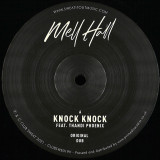
Adelaide based producer Mell Hall arrives with a stand-out debut single ‘Knock Knock feat. Thandi Phoenix', a modern take on the classic disco genre, plus further announcing her signing to Club Sweat! For the release, Mell Hall teams up with one of Australia's leading dance-pop talents, Thandi Phoenix, creating a total nu-disco and funk anthem that’s bound to get stuck in your head!
Drawing inspiration from the likes of Horse Meat Disco, Dimitri From Paris and Dr. Packer, ‘Knock Knock’ builds suspense with an uplifting piano melody, before exploding into an energetic and vibrant chorus filled with a bumping bassline, horns and quintessential disco guitar chords.
HIGHLIGHTS: Los Nivram recorded some of the best '60s Spanish garage nuggets, being this rare EP containing the original 'Sombras' their most sought-after release by collectors worldwide. Reissued on 7" for the first time. DESCRIPTION: Quintessence of the best nuggets-type of music from Europe, the scant discography of the Catalan-band Los Nivram -- just two obscure EPs, eight tremendous tracks, half of them absolutely great -- perhaps represents the most precise example of the excellent level that the Spanish garage sound acquired during the golden years of the genre, basically the second half of the '60s, its glory days, and a few later examples from the early '70s. Los Nivram started their career heavily influenced by The Shadows, in fact they took their name after one of their songs (that also happened to be their leader and bass player's surname spelt backwards). They would soon push their sound forward, evolving from instrumentals to a repertoire sung in their native Spanish language, after being blown away by the UK beat and R'n B bands of the time. 'Sombras' stands out no just as the best song in Los Nivram's repertoire but also as one of the most interesting nuggets recorded at the time and one of the most sought-after garage records by collectors worldwide. Reissued on 7" for the first time.
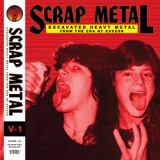
By now you’re probably familiar with our wildly popular Brown Acid series of rare, lost and unreleased proto-metal and stoner rock singles from the 60s-70s. In the endless pursuit of those glorious gems, we often uncover equally brilliant rarities from the late-70s to late-80s Golden Age of Heavy Metal that also just must be heard, but they don’t fit the series’ aesthetic. Scrap Metal, Volume 1 collects some of the greatest unknown and lost Heavy Metal tracks, long buried beneath the avalanche of the era’s classic output.
We all know the old adage that history is told by the winners. But sometimes the losers tell the best stories. And while none of these bands found fame and fortune, this artifact and the volumes to come are testament to the enduring power of heavy music. You can hear the blood, sweat and beers that went into each of these singles. The recordings may be low budget, but the inspiration and talent is immutable. Not only are the amps turned up to 11, the boyish sexual innuendo is cranked to 69. You can hear the convergence of influences — NWOBHM, thrash, glam metal, doom, etc — colliding at once as the era birthed a wellspring of subgenres.
Many of these singles are self-released and were thus limited to a small run of copies. Those that remain are hoarded by collectors and sold for exorbitant amounts. We’ve collected the best of the best for you here. As with Brown Acid, all of these tracks are licensed legitimately and the artists all get paid. Because it’s the right thing to do.
LINER NOTES:
Rapid Tears launch this series with the perfect christening. The Toronto, ON quintet’s 1981 single “Headbang” is such the pinnacle of heavy metal madness that it almost sounds like a spoof. There’s also enough of the rapid-fire sputum that inspired Metallica to bang the head that doesn’t, as such, engage in said practice, to be found on the band’s sole full length Honestly. But “Headbang” is a straightforward glammy anthem for the ages.
Air Raid’s “69 In A 55” may be lyrically so sophomoric that it’s actually pretty clever, but this 1983 Bay Area power metal single is loaded with sleek Judas Priest riffs and interwoven melodies that are downright sublime. The band’s sole release, the 2-song Rock Force 7” features a curious band photo in which 3 band members — dolled up in Crüe makeup and leather — are sexually menacing the lead singer/guitarist tied to a bed. Another low budget highlight is when singer/guitarist Tommy “Thrasher” Merry imitates a delay effect on his vocals as he sings, “tonight!...tonight...night.”
Hades’ “Girls Will Be Girls” has a real demo cassette feel to its vastly uneven mix, but the energy to the performance makes this an undeniable keeper. The long running Paramus, NJ quintet’s 1982 2- song debut 7” titled Deliver Us From Evil features this blistering thrasher dominated by shimmering leads and confident vocals that show why the band went on to near-fame on Metal Blade Records.
Resless don’t need no T to prove that they’ve got “The Power” with this 1984 driving mid-tempo rocker in the vein of Mötley Crüe and Ratt. The River Vale, NJ quartet’s tight crunch wails all over Bon Jovi posers but it’s the band’s unique and subtle deployment of background vocals that gives this rager its staying power.
Pittsburgh, the Steel City, is home to Don Cappa, a band that pays tribute to the burgh, the metal, and the awesomeness of both with “Steel City Metal.” Their lone single, issued in 1987 with only 300 copies released, sounds like the work of some serious steel driving men, with a drummer who might’ve forgotten to wear a hard hat one too many times on the construction site.
The Beast has more of a punk feel to their aggressive “Enemy Ace” track from the 4-song Power Metal EP from 1983 — something like Dr. Know meets D.O.A. But their look, artwork and lyrics all prove that Heavy Metal is where their hearts lie. And this hook filled monster delivers repeated lines like, “I command them all in my lofty realm,” with commendable conviction.
Dead Silence from Denver, Colorado, debuting in 1984 is not to be confused with Dead Silence from Denver, Colorado, who also debuted in 1984. The former a workman’s hard rock bar band, the latter a political peace punk band and neither knowing of the other’s existence throughout their tenure. The pre-internet days were a marvel, indeed.This Dead Silence spits out a slick, Nugent tinged rocker called “Can’t Stop” about life on the road.
The Danger Zone is, by all accounts, not the place to be. And, Hazardous Waste of Boston, MA saw fit to add their two cents on the matter with this 1986 single that combines Van Halen’s flashy musicianship with NWOBHM aggression that sounds so awesome it teeters on itself entering the “Danger Zone.”
Czar’s heavy, doomy “Iron Curtain” single from 1982 hearkens to the sleazy sounds of Saint Vitus and Pentagram with its cranked up DOD Distortion pedal in a Peavey combo amp guitar tone and meaty, barking vocals. The upstate NY quintet only issued this 2-song single, but its driving rhythm, nosedive whammy-bar guitar solos and comparatively mature Cold War subject matter show they had real potential.
Not much is known about Real Steel’s majestic “Viking Queen” from 1987, other than it rocks hard and the 7” 45 sells for upwards of a grand on the collectors market. The Flint, Michigan band recorded at the home studio of local radio personality Bill Lamb, who primarily released Christian Gospel recordings. So, perhaps the band was struck down by a bolt of lightning shortly after this rare single’s release. Whatever the case may be, it’s a must have for fans of classic metal mayhem.
- A1: Glad All Over (2019 - Remaster)
- A2: All Of The Time (2019 - Remaster)
- A3: Crying Over You (2019 - Remaster)
- A4: Stay (2019 - Remaster)
- A5: Chaquita (2019 - Remaster)
- A6: Do You Love Me (2019 - Remaster)
- B1: Bits And Pieces (2019 - Remaster)
- B2: I Know You (2019 - Remaster)
- B3: 3406 (2019 - Remaster)
- B4: Time (2019 - Remaster)
- B5: Who Do You Think You're Talking To (2019 - Remaster)
The debut studio album from British quintet The Dave Clark Five was originally released in March 1964. It includes the hit singles ‘Bits and Pieces’, ‘Do You Love Me’ and the title track ‘Glad All Over’, the single which at the time supplanted the Beatles ‘I Want to Hold Your Hand’ from the top of the UK Singles Chart. DC5 were one of first UK acts to achieve success in the US as part for the ‘British Invasion’, as well as making more appearances on The Ed Sullivan Show than any other UK act. This reissue includes recordings remastered from the original tapes and an updated tracklisting that differs from the original US release and the subsequent UK version entitled ‘A Session With The Dave Clark Five’. It is presented on limited edition white vinyl and features reproduced original artwork.
- A1: Take It Slow
- A2: Lend A Hand
- A3: So You Wanna Change The World
- A4: Looking For An Old Friend
- B1: Spirit Of A Workin' Man
- B2: Midnight Rider
- B3: Be Good To Yourself
- B4: Half Glass Woman
- C1: Dancin' With The Devil
- C2: Can I Get A Witness
- C3: Walk Tall Man
- D1: It's Alright
- D2: Set Me Free
- D3: Better Run From The Beast (Vinyl Bonus Track)
Whether it be on the banks of the Mississippi River or deep in the heart of the English countryside, rock 'n' roll lives, breathes, and burns on the outskirts. Hailing from Rome, GA, at the foothills of the Appalachian Mountains, The Georgia Thunderbolts rise up with a scorching signature style steeped in soulful southern swagger. On, Can We Get A Witness, their full-length debut for Mascot Records, the quintet—TJ Lyle vocals, harp, piano, Riley Couzzourt [guitar], Logan Tolbert [guitar], Zach Everett [bass, keys], and Bristol Perry [drums]—conjure a tried-and-true spirit through a fresh fire.
“We all grew up on rock music,” Riley says. “Rock ‘n’ roll comes back around, but longevity depends on grinding it out. That’s what we want to do. We try to put in the work our favorite bands did. If I could think of three words to describe us, they would be ‘Hardworking, Determined, and Humble’.”
Gigging tirelessly, they cut their teeth by playing with Black Stone Cherry, The Kentucky Headhunters, Blackberry Smoke, Tyler Bryant & The Shakedown, Atlanta Rhythm Section, Molly Hatchet and The Cadillac Three. The band began when Bristol and Riley initially bonded over rock ‘n’ roll in high school. By sophomore year, they had a regular jam schedule, and eventually joined up Zack, TJ, and Logan to round out the group. They share a wide swath of inspirations, ranging from southern gospel to Hank Williams, Jr., Neil Young, Little Feet, Waylon Jennings, Ray Charles, Merle Haggard to the hard rock of Ozzy Osbourne, Audioslave, Bad Company and of course, The Allman Brothers & Lynyrd Skynyrd.
The band recorded at the iconic Barrick Recording Studio in Glasgow, KY, with producer Richard Young. The album comprises of thirteen undeniable anthems, beginning with opener “Take It Slow.” Distilling whisky-soaked riffs, wild harmonica, and pulse-pounding drums into a simmering groove, it struts out of the gate with confidence and charisma. “There’s a message to what we’re doing,” Bristol leaves off. “It’s okay to be yourself. If you’re going through hard times, the music will always be there. We’d love to remind everyone of that.” The Georgia Thunderbolts embody the blue-collar working man who has put their foot down on the accelerator towards the rock ‘n roll American dream.
Trio of Nils Økland, Sigbjørn Apeland and Øyvind Skarbø - apart from the unusual instrumentation of violin or Hardanger fiddle, harmonium and drums, is the empathy displayed by the group as a whole; the hyper-sensitivity with which each individual member appears to respond to the contributions of the others in the pursuit of a collective goal, however obscure or unknowable that goal might be. Such extreme alertness to subtle changes of mood and nuance, and to the evolving sound-world of each, totally improvised, performance is rare in music of any type. 1982 have made it their signature. And because 1982 have so singularly created their own identity and sound, they can do anything they like. Normal conventions of style and genre, format and duration cease to matter: it is all 1982 music, anchored in the strong personalities of the three players and their respect for the primacy of the group as an entity in itself. Thus they can record as a trio - as on the group’s first two albums, ‘1982’ (from 2009) and ‘Pintura’ (their Hubro debut, from 2011) - or with guests, as in the acclaimed '1982 + BJ Cole' (from 2012), and the collaboration with composer Stian Omenås and a quintet of wind players for ‘1982: A/B’ (from 2014). There was also the unique ‘message in a bottle’ intervention of ‘The Bottlemail Project’, begun in 2011, whereby 15 copies of a new recording were ‘distributed’ via USB sticks enclosed in bottles and released into the open sea from Bergen and various worldwide locations. The new album, ‘1982: Chromola’, as well as marking the group's tenth anniversary, represents a return to the essential identity of the trio playing alone, without guests. Recorded at Sandviken church in Bergen on the day following an evening concert, the album uses material from both occasions, engineered once again by Davide Bertolini, who worked on the band’s four previous recordings. As an album it is remarkable for many things, but perhaps most notably for the role of Sigbjorn Apeland, who plays pipe organ on all but one of the seven tracks rather than harmonium, which features only in the closing, seventh, piece.
In November 1976, Jef Gilson’s phone rang. What a surprise! It was Serge Rahoerson, one of the musicians he had met in Madagascar at the end of the 60s and who had played on his first album “Malagasy”. Rahoerson announced that he was in Paris for a few days.
Immediately, Jef wanted to organise a recording session, starting the next day. He thought of a trio including Serge, Eddy Louiss on organ and cellist Jean-Charles Capon, who had also been on one of the trips to Tananarive and so had also known Rahoerson there. Unfortunately, Eddy Louiss –who had already played with Gilson and Capon on the album “Bill Coleman Sings And Plays 12 Negro Spirituals” in 1968- had to drop out at the last minute: he was delayed by a session with Claude Nougaro. Jean-Charles Capon had also become a sought-after studio musician since his trip to Madagascar in 1969. He appeared on several key albums on the Saravah label including the now famous “Comme À La Radio” by Brigitte Fontaine, “Un Beau Matin” by Areski and “Chorus” by Michel Roques, without mentioning the album by his own Baroque Jazz Trio. He was also to be found with Jef Gilson for his album on Vogue with the ex-drummer from Miles Davis’ first great quintet, Philly Joe Jones, or also in the orchestra led by Jean-Claude Vannier for the album “Nino Ferrer & Leggs”. He also played regularly on albums by Georges Moustaki.
Jean-Charles Capon and Serge Rahoerson found themselves thus in the studio, with Jef at the controls. He had decided to record the rhythmic structure right away. He would find the soloists later, that didn’t worry him. Serge Rahoerson was on drums. Though a saxophonist by training, Jef remembered that Serge was also capable of great things behind a drum kit: he was the improvised drummer on their cover of “The Creator Has A Master Plan” on the album “Malagasy”... The great memories came flooding back (the nod on the title “Orly - Ivato”), and the old magic worked again.
Brought in momentarily from Europamerica, Gilson’s new big band, in which JC Capon also played, the saxophonists Philippe Maté, from France (another Saravah stablemate) and the American Butch Morris (soon to be a key member of David Murray’s band) were invited to record their parts later and Gilson mixed it all as if it had been one single session (as he had already done on other albums, with the tracks by Christian Vander recorded before the creation and success of Magma).
The album would not appear until 1977, on Palm, Jef’s own label, and was dedicated to the memory of Georges Rahoerson, Serge’s father, who had also played on the album “Malagasy” and who had died prematurely at the age of 51 in 1974.
“I only received my own copy of the album in 1981 when I came to live in France definitively”, a still-moved Serge Rahoerson told us in 2013. “I was playing in a club one night and Jef turned up by surprise with a copy of the album for me, I was so pleased to see him again. When I arrived in France, I told everyone that I had played with Jef Gilson a few years previously, and I was surprised to learn that so few people knew of him. For us, he was of one of the great jazz visionaries.” (Jérôme "Kalcha" Simonneau)
Mega rare 1974 jazz funk rock album recorded by Argentina's top jazzmen Pocho Lapouble, Ricardo Lew and Adalberto Cevasco (also members of Quinteplus, Jorge Lopez Ruiz's band and Gato Barbieri's group among many others). Includes the irresistible fast-paced funk rock track 'Se Acabó el Recreo' and the ethereal 'Todo en Su Medida y Armoniosamente' and 'Haceme Shaft', featuring Patricia Clark on vocals and unexpected moog arrangements. First time reissue, with remastered sound and original artwork.
Those into world jazz will be aware of the amazing modal, big band and post-bop jazz recordings released in Argentina in the '60s. The body of work produced by the likes of Chivo Borraro, Jorge López Ruiz or Enrique Villegas would be able to rival the recordings of their American counterparts.
The following decade would see a great openness to the exploration, with a jazz language, of other musical genres, with a certain preponderance of rhythm. The members of El Trio are part of a jazz generation with a greater propensity to experiment with electricity and with what could be considered an avant la page exercise of what soon afterwards would be called jazz rock -it is music composed and played, in the faraway Buenos Aires, at the same time Miles Davis adventured into new fields, with such records as "In a Silent Way" or "Bitches´ Brew".
"Todo en su medida y armoniosamente" reflects that same spirit of experimentation and fusion of diverse influences with an eye on both rock and local folklore. It's not surprising that the protagonists of this recording -Pocho Lapouble (drums), Ricardo Lew (guitar) and Adalberto Cevasco (bass) - had accompanied Gato Barbieri himself in his project "Latinoamérica" shortly before the release of this album where the presence of rhythms from the southern hemisphere infused the avant-garde jazz of the Argentine saxophonist. Drummer Pocho Lapouble had also created Quinteplus, which in 1972 released a single studio LP inspired by those same premises of fusion jazz.
This album was originally released on the eclectic local label Music Hall in 1974 and probably distributed in tiny quantities, hence the rarity of this record and the current crazy prices in the collectors' market.
On his first Blue Note date since relinquishing The Jazz Messengers moniker to Art Blakey, Horace Silver struck gold with this sterling set of hard bop that introduced his indelible composition “Señor Blues”. The pianist was joined by an ace quintet featuring Donald Byrd on trumpet, Hank Mobley on tenor saxophone, Doug Watkins on bass, and Louis Hayes on drums. This Blue Note Classic Vinyl Edition is all-analog, mastered by Kevin Gray from the original master tapes, and pressed on 180g vinyl at Optimal.
- A1: Detroit Rock City (Remastered)
- A2: King Of The Night Time World (Remastered)
- A3: God Of Thunder (Remastered)
- A4: Great Expectations (Remastered)
- B1: Flaming Youth (Remastered)
- B2: Sweet Pain (Remastered)
- B3: Shout It Out Loud (Remastered)
- B4: Beth (Remastered)
- B5: Do You Love Me? (Remastered)
- C1: God Of Thunder And Rock And Roll (Paul Stanley Demo)
- C2: Detroit Rock City (Paul Stanley Demo)
- C3: Love Is Alright (Paul Stanley Demo)
- C4: I Don’t Want No Romance (Gene Simmons Demo)
- C5: Rock N’ Rolls Royce (Gene Simmons Demo)
- C6: Star (Gene Simmons Demo)
- D1: Beth (Acoustic Mix)
- D2: Shout It Out Loud (Mono Single Edit
- D3: King Of The Night Time World (Live Rehearsal Instrumental
- D4: Detroit Rock City (Instrumental)
- D5: Flaming Youth (Early Version)
- D6: Shout It Out Loud (Alternate Mix)
In 1976, KISS dropped the bombshell on the world being DESTROYER, an album that originally received resistancefrom fans due to the band exploring a new sound and has long become the quintessential and all-time best selling KISS studio album. Exploding with concert staples and KISS Army favorites like “Detroit Rock City,” “Shout It OutLoud,” and “God Of Thunder” – the album’s new sounds came from the softer side of songs like “Do You Love Me?,”and songs heavy with orchestral arrangements including “Great Expectations” and their surprise hit single “Beth.”
This is a special one. Very much indeed. I was on a train on my way to Galicia earlier this year when my phone started off. It was Mike. Me and him exchange a call every now and then, so I thought it was the classic how-you-doing thing, which of course was. Only that this time the call ended with him saying “I’ve emailed you something, a couple of vocal takes plus the only music line that survived that session which is some great drumming by Gad”. Nothing more. Gad (scratches head)? Who the hell is Gad? When I arrived at destination and found some steady wifi connection I downloaded the stuff and found out “who the hell” Gad was. Nothing less than the “most recorded drummer in the history of soul music” aka James “Big Foot” Gadson who, beside the Kirklands, in his career has been drumming for the likes of Marvin Gaye, Charles Wright, Bill Withers, The Temptations, Martha Reeves, Quincy Jones, you name a Soul Star or a famous album, or a legendary recording session, he was there beating snares and kicks. Having been much satisfied by our work on the “Love Scenario” release Mike wanted us, and I quote him literally, “to do our magic”. We did our best of course, but you just can imagine the pressure. This time we went the extra mile though because at some point, listening again and again to the verses and choruses I figured out it would have been a great experiment to give an ultra retro feel to an original recording of 1980. So, while we were doing our thing I’ve asked my mate Paul from Blue Lotus Recordings in Saint Louis, if they could “do their magic” themselves. They gladly accepted the challenge, I handed them over the vocal takes and Gad’s drumming and the result is this 4 tracks 7”/33 rpm biscuit which we hope you will enjoy as much as we all have enjoyed producing it.
Restlessly awakening from the depths of a feverish slumber, doomed heavy metal masters KHEMMIS return to reveal their fourth full length studio album, DECEIVER, arriving via Nuclear Blast Records in November 2021. Six tracks of desolate, soul-awakening heaviness encapsulate a project that has been nearly three years in the making. With a title that reflects the internal struggles that many of us battle in our daily lives, DECEIVER is a ferociously honest and appetizingly raw piece of musical artistry.
The first single LIVING PYRE signifies far more than just the beginning of another musical endeavour for the band; it is a substantial benchmark for emotional struggle and growth. “When it comes to my own mental health, when I’m in a bad place, I can’t access the part of me that creates art. After reaching that understanding of myself, the bulk of this song came out in one sitting. I was feeling stable. I was feeling hopeful–even though so much outside in the world was not exactly inspiring. All of us needed a reason to feel a glimmer of hope,” recounts Hutcherson. With a big, quintessentially KHEMMIS chorus embellished by a swampy sorrow, this song incorporates familiar elements of the band’s sound with a touch of Swedish death metal in its latter half. “The reason that this was the song that came first lyrically was because I was juggling all the things that were happening with the inside and outside world intersecting. All the lyrics for me feel very ‘of the time.’ So much was happening in this world, and they were just my efforts to contend with it,” explains Pendergast. “Like Ben, this was a breakthrough moment for me. Once I got the song out, it allowed me to write other songs for the album. It’s less about the fire metaphor implied by the title than about the fact that in order to escape fire you have to find water. You find the deepest, darkest cavern…you just want to stay there forever. It slowly fills up and you eventually drown.”
HOUSE OF CADMUS was another deeply collaborative writing effort between all three members of KHEMMIS. “I thought the opening riff had this cool almost-swing to it...but evil,” recalls drummer Zach Coleman. “I was drawn to the atmosphere of that first riff, and it felt like it needed to be a song that was dark the whole way through. Ben and I discussed getting some New Orleans-style sounds somewhere on the album, and I think this is where we were able to sneak some in to tie together other aspects of the song.”
“I knew that I wanted the lead guitar line in the second half of the song to tie two very different parts together,” explains Hutcherson, “but the idea was all really abstract until we were in a room together. It wasn't until we jammed out that big funeral/death doom bridge and the slow, sad coda that we found out what we wanted that lead line to be: memorable and emotive. It was a very honest musical moment together.” The writing and recording processes of HOUSE OF CADMUS were so emotionally driven that even producer Dave Otero of Flatline Audio (Cephalic Carnage, Cattle Decapitation, Act Of Defiance) encountered his own deeply personal and intense connection with the song. “With the lyric turn at the end, I was inspired by Dave’s imagery,” says Pendergast. “This idea of a person leaving some important part of themselves behind as they float away and leave the thing they love on the shore. The sound of this song is like a lighthouse beam cutting through the fog in a dark night on the ocean.”
While the lyrical themes of DECEIVER;sorrow, pain, longing for hope, will no doubt be familiar to longtime fans, these six songs display a broader collection of musical influences than on any other KHEMMIS record to date. “It being our 4th album, especially after the transition between the last two albums, it felt really freeing. We felt that we could really do anything on this record,” explains Coleman. “There’s a lot here that we’ve never done before,” adds Pendergast. “In some areas it gets darkly psychedelic. I think we found a cool way to mutate things using transitions that feel really natural. There is a subtle symmetry between the first and last songs which is one of the things that makes listening to the full album a satisfying holistic experience. It builds from almost nothing, becomes very dark, and then you slowly crawl out of that lowest circle of hell.” KHEMMIS’s DECEIVER is a beautiful, musically ambitious journey from beginning to end drenched in impassioned melody and complex, unrestrained variations of sonic savagery adorned with chilling, intensely tragic cover art by frequent collaborator Sam Turner.
Restlessly awakening from the depths of a feverish slumber, doomed heavy metal masters KHEMMIS return to reveal their fourth full length studio album, DECEIVER, arriving via Nuclear Blast Records in November 2021. Six tracks of desolate, soul-awakening heaviness encapsulate a project that has been nearly three years in the making. With a title that reflects the internal struggles that many of us battle in our daily lives, DECEIVER is a ferociously honest and appetizingly raw piece of musical artistry.
The first single LIVING PYRE signifies far more than just the beginning of another musical endeavour for the band; it is a substantial benchmark for emotional struggle and growth. “When it comes to my own mental health, when I’m in a bad place, I can’t access the part of me that creates art. After reaching that understanding of myself, the bulk of this song came out in one sitting. I was feeling stable. I was feeling hopeful–even though so much outside in the world was not exactly inspiring. All of us needed a reason to feel a glimmer of hope,” recounts Hutcherson. With a big, quintessentially KHEMMIS chorus embellished by a swampy sorrow, this song incorporates familiar elements of the band’s sound with a touch of Swedish death metal in its latter half. “The reason that this was the song that came first lyrically was because I was juggling all the things that were happening with the inside and outside world intersecting. All the lyrics for me feel very ‘of the time.’ So much was happening in this world, and they were just my efforts to contend with it,” explains Pendergast. “Like Ben, this was a breakthrough moment for me. Once I got the song out, it allowed me to write other songs for the album. It’s less about the fire metaphor implied by the title than about the fact that in order to escape fire you have to find water. You find the deepest, darkest cavern…you just want to stay there forever. It slowly fills up and you eventually drown.”
HOUSE OF CADMUS was another deeply collaborative writing effort between all three members of KHEMMIS. “I thought the opening riff had this cool almost-swing to it...but evil,” recalls drummer Zach Coleman. “I was drawn to the atmosphere of that first riff, and it felt like it needed to be a song that was dark the whole way through. Ben and I discussed getting some New Orleans-style sounds somewhere on the album, and I think this is where we were able to sneak some in to tie together other aspects of the song.”
“I knew that I wanted the lead guitar line in the second half of the song to tie two very different parts together,” explains Hutcherson, “but the idea was all really abstract until we were in a room together. It wasn't until we jammed out that big funeral/death doom bridge and the slow, sad coda that we found out what we wanted that lead line to be: memorable and emotive. It was a very honest musical moment together.” The writing and recording processes of HOUSE OF CADMUS were so emotionally driven that even producer Dave Otero of Flatline Audio (Cephalic Carnage, Cattle Decapitation, Act Of Defiance) encountered his own deeply personal and intense connection with the song. “With the lyric turn at the end, I was inspired by Dave’s imagery,” says Pendergast. “This idea of a person leaving some important part of themselves behind as they float away and leave the thing they love on the shore. The sound of this song is like a lighthouse beam cutting through the fog in a dark night on the ocean.”
While the lyrical themes of DECEIVER;sorrow, pain, longing for hope, will no doubt be familiar to longtime fans, these six songs display a broader collection of musical influences than on any other KHEMMIS record to date. “It being our 4th album, especially after the transition between the last two albums, it felt really freeing. We felt that we could really do anything on this record,” explains Coleman. “There’s a lot here that we’ve never done before,” adds Pendergast. “In some areas it gets darkly psychedelic. I think we found a cool way to mutate things using transitions that feel really natural. There is a subtle symmetry between the first and last songs which is one of the things that makes listening to the full album a satisfying holistic experience. It builds from almost nothing, becomes very dark, and then you slowly crawl out of that lowest circle of hell.” KHEMMIS’s DECEIVER is a beautiful, musically ambitious journey from beginning to end drenched in impassioned melody and complex, unrestrained variations of sonic savagery adorned with chilling, intensely tragic cover art by frequent collaborator Sam Turner.
Already iconic in London’s underground queer rave scene, Josh Caffe makes a characteristically upfront and disruptive arrival to Phantasy with his debut single for Erol Alkan’s label, ‘According to Jacqueline’. Produced in collaboration with Quinn of Paranoid London, for whom Caffe has previously provided vocals on club favourites such as ‘Vicious Games’ as well as for their rapturous live sets, ‘According to Jacqueline’ fully centres and cements Caffe’s personal vision of club culture as a raw and demanding force.
Loosely chronicling a hi-NRG pursuit across the club, ‘According to Jacqueline’ follows murmurs on the dancefloor concerning one such individual, a “freaky butch queen on the scene, dancing round like a machine.” Outrageous, confrontational and disappearing further into a space between ecstasy and submission, Caffe’s attitude and sound spans Chicago house, vogue culture and the resurgent spirit of his home city’s current LGBTQI+ landscape.
A complimentary dub provides dancers the opportunity to luxuriate in the sensuality of Caffe’s advances, but no matter what side the needle lands on, Jacqueline’s wicked tongue persists in cheek.