Acid Jazz Records are proud to announce an
exclusive licensing agreement with Albarika Store,
the legendary record label that defined the sound
of Benin and influenced the entire region of West
Africa and beyond.
This is the first exhaustive trawl of the archive and
will see the label presented in a way that ensures
its historical importance is recognized.
‘Segla’ is a hens’ teeth-rare Poly Rythmo album
from 1978 that was originally released without a
sleeve as ALS059. Recorded at EMI Lagos, Nigeria,
as per most of the Poly Rythmo recordings for
Albarika, the sound quality is from the tapes is
dynamic and fresh.
Transferred from the original tapes and
remastered by Grammy award-winning engineer
Frank Merritt at The Carvery, the album is
presented with beautiful artwork and packaging to
match the sonics. This is the music as it should be
heard.
Over the next few years a comprehensive reissue
campaign is planned, overseen by Florent
Mazzoleni and David Hill for Albarika Store, with
Dean Rudland as executive producer for Acid Jazz.
quête:d region
Acid Jazz Records continue their exclusive
licensing agreement with Albarika Store, the
legendary record label that defined the sound of
Benin and influenced the entire region of West
Africa and beyond.
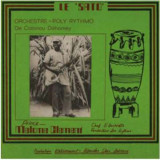
Recorded and issued in 1974, ‘Le Sato’ is one of
the earliest releases on the Albarika label and it is
also one of the deepest.
Sato is the term for the traditional rhythms that
soundtrack Vodun (Voodoo) rituals and
ceremonies in Benin. Performance of Sato is
reserved for these sacred rites, which evoke the
spirits of the dead and can last for several days
and attract hundreds of people. Sato rhythms
cannot be played outside of Vodun.
A large ceremonial Sato drum is used, which
measured over 1.5m in height. This drum is played
using wooden stick beaters, the drummer dancing
while playing. The Sato drummers are supported
by percussionists and other drummers playing
smaller drums. Together, they create unique,
layered, trance-inducing polyrhythms.
- A1: Dandara's Purpose
- A2: Gap Between Worlds
- A3: A New Hope
- A4: Their Pleas Echoed Through Time
- A5: No More Singing Birds
- A6: Once A Beautiful Horizon
- A7: Remain In Oblivion
- A8: Weight Of A Doubt
- A9: Mãe
- B1: A Leap Towards Freedom
- B2: Crumbling Memories
- B3: Eternal Sigh
- B4: Lingering Question
- B5: Hidden In Logic
- B6: Hopefully A Nightmare
- B7: Golden Menace
- C1: Golden Fortress
- C2: The Relentless Choir
- C3: Stories Of Freedom
- C4: Dandara's Legacy
- C5: Hidden Thoughts Beyond The Crimson Maw
- C6: Resolutely Unimpressed
- C7: Not Born For This
- C8: Not Made For This
- C9: Not Ready For This
- C10: Restless Machines
- D1: The Defeated Crone
- D2: Rushed Ouroboros
- D3: That Party You Can't Miss
- D4: Violent Ambush
- D5: Chained Wings
- D6: Hesitant Salt
- D7: Menina
- D8: Tormented Mind
- D9: Weight Of A Change
- D10: Stories Of Peace
- D11: Dandara's Fanfare
The Dandara: Trials of Fear Edition Original Soundtrack features over one hour of ethereal, surreal and organic music created specifically for the exploration of the Salt's surreal world. Blending eclectic electronic scores with sweeping, melodious soundscapes, Thommaz Kauffmann's score is like taking a ride into a new, wonderous land.
Dandara's light but incredibly strong presence was the starting point for all the sound presented in this album, consisting of a soundtrack that sounds hopeful and melancholic at the same time. Her lonely journey into the corrupted regions of Salt narrates each gesture made to fight the fears deep inside the Salt's most uncharted caves.
The textures and musical aesthetics in this soundtrack match a world that suffers from its abandonment to spontaneity, creativity, and vitality. It is with the presence of Dandara that there is a break in these standards imposed in Salt by an authoritarian regime.
Wrapped up in a beautiful, sturdy tip-on gatefold with a rough, black and white aesthetic, this vinyl 2xLP comes with two "Salt" white 180g in two printed inner sleeves.
Composed, produced and mixed by Thommaz Kauffmann
Artwork by Luísa Almeida
Game developed by Long Hat House
Published by Raw Fury
Thomas Köner is one of the most influential modernist minimal composers. Alongside Wolfgang Voigt's "Gas" project, Köner has been centrally responsible for electronic music's fascination with depth and reduction. His signature sound is vast, seemingly endless, which at first seems homogenous and infinite, but once exposed to it, when our senses calibrate to the fine nuances of changes, we discover and immerse into abundance of textures, richness of modulations and almost infinite range of sonic titilations. Köner's work was inspired by his frequent travels in the Arctic, and listeners feel his music as a journey to mysterious worlds of the Arctic region. The experience of being exposed to the extreme cold, the hightening of our senses and ability to notice even the slightest changes in color, sound, light or density that creates this dangerously reductive environment, is like an immersion in the sonic world of this German artist, where masterfully crafted layers of sound open into colossal spaces, teeming with aural life, waiting to be discovered by those who venture into it. The titles of Köner's highly regarded albums from the 90's ever so often play with this affinity - Nunatak, Permafrost, Teimo - all reference to the world of the Artic region, just as his album Nuuk that points us to the capital of Greenland. Subdued and minimal at first glance, this album is brimming with low-end frequences, shadowy resonances and boreal ambience, but at the same time, constant fluctuation and vulnerability of sonic events, makes it very organic, human and almost comforting, like the tiny harbour existing in the sea of ice, it is named after.
Tonnon produced the album with longtime collaborator, and The Beths’ guitarist and producer, Jonathan Pearce. Tonnon wrote the bulk of the songs during an extensive period of touring after the release of Successor - a period where Tonnon performed with Nadia Reid in Europe, The Veils in the USA, and The Chills, The Phoenix Foundation and Don McGlashan in New Zealand. The pair workshopped songs between tours, often recording new parts as the live versions developed.
Tonnon and Pearce recorded between 2017 and 2020, and in that time, Tonnon’s practise evolved heavily. He incorporated new technology into his set, including the Wellington-designed Synthstrom Deluge, which allowed him to adapt his set for new performance environments;Art Galleries, Museums, even New Zealand Fashion Week. He took that technology further when he collaborated with the Otago Museum on the immersive show for Planetariums, A Synthesized Universe, which travelled to Arts Festivals around New Zealand in 2019.
Creating a music video for ‘Old Images,’ which explored a lost passenger train network, Tonnon came to the idea for a new experience-based show called Rail Land. It took audiences on railways to reach distant community halls around Aotearoa. The show saw Tonnon combine historical research and spoken word narrative, with the immersive lighting and musical technology he developed for A Synthesized Universe. In March, Rail Land finished a three-night run at Auckland Arts Festival, cementing Tonnon’s move to the concept show.
Over time, Tonnon and Pearce’s production moved further from the traditional rhythm sections that powered songs like Successor’s ‘Water Underground.’ In their place came off kilter electronic rhythms, like the beat in ‘Two Free Hands,’ and textures that blur lines between organic and synthesized sound. Guitars are set against synthesizers, and drums against drum machines in ‘Entertainment’ and ‘Peacetime Orders,’ which Tonnon also used in his soundtrack for RNZ’s 80s spy-themed podcast The Service. In ‘Leave Love Out Of This,’ a ballad starts with a piano and a string quartet, but ends in a wall of electronic sound.
The constant has been Tonnon’s lyrics. Whether singing about evolution and the future of work in ‘Two Free Hands,’ the television industry in ‘Entertainment,’ or environmental disaster and regulatory failure in ‘Mataura Paper Mill,’ Tonnon has followed a distinct approach to subject matter, description and phrasing that have seen him longlisted for the APRA Silver Scroll three times.
Tonnon’s explorations of local government and civic infrastructure in his work - an unusual preoccupation for a songwriter, have taken new meaning in his adopted home of Whanganui, where last year, he was elected by councillors as Whanganui District Council’s representative for public transport.
After Tonnon moved to Whanganui, and Pearce toured almost constantly after the success of The Beths’ first album, the pair conducted their collaboration over distance, but with key sessions at Pearce’s Karangahape Road studio, including drums and bass with long time band members Stuart Harwood and David Flyger, a string quartet led by Charmian Keay and arranged by Matthew Bodman, and additional drums with The Beths’ Tristan Deck.
As Leave Love Out Of This is released, Tonnon and Pearce find themselves in very different places to where they started, working on Auckland’s Karangahape Road, close to the venues like Wine Cellar and Whammy Bar where they regularly performed. Back in New Zealand since Covid, Pearce has had to adjust to being in one of Aotearoa’s best-known bands, while Tonnon, when not working on conceptual shows, wrestles with how to restore civic infrastructure to a post industrial city in the regions.
Created over a life-altering period of, Leave Love Out Of This is the culmination of years of experimentation and development - with new technology, new sounds, and new ways of creating, and performing music.
Antoine Tato Garcia,Juan Luis Curbon « Patela »,Steeve Laffont,Ramon Del Pichon,Nas Heredia,Fra
Mediterranean Gypsies Roads - The sounds of guitars
- A1: Caroline (Antoine Tato Garcia) 2'51
- A2: El Rencuentro (Juan Luis Curbon « Patela ») 4'04
- A3: El Ratinho (Steeve Laffont) 4'35
- A4: Suspiro (Ramon Del Pichon) 4'21
- A5: Cositas Del Maestro (Nas Heredia) 2'56
- B1: Gipsy Melancolie (Steeve Laffont Et William Brunard) 4'36
- B2: Raphael (Antoine Tato Garcia) 4'38
- B3: Miro Djiben (Fraïda) 5'58
- B4: Bossa Gitana (Djelito Soles) 3'26
I attended a trade fair in Rio de Janeiro, Brazil. In this show, we met producers, label and festival managers. It is a privileged moment when it is possible to learn about new trends, new musical forms, emerging groups. The timing of the meal is undoubtedly the most important. We take the time to introduce ourselves and discover each other. When my turn arrived, I took out my little map to locate the town of Sète on the map of France. There, an American promoter exclaimed "Yeah! You live in this beautiful city. Where there is this incredible music. ” I admit that at the time I didn’t quite understand what he meant but flattered by his remark I told him yes. Later, I realized that he was talking about gypsy music that made the whole world dream.
When my friend shared this anecdote to me, it resonated deeply with me. Indeed, for us, people of the south of France, this was nothing exceptional. Indeed, every day you could meet in the street a gypsy musician performing a rumba, another declaiming a fandango or another who liked to paraphrase the maestro Django. It is part of our daily environment, but it is indeed a peculiarity of this region. The territory of the Mediterranean arc, from Arles to Perpignan, is indeed the cradle of gypsy music in France. In addition, we must underline the major influence of the Gypsy artists of Catalonia in the development of these different artistic forms. Through weddings and family reunions, the repertoires have shifted to be reinterpreted according to the identities specific to each and the territories of residence.
With this new collection, we wanted to show, to hear all the musical richness of Gypsy and Manouche artists populating the territory. From appropriation to recreation, they never stop bringing this music to life, re-enchanting it and offering it a resolutely modern reading, open to the world. In this first opus, devoted to the guitar, we will take the routes of latin music, flamenco or jazz alongside renowned artists and young talents. With "The sound of guitars", it is a first door open to the gypsy music of the Mediterranean Arc, that we will discover gradually through the "Mediteranean Gypsies roads" collection.
- A 1: Till The End (Live)
- A2: Hold The Line (Live)
- A3: Pamela (Live)
- B 1: Kingdom Of Desire (Live)
- B2: White Sister (Live)
- C1: You Are The Flower (Live)
- C2: I Won't Hold You Back (Live)
- C3: Stop Loving You (Live)
- C4: Band Introductions (Live)
- B1: Home Of The Brave (Live)
- B2: Rosanna (Live)
- B3: With A Little Help From My Friends (Live)
With A Little Help From My Friends captures one special night on November 21, 2020 when Steve Lukather, Joseph Wil-liams and David Paich appeared with the new line-up of Toto for a global event originating from Los Angeles, CA. Join-ing Lukather, Williams and Paich for this next chapter in their indelible history are new band members bassist John Pierce (Huey Lewis and The News), drummer Robert "Sput" Searight (Ghost-Note / Snarky Puppy), and keyboardist / back-ground vocalist Steve Maggiora (Robert Jon & The Wreck). Keyboardist Dominique "Xavier" Taplin (Prince, Ghost-Note) and multi-instrumentalist / vocalist Warren Ham (Ringo Starr) segued over continuing their tenure in the ensemble. This marks the fifteenth incarnation of the Toto line-up in consideration of band members or sidemen who joined or exited.
The track listing features “Till The End,” “Hold The Line,” “Pamela,” “Kingdom of Desire,” “White Sister,” “You Are The Flower,” “I Won’t Hold You Back,” “Stop Loving You,” “Home Of The Brave,” “Rosanna,” and “With A Little Help From My Friends.” In the DVD and Blu-ray releases, a documentary is featured alongside the performance, featuring thoughts from all members of the band that appeared that evening.
Steve Lukather a.k.a. Luke shares, “When the music is performed by great musicians it honors TOTO. The documentary featured on the DVD and Blu-ray offers great insights in to our thoughts looking forward. David, who stands with us, alongside Joe and myself, desire to keep this music alive. And Paich could pop in any time for a show as a special surprise. When it came to plan this specific set list, we picked an eclectic group of songs for this one night only show.
The album will be released on June 25, 2021 on transparent 180 grams vinyl, CD+DVD and CD+Blu-ray.
The DVD is region-free, and playable worldwide. DVD audio track: PCM 2.0
Tape
It might be easy to assume that the distinctly focused compositional voice unveiled on Rose Bolton's The Lost Clock is the product of its creator's rigorous, almost hermetic dedication to her own particular aesthetic universe. A quick survey of Bolton's artistic career, however, reveals that her carefully sculpted approach to abstract electronica has been forged through a longstanding engagement with a wide range of intertwining creative activities.
This album—coming out on Important Records' cassette imprint, Cassauna—demonstrates both the Toronto-based composer's unique mastery of colour and her gift for breathing a tactile, organic quality into synthetic landscapes. Bolton's distinctive sensibility is akin to that of a painter—every hue has been carefully mixed so as to imbue its accompanying gesture with its own life and personality. This tangible dimensionality her electronic work assumes, however, can be traced back to the work Bolton has been doing since the 1990's. She has produced a large and varied catalogue of work that includes pieces for solo performers, chamber ensembles, orchestra, electronics, voice, and to accompany installations and films. A number of her works reside in several of these zones simultaneously, such as Song of Extinction, an ambitious collaboration between herself, filmmaker Marc de Guerre, poet Don McKay, and multiple live ensembles, that was mounted in an abandoned power station for Toronto's Luminato Festival.
This quasi-instrumental vitality isn't the only feature of The Lost Clock that reflects Bolton's diverse artistic practice. It can also be heard within the structural realm. Each of the collection's four tracks trace a patient unfolding and favour a certain roundness of timbre, even as finer details begin to fidget along the perimeter of the music. As with her writing for the concert hall, Bolton doesn't shy away from the evocative here, yet she doesn't pursue this poignancy through conventional, direct or quasi-narrative means. Her compositions lead the listener gradually through their impressionistic sonic scenery, but neither the path they take nor their ultimate destination are at all predictable. The ostensible gentleness each piece exudes dissolves as dissonances slowly insinuate themselves, obscure textures writhe just out of earshot, percussive lattice work materializes, or as the overall blend begins to exert a heavier weight. Her lucid-dream vision of form functions in tandem with her acute micro-level attentiveness to engender a vivid and elusive soundworld that resists classification.
Over more than two decades Rose Bolton has been garnering acclaim and enthusiasm from audiences and major collaborators alike. Last year, her brooding string quartet The Coming Of Sobs was nominated for Classical Composition of the Year at the JUNO Awards, following earlier accolades such as SOCAN Awards for Young Composers, and the Canadian Music Centre's Norman Burgess Fund. Her music has been commissioned by the likes of the CBC, stalwart experimental music festival the Sound Symposium, as well as key interpreters and ensembles such as percussionist David Schotzko, accordionist Joseph Petric the Esprit Orchestra, Continuum, Arraymusic, the Kitchener-Waterloo Symphony, and guitar quartet Instruments of Happiness (led by Tim Brady). Together with Marc de Guerre, she produced an 8-speaker sound and video installation for Toronto's Nuit Blanche Festival. She's also been featured by the likes of revered pianist Eve Egoyan, The Vancouver Symphony, L'ensemble contemporain de Montréal, The Music Gallery, and AKOUSMA, while appearing in concert alongside the likes of Jerusalem in My Heart (Constellation Records), Tanya Tagaq, and Francis Dhomont. Bolton is also a respected film composer, notably contributing music to the highly regarded documentary Anthropocene: The Human Epoch (co-directed by Jennifer Baichwal, Nicholas de Pencier and Edward Burtynsky).
As a performer, she variously employs electronics, violin, and viola. Parallel to her engagement with exploratory approaches, she's invested in the fiddle traditions of the British Isles, and various Canadian regions. She teaches this repertoire at the Royal Conservatory of Music. Bolton has also performed with Rhys Chatham, Owen Pallett, opened for Charlemagne Palestine, and appears on recordings by the likes of Chatham and Aidan Baker. In 1999 she joined the Canadian Electronic Ensemble, whose fifty-years together make them the world's longest-running live-electronic music group. In February 2020, the CEE held a residency and provided guest lectures at Carnegie Mellon University's music department. Bolton has also led workshops at the Banff Centre, also founded the SOCAN/ Moog Audio-sponsored program EQ: Women in Electronic Music, which worked to foster community and mentorship among (trans/cis) women and non-binary individuals.
To reveal to the world all the musical riches of Mali, and more particularly the music of the Mandé region, cradle of the great griot families, is the highly laudable purpose of this LP The Lost Maestros Collection. To perpetuate and transmit this ancestral musical history, The Lost Maestros Collection brings together 8 wonders of Mali who have each in their own way managed to develop this tradition towards more modern and electrified countries and associates pioneers of Mandingo music and actors of the young post generation.
The Lost Maestros Collection is the result of the collaboration between Deviation Records, newly created by Phil Margueron and the independent Malian label Mieruba, which has been working since 2010 to ensure that this golden age of Mande music does not fall into oblivion. Aware that these nuggets are not eternal, Mieruba, based in Ségou on the banks of the Niger river and capital of the former Bambara kingdom, undertook for eight years the preservation of this musical heritage by putting these 16 pieces on tapes at the Kôré studio de Ségou as well as at the famous Bogolan studio in Bamako.
Social Joy records is very pleased to present Burkina Azza's debut Album Wari bo - a musical tale that covers every aspect of Burkina Azza's values and world view. The album takes us to the very soul of Burkina Faso, giving us a taste of the deep connection of the artists to the beauty and culture of this country.
The Burkinabe collective, from Nayerina in the Djibasso region, was born from a lineage of Balafonist and Percussionist musicians called "The Griots", often referred to as a "living archive of the people's traditions". Wari bo was Produced in January 2020 on the brink of the coronavirus pandemic in Ouagadougou, after Label owner Guilhem Monin discovered an outstanding street performance via the African Drumming Facebook group. Two years later, this release is the result of a friendship and love of music that connects two continents and travels across borders, space and time.
On steady rise following two sublime singles over the past year—Sagano b/w Haru Wa Akebono and Karakuri b/w Michinoku—Tokyo-based artist Hoshina Anniversary elaborates his eccentric musical point-of-view even further with a debut album for the ESP Institute entitled Jomon. Fourteen tracks stir a melting pot in line with our obsessions, a variety of styles which often stay in their own dedicated lanes while here their trajectories collide in demonstrable fusion. Hoshina gleans borderline absurdist qualities from late Jazz hero Chick Corea (evident in his wild and meticulous keyboard runs), calls upon ancient Japanese instruments, shrines and mythologies, and makes sideways nods to early minimal synth productions, yet all of the above are sifted through some granular equalization, an abstract veil that smooths the skin of Hoshina's mutant creation. A weight of experience pervades throughout, a requisite education in the electronic realm and a deep reverence for Jazz and its masters, and in turn this confidence transfers a sense of ease which leaves us poring over alternative approaches to otherwise familiar tropes. Once this conversation with the music is established, a subliminal push/pull tension toys with us across the length of the album, undulating our sense of space. The tonally rich, dynamic and melodic side of the works present a cool sense of depth but are violently contrasted by a slew of over-saturated punches, and at some point an inevitable alchemy casts these disparate expressions into a haunting monolithic array. Some are glistening and smooth, others are porous and jagged, but all amount to a staunch and cohesive work with the ability to transport listeners to regions unknown.
After severals EPs on labels such as Lumière Noir, Kill the DJs or Bahnsteig 23, here is the first album of french duo Il Est Vilaine, infused with a "Yellow Magic Orchestra-ish" touch, rooted in the french musical landscape.
A road trip in Brittany as a red thread, the two hooligans of Il Est Vilaine revisit Kawaii pop, crazy rock like DEVO and Detroit techno with a surprising coherence. An album long matured and awaited by the band's fans.
Il Est Vilaine aren’t Bretons, but they sure are tricksters. The Francophiles among you might have caught on to the corny pun in their name (beating a certain presidential candidate to the punch all while turning the name of the pastoral Ille-et-Vilaine region into, literally, “he’s a nasty woman,”) but the real takeaway is that these born-and-bred Parisians don’t take themselves too seriously – especially in an era in which there is much too much of that happening.
It was in 2014 (and on Dialect Recordings) that Florent and Simon tossed their debut 12” into the ring, the rightfully named Scandale – a tight little bombshell released that roused the electronic music scene out of its complacent little catnap.
So there we had it, two outcasts refusing to eat at the same table as the tech-house scene queens, serving up three whiplash-on-the-dancefloor cuts drenched in sweaty hedonistic disco and wrapped in a battered motorcycle jacket (with a gooey post-punk-pop core for good measure.) A clear mission statement right out of the gates, watermarked with mystical incantations and throbbing with rock ’n’ roll’s primitive drive. Everything and the kitchen sink, and a bag of chips – an invitation to just let lose that’s even better than the sum of its parts.
A nice hypnotic and sensual Central African guitar record, typical 80’s productions of the
region and its diaspora. These 120 BPM tunes could be DJ used by the DJs! We got this stock
thanks to our friend Hadj Sameer, who found the vaults of an old African shop in the suburbs of
Paris, held by a family that we met.
The Süddeutsche Zeitung hailed Johanna Summer’s performance
at the Young Munich Jazz Prize in 2018 as “a small sensation.”
The pianist, born in Plauen in Saxony in 1995, had encompassed
the whole gamut, from jazz freedom to classical rigour. The critic
from this respected newspaper marvelled at her “amazing gift to
make well-known melodies sound so convincingly her own, they
develop a real sense of creative urgency.” Summer’s winning of
the prize itself became almost incidental; far more significant was
the fact that this competition heralded the arrival of one of the
most interesting new pianists in European jazz.
For her debut album, Summer has chosen to make compositions
by Robert Schumann the point of departure for her journeys into
pianistic fantasy. Schumann’s cycles of piano pieces
‘Kinderszenen’ (scenes from childhood) and ‘Album für die
Jugend’ (album for the young) had been familiar to her since
childhood, not just as player and listener but also - because
Schumann was from nearby Zwickau - as works by someone from
her region of Germany. From an early age she was enchanted by
both the melodic and the pictorial aspects of these short pieces.
And yet, to make her own adaptations of seven of the pieces was
a far from a simple task: “I worked for a long time on re-casting
them, trying out all of the pieces in all keys and in a lot of different
time signatures, creating several miniature interpretations and
finally arrived at this selection, which I shaped into a cohesive
sequence with a single arc.”
The depth of her involvement with the original Schumann pieces
comes across strongly on the album. As does her impressive and
complex personality as a jazz musician with a very wide range of
expression: romantic passages and an instinct for melody but also
powerful grooves and exciting innovations. And all imbued with a
sense of how to tell stories through music, a mature and clear
vision of dramaturgy, dynamics, tension and atmosphere. A
sentence written by Schumann seems to predict exactly the kind
of new life that Johanna Summer has breathed into these pieces:
“How infinite is the realm of forms, with everything that can be
used and worked on for centuries to come.”
This 4th full-length album by the legendary Congolese collective marks a new milestone in their already rich history, as the band have incorporated their own approach to electronic music into their new compositions. The album was produced by guitarist Mopero Mupemba, who also wrote about half of the songs. Mopero also took care of the often intricate programming, which is perfectly adapted to Kasai Allstars' peculiar rhythmic patterns drawn from traditional trance and ritual music. The album features Kasai Allstars mainstays such as vocalist Muambuyi (whose voice and personality inspired the making of multi-awarded feature film Félicité), vocalist and electric likembe player Kabongo, powerful singer Mi Amor, and instrumentalists Tandjolo and Bayila. Wonderful young vocalist Bijou makes a notable first appearance on several tracks. As is well-known by now, Kasai Allstars was born from the reunion of five bands, all from the Kasai region, but originating from five different ethnic groups whose diverse musical traditions were thought to be incompatible until these musicians decided to pool their resources and work together, an inspiring example of collaboration transcending ethnic and language barriers. Ever since the debut release in 2008, Kasai Allstars' music struck the imagination of music lovers and artists worldwide. They're particularly admired by avant-indie rock, electronic & hip hop musicians and media, who consider it as a kind of "primal rock", an accidental blend of trance and avant-garde. They're admired by artists such as Saul Williams, Questlove and Björk, have engaged in live collaborations with Deerhoof, Juana Molina and Konono Nd1, and have had their tracks remixed by the likes of Animal Collective, Deerhoof, Aksak Maboul, Jolie Holland, Shackleton and more.
Optimo Music presents “Janara” the new album from Italy’s José Manuel. We always have our ears open for music that is unique, powerful and that can conjure up a ritualistic atmosphere, and this meistrerwerk did all that, and then some. We knew we had to release it after the first listen.
We’ll let José tell you about it….
This album is a result of the necessity of exploring and opening my mind to new musical horizons, by testing the main traditional instrument of the Italian region Campania, whose name is “Tammorra”. It is a big drum, which must not be confused with the typical tambourine, made from a wrap of wood shaped in a circle and covered with dried skin (almost always goatskin or sheepskin). This instrument was used during playful events, especially during rituals and ceremonies, such as the frequent devotional pilgrimages in honour of the Virgin Mary. By using this instrument, the sound, the rite and the magic could take possession of the mind and the body creating a perfect union. Also, the dancers, as if they were bitten by a tarantula and possessed by a strange evil, launched themselves to an uncontrolled dance by moving every part of their body.
In addition to the Tammorra, I also inserted some texts, which have been written by some Neapolitan friends and interpreted with Neapolitans voices, in honour of the “JANARA”. The Janara represents a popular belief of the Southern Italian regions, particularly of the Benevento area. The Janara is one of the many types of witches represented by folktales belonging to the rural tradition.
The Janara was expert in medical herbs, which were also be used for her magical practices, such as the manufacturing of ointment. The ointment gave her the power to become incorporeal with the same nature as the wind. According to the tradition, in order to snatch the Janara it was necessary to grab her by the hair. It was also said that if anyone was able to capture the Janara during her incorporeal moment then Janara herself would offer protection to them and their family for seven generations, in exchange for her freedom.
With this work I hope that the listener might get carried away by the spirit of this pagan and popular legend that can be still be considered as current. As a matter of fact, the folk tales speak of a probable comeback of the Janara, who after being burned at the stake seems to be thirsting for revenge for the evil suffered.
Inspired from Romanian cultural heritage, be it film, dance or musical instruments, Folclor Abstract is a glance back to the roots in search of a meaningful future.
The first track is inspired from the soundtrack composed by Cornelia Tăutu for the Romanian historical adventure film “Buzduganul cu trei peceți” (1977). The film presents a politicized version of the events that led in 1600 to the unification of the three Romanian countries, in the aftermath of a victorious battle against the Ottoman invasion (Călugăreni, 1595). Dance your way through as the story unfolds.
Dans cu balans is the result of a personal fascination for the cimbalom, an instrument of high versatility, frequently used in the Romanian fiddle music. In contrast to orchestral performances, which adhere to the composer’s notes to reproduce a work faithfully, fiddling is also open to improvisation and tends to produce rhythms that focus on dancing, with associated quick note changes.
Searching for inspiration within Romanian folklore, I found Ivan Braga who was on his own pursuit of cultural heritage, experimenting with a variety of traditional instruments and rhythms from different regions of the country. Doba lu’ Braga is Ivan’s modern take on Romanian drum patterns performed on a traditional Moldavian drum (dobă) with an uplifting twist and arrangement for the dancefloor experience.
Reverie is an expression of the creator’s state of mind. Lost in thought, stolen by imagination, haunted by memories, liberated by dreams
2LP on crystal clear vinyl. In these trying times, where intimacy and closeness are fraught with danger, Dans Dans (Dance Dance) brings you the sound of connection, communication, passion and togetherness.
In these trying times, where intimacy and closeness are fraught with danger, Dans Dans (Dance Dance) brings you the sound of connection, communication, passion and togetherness.
Dans Dans unites the talents of three of Belgium's most prolific music makers in Bert Dockx (Flying Horseman), Fred 'Lyenn' Jacques (Lyenn, Lanegan band) and Steven Cassiers (Dez Mona, DAAU). An utterly unique musical collective, the trio are set to release new album 'Zink' on the 23rd April via Ghent based independent, Unday Records.
From jazz, psychedelic blues and ecstatic noir soundtracks to spacey rock 'n' roll, Dans Dans cut their teeth on the cool jazz cafe scene in Flanders, Brussels with their sensational live performances and have since gone on to become a mainstay on the flourishing Belgian musical landscape.
Releasing their self-produced, eponymous debut album back in 2012, their highly distinctive, intuitive mix of musical styles and their ever-imaginative live shows caught the attention of discerning music lovers, journalists and promoters. A relatively unknown tour de force outside the Benelux region, Dans Dans have built a solid fan base since their inception with limited edition runs of early releases becoming collector's items among vinyl enthusiasts.
Well-received appearances at Cactus Festival, North Sea Jazz and Pukkelpop, as well as Gent Jazz, Ljubljana Jazz and Jazz Middelheim have confirmed their reputation as one of the most unique and exciting bands to come out of Belgium. In recent years, the group has been touring throughout Europe, garnering enthusiastic reactions beyond the Belgian borders as well. There's a case to be made that Dans Dans even played a key role in breaking down the wall between the Belgian jazz scene and the pop/rock circuit (years before pop journalists began referring to a New Wave of Belgian Jazz).
Opening with the moody noir rhythms of 'Cinder Bay', Dans Dans look to construct their own musical universe across 'Zink'. 'Naiad' unfolds into a devastating explosion of heavy feedback and wild, crashing drums before subtle electronica and baroque art-rock collide on 'Anemone' giving a good indication of Dans Dans' eclecticism. There's unquestionably a deep, underlying filmic beauty to the music, an evolving darkness and a perpetual sense of dread and paranoia. Elsewhere, 'Ravine' is intoxicating, provocative and uncompromising while the beatific 'Shell Star' is an infectious exploration of hypnotic grooves, atmospheric sounds and mind-bending melodies.
Producer Christine Verschorren (Philippe Catherine, Ivan Paduart) accentuates the music's wondrous fluidity throughout 'Zink'; the intriguing interplay; the subtle ties; the deep layering. Musical styles and influences are being blended organically and sublimated into what can only be called Dans Dans-music. "This is no fusion, no rock or jazz or ambient. This is the sound of the searching, intuitive human; of a timeless, mysterious dream; of the heart, the gut and the soul," says Dockx.
- A1: Willie Dunn - I Pity The Country
- A2: John Angaiak - I'll Rock You To The Rhythm Of The Ocean
- A3: Sugluk - Fall Away
- A4: Sikumiut - Sikumiut
- A5: Willie Thrasher - Spirit Child
- A6: Willy Mitchell - Call Of The Moose
- B1: Lloyd Cheechoo - James Bay
- B2: Alexis Utatnaq - Maqaivvigivalauqtavut
- B3: Brian Davey - Dreams Of Ways
- B4: Morley Loon - N' Doheeno
- B5: Peter Frank - Little Feather
- B6: Ernest Monias - Tormented Soul
- C1: Eric Landry - Out Of The Blue
- C2: David Campbell - Sky Man & The Moon
- C3: Willie Dunn - Son Of The Sun
- C4: Shingoose - Silver River (Poetry By Duke Redbird)
- C5: Willy Mitchell & Desert River Band - Kill'n Your Mind
- D1: Philippe Mckenzie - Mistashipu
- D2: Willie Thrasher - Old Man Carver
- D3: Lloyd Cheechoo - Winds Of Change
- D4: The Chieftones (Canada's All American Band) - I Shouldn't Have Did What I Done (Canada's All American Band)
- D5: Sugluk - I Didn't Know
- D6: Lawrence Martin - I Got My Music
- E1: Gordon Dick - Siwash Rock
- E2: Willy Mitchell & Desert River Band - Birchbark Letter
- E3: William Tagoona - Anaanaga
- E4: Leland Bell - Messenger
- E5: Saddle Lake Drifting Cowboys - Modern Rock
- E6: Willie Thrasher - We Got To Take You Higher
- F1: Sikumiut - Utirumavunga
- F2: Sugluk - Ajuinnarasuarsunga
- F3: John Angaiak - Hey, Hey, Hey Brother
- F4: Groupe Folklorique Montagnais - Tshekuan Mak Tshetutamak
- F5: Willie Dunn - Peruvian Dream (Feat Jerry Saddleback - Part 2)
Deluxe 3LP mit 34 neu gemasterten Tracks und einem 60-seitigen Buch mit ausführlichen Linernotes, Interviews, bisher ungesehenen Archivphotos und den Texten (samt Übersetzung) in einem ,Tip On"-Schuber und drei ,Tip On"-Sleeves. Linernotes von Kevin ,Sipreano" Howes. Bisher fast nicht an die Öffentlichkeit gedrungen, kaum dokumentiert, aber im Kern ungeheuer revolutionär, nehmen die Aufnahmen verschiedenster Gemeinden amerikanischer Ureinwohner endlich in Form von ,Native North America (Vol. 1): Aboriginal Folk, Rock, and Country 1966-1985" den Platz ein, den sie verdienen. Eine Anthologie von Musik, die einst fast ausgestorben, aber nun für alle zu hören, ist ohne Frage eins der ambitioniertesten Projekte in der 12-järhigen Geschichte von Light In The Attic. ,Native Norht America (Vol. 1)" versammelt Musik der eingeborenen Völker Kanadas und der nördlichen USA, die in den turbulenten Jahrzehnten zwischen 1966 und 1985 aufgenommen wurde. Die Musik spiegelt die Zusammenführung globaler Popkultur und die Neuerweckung der eingeborenen Spiritualität und Ausdruckskraft wider. Der größte Teil dieses Materials war über Jahrzehnte lang durch fehlende Distributionskanäle und wenig Präsenz in den Massenmedien in Vergessenheit geraten - bis jetzt! Hier versammelt sich Garage Rock vom Polarkreis aus der Nunavik Region des nördlichen Quebec, melancholischer Yup'ik Folk aus Alaska und flüsternder Country Blues aus dem Wagmatcook First Nation Reservat in Nova Scotia. Man vernimmt Echos von NEIL YOUNG, VELVET UNDERGROUND, LEONARD COHEN, CREEDENCE CLEARWATER REVIVAL, JOHNNY CASH und anderen in den Songs, die jedoch mit eingeborenem Bewusstsein, Erzählkultur, Poesie, Geschichte und Zeremonie angereichert werden. Die Compilation ist gewidmet dem legendären Métis Singer/Songwriter und Dichter WILLIE DUNN, der auf der Anthologie auftritt, während der Zusammenstellung des Albums jedoch verstarb. ,Native North America (Vol. 1)" ist nur der Anfang; eine Zusammenstellung von Folk, Rock und Country aus den südlichen 48 Staaten der USA und Mexiko wird momentan in der Light In The Attic Goldmine ausgegraben.
Kink Gong is back with his unique take and re-interpretation of the music he’s been recording and documenting for years in the South East Asian highlands.
Zomia Vol.1 takes the conceptual idea of ZOMIA, proposed by James C Scott in The Art of Not Being Governed, an Anarchist History of Upland South East Asia, to construct its very own mythological soundscape inspired by a semi-utopic region where state rules don’t apply. Zomia might be (almost) gone but Kink Gong is keen keep its spirit alive by releasing a series of albums celebrating the region’s quasi mythological features.
‘’Zomia is an idea, a concept that, not so long ago, there were two very distinct worlds in southeast Asia, the valley VS highland/hinterland, the civilisation VS the primitive, paddy rice VS slash and burn agriculture, Buddhism VS Animism, fixed territory VS movement/migration, written system VS oral culture, the state VS anarchy, property VS squat, controlled population VS autonomy, bricks VS bamboo and wood and, at my level museumified traditional mainstream music VS real emotions/songs of devastated lives and/or gongs ceremonies with buffalo sacrifices, extreme heat in the valleys VS shade in the jungle. I could go on and on but let’s not forget that ZOMIA is disappearing fast, if not altogether already. How many of the people I’ve recorded are still alive?
As you might know, before composing new music from my own ZOMIAN experience (from 2001 to 2014 in Cambodia, Laos, Vietnam, Thailand and China) I had to find those musicians, be able to communicate with them, record them as good as I could with very limited finances and gradually release a collection of 160 CDrs. It is very important for me to make sure you to listen to the fantastic original recordings before or after you’ve listened to this experimental reconstruction I called ZOMIA!
Expect more volumes to come, this is my biggest source of inspiration, and the reason why I’ve been involved for years in constructing a mythological experimental musical ZOMIAN soundscape.’’
Laurent Jeanneau, Berlin 2020
;Damir Imamović is a Bosnian sevdah master singer and instrumentalist. Described by The Huffingdon Post as ‘the king of sevdah music’ he has become a well-known representative of the new generation of traditional musicians in Bosnia-Herzegovina and the region. Imamović is both a brilliant and charismatic performer and a tireless innovator who continues to find original ways to connect sevdah’s rich past with an expanding and invigorated future. He also regularly composes for other artists, theatre and film. Limited Vinyl Release
„The Things I Can't Take With Me“ ist die neueste Veröffentlichung der multidisziplinären Künstlerin und Singer-Songwriterin Yaya Bey. Die selbstproduzierte, sechs Tracks umfassende EP folgt auf ihr letztes Album, das intime und politische „Madison Tapes“ aus dem Jahr 2020, das von Pitchfork (7.7), FADER, Afropunk, Noisey und anderen Medien gelobt wurde. Dem gleichen Geist ihrer früheren Projekte folgend, sucht „The Things I Can't Take With Me“ nach den zutiefst persönlichen und erfrischend ehrlichen Wahrheiten des schwarzen Frauseins und der Liebe.
Geboren und aufgewachsen in Queens/ New York, betrachtet Bey sich selbst hauptsächlich als „East Coast girl“, da sie ihre prägenden Jahre als Erwachsene in der DMV-Region (Washington DC, Maryland & Virginia) verbrachte und dort kreativ tätig war. Es war der aus Wahington DC stammende Produzent Chucky Thompson (bekannt für seine Arbeit mit Notorious B.I.G. und Diddy), der Bey ermutigte, ihre eigenen Songs aufzunehmen, nachdem sie jahrelang für andere geschrieben und Spoken Word Poetry vorgetragen hatte. Wie ihr Vater, Old-School-Rap-Legende Grand Daddy I.U., machte Bey das Beste aus dem, was sie als autodidaktische Musikerin mit einer Vorliebe für Storytelling und einem Ohr für Sampling hatte.
Die GRAMMY-nominierte Band CHA WA veröffentlicht mit ,My People" eine neue Song-Kollektion, die aus der reichen und lebendigen Straßenkultur von New Orleans schöpft. ,My People" vereint zeitgenössische Klänge mit der Musik von Straßenparaden und der Mardi Gras Indianer-Gemeinschaft - einer Gruppe schwarzer New Orleaner, die mit ihrer Kleidung, ihrer Musik und ihrem Dialekt den indianischen Stämmen Respekt zollen. Vollgepackt mit einer lebendigen Ansammlung von New Orleans-Klängen und -Geschichten, schöpft diese Sammlung neuer Originalsongs aus den Grooves von New Orleans-Funkbands der 70er Jahre wie The Meters (besonders bei Stücken wie ,Wildman" und ,Bow Down") und nimmt deutliche Einflüsse aus der Geschichte der Stadt mit Brass-Band-Musik, Jazz, R&B, Hip-Hop, Rock, Soul und afrikanisch inspirierten Arrangements (einschließlich einer relaxten Coverversion von Bob Dylans ,Masters Of War" in diesem Stil). Cha Wa wurde von Bandleader Joe Gelini kurz vor der Veröffentlichung des 2018 erschienenen Debütalbums ,Spyboy" gegründet, das 2020 bei den GRAMMYs mit einer Nominierung für das beste regionale Roots-Album ausgezeichnet wurde. ENG The next generation of New Orleans music shares a bold vision for the future with a reverence for the past. It builds upon tradition to bring something unique to the world. The future of New Orleans music is Cha Wa, a Mardi Gras Indian funk band that takes the music of the streets into the 21st century, with guests like Alvin Youngblood Hart and Anjelika Jelly Joseph. On "My People", the band tries to "take the influence of Monk and Bo and Willie Tee [from the original Wild Magnolias] back in the day, when they were interpreting the music of their time - the deep funk, disco, Afrobeat and tinges of reggae," says drummer & bandleader Joe Gelini. "And we're also trying to interpret and write new music that we're inspired to play that's relevant to our generation, and our current social environment." "My People" feels like pure joy, a distillation of generations of New Orleans expression, but it also never fails to remind us how hard-won that joy was and still is: not least in the tense, funky and explosive title track, with its declaration "My people, we're still here." "Mardi Gras Indian songs are inherently songs about freedom," Gelini says. "And that struggle is as relevant today as it's ever been."
From Tumaco, in the deep pacific coast of Colombia, Plu con Pla carries forward essential styles such as Bunde and Currulao, which were created by the African diaspora in response to the realities of life in this coastal jungle territory. The musical language of the South Pacific region is traditionally interpreted with a marimba handmade from the wood of the Chontaduro palm tree and resonating tubes of Guadua (similar to bamboo), a large, two-sided bass drum called the bombo, two slender, high-pitched drums called cununos, and cylindrical shaker called a guasá, along with powerful call and response vocals. Plu con Pla brings a mastery of this language and repertoire together with an urgency of exploration and growth, incorporating hard-hitting urban styles such as Hip Hop and Reggae into their expression, and bringing Bass, Drum Set, Keys, and more into the mix. True to their roots, collective process and social justice consciousness is central to both their music and their actions, with lyrics that address hard themes such as racism and civil war, and a continuing commitment to teaching, leading workshops and accompanying the peace process in Colombia.
Electric Jalaba comprises six accomplished musicians with an empathy thatfeels telepathic and a groove that immerses. In Arabic, the mother tongue ofMoroccan-born singer and guimbri player Simo Lagnawi, a leading practitionerof Gnawa music in Britain, they call this indefinable quality, "El Hal" - "Thefeeling". "It's the feeling that comes when we're playing and totally forgetting where weare," says producer and bassist Olly Keen. "The feeling of being grabbed by themusic and lost in the groove." 'El Hal / The Feeling' is the new third album fromElectric Jalaba and their first release in five years. It's a multi-faceted work thatfinds the band tighter than ever, deploying a vast cache of influences across ninetracks improvised and developed in their south London studio then deftlyproduced by Keen. Some tracks pay homage to the origins of Gnawa music,whose repertoire of Arabic-language praise songs contains remnants of WestAfrican dialects - Bambara from Mali, Fulani and Hausa from the Sahel region -that point to a centuries-old migration. "The trance-inducing effect of Gnawa was what hit us first. It was visceral, heartstopping," continues Olly, whose siblings - producer / keys player Henry Keen,guitarist / multi-instrumentalist Nathaniel Keen and singer / multi-instrumentalistBarnaby Keen - make up Electric Jalaba alongside revered Anglo-Italian kitdrummer Dave De Rose and Simo on vocals, krakeb and guimbri. "Simoselected the chant from the traditional song suites and, as a band, we extendedthese short pieces of ceremonial music and experimented with sound andstructure," explains Olly. Tracks include the Juno-led dancefloor single 'CubailiBa', 'Agia Hausa', a multi-layered wig-out that partly takes its inspiration fromSenegal's fiercely percussive mbalax rhythms and 'Daimla', a gloriously dubbyode to Allah and iconic maalems including the late Mahmoud Guinea. "There's avery strong rhythmic element within the band but because of our differentperspectives but the melodic components are really unique as well," says Henry.That feeling of being outside of yourself but totally within yourself at the sametime... That's what all of us, collectively, are striving for."
Belgium’s sophisticated yet sometimes worldweary indie superstars return with their fifth album and follow up to 2019’s ‘Fever’.
Further pushing on from ‘Fever’’s shift into more soulful waters, ‘Sand’ presents a more cohesive body of work that flirts with a soulful indie vibe and an at times almost slow disco undercurrent, the two singles ‘Losers’ and ‘On A Roll’ perfectly capturing the mood.
Back when you could go to gigs the band were at the point where they were selling out the Scala in London and commanding decent size crowds regionally (especially Brighton, Bristol, Manchester and Glasgow)
- A1: Safe Sailing
- A2: But Slowly I Made It My Own
- B1: Folk Triumfator
- B2: Tthe Ski Resort Was Buried In The Avalance
- B3: Sword Of Sodan Spanned Three Discs
- C1: Eis Im Sweizer Panzer Museum
- C2: Things They Will Never Tell You
- C3: Histoire Ancienne Des Dragon Blues
- D1: Where The Fringes Of Suburbia Recede
- D2: Always A Nice Story Before Bedtime
- D3: Ooit Eens Aan Deze Kust
Legowelt teams up with medieval music expert Jimi Helinga once again for a new album in their 'para-academic' Zandvoort & Uilenbal project. Folk Triumfator is the successor to the cult 2016 GERUIS UIT SOMBERDORP in which they return to appropriate historical instruments and mix it with 'modern'synthesizers. We can hear a medieval Hurdy Gurdy, A Victorian Harmonium, a 1950's Mixtur Trautonium, an electro acoustic thumb harp and much more, all mingled and amalgated into the unique Zandvoort & Uilenbal sound. It all crackles and squeaks like an old haunted ship drifting into a foggy sinister harbour while being obsvereed by Ligottian clown puppets. We can write how conceptual and arty this all is but let's just say this is hardcore dark ambient with lots of medieval drone space jazz influences to trip your mind out into a region where time and your opinions cease to exist.
LP Ltd edition GOLD vinyl, DL card (First pressing 500 copies only). New album from brothers John and Michael Gibbons, the guitarists from psychedelic drone legends, Bardo Pond. A "heavy ambient" instrumental masterpiece that explores the symbiotic relationship of the duo as they build and dismantle sounds on a unique ethereal trip. A full-length follow up to 'Joint Chiefs' from 2006, 'Celestial Scuzz' is a monumental sound piece created from hours of jam sessions and crafted into a cohesive mind-blowing trip. The result has a heavy ambience, like Eno locked in a dark room with Sunn-O))))) rehearsing next door. While Bardo Pond's trajectory takes them deep into rock music's ever-imploding sound, the brothers Gibbons surf a more ethereal and eclectic plain; from a heady and consuming space, a "sanctuary; balm for the soul." Describing the writing process, Michael Gibbons explains it as "a kind of spiritual experience. Most of the time it leaves us stunned; the more stunned we are the better the jam." // Bardo Pond: "One of underground rock's most extraordinary enigmas." The Quietus // "An exquisite and enjoyable side trip into harmonious interstellar regions with stripped down instrumentation, they drift into shimmering passages of temporal displacement." Brainwashed
‘Dekalb Works’ is the collaborative project of Austin Peru (Vision Fortune) & Daniel Creahan (Sweat Equity / Alien D). Born out of a shared deep sociological interest of dialects and cultural frameworks, and the effects these have on meaning within modes of speech, the pair here delve into the dialects of their own beginnings, mining US/British regional accents and weaving these situational scenes through a textured, intentionally disjointed, hand made soundscape of bass tension and fleeting, glistening melody – adding additional layers of emotion and meaning to everyday observations of language.
‘Duologue’ intends to blur the lines between perceived and constructed reality, occupying a gauzy, dreamlike space shared by the likes of Hype Williams & James Ferraro, where foggy sonars & deep subs provide the backbone to both eccentric and mundane ephemeral flutters of dialect.
‘Duologue’ revels in its variance of linguistic stylings – from the deep US south religious lament of ‘of a’ hovering above an ambience of Zither & Bells, to the doom laden sax skronk and vocal stutter of ‘with’, to the creeping stripped micro dub of ‘only’ which allows the familiar hue of the British news reader and typical West Midlands dialectical moments to clash – aptly documenting of an impending collision.
This is certainly one for heads into all things slow & spacious - for sure there’s a lot to digest and get lost in here across the records quite intentionally intoxicating ark, where touch points and historical nods range from Laraaji’s signature ambience to Ernest Hood’s visionary ‘Neighbourhoods’, filtered through modern outer sound explorers such as John T. Gast, Mark Lecky, and the bass minimalism of SND.
Formed in 2015 as a project of experienced, devoted musicians from German bands in the Black Forest region, THRON's initial goals were to play authentic black/death in the spirit of the early to mid '90s. Although born in Germany, THRON could originate from a Nordic country though : heavily influenced by bands like Dissection, Unanimated, Possessed and Mercyful Fate among others, adding traditional heavy metal flavour a la Judas Priest, the band create a blazing symbiosis of icy melodies, harshness and a haunting atmosphere. THRON released their self titled debut album in 2017; The following year saw the release of the much critically acclaimed ‘Abysmal’, its roaring response vigorously spread the name across the globe thanks to their diabolical twin guitar black/death metal attacks . Metal Hammer (UK) enthusiastically reviewed : ''‘Enhanced Swedish 90's black/death revivalists hit the nail on the head with this one ! ‘. The band delve even further into the musical territory they flirted with as on their debut and reinforce all foundations on ‘Pilgrim’, with more emphasis on slashing wicked fluid melodies infused with energetic, triumphant classic heavy metal swagger . THRON never loses an opportunity to furiously enhance the catchiness of each composition with a greatly balanced and coherent old school feel. Utterly brutalising and masterfully composed, the end result is truly spellbinding. THRON's 'Pilgrim' was recorded and produced by C.Brandes, A.Kovats and P.Hagmann. , Mixed and Mastered by C.Brandes at Iguana Studios in March-Buchheim in May 2020 with additional Sound Design by Stan Berzon. Artwork by created by Khaos Diktator Design.
Green Marbled Vinyl
Polifonic Records is the melodic balance between antagonistic vibrations, spirits and energiesthat inhabit the land of Puglia since the dawn of time.
An harmonic exploration into colorful, vibrant sunrise atmospheres and emotional, introspectivesunset sensations. One Body. Many Souls.
PF001 // The Frst installment comes with four contributions by festival aliates and long timefriends - from the explorative psychedelia of Francis Inferno Orchestra and the introspectiveexotica of Simone de Kunovich, to the playful 707- ish mediterranean vibes of Jolly Mare and thebalearic uplifting arpeggios of Yanik Park.
The package represents indeed a tribute to Itria, the magic Valley placed between two seas,Adriatico and Ionio, in the earth of Regione Puglia.
GER Angefangen hat das alles Mitte der Achtziger in der nordhessischen Provinz, im Zonenrandgebiet (so hieß das damals offiziell) in Eschwege. Vier Jungs, die Spaß an Punkrock hatten, dazu ein gehöriges Maß an Talent und Fleiß und in Zimbl einen sehr charismatischen Frontmann und Songschreiber, in Personalunion Sänger und Bassist. Und es hat nicht nur den Bates selber Spaß gemacht, was sie da anstellten. Über die klassische Ochsentour durch Jugendzentren, kleine Clubs und Spelunken, regionale Festivals erspielten sie sich den Ruf, das Geilste zwischen Werra, Fulda und Weser zu sein, was man live erleben konnte. Es dauerte dann auch nicht lange und sie erspielten sich den gleichen Ruf im Rest der Republik. "Unfucked - Live" ist im Original in 1993 bei Snoop erschienen, ihr letztes vor dem Wechsel zur Virgin und das einzige, welches bislang nie wiederveröffentlicht wurde. Keine Ahnung warum, denn es ist ein eindrucksvolles Zeugnis, welche Kraft diese Band gerade live entwickelt hat. Die Aufnahmen selber stammen von 1992, aus dem Outpost in Göttingen und der Weinberghalle in Eschwege. Sie wurden bei Pauler Acoustics gemastert, was schon ein Qualitätssiegel ist und jetzt bei Master & Servant speziell nochmal fürs Vinyl bearbeitet.
VINYL[19,87 €]
Nahawa Doumbia's new album Kanawa concisely captures this current moment in Malian history. The singer, whose storied career spans more than four decades, reflects on the immigration crisis from the Malian perspective in the title of her new album Kanawa. Across eight songs recorded in Bamako with a band including traditional and modern instruments, Doumbia merges her early work that relied on a spare expression of her trademark didadi rhythm with the bombastic range of contemporary Malian pop. The beautifully complex musical accompaniment that results is courtesy of the large ensemble she pulled together with producer and arranger (and day one collaborator) N'gou Bagayoko. The band features two highly expressive Malian string instruments, the ngoni and the slightly smaller kamalé ngoni, as well as a variety of percussion, drum programming, karignan (a metal scraper) and acoustic and electric guitars. Doumbia's daughter, a celebrated singer with her own group and busy concert schedule, Doussou Bagayoko sings on "Adjorobena," a song about patience, tolerance and living in peace. Doumbia weaves together a roadmap of her psyche when it comes to the good and bad life has to offer. She talks about marriage and women leaving home to join another through the metaphor of a tree in the garden; she includes gunshot samples in the song "Foliwilen" to honor the bravery of hunters, soldiers and other courageous people; she uses a bird in "Djougoh" to talk about lazy people; and, in "Ndiagneko" she advises people to ignore critics, just do you. Mali has gone through an intense period of regional strife and terrorist incidents over the last ten years and Doumbia roots the album in tragic local concerns with deep global implications. "The meaning of Kanawa is so simple. We see our children trying to cross the ocean all the time. I said that many of our children die in the ocean and some of them die while crossing the Sahara. But I ask them why do they leave their country? They said that they leave because of the family situation or problems like poverty and unemployment. I ask them to stay and work in their country. I call on the UN and African leaders so that we can coordinate our efforts to find a solution, to create jobs for them so that young people stop leaving. That's why I chose it as the title of my album so that everybody can learn from it and also so that there is a reduction in the number of people emigrating. So that some will hear the message and stay home and grow the land. Leaving is not the only solution. My message is to help the youth find jobs."
Cobalt Chapel release ‘Orange Synthetic’, the follow-up to their much lauded self-titled debut album and its companion piece ‘Variants’. ‘Orange Synthetic’ is an exploration of the epic county they call home, Yorkshire. Written during this tumultuous turn of the decade, it is inspired by the humanity, anecdotes and folklore of the region, and the surrounding landscape.
The album delves into stories which exist at the edge of history and myth: the drowning of a village under Lake Semerwater, the mystery of the lost geodesic domes of RAF Fylingdales, the fate of John Hotham of Hull, beheaded for treason during the English Civil War, a psychedelic folk song about an infamous Cragg Vale farmer killed in a fight over a flock of sheep, the cry of Skylarks over Erringden Moor.
The album’s name stems from a line in the title track, telling the story of the fateful Yorkshire Folk, Blues & Jazz Festival in Krumlin, fifty years ago. Hit by a violent storm, it resulted in the devastation of the site, near-deaths from exposure and the promoter being found wandering the moors, days later.
Cobalt Chapel’s atmospheric style remains distinctively their own, through Cecilia Fage’s crisp English vocals and choral arrangements, and Jarrod Gosling’s use of organs such as the Vox Continental, Philicorda, and the USSR-era Elektronika Organ. These are the foundations of their rich, experimental yet melodic sound, and this album sees them expand on it with the addition of mandolin, guitars, and drawing on Cecilia’s classical background, with clarinets and recorders.
In his essay ‘The Meaning of My Avant-Garde Hillbilly and Blues Music’, Henry Flynt talks about how his music should be analysed as an intellectual tribute to the music of the autochtone, setting aside plain folk references, but adopting academic insights to mold the music one makes as a folk creature. Much of Flynt’s discourse applies to the music of Glen Steenkiste’s Hellvete. Over the past twenty years he has been thoroughly investigating both the ethnic musical language of various regions as well as the contemporary pioneers that preceded him as a drone musician, internalizing concepts such as e.g. deep listening or just intonation. Casting off any redundant ideas or sounds, and stripping down the focus to develop singular concepts, his working method lead to pieces such as ‘Droomharmonium’, in which he shapes the endless variations on a theme, emphasizing detail and nuance rather than multitude. The Indian harmonium here serves as the main device to worship ancient ghosts and masters, and to preserve a continuum in a tradition that touches both folk and avant-garde culture. The materialisations are sustained tone compositions which become a means of appreciation of the people and cultures that paved the way for forms of mutual escapism. This might well be the core of what Hellvete’s music is about. As much as it is a form of self-entertainment – like folk music in the old days – it also invites the listener to a shared experience of sonic reverie, it is a casual gift to the community.
This is certainly true for the pieces presented on this album. They were first presented in a smoke filled and darkened art space in Ghent, Steenkiste surrounded by only a couple of candles and just enough stage light to see him erratically moving to the rhythm of the piece, occasionally twiddling the knobs of a Doepfer synth that processed the prerecorded harmonium tracks. Unlike most of his other performances this piece embraced the audience in a trance that was similar to that of an old-school rave club. Flynt writes: ‘The music should be intellectually fascinating because the listener can perceive and participate in its rhythmic and melodic intricacies, audacity of organization, etc. At the same time, the music should be kinesthetic, that is, it should encourage dancing.’ ‘Voor Harmonium’ does exactly that; it builds on the artistic ideas that have long been established in Hellvete’s oeuvre, but the ecstatic nature of these pieces merges the usual spiritual transcendence with one of determined physical bliss. It encourages both mind and body to step into the sound, to be enraptured, to celebrate.
CASSETTE[8,78 €]
Nahawa Doumbia's new album Kanawa concisely captures this current moment in Malian history. The singer, whose storied career spans more than four decades, reflects on the immigration crisis from the Malian perspective in the title of her new album Kanawa. Across eight songs recorded in Bamako with a band including traditional and modern instruments, Doumbia merges her early work that relied on a spare expression of her trademark didadi rhythm with the bombastic range of contemporary Malian pop. The beautifully complex musical accompaniment that results is courtesy of the large ensemble she pulled together with producer and arranger (and day one collaborator) N'gou Bagayoko. The band features two highly expressive Malian string instruments, the ngoni and the slightly smaller kamalé ngoni, as well as a variety of percussion, drum programming, karignan (a metal scraper) and acoustic and electric guitars. Doumbia's daughter, a celebrated singer with her own group and busy concert schedule, Doussou Bagayoko sings on "Adjorobena," a song about patience, tolerance and living in peace. Doumbia weaves together a roadmap of her psyche when it comes to the good and bad life has to offer. She talks about marriage and women leaving home to join another through the metaphor of a tree in the garden; she includes gunshot samples in the song "Foliwilen" to honor the bravery of hunters, soldiers and other courageous people; she uses a bird in "Djougoh" to talk about lazy people; and, in "Ndiagneko" she advises people to ignore critics, just do you. Mali has gone through an intense period of regional strife and terrorist incidents over the last ten years and Doumbia roots the album in tragic local concerns with deep global implications. "The meaning of Kanawa is so simple. We see our children trying to cross the ocean all the time. I said that many of our children die in the ocean and some of them die while crossing the Sahara. But I ask them why do they leave their country? They said that they leave because of the family situation or problems like poverty and unemployment. I ask them to stay and work in their country. I call on the UN and African leaders so that we can coordinate our efforts to find a solution, to create jobs for them so that young people stop leaving. That's why I chose it as the title of my album so that everybody can learn from it and also so that there is a reduction in the number of people emigrating. So that some will hear the message and stay home and grow the land. Leaving is not the only solution. My message is to help the youth find jobs."
- A1: (I Can't Get No) Satisfaction
- A2: Let's Spend The Night Together
- A3: Flip The Switch
- A4: Gimme Shelter
- B1: Anybody Seen My Baby?
- B2: Paint It Black
- B3: Saint Of Me
- B4: Out Of Control
- C1: Memory Motel
- C2: Miss You
- D1: Thief In The Night
- D2: Wanna Hold You
- D3: It's Only Rock'n' Roll (But I Like It)
- D4: You Got Me Rocking
- E1: Like A Rolling Stone
- E2: Sympathy For The Devil
- E3: Tumbling Dice
- E4: Honky Tonk Woman
- F1: Start Me Up
- F2: Jumpin' Jack Flash
- F3: You Can't Always Get What You Want
- F4: Brown Sugar
Bridges To Bremen is a full-length show performed by the Stones on the fifth and final leg of the Bridges To Babylon Tour. Filmed at the German city’s Weserstadion on September 2, 1998, the band had by then completed four legs in the stadiums and arenas of North America (twice), Asia and South America before finally landing in Europe early that summer. This concert film has been meticulously restored from the original masters, and the audio remixed and remastered from the live multitrack recordings. Four tracks from their Soldier Field performances in Chicago are included as bonus features. Eagle Vision’s SD Blu-ray range presents upscaled standard definition original material with uncompressed stereo and DTS-HD Master Audio surround sound for the best possible quality. Formats include a 3 x 180gm black vinyl release. DVD details Region: 0, Picture Format: NTSC, DVD Aspect Ratio: 4:3FF, DVD Audio: Dolby Digital Stereo, Dolby Digital 5.1 Surround Sound, DTS 5.1 Surround Sound, DVD Format: DVD-9. Blu Ray: Region: ABC (all) Picture Format: NTSC, BD Aspect Ratio: 16:9 (4:3PB, BD Audio: LPCM Stereo, DTS-HD 5.1 Master Audio, BD Format: BD-50
Without warning, a group of young girls from a remote region of Benin is shaking up the world of garage rock with breathtaking freshness, ingenuity and energy, playing spot-on, loud and clear.
A musician named André Baleguemon decided to form an exclusively female band rooted in the concerns of its time. He puts the spotlight on the guitar, drums and keyboard, instruments he has admired since his childhood, symbols of modernity in this remote region. His observation is simple: “In the North, girls have no room to advance and women are put aside. I simply wanted to show the importance of women in the societies of North Benin by forming a female orchestra “.
On July 25th, 2016, with the support of the city of Natitingou, André launched a press release on Nanto FM offering to help train girls in music for free. A few days later, dozens of aspiring musicians showed up at the Youth Center. “The girls who came didn’t know anything about music. We selected seven girls of the Waama and Nabo ethnic groups from the surrounding villages, some had never even seen these types of instruments before. “
The girls quickly became passionate about their new musical activities, learning how to play drums, guitar, piano and sing vocal harmonies. Their progress was astounding. An intense work of musical training took place, starting with drum workshops, their favorite instrument. Angelique and Urrice on drums and vocals, assisted by Marguerite, the third drummer. Sandrine is on keyboards, as is Grace, who also sings vocals. Julienne is on bass and Anne on guitar.
André’s determination is one of the key elements of this human and artistic success. The girls have already performed dozens of concerts in the region, forging and expanding an already solid repertoire, while attracting an ever-increasing local audience. In addition to musical progress, he has been personally involved with each family, showing them the importance of his project, both musically and humanly and in particular the fact that each girl must remain in school and not be forced into marriage.
At the end of 2018, their encounter with the young French sound engineer Jérémie Verdier accelerated the course of things. On a mission in the region, he called on his Spanish friends Juan Toran and Juan Serra who showed up with their recording equipment in order to record the band’s first songs in the annex of the local museum. Random encounters and fate led Jean-Baptiste Guillot to hear the tapes. He decided to go meet them at the end of 2019. This short but memorable journey sealed the fate of the record you are now holding in your hands.
- Unreleased full version of this rare 45 for the first time.
- Cut from tape to lathe by the masters at Timmion Cutting Lab.
Western Michigan had a very healthy music scene throughout the '60s and '70s, with Georgia-born soul legend Jackey Beavers (aka Jackie Beavers) and producer Palmer James forging that area's soul identity. Beavers produced the recording by this obscure band from Battle Creek and issued their only 45 on his Jaber label. The rhythm section of Wright, Teasley and Scurlock were better known as Jr. Walker's All Star group, and they made this recording shortly before leaving the bandleader's ranks. The Us would share ties with the Apachies (track 20), for both bands included at some point members of Jr Walker's All Stars. Trombonist Jack Hill would be involved in both bands and would help create the unique arrangement on 'Let's Do It Today.' Bassist Larry Scurlock recounts the origin behind the song's theme, "We were ready to get on with it. No draggin' around, let's do this now, today is the day! I've lived this motto for all of my life."
The full-length version here shows The Us head into psychedelic regions in the final minutes of the song that have never been heard since they were recorded over 30 years ago. "I wrote it in less than half a day to get some royalties" remembers Scurlock. "We were experimenting with tuning, a quarter tone below the note. We were sure under the influence back in those days!"
Ginno Russo follows up summery sizzler She Is On Fire with his full debut vinyl 12' for MOM. The Valencia based DJ and producer presents a stylish four track EP. It is entitled Travelling Around Zambia and features rhythms and beats inspired by Africa. Russo has been an active DJ since he was 17, with DJ residencies in Valencia and the surrounding region, as well as frequent trips to the Balearic Islands. Due to this experience, Russo knows what works on the dancefloor. Therefore it is no surprise that all four tracks on this EP are built for club play. However, the fun rhythms and ear catching grooves also make them suited to other occasions. Lio is a powerful and uplifting opener. It features steady textured beats, a stylish keyed groove and rising strings. Dubby is a relentless follow-up. Exploding chords and a live bass take centre stage over not stopping beats. Rosas is a funky number for the dancefloor. Textured percussion and powerful synths work the groove here alongside looped vocal fragments. Poble finishes off the EP with a vocal winner. Call and response sung vocals are laid over a powerful bassline and strong beats. This is a fine debut EP from Russo.
Trouble, the aptly named new album on Goner Records, is a confident and joy-filled statement delivering the good-news gospel message unapologetically through music influenced by Ray Charles, Junior Kimbrough, Bill Withers and of course, his father.
Recorded at legendary Royal Studios in Memphis by Lawrence “Boo” Mitchell (Al Green, Solomon Burke, John Mayer, Buddy Guy, Mark Ronson & Bruno Mars, North Mississippi Allstars), Trouble is the culmination of everything in Rev. Wilkins’s remarkable life, his regional history, his family music history. And in a world once again riven with discord and division, like the Memphis of Wilkins’ youth in the 1960’s, Trouble delivers passionate and confident musical performances with a message of hope that meets our present moment equal to the best music from that earlier era.
To call the Reverend John Wilkins a national treasure would not be an overstatement. He is the son of pre-war blues/folk-revival legend Reverend Robert Wilkins and he leads one of the most exciting and uplifting musical acts on the blues and gospel circuit today. His multiracial, multi-generational band blends soul, southern gospel and hill country rhythm, into a sound that has the infectious drive of hill country blues with the emotional heights of a summer tent revival.
Following in the footsteps of his famous father Rev. Robert Wilkins, a blues-singer turned preacher who went from the juke joint to the pulpit, the life of Rev. John Wilkins took a similar path, echoing the story of the elder Wilkins’ most famous song, “Prodigal Son.”
But in 2020 John Wilkins’ life has been closer to a different iconic bible character, Lazarus, as he has miraculously risen after surviving a month-long stay in intensive care battling Covid19 in a Memphis hospital. As Rev. Wilkins sings on the closing track of his forthcoming album, “I’ve come through the storm and rain, I’ve come through the storm and rain, and I made it!”
- A1: Sookie - Love Beat
- A2: Give It Up
- A3: Disco Madonna
- A4: Lovers Concerto (Vocal)
- A5: Don't Fight The Feeling
- B1: Play Me Desires/I Wanna Love/You Are Loving Me/Burning (Parts 1-4)
- B2: Midnight
- C1: The Mystery With Me
- C2: Don't Think About It
- C3: Choco Date
- C4: Tonight
- D1: Love Somebody (Part 1)
- D2: Your Love (With Venise)
- D3: Let's Keep It Together
Cameroonian Joe Bisso's earliest musical influences didn't come primarily from his homeland, but more from the neighbouring Congo, where the kind of early 60's Congolese Rumba played by the likes of Franco / TP Ok Jazz, and Tabu Ley Rochereau was establishing itself as a musical force in the region.
Alongside this exuberant, swinging, jazz influenced sound, the growing impact of the all conquering US soul titans became inescapable, and sprinkled with a bit of Johnny Halliday & Co's smooth chanson over the top, we get a snapshot of where Jo Bisso and friends post school musical experimentation was headed in the late 60's.
As that decade drew to a close, the single minded Bisso headed off to France to begin his quest for the future, and by 1972 could afford the journey to the US that he'd long dreamed of.
Enrollment at the Berkeley School of Music in Boston soon lead to a new band coming together, and by 1974 the all conquering, multi faceted approach that marks Bisso's musical career, meant he'd written, produced and sung on his debut single for the mighty Decca Records. 'Flying To The Land Of Soul' drew heavily from James Brown's propulsive dancefloor funk, whilst wearing it's African colours loud and proud via 'African Express' chants, and drums front and centre.
At the same time, Bisso and friends had started to immerse themselves in the fast emerging disco sound pulsing outwards from Downtown NYC into the Boston nightclubs, and by the time his debut album 'Dance To It' was released on France's influential Le Disques Esperance in 1976, it was the driving, 4/4 floor power of disco that was to define Bisso's sound on that, and the following two albums.
Whilst Bisso's immersion in Disco was based around it's energy and musicality (rather than any associated hedonism), 'African Disco Experimentals (1974 to 1978)' paints a picture of an artist dedicated to the underground club side of the scene, rather than focused exclusively on the fast emerging pop potential of the sound at the time.
The album's tone is set by 3.20 mins of building, tribal percussion and rolling rhythms of the opener 'Love Beat', a 'strictly dancefloor' approach mirrored in the near 11 mins of 'Love Somebody', building from soulful keys to deep bass funk, extended percussion breaks, joyous squelchy Moog licks, breathy vocals and more (interesting footnote : Bisso is credited as Producer / Writer / Arranger, but 'Recorded by' is attributed to Joe Chiccarelli, better known in recent years for his work with The White Stripes, Shins, and Broken Social Scene.)
Still clocking in at a healthy 6 mins plus, "The Mystery With Me" (1978) makes a nod towards more radio friendly waters with it's hooky, floaty choruses and tight structures (a then 22 year old Arthur Baker is credited as sole writer on Discogs - Bisso himself doesn't seemed convinced by this idea, but that's another story...)
'Let's Keep it Together' (1977) loops the song title over a slower groove, with free form electric guitar licks adding new textures, whilst 'Disco Madonna' (1976) showcases Bisso at his most playful, combining spoken word Hispanic vocals, rattling percussion and more of the always welcome Moog, switching up keys at the end for an unselfconsciously camp finale.
And if anything sums up the ambition of Bisso's work in the field at the time, 'Play Me' (1978) can lay claim to being the magnum opus. It's presented here as a continuous 16 minute extravaganza (as opposed to the 4 parts it came in originally) : lush strings, hypnotic vocal sections, irresistible basslines, crisp drums, the odd Barry White style interjection, disco moans, the occasional nod to a chorus vocal. None of it seeming in much of a hurry to go anywhere in particular, choosing instead to joyfully revel in the expansiveness of the form.
Landscapes of dystopian worlds, both emotive and driving,
unveil new forms of life here as Nightdrive’s “Miracles” LP
travels through the far east regions of house and techno with
this 10-track release. As this marks “Rough Cuts 02” for Too
Rough 4 Radio, “Miracles” is as much a transcendent force
of ethereal tunes as it is effective for any dance§oor. What
you’ll uncover across this release from this St. Petersburg
based producer is a traversing blend through IDM, Deep
House, DnB, and Techno through the lens of lush,
atmospheric soundscapes
Trouble, the aptly named new album on Goner Records, is a confident and joy-filled statement delivering the good-news gospel message unapologetically through music influenced by Ray Charles, Junior Kimbrough, Bill Withers and of course, his father.
Recorded at legendary Royal Studios in Memphis by Lawrence “Boo” Mitchell (Al Green, Solomon Burke, John Mayer, Buddy Guy, Mark Ronson & Bruno Mars, North Mississippi Allstars), Trouble is the culmination of everything in Rev. Wilkins’s remarkable life, his regional history, his family music history. And in a world once again riven with discord and division, like the Memphis of Wilkins’ youth in the 1960’s, Trouble delivers passionate and confident musical performances with a message of hope that meets our present moment equal to the best music from that earlier era.
To call the Reverend John Wilkins a national treasure would not be an overstatement. He is the son of pre-war blues/folk-revival legend Reverend Robert Wilkins and he leads one of the most exciting and uplifting musical acts on the blues and gospel circuit today. His multiracial, multi-generational band blends soul, southern gospel and hill country rhythm, into a sound that has the infectious drive of hill country blues with the emotional heights of a summer tent revival.
Following in the footsteps of his famous father Rev. Robert Wilkins, a blues-singer turned preacher who went from the juke joint to the pulpit, the life of Rev. John Wilkins took a similar path, echoing the story of the elder Wilkins’ most famous song, “Prodigal Son.”
But in 2020 John Wilkins’ life has been closer to a different iconic bible character, Lazarus, as he has miraculously risen after surviving a month-long stay in intensive care battling Covid19 in a Memphis hospital. As Rev. Wilkins sings on the closing track of his forthcoming album, “I’ve come through the storm and rain, I’ve come through the storm and rain, and I made it!”
And there is much to celebrate with this resurrection.
A 38 minutes exorcism, dionysac sexyness fueled with romanticism, made of mechanical incantations mixed with spectral vocals of forgotten imaginary tribes, words from a physicist (Incomprehensible Image), and mystical breathings… To remind you that music is demanding your soul and body, fully.
A master irritator, disclosing this talent all the way, down to every chosen title, for the album itself and all of its components (would you put Milk in Water ?). As repetitive or minimalist music may already make some of you feel nervous, it seems more accurate to talk here about primitive music – notwithstanding a non violent anarchism. But those are only words and vain attempts to attach TLT to a region or a family. Neither the burden of classical European music legacy, which eventually lead to pop music, seemed to interfere with his wild mind, and if it is no surprising to hear Bach in German electronic music, there is here a clear statement that you are out of this sirupy prison…
For D.W. is a sorcerer. He’s been empirically learning the speaking of trance with years of touring and experimenting with all kinds of audience and venues, from clubs to museums, from Mongolia to Brazil, from his performances with his bands Kreidler or Toresch to solo ones, sustained by a steady limited set up, as the one used when he’s recording : one MPC, rudimentary synths, few effects and a mixer. No sound engineer on stage as only he knows his secret language… Raw dubmaking, leaning towards hip hop, indubitably underlining here a significant distanciation from his previous industrial inspirations. The bewitchment of this record is operating with no warning from the very first seconds until the last epiphany of Sales Pitch.
He is using his knowledge of techno, psychedelism (Inverted Sea), UK bass (Jumping Dead Leafs), only to bring you out of it. We all tend to be slaves, without even being conscious about it, and a balance must be existing between being a slave and showing off. Mr. Weinrich’s answer is unsettling because it is an utter call to this balance, in our world of black and white and political correctness. There is no morality in music… Don’t expect anything else than an unaccountable liberating immediate experience. Don’t expect any kind of music because you are already in the past or the future… From his recording technique mainly relying on one takes, his adoration of mistakes and jeopardy, to the core essence of repetitive music, it is all here about being in the present. No ears no glasses.
Following the release of Milton Nascimento’s Maria Maria, Far Out Recordings proudly presents Nascimento’s 1980 follow up. With the success of Maria Maria in 1976 behind them, Nascimento reunited with his writing partner Fernando Brant in 1980 to produce another ballet, ‘Ultimo Trem (Last train)’. This time, they chose to tackle a more contemporarily relevant subject, the impact of the closure of a train line that connected certain towns and cities in the North East of Minas Gerais to the coast. “The military government shut down the route and the whole region began to fade away,” explains Milton. “I love train rides” adds the composer, “But today there are almost no trains to Brazil. So when I go to the US and Europe, any time I can, I go by train. The longer the journey the better.”
Featuring much of the same all-star line-up as Maria Maria – including legendary Brazilian musicians Naná Vasconcelos, João Donato, Paulinho Jobim and members of Som Imaginário, amongst many others, like Maria Maria, the album holds what Milton himself considers to be the definitive versions of some of his most beloved tracks, including 'Saídas E Bandeiras' and 'Ponte de Areia'.
The title track, ‘Ultimo Trem’ – performed exquisitely by Zezé Mota with a choir and piano – is a mournful lament about the human consequences of the axed line. The ballet brought great media attention to the campaign against closure. “Most of Fernando’s lyrics have some political tone,” says Milton, “This one helped the area a lot because the politicians grew concerned about the subjects.”
Fernando’s and Milton’s shared passion for the sounds, smells and memories of trains, inspired the soundtrack for the production which premièred in 1980. ‘A Viagem (The trip)’, launched with a train’s steam whistle, sees Milton’s guitar moving to a train’s rhythm. In contrast to the usual lyricism, ‘Bicho Homen (Beastly man)’ and ‘Decreto (Degree)’ are atypically upbeat and funky, their vocals a mesh of wordless male voices resembling the then fashionable Swingles Singers’ renderings of Bach. ‘E Daí? (And so what?)’, and ‘Olho d’Agua (Water’s Eye)’ were both drawn from ‘Clube Da Esquina’. ‘Olho d’Agua’ is mellow and delicate and Milton’s homage to the great voices of Brazil whilst ‘E Daí? (And so what?)’ is a stunning mosaic of voices. The unusual ‘O Velho (The Old Man)’ conjures up an image of an old shaman singing alone into the wind against the cries of nature. Perhaps the most affecting songs are Nascimento’s ‘Itamarandiba’ and ‘Oração (Prayer)’. The latter is a cry for a change in the situation whilst ‘Itamarandiba’ ends with an upbeat, whirling Hammond organ and guitar timepiece. The closing track ‘Ponta de Areia (Sand Edge)’, was based on one of Fernando’s newspaper stories and became one of Milton’s most famous pieces, covered by musicians across the planet, including Wayne Shorter and Earth, Wind and Fire. It reappeared as a ghostly 45-seconds memory on the ‘Milton e Gil’ album, his millennial collaboration with Gilberto Gil.
After 27 years of being locked inside contracts and record company legalities, these sublime songs were finally released in 2003 as a double CD package, along with Maria Maria. Set for its first ever vinyl release for this year’s Record Store Day, on limited edition red vinyl, Ultimo Trem sounds as fresh and relevant now as when Brazilian music was still a South American secret.
For Farsight, California’s bucolic San Geronimo Valley was the space that allowed for the creation of this handpicked selection of artistic output. Following a period of deep interest in abstract painting and its relationship to music, the artist found this lush and sparsely populated region to be an ideal location for contemplation and composition.
Although the majority of the work was executed in the first two months of 2020 in this forested setting, some of the pieces were based upon drafts created as early as Summer 2017. United in their eclecticism, the six cuts that comprise “Not Here, But Somewhere'' reveal a broad spectrum of musical influences. They are statements in an age in which influence is omni-directional, and in which the pace of artistic invention outstrips the ability of observers to identify and reify sub-genres. Although each track presents a unique approach, “Cadena,” “Sans Titre,” and “Door to the River'' reflect the continuing global suffusion of Latin American and Carribean styles such as reggaeton and dancehall. Simultaneously, the duo of “While” and “Hot Half” suggest the ongoing dialogue of techno, electro, and industrial music and the interstices between them. “Mid-Winter Burning Sun”
invokes the intensity of American trap music with its booming bass while touching equally upon the feel of early dubstep.
Ultimately, the idea that there is a “space for each artist” can be taken both in a literal sense— One’s physical environment— And also in the figurative sense that there is room enough for the ideas of all artists, who are kindred spirits in the endeavor of radical self-expression. In this way, “Not Here, But Somewhere” exists as an acknowledgement and gesture of goodwill towards every artist daring enough to explore the unknown.
The far west has long been known as hollowed ground for Dub Reflective arts, from the birth of Reggae and subsequent Jamaican diaspora to the more recently developments that ultimately informed Dubstep. Many key figures have emerged on the left coast of the USA throughout these developments in Culture and Roots-centric Dubstep, with key among them being the surfacing of LoDubs, and its rise near the advent of the sound in 2006 serving to inform and cement Dub's true DNA at a time when the field of those carrying the torch throughout the region could be counted on a single hand.
Pianist Roberto de la Barrera was arguably the first musician from Cartagena, Colombia to record music that would later be labeled "tropical" and "salsa" with his own group in the early to mid-1960s. He took the piano seat in the Discos Fuentes house orchestra and was also an arranger on several releases.
In 1970 he recorded his third album for the label, "Se formó la salsa", featuring an irresistible mix of Colombian and Cuban flavors, sometimes within the same tune, and often with that wonderful raw, loose, improvisational quality associated with the "descarga" jam sessions of Cachao and others a decade before.
Roberto de la Barrera was a pioneer in introducing modern Latin sounds from Havana, New York and San Juan. Sadly, his contributions in bringing salsa to the Caribbean region of Colombia and hence the rest of the country have gone largely unheralded, but hopefully this reissue will help set things straight.
Presented in facsimile artwork and pressed on 180g vinyl. Part of Vampisoul's reissue series of classic Fuentes LPs.
Das für den GRAMMY nominierte Duo ODESZA und der bahnbrechende australische Produzent Golden Features veröffentlichen neues gemeinsames Album als BRONSON.
BRONSON wurde gegründet, als die ODESZA-Mitglieder Harrison Mills und Clayton Knight 2014 bei einem australischen Musikfestival auf Tom Stell von Golden Features trafen. Die drei teilten ihre gegenseitige Bewunderung für die Auftritte der jeweils anderen und blieben in Kontakt, indem sie Musik über Zeitzonen und Kontinente hinweg über Dropbox-Dateien und FaceTime-Anrufe austauschten. Das Aufeinandertreffen des Trios gipfelte in einem Treffen 2018, als die drei Künstler eine Woche in der abgelegenen Region von Berry in Australien verbrachten, um das aufzunehmen, was später das Debütalbum von BRONSON werden sollte. Wie aus den beiden ersten Singles hervorgeht, ziehen sich Elemente von Licht und Dunkel durch das zehn Songs starke Album, da das Oberthema von „BRONSON“ das dem Menschen innewohnenden Kampf von Licht gegen Dunkelheit widerspiegeln möchte. Die Platte kombiniert sowohl melodische Vocal-Songs als auch stimmungsvollere, tiefergehende Elektronika mit Gastbeiträgen von lau.ra (die, neben u.a. Nigel Godrich von Radiohead, Teil der experimentellen Rockband Ultraísta ist), dem gefeierten US-amerikanischen R&B-Sänger Gallant und dem britischen Produzenten Totally Enormous Extinct Dinosaurs (TEED). ODESZAs und Golden Features’ kombinierte Streamingzahlen reichen in die Milliardenhöhe und die beiden Acts haben jeweils mehrere Singles und Alben veröffentlicht, die mit Gold und Platin zertifiziert wurden. Die Künstler haben mit einer Reihe von renommierten Künstlern wie Sia, Charli XCX, Leon Bridges, Regina Spektor, Katy Perry und anderen zusammengearbeitet. Als hochgefragte Live-Acts haben die beiden Projekte zudem Millionen von Fans auf der ganzen Welt auf ihren jeweiligen Headline-Tourneen erreicht. ODESZA haben zudem legendäre Veranstaltungsorte auf der ganzen Welt ausverkauft, wie bspw. Die Verti Music Hall in Berlin, die Londoner O2 Academy Brixton, das Staples Center in Los Angeles und das Barclays Center in New York und waren Headliner auf Festivals wie Melt!, Coachella, Bonnaroo und Lollapalooza.
Das für den GRAMMY nominierte Duo ODESZA und der bahnbrechende australische Produzent Golden Features veröffentlichen neues gemeinsames Album als BRONSON.
BRONSON wurde gegründet, als die ODESZA-Mitglieder Harrison Mills und Clayton Knight 2014 bei einem australischen Musikfestival auf Tom Stell von Golden Features trafen. Die drei teilten ihre gegenseitige Bewunderung für die Auftritte der jeweils anderen und blieben in Kontakt, indem sie Musik über Zeitzonen und Kontinente hinweg über Dropbox-Dateien und FaceTime-Anrufe austauschten. Das Aufeinandertreffen des Trios gipfelte in einem Treffen 2018, als die drei Künstler eine Woche in der abgelegenen Region von Berry in Australien verbrachten, um das aufzunehmen, was später das Debütalbum von BRONSON werden sollte. Wie aus den beiden ersten Singles hervorgeht, ziehen sich Elemente von Licht und Dunkel durch das zehn Songs starke Album, da das Oberthema von „BRONSON“ das dem Menschen innewohnenden Kampf von Licht gegen Dunkelheit widerspiegeln möchte. Die Platte kombiniert sowohl melodische Vocal-Songs als auch stimmungsvollere, tiefergehende Elektronika mit Gastbeiträgen von lau.ra (die, neben u.a. Nigel Godrich von Radiohead, Teil der experimentellen Rockband Ultraísta ist), dem gefeierten US-amerikanischen R&B-Sänger Gallant und dem britischen Produzenten Totally Enormous Extinct Dinosaurs (TEED). ODESZAs und Golden Features’ kombinierte Streamingzahlen reichen in die Milliardenhöhe und die beiden Acts haben jeweils mehrere Singles und Alben veröffentlicht, die mit Gold und Platin zertifiziert wurden. Die Künstler haben mit einer Reihe von renommierten Künstlern wie Sia, Charli XCX, Leon Bridges, Regina Spektor, Katy Perry und anderen zusammengearbeitet. Als hochgefragte Live-Acts haben die beiden Projekte zudem Millionen von Fans auf der ganzen Welt auf ihren jeweiligen Headline-Tourneen erreicht. ODESZA haben zudem legendäre Veranstaltungsorte auf der ganzen Welt ausverkauft, wie bspw. Die Verti Music Hall in Berlin, die Londoner O2 Academy Brixton, das Staples Center in Los Angeles und das Barclays Center in New York und waren Headliner auf Festivals wie Melt!, Coachella, Bonnaroo und Lollapalooza.
Washed Out is Atlanta-based producer/songwriter/multi-instrumentalist Ernest Greene. Over three enchanting, critically-lauded albums and an EP, his music has proved both transportive and visual, each release inviting listeners into immersive, self-contained universes. With Purple Noon, his fourth album, and his return to Sub Pop, he delivers the most accessible Washed Out creation to date. Life of Leisure, Washed Out's 2009 debut EP, set the bar for the Chillwave era, shimmering in a warm haze of off-the-cuff Polaroids and pre-IG filters. Within and Without, his 2011 full-length debut on Sub Pop, morphed into nocturnal, icy synth-pop and embraced provocative imagery. 2013's Paracosm was Greene's take on psychedelia, with a full live band and kaleidoscopic light show, and saw him playing to the largest audiences of his career. The sample-heavy Mister Mellow (2017, Stone's Throw) delivered a 360 audio/visual experience, with cut-n-paste and hand-drawn animation to match the hip-hop influences throughout the album. With each release, Greene has approached his evolving project with meticulous detail and a steadfast vision. For Purple Noon, Greene again wrote, recorded, and produced the entirety of the album, with mixing handled by frequent collaborator Ben H. Allen (Paracosm, Within and Without). Production of the album followed a brief stint of writing for other artists (most notably Sudan Archives) which enabled Greene to explore genres like R&B and modern pop. These brighter, more robust sounds made their way into the songs of Purple Noon and mark a new chapter for Greene as a producer and songwriter. The vocals are front and center, tempos are slower, beats bolder, and there's a more comprehensive depth of dynamics. One can hear the luxuriousness of Sade, the sonic bombast of Phil Collins, and the lush atmosphere of the great Balearic beat classics. Mediterranean coastlines inspired Purple Noon, and Greene pays tribute to the region's distinct island culture - all rugged elegance and old-world charm - and uses it as a backdrop to tell stories of passion, love, and loss (Purple Noon's title comes from the 1960 film directed by Rene Clement and based on the novel The Talented Mister Ripley by Patricia Highsmith). Much like romantic Hollywood epics, the melodrama throughout is strong: a serendipitous first meeting in "Too Late"; a passionate love affair in "Paralyzed"; disintegration of a relationship in "Time to Walk Away"; a reunion with a lost love in "Game of Chance." Purple Noon adds a layer of emotional intensity to the escapism of Washed Out's oeuvre, taking the music to dazzling new heights.
MP 4 Teruyuki Kurihara Frozen Dust
»Frozen Dust« is an album unified by the theme of »destruction« and »creation.« Inspired by the power of nature; we’ve expressed how we humans overcome the magnificent phenomena and impacts nature has on us - while it brings us joy, it can sometimes take away our lives and pleasures, We’ve incorporated this rather difficult theme by telling stories of fictional characters in the album; an adventurer in the Arctic region who confronts the threat of nature and survives between life and death, or a widow who never eases the pain of losing her sailor husband by a great storm in the Age of Discovery. »Frozen Dust« is our manifestation of »destruction« and »creation and each sound brings you the essence of it.
Reviews in The Wire, A Closer Listen, MixMag Japan, ResidentAdvisor Japan, African Paper and more
Interview in Data Wave
Washed Out is Atlanta-based producer/songwriter/multi-instrumentalist Ernest Greene. Over three enchanting, critically-lauded albums and an EP, his music has proved both transportive and visual, each release inviting listeners into immersive, self-contained universes. With Purple Noon, his fourth album, and his return to Sub Pop, he delivers the most accessible Washed Out creation to date. Life of Leisure, Washed Out's 2009 debut EP, set the bar for the Chillwave era, shimmering in a warm haze of off-the-cuff Polaroids and pre-IG filters. Within and Without, his 2011 full-length debut on Sub Pop, morphed into nocturnal, icy synth-pop and embraced provocative imagery. 2013's Paracosm was Greene's take on psychedelia, with a full live band and kaleidoscopic light show, and saw him playing to the largest audiences of his career. The sample-heavy Mister Mellow (2017, Stone's Throw) delivered a 360 audio/visual experience, with cut-n-paste and hand-drawn animation to match the hip-hop influences throughout the album. With each release, Greene has approached his evolving project with meticulous detail and a steadfast vision. For Purple Noon, Greene again wrote, recorded, and produced the entirety of the album, with mixing handled by frequent collaborator Ben H. Allen (Paracosm, Within and Without). Production of the album followed a brief stint of writing for other artists (most notably Sudan Archives) which enabled Greene to explore genres like R&B and modern pop. These brighter, more robust sounds made their way into the songs of Purple Noon and mark a new chapter for Greene as a producer and songwriter. The vocals are front and center, tempos are slower, beats bolder, and there's a more comprehensive depth of dynamics. One can hear the luxuriousness of Sade, the sonic bombast of Phil Collins, and the lush atmosphere of the great Balearic beat classics. Mediterranean coastlines inspired Purple Noon, and Greene pays tribute to the region's distinct island culture - all rugged elegance and old-world charm - and uses it as a backdrop to tell stories of passion, love, and loss (Purple Noon's title comes from the 1960 film directed by Rene Clement and based on the novel The Talented Mister Ripley by Patricia Highsmith). Much like romantic Hollywood epics, the melodrama throughout is strong: a serendipitous first meeting in "Too Late"; a passionate love affair in "Paralyzed"; disintegration of a relationship in "Time to Walk Away"; a reunion with a lost love in "Game of Chance." Purple Noon adds a layer of emotional intensity to the escapism of Washed Out's oeuvre, taking the music to dazzling new heights.
"Listening To Pictures", Jon Hassells erste neue Arbeit seit fast einer Dekade, war eine lebhafte Anordnung von Instrumentals in seinem einzigartigen 'Fourth World' Sound aus Jazz, Dub und electroacoustischen Techniken. Mit "Seeing Through Sounds" dringt Hassell tiefer in unbekannte, imaginäre Regionen. Die Atmosphären sind dichter, das Werk klingt nachdenklicher als sein Vorgänger, eine gewisse Spannung lauert in dunklen Ecken. In der Mitte des Albums bemerkt man ein Ruckeln, Stottern, Störgeräusche, bevor langsam wieder Ruhe einkehrt, um schliesslich mit überwältigenden Klängen das Finale einzuleiten, bei dem Avantgardisten wie William Basinksi und The Caretaker grüssen. "Seeing Through Sounds" enthält einige der detailliertesten und verfrachtesten Musiken in der langen Karriere des 'Fourth World' Pioniers.
According to the feudal system which was introduced into England by William of Normandy, the king was an absolute monarch, so he could do whatever he liked.
(from Origins of the Magna Charta).
In a cardboard media background, where cliche is law, where the digital essence of the personal data is more meaningful than the person itself, the Bait e Borghi project arises. The natural environment beyond anthropization, the technic and technologic strained clutch inside the places that inspired the album. The traveller meant as the one that makes the trip his own life, and that inevitably moves so far away from common archetypes that defeats every possible storytelling but the sound evocation. A sound that becomes the last unreal notebook like the matter which dreams and memories are made of. An unlikely but possible distopia where our last Thule remains the passage between body and machine, cyberpunk myth yet beautifully imagined and illustrated during the eighties. Not by chance Bait e Borghi share the same starting point, the same region that assumes twisted features if observed from the mid Adriatic offshore oil platforms point of view. Squalo, Giovanna, Ombrina are the point at issue, monumental media short-circuits, disclosed and hidden truths at the same time
Swiss jazz bliss! We Release Jazz is very, very, VERY happy to present its sixth release (following Ryo Fukui’s Scenery and Mellow Dream, Le Cercle Rouge’s soundtrack by Eric Demarsan, Stuff Combe 5 + Percussion, and Marc Moulin’s Placebo Live 1971) coming straight from its beloved hometown of Geneva. Boillat Thérace Quintet’s self-titled album is available for the first time since its original limited private pressing in 1974 and comes as a vinyl LP as well as a digipack CD* (with 3 never-heard bonus songs). Full of prolific and inspired local clusters and boosted by the recently launched Montreux Jazz Festival, the Swiss jazz scene was vibrant and inventive in the 1970s, notably in the region surrounding Lake Geneva. This is precisely where jazz activist and brilliant pianist Jean-François Boillat and wind instrument master Raymond Thérace formed their quintet whose dazzling debut album was recorded in 1974. An absolute Lemanic gem of the soul-jazz/modal kind, the self-titled album includes superb covers of Freddie Hubbard’s “Straight Life”, Keith Jarrett’s “In Your Quiet Place”, and Rahsaan Roland Kirk’s “Sweet Fire”, plus groovy original compositions from the Boillat-Thérace crew. Helvetian fun facts: the velvety “1224” is dedicated to Geneva’s public transport line Tram 12, and one exquisitely funky track on the album is named after the famed yet elusive (and locally legendary) Swiss Marmite: “Cenovis”! This is reissued in conjunction with Boillat Thérace Quintet’s My Greatest Love featuring Benny Bailey (1975), also available via We Release Jazz. *The CD version includes 3 bonus tracks (Herbie Hancock, Wayne Shorter, and Claude Engel covers), never released before.
The latest project by belgo-moroccan producer Reda Senhaji, alias Cheb Runner, focuses on breeding a new style of music between electronics and Gnawa. Taking inspiration from New Beat to Techno, Acid House and Gabber, the grooves are relentless, stiff and club oriented, relying heavily on analog synths and drum-machines. The sound is darker, more experimental and mature than his previous Gan Gah project.
Cheb Runner digs into the acoustic sounds of his youth, for an organic feeling of warmth and celebration. The syncopation of the classic Gnawa percussions, the “Tagnawit”, its groove is undeniable. Featuring two traditional Gnawa singers based in Brussels, Mâalem Driss and Mâalem Hicham, the EP is a reunion for the belgian Gnawa scene, keeping the vibe alive.
In a world of dematerialized culture, we tend to forget where we come from : by putting Gnawa music at the center of his production, Cheb Runner creates a bridge with the past. The young producer is a son of Gnawa himself, this is the music he grew up with and played as a kid.
Now he brings it to the club scene; Cheb Runner’s first EP is experimental, brutal, innovative. Getting past definitions and genres, it opens new horizons for North-African producers, showing them how to use their roots to make new beats. It encourages both tradition and modernity in Music. In 2019, Gnawa music, dance and culture was added to the UNESCO Intangible Cultural
Heritage list, demonstrating both the relevance of the genre and the necessity to preserve it.
of the genre and the necessity to preserve it.
Cheb, the Arabic word for “young boy”, is traditionally used to describe the young generation of Raï singers – like Cheb Hasni, Cheb Mami or Cheb Khaled. It means the new generation is here, to create something new with something old. The reference to the Ridley Scott movie Blade Runner is just that: while the Cheb comes from the bled, a moroccan village in the Agadir region, the beats come from the club scene of an industrial city, like Berlin, Detroit or Molenbeek/Brussels.
Cheb Runner takes you on a trip through space and time, as well as to pass on ancient rhythms to inspire the next generations.
»Efia,« the sophomore album by Rosaceae, picks up where the Hamburg-based sound artist’s 2019 debut on Neoprimitive left off, further exploring the topics that had already informed »Nadia’s Es- cape«. From its confrontative front cover to the eight tracks on the album, »Efia« is fully dedicated to the motif of resistance, but does not exhaust itself in polemics. Rather, it masterfully translates the complexities of its underlying central themes into a visceral narrative.
»Efia« was originally conceived as a commissioned work for the 2019 edition of Hamburg’s Noise- xistance festival and departed from a sentence uttered in the British 1980s TV show »Sapphire & Steel« which inspired cultural theorist Mark Fisher in his analysis of what he had coined »hauntolo-gy,« a term originally coined by the Algerian-French philosopher Jacques Derrida in the early 1990s: »There is no time here, not anymore.«
The album again showcases Rosaceae’s knack for combining abstract experimental sound art with a form of storytelling that had already been at the centre of »Nadia’s Escape« and which relies on both verbal and musical means of giving a voice to the voiceless. The disembodied voice of - amongst others - Jesseline Preach and manipulated vocal samples blend in with dense soundscapes, elements of Neue Musik and occasional pure harsh noise. It’s a mix that deliberately puts different artistic tradi-tions into a dialogue with each other: the hallmarks of European salon culture are con- fronted with Kurdish wedding music and the unnerving loop of someone demanding a »Zugabe« (»encore«).
Thus, »Efia« not only blurs the lines between cultural and regional traditions, but also conjures up the ghosts of a past, ghosts that are more than ready to haunt the timeless present trying so hard to repress the atrocities happening at its fringes. As a whole, this makes »Efia« both a chilling work of sound art and a vibrant political statement fuelled by burning hot energy.
The 2018 Meakusma Festival in eastern Belgium saw the first
ever joint live performance by Dman and Roger 23. »222« sees
the recorded rehearsal takes for that performance edited and
enhanced, conjuring up an album that consciously swerves in
and out of concrete and dreamlike states, updating 90s-like
ambient house and techno with a cavernous and conceptual
stance. Over the course of twelve tracks and two locked
grooves, »222« brings concrete ideas to conclusions that are
as coincidental as they are intentional. It is this dichotomy that
drives the album, its experimental nature touching upon
simplicity and complexity in equal measure. Infused by a
desire to fully execute ideas or have the ideas reach their own
conclusion, »222« has an explicit album structure, giving
space to long stretches of echo-laden experimental
soundscapes and beats that are introspective yet forward,
while its short tracks break open the mold and reset attention.
This is an album made by two forces of underground club
music in Germany. Their shared knowledge informs it with a
sense of history while at the same time updating and
commenting on that same history. It uses house and techno
as a portal into more experimental terrain. The album’s cover
image is taken from the book »Das Hohe Venn - Bilder einer
Landschaft« by Willi Filz. All track titles make explicit reference
to villages and towns in the Eifel region in western Germany
and eastern Belgium. All rehearsals and recordings took place
in Saarbruecken, exactly 222 km from Eupen. Roger 23 has
been carving out his own particular club music niche since
1998. In recent years, his production work has shown an everexpanding interest in ambient and experimental music. Dman
used to run the legendary HD800 club in Mannheim, Germany,
a catalyst for electronic club music in the south of Germany
Vinyl Only
Underground Town is back with our 4th release straight from the heart of the Swiss Alps.
For this one we serve 4 great cuts from 4 great producers. On the A-side we have young Italian producer and Underground Town resident artist Alex Zola with a very groovy and positive dreamy track for every situation. Completing this A-side we have label owner and rising talent in the industry Giorgio Maulini with another great cut with a very groovy athmosphere and rolling rhythms demonstrating why this Venezuelan artist is making waves in the industry.
On the B-side we have Cosmjn, who needs no introduction. One of the Romanian talents with more future projection and a bag full of interesting releases under his arm. On his track "Vanilla" you can feel the characteristic Romanian drums and an evolving synth that traps your senses. Last but not least we have a producer coming all the way from Honduras, Loht Vostok. He is doing an amazing job with his productions changing the game in the Central American region with a new futuristic minimal wave of quality music. "Sivar" is a track with a powerful hip breaking baseline and with a perfect combination of elements and a sweet vocal making it suitable for any dancefloor.
From the Underground Town Team we want to thank you for supporting us and showing us all this love this last year. A lot more to come in our Various Artist series soon and in our new label which will be released at the beginning of 2020 with only singular artists EPs.
Stick around with us for more quality releases and spreading the love for the underground music.
Islands, volcanoes and instrumental exile stories... From Overseas is the experimental ambient project by Kevin Sery.
Originally from the tiny French overseas department and region, Reunion Island, he routinely bounces between his home island, a small port town on the east coast of the US & Continental Europe picking up fresh ideas & inspiration along the way.
With a beautiful master by Stephan Mathieu (12k, Shelter Press, ... ) From Overseas Releases his first full length album "Home" on PITP. "Home" is a journey through beautiful soundscapes where dark and light intertwine, where ambient tones give way to post-rock guitar craft, then segway to melodic drone, noise and back again.
These soothingly powerful songs evoke emotions on a full spectrum, dreamy unplanned travels and inspire us to question the nature of the place that each of us calls home. The fourth track, Maloya Tales, is a personal tribute to Sery's homeland 'Reunion Island' and gives the listener a glimpse of the mystical rhythms of traditional Reunionese Maloya music.
Did you get the memo?
Still waters run deep.
We're pleased to introduce you to mysterious Clive From Accounts; number cruncher extraordinaire by day, totally f'ing awesome music producer by night.
No seriously, we're amped that we are able to release this EP by the self proclaimed "regional tiddlywinks champion" and "all-round beige sky thinker" Clive.
Who says office workers are drones? Loitering around the coffee machine surely has had no bad effect on his creative juices!
When we got an email from Clive with a demo called 'Bisou' we were blown away. Production quality was top notch and it really stood out from what came in our inbox.
So over the course of a year we asked him to fill out an EP next to his busy work schedule. The end result is a record with three very strong tracks, each with its own character.
'Keep Movin' is perfect for big dance floors and filthy sweaty clubs and 'The Trouble With Clive' has that beefy garage thing going on.
With a name like 'Bisou' you'd expect something kissy kissy, but it's a floaty warm, stabby breaks affair with nods to the classic deep sound.
Ahhh, we need you to go ahead and buy this stunner on limited edition wax. So um, yeah if you could do that, that'd be great. Oh, and next Friday is Hawaiian shirt day.
Something is stirring in downtown Tucson. That's no great surprise perhaps: Calexico have been sending out missives from the desert for 20 years now, Giant Sand for even longer than that, and the Green on Red revival is surely overdue. Let us remind ourselves that this isn't a big city in the American sense, but that its hinterland is indeed as big as it gets. For an hour south, Mexico starts. And this is where things get interesting.
Born in Nogales, Arizona, raised in Nogales, Sonora, multi-instrumentalist and band-leader Sergio Mendoza grew up listening to the Mexican regional styles jostling for headspace in a young, music-mad mind - cumbia mainly, but mambo, rancheras and mariachi too. The border is always a fierce arena of exchange, both commercial and cultural, and so there was American music too. At one point 'rock and roll, the classics', as Mendoza himself deadpans, seemed to win out and he stopped playing those 'Latin styles' for a good decade and a half.
The return to those sounds was a strong one in 2012's Mambo Mexicano, co-produced by Mendoza and Joey Burns of Calexico - a band for which Mendoza has become an increasingly integral touring and recording member. While that record had a studied air, tentative in parts (as befits the renewal of an old love affair), ¡Vamos A Guarachar! is another beast entirely: by turns raucous ('Cumbia Volcadora', featuring Mexican electronic pioneer Camilo Lara), tender ('Misterio', surely Salvador Duran's finest moment with the band so far) and plain serious fun, as in 'Contra La Marea' and 'Mapache', it also bears a robust electronic edge, a keen pop sensibility and all the hallmarks of Mendoza's love of 60s rock, with the closing track, 'Shadows of the Mind', sure to be included if anyone decides to update the Nuggets collection for the 21st century. This is roundabout way of saying that it appears to have everything, but never too much of anything. Focused, fierce and beautifully executed by a superbly drilled set of musicians, it is a record that fully matches the band's explosive live performances.
You could, of course, take the trip to Tucson yourself, to the home of this essential set of field recordings. The scene hangs out together, so ... if the stars align and their frantic tour schedules permit, you might see any number of folks from Calexico, Giant Sand or up-and-coming cumbia rockers Xixa deep in conversation somewhere in town with a quiet young man in black. That's Sergio. Right now, in this endless game of Tucson tag, Orkesta Mendoza are IT.
Syrian wedding singer turned global dance icon Omar Souleyman releases his 4th studio album Shlon via Mad Decent / Because Music.
On Shlon (Arabic for “how,” or literally “which color”), Omar Souleyman presents 6 new techno-meets-dabke songs of romance and love — singing poetry of a woman’s lips as sweet as Hillah’s dates on “Layle”; an intriguing woman he watches from afar whose kiss would be worth 10 million other kisses on “Shlon”; a lover ready to offer his beloved anything she wishes under the sun on “Shi Tridin” (“What Do You Wish For?”); a man in admiration of a woman with green eyes and blonde hair on “Abou Zlilif” (“Her Face is Like The Moon”); a song about love that will last forever on “Mawwal”, a traditional — all superimposed on complex techno arrangements by Hasan Alo, and based on the hi-speed Kurdish and Arabic dabke and baladi styles with the exception of “Mawwal” being presented in its traditionally slower pace. Shlon features double keyboard work from Hasan Alo, a fellow native of the Hasaka region in Northeastern Syria who has recently been active in the vibrant nightlife scene of Dubai. Azad Salih, a young Syrian man currently living in Mardin, Turkey, accompanies on saz, with the lyrics and love poetry written on the spot during the album’s recording session by longtime Omar collaborator Moussa Al Mardood - also currently based in Turkey.
Omar Souleyman, who has collaborated with Björk and Four Tet, began his career as a prolific wedding singer, releasing nearly 500 live albums before civil war broke out in his native Syria in 2011. He then moved to Turkey and in 2013 released his Four Tet-produced debut studio album Wenu Wenu via Ribbon/Domino, which NPR called, "...a jam so visceral, thrilling and intense as to make the mysterious matter of earthly borders seem hardly worth the time to contemplate." His 2015 sophomore album Bahdeni Nami (various producers including Four Tet, Gilles Peterson and Modeselektor) garnered widespread critical praise including The Guardian, who proclaimed "It's so fast that the only appropriate way to engage with it is to wriggle your limbs. Melodies are both abrasive and ebullient, chattering endlessly like raucous birdsong," and 2017’s To Syria, With Love via Mad Decent placing Omar firmly in the canon of global electronic music.
Souleyman has bolstered his growing status as a world and electronic music icon establishing an extensive international following after touring widely and performing at major festivals including Glastonbury, Bonnaroo, Pitchfork Paris and Roskilde. Since its founding in 2013, Souleyman has been an advocate for the charity "Our Heart Aches for Syria," which operates in collaboration with Doctors Without Borders. In that same year, he performed at the Nobel Peace Prize Concert in Norway.
- A1: Adam E Eve (Feat Patrick Tulippe)
- A2: Ansanm Pou Demen (Feat Henri Louis)
- A3: Konsyans (Feat Patrick Tulippe)
- B1: Elwa (Feat William Casse)
- B2: Yenki Sa An Pa Enme (Feat Leonard Zozio)
- B3: Kan La Line Leve (Feat Francois Dinane)
- C1: La Gwadloupeyen (Feat Thierry Dernault)
- C2: Latilye Valo (Feat William Casse)
- C3: Lekiri A Misie O (Feat Francois Dinane)
- D1: O La Ou Te Ye (Feat Francois Dinane)
- D2: O Moman Lesclavaj (Feat Patrick Tulippe)
- D3: Yo Pe Ke Jen Chanje (Feat Patrick Tulippe)
Soul Jazz Records continues its journey into the world of Afro-Caribbean roots music with this album of newly recorded music of Gwo Ka music recorded and produced by Soul Jazz Records on the island of Guadeloupe, French West Indies.
Gwo Ka music is a fantastic fusion of African-derived musical form ( call and response), with vocal styles that draw upon the equally powerful French chanson singers to create a truly unique combination.
Tradition Ka, made up of some of the island’s finest singers and master drummers, is part of a powerful network of politicised Gwo Ka groups on the island – upholding the traditions and cultural importance of Gwo Ka as part of a larger process of defining the identity of Guadeloupe and its culture.
This album is newly studio recorded in Pointe-A-Pitre, Guadeloupe by Soul Jazz Records. Like the cult music of Haiti’s Vodou and Cuba’s Santeria or the roots music of Belize’s Garifuna (all of which Soul Jazz have also released), Gwo Ka is the musical and cultural product of the region’s African ancestry, forcibly brought to the Caribbean through slavery.
Gwo Ka exists only in Guadeloupe, a very different island from much of the Caribbean, in that it remains a ‘department’ of its original colonial master, France. Here, the currency is the Euro and the baker sells croissant and café au lait.
This constant ‘European-ising’ of the island means that Gwo Ka plays a fundamental and important role in the defining of Guadeloupean identity. As an African-derived music, its position as a counter-balance to French influence means that the definition of how and what Gwo Ka represents is also in a constant state of flux.
These new recordings show how Gwo Ka is both a modern Caribbean music form and one firmly rooted in ancestral history.
Over the last 20 years Soul Jazz Records have been documenting and presenting the often hidden histories and deep musical worlds of Cuba, Haiti, Jamaica, Belize, Trinidad, the Bahamas and more. This documentation encompasses reissuing lost recordings, such as the mighty Studio One catalogue of reggae, producing films/dvds (such as the 3-hour documentary Mirror To The Soul in conjunction with British Pathé, and Dub Echoes), books (check the forthcoming photography book on the Caribbean 90 Degrees of Shade, with text by Paul Gilroy, and Kanaval) as well as travelling to the region to produce new recordings.
- A1: Starfish – This Town
- A2: Vampire Lezbos – Stop Killing The Seals
- A3: Nubbin – Windyyy
- A4: Saucer – Jail Ain't Stopping Us
- A5: Machine – Blind Man's Holiday
- A6: Medelicious – Beverly
- A7: Hitting Birth – Same 18
- A8: Nubbin – Wonderama
- B1: Crunchbird – Woodstock Unvisited
- B2: The Ones – Talk To Me
- B3: Pod – 123
- B4: Thrillhammer – Alice's Palace
- B5: Yellow Snow – Take Me For A Ride
- B6: Helltrout – Precious Hyde
- B7: Bundle Of Hiss – Wench
- C1: Starfish – Run Around
- C2: Thrillhammer – Bleed
- C3: Chemistry Set – Fields
- C4: My Name – Voice Of A Generation Gap
- C5: Small Stars – It's Getting Late
- C6: Shug – Am Fm
- C7: Treehouse – Debbie Had A Dream
- D1: My Name – Why I Fight
- D2: Soylent Green – It Smiles
- D5: Saucer – Chicky Chicky Frown
- D6: Attica – The System
- D3: Kill Sybil – Best
- D4: Calamity Jane – Magdalena
Soul Jazz Records new release takes us on a serious road trip into the North-West region of the USA, 1986-97, to explore the amazing lost and forgotten sounds of the Grunge era.
This Deluxe massive 28-track Double CD with 44-page outsize booklet features extensive text, band features and interviews, exclusive photos. Also Worldwide digital release + Ltd.Edition Two seperate double-vinyl albums with full notes and free download code.
The underground music scene of the North-west of America arose from the early 1980's, strung out in isolated towns across the vast state of Washington. In its early days bands who showed an allegiance to their roots of punk. Yet, by 1991,Nirvana, the biggest band in the world, had been born from this community of outsiders.
This compilation features some of the many divergent bands who emerged out of the North-west during this era. Intensely researched and documented this album features many bands who have now disappeared from history after releasing maybe just a couple of singles, or an album, or even never making it onto vinyl – alongside some bands that continue to this day.
Perhaps most fascinating is the wide-ranging styles that these grunge bands incorporated - from punk to metal, experimental and more.
All Roads lead to Nirvana: 17 of the bands featured here played alongside Nirvana in the period 1987 to 93. All 23 bands featured feature members who shared a stage with Nirvana. Jack Endino (The Ones) produced 37 Nirvana songs. Dave Foster (Helltrout) was Nirvana's 3rd drummer. Bundle of Hiss became TAD who played more gigs with Nirvana than any other band.
With fantastically in-depth sleevenotes, interviews with most of the bands, exclusive photography and all sonically remastered tracks this is a comprehensive double CD (and 2 volumes of 2x12" vinyl releases) bringing together the hidden, lost and forgotten sounds of the North-west grunge era.
Reviews & Articles: Seattle Times feature here. Irish Times here. Read article by compiler Nick Soulsby in Nirvana Legacy here Read second article by the compiler here. Read article about the artwork here.
Etruria Beat boss Luca Agnelli returns to the label as he unveils four fresh originals in the form of ‘Dangerous’. A leading name within Italy’s techno landscape and beyond, DJ, producer and label owner Luca Agnelli’s musical journey continues to surge with releases and remixes via the likes of Drumcode, Soma and his own Etruria Beat imprint.
Having played a series of stand-out shows to close the year including Universe82 festival (Valencia), Duel (Naples), Die Rakete (Nuremberg) and Steam (Athens), not to mention a breathtaking performance from the top of Torre Del Cassero in his home region of Tuscany, early 2020 sees a welcome return to home turf as the Etruria Beat boss steps out to reveal his latest EP ‘Dangerous’, comprised of four commanding productions.
Title track ‘Dangerous’ unveils a high-octane ride through escalating synths, resounding kicks and menacing low- end tones, whilst ‘High Gravity’ utilises further infectious lead line work and slick, metallic drum licks. Next, ‘End Of Time’ sees the introduction of soaring melodies alongside off-kilter sonics and tripped-out vocal snippets, before closing proceedings with ‘Acidulous’, a driving acid-led effort that snakes through both tough and more melodic territories in impressive fashion.
4Weed Records is very grateful to announce its new 12inch vinyl release.
Featuring Higher Regions’ boss Mighty Prophet outta Italy and the young and highly talented Baodub outta Spain.
On A side ‘Cradle Of Civilization’, Mighty Prophet shows his hi-quality dub producer’s skills. Played by King Shiloh as last tune in many dances, this track and its dub side fit perfectly in your heavy dubwise selection! Meditative melodies and spacey arrangements. Just powerfull!
B side ‘Echo Cave' arrives with an incredibly potent sub-line, combining tribal percussions, ancestral echoes and superb drum work to provide an energetic vibe. A jewel by Baodub!
Pacific Express emerged from Cape Town, South Africa in the 1970s. The band were from the so called "Coloured" community and were ground breakers in both musical and political arenas. The founder members Paul Abrahams (Bass), Jack Momple (Drums) and Issy Ariefdien (Guitar) were joined by Chris Schilder (Piano), Vic Higgins (Pecussion), Barney Rachabane (Alto Sax), Stompie Manana (Trumpet) and Zayn Adams & Kitty Tshikana on vocals for their second album "On Time" in 1978.
On several occasions the group fell foul of Apartheid laws and discrimination by the state broadcaster, SABC. On one occasion they were asked to leave the stage of an international tour by Australian act John Paul Young, because the law forbade racially mixed performers on the same stage. The promoter, management and band members all resisted and once he incident made the Australian newspapers the authorities had little choice and turned a blind eye.
And so to the music. The most important thing. The LP opens up with the slick jazz-boogie funk of "We Got A Good Thing Going On", a perfect vehicle for the vocals of Zayn and the statement-of-intent, on-point musicianship of the band.
"I Hear Music" is the first of three smooth sweet string-laden ballads to feature on the LP. The majority of the songs on the LP were written by keyboard player Chris Schilder. As well as high-craft songwriting Chris also contributes layers of effortless musicality with his Rhodes and piano. "Good Old Days" (the only cover on the LP) is next and its smooth-rock grooves swing effortlessly to the fore. The A-Side of the vinyl closes with the instrumental jazz funk of "Saturday Night".
The flip side of the album opens with the bands biggest commercial success. A sweet soul ballad penned "Give a Little Love". Stepping outside their usual sound. This hit however was not without controversy as the video was removed from the TV airways after the South Africa Broadcasting Corp realised that the group were of mixed race, which was against rules for so called local artists in public performance at the time.
"Dream" follows on with the driving jazz rock and travelling keyboard solos. "Reaching Out For Love" is a power-pop boogie groover powered by guest vocalists Erica Lundy and Kitty.
"Say The Last Goodbye" is the last of the trio of ballads. A smooth style moment sounding all the bit like a 70's US TV drama closing theme. The LP features with a funky workout where the band show off their chops and slick level of musicianship.
Besides the success in southern Africa this album became a regional hit as a pirated music cassette in Nigeria. It was also released in France and Japan.
The band would go on to record one further LP in 1979 and a single in 1981. They carried on performing however well pass that. Throughout their years together the band acted as central hub for Jazz musicians within the Cape Town area. Players as Tony Cedras, Jonathan Butler and Alvin Dyers gaining experience alongside established names such as trumpeter Stompie Manana and alto saxman Barney Rachabane.
Here at World Seven we are ever so pleased to be re-releasing what we consider the bands finest album moment.
Tape / Cassette
Mark Gergis is a producer, musician and audiovisual archivist known for his radio and video productions, recordings and performances. His work has focused on regional folk-pop music from the Middle East and Southeast Asia, including choubi and dabke from Iraq and Syria. As an archivist, Gergis is currently working on the project Syrian Cassette Archives, for which he aims to restore, preserve, catalogue and share his large collection of Syrian media from what can be called Syria’s ‘cassette era’ (1970s–2010). As an artist, under his name and others (Porest) he has released music on the Sublime Frequencies, Discrepant and Nashazphone to name just a few. It’s a wonder that amongst this hectic schedule he still finds time to present us with a new (old) collection of early century recordings (1999-2013).
Locational recordings, radio and TV intercepts, cassette excerpts, environments and street music all expertly all expertly meshed up into a vivid sound journey from places that were (and might) never be again.
'Agartha Stories' is a record we were looking forward to release for quite some time. Hailing from the Venice area in Italy, Bruscagin & Visnadi are representing a specific sound from that region, a certain type of melodic techno but with its very own sound design we have rarely heard before. Hear the interesting story behind it. As half forgotten legends from ancient civilisations like Celts, Aztecs, Vikings and Incas say, there is a mythical place located in the centre of our planet. This enchanted place is called Agartha and only accessible through hidden gateways under different places on our Earth's surface, like the Pyramid of Giza, Mato Grosso or Mount Epomeo. Agartha is populated by an ancient civilization that survived Atlantis. What diversifies these inhabitants from our society is the respect and the love they feel for the nature and the fundamental elements that are substantial for the progress of human beings. Following their 'Indian Stories' release on Lost & Found, Bruscagin & Visnadi dedicate their second episode of the saga to the mysterious civilization of Agartha
´
With EXHIBITION's second performance, RICO PUESTEL proudly presents the new series-within-the-series "SOLLING", conceptually fulfilling the "triad of A" throughout the canvas of this record: Acid, analogicity and anachronisms.
After recently telling a vast and mesmerizing story on Adana Twins' TAU label, RICO PUESTEL now immerses into his defining habitat roots and creates the long-planned first soundtrack chapter of SOLLING: A central German uplands area in Lower Saxony, spreading into the North of Hesse, shaped by mixed forests, its rural imprinting, a widespread range of regionally varyiing cultural idiosyncrasies and a century-extending history, including the shattering throughout the welters of the Thirty Years' War.
Being the first of several planned chapters, pre-production mostly takes place there while the music is traversed by sound recorded in that area, leading to an existence irreversibly connected to its birthplace.
The impetuous opener "Tilly", characterizing the essence of Johann T'Serclaes von Tilly who commanded the Catholic League's forces in the Thirty Years' War, overrunning the SOLLING throughout 1624 and 1625, culminates in one retro-futuristic affair, building into a overwhelming storm of percussion tapestry and intertwining layers of acid.
The A2 follow-up "Clava" takes the initial impetus to a superior level, overriding itself with an unpredictable enigma-melody after laying the foundation of a high-density groove architecture - all of this representing the almost intangible chasms of a unicum street and its geographical expanse, filled with Rico's far-reaching primordial retrospections, seemingly connecting several contingent coordinates of mysterious happenings over two decades while anticipating the future.
Ultimately, the AA-flipside delivers the groundbreaking SOLLING composition "Pro Foreste Sulgo", presenting an ancient-like struggle of dark and light as told by the principles of nature with two melodic themes, circling around themselves, bound to collide and meld like atoms - all placed within the treetops, shaken by the wind, overlooking a future that might already has been...
Oh, Juan! We love thee, we love but thee with a love that shall not die ‘till the sun grows cold and the stars grow old.
Once in a blue moon, there is a star for whom we see limitless possibilities, whose inevitably long and fruitful œuvre all but insists we do everything in our power to nurture and provide support.
We diligently examine that sky, seeking rarefied meaning from an often desperate and banal universe, and over this past decade you have surely proven one of the brightest, most wondrous and tenacious cosmic forces we’ve encountered.
Your kaleidoscopic wealth of personality, your emotionally urgent storytelling, your obsessive-compulsive weaving of voices siphoned from the pop culture æther, your ability to synthesize teachings from the Atlantic Northeast, Caribbean and Fatherland to pen an ever-evolving musical autobiography; these superhuman strengths are not lost on us.
The 'Oxford House' EP is particularly special, as 'Fahrt Im Himmel' was our fateful introduction to your work, and though that meeting in a writhing maniacal pit of half-naked sweaty bodies was nearly five years ago, it still lives romantically close to our hearts. We just know the world will fall in love and 'Let It Go', just as we did.
It’s exciting to see you merge a musical adolescence with the now evolved Juan Ramos of 'Oxford House', recognizing your significant coming-of-age and never shying away from your roots, but rather confronting and embracing them at your every turn.
We will continue to champion your creative process and output, in hopes of fueling your inherent quest to illuminate uncharted regions of your vision.
... With all our love, always and forever, the ESP Institute.
2x12"
Adam X’s highly respected, deep, science fiction laden, Traversable Wormhole project celebrates its 10-year journey with a first full-length studio album titled Regions Of Time. Lying mostly dormant since 2012, with a cameo appearance on Hospital Record back in 2016 with two tracks, TW is now fully awoken from the long travel through the space-time continuum with eight new songs of thought-provoking, psychedelic, bass-heavy, galaxian techno.Adam X’s back catalog is, of course, vast, spanning over a period three decades under several aliases. The New York native recently released his devious escapade through rumbling EBM and industrial techno in the form of his full-length album Recon Mission, released under his Sonic Groove Imprint. With this project being under the Traversable Wormhole alias, be sure to expect a completely different facet to X’s repertoire of pounding excursions.
Step through the wormhole portal and take a deep cerebral mind trip into “Regions Of Time “
Mais Alors !!?... c’est à l’envers is the first release of new French Label ICI BIENTÔT (Here Soon ...), launched by Paris Fleamarket’s Record Shop, Geminicricket. On the Menu... Suspended Time,
Unsung Heroes, Hidden Records and Next Door Marvels.
In 1983, NEF released their first and only album, Mais Alors !!?... c’est à l’envers. At that point, the band already had a long history, interwoven with that of various musical trends and alternative
movements from the late sixties to the early eighties. That’s certainly what makes this record so special and able to conciliate such different worlds as Electronic Prog, Film Score, New Wave …
The band’s destiny was most certainly tied to their native region, the South of France, an idyllic environment that attracted a number of musicians during the 1970s, allowing the group to attend many
concerts or share the bill with several groups that have gone on to become well known: Can, Ash Ra Tempel, Magma, Catherine Ribeiro, Zao, Chêne Noir, Art Zoyd …
Founded in 1975 by Richard Lorenzi, NEF started as a kind of Free Rock band with multiple influences, going from Prog to Musique Concrete, in which any method of making sound, any way of
bringing out sounds was good … 2 musicians and a photographer, full member of the band who was projecting slides over the music and influenced their dreamlike universe. In 1978, Vincent Tronc came on board with his keyboards and synths. While the group had been influenced by electroacoustic techniques until then, Vincent broadened NEF’s horizons, bringing in a host of new influences: Ash Ra Tempel, Kraftwerk, Klaus Schulze … the beginnings of electronic music. When the album is recorded in 1983, new directions were taken and changed NEF’s usual sound.
First, the idea of playing the accordion, clearly not a common thing and a new Drum Machine, the Roland CJ-5000. Pressed the day a figure of French Chanson died, NEF’s pressing is botched up, a
good part of the records were unusable since the records came out totally warped. Then, at the end of the eighties the small stock of remaining records is lost in the sadly famous flood of Nîmes. 2000
records had been pressed, but very few survived! All the more reason to reissue Mais Alors !!?... c’est à l’envers, an unsung record, free and multifaceted, a quirky and daring musical ovni, transcending eras and genres, between synthetic
Krautrock and Film Score, reminiscent of NEU! (with a red nose), François de Roubaix and Pascal Comelade.
Coming off last year's acclaimed electronic soul release fleet.magic on Andrew Morgan's PPU Records, Baskets of Gold highlights producer fleet.dreams' percussive exchange into the world of dance.
The nuanced artist now calls Detroit home, and the latest work evokes the spirit of the regions deep musical history. It's a little later in the night, still soulful, but the palette has shifted.
After locating the errant poet àj magic wandering the high deserts of the southern US, the longtime collaborator arrived to narrate the journey. The result is an album that sparkles.
Comic book artist, graphic designer and free jazz improviser are only some of the many talents from Beirut born Mazen Kerbaj. After appearing as part of various ensembles on the label, Ariha Brass Quartet (CREP46) and Johnny Kafta Anti-Vegetarian Orchestra (CREP22), Kerbaj finally lands a solo outfit of his own onto the Discrepant dancefloor of insubordination.
14 years after his first (and only) solo album "Brt Vrt Zrt Krt" (Al Maslakh, 2005) Mazen returns with a series of subtle compositions of his own with not one but two(!) solo albums of prepared trumpet that further cement his international position as a serial trumpet botherer.
Whilst Vol. 2.1 showcases his (almost) (un)familiar arsenal of squawks, cackles, howls and squeals, Vol. 2.2 goes deep into the nether regions of waltzing drones and bell tweaks so deep that would make most cetaceans loose their concentration. The notion of being transported to a luring mutant underwater alien community is still present on these long(er) trips with the added meditative pieces being occasionally pierced by noise creepers, nothing is what you want or expect and that’s the way it should be.
If Vol. 2.1 is the classic follow up LP, this one is the beast from the deep, it comes surging and screeching from a deep oceanic sink hole, only to hypnotize you with perverted dance moves before diving back into the sinking, wettest and darkest cave in the world. Vol. 2.2 is a summons album; it shatters any bar there was with its intentional use of everything Vol. 2.1 was denied. It grabs you by wherever available way and it only releases you when you’re ready to listen to it again. Listen to both albums back to back, in no particular order and you’ll know that there’s nothing you can do but come back to it like a doped up seal stranded in a phantom island – appearing and disappearing as the music dictates it to.
- A1: Friendly Fires
- A2: Dirty Disco
- A3: C.p
- A4: Loose Talk (Costs Lives)
- A5: Inside Out
- A6: Melt Close
- B1: Hit
- B2: Babies In The Bardo
- B3: Be Brave
- B4: New Horizon
- C1: Knew Noise
- C2: Up To You
- C3: Girls Don’t Count
- C4: After Image
- C5: Human Puppets
- D1: Charnel Ground
- D2: Haunted
- D3: Je Veux Ton Amour
- D4: One True Path
- E1: Loose Talk (Costs Lives) (Live)
- E2: Human Puppets (Live)
- E3: Knew Noise (Live)
- E4: Friendly Fires (Live)
- E5: Girls Don’t Count (Live)
- F1: New Horizon (Live)
- F2: Haunted (Live)
- F3: You’re On Your Own (Live)
- F4: One Step Backward (Live)
- G1: Always Now
- G2: Visitation
- G3: Regions
- G4: The Wheel
- G5: No Abiding Place
- G6: Once Before
- H1: There Was A Time
- H2: Wretch
- H3: Sutra
- I1: Fallen Monument
- I2: Are You There?
- I3: Virtually Everything
- I4: Tape Loop
- I5: Subferior
- I6: In The Garden Of Eden
- I7: Cry
- J1: Red Voice
- J2: Floating
- J3: Reading Uni Jam With New Order 1981
Factory Benelux is proud to present a deluxe 5 disc vinyl box set edition of Always Now, the debut album by cult Factory Records group Section 25, produced by legendary sonic architect Martin Hannett and sleeved by Peter Saville.
All tracks are newly re-mastered from the original quarter-inch tapes. The first 1000 copies of the box set are pressed in coloured vinyl: disc 1 (black); disc 2 (clear); disc 3 (yellow); disc 4 (red); disc 5 (silver). The outer case in printed in PMS 123 with spot varnish.
The 16 page booklet features unseen images by noted photographer Philippe Carly and texts by founder members Larry and Vin Cassidy. Also included is the first ever interview with guitarist Paul Wiggin, whose sudden departure in late 1981 saw Tony Wilson try (and fail) to recruit pre-Smiths teenager Johnny Marr as replacement.
Recorded as a trio at Pink Floyd’s Britannia Row studio in London in January 1981, Always Now combined austere post-punk rhythm and noise with elements of Can, Krautrock and modern psychedelia. Key tracks include Friendly Fires, Dirty Disco and New Horizon, along with C.P. (a collaboration with Hannett) and Hit (extensively sampled by Kanye West for the track F.M.L. on his 2016 album The Life of Pablo).
Disc 2 gathers together several non-album singles from 1980 and 1981, including Charnel Ground, Je Veux Ton Amour and debut EP Girls Don’t Count – the latter produced by mentors Rob Gretton and Ian Curtis (of Joy Division).
Disc 3 offers a complete live show professionally recorded at Groningen (Netherlands) on 26 October 1980, as part of a Factory package tour.
Disc 4 is part-improvised second studio album The Key of Dreams, recorded and produced by the band themselves a few months after Always Now, and released by Factory Benelux in June 1982.
Disc 5 consists of further experimental material recorded in 1981 and self-released on a cassette called Illuminus Illumina. This final disc closes with an extended (and previously unreleased) live encore jam recorded with all four members of New Order at Reading University on 8 May 1981.
“One of the best albums Britain's second city has unleashed” (Uncut);
“In 1980 their bass-driven mantras were thoughtlessly dismissed as second-rate Joy Division, but hindsight judges them more kindly. The wind-dried skeins of their blasted guitar harmonics and skimped electronics gauntly cling to the songs’ skeletal frames. With telltale titles like Babies in the Bardo their Buddhist interests hang heavy over these early stirrings. But, combining a bass-led drone with a characteristic groaning vocal, Charnel Ground succinctly pins down Section 25's pre-disco appeal” (The Wire)
incl. Download Code
Untameable Anatolian feline fuzzy folk funk finally uncaged. A spontaneous Turkish-Norwegian-Dutch expedition, where seafaring jazz cats entangled with fugitive roadies and Tee-Set mods, makes the story of Durul Gence’s highly anticipated/ill-fated Asia Minor Mission group the stuff of lost-rock legend and remains one of Turkish music’s great “what ifs?” The black cat is finally out of the bag...
Having forged a celebrity status as one of Turkey’s premier percussionists and bandleaders, Durul Gence assembled the underground fusion group known as Asia Minor Mission (AMM) in early 1972 (with Irfan Sumer, Oguz Durukan and Ugur Dikmen) while trying to escape the constant daze of paparazzi camera flashes that followed him across Turkey. During a far-fetched post-gig brainstorm the group pondered relocating to Norway (based on fact that none of them had ever visited the country) when a local seaman who claimed to have recording studio connections in Oslo overheard them. Enlisting the roadie services of a streetwise Istanbul taxi driver friend on the run from the police AMM took the plunge, accepting the sailor’s offer of passage on his next sailing.
In these new idyllic surroundings, the same region that played host to fellow Turkish percussionist Okay Temiz, Durul found the peace he desired discovering a muse in Norway’s welcoming creative climate. Much like Barıs Manço and Mogollar in France, Cem Karaca and Gökçen Kaynatan in Germany, Gence’s relationship with Norway rekindled a passion for composition in ways he couldn’t have imagined in his homeland, opening doors thought previously unreachable. As a potential prodigal son for Anadolu pop Durul joined a wider pop-cultural diaspora alongside electronic pioneer Ilhan Mimaroglu, Tülay German (aka Tuly Sand) Kardasllar’s “Alex” Wiska (collaborator with Krautrockers Can) and Maffy Falay from the band Sevda.
Despite a blooming fan base and original repertoire the Nordic dream was not to be and after two years without a studio session, AMM called it quits during a tour of Holland after which Durukan and Dikmen went home to join Cem Karaca’s band Dervisan - Dikmen’s keyboards feature on Finders Keepers releases by Turkish singer Selda (FKR011). Retreating to the city of Delft to ponder his next move, Durul met Peter Tetteroo, former vocalist from successful Dutch psych-pop combo Tee-Set, who also found himself in a lonely boat after the demise of his long-running group. As an AMM fan, Tetteroo suggested they record two Gence penned AMM demos for Dutch Philips signed exotic songbird Sasi Naz at Peter’s home studio. A session was hastily arranged and a talented, yet unconfirmed, guitarist was enlisted. Durul maintains it was the work of Ferry Lever from Tee-Set/After Tea, something Ferry has denied, and with Tetteroo having died in 2002 the question remains. Upon entering the humble studio Durul stumbled upon a skeletal drum kit. Lacking hi-hat, toms or even a snare he cobbled together a bongo and a tambourine and set to work. Together, under the watchful eye of Tetteroo, the pair jammed stripped back versions of the AMM live staples Black Cat and Boo Song, with an added freak factor otherwise missing from their jazzier approach. Laid down in just 30 minutes, with Gence’s accomplished guide vocals and fuzzy overdubs, the rudimentary but professional recordings never made it to Philips execs and the tapes returned to Turkey under Durul’s arm as one of only two documented AMM recordings (the other being a live performance in Oslo’s Hennie-Onstad Art Centre in May 1973).
Unintended for commercial release, curiouser and curiouser, Finders Keepers proudly present these previously unheard tracks sourced directly from original tapes, which stand as a testament to the inimitable talent of Gence and the only studio document of the mythical AMM Turk jazz funk troubadours, representing a pop-psych Hollandaise holiday postcard which has taken five decades to be delivered. 45 revolutions later... The cat’s got the cream.
Suitman Jungle is a creation of percussionist Marc Pell. The idea behind it is a man in a suit playing jungle music. He uses his voice, plays a standing drum kit and utilises live electronics such as an SPD-SX, a clunky office keyboard and guitar pedals.
Suitman Jungle is the Director of RBS (Regional Bassline Services), a company that provides a wide variety of sub & mid-range bassline services internationally.
'Liquid Lunch' is an album influenced by the sounds of London and daily routines. It was produced in OpenOffice spreadsheet processor and mastered in a cracked version of Microsoft's Powerpoint. Track four, 'Nil Cash Option', is a recording of two gig-goers who gatecrashed Brighton's Great Escape Festival by pretending to be accountants. Track six, 'Lift Going Up', is about how some days one's mood can be better or worse than on other days.
This third release of Black Lotus on Florian Meindl's FLASH Recordings enqueues in her reflection on space and physics and hypnotizes the listener in her usual kind.
According to ancient and medieval science, Aether is the material that fills the region of the universe above the terrestrial sphere.
In mythology it is seen as the personification of the heaven - the soul of the world and element of all life. An undetectable substance.
The invisible material thought to permeate all the empty space in the universe. The pure air that the gods breathe in the heavens.
Kicking off with the opening theme, with its wild synth hook and sweeping ride, ÔAetherÕ induces a solid trip on the dancefloor.
The second track explores deeper territories with its dynamic cymbals, spacey 303 textures and monotonous dark mood.
Distant Signal is a supernatural story about incessant galactic bleeps, accompanied by heavy kicks and a highly energetic percussion.
Safe trip!
Founded by Larry Akles in 1971 in Fayetteville, North Carolina, The Chocolate Buttermilk Band, has been one of the busiest and most successful cover and backing bands in the Southern United States for the last 5 decades.
While they’re little known outside the region, their handful of singles from the early 1980s are, for record collectors, among the best and most desirable in Modern Soul and Boogie Funk.
Jerome Derradji & Past Due Records are proud to present “Head Games (The Story of Larry Akles & CBM Records)”. Released on a DLP / CD with printed inner sleeves (or booklet) that include never seen before pictures of the band and a story written by Jacob Arnold. Artwork is by the mighty Al Kent. As a companion to the compilation we are also reissuing the incredibly rare and sought after “Head Games” 7” with a picture sleeve.
This compilation includes every song released by the Chocolate Buttermilk Band, remastered and reissued for the first time.
Needless to say, this is an essential release for fans of Boogie, Soul and Funk as the Chocolate Buttermilk Band releases are known to fetch thousands in the collectors market.
In Larry Akles own words, “This girl in Atlanta told me one time, she said ‘Larry, I heard on the radio that Chocolate Buttermilk was going to be on the show, and I told my girlfriend, Oh, it’s gonna be onnnn if Chocolate Buttermilk on there, ’cause whoever come behind them, they got to go!’” He continues, “When we hit the stage, boy it’d be some fire. We wouldn’t have to get warmed up. We’d start off hot!”
Aggelos Baltas is a veteran of the global electronic music scene, responsible for a handful of celebrated EBM 12”s as Dream Weapons, and a particularly heady and open-ended brand of krautrock as Fantastikoi Hxoi. His newest project, Anatolian Weapons, was conceived as a way to bring together these two seemingly mismatched concepts, with the polyrhythmic percussion and wailing tones of Greek folk music serving as their unlikely bonding agent. His output garners praise particularly around the Golden Pudel scene, such as Vladimir Ivkovic, and Phuong Dan. Lena Willikens, from the same circle, included Baltas’ track “Disillusioned” on her Dekmantel Selectors compilation in 2018.
But where much of what Baltas has released as Anatolian Weapons is instantly recognizable as dance music, To The Mother Of Gods—Baltas’ debut album for Beats In Space—is something else entirely. Created in tandem with Greek folk musician Seirios Savvaidis, it is a work of simultaneous collaboration and subtraction whose meticulous construction becomes more apparent with every listen. An album-length exploration of what happens when the principles of dance music are applied to pre-digital musical modalities. It is a record of psychedelic folk music that has more in common with Kikagaku Moyo, Minami Deutsch, and the Habibi Funk label than it does with anything else Baltas has produced under any alias. It’s difficult to imagine this music in any kind of club setting.
And yet, it’s very much the work of a DJ. Baltas initially heard Savvaidis’ music through a friend, and was absolutely amazed. “It was his very esoteric, pagan [music and] beautiful lyrics that grabbed me,” he writes. Seirios is a composer and performer of traditional Greek folk music with a growing discography of regional psych-rock gems. Baltas reached out to collaborate and the seeds of To The Mother Of Gods were sown.
Savvidis contributed stems of ten songs, which Baltas deconstructs and rearranges with appreciation of the ancestry of their lineage and of the deceptively ancient eerie, droning qualities inherent in the style. Occasionally augmenting Savvaidis’ recordings with his own, Baltas treats these elements as if raw materials for an architectural process.
To The Mother Of Gods showcases Baltas’ arrangement skills. He treats Savvaidis’ songs as landscapes, filling them with slanted, droning light and setting the singer’s vocals in dead center. His years behind the decks have given him an intuitive understanding of dynamics—drums crest and recede like tides, snippets of bassline repeat and swirl. He knows how to entrance, and when to push the music from the head to the body. Opener “Taratchi Katarratchi” (“Stormy Cataract”) is sung as a spell to ward off the fear of death, but Baltas’ orchestration demonstrates that dancing is an equally effective way of dispelling the darkness. The beat he assembles from Savvaidis’ playing recalls the late-night ecstasies of Primal Scream circa Screamadelica.
To The Mother Of Gods is a reminder that folk music and dance music are both powered by their audience as much as the musicians themselves. Savvaidis’ lyrics echo pagan Greek themes, touching on what Baltas calls “the magic of nature.” At times, as on “Kalesma” (“Invitation”), this can feel incantatory. Savvaidis chisels his vocal melodies into hard, clipped syllables, their cadence recalling Gregorian chant, and yet Baltas cloaks these details in washes of distortion. “Ston Stavraito” (“In Stavraithos”) is delivered with a lamentive tenderness that Baltas swells into a prideful stomp, immersing Savvaidis in marching drums and distant vocals that form a resilient protest-song. To The Mother Of Gods is a testament to the ongoing and innate truth that music can take us beyond ourselves. That repetition and drone can shepherd us to a liminal space beyond thought and rationality, where the wall between perception and reality does not exist. Call it spirit, if you want, and watch as it courses its way through modern-day dance music, mid-century psych, and the ancient sounds of the anatol.
Anatolian Weapons’ To The Mother Of Gods will be available from Beats In Space on June 14, 2019 in limited vinyl and unlimited digital forms.
Artist Highlights
• Aggelos Baltas is an Athenian music producer creating and Djing under the monikers of Anatolian Weapons, Fantastikoi Hxoi, and Dream Weapons.
• The Anatolian Weapons moniker is an outlet for Baltas to explore global music—from African to Anatolian and Middle Eastern, while also incorporating sounds from his home country of Greece.
Launching the first of many solo vinyl releases, Inter Gritty and
Controlled Violence are proud to present: Laponia Space
Project. Drawing inspiration from various trips through
Finland’s Lapland region, as well as proximity to Sweden’s
Space Centre, Laponia Space Project perfectly represents the
expansive, awe-inspiring nature of its surrounds. Inter Gritty
has presented himself in a different light to the majority of his
catalogue, drawing on nimble, organic sounds in combination
with a lively rhythm section to embody Laponia Space
Project’s mood. With a classic 4-track E.P. format, each work
evokes a real sense of wonderment, as tracks like Sleepy Tree
and Cassiope integrate twinkling, hollow, and delicate
elements. Basslines bound up mountain ranges, synth pulses
reverberate through the treetops, and groovy percussion
captures the excitement and energy of the local scenery.
TR303 is a clear homage to the machine and the movement
that have shaped modern-day electronic music. And while it
will certainly make its way into the crates and folders of DJs
everywhere, it still manages to incorporate a sensation akin to
being sent out into the most unfamiliar of territories. To close
the E.P., Expo Line’s percussion shakes amongst airy pads and echoed pangs, as though one is shuffling onwards through the
forest.
Berlin based trio Keller Crackers collective likes to shape haunting esoteric sounds, in which self-built instruments dance with ritualistic synthesised rhythms, field recordings, psychoacoustic drones and poetical spoken silhouettes.
After a self-released MC and a mesmerising tune called “Anem” out in February 2019 on the custom-made Kashual Plastik 007 double-vinyl compilation, now they give birth to their own debut record “KC”, a four track EP resulting from various improvisational studio sessions, a bag full of spontaneous visionary DIY sound fashion that melts meandering serialism, foggy ‘Chris & Cosey’-ness, exoticism and freely expressed emotions. Some pieces are given time to evolve, being dragged through long arrangements and slow transitions, while others are playful and short. To close up the magic circle, the release includes a tripping Tolouse Low Trax signature remix.
The opening tune “Specialised” swings on a trance-like hypnotic bass line, while a self-made kalimba played through a tape delay and overtones from a DIY circuit bended device inject dynamics and colour to the composition. Out of the sonic depth, the spoken words of Sylvana Wickman emerge enchanting and unreal, naming a series of technical terms, assembling a deep notion on the specialised society we live in.
“Cow Tongue” follows, a fleeting composition of crackling electronic clicks jumping off a micro-modular device. They got overdubbed again by Sylvana’s voice, delightfully reciting phrases from a recipe of regional delicacies.
The A side of KC`s first strike finishes with a spaced-out synth bass and the lo-fi beats of a Yamaha RX15 drum machine. They are the gripping foundation of “Aithouses Anamonis“, which means “Waiting Rooms”. It describes the scene of a man sitting in a waiting room observing the consumerist behaviour by the folks around him.
The B-side opens with a Tolouse Low Trax remix of “Specialised”, elevating the original with the bass line of “Aithouses Anamonis“, while melting the all into a dark nebulous Tolouse Low Trax signature stripped down funk for endless nights in neon lights.
For their final track “Colours”, Keller Crackers invited a steady free member of their live shows to record with them: free jazz musician Robert Würz. He tuned his flute enthralling over a suspenseful bass line formed in a whirlwind of synth-sounds. The whole frenzy gets divine through sliding chords that rise from a self-built guitar.
A musical bouquet for open spirits, that value charming minimal wave zones, undefinable post-industrial psychedelics and hallucinogenic poetry reflections on the current state of our mechanical times.
F-Dorm is a collaboration between Connor Camburn of Litüus (AVIAN), and visual artist Conor Ekstrom. Commune follows the first F Dorm cassette on Mazurka and presents the first LP by the project. Songs build upon unexpected repetition, wielding normally aggressive sounds into meditative loops with subtle textural evolutions. Bursts of tape saturation, controlled waves of feedback, and linear drum beats shift and weave together through rhythmic delays. Affected vocals speak low as if coaxing the listener further out into the nether regions of the mind. The strange cumulative mood of the record is difficult to describe: A transcendental state or a foul parallel from which the listener arises stronger or does not arise at all. mummies in civilian clothes -the master of the riddle-a DOLLMIND haunts me in the penitentiary -the puttyman, naked inside -a mind made of cream
Info We Release Jazz is ecstatic to present its fifth release (following Ryo Fukui's Scenery and Mellow Dream, Le Cercle Rouge's soundtrack by Eric Demarsan and Stuff Combe 5 + Percussion), the first ever live performance and recording by Marc Moulin's sought-after jazz-funk band Placebo, captured at Casino Kursaal during the Montreux Jazz Festival in 1971 and never released before. Placebo's Live 1971 is available in a limited edition 180g vinyl mastered at half speed, housed in a 350gsm sleeve with UV coating and an obi strip. June 17th, 1971, the Montreux Riviera, its delightful microclimate and postcard scenery, its fabled music history and the luscious wines of the region. A dream setting for Marc Moulin to lead his ensemble on a 26 minutes+ jazz adventure - Nick Kletchkovsky on bass, Freddy Rottier on drums, Johnny Dover on bass clarinet, Alex Scorier on soprano saxophone, and Richard Rousselet on flugelhorn. The magic of that night is dripping through Placebo's sumptuous 'Showbiz Suite", a soulful piece in two parts in which every instrument gets enough room to shine, smoothly navigating between cozy cognac-by-the-fireplace funk and heartfelt grittiness, served with a pinch of Soft Machine vibes. It's the night Placebo was born, when foundations were laid for three classic albums: Ball of Eyes (on which you can hear a shorter studio version of 'Showbiz Suite"), 1973, and their final self-titled album. Born in 1942 in Ixell
- Four Secret Weapons for the Night' wäre sicher auch ein
passender Titel für Katalognummer 11 aus dem Hause
Polyfon gewesen. Doch das erschien den stets angenehm
zurückhaltenden Label-Aktivisten aus Thüringens MiniMetropole Erfurt vielleicht ein ganz klein wenig zu dick
aufgetragen. Gerechtfertigt wäre der Name auf jeden Fall
gewesen. Schlussendlich aber haben wohl die gefühlten 12000
Jahre Danceoor-Erfahrung der beteiligten Protagonisten die
EP benannt. Dass das Ganze dabei absolut fresh rüberkommt,
steht außer Frage. Den Auftakt zu der Mini-Compilation liefern
Tino Bohne und Benjamin Brunn aka The Hangout Project mit
- I´m crazy about you', einer charmanten Elektronik-Nummer,
die durch ein wunderschön und dezent eingesetztes VocalSample sowie einer sowas von überraschend loslegenden 4/4-
Bassline überzeugt. Diese erinnert auch sofort daran, dass
man zum tanzen auf der Welt ist. Weiter geht es mit Le
Rubriques Abenteuern in der - Bar Celona'. Ob diese nun in
Katalonien oder Hessen steht, weiß man nicht. Die Tonart ist
auf jeden Fall nach Frankfurter Art, so dass der Bembel bebt.
Kez YM ist sowieso egal, in welcher Region oder Galaxie sich
etwas bendet. Mit - CL05VER06' lässt er Raum und Zeit auf
jeder Tanzäche links und rechts der Milchstraße zerießen,
wie es auf unserem Planeten noch am ehesten die großen
Meister in Michigan zelebrieren. Und dass Johannes Albert
seinen ganz eigenen - Style of House' hat, sollte nun wirklich
jeder wissen. Ob in der Waldschänke Dornheim oder im Boiler
Room Amsterdam! Check!
With the help of the Orchestre Regional de la Réunion, Labelle opens a new chapter in the merging of classical and electronic music, and the heritage of Europe and the Indian Ocean. This third LP, composed especially for the Orchestre univers, was recorded live over the course of four concerts, performed at the four corners of the Réunion, in the island's most beautiful concert halls. A sequence of breathless trancelike moments, Post-maloya and technological experiments, the album floats between tradition and modernity, like a sonic odyssey that is only the beginning of an ongoing saga...
- A1: Turkey: Automobile On Mountain Road—Central Anatolian Dance
- A2: Turkey: Mevludin Nebevi (Religious Chant)
- A3: Syria: Rasd (Dervish Song)
- A4: Syria: Bedouin Song And Dance
- A5: Jordan: Bedouin Coffee Grinding
- A6: Iraq: Kesame-Meru (Kurdish Ballad)
- A7: Iran: Baba Karam (Love Song)
- B1: Iran: Rhythm Of A Train (Drums)
- B2: Iran: Humayun (Traditional Melody)
- B3: Afghanistan: Atan Dance Music
- B4: Pakistan: Neemakai (Wedding Folk Song)
- B5: India: Zila From Varanasi (Benares)
- B6: India: Temple Bells And Drums Of A Bengall Kali Temple—Bhajan (Hindu Devotional Song, Sung In Hindi)
The late Deben Bhattacharya was a noted Bengali record producer, ethnomusicologist, poet, documentarian, radio producer, and all around renaissance man. Having moved from Northern India to London as a young man, Bhattacharya began working for the BBC as a radio producer. In 1955, having worked all possible angles to securing funding, Bhattacharya traveled to India to record musicians. The success of this trip allowed him to travel again soon after to the countries of the Middle East. With recordings from Turkey, Syria, Jordan, Iraq, Iran, and Afghanistan, as well as India and Pakistan, this LP is one of the best and earliest documents of the diverse and rich musical traditions of the Middle East. Subtitled 'A Sound Travelogue by Deben Bhattacharya', 'Music On The Desert Road' is exactly that, a beautiful and flowing document of the region's sound.
- A1: Síria (Diana Combo): Por Riba (Beira Baixa)
- A2: Random Gods: Gazulo À Estronca Da Santosa (Beira Alta E Trás Os Montes)
- A3: Ondness: Malta Inquieta (Beira Litoral)
- A4: Filho Da Mãe: Manta (Outras Regiões)
- B1: Live Low: Montemor (Baixo Alentejo)
- B2: Banha Da Cobra - Asylo (Alto Alentejo)
- B3: Fantasma: Lamento Das Beiras (Beiras)
- B4: Gonzo - Tromba Rota
- B5: Luis Natero - Pastagens Sonoroas Ii
In 1959 Michel Giacometti moved to Portugal and dedicated the following thirty years of his life recording traditional music all over the country. In the present decade Portuguese music has been thriving and finally travelling abroad, long gone are the days those hidden gems were kept in secret in this distant corner of Europe. The discovery of current Portuguese music sparked an interest to Portuguese music, past and present.
With both of those ideas in mind, Giacometti and the interest in Portuguese music, 'Antologia de Música Atípica Portuguesa' creates an anthology of current sounds to the future. You can see it as history being made or a broad catalog of sounds that live and breathe the experimental and electronic that is happening in Portugal. The first step happened two years ago with the releasing of the first volume on this anthology, 'O Trabalho' ('The Labour') and we now move onto Vol. 2, 'Regiões' ('Regions'), with each track connecting with a different province from Portugal.
Some names return to this volume, like Live Low with the beautifully haunting 'Montemor' or Gonzo (our own Gonçalo F. Cardoso), affirming his path in building detailed and processed field recordings music. More than a list of names, or songs, this second volume of 'Antologia de Música Atípica Portuguesa' recreates a passage throughout different landscapes of Portugal, constantly leaving a trail of past, present and future. The trail doesn't limit itself to the music, but to the traditions contained in the sounds and the stories spelled by the words.
The beautifully slowed haunting-waltz 'Por Riba', by Síria (Diana Combo), sets everything in motion and builds the way to Random Gods' upbeat march 'Gazulo à Estronca da Santosa'. 'Malta Inquieta' (Ondness) embraces the most modern/contemporary side of this volume, proving that 'Regiões' goes beyond the idea of catalog or even its own concept of 'anthology' and provides music that's hard to categorize or even judge by modern standards. We are not afraid to say it: 'Malta Inquieta' is an experimental jazz-electronic modern gem.
It's followed by the guitar of Rui Carvalho, aka Filho da Mãe, with 'Manta', closing the A side with one of his enchantments. B side strikes with the aforementioned 'Montemor', setting the tone for a different trip, building up on more abstract and freeform music by Banha da Cobra ('Asylo'), Fantama ('Lamento das Beiras') and the track by Gonzo. 'Regiões' finishes with the right tone, fields recordings worked by Luís Antero, that tie the connection between Giacometti and the now - with the now still happening and building up on the story of the future 'Antologia de Música Atípica Portuguesa'.
- A1: Odeyemi - Oni Suru
- A2: Prince Nico Mbarga & Rocafil Jazz - Sickness
- A3: Osayomore Joseph & The Creative 7 - Obonogbozu
- B1: Felixson Ngasia & The Survivals - Black Precious Colour
- B2: Sina Bakare - Africa
- B3: Saxon Lee & The Shadows International - Special Secret Of Baby
- C1: International Brothers Band - Onuma Dimnobi
- C2: Don Bruce & The Angels - Kinuye
- C3: Etubom Rex Williams & His Nigerian Artistes - Psychedelic Shoes
- D1: Rogana Ottah & His Black Heroes Int. - Let Them Say
- D2: Sir Victor Uwaifo & His Titibitis - Iziegbe (Ekassa No. 70)
- D3: M.a. Jaiyesimi & His Crescent Bros Band - Mundiya Loju
As part of their 20th Anniversary celebrations, Strut present the first new volume in their pioneering 'Nigeria 70' series for over 8 years, bringing together rare highlife, Afro-funk and juju from the '70s and early '80s. Compiled by collector and DJ Duncan Brooker, this new selection of tracks is receiving its first international release outside of Nigeria.
The compilation returns to a fertile heyday in Nigerian music when established styles like highlife and juju became infused with elements of Western jazz, soul and funk and musicians brought a proud new message post-independence. Brooker places the spotlight particularly on some of the incredible Ukwuani musicians from the Delta State region as guitarist Rogana Ottah and Steady Arobby's International Brothers Band forged their own fluid brand of highlife and soulman Don Bruce drew on the US R&B greats for a series of great albums and explosive stage shows at his residency at Hilton Hotel in Abuja.
Elsewhere, the album explores the close connection between Nigeria and Benin's music, most famously through Sir Victor Uwaifo, appearing here with a killer mid'80s ekassa jam, as well as highlife hitmaker Osayamore Joseph on 'Obonogbozu' (Joseph made headlines in Nigeria for very different reasons in 2017, surviving a one month kidnapping ordeal).
Other tracks include 'Sickness' a 1979 lament on how all countries share troubles by Prince Nico Mbarga, the Nigerian / Camerounian star behind the smash hit 'Sweet Mother'; reggae singer Felixson Ngasia switches to funk and disco for a heavy workout with potent lyrics around black identity; another major highlife great Etubom Rex Williams unleashes a punchy psych funk gem with 'Psychedelic Shoes' and Africa 70 member Pax Nicholas vocals a simmering Afrobeat groove from Jacob Lee's Saxon Lee & The Shadows International Band.
'Nigeria 70: No Wahala' iis released on 29th March 2019 on CD, 2LP and digital. All tracks have been restored by See Why Audio and mastered by The Carvery. The package features comprehensive sleeve notes including exclusive interviews with some of the original artists.
Swazi Gold have created a debut album that shimmers like the coast. There are six songs, two created by each member; through pure collaboration and participation. Swazi Gold are a true democracy.
Formed by the chief songwriters from Melbourne bands Crepes, Dreamin' Wild and Sagamore, this new band brings old friends together. Chris Jennings and Sam Cooper grew up in the Victorian coastal towns of Barwon Heads and Ocean Grove, while TimKarmouche was an inland man, hailing from Ballarat in the state's north-west
"We've been playing together for so long; in different mediums and in different bands. We've played our own key roles, but now we know what each other wants. Swazi Gold shows off our relationship from over the years, which is really cool," says guitarist and bassist Jennings.
Swazi Gold's other guitarist and bass player, Cooper, has a theory about the unifying power of their regional origins:
"It's this kind of small town thing where you strive to be different and creative. Because you're more isolated, you focus on your creativity and align yourself to similar people. I think growing up down the coast has meant I've continued to be drawn to people from other isolated places," he says.
It's this togetherness that's at the heart of Swazi Gold's debut album,Jehovah's Whispers.Recorded in a single weekend in 2017 at the Cooper's family home in Ocean Grove (affectionately termed the "Cooper Ranch")Jehovah's Whisperscaptures a musical intimacy and deep friendship between the three members.
"The bond with all the tracks on the album isn't necessarily lyrical, but it's 100% sonic. The simplicity of the instruments we use and the set-up we have is what's really rad," says Jennings.
"It's a fantasy of what we imagined Jehovah might be whispering in your ear," he adds, grinning.
Drawing from their collective love of African music, American funk, and quirky, melody-driven pop music, the album explores the space between conventional genres and styles of production.
"Using drum machines has made the song-writing process a lot quicker and opened up a whole new avenue stylistically.
- A1: Right On Top
- A2: Invisible (Feat. Laura Vane)
- A3: It Just Goes (Feat. Sarah Scott)
- A4: 15,000 Words (Feat. Elliott Cole)
- A5: Part Time Millionaire
- A6: Who's Got Me (Feat. Laura Vane)
- B1: Two Steps (Feat. Elliott Cole)
- B2: Take Your Money
- B3: Ex-Factor (Feat. Laura Vane)
- B4: Some Day (Feat. Izo Fitzroy)
- B5: The Wheel (Feat. Laura Vane)
BBC Radio Quotes:
Zoe Ball "Frippin LOVE LOVE it!" - It Just Goes
Craig Charles: "It's a tune!" - It Just Goes
Tracks taken from the album have so far received 7 Plays on BBC Radio 2 and 6 Music from Zoe Ball and Craig Charles.
Regional spot plays on BBC Radio Cornwall, BBC Radio Bristol, BBC Radio Jersey, BBC Radio Devon, BBC Radio Guernsey and BBC Radio Somerset. Specialist plays on Jazz FM and Mi-Soul (Deadly's Mi-afternoon delight, Dave VJ,)
It Just Goes was Playlisted Delite Radio and Radio Krimi
Other spot plays on radio from RTE Pulse, KaneFm, Solar Radio, Eastside Radio, 1BTN, Dubmission Radio, Republic 100.3 Thessaloniki, Ketch A Vibe, WBAI 99.5FM, Milk and Chocolate Radio, Radio Pepper 96.6 Greece, AllFm Manchester.
DJ support comes in from Satin Jackets, Marc Hype, Mat the Alien, Basement Freaks, All Good funk Alliance and Noble & Heath
Man Power's Me Me Me signs up long-time friend Ian Blevins for his long overdue label debut. Blevins's originals are backed by stellar remixes from Austin Ato and Kiwi.
Blevins hails from the North East of England and has released on ESP Institute, Futureboogie, Not An Animal and Culprit. The prolific producer was a long time resident of the legendary We Love Space in Ibiza and is an enduring favourite on the UK scene with plenty of musical tricks up his sleeves.
'Both tracks on offer showcase the mongrel sound that I hear coming out of the North East region,' Says Man Power. 'Partly tough, partly playful, not simply techno, not simply house, and certainly nowhere near the most common contraction of the two words.'
Innovative opener 'The Serpent' is a suitably snaking, slithering groove with acid twitches, rubbery drums and raw percussive energy. It pings about in dynamic fashion and really keeps you on edge. First up to remix, Austin Ato makes his return to the label after his huge 'The Sound Of' EP in summer 2018 and gives further credence to Man Power's suspicion of his impending super stardom. He takes the 'The Serpent' on a luscious and deep trajectory that would make Larry Heard proud.
The second standout original is 'Unse', a dark stomper with cosmic rays that strike right to the heart of the dance floor. It's menacing and absorbing music that is steely and unlike anything else. To remix is 17 Steps regular Kiwi, who is responsible for two of Man Power's favourite tracks of 2018. Here he continues his run of astounding form while taking 'Unse' in a tougher and more robust direction that will really make you sweat.
As ever this is a brilliant and stylistically diverse package from Me Me Me.
YANGA brings a new dimension to the rapidly growing scene of Afro-Latin independent music taking shape in Los Angeles and concentrated in the fertile enclave known as the Inland Empire. Intertwined with other intrepid musical explorers who call the IE home, YANGA has sprouted their own distinct branch on the tree of Caribbean music and culture.
Much like their cousins and Names You Can Trust label mates of the same Southern California region (QUITAPENAS, EL SANTO GOLPE and BUYEPONGO), YANGA creates new recipes based on a traditionalbouillabaisseof Afro-Carib rhythm, sharing a few ingredients and musicians to develop a deeper chemistry and cohesiveness but cohering into their own piquant flavor.
YANGA's singular focus and strength is their inspiration from and adherence to the beloved rhythms found throughout the Caribbean coast of Colombia — rhythms like cumbia,garabato, tambora and zambapalo. These rhythms form a touchstone and a proud statement of purpose for their debut on Names You Can Trust.
Led by John D'Alessandro's accordion and the fiery female voice of Eddika Organista (El Haru Kuroi), this new recording is an intense ode to the band's fundamental influences, conceptually crystallized in the studio of Chicano Batman bassist Eduardo Arenas with veteran Marcos Garcia (Antibalas, Chico Mann, Here Lies Man) crafting the mix. It's a realized and impeccably executed scene of dark, gritty and saturated drums and bass, the entire sonic landscape dosed with subtle psychedelia and studio wizardry that never overshadows the band's natural performance or their reverence for the classic sounds of the tropical '70s. The finished product is a perfect juxtaposition between vintage and modern. This special edition, double-issue single packed with deep dancefloor grooves are a sure-shot entry into the timeless canon of Afro-Caribbean recordings.
YANGA brings a new dimension to the rapidly growing scene of Afro-Latin independent music taking shape in Los Angeles and concentrated in the fertile enclave known as the Inland Empire. Intertwined with other intrepid musical explorers who call the IE home, YANGA has sprouted their own distinct branch on the tree of Caribbean music and culture.
Much like their cousins and Names You Can Trust label mates of the same Southern California region (QUITAPENAS, EL SANTO GOLPE and BUYEPONGO), YANGA creates new recipes based on a traditionalbouillabaisseof Afro-Carib rhythm, sharing a few ingredients and musicians to develop a deeper chemistry and cohesiveness but cohering into their own piquant flavor.
YANGA's singular focus and strength is their inspiration from and adherence to the beloved rhythms found throughout the Caribbean coast of Colombia — rhythms like cumbia,garabato, tambora and zambapalo. These rhythms form a touchstone and a proud statement of purpose for their debut on Names You Can Trust.
Led by John D'Alessandro's accordion and the fiery female voice of Eddika Organista (El Haru Kuroi), this new recording is an intense ode to the band's fundamental influences, conceptually crystallized in the studio of Chicano Batman bassist Eduardo Arenas with veteran Marcos Garcia (Antibalas, Chico Mann, Here Lies Man) crafting the mix. It's a realized and impeccably executed scene of dark, gritty and saturated drums and bass, the entire sonic landscape dosed with subtle psychedelia and studio wizardry that never overshadows the band's natural performance or their reverence for the classic sounds of the tropical '70s. The finished product is a perfect juxtaposition between vintage and modern. This special edition, double-issue single packed with deep dancefloor grooves are a sure-shot entry into the timeless canon of Afro-Caribbean recordings.
Names You Can Trust presents the second installment of Rueda de Bullerengue, a collaborative series with NY-based Bullerengue collective, Bulla En El Barrio. Named after the group's ongoing monthly performance and workshop in Brooklyn, Bulla's collaborative spirit and dedication to the tradition of los bailes cantados has made an indelible mark on the bubbling tropical music scene of New York City, and in turn, found their way into the crates and sets of DJs and vinyl aficionados via their first 7-inch release on NYCT in 2017. Since those initial moves, Bulla has continued to grow and add working members while maintaining a philosophy and connection grounded in the traditions of their Colombian origins. They've studied and collaborated with elders and legends like Emilson Pacheco and Darlina Sáenz, and this past year embarked on a recording with Barranquilla-based collective Tonada Baile Cantado — the focus of this edition's recording and release.
Considered one of the premier groups advancing the tradition of Bullerengue within Colombia, this incredibly talented group of young musicians are a rarity for their skill and age. In a region where there are ongoing festivals celebrating the tradition of Bullerengue that still command massive audiences and performers, Tonada is a true representative of what can happen when such an amazing tradition is passed forward to an eager next generation. Produced by Bulla members Camilo Rodriguez and Diana Herrera (aka Carolina Oliveras) in between their time smashing stages across the U.S. for Combo Chimbita, this is a carefully nurtured and powerful bridge to the beloved traditions of Colombia's Caribe region.
Without further ado, here lies Volume 2 of Rueda de Bullerengue, featuring Tonada Baile Cantado, a new generation of traditional Colombian dance music transmitted directly from Barranquilla — Four dance floor crashers in the styles of fandango and chalupa, ready-made for your 45 spins in the inimitable style of Names You Can Trust.
- A1: Not Drowning, Waving - Frogs
- A2: Mark Pollard - Quinque Ii
- A3: Blair Greenberg - Beach
- A4: John Heussenstamm - Sawan
- A5: Beyond The Fringe - Guitar Fantasia
- B1: Meera , Atkinson - White
- B2: Free Radicals - My Lips Are Moving
- B3: John Elder - Again
- B4: Helen Ripley-Marshall - Under The Sun
- B5: Blair Greenberg - Rainforest
- B6: Sam Mallet - Westgate Bridge At Dawn
- C1: Gary Havrillay - Temple
- C2: Ros Bandt - Starzones
- C3: John Elder - Wayayisma Petra
- D1: Sam Mallet - Stream Daimons' Speak
- D2: Blair Greenberg - Gleaming
- D3: Robert Bleeker - Glowing Trombones
- D4: Tom Kazas - Blankets Of Ice
- D5: Errol H. Tout - As Darkness Falls
Midday Moon is a survey of ambient and experimental music that emerged from Australia and New Zealand between 1980 and 1995. These recordings are sourced from a rich variety of micro-labels, private pressings, theatre soundtracks and artists' personal archives. Curated by Melbourne based DJ and archivalist, Sanpo Disco (a.k.a Rowan Mason), the collection delves deep into the world of outsider music that emerged in Australia and New Zealand in the latter half of the twentieth century, as synthesisers and early workstations began to enter the consumer marketplace. The record is an odyssey in itself, a journey that takes listeners into the unsung world of Australian new age composers. There are stories abound within this volume, from the mysterious disappearance of Helen-Ripley Marshall after the release of her 1988 album 'Green Chaos', to the journey of American-born, Perth based blues/rock guitarist John Heussenstamm, who unexpectedly turned his finger to 'ambient' music in the late 80's; and again from Melbourne based Ros Bandt, who made a series of recordings exploring the resonance of a hollow concrete cylinder 5 stories beneath busy Collins Street in Melbourne's CBD. Compiled by Sanpo Disco / Mastered by Mikey Young . '(Ambient music is) a surrounding influence that induces calm and a space to think... it can accommodate many levels of listening attention without enforcing one in particular.' - Brian Eno / 'A richer and more diverse ambient genre began to form. Music that crafts a unique cultural geography of landscapes and atmospheres: real and imagined, natural and man-made. Some artists turned their attention to the singular acoustic ecologies of overlooked spaces around the country. Others fostered interests in non-Western music cultures and instruments. The common thread is their use of new technologies to conjure interior and exterior regions, through acoustic and synthesised sounds.' - Sanpo Disco
Gaijin Blues is Naphta and band mate PlaystationYoga Music's tribute to Japanese pop culture, manga and video games. This EP is the result of tours to different regions of Japan and spending time in record shops, as well as playing classic RPGs. Gaijin Blues is a blend between Japanese and Western music with live studio instruments. It's a feeling, an expression and a time and space vehicle.
Secret of Mana explores live percussion and bass with strings, live flute and dreamy vocals, whilst Cafe LeBlanc references a peaceful location in JRPG Persona 5 and features more soothing strings and is inspired by manga soundtracks.
Metal Gear Rex is string-lead and features complex melodies and vocal chops. Another tribute to Japanese gaming culture, this one has a driving, hypnotic bassline and an eye on the dance floor.Guardia Castle opens with a 4/4 disco beat before introducing unexpected layers of blissful, melodic female vocals, acoustic guitars and flutes.
Born the 26th of October 1956 in Aïn Azel near the Algerian city of Sétif, Nordine Staïfi, real name Larbi Smati, was very young when he emigrated to the French Chambéry region.
After having recorded 'Sraoui' style songs, his real devotion as a singer took place in 1978 when publishing the song 'El Ghorba S'hiba', a disco version of a traditional East-Algerian piece. This song would revolutionize the modern Algerian music, and made Nordine one of its most important protagonists of the 1980s.
For nearly ten years he dedicated himself to the modernization of his music, traversed by the themes of exile, love and the nostalgia of his country.
Nordine Staïfi died prematurely on December 17th 1989 in France, at the age of 33.
Brainchild of Multi Culti A&R, Sascha Funke and Niklas Wandt were introduced by Dreems, who charted a course for the seasoned Berlin-based producer and funky multi-percussionist and singer.
Wandt was just about to enter the scene forcefully with his collaborative 2LP with Wolf Müller and the debut single of his band Neuzeitliche Bodenbeläge. In the icey cold of his warehouse rehearsal space, Funke had him record a variety of slapped, bowed and scratched percussions (congas, talking drum, prepared cymbals played with a bass bow) over his tracks. These first efforts were later expanded into joint sessions at Sascha's home studio and, within a few weeks, the journey reached it's destination: Wibe strasse, Deutschland.
At first glance, they seem an odd couple: a techno veteran of almost thirty years meets a side-burned upstart socialized in Free Jazz and Krautrock. But the shared sonic influences come through in the hypnotic, dubbed-out sound, perhaps rooted in the close connection the two share to the Rheinland region in West Germany, Funke as part of the Kompakt family and Wandt by origin and socialization in the Cologne and Düsseldorf music scene centered around the Salon des Amateurs. Regional flavours, global appeal.
Multi Culti, promoting local collaboration, one freaky record at a time.
Tropical Disco plucks out a spellbinding salvo of heaters for Tropical Disco Volume. 7, dished out on suitably heavy wax.
Moodeena's 'The Horns' boldly kicks off the record, effortlessly weaving together elements of funk, soul and afro, influenced by a myriad of far-reaching regions. The earworm of a bassline subtly leads the piece, morphing, dipping and then reassembling as the brass resurfaces, creating a tender, palpable sound palette. On the flip 'What Da Funk's playful track title doesn't reflect its cultivated build, and no doubt lethal functionality on a dancefloor.
Titillating strings are the driving force for Tropical Disco newcomer Sammy Deuce's input, bringing a burning, high-energy ode to golden-era disco with 'Smack My Strings Up'. Hot on the heels of a series of well received releases on labels such as Glasgow Underground, Club Session and Big Love, Sammy deuce offers up a rare guest track on the label that pairs perfectly with a recipe Sartorial and Moodena have refined so successfully.
Sartorial closes the EP with 'Little Love', a carefully plotted symphony and formidable sign off for the release. Hustling a creamy bass and slowly swooning vocal, this audio aphrodisiac will have dancers headed straight to the bedroom...
Tropical Disco's back-catalogue of quality nu-disco obscurities is building thick and fast, and the latest package is a diamond in a gleaming gold mine.
Support across Mi Soul & House FM.
To throw a CANDELA is a popular expression for hosting an impromptu encounter revolving around tobacco, fire and music. CANDELA and fire are used as metaphors of passion, warmth and love, and this is what CANDELEROS transmit in their live performances, delivering their very own unique Afro-Caribbean vibes with a strong identity: folklore and psychedelia given a modern twist in a ritual of catchy drums, surf guitar riffs and South American percussions.
Infusing punk energy into their remarkable interpretation of traditions, the six-piece band embarks on a journey through the vibrant and immensely rich musical culture of the Caribbean, fusing merengue, champeta, salsa, and son, with bullerengue and cumbia; constantly reinventing themselves.
William, Fernando, Urko, Sergio, Alex and Andrés, come from different regions of Colombia and Venezuela. Their paths crossed in Madrid, Spain, where the Latin American family comes together through art and culture, gathering in diverse groups that focus on bringing their common cultural heritage to the world.
Their passion for endless musical improvisation, always crossing the thin line between genres, can be felt in these two tracks selected by Galletas Calientes Records .
A-Side 'La Cumbia Del Chinche' is an experimental, mind-bending cumbia, driven by a heavy mix of electronic and acoustic drums, hissing guacharacas and hallucinogenic guitars.
B-side 'El Boleta' is a totally freaked-out, uptempo merengue; a clever blend of subtle electronic drums, organic and hard-hitting percussions, psychedelic guitars and keys with the iconic ghostly tremolo and trippy reverb of seventies Peruvian cumbia.
'All around is invisible. Plan to be outside for some time...'
A diary of sonic cartography by long time friends, and neighbors K. Soublis aka Fluxion, and Savvas Ysatis.
Stemming from prior mutual respect, and interest for each other's work, it was not long after their first meeting at the turn of the millennium (when Ysatis was recording for Tresor, and Soublis for Chain Reaction) that a desire for a future collaboration was born.
...and a great many years later. Enter 'Soluce'.
A newly formed alias, and the vehicle under which to present the odyssey that is 'Birth' (LP).
An album conjuring images of alternate regions, exploratory from start to finish.
Our final physical release of 2018 at First Word comes courtesy of Souleance, aka the DJ producer duo consisting of Soulist and Fulgeance, with a double A sided single, and a glimpse into one of our forthcoming 2019 releases, 'French Cassette' which follows on from Souleance's acclaimed 'La Beat Tape' release from 2013, and again delves into crates of samples with a distinct French flavour.
'François' is a track dedicated to the one and only François de Roubaix, legendary film score composer, jazz aficionado and one of the duo's biggest French influences. A delectable slice of 100 bpm instrumental boom bap, built around a seriously infectious jazz-funk groove, and chopped-up vocals.
'Sète' heads to the south of France, to the beautiful Mediterranean city where Gilles Peterson's Worldwide Festival takes place. A region that the duo have had love and appreciation of, for many years. This one touches up the tempo a little, with some sun-glazed boogie riding beneath ethereal vocals, samples and sizzling synths.
With a decades worth of collaboration between them, and persistent party rocking across Europe, Souleance continue to create tried & tested nuggets of magic for the dancefloor. This double-sided 7" is no exception, and should give you an idea of what to expect from the full beat tape next year. Meanwhile, here's another essential one for the record bags.
CODY BLACK was born and raised in Cincinnati in the shadow of King Records where he cut this landmark Northern Soul 45 'I'm Slowly Molding' in 1968. However, it didn't impact on the UK soul scene until the mid-Eighties when, at last, it finally hit at the ground-breaking 'Top Of The World' club in Stafford. Still a mainstay of the All-Nighter scene to this day and commanding prices in the region of $1,000. Black recorded a string of 45s for as many labels including the highly prized 'It's Our Time To Fall In Love' on 'GIG' and the sublime 'Mr Blue' on 'D-Town'.
CHARLES SPURLING was a fellow Cincinnati music hustler working as an A&R man at King Records when he cut this pounding Northern Soul dancer in 1967. AWESOME!
For this album, the legendary Congolese band Konono N°1 has joined forces with acclaimed Angolan/Portuguese artist Batida aka Pedro Coquenão. Deluxe double LP with colour innersleeves and download code.
Along with producer Vincent Kenis, they convened in Batida's garage-cum-studio in Lisbon with a series of collaborators and friends of Batida's, reflecting the city's vibrant, cosmopolitan music life: guitarist Papa Juju (the leader of Lisbon's foremost Afro-fusion band Terrakota), vocalist Selma Uamusse (one of the best young African singers currently residing in Portugal) and MC AF Diaphra, a distinguished slam poet and an artist/producer in his own right.
As we all know by now, Konono N°1 are based in Kinshasa, DRC, but originate from the Bakongo ethnic group, which lives in a region straddling the border between the Congo and Angola. Hence certain similarities between Konono's rhythms and some types of Angolan music from which Batida has drawn inspiration for his albums and shows.
This encounter was obviously bound to happen... but was nevertheless quite an adventure: blending the worlds of electronics beats and organic grooves was a challenge to which the parties have risen beautifully to create this exciting, unheard-of new strain of Afro-electro music. The album was jointly produced by Vincent Kenis and Pedro Coquenão.
- A1: Leben Und Arbeiten - Amanita
- A2: Malaria! - Your Turn To Run
- A3: Ausserhalb - Zeitzelle
- A4: Die Haut - Der Karibische Western
- B1: Aus Lauter Liebe - Pingelig
- B2: Mania D. - Track 4
- B3: Exkurs - Fakten
- B4: Christiane F. - Wunderbar (Optimo Edit)
- C1: Sprung Aus Den Wolken - Dub And Die
- C2: P1/E - Up And Above / Up And Above Dub
- C3: Franz Erlmeier & Fritz Köstler - Öffnen Sie Mal Ihre Tasche
- C4: Populäre Mechanik - Scharfer Schnitt (No. 1)
- D1: Andreas Dorau - Fred Vom Jupiter
- D2: Weltklang - Veb Heimat
- D3: Stefan Blöser - Voyager One
- D4: Matthias Schuster - An Rah Robeel
Strut Present An Exclusive New Compilation Curated By Optimo's Jd Twitch, 'kreaturen Der Nacht', Bringing Together Classics, Rarities And Oddities From Germany's Original Post-punk And Diy Scene. 1979 To 1984 Was An Era Of Particular Artistic Upheaval In Germany As Strong Subculture Scenes Formed In Many German Cities. Emphasis Was Placed On Expression Rather Than Technical Perfection, Artistic Impact Rather Than Skill. Diy Self-organisation Prevailed With The Establishment Of Small Record Labels And Independently Produced Records And Cassettes. Bands Experimented Across Genres And Consciously Abandoned The English-speaking Mainstream With German Band Names And Lyrics. 'although We Had A Small Underground
Scene, It Was Very Vibrant,' Explains Gudrun Gut Of Malaria! 'bands Like Die Haut, My Frst Band Mania D., Malaria!... We Organised Gigs Ourselves Or Friends Would Open A Gallery And
Have Bands Playing. We Hung Around Together In A Handful Of Clubs Like Risiko Or Dschungel And Went To Gigs At So36. West Germany Had Other Regional Scenes Too: Düsseldorf And
Köln Around Der Plan And The Ata Tak Label And There Was The Hamburg Side With Abwärts. Germany Didn't Have A Real Music Industry Like The Us Or England Back Then.'
This New Collection Is A Personal Selection From Jd Twitch, Built Over Years Of Playing The Tracks In Club Sets. 'it Is Not Designed To Tell A Defnitive Story Of What Was Going On In
Germany In This Era,' He Explains. 'rather, It Is Simply An Arbitrary Collection Of Records I Adore From A Specifc Era With A Specifc Attitude That Hopefully Together Sum Up Some
Of The Musical Undercurrents In Germany At That Time.'
The Package Features A Host Of Rare And Unseen Photos From The Period Along With Extensive Interviews With Artists Including Beate Bartel (mania D.), Christoph Dreher (die Haut),
Michael Hirsch (p1/e) And Thomas Voburka (weltklang). All Tracks Are Remastered By The Carvery With Artwork By Optimo's In-house Design Man Andrew Beltran.
RCA Records release this beautiful 13 track album from East London singer/songwriter NAO. A blend of nu soul/funk and R&B. Follow up to the critically acclaimed debut album "For All We Know" (2016), which was a Brit Award nomination. Includes the current single "Make It Out Alive" which has received plays across R1, R2, ILR, Capital and regional specialists. Collaborators include SiR, Kwabs and Mura Masa. Video plays across MTV and Vevo. Online/social media activity. Ads, features, interviews and reviews across all press. UK tour dates in early 2019. Poster campaign and database mailout.
- A1: Mahy - Antilles Méchant Bateau
- A2: Guy Conquete - Ban Moin Clé A Titine
- A3: Dolor - A Dardonnel
- A4: Joseph Lacides - Yo Ka Biguiné Joseph
- A5: Tino Saint-Val Mam\'Zelle Cancan
- A6: Dolor - Ki Vino
- A7: Dolor - Socié Cabrite
- B1: Gaby Siarras - Moana
- B2: Joseph Lacides - Citation Créole
- B3: Casimir Letang - Ménage Chalviré
- B4: Manuela Pioche - Pas Ban Moin Coup
- B5: Gerard Valton - Bel Mè A Présent
- B6: Beaujour - Ti Té Ya
- B7: Josianne Saint-Louis - Jeines Gaçons
- B8: Dolor - Vini Sauvé Moin
Fifteen track completion of deep biguines and Gwo Ka from the '60s French West Indies. The vinyl edition included a 4 page booklet + download code.
Biguine is a rhythmic style of music that originated in Guadeloupe and Martinique in the 19th century, which fuses 19th-century French ballroom
dance steps with African rhythms. Gwo Ka is found among all ethnic and religious groups of Guadeloupean society.
It combines responsorial singing in Guadeloupean Creole, rhythms played on the Ka drums and dancing. Gwo Ka is the musical and cultural product of the
region's African ancestry, forcibly brought to the Caribbean through slavery. Gwo Ka exists only in Guadeloupe, which is a very different island from much of
the Caribbean, in that it remains a 'department' of its original colonial master, France. Here the currency is the Euro and the baker sells croissants and café
au lait. This constant 'European-ising' of the island means that Gwo Ka plays a fundamental and important role in the defining of Guadeloupean identity.
'Antilles' Méchant Bateau', a low-tempo number with a bolero feel, indeed a pure case of the blues, and a terrific saxophone solo. What else would you
expect to set the tone for this selection, in which beguine regains its original colours, in the darkness of the Gwo Ka drums. This 45 by André Mahy, released
under the Aux Ondes sublabel, was recorded in the 1960s at Célini's, one of Guadeloupe's two main houses. Through its drum rolls and harrowing chant, it
recalled how, long before the mid-1960s, the Antilles' history was written in an ocean of teardrops - namely the Black Atlantic.
Kalita Records and CC:EDITIONS (a new venture by
Australia's CC:DISCO) jointly announce a 12' EP
comprised of four of Nana Tuffour's greatest electronic
burger highlife tracks, accompanied by interview-based liner
notes. Here, in partnership with Nana, we select two highly
sought-after songs from his 1993 release 'Genesis', namely
'Sikyi Medley' and 'M'Anu Me Ho', and pair them his with two
lesser known yet equally deserving tracks 'Asamando' and
'Jesus' from his 1997 CD-only release 'Highlife Tropicana'.
Hailing from Kumasi, the capital of the Ashanti region in Ghana,
Nana Tuffour is by far one of the most important exponents of
modern highlife music. He studied piano at college and cut his
teeth in the '70s as an organist and vocalist for the incomparable
Kyeremanteng Atwede and Dr. K Gyasi's Noble Kings Band.
Fast forward to 1981 and Ghana was at the apex of its golden age
of music. This era was brought to an abrupt end by political
upheaval when the military took over the government and as a
result a restrictive dusk to dawn curfew was imposed between
1982 and 1984. This resulted in a total obliteration of the country's
night life, and Nana just like many other prominent musicians
including Pat Thomas and George Darko left Ghana for greener
pastures, the most popular destinations being Nigeria and
Germany. The Rheinklang Studio in Düsseldorf run by a young
inimitable German sound engineer Bodo Staiger and another
'exiled' Ghanaian musician Charles Amoah played a crucial role
for those musicians who had chosen Germany. This studio
became the focal point for Ghanaian musicians and the birthplace
of a new sound, now known as 'Burger highlife' - traditional
Ghanaian highlife infused with the more up to date electronic and
disco sounds of the West. It is arguable that Nana has played a
crucial role in Burger highlife and developing the sound of
traditional Ghanaian highlife more widely to what it is today, with
his innovative use of electronic accompaniment pushing its
boundaries to its creative extremes.
It is Burger highlife's transcendence of traditional musical
boundaries that helps make it so accessible to listeners,
appealing not only to Ghanaians back home but now highly
regarded and sought-after by those in the West interested in
more occidental disco and electronic sounds. We hope that you
enjoy the four songs offered here, each chosen to demonstrate
Nana's singular influence on the development of Burger highlife.
Catch Recordings return with their 13th release, this time from DJ Najaora. He's an emerging talent from the ever growing Techno region in Georgia who's mature, fully formed sound is showcased here across three innovative left-field Techno & electro tracks. The excellent 'Night Dreamers' takes the A1 spot. It's an analogue electro cut throughout. With forceful broken drums accompanied by electric lead lines that provide a powerful energy for the dance floor.'Space Call' is a more cerebral and less dance floor affair that has you day dreaming amongst the meandering pads and classic Detroit electro vibes. A soft acid line runs throughout, while the whole cuts creates nostalgia of old Warp Records.Last of all 'Simulaq' which takes the B-side has wide and vast rubber kicks alongside booming bass. Making this side a merge of Bass and Electro. Trippy stabs and dark energy pervades the whole thing, making it track for the late hours.
While 13 is an unlucky number for some, this certainly doesn't seem to be the case for Catch Recordings.
The inaugural release on enigmatic conceptual artist and Freerotation regular Aboutface's new label Coordinates- a limited physical release series exclusively showcasing his music and original art, depicting conceptual themes and exploring the aural terrain of two sets of location coordinates around the world. Coordinates #1 explores ultra-sonic bat recordings from Lincolnshire, England, and ancient mayan culture from the Chiapas region, Mexico.
The keeping of pets marks humans' attempt at taking possession of a part of reality that is not at his disposal. Dressing a piece of the real that lives according to entirely non-human rules and which only in the saddest case does not resist the discipline of the human symbolic order vehemently and in a sustained matter, is a violent act of protection. Because in the non-place of the real, all that which we are helpless in the face of looms: the non-logical and the nameless, the violence and the noise, yet also the unrestrained and unfiltered desire.The innocuous figure of the pet marks a gateway to an investigation of these eerie milieus, while electronic dance music lends itself to this investigation in an outstanding way. This constellation marks the subject of Column's 'Pets II.'
Column is the name of Cologne based renaissance man Jan Philipp Janzen, who, as chief emissary of Cologne's pop internationalism, has been playing the field in various functions for Von Spar, Cologne Tapes, Urlaub in Polen, Owen Pallett, Scout Niblett or The Field, and who has also, in one way or another, been involved in most relevant records coming out of Cologne for the past number of years. After his excellent solo debut 'Pets I' (Areal, 2016), Janzen presents another extraordinary record in 'Pets II,' perfectly complemented by another ghostly oil work of Burkhard Mönnich on the cover.Sonically, 'Pets II' marks a clear development for Column. In its exploration of the thresholds of the real, it sets two points of focus, corresponding with the split in sides A and B.
Side A, on which Janzen teams up with long-time friend myr. (PNN), explores the uncanny as a fissure of the symbolic order, and the subsequent breaking in of the real. It opens with two peaktime rockets that have their wooden, nether-regional groove narrated by grim, down-pitched vocals. The ethereal remix by Leibniz (hundert) seems to be observing the situation from a hiding place, and is the side's clandestine and no less dark closer.
Side B, for which Janzen invited studiomate Marvin Horsch (Dorfjungs/Beats in Space) along, delivers two swaying synthesizer workouts, the second of which, 'Molly and Swerve,' is directed firmly at the dancefloor again. What is at stake here is the transition between a free, undirected jouissance of the real and a more ordered becoming-lust. Here, as in Map.ache's (Kann/Giegling/Altin Village) remix which closes out 'Pets II,' it becomes clear what connections dance music can foster between a free, impersonal desire and the sphere of interpersonal wanting, but also the losses that are negotiated in it. Above all, however, it becomes evident what a courageous daring project 'Pets II' is in all of its conceptual and aesthetic determination; with Von Spar's standout 'Garzweiler' 12' (Altin Village & Mine, 2017), it documents a New Cologne Realism.
Sfetsas formed GFO in 1976, in order to accomplish an ambition dating back to his 1960's Avant-garde period in Paris: to create a piece of work that would expand the boundaries of Greek traditional music. The result is a Progressive-Jazz Fusion masterpiece comprising complex and intriguing compositions, and performed by Athens' best musicians of the day.
.
Sfetsas grew up on the island of Lefkada where he studied classical music from an early age at the local conservatory. At the same
time he was genuinely connected to traditional music and especially to the sound of the clarinet, the lead instrument in the region's
folk music. From a young age Sfetsas would perform with Gypsy orchestras in local feasts. It was this experience that inspired him
to create the GFO after his return from Paris in 1975. Sfetsas founded the orchestra while working at the National Radio, an orchestra comprised mostly of members of the Variety Music Orchestra, who had a solid background in both classical and traditional music. In that way, he was able to realise his ambition. Something he could not do in Paris, since it was impossible to find musicians trained
in both musical cultures.
The recordings on this album, forming only a small part of his overall body of work with GFO, are previously unreleased. The music
was recorded Stereo on Reel Tape and with high standards for the time, with the current mastering process highlighting even more
the quality of the recordings. The result is a truly impressive and pure audiophile album.
Beautiful 1 LP Edition with 350g cardboard old Stoughton tip-on sleeve, Sticker - MKWAJU ensembleâs highly sought-after album reissued on vinyl for the first time since 1981. Also available on CD. - 33 rpm LP mastercut by Emil Berliner from original tapes! WRWTFWW Records is over the moon to announce the official reissue of legendary album KI-Motion by Japanese percussionist Midori Takadaâs MKWAJU ensemble, sourced from the original masters and available in two versions: a vinyl LP cut at Emil Berliner Studios and housed in 350g old Stoughton tip-on sleeve, and a digipak CD. A highly creative and transcendental fusion of marimba, vibraphone, bamboo percussion and synthesizers, KI-Motion was recorded in 1981 and captures the birth of Midori Takadaâs exploration of minimalism, African rhythmic tradition, and ambient music. The album takes its conceptual inspiration from the tamarind ( âmkwajuâ in Swahili), a drought resistant tree notably used to craft some of the first mallets and marimbas but also known for its culinary and medical uses, an essential symbol of life and identity for the Central African grasslands. Drawing from the regionâs culture and music as well as the crucial notion that rhythms represent the very fabric of life, Midori Takada leads her ensemble into environmental heaven to create one of the highlights of her recording career and an absolute must-have from the golden age of Japanese ambientâ¦the ideal companion to her majestic Through The Looking Glass opus!
Teste returns with The Box Man, a five-track EP that marks their first release of original material in 25 years. Formed during the early nineties in Hamilton, Ontario, they put out only three official records between 1992-1993 on Probe Records, most notably 'The Wipe,' which is regarded as a genre defining classic, while the follow-up 'Regions' also served as a template for the ensuing sonics of contemporary techno. With only a handful of live actions, the final chaotic show (public disturbance) occurred for Pure in Glasgow 1994. Afterwards, the original Teste lineup of juvenile delinquents disbanded but unwittingly ended up defining the hypnotic and drugged out strains of today's afterhours techno parties. The project vanished for decades until reactivating the chaos in 2014, promoting a slew of remixes 'The Rewipes,' by artists such as Rrose and Terence Fixmer, on the Edit Select imprint.
Since then, original member David Foster, still at large as //HUREN//, has been slugging it out in the fringes with influential output on the seminal Zhark Recordings Berlin and has collaborated as O/H with Rich Oddie of Orphx. First meeting on Mayday 2017 in Berlin, a new alliance with Martin Maischein aka Goner formed. Goner is likewise a veteran with essential output under various monikers on imprints such as Force Inc., Editions Mego, and Hospital Productions. From that pairing, The Box Man came into being for the second release on BITE, the Berlin techno label run by Hayden Payne and Florian Engerling.
The Box Man picks up where Teste last left us with their revolutionary vision of techno and continues to further their interdimensional manifestation of insanity and formation. Pure techno serving as a method of psychic expulsion and self-reckoning. From the opening, the eponymous track approaches full panoramic throttle as metallic synths creep 360 degrees around the listener, setting the tone for panic and loss of cognitive control. Teste then moves into the stealthier outpatient techno rhythms of 'The Long Term Care Facility' and 'Thieves Are Operating In This Area'. The EP contrasts its propulsion with different interpretations of its blueprint. 'Foaming At The Mouth' delves into Cabaret Voltaire-alike rhythm box violence until all is closed with the comedown melodies of 'Lyubov'. Through highly adept methods of sound design and neural interpretation, Teste once again cuts apart reality with their music, expressing nightmares and visions via new rituals and mind control techno.
Coming from different regions in France, Violent Quand On Aime's members have joined forces to canalize their energies into something truly essential. Far away from hype and expectation they have created their own peculiar world. Expect a certain electronic griminess with hints of 90's hiphop, postpunk alienation and an affinity for Musique Concrète. The overall experience is similar to the excitement one feels when hearing something genuinely original. This mini-album is the follow-up to their very impressive 7' on Le Syndicat Des Scorpions.
Baiano & Os Novos Caetanos was a band formed by prolific and multi-talented Brazilian comedians Chico Anysio and Arnaud Rodrigues. Satirising Brazil's Tropicalia movement in the 1970s, the duo took a friendly crack at the likes of Caetano Veloso and psychedelic rockers Novos Baianos, with their righteous tropicalista alter-egos 'Baiano' and 'Paulinho Boca de Profeta' poetically denouncing the dictatorship while simultaneously mocking those who took themselves too seriously. Jazz funk legends Azymuth play backing band with keyboard maestro Jose Roberto Bertrami also responsible for the arrangements on the album. Azymuth's free and funky psych sounds combine with accordion, harmonica, brass and plenty of rural Brazilian rhythms, for a hugely varied album drawing on MPB, funk and soulful samba rock. The album also features Orlandivo who co-wrote many of the songs, and renowned multi-instrumentalist and producer Durval Ferreira.
- A1: A Min We Vo Nou We - Les Sympathics De Porto Novo
- A2: Asaw Fofor - Ignace De Souza & The Melody Aces
- A3: Dja Dja Dja - Stanislas Tohon
- B1: L´enfance - Elias Akadiri & Sunny Black´s Band
- B2: Mé Adomina - Picoby Band D´abomey
- B3: Nounignon Ma Klon Midji - Antoine Dougbé
- B4: Moulon Devia - Orch. Poly-Rythmo De Cotonou
- C1: Paulina - Black Santiago
- C2: Glenon Ho Akue - Lokonon André Et Les Volcans
- C3: Sadé - Sebastien Pynasco And L´orchestre Black Santiago
- C4: Baba L´oke Ba´wagbe - Super Borgou De Parakou
- D1: Gangnidodo - Cornaire Salifou Michel Et L´orchestre El Rego & Ses Commandos
- D2: How Much Love Naturally Cost - Gnonnas Pedro And His Dadjes Band
- D3: Idavi - Orchestre Poly-Rythmo De Cotonou
African Scream Contest 2
A great compilation can open the gate to another world. Who knew that some of the most exciting Afro-funk records of all time were actually made in the small West African country of Benin Once Analog Africa released the first African Scream Contest in 2008, the proof was there for all to hear, gut-busting yelps, lethally well- drilled horn sections and irresistibly insistent rhythms added up to a record that took you into its own space with the same electrifying sureness as any favourite blues or soul or funk or punk sampler you might care to mention.
Ten years on, intrepid crate-digger Samy Ben Redjeb unveils a new treasure- trove of Vodoun-inspired Afrobeat heavy funk crossover greatness. Right from the laceratingly raw guitar fanfare which kicks o Les Sympathics' pile-driving opener, it's clear that African Scream Contest II is going to be every bit as joyous a voyage of discovery as its predecessor. And just as you're trying to get o the canvas after this one-punch knock out, an irresistible Afro-ska romp with a more than subliminal echo of the Batman theme puts you right back there. Ignace De Souza and the Melody Aces' Asaw Fofor" would've been a killer instrumental but once you've factored in the improbably-rich-to-the-point-of-being-Nat-King-Cole-influenced lead vocal, it's a total revelation.
The screaming does not stop there, in fact it's only just beginning. But the
strange thing about African Scream Contest II's celebration of unfettered Beninese creativity is that it would not have been possible without the assistance of a musician who had been trained by the Russian secret services to "search and destroy" enemies of the country's (then) Marxist-Leninist president Mathieu Kerekou.
Already familiar to fans of the first African Scream Contest as a mainstay of ruthlessly disciplined military band Les Volcans de la Capitale, Lokonon André vanished in a cloud of dust at Ben Redjeb's behest with a list of names and some petrol money, only to return a few days later having miraculously tracked down every single name he'd been given. The source of this Afrobeat bounty-hunter's impressive people-finding skills - his training with the KGB - highlights the tension between encroaching authoritarian politics and fearless expressions of personal creative freedom which is the back-story of so much great African music of the 60s and 70s. Happily, in this instance, Lokonon was tracking the artists down to oer them licensing deals, rather than to arrest them.
Where some purveyors of vintage African sounds seem to be strip-mining the
continent's musical heritage with no less rapacious intent than the mining companies and colonial authorities who previously extracted its mineral wealth, Samy Ben Redjeb's determination to track this amazing music to its human sources pays huge karmic dividends.
Like every other Analog Africa release, African Scream Contest II is illuminated by meticulously researched text and eortlessly fashion-forward photography supplied by the artists themselves. Looming large - alongside Lokonon André - in the cast of biopic-worthy characters to emerge from this seductive tropical miasma is visionary space-nerd Bernard Dohounso, who laid the foundations for Benin's vinyl predominance by importing and assembling the turntables that would play the products of his Bond villain-acronymed pressing plant SATEL, a factory that would revolutionise the music industry in the whole region.
The scene documented here couldn't have been born anywhere else but in the Benin Republic , and the prime reason for that is Vodoun. It's one of the world's most complex religions, involving the worship of some 250 divinities, where each divinity has its own specific set of rhythms, and the bands introduced on the African Scream Contest series and other compilations from that country were no less diverse than that army of dierent Gods. At once restless pioneers and masters of the art of modernising their own folklore, the mystic sound of Vodoun was their prime source of inspiration.
One especially irascible Vodoun-adept was Antoine Dougbe, who styled himself The devil's prime minister' while turning ancestral rhythms into satanically alluring modern beats. As Orchestre Poly-Rythmo songwriter Pynasco has observed sagely, Evil is not elsewhere, evil extends into the house'. And African Scream Contest II is a gloriously cinematic road-trip through an undiscovered realm of music lore whose familiarity is every bit as thrilling as its otherness.
Written by Ben Thomson, March 2018
- A1: Moment Of Collapse (Feat. Heidi Vogel)
- A2: Palmares Fantasy (Feat. Hermeto Pascoal)
- A3: Waltz For Hermeto (Feat. Hermeto Pascoal)
- A4: The Blonde
- B1: Montreux (Feat. Hermeto Pascoal)
- B2: Said (Feat. Hermeto Pascoal)
- B3: Tudo Que Voce Podia Ser (Feat. Sabrina Malheiros)
- B4: The Conversation (Feat. Hermeto Pascoal)
For his third album for Far Out Recordings, London based multi-instrumentalist and one of Europe's finest saxophonists Sean Khan ventures to Rio de Janeiro to collaborate with iconic Brazilian polymath Hermeto Pascoal. Taking its title from the escaped slave settlement 'Palmares' in the Northeast of Brazil during the 1600s, Palmares Fantasy is Khan's utopian jazz message for the world, and features Azymuth drummer Ivan 'Mamao' Conti, bassist Paulo Russo, guitarist Jim Mullen, and guest vocals from Brazilian chanteuse Sabrina Malheiros, and Cinematic Orchestra frontwoman Heidi Vogel.
Like Hermeto Pascoal, Sean Khan is a self-taught musician. Never able to afford his original dream of studying at Berklee, and having been turned away from Guildhall School of Music for being 'too raw', he became disillusioned with what he saw as the exclusivity, elitism and dangerous institutionalisation of the jazz world. Yet Sean's love for music and the drive to create never faltered.
Hermeto Pascoal, the man Miles Davis once dubbed the most impressive musician in the world', is a similarly independent artist. A true maverick whose ingenuity and freedom from conventional restraints is so great that he has essentially conceived his own musical language, made him the dream collaboration for Sean.
Aspiring to inclusivity and equality also informs the message in Khan's music. Inspired by the 17th Century settlement of Palmares in Brazil's Alagoas region, which was free from the Portuguese crown's murderous exploitation of South America for a century, Khan notes his fascination with the fact that while majoritively made up of escaped African slaves, many deserter conquistadors also joined the settlement.
Hearing the deep-grooving title track with this history in mind, the listener is transported to a futuristic musical eden, with Mamao's insatiable 10/8 rhythm back-boning Hermeto's wild improvised vocals, rhodes and whistles, while Sean's harmonically brilliant sax and flute add more layers of moody, characterful expression. 'Moment of Collapse' is Sean's poetic study on the uncertainties of modern day western civilisation, delicately presented by the gorgeous vocals of Heidi Vogel and drenched in lugubrious strings and Alice Coltrane-esque harp. The two covers on the album are of Hermeto's own 'Montreux' (on which Hermeto plays solos on a teapot and a pint of water), and an uplifting soulful jazz-funk take on Milton Nascimento & Lo Borges MPB classic 'Tudo Que Voce Podia Ser' featuring the vocals of pioneering nu-bossa voice Sabrina Malheiros.
The recording sessions for the album were part of an intensive and hugely productive eight-week excursion to South America for Far Out boss Joe Davis in the summer of 2016, which also saw the sessions for Azymuth's Fênix and a forthcoming album from Uruguayan fusion legend Hugo Fattoruso.
Fantastic' Gilles Peterson
Loving this!' Opolopo
Thank you!' Sassy J
Proper! Great track.' Colin Dale
this is great!' Yannick Elverfeld (RBMA / Needs Records)
I've enjoyed Sean Khan's earlier releases, but this really seems like he's grown into his fairly considerable talent.' Mark Sampson (Songlines)
His last album was his best so far, but I think this one may be even better.' Laurence Pragnell (Soul Brother Records)
dope!!!' Kyri (R2 Records)
this is great - really cool vibe!' Sam Redmore
wonderful track - can't wait to hear the lp.' Simon Harrison (Basic Soul Radio)
This is very tasty indeed.' Gavin Boyd (Soul Has No Tempo)
Stunning!!!' Mark Milz (Further In Fusion)
Oi Oi' Samuel Lloyd (Balamii Radio)
PRESS / ONLINE
VINYL FACTORY (UK) News (Anton Spice) 09/03/18 online
SOUNDS & COLOURS (UK) News (Gabriel Gahan) 09/03/18 online
THE WIRE (UK) Review confirmed (Joseph Stanard) print
EVENING STANDARD (UK) Review confirmed (Jane Cornwell) print + online
ECHOES MAGAZINE (UK) Review confirmed (Laurence Pragnell) print
LIBERATION (FR) Feature confirmed (Jacques Denis) print + online
MUSIC IS MY SANCTUARY (CA) Premiere confirmed (Mike Jones) online
JAZZ MAGAZINE (FR) Review confirmed (Frederic Goaty) print
SHINDIG! (UK) Review confirmed (Grahame Bent) print
MUSICA MACONDO (UK) Premiere confirmed (Tim Garcia) online
RAWCKUS MAGAZINE (USA) News (Randy Radic) online
KIND OF JAZZ (UK) Review confirmed (Fernando Rose) online
TONART MAGAZINE (DE) Review confirmed (Michael Moehring) print
WORLD MUSIC NETWORK (USA) Review confirmed (Raul Da Gama) online
BADD PRESS BLOG (USA) Review confirmed (Kevin Press) online
ORKESTER JOURNALEN (DK) Review confirmed (Patrik Sandberg) print
LIVE
WORLDWIDE FM (UK) Sean Khan live session confirmed (Gilles Peterson)
RADIO
BBC RADIO 6 (UK) Gilles Peterson - Palmares Fantasy (24/02/18) link
OTHER
BRITISH AIRWAYS On board BA flights (June 2018)
From his Saint Denis apartment, and with the help of his machines, Labelle has laid the foundations of an electronic maloya, modern and deeply rooted in its home territory: La Réunion. On 'univers-île' his latest album released in September 2017, the sound of the Creole Reunionese language played a key role. On 'Post-Maloya", Labelle release a fascinating EP of introspective trance music. Post-Maloya EP is characterized by vivid dream-like journey through which traces a path of exploration. Here you will find the maloya stamp, which is Reunionese traditional music, both in the rhythms and the instruments used, like the valiha. This traditional tubular harp from Madagascar is played by Vola on the track 'Jaojoby'. Vola was taught by Rajery himself, who is widely considered as master of this instrument. This track is an homage to Jaojoby, king of Salegy, a popular musician in Madagascar. The hypnotic sounds evoke distant dimensions and resonate like shamanic incantations whose aim is to gently lead us towards the trance. As the title suggests - 'Post-maloya' is the exploration of new musical processes mixed with the use of traditional maloya instrumentation. This is an appropriate name for this new opus, which is more electronic and percussive; carving an experimental path between electronic and traditional music. In parallel with the creation this EP, the Regional Conservatory of Réunion Island has given free reign to Labelle to create a series of live performances which he played all around the island last month, including an original creation linked to his expression of 'Post-maloya' supported by an ensemble of eleven musicians from Réunion Island's regional orchestra.
Crying Bamboos is a translation of the pidgin description of the sound of sacred flutes: "Mambu i cry, i cry, i cry".
Sacred flutes are blown to make the cries of spirits by adult men in the Madang region of Papua New Guinea. Pairs of long bamboo male and female flutes are played for ceremonies in the coastal villages near the Ramu River. There are seven male initiation flute cries from Bosmun, four flute cries from Bak: Borai with occasional single garamut percussion and two flute cries from Kaean, one with vocals and hand drums. The flute players were of the last generation to have learned this skill during a complete cycle of male initiation. These previouslyunreleased recordings were made in 1979.
Recorded by Ragnar Johnson
Notes by Ragnar Johnson and Jessica Mayer
Photographs by Ragnar Johnson
Tape to digital transfer and mastering by Dave Hunt at
Dave Hunt Audio, London
Cut by Rashad Becker at Dubplates and Mastering, Berlin
DJ Katapila's Aroo EP is the latest addition to the iconoclastic producer's catalog of fast-paced, pan-West African-influenced dance music. From a young age, Ishmael Abbey was a beloved local DJ in Accra, Ghana's competitive and rapidly-evolving music galaxy. DJ Katapila's debut release with Awesome Tapes From Africa, 2016's reissue of Trotro, ignited international acclaim for the Ghanaian DJ and producer: The New York Times, Pitchfork, Resident Advisor and FACT heaped praise on his work. Katapila launched a touring career beyond his grueling schedule of all-night parties around Ghana's southern coast and neighboring countries, heading to Europe and the UK, where he performed at festivals and clubs the pasty two years. Katapila brought Ghana's street party culture to audiences overseas, a wave of joy and happy dancers were left in his wake. The song Aroo' uses his earlier song Cocoawra' as a jumping off point and expands upon its endearing quick-rhythmed interplay of vocal hiccups and percussive clinks. Katapila thinks of Aroo' as a simple math equation: Francophone rhythms plus techno equals so hot and danceable.' While traveling this past summer in Europe, he continued to work on the minimalist electronic music steeped in his hometown rhythms that has made him a growing and singular voice in West African music. Having never travelled outside his region before, the contemporary sounds of London impacted his sonic palette, triggering new song African Techno.' He explains, In Europe and the UK they like these techno songs and house music. They have songs that sound like African music, and we have songs that sound like house music and techno music.' Ghana Baby DJ' references his ongoing development of Ga dance music style gbe ohe. It also conjures his daughter's voice and inimitable vibe and blends it with the characteristic clave rhythm of this. The EP's final cut is a track released with a an eye-catching music video this summer called "Monkey." Following radio play in Ghana and demand from fans online, this track makes its debut on vinyl. Awesome Tapes From Africa is proud to present new music from this unmistakably original artist with an honesty and unpretentiousness that feels good at this current point in history.
Montreal electronic duo Essaie Pas are back with their fifth album (their second on DFA Records).
Essaie pas always seek out fresh challenges. After all, there's a whole universe of sounds, sights, and new ideas to explore. Emerging from Montreal's sprawling electronic scene, the duo - Marie Davidson and Pierre Guerineau- feel completely free to express themselves, to sketch out hitherto unmapped musical regions.
Forthcoming album New Path takes this one step further. The duo's fifth album to date - and second on powerhouse label DFA Records -is loosely based on Philip K. Dick's A Scanner Darkly', a classic of dystopian science fiction.
I read the book a long time ago, maybe 15 years ago, and it had a strong impression on me,' explains Pierre. In our previous work we always looked to music as inspiration in our lives, but this time we felt the desire to try something different, that's not based on ourselves but on someone else's universe. It was going to be more conceptual, more political.'
New Path touches on personal ground, on addiction, loss, and the lingering strength of identity within late capitalism's mass media paranoia. It pins down the central character's destructive addiction, using this as a metaphor to explore the dichotomous rupture between our inner lives and our social environment, one that is often fed and soothed by drug abuse, social media, or any kind of dependence.
I think it touches us on many levels,' Pierre continues. We can talk about drug addiction issues, we can talk about the mass surveillance world we live in, but there's also the experience of loss, of grief. I was surprised by how the book felt so modern and accurate to the time we live in right now. Dick's visions of surveillance are the reality of social control today.'
It's a record that continually ties itself in knots, a puzzle that is outwardly beguiling while the solutions remain inherently allusive. As Pierre points out, it's even present in the title. I like the fact that it sounds optimistic, but in the book it's actually an illusion,' he explains.
But it's a challenge met with humour, picking up on the wry elements of Philip K. Dick's own writing - witness the subtle wit of songs such as 'Complet Brouillé', 'Les Agents Des Stups' or as in 'Futur Parlé's tripped-out lyrics, offsetting intense themes with something a little more playful.
The conceptual nature of New Path belies the subtle personal shifts within the band. A husband and wife duo, Essaie pas thrive on freedom, on parting to focus on outside projects in Montreal and Berlin before returning renewed, flushed with fresh inspiration.
Both personally and for Essaie pas it's good that both of us have separate projects,' he explains. Marie has been constantly touring solo for the last year. On my side I've been producing other people's music (Bernardino Femminielli, Pelada or Sleazy to name a few). Collaborating in the studio with talented people with unique aesthetics and different creative processes is really refreshing as an artist.'
The complexity of the project mirrors the complexities within Essaie pas' career to date - forever unpredictable, their wiry, individual sound offers a tangled vision of tomorrow's aesthetics. I think this was the main challenge,' muses Pierre. To adapt what we've been doing live, which before was always changing, and corner it, make it cohesive'.
Ultimately, what the duo want is a challenge, to be forced to raise their expectations again and again, to look continually to the future. This is cold music for cold times, yet beneath this lies a continual search for the humane.
Seven years ago, Max Tundra sent Daphne and Celeste a tweet, asking if he could write and produce their comeback single. Four years later their song You & I Alone ripped through the internet. Today they announce the forthcoming release of the most unlikely comeback album of 2018.
Three years after their comeback song, 'BB' arrives online as their new album's appetiser, an uncompromising takedown of the anodyne and anonymous. BB stands for Basic Busker,' explains Max, any one of countless identikit instigators of mundane melodies that have brought the mood down in recent years. Pop music should lift the spirits - so why are the airwaves full of these mundane strummers'
The world has changed a hell of a lot since Daphne & Celeste stormed up the charts with their effervescent earworms U.G.L.Y. and Ooh Stick You, back near the birth of the 21st century. So you'd be forgiven for failing to predict the fruitful union of D&C with a maverick electronic producer known for his records on Warp and Domino Records. But Max Tundra has long held an ambition to become a pop producer, and this new album is an addictive combination of the eccentric, creative and melodic.
After an initial sharing of tracks and ideas around the release of that first single in 2015, Max Tundra set about writing an album's worth of material, inspired by the unique kinship, born of shared experience, between Daphne and Celeste, and his own unexpected part in their story. Last year, Tundra brought his suitcase full of songs to a desert retreat near Joshua Tree, where he joined D&C for the 'working holiday' that produced Daphne & Celeste Save The World.
A full-length album of giddy, ridiculous, genre-bursting pop, 'Daphne & Celeste Save The World' finds our friends in fine, soaring, melodic voice, with Tundra's restlessly inventive production a toothsome, chordy, maximalist feast. These 13 songs touch on subjects as varied as time travel, succulents, pipelines under the ocean, cabins in the wood, unadventurous guitarists and different regions of the brain, but above all the sweet, enduring friendship of those two people who, long ago, told us all to Ooh Stick You.
Seeking the overwhelming vibration of the genuine sound wave and its profound echo on the soul, Kenneth James Gibson has spent his career experimenting under a variety of aliases like as many brushstrokes to an ever polymorphic palette - successively releasing as (a)pendics.shuffle, Bell Gardens, Reverse Commuter, dubLoner, Kenneth James G., KJ Gibbs, Bal Cath, Eight Frozen Modules, and Premature Wig... the list is long. Near to two years after his first incursion on Kompakt with his third studio LP 'The Evening Falls', Gibson returns with 'In The Fields Of Nothing', his second full-length delivery for the Cologne-based imprint.
A piece of intricate scales and moods, by turn streaming with the quiet flow of a small meandering rill, then suddenly veering off into an oceanic kind of tumult, 'In The Fields Of Nothing' was conceived as a proper film soundtrack with its rhythmic ebb-and-flow and deep sense of immersion, pulling the strings to an imaginary scenario where the uncanny rubs shoulders with a minute care for the immersion and deep emotional involvement of its whole.
Like entangling multiple levels of consciousness through a millefeuille of textures, piano and strings as well as a flurry of subtly FX-soaked instrumentals, Gibson reflects on his new album - created and recorded right after 'The Evening Falls' came out - as hugely inspired by the lushly forested mountain landscapes of his home region, the bewitching Idyllwild, California. With each track being an essential petal in the narrative corolla figured by Gibson, it's a breathing forest of sounds that deploys, bearing the memories of Kenneth's early morning and late night wanderings in the wild, alone and not, with the ancient trees' vital force for main companion.
An attempt at capturing a slice of these ephemeral sensations felt when striding along across the steep ridges and stony paths of the San Jacinto mountains, staring at the star-studded dome or gazing into the quiet horizon at dawn, 'In The Fields Of Nothing' eludes the single genre encapsulation, opting for the all-embracing openness of scope as it hops from droney melodic interplays ("Her Flood") and roomy string-laden folk drifts ("Further From Home") through Ligetian webs of sound ("Thirsty Lullaby", "Fields Of Everything") and poignant threnodies ("Unblinded"), onto sorrowful pop ballads ("Far From Home") and lulling ambient scapes ("To Love A Rotting Piano", "Plastic Consequence")
A quartet of heavy reworks. Reginald Omas Mamode IV truly does what he does best, bringing a percussive, low-slung funk to one of the most ethereal and beautiful pieces of soul on the album, Sunshine. Glenn Astro, elevates Bossa B to a jostling, bouncing shuffler that eventually turns around and heads skyward with uplifting chords and irresistible bass.
Deoke heads into the darker regions of the original for his huge remix of Bossa B. Finally the ever exceptional Mr Beatnick simply took the stereo track for Kalimba 2 and edited it into a mind-opening dub. Handling bass and harmonics as only he can, a true highlight of this high quality remix package.
The second album by Istanbul's clarinet virtuoso Cüneyt Sepetçi is an intense trip into modern Turkish wedding and party music. The foundations go deep into Turkey and the surrounding regions' history, which each generation innovates and develops. These days, no wedding or circumcision party is complete without the sound of the micro-tonal keyboard. A new addition, these Turkish keyboardists can play between notes, and supply banging club rhythms in wide variety of time signatures.Sepetçi uses the bedrock of Volkan Sever's synth insanity as a jumping off point for some truly crazy solos. His fluttering sheets of notes tie knots around the pulsating, fried synthesizer. For this recording session, Sepetçi brought in two drummers, Fatih Özden (tapan) and Samet Sertol (darabouka), to play along with the Turkish drum machine. A dense nest of rhythmic complexity is the result. And to further connect to this music's rich past, the ancient double reed zurna of Ahmet Özden and Yasar Uçar's European violin weave ancient melodies and incredible solos throughout.
These musicians are some of the best in Istanbul, and all of these songs are first takes, recorded live with very little planning. Sepetçi essentially leads the band through these complex arrangements as they play them.In Istanbul, one may see Sepetçi playing for change on Istiklal Caddesi, the famous Turkish walking street at the center of the city. Or one may see him on one of the TV stations, playing Anatolian songs in his inimitable style. He's even begun touring outside of Turkey—at Denmark's Roskilde Festival, and at concerts in Italy, Beirut, and Israel. I want to go to America. He says. Do they have mosques there
In recent years Moiré has become an integral figure in re-imagining club music. The enigmatic artist has travelled a note-perfect path and in just a few years has collaborated with fundamental record labels such as R&S, Werk Discs and Rush Hour. After his second and long awaited album "No Future" (Ghostly International, 2017), Moiré's "BBOY EDITS 01" is the first signing on C.E.E. The four track EP is comprised of unreleased material designed for the dance floor and provides continuity to his much prized Neversleep series. Club Excursionista de l'Electrònica (C.E.E.) is a moral, spiritual and cultural entity founded in 1875 in Vall de Camprodon. C.E.E. includes thousands of anonymous members who are organized into subdivisions and enjoy Sunday excursions into nature to end the weekend, where the joys of nightlife give way to clean air and mountain pursuits. C.E.E. can be described as "electronica folklorists", with a select catalogue of sounds from across the continent and beyond that represent an ethnographical journey through the most modern treatments of songs and popular dances practiced in clubs and tents all over the region.
- A1: Canto De Amor Jayeechi
- A2: Quitiplás
- A3: Punto Oriental
- A4: Rumba Callejera
- A5: Percusión Con Platos
- A6: Tamboritas De Fulía
- A7: Jujuta
- A8: Tambor De Palma
- B1: Saludo A San Juan Bautista
- B2: Campana De Los Diablos De Chuao
- B3: Canto De Pilón
- B4: Joropo Estribillo
- B5: Marimba Indígena
- B6: Carrizos Con Baile
- B7: Tambor De Los Diablos De Yare
- B8: Canto Yekuana
"After a concert of Kenyan singer Ogoya Nengo in Berlin in 2015 in a pleasant conversation Guillermo Lares told me about his father, Oswaldo Lares, a studied architect who, parallel with his professional activity, began to make field recordings of the traditional and indigenous Venezuelan music from the early 1960s onwards up until today.
His search and fascination for finding the musical roots of his country led Oswaldo Lares to visit the rural villages outside Caracas, investigating the many and varied musical cultures of the region and the complex relationship between Venezuelan folk music and its various origins, including the African (mu´sica afrodescendiente).
The vast amount of music documents in the form of sound recordings, photographs and videos accompanied by notes and studies reflect the scope of this entirely self- taught sound engineer's work and represent a passionate documentary, making his work today one of the most comprehensive and systematic that has ever been assembled by a single person in Venezuela. Oswaldo Lares as an ethnomusicologist remained an amateur in the most direct meaning of the word: amare. Whereas most studied ethnomusicologists travel around the world to explore far away continents and foreign cultures, Oswaldo began to devote much of his spare time to the generally overlooked folk traditions that existed right in his very neighbourhood.
Currently Guillermo Lares has started to promote his father's work through the Achivolares Foundation, turning it into a living archive that preserves an essential part of Venezuelan musical memory. It is a pleasure and honor of our label TAL to support the invaluable work of Oswaldo and Guillermo Lares with this album."
Ebo Taylor is a legendary guitarist, composer, arranger and producer from Accra, Ghana. A leading light of Ghanaian music since the 1960's, Taylor is still touring and recording, and at the age of 80 will be releasing a brand new studio album on Mr Bongo in 2018.
For this album, Ebo joined forces with 12-piece band 'The Pelikans' — from the Cape Coast region of Ghana — led by Bessa Simmona, with rhythm guitarist Fifi Orleans Lindsay. A genuine 'holy-grail' of Ghanaian music and one of Ebo's most saught-after.
The album was released on the small Abookyi label. Named after a nightclub they played in called PELIKANS, and sung in English and Fante, this was the first album where Ebo sang on tracks, such as the classic 'Come Along', on which he also plays keyboard. This song clearly defined a new direction in highlife and has become a Ghanaian funk anthem. 'Come Along' formed the basis of Sadat X's 'Remember That' hip hop jam from 2011.
This official Mr Bongo re-issue is packaged in our new & improved heavyweight 'tip-on' sleeves, printed in Japan, pressed on high quality vinyl, with label designs and artwork as per the original release. Ebo's forthcoming new studio album, 'MIND YOUR OWN BUSINESS' is set for release in spring 2018, on Mr Bongo.
An addendum horrificata to the fantastic LP, Haex-Hrll AKA DJ Overdose returns from the nether regions of space with a louder dancefloor cut of sleeper hit 'North Of Warren' accompanied by witchy and dread filled extras. Remixes are provided by label heads Antoni Maiovvi who takes Test Tube Babies from the 'Further From The Truth' LP into tripped out waters and Vercetti Technicolor, who reimagines 'North Of Warren' for blood-soaked 90s Hollywood vampires. Brand new master by Brassica! Art by Eric A. Lee.
Excise is a vinyl-focused label based out of San Francisco, California. Each release pairs a regional Californian techno artist and a local visual artist, thus serving as a platform to fuse the two local creative scenes. Its first release features label co-owner Muon with 3 hypnotic raw analog tracks. Many of these tracks received heavy play time in the San Francisco underground, and now are seeing a broader release for the first time.
Artist biography:
US based artist, Muon (real name Marc Kelechava) spent his formative musical years in Brooklyn, NYC, but has resided in Northern California since 2013. His initial release on Excise is an attempt to combine hypnotic synth work with heavier dance floor elements: music to get lost to.
As a DJ, he now co-manages the iconic Direct to Earth crew, which started as an Oakland underground rave in 2011. The group's primary goal is to help bring international stars to the San Francisco community for the first time. This year alone they've hosted (or will host) Phase, Cosmin TRG, Yan Cook, Ansome, Marla Singer, and Ben Sims. Muon's an opening mainstay with his hypno-aggressive mixing work.
Osaka, not being Japan's capital city, has a history of producing some unique underground movements and artists. Without the attention or the funds Tokyo artists may have access to, Osakan artists over the years have had to make their own way with raw innovation.Iku Sakan, an electronic musician and DJ from Osaka, has spent most of the last decade living in Berlin. Prior to that, he was active in the underground club scene of Kyoto & Osaka. A previous unit was Sakan & Senju (with Muneomi Senju of The Boredoms). Together, they produced a 15 copy handmade edition of their music on CDr. Iku personally handed a copy to Karlheinz Stockhausen, when he was visiting Tokyo for his last festival appearance in Japan.Sakan began playing steel drum at the Görlizer park in Berlin, Tori Kudo of Maher Shalal Hash Baz then invited him to accompany the band. Immersing himself in the international DIY / noise / improv scene back in Berlin, he became active as an improviser, DJ and promoter, and has since worked with Sun Araw, Anders Lauge Meldgaard, Pekka Airaksinen, Günter Schickert, and Damo Suzuki.Playing and improvising, touring and DJing, has led to his sound, a kind of metaphysical music, with circular rhythms and an emotive, melodic feel. He combines analogue and digital devices (Omnichord, Roland MC303, and a DIY electronic doll synth. made by his friend Stephane Shibatsuji-Perrin in Tokyo), and pre-recorded materials, mixing and merging all four signals into one mixer (no MIDI sync.), through an effect pedal. When recording, he usually lets these devices run until something clicks. Then he records and starts to improvise, like he's playing an imaginary instrument, entering a timeless region where track length loses its meaning.2017 has seen some of Sakan's Berlin recordings released, initially on two tapes: 'Human Wave Music', for Natural Sciences, and 'Cepheidian' for Planet Almanac. The two track long player 'Prism in Us All' on Japan Blues' imprint is his first LP. His on/off-world sound, part kalimba, part gamelan, part E2-E4 - and at the same time, none of them. A hypnotic, musical mantra, centring the spirit, and resonating with the harmonics of the spheres.Prism In Us All' is the second release on Japan Blues' eponymous imprint, after featuring the album on his NTS show in January.300 copies only, in silk-screened sleeve.
Following on a trio of successes with established talent, for our fourth release MANHIGH takes an excursion to lesser-known regions with experimentalist Desroi. Previously known from EPs on his eponymous imprint and Total Black the German newcomer quickly caught our attention. Beginning with the opener, 'Indifferent', we are introduced to his heavily sculpted, hypnotic sound world, where a rolling, repeating rhythmic framework is echoed in the higher registers with heavily-filtered delay loops, and a melodic lead line taken deeply into dub provides both a centerpiece and the basis for many other elements. Another relatively new talent currently rising quickly to wider notice, Phase Fatale's relaunch of 'Indifferent' stays resolutely in his own world, a grinding, banging amalgamation of distortion, punishing in its resolve and propelled by mutated elements of the Desroi's original piece. His idea of 'Apathy' invokes entirely more aggressive emotions than the word's conventional usage, tightly winding bleeps around a rigid sequence kept in motion by constant effects and sporadic drum hits, which then transforms at is halfway point with the entrance of harder kicks driven by an open hat. 'Sopor' induces trance states more than it does sleep; sophisticated applications of delay effects and patient acid combine for a deep, inward-looking hypnotic state with momentary shifts in rhythm and color evoking the ephemeral nature of dreams.
Electric Rescue, one of the made-in-France masterpieces of the electronic music and also REX CLUB Resident with his 'skryptom' label is making his debut on Rex Club Music with this 'Melancholic Enchantment' ep. With 3 albums and many ep's on labels like Bedrock, Cocoon Harthouse, Virgo etc to name the essential, Electric Rescue has proved since his debut, 25 years ago, his experience and skills as a confirmed artist in the techno scene.With this new release, 'Melancholic enchantment' Electric Rescue is bringing you to a mindtrip excursions.
Melancholic enchantment & Pavdo, enchant you and carry away in a hypnotic furrow, full of moody and atmospheric sounds. "Subway", in a harder style than the previous ones, with his saturated dub chords mixed with chattered hihat, is an unstoppable hit for big rooms that smiled to make its effect.
And what an honor to entrust to the excellent French producer, Marcelus, to remix PAVDO.
This prominent producer has already appeared on labels like Deeply Rooted, Tresor or Singular Records his label. Also resident for the Tresor in Berlin, Marcelus is a complete artist, excellent DJ, he is also a genie producer with a unique Paw , that you can find in this Pavdo remix.
It takes t he original in deeper and mental regions, with Bell textures and jumbled perc sounding like a ghost train in action. It's definitely a peak time weapon designed for plenty of destruction.
Beautiful Full Cover Art, Limited to 300 - Lumière Noire - The new label by Chloé!
Il Est Vilaine aren't from Brittany, but they sure are tricksters. The Francophiles among you might have caught on to the corny pun in their name (beating a certain presidential candidate to the punch all while turning the name of the pastoral Ile-et-Vilaine region into, literally, 'he's a nasty woman") but the real takeaway is that these born-and-bred Parisians don't take themselves too seriously - especially in an era in which there is much too much of that happening. It was in 2014 (and on Dialect Recordings) that Florent and Simon tossed their debut 12 into the ring, the rightfully named Scandale - a tight little bombshell released that roused the electronic music scene out of its complacent little catnap.So there we had it, two outcasts refusing to eat at the same table as the tech-house scene queens, serving up three whiplash-on-the-dancefloor cuts drenched in sweaty hedonistic disco and wrapped in a battered motorcycle jacket (with a gooey post-punk-pop core for good measure.) A clear mission statement right out of the gates, watermarked with mystical incantations and throbbing with rock 'n' roll's primitive drive. Everything and the kitchen sink, and a bag of chips - an invitation to just let lose that's even better than the sum of its parts. Moving on to this new platter. We set the scene: motorcycles blazing from the airport strip to the strip joint, our heroes traded their Oberkampf stomping grounds for a sleepless weekend of Spanish groupies, discount bikinis, whiskey and bukkake. And a creative spurt that left us with a mutant of a record, the sound of rock and techno crashing through a drum kit mid-coitus, interrupted by La French Chanson
- A1: Juaneco Y Su Combo - Perdido En El Espacio
- A2: Los Wembler's De Iquitos - Bola Bola En El Tres
- A3: Los Orientales De Paramonga - La Danza Del Mono
- A4: La Mermelada' De Jose L. Carballo - Olvidate De Mi
- A5: Grupo Rosado - En El Campo
- B1: Jaime Gale Y Sus Profetas - Cumbia Profeta
- B2: Anarkia Tropikal Feat. Los Chapillacs - El Silbido Del Tunche
- B3: Sonido Gallo Negro - Inca-A-Delic
- B4: Afrosound - María Isabel
- B5: Chicha Libre - Alone Again Or
- B6: Bareto - No Hay Vuelta Atrás
This Rough Guide features deeply cool cumbia influenced by 1960s Western rock and the hippy movement, spanning the spectrum of psychedelic cumbia from the 1960s pioneers to today's innovators. A classic selection ranging from the vintage Peruvian recordings to classic contemporary bands from Colombia, Chile, Mexico and beyond highlighting how cumbia was reborn in the 1960s to make it relevant to the younger generation.
Includes a FREE download card allowing you to download the full album
Peru has had its share of great electric guitarists bending strings to the rolling beats of cumbia - from Enrique Delgado to José Luis Carballo - who came from its own important domestic tradition of criollo guitar music as much as rock). So it's not an exaggeration to say cumbia peruana (and regional variants at times referred to as cumbia andina, cumbia selvática, and more recently chicha) has had the lion's share of Carlos Santana influences evident in the mix.
Interestingly the Peruvian psych sound so prevalent in the early 1970s had a profound effect on the originators of cumbia; hence we offer the two fine examples from 1970s Colombia that follow. We round out the mix with a gaggle of contemporary artists from Chile, Mexico, USA, Peru, Colombia, Argentina, and Germany, bringing the psychedelic tropical vibe up to date while still retaining the trippy trappings of yesteryear.
Al Massrieen: Disco, Funk and modernized Arabic Pop from Egypt
In the beginning of Habibi Funk, our search was focussed on vinyl records. Around a year ago though, we got to the point where we realized that it became substantially harder to discover music, that we enjoyed and hadn't heard before. It became apparent that it was time to start looking for other formats. Cassette tapes were the obvious alternative. These were introduced in the arabic world around the late 1970s. In some countries they took over a bit earlier, in others a bit later, but eventually they pushed the vinyl format out of the market in the 1980s. In Egypt this trend already even started in the late 1970s.
Al Massrieen was one of the first bands I learned about once I discovered the tape format for myself. They were really popular in Egypt in the 1970s and the more of their music I found on either tapes or Arabic pirate mp3 sites, the more I was becoming a fan. Only very few bands from the region can match the band's versatility as well as their strive for innovation. Hany Shenoda is the man behind the Al Massrieen band. He is a reknown figure of the Egyptian music scene and has worked with everyone from Abdel Halim Hafez to Mohamed Mounir. Al Massrieen was his attempt to introduce his ideas of modernizing Egyptian music, heavily encouraged by Naguib Mahfouz (Egypt's only winner of the Nobel Price for literature) after discussing his ideas with him.
Al Massrieen's sound goes from lush disco like 'Sah' to psych rock like 'Horreya' or incredible jazz fused pop on songs such as 'Edba Mn Gded'. I was shocked to realize the band seemed to be hardly known outside Egypt, even though I feel they're at least on the same level as Ahmed Fakroun. An relative obscurity which I largely attribute to the fact that their releases never have been pressed on vinyl (apart from a Greece best of LP which wasn't a strong compilation of the group's songs). One way or another it felt like this band and especially their composer, band leader and overall brain Hany Shenoda was in need to get some recognition outside of Egypt. The release is fully licensed from the band and comes with an extensive booklet with liner notes, interviews and unseen photos.
For 20 years, the Geophone label has been Mike Parker's most personal musical project. This time, Parker offers a solo 10" EP with two tracks of immersive and hypnotic techno. "Night Calling" is the stomping A side with sizzling acid patterns and a booming kick drum. The B side, "2_gated EXP" explores the darker regions of techno with an odd time signature that cycles over the beat with precision, already a favorite in Cio D'or's recent dj sets. As always, the hand printed jacket features Parker's bold and dynamic artwork (limited edition).
Progression..., like a spark shooting through fiber optic cable or a bullet train churning through the next tunnel, the acid-techno arrangements of Detroit-based DJ/producer Rebecca Goldberg have a velocity to them that's spurred by reverence for the roots of electronic and techno music conceived in her hometown, from the Belleville Three to 'the Godmother of House Music,' DJ Stacey 'Hotwaxx' Hale.
Palpable in the pulse of Goldberg's latest EP 313 Acid Queen is an urgent and inspired, cool and confident sense of picking up a proverbial torch, of propulsion along with preservation, of continuation as well as re-invention. Born vigorously forth upon the blooms and grooves of her synth scores for these five songs is the sharpest demonstration, yet, of her signature sound and vision.
313 Acid Queen reaches to and re-enlivens the traditions of Detroit techno with Roland's contemporary iterations of the 808, 909 and 303 drum machines, quintessential sonic characters utilized by the region & genre's seminal producers. The title refers, also, to the Detroit area's predominant telephone area-code, as she audibly reaches out to touch the essence of her city's distinct and dynamic neighborhoods and landscapes, most evidently with the field recordings from city streets and the animal populace inhabitants in the majestic Belle Isle Aquarium.
These kinetic, contemplative and coolly exhilarating tracks were conceived to carry on the tradition of Detroit acid techno in the contemporary world. Fittingly, Goldberg's first vinyl release comes on March 13t h (3/13), distributed internationally through Detroit Underground, a multidisciplinary arts collective & record label. Goldberg's fellow Detroit producer Ryan McCray has a deep sound and keen sensibility for acid techno all his own; he fell in love with the 313 Acid Queen track 'Aquarium' and remixed it to be an exclusive bonus track for the vinyl release.
Awa Poulo is a singer of Peulh origin from Dilly commune, Mali, near the border with Mauritania. Largely pastoral and often nomadic, Peulh- (or Fula-)speaking peoples are found from Senegal to Ethiopia but predominate in the Sahel region of West Africa. Awesome Tapes From Africa is proud to release Poulo's newest recording of highly virtuosic folk-pop, fresh from the studio, broadcasting her vision of Peulh music beyond the grazing grounds and central markets of her remote home region in southwestern Mali. It's not very common to find a female singer performing publicly among the Peulh. But Poulo's mother's co-wife is Inna Baba Coulibaly, who is a celebrated singer most Malian music fans know. Coulibaly herself was brought into music by forces outside her control when a regional music contest required an entry from her village and she was chosen to be a singer. So, set in motion by a surprising series of events, young Poulo's entree into the music world was auspic ious as she gained popularity across the region. After several locally released tapes and CDs, this record is Poulo's first internationally-distributed record. On Poulo Warali, she and her band combine the hallmarks of Peulh music—warm flute floating over cross-rhythmic n'goni (lute) riffs and resonant calabash gourd hand percussion—with broader Malian sounds like lightly-distorted guitar and a heavier, rollicking inertia. Shapeshifting layers of rhythm and woody overtones match Poulo's commanding voice in a jocular yet deliberate dance. This is a relatively rare example of Malian Peulh music played in a modern, cosmopolitan context, reflecting the mixed society of Dilly, where Bambara, Soninke and Peulh-speaking people live among each other. Poulo's conscious lyrics about community concerns speak to the distinctive identity of her broadly-flung people. While Peulh represents less than 10% of Mali's melting pot of languages, the dynamic music here powerfully resonates well beyond the linguistic borders.
Cristal clear lakes, impressive mountains, soothing forests and
Berlin Techno music.The National Park of Saxon Switzerland in eastern Germany, south-east of Dresden offers endless ways to have a great hiking journey. The 93km region between Pirna and the Czech border is one of the most beautiful landscapes in Europe. More than 700 summits are available to rock climbers, while for those who prefer to keep their feet on the ground, there are 400 km² of marked hiking-trails, steep treks, paths and some cycle routes through the National Park. In this area, called the Erz mountains, we found our beautiful cover stone with a typical Ore layer inside.
Earlier this year, Subwax Bcn made an important contribution to the electronic music community by having the timeless dub techno compilation Vibrant Forms II by Fluxion remastered and reissued. First released in the year 2000 on Chain Reaction, Earlier this year, Subwax Bcn made an important contribution to the electronic music community by having the timeless dub techno compilation Vibrant Forms II by Fluxion remastered and reissued. First released in the year 2000 on Chain Reaction, Vibrant Forms II is widely considered to be one of the greatest achievements in the genre. As it turned out, Vibrant Forms II became one of the last records to be released on Mark Ernestus and Moritz von Oswald's classic label - a suitable swan song if there ever was one. And that's it, right
Well not quite.
If one would search for Fluxion - Vibrant Forms III, Discogs would come up empty and Google would treat it as a misspelling. Until now.
Konstantinos Soublis, aka Fluxion, and Subwax Bcn have decided to pick up the banner and release Vibrant Forms III as a CD as well as four individual 12" records under 2016. It contains everything you could hope for and more: The massive, booming basses, the clicks and hisses, the atmospheric thunderstorms, the opium smoke-scented streaks of reverb and dub echoes. The warmth. Yes, above all else the warmth: Sometimes moist and dripping as in Safe Harbour, sometimes blisteringly dry as in Variant. It's no easy task, giving cold, dead machines warm breaths. And no-one quite does it like Fluxion.
The Reissue of Vibrant Forms II was an act of cultural preservation. It reminded us about the legacy of the Basic Channel label family, in which Chain Reaction played an important part. Without this legacy, the contemporary body of electronic music would look different and make very different sounds. With the Release of Vibrant Forms III, Subwax Bcn takes it one step further. Fluxion's Vibrant Forms III album remind us of the timelessness of truly great music, never mind the genre.
Field Records is proud to present a new experimental mini album from Scott Monteith aka Deadbeat that touches on the traditional music of Qawwali. Entitled Qawwali Quatsch, it feature lots of transcendental sounds and hypnotic violins and voices across eight tracks. This absorbing album came about after Monteith--best known for his dub techno--attended the 2015 Wasser Musik festival in Berlin, which featured music from both the coastal and land locked regions of India and Pakistan. One performer was Asif Ali Kahn and his "Qawwali party," as Qawwali bands are appropriately known, and his show really struck a chord. The resulting music (which the artist admits is just a humble experiment galaxies away from the real power of the source material that inspired it) makes up this first album under his own name, and is a sympathetically infused album that ably captures the spirit of the revelatory, life changing music that is Qawwali, and an entry quite unlike any other in his now vast catalog. Collaborator and longtime friend Sophie Trudeau of Godspeed You Black Emperor! was involved for additional violin and voice treatments.
Susso, aka bassist / producer Huw Bennet, creates music inspired by, and directly sampling, the magnifcent sounds of the Mandinka people, recorded during a recent trip to Gambia.
Initally travelling with the aim of gaining perspectve as a musician and to discover a new world of music frst hand, Huw found himself humbled by such a welcoming community of artsts, mostly belonging to the celebrated Suso and Kuyateh griot families.
The tracks are composed entrely from original source material, feld recordings and Huw's talents as a mult-instrumentalist; performing tuned percussion from the region including
the Mandinka Balafon, Kutringding drum, aswell drawing on his skill as a professional upright / electric bassist. The music produced has a contemporary electronic sound, whilst
stll paying homage to a traditonal Gambian aesthetc. Keira (meaning peace) guides the listener through Huw's journey up the River Gambia, being welcomed into remote dusty villages, where your people are the most important thing in life.
O.D.D., Modini and Casio Royale team up to wreck clubs across the galaxy! I glanced at the wrinkles on my hands as they worked the controls on landing pod. I'd aged considerably since we left Earth to track the alien. Taking an extremely dangerous short cut via the rim of a black hole allowed me to get to the outer regions of the universe before I turned geriatric and was too decrepit to navigate the ship. Now, as we approached Planet Simila, excitement burned within me. It wasn't just about meeting an extra-terrestrial, I was lonely. It had been many years since I'd spoken to anyone other than the ship's computer and here I was about to meet the first known life form outside our planet. I bumped the pod down on the terra firma as gracefully as I could. Intel confirmed Simila had an almost identical atmosphere to earth and that I'd be able to breathe on it unaided. However, precautious as always, I put the large dome shaped breathing apparatus over my head and pulled on the silver safety suit. I took my first step out of a spaceship in 14 years and there it was only yards away from me; a small green creature with large white goggle eyes on the end of two spindly antennas. If you'd asked a 5-year-old earthling to draw a spaceman it would have looked exactly like the thing stood before me. I had no idea whether it could comprehend English or not but nerves made me blurt out: 'Greetings from Planet Earth, I have travelled many light years to meet you, I...
'Here, never mind that pish, ya space helmet, you got the new DABJ Allstars Vol 3 on ya, it's got new stoaters fae O.D.D, Modini and Casio Royale. I've heard it's oot o' this world.'
In 1989 Oumou Sangare, a young singer from the Wassoulou region of southern Mali, went to the JBZ
studio in Abidjan, Cote d'Ivoire to record her debut album. Except for electric guitar and bass, the
line-up was traditonal - kamalengoni or 5-string 'youth's harp', karinyang (iron scraper) and violin
(substtutng the local one-string fddle). The music they recorded was exactly the kind of music per-
formed by hunters to charm the wild animals and invoke the protectng spirits, but with updated lyrics
refectng the concerns of young women living in African cites today.
The music of Wassoulou, with its funky beat and strong melodies has become increasingly popular
in Mali over the last few years. But no one could have foretold the wild success of Oumou Sangare's
recording, which within a few months had sold over one hundred thousand copies in West Africa
alone - not countng bootlegs. This was Mali's best selling cassete ever. And not a drum machine or
synthesizer on it!
What is the secret of Oumou Sangare's astounding rise to fame Partly the sheer force and beauty
of her voice - she frst trained with the Mali Natonal Ensemble and then lef to join the independent
group Djoliva Percussions (with whom she toured France and the UK in 1986). And undoubtedly, be-
cause of her powerful lyrics, which address the problems of young Malian women - torn between the
old values of the countryside and the modern ways of city life. But it's also the brilliant arrangement
of the typical Wassoulou sound - with its slow-driving rhythm punched out on the bass strings of the
harp and its soaring melodies. 'Moussolou' ranks among the best recordings of Malian music of all
tme.
Now for the very frst tme World Circuit are releasing this iconic album on deluxe single vinyl.
Mastered at Abbey Road the vinyl is pressed on 180 gram heavyweight vinyl and presented alongside a
beautful 10 page booklet and download card.
Pomalo, means 'take it easy' in Croatian Dalmatia region's slang, is the latest addition to the Burek/Barba family.
A 12" by CL Dawkins titled 'Affirmation Of Love' comes as a wonderful postcard from Detroit. Written and produced by Alex Israel, remixed by Amp Fiddler, and with a vocal contribution by Lavell Williams, the record features three different generations of Detroit artists.
Alex Israel, here debuting his CL Dawkins moniker, is a mechanical engineer and synth aficionado with a deep respect for soul music.
Since 2011, Alex has released a string of successful releases under his real name on labels such as Creme Organization, Stilove4music, Night Gallery and W.T. Records.
In tune with the mood and title of the label, Alex delivers two mid-tempo jams which are hard to ignore. 'Affirmation Of Love' is a soulful tune that works equally as the last song of the night, in your living room, or at a boat party.
Mr. Williams, whose vocals envelop the song, is vice president of the Detroit Sound Conservancy, an organisation deeply involved with Detroit's musical heritage education.
CL's second tune on the record is 'Blue Falconry', an instrumental with a subtle synth line reminiscent of Alex's previous work threading through the whole length.
Finally, Amp Fiddler contributes his take on the vocal cut. Fiddler's career connects the worlds of George Clinton, Sly and Robbie, Prince, and Brand New Heavies to artists like Moodymann, J Dilla, Theo Parrish, and A Tribe Called Quest.
A one-man musical hub, and an artist whose impressive biography would take up more space than we have here, spins the title with a dancefloor edge while retaining all the things we love about the original, a soulful Detroit house take that leaves a lasting impression...
Pursuing their explorations of international Funk and Disco music, Favorite Recordings and Bruno "Patchworks" Hovart present us Voilaaa. With this first 2 tracks single revealing the Afro-Disco inspiration of this new experience, Favorite also expands its new series of Disco 12inch singles recently launched with several fine reissues.
Under the imprint of the label and after their long years of collaboration in the achievement of projects such as The Dynamics, Mr President, Mr Day, Patchworks Galactic Project, or Taggy Matcher, the insatiable French producer therefore returns to his first love and specialty, Disco music, staring this time at the African and Caribbean influences.
Indeed, as everywhere in the 70s and 80s, Funk and Disco movements were extremely influential in these regions, and in most cases, the combination of the festive, yet sometime futile nature of Disco, and the instinctive, deep, sometimes rough nature of African music, sounds like a perfect balance. Aiming to respect this energy and specific sound, Patchworks quickly began producing a few tracks, Using his unique and ruling beats and bass lines as foundations, this time he dresses all with guitars, keyboards and brass distorted with vintage and DIY effects pedals and boxes.
Surrounded by a very dynamic music scene, where there is no shortage of artists with African origins, Patchworks decided to work with local singers, even if it means to accompany them on unusual musical paths. A more than successful bet with a result surprising of authenticity, as it's unveiled by these first two titles alongside Sir Jean and Pat Kalla, both from a musical background as rich than different.
With an album planned for the end of the year, that promises to be as explosive and magnetic, Patchworks and Favorite Recordings make a strike again... Voilaaa tout (Thaaat's all)!!
- A1: Abayomy - Obatala (Pd)
- A2: Zebrabeat_Zebrabeat Afro - Amazônia Orquestra (Zebrabeat)
- A3: Burro Morto - Lúcifer Colômbia (Daniel Jesi/Burro Morto)
- A4: Ive Seixas - Cervejas Populares (Ive Seixas)
- B1: Iconili - O Rei De Tupanga (Iconili)
- B2: Zulumbi - Zulumbi (Rodrigo Brandão / Lúcio Maia / Pg / Dengue)
- B3: Passo Torto - Faria Lima Pra Cá (Kiko Dinucci / Rodrigo Campos)
- B4: André Sampaio E Os Afromandinga - Ecos De Niafunke (André Sampaio)
- B5: Fabrício - Feito Tamborim, Pará Céu (Fabrício.)
Over the past few decades, there has been a seismic shift in Brazil's musical landscape. A plethora of varying musical undergrounds has developed across the nation. While Rio and São Paulo have been overwhelmed with networks of talented musicians for a long time, creative life is now bursting all over the country. Amplificador exists to document and propagate the wonderfully diverse music currently blossoming from Brazil's vivacious and geographically varied musical undergrounds. Presenting an up-to date insight into Brazilian music, this compilation draws together some of the components of 'Novíssima Música Brasileira' (brand new Brazilian music), ranging from afro-grooves to rock, to modern samba and MPB. The music reaches back across Brazil's incredibly rich musical and cultural traditions, while also taking in influence from other movements around the globe.
Having begun life in 2012 as a Brazilian music blog run by Marcelo Monteiro, Eduardo Rodrigues, Mateus Campos, and Ricardo Calazans, the aim of Amplificador is to document and propel to wider audiences, Brazilian music of the '00s and '10s generation. This is a task made more significant by obvious changes in the way music is consumed. 'People are no longer obliged to listen to what the radio and TV are presenting. There is a whole new generation that wants to listen to new bands and new sounds and we try to connect those bands with other bands, producers, fans and even the mainstream.' These changes in technology and the way music is discovered and shared have developed parallel to the proliferation of these emerging scenes. The ostensible decentralization of the music industry means the promoting and filtering work of journalists and blogs, like Amplificador, have become increasingly important, as people try to keep up with the tsunami of new music and media flooding the country on a daily basis.
Marcelo uses the example of the Mangue Beat movement to explain a trend in contemporary Brazilian music that looks both inwards, to Brazil's own musical traditions and outwards, to movements around the world to create a novel, localised identity: 'The 90's Pernambuco art-social movement was inspired by Coco, Maracatu and Forró all mixed with modern riffs and grooves. The mythical
revolutionary Chico Science, his Nação Zumbi, Mundo Livre, Siba, and many others do this blend perfectly. There are also the references to the older generations and masters - Gil, Caetano, Luiz Gonzaga, João Gilberto, Tim Maia, Jorge Benjor - as a constant inspiration for all bands.' This is very much the case for the Brazilian artists of today.
Music is unquestionably informed by place. Brazil has always been famed for its regional differences in this sense. Indeed there are still pronounced variations between the scenes of Rio, Sao Paulo, Natal, Goiânia, Belo Horizonte and Belém for example, there are also great divergences within cities and while technology has brought changes to the way musical influences are shared, there are cultural differences, rooted in folkloric traditions, that aren't going away. Expressing his appreciation for this fact, while highlighting the potential of Brazil's spread of musical flavours, Marcelo explains that 'what we have now is new ingredients to make an even better mixture.'
This compilation heavily features music from a scene in Brazil's current musical make-up, which draws inspiration from African music, particularly Afro-beat music. Abayomy Afrobeat Orchestra from Rio formed because of their shared love of the music of Fela Kuti, uniting initially in 2009 for a jam session in his honour. But what sets Abayomy apart from other groups of a similar nature, is the fact that their sound also brings with it the songs and rhythms of candomblé. In this sense, Abayomy was the first band of its kind. The thirteen members of the orchestra have a palpable current of Rio's musical heritage - its rhythms and culture - running through them. So while their sound is distinctly African, it is also inherently Brazilian. Similarly, Zebrabeat Afro-Amazônia Orquestra draw upon traditional guitarradas and carimbos from the state of Pará and fuse these with the poly-rhythms of Afrobeat to create another regional hybrid, which stays true to both its Amazonian and African roots, yet which results in a very fresh, Brazilian sound. From Belo Horizonte (capital of Minas Gerais), Iconilli are another key band on Brazil's Afro-groove scene. With influences as varied as funk, jazz and psychedelic rock, congado, mining harmonies, maracatu, coco, ijexá, carimbó, Iconilli somehow manage to balance all of these sounds in such a way that makes it impossible to pin them down. From the Northeastern city of Joao Pessao, Parayba, Burro Morto's pshychadelic afro sound leans more towards rock and funk influences, with hint of regional Brazilian rhythms such as frevo and forro. They add another flavour to the Brazilian afro-groove scene: just one of the many exciting facets of Novíssima Música Brasileira.
While African-inspired music features heavily on the compilation, it is just one of the many styles within. Ive Seixas has a fresh approach to MPB, based on traditional rhythms and instrumentation, punctuated by a pop sensibility, coupled with a powerful female vocal. As an artist she is a product of a 'Do It Yourself' outlook to creativity, taken from her love of rock growing up. In 2013 she embarked on a project of street performance: wandering, like a lonely troubadour with just her guitar. Ive and her project began to gain notoriety and shortly after, her first EP was recorded, featuring some important names of South Rio's underground scene. 'Cervejas Populares' taken from the EP, is a beautiful, sombre piece of modern Brazilian pop, with a traditional samba rhythm. Another artist of the new MPB scene is Fabricio, from the city of Vitoria, who's 'Feito Tamborim' melds rock and funk and is also clearly reminiscent of the old Brazilian masters. It's an appreciation for the national musical heritage, alongside a keen ear for melody and an acceptance of foreign influences that results in these promising new sounds of Brazilian MPB.
Sao Paulo's super group of the underground 'Passo Torto' have been at the helm of an emerging scene in the city: an innovative approach to samba which draws in and experiments with afro grooves, jazz melodies and rock structures. Their sound is naturally very Brazilian, but the nylon twang of Faira Lima Pra Ca, interspersed with ominous strings and light rolling percussion, seems reminiscent of Captain Beefheart or Tom Waits, as the band lament their frustrations with their native city through their music.
The Future of Novíssima Música Brasileira looks very bright. The main challenge (and purpose of this album) is to get the music beyond Brazil's underground and into view of international audiences. In the last 10 years this goal has become somewhat more attainable, as the Brazilian government has begun to see the internationalisation of the nation's culture as a strategic objective, with public projects gaining increased investment and backing. The continuing project of Amplificador is to reinforce this international bridge by writing, filtering and promoting the scene as a whole. There is a wealth of great music currently blooming in Brazil and using new media tools, Marcelo and the team, alongside many others, will passionately continue to get the voices of Brazil's underground heard.
Plenty Headroom' EP is a twisted techno release from Kahuun on Scandinavian label PLOINK with remixes from anonymous Norwegian act Vakum and label boss Thomas Urv.
PLOINK started life as a club in Bergen where it has hosted the biggest techno parties in the region. 2014 saw it expand into an imprint, supporting Norwegian artists with releases from the likes of Vakum, Nordenstam, Christian Tilt and label founder Thomas Urv. Bergen producer Kahuun has been DJing across Europe for well over two decades now and saw his first 12' on Paper Recordings in 1999 followed by a string of releases on the likes of Hi Fi Terapi, Bagpak Records and Sex Tags UFO.
'Plenty Headroom' incorporates stabbing, abrasive pads that tumble downwards over a muted, staccato bass and a 4/4 beat. 'Enlargement' then gets more frantic with a faster tempo and galloping bounce, overlayed with punchy warm synth sounds. Thomas Urv's remix of 'Plenty Headroom' delivers the darkness one would expect from the PLOINK founder, underpinned by a crunchy, compressed sub bass line. Tying everything up Vakum's rendition demonstrates a heady buzzing synth that builds a tension over a pounding four to the floor.
Recorded in a Bunker somewhere in the ancient basque region, Sagas of Subterranean life is a collection of 5 sagas that are heavily influenced by Scandinavian life and European culture in general. Showcasing a versatile collection of 5 bits that range from moving distorted house jams to synth blops and violating techno, ''NORSE'' is not just a collaboration between soul notes head honcho ''Kastil'' and Rotterdam based ''Gitchell Moore'', it's also a project that tends to avoid genre-restrictions and box thinking.
Odd Sequences X Violating Drum Patterns X Palindrome Titles = Sagas of Subterranean life.
SUPPORTED BY:
RODHAD, DAVE CLARKE, DEEP SPACE HELSINKI, ARNAUD LE TEXIER, STRANGER, ASAN REGAL, EXIUM, RAIZ, HECTOR OAKS, VIKTORIA, EKSERD, XHEI, GREY PEOPLE, TOM TRAGO, PAUL MAC, POSTHUMAN, PHOTONZ, JONAS KOPP, DVS1, TOMMY FOUR SEVEN, BAS MOOY, EOMAC, RUB-N-TUG, TENSNAKE, RANDOMER, EL TXEF A , FABRICE LIG, LAST WALTZ, PERTHIL, DENITE, TRUNCATE, DARKFLOOR, DEEPBASS, BLEAK, NX1, KLANKMAN, LAURENT GARNIER, MARCEL DETTMANN, HEKKLA,
- CD 1-1: S.p.y 'One Last Quest
- CD 1-2: Joe Syntax Feat. Jono Mccleery 'Sightlines
- CD 1-3: Lsb Feat. Sophia Wardman 'If You're Here
- CD 1-4: Fred V & Grafix 'Green Destiny
- CD 1-5: Keenofeat. Whiney 'Hold Ya
- CD 1-6: Netsky 'Memory Lane
- CD 1-7: Logistics Feat. Nightshade And Sarah Callander 'Crystal Skies
- CD 1-8: Mistabishi 'She Lied
- CD 1-9: Muffler 'Waves Breaking
- CD 1-10: Fred V & Grafix Feat.etherwood'forest Fires
- CD 1-11: Nu:logicfeat. Robert Manos 'Shoot Me Down
- CD 1-12: High Contrast 'Everything's Different' (Feat. Ian Shaw) (Calibre Remix)
- CD 1-13: Metrik'borealis
- CD 1-14: Etherwoodfeat. Rockynti'spoken
- CD 1-15: Nu:logic'what I've Always Waited For
- CD 1-16: Anile'to Live Without
- CD 1-17: Camo & Krooked 'Afterlife
- CD 1-18: Cyantific & Matrix 'Cover Story
- CD 1-19: Nu:tonefeat. Ben Westbeech 'The Feeling
- CD 1-20: High Contrast 'Kiss Kiss Bang Bang
- CD 1-21: London Elektricity 'Had A Little Fight
- CD 1-22: Fred V & Grafix 'Recognise
- CD 1-23: Camo & Krooked 'Change Me' (Submorphics Remix)
- CD 2-1: London Elektricity 'Rewind' (Makoto Remix)
- CD 2-2: Logistics 'Together
- CD 2-3: Stray 'Frost
- CD 2-4: Etherwoodfeat. Georgia Yates And Bev Lee Harling 'Falling Out Of Consciousness
- CD 2-5: Hugh Hardie Feat. Kyan 'Tearing Me Apart
- CD 2-6: Logistics 'Over And Out
- CD 2-7: Subwave 'Stars Get Down
- CD 2-8: Nu:logic'morning Light
- CD 2-9: S.p.y 'Love Hurts
- CD 2-10: Phuturistixfeat. Jenna G 'Beautiful' (Nu:toneremix)
- CD 2-11: Netsky 'Endless Search
- CD 2-12: Nu:tone'system' (Matrix And Futurebound Remix)
- CD 2-13: Makoto &T-Ak'voyager
- CD 2-14: London Elektricity 'Fast Soul Music
- CD 2-15: Etherwood'weightless
- CD 2-16: Keeno Feat. Pat Fulgoni 'As One
- CD 2-17: Danny Byrd (Feat. Brookes Brothers) 'Gold Rush
- CD 2-18: Technimatic'the Golden Section
- CD 2-19: High Contrast 'Lovesick
- CD 2-20: Logistics 'Sendai Song
- CD 2-21: Tokyo Prose 'Songbird
- CD 2-22: Sinistarr & Kiat 'Black Diamonds
- CD 2-23: Danny Byrd 'Soul Function
* Hospital Records present their latest compilation 'Fast Soul Music' - a welcomed lesson in the art of soul-inspired drum & bass of the high-speed variety. After nineteen years spent building upon it's lounge-core esthetic their extensive library of smooth-rolling sounds is at the ready, now it's time to get retrospective.
* From the work of thirty artists, a carefully selected forty-six tracks highlight the quintessential sounds of soul music in the Hospital Records back catalogue. Not only effortlessly blending classics from Hospital mainstays London Elektricity, High Contrast, Danny Byrd, Nu:Tone, S.P.Y and Logistics but also showcasing the fresh wave of talent that's reached our ears in recent years. The work of Fred V & Grafix, Hugh Hardie, Keeno, Etherwood, Anile, Tokyo Prose and Technimatic showcasing just how prominent soul music is in drum & bass today.
* Accompanying this two-CD collectors item is a perfectly polished mix by longstanding practitioner and newest member of the Hospital A+R team, Nu:Tone. With over two hours of soul-inspired sounds that effortlessly create the ideal soundtrack for any daydream-filled afternoon.
* With a nod back to London Elektricity's '03 classic 'Fast Soul Music' and a look forward to the fresh influx of talent passing through, Hospital Record's latest compilation provides any drum & bass fan with a chance to rediscover those once forgotten gems and dust off the cobwebs from their favourite nostalgia-fuelling drum & bass anthems.
* Digital Marketing: Youtube upload schedule for music and video content on Hospital Records YouTube channel - (260k subscribers), cross promotion exclusive mix upload with UKF Youtube channel.
* Press / Promotion: Comprehensive campaign in-house serving all UK music and dance titles as well as national, regional and student press - Mixmag, DJ, Trap, Notion, Music Week, Future Music, Time Out, Metro, London Evening Standard, The Guardian, The Independent, Dazed + Confused, Vice, The Wire, The Fly, Vice Magazine, Clash. Kmag (interview), D&BA (interview). UKF Website and Youtube Channel. Reddit AMA, FACT Mag TV interview.
* Radio / Internet: Comprehensive in house campain from Hospital Records. BBC Radio1 & 1Xtra support from Mistajam, Friction, B Traits, Annie Mac, Andi Durrant (Kiss), Eddy Temple-Morris (X-FM), DJ Hype (Kiss), D&BA TV Takeover, Rinse FM Hospital Records Show, Hospital Podcast Hospital Records Podcast USA series, Kmag Podcast, Ministry of Sound Podcast. D&BA Podcast, Hospital records Website, Hospital Facebook (262K Likes), Twitter (64K Followers), Soundcloud (48k followers), YouTube (238k subscribers), Hospital Records Mailing List (53k Subscribers)
aG CD 1-7 | Logistics feat. Nightshade and Sarah Callander 'Crystal Skies'
DISC 2