A High-Energy Fusion of Past and Present
The collaboration between the Amsterdam and Berlinartists showcases their unique chemistry, blendingcutting-edge production techniques with a deepreverence for the genre's roots. Crafted in the shadows,Accelerate is a meeting of two minds from two citiesknown for their underground energy, each bringing theirunique influence to an exhilarating techno experience.
The reworked classics on Accelerate, which originallygraced some of the most renowned techno labelsbetween 2007 and 2012 on vinyl 12", are newly mixed,edited, and turbocharged, pushing the limits of eachtrack's original energy. All is recalibrated for a newgeneration of listeners-and they hit harder than ever.Alongside these revamped gems, Accelerate introduces
new and previously unreleased material that will takelisteners even further.
Accelerate is a relentless force that demands to be felt inall its depth.
quête:d ren
The Éthiopiques series returns! Essential archive recordings from an extremely fruitful period in Ethiopian music.
Before “Swinging Addis” took over the world, there was Moussié Nerses Nalbandian — the Armenian-born composer who shaped modern Ethiopian music. Mentor, arranger, and pioneer, he laid the foundations of Ethio-jazz.
This Éthiopiques volume revives his forgotten legacy, recorded live by Either/ Orchestra First issue ever with new exclusive photos and in depth liner 8-page insert.
“Ethiopian jazzmen are the best musicians that we have seen so far in Africa.
They really are promising handlers of jazz instruments.”
Wilbur De Paris
(1959, after a concert in Addis Ababa)
አዲስ፡ዘመን። *Addis zèmèn* **A new era.**
The time is the mid-1950s and early 1960s, just before "Swinging Addis" bloomed – or rather boomed – onto the scene. Brass instruments are still dominant, but the advent of the electric guitar, and the very first electronic organs, are just around the corner. Rock’n'Roll, R’n’B, Soul and the Twist have not yet barged their way in. Addis Ababa is steeped in the big band atmosphere of the post-war era, with Glenn Miller's *In the* *Mood* as its world-wide theme song, neck and neck with the Latin craze that was in vogue at the same period. Life has become enjoyable once again, with the return of peace after the terrible Italian Fascist invasion of Ethiopia (1935-1941). The redeployment of modern music is part and parcel of the postwar reconstruction. *Addis zèmèn* – a new era – is the watchword of the postwar period, just as it was all across war-torn Europe.
The generation who were the young parents of baby boomers** were the first to enjoy this musical renaissance, before the baby boomers themselves took over and forever super-charged the soundtrack of the final days of imperial reign. Music is Ethiopia's most popular art form, and very often serves as the best barometer for the upsurge of energy that is critical for reconstruction. Whether it be jazz in Saint-Germain-des-Prés or the *zazous* who revolutionised both jazz and French *chanson* after the *Libération*, be it Madrid's post-Franco Movida, or Dada, the Surrealists and *les années folles* that followed World War I, the periods just after mourning and hardship always give rise to brighter and more tuneful tomorrows. Addis Ababa, as the country's capital, and the epicentre of change, was no exception to this vital rule.
**Two generations of Nalbandian musicians**
Nersès Nalbandian belonged to a family of Armenian exiles, who had moved to Ethiopia in the mid-1920s. The uncle Kevork arrived along with the fabled "*Arba Lidjotch*", the** "*40 Kids*", young Armenian orphans and musicians that the Ras Tafari had recruited when he visited Jerusalem in 1924, intending to turn their brass band into the official imperial band. If Kevork Nalbandian was the one who first opened the way of modernism, pushing innovation so far as to invent musical theatre, it was his nephew Nersès who would go on to become, from the 1940s and until his death in 1977, a pivotal figure of modern Ethiopian music and of the heights it. Going all the way back to the 1950s. Nothing less. And it is Nersès who is largely to thank for the brassy colours that so greatly contributed to the international renown of Ethiopian groove. While the younger generations today venture timidly into the genealogy of their country's modern music, often losing their way amidst a distinctly xenophobic historiographical complacency, many survivors of the imperial period are still around to bear witness and pay tribute to the essential role that "Moussié Nersès" played in the rise of Abyssinia's musical modernity.
Given the year of his birth (15 March 1915), no one knows for sure if Nersès Nalbandian was born in Aintab, today Gaziantep (Turkiye/former Ottoman Empire) or on the other side of the border in Alep, Syria... What is certain is that his family, like the entire Armenian community, was amongst the victims of the genocide perpetrated by the Turks. Alep, the place of safety – today in ruins.
Before Nersès then, there was uncle Kevork (1887-1963). For a quarter of a century, he was a whirlwind of activity in music teaching and theatrical innovation. *Guèbrè Mariam le Gondaré* (የጎንደሬ ገብረ ማርያም አጥቶ ማግኘት, 1926 EC=1934) is his most famous creation. This play included "ten Ethiopian songs" — a totally innovative approach. According to his autobiographical notes, preserved by the Nalbandian family, Kevork indicates that he composed some 50 such pieces over the course of his career. This shows just how much he understood, very early on, the critical importance of song as Ethiopia's crowning artistic form. Indeed, for Ethiopian listeners, the most important thing is the lyrics, with all their multifarious mischief, far more than a strong melody, sophisticated arrangements or even an exceptional voice. (This is also why Ethiopians by and large, and beginning with the artists and producers themselves, believed for a long time — and wrongly — that their music could not possibly be exported, and could never win over audiences abroad, who did not speak the country's languages).
Last but not least, one of Kevork's major contributions remains composing Ethiopia's first national anthem – with lyrics by Yoftahé Negussié.
Nersès Nalbandian moved to Ethiopia at the end of the 1930s, at the behest of his ground-breaking uncle. Proficient in many instruments (pretty much everything but the drums), conductor, choir director, composer, arranger, adapter, creator, piano tuner, purveyor of rented pianos,... he was above all an energetic and influential teacher. From 1946 onwards, thanks to Kevork's connexion, Nersès was appointed musical director of the Addis Ababa Municipality Band. In just a few years, Nersès transformed it into the first truly modern ensemble, thanks to the quality of his teaching, his choice of repertoire, and the sophistication of his arrangements. It was this group that would go on to become the orchestra of the Haile Selassie Theatre shortly after its inauguration in 1955, which was a major celebration of the Emperor's jubilee, marking the 25th anniversary of his on-again-off-again reign.
At some point or other in his long career, Nersès Nalbandian had a hand in the creation of just about every institutional band (Municipality Band, Police Orchestra, Imperial Bodyguard Band, Army Band, Yared Music School…), but it was with the Haile Selassie Theatre – today the National Theatre – that his abilities were most on display, up until his death in 1977. To this must be added the development of choral singing in Ethiopia, hitherto unknown, and a sort of secret garden dedicated to the memory of Armenian sacred music, and brought together in two thick, unpublished volumes. Shortly before his death (November 13, 1977), he was appointed to lead the impressive Ethiopian delegation at Festac in Lagos, Nigeria (January-February 1977).
His status as a stateless foreigner regularly excluded him from the most senior positions, in spite of the respect he commanded (and commands to this day) from the musicians of his era. Naturally gifted and largely self-taught, Nerses was tirelessly curious about new musical developments, drawing inspiration from the very first imported records, and especially from listening intensely to the musical programmes broadcast over short-wave radio – BBC *First*. A prolific composer and arranger, he was constantly mindful of formalising and integrating Ethiopian parameters (specific “musical modes”, pentatonic scale, and the dominance of ternary rhythms) into his “modernisation” of the musical culture, rather than trying to over-westernise it. It even seems very probable that *Moussié* Nerses made a decisive contribution to the development of tighter music-teaching methods, in order to revitalise musical education during this period of prodigious cultural ferment. Flying in the face of all the historiographical and musicological evidence, it is taken as sacrosanct dogma that the four musical modes or chords officially recognised today, the *qǝñǝt* or *qiñit* (ቅኝት), are every bit as millennial as Ethiopia itself. It would appear however that some streamlining of these chords actually took place in around 1960. It was only from this time onward that music teaching was structured around these four fundamental musical modes and chords: *Ambassel*, *Bati*, *Tezeta* and *Antchi Hoyé*. A historical and musical “details” that is, apparently, difficult to swallow, especially if that should honour a *foreigner*. Modern Ethiopian music has Nersès to thank for many of its standards and, to this day, it is not unusual for the National Radio to broadcast thunderous oldies that bear unmistakable traces of his outrageously groovy touch.
Renowned for his rich, soulful voice and heartfelt songwriting, Wellington, New Zealand's Louis Baker blends neo-soul, R&B, and folk into a sound that feels both timeless and fresh. His single "Keep On" is an uplifting anthem of perseverance, now reimagined by a hand-picked selection of acclaimed producers, each bringing their unique touch to the track.
Delfonic: Berlin's Delfonic is a digger's digger - a selector, DJ, and producer with an encyclopedic ear for groove. Fresh from delivering stunning Roy Ayers edits for BBE Music, he brings his soulful touch to "Keep On", crafting a warm, deep, and floor-friendly rework.
Larse: German DJ and producer Larse has released on acclaimed labels such as Defected, Glitterbox, and Noir Music, earning a global reputation for timeless, emotive house. His remix of "Keep On" channels the smooth, sultry elegance of UK soul icon Sade's '80s sound - lush, classy, and built for late-night listening.
Gush Collective: The legendary German 2-step producers Gush Collective are masters of soulful, shuffling rhythms. Their remix of "Keep On" blends classic UK garage swing with uplifting melodies, delivering a dancefloor-ready cut that radiates joy and energy.
DJ Philippa: Originally from New Zealand and now based in Berlin, DJ Philippa has built a strong following for her uplifting, groove-rich house sets and productions. With releases on Freerange Records, SlothBoogie, and Local Talk, she's known for her deep musicality and impeccable feel for the dancefloor. Her remix of "Keep On" injects warm basslines, shimmering keys, and irresistible rhythmic flow.
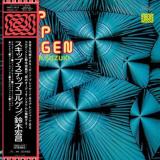
- A1: Skip Step
- A2: Gentle Wave
- A3: Watermelon Man
- B1: Orpheus Negro
- B2: Green Sleeves
- B3: Georgia On My Min
- B4: Ratafia
A favorite among Japanese jazz collectors, the album features a standout cover of Herbie Hancock’s “Watermelon Man,” and continues to gain renewed attention amid the global resurgence of fusion music. This is a must-have piece for fans of Japanese jazz and rare groove alike.
- A1: Yant - Bee Sting
- A2: Rene Wise - Gut Punch
- B1: Kr!Z - Split Tongue
- B2: Blanka - Extravaganza
- C1: Eman - Lerake
- C2: Holden Federico - Hydro
- D1: Cirkle - Delta State
- D2: Altinbas - Epinephrine
- D3: Kameliia - Memories
- E1: Phil Berg - Sappho
- E2: Border One - Warp Shift
- F1: Kwartz - Watch Out
- F2: Phalcon - Into The Depth
2026 Repress
SK_eleven celebrates a decade of sonic exploration with a 13-track compilation showcasing its signature tension, technical discipline, and stylistic spectrum. Reuniting a tight circle of artists whose contributions have helped shape the label, the release offers an unrelenting sequence of pressure, mental twists, and textural collisions; a multifaceted snapshot of techno's enduring capacity to evolve, disturb, and seduce.
The compilation resists uniformity. Instead, it thrives on contrast: tension versus release, density against spaciousness, rhythm in all its permutations. From high-energy metallic openers and dub-inflected body rollers, to disorienting, delay-heavy experiments and stripped-back percussive tools, each contribution reveals a unique grip on groove and detail. Some tracks move like engineered machines: sharp, robotic, and syncopated to surgical precision. Others embrace sensuality and unpredictability, exploring spatial motion, layered harmonic friction, and states of controlled chaos. Each piece acts as a structural component in a larger sonic architecture, where tension is built, collapsed, and rebuilt. Friction becomes a form of choreography. Across the record, a shifting palette of emotional mechanisms takes form; granular and magnetic, haunting and quietly forceful, restrained, then disruptive.
More than a retrospective, SK_eleven's first compilation becomes a collective gesture toward techno's unresolved possibilities: its ability to hold contradiction, remain in flux, and mutate without conclusion.
Groovin Recordings proudly announce the forthcoming release of "Back From Paradise", a track co-produced by the legendary Italian DJ Costantino “MixMaster” Padovano and renowned South Italian producer Antony Reale.
This record is a dedication to the enduring legacy of Costantino MixMaster Padovano. Originally produced in the late 90's but never officially released, this collaborative piece is finally seeing the light of day as a powerful celebration and tribute.
Costantino MixMaster Padovano needs no introduction to house music aficionados. He was one of the first Italian DJs to achieve deep respect in the 90s US house scene, regularly sharing the decks with titans like Frankie Knuckles, Kenny Dope Gonzalez, Louie Vega, and Todd Terry. His studio influence was massive, including official remixes for legends such as Marvin Gaye, Diana Ross, Gloria Gaynor, Chaka Khan, Mary J. Blige and many more.
Antony Reale is an established Italian DJ and producer with a large discography spanning the last two decades. He has produced and remixed a roster of top artists, including Chaka Khan, Mary J. Blige, Ultra Naté, and RuPaul.
"Back From Paradise": Originally created by Antony and Costantino during their creative prime in the late 90's, Antony has now decided to finally release the track. It serves as a beautiful and fitting monument to the memory and fantastic career of this iconic Italian DJ and producer who helped define the 90's house scene.
2026 Repress
Brighton-based producer Rene Wise is next to land on Setaoc Mass' SK11_X offshoot, coming off the back of a batch of releases on Luke Slater's respected Mote Evolver imprint and a recent collaboration with Rodhad, with his own purist take on groovy yet hypnotic, minimal techno. Wise offers four variations of precision-drilled rolling club-tools, first with the static-charged, tribal calls of "Pleasure Note", to the bouncier, groove-laced "Swamp Dancer". On the flip side, "Hollow" focuses the intensity, whilst "Changa" completes the home-straight with its boundless energy and delirium inducing synth parts.
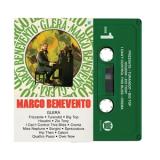
- 1: Frizzante
- 2: Turandot Feat Marianne Mirage
- 3: Big Top
- 4: Houdini
- 5: Zio Tony Feat. Molly Lewis
- 6: I Can't Control This Bliss Feat Dream Crease
- 7: Crema
- 8: Miss Neptune Feat Elizabeth Steiner
- 9: Sorgini Feat. Dave Guy
- 10: Sprezzatura
- 11: Hip Then
- 12: Catoni Feat. 13Th Ward Social Club
- 13: Quattro Passi Feat. Chiara Civello
- 14: Over Now
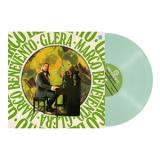
Big Crown Records freut sich, Glera zu präsentieren, Marco Beneventos Debütalbum auf dem Label. Marco Benevento hat sich schon immer wie jemand bewegt, der das Studio als eigenes Instrument begreift - nicht bloß als Raum, in dem das Spielzeug herumsteht. Lange bevor er auf Bühnen mit Freddie Gibbs und Madlib auftauchte oder in den Liner Notes von Alben von Clairo und Leon Bridges erwähnt wurde, dachte Benevento bereits wie ein Produzent: Er hörte auf Texturen, Spannungen und Negativräume - und auf jene seltsame emotionale Alchemie, die entsteht, wenn Groove und Neugier aufeinandertreffen. Sein neues Album Glera schärft diesen Instinkt und rückt Benevento nicht nur als virtuosen Keyboarder und Bandleader ins Licht, sondern als Komponisten, der aus Rhythmus, Klang und Gefühl ganze Welten formt.Glera ist ein genreübergreifendes Jazzalbum, das Soul und das elastische Low-End des Reggae mit einem offenen Sinn für Möglichkeiten verbindet. Das Projekt begann vor drei Jahren als eine Art privates Experiment: Benevento schrieb intuitiv, inspiriert von italienischen Filmmusiken und Melodien. Mit der Zeit entwickelten sich diese Skizzen zu etwas Größerem und Kraftvollerem - und mündeten schließlich in die hier zu hörende majestätische Ausformung.Entstanden ist Musik mit filmischer Bewegung, ohne dabei kostbar oder überladen zu wirken. Die Stücke fühlen sich mal wie Verfolgungsjagden, mal wie langsame Überblendungen an - manchmal sogar innerhalb desselben Songs. Jazz-Improvisation teilt sich den Raum mit Reggae-Grooves, orchestralen Elementen und einer psychedelischen Pop-Atmosphäre. Explorativ, aber geerdet; komplex, doch stets klar groove-orientiert.Der Album-Opener ,Frizzante" ist eine reine musikalische Feier - ein energiegeladener Feel-Good-Banger, auf Band gebannt, in dem Marco über einem unnachgiebigen Groove Melodien mit sich selbst austauscht. Auf ,Turandot" wird Benevento von Italiens Marianne Mirage am Gesang begleitet; der düstere, cineastische Track bewegt sich mühelos zwischen den Welten von Portishead und Serge Gainsbourg.Mit ,Big Top" erweitert sich die klangliche Palette noch weiter: ausgestattet mit Sprachaufnahmen und Pfauengeräuschen lässt sich der Song am treffendsten als ,Zirkus-Funk" beschreiben. Ein Pfiff - und das Spiel beginnt mit ,Houdini", einem jazz-fusionhaften Dancefloor-Füller, der vom ersten Schlagzeugschlag an die Tür eintritt. Auf ,I Can't Control This Bliss" mischt Benevento Dream Pop unter und bittet Dream Crease ans Mikrofon - für eine Dosis lo-fi-getränkter Schönheit. Elizabeth Steiner steuert ihre renommierte Harfenarbeit zu ,Miss Neptune" bei, getragen von einem tief vibrierenden, reggae-inspirierten Fundament.Mit Vollgas prescht ,Sprezzatura" wie eine Hochgeschwindigkeitsverfolgung durch enge Straßen, während ,Quattro Passi" das Tempo drosselt und zum entspannten Schlendern einlädt - mit Jazzsängerin Chiara Civello als Feature.Marco Benevento agiert hier auf höchstem Niveau, formt Klang mit Zielstrebigkeit und Neugier. Dieses Album kündigt sich laut an - zugleich nach außen gerichtet und zutiefst intim. Es ist Musik in Bewegung: zwischen Genres, Tempi und Registern, stets verankert in der Freude am Entdecken. Ein Album, das Bewegung verkörpert, die Vergangenheit mitnimmt und doch niemals stehen bleibt.
- 1: Frizzante
- 2: Turandot Feat Marianne Mirage
- 3: Big Top
- 4: Houdini
- 5: Zio Tony Feat. Molly Lewis
- 6: I Can't Control This Bliss Feat Dream Crease
- 7: Crema
- 8: Miss Neptune Feat Elizabeth Steiner
- 9: Sorgini Feat. Dave Guy
- 10: Sprezzatura
- 11: Hip Then
- 12: Catoni Feat. 13Th Ward Social Club
- 13: Quattro Passi Feat. Chiara Civello
- 14: Over Now
Big Crown Records freut sich, Glera zu präsentieren, Marco Beneventos Debütalbum auf dem Label. Marco Benevento hat sich schon immer wie jemand bewegt, der das Studio als eigenes Instrument begreift - nicht bloß als Raum, in dem das Spielzeug herumsteht. Lange bevor er auf Bühnen mit Freddie Gibbs und Madlib auftauchte oder in den Liner Notes von Alben von Clairo und Leon Bridges erwähnt wurde, dachte Benevento bereits wie ein Produzent: Er hörte auf Texturen, Spannungen und Negativräume - und auf jene seltsame emotionale Alchemie, die entsteht, wenn Groove und Neugier aufeinandertreffen. Sein neues Album Glera schärft diesen Instinkt und rückt Benevento nicht nur als virtuosen Keyboarder und Bandleader ins Licht, sondern als Komponisten, der aus Rhythmus, Klang und Gefühl ganze Welten formt.Glera ist ein genreübergreifendes Jazzalbum, das Soul und das elastische Low-End des Reggae mit einem offenen Sinn für Möglichkeiten verbindet. Das Projekt begann vor drei Jahren als eine Art privates Experiment: Benevento schrieb intuitiv, inspiriert von italienischen Filmmusiken und Melodien. Mit der Zeit entwickelten sich diese Skizzen zu etwas Größerem und Kraftvollerem - und mündeten schließlich in die hier zu hörende majestätische Ausformung.Entstanden ist Musik mit filmischer Bewegung, ohne dabei kostbar oder überladen zu wirken. Die Stücke fühlen sich mal wie Verfolgungsjagden, mal wie langsame Überblendungen an - manchmal sogar innerhalb desselben Songs. Jazz-Improvisation teilt sich den Raum mit Reggae-Grooves, orchestralen Elementen und einer psychedelischen Pop-Atmosphäre. Explorativ, aber geerdet; komplex, doch stets klar groove-orientiert.Der Album-Opener ,Frizzante" ist eine reine musikalische Feier - ein energiegeladener Feel-Good-Banger, auf Band gebannt, in dem Marco über einem unnachgiebigen Groove Melodien mit sich selbst austauscht. Auf ,Turandot" wird Benevento von Italiens Marianne Mirage am Gesang begleitet; der düstere, cineastische Track bewegt sich mühelos zwischen den Welten von Portishead und Serge Gainsbourg.Mit ,Big Top" erweitert sich die klangliche Palette noch weiter: ausgestattet mit Sprachaufnahmen und Pfauengeräuschen lässt sich der Song am treffendsten als ,Zirkus-Funk" beschreiben. Ein Pfiff - und das Spiel beginnt mit ,Houdini", einem jazz-fusionhaften Dancefloor-Füller, der vom ersten Schlagzeugschlag an die Tür eintritt. Auf ,I Can't Control This Bliss" mischt Benevento Dream Pop unter und bittet Dream Crease ans Mikrofon - für eine Dosis lo-fi-getränkter Schönheit. Elizabeth Steiner steuert ihre renommierte Harfenarbeit zu ,Miss Neptune" bei, getragen von einem tief vibrierenden, reggae-inspirierten Fundament.Mit Vollgas prescht ,Sprezzatura" wie eine Hochgeschwindigkeitsverfolgung durch enge Straßen, während ,Quattro Passi" das Tempo drosselt und zum entspannten Schlendern einlädt - mit Jazzsängerin Chiara Civello als Feature.Marco Benevento agiert hier auf höchstem Niveau, formt Klang mit Zielstrebigkeit und Neugier. Dieses Album kündigt sich laut an - zugleich nach außen gerichtet und zutiefst intim. Es ist Musik in Bewegung: zwischen Genres, Tempi und Registern, stets verankert in der Freude am Entdecken. Ein Album, das Bewegung verkörpert, die Vergangenheit mitnimmt und doch niemals stehen bleibt.
- 1: Frizzante
- 2: Turandot Feat Marianne Mirage
- 3: Big Top
- 4: Houdini
- 5: Zio Tony Feat. Molly Lewis
- 6: I Can't Control This Bliss Feat Dream Crease
- 7: Crema
- 8: Miss Neptune Feat Elizabeth Steiner
- 9: Sorgini Feat. Dave Guy
- 10: Sprezzatura
- 11: Hip Then
- 12: Catoni Feat. 13Th Ward Social Club
- 13: Quattro Passi Feat. Chiara Civello
- 14: Over Now
Big Crown Records freut sich, Glera zu präsentieren, Marco Beneventos Debütalbum auf dem Label. Marco Benevento hat sich schon immer wie jemand bewegt, der das Studio als eigenes Instrument begreift - nicht bloß als Raum, in dem das Spielzeug herumsteht. Lange bevor er auf Bühnen mit Freddie Gibbs und Madlib auftauchte oder in den Liner Notes von Alben von Clairo und Leon Bridges erwähnt wurde, dachte Benevento bereits wie ein Produzent: Er hörte auf Texturen, Spannungen und Negativräume - und auf jene seltsame emotionale Alchemie, die entsteht, wenn Groove und Neugier aufeinandertreffen. Sein neues Album Glera schärft diesen Instinkt und rückt Benevento nicht nur als virtuosen Keyboarder und Bandleader ins Licht, sondern als Komponisten, der aus Rhythmus, Klang und Gefühl ganze Welten formt.Glera ist ein genreübergreifendes Jazzalbum, das Soul und das elastische Low-End des Reggae mit einem offenen Sinn für Möglichkeiten verbindet. Das Projekt begann vor drei Jahren als eine Art privates Experiment: Benevento schrieb intuitiv, inspiriert von italienischen Filmmusiken und Melodien. Mit der Zeit entwickelten sich diese Skizzen zu etwas Größerem und Kraftvollerem - und mündeten schließlich in die hier zu hörende majestätische Ausformung.Entstanden ist Musik mit filmischer Bewegung, ohne dabei kostbar oder überladen zu wirken. Die Stücke fühlen sich mal wie Verfolgungsjagden, mal wie langsame Überblendungen an - manchmal sogar innerhalb desselben Songs. Jazz-Improvisation teilt sich den Raum mit Reggae-Grooves, orchestralen Elementen und einer psychedelischen Pop-Atmosphäre. Explorativ, aber geerdet; komplex, doch stets klar groove-orientiert.Der Album-Opener ,Frizzante" ist eine reine musikalische Feier - ein energiegeladener Feel-Good-Banger, auf Band gebannt, in dem Marco über einem unnachgiebigen Groove Melodien mit sich selbst austauscht. Auf ,Turandot" wird Benevento von Italiens Marianne Mirage am Gesang begleitet; der düstere, cineastische Track bewegt sich mühelos zwischen den Welten von Portishead und Serge Gainsbourg.Mit ,Big Top" erweitert sich die klangliche Palette noch weiter: ausgestattet mit Sprachaufnahmen und Pfauengeräuschen lässt sich der Song am treffendsten als ,Zirkus-Funk" beschreiben. Ein Pfiff - und das Spiel beginnt mit ,Houdini", einem jazz-fusionhaften Dancefloor-Füller, der vom ersten Schlagzeugschlag an die Tür eintritt. Auf ,I Can't Control This Bliss" mischt Benevento Dream Pop unter und bittet Dream Crease ans Mikrofon - für eine Dosis lo-fi-getränkter Schönheit. Elizabeth Steiner steuert ihre renommierte Harfenarbeit zu ,Miss Neptune" bei, getragen von einem tief vibrierenden, reggae-inspirierten Fundament.Mit Vollgas prescht ,Sprezzatura" wie eine Hochgeschwindigkeitsverfolgung durch enge Straßen, während ,Quattro Passi" das Tempo drosselt und zum entspannten Schlendern einlädt - mit Jazzsängerin Chiara Civello als Feature.Marco Benevento agiert hier auf höchstem Niveau, formt Klang mit Zielstrebigkeit und Neugier. Dieses Album kündigt sich laut an - zugleich nach außen gerichtet und zutiefst intim. Es ist Musik in Bewegung: zwischen Genres, Tempi und Registern, stets verankert in der Freude am Entdecken. Ein Album, das Bewegung verkörpert, die Vergangenheit mitnimmt und doch niemals stehen bleibt.
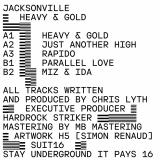
Jacksonville returns with Heavy & Gold, a powerful five-track EP rooted in the raw energy of underground house and analog machine funk. Produced by Chris Lyth, the record blends Chicago-influenced drum programming, hypnotic basslines and deep melodic textures into a set of highly functional DJ cuts built for the dancefloor. The EP moves between muscular jack tracks and deeper hypnotic moments, balancing driving groove architecture with subtle emotional tension. Heavy & Gold opens with the title track, a dense and rolling house cut driven by heavy drums and warm synth layers, before Just Another High delivers a tighter, more stripped-down groove with classic underground swing. Rapido pushes the energy further with a direct, rhythmic workout built for peak-time transitions. On the flip side, Parallel Love expands into a deeper and more atmospheric territory with evolving textures and hypnotic momentum, while closing track Miz & Ida delivers a long, hypnotic groove combining analog warmth and late-night dancefloor pressure. True to the Skylax philosophy, this release focuses on timeless groove design rather than trends, offering DJs and collectors a record built to last in the bag for years. Written and produced by Chris Lyth with executive production by Hardrock Striker and artwork by H5 (Simon Renaud), Heavy & Gold continues the Skylax tradition of uncompromising underground house music.
Polymania is a collaboration between Earl Grey and Aroma Nice, both of whom hail from the North West of the UK and are known for their genre-pushing productions in and around the overlapping modern Drum & Bass, Jungle and Drumfunk spheres. This record is a euphoric ravey jungle affair with strong acidic inflections, extrovert and dancefloor-focussed, where effortlessly slick percussive flair shines and rolling acid lines squirt out through the seams - the result of two long-time friends with heaps of production experience having a lot of fun.
A-side opener 'Farce of Nature' sets the tone with high energy stabs and a big grooving bassline, rooted in 90s jungle techno but rendered in full high definition, while 'Happy Slaps' continues the theme with crisp drums dancing over an undulating resonant acid line. 'Tank Ammo' deftly ramps up the euphoria with a spiralling melody rising towards a lethal switch-up midway, using filtered choppage to burst the tension with extreme precision. Bouncy acid breaks bubbler 'Give U Up' closes the EP slowing the tempo a touch and dialling up the funk - a refreshing palate cleanser laced with rich braindance melodies and an infectious vocal hook.
Pharoah Sanders has been described as ‘probably the best tenor player in the world’, emerging as a star from playing saxophone with John Coltrane in the 1960s. As a solo recording artist he is best loved by fusion fans for the jazz dance classic “You’ve Got To Have Freedom”. It’s taken from his 1980 album “Journey To The One” featured here for the first time on the complete side of a 12” single.
“Got To Give It Up” is Pharoah’s outstanding rendition of the Marvin Gaye classic. It has previously been on 7” but never until now in its full length version on 12” single. It was originally a feature on the 1978 album “Love Will Find A Way” produced by Norman Connors. To have both of these masterful recordings on one 12” single is something special.
El dúo NX1 colabora con Sunil Sharpe, Oxygeno, Rommek y Unhuman en cuatro tracks para la octava referencia de su propio sello.
Nexe Records marks its return by reconnecting with the core idea that first defined its identity — being a true nexus between artists, techno lovers, and the label’s vision. NX1 leads this new chapter with Core VA I, a project built around four collaborations with producers who share the same commitment to authenticity and forward motion in techno. This first volume sets the tone for what’s to come, creating a dialogue between distinct voices while preserving a unified aesthetic.
Opening the record, NX1 and Oxygeno pay tribute to loopy, hypnotic, and driving techno — groovy yet serious, perfectly crafted for deep and focused dance floors. Following up, the collaboration with Rommek delivers an intense, bleepy, and atmospheric track, infused with subtle sci-fi undertones and tension-filled layers that evolve naturally.
On the flip, NX1 and Unhuman explore a more classic but forward-looking take on techno. Clean percussion, dynamic progression, and precise energy shifts give the track a refined sense of movement, balancing power and clarity. Finally, Sunil Sharpe joins to close the release with a bold and energetic piece that captures the raw essence of the club — rhythmic, metallic, and charged with movement.
Overall, Core VA I stands as a statement of Nexe Records’ renewed identity: connecting artists through a shared vision of pure, functional, and evolving techno. Each collaboration offers a different voice, yet all converge in the same pulse that defines NX1’s sound and philosophy.
Our journeys into uncharted lands of the Reducerverse continue.
Essential must-buy shit for all disciples of: The Rootsman x Muslimgauze, Love's Secret Domain era Coil, Chris & Cosey, Meat Beat Manifesto, early Reinforced Recs, Shut Up & Dance, He Dark Age, Zombies Under Stress, SPK.
If you've just joined us: Reducer ARE the greatest lost dub punks. Rumoured to have almost signed to On-U Sound but told Sherwood to stuff it when he wanted his hands on the desk. Fame never found them, cos they didn't want it anyway. Living in the obscure memories of the select squatters and weirdos lucky enough to have had their minds blown, their first recordings were scraped off the linings of the cosmic dustbin recently through a series of self-released 12"s, cassettes, USBs and strangest of all a 3D performance screened at the Cube (in association with pals Bokeh Versions).
In short: Reducer's the most thrilling fairytale resurrection these pages have been privy to, joining 23 Skidoo, Killing Joke, PiL, Slits, Terminal Cheescake etc on the Mount Olympus of the Punky Reggae Party.
This latest slice of karmic justice comes from The Human Aerial aka Reducer's guitarist and prime mover Hooly. And ohhhh what a justice it is. Drawing on 40 years of private solo recordings across 7 tracks from Abu Ama style dabke jaguar steppas punishment to thumping bass-led electro, peak Depth Charge dubby big beat to careening breakbeat hardcore, trashcan gamelan spirituals and Jamie Vex'd style maximalist beats blissouts,
Tying together this jaw-dropping range of styles and fashions is a relentless sampladelic bombardment. The Human Aerial's habitual pilfering of TV and radio for into lovingly spliced tape loops and samples showcases humanity at its best and absolute worst. Tele-evangelists rub shoulders with long dead chieftans: "there is no death, only change of worlds" "We're MAD AS HELL AND WERE NOT GONNA TAKE IT ANYMORE" "THe land is sacred, a cathedral of the spirit". These wisdoms and grave sins slip into us subliminal through the dance, the needle drops like a waking dream.
While the Reducer archives may be running low, we assure you the Human Aerial coffers are full. And long may our minds be blown by this ongoing renaissance.
Ambroos De Schepper and Pepijn Gyssels became roommates when PiP moved to Brussels in 2021. Both paid close attention to each other’s musical approach and interests. One year later, Ambroos moved out. When he swung by to pick up some boxes, they decided to record something for the fun of it. Between May '23 and November '24 they continued experimenting with textures and improvisations. This collaboration has become the deepening of a friendship and a way to maintain it at the same time.
PiP: “We would have coffee or the occasional beer and everything we recorded came very organically. Ambroos would just bring his saxophone, a clarinet, some FX pedals or a weird flute. Whatever he felt like on that particular day. A few hours later he would usually be on his way again, leaving me with the recordings. I could treat them as I pleased.”
Ambroos: “I liked the idea of working with someone focussing on the physical side of music. Not so much on chords and tonality, but on texture and atmosphere. This gave me a framework with less concrete references, using words like “dark” or “busy”. I could improvise freely and we would try and catch a particular moment."
“l’Esprit de l’Escalier” is meant to be a musical meditation, opening up a continuous and detailed sound palette, aimed for the right mental state to listen with. Ambroos came up with the melody in COVID times and later in PiP’s studio, they recorded it on clarinet.
“Sans Loup” is the first jam the duo did together, after Ambroos and Lou moved out of the apartment they shared. Lou Wéry eventually found her way back to the album, as she can be heard playing the wing piano in this track.
PiP: “We recorded in the apartment we used to rent together. Since the title track and the entire album are named after Lou being absent in this dynamic, it seemed only natural to invite her in a later stage.”
“Spring Whistle” was an attempt to embed Ambroos’ musicality in dreamy textures and “Bring Back Bones” was built around an endlessly evolving krakeb recording that PiP took home from on a trip to Morocco. Both tracks are not aimed to end or evolve drastically, they just make the clock tick slower.
To conclude this release, “Velours de Tendre” is built out of a deconstructed groove and a field recording of the “Ronde van Vlaanderen”, a small reference to the countryside where PiP grew up. The reverberating chords you hear are the echoes Tijn Driessen squeezed out of an old harmonium, in a staircase of De Grote Post in Ostend.
PiP: “During a residency in De Grote Post we recorded in a staircase with a spaced pair of omni microphones. And you can take ‘spaced’ quite serious; one was positioned 5 stories higher and the other 3 stories lower.”
Sans Loup is the first vinyl to release on PiP’s label. They look alike, but none will be identical. The cover is screen printed in various combinations + a risograph insert. A highly personalized object.
credits
Released on Zitstill Records
Recorded in Brussels, Horebeke, Morocco and elsewhere, between September 2021 - November 2024
Music, mixing and production by Pepijn Gyssels
Saxophone, flute and clarinet by Ambroos De Schepper
Grand piano on “Sans Loup” by Lou Wéry
Harmonium on “Velours de Tendre” by Tijn Driessen
Mastering and lacquer cut by Anne Taegert at Dubplates & Mastering
Pressing by Objects Manufacturing
Layout and graphic design by Liselotte Van Daele & Otis Verhoeve
Photography by Willem Mevis
Special thanks to: Stijn Cools, Victor De Greef, De Grote Post
- A1: Sir Thomas Beecham - Ouverture
- A2: Sir Thomas Beecham - Air De Carmen "L'amour Est Un Oise
- A3: Sir Thomas Beecham - Air D'escamillo (Le Toréador) & Ch
- A4: Sir Thomas Beecham - Final Don José, Carmen & Choeur
- B1: Herbert Von Karajan - Suite No I Prélude
- B2: Herbert Von Karajan - Suite No I Iv. Carillon
- B3: Herbert Von Karajan - Suite No Ii Iii. Menuet
- B4: Herbert Von Karajan - Suite No Ii Iv. Farandole
Die renommierte Klassikreihe "The Masterpieces of..." widmet sich in dieser Ausgabe dem französischen Komponisten Georges Bizet - einem Meister der Melodie und Dramatik. Diese sorgfältig kuratierte Zusammenstellung vereint ikonische Werke aus Bizets Opern- und Orchesterrepertoire, interpretiert von zwei der größten Dirigenten des 20. Jahrhunderts: Sir Thomas Beecham und Herbert von Karajan. Im Mittelpunkt stehen unvergessliche Auszüge aus der Oper Carmen, darunter die berühmte Habanera "L"Amour est un oiseau rebelle", das temperamentvolle Toréador-Lied "Votre toast, je peux vous le rendre" sowie das dramatische Finale. Ergänzt wird das Programm durch die farbenreichen Suiten Nr. I & II aus L"Arlésienne, die Bizets Gespür für Atmosphäre und französischen Esprit eindrucksvoll unter Beweis stellen. "The Masterpieces of Georges Bizet" ist Teil einer 13-teiligen Sammlung, die die größten Namen der klassischen Musik vereint - von Bach bis Brahms, von Chopin bis Debussy. Ideal für Klassikliebhaber, Sammler und alle, die in die Welt der großen Meister eintauchen möchten.
From out of the dark, sparks of feedback birdsong signal a return to the singular sonic environments of Rafael Toral"s sound-world. A year after Spectral Evolution, his acclaimed album of electric guitar conceptions, comes the companion work Traveling Light. Sharpening his focus around a set of jazz standards, his move from abstract form to solid song elicits glints from beyond time and space, crafting a unique listening lens for deep listeners. In the early years of his practice, Toral used the guitar as a generator to create discreet texture and droning tones. Later, he abandoned the guitar entirely, focusing on self-made electronics to render his music with a post-free jazz perspective. For the music of Spectral Evolution and Traveling Light, Toral has combined his methodologies: radically expanding the space within their harmonies with his self-made machines, while engaging directly with his instrument and the chords of the material. In addition to Toral"s proxy orchestra of guitars, sine wave, feedback and bass guitar, Traveling Light features the sounds of clarinetist José Bruno Parrinha, tenor saxophonist Rodrigo Amado, flügelhorn player Yaw Tembe, flautist Clara Saleiro, who each guest on one song. In every contour of Traveling Light"s path - arrangement, improvisation and production - the spring of the old pours through the new in an unstoppable flow. The result is a listening experience of these standards that remains "in the tradition", even as the elongated harmonies seem to alter time such that, as Toral notes, "the chords become events on their own."
Renée was born out of The Hague-based rock ‘n roll band René And His Alligators, founded by René Nodelijk in 1959. Throughout the 60s they were moderately successful both on stage and in the studio and served as an inspiration for many bands associated with the burgeoning beat scene in the coastal city. From 1967 onwards they performed under a few different names before going on a hiatus. In 1977 he made a comeback, this time joined by his wife Anja Nodelijk, née Exterkate. To reflect this fresh feminine impulse the band name was changed to simply Renée and recorded four full-length albums and a host of singles before disbanding in 1982 to make way for Anja’s solo career.
Reaching For The Sky from 1980 is their second and has been likened to many different things: Fleetwood Mac, Dire Straits, or even a fantasy collaboration between Pat Benatar’s guitarist, Heart’s Ann Wilson, and Steely Dan. Sprinkle some reggae and funk in the mix and it is no surprise that some of the tunes on this album ended up in niche YouTube algorithms, a Japanese book about obscure records, and in DJ sets by big names like Prins Thomas, who even released an extended edit of “Change Your Style” on a 12” single. This is obscure sophisti-pop at its best. Reaching For The Sky is available as a 45th anniversary edition on translucent magenta coloured vinyl.