The story of Del cuarto rojo (From The Red Room) began in March 2020, when the Peruvian composer and percussionist Manongo Mujica received a call notifying him that the visual artist Rafael Hastings, his friend of almost half a century, had passed away. Since then, and in the midst of the pandemic, Manongo Mujica began a personal journey searching for sounds, which has resulted in a new set of pieces that evoke the memory of a friendship. Del cuarto rojo (From The Red Room), subtitled Homenaje sonoro escuchando la pintura de Rafael Hastings (Sound Tribute Listening To Rafael Hastings' Paintings), is Manongo Mujica's new album, and it has also motivated the preparation of a new show by the dancer and choreographer Yvonne von Mollendorff, wife of Hastings. The history of this friendship dates back to 1974, when a young Manongo returned to Lima, after ten years living in London, while young Rafael Hastings and Yvonne von Mollendorff settled in Peru after a long period in Europe. Since then, the collaborations between these artists have been continuous, always marked by an experimental impetus. The attitude of listening to images and painting sounds was more than a metaphor and became a code that identified them and a way of working, where the crossing of disciplines set the tone, both in video works and in unusual visual / conceptual scores, works of dance and experimental music, in the context of a creative effervescence that renewed the arts and music in Lima in the 70s. Del cuarto rojo is an album that integrates many of the musical resources developed by Mujica. It is an amalgam that well sums up his own language: from the creation of environments with extended techniques and objects, to experiments in jazz fusion; from the use of field recordings and sound montages to compositions with string arrangements: everything around the hypnotic pulse of percussion and drums, which oscillate between moments of subtlety and explosive improvisation. The album features the participation of outstanding musicians such as Pauchi Sasaki (violin), José Quezada (cello), Terje Evensen (electronic effects), Jean Pierre Magnet (Saxophone), Cristobal, Daniel and Gabriel Mujica (sons of Manongo Mujica, on percussion, string and wind arrangements). It is published in vinyl LP and includes a full color 12-page booklet with a sample of Rafael Hastings' visual art, which also illustrates the album cover.
quête:d ren
If, among the Afro-Peruvian music groups that have emerged in recent years, there is one that has dared to take the sound to new dimensions, it is Perkutao. Heirs to the best Afro-Peruvian tradition, they have been able to integrate Afro-Cuban elements and various contemporary popular styles, which they play with amazing with speed and precision. "Mis ancestros", is their debut album for Buh Records. Perkutao is an Afro-Peruvian percussion ensemble founded in 2005, directed by Percy Chinchilla, musician, percussionist, zapateador and teacher of young generations of percussionists. "Mis Ancestros" (My ancestors) is their first record under the production of Manongo Mujica and is the fourth title of the collection "Perspectivas de la Música Afroperuana" (Perspectives on Afro-Peruvian Music). Chinchilla shares the artistic direction of Perkutao with William Nicasio 'Makarito', another outstanding percussionist. Both grew up in the famous Callejón del Buque, in the district of La Victoria, a spot preferred by bohemians and known by local music partying -jaranas criollas. Both were also formed in Perú Negro, an emblematic Afro-Peruvian ensemble, and both carry in their blood the cult of percussion and Afro tradition. Chinchilla comes from a family of Afro-Peruvian musicians including Caitro Soto and Ronaldo Campos. And Makarito is the son of Macario Nicasio and grandson of El Niño, legendary Cuban percussionist in charge of introducing congas and bongo to Afro-Peruvian rhythms. Perkutao arose precisely from the merging of these traditions, Afro-Peruvian, Afro-Cuban and Caribbean music, and have become one of the most sought-after percussion ensembles due to the intensity of their sound and their powerful performances that include stage movements and surprising acrobatic skills. In addition to Chinchilla and Makarito, the ensemble is completed by Edu Campos, Andree Liendo and Víctor Sánchez Pitín. "I follow in the footsteps of my ancestors, to the beat of the cajita, the quijada and the cajón, to the rhythm of a zamacueca, a festejo and a good landó". This is an excerpt of the lyrics of "Poema", the opening track of the album, the rhythmic base accompanies Chinchilla's voice and then increases in a crescendo that announces the paths to be explored by Perkutao. "Azañero Colorao", "Trucutum Kiti Pa" and "Cancha con Sabor", composed based on minor percussion (cajita, quijada), zapateo and cajón, respectively, are compositions that serve as an introduction, a tribute to the essential instruments of the Afro-Peruvian tradition. The last one in particular already defines Perkutao's style: a trepidant and orgiastic rhythm, hypnotic and hard hitting, Dionysian and cathartic. With "Madre Africa" and "Al Tayta Bukense", for djembes and congas, respectively, we find Perkutao retaking the Afro-Cuban heritage embedded to the Afro-Peruvian sounds, abakuá and festejo. "Lloraré", a version of a famous Cuban song, mirror the ensemble's fascination with Caribbean music (salsa is another genre cultivated by its members). "Mis ancestros" is an album about a tradition, but it is also a renewal. Perkutao opens a new direction for Afro-Peruvian music, its sound is an evocation and the here and now, it is deep-rooted but freely flowing percussion. Perkutao are Percy Chinchilla, William Nicasio "Makarito", Edu Campos, Andree Liendo y Víctor Sánchez Pitín. Produced by Manongo Mujica y Daniel Mujica. Recorded and mixed by Juan José Salazar at La Encía del Leopardo Estudio, Chorrillos, Lima, Perú. Mastered by Mario Breuer en Sensei Mastering, Córdoba, Argentina. Cover and Design by Yerko Zlatar.
Repress !
One of the first true moments of genius from saxophonist Nathan Davis - a mid 60s European session cut for the tiny SFP label - and a record that's even rarer than his early classics for MPS! The sound here is similar to the MPS sides - a mixture of soul jazz and modal jazz - served up with a bit more freedoms than Davis might have gotten on the US scene, and featuring a lineup that includes Woody Shaw on trumpet, Jean-Louis Chautemps on baritone sax, Rene Urtreger on piano, Jimmy Woode on bass, and Kenny Clarke on drums. The tight rhythm of Woode and Clarke is a nice counterpoint to the modernism of Davis and Shaw - Davis works a bit on soprano, which sounds especially great!
- A1: Obituaries (Feat Shafiq Husayn)
- A2: Beauty & Essex (Feat Daniel Caesar & Unknown Mortal Orchestra)
- A3: On Sight (Feat Jid & Kadhja Bonet & Miknna)
- B1: Shibuya (Feat Syd)
- B2: Apartment (Feat Benny Sings)
- B3: Gidget (Feat Anderson Paak & T Nava)
- C1: Rene (Feat Callum Connor)
- C2: Time (Feat Kali Uchis & Mac Miller)
- C3: Cut Me A Break (Feat Ti)
- C4: Eternal Light (Feat Chronixx)
- D1: Oslo (Feat Callum Connor T Nava)
- D2: Lester Diamond
- D3: The Rivington (Feat Conway & Westside Gunn & Joyce Wrice)
Best known for being Anderson .Paak’s live band The Free Nationals have toured the world meeting countless artists who inspire them. While the amount of all the contemporary musicians who inspire them would take an anthology of box sets, they boiled it down to a handful to include on the album, all of whom lend their talents in spreading the funk. Free Nationals means The first people of America, Indigenous to the land before Columbus came. Staying Indigenous to the funk, The Free Nationals wanted to tribute their inspirations such as Stevie Wonder, B.B. King, Herbie Hancock, and Al Green by incorporating musicianship while pioneering musical euphoria for a new generation.
The album features friends they’ve met along their musical journey including the late Mac Miller, Syd, Anderson .Paak, Kali Uchis, T.I., JID, Westside Gunn, Conway, Chronixx, Daniel Caesar, Unknown Mortal Orchestra, Kadhja Bonet, MIKNNA, Benny Sings, Callum Connor, T. Nava and Joyce Wrice. This pressing sees the album pressed on 180g Black Vinyl for the first time.
- 1: Mario Montalbetti-Música Para Quince Grullas Atadas De Las Patas (2008)
- 2: Jorge Eduardo Eielson - Colores (197)
- 3: Francisco Mariotti - Manifiesto Dadá 1918 Reordenado 1985 (1985)
- 4: Carlos Germán Belli - Expansión Sonora Biliar (1960/1990)
- 5: Ol-Ki-Ol (El Lamento Del Guerba) (1981/2010)
- 6: Omar Aramayo - Homenaje A Marcela Castro (2009)
- 7: E. Verástegui-Lectura Sensual Arquitectura Música Persistente (195-2021)
- 8: Virginia Benavides - Resonancia Magnética Nuclear (2021)
- 9: Florentino Díaz Ahumada - Poema Viento (2011)
- 10: Luisa Fernanda Lindo - Estado De Emergencia (Lugar Común) (2011)
- 11: Carlos Estela - Uncu Erpo (2008)
- 12: Frido Martin - Socos (2021)
- 13: Macri Cáceres - Pers.pec.ti.va (2021)
- 14: Paola Torres Núñez Del Prado - Cae El Cuadro De (2021)
- 15: Peru Saizprez - Huayno Europeo (2021)
- 16: Tilsa Otta - (Auto) Configuración De Voz De Una Máquina Inteligente (2011)
- 17: Rodrigo Vera Cubas - La Otra Mitad (2012)
- 18: Giancarlo Huapaya/Omar Córdova - Pop Es Cía (2011)
- 19: Sandra Suazo - Carteles (2021)
- 20: Michael Prado - Es To No (17)
- 21: Lisa Carrasco - Na Na Na Na Na Na Na (20)
- 22: Luis Alvarado - Hipercomunicación (2021)
This compilation brings together 22 sound poems, including both pioneering and current pieces, and constitutes itself as the first great overview of sound poetry from Peru. It continues a cycle that began in 2009 with the appearance of a CD called Inventar la voz: Nuevas tradiciones orales To Invent the Voice: New Oral Traditions and was followed up in 2011 with another one called Irse de lengua [To Let It Slip], both of which contributed to articulate diverse manifestations of poetry that used technological means, also in the context of intense activity in the local scenes of experimental music and sound art that opened spaces for interdisciplinary dialogues. What we know as sound poetry is the product of a technological revolution associated with the appearance of various means of recording, transmission and amplification of the voice. A long process that took shape in the 20th century, until it became a discipline, articulated as an international movement which, based on phonetic research, expanded into a universe of oral/vocal artistic practices as part of a new technological context. The recordings gathered here comprise a time frame that goes from 1972 to 2021. We find poems that work with montage techniques, either because they explore simultaneity or juxtaposition, such as those by Mario Montalbetti, Frido Martín, Florentino Díaz, Carlos Estela, Luisa Fernanda Lindo, Macri Cáceres, Rodrigo Vera Cubas, Tilsa Otta, Giancarlo Huapaya/Omar Córdova, Virginia Benavides, Lisa Carrasco and Luis Alvarado. Others emphasize vocal/oral performance: we find the phonetic poems of Carlos Germán Belli and Eduardo Chirinos, as well as the concrete conceptual poems of Michael Prado, Sandra Suazo, Peru Saizprez, and the oral/guttural poem of Omar Aramayo. Finally, we find another group of pieces where the poem starts with the creation of a computational parameter or algorithm, as is the case with the pieces by Jorge Eduardo Eielson and Enrique Verástegui, eventually reaching the use of Artificial Intelligence as in the poems by Francisco Mariotti and Paola Torres Núñez del Prado. The Verbal Matter: An Anthology of Peruvian Sound Poetry is part of a series produced by Buh Records for Centro del Sonido, a website set up as a digital archive of Peruvian experimental music and sound art. The compilation has been made by Luis Alvarado and is published in a limited edition of 300 copies in vinyl format. It includes extensive notes and visual documentation. Mastered by Alberto Cendra. Art by René Sánchez.
Ayahuasca: Music for Film, by Luis David Aguilar (1978-1983) compiles works by Luis David Aguilar, one of the most prolific composers of film scores in Peru. It shows the great versatility and avant-garde style that has distinguished his work. Luis David Aguilar (Arequipa, 1950) occupies a fundamental place in the history of film music in Peru, not only because of the prolific nature of his work (which also includes music for television and advertising), but because of the singular, experimental style found in many of his scores. Aguilar's music blends modern academic composition with the use of native instruments, synthesizers, sound collages and a diversity of resources, which identify him as a key figure to understand a period of Peruvian music marked by the imprint of the avant-garde and the use of native sounds, which developed during the late 70's and the early 80's. Aguilar belongs to the so called "Generation of the 70's", along with Peruvian composers such as Walter Casas, Seiji Asato and Aurelio Tello, who were then immersed in the languages of contemporary classical music. But he also shares the spirit of renewal of a generation of musicians who came from the world of jazz and electronic experimentation such as Manongo Mujica and Arturo Ruiz del Pozo. Ayahuasca is an album that collects pieces from 1978 to 1983 and offers an overview of the different musical paths that Aguilar followed during his career as a soundtrack composer. The album opens with music from the film El viento del ayahuasca The Wind of Ayahuasca (1983), by director Nora de Izcue, performed by the National Symphony Orchestra and Choir of Cuba under the baton of Luis David Aguilar, with Chucho Valdés on piano. Recorded at the ICAIC studios (Cuba), it is an ambitious orchestral and vocal composition, in which you can hear the beginning of the famous melody of "Mujer Hilandera" [Female Weaver], popularized by the Amazonian cumbia group Juaneco y su Combo, which serves as an introduction to the sound world of the jungle, a dense and hypnotic atmosphere that, without a doubt, places this work as one of the most important compositions of the author's repertoire. The next track is the music for the documentary Anónimo cotidiano [Anonymous Everyday] (1979), by director Jorge Rey, a unique experimental piece for synthesizers (played by Aguilar), drums and percussion (played by Manongo Mujica), with the addition of various Andean instruments (panpipes, charango, among others). It is a clear example of fusion of sound experimentation and timbres from the Andean world. And finally Los constructores [The Builders] (1978), by director José Carlos Huayhuaca, a salsa which incorporates unusual sounds of tubular bells and prepared pianos. Ayahuasca: Music for Film by Luis David Aguilar (1978-1983) is the second album by Aguilar released by Buh Records, following the celebrated Hombres de Viento/Venas de la Tierra (1978-1982), appeared in 2015. The album is published in vinyl format, in a limited edition of 300 copies, as part of the Essentials Sounds collection. It includes a booklet with notes by Luis David Aguilar. The audio has been remastered from the original reel tapes by Aldo Montalvo. The artwork and design is by About Studio.
Landmarks and milestones are always memorable, but the 50th EP release on FUSE feels that little bit more special as head honcho Enzo Siragusa steps up to the mark and returns for the second time this year. Having launched the label in 2011 with his now iconic ‘The Sagamore’ EP, the renowned selector and producer has grown and shaped the FUSE from a Sunday after-hours to one of the most notable names within house and techno worldwide - anchoring the label at the heart of its identity and bringing its trademark sound to an international audience. Following material from original residents Rich NxT, Rossko, Seb Zito and Archie Hamilton through to regular guests and close friends such as Guti, East End Dubs, Michael James and Fabe, October sees Siragusa showcase both his and FUSE’s evolution over the past decade as he uncovers two bustling productions across his ‘Dreamscape’ EP.
A production oozing with his signature sound, yet introducing fresh subtleties in amongst the track’s snaking groove and hypnotic melodies, ‘Dreamscape’ welcomes a title cut full of energy as the FUSE boss picks up right where he left off to provide yet more heavily requested material on home turf. On the flip, ‘Bean That Talks’ sees Siragusa get playful while maintaining the vigour of his bustling live sets, combining chunky low-ends with skippy percussion and rich pads to showcase precisely why he and FUSE continue to flourish as leaders of a sound that they can truly call their own.
World-renowned Irish American group The Gloaming return with their highly anticipated third studio album.
The Gloaming is four master musicians and one singer, seemingly suspended in time as their music unfurls around them, its tendrils reaching out into every nook and cranny of the room.
It's undoubtedly Irish music - with violinists Martin Hayes and Caoimhín Ó Raghallaigh, guitarist Dennis Cahill and Iarla Ó Lionáird, one of the greatest contemporary Sean-nós singers. However, it's also more than that: pianist and producer Thomas Bartlett steers the music towards a place where modernity and the old world become one. The heart of The Gloaming remains but there are touches throughout that signal its points of difference.
Born and raised in Hackney, Mychelle first picked up a guitar aged 10, but put it back down again shortly after, before returning to the instrument at 17, when she quickly began making a name for herself busking around the capital. In 2019 she was spotted by Idris Elba who invited her to his studio to write and sing on his Yardie Mixtape project, the soundtrack to his directorial film debut of the same name. 2021 saw Mychelle release her stunning debut EP, Closure. It was named BBC Radio 1Xtra host Jamz Supernova’s No. 5 EP of the year, which celebrates the world of future R&B, and she went on to perform an intimate rendition of ‘Life Isn’t’ on Tonight With Target. FAMM is a management company and label which independently releases music from award-winning recording artist Jorja Smith, Maverick Sabre and rising star ENNY.
A potentially surprising release on Editions Mego. Another planned prior to the untimely passing of Peter Rehberg in 2021.
Melvin Gibbs is the renowned bass player and producer from Brooklyn who’s vast resume includes playing with Sonny Sharrock, John Zorn, The Rollins Band, Dead Prez, Caetano Veloso and Femi Kuti amongst others. A solid resume, no doubt, but what is Gibbs doing on Editions Mego?
Behind the scenes, those who know Gibbs knew that amongst all this he was also tinkering away at another form of music, one which skirts around the border between music and sound design. The Wave is the first release that reveals this side of Gibbs’ creative output to those outside his inner circle.
The driving force for this output is Gibbs’ multi-decade friendship with acclaimed American video artist and cinematographer Arthur Jafa. Over the course of time Gibbs and Jafa have had many conversations about music and the connection between film and music. Jafa’s desire to make film that worked the way Black (as in Black/African-American/ Afro-diasporic peoples) music worked inspired Gibbs to study the filmmakers Serge Eisenstein and Dziga Vertov and incorporate their philosophies and tactics when recording his own music. The two discussed sound design which directly informed Gibbs’ choice of music making tools and led to him acquiring Symbolic Systems Kyma software and hardware, incorporating this as a composition tool and sound design and component in his work. These conversations bore concrete fruit through Gibbs’ work for TNEG, the film studio Jafa ran with filmmakers Malik Sayeed and Elissa Blount Moorhead. Gibbs created the soundtrack for their very first project, the short film “Deshotten 1.0” (2009 - directed by Jafa and Sayeed) as well as their Martin Luther King-inspired meditation on Black life “Dreams Are Colder Than Death” (2013, directed by Jafa)
The bass-forward music, or ‘sonics’ as Gibbs calls it, emerged from an alternative mode of contemplation, a mode that he sees as closer to the mindset of a rootworker, an African-American herbal doctor who cures psychic ailments using means derived from African spiritual practice, entering a forest to find the right plants for a suffering client than a mediator attempting to invoke mindfulness. Gibbs says this practice yields results that suggest an aural form of creation akin to coagulation, a formal movement that gives the sense that a flow of sounds can emit something bearing resemblance to solidifying objects.
In 2020 Jafa asked Gibbs to work on the soundtrack for a work in progress called “The Wave''. When they got together to work on the soundtrack, Jafa played Gibbs a selection of sounds that included random moments of (probably unwanted) feedback on 70's Miles Davis records, Pop Smoke's Brooklyn drill, the music of Bernard Gunter and Darmstadt-style compositions made with test equipment. Those sounds, filtered through years of conversation with Jafa about Black creativity and the possible evolution of Black music, formed the sonic vocabulary of “The Wave”.
2TUF4U Records are proud to present UNDENIABLE GROOVES PT.5, the long awaited and fresh segment from the new series of Hot Garage Vybes, consisting of previously unreleased material from the likes of PEEKAY, with the Unreleased Remix of Tuff Jam’s Pepper Mashey “Happiness”,
newcomer DYNAMIC ESSENCE, and D.I.Y aka Karl Brown. Also Alex De Joncaire from Switzerland and Karl “Tuff Enuff” Brown meet again for their next rendition of GUNGO PEAS “Realizin” with Karl’s Caution Swing Dub). All tracks built for Underground Garage consumption. Watch out for the next series of releases soon to follow.
Nearly 10 years on since his last solo LP, Berlin techno icon Marcel Dettmann arrives on Dekmantel with an expansive album captured in a flash of inspiration.
In many ways Fear Of Programming is a reflection on the artistic process – the critical hurdles one has to overcome, the constant strive for originality, the ability to capture inspiration in its pure moment of inception. Bar the closing title track (and we all know Marcel loves a surprise closing), these 13 tracks came together during a period in which our hirsute host was able to immerse himself in studio practice and set the intention to record an album’s worth of material every single day. From the resulting mass of work there were many options to choose from, and Fear Of Programming stood out as one of the most complete statements on Dettmann’s approach in the here and now.
Unconcerned with an overarching concept, it was the work in the studio which drove the musical direction. No labouring over knotty arrangements, no painstaking mix downs – just honest expression, a moment caught, a groove locked, a stroke of synth sent pirouetting over a cavernous bed of texture. The results are varied, and while you might well hear plenty of bruising machinations in line with the techno Dettmann has made his name on, there are plenty of other shades expressed across the album.
Ambient sojourns, beatless epics and angular electronica have equal footing with strident, floor-friendly workouts. Standout piece ‘Water’ offers an icy ballet of swinging minimal and drip-drop melodics fronted by Ryan Elliott on lesser-spotted vocal duties, urging, ‘give me a sign, just a little something to let me know that you’re mine’. It’s playful, but still underpinned with the sincerity that comes with Dettmann’s work.
Running on instinct, Dettmann presents an honest version of himself in the here and now, speaking through the sonics and not over-thinking the results. His decades of experience helming a thousand techno parties speak for themselves, while his evolution as a musical entity through collaboration and his own BAD MANNERS label demonstrate his appetite for change. Indeed, the working method which resulted in the album also spurred him on to create a live set beyond his well-established DJ practice. Without resorting to a conceited overhaul, Fear Of Programming opens up the idea of what Dettmann represents in the modern techno landscape.
Christian Scott aTunde Adjuah, Nachkomme einer großen Künstlerfamilie aus New Orleans. Neffe von Donald Harrison, Jr. und Enkel des legendären Big Chief Donald Harrison Sr. (d. 1998) und New Orleans Legend Award Preisträger, Herreast J. Harrison. Er ist außerdem der eineiige Zwillingsbruder des ausgezeichneten Regisseurs Kiel Adrian Scott, einem Schützling Spike Lees. Als Vater der "Stretch Music" und Designer innovativer Trompeten, bringt Christian den Jazz auch mit seiner Stretch Music App technologisch auf ein neues Level. 2007 wurde er für den Grammy nominiert und 2010 und 2012 erhielt er den renommierten Edison Award. 2008 bat ihn der Regisseur Steven Soderbergh eine kleine Rolle neben George Clooney in dem Film ,Ein verlockendes Spiel" zu übernehmen.
Vector Lovers has remained a firm favourite of the underground electronic music scene cognoscenti and holds a coveted place among the most hallowed of record shelves, and with good reason. Since the early 2000s Martin Wheeler has explored a sparse audio wasteland in order to develop a new sonic palette that looks outward to electro, IDM and ambient.
After self-releasing a handful of his own productions on the Iwari label, Wheeler’s career defining album was signed by British label Soma in 2005, leading to the first great revival of 90s IDM. Capsule for One' was an unrivalled masterpiece that perfectly synthesised the heritage of the Hardcore Continuum with renewed airs and degree of clarity that ushered in a new millennia and sound. It arrived as a worthy successor to the venerated Warp artists of the time, while embracing new panoramas and technologies.
Capsule for One' is a melancholic album, with an almost cosmic spirituality that provokes daydreaming. From its opening track 'City Lights From a Train' it welcomes the listener onto an infinite journey at the speed of light, connecting the past, present and future, folding time and space and painting neon cities populated by cyborgs. The album reaches its zenith with 'Melodies and Memory', featuring Wheeler’s very own voice, which has arguably become one of this century’s greatest electronic ballads to date. In fact, the impact of 'Capsule for One' was such that Tracey Thorn commissioned him to produce her song 'Easy', from the album 'Out of the Woods' Virgin, 2007.
For its forthcoming release on Lapsus Records, Martin Wheeler has remixed each and every song on 'Capsule for One', as well as adding two previously unreleased tracks 'A Simulation' and 'Perfect Score', both produced around the same epoch. This extra special release, with artwork redesigned by Josep Basora, features a double marbled vinyl and a limited edition insert print.
imited dark green vinyl
With Jazz Is Dead Series 2, Younge and Muhammad have once again, together with a roster of world-renowned legends, crate digger patron saints, and an exciting vanguard of young talent, delivered another unimpeachable collection of fresh and captivating recordings inspired by jazz's past, present, and future. There are names that some may already be familiar with, such as Lonnie Liston Smith, Jean Carne, and Tony Allen, and those less so, like Henry Franklin, Phil Ranelin, Wendell Harrison, Garrett
Saracho, & Katalyst. What unites each new collaborator is their unbent dedication to remaining original, preserving their creativity, and sharing it with the world.
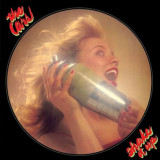
In celebration of the Cars' Rock and Roll Hall of Fame induction in April 2018, one of the legendary group's most iconic albums - Shake It Up - has been reissued in an Expanded 180g 2LP-set. Remastered edition of the original album with rare unreleased bonus tracks. An Illustrated booklet accompanies the music and contains liner notes written by renowned rock journalist David Fricke, who details the history of the album with new interviews by band member David Robinson.
The Cars recorded Shake It Up in 1981 at Syncro Sound, the band's newfound studio in Boston, with producer Roy Thomas Baker. Working in their own space afforded them the time to perfect the sound of the album, which became their third-straight Top 10 hit record and sold more than two million copies. It features the unforgettable singles "Since You're Gone," "Think It Over" and the title cut, the latter serving as their first Top 10 hit. Several unreleased tracks make their debut on Shake It Up: Expanded, including an early version of "Since You're Gone," the demo for "Shake It Up" and an unreleased song called "Midnight Dancer."
Released on the heels of her breakthrough album Tapestry, Carole King's Music is every bit the equal of its more famous predecessor: a No. 1 smash that features impeccable songwriting, beautiful melodies, and extraordinary piano playing. In short, everything that's made King an institution. After of years of being overshadowed, this 1971 singer-songwriter classic has been given the audiophile treatment it's long deserved.
Sourced from the original master tapes and pressed on dead-quiet vinyl at RTI, Mobile Fidelity's numbered-edition 180g LP of King's second solo masterpiece is rife with intimacy, transparency, soulfulness, and you-are-there sound. Never before remastered, Music seems like a brand-new album as King's familiar voice, intelligent arrangements, and ace support band presented on a deep, three-dimensional soundstage. Your appreciation for and understanding of the depth of King's inspirational lyrics and performances will doubtlessly increase — this reissue brings you that much closer.
Accompanied by percussionist Bobbye Hall, drummer Russ Kinkel, guitarist/vocalist James Taylor, and a multitude of other professional wind musicians, King delves further into R&B and jazz-derived pop. Warm and cohesive, songs echo with simplicity and honesty. And as is typical of much of King's work, several of tunes here were later covered by other artists, including "It's Going To Take Some Time" (the Carpenters). Yet the originals trump the later renditions, and King's rendition of the standard "Some Kind of Wonderful" stands among the best ever recorded.
With Taylor lending more of a hand on Music than he does on Tapestry, King expands her reach on the piano and peppers the songs with graceful touches of saxophone, flute, pedal-steel guitar, and woodwinds. Ballads sway ("Surely"), gospel raises spirits ("Brighter"), and backup vocals float amid pop arrangements like clouds ("Song of Long Ago"). The most irresistible aspect? King's voice, infused with fondness, concern, joy, and a quiet power that parallels the delicacy and deliberate nature that define Music.
Mobile Fidelity's 180g LP is free of the limiting artifacts that have helped keep this record in the dark for the better part of the 80s, 90s, and early 2000s. Acoustic guitars, subtle brass elements, and soft percussion contribute to the enjoyment of the songs, and King's voice —pleasant, assuring, emotional — comes through with incredible clarity and inflection. The brilliance of Lou Adler's original production is restored to its full glory.
Aptly named, this companion to Tapestry is an aural and sonic delight.
- A1: Die Achse - Under The Church
- A2: Nostlagie Eternelle - Peace Of Mind
- A3: Years On Earth - As You're Told
- A4: If, Bwana - Tiny Bladders
- A5: Stefan Schrader - Attempt To Rap
- B1: Misteek - Bump Beat
- B2: M Rendell - Cv In
- B3: Dix Ferro - Bienvenidos A Neuchatel
- B4: Sluik - Open Window
- B5: Pornosect - Pressure Level
- B6: The Horse He's Sick - Projectile Fascination
- C1: M Nomized - Nitsed
- C2: John J Lafia - Life Is Short
- C3: Interaccion - Newton
- C4: Die Mysteriosen - Spurhund
- C5: Homage A Brinkmann - Franzosisch
- D1: Solanaceae Tau - Tekno Pop
- D2: Ob Ovo + Sha 261 - The Cia, It Dances
- D3: Collectionism - We Are All Children Of God
- D4: Upm - Anstalt
- D5: Wolfgang Wiggers - Slightly Mental
Rich-poor divide widens. Unemployment soars. The East and West eyeball each other on the brink. 2022 isn't too far off the 1980s. Contort Yourself know this.
Following the huge success of the prophetic 80s Underground Cassette Culture Vol 1, Vol 2 is set to hit shelves and screens with the same brand of distortion soaked didactics.
Twenty one tracks from across the globe make up this second installment with nothing being constant. Instead, the overarching message is one of wanton abandonment; burnt-out artists peddling an electronic punk profanity, marginalised musicians spitting on the establishment and industry.
Rusted guitar strings, cobbled drum machines and fire in the belly; this is the recipe.
A soundtrack of despondent despair, a lament of languid lechery, an anthem of what was then and still is now.
Solid Pure hardtek Tribe. Renewing the old school out of the Happytek/core, hardfloor etc... A real old school LBEmeeting DSP sounds-like... Enjoy !
Just a single album and a bunch of singles, rising star Linda Di Franco debuted in 1985 and left the scene all of a sudden in 1986. Her first album was a combined effort produced by Don Was (Blue Note’s Renaissance Music Man and previously leader of post disco combo Was Not Was), a gentle selection of soul-pop ballads and lushy synth arrangements. With leading single ‘My Boss’ the album shows an ethereal continuum with an excellent rendition of Burt Bacharach ‘The Look Of Love’. Recorded in London, Detroit and New York the Rise Of The Heart is definitely a keystone in the rising club culture revolution verging on the more existentialist pop aesthetic. RIYL: Sade, Lizzy Mercier Descloux, Carmel, Antena.