It's been 20 years since 'Soul Brother Records' first celebrated the music of Leon Thomas with the "Anthology" collection.
It is also 50 years since the acclaimed avant-garde jazz singer first recorded "The Creator Has A Masterplan" with Pharoah Sanders.
Today his music is as renowned and sought after as ever, and the time could not be better for the pairing of these two songs on 7" single.
Both come from his time at Flying Dutchman in the early 70's and fully reflect the individuality and creative spirit of this masterful vocalist.
Both tracks are reissued here for the first time, originals commanding a sale price of £50.
Cerca:d ren
- A1: Cold Sweat (1 50)
- A2: Unease (2 41)
- A3: Aftermath (1 45)
- A4: Isolation (2 34)
- A5: The Unknown (2 42)
- A6: The Manipulator (3 12)
- A7: Space Probe (2 50)
- B1: Psychosis (2 54)
- B2: At Risk (2 53)
- B3: At Risk (Link) (0 26)
- B4: Manhunt (3 00)
- B5: Flying Squad (2 40)
- B6: Dead End (1 11)
- B7: Collision Course (1 47)
- B8: Voodoo (1 13)
They Say: “A selection of suspense underscores and drama blackcloths which vary in intensity and cover a wide range of suspense and drama situations”.
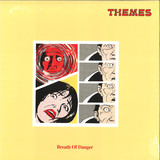
We say: A breaky, funky library great masquerading as a horror score. Oh, and the cover art is amazing.
Breath Of Danger was originally released in 1974, and rounded up a killer ensemble cast of library legends including Alan Hawkshaw, Brian Bennett, Alan Parker, David Lindup, Kenny Salmon, Barry Morgan and Ray Cooper.
Lindup’s opener “Cold Sweat” sounds like hip-hop-friendly mode Axelrod and, indeed, was brilliantly sampled by Kool Keith for his Dr. Dooom project. Alan Hawkshaw and Brian Bennett’s “The Manipulator” sounds like it arrived straight out of the same sessions as their legendary Synthesizer & Percussion LP from the same year.
Over on the B-side Alan Parker’s “Psychosis” is a moving and beautifully restrained funk-guitar/cello/harp workout. Stunning. Kenny Salmon’s “Flying Squad” is a sleazy, flute-enhanced gem and the album closes with “Voodoo”, a seventy second riot of sound and colour from the dynamic drumming-percussion duo of Barry Morgan and Ray Cooper.
Sonically, there’s a widescreen vitality in all these tracks thanks to the driving rhythms, vibrant horn sections and blazing guitar work. It renders Breath Of Danger - 45 years old - truly ageless. The Themes series is known for having particularly striking sleeves, which was unusual for library records at the time, and Breath Of Danger’s scraps of comic-book crazy make for one of the most eye-catching.
As with all of our other Themes re-issues, the audio for Breath Of Danger comes from the original analogue tapes and has been remastered for vinyl by Be With regular Simon Francis. We’ve taken the same care with the sleeves, handing the reproduction duties over to Richard Robinson, the current custodian of KPM’s brand identity.
“Lugar Alto presents their very first release: the incredibly rare and absolutely stunning “Homenagem”, by Leonardo V. Boccia. This is a forgotten gem from the eighties that examines traditional Brazilian themes such as choro, northeastern folk, and capoeira with touches of eighties electronics and new age.
Leonardo Boccia is a musician, multi-instrumentalist, composer, researcher and university professor of Culture and Society at the Federal University of Bahia, whose interests include sound studies, manipulation of sound media, audiosphere and aesthetics, musical theatre, audio culture and neuromusic.
Born in Italy, this respected academic studied music in Berlin, moved to Rio de Janeiro and established himself in Salvador where he was invited to research the northeastern music of Bahia. There he created the experimental group Macchina Naturale, an eclectic combo that performed regularly during his stay. In November 1980, Boccia participated in the first Instrumental Music Festival of Bahia as a soloist where he performed works of his own.
But it was in 1983 that Professor Boccia composed, directed and produced the LP Homenagem. With photos by renowned photographer and artist Mario Cravo Neto for the front and back cover of the booklet, the album presents new and original compositions for instrumental ensembles, such as: Choro Fantasia – for guitar and berimbau -, Canção para Iracema, Homenagem and Lenda do Sertão. The LP was originally released on January 3rd, 1984, with a live performance in the main hall of the Castro Alves Theatre under the title Tribute to Brazilian Music, with the participation of vocalist Sueli Sodré, who contributes to the album, instrumentalists Zeno Millet and Onias Camardelli, accompanied by choreography and visuals.
Much of Homenagem examines the genre of Brazilian music known as Choro, or Chorinho, a genre which appeared in Rio de Janeiro in the 19th century. Choro is regarded as the first typically Brazilian urban music and, over the years, it has come to be considered one of the most prestigious genres of national popular music. Stylistically, it originates from Lundu, a percussion-based rhythm of African inspiration but also influenced by European genres. The instrumental composition of choro was based on the trinca flute, guitar and cavaquinho. Over time, other wind and string instruments were incorporated.
Here, in Homenagem, Professor Boccia deliberately mixes the old and the new, the traditional and the innovative; the album is the environment of Chorinho reconsidered and recontextualized, and its melodies and harmonies still capable of surprises. Just listen to “Terra e Povo” – it has an almost proto-acid-house quality to it, while the synth washes on “Mãe Natureza” with the ethereal vocal stylings of Sueli Sodré ushering in the progressive quality of the album.
Too long out of print, new label Lugar Alto now offers you the chance to reappraise this fascinating reissue of yet another forgotten chapter in Brazilian music.”
- A1: Angelo Vaggi - Chameaux Tunisiens
- A2: Baker Street Band - Talkin Bout You
- A3: Al Aprile _ The Electric Art - Frattonove Under The Sky
- A4: Alphaville - Alphaville
- A5: Le Jour Prochain - Susan
- B1: Rocky Schiavone _ The Gangsters - Nessuno Mi Puo Giudicare
- B2: Off Set - 240 Seconds
- B3: Monofonic Orchestra - Lucys 1St Appointment
- B4: The Stumblers - Last Clean Shirt
- B5: Roberto Masotti - Automatic Guitar
'Matita Emostatica' is the re-issue of a sought after compilation connecting the most underrated outsider artists of the Milan scene, in the early eighties. The amazing artwork is the creation of influential designer and photographer Roberto Masotti, a very well known figure in the avantgarde and jazz realm (he made astonishing portraits for the likes of Anthony Braxton, Art Ensemble Of Chicago, Carla Bley, etc.)
The compilation was produced in 1981 by Al Aprile and released by Materiali Sonori. Among the 10 artists you can find future journalists, unstoppable record collectors, renowned photographers and influential underground persona ... just scroll down the album and read the names of Monofonic Orchestra, Angelo Vaggi, Baker Street Band, Al Aprile, Roberto Masotti and many others. The result was quite unbelievable, ranging from small cosmic opus to avantgarde symphonies and asymmetrical etno-world jams. In the end ‘Matita Emostatica’ was quite in line with the efforts coming from the rest of Europe and the other side of the ocean, so to speak the compilation wouldn’t be out of place in the Ralph or Crammed Discs catalogue. A postcard from a country that is no more.
Stating their influences range from Prince, The Weeknd, Janet Jackson to Frank Ocean, Secret Rendezvous call their sound 'Indie R&B' and their latest track - 'Back In The Day' is a sentimental slow jam that showcases flashes of these elements set against bedroom and lofi styles.
Lyrically Morsch reminisces over the 90's, conjuring up imagery of baggy clothes, listening to Tupac on the basketball court, and going cruising with a bottle of Bacardi at night.
Her silky delivery and sing-along chorus is perfectly suited for the 808-led backdrop from Lauw.
RAVE026 is a double hammer of blitzkrieg gabber and seething acid trance/schranz from Service
Animal (Vereker) and Crime Unit, featuring material previously issued on impossible-to-find
tapes by the cult, DIY label; Live Adult Entertainment
The punkish reputation of Live Adult Entertainment precedes them as one of the underground’s
keenest yet elusive operations to emerge in recent years. Based in Thessaloniki, a port city in
northern Greece, they’ve released some 28 tapes, CDR’s and lathe cut vinyl of musick ranging from
psy-trance to industrial noise and concrète since 2017, and always in editions ranging from zero
to 20 tops, leading to feverish and frustrated reactions from those listeners who’ve chanced upon
their YouTube videos before they get taken down. Finally, this 12” features the first readily available
and properly mastered LAE material on a physical format.
On the A-side, Endangered Species label boss Oliver Vereker adopts his gabber alias Service
Animal for his first outing proper since appearing as Renoir on his label’s 2017 CD, ‘Death Always
Follows’. Revolving material originally available on tape in edition of 20 copies, it boots off with
the 12-hp hoof and dive-bombing drones of ‘Core Of Reality’ next to the evil Arcardipane styles of
‘F.T.W’, which are both produced with the same, powerful conviction in charred black metal, noise
and hardcore techno that made his 2015 releases as Restraint and Grace so vital, only with added
acceleration and syncopation.
The B-side follows with a pair of seething workouts from the ‘Cyber Afterbirth Vol.1’ mix by
LAE co-owner, Crime Unit. Hearkening back to a sound that was ubiquitous between Hackney
Warehouses and small-town UK/European techno clubs in the late ’90s/early ‘00s, they are
ravenous examples of the LAE aesthetic, applying scuzzy DIY principles to gnashing German
schranz and adrenalising acid trance with ruthlessly direct results that pack one of the meanest
breakdowns you’ll hear this year. Trust they will mercilessly sort the dancers from the posers.
- A1: In-Narito
- A2: Gas Whillis (While I Paint My Nails) (While I Paint My Nails)
- B1: Fortee
- B2: I'm Not Always Right, So I Listen
- C1: Matthew Keeps Me Pirrie
- C2: It's Tough, But Not As Much As The Dream Is Worth (Joseph) (Joseph)
- D1: Dan (Will Some Day Know How Special He Makes Me Feel) (Will Some Day Know How Special He Makes Me Feel)
- D2: Welcome, To The Rest Of My Life
Denis Sulta - oder zu anderen Zeiten Hector Barbour - hat sich schnell zu einem der aufregendsten neuen Talente der stets fruchtbaren Glasgower Szene entwickelt. Seine Begeisterung und sein Musikwissen entwickelte er durch die Arbeit im international renommierten Plattenladen „Rubadub“, während er regelmäßig Sets im weltberühmten Sub Club spielte. Er hat Platten auf den einflussreichen Labels Dixon Avenue Basement Jams, Numbers und seinen eigenen Label, Sulta Selects, veröffentlicht. Die 44-minütige EP ist den Erinnerungen an die Menschen und Orte gewidmet, die die zutiefst persönliche und manchmal schwierige Reise an den Punkt geprägt haben, wo sich Sulta jetzt befindet.
Renowned techno artist Jon Hester returns to Rekids Special Projects with a thundering fourtrack release, aptly entitled ‘Momentum’. Since his previous Rekids appearance, the Berlin-based Minneapolitan has continued delivering a steady stream of club ready cuts on labels like Transmat, LET and Deeply Rooted. Following a busy summer playing at the likes of Rex Club, Tresor and Hï Ibiza, Hester now returns to Radio Slave’s Rekids Special Projects techno imprint in fine form. ‘Accelerator’ opens with solid, overdriven kicks, deep chords, electrifying synth patterns and saturated claps followed by ‘Beatwave’ which features rhythm-led vocal sampling, upbeat Arp stabs and sparking cymbals. On the flip, ‘Zoned’ thunders with low-end frequencies, emphasised by a flying groove with snappy hats, subtle claves and white noise hits when to finalise ‘Part 4’ bounces with distant congas and tribal percussion, tight hi-hats, floating pads and a punchy kick.
Radio Slave and Bushwacka! remix ‘Eye Of The Storm’ featuring vocalist and
drum ’n bass royalty Onallee, with label boss Archie Hamilton serving up a fresh VIP mix.
Taken from Hamilton’s debut album ‘Archive Fiction’, which dropped earlier this year on Moscow Records, ‘Eye Of The Storm’ featuring Reprazent artist Onallee, gets the remix treatment from two renowned producers with a reimagined garage inspired mix from the boss himself. Two acclaimed British artists, Rekids boss and esteemed remixer Radio Slave leads the release with Hamilton’s VIP mix alongside Olmeto and Plank Records owner and artist Bushwacka!
Radio Slave’s remix of ‘Eye Of The Storm feat. Onallee’ opens with a thundering kick, haunting effects, rolling vox-cuts and rattling hats with an ecstasy inducing breakdown. Archie Hamilton’s VIP mix then goes down a classic bubbling bassline route, featuring crunchy cymbals and phasing synths when Bushwacka! then goes on to close the release with break styled drum programming, rumbling toms, zapping flute like samples and jungle shakers on his remix.
n 1980, dutch outfit Renée came out with the album "Reaching for the sky". It`s made of delicate pop-songs, with lovely little hooks and ice cold guitars. From songs that sounds almost ABBA, to more Reggae-sounding stuff, and avant pop. In the middle of it all you`ll find Anja Nodelijks hypnotic voice.
The albums highlight is the song "Change your style", already a semi-classic on the Balearic scene. The song can probably be described as "wonky pop funk", with a twist. On the A-side you get the original. On the B-side Prins Thomas has stretched the greater parts, giving the song the length it probably deserves. Almost six minutes of bliss.
Renées "Change your style" is the second release by norwegian label Neppå. This piece of music has never been presented like this before, with the song cut over a whole side of 12" vinyl. The music is remastered, and licensed from CNR entertainment.
Second release for Neppå, Oslobased label focusing on lost and overseen recordings.
Edit by Prins Thomas, recording artist for Smalltown Supersound and labelowner of Full Pupp, Internasjonal, Rett i fletta and Prins Thomas Musikk.
A collection of side notes, a tale of the little stories. Compiled over the course of years, renewed, revisited, enlarged and extended, a very personal collage of single frames and flickering motion. Long overdue to find its place in the shelf, Kleintierschaukel‘s first album is ready to accompany the season change. The perfect fit for upcoming golden hours and longer lasting nights.
These amazing Brazilian soul-funk nuggets from Renata
Lú, originally appeared on a 7” compacto and on her self-titled debut album for Copacabana Records in 1971.
The up tempo break-beat funk of 'Faz Tanto Tempo’ has a real dance-floor cross-over appeal and should please Brazilian, funk, hip-hop breaks heads and mod-soul DJ’s & collectors alike.
Renata Lú had a long career releasing records on labels such as Compacaban / CID & Continental through out the 70’s and 80’s and worked as backing vocalist on recordings by Tim Maia and Nonato Buzar.
Rounding-off a landmark year for Clark which saw an accelerated drive for variety and freshness - including skewed renditions of Bach performed at the Royal Albert Hall and a hugely acclaimed score for TV series ‘Kiri’ - the leftfield legend takes it back to the source with two bangers for the massive.
The riff-powered heavy electrics of ‘Branding Problem’ romp from Detroit to Belgium via Chicago and the M25. It’s platinum-grade dancefloor techno, but it’s more too. The production flair and inventive sound sculpting ensure a level of quality and originality not found in your average grist-for-the-mill DJ fodder.
‘Legacy Pet’ is hardcore and tech step dipped in loopy juice; it’s the sound of a raver wandering out from a cavernous warehouse, across fields and into an enchanted dingily dell dance, throwing gun fingers with the goblins and faeries.
“I’ve been quite amused at how easy it is to stream background music these days. How accessible it all is and how entitled we all feel to it, like it’s some sort of air freshener you spray in your Uber.
For some reason I’m imagining a future where Elon Musk does a streaming deal, so he can prance around controlling nano implant VR chips for 1 million amortal coastal elites, while the rest of us don’t have electricity and only manage one rave a year - to a sound system powered by rationed candles. This is music for that fantasy scenario, ha.
Anyway, I don’t want these 2 tracks to be part of background air freshener world. They are limited edition club gear. I wanna play them out so badly in my live show.
Influences: Hardcore UK rave, Detroit techno, Jungle, Oizo, Ed Rush and Optical, No U-Turn. The origins, the source and it’s constant subsequent mutations. BEHOLD THE CONTINUUM, HARDCORE WILL NEVER DIE.” Clark
FUTURE AFRO-LATIN JAZZ HOUSE FROM MASTER PERCUSSIONIST, MULTI-INSTRUMENTALIST AND COMPOSER GABRIELE POSO.
A true multi-instrumentalist, Gabriele Poso found a particular affinity for percussion at a young age, studying in Puerto Rico and Cuba. His latest album ‘Batik’, to be released on Soundway Records, is once again entirely selfproduced and features guest vocalists Nailah Porter, Nina Rodriguez, Quetzal Guerrero & Sofia Rollo.
Following a long-term collaborative partnership with Osunlade / Yoruba Records, as well as albums on BBE and Agogo Records, Gabriele Poso has garnered acclaim from reviewers and selectors including Gilles Peterson. On ‘Batik’, Poso further develops and matures his sound - exploring his extensive roots in Afro-Cuban percussion, while delving into the realms of jazz and soulful house. Much of the album features Poso on not only vocals but many of the instruments - including percussion, guitar and kalimba. With mixing by renowned Spanish DJ and producer Kiko Navarro, the lead single “Africa Linda” is an up tempo live take on Latin house, featuring American-born soul singer Quetzal Guerrero on vocals.
While filming "The Library Music Film", Shawn Lee & Paul Elliott travelled the world interviewing legendary composers, musicians and producers. This meant visiting some incredible recording studios, studios almost as famous as the music created in them, places like Telecine Sound Studio in Rome, Angel Studios in London, Studio CBE in Paris and Piero Umiliani's Sound workshop in Rome.
f you have ever met Shawn Lee & Paul Elliott, you will know they can't resist picking up an instrument or two for an impromptu jam, so it was inevitable that the pair would create some music in at a least a couple of these world-renowned studios. This special 7" release is the result of their spontaneous, off the cuff musical moments.
"Mexican Marimba" was kick started in The Sound Workshop Studio in Rome, when Shawn and Paul played the Maestro Piero Umiliani's Mexican Marimba with their fingers - the mallets where not next to the instrument, so they just played anyway!
"French Attack" began life when Paul improvised a piece on Studio CBE's tack piano, while Shawn sat on the floor beating out the rhythm on a bass drum and tom toms - this moment can briefly be seen in "The Library Music Film"
Both recordings were then taken back to London to Shawn Lee's own studio for the finishing touches and the music was included in the film's underscore. Here it is released commercially for the first time!
Gyedu-Blay Ambolley was born on the 11th Street in Sekondi, Ghana 72 years ago. On the cover photo you can see on the right side the house of his birth which was also his parental home. The Ghanian legend’s latest release shows off a pride of heritage, and his honed talent for mixing highlife with other genres like rap, Afro-funk and Disco Ghanaian highlife. Gyedu-Blay Ambolley returns with 11th Street, Sekondi, his 31st album since his debut in 1973. The charismatic stage personality, no stranger to mixing humour into his music and who has performed alongside Afrobeat legend Fela Kuti and highlife bandleader Ebo Taylor, has been a record collector’s staple since his appearance on the seminal Ghana Soundz compilation on Soundway in 2002, which re-introduced the world to his trademark ‘Simigwa’ style. Highlife, which started in Sierra Leone and Liberia, took hold in Ghana in the 1940s as a coming together of the musicians fed up with the foxtrot and quickstep parties originally hosted by English colonists. It began with big band horns and happy lyrics, popularised by artists such as E.T Mensah, before opening up in the ‘50s and ‘60s with a wave of guitardriven, socially conscious and more danceable Afro-funk hits -- a product of the easy movement of people between Nigeria and Ghana. It was then that Ambolley’s trademark baritone vocals burst onto the scene, under the tutelage of close personal friend Ebo Taylor.
Ambolley’s latest album, 11th Street, Sekondi, named after the area of West Ghana in which he grew up, is a look back at the area and musical styles that shaped the musician’s life. Black Woman is a funky number that opens the album with Ambolley on a tenor sax solo, while tracks like Little Small Girl showcase his renowned James Brown-influenced vocal flourishes. Soul, jazz, blues and comedy are present -- in keeping with his fervent belief that music must always be entertaining for the listener. The album is the second of his to be released on German label Agogo records, after acclaimed 2017 hit, Ketan. It also stays true to highlife's social ambitions, with reflections on the misguided pursuit of European ideals ahead of African values. Ambolley's career has been filled with accolades, including a Lifetime Achievement Award from the Charles R Drew University in Los Angeles, and formal recognition from the Ghana Embassy in Washington DC for producing the first ever commercially recorded rap album.
Back with a vengeance, Cimm returns to the imprint with a highly anticipated succession to his Sentry debut from last year, stamped on a irresistible 2 x 12" vinyl release. Infernal halftime beats and top-notch Dubstep shells, firmly entrenched at the frontier of sound system music and its invaluable heritage. The London-based producer and DJ rose to swift and significant acclaim in the last few years with releases on institutions like Tempa, J:Kenzo's Artikal and Wheel & Deal as well as notable residencies at Rinse FM and the renowned Fabric night club, among other recent achievements. Now coming to a turntable near you, Cimm delivers four bespoke cuts, primed for the dance and your enjoyment, battle-tested by the scene's foremost tastemakers.
Diving into unidentified transmissions, 'Unknown Caller!!' sets the pace with eerie reverberations and filtered resonance. Amid the faint hiss of machinery, larger-than-life drums set up shop alongside subterranean pressure emissions. Hefty breaks, hold tight! Retro synth melodies keep us on track within the monstrous switch-ups and unquestionably meticulous arrangement, sure to shut down any dance in style. Cutting no corners with the B-Side, Cimm teams up with veteran vocalist Rider Shafique for a dystopian sub-bass onslaught, swaggering militant chants and the apocalyptic ambience to go with it. Steaming low-frequency oscillations bubble and hurl their weight, stripped of all restraints, coveted in freezing harmonies and ethereal atmosphere. Vibrating in a more uplifting spirit, the dedication to the Jamaican roots of sound system culture unfolds in the Londoner's signature style - dubbed out soundscapes ahead. 'Tosh Dub' keeps it a laid back, with vintage instrumentation, scattered skanks and swirling organ chimes. Taking an ultimate trip through unremitted grit and off-kilter grooves, 'I Am Jack Travis' lures us in with rainy undertones and hypnotic foley sampling. Promptly revealing its true nature with plenty of pressure and scrupulous syncopation, a ghostly heavyweight ensues and closes the deal.
In a turn of events, Startree finds itself wading into the slower, more sensual side of things for its third release, courtesy of relative newcomer and super-talent Nelson Bishop. “Alice et les Aloes“ is a heart-rending, melancholic-yet-propulsive piece which impels the dancer in lovely and unforseen directions. The bass guitar holds the bottom down with a easy-yet-mighty, low-slung sleaze, and the ascending electric piano and keyboard figures joyfully take it to the stars. Soulful with modern-rock edges, this is music which endears itself to the listener on more than one level and for longer than one season.
“Still Life Noix de Coco” is rooted in a stomping Linndrum pattern, vaguely post-punk chorus-y bass and wistful, descending organ timbres. Driving and somewhat mysterious, you would do well to time the release of fog onto your dancefloor to coincide with the airing of this jam. Shoring up the other side is Darshan Jesrani’s take on “Alice et les Aloes.” In this version, Darshan takes the track around the corner, through the unmarked door, past the video arcade and straight to the ideal dancefloor, heaving and smiling, warm with bodies emoting to each instrument as it is given space, by the arrangement, to shine. Startree is proud to present this release as a continuing statement of its musical intentions and its simple desire to inspire and have a good time.
Thousand Knives Of Ryuichi Sakamoto's Landmark First Solo Album From 1978 Issued On The Better Days Label And Featuring The Synth Classics "plastic Bamboo," "end Of Asia" & "thousand Knives" Is Reissued Outside Of Japan For The First Time In Decades.
Wewantsounds is proud to announce the release of Ryuichi Sakamoto's first solo album originally released in 1978 on the soughtafter Better Days label. Sakamoto was a member of Yellow Magic Orchestra at the time but the group hadn't released their first album yet. Featuring Sakamoto on a wide range of synthesizers and keyboards programmed by Hideki Matsutake, and accompanied by a few musicians including Haruomi Hosono and Pecker, "Thousand Knives" was a blueprint for the YMO sound and includes cult classics that were to become live favourites. Save for a small-scale release in 1982, this is the first time the album is being released on vinyl outside of Japan. Remastered from the original tapes by renowned producer and engineer Seigen Ono, the LP edition comes with original artwork including OBI and 4p insert with new introduction by Paul Bowler. 1978 was a key year for Japanese music. Haruomi Hosono, one of the country's most innovative musicians had just formed Yellow Magic Orchestra pursuing the sonic experimentation he had started with his solo album "Paraiso." The album, credited to "Harry Hosono and The Yellow Magic Band," had been recorded between December 77 and January 78 and featured both Ryuichi Sakamoto and Yukihiro Takahashi. Hosono quickly invited both musicians to form YMO but before the group could release their first album, Sakamoto entered the Nippon Columbia studios in April 1978 with a plan. Sakamoto had become an in-demand session musician after studying composition at the Tokyo University of Art and had played in many key albums of the time: Taeko Ohnuki's "Sunshower" and Tatsuro Yamashita "Spacy" to name just two famous albums. This led to an invitation by Hosono to feature on "Paraiso". A penchant for avant-garde and improvisation had gotten Sakamoto interested in Electronic Music early on and with “Thousand Knives”, he decided to get Hideki Matsutake on board as he had mastered the art of synth programming following a stint with Electronic Music pioneer Isao Tomita. “Thousand Knives” took several months to record as Sakamoto would be busy during the day with his session work and would only record at night. Named after Belgian-born poet Henri Michaux’s description of a mescaline experience, the album is a reflection on how synthesizer technology might come to change the face of music. The first side conceived as a long suite opens with the title track and a recitation of the Mao Zedong poem "Jinggang Mountain" filtered through a vocoder, before morphing into a mid-tempo synthpop instrumental. It is followed by "Island Of Woods", a ten minute track buzzing with insect-like synth sounds reminiscent of the tropical exotica of "Femme Fatale" on “Paraiso” (also featuring Sakamoto). Side one ends with "Grasshoppers," a beautiful acoustic piano melody underlined by a subtle synthesizer soundscape. Side two opens with "Das Neue Japanische Elektronische Volkslied," acknowledging the influence of the German sound spearheaded by Kraftwerk. The track features a mid-tempo metronomic beat skilfully intertwined with a Japanese folk sounding melody. The album ends with two catchy uptempo synthpop tunes in the form of "Plastic Bamboo" and "The End Of Asia," which both became staples of YMO’s and Sakamoto's live shows. Although "Thousand Knives" sold modestly upon release, it was hugely influential in setting the agenda for what was to follow. YMO's sound included various influences from its three members but there is no denying “Thousand Knives” paved the way for the group's Computer Music sound. Thousand Knives remains a fascinating insight into the making of a music revolution.
- A1: Music To My Ears
- A2: Little Journey
- A3: Birds Of A Feather
- A4: Golden Dream
- A5: Chubby Cheeks
- A6: Guiding Light
- B1: Saskamodie
- B2: Somehow Someway
- B3: Jiinti
- B4: Music To My Ears (Reprise)
- B5: Sleepy Time
- B6: For Pepecito
- A1: Birds Of A Feather (Single Edit) 7
- A2: Guiding Light (Gonzales Solo Piano Version) 7
- B1: Birds Of A Feather (Vulfpeck Version) 7
- B2: Birds Of A Feather (Remix Feat Gza) 7
12" + 7"
In 2009 Mocky made a radical decision: after having become one of the cult figures of the leftfield Berlin electronic music scene of the early 2000s, Mocky retired his sampler and travelled to Paris to embark on an all acoustic journey with the producer Renaud Letang in the vintage Studio Ferber, previously inhabited by the likes of Nina Simone and Serge Gainsbourg.
Named after a song he made up when he was 7, using imaginary words, "Saskamodie" was an instant new future/retro classic: a return to pure musical expression by a cutting edge artist who was no longer bound by the electronic music scene. "Saskamodie" was a brave step into unchartered waters, the sound of a musician exploring where his talent can take him with rare confidence and authority. At different points you could hear a vintage soundtrack suite, a debonair jazz record (minus the solos) or a golden era '60s soul ballad recording ... yet, as if all these charming stylistic sorties weren't loveable enough, cut "Saskamodie" through the middle and you'll find that sweet, inescapably infectious melody is the lifeblood trickling through its core.
Mocky is listed as playing drums, bass, rhodes, piano, guitar, percussion, bells, recorder, vocals, whistle, organ and toys as well as writing string arrangements. Taylor Savvy, Gonzales, Jamie Lidell and Feist contribute additional instrumental and backing vocal performances that make this record sound more like a live performance than a studio creation.
"Saskamodie" has definitely stood the test of time and Mocky still successfully follows the path he started with this recording - be it on his series of digital Moxtapes, his album "Key Change", his recent "recorded-in-one-day" jazz album "A Day At United", his score for the japanese Netflix anime "Carole & Tuesday" or his writing and production work for the likes of Feist or Kelela.
Originally only released as CD/Digital Download, this 10 years anniversary limited vinyl edition brings us "Saskamodie" in it's original form, re-mastered for deluxe 180g vinyl and accompanied by an exclusive bonus 7" with a new single edit of the album's hit "Birds Of A Feather", a solo piano version of "Guiding Light" by Chilly Gonzales, the recent coverversion of "Birds Of A Feather" by LA's underground funk sensation Vulfpeck and a remix featuring a collaboration with noone less than the Wu Tang's GZA.
"An exceptionally musical album – there’s no other word for it – that could fail to seduce only the hardest of hearing, or the hardest of hearts" (Pitchfork, 8.0 review)
"An amazing record…a big hit for me" (Gilles Peterson)
"If Saskamodie was a film, it would undoubtedly be The Science of Sleep by Michel Gondry. Please take that as a wholehearted endorsement" (BBC)