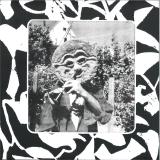
Renowned Italian jazz master Nicola Conte presents an incandescent limited edition 7" single for Record Store Day 2026. "Terra Em Transe" and "Naquela Base" are brand new tracks from sessions for Conte's forthcoming Far Out Recordings album, drawing deep from early 70s Brazilian jazz and modal hard bossa while underlining the vital role of the arts in social and political struggle.
In Nicola's own words: "Terra Em Transe' is a dedication to visionary director Glauber Rocha and to all free thinkers willing to portray the conflicts, contradictions and lies of those in power around the world." The original composition takes inspiration from Milton Nascimento's vocal harmonies and Tamba 4's sophisticated samba-jazz.
'Naquela Base' is a stunning reinvention of João Donato's classic: pure modal hard bossa recorded entirely live in the studio. Inspired by samba-jazz classics like Tenório Jr.'s "Embalo" and Paulo Moura's "Fibra", the track is carried beautifully by Teppo Mäkynen's masterful drumming, with solos from Gaetano Partipilo on alto saxophone and Pietro Lussu on piano, supported by Ameen Saleem on double bass and Abdissa Assefa on percussion.
Having released music with Blue Note, Impulse! and Schema records, Nicola Conte's relationship with Far Out Recordings has produced his acclaimed Umoja project, his five-part Viagem compilation series, and most recently Viaggio, a compilation exploring Italy's library music renaissance from 1970-79.
'Terra Em Transe / Naquela Base' will be released as a limited edition 7" single for Record Store Day 2026 via Far Out Recordings.
Search:d ren
Even in these most turbulent of times, dub musician and fatigued onlooker Elijah Minnelli remains an inexplicable stalwart on the lower rungs of the Breadminster County Council.
His latest record ‘Clams As A Main Meal’ continues his astute siphoning of council funds, this time with help from the Breadminster Board of Abstinence. As a further mark of respect, the original head of the Board, Dr. K'houldoux, graces the cover art in his infamous ‘Looming Moon of Desire’ guise.*
As fine a backdrop as any for Minneli’s off-brand dub experiments, and ‘Clams...’ is the truest representation of his varied wheelhouse yet...
We find vocal appearances from dub goliath Dennis Bovell and Welsh-language singer Carwyn Ellis. A pair of tracks which build on 2024’s acclaimed ‘Perpetual Musket’, a collection of folk songs reworked alongside reggae vocalists, released by FatCat Records. It garnered glowing reviews, with nods from The Guardian and The Quietus concluding with prominent appearances on their respective yearly round-up lists.
Elsewhere, the album finds Minnelli in a more experimental mode, all wheezing contraptions and cockeyed bass, creaking with the weight of creation, a satisfying tactility laid seam-side up.
As well as ‘Perpetual Musket’, the new album follows years of sold out 7" singles, handmade and self-released. Online, the tracks have amassed global streams numbering in the millions. His tracks have found play across an eclectic range of radio mixes and dance floors, most notably the likes of Andrew Weatherall, Batu, Optimo and Zakia Sewell (BBC6Music).
It is perhaps worth mentioning that this everbuilding interest in his work is at great odds with the growing suspicions amongst his fellow townsfolk, who see his Breadminster County Council Music Initiative as nothing more than an empty cash-grab.
Further Reading on the Breadminster Board of Abstinence
In the late 70s, Breadminster was awash with the last vestiges of the hippy era. Though the flared silhouette of the lower leg remained, the utopian ideals that had once flowed merrily around the youth's shaded ankles had begun to wane. LSD and free love had led to a sharp spike in population and a generation of children raised by air-headed psychonauts unprepared for the bleary-eyed strictures of parenthood.
Aware of the crisis, the County Council entrusted Dr. Paulinque K'houldoux to spearhead a pushback, and it was his pro-abstinence movement - a mixture of education initiatives and radical renutrition campaigns - that came to impact Breadminster's census deep into the new millennium.
Being a pseudo-archipelago Breadminster has fundamentally limited resources, however deep-seated ties to distant coastal villages meant that oysters were a regular part of the local diet. K'houldoux pinpointed this as a factor in the town's overpopulation, and believed that simply replacing these with clams (a “lesser mollusk”) would help lower the erotic urges of the people. It was his “anti-aphrodesia” movement that first championed the idea of “Clams As A Main Meal,” and the slogan “Consider Abstinence” carried the message yet further.
The Breadminster Board of Abstinence soon became involved in all cultural happenings in the area, with K'houldoux MCing at prominent festivals and performances, sometimes dressed as the “Looming Moon of Desire” - an idea of his relating to the tide, seafood, menstrual cycles, and his privately held celestial predilections.
It was in 1981 that it was revealed Dr. K'houldoux had never fully qualified as a doctor and was seeking exile in Breadminster due to a series of botched bracelet heists in which he had previously been involved. K'houldoux was subsequently extradited to Basingstoke, where he served 3 of a 12-year sentence, owing to the lunar-oriented prisoner health campaigns he helped implement.
It has been a strange twist of bureaucratic fate that the Breadminster Board of Abstinence has never stopped receiving public funding, despite its lack of clear utility. And while its roots are tied to a rose-tinted past, the Board continues to sponsor cultural events and projects to this day.
An extract from: Eugeniq Schooner's article in Sydney Parishioner: “Clams, Breadminster and Countercultural Abstinence Trends” (2008)
- A1: Les Masques - Il Faut Tenir (1969)
- A2: Isabelle Aubret - Casa Forte (1971)
- A3: Christianne Legrand - Hlm Et Ciné Roman (1972)
- A4: Jean Constantin - Pas Tant D'chichi Ponpon (1972)
- A5: Billy Nencioli & Baden Powell - Si Rien Ne Va (1969)
- B1-: Marpessa Dawn - Le Petit Cuica (1963)
- B2: Jean-Pierre Sabar - Vai Vai (1974)
- B3: Sophia Loren - De Jour En Jour (1963)
- B4: Isabelle - Jusqu’à La Tombée Du Jour (1969)
- B5: Sylvia Fels - Corto Maltesse (1974)
- C1: Frank Gérard - Comme Une Samba (1972)
- C2: Ann Sorel - La Poupée Des Favellas (1971)
- C3: Charles Level - Un Enfant Café Au Lait (1971)
- C4: Andrea Parisy - Les Mains Qui Font Du Bien (1970)
- C5: Audrey Arno - Quand Jean-Paul Rentrera (1969)
- C6: Aldo Frank - T’as Vu Ce Printemps (1970)
- D1: Christianne Legrand - Cent Mille Poissons Dans Ton Filet (1972)
- D2: Clarinha - Lemenja (1970)
- D3: Hit Parade Des Enfants - Aquarela (1976)
- D4: Jean-Pierre Lang - Tendresse (1965)
- D5: Magalie Noël - Une Énorme Samba (1970)
- D6: Françoise Legrand - La Lune
Ever since the late 1950s bossa-nova revolution, Brazil’s influence on French music has been undeniable. Pierre Barouh, Georges Moustaki and a vast array of lesser known artists, all made the Musica Popular Brasileira (MPB) an axis of promotion at the service of a cool and metaphysical, modern and mixed Brazilian lifestyle. Some were seduced by the poetic languors of the bossa, some were looking for fun, and others just loved the American hybridization of jazz-bossa, jazz-samba.
What is bossa nova? One of its creators, Joao Gilberto said: "Its style, cadence, everything is samba. At the very start, we didn't call it bossa nova, we sang a little samba made up of a single note - Samba de uma nota so .... The discussion around the origins of bossa nova is therefore useless”. It is nevertheless useful to remember that these magnificent Brazilian songs, which the guitarist describes as samba, were shifted and balanced around improbable chords. "I like things that lean, the in-betweens that limp with grace," said Pierre Barrouh, quoting Jean Cocteau.
With emotion, arrangements for violin and supple guitar licks, bossa nova rapidly changed. A transformation that can be heard in the Tchic, tchic, French Bossa Nova 1963-1974 compilation, the result of a cultural reappropriation, which traveled through the United States and supplemented itself in France.
A musical revolution that has remained significant, bossa nova was born in Rio. From 1956 to 1961, Brazil lived through its golden years. In five years, the country had invented its modernist style. Elected president in 1956, Juscelino Kubitschek de Oliveira, an elegant man with a broad forehead, brandished a promising slogan: "Fifty years of progress in five years". He quickly got to work. Not worried about increasing debt, he launched the project for a new federal capital, Brasilia, designed by the communist architect Oscar Niemeyer. Volkswagen opened state-of-the-art factories and created the “fusquinha”, the Beetle. In Rio, the Vespa made its first appearance. The Arpoador Surf Club crew run into the “girl” from Ipanema, Helô Pinheiro - the tanned garota ("chick"), between a flower and mermaid, who at 17 walked by the Veloso bar, where the fiery author and composer, Tom Jobim and Vinicius de Moraes, were getting drunk on whiskey. From then on, bossa symbolized cool.
In 1958, Joao Gilberto recorded Chega de Saudade, which the directors of Philips denied, calling it "music for fagots". The marketing director, who believed in it, secretly pressed 3000 78-inch vinyls and distributed them at schools around Rio, creating a tidal wave.
American jazzmen then took over. In particular, trumpeter Dizzy Gillespie and guitarist Charlie Byrd. In November 1962, the Brazilian Ministry of Foreign Affairs funded a "Bossa-Nova" concert at Carnegie Hall in New York, inviting the genre’s pioneers. Unprepared, the show soon turned to disaster. But the troupe was invited to the White House by Jackie Kennedy. The first lady loved "the new beat" and in particular Maria Ninguem, a song by Carlos Lyra, later covered by Brigitte Bardot.
In Brazil, the 1964 military coup quickly ended this euphoria. The destructive atmosphere that ensued pushed many Brazilian musicians to leave, if not to exile. Thus, Tom Jobim, Sergio Mendes and Joao Gilberto arrived to the United States. In New York, Joao Gilberto met saxophonist Stan Getz. At the time, he was married to the Bahianese Astrud Weinert Gilberto, who had a German father. She had never sung before, but she knew how to speak English. Getz therefore asked her to replace her husband on The Girl From Ipanema. The Getz/Gilberto record with Tom Jobim on piano, was released in March 1964. Phil Ramone, the "pope of pop" was in charge of sound.
Bossa nova arrived in Paris through the classic “guitar-voice” channel (Pierre Barouh, Baden Powell, Moustaki…) But France loved jazz and Paris had already welcomed its American contributors. All these good people were to pass through Saint-Germain-des-Prés. The cabaret l'Escale became the Mecca of Latin American sound where one could find Pierre Barrouh and his friends, such as the Camara Trio, samba-jazz aces, whose only record was published by the Saravah label. With a band strangely called Les Masques (a band that included Nicole Croisille and Pierre Vassiliu, among others), the Camara Trio recorded an interesting Brazilian Sound, including the track Il faut tenir which is present on this tasty compilation of rarities.
Other enlightened musicians can also be found on the compilation, such as Jean-Pierre Sabar (songwriter for Hardy, Auffray, Leforestier ...) and the French pop rock organist Balthazar. In 1975, Sabar recorded Aurinkoinen Musiikkimatka on a Finnish label, which featured the crazy Vai, Vai, included on this record. We are now following the footsteps of Brazilian electronic musicians such as Sergio Mendes, Eumir Deodato or Marcos Valle who created funk and disco sounds on their keyboards and synthesizers. A style that influenced Véronique Sanson when she wrote Jusqu’à la Tombée de la nuit in 1969 for Isabelle de Funès, the niece of Louis and a great friend of Michel Berger - Sanson did end up singing this track on her 1992 Sans Regret record.
The pinnacle of exoticism and travel, Sylvia Fels’ Corto Maltese includes bongos, sea mist and ocean sounds. The title was taken from Jacky Chalard’s concept album written in 1974, Je suis vivant, mais j’ai peur (I am alive, but I am scared), based on Gilbert Deflez’s science fiction novel.
However, bossa nova extended the scope of popularity. "In the 1970s, I was a fan of Sergio Mendes, Getz / Gilberto. I fell in love with this music that I knew because I had been an orchestral singer, " explained Isabelle Aubret, who in 1971 delivered a composite record of covers by the very funky Jorge Ben, Orfeu Negro, Tom Jobim, Vinicius de Morais and Jean Ferrat. "I recorded this album for Meys Records in Paris, far from Brazil, with wonderful musicians, François Raubert, Roland Vincent, Alain Goraguer...". The latter wrote the arrangements for Casa Forte, a very percussive title borrowed from Edu Lobo, one of the initiators of the bossa who spent time in California. "Jazz and bossa came together and produced very rhythmic music. I love singing, it allows me to dream, to have fun, to feel a high on stage, and these songs brought me joy, made me swing, my singing felt like a dance.”
The world tours of French singers and their desire for the tropics, often brought them to Rio with its hills, forests, caipirinhas and tanned bodies. There are surprises though, like this Iemenja (Iemenja is the goddess of the sea in the Afro-Brazilian candomblé religion). Not unlike the composer and musician Jean-Pierre Lang, based in Sao Paulo, Claire Chevalier taught Brazil to Brazil. In 1970, the singer and painter published a 45-inch vinyl, Mon mari et mes amants (My husband and my lovers), under the improbable pseudonym of Clarinha (little Claire). She was then living in Rio, with her husband, Joël Leibovitz, who founded a band called Azimuth, and who owned a record label specialized in "sambas enredos" songs for samba school parades.
For its B side, she asked Pierre Perret to come up with lyrics for a song composed by Carlos Imperial: "Oh goddess of the sea, o goddess Iemenja, I bring a white rose to adorn your long hair ..." . "Perret came to see us, and we had fun, remembers Joël Leibovitz. We wrote Lemenja for fun, we recorded it at the Havaí studio, behind the Central do Brasil the central station. Erlon Chaves, the arranger who worked with Elis Regina, joined us" adding his share of Afro-Brazilian percussions and funky brass to the mix.
There is a common misunderstanding in Franco-Brazilian history: that bossa, admittedly hedonistic, is perceived as funny, even though the poets who wrote the texts are often philosophizing on the human condition. Its French interpreters pull it towards a carnival inspired universe, far removed from its fundamental essence. Thus, Jean Constantin covered the famous Samba da minha terra, an ode to the art of samba written by the classic Bahian composer Dorival Caymmi, renaming it with the enticing title of Pas tant de tchi tchi pompon: "On your pier there is no tchi tchi / when you arch your back, you know everything is alright ”(lyrics by Gérard Calvi). This expedited bossa aims for the absurd, but retains a certain elegance.
Indeed, Jean Constantin was not an idiot, the rather large man had a huge mustache and liked fantasy, (Les pantoufles à papa, Le pacha, inspired by cha-cha-cha-cha, salsa and jazz) but he was also the lyricist of Mon manège à moi interpreted by Edith Piaf, the composer of Mon Truc en plume by Zizi Jeanmaire and the soundtrack of François Truffaut’s 400 Blows. Le Poulpe, published in 1970, from which this bossa is extract, was arranged by Jean-Claude Vannier, an accomplice of Serge Gainsbourg’s Melody Nelson. In short: "There is enough of samba / By looking at the parasol / Because my poor cabeza / Is going to die in the sun".
Even the American actress Marpessa Down, who was at the heart of the bossa nova revolution with her role as Euridyce in Marcel Camus’ film Orfeu Negro, winner of the 1959 Cannes Palme d'or, fed the clichée with Je voudrais parler au petit cuica - "Tell me how you manage to always make people want to dance / It's true, I must admit that I cannot resist your magic" - in consequence, once can hear the cuica, a little drum inherited from the Bantu.
But bossa nova had many angles. Societal, of course, pushing actresses who were symbols of women's liberation like Brigitte Bardot, Jeanne Moreau, or Sophia Loren to engage in the exercise of accelerated bossa. In February of 1963, Sophia Loren made a record in French in Rome, Je ne t'aime plus, featuring the song De jour en jour, a bossa written by two Italians, Armando Trovajoli and Tino Fornai, which was released a little later by Barclay. Bossa accompanied the 1960s, a decade of moral liberation. Ann Sorel, who interpreted La Poupée des favellas, caused a sensation with L’amour à plusieurs, a provocative song written by Frédéric Bottom and Jean-Claude Vannier. As for the actress Andrea Parisy, she displayed her bourgeois cheekiness in Marcel Carné's Les Tricheurs before interpreting Les mains qui font du bien. And Magalie Noël, the friend of Boris Vian, who sung Johnny fais-moi mal, was hired to sing Une énorme Samba, composed by Alain Goraguer (arranger to Gainsbourg, Bobby Lapointe and Jean Ferrat) with lyrics by Frédéric Botton.
But in the end, of what wood is bossa nova made of? The answer is given by Christianne Legrand, daughter of Raymond the conductor, and sister to Michel the composer: "With me, with jà" - jà means "immediately" in Portuguese. In 1972, the singer, an expert in vocal jazz and a member of the Double Six, published Le Brésil de Christianne Legrand. Two songs included on the Tchic Tchic compilation that demonstrate how bossa, jazz, funk, rock, etc. work like a swiss army knife: the music is used to denounce broken systems, or miracles, HLM et ciné roman, Cent mille poissons dans ton filet, two songs from the O Cafona soundtrack, a successful telenovela broadcast, at the time in black and white, on TV Globo. The first was adapted in French by the fighter and friend of the Legrand tribe, Agnès Varda. The second is content with a play on words, jostling them into a summer fun.
Véronique Mortaigne
- 1: Duck Pond
- 2: Across The Northern Border
- 3: Up The Country
- 4: The Ballad Of A Sometimes Traveller
- 5: Cannon Beach
- 6: Descending Star
- 7: Blue
- 8: Last In Line
- 9: You Make The Call
- 10: Shade Of Love
- 1127: Forever
- 12: Spin Your Wheels
- 1330: 0 Miles
- 14: Rockin' Chair
- 15: Lovely Today
Originally released in 2001, Up The Country is the debut album by The Sixth Great Lake and a quietly revered title within the late-'90s / early-2000s indie scene. Rooted in jangly guitars, melodic songwriting, and a distinctly pastoral sensibility, the album sits at the intersection of indie pop, folk-rock, and classic guitar-driven pop. Although initially released with modest exposure, Up The Country steadily developed a loyal following, earning cult status among fans of understated, melody-focused indie. Its charm lies in its simplicity: clean arrangements, memorable hooks, and an unforced warmth that has allowed the record to age exceptionally well over the past 25 years. This 25th anniversary reissue presents an opportunity to reintroduce an overlooked catalogue gem to today's market, appealing both to original fans and to a new audience drawn to timeless, guitar-led indie records. With renewed interest in archival and heritage releases, Up The Country offers strong long-term catalogue potential beyond initial anniversary demand. A timeless, understated record with strong appeal for fans of melodic, guitar-driven indie.
- 1: Gypsy Woman
- 2: Little Anna Mae
- 3: I Can't Be Satisfied
- 4: I Feel Like Going Home
- 5: Train Fare Home
- 6: Sittin' Here And Drinkin
- 7: You're Gonna Miss Me (When I'm Dead And Gone)
- 8: Mean Red Spider
- 9: Streamline Woman
- 10: Muddy Jumps One
- 11: Little Geneva
- 12: Canary Bird
- 13: Screamin' And Cryin
- 14: Where's My Woman Been
- 15: Rollin' And Tumblin' Part 1
- 16: Rollin' And Tumblin' Part 2
The Definitive Origins of the Chicago Electric Blues. Witness the birth of a legend. This essential collection captures Muddy Waters at the most pivotal moment of his career: the transition from a Mississippi Delta traveler to the "King of Chicago Blues." Muddy Waters was an ambitious young man who saw little future in Mississippi. In 1943, he headed for the bright lights, big city of Chicago, where he soon connected with blues giant Big Bill Broonzy, who began featuring Muddy as an opening act at his club dates. Within a year, Muddy had switched to electric guitar and formed his first blues combo, quickly becoming an established figure on Chicago's club scene. In 1947, Muddy came to the attention of the fledgling Aristocrat Records, just as Leonard Chess-then running a nightclub called the Macomba Lounge-invested in the company. Working frequently with pianist Sunnyland Slim, Muddy recorded a split session with him for Aristocrat in December 1947. This collection begins there: eight Aristocrat 78 rpm releases (sixteen sides), recorded between 1948 and 1950 and presented here in chronological order of release. Just three years later, Leonard and his brother Phil Chess would buy out Aristocrat's remaining partners and rename the label Chess Records-ushering in a new era of Chicago blues that would reverberate around the world. Includes extensive liner notes by Muddy Waters expert Fred Rothwell.
- 1: The Promise
- 2: Longing
- 3: In The Wake Of Blue
- 4: Flux
- 5: Vapor
- 6: When Birds Flock
- 7: The Endless Thread
- 8: The Quiet Edge
- 9: Shadows In Bloom
April Records proudly presents the new album from Danish trombonist and composer Lis Wessberg. Her most personal album to date, In The Wake of Blue is a song-driven work exploring transience, love, and transformation. Expanding her writing while remaining rooted in her distinctive instrumental voice, Wessberg creates an intimate musical landscape where lyric, melody, and texture carry equal weight. Wessberg has established herself as a leading voice on the European jazz scene through her band Yellow Map and a series of acclaimed releases on April Records. Her previous album, Twain Walking (2024), marked her first step into English-language songwriting and earned a Danish Music Award nomination in 2025 for the track Behind the Walls. In The Wake of Blue develops this direction further. The album draws on images from nature - sea, tides, clouds, mist, and birds - used as emotional anchors rather than abstractions. These elements frame songs that move from uncertainty and loss toward openness, connection, and renewal. The title reflects this arc: "blue" as melancholy, depth, and memory, and what emerges in its wake. Vocalist Veronika Rud is central to the album"s sound, bringing vulnerability and clarity to the songs. Rather than a traditional singer-led project, the music unfolds as a dialogue between voice and trombone, with Wessberg"s warm, airy tone mirroring and extending each song"s emotional core. At times the two move in close unison; elsewhere, they diverge and reconnect. The core ensemble - Steen Rasmussen (piano and keys), Lennart Ginman (bass), and Jeppe Gram (drums) - provides a responsive, understated foundation, while string quartet Live Strings appear on two tracks, expanding the ensemble"s depth and resonce. In The Wake of Blue offers a quietly assured statement from an artist continuing to refine a voice that speaks as clearly through brass as it does through words.
- 1: Bitches Blues
- 2: Kompet Blir
- 3: For A Moment I Thought I Could Hear You
- 4: Limite
- 5: Dynamax
- 6: Recollection Of Sorrow
Clear Vinyl[25,00 €]
"Weejuns is all about interplay,"erklärt Gitarristin Mollestad. ,Bitches Blues besteht aus sechs Instrumentalstücken oder Musikabschnitten mit einer extremen Bandbreite an Dynamik. Einige basieren auf kräftigen Beats, während andere Stücke weitaus lyrischer und rubato sind. Die Bandbreite reicht von riffbasierten rockigen Stücken über lautes Chaos bis hin zu melancholischen Balladen und sogar völlig freien Improvisationen." Mit einem kultivierten und dennoch erfrischend instinktiven Ansatz, Instrumente und Einflüsse miteinander zu verflechten, wechselt Bitches Blues (ein ironischer Verweis auf Miles Davis' Album Bitches Brew) unvorhersehbar zwischen langsamen und sanften, klar gegliederten Songs mit disziplinierten Akkordfolgen und explosiven Ausbrüchen kathartischer und komplexer Strukturen. Weejuns (eine Slang-Abkürzung für ,Norwegians") stellten sich 2023 mit einem selbstbetitelten Doppel-Live-Album vor. Ursprünglich von Mollestad für das Kongsberg Jazz Festival zusammengestellt, wo sie mit dem renommierten Musicians Prize ausgezeichnet wurde, hat sich die Chemie innerhalb von Weejuns als dauerhaft und verlockend erwiesen, auch als Gegenpol zum bisher härtesten Album des Hedvig Mollestad Trios, Bees in the Bonnet aus dem Jahr 2025. Mollestad hat mit ihrem gleichnamigen Trio acht gefeierte Alben veröffentlicht. Das Markenzeichen ihrer 15-jährigen Karriere ist die Verschmelzung von ernsthaftem Können mit einem offensichtlichen Fokus darauf, Spaß am Klang zu finden. Als Tochter eines Jazzmusikers vertiefte sie sich in dessen Plattensammlung und studierte klassische Werke von Miles Davis, Charlie Parker, Joe Pass und Jim Hall, bevor sie in ihren 20ern Riff-gewaltige Titanen wie Led Zeppelin, Black Sabbath und Mahavishnu Orchestra entdeckte. Dies führte zur Gründung des Hedvig Mollestad Trios, dessen unermüdlicher Aufnahme- und Tourneeplan seit Anfang der 2010er Jahre der Gitarristin eine Reihe von Auszeichnungen einbrachte, darunter zwei norwegische Grammys (Spellemannprisen) und die Ernennung durch das DownBeat-Magazin zu einer der 25 Künstlerinnen, die ,den Jazz für Jahrzehnte prägen könnten". Ståle Storlokken (Bass, Synths) ist Gründer und langjähriges Mitglied von Supersilent und Elephant9, seit Mitte der 90er Jahre die ,rechte Hand" von Terje Rypdal und hat mit Motorpsycho auf Platte und auf der Bühne sowie mit unzähligen anderen zusammengearbeitet. Ole Mofjell (Drums) ist das jüngste Mitglied und spielt bei Krokofant, Signe Emmeluths Amoeba und seinem eigenen Free-Jazz-Trio 3 Days Of Maceration.
- 1: Odisea
- 2: The World
- 3: Shape Of Things To Come
- 4: Cielos
- 5: Doves (Ft. Hikari)
- 6: Sobre Las Ruinas
- 7: Outskirts
- 1: Just Us
- 2: Joven Pobre Y Sabio
- 3: Monte Calvario
- 4: Secret Admirer
- 5: Things That Burst" (Ft. Hitomitoi)
Odisea is the new album, actually the real debut from Los Retros, out in April on Stones Throw. It draws inspiration from 1980s Japanese City Pop, and marks a new creative chapter from Mauri Tapia shaped by growth, reflection, and renewed purpose. It's been a journey since Tapia first captured hearts with the lo-fi magic of "Someone To Spend Time With", recorded at the age of 17 on a humble four-track in his parents' living room. Now 25, the Oxnard native has stepped into an entirely new season of life - he married his high school sweetheart, became a father to two daughters, and embraced spiritual faith. Earlier this year, he revisited his start with Early Days (2016-2019), a compilation of unreleased music from Mauri's teen years. "Jazz fusion has become my favorite genre and greatest inspiration of all time," Mauri says. "I made this album for the version of me that first fell in love with music. It's my full-circle moment - a sonic hat tip to my beginnings - as well as a nod to the forefathers of jazz fusion and city pop for leaving us with great music." Through it all, he's kept the same DIY spirit, writing and recording every note himself, only now in a home studio of his own. On Odisea, Tapia blends neon-lit City Pop with the melodic sensibility of Latin American soft rock. Mauri's deep love for 70s and 80s jazz fusion records anchors the album, yet Tapia filters those influences through a modern lens. Odisea features two Japanese vocalists, - Hikari and HITOMITOI. Also check out Los Retros new compilation "Early Days" released simultaneously. RIYL soul, bedroom pop, indie, modern jazz, downtempo, soft rock, Mac DeMarco, Thee Sacred Souls, Skinshape, Men I Trust
Very Limited 7” EP with printed lyric inner sleeve
Purely Physical Teeny Tapes continue to sink their teeth into the fleshy nethers of the contemporary oz
underground, plucking the self-titled ep of vivisected bedroom folk by naarm/melbourne trio Who Cares?
from the recesses of net anonymity for the greatest of good.
Upon appearing out of nowhere back in ‘24, the quartet’s debut registered (feverishly) somewhere
between immediacy & beguilement, the intervening year & change doing little to dull its aura, the
mystique only heightened by their suitably gorgeous appearance in wonderful company on a colourful
storm’s recent ‘going back to sleep…’ compilation-extravaganza. The conceit of these four tracks here is
disarmingly minimal - repetitious loner guitar strummage, oblique vox poetics as lullaby, intermittent
sunken percussion, bass the subtle melodic lugger - all recurring/revolving in delicious pirouette freefall,
un-rinseable within the mind, wayward melodies stuck like heat-warped treacle.
As with the firmest of its diy domestica ilk, there’s something ever so slightly off here, the carnivalesque
nature of this thing being the ‘what?’ that keeps pulling you in. parched ennui drip, fully zonked bacchanal
(anti-)energetics, listlessness rendered bedsit anthem, cooees in the hallway. depending on how your
head is screwed, ‘correct’ or otherwise, one might hear a charmed take on a vein of folk song fallen well
by the wayside/behind the mantle, others a seance for the spirits in the kettle, others more attuned to the
myriad wraiths swirling within the outer reaches of these songs, flights of whimsy foiled by a sticky, gluey
something or other. choose, or rather submit to your own adventure. Miaow miaow miaow.
First time reissue of JP free jazz rarity, pre-Seikatsu Kōjyō Iinkai group.
The single album self-released by the quartet Shūdan Sokai in 1977 is one of the most vital documents of mid-seventies Japanese free jazz, documenting Tokyo’s free scene at the precise moment when it began to shift to a handful of tiny venues on the western fringes of the city. In Free Jazz in Japan, Teruto Soejima identifies the extant venue Aketa no Mise in Nishi-Ogikubo as the pioneer of this decamping from the centre: a cramped basement beneath a rice shop, seating just 20 people. Musician-run, operated on a shoestring, these spaces offered a vital site for community, creativity, and a small measure of financial independence — “even though it was in a basement, in spirit it was a loft.”
Among the most active of the new venues was Alone in Hachiōji, nearly an hour from Shinjuku, in a district shaped by universities, lower rents, and a thriving counterculture. Originally opened in 1973 as a jazu kissa, Alone was unusually spacious and equipped with a stage, grand piano, and drum kit. Around 1974, Junji Mori and Yasuhiro Sakakibara began working there, booking free jazz players on weekends and establishing the venue as a crucial hub. Mori recalls early appearances by figures including Kazutoki Umezu, Toshinori Kondo, and others who would define the scene.
In early 1976, Umezu and pianist Yoriyuki Harada — recently returned from New York’s loft jazz environment, where they had played with musicians such as David Murray and William Parker — formed Shūdan Sokai with Mori and drummer Takashi Kikuchi. The name, meaning “mass evacuation,” pointed to their self-chosen exile in Hachiōji. With Alone as their home base, the quartet developed a music characterized by an infectious sense of enjoyment and a willingness to integrate free jazz with elements of song structure. Harada switched between piano and bass; the group experimented with rap-like vocal pieces, jabbering nursery rhymes over bass rhythms.
They returned to Alone on December 24 to record Sono zen’ya (Eve), releasing it on their own Des Chonboo Records, partially funded by advertisements from local businesses printed on the rear cover. The closing “Ballad for Seshiru,” dedicated to Harada’s newborn son, unfolds over a delicate piano melody that moves into emphatic chords as intertwining alto lines rise and spiral.
Alone closed in September 1977, and Shūdan Sokai soon dissolved, later morphing into the expanded Seikatsu Kōjyō Iinkai Orchestra. What remains is a recording rooted in a specific place and moment: a fiercely independent scene sustained by small rooms, close listening, and collective commitment.
2026 Repress
Autumn of 2022 marked 20 years since the initial release of Metro Area's first and only album, Metro Area. Environ had already remastered and re-released this essential LP for its 15th anniversary. So this time around, we're doing something a bit different.
To celebrate two decades of Metro Area, Environ has partnered with renowned mastering engineer Matt Colton (Metropolis Studios) to remaster and recut the first four Metro Area 12"s: Metro Area, Metro Area 2, Metro Area 3 and Metro Area 4. Unlike the album reissue, these records include the original, extended 12" versions of all songs, including some which have never been re-released.
Metro Area 4 is the duo's fourth 12" EP, originally released in 2001.
Back once again like the renegade masters - Regulate jump into the fray for 2026 with two more bombs to light up the dance floor.
A side “Kick That” sees T2Funk & DJ Deviant team up to fuse classic Ninja Tune cinematic funk with added dynamic cut and paste punch. Featuring brass stabs, scratches and nods to DJ Shadow & Norman Cook this is sure to shake rumps everywher
Flip side “Breaka One” sees DJ Deviant leaning right into golden era hip hop swing; with horns and a rolling groove that just doesn’t quit. Essential listening for all the boom bap heads who like a bit of Bomb Squad grit in the mix.
- 1: Hold It
- 2: Life Slime
- 3: Toxic Spillage
- 4: Battery Pack
- 5: Another Way
- 6: Sorry Eyes
- 7: Infinity Ooze
- 8: Crystal Cave
- 9: Torch Song
- 10: Werewolf Ending
New album from Pictish Trail, AKA Johnny Lynch, known for his wildly inventive electro-acoustic psych-pop. Life Slime is the sixth full-length album by Pictish Trail (AKA Johnny Lynch) - a strange, tender, psychedelic electro-pop record shaped by transformation, exhaustion, hope, guilt, and renewal. Written at home on the Isle of Eigg and recorded at Mike Lindsay's studio down in Margate (Tunng / LUMP), the album follows 2022's critically acclaimed Island Family, further refining Lynch's world of lo-fi electronics, warped pop melodies, baggy psych rhythms and emotionally direct songwriting. It's a record that balances woozy synth-pop, motorik propulsion and intimate acoustic songwriting, all infused with the emotional messiness that gives the album its title. Across the album's singles - the guilt-stained psych-pop ballad 'Hold It', the life-affirming shimmer of 'Infinity Ooze', the late-night confession of 'Torch Song', the expansive eight-minute centrepiece 'Another Way', and the cinematic closer 'Werewolf Ending' - Life Slime charts a journey from emotional fracture to uneasy release. 'Sorry Eyes' brings a punchy electro-pop strut with a sharp emotional edge, 'Crystal Cave' drifts through crystalline guitars and shoegaze haze into transformation, and the title track 'Life Slime' moves with a slow, weary swagger toward bittersweet acceptance. Together, these tracks form a cohesive album statement about surrender, resistance, change and renewal. "Wonderfully weird pop"- Brooklyn Vegan For fans of Hot Chip, The Flaming Lips, Liars, Mercury Rev, Beck, John Grant, Empire of the Sun, Grandaddy. Colour vinyl and digisleeve CD
- Iron Leg
- Give Everybody Some
- Football
- Chocolate
- Ufo
- Mystery Girl
- Get Down Brother
- Up The Stairs And Around The Bend
- The Whatzit
- Soulful Sickness
- Joint Session
- Message From A Black Man
OPAQUE SILVER VINYL[24,79 €]
Hard Texas Funk aus der renommierten Szene von San Antonio. Während Abe Epstein auf dem General McMullen Boulevard nach West Side Brown-Eyed Soul-Gruppen suchte, antworteten Mickey Foster und seine gemischtrassige Soul Generation Band auf Browns Aufruf, südlich des River Walk den richtigen Weg einzuschlagen. Hier sind ein Dutzend ihrer schwungvollsten und unkonventionellsten Instrumentalstücke versammelt, eine stimmungsvolle Übersicht über die Band von 1969 bis 1977, darunter der Hit ,Iron Leg". Entscheiden Sie sich hier für Ihr nächstes Sample.
- Asylums In Jerusalem
- A Slow Soul
- Jacques Derrida
- Lions After Slumber
- Faithless
- Sex
- Rock-A-Boy Blue
- Gettin' Havin' & Holdin
- The Sweetest Girl
Das Debütalbum einer der renommiertesten und einflussreichsten Bands Großbritanniens, Songs to Remember, versetzt uns zurück in die Anfänge von Scritti Politti. Die von Green Gartside angeführte Gruppe, die aus der DIY-Szene der Einzimmerwohnungen in Camden Ende der 70er Jahre hervorgegangen war, hatte jedoch eine musikalische Vision, die der von Miles Davis (mit dem sie später zusammenarbeiteten) in nichts nachstand. Mit Songs To Remember, das sowohl die feurige Politik der damaligen Zeit als auch eine aufkeimende Pop-Sensibilität widerspiegelte, etablierte sich die Gruppe als einer der wahren Innovatoren der frühen 80er Jahre. Songs to Remember, das bei seiner Veröffentlichung 1982 vom NME als "witzig und genial" beschrieben wurde, wurde für diese längst überfällige Vinyl-Neuauflage vollständig remastered, was Gartside persönlich überwacht hat. "Mark E Smith, damals Künstler bei Rough Trade, sagte einmal zu mir: 'Scritti hat die beste Rhythmusgruppe in der Rockmusik." Er erwähnte Green Gartside nicht, daher weiß ich nicht, was er von ihm hielt. Ich weiß jedoch, dass wir bei Rough Trade alle von Greens honigsüßer Stimme und seinen brillanten Texten fasziniert waren. Es waren aufregende Zeiten, in denen die Menge an purem Talent, die in das Rough-Trade-Universum strömte, einfach überwältigend war. Niemand mehr als Green, der den intelligenten Angriff auf die Zitadelle der Popmusik-Perfektion verkörperte. Ich erinnere mich, dass ich sehr stolz auf "Songs To Remember" war, zu einer Zeit, als es für uns noch eine relativ neue Erfahrung war, ganze Alben zu veröffentlichen." - Geoff Travis
- 1: Calm Before The Storm
- 2: Hawkshaw
- 3: The 1
- 4: Gehenna
- 5: The Contract
- 6: Fiend
- 7: Storyline
The re-issue of Truckfighters' album V marks a fresh celebration of this iconic record, It has been sold out for years but finally we're offering fans a chance to revisit the band's signature desert rock sound and collectible packaging. Originally released in 2010, V is praised for its heavy riffs, hypnotic grooves, and raw energy, solidifying Truckfighters' reputation in the stoner rock scene. The re-issue allows both longtime fans and new listeners to experience the album in a renewed format, highlighting its enduring influence and the band's distinctive style.
2026 Repress
Lisa Decker returned with her second studio album "Soliloquise" one year after her debut album "Serendipity" in 2021 with Japanese Jazz trio Nautilus from Tokyo and a superb single remix of "Everytime" by Pat Van Dyke featuring rapper John Robinson.
For this project she worked on eight new songs. Half of the album is arranged by Nautilus and the other half is produced by SaturnVybz who is known for his works with/and projects like Slick Walk, The Ruff Cats and Jazzanova.
Getting a step forward and conceptually a bit different this release gets the "Oonops Drops" FLIP SERIES treatment which means: Side A and Side B are made by different artists or differentiate from each other like the first volume with Nautilus X Anna Sato & Toshiyuki Sasaki (OD006LP).
Songs like "Free", "Let's Wake Up" and "Summer Child" with their feel warm note of groovy, jazzy pop and the more swing-jazz tune "Rimy Whitewater" meet guitar-electronic touched songs like "Love And Hope", "On My Way" and "True Blue" or her dreamt away track "Stay With Me" with smooth bouncy beats and with an atmosphere for being the perfect soundtrack for a night ride on deserted streets.
Lisa is careful about the artwork and after working together with renowned artist Lindsey Kustusch from San Francisco on her first album she collaborates with local artist Sebastian Maria Otto who is known for his signature art style and exhibitions from Germany to Japan.
Lisa will perform live in Hanover, the 20th May at roof top of the Historical Museum together with Nautilus. Japan meets Germany. Lucky coincidence or: "Serendipity".