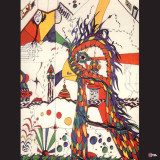
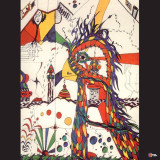
Sound the alarm, we’re back! PAGER15 is our first VA since 2020, and it’s a special one— dropping soon with four tracks, four unique voices, and enough groove to shake your neighbor’s picture frames off the wall!
First up, our homeboy Phil Evans, aka "the coach” aka daddy cool, with Chocolate Funk. Imagine warm pads, crispy drums, and a bassline so addictive it should come with a warning. Add his signature offbeat stabs and a swing smoother than the creamy drizzle on kimchi fries, and you’ve got a groove that lingers long after the needle lifts.
Fresh blood incoming! Wavelength Infinity marks the Pager debut of the Parisians Aline Umber & Maxime dB, and they’re making waves. Deep, undulating basslines meet shimmering pads in a hypnotic blend of rhythm and texture. It’s a groove-roller that pulls you in faster than a free drink at the bar.
Flip it over, and California Sunshine Boy Rocky delivers debut number two with Aquatic Maneuvers. Flowing pads and bubbling percussion weave together a lush, evolving soundscape. Organic and intricate, it shifts like underwater currents, with each layer wrapping around you like the warm embrace of an after-hours vibe you never want to end!
And then there’s the Gude-Launebär himself—Markus Sommer, aka Frau Hommer, answering the eternal question: Does it Funk? Spoiler: absolutely. Rolling basslines, sharp percussion, and cheeky melodic twists come together. This is Hommer energy at its peak!
You know the drill: Either you grab it while it’s hot, or you’ll be left watching it spin on someone else’s deck. PAGER15 is calling—don’t let it go to voicemail!
Cerca:d roc
2018 gegründet, folgt eine Reihe von donnernden Tracks, die 2021 zu ihrem Debütalbum 'Without Warning“ verfeinert wurden. Die Nennung als eines der besten Alben des Jahres bei Bandcamp und die Platzierung vor Exodus und Iron Maiden in der jährlichen Top 30-Liste von "Brave Words" zementierten ihren Platz in der Szene. Selbst knapp 4 Jahre nach erstmaliger VÖ auf HAUNTs Trevor Williams Church eigenem Label, sorgt diese Wiederveröffentlichung jetzt bei Rock Of Angels Records für Lust auf mehr.
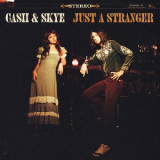
The debut full-length album from Los Angeles duo Cash & Skye, following their successful 7” No More Candy (Third Man Records) in 2021. This alluring infusion of Americana and Rock and Roll, executed with a punk-rock ethos, documents the 7 year musical journey of songwriters Henri Cash and Sophia Skye de Reeder, and features players from Cash’s prolific and beloved band, Starcrawler.
- A1: Harlem Shuffle
- A2: Soul Man
- A3: You’ve Lost That Lovin’ Feelin’
- A4: Rock & Roll Medley
- B1: Let The Good Times Roll
- B2: Mercy, Mercy
- B3: Baby, Whatcha Want Me To Do
Johnny and Edgar Winter - Together: Live (1976) is the first ever album featuring both brothers, Johnny Winter (guitar, vocals) and Edgar Winter (saxophone, vocals). Released just three months after Johnny Winter’s Captured Live!, it is composed entirely of rock and roll and soul standards. This album is a chance to hear The Edgar Winter Group (Edgar on saxophone, Rick Derringer on guitar, Dan Hartman on piano and Chuck Ruff on drums) playing with Johnny Winter’s band (Johnny and Floyd Radford on guitar, Randy Jo Hobbs on bass and Richard Hughes on drums) together on a same stage. The album was live recorded at San Diego Sports Arena and Swing Auditorium.
This MOV release comes as a limited edition of 1000 individually numbered copies on white marbled coloured vinyl.
- A1: Edge Of The World
- A2: Highway Rider
- A3: Heaven Will Rock'n'roll
- A4: Shock Treatment
- A5: A Soul For The Devil
- B1: Head Contact (Rock 'N' Roll)
- B2: Rest In Peace
- B3: Too Close For Comfort
- B4: Red Lights
- B5: Medicine Man
High Roller Records, reissue 2025, 180g black vinyl, ltd 500, 425gsm heavy cardboard cover, lyric sheet, poster, specially mastered for vinyl by Patrick W. Engel at Temple of Disharmony
- 01: Never Said
- 02: Bambi’s Theme
- 03: Some Girls
- 04: Counting Sheep
- 05: Audrey Go Again
- 06: Head & Spine
- 07: Tell Me Why
- 08: Sunder
- 09: Next Big Star
- 10: Jacy
- 11: I’ll Be Around
Anxious’ second album Bambi arrives this winter on Run For Cover Records. It’s been a whirlwind few years for the Fairfield, Connecticut five-piece – since the release of their debut album Little Green House, there’s been little time for anything other than consistent touring with bands like Hot Mulligan, One Step Closer and The Wonder Years. Somewhere during that endless grind, vocalist Grady Allen was sitting in a hotel room and stumbled upon a name typed into a long-forgotten memo on his phone: Bambi. “We should have named the band Bambi,” he recalls admitting to his bandmates. Bambi stuck with the band after that night and eventually it evolved from a “what-if” into the name of Anxious’ second full-length album.
Bambi is a record of remarkable growth, depth, ambition, and energy. It takes all the unsolvable and unavoidable problems of exiting adolescence and makes them resonate in urgent and authentic new ways. The album has deep roots in the storied lineage of Northeast tri-state hardcore and emo, but it also fully embraces the widescreen alternative rock songwriting at which Anxious have previously only hinted. It’s a statement of purpose, the kind of album that comes from a band reconciling where they’ve been with where they want to go. Bambi is the sound of Anxious putting everything on the line–and coming out on the other side better than ever.
Inspired by “big swing” records like Blink-182’s self-titled or Jimmy Eat World’s Clarity, Anxious set out to redefine the band without losing sight of what made them work in the first place. Tracks like “Head & Spine,” “Sunder,” and “Tell Me Why” showcase the scope of Anxious’ evolution, tapping crunchy ‘90s rock guitarwork, layered ‘60s-esque harmonies, and crisp, modern production that captures the unrivaled energy of seeing the band play live.
Hardly Cricket sees the band truly lean into their rock tendencies. Those who have enjoyed their past forays into 70s style dual guitar leads will find much to latch onto here. Explosive, high energy tunes like “New Music” and “Sacred Heart” are instantly infectious and truly set the tone with high flying guitar action from all the players. However, as always, Shirese keeps it varied. With songwriting duties being more evenly spread throughout the group this time around, listeners will find 60s garage, country, and even doo-wop inflected songs as well. Matt Paolilo’s ever present vocals and tongue-and-cheek lyrics keep listeners on their toes. While the occasional descent into tape spliced experimental madness still finds its place in the grooves. Shirese continues to evolve as their lineup continues to cement. Gone are the days of a revolving cast of characters, and in its place we find a group of friends who mesh tightly, pushing beyond their perceived limits to true rock’n’roll glory! A Grapefruit Records and C/Site Recordings co-release. Limited to 300 copies.
There are records that come from the soul. No matter how primitive may be the recording techniques the musician has access to, the soul gets its way to the heart and mind of the listener. Samtvogel' is one of those records. Günter Schickert recorded that amazing piece of human greatness in 1974, using the media he had at the time, putting his brain at work to find the best way of taping everything he had to say. When I was recording Samtvogel' in 1974 I had only 2 Taperecorders. I played one track and while listening I added the second one. And so on. Four times. When I mixed all together I borrowed a 3rd taperecorder. And still added the last track to the master. I had a small mixer with 2 stereo and 1 mono but it was possible to pan tracks. No equalization. It all came out of my still living G2000 Dynacord guitar amplifier, of course valve, with no master, even the voice recorded through it. If I made a mistake in 1 track I had to repeat it from the beginning. And if while mixing I was not fast enough in changing the tape I had to start again. So it took me more than 3 months to get ready.'
Thanks to these three months of work, between June and September of 1974, 'Samtvogel' was privately issued that same year. It would later be issued on the Brain label, with a small change in the artwork -titles added to the front cover, which weren't on the original private pressing. Brain also reissued it on the label's Rock On Brain' LP series, this time with a completely different sleeve. The album contained two tracks on side one and just one on side two, and its sound has often been compared to the most explorative works of Syd Barret - however it must be pointed that Schickert did not need any mind spreading substances to allow his sounds float out of his mind & soul, they just came out in the most natural way. It will also appeal to fans of the echoed athmosferic guitar work of other kraut innovators such as Ash Ra Tempel, Manuel Götsching or A.R. & The Machines, and some may find on the vocal passages certain resemblances to Damo Suzuki on Can's 'Tago-Mago' era.
The Wah Wah reissue is housed in a quality sleeve that reproduces that of the original 1974 private pressing and features a 4 page insert with liners and photos - sound remastered at Eastside mastering Berlin. Get this bird now, before it flies away again!
This heavy roots reggae cut comes courtesy of The Viceroys, legendary harmony group from the stables of the world renowned studio 1. First recording for the venerable Mr Dodd in 1967 The Viceroys were instrumental in moving the sound from rocksteady to reggae with early hits like “Ya Ho” and “Love & Unity” .
The A side of this weighty 45 is a revisited vocal from the early days of the group, a haunting, smokey rendition of Maga Down. Drawing musical influence from Ethiopian and Cuban music as well as its obvious early reggae basis this record sounds fresh whilst simultaneously transporting you back to the golden era with its warm nostalgic themes.
The flip side is an ethereal dub mix from the Bristol based Yakka, an almost psychedelic journey into the mixing board bringing out the best of the vintage sound pellet.
This is the third release from Bristol label Poor Man's Friend Records, produced in the Poor Man's Friend studio and voiced in Jamaica only 300 copies of this smoked out ode to the golden era are available for purchase.
There are records that come from the soul. No matter how primitive may be the recording techniques the musician has access to, the soul gets its way to the heart and mind of the listener. Samtvogel' is one of those records. Günter Schickert recorded that amazing piece of human greatness in 1974, using the media he had at the time, putting his brain at work to find the best way of taping everything he had to say. When I was recording Samtvogel' in 1974 I had only 2 Taperecorders. I played one track and while listening I added the second one. And so on. Four times. When I mixed all together I borrowed a 3rd taperecorder. And still added the last track to the master. I had a small mixer with 2 stereo and 1 mono but it was possible to pan tracks. No equalization. It all came out of my still living G2000 Dynacord guitar amplifier, of course valve, with no master, even the voice recorded through it. If I made a mistake in 1 track I had to repeat it from the beginning. And if while mixing I was not fast enough in changing the tape I had to start again. So it took me more than 3 months to get ready.'
Thanks to these three months of work, between June and September of 1974, 'Samtvogel' was privately issued that same year. It would later be issued on the Brain label, with a small change in the artwork -titles added to the front cover, which weren't on the original private pressing. Brain also reissued it on the label's Rock On Brain' LP series, this time with a completely different sleeve. The album contained two tracks on side one and just one on side two, and its sound has often been compared to the most explorative works of Syd Barret - however it must be pointed that Schickert did not need any mind spreading substances to allow his sounds float out of his mind & soul, they just came out in the most natural way. It will also appeal to fans of the echoed athmosferic guitar work of other kraut innovators such as Ash Ra Tempel, Manuel Götsching or A.R. & The Machines, and some may find on the vocal passages certain resemblances to Damo Suzuki on Can's 'Tago-Mago' era.
The Wah Wah reissue is housed in a quality sleeve that reproduces that of the original 1974 private pressing and features a 4 page insert with liners and photos - sound remastered at Eastside mastering Berlin. Get this bird now, before it flies away again!
There are records that come from the soul. No matter how primitive may be the recording techniques the musician has access to, the soul gets its way to the heart and mind of the listener. Samtvogel' is one of those records. Günter Schickert recorded that amazing piece of human greatness in 1974, using the media he had at the time, putting his brain at work to find the best way of taping everything he had to say. When I was recording Samtvogel' in 1974 I had only 2 Taperecorders. I played one track and while listening I added the second one. And so on. Four times. When I mixed all together I borrowed a 3rd taperecorder. And still added the last track to the master. I had a small mixer with 2 stereo and 1 mono but it was possible to pan tracks. No equalization. It all came out of my still living G2000 Dynacord guitar amplifier, of course valve, with no master, even the voice recorded through it. If I made a mistake in 1 track I had to repeat it from the beginning. And if while mixing I was not fast enough in changing the tape I had to start again. So it took me more than 3 months to get ready.'
Thanks to these three months of work, between June and September of 1974, 'Samtvogel' was privately issued that same year. It would later be issued on the Brain label, with a small change in the artwork -titles added to the front cover, which weren't on the original private pressing. Brain also reissued it on the label's Rock On Brain' LP series, this time with a completely different sleeve. The album contained two tracks on side one and just one on side two, and its sound has often been compared to the most explorative works of Syd Barret - however it must be pointed that Schickert did not need any mind spreading substances to allow his sounds float out of his mind & soul, they just came out in the most natural way. It will also appeal to fans of the echoed athmosferic guitar work of other kraut innovators such as Ash Ra Tempel, Manuel Götsching or A.R. & The Machines, and some may find on the vocal passages certain resemblances to Damo Suzuki on Can's 'Tago-Mago' era.
The Wah Wah reissue is housed in a quality sleeve that reproduces that of the original 1974 private pressing and features a 4 page insert with liners and photos - sound remastered at Eastside mastering Berlin. Get this bird now, before it flies away again!
- A1: A Day With You
- A2: Salty Nights
- A3: Trash
- A4: Acid Eagles
- A5: No Soul
- B1: 6Am Backwards Smile
- B2: High Rise Vampires
- B3: Last In The Riot
- B4: Power (Song For Iggy)
- B5: In The Forest
Nachdem er Mick Jones und Joe Idles als Support bei der Debüt-LP "Sikh Punk" (2020) holte, übernimmt Symren Gharial AKA Primitive Ignorant (ex-Bassist bei Piano Wire und Eighties Matchbox) beim "Psychic Cinema" den Grossteil der Vocals selbst. Auch verzichtet er auf Gitarren und gibt mit dem Bass das Tempo vor, untermalt von schmutzigen Samples und sparsamer Futurepop-Produktion, während der Sound um Ambient-, Hip-Hop- und kolossale Rockelemente angereichert wird. Zu den Einflüssen zählen Young Fathers, Yves Tumor, Nadine Shah, Ghostpoet, Ghost Town, Weatherall, Ashnikko, Warmduscher und Viagra Boys, und wie immer "Sandinista" und Iggy Pop (der als Inspiration für das Cover-Snap diente). Linker, basszentrierter Alt-Pop.
Two records came out in 1988 that forever changed the perception of "experimental" or "serious" music produced in Portugal. These were "Plux Quba" by Nuno Canavarro and "Música de Baixa Fidelidade" by Tózé (António) Ferreira. Both were released by the same label - Ama Romanta -, an influential independent imprint closely linked to avantgarde pop band Pop Dell'Arte. Because those records appeared in what could be perceived as an "alternative pop" framework, they rescued this difficult music from Academia. It helps that Canavarro played in a successful new wave pop band (Street Kids) during the period 1980-83. By association, being a friend since 1976, António was in close contact with many of the musicians and bands that were part of the equally celebrated and detested Portuguese Rock Boom (roughly 79-82).
He was not a musician then but through his friendship with Canavarro, who had the means to acquire electronic equipment, António became involved with that equipment and shared Canavarro's passion for experimentation and curiosity for knowledge. They tried to get hold of as many technical magazines as possible and learn while testing ideas. In 1983, Street Kids were about to break up, young lives drafted into the Army and maybe, in Canavarro's case, a whole new passion for challenging music similar to his bandmate Nuno Rebelo, by then in the process of discovering a wide range of "other" music mainly through Jorge Lima Barreto. Barreto, who had started Telectu with Vítor Rua, possessed a huge book and record collection and, like Rua before them, Canavarro, Rebelo and Ferreira became fascinated by the pool of knowledge they now had access to by frequenting Barreto's house in Lisbon. He was roughly a decade older, had published several books and other writings throughout the 1970s, cultivated an anarchic stance and a penchant for cultural indoctrination. Rebelo was the first to be introduced via his contact with Rua (who had invited him to play in his other band GNR).
Overwhelmed, he felt the need to share his enthusiasm with friends and eventually took a few to the house in true pilgrimage fashion. To see the Light. Among the few he led there was even João Peste, founder of Ama Romanta. Canavarro and Ferreira preceded him.
Ferreira recalls an exciting learning process added to his experiments with Canavarro's array of synths such as the Korg Ms 20, Korg polysix, ARP Axxe, Roland SH-01, the Ensoniq Mirage sampler... He read in a magazine article about someone who had studied at the Institute of Sonology (then in Utrecht, Netherlands) and went there during a vacation trip in the Summer of 1983. He became excited by the prospect of studying at the Institute but money was a problem. Canavarro, on the other hand, was admitted there in the following year. Back in Portugal, Ferreira eventually abandoned his Chemical Engineering studies in Lisbon's Technical Institute in favour of a more focused music practice. He collaborated with Telectu during 1984 and 85 as a sort of technical engineer, implementing some recording solutions and background tapes and went to work at a thermoelectric power plant in Sines, hoping to make enough money to fund his musical studies. He did and proceeded with the paperwork for admission at the Institute of Sonology, now based in The Hague. António studied there in 1986-87 and the present album includes two compositions developed at the Institute: "More Adult Music" and "This Is Music, As It Was Expected", both featuring the voice of Rodney Waschka II. Among other activities and talents, Rodney is an expert in computer music and to António his voice sounded similar to Robert Ashley's, whose work he admired.
What happened at the Institute was a systematization of António's self-taught practice. Computer software, Musique Concrète, noise and silence, organisation of abstract ideas and sounds. The original notes on the back sleeve of the LP give some indication of process and thinking, but a more detailed account was given by António in the liner notes of the CD reissue in 2002, which are also included in this 2025 LP reissue.
The music sounds deep and detailed, despite the fact of António calling it low-fi ("Baixa Fidelidade"). It flows like an improvised performance where several musicians might be responding to each other, respectful of their mutual space. Drama occurs, as a natural emotional connection is sought by the listener. Piano, bells, drone, processed voices, even the clear narrative of Rodney Waschka II, contribute to create a sort of alternative perceptual reality. The sounds are almost tangible, more a part of the physical world than ethereal manifestations and thus it would not be correct to invoke "ambient music" as a selling point. But although "physical" and distinct, this music is still alien, more so in Portugal's 1988 environment. In March, helped by Canavarro, António set up a home studio and there he recorded the remaining material for this album: "Algumas Pessoas Olharam O Sul E Viram Deserto", "Um Som, Seguido De Uma Cena Negra E Malva" and "O Verão Nasceu Da Paixão De 1921".
"Música de Baixa Fidelidade" stands not only as a proof of great resilience but as one of those magnificent works of art coming from someone who balanced technical inclination and emotional sensibility. Because of that, Tózé Ferreira is able to decode the phantom world of sound for anyone who cares to experience the sensation of inhabiting a version of the Future. First ever vinyl reissue, reproduction of the original artwork with an additional insert. Made in collaboration with the artist and the support of Paulo Menezes (Plancton Music), who provided valuable assistance. Remastered by Taylor Deupree.
Der Einstieg in die Musik von Q Lazzarus erfolgte für fast alle über „Goodbye Horses“. Der Song tauchte erstmals 1988 in Jonathan Demmes „Married to the Mob“ auf, aber er sollte sich erst dann vollständig im Bewusstsein der Menschen verankern, als er 1991 in Demmes „The Silence of the Lambs“ wieder auftauchte. „Goodbye Horses“ fühlte sich an wie ein in sich geschlossenes Universum - traumhaft und völlig ungewöhnlich, ein sofortiger Klassiker, der die Zuhörer fesselte und neugierig auf die geheimnisvolle Stimme dahinter machte. Diese Stimme gehörte Diane Luckey, einer einzigartig talentierten Künstlerin, deren Musik ihrer Zeit voraus war und die letztlich zu Lebzeiten weitgehend unerkannt bleiben sollte. In Verbindung mit der Veröffentlichung des Dokumentarfilms „Goodbye Horses: The Many Lives of Q Lazzarus“ von Aridjis Fuentes veröffentlicht Sacred Bones eine Sammlung von Songs, die die gesamte Karriere von Q abdecken und die verschiedenen Epochen ihres Schaffens und die ganze Bandbreite ihrer Persönlichkeit zeigen. „Goodbye Horses“ ist die erste Musiksammlung, die den Segen von Qs verbliebener Familie erhalten hat, und hat die Besonderheit, ihre erste und einzige Albumveröffentlichung in voller Länge zu sein. Aufgenommen zwischen 1985 und 1995, spiegelt diese Fundgrube bisher unveröffentlichter Musik einige der interessantesten Facetten der Popmusik der letzten vier Jahrzehnte auf eine Weise wider, die sowohl versiert als auch wild eklektisch wirkt Das titelgebende „Goodbye Horses“ bleibt ein einzigartiges Stück gespenstischer New-Wave-Perfektion, und man könnte sich ein ganzes Q-Lazzarus-Album vorstellen, das sich um diese Ästhetik dreht, aber ähnlich den Gesangsikonen Alison Moyet, Annie Lennox oder Lisa Gerrard eignet sich Qs chamäleonhafte Stimme perfekt für eine Vielzahl von Stilen und Settings. Ihre Coverversion von Talking aHeads' „Heaven“ verwandelt den Song in eine aus voller Kehle gesungene Power-Ballade mit klimpernden Klavierverzierungen, während ihre Interpretation von Gershwins „Summertime“ wie eine dubbige Club-Reduktion klingt, die zu einem Grace Jones Stück der Nightclubbing-Ära hätte passen können. Tracks wie „My Mistake“ und „Hellfire“ flirten mit House-Musik und zeigen, wie frech und glockig Qs Stimme sein kann, wenn sie sich richtig austobt, während „Don't Let Go“ wie eine bombastische Radiosingle klingt, die Cher vor einigen Jahrzehnten hätte veröffentlichen können. Andere Songs wie „Bang Bang“ und „I See Your Eyes“ sind von einer gitarrenbetonten Alt-Rock-Sensibilität, die in einem Paralleluniversum auch auf MTVs 120 Minutes Show hätte laufen können. „Goodbye Horses“ verkörpert das Potenzial für so viele verschiedene Arten von Karrieren, die, aus welchen Gründen auch immer, nie vollständig verwirklicht wurden. Dass wir jetzt diese Songs in der Welt haben und ein klareres Bild von der Person dahinter, ist nichts weniger als ein Segen.
The heyday of American baroque pop – or chamber pop - ran from 1966 to the turn of the seventies. It used string quartets, harpsichords and woodwinds to create a summer-into-autumn melancholy that was quite new, and quite far removed from rock’n’roll as Eddie Cochran would have known it. Baroque pop’s musicians often came from a folk background, with an affinity for acoustic instrumentation. Linda Ronstadt's first band the Stone Poneys had introduced the autoharp to their line-ups in 1965, while the likes of Bonnie Dobson and Nico experimented with a string quartet’s, searching for different, post-electric Dylan directions.
- A1: Crystal Ann
- A2: Alison Hell
- A3: W.t.y.d
- A4: Wicked Mystic
- A5: Word Salad
- B1: Phantasmagoria ‘86
- B2: Human Insecticide (Live)
- B3: The Fun Palace
- B4: Road To Ruin
- C1: Stonewall
- C2: Never, Neverland
- C3: Imperiled Eyes
- C4: I Am In Command (Live)
- D1: Set The World On Fire
- D2: No Zone
- D3: Phoenix Rising
- D4: Brain Dance
Canada’s answer to Metallica? The Eddie Van Halen of thrash metal? Both these terms could have easily applied to Annihilator and its mastermind, lead guitarist and songwriter Jeff Waters. A fan of both speed metal and classic rock, the Canadian emphasized a flair for both. The fresh invention of Waters’ guitar work was a major reason why Annihilator got off to a promising start and have survived to the present, with a dozen or more albums under their belts.
THE BEST OF ANNIHILATOR compiles cuts from the band’s first three studio albums, a rarities collection, and a live disc, all of which emerged on Roadrunner between 1989 and 1996.
There have been many records in the years since, as Annihilator has continued to be one of the few bands to fly the flag for the classic thrash metal sound, earning themselves a devoted following and a regular spot on the European concert and festival circuit. THE BEST OF ANNIHILATOR takes the listener back to the early days of that sound, which stands up to anything else of it’s time - and even most metal today.
Two albums filled with the best that this band has to offer and for the first time available on vinyl.
Best Of Annihilator is available as limited numbered edition of 1500 copies on silver coloured vinyl
- Little League
- Oh Messy Life
- Puddle Splashers
- Flashpoint: Catheter
- In The Clear
- Yes, I Am Talking To You
- Basil's Knife
- Bluegrassish
- Planet Shhh
- The Sands've Turned Purple
- Precious
- Que Suerte!
Standard weight white vinyl remastered from the original tapes, restoring the original album on vinyl for the first time since 1995, including its original artwork. Includes download code.
In 1991, four kids from the suburbs of Chicago, IL formed Cap’n Jazz, arguably one of the most influential rock bands of the last 30 years. Those kids, brothers Tim & Mike Kinsella, Victor Villarreal, and Sam Zurick, were joined by Davey von Bohlen in 1994 and recorded their only full-length album before calling it quits - Burritos, Inspiration Point, Fork Balloon Sports, Cards in the Spokes, Automatic Biographies, Kites, Kung Fu, Trophies, Banana Peels We’ve Slipped on, and Egg Shells We’ve Tippy Toed Over - often referred to as Shmap’n Shmazz. Originally released on the Man With Gun label, the album quickly fell out of print after the band’s breakup, with the songs eventually making their way to the Analphabetapolothology compilation, released in 1998 via Jade Tree Records.
As a testament to this legendary debut, Polyvinyl is thrilled to announce the vinyl reissue of Shmap’n Shmazz, which has been remastered from the original tapes - restoring the original album on vinyl for the first time since 1995, including its original artwork. With the unmatched intensity heard in the opening track, “Little League,” coupled with eccentrically poetic lyrics, this iconic album has influenced countless artists since its release and unintentionally sparked a new genre. Pitchfork calls the album “a touchstone of Midwestern emo,” while Vulture placed “Little League” at #3 on their 100 Greatest Emo Songs of All Time list. Musician Devendra Banhart has also expressed his love for the band in a 2017 Joan of Arc documentary, describing Tim’s powerfully striking vocals like "going to the zoo on quaaludes, but all the other animals are on speed."
In addition to the band’s influential legacy, Cap’n Jazz was the catalyst to the formation of other notable bands featuring the original members, including American Football, Joan of Arc, The Promise Ring, Owls, Owen, Make Believe, Ghosts and Vodka and many more.
- Neighborhood Scene
- Speed Freak
- Football
- Gumshoe (Dracula From Arkansas)
- Seersucker
- Lucy Takes A Picture
- Perfect World
- My Beautiful Girl
- Canary
- Parking Lot
- Saturday Cowboy Matinee
- Home Movie (1989-1993)
Das neue Album Rarely Do I Dream wurzelt in Liebe und Kindheitserinnerungen und ist ein Triumph amerikanischer Gothic-Phantasie - wo sich die
Unschuld aus dem Märchenbuch in einer radioaktiven Welle aus jugendlichen Driftern, drogensüchtigen Strippenziehern und Folklore der alten Welt
auflöst.
Trevor Powers' einzigartige Stimme, die zwischen treibender Electronica und halluzinatorischen Rocksongs hin- und herpendelt, leuchtet stets wie ein
neonfarbenes Straßenschild, das nach Hause weist.
Trevor Powers kehrte 2023 mit der Veröffentlichung seines vierten Albums „Heaven Is a Junkyard“ zu Youth Lagoon zurück, das unter anderem von
Pitchfork als „Best New Music“ gelobt wurde. Mit "Rarely Do I Dream" erscheint im februar endlich der Nachfolger.
- Get Rhythm
- I Walk The Line
- Give My Love To Rose
- Cry, Cry, Cry
- Home Of The Blues
- Hey Porter
- The Ways Of A Woman In Love
- Big River
- Rock Island Line
- Goodbye Little Darlin
- Folsom Prison Blues
- Guess Things Happen That Way
- There You Go
- Ballad Of A Teenage Queen
- Luther Played The Boogie
- Thanks A Lot
- Oh Lonesome Me
- Don T Make Me Go
- Straight A S In Love
- You Re The Nearest Thing To Heaven
- I Was There When It Happened