As Midnight Sister, multi-disciplinary LA artists Juliana Giraffe and Ari Balouzian make motion pictures. Yes, sometimes with moving images _ but most often only with the music they create together. Balouzian's serpentine, string compositions are movie scenes that allow Giraffe, a brilliant character actor, to cloak herself in a new roles and voices. A bit of Jon Brion's score work; some old Hollywood strings; a solid dose of glam and outsider disco from 70s independent cinema. Any perceived artifice is always matched by an indelible human fingerprint, something perfectly off. Giraffe and Balouzian's respective work in fashion, visual art, video and film scoring _ along with the gang of virtuosos with which they surround themselves _ all wonderfully coalesce as Midnight Sister. And if 2017's `Saturn Over Sunset' was their collection of short films about outcast life in The San Fernando Valley, then their new album `Paining the Roses' is the inventive, meta motion picture that cements them as auteurs. `Painting the Roses' is in many ways a fairy tale -- not so much the sweet-and-happyending kind as something richer, packed with imagination and rooted in the complex human messiness beneath a story's artifice. Frontwoman Giraffe describes it as "this tightrope of being real yet synthetic, organic yet staged, light yet dark, logical yet irrational, beautiful yet dilapidated. Joyful nonsense." Here, disguises like masks and paint are not meant to hide but to liberate, to "set a part of us free", and Midnight Sister often embody this themselves, appearing highly stylized, curious, warm and inviting but a little askew. `Painting the Roses' is a story told through the looking glass, one where we examine ourselves in a funhouse mirror but find clarity in its twists. Giraffe traveled to visit family in Argentina during the making of the album and reconnected greatly with that part of her family history, art and culture. Balouzian created the core album opener "Doctor Says" during a session in the desert outside of LA. The guitar, which reminded Giraffe of South America, has a slow, sweltering surf-tango to it, like Dick Dale doing Carlos Gardel. And even though the song was inspired by Giraffe's reconnection with Argentina, the song is about the fading of some close friendships during the making of the album. "Man, you have changed," Giraffe sings, unclear if tis directed to a friend or to herself. Later on the album, "Wednesday Baby" _ named after Giraffe's rescue dog _ is patient, subtly baroque pop. It follows Giraffe through one of those gloomy days spent in tunnelvision doldrums from which only a sunbathing turtle or your canine companion can pull you out. By the time collaborator Max Whipple's saw comes beaming down from heaven in the song's 3rd part, we're hypnotized by the song's charming ennui. The song lands someplace both familiar and aloof, a little slice of timelessness taken straight from The Cake of Perfect Songcraft.
Cerca:d saw
It seems that every major jazz artist has a one-off sort of record in their discography, be it with strings, voices, spoken word or - as in this case - a foray into the funkier side of jazz. Charlie Rouse (going here as Charles Rouse) gets his chance on Two Is One, a funky soul jazz excursion on Strata-East, the artist-run label where creativity and pushing boundaries was at the forefront. Playing mostly with a group of session musicians, Rouse put together an album that may stray a bit from his hard bop roots, but is nonetheless an enjoyable and at times inventive record. The style of music played here - sophisticated soul jazz with some post bop and spiritual jazz thrown in for good measure - is very much a product of it's time. 1974 saw a whole slew of artists stretching the boundaries of what jazz music could be, combining elements from the past two decades into electric jazz adventures. The piano-less group that Rouse put together is a funky one, with lots of rhythmic playing behind either the searching solos of Rouse on the tenor or some inventive electric guitar work from either George Davis or Paul Metzke who appear together on all but a couple of tracks. Cal Scott gets plenty of time to shine throughout on what sounds like an electrified cello, an unusual instrument for modern jazz to be sure, but one that manages to fit in just fine here.
The first side of the album is all slow burning soul jazz, highlighted by the opening track "Bitchin'" where Rouse shows off that he is more than capable of setting down soulful lines over a funky backbeat. The second side is where the group gets a whole lot more inventive, particularly on the title track where they mix some post bop madness with the soul jazz sound. "Two Is One" features different tempos throughout: in the "first section" the bass plays in 9/8 time, the drums in 6/8 time and the cello and tenor are in 3/4 time. For the "second section" the rhythm section switches to 7/8 time while cello and tenor move to 4/4 time. Stanley Clarke is on bass here and his deep and twisty electric bass line is placed prominently up front.
"Two Is One" is certainly the highlight of the album from a pure jazz standpoint, and it lives up to it's title, which according to Gene Lewis' liner notes is taken from a Thelonious Monk phrase meaning two people so in tune with one another that they become one. The album finishes off with "In His Presence Searching," a spiritually informed jazz number that is reminiscent of the work being done during this period by the likes of Pharoah Sanders and Gary Bartz, (while not being quite as out there as their best work). The tune is all rhythmic glory, with Rouse and Scott playing introspective and penetrating solos throughout. It's a nice album closer, and a good reminder that while Two Is One may be best known for it's funkier excursions, Rouse had a few tricks up his sleeve and the album, when taken as a whole, is a complete statement from a legendary jazz musician.
“If you have a vacancy for Favourite New Band, Pom Poko would like to apply for the role,” tweeted Tim Burgess in April, as Norway’s finest punkpop anti-conformists revisited their joyous debut album, ‘Birthday’, for one of Tim’s mood-lifting Twitter listening parties. Pom Poko pimp their CV on all fronts with their glorious second album, ‘Cheater’. Between the quartet’s sweet melodies, galvanic punky ructions and wild-at-art-rock eruptions, ‘Cheater’ is the sound of a band celebrating the binding extremes that make them so uniquely qualified to thrill: and, like Tim’s listening party, to fulfil any need you might have for a pick-you-up.
As singer Ragnhild Fangel explains of the leap from ‘Birthday’ to ‘Cheater’, “I think it’s very accurate to say that we wanted to embrace our extremes a bit more. In the production process I think we aimed more for some sort of contrast between the meticulously written and arranged songs and a more chaotic execution and recording, but also let ourselves explore the less frantic parts of the Pom Poko universe. I think both in the more extreme and painful way, and in the sweet and lovely way, this album is kind of amplified.”
The sound of four distinct personalities driving in divergent directions towards one destination, the result is an evolved snapshot of the bracingly contrary chemistry forged when Fangel, Tonne, Jonas Krøvel (bass) and Ola Djupvik (drums) united to play punk during a jazz gig at a literature festival in Trondheim (the band-members studied jazz there).
Along the way, the band drew praise from NME, Interview Magazine, DIY, PopMatters, The Line Of Best Fit, The Independent and BBC Radio 6, where Miranda Sawyer was moved to note that “‘Birthday’s ‘Crazy Energy Night’ seems to contain about 20 songs in one.” Meanwhile, a huge touring schedule included countless sold-out headline shows and a rapturously received UK jaunt with Ezra Furman.
‘Cheater’ does its predecessor proud on every front. Bursting with colour and wonky life from its cover art (by close collaborator Erlend Peder Kvam) outwards, it differs from ‘Birthday’ primarily in that its songs did not have a chance to be road-tested before going into the studio. But you wouldn’t know it. As Ragnhild explains, “That meant we had to practice the songs in a more serious way, but it also meant the songs had more potential to change when we recorded them since we didn’t have such a clear image of what each song should/could be as the last time.”
140g clear vinyl LP with PVC printed outer sleeve and digital download code.
"Black vinyl issue - Features 2 x unreleased songs ‘Dark Places (Soundscape)’ and ‘I Am The Cosmos (42420)’
Brand new 2020 mixes of ‘Star’, ‘Hyperspace’, ‘See Through’ and ‘Die Waiting’
+ ‘Uneventful Days’ (St. Vincent Remix)
+ ‘Saw Lightning’ (Freestyle Live)"
Therapy? are an alternative metal band from Northern Ireland. The band was formed in 1989 by guitarist-vocalist Andy Cairns and drummer-vocalist Fyfe Ewing. To complete the lineup, the band recruited bassist Michael McKeegan.
1994 saw the release of the commercially successful Troublegum album which earned the band appearances at a string of rock and indie festivals, including Reading, Donington and Phoenix in the UK alone, as well as a clutch of top
40 singles. It achieved a string of nominations in end-of-year polls, including a
Mercury Music Prize nomination, and success at the Kerrang! Awards.
The album has a melodically dark, metal-like sound. Troublegum is generally considered to be Therapy? at their musical and commercial peak and has since sold over one million copies worldwide.
The album includes singles and videos for “Screamager”, “Turn”, “Nowhere”, “Trigger Inside”, “Die Laughing” and “Isolation” (Joy Division cover).
NEON GREEN VINYL[15,76 €]
The genre, electro (or electro-funk), is sometimes perceived to have a separate identity to hip-hop; however, this electronic cousin was integral to the early development of the hip-hop sound. Drawing on drum machines, such as the Roland TR-808, and influenced by funk, these two genres were intertwined and rode a parallel axis for a while, with rap, breakdance, and graffiti as pillars of the culture and community. The mechanical sound of electro would later go on to inspire a different set of producers and played its part in influencing contemporary electronic dance music. For this 7" release we are taking things back to 1984 and 1985 with a split single from The Egyptian Lover and Jamie Jupitor.
First up is a track from The Egyptian Lover, AKA Greg J. Broussard, the cult Los Angeles-based producer, vocalist and DJ, who is a true hip-hop / electro-fusion pioneer. 'Computer Love (Sweet Dreams)' is a seminal electro-fusion / machine-funk classic that saw a release on the iconic label Freak Beat Records (owned by Greg himself). The original 7" release is now very sought-after by collectors.
On the flip we have another electro jam from The Egyptian Lover disciple, Jamie Jupitor. 'Computer Power’ was additionally produced and arranged by The Egyptian Lover, and was released on Egyptian Empire Records (the label that evolved from Freak Beat Records). For this release we have opted for a special 7" unreleased radio edit, that has Greg kindly provided us with, which differs slightly in composition from the previously released versions. One for fans of Dãm Funk, electro and 80s funk.
Azumah was the coming together of a group of talented young dancer-musicians from Soweto (South Africa) with musician and instrument-maker Smiles Mandla Makama of eSwatini (formerly Swaziland). Long Time Ago is the surprising and enticing, resultant album from 1985, recorded in the house of theatre stalwarts Des and Dawn Lindberg in Johannesburg.
Produced by David Marks (3rd Ear Music, Hidden Years Music Archive Project), Des Lindberg and Smiles Makama, this album takes us back to a priceless musical moment in the dark and wild eighties of apartheid South Africa. Smiles Makama is a gifted and visionary music-maker. He was born in South Africa but grew up in eSwatini, the small kingdom enveloped by South Africa and Mozambique on each side. He tells the story of the process leading to the recording of this remarkable album: “I was invited from Swaziland by a Soweto-based group, Azumah. … One of the members knew that there was a wizard in the mountains in Swaziland, building instruments. As I was in the mountains in my hut and then I saw people arrive. They found me. It all started there.”
Instead of simplistic images of a generic ‘Africanness’ or ‘South Africanness’ and pictures of constructed and exotic ethnic identity, a contemporary, fresh listen to this album encourages an appreciation of the composition and musical skill at play in this music. Few people speak about the individual innovation and experimentation involved in the creation of this music (or the music of Amampondo for instance). “Woza Moya” sticks out as a dark and melancholy creation, different tonally to what has come before, evoking the work of Naná Vasconelos or Don Cherry. One thing that remains the same decades later is that encouraging deeper listening to the sounds of the mbira, the nyunga-nyunga, the uhadi or makhoyane bows is still challenging. Discouraging the superficial, short-lived acknowledgement of this ‘unchanging’, ‘African cultural expression’ is the everlasting hurdle. This is made so much easier by albums like Long Time Ago: when artists create music to be loved and entangled with, to be challenged by, derived from the musical roots and structures of these instruments and then expanded upon with creative freedom, risk, humour and funk.
Azumah did this in 1985 and we have this album again today, newly released, to remind us of that moment and the moments since when musicians have urned inward and done similar. As Smiles has it: “Indigenous music doesn’t fade out. It’s just waiting to be discovered, all the time.”
- A1: Big Muff - My Funny Valentine
- A2: Ballistic Brothers - Cubafro Con Amigos
- A3: Fantastic Plastic - First Class 77
- B1: Stephane Pompougnac - Green Tee
- B2: Yves Montand - Pour Faire Le Portrait D Un Oiseau
- B3: De-Phazz - No Jive
- B4: Aphrodelics - Rollin On Chrome
- B5: Charles Schillings - No Communication, No Love
- C1: Seven Dub - Chateau Rouge
- C2: New Phunk - La Neblina Del Verano
- C3: Baffa Ft Paganni - Luna De Rio
- C4: Almeidinha Do El Gringo - Chorando Sim
- D1: Grace Jones - Libertango
- D2: Nitin Sawhney - Migration
- D3: Rinocerose - Machine Pour Les Oreilles
- D4: Plying Pops - Love The Dj
- Track 1 Rub-A-Dub Style - Shorty The President
- Track 2 Gorgon Style - U Roy
- Track 3 Greedy Girl - Jah Stitch
- Track 4 Babylon Dub – Dillinger
- Track 5 Dub Dunza - U Brown
- Track 6 Stick By Dub - Dennis Alcapone
- Track 7 Dub To The Lonely - Prince Jazzbo
- Track 8 Control Dub - Shorty The President
- Track 9 3 Wisemen In Dub - I Roy
- Track 10 Yu Nuh Here Dub - U Brown
- Track 11 Dub Chalice - Prince Jazzbo
- Track 12 Rebel Dub Skank - Shorty The President
- Track 13 Don’t Touch The Dub - I Roy
- Track 14 Hard Time Dub - U Brown
One of the two great chapters in reggaes history was the DJ phenomenon that conquered the Sound Systems in and around Kingston town in those heady 1970's, the other was the dub plates specials that allowed the DJ's to explore a tune in the first place. Giving some fine question and answers to its original vocal, emphasising its meaning or taking it into another subject matter altogether. When you have these two styles and add to it that original vocal, dubbed in at various points you get a fantastic melting pot that lifts a tune and can take it almost anywhere it likes.
Although DJ's were operating in Jamaica in the 1950's and 1960's with the likes of Count Matchuki and Sir Lord Comic, their role was that of mainly selector with a few vocal embellishments to instrumental tracks to gee up the crowd. 1969 saw the art form broaden with the likes of DJ King Stitt (Winston Spark) who scored a couple of hits for producer Clancy Eccles with 'Fire Corner' and 'Herbsman Shuffle'. But it was Clancy Eccles next releases with a certain U Roy (Ewart Beckfort) in the same year that saw the style explode. When hearing the DJ holding the crowd’s attention on King Tubby's Home Town Hi - Fi Sound System, the producer rushed the DJ into the studio and cut 'Wake the Town' and 'Rule The Nation'. Which would top the Jamaican charts in the soon to follow 1970.
In true Jamaican musical style when a new sound hits on the radio waves, many would soon follow. With an abundance of already tried and tested hits, producers would get the new
toasters of which there were many and revamp and breathe new life into their back catalogues.
But what makes this set of cuts, chosen for this release that little bit more interesting, are the working of the dub plates and effects alongside these vocal talents. Adding another layer to this musical cake.
A fine selection of tunes worked over by the cream of the 1970's DJ circuit.U Roy, I Roy. Jah Stitch, U Brown, Dillinger, Prince Jazzbo, Dennis Alcapone and the vastly underrated Shorty the President alongside some classic King Tubby dubs surely a match made in heaven...
Hope you enjoy ride…….
BLACK VINYL[15,76 €]
The genre, electro (or electro-funk), is sometimes perceived to have a separate identity to hip-hop; however, this electronic cousin was integral to the early development of the hip-hop sound. Drawing on drum machines, such as the Roland TR-808, and influenced by funk, these two genres were intertwined and rode a parallel axis for a while, with rap, breakdance, and graffiti as pillars of the culture and community. The mechanical sound of electro would later go on to inspire a different set of producers and played its part in influencing contemporary electronic dance music. For this 7" release we are taking things back to 1984 and 1985 with a split single from The Egyptian Lover and Jamie Jupitor.
First up is a track from The Egyptian Lover, AKA Greg J. Broussard, the cult Los Angeles-based producer, vocalist and DJ, who is a true hip-hop / electro-fusion pioneer. 'Computer Love (Sweet Dreams)' is a seminal electro-fusion / machine-funk classic that saw a release on the iconic label Freak Beat Records (owned by Greg himself). The original 7" release is now very sought-after by collectors.
On the flip we have another electro jam from The Egyptian Lover disciple, Jamie Jupitor. 'Computer Power’ was additionally produced and arranged by The Egyptian Lover, and was released on Egyptian Empire Records (the label that evolved from Freak Beat Records). For this release we have opted for a special 7" unreleased radio edit, that has Greg kindly provided us with, which differs slightly in composition from the previously released versions. One for fans of Dãm Funk, electro and 80s funk.
Despite current circumstances, Speedy have had a busy year. The London-based label run by producer Dan Carey alongside Alexis Smith and Pierre Hall were recently coveted with the Best Small Label Award by AIM after being nominated for the second year in a row. Carey also picked up UK Producer Of The Year earlier in the year at the prestigious Music Producer Guild Awards. He also produced the critically acclaimed sophomore album ‘A Hero’s Death’ by Fontaines D.C. which landed a welldocumented No. 2 position in the official album charts.
Speedy Wunderground released their fastest ever selling 7” - The Lounge Society’s timely tour de force ‘Generation Game’, the second band to be signed to the label for a forthcoming EP release following Squid’s ‘Town Centre’ EP in 2019. They also announced the label’s first ever full album release - Tiña’s ‘Positive Mental Health Music’, with recent single ‘Golden Rope’ having just come off the A-list at 6 Music.
Bringing bands into the studio wasn’t an option so the label started an ongoing project called ‘The Quarantine Series’ in which Carey under his Savage Gary techno/electronic alter ego collaborated with artists and friends, old and new over the internet and then uploaded them to the label’s Soundcloud/socials with little or no fanfare - no PR-ing or radio pluggers, just let the bands do their own thing, organically.
The common thread throughout all is Carey, whether it be in his regular name or his Savage Gary guise. However, collaborators in the series so far have included a wide range of people: Kae Tempest, PVA, Willy Mason, Heartworms, Warmduscher, Charlotte Spiral, Boxed In, Stephen Fretwell, Goat Girl and more.
“We chose two tracks/artists that I think we really wanted to shed some more light on” says label co-runner Pierre Hall. “Two that we really didn’t want to go under the radar - and in our opinion reflect this parallel strand of the label that’s forming - with new artists we’re really excited about - and that will hopefully draw people in to explore the series as a whole.”
First on the release is ‘Wait & See’ from rising Bajan artist RoRo. A hypnotic masterful flow which meanders seamlessly around Carey’s pulsating electronics. It’s bursting with attitude and originality. “I saw Dan Carey play with Kate Tempest on one of my first few times ever being out in London” she says, “it was such an amazing show. I was extremely excited to then get the chance to work with him. I’d been trying to do so while in London, but it didn't quite work out that way. We did manage to make it happen remotely whilst I was back in Barbados though, and we knocked it out!”
Second is ‘Cigarettes Pt. 2’ from the enigmatic Londoner youngblackmale AKA Rutare Savage: “It’s a poem, transformed into a song by the ever amazing Dan Carey. It touches (lightly) upon the topics of fear of the police, drug and alcohol abuse, family, and pulling oneself out of a nihilistic worldview driven by a newfound lust for life. This is me trying to reason with the void.”
- A1: Mark Ronson - Valerie (Feat Amy Winehouse)
- A2: The Script - Breakeven
- A3: Duffy - Mercy
- A4: Maroon 5 - She Will Be Loved
- A5: Ilse Delange - So Incredible
- A6: Elbow - One Day Like This
- B1: Queens Of The Stone Age - Make It Wit Chu
- B2: Beth Hart - Leave The Light On
- B3: White Lies - Farewell To The Fairground
- B4: Amy Macdonald - Mr Rock & Roll
- B5: Mark Knopfler - What It Is
- B6: Stereophonics - Maybe Tomorrow
- C1: Rufus Wainwright - Going To A Town
- C2: Amy Winehouse - You Know I'm No Good
- C3: Black Eyed Peas - I Gotta Feeling
- C4: Justin Timberlake - Cry Me A River
- C5: Within Temptation - Ice Queen
- C6: Anastacia - I'm Outta Love
- D1: Alicia Keys - Fallin
- D2: Pearl Jam - Just Breathe
- D3: Keane - Somewhere Only We Know
- D4: Dido - White Flag
- D5: Outkast - Hey Ya!
- D6: Caro Emerald - A Night Like This
- D7: Elvis Presley Vs Junkie Xl - A Little Less Conversation
The Radio 2 Top 2000 is the largest annual radio event in The Netherlands. The audience of Radio gets to vote for their favorite all-time songs. These literally millions of votes come together in the Top 2000, All these 2000 songs are broadcasted back to back from Christmas until a few minutes before New Years Eve, when they air the No.1 of the chart.
Top 2000 - The 00’s contains the best hits from the century in which various styles of the late 20th century remained popular, such as in rock, pop, metal, hip-hop, and indie. A variety of genres started to fuse in order to see new styles emerging. Musicians like Amy Winehouse, Justin Timberlake, Alicia Keys, Duffy, and Anastacia had a huge following. While bands like Pearl Jam, Keane, Maroon 5, and The Black Eyed Peas saw there following growing bigger and bigger with each release. All these artists can be found on this wonderful 2LP.
Over two years in the making, and it’s finally here. Amsterdam based, brand new old-school label “Betonska” kicks off with this highly diverse release for the selector, collector, radio host and club DJ.
Crisp instrumentation, tight retro drum computer programming and propulsive danceable bass lines are what you will find here. The Amsterdam based label will be focusing on previously unreleased and tough-to-find material from the 80s and 90s – all re-mastered, officially licensed and in collaboration with the original artist. In addition to the original material an occasional modern twist will be given by contemporary artists who cherish that signature sound.
The first release is an alternative issue of Flo Sullivan’s “Higher” release, originally recorded in 1984 in the world famous Amazon Studios in Liverpool and released in 1985. On the A-side both the 12” and the 7” version of the hard-to-get, firm synth-pop track “Higher” will be pressed on a loud 45rpm vinyl. The 12” version is the (bass-)heavier one, while the 7” version sounds more “organic” with an extended intro and an added horns part. The tracks on the A-side have been pressed before and are made available now again for the wider public, giving those tracks the recognition and attention they deserve.
The B-side focuses on previously unreleased original downtempo material by the same artist but released under her real name: Gayna Rose Madder. This, accompanied by a refreshing club-ready remix of one of those tracks by Vienna’s top-notch selector, producer and Neubau label owner: Heap.
Neither of the two original tracks “Over” and “Element” have ever been released on vinyl before, up until now. “Over” was written and recorded in 1983 in Splash Sound Studios in Liverpool. A beautiful melancholic synth-pop track, which was meant to be released, but unfortunately never saw the light of day. At the time it was recorded Gayna left her band “Shiny Two Shiny” and therefore needed a new deal from a different company for her solo releases. But by the time she found the right one, many newer songs needed release. Much later, in 2005, Gayna decided to self-release “Over” on a compilation CD to sell copies online.
“Element” is a spoken-word poem accompanied by a fire-crackling tribal kind of rhythm. It was written for a musical play and recorded in Sparks Studio Liverpool in 2004 and has never officially been released before. (For a short period it was available on a self-released CD on Gayna’s website; a compilation of the songs written for one of her musicals).
And last but not least, the icing on the cake is Heap’s remix of “Element”. He translated this spoken word poem into a refreshing 90s-style and danceable club-track to complete the diversity of Betonska’s first release. A chugging acid bass, breakbeat rhythms, crisp claps and sharp snares and a screeching lead synth to get you screaming on the dance floor.
- A1: Elvis Presley - Suspicious Minds
- A2: George Baker Selection - Little Green Bag
- A3: The Temptations - My Girl
- A4: Frank Sinatra - Fly Me To The Moon (In Other Words) (In Other Words)
- A5: Etta James - At Last
- A6: Roy Orbison - In Dreams
- A7: Tom Jones - Green Green Grass Of Home
- A8: The Mamas & The Papas - California Dreamin
- B1: The Kinks - Dedicated Follower Of Fashion
- B2: Nina Simone - Ain't Got No/I Got Life
- B3: David Bowie - Space Oddity
- B4: The Beach Boys - God Only Knows
- B5: Simon & Garfunkel - Mrs Robinson
- B6: Diana Ross & The Supremes - Reflections
- B7: Johnny Cash - Ring Of Fire
- B8: The Moody Blues - Nights In White Satin
- C1: Procol Harum - A Whiter Shade Of Pale
- C2: Bob Dylan - Blowin' In The Wind
- C3: The Band - The Weight
- C4: Dusty Springfield - Son Of A Preacher Man
- C5: Brainbox - Down Man
- C6: Glen Campbell - Wichita Lineman
- C7: The Byrds - Mr Tambourine Man
- C8: Q'65 - The Life I Live
- D1: The Who - My Generation
- D2: The Spencer Davis Group - Keep On Running
- D3: Shocking Blue - Venus
- D4: Marvin Gaye - I Heard It Through The Grapevine
- D5: Dave Berry - This Strange Effect
- D6: Fleetwood Mac - Albatross
- D7: Golden Earrings - Just A Little Bit Of Peace In My Heart
- D8: James Brown - It's A Man's Man's Man's World
The Radio 2 Top 2000 is the largest annual radio event in The Netherlands. The audience of Radio gets to vote for their favorite all-time songs. These literally millions of votes come together in the Top 2000. All these 2000 songs are broadcasted back to back from Christmas until a few minutes before New Years Eve, when they air the No.1 of the chart.
Top 2000 - The 60’s contains the best hits from the century in which the music industry saw its biggest change. It were the years some of the biggest bands in the history of music rose to fame, like The Beach Boys, The Kinks, The Who, and Fleetwood Mac. Rock, pop, funk, soul and psychedelia all stand side by side on this release, with artists like James Brown, Nina Simone, David Bowie, Etta James, Elvis Presley, and Dusty Springfield. These artists and many more you’ll find on this wonderful 2LP.
The Top 2000 bridges the gaps between all musical generation from the Sixties to the present, making it the most eclectic chart out there, and keeping more that half of the country glued to their radio day and night for the whole week it’s broadcasted. And with a daily tv spin-off during its broadcast, it has reached an even bigger audience.
Top 2000 - The 60’s is available as a limited edition of 2000 individually numbered copies on yellow vinyl. The package includes an insert.
Unbegrenzt is the third in an ongoing series of archival records of the unheard music of Swedish composer Catherine Christer Hennix, co-released by Blank Forms Editions and Empty Editions. It follows Selected Early Keyboard Works and Selections from 100 Models of Hegikan Roku (named the #1 archival release of 2019 by The Wire), in addition to a two-volume collection of Hennix’s writing titled Poësy Matters and Other Matters.
Recorded in February of 1974 and featuring Catherine Christer Hennix (recitation, percussion, and electronics) and Hans Isgren (bowed gong), Hennix’s realization of Karlheinz Stockhausen’s “Unbegrenzt” (German for “unlimited”) from Aus den Sieben Tagen is an elaboration both rigorous and radically different from the canonical 1969 recording issued by Shandar. The collection of 15 text pieces written in Paris during May of 1968, Aus den Sieben Tagen, denies its performers notated direction and instead provides poetic cues that hinge upon Stockhausen’s conception of “intuitive music,” a Eurocentric perspective on improvisation antithetical to the vernacular forms Hennix had engaged with as a young drummer performing in Stockholm jazz clubs with musicians like Bill Barron, Cam Brown, Hans Isgren, Lalle Svenson, Allan Vajda, Bo Wärmell, and many others. While both Hennix and Isgren saw the formal prospect of Aus den Sieben Tagen as a productive development of and beyond La Monte Young’s event scores, she here steadfastly counters his rationalization of intuition with the Principle of Sufficient Reason. (Cf. Brouwer’s Lattice.) Eschewing the busy, conservatory-addled lapses into idiomatic citation of Stockhausen’s 1969 recording, Hennix’s alternative realization of the “Unbegrenzt” score’s instructions to “play a sound with the certainty that you have an infinite amount of time and space” is based on her concept of Infinitary Compositions, the trademark of her ensemble The Deontic Miracle which, at one time, considered adding Stockhausen, La Monte Young and Terry Jennings scores to its repertoire. Taking a mature, minimal iteration of Stockhausen’s compositional method of “moment-forming” to heart, her version’s dark, controlled feedback and amplified bowed gong subtly shift through an immanent sequence of formative moments, step by step. Its bubbling computer noise, percussion, and repeated ominous transient sounds of temple blocks over the bowed gong terminate with the integrated recitation of exotic text fragments from Hevajra Tantra which faithfully take Stockhausen’s score into deeper vistas of the unconscious and a more devastating opening to the unlimited time and space of a dreaming mind.
Audio restoration and mastering by Stephan Mathieu, with an essay by Bill Dietz.
Catherine Christer Hennix (b. 1948) started her creative life playing drums with her older brother Peter, growing up in Sweden where she heard jazz luminaries, such as John Coltrane, Eric Dolphy, Dexter Gordon, Archie Shepp, and Cecil Taylor perform from 1960 to 1967. Directly after high school, Hennix went to work at Stockholm’s pioneering Elektronmusikstudion (EMS), where she developed early tape music, incorporating computer generated speech done at the Royal Technological University (KTH), where she was an undergraduate student. After traveling to New York In 1968, she met artists Dick Higgins and Alison Knowles who invited her to stay at the Something Else Press Town House where she had the opportunity to meet, among others, composers John Cage, James Tenney, and Phil Corner. During the following years she developed fruitful collaborative relationships with many composers in the burgeoning American avant-garde, including, most significantly, Henry Flynt and La Monte Young. Young introduced Hennix to Hindustani raga master Pandit Pran Nath and she would later study intensively under him as his first European disciple. While Hennix continued to make music performing alongside Arthur Russell, Marc Johnson, Henry Flynt, and Arthur Rhames, she also served as a professor of Mathematics and Computer Science at SUNY New Paltz and as a visiting Professor of Logic (at Marvin Minsky’s invitation) at MIT’s Artificial Intelligence Laboratory. In recent years Hennix has led the just-intonation ensemble the Chora(s)san Time-Court Mirage, which has featured musicians Amelia Cuni, Amirtha Kidambi, Chiyoku Szlavnics, Hilary Jeffrey, Amir El-Saffar, Benjamin Duboc and Rozemarie Heggen. She currently resides in Istanbul, Turkey pursuing studies in classical Arabic and Turkish makam.
"Baby Queen has announced details of her debut EP, ‘Medicine,’ set for release on November 6th via Polydor Records on limited edition Pink coloured vinyl. The EP has 6 tracks, 1.Internet Religion, 2.Pretty Girl Lie, 3.Want Me, 4. Buzzkill, 5.Medicine, 6. Online Dating. Baby Queen’s most recent track, ‘Medicine,’ saw enthusiastic praise across the board, with NME calling it “a subdued but shiny track that explores the side effects and salves of anti-depressants” while DIY proclaimed her ""pop’s buzziest new talent."" Previous single ‘Buzzkill’ saw the rising South Africa-born artist hailed one of BBC Radio 1’s ‘New Names’ on the Annie Mac Show . Additional plaudits from the likes of Billboard, who called the track “an electric, effortlessly cool single that balances its stream-of-consciousness snark with an arena-ready chorus,” drawing comparisons to Billie Eilish and Lorde. "
"Matasuna Records" has found another musical treat from the African continent for its latest release - a song by the Ghanaian musician "Mawuli Decker". It was released in 1983 on the rare and sought-after album "Ayo Special" and is available for the first time as a 7inch vinyl single, which is supplemented by an edit from "Renegades Of Jazz". The esteemed London label "Kalita Records" was able to provide the audio material for new masters and is also acting as music publisher with the new "Kalita Music Publishing".
Mawuli Decker was born in 1949 in Ghana, where he also grew up. His musicality has been given to him from an early age, so that he not only attracts attention as a singer, but also plays drums, percussion and bongo. He played in various dance bands, which were very popular in Ghana especially from the middle of the last century onwards and made the Ghanaian highlife known beyond the borders. He has played in various dance bands such as New Planets, Sawaaba Sounds, The Tops, Caprice 73, The Volta Pioneers and others, which have performed in Ghana and other West African countries.
His first release was in 1975 with the band "Dzobi Soundz" on the Polydor label. Further releases of projects with his participation followed, until 1983 when he recorded his album "Ayo Special" at "Otodi Studio" in Lome (Togo) with an illustrious group of musicians.
He is still deeply rooted in music and performs in West Africa and is still very active in recording.
On the A-side is the original version of the song "Lololi-Lomko", sung in the "EWE" language, which is spoken in the south of Ghana as well as the southern parts of Togo. "Lololi" means "There's Still More Love" and "Lomko" stands for "Please love me" - classical themes that have appeared in countless songs in music history. Although a certain catchiness of the track cannot be denied, it doesn't seem cheesy at any point. Mawuli, who also contributes the vocals, creates perfectly formed harmonies through his compositions and arrangements, which are especially apparent in the bassline, guitars & brass and of course the vocals.
This was certainly also the idea behind the edit of "Renegades of Jazz" on the B-side, which did not want to break up and alienate the organic composition. Listening closely reveals the approach: a steady tempo, a more powerful bassline and additional drums and percussions bring the song back directly to where it belongs: to the dancefloors of this world!
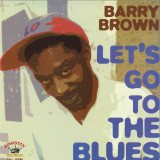
Barry Brown one of reggaes vastly overlooked talents. His militant conscious style has over time lost none of its appeal. Truly one of the sweetest roots vocalists to come out of Jamaica.
Born in 1962, Kingston, Jamaica, he cut his musical teeth working under producer Bunny Lee. Their first release was a track called ‘Girl You’re Always on my Mind’, although a minor hit, Bunny Lee saw his potential and was rewarded with his 1979 cut ‘Step it up Youthman’ which became a hit and has become a roots classic, leading to an album of the same name. The late 70’s was a great period in Barry Brown’s career and its from this period that we have culled this set of tracks. Straight from the master tapes some of his finest moments and some unreleased gems that we believe should be heard. A great set from his timeless 'Trying Youthman' a tail of struggling times in the heart of Kingston Jamaica.
His rastafarian inspired chants 'Stop Them Jah Jah','Give Thanx and Praise','Natty Rootsman' and 'Lead Us Jah’ work alongside socially charged cuts as 'Politician', 'Big Big Pollution' and 'Mr Money Man'. As with all his tales and inspired lyrics they are put across in such a tuneful way that like all the best songs that carry a message can be remembered also through the strength of the song.
As with many of his artists Bunny Lee encouraged him to go into self-production, and after a time spent with producer Linval Thompson ‘Separation’, and Sugar Minott ‘Things & Time’, he did just that and produced his first release ‘Cool Pon Your Corner’ in 1980 followed in 1981 by ‘Problems Get You Down’.
We hope this release will find a place in your collection and remind us of the talent of Mr Barry Brown. If somewhat overlooked, but certainly now not forgotten. Let’s celebrate with the man and go to the blues one more time....
Following his debut contribution to the label's catalogue this year via the Midnight Shift x Voitax ,"Mothership" compilation, (a contribution saw the artist paired with Veronica Maximova) the Brighton based producer L/F/D/M, also known as Richard Smith, is the latest to join the catalogue on Voitax. Having pushed the boundaries of his own music, Smith managed to release an impressive amount of records throughout the last years and has perpetuated his sound on cult labels such as Cititrax, Midnight Shift, Optimo Trax, Ecstatic and Clan Destine Records. The British producer now returns to Voitax with his "Mutual Autopsy" EP - a strong four-tracker that is characterised by Smith's undenably grainy lo-fi signature. The whole package is armed with heavyweight kicks, bloating basslines and crunchy, percussive patterns, that he perfectly crowns with some memorable and catchy synth lines. The former art student, as well as one half of Bronze Teeth, shows once again his ability to modulate his way into the abstract, while keeping it groovy and warm and firmly secures himself in the ranks with the techno avant-garde.
Daniel Maunick returns with a new EP, Musica Encantada via Far Out Recordings. Continuing the theme of his debut album Macumba Quebrada – which saw support from the likes of Moodymann, Ron Trent, Gilles Peterson, and Benji B – Maunick draws on the deep-rooted Brazilian influences from the many years he has spent in the country, producing records with Azymuth, Marcos Valle, Sabrina Malheiros and Ivan 'Mamão' Conti.
The bossa-jazz house smash ‘Black Magic’ stays exclusive to the vinyl, while the percussive deep-house roller ‘A Chance To See Again’, the tight and groovy ‘Hurt Feelings’, and the slow-mo Brazilian Balearic ‘Africana’ will all see a limited vinyl and digital release on the 23rd October 2020.