
également disponible
Black Vinyl[28,78 €]
Black Vinyl[28,78 €]



Toko's in-house all-star Si Brad brings forth three fresh jams for the long running UK institution, ensuring record bags are festival fit and nightclub-ready for party season.
Opening with a glitzy, contemporary disco jam, 'Doublestar' provides wide-screen glitterball action with a dazzling instrumental track, busy with key changes and chord progressions that'd make Patrick Adams blush. Sure to have fellow peers like Another Taste and Perpetual Singers checking their wing mirrors, the track is rich with musical decadence - orchestral strings, punchy synth licks and frenetic live bass all shining through this highly dynamic arrangement.
'Compress' moves swiftly into beefy house territory; Si's patented full fat, cushion soft bottom end providing just the low frequency support for a wide array of warehouse-ready bleeps, vocal snips and rave motifs set to cause a whole manner of chaos and confusion come 2AM in the club. A master of functional intricacy, Brad's multi-layered compositions thread together more elements than other producers would care to consider, manifesting almost effortless and involuntary body movement which belies the complexity of the track and is sure to have the dancefloor in a spin.
Concluding with a beautiful piece of Balearic-boogie-beatdown, and with Attaboy muscling in on proceedings; 'Faro Sunset's dreamy and expansive moods cascade over a loose, conga-laden groove glued to the spot with a rugged b-line. Instantly conjuring memories of grilled calamari and poolside play, and sure to garner repeat plays across the familiar party paradises of the Adriatics and beyond; it finds the crew dialling into a deliciously languid vibe that's in contrast to the immediate urgency of the preceding tracks yet retains, assuredly, the sonic trademarks of the producer's hand.
Another unmissable addition to Toko's storied catalogue!

Der norwegische Saxophonist Bendik Giske steht an der Schwelle zu seinem dritten Soloalbum und kennt sich selbst gut. Mit seinem neuen, selbstbetitelten Album befindet er sich in seiner Blütezeit als Künstler: selbstbewusst in Bezug auf seine Stimme und seine Fähigkeiten, beflügelt von Kritikerlob aus allen Ecken - einschließlich zweier norwegischer Grammy-Nominierungen - und einer Welle von Zuhörern überall. Mit der Wahl von Beatrice Dillon als Produzentin des Albums - die britische Elektronikmusikerin ist eindeutig eine Weggefährtin in der Praxis des originellen ästhetischen Ausdrucks - ist ihr Einfluss unmittelbar und deutlich spürbar. Gemeinsam entfernen sie eine Schicht des Melodismus und konzentrieren sich auf Muster und Rhythmus, um eine andere Dimension seines faszinierenden Sounds hervorzuheben. Da er wieder mit Einzelaufnahmen arbeitet, ohne Overdubs, nur mit Saxophon und seinem Körper, sind der hallige Raum und der liebliche Glamour verschwunden. Für Giske kommt das Ergebnis einer musikalischen Nacktheit von ganz vorne gleich - jedes Detail, jedes Röcheln und Schnaufen ist hörbar, nichts wird verdeckt, nichts ästhetisiert. Die Leute schauen vielleicht weg, wenn es nicht so schön ist, aber was übrig bleibt, fühlt sich präsenter und stärker an. Es ist konfrontativ, verlangt mehr Aufmerksamkeit, aber durch seine Körperlichkeit - man kann seinen Körper in der Musik hören und fühlen - versetzt es einen in einen Flow-Zustand, irgendwo zwischen Ekstase, Hochgefühl und spirituellem Erwachen. Es ist sehr menschlich, aber es gibt auch eine starke Spannung - die es immer geben wird, wenn man um Existenz und Gültigkeit kämpft - elegant illustriert durch Florian Hetz' eindrucksvolle Fotografien des Künstlers zu der Veröffentlichung. Zum Teil ist Giske von Judith Halberstams The Queer Art of Failure inspiriert. So sehr er auch von seiner Ausbildung und Teilnahme am Umfeld des Jazz-Konservatoriums profitiert hat, führte ihn sein Weg doch weit über dessen Grenzen hinaus. Die Arbeit an diesen neuen Erkundungen mit seinem Instrument war ein zehnjähriger Prozess, in dem er das, von dem er wusste, dass es letztlich nicht passte, abstreifte und das klangliche Territorium seiner gelebten Erfahrung fand. Daraus entstanden Systeme, die Studien von Tempo und Proportionen ermöglichten, ein Ausgangspunkt für einen immersiven improvisatorischen Ansatz, der jahrelange musikalische Erkundungen abbildet. Es ist der Klang von sozialer Emanzipation durch den meditativen Puls und die Geschwindigkeit der Zirkularatmung und den Tanz des Körpers, insbesondere der Finger, der Zunge und der Lippen. Giske weiß, dass Musik ein mächtiges Werkzeug sein kann, um Menschen zusammenzubringen und Ideen zu finden, und die Langlebigkeit seines Projekts ist vor allem ein Aufruf zu Fürsorge, Zusammengehörigkeit, Geschichtenerzählen und der Fähigkeit, sich für eine gemeinsame Sache zu versammeln. In aller Ernsthaftigkeit ist BendikGiske ein Vorschlag für Wahrhaftigkeit und Existenz, ein Raum für jemanden, der sein tiefstes Selbst ausdrücken kann.

A genre-defying Afrofuturist manifesto from Uganda. Producer,
dancer and choreographer Faizal Mostrixx"s singular vision of
East African electronic music is a lush sonic tapestry of
polyrhythms, modern dancefloor styles, amapiano, Nile basin
ceremonial chants and Pan-African field recordings. A stalwart
of the explosive Kampala electronic music scene Mostrixx has
collaborated with the Nyege Nyege collective appearing at both
the African and European editions of their festival. Mutations is
Faizal"s second full length album, following close on the heels of
his acclaimed digital EP Transitions (May 2022 / Glitterbeat). In
their review of Transitions, The WIRE noted: "If today"s currents
in East African electronic music have a more mainstream
destiny, this might be how it starts."

ALTERNATE COVER[27,52 €]
Honour's debut album is a ligament stretching from Lagos to London and to New York, curling across the diaspora and brushing the darker hues of blues, hip-hop, free jazz, ambient, gospel with Christian mythology and Yoruba folklore. As cinematic as it is painterly, Alàáfíà is a meditation on themes of life, death and love that pulls inspiration from the unexpected poetic profundity of casual conversations, field recordings, literature, ephemera, or personal archives. The result is an impressionistic vision in Black and Blur that both exhausts and implicates language_substantiating a mythos proposed by Fred Moten that sublimates boundaries between everywhere and nowhere; history and the present; the individual and the universal. Alàáfíà delineates a gothic landscape cut by overdriven beats, swooping orchestral blasts, choral bursts and ear- splitting fuzz, where the fleshly and spiritual realms commune. Dedicated to Honour's late grandmother, the title track began to take form after their last embrace and remains steeped in her influence and spirit_a tape-saturated composition that starts in Lagos and ends in London's smoke-stained cityscape, the song's dream-like quality developed out of the artist's grief and PTSD coping with this loss. Beneath the stretched guitar drones and stuttering loops, their grandmother's shared faith bubbles to the surface. "When Angels Speak of Love," borrows its title from two works by Sun Ra and bell hooks, respectively. Sculpting echoes of praise music into disorienting spirals perforated with syrupy DJ Screw-inspired breaks and sharp splinters of melancholic guitar, "When Angels Speak of Love" engages a conceptual dialogue with the spirits of both late thinkers, folding them into Honour's pantheon of ancestral guides. The album's ninth track, "Giz Aard ($uckets)," is a dirge of regimented drums which anchor this somber melody as it whirls into a blizzard of heartache, uncertain if its consequence will be death or eternal joy. The album's sole lyrical offering, "Pistol Poem (Lead Belly)," begins with a darkly humorous bar, "He went thru hell and back/ came back/ 2 get the strap," that swells into a haunting allegory based on the life of Philip "Hot Sauce" Champion. A modern take on the Blues, Honour's lyrics reify the artist's status as a student of both literature and popular culture, crossbreeding the artist's clever wordplay with additional references to Richard Pryor, Robert Johnson, Kelly Rowland & Bryon Gysin. Setting core principles of hip-hop, R&B, jazz and gospel music to atemporal soundscapes and compositions, Honour crafts a record that marinates in its own knotty contradictions. The ghosts that sit on the artist's shoulders have never been more tangible than with this emotive debut.

Annahstasia kündigt ihr Debütalbum „Tether“ an, das am 13. Juni über drink sum wtr erscheint. Gleichzeitig mit der Ankündigung veröffentlicht sie die neue Single „Villain“.
Annahstasia sagt über die neue Single: „Wir alle bestehen sowohl aus Schatten als auch aus Licht. Aus irgendeinem Blickwinkel sind wir alle der Bösewicht der Geschichte gewesen, wir versuchen alle unser Bestes und verhandeln ums Überleben.“ Die Single wird von einem atemberaubenden Musikvideo begleitet, bei dem Adam Davis Regie führte und in dem die schwarze Rodeo-Community in Tulsa, Oklahoma zu sehen ist.
„Meine Karriere war eine Lektion in Geduld“, sagt Annahstasia, die ihre musikalische Sprache zwischen den Flammen der Intimität und Unabhängigkeit über verschiedene Leben, Orte und Wiederholungen hinweg kultiviert hat, verlorene und gewonnene Lieben, Erwartungen, die sich entzogen und neu geschaffen wurden. Die Nähe der aufstrebenden Troubadourin zur Liebe für und von anderen, in der Gesellschaft im Allgemeinen und tief in sich selbst, leitet den Geist ihrer gefühlvollen, poetischen Folk-Songkunst. Die Liebe ist die elementare Konstante neben ihrer unverwechselbaren Stimme, die die Musik der Singer-Songwriterin seit ihren ersten autodidaktischen Aufnahmen prägt, als die damals 17-jährige Annahstasia Enuke entdeckt und in die Zwänge einer Industrie gedrängt wurde, die ihre größten Stärken beinahe erstickt hätte. Künstlerische Widerstandsfähigkeit, Dankbarkeit und Hingabe haben „Tether“ hervorgebracht, Annahstasias Debütalbum, das auf dem kunstorientierten Indie-Label drink sum wtr erscheint. „Tether“ ist eine Sammlung von strahlenden Torch Songs, orchestralen und astralen Hymnen, die sich wie gelebt anfühlen und aus der menschlichen Erfahrung und dem Spektrum der Liebe stammen. Annahstasia hat die Stücke von „Tether“ langsam und mit tiefer Absicht zusammengesetzt; sie hat diese Lieder mit auf Reisen genommen, sie für Freunde und Fremde gesungen und sie im Laufe der Zeit zusammen mit ihren persönlichen Offenbarungen weiterentwickelt. „Der Song ist geschrieben, und dann muss ich mit ihm leben und sehen, ob ich wirklich glaube, was ich sage“, erklärt sie. Sie brachte ihr Material zu den Sessions in den berühmten Valentine Studios in Los Angeles mit und wurde dabei von den Produzenten Jason Lader (ANOHNI and the Johnsons, Frank Ocean, Lana Del Rey), Andrew Lappin (Cassandra Jenkins, L'Rain, Luna Li), Aaron Liao (Liv.e, Moses Sumney, Raveena) und einer Reihe versierter Musiker unterstützt, darunter die Gäste Aja Monet und Obongjayar. Die Aufnahmen erfolgten instinktiv, nur in Live-Takes, um das Gefühl des Raums und die Gemeinschaft der Musik einzufangen. Das Sequencing war ebenso essenziell; sie kam zu einem Fluss mit wechselnden Energien und ergreifenden Bögen. Die Instrumentierung schwillt an, mal zurückhaltend, mal üppig, und durch jedes Arrangement klingt Annahstasias Stimme wahrhaftig, offenherzig und frei. Lyrisch umarmt Annahstasia die Nuancen der Poesie und lädt die Zuhörer ein, sich auf die bedeutungsvollen Worte einzulassen, ob sie nun über Romantik oder soziale Konstrukte sinnieren.
“A once-in-a-generation vocalist writing haunting love songs” – NME
“Annahstasia’s grace and wisdom promises to leave a lasting impression this year and beyond.” – Clash
“Her flawless voice draws you into a world of feeling, whilst her beautiful, naturalistic songwriting spellbinds you into staying.” – Wonderland

It’s time. Miami’s son, Nick León, is set to release his highly anticipated album “A Tropical Entropy” en su casa, TraTraTrax. After two #1 tracks of the year, “Xtasis” and “Bikini,” Nick expands his "Arquitectronica" sonic universe to an exploration of decay, disillusionment, and psychedelia.
Inspired by Joan Didion’s novel ‘Miami’ and his unique energy, as well as altered states of consciousness—both chemically induced and sleep-deprived—the album reflects León’s personal experience of witnessing life and love fall apart against the backdrop of a crumbling society. The album is a manifesto from start to finish featuring stellar collaborations with Ela Minus, Casey MQ, Erika de Casier, Xander Amahd, Jonny from Space, Esty & Mediopicky, and Lavurn.
You'll find hazy tracks for the body and the mind; tracks to dedicate and feel deeply; tracks for heartbreak and tracks with the promise of future love. You will find themes of memory, sleep deprivation, decaying wildlife, and the suburban still life of Florida. “A Tropical Entropy” captures the haunting feeling of watching life unfold like a broken video recording—frozen in the orange hue of a never-ending sunset, signalling the final days of an apocalypse. In the meantime, León and TraTra will continue to establish their influence on the global circuit and their mission to keep releasing edgy music that connects la mente con el qlo.

The second installment in the SEMPLATE series arrives with force, presenting "Clones" — four-track EP by British duo Evasion & Conman. Run of 200 copies on transparent red / black splatter vinyl. Across the record, Evasion & Conman navigate the spaces between drum and bass, jungle, and breaks, crafting a sound that is both raw and futuristic.
The journey begins with A1 “Closure”, a heavy workout at 165 bpm, driven by pounding drums and a sparse, stripped-back propulsion. On A2 “Nashi” at 147 bpm, unveil perhaps the most lush cut on the EP — a rolling jungle track rich with textured breaks and atmospheric washes. Flipping to the B-side, B1 “Acid Reflux” sits at 140 bpm, swirling with eerie synths and snarling bass that push into darker territory. Finally, B2 “Clones” fires off at 170 bpm, delivering a vision of futuristic broken drum and bass: fractured rhythms, stark bass hits, and cybernetic touches.

As Dustin Zahn's Enemy Records celebrates its 20th anniversary with a string of special releases, Marcal returns once again with 4 new signature style tracks. The EP demonstrates further refinement of Marcal's shamanic tribal grooves that everybody knows and loves, along with an artistic progression towards weirder and deeper sonic territory.
The vinyl starts off with "Swindle," a powerful and unstoppable peak time track emphasizing groove and tension above all else. "Two Become One" completes the A side with a slightly more mellow and delicate vibe that will 'lock in' just about any
dance floor.
The B side kicks off with "Blessing," a track comprised of rolling mysticism and unrelenting rhythms. It's classic Marcal in top form. The vinyl ends with what is possibly Marcal's strangest and deepesttrack yet, "Perpetuity Wing." The track invites listeners into a lucid dream state via ethereal vocals and hypnotizing percussive work.


5 Mag has long been a bastion of real house authority, a Chicago staple that now marks two decades of tastemaking with its first-ever vinyl release. The EP comes on Rima and features a trio of unmistakably talented and rightfully revered artists, starting with raw-as-you-like hip-house master Mike Dunn. His 'Don't Let Love (Git Cha Down)' is a laid-back groove topped with percussion and imbued with machine soul. Jamie 3:26 & Danou P offer the laidback vibes of 'Keep On' with its old school chords and smooth vocals. Roy Davis Jr closes with 'Atmospheric Flight', which is another roomy sound with loveably lazy pads and percussion. Timeless stuff.
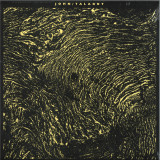
If there is one person, who has been causing a stir on the international club circuit recently, it is Barcelona's John Talabot. Already his debut “My Old School“ (which is meant literally by the way) on Permanent Vacation in 2009 and shortly after that the single “ Sunshine”, which he put out on his own Hivern Disc imprint, made him one of the most promising musicians of the Spanish electronic scene. And those two releases also already set the mark for John Talabot’s unparalleled music: raw, loopy, heavy on the kick drum, sample based, moderate on the tempo, distorted on the drums and light years away from the clean and ever revolving house sound of today. This unique style which also blends influences from afro beat, Detroit techno, Chicago house and cosmic disco, but also northern soul or the energy of Flamenco, immediately turned some heads around. James Murphy, Âme and Aeroplane started including Talabot music in their sets like it was the most natural thing. However - and this is quite rare - he not only gained legions of fans in the house and disco community, but also amongst the leftfield pop and indie rock followers. NME and Resident Advisor both had “Breakthrough“ features on John Talabot and he can be proud of a “Best New Music“ dubbing on
Pitchfork. (Being rather elusive on showing his face in magazines or the web it also came to some funny rumors that John Talabot was the alter ego of a well-known techno producer from Detroit).
At the same time he drew the attention of like-minded artists like James Holden and Luke Abott from Border Community, Blondes or Delorean, which lead to a bunch of fertile collaborations: Luke Abbott and Blondes remixed Talabot’s “Sunshine“ single , John Talabot remixed a track by Delorean and vice versa Delorean’s Ekhi contributed vocals to the track “Journeys “ on John’s album). Another example is the Young Turks Label (home of Jamie XX, Holy Fuck, El Guincho or SBTRKT ) on which he released the “Families“ EP in 2010. It was praised beyond limits. Pitchfork for
instance hailed: “… where pop and house influences sweetly buffer up against one another to provide an unyielding sense of elation“ and even brought Talabot a comparison with artists like Four Tet or Caribou.
While staying true to his sound, John Talabot has nevertheless shown a constant evolution as a producer since his first release. He has traced a solid musical path that has turned him into one of the big references of European House and has made him also a highly in demand Remixer (for the likes of The XX, Francesco Tristano’s “Aufgang” project, Shit Robot on DFA, Thaiti 80, Joakim or Teengirl Fantasy to name just a few ).
A progression that now crystallizes in “ƒin”, his first full-length album for Permanent Vacation. A record, in which the Barcelona mastermind sets aside the danceable immediacy to expand his stylistic palette more than ever. For that purpose, Talabot melts all the elements that have constructed his distinctive sound until now and makes them emerge from a new perspective, in which the construction of complex song structures, intricate rhythms and superpositions of ever-evolving melodies and atmospheres pick up the baton of the “a kick-drum and a sampler” philosophy of his initial productions. The result brings us 11 tracks (we should call them songs really!) dominated by dark ambiances, gaseous textures and bittersweet moods that, above all, reveal a kind of vivacity that’s really hard to find in contemporary electronics. “Fin” is far from being a track collection. From the majestic opener “Depak Ine“ to it’s solemn ending with
“So Will Be Now“ , one of the two tracks that features Talabot’s soul and label mate Pional, each song traces an overall dialogue with the rest, culminating a highly emotional journey through Talabot’s always compelling and unique musical vision.

múm are returning with a new album on Morr Music. »History of Silence« is the first full body of work by the Icelandic collective since 2013's »Smilewound« and their seventh studio album to date—recorded, deconstructed, put back together again, refined and finished over the course of two years. Vibrantly oscillating around a carefully curated palette of electronic and analogue sounds, the eight new tracks reflect the group's continuous strive to explore sonic spaces through subtle yet gripping songwriting.
For a long time now, múm have been exploring the idea of distance in their music. In the beginning, this was born purely out of necessity. Founded in Iceland in the late 1990s, the members soon began embarking on journeys across the world—collectively while touring, but also individually, exploring new places to live and create. Settling in, moving on, catching up: The concept of distance soon became an integral part of the collective's process. »History of Silence« leans into this idea, with space and time becoming indispensable pillars of the arrangements. While being coherent and structured, they echo their origins from different seasons, cities, and spaces—neatly stitched together with unparalleled craftsmanship. They breathe an overall airy and intimate atmosphere, yet resonate with the structural heft of time.
On »History of Silence« time manifests in unexpected, liberating, and mesmerizing ways. It does not move reliably forward; it drifts, takes twists and turns, even disappears completely. Electronic textures blur into acoustic sounds, voices flicker and dissolve, melodies stumble and repeat. The arrangements often feel like they’re wandering, gently resisting direction. »Our Love is Distorting,« for instance, begins with a subtle piano motif, playing hide and seek with feedback noises, digital artefacts, and lush—yet very quiet—string arrangements, before gradually forming into a distinctive song. It's a perfect illustration of múm's general approach on this album. »Mild at Heart« turns this idea upside-down, flowing freely from start to finish with moments of silence sprinkled in—serving to emphasize the musical elements. The music on »History of Silence« moves like weather: unexpected, intimate, quietly detailed. Contrasted with vivid phrases, rhythmic shifts, and small hooks, the album offers a new angle of compositional clarity and vision.
Work on »History of Silence« began at Sudestudio in southern Italy. Additional recordings were made in Reykjavík, Berlin, Athens, Helsinki, New York, and Prague. The strings were recorded by Sinfonia Nord at the Hof concert hall, Akureyri, arranged and conducted by Ingi Garðar Erlendsson, who has worked with the band for many years. The orchestral elements don’t dominate the record—instead, they surface gently, adding depth and resonance to the songs without disturbing the songs' fragility.
Contrary to what the album title suggests, »History of Silence« is a collection of bold and colorful songs, no matter how muted they might sound at times. They tickle like a feather drifting through the wind, ending up in unexpected places, stimulating long-forgotten thoughts and feelings, intimate moments of introspection. The songs move through the echoes those moments leave behind: the emotional traces of things unsaid, the weight of stillness. Offering closeness by means of distance and much-needed support.

múm are returning with a new album on Morr Music. »History of Silence« is the first full body of work by the Icelandic collective since 2013's »Smilewound« and their seventh studio album to date—recorded, deconstructed, put back together again, refined and finished over the course of two years. Vibrantly oscillating around a carefully curated palette of electronic and analogue sounds, the eight new tracks reflect the group's continuous strive to explore sonic spaces through subtle yet gripping songwriting.
For a long time now, múm have been exploring the idea of distance in their music. In the beginning, this was born purely out of necessity. Founded in Iceland in the late 1990s, the members soon began embarking on journeys across the world—collectively while touring, but also individually, exploring new places to live and create. Settling in, moving on, catching up: The concept of distance soon became an integral part of the collective's process. »History of Silence« leans into this idea, with space and time becoming indispensable pillars of the arrangements. While being coherent and structured, they echo their origins from different seasons, cities, and spaces—neatly stitched together with unparalleled craftsmanship. They breathe an overall airy and intimate atmosphere, yet resonate with the structural heft of time.
On »History of Silence« time manifests in unexpected, liberating, and mesmerizing ways. It does not move reliably forward; it drifts, takes twists and turns, even disappears completely. Electronic textures blur into acoustic sounds, voices flicker and dissolve, melodies stumble and repeat. The arrangements often feel like they’re wandering, gently resisting direction. »Our Love is Distorting,« for instance, begins with a subtle piano motif, playing hide and seek with feedback noises, digital artefacts, and lush—yet very quiet—string arrangements, before gradually forming into a distinctive song. It's a perfect illustration of múm's general approach on this album. »Mild at Heart« turns this idea upside-down, flowing freely from start to finish with moments of silence sprinkled in—serving to emphasize the musical elements. The music on »History of Silence« moves like weather: unexpected, intimate, quietly detailed. Contrasted with vivid phrases, rhythmic shifts, and small hooks, the album offers a new angle of compositional clarity and vision.
Work on »History of Silence« began at Sudestudio in southern Italy. Additional recordings were made in Reykjavík, Berlin, Athens, Helsinki, New York, and Prague. The strings were recorded by Sinfonia Nord at the Hof concert hall, Akureyri, arranged and conducted by Ingi Garðar Erlendsson, who has worked with the band for many years. The orchestral elements don’t dominate the record—instead, they surface gently, adding depth and resonance to the songs without disturbing the songs' fragility.
Contrary to what the album title suggests, »History of Silence« is a collection of bold and colorful songs, no matter how muted they might sound at times. They tickle like a feather drifting through the wind, ending up in unexpected places, stimulating long-forgotten thoughts and feelings, intimate moments of introspection. The songs move through the echoes those moments leave behind: the emotional traces of things unsaid, the weight of stillness. Offering closeness by means of distance and much-needed support.

múm are returning with a new album on Morr Music. »History of Silence« is the first full body of work by the Icelandic collective since 2013's »Smilewound« and their seventh studio album to date—recorded, deconstructed, put back together again, refined and finished over the course of two years. Vibrantly oscillating around a carefully curated palette of electronic and analogue sounds, the eight new tracks reflect the group's continuous strive to explore sonic spaces through subtle yet gripping songwriting.
For a long time now, múm have been exploring the idea of distance in their music. In the beginning, this was born purely out of necessity. Founded in Iceland in the late 1990s, the members soon began embarking on journeys across the world—collectively while touring, but also individually, exploring new places to live and create. Settling in, moving on, catching up: The concept of distance soon became an integral part of the collective's process. »History of Silence« leans into this idea, with space and time becoming indispensable pillars of the arrangements. While being coherent and structured, they echo their origins from different seasons, cities, and spaces—neatly stitched together with unparalleled craftsmanship. They breathe an overall airy and intimate atmosphere, yet resonate with the structural heft of time.
On »History of Silence« time manifests in unexpected, liberating, and mesmerizing ways. It does not move reliably forward; it drifts, takes twists and turns, even disappears completely. Electronic textures blur into acoustic sounds, voices flicker and dissolve, melodies stumble and repeat. The arrangements often feel like they’re wandering, gently resisting direction. »Our Love is Distorting,« for instance, begins with a subtle piano motif, playing hide and seek with feedback noises, digital artefacts, and lush—yet very quiet—string arrangements, before gradually forming into a distinctive song. It's a perfect illustration of múm's general approach on this album. »Mild at Heart« turns this idea upside-down, flowing freely from start to finish with moments of silence sprinkled in—serving to emphasize the musical elements. The music on »History of Silence« moves like weather: unexpected, intimate, quietly detailed. Contrasted with vivid phrases, rhythmic shifts, and small hooks, the album offers a new angle of compositional clarity and vision.
Work on »History of Silence« began at Sudestudio in southern Italy. Additional recordings were made in Reykjavík, Berlin, Athens, Helsinki, New York, and Prague. The strings were recorded by Sinfonia Nord at the Hof concert hall, Akureyri, arranged and conducted by Ingi Garðar Erlendsson, who has worked with the band for many years. The orchestral elements don’t dominate the record—instead, they surface gently, adding depth and resonance to the songs without disturbing the songs' fragility.
Contrary to what the album title suggests, »History of Silence« is a collection of bold and colorful songs, no matter how muted they might sound at times. They tickle like a feather drifting through the wind, ending up in unexpected places, stimulating long-forgotten thoughts and feelings, intimate moments of introspection. The songs move through the echoes those moments leave behind: the emotional traces of things unsaid, the weight of stillness. Offering closeness by means of distance and much-needed support.

Dutch-born, Belgian-based artist Chantal Acda has been releasing her music and touring internationally since 2006. Her impressive and eclectic catalog includes numerous band projects, collaborations, and solo albums. The 2024 album Silently Held, recorded with The Atlantic Drifters, is nominated in 2025 for an Edison Award in the Netherlands. Her upcoming album, The Whale, will be released on September 19, 2025, followed by an extensive European tour. The album was produced by Chris Eckman (The Walkabouts) and recorded with her live band, which she has been performing with for over a decade. The songs were co-written with band members Eric Thielemans, Alan Gevaert, Gaëtan Vandewoude, and Niels Van Heertum.
The sound of The Whale is rougher and more rock-oriented than her previous projects, but her signature introspection and vulnerability remain at the core of the music. Singles “Heads” and “Make It Work” have received airplay in Belgium, the Netherlands, the UK, and Germany.
In the past, Chantal has recorded and performed with artists such as Bill Frisell, Nils Frahm, and members of Low, Múm, and Efterklang. Currently, she is also a member of the bands Distance, Light & Sky (with Chris Eckman of The Walkabouts and Eric Thielemans) and Isbells.

Das neue Duo Boo Boos – bestehend aus E von EELS und Kate Mattison von 79.5 – kündigt sein Debütalbum „Young Love“ für den 19. September 2025 via PIAS an. Die ersten beiden Singles „C’mon Baby“ und „That’s Not A Thing“ sind bereits erschienen und geben einen Vorgeschmack auf das nostalgisch-soulige Songwriting des Duos. Die Zusammenarbeit begann über 3000 Meilen hinweg zwischen Los Angeles und Brooklyn – und wurde zu einer einzigartigen musikalischen Verbindung. Mit BOO BOOS formieren sich zwei starke Persönlichkeiten zu einem neuen Supergroup-Projekt mit Herz, Humor und viel Groove.

Ostinato as resistance: Rafael Anton Irisarri’s landmark work reimagined. Marking the tenth anniversary of the American composer’s critically acclaimed album 'A Fragile Geography', this new edition arrives renewed, both sonically and visually.
First released in 2015 (Room40) during a period of personal upheaval and creative reinvention, it endures as a testament to resilience, transformation, and the connection we hold with the places that shape us.
Written in the aftermath of a devastating theft, A Fragile Geography was born out of loss. Just days before a cross-country move to New York, Irisarri’s entire Seattle-based studio was wiped out. Instruments. Recordings. Archives. Gone without a trace. He arrived on the East Coast to an empty room and the daunting task of starting over.
“This album wasn’t just a record; it was a lifeline,” Irisarri reflects. “It became a way to process the emotional chaos that followed: uprooting, instability, and ultimately, the slow, intuitive rebuilding of a life.”
Composed and recorded in the rural woods of the Hudson Valley, the album took shape in seclusion, surrounded by nature, and through a process guided by improvisation. Embracing limitations, Irisarri wove textural layers of field recordings with half-remembered melodies from his Seattle years, piecing them together like fragments of memory. Tracks like “Displacement,” “Hiatus,” and “Persistence” juxtaposed haunting stillness with restless momentum, mapping an inner terrain of grief, catharsis, and rebirth.
Among its defining sounds is “Empire Systems,” a monumental centerpiece built around a simple four-chord progression, organ textures, and guitar drones. Gradually, the track expands into layers of immersive loops and thick, enveloping distortion that wash over the listener like a rolling wave. Often cited as the album’s most majestic passage, it captures Irisarri at his most sonically ambitious. With a harmonically saturated structure crafted from restraint and repetition, it remains one of his most recognizable compositions: an exercise in the art of maximal minimalism.
From the outset, “Reprisal” received praise from BBC’s Mary Anne Hobbs, who championed the track on her radio show. Her support played a key role in introducing Irisarri’s work to wider audiences and solidifying his place within the lineage of electronic, drone, and experimental sound artists. A slow-burning elegy, the piece emerges from a haze of distortion and sub-bass, with dense, unrelenting drones carrying a sense of mounting tension. Just as it seems to collapse under its own weight, flickers of guitar emerge like distant light through fog. It’s a meditation on dissonance, resolve, and the elusive possibility of release.
The closing track, “Secretly Wishing for Rain,” is steeped in saudade: a longing for Seattle’s dour grey skies, lush green landscapes, and desaturated sunsets. Through it, Irisarri mourns a vanished chapter of life bound to the city, a time documented in scattered mementos and cherished collections, now permanently gone. A reflection on what could never be recovered: an era lost to time. Julia Kent’s looped cello motifs added a melancholic warmth to the track, marking the first collaboration between the two artists and sparking a musical dialogue that would keep growing in the years that followed.
More than a career highlight, A Fragile Geography has laid the foundation for Black Knoll studio, which Irisarri rebuilt from the ground up. The studio has since grown into a creative hub for countless projects, with Irisarri engineering records for iconic music figures like Terry Riley, Ryuichi Sakamoto, William Basinski, MONO, Devendra Banhart, Grouper, Emeralds, Steve Hauschildt, Julianna Barwick, and many others. Carried by its lasting influence, the album has quietly captured the ear of a younger generation, its sound and emotional arc finding new listeners in unexpected corners.
The album’s new visual language was reimagined in collaboration with Mexico City–based designer Daniel Castrejón. Irisarri captured ghostly images at Gaztelugatxeko Doniene, a historic coastal site in Bermeo, Euskal Herria. Castrejón then treated the photographs with distressed textures and spectral overlays. The final artwork channels the rugged, elemental forces that shaped both the music and Irisarri’s aesthetic, renewing his ties to ancestral ground inspired by the Basque homeland of his bloodline.
Mastered by Stephan Mathieu with exceptional attention to detail, this anniversary edition uncovers every nuance in the sound design, enhancing clarity and presence. With each listen, new elements emerge, inviting discovery and reconnection.
“I don’t experience this album as a document of grief anymore,” says Irisarri. “I hear adaptation and I'm reminded that when everything falls apart, something meaningful, maybe even beautiful, can emerge.”
