
Buscar:d func
12
Sharp Fragments marks Stenny’s second full-length release on Ilian Tape, a tense exploration of spatial and material disruption. Each track functions as a fractured, self-contained unit, yet together they form a wider language where interference becomes structure. Across twelve pieces, the record shifts through evolving states, tracing a path defined by transition rather than destination.

Thama Series returns with its fourth release, Ikigai, the new EP by Vladw. Four tracks that balance power and clarity within a deep narrative, where LFO-driven synthesizers and intense breakdowns shape a functional and atmospheric journey.
Each piece stands out for its clean structure and a contained energy that unfolds with precision throughout the sonic progression.
The EP is completed by a remix from Orbe, who reinterprets one of the cuts with his distinctive approach, delivering a strong and impactful result.

TSSRCT returns with its second release, delivering a four-track EP by UFO95 that dives deep into minimalist, contemporary techno. Focused on raw textures this record explores a territory where noise meets precision. Punchy drums collide with saturated percussions, while delay-heavy treatments carve space into the mix, creating hypnotic tension across each track. It's a stripped-back yet forceful statement -- functional and experimental in equal measure.
In an intricate lattice of ever-evolving electro exploration, Samuel Van Dijk is back on Delsin with a new EP. Under his VC-118A alias, the Helsinki based producer presents a richly textured, cinematic strain of machine funk that reaches beyond dancefloor functionality to test the expressive potential locked within electro's crisp rhythmic framework. There's a melancholic mood hovering over Avian as Van Dijk allows a subtle edge of distortion to creep into his flickering drum programming. The end result is a pensive sound that touches on the moodiness of orchestral composition, unfurling patiently across extended run times without losing focus. With his characteristic attention to detail and broad dynamic range, Van Dijk continues to offer up a sophisticated, emotionally-charged strain of electro like no other.

9
funcionário delights in the freedom of creating freeform music for the first time in his career. On “horizonte”, he loosens the reins, his sound follows a wavy, organic structure rather than a rigid, formal one. If it feels freer and more colourful, that’s because it truly is.
Eight years ago, when we first encountered his work, he was composing soundtracks for imaginary video games and crafting sonic landscapes that felt like destinations for sci-fi anime characters. With “Cavalcante” (2022), he broke away from that past. It marked a turning point, he was ready to explore a “fourth world” in both sound and concept. The feedback was overwhelming.
Three years later, “horizonte” marks another evolution. He sends us music regularly, but this album stood out immediately. It felt right: more synth-driven, more open to improvisation. As he put it: “It’s like using oil pastels for the first time and discovering new possibilities. In a way, I’ve found new ways of creating using the same colours.”
Listening to horizonte is like waking up from a dream. Again and again. The opening track, “nascer”, suggests a new dawn, but it’s in “pássaros” that the vision fully takes flight: less processed, more raw, yet still detailed and expansive.
Finding new ways with the same colours has been his quiet mission all along. What’s new here aren't the tools, but the feeling. The movement. The invitation to travel with him. You can hear - and feel - his sense of wonder. Every sound radiates joy. Every moment sparks a new thought. The music moves quickly, but breathes slowly.
Tracks like “renascer” and “o caminho do regresso” echo the spirit of late-70s/early-80s Vangelis, in deep reverence. And just as you approach the end, “fantasma” arrives - a stunning closer, reminiscent of Eno’s “An Ending”. By then, it’s clear: the “fourth world” is behind him. funcionário has moved on. To where? We’re about to discover.

14
Recital releases The Holy Restaurant, the new full-length album by Derek Baron, and their first solo LP since Curtain (Recital, 2020).
The album is built from years of miniature transcriptions of improvisations, functioning in many ways as a sister to Curtain. Half-thoughts and mistakes are revisited, gilded, and illuminated. The floorboards of the album are laid with piano, organ, string pads, while serrated accruements (distortions, flourishes, and recording interferences) step and drop overhead. The resulting conflux, as Baron notes in the accompanying booklet “becomes the point and the problem to explore.”
The second track “Oven Girls” opens with us galloping on a horse in some video-game meadow on a bed of MIDI strings. Abruptly, a helicopter soars over us and we transition to a latticed guitar and woodwind exploration. The album rolls on in this fashion, juxtaposing musical half-sentences within a museum of sounds rag-picked from history and daily life. Emotional interviews with Midwestern friars who build and sell caskets are set against gothic piano and guitar duets. On “Music in the Casket,” A disorienting and hilariously epic guitar solo erupts. The penultimate titular piece, “The Holy Restaurant,” sets a text written by Baron’s grandfather. A small chorus voices his words, echoing the humanistic storytelling of “Blue” Gene Tyranny’s A Letter From Home. Under sunlit piano progressions, a fleet of smokey trumpets emerges.
Running throughout the album is a series of “traces”: short melodic phrases painted over again and again with different real and MIDI instrumentation. The “luxurious asceticism of doubling” as Baron puts it. They explain, “Part of the allure for me is that the ‘original’ material is itself kind of thin, sketchy, meaningless, maybe calling attention to itself only by way of a felicitous mistake. Hearing, transcribing, and learning what was basically only ever played first on accident becomes the guiding concern.”
The album’s shifting, variegated forms and voices pass quickly; the record feels both comforting and elusive, suitable for any hour of the day.
The Holy Restaurant features guest players Ed Atkins, Lucy Liyou, Quentin Moore, Emily Martin, Dominic Frigo, Jacob Wick, and several of Baron’s family members. It is released in a limited edition vinyl pressing of 200 copies, accompanied by a booklet of effusive program notes by the composer, alongside an assemblage of photographs, scores, and artwork.

Edward J delivers big on IDM, jungle and breaks, combining fast, intricate percussion with deeply emotional melodic flourishes. Formerly producing under the alias Generate, he has remixed artists such as Kettel and Roel Funcken and appeared on compilations for respected labels like Kaer'Uiks. Surprisingly, despite years of activity, this marks his first EP. Though the highly advanced, technical and detailed sound is anything but that of a debutant.

- Transbordar
- Ponto De Vista
- Orbitando I
- Lunatic Garden
- Orbitando Ii
- Caminhos
- Luz
- Chegada
- Roxo
- Dejavú
- Terra Vermelha
- Garrafas
- Deságua
Recorded in Switzerland and mastered in Madrid, on Deságua Mello blends classical harp training with experimental techniques, creating a rich sonic journey that pushes the boundaries of the instrument. Brazilian harpist and composer Marina Mello presents Deságua, her solo debut released by the Peruvian label Buh Records. Based in Zurich, Mello has developed a unique and expressive approach to the harp, combining her classical training with a deep exploration of the instrument's sonic possibilities. Deságua is the result of this process: an intimate and expansive work that traverses sonic landscapes rich in contrast and texture. In the artist's own words, this album is a synthesis of material developed through her musical practice. The title refers to the Portuguese word that describes the moment a river flows into the sea. This concept guides the album's sonic narrative, in which each piece functions as a tributary flowing into an immersive and unexpected listening experience. From bittersweet whale-like sounds to destructive, unsettling, and shattering noise provocations, she explores, senses, and transcends the musical boundaries of her instrument. The album presents a wide range of sounds and styles, yet maintains a strong internal coherence through its technical and conceptual exploration of the harp. Mello performs on both lever and pedal harps, employing a range of non-traditional techniques: preparing the instrument with objects, using guitar effects pedals, detuning the strings, and using close mic recording to capture the subtlest sounds and the shifts that lie between them. The result is a collection of pieces that move between the melodic and the dissonant. Deságua does not shy away from repetition, noise, or raw textures. Instead, it embraces them fully, situating the album at the crossroads of contemporary music, improvisation, and electronic experimentation.

10
Mister Water Wet returns to Soda Gong with "Things Gone and Things Here Still," an album that radically expands the project’s purview while preserving the homespun warmth and oblique tactility that have long defined Iggy Romeu’s work. Where earlier records tilted toward the dusty swing of sample-based beatcraft or spectral minimalist jazz, here Romeu opens the frame to a more ensemble-minded approach, inviting a stellar cast of supporting musicians, including SG alumni Memotone and K. Freund, into the fold.
The result is an album that feels both broader and more intimate, with live instrumentation such as piano, strings, and reeds woven into MWW’s signature lattice of hand percussion, production sleights, and slippery time signatures. Acoustic and electronic textures bend toward each other like plants angling for the same light: bowed strings blur into vaporous pads, brushed drums scatter under riffing guitars, a horn phrase lingers in the same space as a cracked cassette loop.
A tension between decay and presence - the “things gone” and the “things here still” - runs throughout the record. At times, the music evokes a chamber session refracted through waterlogged tape; at others, it recalls the afterimage of a hip-hop instrumental slowed into an oneiric haze. In the world of MWW, memory functions less as nostalgia and more as a living fabric - mutable and resonant. "Things Gone and Things Here Still" finds Iggy Romeu at his most expansive, offering up a generous record of open spaces and porous boundaries.

We're proud to present our third vinyl release, showcasing one of the rising talents in the contemporary electronic music scene.
M.I.T.A. lands on Chapeau Music with a 4-track EP that moves between straight grooves and refined sampling work.
The title track, 'Money Driven', goes straight to the point: groove, cadence, and a punchy vocal, essential elements finely designed to lock the dancefloor into motion. The A-side is completed by a sharp and highly functional remix by Elisa Bee.
Flipping the record, 'My Love' delivers a filtered, groove-heavy anthem, radiating a rush of joy while maintaining a tight, practical structure.
Closing the record, 'Movie Scene' finds M.I.T.A. at his creative freedom peak, where delicate melodic fragments and high-pitched vocals float above the groove, perfectly balancing the rhythm.

10
Young Gun Silver Fox are the captains of AM Waves, setting sail towards an isle where melodies soak the shoreline and grooves sway like palm trees. Their route traces a natural progression fromWest End Coast, an album that cast Andy Platts (Young Gun) and Shawn Lee (Silver Fox) as musical virtuosos of SoCal-infused pop. AM Waves does more than duplicate the perfection of West End Coast. It improves it.
Recorded at The Shop in London and Roffey Hall in the English countryside, AM Waves burnishes the blend between the duo's modern aesthetic and their sumptuously crafted homage to '70s-styled pop, rock, and soul. "This music hits a certain spot for me personally that nothing else quite does," says Shawn, who produced the album amidst his projects for Saint Etienne, Shawn Lee's Ping Pong Orchestra, and several other acts. "It's real high-caliber music. It's easy and breezy to listen to but it's really hard to make. Every aspect is A game."
The A game behind AM Waves fuels 43 minutes of Young Gun Silver Fox in peak form. "AM Waves is much more instinctive," says Andy, whose penchant for writing irresistible hooks and melodies also shapes his role as lead singer and lyricist/composer for the band Mamas Gun. "It's more vivid. You can see the clarity to the colors of AM Waves whereas West End Coast is slightly more impressionist, as it were."
Originally issued as a single in September 2017, "Midnight in Richmond" is the anchor of AM Waves. "I hit one chord, which I'd never played before, and the song sort of wrote itself," notes Shawn. "It was intuitive. In many ways, the primary function of what I'm doing is trying to find that chord that opens a door and takes you someplace else. Those chords have magic." Andy embellishes the song's appeal by nimbly juxtaposing wistful emotions with a sun-kissed melody, his voice evoking richly drawn memories. The qualities that make "Midnight in Richmond" an instant classic abound throughout the album.
"Lenny" and "Take It or Leave It" spotlight Andy's versatility as a songwriter. The former was inspired by a dream he had where Lenny Kravitz owned a bar. "It was surreal," he says. "He was polishing the glasses and just serving me hit after hit." Like swimming through moonshine, Andy languorously savors every syllable in the song. "Take It or Leave It" is pure pop bliss. "That was one of those songs that fell out in half an hour," he says. "I had everything and it was done." Shawn adds, "It's such a perfect song in itself. When I listen to it, it's like you've created a record that already existed."
Young Gun Silver Fox introduce a five-piece horn section on "Underdog" that literally trumpets the song's protagonist. Shawn affectionately dubbed them the "Seaweed Horns" in honor of the Seawind Horns, an LA-based unit that recorded with powerhouses like Michael Jackson,Rufus & Chaka Khan,and Earth, Wind & Fire during the late-'70s. Andy explains, "The horns grab another hue of the west coast sound, which is the starting point, but it's also maybe the point where we're injecting a little bit more of ourselves and some outside colors into the familiar west coast palette."
A bounty of treasures course through AM Waves' ebb and flow. "Mojo Rising," which the duo penned with Rob Johnson, is a veritable retreat to paradise. "Sky-bound, heaven sent / Way above the clouds watching shootingstars descend," Andy sings, mirroring the music's celestial undertones. Sensuality contours the notes on "Just a Man," a song that basks in the allure of a woman who leaves "footprints on the water" while "Love Guarantee" is festooned with the Seaweed Horns. "I wanted to bring more of that R&B slickness into the mix," Shawn notes about the latter track. "We hadn't done a tune with that sort of groove." Similar to his work on "Underdog," Nichol Thomson's intricate horn arrangement on "LoveGuarantee"exemplifies another distinction between AM Waves and its predecessor.
"Caroline" occupies a special place on AM Waves, beyond spawning the album title. It tells the story of Radio Caroline, a pirate radio station that broadcast from an offshore vessel during the '60s and '70s. "They played the music that kids wanted to hear, whether it was the old stuff or cutting edge stuff," says Andy. "'Caroline' is about Radio Caroline's eventual capture." Complementing Andy Platts' deft wordplay, which draws parallels between radio airwaves and the station's literal home on the ocean, Shawn Lee layers nearly a dozen different parts on "Caroline," showcasing the vastness of his musicality. "I loved that track as soon as I heard it," Andy continues. "It's a beautiful fusion of me and Shawn."
The Seaweed Horns joinYoung Gun Silver Foxas they detour to the dance floor on "Kingston Boogie." Shawn explains the track's genesis, "I was thinking, what have we not done yet We definitely should get an AOR disco thing happening. I quite like disco. The beat is so metronomic that it allows you to be really sophisticated on top. 'Kingston Boogie' just laid itself out. I call it 'midnight disco.'" With a nod to "Lenny," Andy Platts sets "Kingston Boogie" back at Lenny's Bar, this time revealing a detail or two about its mysterious proprietor as he pours sweet wine and moonshine.
In a sense, AM Waves ends with the beginning. Even before there was Young Gun Silver Fox, there was "Lolita," the first song Andy Platts and Shawn Lee wrote together and a crowd-pleasing staple of the duo's live sets. The tale of a femme fatale who harbors a secret was recorded for West End Coast but instead furnished the B-side to "Long Way Back" as well as a bonus track on the North American edition of the album. Despite the song's checkered trajectory, its infectious chorus sparked the brighter, more buoyant orientation of AM Waves.
Like the moon pulling the tide, Young Gun Silver Fox are a magnet for good songs. "We're both so obsessed and constantly interested in music-making," says Andy. "We're both thinking about it all the time. When you know you have an accomplice with you that's the same as you, it's very liberating. Suddenly, worlds of color start to appear." Indeed, AM Waves is elemental in its power to induce pleasure. Dive right in.
Christian John Wikane
(New York City / February 2018)

4
RYC presents a four-track journey at the junction of their respective universes, teleporting us straight to a propulsive, mind-expanding headspace as we're invited to explore sonic territories still uncharted and harmonics yet unravelled. The collaborative A-side begins with the dynamic title-track, 'Cross Passage', a proactively future-facing number packing the kind of utopian drive that used to define the original techno sound. A highly cinematic narrative boasting Detroit-style vision and epic breath, 'Cross Passage' builds bridges between hi-tech elation and organic integration, transcending mere functionality to push back and expand the limits of techno as a deep communication vessel between the individual and the mass. Firing off like a binary script gone astray, 'Fibre Axis' takes us on a further bumpy ride across shape-shifting interfaces and blurred-out digital scapes, via abrupt pixel landslides and fractured 3D renderings. Side-B finds each producer dishing out a slice of his/her own musical idiom. Polygonia strikes first with the pulsating 'Voltage Blues' - a mesmeric roller cut from pure eerie synth algebra, boundary-pushing abstraction and surgical but experimental-leaning rhythmic assault. The result is a piece of cutting-edge techno hoodoo, ready to take on clubs with utmost abrasive swagger. Sniping a hail of rainbow-like analogue synth outpour, Wata Igarashi's solo contribution 'The Tunnel Dreams' rounds off the journey on a fiercely nonconformist note. Merging a hard-hitting main swing with 8-bit-esque audio pointillism and brooding bass undertones, the Japanese producer cuts a path of antigravitational abandon and relentless rush towards absolving euphoria, which shall leave all in the room levitating somewhere between sheer daze and love-thirsty XTC. *Clad in the sleekest cover art courtesy of designer Atact, RYCL024 is pressed to red & white marbled vinyl for you, fancy platter collectors and picky audio-visual aesthetes alike.

Gravitate, in case you didn't know, is yet another label from James Burnham aka Burnski aka Instinct. It's hard to keep up with the man's unrelenting yet brilliant work rate, but worth making the effort to do so if you like minimal, tech and garage. The latest on this fledgling project goes deep and arrives just in time for some balmy Ibiza party nights. 'Gravitate 03-1' is loopy and lazy and invitingly mid-tempo, 'Gravitate 03-2' picks up the pace a touch but is still couched in warm, roomy grooves and soul-drenched chords. The flipside brings more gritty and turbo-powered tech on 'Gravitate 03-3' then a nice silky and blissed out cruiser to close on 'Gravitate 03-4'. Four more functional but well-formed sounds from the brilliant Burnham.

- A. Roots Man Foundation
- B. Prayer For A Good Harvest
NATURAL ROOTS MUSIC, tuned to the rhythms of the Earth! A special mix by Rooing SWE from the previous Roots & Foundation (CD) release, Side A: All
Those Who Love the Earth (Roots Man Foundation). Side B: The Danjiri Festival (Prayer for a Good Harvest) in Senshu, Southern Osaka. This first 7-inch release
pays tribute and gratitude to the local area.
As a DJ, I prioritize three key points when selecting music. I'll introduce this record in relation to those points.
The first is the power of the intro. I'm always grateful for killer tunes that get the floor moving naturally. The A-side, which begins with a catchy trombone, is a
perfect example of that. Natural Roots' performance is so dark that it almost makes you forget that you're in Osaka, the city of laughter.
The second is about the lyrics. Especially in times like these, I want to share a positive message with everyone. Frontman Livity Tabasuke sings straightforwardly
about his feelings for the Earth. It reminds us of the gratitude we often forget in our daily lives. Above all, his voice is soft and soothing.
The third is the 7-inch format. If you're going to take it to a venue, nothing beats a small, light record. The older I get, the more my hips instinctively tell me to.
The dub-inspired instrumental tunes on the B-side are also fantastic, and the album's functionality continues to increase. I also appreciate the addition of the
shinobue flute, a unique instrument unique to Senshu, a renowned Kansai reggae region, which adds to the local feel.
This album, which captures all of these elements, is extremely practical for me. I'm sure I'll be using it for a long time to come. I sincerely hope that the limited
edition of 300 records reaches reggae fans all over the country.

- 1: Scene 0 - Xyl, Tiz And Ore
- 2: Scene 0 - In The Mouth A Desert
- 3: Scene 0 - Animal Gathering
- 4: Scene 0 - Prospector Left
- 5: Scene 0 - Image Superstition
- 6: Scene 0 - Second Abandoned Highway
- 7: Scene 0 - First Abandoned Highway
- 8: Scene 0 - First Time Realising The Clock Is Absent
- 9: Scene 0 - First Encounter - The Future Is Yellow
- 10: Scene - Good Calamity
- 11: Scene - Tzama As Animal
11
World of Echo unites with the confounding genius of TRii for a highly limited first time vinyl run of 2020's Music For Desert Reboot tape, first released as TRj on the TRjj Musik label and then again as a second cassette by Mascarpone earlier this year.
As with all the sounds produced within the TRjj/TRii /TRj/TRi universe, strange illusion is part of the process, and this is certainly music that befits such smoke and mirror nomenclature, a kind of gamelan Werkbund re-programmed via the isolationist sounds of DIY home electronics conceived for a film that might or might not actually exist. Consider this time-dilation rug-pulling that's well in touch with its own mythology, so much so that it's hard to think of any obvious contemporaries, but if you've ever enjoyed the minimalist murk of Civlistijavel, the private quarters confessionals of Thomas Bush's first LP or any one of Guy Gormley's projects, you'll not got too far wrong here. Is further clarification required? That perhaps misses the point, though there is a track that features around two-thirds in entitled 'First Time Realizing the Clock Was Absent' that might function as a form of instruction to the listener. Namely, where does the time go? Music For Desert Reboot might not provide the answer, but it certainly knows how to ask the question.

8
Berlin musician and DJ Nastia Reigel presents her debut solo album, Identity, on Function's legendary Infrastructure New York imprint. Following a constant output of EPs on heavy-hitting techno labels like fabric, Rodhad's WSNWG and Token, and playing regularly at the likes of Berghain, Reigel now returns with new music that pushes deep into the core of her craft. She has honed and sharpened her sound into something sleeker and more uninhibited. Identity embodies the core of Nastia's production DNA, showcasing her as a powerful and precise engineer. These eight new tracks, mixed by herself, all offer something distinct and carry her unmistakable signature. Much like human identity itself, the album explores contrasting layers of tension, groove and mood, oscillating from hypnotic rollers to peak time intensity with ease. It is both a personal artistic statement and a DJ-ready techno toolkit for fans of Function and Sandwell District.

- A1: Echoes Of Disintegration
- A2: Language Of Beings
- A3: Static Meditation
- A4: Irreversible Flow
- A5: Scattered Information
- A6: Crystalline Dissolution
- A7: Closed System
- B1: The Observer’s Dance
- B2: Animistic Resonance
- B3: The Assemblage
- B4: Living Systems
- B5: Sentient Horizons
- B6: Patterns Of Reciprocity
- B7: Stillness Beneath
14
Animistic Resonance marks a new stage for artist and electronic musician Leslie García, as it is her first album under her own name, following several releases as Microhm and her parallel work as founder of the contemporary art studio Interspecifics, where she has developed an extensive body of sonic projects presented in major museums and programs around the world. The album is the culmination of a profound and extended exploration of sound as language. It is also a statement against the classicism of long-form ambient pieces. Narratively, each track is conceived as a finely detailed work that functions as a condensed temporal fragment, each with its own individuality while simultaneously forming part of a broader universe.
The compositional language of the album draws on minimalist structures, deep listening strategies, and experimental approaches to electronic sound. Each track offers a meditation on repetition, density, and micro-variation, unfolding like a sonic landscape shaped by temporal tension and perceptual ambiguity. Animistic Resonance resists categorization, situating itself between ambient, noise, and abstract rhythm, while grounding its aesthetic in a Latin American sensibility that embraces technological poetics, affective depth, and critical imagination.
The album invites listeners to move beyond the surface and inhabit a world of vibrational and animistic temporalities. It offers a refuge in sound, a suspended space where calm can emerge. In the midst of contemporary turbulence, Animistic Resonance opens the door to imagining new ways of listening and feeling, demanding an embodied and visceral form of engagement.
Composition sound synthesis and programming by Leslie García. Composed between 2022—2024 in Mexico City.
Mastered by Rafael Anton Irisarri at Black Knoll Studio, NY. Artwork by Daniel Castrejón.

Toko's in-house all-star Si Brad brings forth three fresh jams for the long running UK institution, ensuring record bags are festival fit and nightclub-ready for party season.
Opening with a glitzy, contemporary disco jam, 'Doublestar' provides wide-screen glitterball action with a dazzling instrumental track, busy with key changes and chord progressions that'd make Patrick Adams blush. Sure to have fellow peers like Another Taste and Perpetual Singers checking their wing mirrors, the track is rich with musical decadence - orchestral strings, punchy synth licks and frenetic live bass all shining through this highly dynamic arrangement.
'Compress' moves swiftly into beefy house territory; Si's patented full fat, cushion soft bottom end providing just the low frequency support for a wide array of warehouse-ready bleeps, vocal snips and rave motifs set to cause a whole manner of chaos and confusion come 2AM in the club. A master of functional intricacy, Brad's multi-layered compositions thread together more elements than other producers would care to consider, manifesting almost effortless and involuntary body movement which belies the complexity of the track and is sure to have the dancefloor in a spin.
Concluding with a beautiful piece of Balearic-boogie-beatdown, and with Attaboy muscling in on proceedings; 'Faro Sunset's dreamy and expansive moods cascade over a loose, conga-laden groove glued to the spot with a rugged b-line. Instantly conjuring memories of grilled calamari and poolside play, and sure to garner repeat plays across the familiar party paradises of the Adriatics and beyond; it finds the crew dialling into a deliciously languid vibe that's in contrast to the immediate urgency of the preceding tracks yet retains, assuredly, the sonic trademarks of the producer's hand.
Another unmissable addition to Toko's storied catalogue!
4
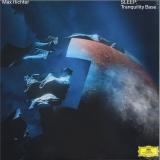
Max Richter presents SLEEP: Tranquility Base, a thirty-minute EP of new SLEEP music alongside remixes from electronic musician Kelly Lee Owens and German sound artist Alva Noto. Richter returns to his celebrated eight-hour magnum opus SLEEP with this new EP which offers a glimpse into the original material from an electronic perspective. “Tranquility Base” is the site on the Moon where, in July 1969, humans landed and walked on a celestial body other than Earth for the first time. With this in mind, the EP functions as a vessel that disconnects and travels through the body of work, allowing art to provide something which resembles peace within ourselves.
