- A1: Deon Cole Ft. Terisa Griffin - Where The Freaks At (Terry Hunter Club Mix)
- A2: Culoe De Song - Aftermath
- B1: Anané — Walking On Thin Ice (Louie Vega, Sebastien Grand, Alex Finkin Remix)
- B2: N.w.n. - Girl
- B3: Tal Fussman - Parallel Reality
- C1: Dailly - Autonomy (New York Drums Mix)
- C2: Copy Paste Soul — The Fall (Laurent Garnier Remix)
- D1: Carlo Ruetz - Proton
- D2: Marco Bailey — Full Steam
- D3: Mary Droppinz - The Cycle
- E1: Sammy Virji & Flowdan — Shella Verse
- E2: Rohaan - Easy For Them
- E3: Taxman — All Crew
- E4: 2Xm & Neil Macleod — Hear My Call (Neil Macleod Remix)
- F1: Regents, Cartridge, Strategy — Greengate Adhesive
- F2: Benny L — Salute
- F3: Cocktail Party Effect - Collapse
- G1: Loma - I Swallowed A Stone
- G2: Phiorio — Spark (Doubtingthomas Rework)
- G3: Bardino - Tília
- H1: Equiknoxx — Urban Snare Cypher
- H2: Dialog — Book Of Life (Feat. Benji)
- H3: Kang Brulèe — Out Of Time
- H4: Melody Gardot — You Never Ask (From 'Madame Sean Connery')
Cerca:da carlo
- A1: How Do You Do (3 44)
- A2: Illegal (Feat Carlos Santana) (3 53)
- A3: Hips Don't Lie (Feat Wyclef Jean) (3 39)
- A4: Animal City (3 17)
- B1: Don't Bother (4 20)
- B2: The Day & The Time (Feat Gustavo Cerati) (4 23)
- B3: Dreams For Plans (4 00)
- B4: Hey You (4 11)
- C1: Your Embrace (3 34)
- C2: Costume Makes The Clown (3 14)
- C3: Something (4 22)
- C4: Timor (3 35)
- D1: La Tortura (Feat Alejandro Sanz - Alternate Version) (3 36)
- D2: Hips Don't Lie (Feat Wyclef Jean - En Espanol) (3 34)
- D3: Don't Bother (Jrsnchz Radio Mix) (4 20)
- D4: Illegal (Ali Dee Radio Remix) (3 44)
In an ever-expanding musical universe, Azymuth have long existed as a celestial giant, drawing countless artists, musicians and followers into their orbit. Marking fifty years since their 1975 debut album Azimuth, their new album Marca Passo proves that the band’s alchemic brew of Brazilian jazz-funk and cosmic samba soul remains as vital as ever, as the group honours the profound legacy of their departed founders.
Recorded in Rio de Janeiro, Marca Passo is the first full-length release since the passing of founding drummer Ivan "Mamão" Conti in 2023, following the earlier loss of keyboardist José Roberto Bertrami in 2012. Alex Malheiros, the sole remaining original member, sees his stewardship of the band’s musical legacy as his spiritual duty. He is joined by the equally devoted Kiko Continentino (Milton Nascimento, Djavan) on keyboards, who has been with the group since 2016, and new recruit Renato Massa (Marcos Valle, Ed Motta) on drums.
Yet since their earliest recorded music, Azymuth have always been far greater than the sum of their parts. The "three-man orchestra’s" unmistakable sound is rooted in Brazil's MPB studio scene of the 1970s and early 1980s—a time when artists blended traditional Brazilian rhythms with global jazz, rock, and emerging psychedelic and progressive elements. Marca Passo continues this legacy, seamlessly fusing Brazilian musical traditions with global influences while showcasing the exceptional musicianship that powers Azymuth's distinctive, multi-dimensional sound.
The album is produced by studio mastermind Daniel Maunick, responsible for Azymuth’s two previous studio albums, Fênix in 2016 and Aurora in 2011. Daniel’s credits also include albums by Marcos Valle, Sabrina Malheiros and Terry Callier. Azymuth also invited Daniel’s father, British jazz-funk royalty Jean Paul “Bluey” Maunick, of Incognito, to play guitar on a new version of Azymuth’s eighties classic “Last Summer In Rio”, in tribute to the song’s composer, José Roberto Bertrami. Equally, “Samba Pro Mamao” is a new composition dedicated to Azymuth’s beloved original drummer, Ivan “Mamão” Conti.
Credits:
Alex Malheiros - Bass, Acoustic Guitar & Vocals: 1,2, 3, 4, 5, 6, 7, 8, 9, 10
Kiko Continentino - Keyboards, Organ, Vocoder & Vocals: 2, 3, 4, 5, 6, 7, 8, 9, 10
Renato Massa - Drums & Vocals: : 2, 3, 4, 5, 6, 8, 9, 10
Ian Moreira - Percussion: 1, 2, 3, 4, 5, 6, 8, 9, 10
Sidinho Moreira - Percussion: 1, 2, 3, 4, 5, 7, 8, 9, 10
Dudu Viana - Keyboards & Vocals: 1
Victor Bertrami - Drums: 1
Mangueirinha - Repinique: 3
Jean Paul ‘Bluey’ Maunick - Electric Guitar: 5
Jose Carlos Bigorna - Soprano Sax: 9
Daniel Maunick: Additional Percussion, Synths & EFX: 1, 2, 3, 4, 5, 6, 7, 8, 9
Produced, Engineered, Mixed & Arranged by Daniel Maunick
Co-Produced & Arranged by Alex Malheiros
Executive Producer: Joe Davis
Recorded by:
Daniel Maunick & Leonardo Vieira @ Estúdio Nos Trilhos, Santa Teresa, Rio, Brazil
Daniel Maunick & Amadeu Signorelli @ Sigstudio, Niterói, Rio, Brazil
Daniel Maunick & Alex Malheiros @ Estúdio Basslab, Piratininga, Rio, Brazil
Mixed by Daniel Maunick @ The Sugar Shack, Carluke, Scotland
Artwork & Design: Tyler Askew
WOW. Daniel O'Sullivan's transcendent new album, Eros, is one of the greatest things we've ever heard. A simply stunning song cycle of hypnotic, experimental contemporary chamber music composed for a 14-piece ensemble. Combining minimalism, complex syncopation, detailed acoustic textures, weird intervals and samurai precision, this record will elegantly blow your mind. When Daniel first sent us this, he pitched it as “Liquid Swords meets Michael Nyman”. Trust us, he wasn't wrong. A "unique hybrid orchestral music", it presents a confluence of Daniel's longstanding fixations; indeed, there's elements of Nyman, Antonio Carlos Jobim, Magma, Aaron Copland and RZA. But this is wholly O'Sullivan's. Originally commissioned for the Sonoton Music Library in Munich, Eros now receives a deluxe vinyl release courtesy of Be With Records, bringing this meticulously crafted work to a wider audience. Limited to just 500 copies for the world, these are gonna fly.
An English composer and multi-instrumentalist, Daniel O'Sullivan’s career has been marked by versatility and innovation. In addition to his work with Sonoton, he has composed extensively for the legendary KPM music library, contributing to its storied legacy of production music. As a deep virtuoso and collaborator, O'Sullivan has also played in a number of influential projects, including Ulver, Sunn O))), This Is Not This Heat, Grumbling Fur and Miracle (with Steve Moore), leaving an indelible mark on the contemporary experimental music landscape.
O’Sullivan’s first foray into classically informed chamber music, Eros is a culmination of his long-standing fixations and expansive musical influences. The album features arrangements that are as detailed as they are emotionally resonant, showcasing his unparalleled ear for intervals and mastery of counterpoint. The music brims with complex rhythmic syncopation and a sensitivity to texture and space, resulting in a soundscape that is both intoxicating and dauntingly precise.
Recorded June 2023 and February 2024, in Brussels, London and Carmarthenshire, Wales, Eros features members of Echo Collective (Neil Leiter and Margaret Hermant), Thighpaulsandra (from seminal post-industrial band Coil), and jazz pioneer Oren Marshall. Daniel's sonic weapons of choice, in his own inimitable words, were "Big Bad Drum, Pee Anne Oh, Low End Brass, Willowy Winds & Samurai Strings." You get the picture. As a cyclical suite, this is a record that really needs to be heard in its entitreity, from start to finish, to truly appreciate the genius at work here.
A jaw-dropping statement of intent, the minimalist "Golden Verses" sets the tone with its complex cue which has your neck snapping right when it feels like it needs to. Listen and you'll understand. A syncopated tangle of sharp strings, crunchy bass, drums percussion and bright piano and mallets vie for position with French horn and woodwind melody in the most compelling and unexpected ways. Quite simply, it's one of the finest album openers I've ever heard. It's followed by the atmospheric rippling minimalism of "Lyre Lyre", a gorgeous gem with shimmering chimes, bright melody, human percussion and syncopated pizzicato strings. It kinda comes on like a less-abstract Boards Of Canada, bursting with typical wonderment. The piano and string-drenched "Dolorous Stroke" effortlessly builds its warm, pastoral orchestration with flowing piano arpeggio, steadfast drums, expressive string quartet, rich low brass, woodwind and lyrical flute. Just sublime.
The insistent frenetic propulsion of "Plain Paper" is utterly beguiling, featuring a determined string motif, urgent drums and percussion, driving low brass and breathless, energetic flute. The haunting, interweaving string arpeggios that propel "Grapes Draped" presents a claustrophobic minimalism for chaos and darkness, with growling low woodwind and brass, spiky harpsichord, skittering flutes and tight drums. Up next, "Xanix Annum" is a stately minimalist waltz with expressive lyrical string quartet and delicate woodwind, anchored by drums and percussion. "Painting Rose" is a bouncy stop-start track with angular syncopated strings and a piano pulse underneath bright harpsichord and flutes. "Rotunda Garden" presents ethereal textural minimalism for landscapes and reflection with flowing string arpeggios, warm, low woodwind drones, floating choir and cymbal swells. Closing out this extraordinary side of music, the glowing, flowing minimalism of "Flowry Orb" features urgent organ, piano and woodwind arpeggios, half-time drums with shimmering cymbals, a soaring, beautiful violin solo and hypnotic vocal chant.
Side 2 opens with "Theia Mania" a determinedly off-kilter, angular track featuring low wind, brass and drum stomp in dialogue with lively string trio, woodwind and solo horn. The light, airy minimalism of "Painting Percy" is built around an interplay of rhythmic motifs for piano, low brass, bassoon, fluttering flutes, urgent strings, drums and percussion whilst "For Archetypes" is a delicate, gently syncopated chamber cue for nostalgia, nature, reflection and moments of calm, with steady piano motif, intimate woodwind and French horn, and warm, graceful strings. The urgent Ars Memoriae is a propulsive march for progress, processes and industry, underpinned by driving tuba, with determined strings, resolute drums, and vivid, expressive flute, clarinet and French horn.
The syncopated energetic minimalism of "Mirrored Seven" presents layers of melodic and cyclical piano, drums, low brass, harp, flute and strings. "Pure Ornament" follows, a slowly evolving chamber cue with flowing clarinet, string and harp arpeggio, plodding tuba and percussion, fluttering flute and graceful, lyrical solos. Stunning! Up next, "Brave Boy" moves from its tender, warm, lullaby-like intro with lyrical flute, clarinet and strings before opening into a playful backend driven by a bouncy tuba riff and syncopated piano, woodwind, string trio, and drums and percussion. Rounding out this astonishing piece, "Waxen Waned" is a warm, pastoral chamber cue with light lyrical woodwind, tender French horn and subtly pulsing string trio.
The album's title is a reference to Plato’s conception of Eros, which is more than romantic or physical desire. It is a dynamic and creative force that drives individuals to seek perfection whether in art, relationships, philosophy or the pursuit of truth. Wholly appropriate, here, we think. When asked what his influences were in making this astounding record, he answered thusly: "Non-musical: Householding, Pythagoras, Goethe, Grail romances, Hermeticism, Doctrine of Signatures (Parcelsus, Bohme, Pliny), Eric Rohmer, John Stezaker, Yasujiro Ozu. Musical: Duke Ellington (late suites), Smile-era Brian, early RZA, Wagner (Parsifal Overture), Magma, Mancini, Axelrod, YMO, Hildegard, Nyman, Penguin Cafe Orchestra, Jobim (Stone Flower), Alessandro Alessandroni, Tavener, Moondog, Orthodox Music, Secular Music." That's some pretty deep shit. Makes you want to dive in, no?
Mastering for this vinyl edition was overseen by Be With regular Simon Francis, and it was cut by the esteemed Cicely Balston at Abbey Road Studios to be pressed in the Netherlands by Record Industry. Truly, Eros is a work of extraordinary depth and sophistication. It invites listeners to immerse themselves in its intricate layers, to lose themselves in its hypnotic rhythms, and to marvel at the precision of its execution. With this release, O’Sullivan reaffirms his position as one of the most inventive and uncompromising voices in contemporary music. Do. Not. Sleep.
- A1: Raining In Kyoto
- A2: Pyramids Of Salt
- A3: It Must Get Lonely
- A4: Sister Cities
- A5: Flowers Where Your Face Should Be
- B1: Heaven's Gate (Sad & Sober)
- B2: We Look Like Lightning
- B3: The Ghosts Of Right Now
- B4: When The Blue Finally Came
- B5: The Orange Grove
- B6: The Ocean Grew Hands To Hold Me
Following ‘No Closer To Heaven’, The Wonder Years released ‘Sister Cities’, their most transformative work to date.
Recorded at Sunset Sound with Joe Chiccarelli (Manchester Orchestra, The Shins, Spoon) and Carlos de la Garza (Jimmy Eat World, Paramore), ‘Sister Cities’ is an album about distance, connectivity and the way humanity towers above boundaries.
What The Wonder Years do so effortlessly on ‘Sister Cities’ is no small feat; through poetic lyricism, ambient guitar swells and Jimmy Eat World-levels of crashing momentum. On ‘Sister Cities’, they take a massive, unexpected leap forward both sonically and thematically, now speaking confidently to the world at large.
Vocalist Dan Campbell on the inspiration behind ‘Sister Cities’: “It started with journals and photos. We started by documenting. We didn’t know where it would go or if it would go anywhere at all, but we wrote it all down. We took photos of everything. And
then when it came to put it altogether, we had this catalog of how we felt and what it looked like and sounded like and we built from there. Figuring out what the moments were that stayed with me the most. When did I feel most connected to the people around me and why? What did being in this place during this moment teach me? It was a difficult year personally and globally and we experienced that through this lens of being everywhere but home, kind of floating through places and seeing how being there altered our perspective.”
The album is housed in a 200-page, 13”x13”, full-colour book that includes photos, artwork, journal entries and lyrics. LP pressed onto Shinjuku Street Splatter coloured vinyl.
An overpowering sense of earnestness and vulnerability.” - Pitchfork
There is a lifetime yelled in every punk song, captured in the desperate and catchy ‘Sister Cities’.” - NPR MusicFrom the first notes, it’s already clear that The Wonder Years are stepping into uncharted territory.” - UPROXX
''Stop'' is the emblem of Italo-Disco par excellence even if in 1983 it was inserted by Carlo Favilli and Stefano Zito on the B-side of the 12''of the nascent label House of Music. However, the song, although recorded in a hurry and with evident sound defects, is the perfect example of the musical genre that was developing in Italy in those very early 80s. ''Stop 4 Remixes'' is long-awaited answer that followers have been waiting for over 4 decades and now it lives with its own light with 4 new versions that testify how the piece was a driving force for the entire Italo-Disco movement."Pushed Up'' is the remix by Woody Bianchi, who according to Claudio Casalini (who does not allow any discussion on this matter) is the best Italian disc-jockey for the technical quality of the mixes and the artistic choice of the pieces to play. It would take a book to retrace the stages of his prestigious career. So here just a bravo' to Gino (Woody Bianchi). Ditto with potatoes for Danilo Braca who works assiduously in the clubs of the Big Apple, spinning only tracks by Italian composers and arrangers. Once again this Italian DJ-producer (Danyb is his old nickname), author of two very pregnant extensive versions: ''The Remix'' and ''Re-Visited'', shows his ability as a 'remixer', known everywhere, but especially in Ibiza especially where the DJs ((DJ Harvey included) often use his ''edits' existing only on pen drive. Among those who have madly loved ''Stop'' near Florence there are certainly Luca Pardini (Dirtyelements), Guido Sonato and Edoardo Guccione (Drunkdrivers) who when they are together form the renowned they Tuscan trio of DJ-producers Dirtyelements & Drunkdrivers with very interesting and successful experiences on Pusic Records, Masterworks Music, Samosa Records and Lego Funk. The approach to sounds in their ''Acid Re-Solution Remix'' is absolutely decisive. Here too, skill and passion seasoned with a pinch of art and... why not?... madness !!!
“In May 2024, the Brazilian state of Rio Grande do Sul, where I was born and have lived all my life, faced the worst climate catastrophe in its history. After weeks of relentless, torrential rain, its rivers overflowed, flooding much of the region. Entire cities were submerged. More than 170 people lost their lives, and hundreds of thousands of animals perished. Amid this dystopian and desperate situation, flux was composed and recorded in about a week. Initially, the album was created solely as an exercise to maintain my mental health. But when I finished it, I realized that it had become a kind of “sound portrait” of this dark moment—days filled with pain and suffering. Yet it was also a meditation on the ephemerality and fragility of life, and the struggle to survive.”
Die 1997 gegründeten Hard Oi!/Streetpunker Non Servium aus Madrid präsentieren eine komplett remasterte Best-Of in Form der neuen Vinyl-Compilation "Street Songs Since 1997", veröffentlicht auf Loikaemiess Fettfleck Records. Die aktuelle Besetzung der Band besteht aus Sänger Carlos und Gitarrist Snoker plus Ivi Bass, Gordo Gitarre und Niño Drums, wobei Carlos und Snoker während der gesamten Bandkarriere und auf allen Alben die Kernmitglieder waren. Der Sound von Non Servium ist Oi! oder "Brutal Oi!" mit Einflüssen aus Punk, Street Punk und deutlich Hardcore Punk. Ihre schnellen Schlagzeugrhythmen und starken Bass- und Gitarrenlinien sind ein charakteristisches Merkmal. Ihre Texte sind meist politisch verortet, obwohl auch Songs über Punk-, Skinhead- und Hooligan-Kultur dabei sind. Sie sind neben Bands wie Kaos Urbano und Núcleo Terco die größten Spanisch-singenden Vertreter von Oi! mit einem explizit antifaschistischen/antirassischtischen Haltung. Die Band hat bisher sieben richtige Studioalben veröffentlicht, wobei ein leichter Stilunterschied zwischen dem Debütalbum und den nachfolgenden Alben festzustellen ist, die sich durch einen kraftvolleren, dem Hardcore näheren Sound auszeichnen. Vor vier Jahren wurde eine ,Greatest Hits" auf CD veröffentlicht, aber diese neue Zusammenstellung ist nur auf Vinyl erhältlich, hat eine andere Tracklist und alle Titel wurden neu gemastert. LP klassisch schwarz!
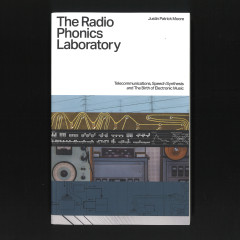
Justin Moore
The Radio Phonics Laboratory - Telecommunications, Speech Synthesis, and the Birth of Electronic Mus
The Radio Phonics Laboratory by Justin Patrick Moore is the story of how electronic music came to be, told through the lens of the telecommunications scientists and composers who helped give birth to the bleeps and blips that have captured the imagination of musicians and dedicated listeners around the world.
Featuring the likes of Leon Theremin, Hedy Lamarr, Max Matthews, Hal 9000, Robert Moog, Wendy Carlos, Claude Shannon, Halim El-Dabh, Pierre Schaeffer, Pierre Henry, Francois Bayle, Karlheinz Stockhausen, Vladimir Ussachevsky, Milton Babbitt, Daphne Oram, Delia Derbyshire, Edgar Varese & Laurie Spiegel.
Quotes
“From telegraphy to the airwaves, by way of Hedy Lamarr and Doctor Who, listening to Hal 9000 sing to us whilst a Clockwork Orange unravels the past and present, Moore spirits us on an expansive trip across the twentieth century of sonic discovery. The joys of electrical discovery are unravelled page by page.”
Robin Rimbaud aka Scanner
“Embark on an odyssey through the harmonious realms of Justin Patrick Moore’s Radio Phonics Laboratory echoing the resonances of innovation and discovery. Witness the mesmerising fusion of telecommunications and musical evolution as it weaves a sonic tapestry, a testament to the boundless creativity within the electronic realm. A compelling pilgrimage for those attuned to the avant-garde rhythms of technological alchemy.”
Nigel Ayers (Nocturnal Emissions)
“In this captivating exploration of electronic music, Justin Patrick Moore unveils its evolution as guided by telecommunication technology, spotlighting the enigmatic laboratories of early experimenters who shaped the sound of 20th century music. A must-read for electronic musicians & sound artists alike—this book will undoubtedly find a prominent place on their bookshelves.”
Kim Cascone
- Rumbon En Casa De Cando
- Afro Funky
- Sabor A Mantecado
- Abacua
- Son Montuno
- Cosas De Manteca
- Gozando El Timbal
Proudly presenting our reissue of the sought-after 1978 album 'Ritmo Y Sabor' from Cuban, master bongo player, Manteca. A deep, hypnotic, sonic excursion of Afro-Cuban/mambo rhythms to get lost within. Released in 1978, there are a number of different pressings of the album coming out on labels including GRC, Desca Records and Sound Triangle Records. Stripped-back and low-fi, this is a pulsating hit of instrumental Latin-jazz dance magic.
Predominantly made up of just percussion and bass, the album comes courtesy of Carlos "Rico" Ramirez on bass, Carlos Patato on congas, timbales by Nelson Padron and Lazaro Pla aka Manteca as band leader. A Cuban legend, Manteca rose to fame playing with Ernesto Lecuona and the Cuban Boys. Although he featured on numerous recordings in his home of Cuba, only a handful exist of his as featured soloist or band leader.
A whirlwind of percussive brilliance, ‘Ritmo Y Sabor’ is brimming with energy regardless of the tempo of the track. An instantaneous ability to make you move, the grooves come alive with each new rhythm introduced. Take for instance, the track 'Afro Funky' that more than lives up to its name. A breakbeat Latin-funk workout, with a mighty fine walking bass line that provides the basis for the drummers to vibe off. Elsewhere, 'Rumbon En Casa De Cando' is fast and furious perfect for the jazz dance specialist, whilst 'Sabor A Mantecado' keeps you on your toes with its trance-like repetitive bassline and percussive interplay. 'Cosa De Manteca' is another heavy-Latin funk gem with a rough and raw feeling of relentless yet groove-driven percussion.
A must-have Afro-Cuban, rhythmic funk triumph, that shows Manteca and his band in full flight
- A1: Let The Guitar Play (Radio Version) Feat. Darryl "Dmc" Mcdaniels
- A2: Stranger In Moscow (Sentient Version)
- A3: Whatever Happens (Sentient Version) With Michael Jackson
- A4: Please Don't Take Your Love (Sentient Version) With Smokey Robinson *Previously Unreleased
- B1: Get On (Sentient Version) With Miles Davis & Paolo Rustichelli
- B2: Vers Le Soleil (Sentient Version) With Paolo Rustichelli
- B3: Coherence Feat.. Cindy Blackman Santana) *Previously Unreleased
- B4: Blues For Salvador
Carlos Santana ist der große musikalische Kollaborateur, der seinen einzigartigen Gitarrenstil und seine weitreichende musikalische Vision mit einer großen Vielfalt von Künstlern verbindet, um etwas Neues, Einzigartiges und Transzendentes zu schaffen. Santanas Vision für Sentient war es, seine jüngsten Kollaborationen aus einer neuen Perspektive zu betrachten und sie zu einer klanglichen Pilgerreise durch Jazz, Hip-Hop, Soul, Rock und lateinamerikanische Rhythmen zu verweben. Er hat die Songs nicht nur so arrangiert, dass sie seiner Vision entsprechen, sondern viele von ihnen auch neu interpretiert und einige Aspekte der Tracks verbessert, um ein kohärentes Hörerlebnis zu schaffen. Die Songs auf Sentient reichen von aktuellen Hits und Kollaborationen mit Superstars bis hin zu seltenen, unveröffentlichten und übersehenen Tracks, die Carlos in einem neuen Kontext präsentieren wollte. Das Ergebnis ist eine spirituelle Reise durch die unendlichen Möglichkeiten der Musik, geführt von Santanas kompromissloser Muse.
- El Espíritu Del Oi!
- De Entre Los Muertos
- Madrid
- Punks, Skins
- Los Demonios De La Noche
- A.c.a.b
- Violencia
- Sangre Por Sangre
- Hordes Of Punks
- Nuestra Lucha
- Bronca
YELLOW/GREEN-BLACK Vinyl[19,96 €]
Die 1997 gegründeten Hard Oi!/Streetpunker Non Servium aus Madrid präsentieren eine komplett remasterte Best-Of in Form der neuen Vinyl-Compilation "Street Songs Since 1997", veröffentlicht auf Loikaemiess Fettfleck Records. Die aktuelle Besetzung der Band besteht aus Sänger Carlos und Gitarrist Snoker plus Ivi Bass, Gordo Gitarre und Niño Drums, wobei Carlos und Snoker während der gesamten Bandkarriere und auf allen Alben die Kernmitglieder waren. Der Sound von Non Servium ist Oi! oder "Brutal Oi!" mit Einflüssen aus Punk, Street Punk und deutlich Hardcore Punk. Ihre schnellen Schlagzeugrhythmen und starken Bass- und Gitarrenlinien sind ein charakteristisches Merkmal. Ihre Texte sind meist politisch verortet, obwohl auch Songs über Punk-, Skinhead- und Hooligan-Kultur dabei sind. Sie sind neben Bands wie Kaos Urbano und Núcleo Terco die größten Spanisch-singenden Vertreter von Oi! mit einem explizit antifaschistischen/antirassischtischen Haltung. Die Band hat bisher sieben richtige Studioalben veröffentlicht, wobei ein leichter Stilunterschied zwischen dem Debütalbum und den nachfolgenden Alben festzustellen ist, die sich durch einen kraftvolleren, dem Hardcore näheren Sound auszeichnen. Vor vier Jahren wurde eine ,Greatest Hits" auf CD veröffentlicht, aber diese neue Zusammenstellung ist nur auf Vinyl erhältlich, hat eine andere Tracklist und alle Titel wurden neu gemastert. LP klassisch schwarz!
- A1: Lessons In Chemistry
- A2: Supper At Six
- A3: Calvin
- A4: The Remsen
- A5: Best Alone
- A6: Mad
- A7: Surprise
- B1: Sneaking Around
- B2: Calvin's Box
- B3: One Step, One Step…
- B4: A Perfect Dinner
- B5: Six Thirty
- B6: Harriet
- C1: Science
- C2: A Small Gift
- C3: Saint Luke's
- C4: Bedtime
- C5: Welcome To Hollywood
- C6: Fathers
- D1: Living A Lie
- D2: Abiogenisis
- D3: Mysteries Of The Divine
- D4: Darwin's Theory
- D5: A Lead
- D6: Last Letter
Der Soundtrack von Carlos Rafael Rivera erhielt 2024 zwei von insgesamt 10 prestigeträchtigen Emmy-Nominierungen, die Apples Miniserie "Lessons In Chemistry" (2023) einheimsen konnte, nämlich für "Outstanding Music Composition" und "Outstanding Main Title Theme Music". Rivera schrieb eine optimistische, subtile und vorsichtige Grundlage, die durch starke Leistungen der Besetzung getragen wird und eine ernsthafte, emotionale Reflexion des Kampfes der weiblichen Hauptfigur darstellt, in die Grenzen der gesellschaftlichen Erwartungen zu passen.
"Lessons in Chemistry" spielt in den frühen 1950er Jahren und handelt von Elizabeth Zott (Brie Larson), deren Traum, Wissenschaftlerin zu werden, in einer patriarchalischen Gesellschaft auf Eis gelegt wird. Als Elizabeth aus ihrem Labor gefeuert wird, nimmt sie einen Job als Moderatorin einer Kochshow im Fernsehen an und macht sich daran, einer Nation übersehener Hausfrauen – und den Männern, die plötzlich zuhören – viel mehr als nur Rezepte beizubringen.
- A1: Love To All Doulas! 03 52
- A2: Some Rest For The Midwives . . . 07 19
- A3: Real Vital Organs 03 57
- A4: Surges, Expansions 02 43
- A5: In Appreciation Of Chico Hamilton's Vast Influence On The West Coast Sound 02 44
- B1: Birthworkers Magic, And How We Get Hear . . . 07 21
- B2: This "I" Was Not 02 37
- B3: Placenta, Nourishment, New Home, The Galaxy 09 03
- C1: Carla's Beads 01 51
- C2: Moonlight Watsu In Dub 04 34
- C3: Generous Pelvis 04 26
- C4: Bi-Location 09 08
- D1: Play Kerri Chandler's Rain" 17 32
black 2x12"[28,15 €]
Placenta is the fourth collection of broadly imaginative and highly collaborative Carlos Niño & Friends music released on International Anthem since 2021. But perhaps more notably for the zeitgeist of today, it is the first new music to be released by Carlos Niño & Friends following the November 2023 release of André 3000’s New Blue Sun – an album which Carlos produced alongside André, while co-writing, performing, and co-mixing every song. The announcement of Placenta also comes while Carlos is in the middle of tours with André to support New Blue Sun, where Carlos wields an immense presence as music director, bandleader, and percussionist, and performs alongside many of the same musicians that are present on his recent & Friends albums, including this new one.
Placenta is announced on the 1st solar return of Moss Niño, of whom Carlos and his partner Annelise are Earth parents. Their experience of pregnancy, labor and delivery were all profoundly impactful for Carlos. Becoming a father again (a whole 25 years after the birth of Azul Niño, who has become a regular artistic collaborator for Carlos) he felt total Inspiration for this set of recordings, and hence it is perhaps the most conceptually-grounded Carlos Niño & Friends album we've yet to present–fully connected to the spirit of family, birth, and "how we get here."
In Niño’s words, Placenta is “dedicated to Mothers, Children, Babies, Aunties, Doulas, Midwives, Birthworkers...,” and a short list of track titles includes: "Love to all Doulas!," "Some Rest for the Midwives," "Real Vital Organs," and "Generous Pelvis." The centerpiece of the album, the sprawling "Placenta, Nourishment, New Home, The Galaxy," is an unbelievably vivid immersion in the sonic architecture of Niño's memory-scape...like being present in his energy field...or being present in a birthing room, or maybe even being born yourself. And it just might be the most powerful, unique piece of music Niño has ever created.
Featured artists on Placenta, in order of their entry on the album, include: Nate Mercereau, Jamire Williams, Sam Gendel, Jamael Dean, Dexter Story, Brandon Eugene Owens, Maia, André 3000, Jesse Peterson, Ariel Kalma, Surya Botofasina, Annelise, Haize Hawke, Aaron Shaw, Devin Daniels, Tiffany de Leon, Michael Bolger, Michael Alvidrez, Moss, Iasos, Photay, Deantoni Parks, Adam Rudolph, Andres Renteria, and Cavana Lee.
- La Chamade
- Roma Amor Feat Alessio Peck
- Chéris Ton Futur !
- Parle Feat Philippe Katerine
- L'inconnu
- Fantome Atomique
- A La Foule
- Desert Devorant
- Cinema Feat David Numwami
- Le B.a-Ba Feat Philippe Katerine
- En Convalescence
- Le Syndrome De Stendhal
- La Chamade
- Roma Amor
Co-directed with Maxime Daoud (Ojard), this 7th opus was written and composed with passion and recorded with an outstanding team of musicians. The message of Barbara Carlotti's new album is direct and essential: "Cherish your future!" It is an invitation to welcome the unknown, to view our destinies with tenderness, to strive toward the future while taking care of our style, to counter life's setbacks, to chase the green ray, and to reinvent love. The goal is to liberate expression, heal the wounds of the past, articulate desire with elegance and humor, and let ourselves be moved by fleeting yet eternal joys, the sight of the ocean, or the infinite beauty of a singing voice that fills us with hope and strength in an outpouring of freedom.
- Tranquilizer
- You Do Something To Me
- Pietons
- Streetwalker
- The Zebrah
Jan Akkerman (b. 1946) stands apart as a singular figure in the realm of rock and beyond. A Dutch guitarist of unparalleled versatility, he earned international acclaim in 1973 when he topped the prestigious Melody Maker readers’ poll, surpassing icons like Eric Clapton (2nd), Jimmy Page (5th), and Carlos Santana (10th). His fame, however, has never defined his artistry. For Akkerman, it’s always been about the music—any genre, as long as it resonates. He’s a lifelong improviser who approaches each performance as a new adventure. Akkerman first rose to prominence with Focus, a band that embodied the grandiose instrumental rock spirit of the 1970s. Long compositions, dazzling technique, and adventurous arrangements made them a cornerstone of progressive rock. Despite the accolades, Akkerman remained true to his calling. When asked about his success, he has always brushed it aside, preferring to let his guitar do the talking. Side 1 of this record captures Akkerman’s stunning performance on July 10, 2011, at the Nile Hall in Rotterdam. Here, he showcases his ability to take listeners on a sonic journey. The mellow “Tranquilizer” offers a relaxed groove, followed by the heartfelt ballad “You Do Something to Me,” unfolding emotion without words. In “Piétons”—a gospel-tinged blues—trumpeter Eric Vloeimans delivers a fiery solo before the leader propels the piece into uncharted territory. Side 2 brings us back to an earlier moment, recorded in July 2005 at the Paul Acket Paviljoen in The Hague. “Streetwalker” delivers a funk-driven explosion featuring alto saxophonist Benjamin Herman, while “The Zebrah” sends Vloeimans soaring into the musical stratosphere, only to have Akkerman reignite the piece with blistering guitar lines, his band driving forward like a well-tuned Mercedes on an open highway. Akkerman’s live performances are as unpredictable as they are electrifying. Whether sharing the stage with legends or newcomers, his spontaneous creativity makes every concert unique—a master class in musical freedom. Jan Akkerman remains a touchstone for guitarists and fans alike, an authentic improviser whose name still elicits one universal response from any seasoned Dutch rock enthusiast: “He’s the best guitarist in the world.” The North Sea Jazz Concert Series includes officially licensed releases that will be released as standard on 180-gram white vinyl in a sleeve of heavy paper and printed on reversed board. The records are captured in mainly black-and-white artwork by Hans Pol in his signature style of the festival with inspiration from the covers of classic older jazz releases from the Blue Note label, for example. The liner notes are written by journalist and jazz expert Jeroen de Valk. For all recordings it’s a first time ever release on vinyl!
- A1: Porto Feliz (Mozar Terra)
- A2: Janeiro (Ion Muniz)
- A3: Serena (Steve Sacks
- B1: A Chegada (Dom Salvador)
- B2: Para Ana (Ricardo Dos Santos)
- B3: Pra Nova (Aloisio Aguiar)
- B4: Constelação (Alfredo Cardim)
- C1: Ascensão (Mozar Terra)
- C2: Clodes (Alfredo Nascimento)
- C3: Naquela Base (Guilherme Vergueiro)
- D1: Atlantico (Ricardo Dos Santos)
Gatefold 2LP
Far Out Recordings proudly presents a landmark discovery in Brazilian jazz: the long lost album by drumming pioneer Edison Machado. Recorded in New York City in early 1978 but never released, Edison Machado & Boa Nova captures a pivotal figure in Brazilian music history at the height of his artistic powers.
Combining North and South American jazz traditions with Machado's revolutionary samba innovations, Edison Machado & Boa Nova represents a triumph against the odds. After facing persecution under Brazil's military dictatorship and being forced to sell his drum kit in 1976, Machado found renewed creative purpose in New York with the Boa Nova ensemble. The resulting album captures the essence of his genius - sophisticated yet wild, controlled yet daring, leading an ensemble of some of the best jazz, samba and bossa nova players of the day.
At just fifteen years old, Machado revolutionized Brazilian music through an accident that would change everything - when his snare drum broke during a performance, he began playing samba rhythms on the cymbal. This innovation, known as "samba no prato" (samba on the cymbals), brought new layers of dynamism to samba and proved instrumental in the development of bossa nova alongside contemporaries like Antonio Carlos Jobim and João Gilberto.
A complex and passionate figure, Machado was notorious for his militant perfectionism and "attacking" style of drumming. Having spent some years of his youth in the Brazilian army, musicians often remarked that he played as if he were at war. But his innovative style, while exhibiting complete control and sophistication, somehow so often danced right on the edge of chaos and wild abandon.
After making his name in Rio's legendary Beco das Garrafas (Bottles Alley) in the 1950s and early '60s, Machado went on to form Bossa Três - the world's first instrumental bossa nova group. His influence spread internationally through collaborations with Stan Getz, Sergio Mendes, Antônio Carlos Jobim, Milton Nascimento, and Chet Baker, while his 1964 album Edison Machado É Samba Novo stands as a masterpiece of Brazilian jazz.
At 80 minutes in length, Edison Machado & Boa Nova, the lost 1978 New York sessions, is a singular achievement in Brazilian jazz. The format itself is a rarity in the canon. It’s packed full of exceptional technical precision and creative vitality, with sophisticated arrangements and masterful improvisation from its exceptional sextet of Brazilian and US musicians: Paulinho Trompete (flugelhorn/trumpet), Ion Muniz (tenor saxophone), Steve Sacks (baritone saxophone), Mozar Terra (piano), and Ricardo dos Santos (double bass).
The album features unheard compositions by Brazilian masters Dom Salvador (Salvador Trio, Harry Belafonte, Edu Lobo), Guilherme Vergueiro (Raul De Souza, Leon Ware, Joyce), Aloisio Aguiar (Arthur Verocai, Airto) amidst the plethora of captivating original material by the members of the Boa Nova ensemble.
- I Wonder Who
- Heartbreaker
- Blues On The Westside
- Waterfall
- Well All Right
- Rock De La Carcel
- Evol
- Aguaturbia
Aguaturbia's second LP "Volumen 2" (1970) is an essential album to understand the construction of what we know today as Chilean rock. Aguaturbia's debut album was originally released in 1970 and showcases one of South America's most significant psychedelic bands from the late 60s and early 70s. Their influence in their native Chile -and beyond- was groundbreaking. In July that same year the band recorded "Volumen 2" that, just as raw and dynamic as the debut,delivers even heavier intensity than their debut LP. As expected, this album is raw and dynamic, featuring heavy rhythms, distortion, and exceptional phased female vocals reminiscent of Jefferson Airplane. Comparisons with the Grateful Dead, Country Joe and the Fish and Led Zeppelin can be drawn. Splendid heavy psych and proto-stoner tracks make this album a pioneer recording in the history of South American rock. The LP showcases breathtaking moments, like the psych-blues 'Heartbreaker' or 'I Wonder Who' where guitarist Carlos Corales shines. When he played solos at the gigs, the effect on the audience was silence and euphoria at the same time. In fact, Carlos Corales (guitar) and Willy Cavada (drums) were both professional musicians who had made a previous career in rock and roll bands. Other outstanding songs are 'Blues On The Westside', 'Waterfall' and the magnificent 'Well All Right'. Controversy accompanies the release of the album once again. In this case the cover artwork, a tribute to Salvador Dalí, scandalizes the most conservative sector of Chilean society. This outstanding album is now available again on vinylafter many years out of stock.
Rerelease of the fourth album of the Intercommunal Free Dance Music Orchestra recorded with the Guinean saxophonist Jo Maka. The title says it all: Vol.4 – Jo Maka.
The Intercommunal Free Dance Music Orchestra was created in 1971 by an “old hand” of French free jazz, François Tusques. Free Jazz, was also the name of the recording made by the pianist and other like-minded Frenchmen (Michel Portal, François Jeanneau, Bernard Vitet, Beb Guérin and Charles Saudrais) in 1965. But, six years later Tusques had had his fill of free jazz.
So he then founded the Inter Communal, an association a name under which the different communities could become closer and compose, simply. In 1976, on the first album: L’Inter Communal, we can already hear Tusques playing without borders in the company of Carlos Andreu, Ramadolf, Michel Marre and Jo Maka (as a conclusion to this Vol. 4, we can hear them in 1977 at the Moulin de Prades Le Lez). Over the next decade, the, association kept going with concerts at the Dunois theatre, in 1980 and 1981, it welcomed old hands and new recruits (Bernard Vitet, Jean-Jacques Avenel, Jacques Thollot, Sylvain Kassap…).
If Vol. 4 – Jo Maka is an homage to the Guinean saxophonist, who passed away a few months before the release of this selection of concert recordings, it also displays a proud collective inspiration! One foot in the blues, and ears open to everything else, Tusques begins with a lament that the Company rapidly transforms into a joyful dance (“Vive la Commune”), weaves a full-blown party piece (“Poses ton fardeau et remets la machine en route”, “7 rue des prêcheurs”, “Mazir”) or gets fabulous with Mingus (“Fable Of Faubus”). And there you have it, with so many revolutions François Tusques is almost back to free jazz.
If the jazz of François Tusques is “free”, his spirit is even more so: having recorded Free Jazz with other like-minded Frenchmen (Michel Portal, François Jeanneau, Bernard Vitet, Beb Guérin and Charles Saudrais), the pianist had covered a lot of ground, with Barney Wilen (Le Nouveau Jazz) or even solo (Piano Dazibao and Dazibao N°2), so as not to repeat himself…
In 1971 he founded the Inter Communal Free Dance Music Orchestra which, as the notes the this album stated, “is an interpretation of a music which synthesizes the different communities living and working in France.” In 1976, on the first album (L’Inter Communal) we can already hear Tusques playing without borders in the company of Carlos Andreu (vocals), Michel Marre (trumpet and saxophone), Jo Maka (saxophone) and Ramadolf (trombone). It is a meeting between jazz and music from Catalonia, Occitanie and Africa. So far so good, but what about Brittany, that, Tusques knows “by heart”? Having lived for a long time in Nantes, he would expand his ‘brittanitude’ on the canal linking the city to Brest by playing with, for example the Diaouled-Ar-Menez. With these “devils from the mountain” who, under the baton of Yann Goasdoué, worked throughout the 1970s on the renewal of music from Brittany, Tusques met, notably, Tanguy Ledoré and invited him one day, with trois bombards and some bagpipes (Jean-Louis Le Vallegant, Gaby Kerdoncuff and Philippe Lestrat), to join the ranks of the Intercommunal. And so they set of towards a new music from Brittany, as the title states; Vers une Musique bretonne nouvelle!
With percussion from Samuel Ateba and Kilikus, the association launches the ‘bombardier’: the repetitions and dissonance of the different members all serve a common cause however: the dance, which is always the reason for the party. This sets a whole universe spinning, which can bring to mind Chris McGregor’s Brotherhood of Breath (“La rencontre”) when not taking on board waltz, swing, blues and gavotta or even revealing mysteries like those of Gurdjieff (“Les racines de la montagne” or “Le cheval” sung by Andreu). Only one thing to say to this Brotherhood Of Breizh: Mersi!