Newly launched Dutch electro label LDI Records follows up their first release from T/Error with a deep and dark four track EP by French producer Franck Kartell. In a homage to masterful science fiction writer Philip K Dick - Side A of Electric Sheep EP evokes scenes from future mechanized worlds. Electric Sheep kicks the 12" off with a melancholic and contemplative moment followed by a steel cold and brooding venture in Voigt-Kampff. On the B side of this release, there is a live mix of Kartell's track Electro Music, a futuristic electro work out with kicks for the dancefloor. The EP completes with Victoria - an ode to the electronic musician Victoria Lukas who passed away in 2020 - with a beautifully poised and contemplative track steeped in synths. Franck Kartell is a French producer who has releases on Between Places, Transient Force, Ukonx Recordings, New Flesh, Bass Agenda and others. Since 2005 he has been producing well thought-out Electro music filled with dark atmospheres and driving rhythms. Specializing in moody, atmospheric electro, LDI Records (Lloyd's Dark Imperium) are an essential label to watch. Distributed worldwide by Clone Distribution, while the Dutch label's main focus is on vinyl releases, available in selected record shops across the globe, releases will also be available digitally.
quête:da dee mix
Every now and then a release comes along which is destined to unite, bring down the walls and basically, be a force for good. Your Kissing by Belcampo does just that, and with a style and panache which defies it’s lo-fi, handstamped limited white label aesthetic. The beauty of Your Kissing is in the way it successfully melds together elements of deep house, disco and the French Touch sound to form a track which will appeal to anyone who simply likes decent music. Belcampo keeps things stripped back just enough to give that beautiful, rolling, hypnotic atmosphere, whilst remaining lush, warm and uplifting, constantly teasing us with the repeated filtering guitar and string hook. Legendary British singer and songwriter Elisabeth Troy provides the cherry on top with her sweet vocal line giving us the hook which will get under your skin in all the right ways.
In addition to the main vocal mix we have a Belcampo Remix going heavier on the filters and pumping groove, calling to mind the glory days of Cassius, Motorbass and Super Discount with that distinctive feel-good French sound of the 90’s.
Closing out the EP we find Delisei which cranks up the jackometer for a peak time slice of looped-up heads down filter madness guaranteed to nice up the dance.
Backed by members of the David Nance Group, Rosali (Long Hots, Wandering Shade, Monocot) wades through the emotional mire with infectious, earworm melodies led by her luminous voice. With their rich, raw instrumentation, these rock ballads sound like the resilience discovered in facing one’s darkest moments, the assurance of the calm and clarity that comes after the storm. As she sings on the second track, “Bones,” “Through the darkness of the field / I walk through without yielding / To the rest of the feelings / I’m carrying.” With her confident song craft, Rosali illustrates the ability to push through, moving toward something greater without being destroyed by the weight of trauma.
Engineered by James Shroeder and featuring Kevin Donahue (Simon Joyner), James Shroeder (Simon Joyner, DNG, Connor Oberst), David Nance, Noah Sterba, Colin Duckworth, and Daniel Knapp, the album was recorded in ten days and the raw immediacy of the music is palpable across these ten tracks. Added adornment was contributed by Philadelphia's Robbie Bennett (War on Drugs) on organ and keys, and Matt Barrick (The Walkmen, Jonathan Fire Eater, Muzz) makes a percussion cameo on “Whisper,”which was tracked at Philly’s Silent Partner Studio, where No Medium was mixed by Quentin Stoltzfus (Mazarin, Light Heat). The open creative collaboration elevated the songs, resulting in the exciting, vibrant sound of the album.
Rosali wrote the bulk of these songs in January of 2019 while on a self-imposed two week residency in the hills of South Carolina. Alone in an old farmhouse, she experienced supernatural events and faced her own demons in the deepest darkness. Perhaps as a result, there is a boldness that permeates the album, a daring vulnerability in both the lyrical themes and their musical accompaniment. Rosali says, “I approach guitar playing the same intuitive way I sing, which is profoundly spiritual for me. Where words fail, the guitar becomes the conduit for raw feelings, providing a direct connection to them. I’m constantly working on being fearless in my work, which means showing the rough side, the mistakes along with the triumphs.”
While writing No Medium, Rosali was inspired by harmonographs—swinging pendulums that create beautiful illustrations of the mathematics of music—considering how the mind, too, creates images through song. She imagined herself as the swinging pendulum—“a body suspended from a fixed point” (Encyclopedia Britannica), governed by the forces surrounding her. She thought about the pendulum’s relationship to time, movement, and even its use in divination practices. The album’s title, lifted from Charlotte Brontë’s, Jane Eyre, resonated with this vision: “I know no medium: I never in my life have known any medium in my dealings with positive, hard characters, antagonistic to my own, between absolute submission and determined revolt. I have always faithfully observed the one, up to the very moment of bursting, sometimes with volcanic vehemence, into the other.” With the multiple meanings of “medium”—as middle ground, a term for psychics, and as the material of artistic expression—No Medium felt like the appropriate name, describing how the self is shaped by the patterns of life .
The influences for the sound of No Medium reflect this pairing of assured vulnerability, in the stylistic coherence of Bob Dylan’s Desire, the tender delivery in Iain Matthews’ Journey From Gospel Oak, the strut and swagger of Bowie’s Hunky Dory, the ambition and beauty of Gene Clark’s No Other, and the playful catharsis of Harry Nilsson’s Nilsson Schmilsson. The Richard and Linda Thompson-esque album opener “Mouth,” places Rosali within both a physical and emotional space. “East of the river I was travelling on / watch me lie, undone / rest me in a forest, overgrown / until I am free of all that I’ve known,” she sings. There is movement, both within a cityscape, and in her outlook on love. Speaking of her thought process when writing the song, she says, “I imagine confidently walking away from the past, toward a new approach to love and intimacy to achieve a closer relationship with myself.”
In “Pour Over Ice,” Rosali explores her relationship with alcohol and her former reliance upon it as a social lubricant to quell her social anxiety, an energizer to keep moving, a means to cope and self-medicate, and most addictively, to lure out her wild side as a free flowing, good time girl. While drinking helped her through some shitty times, it eventually got the upper hand and became an insatiable hole within. She says, “The ‘you’ in the song is really me, talking to that component of myself struggling with drinking and self-sabotage, caught up in the cycle, and all the bad choices I made.” She sings, “Maybe I didn’t care enough / or can’t remember / chasing small pleasures / making fire from embers.” Rosali wanted her lead guitar on this track to simultaneously sound like a slow motion car crash propelling her through the day, and the sound of a gnawing hunger for something more.
Rosali’s alliance with the Omaha musicians that orbit David Nance Group (including Nance himself) came about while on a Long Hots / DNG tour in the summer of 2019. Great friendships formed and one night after playing in Detroit, Dave suggested they be her backing band. The pairing was effortless and natural, and in November of the same year, they were recording No Medium in a basement in Omaha.
LIMITED 180GM OPAQUE ORANGE VINYL.
BUFFET LUNCH are a Scottish group who make it their mission to craft satisfyingly imperfect pop songs filled with imagery and humour.The group’s elementary parts are Perry O’Bray (Vocals/Keys/Guitar), Neil Robinson (Bass), John Muir (Lead Guitar) & Luke Moran (Drums), united by a shared love of music on the ABBA-to-Beefheart axis.
These four ricochet between Glasgow and Edinburgh, creating music that bristles with DIY spirit and upbeat wonkiness. Their tracks are vigorous excursions, meandering into clattersome terrain as often as hiking up into the breezy, melodious foothills.The desire to lead the listener along a curious tale helps tie things together, showcasing a lyrical playfulness that pins down their puzzle of sound.
Having been an active band for a few years, playing regularly north of the border with like-minds such as Irma Vep, Robert Sotelo and Kaputt, Buffet Lunch spent early 2020 working on the follow-up to their two EPs on Permanent Slump.The fruits from such labour bore out as the band’s debut album ‘ThePower of Rocks’, out may 7th on UpsetTheRhythm.
‘ThePower of Rocks’ was recorded in a Crofters cottage/studio on the banks of Upper Loch Fyne in Argyll, over four nights and five days at the beginning of March 2020, before Covid-19 made itself such an ongoing concern. Back then four people could occupy the same space and make music, lunch and dinner together. Days fell into a pattern of long sessions and long meals.The album came together as a luminous mix of Buffet Lunch’s live chestnuts, some sparky recent songs and some new material entirely written and recorded in situ. All tracks were recorded by Neil Robinson acting as the in-house engineer.
As the seriousness of the virus and talk of national lockdowns developed - there was a feeling of anticipation more than fear in the air, but being holed up in cottage in a wild corner of Scotland surrounded by snowy mountains still took on an apocalyptic feel, albeit an apocalypse where the band were safe and overdubbing vocals. After leaving the cottage, reality (as it must) set in and finishing the album became a more remote task.
Over the following months, an extended period of listening awarded the recordings a deeper realisation, as they bounced between band members computers. Perry also started writing on his Casio keyboard and collaborated on a couple of songs (‘Ten Times’ & ‘Ashley’s New Haircut’) with Jayne Dent (of electronic music project Me Lost Me), drawing on her ethereal singing voice as a counterpoint to his own more ‘spoken’ vocals on the album. These gauzy, dreamlike tracks were then sent to other members of Buffet Lunch to add their respective parts, creating evocative new dimensions to close each half ofthealbum with.
The Power of Rocks’ rattles along like a short-story collection, exploring a variety of narratives. When it comes to the music itself, Perry describes their approach as “see what happens” but admits to a preference for simple synth melodies, plenty of percussion, and prickly guitar-parts. ‘Red Apple’ opens the album with a dizzy swagger, guitars and keyboard notes swirling in forays whilst its lyric tackles notions of social bravado. ‘Orange Peel’ follows equally serpentine with its blattering tune and jagged, yet jolly melodic twists.The themes across the album are wide-ranging and personal, from irritation with out of touch politicians (‘Pebbledash’), to love letters to seaside living (‘Bladderwrack’), to even the frailty and confusion of old age (‘Said Bernie’, ‘It Helps to Know’). Title track ‘ThePower of Rocks’ is an ode to the power of nature sunk within a rolling wave of cheery jangle. “Do you believe in the power of rocks when the sun is too hot on your face?” sings Perry as the song zigzags with consequence. ‘He Wore Two Hats’ sports similarly bop-worthy riffs and addictive nods as it deals with its story of savvy man who’d bitten off more than he could chew.
Buffet Lunch’s debut album accomplishes a lot in its brief 38 minutes. It stuns and startles, intrigues and entwines, drawing the listener further into its characterful world. When asked about any intent posed with this debut record Perry confides that “we hope people can hear the joy the band had making the album and the curiosity and frustration that went into the writing. There was no process or design, but there is detail, and deliberateness in our wish to explore and create.” It’s this attentive focus alongside a keen sense of humour that really sets Buffet Lunch apart, with ideas darting wilfully to and from the poignant truths at hand.
UFC Records back with their second release with a four tracks Ep produced by label´s co-ower R.I.P. Bestia. The four tracks are original tracks produced between 2020 and 2021 years. Side A of this EP contains two tracks more oriented for the dance floor, like "Chordal Constellations" where the psychedelic electronic of the 90's is fused with the minimal sound of the first 2000's and "VCO Ray”, where vocoder vocals are mixed with deep techno lines.
On the other side the Ep opens with "Khae!”, psychedelic breakbeat-techno accompanied by ethereal vocals, to finish with "VCO HardCore Foundation", a piece of breakbeat influenced by the Nu Skool Breaks that ends in an acid and breaks explosion.
It is with extreme pleasure that we, Basement Boys Records proudly announce our 100th single release and 30th year in the music business as an active recording label!
Holding down our 100th release is the legendary multi-faceted singer/songwriter/producer Byron Stingily. As one third of the Chicago-bred, world renown trio, Ten City and as its primary lead vocalist, Byron’s velvety falsetto graced such House Music staples as “Devotion”, “That’s the Way Love Is”, “My Piece of Heaven” along with scores of other classic House music favourites. As a solo artist, Byron went on to create such memorable House jewels as “Get Up” & “It’s Over” a classic collaboration with the Basement Boys for his project on Nervous Records.
“We Belong Together” contains four mixes. The Monday Night Vocal Dub and Instrumental are up first, with percolating congas and swinging violins that accentuate the well-paced drums and percussion of this delectable mix. The brassy horns sing in tandem with Byron as he tugs on the heartstrings with his romantic, chromatic vocal adlibs and signature riffs. The sugar-laden strings and sparkling pianos brings to mind the 90's Ten City production of Marshall Jefferson.
DJ/songwriter/musician/producer, Maurice Fulton is one of House music’s true originals, back where he started. Maurice had the first release on Basement Boys Records with Sticky People "Kong". A man with a mind-blowing complexity behind all that is deep, dark and funky.
Fulton’s mix takes a more soulful tech approach employing a host of electro sounds. A fervent polyrhythmic vortex of percussive wind chime effects, married with classic snares, tom toms & hi-hats, deep sub bass and a meaty kick all define this masterful alignment of electro and acoustic elements. At the midway point, Maurice turns the suspense-filled symphonic intro from the previous mixes into this electro breakdown groove fest sure to drive dancers into a frenzy complete with Byron’s heartfelt lyric.
Closing it out the Main Mix in all its glory, hi-powered, dense bottoms and percussive elements, sweet R&B “boogie” style chords, neatly placed horn accents with Byron slaying the lyric as he always does in his exquisite, soulful pleading falsetto telling the object of his affection, “We Belong Together”.
We started First Word Records in late 2003. The core team is based in London, but our roster is comprised of artists from all over the globe. As we look ahead to our 20th anniversary, and hit our 200th release, this EP is a collaborative effort from some of our current artists.
As a label, we've often championed musicians that create sounds that fall within the cracks of more defined-genres. Our aim has always been to highlight unique talent where we find it, and ultimately find things we deem worthy of inclusion in the great mixtape of life! Quite often the links may not seem apparent, but we feel blessed to have been able to slowly build a family of artists that not only have great respect for each other, but will quite often collaborate together without any prompts from us. This collection of music is a series of examples of that. 'A Family Affair'.
For this vinyl EP, there is a heavy dancefloor vibe, with four tracks that nestle within the realms of broken beat.
Following her debut EP 'Light It Again' for us in late 2020, Allysha Joy's track 'Better' is re-visited by the don Kaidi Tatham, who reworks the track in his own inimitable way; starting on a half-tempo neo-soul vein, before switching to his trademark fusion of bruk, boogie and jazz mid-way.
After a lengthy absence we're delighted to welcome back Quiet Dawn and Sarah Williams White, with a collaborative piece between the two entitled 'One By One'. You can expect longer projects from them both later in the year, but here's a little vibe to wet your whistle. This, the 'Bruk It' version doing exactly what it says on the tin.
On the flipside, we have a delicious rub of Takuya Kuroda's 'Fade' featuring the vocals of Corey King and taken from Takuya's highly-acclaimed LP 'Fly Moon Die Soon'. The remix work on this one courtesy of a killer combo in their own rights, KEARL aka Earl Jeffers (Darkhouse Family) and K15 (Profusion).
Speaking of K15, this EP closes out with his interpretation of Teotima's 'But I Can't' originally from their 2019 album 'Weightless'. Taking elements of the original vocal from Ellie Rose Rusbridge, K15 transforms this one into a dreamy boogie-tinged groove - previously supported by Mary Anne Hobbs and the like.
Two of these tracks have never been available on vinyl before, whilst the other two are brand new tracks being released for the first time on any format.
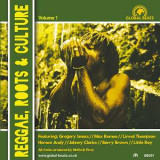
- 1: Horace Andy – Every Tongue Shall Tell
- 2: Horace Andy – Every Tongue Shall Tell Dub
- 3: Linval Thompson – Long, Long Dreadlocks
- 4: Linval Thompson – Long, Long Dreadlocks Dub
- 5: Johnny Clarke – Blood Dunza
- 6: Johnny Clarke – Blood Dunza Dub
- 7: Barry Brown – Fittest Of The Fittest
- 8: Barry Brown – Fittest Of The Fittest Dub
- 9: Johnny Clarke – Declaration Of Rights (Steppas Remix)
- 10: Johnny Clarke – Declaration Of Rights (Steppas Remix) Dub
- 11: Gregory Isaaccs– Motherless Children (Dubplate Mix)
- 12: Gregory Isaaccs– Motherless Children (Dubplate Mix) Dub
- 13: Max Romeo – No Peace (Steppas Remix)
- 14: Max Romeo – No Peace (Steppas Remix) Dub
- 15: Litte Roy – Falling Angels (Dubplate Mix)
- 16: Litte Roy – Falling Angels (Dubplate Mix) Dub
If some of these titles look familiar, it’s because they’re among the most majestic roots and culture songs ever recorded, and by singers whose credentials are beyond question. All tracks feature the original artists and even the actual seventies’ vocal in some cases, but the rhythms have been recreated with today’s sound-systems in mind and are heard at their very best when roaring out of giant speaker boxes, greeted by a forest of raisedhands and with a deejay at the mic.
Producers Mafia & Fluxy include reggae legends Bunny “Striker” Lee and Fat Man among their mentors, and their mastery both in the studio and on stage is unrivalled outside of Jamaica. The way these two brothers play dub will make the hairs on the back of your neck stand up whilst the messages in songs like Every Tongue Shall Tell, Declaration Of Rights, No Peace and Fittest Of The Fittest are relevant as ever but then the music on this album isn’t dated, and is reggae, roots and culture for the ages.
Ryley Walker currently resides in New York City. But his latest LP is a Chicago record in spirit. The masterful Course In Fable, the songwriter’s fi@h solo effort,
draws from the deep well of that city’s ferCle 1990s scene, when bands like Tortoise, The Sea and Cake and Gastr del Sol were reshaping the underground,
mixing and matching indie rock, jazz, prog and beyond.
Walker spent his formaCve years in Chicago, absorbing those heady sounds and finding ways to make them his own. Even though he emerged at first in folkrock
troubadour mode, it makes sense that he’s arrived at this point; each LP has grown more intricate and assured, his influences disClling into something
original and unusual. To put it simply: Course In Fable is Walker’s best record yet, full of acCve imaginaCon and endless possibiliCes.
Last October, Ryley went straight to one of the primary architects of the Chicago sound to make the LP. John McEn:re, Course In Fable’s producer/engineer/
mixer, can rightly be called a legend for his work with Tortoise, Stereolab, The Red Krayola, Jim O’Rourke and countless others over a prolific career that now
spans more than three decades. Seeing his name in an album’s liners is preVy much a trademark of quality.
Another Windy City exile, McEnCre is based on the west coast these days, working out of the Portland, OR studio he’s dubbed Soma West. On the seven songs
here, he delivers the signature shimmering and prisCne sonics he’s become known for over the years. But McEnCre was also inCmately involved with Course
In Fable’s overall creaCve process. “I told him to take the mixes and have at it,” Walker says.
The result is a rich, immersive affair — a headphones record if ever there was one. Course In Fable’s songs are twisty, labyrinthine things, stuffed full of ideas
(Walker half-jokingly calls it his “prog record”). But no maVer how complex it gets, the album is never overwhelmingly busy. Wiry guitars melt into gorgeous
string secCons (arranged by Douglas Jenkins of the Portland Cello Project). Tricky Cme signatures abound but feel as natural as can be. Melodies o@en dri@ in
unexpected direcCons but remain downright hummable. Like Walker’s beloved Genesis, the pop element is never too far from the surface even when shit
gets weird. (And speaking of weird, Ryley says that in addiCon to Genesis, much of the album’s inspiraCon comes from “Australian extreme scooter riders on
YouTube and balding gear heads on Craigslist.” Go figure.)
To help put together these various puzzle pieces, Ryley assembled a band made up of several longCme collaborators. Bill MacKay (another Chicago mainstay)
and Walker have made two excellent instrumental duo records of interlocking guitars and warm give-and-take — a rapport very much in evidence
throughout Course In Fable. The freakishly talented drummer Ryan Jewell has performed with Walker for years now in a variety of seangs, from
straighborward song-centric sets to blown-out improv extravaganzas. Bassist Andrew ScoJ Young (Tiger Hatchery, Health&Beauty) has logged many miles on
tour with Walker; he and Jewell are frequently astonishing, a buoyant-but-always-locked-in rhythm secCon, able to navigate someCmes dizzying turnarounds
with apparent ease. Listening to the interplay between Walker and these musicians and you might be fooled into thinking they’d spent a year roadtesCng
Course In Fable’s songs. But it all came together relaCvely fast, thanks to demos, rehearsals and the kind of musical empathy that comes from years of
playing together.
Beneath the wondrous interplay, you’ll find some of Walker’s most personal – if sCll typically crypCc — lyrics, hinCng at some of the trials the songwriter has
been dealing with in recent years. Balanced with necessary doses of dark humor and oddball poetry, Course In Fable feels most of all like a life-affirming
record, fresh air in the lungs, sun on your skin. “Fuck me, I’m alive,” Ryley sings at one point, a moment of both disbelief and pure joy.
Walker has released his albums on a who’s-who of independent labels over the past decade — Tompkins Square, Dead Oceans, Thrill Jockey and Drag City
among them. This Cme around, he’s doing it DIY-style, puang Course In Fable out on his own Husky Pants imprint. You’re in good hands. This is an album that
sounds great (mastered by Greg Calbi), looks great (artwork by Jenny Nelson and design by Michael Vallera). It probably even smells great. Whether you’ve
been onboard since the beginning or are new to the Ryley Walker universe, you’re in for a treat.
2LP on crystal clear vinyl. In these trying times, where intimacy and closeness are fraught with danger, Dans Dans (Dance Dance) brings you the sound of connection, communication, passion and togetherness.
In these trying times, where intimacy and closeness are fraught with danger, Dans Dans (Dance Dance) brings you the sound of connection, communication, passion and togetherness.
Dans Dans unites the talents of three of Belgium's most prolific music makers in Bert Dockx (Flying Horseman), Fred 'Lyenn' Jacques (Lyenn, Lanegan band) and Steven Cassiers (Dez Mona, DAAU). An utterly unique musical collective, the trio are set to release new album 'Zink' on the 23rd April via Ghent based independent, Unday Records.
From jazz, psychedelic blues and ecstatic noir soundtracks to spacey rock 'n' roll, Dans Dans cut their teeth on the cool jazz cafe scene in Flanders, Brussels with their sensational live performances and have since gone on to become a mainstay on the flourishing Belgian musical landscape.
Releasing their self-produced, eponymous debut album back in 2012, their highly distinctive, intuitive mix of musical styles and their ever-imaginative live shows caught the attention of discerning music lovers, journalists and promoters. A relatively unknown tour de force outside the Benelux region, Dans Dans have built a solid fan base since their inception with limited edition runs of early releases becoming collector's items among vinyl enthusiasts.
Well-received appearances at Cactus Festival, North Sea Jazz and Pukkelpop, as well as Gent Jazz, Ljubljana Jazz and Jazz Middelheim have confirmed their reputation as one of the most unique and exciting bands to come out of Belgium. In recent years, the group has been touring throughout Europe, garnering enthusiastic reactions beyond the Belgian borders as well. There's a case to be made that Dans Dans even played a key role in breaking down the wall between the Belgian jazz scene and the pop/rock circuit (years before pop journalists began referring to a New Wave of Belgian Jazz).
Opening with the moody noir rhythms of 'Cinder Bay', Dans Dans look to construct their own musical universe across 'Zink'. 'Naiad' unfolds into a devastating explosion of heavy feedback and wild, crashing drums before subtle electronica and baroque art-rock collide on 'Anemone' giving a good indication of Dans Dans' eclecticism. There's unquestionably a deep, underlying filmic beauty to the music, an evolving darkness and a perpetual sense of dread and paranoia. Elsewhere, 'Ravine' is intoxicating, provocative and uncompromising while the beatific 'Shell Star' is an infectious exploration of hypnotic grooves, atmospheric sounds and mind-bending melodies.
Producer Christine Verschorren (Philippe Catherine, Ivan Paduart) accentuates the music's wondrous fluidity throughout 'Zink'; the intriguing interplay; the subtle ties; the deep layering. Musical styles and influences are being blended organically and sublimated into what can only be called Dans Dans-music. "This is no fusion, no rock or jazz or ambient. This is the sound of the searching, intuitive human; of a timeless, mysterious dream; of the heart, the gut and the soul," says Dockx.
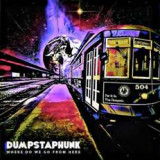
"Where Do We Go From Here" is Dumpstaphunk's first album in seven years. It will be released on April 23, 2021 on The Funk Garage, an imprint of Mascot Label Group.
Over its past 17 years, Dumpstaphunk has earned its reputation as the most well-regarded next-generation New Orleans live powerhouse, the type of band whose live shows attract sit-ins from legends like Carlos Santana, Bob Weir and Trombone Shorty. Alongside Hall, Daniels, Alex Wasily, Ryan Nyther and drummer Devin Trusclair, cousins Ivan and Ian Neville have built upon their family’s iconic NOLA legacy as they’ve transformed Dumpstaphunk into the city’s pre-eminent 21st-century funk-fusion export.
The band’s mix of classic and modern influences can be heard throughout the party-friendly mix of R&B, funk, rock, swamp-pop and blues of "Where Do We Go From Here," from the slap-bass rave "Make It After All" to the band's contemporary renderings of NOLA R&B rarities (the 1975 Blackmail gem "Let’s Get At It") and early Seventies classics (Sly and the Family Stone's "In Time”).
‘Where Do We Go From Here’ is perhaps the best evidence yet of Dumpstaphunk’s ability to strengthen and transform their singular NOLA roots in combination with the deeper outside musical and philosophical influences on which the band is founded.
Rich in musical associations yet utterly singular in its voice, joyous with an inner tranquility, the music of Natural Information Society is unlike any other being made today. Their sixth album in eleven years for eremite records, descension (Out of Our Constrictions) is the first to be recorded live, featuring a set from London’s Cafe OTO with veteran English free-improv great Evan Parker, & the first to feature just one extended composition. The 75-minute performance, inspired by the galvanizing presence of Parker, is a sustained bacchanalia of collective ecstasy. You could call it their party album.
This was the second time Parker played with NIS. Joshua Abrams: “Both times we played compositions with Evan in mind. I don’t tell Evan anything. He’s a free agent.”
The music is focused & malleable, energized & even-keeled, drawing on concepts of ensemble playing common to musics from many locations & eras without any one specific aesthetic realization completely defining it.
“The rhythms that Mikel plays are not an exact reference to Chicago house, but that’s in there,” Abrams says. “I like to take a cyclic view of music history, can we take that four-on-the-floor, & consider how it connects to swing-era music? Can we articulate a through line? I dee-jayed for years in Chicago & lessons I learned from playing records for dancing inform how I think about the group’s music. The listener can make connections to aspects of soul music, electronic music, minimalism, traditional folk musics, & other musics of the diaspora as well. It’s about these aspects coming together. I don’t need to mimic something, I need to embody it to get to the spirit, to get to the living thing.”
For jazz fans, the sound of Parker’s soprano & Jason Stein’s bass clarinet might evoke Coltrane & Dolphy, even though they didn’t necessarily set out to do that & they play with complete individuality. Abrams sees a bridge to the historical precedent, too. “Since we first met in the 1990s, one of the things that Evan and I connected on was Coltrane’s music,” he says. “I hoped that we would tap into that sound world intuitively. In this case, I think that level of evocation adds another layer of depth, versus a layer of reference.”
Indeed, this is a performance in which the connections among the ensemble & the creative tension between improvisation and composition build into a complex mesh of associations & interactions. While the band confines itself to the territory mapped out by Abrams’ composition, they are remarkably attentive & responsive, making adjustments to Parker’s improvisations. When Parker’s intricate patterns of notes interweave with the band, the parts reinforce one another & the music rockets upward. Sometimes, Parker’s lines are cradled by the group’s gentle pulse & an unearthly lyrical balance is struck.
Drummer Mikel Patrick Avery is locked-in, playing with hellacious long-form discipline, feel & responsiveness. Jason Stein’s animated, vocalized bass clarinet weaves in & out with Lisa Alvarado’s harmonium to state the piece’s thematic material; the pulsing tremolo on the harmonium brings a Spacemen 3 vibe to the party. Abrams ties together melody & rhythm on guimbri, a presence that leads without seeming to. Like his bandmates, he shifts modes of playing frequently, improvising & then returning to the composed structure.
“As specific as the composition is, the goal is to internalize it & mix it up,” Abrams says. “The idea is to get so comfortable that we can make spontaneous changes, find new routes of activity, stasis & byways every gig. It’s like a web we’re spinning. If someone makes a move, we all aim to be aware of it, make room for it. Experiencing & listening is what it’s about, & Evan supercharges that.”
& “supercharged” is the word for this album. With Parker further opening up their music, descension (Out of Our Constrictions) is the sound of Natural Information Society growing both more disciplined and freer, one of the great bands of its time on a deep run.
Aguirre edition: Mastered by Helge Sten, Audio Virus, Oslo. Lacquers by Dubplates & Mastering. Liner Notes by Theaster Gates. LPs pressed on premium audiophile-quality vinyl at Pallas Records. US 2xLP edition available thru Eremite records.
Far Out Recordings is delighted to present Mora!, and for the first time ever on vinyl Mora! II. Mexican-American percussionist and former member of the Sun Ra Arkestra, Francisco Mora Catlett originally recorded and released his debut solo LP as a private press in 1987, but the sequel he recorded over the course of the next few years with an expanded Detroit jazz brass section was shelved for decades to follow. A pan-American melting pot of hypnotic afro-cuban rhythms, frenetic batucadas and fiery sambas, Mora I & II are holy grails of latin jazz, masterminded by an unsung hero of the genre.
Born in Washington DC, 1947, Francisco Mora Jr is the eldest child of two highly prominent Mexican artists, Francisco Mora Sr and Elizabeth Catlett, to whom this project was dedicated. Being born into a mixed heritage bohemian family provided Mora Jr with what he called a “creative, progressive, and healthy arts environment”, building the foundations for a fascinating career journey ahead. Mora grew up in Mexico City where he began working as a session musician for Capitol Records in 1968, before moving to study at Berklee Music College in Boston, MA in 1970. Once he’d completed his studies in 1973, he very briefly returned to Mexico City with the best intentions of cultivating an avant-garde movement in the city, but when the Sun Ra Arkestra came to perform, Mora ended up leaving with the band to tour the world for the next seven years, a decent innings within a group famous for its constantly evolving line up.
Settling in Detroit after his years with the Arkestra, Francisco set to work on his self-titled debut, gathering an ensemble of musicians that included keyboardist Kenny Cox, founder of the legendary Strata Records, esteemed bassist Rodney Whitaker of the Roy Hargrove Quintet and percussionists Jerome Le Duff, Alberto Nacif, and Emile Borde. The album openly embraces and unites the broad spectrum of improvisation, rhythm, and jazz that has thrived throughout the American continents for centuries. In Mora’s own words the album intended to “manifest the African heritage presence in the American continent.” Epitomising this outlook, album opener ‘Afra Jum’ deploys a melody based on Haitian, African and Native American motifs, which is expanded upon by the soulful excellence of the Detroit veterans Cox and Whitaker, amidst a backdrop of afro-cuban inspired percussion.
The sequel Mora II was recorded shortly after with an expanded line up that included trumpet legend Marcus Belgrave, famed for his work with Ray Charles, Charles Mingus, Hank Crawford, Eddie Russ and Wendell Harrison. Continuing the concept of the first album, the follow up moves deeper into South America with the samba jazz dance belter ‘Amazona’, led by the rich vocals of Francisco’s wife Teresa Mora. The ‘Afra Jum’ concept is further explored, with the original motifs beefed up by the additional horns, and interspersions of Sun Ra inspired rumbling free improvisations. This follow up album remained shelved until 2005, when Mora put it out as a now obscure CD titled River Drum, but only now has it been given the high quality vinyl treatment it so deserves, presented as the sequel to Mora! as originally intended.
Through the 90s and into the the 21st century Mora would continue his Pan-American explorations, moving toward a more electronic afro-futurist direction as part of Detroit techno pioneer Carl Craig’s Innerzone Orchestra. Mora also worked with Carl Craig, moog synth wizard Craig Taborn, and his former Arkestra colleague, the legendary Marshall Allen, to form the Innerzone Orchestra spin-off Outerzone, released in 2007 on Premier Cru Records. Mora I & II will be out as two vinyl LPs, CD and digitally 16th April 2021.
Live At Robert Johnson welcomes Amsterdam-based DJ and Producer Alain van der Born aka Perdu to the Club, who already made his marks with Releases on DGTL Records, Heist, and Let’s Play House amongst others. His contribution is a Four Track EP called Soaring Flights, including a Digital only Bonus Track. On this EP, Perdu champions a full-on 1980s sound, which hits more than one Chord in Live At Robert Johnson’s very own set of Styles.
Dystopia (co-produced by Tjade) is a High Energy Track, in which a raw and stoic Bass Riff slowly working its way into a Break. It’s the first Break in which the Atmosphere heats up significantly and subsequently sustains for the remainder of this quite enjoyable, and not quite dystopian rush on the Dance Floor. Retrograde immediately kicks off with a South American infused Rhythm Loop, joined by a deep and analogue Bass Serpentine, with bubbly Acid sprinkled along the way. Rise Of F5 brings back those 1980s signature pumping Kick and gated reverb Snare Drums, employing melodic and slightly haunting elements, which eventually dissolve in Euphoria and a Melody to hum along with (or shout, if you prefer). Somehow It’s Different Now concludes in a slightly different and quite mellow vein, that lets you leave this EP on the easy side. Available Digital Only is the Bells Mix Version of Perdu and Tjade’s Dystopia, for those inclined to a more melodramatic Dystopia with added playfulness thanks to—you guessed it—Bells (no whistles, we promise) …
- A1: Biphonic - Difficult People
- A2: Chuck Daniels - Feel You (Feat Shaun J Wright)
- B1: Majorettes - Never Sleep
- B2: Francois Dillinger - Lost Loops
- C1: Dj Holographic - Faith In My Cup (Feat Apropos - Detroit Love Mix)
- C2: Juliet Mendoza - That Thing (Feat Jesse Smith)
- D1: Shaun Alan - There We Go Again (Feat Javonntte)
- D2: Shiro Schwarz - Feel Your Body Move
Carl Craig has announced Detroit native and hotlytipped selector DJ Holographic is next in-line for his prestigious 'Detroit Love' mix compilation series dropping on Planet E Communications. Following in the footsteps of predecessors like Stacey Pullen and Wajeed, being invited to mix vol.05 of the series is testament to DJ Holographic being one of Detroit's most anticipated breakthrough DJ's. Born and raised in the Motor City's deep musical legacy, Ariel Corley aka DJ Holographic is an ambassador for Detroit through and through. Having cut her teeth as a DJ in the local scene over the past decade DJ Holographic is admired for her versatility, eclecticism, and impeccable taste. Ariel has firmly established herself as a staple of Detroit's modern underground scene, a core member of the city's LGBQT+ community and a devoted activist for local humanitarian causes - love for Detroit underpins every element of Ariel Corley's life. Released 16th April via Planet E and K7!, Detroit Love Vol. 05 is packed to the brim with exclusive tracks handpicked by DJ Holographic who takes the listener through a vibrant and flawlessly-mixed showcase of breakthrough artists, ones to watch, and longestablished artists Ariel has a personal affiliation to. The mix was curated by DJ Holographic at the artist creative hub below Submerge Records in Detroit - home to labels such as Underground Resistance, Transmat, Red Planet, and Distorted Soul.
The first Azu Tiwaline's album, after been acclaimed by DJs like Lena Willikens, upsammy, Shanti Celeste and a bunch of electronic medias (Bandcamp, RA, Crack), is now remixed by a Lyon-Bristol-Berlin trifecta of similarly minded rhythmic innovators - twisting and warping her work into new shapes, featuring Don't DJ, Laksa & Flore reinterpretations.
Nothing happens overnight. Behind every emergence, there’s years of work, thought and preparation - both intentional and unconscious - that’s gone unseen.
So the past year might have been a ‘breakout’ year for Azu Tiwaline, but it was really built over two decades of experimentation, soul-searching - both creative and personal - and exploration. “A new name for a new spirit” as she likes to say, but with an unmistakable identity rooted in her history and ancestry.
On her debut album as Azu Tiwaline, Draw Me A Silence, a record released in two parts with her family at I.O.T. , she fused together two halves of her own heritage, inspired by a new home in the desert. Personal history collided with family heritage: half step rhythms from a career in bass music met the warm winds and wide open silence of El Djerid in Tunisia.
When music is sincere and honest, it tends to reverberate more widely, and deeply. The tracks written for the Magnetic Service EP were sent to one label and one label only, Livity Sound, who picked it up instantly. Something about the spacious, yet dense sonics - crafted with the help of percussionist Cinna Peyghamy - resonated with listeners starved of both the community of the dancefloor and the space of the outside world. The EP became one of the Bristol label’s most heralded releases of 2020, featuring in end of year coverage from Bandcamp to Resident Advisor.
Beneath the calm of her productions, a restless spirit inhabits Azu, born out of months and years spent on the road. In 2020, it was her music that took her places. She put together a series of podcast mixes that echoed the percussive, rhythmic curves of her own productions, for Boiler Room, Dekmantel and Crack Mag. She distilled Fazer Drums’ percussive experiments into dubby downtempo with a remix, and contributed her most rooted track yet - Violet Curves with Cinna Peyghamy - to On the Corner’s Door to The Cosmos compilation.
This will be followed by the Extended version of the album with a gorgeous ambient bonus track “Eyes of the Wind”, accompanied by a video clip directed by Azu Tiwaline, shot in her desert lands. This track will be appearing in a digital reupload reunifying Draw Me A Silence Part.I and II. As a sort of final chapter of this debut album.
As for the rest? We’ll see what 2021 has to offer for both the world and Azu Tiwaline. In the meantime, take inspiration from her music: keep the tempo steady, let some light in, and listen for the silence.
Recline Music founder Nicco (N.D) returns on the label this April, delivering his grooving single 'Lost Universe', accompanied by a remix from Javonntte. Florence native Nicco (N.D) is a long-standing player within the house music scene. Producing since the late 90s, he has previously performed as a singer and guitarist before joining forces alongside Ivano Coppola to launch their Recline Music imprint. He has worked with DJ T., Oxia, Clarian and many others, whilst releasing over one-hundred tracks and gaining support from Marco Carola, Joris Voorn and Steve Bug.
The remixer of this package is Detroit-based Javonntte. Since the early nineties, he has been producing music and has collaborated with legendary producers including Blake Baxter, Amp Fiddler and Andres in his formative years, whilst his solo releases have landed on Quintessentials, Traxx Underground and Kai Alce's NDATL.
'Lost Universe' is a glistening deep house track that effortlessly combines luscious chords with rising pads and blissful keys to transport listeners on a hypnotic journey. Javonntte's interpretation reveals a feel-good affair, as fathomless bassline sequences fuse with kinetic drum programming and dubby chords - wrapping up this enchanting offering in style.
BEN SIMS: Sweet remix from Javonntte!
DJ BONE: Funky! I love it
STACEY PULLEN: Solid Tracks
SHUR-I-KAN: Javonntte remix is nice and summery!
FRED P: Nice one..
KAI ALCE: Javonntte remix hard, deep & HOT!
PHIL DAIRMOUNT: Javontte remix for me
SPATIAL AWARENESS: Love the OG
TELFORT: Real nice ! :)
BILL BREWSTER: Original's nice.
CRAIG SMITH: Real nice Javonette remix
DIZ: Really Nice!!
FRED EVERYTHING: Very nice Javonntte Remix!
Sed Blava is the Barcelona-based solo project of Daniel Boix, well known as Dj.Simplexia or also Ciutat Solitud, his ambient-industrial project. “Nit Sublim” is his first album as producer and without a doubt, this release is a mind-blowing and genuine composition which at first listen, may evoke the dark sounds from Valencia in the 80’s. But if you dive deeper, you will uncover a trove of intricate details elaborated with Sed’s touch. Ranging from catchy tunes and emotive passages to powerful dance-floor tracks, his vast music background and his long-time membership to the underground music scene should be highlighted. Both of these elements give rise to a broad spectrum of genres and influences in his music, bringing together a timeless mixture of old-school Electronic Body Music, New-Beat, Electro, Synth-Wave and even Ambient.
Zwerm is a Belgian-Dutch electric guitar quartet (with a backyard rehearsal shed located in Antwerp) that operates along the borders between styles and traverses traditions that are typically not convergent. Zwerm rhymes Larry Polansky with Nadah El Shazly and are galvanized by the likes of guitars pioneers like The Velvet Underground and Sonic Youth, the microtonal DYI-er Harry Partch, Middle Eastern sonorities and the prog-madness of Kind Gizzard & the Lizard Wizard. ‘Musical adventure’ is not just a hollow cliché for this quartet, but a genuine commitment. Zwerm calls itself a ‘guitar quartet’, but that can be interpreted broadly as well as with a pinch of salt: “If we want to do something on instruments we don’t really master, we’ll just figure out a way to make it work.”
Toon Callier, Johannes Westendorp, Kobe van Cauwenberghe and Bruno Nelissen all met in 2007 while working on a project with Glenn Branca. A new guitar quartet was born and it became clear rather quickly that staying in the strictly contemporary compositions lane was not for this quartet-with-five-to-six-members (an organizational chart is available upon request).
An appetite for new and lasting collaborations has been a constant theme throughout their artistic parcours. The group has shared stages with theatrical producers like Walpurgis and Post uit Hessdalen, dancers such as Ecce and with the musicians Fred Frith, Stephen O’Malley, Shiva Feshareki, Rudy Trouvé, Mauro Pawlowski, Larry Polansky, Eric Thielemans, Yannis Kyriakides, François Sarhan, Serge Verstockt and Stefan Prins. These projects have not always translated into records, but they have been decisive in creating a unique musical approach. In 2015, when Zwerm was asked by De Handelsbeurs to collaborate with Fred Frith, they proceeded to pen a few new musical sketches over which Firth sublimely improvised. In 2018 ‘Badminton in Tehran’ was released, their first record that was made up completely of only the group’s compositions.
“a basket full of buttons here
and if you push the wrong one: fear
and if you push the right one: love
or maybe none of the above”
The route that Zwerm has taken is often defined by the question “What if... ?” - like a dart thrown at a musical map, not quite blindly, but naive enough to lead to unexpected endings.
“What if we play Renaissance pieces written by John Dowland, but instead of playing lutes we play these tunes with a Telecaster – and then jam it through effect pedals and an amplifier?”
“What if we connect one hundred guitar pedals and just leave our guitars at home?”
“What if we record a record with ten different one-page-pieces that we found on the Internet?”
In 2020 our metaphorical dart landed on “What if we tried microtonality?”.
‘Microtonality’ sounds a bit creepy, but actually there is nothing to be afraid of: there are no out-of- tune notes, just alternate notes. On the continents where Western musical theory is less stringently applied, microtonality is the rule, and has become the subject of many deep and thoughtfully written theories. However for Zwerm, this phenomenon occurs in many, often surprisingly lighthearted forms. A dilapidated piano that has settled into a beautiful microtonal tuning of its own accord, enthusiastic choral singing, a guitar whose three strings are tuned a quarter-tone higher, a saz (Turkishquarter-tone lute), a maddening guitar pedal, ...
"the dreams they were convicted for telling only lies reality came after for claiming to be wise what you don’t see is what you get just never light a spark I’m a crow in the dark”
“And… what if we work with a drummer?” Enter Karen Willems - dummer, extraordinaire, and ardent player in groups, projects and collaborations galore. One chance meeting and the deal was done. It was obvious before the start that Willems was the versatile and creative percussionist-in-a-toy-store necessary for this project. And in the studio, to our delight, she demonstrated an easy dexterity when switching quickly from one idea to the next.
At the reins behind the scenes was producer Rudy Trouvé, who – during previous sessions for ‘Badminton in Terhran’, when the classically trained guitarists went completely off the rails, staring deeply and forlornly into their scores, looking for answers – was able to pinpoint the problem and get the wagons rolling in the right direction again. Completing the team were Mark Dedecker (recording)and Joris Calluwaerts (mixing).
The results are in and it’s called ‘ Great Expectations’ – a title that, in several ways, fits perfectly with these strange times.‘Great Expectations’ goes wide! Zwerm is at its best when it can run along the borders between style and across traditions that otherwise would not necessarily intersect. The most straightforward rockers have a proggy tinge while the dreamy psychedelic songs lean more toward Richard Youngs. And if a nice melody dared come to close to becoming a ‘Kit-Katjingle’, then barbs-a-la-Pere-Ubu were trailed, tracked, found and promptly embedded. ‘Heavy Machinery’ sits neatly somewhere between Captain Beefheart and Richard Wagner, and ‘On My Way To Aguno’, set to an Iranian folk song chord progression, grew into a hyper-personal lullaby. Zwerm used the saz (Turkish lute) and the sinter (Moroccan gnawa bass instrument) without falling into pastiche psychedelia, but you can still sense the orient.