
pré-commande20.02.2026
il devrait être publié sur 20.02.2026
22,27 €
il devrait être publié sur 20.02.2026

Don Leisure has cemented his name as one of the most forward-thinking and experimental beatmakers & producers within the current musical ecosystem. As well as being 50% of Darkhouse Family (alongside Earl Jeffers) he has collaborated with the likes of Angel Bat Dawid, Gruff Rhys, DJ Spinna and First Word label-mates Amanda Whiting & Tyler Daley (Children of Zeus). Garnering serious support from Lauren Laverne, Tom Ravenscroft, Huw Stephens, Gilles Peterson, Huey Morgan, The Vinyl Factory, Clash, Uncut and many more. Following the release of ‘Cynnau Tân (feat. Carywyn Ellis)’ (which gained support across BBC Radio from Tom Ravenscroft, Zakia & Huw Stephens) Welsh beatmaker Don Leisure announces the release of a new album ‘Tyrchu Sain’) as he returns with a new single ‘Tyrchu’ due for release on 22nd January 2025. ‘Tyrchu’ features the soft-spoken vocal stylings of Gruff Rhys over a gently rolling, tape saturated and expertly chopped instrumental, creating (in Gruff’s own words) ‘Shiny new beat-treasures with ghostly reflections of Welsh pop’s past - skillfully dug from Sain Records’ deepest veins’
A dedicated student of music, over the years, Don has amassed a vast encyclopaedic knowledge of music genres and subcultures, including a fascination with Welsh psychedelic folk music from the mid-20th century. This introduction was made by respected musician, producer & selector Andy Votel’s 2005 two-part compilation series ‘Welsh Rare Beat’ (in collaboration with Gruff Rhys and Don Thomas), comprising twenty-five tracks from Sain Records’ back catalogue. Now the oldest independent record label in Wales, Sain is a wildly influential bastion of home-grown Welsh talent, co-founded by Welsh-language folk singer Dafydd Iwan, whose music has seen a cultural resurgence in recent years with his 1983 song Yma o Hyd (We’re Still Here) becoming a huge anthem for Wales football fans. Set up in the Welsh capital, many of Sain’s early releases were recorded at Rockfield Studios in Monmouthshire, but in the early 1970s the record company moved to the Caernarfon area and opened their first recording studio in 1974 near Llandwrog. Announcing a huge digitisation project throughout 2024, Sain Records took on the mammoth task of painstakingly digitising their entire back catalogue spanning 55 years, working in partnership with the National Library of Wales the resulting archive then be submitted for to the National Library of Wales in Aberystwyth, preserving them for future generations to enjoy. Taking this period of rediscovery as an opportunity to reimagine their impressive inventory, Sain invited Don Leisure to dig into their musical treasure chest, creating a sprawling sonic tapestry from the dusty gems within. On this exhilarating excursion, Sain Records founder Dafydd Iwan explains: ‘Imagine someone gave you access to over 50 years of Welsh popular music – almost all of it unknown to you before. It would be a strange experience of discovery, an unknown territory which could baffle and excite. This happened to Jamal (Don Leisure) – and he was captivated by a world of music he barely knew existed, and when he was asked to distill the experience into one album, he immediately warmed to the idea. And this is the result – a kaleidoscope of sounds to encapsulate a half century of Welsh music. To call it unique would be superfluous: no-one could ever recreate this album. Listen, and enjoy.’.
The resulting product is ‘Tyrchu Sain' (translating to ‘Digging Sain’), a fearless and exploratory album, which sees Don put his signature unparalleled and unpredictable skills to work, weaving together moments of forgotten beauty into celestial and otherworldly compositions. The record features appearances by artists from Wales who have a similar obsession as Don Leisure in these classic Welsh rarities including Gruff Rhys, Carwyn Ellis, Earl Jeffers Amanda Whiting and Boy Azooga. A shimmering patchwork quilt of sound, ‘Tychru Sain’ traverses a shifting landscape of acid folk, eerie vocal melodies and interstellar soundscapes, propelled forth by crisp, head nod-inducing drums and grainy textures. Breathing new life into compositions lost to time, and paving a path for new listeners to discover the magic that lies within.
il devrait être publié sur 20.02.2026

The new solo album from Cate Brooks is a bright and bold collection of corporate electronica, partly inspired by commercial and TV music of the early to mid 1980s. It captures a moment in time where analogue technologies are just about giving way to computers and digital media.
Brooks is a prolific and accomplished composer and on Prismatics she brings to bear a deep experience and understanding of electronic musical equipment. As well as a seasoned production engineer she is an expert on early analogue synthesizers, so called West Coast systems like Buchla, early digital computer
systems like the Synclavier and contemporary modular systems.
Biog:
Cate Brooks is a solo electronic music artist working under her own name and several pseudonyms. She has released albums on Clay Pipe Music, on her own Café Kaput label and on Ghost Box Records as The Advisory Circle. She is part of The Pattern Forms along with Ed Macfarlane and Edd Gibson of Friendly Fires. She has also worked with vocalist Tim Felton as Hintermass, and with Belbury Poly and John Foxx she is part of The Belbury Circle supergroup.
il devrait être publié sur 20.02.2026

Political thriller Je Suis Karl, produced by German director Christian Schwochow, has a strong Czech connection. The soundtrack has been created by Czech musician and composer Tomáš Dvořák, a.k.a. Floex, who joined forces with British composer and pianist Tom Hodge. The soundtrack for Je Suis Karl will be released on September 16, 2021.
"In this project, Tom and I built on music that we wrote together three years ago for the album A Portrait Of John Doe. While this was the first feature film for me, Tom has extensive experience with composing music for movies and series," commented Dvořák.
Co-produced by the Czech company Negativ and filmed in part in the Czech Republic, the movie features characters played by Czech actresses Anna Fialová and Elizaveta Maximová. The picture makes use of the story of a young German girl, Maxi, and her family to draw attention to rising extremism among right-wing nationalists. Je Suis Karl was premiered during this year's Berlinale film festival in the Berlinale Special section.
At the director's initiative, music for Je Suis Karl was composed based on the script before the emergence of the COVID-19 pandemic. “Christian Schwochow asked for a demo, but when Tom and I set to work in Prague, we came up with a huge amount of inspired stuff within a short time, and the music became the foundation of the soundtrack. Because of the pandemic, the music itself was created on a long-distance basis. It was a game of ping pong of sorts," Dvořák added.
The soundtrack for Je Suis Karl features a unique timbre, far from the traditional symphonic sound. Instead, the sonic design relies on a fusion of dark, discordant, dirty sounds that present the symphony orchestra in a novel fashion.
Floex and Hodge created a database of loops, sounds, soundscapes, and sonic experiments with no specific compositional context. In composing music for individual scenes, they used this musical database, remixed themes and versions of compositions, and worked with vintage equipment, such as the Yamaha MT4X cassette player. Considering the large quantity of music recorded, the album contains 14 compositions from the movie itself, plus bonus tracks that did not make it into the film.
Tomáš Dvořák, a.k.a. Floex, is a Czech clarinetist, composer, producer, and multimedia artist, the recipient of multiple Anděl Music Awards. His discography includes two long-play records, Pocustone and Zorya, soundtracks for the games Samorost 2, Machinarium, Samorost 3, Pilgrims, and Papetura, remix albums, and extended-play records. In 2018, he joined forces with Tom Hodge to release the album A Portrait Of John Doe.
British composer, pianist, and clarinetist Tom Hodge challenges the boundaries of contemporary experimental music. He composes music for film, series, documentaries, advertising, and ballet. His most recent projects include the soundtrack for Je Suis Karl and music for the movie The Mauritanian filmed by director Kevin Macdonald. He has released several solo albums, including Piano Interrupted and Second Moon of Winter, and has pursued a long-term collaborative partnership with musician Max Cooper.
il devrait être publié sur 20.02.2026

Forever at Last - the debut EP by Melbourne’s HighSchool - is finally back in print on vinyl. Six brilliant tracks that introduced the world to an exciting new band, it’s been out of print long enough and is being reissued ahead of their 35-date World tour. Produced by Archie Shannon (Floodlights), the band’s ingenuity shines with them effortlessly mining myriad influences. Where first singles ‘Frosting’ and ‘New York, Paris and London’ delighted with their potent mix of sun-dappled indie pop and industrial post-punk, their next two ‘De Facto’ and ‘Sirens’ pointed to the dancefloor with the band infusing DFA / New Order / Future Islands sounds while the final pair saw ‘Jerry’ taking a darker turn, playing on the band’s gothic image before closer and title track ‘Forever at Last’ pushed the synth to the fore. A perfect record.
Eco-vinyl pressing
il devrait être publié sur 20.02.2026

Toronto-based musician and producer David Psutka’s long dormant Egyptrixx alias returns, with How Tidal. A compendium of sorts, which retells the story so far, reworks of highlights from his catalogue sit alongside brand new tracks, serving as a bridge between the past and the future, preceding more fresh music in 2026.
With the originals still sounding remarkably current, a straight best-of wouldn’t have been out of question, but ever the tinkering student of sound, Psutka thought he’d break them apart, just to see how he could put them back together again.
The music on is How Tidal is cutting-edge and futuristic, but never difficult, instead offering accessible gems where multiple strains of bass music are infused with a zingy, techno-pop bounce, whilst ambient moments gift sonic lozenges for maximum contentment. Psutka creates optimistically welcoming environments, where synthetic birds chirrup in cyan skies over babbling rainbow brooks, as 15 inch subwoofers boom by.
Egyptrixx gained renown across the 2010s with his hard hitting yet tranquil experimental dance music dubbed ‘celestial jeep music for a Saturn moon’. Colourful sound design was braided with dancefloor structures, creating an exhilarating tension between melodic and dissonant, euphoric and inward. The debut album Bible Eyes was released in March of 2011 to critical acclaim.
As Egyptrixx, Psutka has released four studio albums, collaborated, remixed, and toured with some of the biggest names in electronic music.
The widely acclaimed moniker is foundational to Psutka’s complex body of work that encompasses multiple solo projects, plus a diverse range of collaborative work. He has performed live at Sonar Festival, Roskilde, Mutek, MOMA PS1 Warm-UP and CTM Festival, and presented sound installations at Galeria Civica Commune di Modena and Art Gallery of Ontario (AGO).
In 2015, Psutka launched Halocline Trance as a home for his various sound projects, events and collaborations. In recent years, the label has quietly established itself as a platform that facilitates many of Canada’s most exciting creative music projects.
Commandez maintenant et nous commanderons l'article pour vous chez notre fournisseur.

A chance meeting in Mexico City set Points of Inaccessibility into motion. When Ibero-American composer Rafael Anton Irisarri crossed paths with Dutch media artist Jaco Schilp at MUTEK in 2024, a conversation about how technology shapes perception revealed an unexpected common ground. Schilp invited Irisarri to a spring 2025 residency at Uncloud, the Utrecht-based collective he co-founded, where Irisarri's sound began to take form amid an environment shaped by Schilp’s visual research.
The Uncloud studio was located inside the former Pieter Baan Centre, a forensic psychiatric prison where suspects of violent crimes were once confined. Its long history of silence and containment shaped the atmosphere in which the project developed. Within this setting, Irisarri coaxed long bowed-guitar tones through a network of pedals and looping systems. The raw gestures thickened into a vaporous and architectural field of sound. Schilp processed the material through a custom point-cloud software patch that produced images in continuous flux. The visuals flickered, dissolved and reformed like memories that resist coherence, functioning as a digital Rorschach that reflected the observer’s own perception.
Amid these spectral echoes, the project evolved into an examination of how the past persists within present signals. Memory endures as residue and interference, continually shaping perception even when its source has faded.
Schilp’s visual process required a continuous stream of sound in real time. Irisarri improvised throughout the residency, generating material that allowed the visuals to develop in parallel. Once back in his New York studio, he began shaping the recordings by carving pathways through the improvisations and mapping selected passages into MIDI. This process allowed him to build outward from the bowed-guitar material with minimal overdubs, adding Prophet 5 textures, Moog bass and strings that expanded the harmonic field while keeping the original performances at the center. To refine the structure, Abul Mogard provided editorial input, working with Irisarri’s stems to guide transitions and strengthen the overall pacing. The material, originally created under conditions of immediacy and constraint, evolved into a fully realized work through careful revision, patience and sustained reworking.
The title engages the geographic concept of the Poles of Inaccessibility, locations defined solely by their distance from all surrounding points. Irisarri adapts this idea to the conditions of digital life, where new forms of inaccessibility arise through the informational enclosures that structure perception. What appears to be a fully connected network often produces a deeper kind of separation, one shaped by the filtering logic of the systems that mediate experience. In this sense, the digital sphere mirrors its geographic counterpart. We inhabit spaces saturated with signals, yet the possibility of genuine contact becomes increasingly remote.
At its core, Points of Inaccessibility considers what can be understood as the new rituals of capitalist realism. Irisarri uses the term digital shamanism to describe the forms of simulated connection that organize contemporary life. These systems promise comfort through algorithms, influencers and AI interlocutors, yet they often reproduce the same conditions that generate loneliness in the first place. What appears as connection becomes the echo of connection, a sequence of gestures that imitate solidarity while withholding it. Like the geographic poles, these rituals are defined by distance. They pull us into environments where everything is illuminated, yet meaningful proximity becomes increasingly rare. In this sense, the work approaches a hauntology of the present, a reflection on futures that have stalled and intimacies that have been thinned by the algorithmic infrastructures that surround us.
This thematic tension unfolds across the album’s four movements. Faded Ghosts of Clouds introduces the work with textures that rise and dissipate in slow cycles, creating an atmosphere that resists clear definition. Breaking the Unison occupies a pivotal position in the sequence and focuses on the moment when the individual and the system fall out of alignment. Its shifting patterns trace the scattering of signals that once suggested connection, revealing the instability at the heart of contemporary perception. Signals from a Distant Afterglow forms the center of the album and features vocals by Karen Vogt, whose presence enters the sound field like a fragile transmission shaped by distance and delay. The closing piece, Memory Strands, follows motifs that appear, recede and briefly intersect before returning to quiet. Across these movements, the album outlines a landscape in which emergence and disappearance continually inform one another.
Listening to Points of Inaccessibility is an encounter with a sound field that is constantly in flux. Elements surface briefly, shift position and recede, creating a sense of motion that resists stable interpretation. The music moves between closeness and vastness, carrying traces of memory while withholding a clear point of resolution.
The album’s visual identity completes the project’s conceptual arc. In Mexico City, where Irisarri and Schilp first met, Daniel Castrejón transformed stills from Schilp’s point-cloud visuals into the cover image. The final artwork captures a single suspended frame of the digital material, a moment extracted from a field that is normally in constant motion. Its surface recalls the texture and abstraction found in the work of Catalan artist Antoni Tàpies, where material presence and erasure coexist within the same plane.
What emerges is a work that examines the tension between technological systems and human presence. Points of Inaccessibility asks whether connection is still possible within environments shaped by mediation and delay, or whether we have become isolated points within the very networks that promise proximity. What possibilities for relation persist within environments organized by algorithms and interruption? And how are we meant to understand presence when so much of it is constructed at a distance?
Points of Inaccessibility will be released on BioVinyl on February 6, 2026, with audiovisual performances planned throughout 2026.
Mastered by Stephan Mathieu
Artwork by Jaco Schilp
Design and layout by Daniel Castrejón
Artist photo by Iulia Alexandra Magheru.
Commandez maintenant et nous commanderons l'article pour vous chez notre fournisseur.

In 1999, on December 23 to be precise, the electronic music landscape changed forever. On that day, the now legendary Icelandic band múm released their debut album “Yesterday Was Dramatic – Today Is OK”. The thing is though, back in the day, hardly anybody realized. It was Christmas after all, people were busy with potentially more important things and didn’t pay attention to some kids selling records on Reykjavík’s high street. Little did those shoppers know.
Thankfully, those 10 tracks weren’t overlooked for long. On the contrary: the album went on to become one of the most influential building blocks of what back then was called electronica and today is considered an art form playing a crucial and important role in shaping and defining the rich electronic music culture of the 21st century. Now, 20 years after the record dropped onto planet Earth, Morr Music is re-issuing the remastered album with its original artwork, adding newly commissioned re-works: A note-for-note representation of “Smell Memory“ by Kronos Quartet (with additional drums by múm’s Samuli Kosminen), a gentle reinterpretation of “Random Summer” by acclaimed pianist and composer Hauschka and an otherworldly new version of “Ballad Of The Broken String” recorded by label mate Sóley. Additionally, four remixes produced in the early 2000s are made available for the first time ever on vinyl here.
In 1999, electronic music was in full bloom. The dance floors were thriving worldwide.Yet the concept of using electronic sounds in acoustic-based productions (or vice versa) was still in its infancy. Many producers were trying, most of them failed. The results felt often forced, fabricated, unimaginative, random and forgettable. New ideas require new mindsets after all. With “Yesterday Was Dramatic – Today Is OK”, múm established a new approach in music production. Instead of setting a fixed agenda and working with a distinct hierarchy for their sonic palette, Gyða Valtýsdóttir, Kristín Anna Valtýsdóttir, Gunnar Örn Tynes and Örvar Smárason let each instrument and sound source be true to itself, creating an ever-evolving universe of sonic bliss. Listening to the album in 2019 still makes every music lover’s heart jump. Combining Drill-and-Bass-inspired beat-chopping, future-informed DSP-programming, ethereal vocal work, indie rock’s boominess, folk music’s soulful brittleness and a lofty feeling for melody and arrangement, the album is a rare example of musical transcendence and remains impossible to categorize.
Many of the ideas formulated and recorded for the album quickly became an integral part of the canonical self-conception musicians around the world were and still are aspiring to. How these ideas really came about, though, is not known – the dynamics, the struggles, the qualms, the sudden realization of having achieved something which might actually stick. Maybe that is a good thing. Örvar Smárason remembers that most of the album “was recorded in a tiny, sweaty room in the summer of 1999 with carpenters banging nails around us, but sometimes we put on headphones so we couldn’t hear them.” It is a good thing they did. As is often the case with classics, all one can do is listen closely and let the magic sink in – again and again.
Commandez maintenant et nous commanderons l'article pour vous chez notre fournisseur.

At 19, Helviofox adds his signature to the batida template that by now seems to have been in existence since forever. Such is the strength of this primordial fountain, a source of rejuvenation. Also within the literal family: Helvio cites brothers Dadifox and Erycox as main influences.
Curiosity for the sound made him go into production by the time he was 13. A couple of years later (2020) he became co-founder of TLS with E8Prod, Alberfox, DiionyG and other mates. His talent fully developed since then, opening a slight detour that became a new path parallel to the main road.
Lively basslines anchor the beat directly lifted from tradition and clearly channeled to the dancefloor. Strong, well rounded grooves, a spot-on sense of timing and tempo, elegant atmospheres, all part of Helvio's notion of arrangement and his perception of dance music boundaries, stretching them just enough to present a challenge but not as far as to disconnect head and feet and risk losing the floor.
This liminal space between experimentation and popularity is both dangerous and attractive. There is no one formula. Precisely why it still retains plenty of fuel for current and future generations to contribute personal visions.
Lisboa, 2025
Commandez maintenant et nous commanderons l'article pour vous chez notre fournisseur.

'Flowers', the new EP from Elizabeth Davis, finds itself at the cross-section of many factors. In part, it’s the result of Davis’ obsession with a seminal folk song. But it also coincides with her rediscovery of the voice and language as an instrument. It was recorded during an autumn residency at Sternhagen Gut, the cultural refuge run by Gudrun Gut and Thomas Fehlmann, located deep in the Uckermark countryside halfway between Berlin and the Baltic coast.
The six tracks on 'Flowers' all take Pete Seeger’s ‘60s protest-folk song 'Where Have All The Flowers Gone' as their starting point. However, they veer off in different directions, from vocal loops and deconstructed lyrics, to instrumental drones and glitchy, manipulated rhythm tracks. Like many musicians, Davis has learnt composition by a process of disassembly, analyzing musical works piece by piece, and 'Flowers' began as one such forensic exercise. “But sometimes,” says Davis, “a source is so loaded up on meaning that the studies and experiments can become worthwhile and meaningful works in their own right.” 'Flowers' began to take on a life of its own, raising renewed questions about age-old themes such as war, authorship, translation and historical structures.
Davis is no stranger to cover versions. From studying violin to playing in free jazz and punk bands, interpreting other artists’ works has long been a key part of her musical approach. And since her radio show 'Deep Puddle' recently drew to a close after seven years, her experiments with narration and sound collage have found their way into her musical work once again. For 'Flowers', she cut up the source material (with a nod to Gysin and Burroughs), and reassembled the lyrics, the musical notes, and recordings by different performers, to create uncanny new forms.
But perhaps the biggest influence on 'Flowers' was conversations about music, art and pop subcultures with Gut. These dialogues helped Davis find a balance between far-out sound design experiments and catchy melodies, combining a certain avant-garde element and modern day songcraft. And it’s this sense of conversation, this revisiting of topics and renewal of ideas, that will keep us coming back to 'Flowers' long into the future.
il devrait être publié sur 13.02.2026
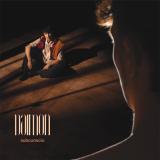
Subconscio left the smallest town in Gargano to begin a new life in uncharted Bologna.
Leaving mother earth, he still retains a strong sense of that distant world, expressed through the senses of his inner child. The Subconscio
project finds its expression in music, where it blends Neo Soul, Hip Hop, and Electronica into a sound deeply influenced by individual experiences. Soft vibrations and relaxed lyrics are the means through which he expresses his devotion to creative freedom, moving with the urgency of someone who has finally found his voice. The word dáimōn originates from Ancient Greek and means divine messenger, a guiding
spirit that hovers in a middle ground, called metaxu, the same place where the soul resides, and acts as a link between God and humanity.*
"Daimon" is Subconscio's debut album, produced by Luzee. It's the intimate vision of a person suspended in his imagination, questioning
the identity of his own memory and how the places that led him to his NOW are actually his future. The present doesn't exist in the narrative.
It exists only in the connection between childhood memories and the adult perspective.
Giulio is his son and also his parent: the Subconscious; the "daimon" is the musical journey that connects these two ways of observing the
same memory. Nostalgic turmoil meets the desire to recognize oneself and fuel the obsession with music, because only this—albeit the least
apparent art—is the only one that can be the voice and bearer of the dimensions of consciousness.
Featuring on the album: Madbuddy and Claver Gold
il devrait être publié sur 13.02.2026

Ian Broudie sleeve[39,92 €]
“The blueprint was simple: Hot Chocolate rhythms, George Murray bass lines, classical music instruments with pop sensibilities. We, the architects, however, were complicated.” Paul Simpson, 2025 Needle Mythology, the label founded by music writer, author and broadcaster Pete Paphides, is thrilled to announce the release of the much-mythologised ‘lost’ album by CARE – the group made up of IAN BROUDIE and PAUL SIMPSON Prior to forming Care, Ian and Paul had been very active in the Liverpool post-punk scene. Ian played alongside Holly Johnson, Jayne Casey, Budgie and Bill Drummond in Big In Japan, before joining the Original Mirrors. He also produced several early records by Echo and the Bunnymen, most notably the albums Crocodiles and Porcupine. Paul had played with school friend and future Bunnyman Will Sergeant in Industrial Domestic and the founding line-up of The Teardrop Explodes, before going on to form The Wild Swans. CARE were brought together late in 1982 by mutual friend Will Sergeant, when Paul was looking for someone to play a guitar part for a new song he had written. Ian obliged and asked him to return the favour by singing on one of his songs Tall Ships. When Bunnymen manager Bill Drummond heard the result, now retitled My Boyish Days (Drink To Me), he secured the pair a deal with Arista on the back of it. Care would go on to release three acclaimed singles over the course of a twelve-month period between 1983 and 1984 – My Boyish Days (Drink To Me), Flaming Sword and Whatever Possessed You – before Simpson, still struggling to come to terms with the break-up of his previous band decided not to continue. Although top 40 success eluded Care in the UK, the group quickly found an adoring fanbase in the Philippines, where all three singles became huge hits. Love Crowns and Crucifies marks the first vinyl release of the previously unheard songs gathered together on 1997’s Diamonds and Emeralds CD. Working closely with Paul Simpson and with the approval of Ian Broudie, Needle Mythology has been given access to the original quarter-inch tapes which housed everything that Broudie and Simpson recorded together.
il devrait être publié sur 13.02.2026
Paul Simpson sleeve[39,92 €]
“The blueprint was simple: Hot Chocolate rhythms, George Murray bass lines, classical music instruments with pop sensibilities. We, the architects, however, were complicated.” Paul Simpson, 2025 Needle Mythology, the label founded by music writer, author and broadcaster Pete Paphides, is thrilled to announce the release of the much-mythologised ‘lost’ album by CARE – the group made up of IAN BROUDIE and PAUL SIMPSON Prior to forming Care, Ian and Paul had been very active in the Liverpool post-punk scene. Ian played alongside Holly Johnson, Jayne Casey, Budgie and Bill Drummond in Big In Japan, before joining the Original Mirrors. He also produced several early records by Echo and the Bunnymen, most notably the albums Crocodiles and Porcupine. Paul had played with school friend and future Bunnyman Will Sergeant in Industrial Domestic and the founding line-up of The Teardrop Explodes, before going on to form The Wild Swans. CARE were brought together late in 1982 by mutual friend Will Sergeant, when Paul was looking for someone to play a guitar part for a new song he had written. Ian obliged and asked him to return the favour by singing on one of his songs Tall Ships. When Bunnymen manager Bill Drummond heard the result, now retitled My Boyish Days (Drink To Me), he secured the pair a deal with Arista on the back of it. Care would go on to release three acclaimed singles over the course of a twelve-month period between 1983 and 1984 – My Boyish Days (Drink To Me), Flaming Sword and Whatever Possessed You – before Simpson, still struggling to come to terms with the break-up of his previous band decided not to continue. Although top 40 success eluded Care in the UK, the group quickly found an adoring fanbase in the Philippines, where all three singles became huge hits. Love Crowns and Crucifies marks the first vinyl release of the previously unheard songs gathered together on 1997’s Diamonds and Emeralds CD. Working closely with Paul Simpson and with the approval of Ian Broudie, Needle Mythology has been given access to the original quarter-inch tapes which housed everything that Broudie and Simpson recorded together.
il devrait être publié sur 13.02.2026

Hearts and Minds is a new vinyl-only label founded in 2025 by house-head Rich Carrick, named after his Northern UK club night of the same name (co-founded with DJ partner Rayees), and dedicated to showcasing the finest underground artists old and new who have influenced him over the past 30 years. First up is a hero of the scene who carries on his tradition of making 'sublime, sophisticated machine music' with something a little different, in the form of two deep chuggers that will sound equally as good on more discerning dance floors, or on home systems. Lead track 'Acid Cry' brings to mind the menacing, string-laden intensity of Underworld's 'Dark and Long', while the flip-side 'Feel That Vibration' is an uplifting euphonic workout reminiscent of a Spirit Catcher composition. The quality is, unsurprisingly, high, and there are more exciting releases planned for the near future. Definitely one to watch!
Commandez maintenant et nous commanderons l'article pour vous chez notre fournisseur.

Suburban Architecture are pleased to announce the second release in their 'New Town Dubs' series, following in the footsteps of the now Sold Out 'Architecture Dubs' series. Whereas 'Architecture Dubs' enlisted remixers from Drum & Bass's mid 90s golden era (among them the likes of Peshay, Blame, 4Hero and Ray Keith), 'New Town Dubs' turns its attention to the new breed of producers inspired by the sounds of Drum & Bass and Jungle's foundations.
On the A-Side, a rinsing Amen rework of 2022 roller 'Distant Response' comes courtesy of Law, the name behind the prolific Repertoire imprint. With releases on labels including Silent Force, Rupture and of course Repertoire, Law has been a major player in the Jungle revival sound for over a decade.
Over on the flip, Melbourne based producer Kloke delivers a stripped back rework of 'Rising', taken from this year's 'Vivid' EP. With releases on Future Retro, Hyperdub and Diamond Life, Kloke is a frequent collaborator with Tim Reaper and has collaborated with many of the notable producers and labels representing Jungle's new wave.
Pressed on 10" vinyl and housed in brown Kraft paper sleeves, the series makes visual reference to the exclusive dubplate pressings which introduced so many classic cuts to the UK's dancefloors in the 90s.
Commandez maintenant et nous commanderons l'article pour vous chez notre fournisseur.

Translucent Blue Vinyl[32,35 €]
TAILGUNNER return with their second album, Midnight Blitz, out February 6, 2026 via Napalm Records. Following their explosive 2023 debut, the British quintet deliver 11 powerful tracks that blend classic NWOBHM spirit with a fresh, modern edge. Produced by legendary Judas Priest guitarist K. K. Downing – after joining his band KK’s Priest on a massive tour – Midnight Blitz unites sharp riffs, galloping rhythms and soaring vocals into a thunderous celebration of heavy metal’s past, present and future.
il devrait être publié sur 06.02.2026

TAILGUNNER return with their second album, Midnight Blitz, out February 6, 2026 via Napalm Records. Following their explosive 2023 debut, the British quintet deliver 11 powerful tracks that blend classic NWOBHM spirit with a fresh, modern edge. Produced by legendary Judas Priest guitarist K. K. Downing – after joining his band KK’s Priest on a massive tour – Midnight Blitz unites sharp riffs, galloping rhythms and soaring vocals into a thunderous celebration of heavy metal’s past, present and future.
il devrait être publié sur 06.02.2026

In the humid static of early-’80s Tel Aviv, Chromosome emerged like a wiretap from the future. Formed in 1981 by provocateur Rami Fortis and sonic instigator Doron “Shultz” Eyal, the group fused punk abrasion, new wave architecture, avant-garde dissonance, and Middle Eastern textures. Joined by David Gervai and Rona Vered, they produced a singular 12" EP on their DIY imprint TOV Production - now a collector’s treasure.
This reissue of the Chromosome EP resurrects a raw, percussive artifact that slips between English, Arabic, and indecipherable phonetics like a busted shortwave signal. Anchored by “Makhtub” and backed with incendiary tracks such as “Show of Terrorism” and “Gazolina,” it is a vital document of Tel Aviv’s underground, mapping out a borderless, feral lineage for Israeli music.
Commandez maintenant et nous commanderons l'article pour vous chez notre fournisseur.

When I first started Future Retro London, primarily as a club night, the first event was meant to take place in April 2020, but due to the coronavirus pandemic, the date got pushed to June 2020 in the hopes that venues in the UK would have re-opened by that time. They very much were not re-opened by then and navigating the various lockdown periods that occurred meant the first event didn't actually happen until December 2021.
Dead Man's Chest was part of the original lineup intended for the first event but by the time it was actually able to happen, he had temporarily relocated to Portugal & it meant he wasn't able to make it for it. Various attempts were made afterwards to try & include him in events I was doing but nothing came together until I finally had him play the 2nd joint event I did with Distant Planet in December 2024.
He runs a label called Western Lore which I've featured on previously, with 2 different remixes I did of Plastic Face by Response & Pliskin, as well as a track featured on the first Blunted Breaks compilation. It only made sense to eventually work on a joint label project as his label is a key figure in the current wave of jungle music, plus I hadn't put any music from him on Future Retro London yet so now I can finally tick him off the list!
Big up to Dead Man's Chest for his work on the collaborations & for his involvement in making this release a reality.
Commandez maintenant et nous commanderons l'article pour vous chez notre fournisseur.

Commandez maintenant et nous commanderons l'article pour vous chez notre fournisseur.

Bryan Zentz, also known as Barada, is a techno luminary back on the scene with a new five-track release. Blending classic Chicago sounds with a futuristic twist, his music transports listeners to the golden era of acid techno and house. Zentz's career began in the early '90s, releasing music on visionary labels like Experimental, Bush, Definitive, and other genre-defining imprints of the era. His ongoing innovative approach ensures that his music looks towards the future while giving a nod to the past. Prepare to be captivated by the raw energy of Barada Trax Six
Commandez maintenant et nous commanderons l'article pour vous chez notre fournisseur.

Maurice “Mobetta” Brown has always thrived at the crossroads—between jazz and hip-hop, improvisation and songcraft, trumpet and microphone. With Betta Days, the Grammy-winning trumpeter, composer, and MC sharpens his genre-bending vision into one of his most dynamic statements yet.
The album plays like a conversation between worlds: lush horn arrangements sit beside hard-hitting beats, verses weave seamlessly through melodies, and Brown’s trumpet leads with equal parts fire and finesse. A student of jazz tradition who came up in Chicago’s storied scene, he’s since expanded his reach into hip-hop and soul, collaborating with icons like Aretha Franklin, Santigold, Talib Kweli, and Anderson .Paak. Betta Days captures the spirit of all those influences while standing firmly in Mobetta’s lane.
At its core, Betta Days is about resilience and growth—finding light even in heavy times. The songs carry a message of pushing forward, fuelled by the energy of community and the joy of creation. Whether he’s delivering sharp verses or soaring trumpet lines, Maurice Mobetta Brown reminds listeners that the future is wide open, and that better (or Betta) days are always ahead.
Commandez maintenant et nous commanderons l'article pour vous chez notre fournisseur.

2026 Repress
When Guy J launched his new label, Early Morning, it was clear each release would carry his signature intensity. Now, with this third release, Guy J continues to prove that Early Morning is an intimately personal venture.
Comprising nearly 15 minutes of music, the material presents a hypnotic experience through two meticulously crafted tracks. The opener, Silver Lake, showcases the hallmarks of his style, building layer upon layer until the arrangement transforms into a dynamic fusion of deep emotion and unbridled energy. With a controlled balance of musical motifs, frequency shifts, and refined arrangements, the track oscillates between moods, culminating in an exhilarating high made to ignite the dance floor.
The second track, Evo, opens with a melody-infused bassline that nods to the 1980s, interwoven with synths reminiscent of early Frankfurt's electronic scene. Overlaid with vocal elements evoking meditative depth, Guy J uses every technique in his repertoire, shifting unexpectedly between structured sequencing and bursts of psychedelia. The track takes listeners on an immersive, unexpected journey.
This third release from Early Morning solidifies the label's vision, promising a bright future for dance floors worldwide.
Commandez maintenant et nous commanderons l'article pour vous chez notre fournisseur.

The journey through French-speaking pop archives continues with this fifth volume, packed with fuzz, gimmicks, and dissent. Far from the charts, the selected tracks display a great creative freedom, often backed by corrosive humor. Welcome to the surprising, kaleidoscopic, and colorful world of the late sixties and early seventies, Wizzz!
Born in Montauban, Robert Pico stumbled into music by chance when he met René Vaneste, then artistic director at Pathé-Marconi. René brought him to Paris to record his first 45 RPM EP in 1964. A year later, Pierre Perret introduced him to Vogue, where he recorded his second album with Claude Nougaro’s orchestra. Sylvie Vartan then introduced him to RCA, where he recorded four singles, including the astonishing "Chien Fidèle," a track backed by a hair-rising fuzz guitar. Alongside his solo career, he also composed for other artists like Alain Delon (the song was recorded but remains unreleased), Magali Noël, Bourvil, and Georges Guétary. In the Paris of the sixties, he mingled with Mireille Darc, Elsa Martinelli, Marie Laforêt, France Gall, Françoise Hardy, Petula Clark, Régine, Dani, Serge Gainsbourg, Joe Dassin, Franck Fernandel, Charles Level, and Roland Vincent. Despite his efforts and winning a Grand Prix Sacem for his final record, Robert Pico didn’t achieve the expected success in show business and decided to leave Paris and return to the Southwest, where he devoted himself to writing. He is the author of 23 books (including Delon et Compagnie, Jean-Marc Savary Editions 2025, a memoir about his youth and his many encounters). Today, he is relieved to never have become a celebrity and devotes himself to his work with passion.
In 1969, the Franco-Italian movie Erotissimo was released, directed by Gérard Pirès (who later directed Taxi in 1998, written and produced by Luc Besson). This pop comedy features Annie Girardot, Jean Yanne, Francis Blanche, Serge Gainsbourg, Nicole Croisille, Jacques Martin, and Patrick Topaloff. The soundtrack was written by Michel Polnareff and William Sheller, with lyrics by Jean-Lou Dabadie. "La Femme Faux-cils," performed by Annie Girardot. It recounts the feelings of a rich CEO's wife who seeks to develop her sex appeal under the influence of advertisement and magazines. Groovy, sparkling and light, this track, with ITS lush arrangements humorously critiques consumer society and feminine beauty standards.
“Je suis l’Etat” (1967) is the flagship track of the first EP by singer-songwriter Spauv Georges, aka Georges Larriaga, better known as Jim Larriaga (1941-2022). Born into a family of bakers, the young man was initially planning to become a hairdresser when he discovered English-speaking music through Elvis Presley and the Beatles. After this revelation, he decided he would become a songwriter and gave himself five years to succeed. He recorded his first two EP’s independently for RCA under the pseudonym Spauv Georges; meaning “that poor George”, a nickname given to him by the mother of her friend Jean-Pierre Prévotat (future drummer of the Players, Triangle, or Johnny Hallyday). Portraying a depressed and eccentric young man, Spauv Georges created corrosive and amusing songs that didn’t reach a wide audience, despite a TV appearance with Jean-Christophe Averty.
Supported by his loyal friend and fellow songwriter Jean-Max Rivière, Georges Larriaga met the future singer Carlos in the early '70s, then Sylvie Vartan’s assistant. He wrote songs for Carlos, including the popular "La vie est belle," "Y’a des indiens partout," and "La cantine", which went onto become a huge hit in 1972. He also composed for Claude François (“Anne-Marie”, 1971), Charlotte Julian (“Fleur de province”, 1972), helped launch child singer Roméo (who sold 4 million records), and later wrote the hit "Pas besoin d’éducation sexuelle" (1975) for the young Julie Bataille. In 1971, Jim recorded an album for Disc'Az: “L’univers étrange et fou de Jim Larriaga”, which featured pop gems like “La maison de mon père”.
The story of the song "Zoé" began when Pierre Dorsay, artistic director at Vogue Records, asked Swiss singer and musician Pierre Alain to write a song for a new female singer. The inspiration came when he realized that Zoé (the artist's name) was also the name of France's first atomic battery, created in 1948, which consisted of uranium oxide immersed in heavy water! The lyrics reflect a bubbling energy that must be handled with caution, while the instrumentation echoes this atomic theme, notably with the use of a theremin.
Zoé’s career lasted only as long as a single 45 RPM, but it seems Christine Fontane was the vocalist behind this pseudonym, who is known for several EPs, a good "popcorn" album in 1964, and a handful of children’s singles in the '70s. Regardless, the photograph on the cover is of a different girl entirely.
Later, Pierre Alain continued his career, writing songs for himself, Marie Laforêt, Danièle Licari, Alice Dona, Arlette Zola (3rd place in Eurovision 1982), and achieving multiple gold and platinum records in Canada. Also an inventor with several patents, president of the Romande Academy, and head of the French Alliance in Geneva, he now composes atonal music, books, and poetry. Moreover, he is also the host of "Les Mardis de Pierre Alain" at "Le P'tit Music'Hohl" in Geneva.
Filled with oriental choruses and fuzz guitar, "Fou" is from Jacques Da Sylva's only EP released by Vogue in 1967. Despite the quality of this recording, all traces of this singer disappear after this first effort.
Valentin is a baroque pop singer born in Belgium. He is the songwriter and composer of most of the tracks on his three singles released in the late 60s in Canada. A legend says that he reincarnated himself as Jacky Valentin during the 1970s for a rock'n'roll revival career in Belgium, but his older brother sadly debunked this story. Valentin's first two singles were arranged by Claude Rogen, a Parisian session pianist who had come to Canada to promote the song “Mister A Gogo”, a cover of David Bowie’s “Laughing Gnome”, adapted by singer Delphine, his wife at the time. Far from his usual network, Claude Rogen arranged music for Polydor, including the arrangements for “Je suis un vagabond” in 1969, a jerk tune with string arrangements and a furious optimism.
Jacques Malia wrote, composed, and recorded his only 45 EP for Festival in 1966. “Histoire de gitan” is an incredible beat track with bohemian scat that tells the story of a gypsy musician who came to Paris to make it in the Music-Hall, to no avail. The hero of the song and its author probably shared a similar fate, as Jacques Malia faded into anonymity after this remarkable attempt.
Bernard Jamet recorded two EPs for Barclay in the late sixties and co-wrote several songs with Christine Pilzer, Pascal Danel, and prolific songwriters Michel Delancray and Mya Simile. The track “Raison Légale” (1968), his masterpiece, immerses the listener in a courtroom right when a murderer is being judged, with jerk rhythm and free arrangements. A unique, paranoid, judicial, and psychedelic oddity.
Jean-Pierre Lebrot-Millers started his career in show business in 1967 as a singer and songwriter for the Philips label. After three singles, he wrote several songs of a new kind with his friend Pierre Halioche, in the midst of the sexual liberation movement and the democratization of drugs. With provocative lyrics, “Les filles du hasard” and “Barbara au Chapeau Rose” were released on a Philips singles in 1968. The character of Barbara was inspired by a queen of Parisian nightlife during the psychedelic years: model Charlotte Martin, who dated Eric Clapton from 1965 to 1968, then Jimmy Page from 1970 to 1983. Jean-Claude Petit’s arrangements, with a table-filled intro, soul brass, and Hendrixian guitar, emphasize the flamboyance of a hedonistic and sexy character, whose dog is named Junkie because “Junkie est un nom exquis”! The track was recorded live in three takes with a full orchestra.
Upon its release, the record was censored by Europe 1 and RTL due to its references to drug use. Jean-Pierre Lebrot was then banned from the airwaves and later dismissed by his record label. He changed his artist name to Jean-Pierre Millers, while his companion Pierre Halioche became D. Dolby for a new dreamy composition, “Chilla”, which Jean-Pierre produced himself with arrangements by Jean Musy. Once again, the song was immediately censored everywhere. After this setback, he decided to stop singing and started taking on odd jobs to support his Swedish wife and their son until the day he met Jean-Pierre Martin, then production manager at Decca, who had worked with Manu Dibango. Martin offered Jean-Pierre Lebrot-Millers, then employed at Rank Xerox, the position of artistic director at Decca. He accepted and became, a year later, promotion director (radio, press, TV). He worked on Julio Iglesias’s first album for Decca, which became a massive hit and allowed him to meet Claude Carrère. The latter asked him to write new songs and find their performers, much like a “talent scout.” It’s through him that Jean-Pierre discovered Julie Pietri and Corinne Hermès. He composed “Ma Pompadour” for Ringo, Sheila’s husband, and took the microphone again for the syncope hit “Rendez-Vous” in 1982.
That same year, Jean-Pierre Lebrot-Millers tried to release a track for which he had heavily gone into debt: “Si la vie est un cadeau”. Having recorded it in London, he presented it to numerous professionals, all of whom refused to get involved. The same thing happened with Antenne 2 and the Sacem when he proposed the song as France’s entry for Eurovision. He then met Haïm Saban, who was producing cartoon soundtracks and had just launched the Goldorak theme song. Saban, having listened to the song, declared it had the potential to become a hit. He sent Jean-Pierre and Corinne Hermès to meet the CEO of the Luxembourg radio and television network. The latter received them, asked to hear a verse and chorus a cappella in his office, and immediately hired them to represent Luxembourg at Eurovision 1983. They reworked the arrangements and recorded a new version with Haïm Saban as co-producer. The song ended up winning Eurovision 1983, a great comeback for our hero. He continued producing and hung out with the band Nacash in Belgium when a couple came to introduce their daughter for an impromptu audition in a hotel room. The girl sang “Les démons de minuit” while dancing to a radio cassette. Impressed, he had her take singing lessons for a year and composed a song for her (for which he had the melody and title, but no lyrics). This required him to go on the hunt for a lyricist, who ended up being Guy Carlier. They recorded the song, which was initially a ballad, at Bernard Estardy’s CBE studio, and gave the singer a new name: Melody. They showed the song around their industry network without success. Later, Estardy called Jean-Pierre to suggest changing the rhythm and making it pop-rock. Orlando, Dalida’s brother, liked the result and decided to co-produce the track. “Y’a pas que les grands qui rêvent » became a classic hit. The song has since been covered by Juliette Armanet (as a ballad, like the original) and Valentina.
Born into an aristocratic Breton family, Hervé Mettais-Cartier worked as a DJ at Queen Kiss, a nightclub in Poitiers, where he formed the band Les Concentrés with Michel (an actor) and Christian (a radio technician). Together, they created a repertoire of whimsical songs (“Ma bique est morte”, “J’suis un salaud”, “Fils de dégénéré”...) that they performed on stage dressed in white (in homage to “concentrated milk”). They performed at Bliboquet and Olympia in 1968 for the 10th edition of the “Relais de la chanson Française” organized by L’Humanité-Dimanche and Nous les Garçons et les Filles, sponsored by Pepsi Cola. Winners in the author-composer category, alongside Danish singer Dorte, their visibility allowed them to record a 45, and appear on television in Jean-Christophe Averty’s show. The A-side of the disc features Bruno le ravageur, a casatchok dedicated to Bruno Caquatrix, the director of Olympia, nicknamed in the song “Coq Atroce” or “croque-actrices”. The B-side is dedicated to “Fils de dégénéré”, a quirky tribute to Hervé's aristocratic roots, mixing absurdity with sophisticated vocal harmonies.
After Les Concentrés, Hervé Mettais-Cartier formed the duo La Paire et sa Bêtise with his friend Olivier Robert. They performed in Parisian cabarets and toured with Pierre Vassiliu. In the late 1970s, Hervé began a solo career. He recorded two albums for the Motors label in 1978 and 1979, which did not achieve their anticipated success due to lack of promotion. In 1980, he met Bernadette, with whom he started a family and created a “Chansons à voir” (songs to see) show that he performed until his death at the end of 2024.
Publicité comes from the final EP by the Missiles (Ducretet Thomson, 1966), a disc that also includes “La (nouvelle) guerre de cent ans”, featured on Volume 4 of our Wizzz! series. Please refer to the booklet for the story of the band.
“He’s 1.82 meters tall, 28 years old, weighs 135 kg, is black and Belgian”: this is the description of singer Hegesippe on the back of his sole single (Decca, 1967). He appears on the album cover wearing a Greek toga, like a hippie gag – we are at the end of the year 1967. In “Le crédo d’Hegesippe”, this former bodyguard of Antoine and the Charlots plays the delightful card of the thick brute converted to Flower-Power and non-violence, with arrangements by Jean-Daniel Mercier, aka Paul Mille.
“Ethéro-disco” was released on a promotional record for clients of the Maréchal company (Liège, Belgium) for the New Year 1979. Over a funky rhythm, celebrity impersonations (Brigitte Bardot, Jacques Dutronc, Fernandel…) deliver an enigmatic text about pharmaceutical products like ether, bismuth, and aspartate. The track was composed by Dan Sarravah (responsible for Joanna's “Hold-up inusité” featured on Wizzz! Volume 3) and Tony Talado, who was also a singer (one 45 in 1967), songwriter (with over a dozen credits between 1964 and 1985 in various styles from surf music to disco), author (Devenez Végétarien, Dricot Editions, 1985), ad designer, and psychologist.
Décollez-les is on the A-side of Mamlouk's only single, a pseudonym for Marsel Hurten, who is known for his work on several EPs in the late sixties, as well as composing music for Hervé Vilard’s “Capri, c’est fini”, Claude Channes' “La Haine”, Annie Philippe’s “On m’a toujours dit”, and Nancy Holloway’s “Panne de Cœur”.
This strange song, with Afrobeat horns and absurd dialogues between a chef and his kitchen staff, is the result of a collaboration between Marsel Hurten and one of his neighbors, a photographer from Pavillon-sous-Bois (93), where the musician settled after returning from the Algerian War. A music video was shot to promote the record.
Marsel Hurten was born in Tourcoing (59) into a musical family. At a young age, he joined the brass band founded by his grandfather, playing the piston before studying trumpet at the conservatory, as well as teaching himself how to play the guitar. As an orchestra musician, he toured in France, Belgium, Germany, and England. He released a series of solo 45’s between 1965 and 1968 for the DMF and Az labels before stopping recording to focus on working for other artists (Gilles Olivier, Noëlle Cordier…).
“L’amour nu” (Vogue, 1971) is the work of the short-lived Belgian band Mozaïque. The track, written by singer Jacques Albin, closely resembles another of his compositions, “Carré Blanc”, which he recorded in 1969 for Disc’AZ.
Represented by the Lumi Son micro-label based in Marignane (Côte d'Azur), Jean-Marc Garrigues released two 45 RPMs in the late sixties, defending the French jerk sound. The song “Je dis Non” is a short, joyful ode to youth, pop music, and rebellion.
Songwriter and performer Jacques Penuel released three singles. The first one, “Astronef 328” (Fontana, 1969), features a dizzying series of chords punctuated by sound effects, a sci-fi story, and arrangements by Jean-Claude Vannier.
We would like to sincerely thank Pierre Alain, Moon Blaha, Marsel Hurten, Bastien Larriaga, Jean-Pierre Lebrot-Millers, Bernadette Mettais-Cartier, Robert Pico, Olivier Robert, Claude Rogen, Micky Segura.
Commandez maintenant et nous commanderons l'article pour vous chez notre fournisseur.
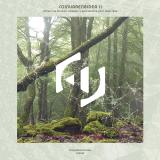
Una interpretación de Soinuarenbidea II debería partir de esta premisa: todo es posible, nada es aleatorio, y en sí mismo es un imposible de aleatoriedades. El escenario planteado explora la idea de realidad aumentada desde una percepción sonora, ambiental y colectiva. La obra transita hacia adelante y hacia atrás recreando experiencias extintas de porvenir incierto, tratando de facilitar un fin pacificador. Cada pieza sonora se crea, se despliega, se repliega y se destruye, en una torsión permanente de toda la realidad que hace posible cada fragmento musical, cada identidad acústica, cada espacio sonoro. Lo onírico, la ficción, y el viaje están continuamente presentes, y es en el transitar de cada fragmento donde se produce el diálogo de la exposición musical. Los elementos de esta ficción se recrean continuamente, en un continuum donde se entrelazan y se van contorsionando a medida que crecen o decrecen con cada fragmento de síntesis concreta. Los temas explícitamente musicales son el magma que conduce a dar voluptuosidad al disco, siendo la piel un contexto o límite que en sí mismo fluctúa indefinidamente en texturas y configuraciones posibles. Y la urdimbre del silencio es la síntesis que está continuamente presente y que trata de cohesionar los fragmentos en continua colisión expresiva. Las grabaciones de campo proporcionan el material sonoro concreto, y como un fractal sonoro cada una de ellas ofrece diferentes grados de interpretación que a su vez conduce a nuevos fragmentos y nuevas creaciones. Así que se puede pensar que esta es una síntesis de una posible realidad, pero interpretable en infinidad de maneras. Un movimiento y una estaticidad implícitas que generan estructuras y dinámicas acústicas. Lo que se escucha no es real, pero en sí mismo forma parte de la realidad, creando un escenario expectante. Lo cinematográfico, plástico y teatral, danzante y dinámico cobra importancia en este juego, porque se trata de contar una historia, una experiencia recreada desde los puntos de vista del arte visual. Es a su vez hilo conductor y entretenimiento, discurso político y puro divertimento. Es desde este espacio de convivencia artística que tiene sentido la totalidad y justifica el formato sonoro planteado. La contradicción de la obra es patente en el formato, y es a su vez el planteamiento de una accidentalidad en el devenir vital. Contenedor de Ruido recoge todas estas contradicciones y las manifiesta en la obra Soinuarenbidea II. Es una historia sonora, es un cuento acústico. Es un fragmento de vitalidad en imágenes audibles. Es una invitación a la reflexión, a la crítica, al disfrute, a la meditación, a la celebración. Y sobre todo es esperanzadora apreciación de la realidad como algo maleable que confeccionamos colectivamente, que requiere de una paciente observación y la participación colectiva global, en un mundo finito pleno de diversidades y del que ignoramos prácticamente todo, al que deberíamos volver con respeto y devoción.
Soinuarenbidea II-ren interpretazio batek premisa honetatik abiatu beharko luke: dena da posible, ezer ez da ausazkoa, eta, berez, ausazkotasun ezinezko bat da. Planteatutako agertokiak errealitate areagotuaren ideia aztertzen du, soinu-, ingurumen- eta talde-pertzepzio batetik abiatuta. Lanak aurrera eta atzera egiten du, etorkizun zalantzagarriko esperientzia desagertuak birsortuz eta helburu baketsua lortzen saiatuz. Soinu-pieza bakoitza sortu, hedatu, tolestu eta suntsitu egiten da, musika-zati bakoitza, identitate akustiko bakoitza eta soinu-espazio bakoitza ahalbidetzen dituen errealitate osoaren etengabeko bihurdura batean. Onirikoa, fikzioa eta bidaia etengabe daude presente, eta pasarte bakoitzaren joan-etorrian gertatzen da musika-erakusketaren elkarrizketa. Fikzio honen elementuak etengabe birsortzen dira, continuum batean, non sintesi zati zehatz bakoitzarekin hazi edo txikitu ahala elkar lotzen eta bihurritzen diren. Esplizituki musikalak diren gaiak diskoari atsegintasuna ematera eramaten duen magma dira, azala testuingurua edo muga izanik, testura eta konfigurazio posibleetan mugarik gabe aldatzen dena. Eta isiltasunaren irazkia etengabe presente dagoen sintesia da, zatiak etengabeko adierazpen-talkan kohesionatzen saiatzen dena. Landa-grabazioek soinu-material zehatza ematen dute, eta soinu-fraktal batek bezala, horietako bakoitzak interpretazio-maila desberdinak eskaintzen ditu, eta horrek, aldi berean, zati eta sorkuntza berrietara eramaten du. Beraz, pentsa daiteke errealitate posible baten sintesia dela, baina hamaika modutan interpreta daitekeena. Egitura eta dinamika akustikoak sortzen dituzten mugimendu eta estatikotasun inplizitu bat. Entzuten dena ez da erreala, baina, berez, errealitatearen parte da, eta agertoki espektakularra sortzen du. Zinematografikoak, plastikoak eta antzerkikoak, dantzariak eta dinamikoak garrantzia hartzen dute joko honetan, ikusizko artearen ikuspegitik birsortutako istorio bat, esperientzia bat, kontatzea baita helburua. Aldi berean, hari gidaria eta entretenimendua da, diskurtso politikoa eta dibertimendu hutsa. Elkarbizitzarako espazio artistiko honetatik osotasunak zentzua du eta planteatutako soinu-formatua justifikatzen du. Obraren kontraesana nabarmena da formatuan, eta, aldi berean, bizi-bilakaeran istripu-tasa bat planteatzea da. Zarata-edukiontziak kontraesan horiek guztiak jasotzen ditu eta Soinuarenbidea II obran adierazten ditu. Soinu istorio bat da, ipuin akustiko bat. Bizitasun zati bat da, irudi entzungarrietan. Hausnarketarako, kritikarako, gozamenerako, meditaziorako eta ospakizunerako gonbidapena da. Eta, batez ere, itxaropentsua da errealitatea modu kolektiboan egiten dugun gauza xaflakor gisa hautematea, behaketa pazientea eta partaidetza kolektibo globala eskatzen dituena, dibertsitatez betetako mundu mugatu batean, ia guztia kontuan hartzen ez duguna, eta errespetuz eta debozioz itzuli beharko genukeena.
An interpretation of Soinuarenbidea II should start from this premise: everything is possible, nothing is random, and in itself is an impossible randomness. The proposed scenario explores the idea of augmented reality from a sonic, environmental, and collective perception. The work moves back and forth, recreating extinct experiences of an uncertain future, seeking to facilitate a peaceful end. Each sound piece is created, unfolds, retreats, and is destroyed, in a permanent twisting of all reality that makes each musical fragment, each acoustic identity, each sonic space possible. The dreamlike, the fictional, and the journey are continually present, and it is in the transit of each fragment that the dialogue of the musical exposition takes place. The elements of this fiction are continually recreated, in a continuum where they intertwine and contort as they grow or diminish with each fragment of concrete synthesis. The explicitly musical themes are the magma that leads to the work's voluptuousness, the skin being a context or boundary that in itself fluctuates indefinitely in possible textures and configurations. And the warp of silence is the synthesis that is continually present and seeks to unite the fragments in a continuous expressive collision. The field recordings provide the concrete sound material, and like a sonic fractal, each one offers different degrees of interpretation that in turn lead to new fragments and new creations. So one can think of this as a synthesis of a possible reality, but interpretable in an infinite number of ways. An implicit movement and staticity that generate acoustic structures and dynamics. What is heard is not real, but in itself is part of reality, creating an expectant scenario. The cinematic, plastic and theatrical, dance and dynamic aspects take on importance in this game, because it is about telling a story, an experience recreated from the perspective of visual art. It is at once a common thread and entertainment, political discourse and pure entertainment. It is from this space of artistic coexistence that the whole makes sense and justifies the proposed sound format. The contradiction of the work is evident in its format, and it is, in turn, the presentation of an accidentality in the course of life. Noise Container gathers all these contradictions and manifests them in the work Soinuarenbidea II. It is a sound story, an acoustic tale. It is a fragment of vitality in audible images. It is an invitation to reflection, to critique, to enjoyment, to meditation, to celebration. And above all, it is a hopeful appreciation of reality as something malleable that we collectively craft, requiring patient observation and global collective participation, in a finite world full of diversity and of which we know practically nothing, to which we should return with respect and devotion.
Paisajes sonoros, diseño sonoro, drones y música grabada, realizada y arreglada para Contenedor de Ruido por David Aranaz. Coro: Basandere Ahotsak. Producido y mezclado por David Aranaz. Mástering: Estanis Elorza. Fotografía: David Aranaz. Texto: David Aranaz. Traducción: Saioa Aranaz Oreja. Trabajo y Diseño artístico: Cristina Martinez. Edición: Contenedor de Ruido Producciones y Sarbide Music. Distribución: Contenedor de Ruido.
Contenedor de Ruido agradece el apoyo en la realización de Soinuarenbidea II al coro Basandere Ahotsak y en especial a Eva Orbara Goicoa.
Soinuarenbidea II está dedicado al pueblo palestino.
Paisajes y objetos Sonoros, samplers y otras músicas transformadas para Soinuarenbidea II
Burlada: Paseos sonoros matinales por Merindad de Sangüesa, Calle Mayor, Capuchinas, Parque Uranga y varias iglesias y plazas. Pasajes del cotidiano: basura de papel, cristal y plástico.
Pamplona: Cementerio de San José. CEIP Sanduzelai /// Quinto Real: Fábrica de Armas, Puerto de Urkiaga y alrededores. Suite del silencio, bosques en movimiento /// Fábrica de armas de Orbaiceta: regatas, biosques, paseo sonoro hasta regata /// Belate: Puerto de Belate y alrededores. Vacas en pradera junto a las turberas /// Bardenas Reales: Suite de guitarra y Suite del silencio, estepa desértica /// Austria: Tranvías de Graz y Viena. Muchedumbre del metro de Viena.
Voces cinematográficas de: Matanza en Texas, Robocop, Espíritu Sagrado, Solo los Amantes Sobreviven, Voces de Gaza, Yojimbo, Terciopelo Azul, Los 7 Magníficos.
La pista A2 está dedicada a la memoria de David Lynch.
La pista B4 está dedicada a Eva Orbara Goicoa.
Pista A4: Contiene interpretaciones de piano de Three Piano Pieces Op.11 de Arnold Schoenberg.
Pista A5: Es una interpretación expandida con síntesis FM del Concerto Op. 24 - Etwas lebhaft - de Anton Webern.
Pista A7: Contiene la canción Besarkatu ninduzun (Letra de Josune López y música de Josu Elberdin) en interpretación de Basandere Ahotsak en la iglesia de Burutain bajo la tormenta.
Pista B2: Contiene la canción Recuerdos de la Alhambra (Fernando Tárrega) en interpretación torsionada de David Aranaz Sarasa.
Pista B14: Contiene la canción Agur María (Letra y Música de Estíbaliz Robles “Estitxu” y arreglo exclusivo de Alfonso Ortiz para Basandere Ahotsak) en interpretación de Basandere Ahotsak.
Equipamiento para Soinuarenbidea II.
Micros de condensador SE7, configuración XY y ORTF; Micros de cinta ORTIZ LUTHIER configuración XY y Blumlein; Grabadoras MARANTZ y ZOOM; Sintetizadores y samplers Elektron MONOMACHINE SPS-1, MACHINEDRUM SFX6 y MODEL:SAMPLES. Dave Smith MOPHO. Torso Electronics S-4. Sintetizador Modular 333 DIY; Guitarra clásica ALHAMBRA 6P; Esculturas Sonoras tipo Baschet, cristal y metales; Mesa Soundcraft FX16ii; Interface de Audio RME Babyface Pro FS; DAW Logic Pro; Procesamiento de modelado analógico con Acústica Audio, Waves, Softube, Brainworx, Sonible, Analog Obsesion, Tokio Dawn. Metering de Logic y RME DigiCheck . Amplificación Hafler PRO2400. Monitorización BW DM602 S3. Mezcla digital; Mastering híbrido.
il devrait être publié sur 30.01.2026

"When The Wind Forgets Your Name" ist das erste neue Built to Spill -Album seit der Veröffentlichung von "Untethered Moon" aus dem Jahr 2015 und das achte Studioalbum dr langlebigen Band um Mastermind Doug Martsch. Es wurde von Martsch produziert, von Martsch, Lê Almeida, Joao Casaes und Josh Lewis gemischt und von Mell Dettmer gemastert. Das Cover Artwork wurde von dem Comiczeichner Alex Graham (Dog Biscuits; Fantagraphics Books) gestaltet, der auch den fünfzigteiligen Comicstrip für das Klappcover des Albums illustriert hat (erhältlich mit den CD-, LP- und MC-Ausgaben des Albums). Seit 1992 wollte Doug Martsch, Gründer von Built to Spill, dass seine geliebte Band ein gemeinschaftliches Projekt ist, eine sich ständig weiterentwickelnde Gruppe von unglaublichen Musikern, die gemeinsam Musik machen und live spielen. Nach mehreren Alben und EPs auf Independent-Labels stand Martsch von 1995 bis 2016 bei Warner Brothers unter Vertrag. In dieser Zeit nahmen er und seine wechselnden Mitstreiter sechs unbestreitbar großartige Alben auf - "Perfect From Now On", "Keep It Like A Secret", "Ancient Melodies Of The Future", "You In Reverse", "There Is No Enemy", "Untethered Moon". "When The Wind Forgets Your Name" setzt nun die Erweiterung des Built to Spill -Universums auf neue und aufregende Weise fort. Im Jahr 2018 brachten Martschs Glück und seine Intuition ihn mit dem brasilianischen Lo-Fi-Punk-Künstler und Produzenten Le Almeida und seinem langjährigen Mitstreiter Joao Casaes zusammen, beide von der psychedelischen Jazz-Rock-Band ORUA. Als Martsch ihre Musik entdeckte, verliebte er sich sofort in sie und bat sie bei Built to Spill mitzumachen, als er eine neue Begleitband für Auftritte in Brasilien brauchte. Die Auftritte in Brasilien liefen so gut, dass Martsch, Almeida und Casaes beschlossen, 2019 weiter zusammen zu spielen und durch die USA und Europa zu touren. Bei Soundchecks erlernten sie neue Songs, die Martsch geschrieben hatte, und als die Tournee zu Ende war, nahmen sie die Bass- und Schlagzeugspuren in seinem Proberaum in Boise auf. Nachdem sie nach Hause geflogen waren, begann Martsch selbst mit dem Overdubbing von Gitarren und Gesang. Das gemeinschaftliche Abmischen fand während der Pandemie übers Internet statt, in dem die Tracks hin und her geschickt wurden. Herausgekommen ist "When The Wind Forgets Your Name", eine komplexe und schlüssige Mischung aus den unterschiedlichen musikalischen Ideen der Künstler. Neben den poetischen Texten und Themen von Built to Spill sorgen die Experimente und die Liebe zum Detail für ein Album voller einzigartiger, lebendiger und zeitloser Klänge.
il devrait être publié sur 30.01.2026

Limitierte Loser Edition, gepresst auf "Misty Kiwi Fruit Green" farbiges Vinyl. "When The Wind Forgets Your Name" ist das erste neue Built to Spill -Album seit der Veröffentlichung von "Untethered Moon" aus dem Jahr 2015 und das achte Studioalbum dr langlebigen Band um Mastermind Doug Martsch. Es wurde von Martsch produziert, von Martsch, Lê Almeida, Joao Casaes und Josh Lewis gemischt und von Mell Dettmer gemastert. Das Cover Artwork wurde von dem Comiczeichner Alex Graham (Dog Biscuits; Fantagraphics Books) gestaltet, der auch den fünfzigteiligen Comicstrip für das Klappcover des Albums illustriert hat (erhältlich mit den CD-, LP- und MC-Ausgaben des Albums). Seit 1992 wollte Doug Martsch, Gründer von Built to Spill, dass seine geliebte Band ein gemeinschaftliches Projekt ist, eine sich ständig weiterentwickelnde Gruppe von unglaublichen Musikern, die gemeinsam Musik machen und live spielen. Nach mehreren Alben und EPs auf Independent-Labels stand Martsch von 1995 bis 2016 bei Warner Brothers unter Vertrag. In dieser Zeit nahmen er und seine wechselnden Mitstreiter sechs unbestreitbar großartige Alben auf - "Perfect From Now On", "Keep It Like A Secret", "Ancient Melodies Of The Future", "You In Reverse", "There Is No Enemy", "Untethered Moon". "When The Wind Forgets Your Name" setzt nun die Erweiterung des Built to Spill -Universums auf neue und aufregende Weise fort. Im Jahr 2018 brachten Martschs Glück und seine Intuition ihn mit dem brasilianischen Lo-Fi-Punk-Künstler und Produzenten Le Almeida und seinem langjährigen Mitstreiter Joao Casaes zusammen, beide von der psychedelischen Jazz-Rock-Band ORUA. Als Martsch ihre Musik entdeckte, verliebte er sich sofort in sie und bat sie bei Built to Spill mitzumachen, als er eine neue Begleitband für Auftritte in Brasilien brauchte. Die Auftritte in Brasilien liefen so gut, dass Martsch, Almeida und Casaes beschlossen, 2019 weiter zusammen zu spielen und durch die USA und Europa zu touren. Bei Soundchecks erlernten sie neue Songs, die Martsch geschrieben hatte, und als die Tournee zu Ende war, nahmen sie die Bass- und Schlagzeugspuren in seinem Proberaum in Boise auf. Nachdem sie nach Hause geflogen waren, begann Martsch selbst mit dem Overdubbing von Gitarren und Gesang. Das gemeinschaftliche Abmischen fand während der Pandemie übers Internet statt, in dem die Tracks hin und her geschickt wurden. Herausgekommen ist "When The Wind Forgets Your Name", eine komplexe und schlüssige Mischung aus den unterschiedlichen musikalischen Ideen der Künstler. Neben den poetischen Texten und Themen von Built to Spill sorgen die Experimente und die Liebe zum Detail für ein Album voller einzigartiger, lebendiger und zeitloser Klänge.
il devrait être publié sur 30.01.2026

Step Ball Chain’s unconventional prototype band trickpony is the 11th release on the ever evolving imprint. An assortment of sensual cyber jams collaged together by the trio over timezones, birthed in Perth, Australia by Mike Midnight and Roza Terenzi; old friends joined by Helsinki’s visionary songstress Maria Korkeila. A trinity of alchemy blossomed into an audio rendition of exquisite corpse, layers of each entity glistening through amongst a united cosmos; trip hop atmospherics and downtempo drippings. The five track EP reveals a metamorphosis of nostalgia, a foot in the ever present and daydreams of future. A subconscious deep dive into lustful pop, guided by spine tingling vocal fantasies; textural hallucination, harmonic odes to the golden era underground and a flirtation with drum and bass, tribal percussive freakouts and dream tinged lyrics of desire. Pillow talk is a timeless exhibit of esoteric treasures, a portal to a private world of modern enchantment that reveals itself in new ways each listen, music for lovers created by a supergroup of innovators to be digested, shared and cherished.
Commandez maintenant et nous commanderons l'article pour vous chez notre fournisseur.

Two years after their debut on Berlin-based Mannequin Records, Parisian duo Leroy Se Meurt returns with their second full-length album, Hier Pour Toujours. Far from any sense of nostalgia, this record offers no illusion of hope—history repeats itself, the future looks bleak, and their brand of electronic punk is the perfect soundtrack to it all.Drum machines dictate the pace while synths saturate the space, looping sequences grind relentlessly, and vocals lead this machine orchestra straight into the heart of the chaos. Drawing from their roots, Leroy Se Meurt pushes their fierce electronics further than ever—experimenting with bold slogans, spoken passages, and powerful sing-along choruses.The album opens with Pas Ma Croix, a commanding anthem built for the stage. It flows into Du Plafond à La Terre, driven by a monstrous electro beat and bassline, flirting with emotional vulnerability in its chorus before exploding into a synth solo. Alevlere Karşı once again taps into the duo’s EBM-meets-Turkish vocals signature style, hitting the mark with dancefloor precision.The title track, Hier Pour Toujours, closes side A with a more intimate, drumless moment—solemn but no less intense.That brief calm is shattered by Déviance, marking the return of guitars and an eruptive chorus brimming with raw energy. From there, the album launches into the furious Révolte Ardente, with its syncopated rhythm and vocals drenched in distortion, and continues with Pro Déclin, a stripped-down rhythmic skeleton carrying anti-growth mantras straight to the point. In a world clouded by confusion, the most direct messages often land the hardest.For a change of scenery, Fütürsüz dives into John Carpenter-esque territory—no drums, eerie night-streaked synths, and, for the first time in the band’s history, nearly clean vocals.Closing the record, Encore crawls at a BPM so slow it’s nearly in reverse. But what it lacks in speed, it makes up for in weight—a crushing incantation capable of toppling sound systems.With Hier Pour Toujours, Leroy Se Meurt isn’t offering optimism, but rather persistence. Nothing is settled yet—and perhaps, just perhaps—there’s still light at the end of the tunnel.
il devrait être publié sur 30.01.2026

Founded in 2012, Vision String Quartet quickly became one of the most innovative ensembles in contemporary chamber music. What sets them apart is their fearless flexibility: combining classical stringquartet mastery with fearless, genre-defying creativity. They perform from memory, showcasing extraordinary musical communication and freedom on stage. They write and perform their own music, blending influences from folk, rock, jazz, minimalism and improvisation.
Based in Berlin - part of a vibrant creative scene, constantly experimenting - Vision String Quartet are expanding the definition of chamber music by making it accessible, relevant and visually engaging for a new generation.
‘In the Fields’ is the young quartet’s bold return - their ACT debut and first recording in five years. It’s a single, choreographed journey that fuses the spirit of folk, the pulse of dance and the depth of classical tradition into one seamless arc.
Inspired by Béla Bartók’s Fourth String Quartet and its dramatic fivemovement form, the album reimagines the string quartet as a living, breathing band, one that thrives on improvisation, rhythm and fearless experimentation. Movements from Bartók are interwoven with music by Ravel and Dvořák, original works by the quartet’s own Florian Willeitner and their guest collaborators, and arrangements of traditional folk tunes.
Joined by pianist Joel Lyssarides, guitarist Mahan Mirarab and drummer Bernhard Schimpelsberger, the ensemble expands the sonic possibilities of the string quartet, exploring new tonal Worlds where classical mastery meets jazz, folk and global influences.
‘In the Fields’ is an album that bridges past and future - timeless yet full of fresh energy - and a declaration that the string quartet still has endless horizons. The quartet invite listeners to press play, lean in and be carried across fields of sound, memory, invention and tradition.
il devrait être publié sur 30.01.2026

Since 2018, BBE Music’s J Jazz Series of compilations and album reissues has been at the forefront in focussing attention on the hitherto cloistered and rarified world of Japanese jazz. True to the ethos of the series, curators Tony Higgins and Mike Peden have once again dug up a truly rare gem in the form of a 45 from the mysterious Christal Zone, originally released in 1971 only as a promo and reissued here for the very first time. Several years before pianist Tohru Aizawa and brothers Tetsuya and Kyoichiro Morimura formed the now-celebrated Tohru Aizawa Quartet — whose 1975 private- press spiritual jazz LP Tachibana Vol 1 has become a cornerstone of the J Jazz canon and previously reissued by BBE — they were already venturing into bold, experimental territory. Their 1971 single Rai Rai, released as a promotional 7-inch on Liberty Records under the short-lived moniker Christal Zone was written and arranged by koto player and composer Hideakira Sakurai. An almost unclassifiable hybrid of jazz, Japanese folk, Algerian raï, and free improvisation. Sakurai’s visionary approach dominates the track, blending traditional Japanese instrumentation with a dense polyrhythmic groove that evokes not only avant-garde jazz but also the raw street energy of Algerian raï — celebratory, unfiltered, and joyfully unrestrained. The story behind the recording of Rai Rai is as spontaneous as the music itself. While casually rehearsing at Sakurai’s villa, the group was overheard by producer Kunihiko Murai, who was so stunned by what he heard that he arranged a studio session for them the very next day. The resulting 7-inch — Rai Rai / Kanashiyana, released under the one-off Christal Zone name — is now one of the rarest artefacts in Japanese jazz, with original copies fetching astronomical prices among collectors. BBE Music has faithfully reproduced the original artwork and packaging to celebrate this extraordinary and super rare piece of J Jazz history. A piece that bridges the ancient and the future, Japan and North Africa, in under four minutes of controlled chaos. A truly one-of-a-kind artefact, Rai Rai is a manifesto from a generation unafraid to rip up the rulebook and follow their own path.
il devrait être publié sur 30.01.2026

This release resurrects a long-lost cornerstone of Seattle's early grunge history, showcasing Bundle of Hiss, featuring future Mudhoney and TAD guys and singer Jamie lane, one of the genre's missing links. Between 1986 and 1988, when Seattle was still a circuit of small clubs, four-track tapes and bands sharing drummers and singers, Jack Endino went in to record one of the most solid - and most unfairly invisible - outfits of that scene: BUNDLE OF HISS. Two sessions (1986 at Reciprocal and 1987/88 at Audio Design) fell into limbo, stored in the basement of Mudhoney-Drummer Dan Peters and for years they were a kind of pre-grunge legend, everyone knew they existed, but there was no record, until Loveless Records from NYC released both on CD. The second one, Audio Design Sessions, now sees the light of vinyl for the first time, just as it should have come out in the late '80s: a basement document turned into a collectible artifact. For those who want real grunge, not the domesticated version. It gathers the core of those 1987-1988 recordings done by Endino: the moment when the band is tighter, darker and closer to what the press would later call the "Seattle sound": minor-key melodies, thick fuzz, vocals on the edge, and that mix of hard rock, punk and Sabbath-like heaviness we'd later hear in Mudhoney, TAD or early Soundgarden. And Jack Endino himself summed up these sessions: "Vintage Seattle grunge from one of the original practitioners_ I always felt sad that this hard-working band never managed to get a record out and was almost lost to history. It was a pleasure -and a technical pain!- to resurrect all this." Kinda key release of the early grunge days, first-generation material, recorded by the scene's producer, at the exact moment Seattle was shifting from noisy punk to that heavy, shadowy rock that later blew up. It sounds raw, young and dangerous: this is not a polished compilation, it's a snapshot of the scene.
il devrait être publié sur 30.01.2026
The musical legacy of a night that will live on for years - Fermin Muguruza's 40th anniversary roar! Under the title "Akelarre Antifascista" (which literal translation would be "Anti-Fascist Witches' Coven", but loosely translated as Anti-Fascist Celebration), in a reference to the legendary Akelarre, a wild gathering of Basque witches, this album distils all the intensity, sweat and collective excitement of a night when thousands of voices joined together to celebrate not just a career, but a way of seeing art as resistance. On 15th February 2025, Madrid saw more than just a concert: it was a collective ritual, an anti-fascist demonstration in which thousands of voices came together as one to emphasize the tenacity of a voice that never surrendered. Four decades after lighting the fuse of combative rock in Euskal Herria, the Basque Country, Fermin Muguruza chose the capital of Spain, a city that closed its doors to him so many times and that he has described as "the heart of the beast", to make the definitive record of his 40th anniversary tour. The result is "Akelarre Antifascista", a live album that distils the history of a musical and political resistance that has spanned generations, languages and frontiers. The concert, sold out with 15,000 people, was an explosion of energy, memory and future. Right from the first chord, the Sports Palace of Madrid became an open setting, a free territory where bodies, rhythms, languages and flags mixed freely. Triple 180gr vinyl LP in trifold sleeve.
il devrait être publié sur 30.01.2026

"‘Hydra’ is the sixth studio album by Dutch symphonic metal band Within Temptation. It was originally released on January 31, 2014 in Europe and on February 4, 2014 in North America. The album contains guest appearances by singer Howard Jones (ex-Killswitch Engage), rapper Xzibit, metal vocalist Tarja Turunen (ex-Nightwish) and alternative rock singer Dave Pirner (Soul Asylum). It was the first album by Within Temptation to be recorded with three guitarists, with Stefan Helleblad making his Within Temptation studio debut on ‘Hydra’ since his addition to the band shortly after the release of ‘The Unforgiving’ in 2011. ‘Hydra’ is also the first Within Temptation album to feature Robert Westerholt's growling techniques since the band's debut album, ‘Enter’ in 1997. The band wanted it to be a real Within Temptation record, but heavier, more musically challenging, pushing borders and frontiers with new elements and influences, and at the same time bring back more from their early metal roots “... A bit like the past and future at the same time"" – as stated by the band.
The album title refers to the great variation in musical genres, the band improves on with each new release. Guitarist Robert Westerholt adds: ""Hydra is a perfect title for our new album, because like the monster itself, the record represents the many different sides of our music"". According to the ancient Greek mythology, the Hydra was a giant multi-headed serpent that, for each severed head, sprang forth two more in their place. This new Expanded Edition comes with 8 bonus tracks, never released on vinyl before.
il devrait être publié sur 30.01.2026

Building logically on the natural development of their two previous collections, this time the fearless threesome can be heard roaming further than ever before into the uncharted hinterlands where the deep jazz tradition of the classic tenor trio format, laden with melody and swing, ventures into the untamed regions of free improvisation. At the heart of the band is the unmistakable beat of drummer Spike Wells, who this year celebrates his 80th birthday and the 65th year of his extraordinary career at the forefront of jazz in the UK, providing the driving force behind everyone from homegrown heroes Tubby Hayes to Bobby Wellins to visitors like Stan Getz and Roland Kirk and countless others. Riding at his side to represent the current Londonbased millennial cohort is saxophonist Riley Stone- Lonergan , whose intriguing compositions and boundless creative imagination as an improvisor continue to add to his burgeoning reputation.
Representing the diversity of tastes and interests and uncompromising creative stance typical of Gen X, big- toned bassist Eddie Myer rounds up the posse. The trio initially got together through their mutual love of Sonny Rollins' touring pianoless trios of the late 50s and early 60s, but soon found themselves expanding their repertoire to explore the rich and varied territory opened up by their unique combination of individual tastes. This album is their most coherent, wide-ranging and adventurous set of recordings yet. From Ayler to Strayhorn, from be-bop to calypso, from cowboy movie to free-jazz shootout, there's a surprise at every turn, but always delivered with total sincerity and conviction and a driving desire to bring the audience with them every step of the way. 'The Rule of Three' is a bold and confident statement of intent from a real long-term project that's as invested in the music's future as it is inspired by and reverent of its past.
il devrait être publié sur 30.01.2026

il devrait être publié sur 30.01.2026

After two decades in the experimental music scenes of New York and Western Massachusetts, Wednesday Knudsen might be known equally as a sought-after improv collaborator and the vocalist and guitarist for the beloved long-running psych band Pigeons or, more recently, as a member of the New England psych-folk ensemble Stella Kola. Though her forthcoming release, Atrium, is Knudsen’s fifth solo album, it is both her first solo work to appear on vinyl and a double LP, marking her rich recording history with a stunning masterwork. Channeling the “atmosphere of presence” alongside the legions of Éliane Radigue, Hiroshi Yoshimura, and Joanna Brouk, on Atrium, Knudsen plays it all—alto saxophone, flute, guitar, synth, piano, autoharp, bass guitar, and vocals. The collected compositions are studies in the tones, timbres, and pacing particular to the woodland environment of the Taconic Mountains where she lives. Atrium’s tracks are sculptural rather than ambient, with a release into the gorgeous hold of gravity that insists we don’t escape or drift away. This is music for remembering time. This is music that reinforces the power of art as resistance. The songs on Atrium distill our attention in a language that Knudsen calls “the opening of the heart,” reminding us that subsistence and community results from our own actions and engagement with our exterior. Atrium is a refuge, vital in our current moment and imbued with resonant power for our future.
il devrait être publié sur 30.01.2026

Vol.2[89,03 €]
For its 25th anniversary, Cocoon Recordings returns to its roots with an elaborate vinyl LP box set, marking the first part of a two-volume anniversary project. 25 Years Cocoon Recordings – Volume
One brings together exclusive contributions from international artists who have defined the sound and diversity of the label over the past two decades, complemented by fresh talents who are helping to shape its future.
Over the span of 25 years, Cocoon Recordings has created a catalog that now comprises hundreds of releases, 12-inches, albums, mix CDs, and iconic compilation box sets, always bridging past, present, and future. While firmly rooted in techno and house, the label has also provided space for electronica,
ambient, and other evolving genres.
25 Years Cocoon Recordings – Volume One is more than just a compilation. It is both a homage to the label’s history and a glimpse into what lies ahead. With exclusive tracks that embody the Cocoon sound in all its depth and complexity, this release marks a milestone in the legacy of one of electronic
music’s most influential labels, arguably the strongest compilation in Cocoon’s history. To mark this special occasion, Sven Väth’s label presents the first of two carefully curated volumes, uniting 15 exclusive tracks from international artists in celebration of nearly three decades of Cocoon
Recordings. The luxurious 5x12" box set features a spectral-reflective foil finish and includes contributions from renowned names such as Butch, Robag Wruhme, Josh Wink, Guy J, and Dino Lenny, alongside longtime companions of the label including Extrawelt, Harvey McKay, Johannes
Volk, and Raxon. New discoveries of recent years, Jonathan Kaspar and Riccardo De Polo, enrich the release in their own distinctive ways. The compilation is completed by the unmistakable talents of Damiano von Erckert, Fedele, and ja:ck, who provide the perfect conclusion to the first of two parts.
This release sets the stage for what's next: a daring diptych where musical voices emerge, shining with originality and passion, carrying the spirit forward. The story is just beginning. Something special is on the horizon. One can only wonder which artists will shine on the second chapter.
Commandez maintenant et nous commanderons l'article pour vous chez notre fournisseur.

Commandez maintenant et nous commanderons l'article pour vous chez notre fournisseur.

Childhood Intelligence’s 18th release by ADSR aka. Todd Nickolas & Dominic Paterson from Toronto, Canada. The 2x12” album presents mostly tracks written and produced by Todd, with A1/D1 being in collaboration with Paterson. "Give a teenager in a rural Canadian setting an analog synthesizer, a drum machine and a four-track cassette recorder and feed him a steady diet of 80s EBM, Post-Punk, Synthpop, Electro, Dub, Acid, Hip Hop and House, and you’ll get the kind of genre melding electronic-based music that Todd Nickolas has been known for since his early days of writing and producing." The end result is a versatile one, with “Passive Articulation” presenting abstract Techno - House - Electro visions, and fusing all the elements of vintage Intelligent Dance Music that we cherish so much: warm basslines, beautiful chord progressions, diverse and surprising arrangements infused with haunting melodies, hypnotic cyber sounds, detached vocal cuts and dubbed percussion.…Overall fresh & timeless classiness for the present, past & future.
Recorded various locations New Hamburg, Kitchener-Waterloo, Ottawa, Toronto, San Francisco and Los Angeles. ADSR greatly thanks those who were there from the start, those who joined along the journey and those here now.
Commandez maintenant et nous commanderons l'article pour vous chez notre fournisseur.