Channels Of Love, the collaboration between Italian duo's Dirty Channels and Eternal Love present their first original release from Dirty Channels featuring Ethiopian-Dutch singer Minyeshu and a remix from Dionisos...
With Harmony, Dirty Channels mark the first official original release on their new imprint Channels Of Love, founded together with Italian duo Eternal Love. Born as a platform for edits and reworks, the label now evolves into a broader vision rooted in global grooves and club energy.
Featuring Ethiopian-Dutch singer Minyeshu, whose spiritual and emotive voice bridges African traditions with contemporary sounds, Harmony blends percussive drive, warm basslines and hypnotic arrangements into a powerful yet soulful peak-time record built for connection.
The release also includes a soulful remix by Dutch producer Dionisos, delivering a deeper, housy reinterpretation while preserving the essence of the original vocal.
With this debut, Channels Of Love sets the tone for its future direction: alternative club music rooted in authenticity, where edits evolve into original productions and the dancefloor becomes a space for shared energy and unity.
Buscar:da future
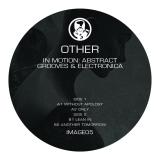
IMAGE Recordings emerges from the underground with its 5th transmission. Marking the label’s first release of the year, this 4-track EP is a mix of fresh sounding Techno, House and Electro tunes but still having the DNA of the late-90s groove to them. These are pure club tools that are made for the dance floor. Forget ordinary... This is the future..
In true IMAGE fashion, this is a strictly limited run with no repress.
In Motion: Abstract Grooves & Electronica
- Snakes & Ladders ( 05:33 )
- Anemoia ( 05:09 )
- Victorian Wraith ( 03:02 )
- 1890: ( 03:58 )
- Artificial Obsession ( 05:07 )
- Paris Sketch ( 05:47 )
- Perfect Toys ( 03:48 )
- Traveler ( 05:41 )
- Reveille ( 01:54 )
- Last Post ( 02:23 )
- A New Simulation ( 04:38 )
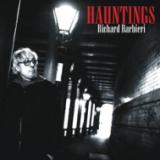
JAPAN & PORCUPINE TREE SYNTHESIST RICHARD BARBIERI RETURNS WITH NEW STUDIO ALBUM 'HAUNTINGS' GATEFOLD 2LP EDITION, PRESSED ON CLASSIC BLACK VINYL. Richard Barbieri remains one of contemporary music's most distinctive voices. Emerging as a key architect of the late '70s/'80s synthesiser revolution with David Sylvian's art-rock ensemble Japan, his visionary synthesiser programming expanded the horizons of electronic music & left a lasting mark on artists from The Human League & Duran Duran to Gary Numan & Talk Talk. His subsequent & ongoing tenure with Steven Wilson's legendary progressive outfit Porcupine Tree across albums such as 'In Absentia' (2002), 'Fear Of A Blank Planet' (2007) &, most recently, 'Closure/Continuation' (2022) further affirmed his status as one of the most intuitive & unique musicians of his generation.
'Hauntings' is Barbieri's first studio album since 2021's 'Under A Spell', deepening the pensive, dark instrumental aesthetic of its predecessor. A diverse collection of immersive sound worlds, both dark & uplifting in equal measure, 'Hauntings' is influenced by a nostalgia for the past & future, & for things that didn't happen yet still manage to haunt the mind & soul. What is real & what is simulation? The album finds Barbieri at the height of his powers, his deft keyboard & sonic architecture conjuring a shadowy, creeping Lovecraftian atmosphere. The music wanders through the streets of a gloomy lamp-lit Victorian London & drifts into grain-speckled snapshots of Belle Époque Paris. These journeys into the past are contrasted with nihilistic but euphoric forays into the future, "Traveler" & "A New Simulation" bristling with the itchy modern anxiety that often runs through his best work. Contrasting the sound designs & electronics of Barbieri, the album features performances from renowned musicians Morgan Agren (drums & percussion), Percy Jones (bass guitar) & Luca Calabrese (trumpet). This 2LP 45 RPM edition of 'Hauntings' is presented in gatefold packaging & pressed on classic black vinyl.
- 01: What A Night
- 02: I Feel Numb (Ft. Marco Cinelli)
- 03: Time Out (Ft. Benin International Musical)
- 04: Superchild
- 05: Don&Apos;T You Make Plans On Rainy Days (Ft. Ben L&Apos;Oncle Soul)
- 06: Midnight Hour
- 07: Shouldn&Apos;T Talk About It
- 08: It&Apos;S Alright
Time Out, a pause, like an injunction to suspend the course of events in order to project oneself into a more serene future, is the title of Malted Milk's eighth album. From the haunting Afro beat of the title track to the decadent boogaloo of "I Feel Numb", via the ballad "What a Night" and the funky "It's Alright" , the band demonstrates i ts mastery of arrangements, its creative ability and its talent for revisiting the soul/funk genre. As with the previous album, 1975, Marco Cinelli is back on writing and production duties, bringing undeniable added value to the band's sound and aesthetic. The live translation of this album bears Malted Milk's trademark precision, energy, instrumental talent and group cohesion. Malted Milk once again demonstrates its musical strength and affirms the special place the band occupies on the current soul scene.
- A1: Volleyball
- A2: Ignored
- A3: 9-2-5
- A4: Boyfriend
- A5: Demolition Man
- A6: Shift
- A7: Gusto
- B1: Imagine
- B2: In The Dark
- B3: Shadow Work
- B4: Enemy
- B5: Beast
- B6: Gimmie Love
Swedish visionary Boko Yout is releasing their long-awaited debut album GUSTO, out via Hoopdiggas Recordings.
GUSTO is Boko Yout’s debut album – a kaleidoscopic journey through memory, trauma, humour and healing. Framed as a fictional therapy programme led by the eccentric Dr. Gusto, each track represents a confrontation with a different shadow of the self: unspoken fears, inherited burdens, or unresolved inner conflicts. But GUSTO is not just about darkness – it’s also about hope, longing and the light that makes those shadows visible in the first place.
Boko Yout weaves together raw emotion, spiritual symbolism and bold experimentation. Referencing vodun philosophy, Jungian archetypes and post-genre production, they draws inspiration from artists like Yves Tumor, Odd Future and LCD Soundsystem. The result is a debut that feels more like a sonic manifesto – driven by love, intention and a deep commitment to artistic freedom.
legwork Barcelona launches its inaugural release, thoughtfully titled in Catalan: ‘PEUS I ÀNIMA’, dedicated to the global spirit of dance music.
All 4 cuts come from a live set recorded in 2025 at a legwork party. They were then postproduced and re-jammed in 2026 to create this 12" built strictly for the floor. This creative process is intended to continue in future EPs.
Across the tracks, the signal mutates while always keeping that raw energy alive. The whole concept comes from a deeply personal mix of self-doubt, determination, friendship, and a pure passion for music and dancing.
Solid, no-nonsense material.
Mastered by Johanz Westerman
Artwork & design by PEBE Studio
- A1: Healer
- A2: Florence
- A3: Wasn’t Enough
- A4: Lailonie
- A5: Don’t Wait
- A6: Amor
- A7: There For Me
- A8: My Stripes
- B1: Over & Over
- B2: Healer (Guy J Remix)
- B3: Foss
- B4: Beech Street (Simon Doty Remix)
- B5: Foss (Eelke Kleijn Remix)
- B6: Carme
- B7: Beech Street
Brighton-born, Cincinnati-based producer Marsh a.k.a Tom Marshall. ‘Lailonie’ is Marsh’s second studio album and debut Anjunadeep LP. After joining Anjunadeep back in 2018 via ‘Explorations 07’ with ‘Black Mountain’, Marsh has gone on to release a string of well received original EPs including ‘Prospect’ with label mate Nox Vahn, ‘Eu Topos’ and his latest ‘Lost In You’ as well as remixing some of the biggest artists in dance music including Above & Beyond and Armin van Buuren.
Marsh has previously released on Silk Music, where he released his debut album ‘Life On The Shore’ in 2017; and Enhanced Music’s progressive house imprint Colourize. Over the past 2 years, Marsh has become a firm Anjunadeep fan favourite all the while establishing himself as a future star of the electronic scene with a steady stream of tastemaker backing from Joris Voorn, Rufus Du Sol, Kölsch and BBC Radio 1’s Pete Tong and Phil Taggart. Recent years have seen him tour globally with Above & Beyond as well as share the bill with legends like Sasha & Digweed and Guy J.
UILTY RAZORS, BONA FIDE PUNKS.
Writings on the topic that go off in all directions, mind-numbing lectures given by academics, and testimonies, most of them heavily doctored, from those who “lived through that era”: so many people today fantasize about the early days of punk in our country… This blessed moment when no one had yet thought of flaunting a ridiculous green mohawk, taking Sid Vicious as a hero, or – even worse – making the so-called alternative scene both festive and boorish. There was no such thing in 1976 or 1977, when it wasn’t easy to get hold of the first 45s by the Pistols or the Clash. Few people were aware of what was happening on the fringes of the fringes at the time. Malcolm McLaren was virtually unknown, and having short hair made you seem strange. Who knew then that rock music, which had taken a very bad turn since the early 1970s, would once again become an essential element of liberation? That, thanks to short and fast songs, it would once again rediscover that primitive, social side that was so hated by older generations? Who knew that, besides a few loners who read the music press (it was even better if they read it in English) and frequented the right record stores? Many of these formed bands, because it was impossible to do otherwise. We quickly went from listening to the Velvet Underground to trying to play the Stooges’ intros. It’s a somewhat collective story, even though there weren’t many people to start it.
The Guilty Razors were among those who took part in this initial upheaval in Paris. They were far from being the worst. They had something special and even released a single that was well above the national average. They also had enough songs to fill an album, the one you’re holding. In everyone’s opinion, they were definitely not among the punk impostors that followed in their wake. They were, at least, genuine and credible.
Guilty Razors, Parisian punk band (1975-1978). To understand something about their somewhat linear but very energetic sound, we might need to talk about the context in which it was born and, more broadly, recall the boredom (a theme that would become capital in punk songs) coupled with the desire to blow everything off, which were the basis for the formation of bands playing a rejuvenated rock music ; about the passion for a few records by the Kinks or the early Who, by the Stooges, by the Velvet mostly, which set you apart from the crowd.
And of course, we should remember this new wave, which was promoted by a few articles in the specialized press and some cutting-edge record stores, coming from New York or London, whose small but powerful influence could be felt in Paris and in a handful of isolated places in the provinces, lulled to sleep by so many appalling things, from Tangerine Dream to President Giscard d’Estaing...
In 1975-76, French music was, as almost always, in a sorry state ; it was still dominated by Johnny Hallyday and Sylvie Vartan. Local rock music was also rather bleak, apart from Bijou and Little Bob who tried to revive this small scene with poorly sound-engineered gigs played to almost no one.
In the working class suburbs at the time, it was mainly hard rock music played to 11 that helped people forget about their gruelling shifts at the factory. Here and there, on the outskirts of major cities, you still could find a few rockers with sideburns wearing black armbands since the death of Gene Vincent, but it wasn’t a proper mass movement, just a source of real danger to anyone they came across who wasn't like them. In August 1976, a festival unlike any other took place in Mont-de-Marsan – the First European Punk Festival as the poster said – with almost as many people on stage as in the audience. Yet, on that day, a quasi historical event happened, when, under the blazing afternoon sun, a band of unknowns called The Damned made an unprecedented noise in the arena, reminiscent of the chaotic Stooges in their early adolescence. They were the first genuine punk band to perform in our country: from then on, anything was possible, almost anything seemed permissible.
It makes sense that the four+1 members of Guilty Razors, who initially amplified acoustic guitars with crappy tape recorder microphones, would adopt punk music (pronounced paink in French) naturally and instinctively, since it combines liberating noise with speed of execution and – crucially – a very healthy sense of rebellion (the protesters of May 1968 proclaimed, and it was even a slogan, that they weren’t against old people, but against what had made them grow old. In the mid-1970s, it seemed normal and obvious that old people should now ALSO be targeted!!!).
At the time, the desire to fight back, and break down authority and apathy, was either red or black, often taking the form of leafleting, tumultuous general assemblies in the schoolyard, and massive or shabby demonstrations, most of the time overflowing with an exciting vitality that sometimes turned into fights with the riot police. Indeed, soon after the end of the Vietnam War and following Pinochet’s coup in Chile, all over France, Trotskyist and anarcho-libertarian fervour was firmly entrenched among parts of the educated youth population, who were equally rebellious and troublemakers whenever they had the chance. It should also be noted that when the single "Anarchy in the UK" was first heard, even though not many of us had access to it, both the title and its explosive sound immediately resonated with some of those troublemakers crying out for ANARCHY!!! Meanwhile, the left-wing majority still equated punks with reckless young neo-Nazis. Of course, the widely circulated photos in the mainstream press of Siouxsie Sioux with her swastikas didn’t necessarily help to win over the theorists of the Great Revolution. It took Joe Strummer to introduce The Clash as an anti-racist, anti-fascist and anti-ignorance band for the rejection of old-school revolutionaries to fade a little.
The Lycée Jean-Baptiste Say at Porte d’Auteuil, despite being located in the very posh and very exclusive 16th arrondissement of Paris, didn’t escape these "committed" upheavals, which doubled as the perfect outlet for the less timid members of this generation.
“Back then, politics were fun,” says Tristam Nada, who studied there and went on to become Guilty Razors’ frontman. “Jean-Baptiste was the leftist high-school in the neighbourhood. When the far right guys from the GUD came down there, the Communist League guys from elsewhere helped us fight them off.”
Anything that could challenge authority was fair game and of course, strikes for just about any reason would lead to increasingly frequent truancy (with a definitive farewell to education that would soon follow). Tristam Nada spent his 10th and 11th unfinished grades with José Perez, who had come from Spain, where his father, a janitor, had been sentenced to death by Franco. “José steered my tastes towards solid acts such as The Who. Like most teenagers, I had previously absorbed just about everything that came my way, from Yes to Led Zeppelin to Genesis. I was exploring… And then one day, he told me that he and his brother Carlos wanted to start a rock band.” The Perez brothers already played guitar. “Of course, they were Spanish!”, jokes their singer. “Then, somewhat reluctantly, José took up the bass and we were soon joined by Jano – who called himself Jano Homicid – who took up the rhythm guitar.” Several drummers would later join this core of not easily intimidated young guys who didn’t let adversity get the better of them.
The first rehearsals of the newly named Guilty Razors took place in the bedroom of a Perez aunt. There, the three rookies tried to cover a few standards, songs that often were an integral part of their lives. During a first, short gig, in front of a bewildered audience of tough old-school rockers, they launched into a clunky version of the Velvet Underground's “Heroin”. Challenge or recklessness? A bit of both, probably… And then, step by step, their limited repertoire expanded as they decided to write their own songs, sung in a not always very accurate or academic English, but who cared about proper grammar or the right vocabulary, since what truly mattered was to make the words sound as good as possible while playing very, very fast music? And spitting out those words in a language that left no doubt as to what it conveyed mattered as well.
Trying their hand a the kind of rock music disliked by most of the neighbourhood, making noise, being fiercely provocative: they still belonged to a tiny clique who, at this very moment, had chosen to impose this difference. And there were very few places in France or elsewhere, where one could witness the first stirrings of something that wasn’t a trend yet, let alone a movement.
In the provinces, in late 1976 or early 1977, there couldn’t be more than thirty record stores that were a bit more discerning than average, where you could hear this new kind of short-haired rock music called “punk”. The old clientele, who previously had no problem coming in to buy the latest McCartney or Aerosmith LP, now felt a little less comfortable there…
In Paris, these enlightened places were quite rare and often located nex to what would become the Forum des Halles, a big shopping mall. Between three aging sex workers, a couple of second-hand clothes shops, sellers of hippie paraphernalia and small fashion designers, the good word was loudly spread in two pioneering places – propagators of what was still only a new underground movement. Historically, the first one was the Open Market, a kind of poorly, but tastefully stocked cave. Speakers blasted out the sound of sixties garage bands from the Nuggets compilation (a crucial reference for José Perez) or the badly dressed English kids of Eddie and the Hot Rods. This black-painted den was opened a few years earlier by Marc Zermati, a character who wasn’t always in a sunny disposition, but always quite radical in his (good) choices and his opinions. He founded the independent label Skydog and was one of the promoters of the Mont-de-Marsan punk festivals. Not far from there was Harry Cover, another store more in tune with the new New York scene, which was amply covered in the house fanzine, Rock News (even though it was in it that the photos of the Sex Pistols were first published in France).
It was a favorite hang-out of the Perez brothers and Tristam Nada, as the latter explained. “It’s at Harry Cover’s that we first heard the Pistols and Clash’s 45s, and after that, we decided to start writing our first songs. If they could do it, so could we!”
The sonic shocks that were “Anarchy in the UK”, “White Riot” or the Buzzcocks’s EP, “Spiral Scratch” – which Guilty Razors' sound is reminiscent of – were soon to be amplified by an unparalleled visual shock. In April 1977, right after the release of their first LP, The Clash performed at the Palais des Glaces in Paris, during a punk night organised by Marc Zermati. For many who were there, it was the gig of a lifetime…
Of course, Guilty Razors and Tristam were in the audience: “That concert was fabulous… We Parisian punks were almost all dressed in black and white, with white shirts, skinny leather ties, bikers jackets or light jackets, etc. The Clash, on the other hand, wore colourful clothes. Well, the next day, at the Gibus, you’d spot everyone who had been at this concert, but they weren’t wearing anything black, they were all wearing colours.”
It makes sense to mention the Gibus club, as Guilty Razors often played there (sometimes in front of a hostile audience). It was also the only place in Paris that regularly scheduled new Parisian or Anglo-Saxon acts, such as Generation X, Siouxsie and the Banshees, the Slits, and Johnny Thunders who would become a kind of messed-up mascot for the venue. A little later, in 1978, the Rose Bonbon – formerly the Nashville – also attracted nightly owls in search of electric thrills… In 1977, the iconic but not necessarily excellent Asphalt Jungle often played at the Gibus, sometimes sharing the bill with Metal Urbain, the only band whose aura would later transcend the French borders (“I saw them as the French Sex Pistols,” said Geoff Travis, head of their British label Rough Trade). Already established in this small scene, Metal Urbain helped the young and restless Guilty Razors who had just arrived. Guitarist for Metal Urbain Hermann Schwartz remembers it: “They were younger than us, we were a bit like their mentors even if it’s too strong a word… At least they were credible. We thought they were good, and they had good songs which reminded of the Buzzcocks that I liked a lot. But at some point, they started hanging out with the Hells Angels. That’s when we stopped following them.”
The break-up was mutual, since, Guilty Razors, for their part, were shocked when they saw a fringe element of the audience at Metal Urbain concerts who repeatedly shouted “Sieg Heil” and gave Nazi salutes. These provocations, even still minor (the bulk of the skinhead crowd would later make their presence felt during concerts), weren’t really to the liking of the Perez brothers, whose anti-fascist convictions were firmly rooted. Some things are non-negotiable.
A few months earlier (in July 1978), Guilty Razors had nevertheless opened very successfully for Metal Urbain at the Bus Palladium, a more traditonally old-school rock night-club. But, as was sometimes the case back then, the night turned into a mass brawl when suburban rockers came to “beat up punks”.
Back then, Parisian nights weren’t always sweet and serene.
So, after opening as best as they could for The Jam (their sound having been ruined by the PA system), our local heroes were – once again – met outside by a horde of greasers out to get them. “Thankfully,” says Tristam, “we were with our roadies, motorless bikers who acted as a protective barrier. We were chased in the neighbouring streets and the whole thing ended in front of a bar, with the owner coming out with a rifle…”
Although Tristam and the Perez brothers narrowly escaped various, potentially bloody, incidents, they weren’t completely innocent of wrongdoing either. They still find amusing their mugging of two strangers in the street for example (“We were broke and we simply wanted to buy tickets for the Heartbreakers concert that night,” says Tristam). It so happened that their victims were two key figures in the rock business at the time: radio presenter Alain Manneval and music publisher Philippe Constantin. They filed a complaint and sought monetary compensation, but somehow the band’s manager, the skilful but very controversial Alexis, managed to get the complaint withdrawn and Guilty Razors ended up signing with Constantin with a substantial advance.
They also signed with Polydor and the label released in 1978 their only three-track 45, featuring “I Don't Wanna be A Rich”, “Hurts and Noises” and “Provocate” (songs that exuded perpetual rebellion and an unquenchable desire for “class” confrontation). It was a very good record, but due to a lack of promotion (radio stations didn’t play French artists singing in English), it didn’t sell very well. Only 800 copies were allegedly sold and the rest of the stock was pulped… Initially, the three tracks were to be included on a LP that never came to be, since they were dropped by Polydor (“Let’s say we sometimes caused a ruckus in their offices!” laughs Tristam.) In order to perfect the long-awaited LP, the band recorded demos of other tracks. There was a cover of Pink Floyd's “Lucifer Sam” from the Syd Barrett era – proof of an enduring love for the sixties’ greats –, “Wake Up” a hangover tale and “Bad Heart” about the Baader-Meinhof gang, whose actions had a profound impact on the era and on a generation seeking extreme dissent... On the album you’re now discovering, you can also hear five previously unreleased tracks recorded a bit later during an extended and freezing stay in Madrid, in a makeshift studio with the invaluable help of a drummer also acting as sound engineer. He was both an enthusiastic old hippie and a proper whizz at sound engineering. Here too, certain influences from the fifties and sixties (Link Wray, the Troggs) are more than obvious in the band’s music.
Shortly after a final stormy and rather barbaric (on the audience’s side) “Punk night” at the Olympia in June 1978, Tristam left the band ; his bandmates continued without him for a short while.
But like most pioneering punk bands of the era, Guilty Razors eventually split up for good after three years (besides once in Spain, they’d only played in Paris). The reason for ceasing business activities were more or less the same for everyone: there were no venues outside one’s small circuit to play this kind of rock music, which was still frightening, unknown, or of little interest to most people. The chances of recording an LP were virtually null, since major labels were only signing unoriginal but reassuring sub-Téléphone clones, and the smaller ones were only interested in progressive rock or French chanson for youth clubs. And what about self-production? No one in our small safety-pinned world had thought about it yet. There wasn’t enough money to embark on that sort of venture anyway.
So yes, the early days of punk in France were truly No Future!
"Invaders Must Die" is The Prodigy"s 5th album, and is 40 minutes of having your head battered by future nostalgia, serotonin levels twisted by feel-good horrorcore and your synapses snapped by whiplash attitude. It"s the sound of The Prodigy mixing up genres, contorting the past and rewiring the future, ram-raiding through the tranquility of music"s status quo like a blot on the landscape of England"s dreaming. The first thing you notice about "Invaders Must Die" is how complete it sounds, a consistent collection of bangers all firing from the same cannon. The next thing you notice about "Invaders Must Die" is just how melodic it is. Not just melody in the vocal sense but in the heyday-of-hardcore keyboard-hookline sense. Yes, if The Prodigy have learned anything from the hugely successful live shows it was that those old skool rave anthems still rock hard - and are every bit as iconic to their generation as punk was to the nation"s forty-somethings. So "Invaders Must Die" is awash with references to the free party generation, thundering along like the mother of all E-rushes, all hairs tingling, spine jumping and lips buzzing. But not a retroactive arms-in-the-air, water-sharing nostalgia trip, but a set fuelled by punk"s saliva-dripping rabid snarl. "Invaders" also features Dave Grohl drumming on "Run With The Wolves".
- 1: Into The Garden Of Grief
- 2: Reborn
- 3123: 9
- 4: Lifelong Sentence
- 5: Quick To Forget
- 6: Earth
- 7: Hq
- 8: Through The Poison
- 9: Procrastination-Frustration
- 10: Creepy Reaper
- 11: Sex Beat
Ok Leute, die fünf legendären Thrasher aus Antwerpen kommen mit einem dicken Moshbrett zurück auf das europäische Crossover-Parkett! Glatte 9 Jahre nach 20 Last Century brettert "Future Is Calling" straighter und direkter, aggressiver als je gehört - I know, das liest man bei jeder neuen Platte, aber hier stimmt es ausnahmsweise mal. Im Ernst, das neue Zeug klingt in keinster Weise angestaubt oder so, als wäre es schon das 100. Mal wieder aufgewärmt - im Gegenteil: Toxic Shock hat die kleine Pause der letzten Jahre offensichtlich gutgetan und ordentlich Fuel in den Motor geschüttet. Hier passt alles - die Gitarren sind super aufeinander abgestimmt, das Drumming ist tight und vor allem Wally, der Sänger, hat einen fetten Sprung in die A-Liga der Shouter geschafft. Aber klar - Toxic Shock erfinden das Crossover-Thrash-Game nicht neu, im Gegenteil, sie zollen den Großen des Genres Tribut! Klar, Excel, Suicidal Tendencies, Testament - das sind die Referenzen. Gleichzeitig merkt man die Hardcore/Punk-Wurzeln der fünf - nicht zuletzt durch das überaus passende und gelungene Cover von The Gun Club. Und fun fact - bei dem Gun Club-Song klingen Toxic Shock stellenweise wie Lee Hollis zu seinen besten Spermbirds-Zeiten! Was "Future Is Calling" aber wirklich auszeichnet, ist diese rohe, ungebremste Energie, die trotzdem nie ins Chaos kippt. Die Songs sind kompakt, kommen schnell auf den Punkt und haben trotzdem genug Hooks, um im Ohr zu bleiben. Kein unnötiger Schnickschnack, kein selbstverliebtes Gefrickel - einfach ehrlicher, wuchtiger Crossover mit Haltung. Genau so muss das 2020er-Thrash-Revival klingen. Moshpit-Garantie inklusive.
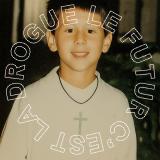
Le Futur c’est la drogue, which should here be translated as The Future Is the Drug, is not to be read as a promise, but as a statement of fact. The present is no longer an experience, but pure consumption. Life itself has taken the form of a dependency.
With this sixth album, Christophe Clébard goes straight to the point, driven by a free and repetitive form of writing, stripped of any syntactic rigidity. Words strike like balls against a wall, revealing darker zones of his mind where guilt, fear, and existential anxiety coexist.
The sound composition, equally minimal, sustains a dense and obsessive mental space, a vortex in which trance appears as the only escape. Driving drum machines, relentlessly hammered electronic loops, and a battered synthesizer, his music unfolds within a physical, strangely hypnotic synth-punk aesthetic that hits viscerally.
The Future Is the Drug is his sixth album.
DJ Support: Luke Una, Leftfield, Ewan McVicar, Optimo, Damian Lazarus, Jimpster, Hifi Sean, Lovefingers, Heidi Lawden, Justin Robertson, Damian Harris, Sean Johnston (ALFOS)
Electronic music icon Jon Dasilva continues to push forward into the future with “Sun Brings Joy”, alongside Swedish production compadre Skyskrapa and vocalist extraordinaire Donald Waugh.
Coming in a few different flavours, the Bass ID mix has already piqued interest on the socials... is it house? Is it techno? Is it bass music? Who knows, but Luke Una has already called it “the tune of the year”…
The package is completed with a remix from in demand genre bending dj/producer Spatial Awareness.
A mercurial producer, he has had a string of cutting-edge productions to his name spanning over two decades, on labels including Ellum Audio, Rush Hour, Soma, Mute, Deconstruction, Better Days, Eskimo, and many more. His early productions were considered seminal works, combining breaks, African influences, Acid and Bleep culture.
He is in the process of finishing a number of electronic projects for labels such as Balkan Vinyl, Mighty Force, I Love Acid and Hottwerk.
Heavyweight psychedelic improvisers EarthBall are back with their third and most monstrous record to date: ‘Outside Over There’, released on Upset The Rhythm (Nov 7th). Born from the haunted basements of Nanaimo, Canada, the quintet thrives on spontaneity, shaping improvisation into jagged hallucinations and ecstatic eruptions.
Recorded live-off-the-floor in 2024 in Jeremy, Izzy, and Kellen’s basement, and mixed by drummer John Brennan, ‘Outside Over There’ is an album that feels both summoned and inevitable. Each track lands with uncanny purpose, as if uncovered rather than written.
The opener, 100%, features a cameo from comedian and English icon Stewart Lee, who lent his blessing for the band to use a fragment of his stand-up. The album was mastered by John Dieterich (Deerhoof), with liner text contributed by longtime comrade John Olson (Wolf Eyes). Olson describes the album in his unmistakable style:
“This eight-track odyssey unfolds like a dreamscape, where whispered incantations brush against the shadowy fringes of the cosmos, and wild, Cézanne-inspired rock anthems erupt like geysers of color in the midst of a western warm and wet rain storm… culminating in the sprawling eleven minute masterpiece, ‘And The Music Shall Untune The Sky,’ aptly dubbed the Earth Crusher. A creation so utterly deconstructed and intertwined with the pulse of nature itself that if AI was called upon to conceive ‘Outside Over There’ anew, it would just spit back, “F.U. in Tree Font”. An enchanting invitation for even the flat-earthers to join the circle, if only just a little.”
EarthBall’s trajectory has been relentless. Their 2024 album ‘It’s Yours’ was praised by The Quietus as “fully aggressive and fully life-affirming,” and by The Wire as "a boisterous mind-melting album”. The band’s live double set LP ‘Actual Earth Music Vol. 1 & 2’ (2025) captured blistering performances: a performance opening for Wolf Eyes at the Fox Cabaret, and a Café OTO improvised throw-down featuring Chris Corsano and Steve Beresford. These releases on their own confirm them as one of Canada’s most vital experimental exports, not to mention the impressive self-released discography on their Bandcamp. The band’s reach has stretched far beyond their west coast roots with a UK tour May 2024, plus this past June, EarthBall closed Montreal’s Suoni Per Il Popolo Festival alongside Pulitzer Prize-winning composer Raven Chacon. This November they will perform at Le Guess Who? Festival in Utrecht, with a European tour to follow (tour dates below). Outside of EarthBall, each member carries their own torch. Jeremy Van Wyck, founding member of the legendary Shearing Pinx, has toured extensively, released over 100 records, and has been a vital force in the Vancouver and West Coast underground for the past 25 years. He and Isabel Ford (Izzy) play together not only in EarthBall, but also in Psychedelic Dirt, Shearing Pinx, Behaviours, and Crotch.
John Brennan collaborates widely, including recently with Endlings (Raven Chacon and John Dieterich), Evichen (Victoria Shen), Francesco Fonassi, Plan Your Future (with Greg Saunier of Deerhoof), Brennan/Corsano duo and Physics with John Dieterich. Kellen Maclaughlin performs with KVMP and Ora Corgan, while saxophonist Liam Murphy is a west coast staple, playing with the best across Vancouver Island and the mainland. On three of the tracks of ‘Outside Over There’, the band is joined by their comrade Justin Patterson, who also plays with Brennan in the duo Modale. This cross-pollination fuels EarthBall’s sound - a collective improvisation, psychically overdriven, and grinding into bloom.
Outside Over There’ is more than an album though, it is a ritual, a gathering of sound at the forest’s edge; where feedback, saxophone screams, and ecstatic vocals dissolve the boundary between chaos and clarity. EarthBall invite you into their circle, to share in the joyful terror of spontaneous creation. ‘Outside Over There’ will be released on November 7th through Upset The Rhythm digitally and as a limited blue-in-black vinyl LP.
Heavyweight psychedelic improvisers EarthBall are back with their third and most monstrous record to date: ‘Outside Over There’, released on Upset The Rhythm (Nov 7th). Born from the haunted basements of Nanaimo, Canada, the quintet thrives on spontaneity, shaping improvisation into jagged hallucinations and ecstatic eruptions.
Recorded live-off-the-floor in 2024 in Jeremy, Izzy, and Kellen’s basement, and mixed by drummer John Brennan, ‘Outside Over There’ is an album that feels both summoned and inevitable. Each track lands with uncanny purpose, as if uncovered rather than written.
The opener, 100%, features a cameo from comedian and English icon Stewart Lee, who lent his blessing for the band to use a fragment of his stand-up. The album was mastered by John Dieterich (Deerhoof), with liner text contributed by longtime comrade John Olson (Wolf Eyes). Olson describes the album in his unmistakable style:
“This eight-track odyssey unfolds like a dreamscape, where whispered incantations brush against the shadowy fringes of the cosmos, and wild, Cézanne-inspired rock anthems erupt like geysers of color in the midst of a western warm and wet rain storm… culminating in the sprawling eleven minute masterpiece, ‘And The Music Shall Untune The Sky,’ aptly dubbed the Earth Crusher. A creation so utterly deconstructed and intertwined with the pulse of nature itself that if AI was called upon to conceive ‘Outside Over There’ anew, it would just spit back, “F.U. in Tree Font”. An enchanting invitation for even the flat-earthers to join the circle, if only just a little.”
EarthBall’s trajectory has been relentless. Their 2024 album ‘It’s Yours’ was praised by The Quietus as “fully aggressive and fully life-affirming,” and by The Wire as "a boisterous mind-melting album”. The band’s live double set LP ‘Actual Earth Music Vol. 1 & 2’ (2025) captured blistering performances: a performance opening for Wolf Eyes at the Fox Cabaret, and a Café OTO improvised throw-down featuring Chris Corsano and Steve Beresford. These releases on their own confirm them as one of Canada’s most vital experimental exports, not to mention the impressive self-released discography on their Bandcamp. The band’s reach has stretched far beyond their west coast roots with a UK tour May 2024, plus this past June, EarthBall closed Montreal’s Suoni Per Il Popolo Festival alongside Pulitzer Prize-winning composer Raven Chacon. This November they will perform at Le Guess Who? Festival in Utrecht, with a European tour to follow (tour dates below). Outside of EarthBall, each member carries their own torch. Jeremy Van Wyck, founding member of the legendary Shearing Pinx, has toured extensively, released over 100 records, and has been a vital force in the Vancouver and West Coast underground for the past 25 years. He and Isabel Ford (Izzy) play together not only in EarthBall, but also in Psychedelic Dirt, Shearing Pinx, Behaviours, and Crotch.
John Brennan collaborates widely, including recently with Endlings (Raven Chacon and John Dieterich), Evichen (Victoria Shen), Francesco Fonassi, Plan Your Future (with Greg Saunier of Deerhoof), Brennan/Corsano duo and Physics with John Dieterich. Kellen Maclaughlin performs with KVMP and Ora Corgan, while saxophonist Liam Murphy is a west coast staple, playing with the best across Vancouver Island and the mainland. On three of the tracks of ‘Outside Over There’, the band is joined by their comrade Justin Patterson, who also plays with Brennan in the duo Modale. This cross-pollination fuels EarthBall’s sound - a collective improvisation, psychically overdriven, and grinding into bloom.
Outside Over There’ is more than an album though, it is a ritual, a gathering of sound at the forest’s edge; where feedback, saxophone screams, and ecstatic vocals dissolve the boundary between chaos and clarity. EarthBall invite you into their circle, to share in the joyful terror of spontaneous creation. ‘Outside Over There’ will be released on November 7th through Upset The Rhythm digitally and as a limited blue-in-black vinyl LP.
A GOOD FUN record, the new album from Lipphead – aka the collaborative NYC duo consisting of the producer Tony Simon (Blockhead) and Eliot Lipp – will be the group’s 3rd official full- length, having released the first two records via Detroit’s Young Heavy Soul label.
Lipphead’s music occupies the sweet spot between Blockhead’s groovy, sample-based hip- hop and Eliot Lipp’s upbeat electronic funk. The duo have performed live at select festivals throughout North America and are booked to tour this album, 17 dates in the US starting right after release, April 3rd. European/UK festivals are confirmed in the summer and are waiting to be announced.
The internationally renowned NYC producer Tony Simon—aka Blockhead—has released 15 albums over the past 15 years, including four acclaimed records for Ninja Tune and numerous production jobs including notable works with Aesop Rock. He is regarded as one of the modern masters of instrumental hip-hop and has more recently been releasing music on other platforms like Future Archive Recordings and Backwoodz Studios.
Eliot Lipp is an electronic musician based in Brooklyn, New York. His work was picked up by Scott Herren of Prefuse 73 (Warp Records) after Herren heard him working the club circuit. In 2004, Lipp released his first studio album, S/T, with Eastern Developments Music, a label owned by Warp Records. Lipp has also released music with Pretty Lights Music and his own label Old Tacoma Records.
“Our process for this album was very much "Take this, and add to it" . We both made beats and sent them to the other to add things to. Eliot would generally start the arrangement process and then I'd come in and give my two cents. Gotta say, these Lipphead albums generally come together seamlessly . We definitely have a simple flow and method as to how we create things together, even though the "together" part comes at the end.” - Blockhead
“This is definitely the goofiest record so far. I imagine Lipphead did a little too much doomscrolling between ‘From The Back’ and this one, based on all the meme samples sprinkled throughout.
One difference this time around was that we made way more music than what ended up coming out. It was tough to figure out how to fit it all on one LP, we’ll definitely have some leftovers to drop later on.” - Eliot Lipp
- Ripples
- Driving To Austin
- Rewind
- Waiting For Sleep
- Fancy Free
- Water Montage
- Wake / The City / Sleep
- On Glass Ii
- In Motion
- Fancy Finish
- A Late Start
- Leaving Again
- Dazzling Showroom / Future City
- Winter Wave
- Swarm
- On Glass I
- Dap
- Ice Planet (Alt)
- Song From A Bedroom In Podunk Indiana
- Exiting
- Hi And Lo
- Sea Level
- Sequencer Sway
- Moonplay
- Aquarium
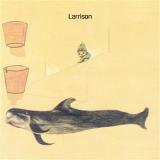
Connecters Vol. 1: Original Recordings, 1992-1999 ist die erste Veröffentlichung von Larrison, dem Pseudonym des bildenden Künstlers und Musikers Larrison Seidle aus dem Mittleren Westen. Larrison komponierte, programmierte und nahm alles komplett auf einem Casio CZ-5000 auf, während der guten alten Zeit der selbstgemachten Experimente und Entdeckungen in den frühen 90ern. Er lebte in einer Traumwelt, die er selbst erfunden hatte, mit Soundtracks aus Space-Age-Pop-Vignetten, gespickt mit hypnotischen, überschwänglichen, vielschichtigen Synthesizer-Melodien. Mit 26 Tracks, die alle neu restauriert und aus den Originalquellen gemastert wurden, erfindet sich Connecters Vol. 1 Song für Song neu, überwindet die Zeit und trotzt der vorbestimmten Vergessenheit dieser brillanten, diskreten Musik, die vor drei Jahrzehnten entstanden ist. Larrison Seidle wuchs in den 70er und 80er Jahren in Greenwood, Indiana, einem Arbeitervorort von Indianapolis, auf. Er stammte nicht aus einer Musikerfamilie, aber aus einem Haushalt, in dem Musikalität gefördert wurde. Sein Vater kaufte eine elektrische Orgel, in der Hoffnung, dass Larrison und sein älterer Bruder das Instrument lernen würden. ,Am Ende saß mein Vater einige Abende an der Orgel, improvisierte und spielte immer wieder dieses eine Lied, von dem ich mich noch an die ersten Takte erinnern kann", erinnert sich Larrison. Möglicherweise war es in diesem Moment, in dem es zwar keine formale Ausbildung gab, aber viel Ermutigung und Entdeckungsfreude, dass der Künstler seine ersten musikalischen Experimente machte. Diese Erlaubnis, sich auszuprobieren, sollte seine kreative Arbeit in den folgenden Jahren deutlich prägen. Während in Larrisons Elternhaus klassische Rockplatten leicht zugänglich waren, lieh sich sein Vater 35-mm-Dokumentarfilme aus der Bibliothek aus, um sie im Wohnzimmer zu zeigen, die alle mit skurrilen Instrumentalstücken unterlegt waren. Als Teenager nahm er John Carpenters und Alan Howarths Endthema aus ,Die Klapperschlange" mit einem kleinen Kassettenrekorder neben dem Fernsehlautsprecher auf und liebte Tangerine Dreams Beiträge zu Ridley Scotts düsterer Fantasy ,Legend". Seine Faszination für diese weitgehend textlosen, synthesizerbasierten Kompositionen führte zu einem eigenwilligen Verständnis davon, wie Musik nicht nur das ergänzt, was wir vor uns sehen, sondern auch das, was wir in den Tiefen unseres Bewusstseins erleben. 1985, als er dreizehn Jahre alt war, überzeugte Larrison seinen Vater, ihm ein Casio CZ-5000-Keyboard zu kaufen. Wie zuvor die Orgel war auch dieses Instrument eine Neuheit im Haushalt der Seidles. Erst nach seinem Highschool-Abschluss 1991 und dem Beginn seines Studiums an der Herron School of Art in Indianapolis entdeckte er den in das Casio integrierten Sequenzer und begann, seine Kompositionen auf Band aufzunehmen. ,Das CZ-5000 und sein 8-Spur-Sequenzer sind die einzigen Musikinstrumente, die ich benutzt habe. Es hat eine fast unbegrenzte Funktion zur Erzeugung neuer Klänge", erklärte Seidle. Während seiner Zeit an der Herron School of Art freundete sich Larrison mit seinem Kommilitonen und Klangkünstler Michael Northam an, den er bei einem Konzert auf dem Campus kennengelernt hatte. Nachdem Northam Larrison für die Musik von Severed Heads, Throbbing Gristle und Roger Doyle begeistert und damit seine Zuneigung und sein Vertrauen gewonnen hatte, überredete er ihn, nach Austin, Texas, zu ziehen, das in den frühen 90er Jahren für seine lebendige Kunst- und Musikszene bekannt war. Die beiden wohnten zunächst bei Northams Freund Daniel Plunkett, dem Herausgeber und Verleger von ND, einem einflussreichen Magazin, das sich von 1982 bis 1999 mit DIY-Musik und Tape-Trading beschäftigte. In seiner Blütezeit hatte ND Tausende von Lesern, und Plunkett verschickte die Ausgaben weltweit. In den letzten Monaten des Jahres 1993 und Anfang 1994 schrieb und nahm Larrison mit begrenzten Mitteln und grenzenloser Intuition eine Reihe von Songs mit seinem CZ-5000 in einer kleinen Wohnung nördlich der Innenstadt von Austin auf, bastelte eine farbenfrohe, illustrierte Beilage, in der einige Songtitel durch Linien oder Pfeile dargestellt waren, und gab sie an Plunkett weiter, damit er sie für ND rezensieren konnte. Diese einzelne Kassette mit dem Titel Connecters sic war eine von 1200, die im Laufe des Bestehens der Publikation bei ND eingereicht wurden und die Jed Bindeman, Mitbegründer von Freedom To Spend, 2020 erworben und fast wie durch ein Wunder entdeckt hat. ,Ich hatte große Schwierigkeiten, mir die Kassetten in dieser Sammlung anzuhören", gibt Bindeman zu. ,Aber dann legte ich Larrisons Connecters ein und dachte sofort: ,Wow! Was höre ich da?' Die Kassette war von Anfang bis Ende einfach fantastisch." Mit Musik von genau dieser Kassette und anderen Aufnahmen aus Larrisons Experimenten in den 90er Jahren ist Connecters eine Übersicht über Instrumentalmusik, die sowohl durch vielfältige konzeptionelle Strategien als auch durch spielerische Neugierde geprägt ist. Seidle arbeitete unter Bedingungen, die viele Musiker als Einschränkung empfinden würden, und entwickelte technisch innovative Ansätze, um die Klänge und integrierten Effekte des CZ-5000 zu modifizieren. Das Gerät ermöglichte es ihm, die Wellenform, die Hüllkurve und die Tonart von Klängen mithilfe der Phasenverzerrungssynthese zu verändern und so im Grunde genommen Instrumente zu schaffen, während er Songs komponierte. Die Tracks zeichnen sich durch eine durchdachte impressionistische Vielfalt aus, die mal lo-fi, mal symphonisch klingt. Inmitten der Zerlegung und Verstärkung der Fähigkeiten des CZ-5000 gibt es auch einen geschmackvollen Rückgriff auf eine kindliche Interaktion und Erfahrung von Klang. Vielleicht ist es diese Erfahrungsqualität, die es so schwierig macht, Larrisons Projekt einfach als Ambient oder Elektronik zu verstehen. Sein Wille, die ihm zur Verfügung stehenden Werkzeuge zu transformieren, hebt die daraus resultierenden Kompositionen auf eine persönliche Ebene und verleiht der Musik einen bezaubernden Sinn für Mystik. Connecters ist ein Beweis für eine künstlerische Vision, die sich nicht durch Grenzen einschränken lässt und keine Angst vor Informalität hat. Diese Aufnahmen, die dreißig Jahre nach ihrer Dokumentation auf magische Weise an die Oberfläche kommen, zeigen, wie personalisierte Produktionsmittel die Zeit ausdehnen und verkürzen können. Larrison lädt die Zuhörer ein, sich auf die Wunder der auditiven Vorstellungskraft einzulassen - eine Brücke zwischen visueller Erinnerung, emotionaler Resonanz und der grenzenlosen Möglichkeit, mit den uns zur Verfügung stehenden Mitteln Musik zu machen. Larrison's Connecters Vol. 1: Original Recordings, 1992-1999 wird am 3. April 2026 von Freedom To Spend als Vinyl- und Digitalausgabe veröffentlicht.
- 1: Bayou Sexual
- 2: The Long Way
- 3: Wet My Whistle
- 4: Enter The Ricola Man
- 5: Lightwork
- 6: Guano Be Startin’ Smethin’
- 7: Inbred & Butter
- 8: Candyman
- 9: Felix Navidaddy
- 10: Oh Face Killa
- 11: Mugsy Bogues
- 12: Castlegar
- 13: Virginity
blue vinyl[27,69 €]
A GOOD FUN record, the new album from Lipphead – aka the collaborative NYC duo consisting of the producer Tony Simon (Blockhead) and Eliot Lipp – will be the group’s 3rd official full- length, having released the first two records via Detroit’s Young Heavy Soul label.
Lipphead’s music occupies the sweet spot between Blockhead’s groovy, sample-based hip- hop and Eliot Lipp’s upbeat electronic funk. The duo have performed live at select festivals throughout North America and are booked to tour this album, 17 dates in the US starting right after release, April 3rd. European/UK festivals are confirmed in the summer and are waiting to be announced.
The internationally renowned NYC producer Tony Simon—aka Blockhead—has released 15 albums over the past 15 years, including four acclaimed records for Ninja Tune and numerous production jobs including notable works with Aesop Rock. He is regarded as one of the modern masters of instrumental hip-hop and has more recently been releasing music on other platforms like Future Archive Recordings and Backwoodz Studios.
Eliot Lipp is an electronic musician based in Brooklyn, New York. His work was picked up by Scott Herren of Prefuse 73 (Warp Records) after Herren heard him working the club circuit. In 2004, Lipp released his first studio album, S/T, with Eastern Developments Music, a label owned by Warp Records. Lipp has also released music with Pretty Lights Music and his own label Old Tacoma Records.
“Our process for this album was very much "Take this, and add to it" . We both made beats and sent them to the other to add things to. Eliot would generally start the arrangement process and then I'd come in and give my two cents. Gotta say, these Lipphead albums generally come together seamlessly . We definitely have a simple flow and method as to how we create things together, even though the "together" part comes at the end.” - Blockhead
“This is definitely the goofiest record so far. I imagine Lipphead did a little too much doomscrolling between ‘From The Back’ and this one, based on all the meme samples sprinkled throughout.
One difference this time around was that we made way more music than what ended up coming out. It was tough to figure out how to fit it all on one LP, we’ll definitely have some leftovers to drop later on.” - Eliot Lipp
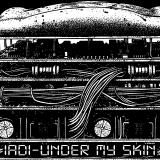
Between flesh and silicon. “Under My Skin” (2026) is the first album by IADI, released by Neo Life. A record like few
others, highly conceptual, cover art included. Its essence lies in the folds of the increasingly ambiguous relationship
between man and machine, where the former designs the latter and, perhaps without fully realizing it, is gradually
destined to adapt and be reprogrammed by it. Each track of “Under My Skin” is, in fact, a sort of interface, connector, or
any other imaginative point of contact between two creative phases, amid emotional impulses and binary calculations.
The sonic architecture oscillates between analog warmth and algorithmic coldness, constructing landscapes in which
pulsating synthesizers and mechanical rhythms seem to question each other. There's no linear narrative, but rather a
progressive immersion in a zone of near-friction, where the comfort of technology coexists with more than a faint
musical uneasiness, like a background noise that never ceases to remind you who's truly in charge. In “Under My Skin”,
the machine is neither an enemy nor a simple instrument: it's a real presence, intimate, even tactile, amplifying desires,
fears, and dreams of dawns beyond the digital realm. Intelligent dance music. Less noise, more sensations. Electronic,
but profoundly human.
The final result, then, is a music project that speaks to the present, yet sounds like an X-ray of the future, capturing that
fragile moment when humanity and technology stop observing each other from afar and begin to merge, track after
track. It's no coincidence that IADI's album opens with “Impulse”, an immediate expression of an electrical impulse, for
both humans and machines, which is also the language of the nervous system, as fast as it is vital—pure energy and
rhythm, a track as intense as it is irregular. And after this introduction, it's the turn of the equally erratic “Axon”, whose
title describes the neuron that transmits the signal over distance, telling the listener to sit back and relax for a new
journey through the notes toward the more melodic “Cortex”. The cerebral cortex, the ultimate seat of thought and
memory, becomes the source from which the musical flow of the first part of the work is drawn.
Then, suddenly, an automatic, or instinctive, response to the constant succession of impulses: “Reflex”, or zerotemperature techno, with a fragmented pace, featuring vocal samples, breaks, and restarts. In the producer's
imagination, the subsequent, and conversely placid, “Neuron” represents the emotional core of the second part of the
work, providing a kind of respite from the seething vibrations. While the neuron is the basic unit of the nervous system,
the synapse is the functional connection point between one neuron and another effector cell, essential for the
transmission of nerve impulses and communication in the nervous system, enabling functions such as learning and
movement. Likewise, a track like “Synapse” once again illuminates the path traced by IADI. The more experimental and
streamlined “Static” instead suggests true ordered chaos. “Dreamstate” is the conclusion suspended in the void, relating
to that dreamlike state between waking and sleeping, where consciousness fades toward infinity and visions begin. Pure
fading into the subconscious. Eternal return to where it all began. Dancing is a form of consciousness. Every beat is a
question. IADI, however, holds all the answers you need.
Ltd edition - Random Coloured Vinyl..
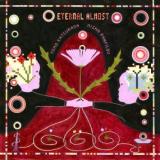
“Eternal Almost” is a collaborative album by Japanese musician Tomo Katsurada and Estonian composer Misha Panfilov. Born from the simple joy of songwriting and creative exchange, Tomo and Misha had long admired each other’s music from afar.
When the opportunity to collaborate finally arrived, it felt completely natural, and by the time the album was finished, it almost seemed as though the two had known each other always.
United by a shared sense of humour and musical curiosity, Tomo and Misha poured a raw, honest energy into these songs — one shaped by their intuitive rapport. In an increasingly artificial world, “Eternal Almost” subtly celebrates the qualities that make music feel most alive.
Amid the weight of our current times, the pair hope this album brings listeners a sense of lightness, joy, and of course—a gently surreal journey from beginning to end.
Solid Red Vinyl Edition - 10@ Mini album. Originally release in 2025 in a painfully limited 2x7" + Book edition.
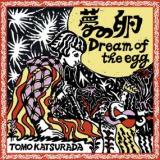
"Dream of the Egg" is the debut solo album by Tomo Katsurada, known for his work with the Japanese psychedelic band Kikagaku Moyo. This project is a unique fusion of music and visual art, inspired by the Japanese 1920s children's book “Yume No Tamago (Dream of the Egg)”. It reveals a deeply personal journey, reflecting Tomo's dreams and the numerous rebirths experienced in 2024—a year marked by profound new beginnings in every facet of his life.
This mini album was driven by a passion for raw and immediate expression. Every song was crafted and recorded with only the materials available to him at the time, embracing an organic and handmade atmosphere. By eschewing rhythm clicks and standard instrumental tunings, a spontaneous sound emerged, capturing the essence of both uncertainty and immediacy. Adding to this distinctive sonic landscape, guest musician Jonny Nash (UK) contributed ethereal guitar sounds on the first and final tracks, enriching the record's dream-like quality.
The journey begins with the opening track, "Moshimo," which means "If..." in Japanese. Here, Jonny's guitar weaves seamlessly with the vocal melody, creating a harmonious dialogue. The first half of the album concludes with "Zen Bungalow" a cover of Gabriel Yared's “Bungalow Zen” from the soundtrack of the film “Betty Blue 37°2 Le Matin”. This particular track is his partner’s favourite song to listen to every morning and left a profound impression on him. One day, he heard a song in his dream that combined both of these tracks and loved how they blended together. This experience inspired him to create a new arrangement, "Zen Bungalow," which has become a central piece of the “Dream of the Egg” album.
The third track serves as an interlude, printed on a flexi disk attached to the middle of a picture book. This interlude transitions the listener into"Inner Garden," a bittersweet folk song that explores themes of love. The EP's narrative spans 20 minutes, culminating in the final title track “Dream of the Egg”. This piece features a delicate session between Tomo & Jonny, combining cello and guitar to create a spectrum of tones that evoke the imagery of a rainbow. The focus on smooth dynamics and meticulous play reflects an intent to convey a sense of physical trembling. This track sounds like the beginning of a new dream; as if the egg of one’s dream is about to hatch, bringing a sense of anticipation and wonder to the listener. Throughout the album, a variety of instruments come into play, drifting between notes and embracing the beauty of imperfection. By incorporating free-form sounds in a highly technological age, the record aims to reconnect listeners with the tangible, human-made quality of sound.
Special Thanks
Jonny Nash – Guitar