Danza Tribale opens a new chapter in 2025 with MAITAKE - ??, the debut EP from Italian sound explorer Lo.Sai. Rooted in sonic tactility and movement, the project draws from both ancestral rhythms and experimental structures to create something intimate, immersive, and future-facing.
Named after the "dancing mushroom" from Japanese folklore, MAITAKE is inspired by the interconnected growth of mycelial networks and the emotional ecology of shared experience. Developed in collaboration with choreographer Maria Combi, the EP is a meditation on collective motion - where dance, rhythm, and ritual coalesce.
Across five tracks, Lo.Sai weaves together broken percussion, deep bass, fieldrecordings, and global rhythmic language. Fragments of flamenco, muezzin prayer, and Central African everyday rhythms float through the record - artefacts gathered by the artist's close-knit creative circle in Lunigiana. What emerges is not just a club record, but a living, breathing sonic organism.
Cerca:da future
Erik Rico returns to Cosmocities with The Rare Groove Project, a limited-edition EP featuring funk-heavy, soulful covers of groove gems from Matt Soulie’s vinyl vault, alongside standout remixes from Gerd, DJ Nature, and Aroop Roy.
The EP opens with a brassy, high-energy take on P.J. City’s Straight Forward, followed by Gerd’s Chicago house-inspired remix and a funkier alternate version full of disco-era charm. Rico then revamps Franklyn’s Future Love into an electrified P-funk boogie blast, while NYC’s DJ Nature turns out a synth-laced, bass-driven after-hours groove.
Rico also reworks Star Lighters’ Disco Funk into a high-impact, slap-bass purple tinged stomper, with UK house and jazz funk expert Aroop Roy rounding things out with a dancefloor house flavoured summer anthem.
Limited pressing—act fast.
The third installment of To Pikap's retrofuturistic series entitled ''Remember the future''. A compilation of various styles with heavy 90â??s influences. From the euphoric Rave tunes of Quazatron and Dj Tsoug to the dystopian Electro of BufoBufo and NOT_MDK and from DimDj's leftfield House to the quirkiest IDM of Damage Per Second. Limited pressing, including download code and sticker. No re-press!
- A1: Space Drift
- A2: Memory Loss
- A3: Siren-Call
- A4: Harmonisers Of The Spheres
- A5: Telepathy Beyond Time
- A6: Older Than Time
- A7: Congestion Hoe-Down
- A8: Shadowland
- A9: Celandine & Columbine
- A10: The Dying Of The Light
- A11: Cloud
- A12: Darkness At Noon
- A13: Future Perfect
- A14: The Killing Skies
- B1: Into The Depths She Calls
- B2: Lazy Summer Afternoons
- B3: Insects Revolt
- B4: Blood Runs Cold
- B5: Post Apocalypse Fog
- B6: Fish Don’t Cry
- B7: Ghost In The Abbey
- B8: Insects Dance
- B9: Dreams Of Magic & Cornfields
- B10: Devil’s Lightening
- B11: Danger Hurts
- B12: Why Me?
First ever release of pioneering radiophonic / experimental / electronic / soundtrack composer you may never have heard of but really should have by now. 26 tracks in all.
As we began the mammoth task of whittling down material for this album Elizabeth recalled the time she met Delia Derbyshire. It was during a party for existing and former Radiophonic Workshop composers at BBC Maida Vale in the early 1980s. Delia introduced herself with typical energy and exuberance proclaiming "It's up to you now - I'm passing the baton. Show these men how we get things done". That must have been quite an honour and responsibility for a young, female composer establishing herself within the male-dominated environs at Delaware Road.
Looking back over a musical career spanning almost five decades, it's clear Elizabeth rose to the challenge and made her mark. She was consistently in demand with television and radio producers, composing for an array of ground-breaking, critically acclaimed and popular BBC projects. Whilst Delia's legacy has achieved mythical status with her position as an innovator and feminist icon secured, the majority of Elizabeth's recorded work remains unavailable so her contribution to the output of the Workshop and evolution of British electronic music is somewhat under-appreciated.
Perhaps this record will help start to remedy the situation. Included are early tape experiments, home demos and non-BBC commissions from the early 1970's to the late 2000s. Having listened to 260+ digital audio tapes from Elizabeth's personal archive we have barely scratched the surface but hope to provide an indication of the breadth of her compositional and sound design skills.
Classically trained in cello and piano, Elizabeth graduated from the University of East Anglia with a degree in Music in 1973. She was mentored by Tristram Cary who helped her to become UEA's first recipient of a Masters in Electronic Music and later awarded an Honorary Doctorate by Staffordshire University. Joining the BBC as a studio manager in 1975, Elizabeth transferred to the Radiophonic Workshop in 1978. One of her first tasks was to create special sound effects for Blake's 7 using tape loops, the EMS 100 and trusted VCS3.
Her celebrated score for The Living Planet in 1982 featured early use of the PPG synthesizer and earned an Emmy nomination. Over the following years studio technology evolved rapidly, but Elizabeth transitioned from analogue recording techniques to newer digital platforms with relative ease, using samplers, midi sequencing and computer controlled workstations.
With an incredible 1,400 commissions to her name, she created special sound for The Day Of The Triffids, Lord Of The Rings, countless radio dramas including Iris Murdoch's The Sea, The Sea, Harold Pinter's Moonlight, all of Howard Barker's plays, productions of King Lear, Wordsworth's Prelude and The Pallisers. The success of The Living Planet led to further work for the BBC Natural History Unit followed by numerous commissions for The Natural World. At one point in the late 1980's at least five of her signature tunes were being broadcast every week including Points Of View, Horizon, Doctors To Be and Everyman.
After the closure of the Workshop in 1996 Elizabeth became freelance, arranging Faure's Pavane for the BBC World Cup '98 coverage (reaching no. 9 in the UK singles chart). She wrote additional music for Monty Python's Holy Grail DVD, scored Michael Palin's Full Circle and Sahara TV series, The Lost Gardens Of Heligan and The Human Body with Robert Winston.
Retiring from the music industry in the late 2000's, Elizabeth recently returned to her East Anglian roots and now lives near the coast. She walks daily, listening to all kinds of music, new and old, on her beloved air-pods.
Tom Esselle, staple of the South London music scene, hits his stride on Rhythm Section release Revolutions and Evolutions. Building on the success of his previous releases (Lou’s Groove on Rhythm Section’s Shouts 2021 compilation, Praise Bes EP on Wolf Music in 2022), his latest EP further showcases the breadth of his sound. Drawing on influences from across the house music spectrum and honing skills developed in the studio with Chaos In The CBD, Revolutions & Evolutions delivers a sound that looks boldly to the future while remaining firmly grounded in the classics.
The A-side is primed for peak dance floor action: Baddies features a mid-2000s RnB vocal that did serious damage when Bradley Zero played it at Circoloco last summer, while Plaything, a big-room tech-house banger, echoes Moon Harbour's tougher catalogue, or a skunked-out Gavin Herlihy.
The B-side is a slice of sunshine with One Of These Days, an uplifting daytime house track featuring a deft keys solo from Dave Koor (Albert’s Favourites, The Expansions, Modified Man). Harmonise rounds off the EP: a smoky, dreamy groover to warm up the party or lock it in during the early hours.
Tom has been producing music since 2010, patiently refining his sound. His 2015 debut, the choppy drum workout Until She Spoke on Wholemeal Music, became a quiet underground success played by luminaries like Ruf Dug and Gilles Peterson, and remains a staple in many a record bag to this day. His productions have also found their way into the collections of DJs from Moxie to Mr Scruff and Osunlade to DJ Harvey
The second of 2 EPs preceding the next FUTURE SOUND OF LONDON album in 2025
Multiple Angle Distortions EP ( M.A.D ) see FSOL moving into a darker percussive electronic soundscape - tinges of 303 acid mix with menacing orchestral compositions, Grammy nominated Daniel Pemberton makes an appearance on “Improvisations” - recorded live at a London fashion show - also recorded live is the final track Northern Point which uses two of FSOL’s own designed synthesizers ….
On its tenth anniversary outing, Sofia Records doesn’t just mark a milestone - it distills its essence in a four track EP. The compilation reunites the original, 25 year strong, pBPM crew and the fresh talent of Impe´rieux.
KiNK delivers a dancefloor juggernaut “Let The Bass Kink” - raw, kinetic and unmistakably his.
KEi counters with “Killing God Theme“ - a deep, hypnotic slow-burner, rich in emotion that evolves with patient intensity. Then we have the debut of Tegav - a new alias from the pBPM forming member Kalin Baychev with “Stomper“ - an edgy melody on top of a percussive backroom swagger. Impe´rieux, ever the outlier, continues his quest for dance music’s future with “Jarka”, a leftfield yet playful groove that breaks convention while rattling the floor.
With a smiling family snapshot, framed in smoke, strobe light and sweat, Sofia shows how to throw the needle where it matters - squarely pointed to the future.
- Full Grown Man
- Twirling In The Middle
- Jealous Boy
- Young Reader
- Beep Boop Computers
- Muck (Very Human Features)
- When The Little Choo Choo Train Toots His Little Horn
- How To Be A Confidante
- Living In The Future
- Tales Of A Visionary Teller
- The Sound Of Communism
- Blame Me
- Appropriate Emotions
The Bug Club sind wieder da, für ihren jährlichen Termin auf dem Markt der Garagen-Rock-Macher, wo sie eine weitere reinrassige Platte anpreisen. LP-Nummer vier, "Very Human Features", erscheint kurz nach der ersten Sub Pop-Veröffentlichung der Band, "On the Intricate Inner Workings of the System" von 2024. Mit dieser Platte setzte die Band ihre Liebesbeziehung zu BBC Radio 6 fort, begann dank einer Session mit KEXP eine neue und tauchte auf den Seiten des NME auf. Gibt es noch etwas auf der Liste? Oh ja, Festivalauftritte, unter anderem im heimischen Green Man's Walled Garden, das bis auf den letzten Platz gefüllt ist. Dann Auftritte in den USA an den Orten, von denen die Briten immer nur hören. Dieses Album - eine neue Ladung typisch verspielter, riffgeladener, intelligenter Bug Club-Songs - gibt der Band einen Vorwand, ihre nicht enden wollende Tournee fortzusetzen und ihre schreienden Fans zu füttern, die dank der unermüdlichen Veröffentlichungswelle dieser Band überschwänglich und erwartungsvoll sind. Auf "Very Human Features" haben The Bug Club ihre Gewohnheit fortgesetzt, sich als ein kollektiver Geist zu präsentieren. Zwei in Einem. Selten findet man eine Band mit zwei kreativen Kräften, die eine so einzigartige, gemeinsame Perspektive, Sinn für Humor und ein Händchen für Popmelodien haben. In "Beep Boop Computers" wechseln Sänger Sam (auch an der Gitarre) und Tilly (am Bass) zwischen I's, my's und we's hin und her, als ob es da keinen Unterschied gäbe, während sie zwischenmenschliche Beziehungen und Erfahrungen in einer glorreichen Glam-Rock-Demontage der menschlichen Aspekte, auf die der Titel des Albums verweist, auf die Schippe nehmen. Um beim Thema zu bleiben: "How to Be a Confidante" macht das, was The-Bug-Club wirklich können, indem sie, wieder als zwei Stimmen aus demselben Kopf, allgemeine Aspekte unseres Lebens herausgreifen und sie lächerlich klingen lassen. Das Surreale liegt im Vertrauten, nicht im Ignorieren des Vertrauten - The Bug Club wissen das, und dieses Verständnis bildet zusammen mit einer unerbittlichen Basslinie das Rückgrat dieses Garagenrock-angehauchten Gassenhauers. Nachdem The Bug Club in den USA dank der kräftigen Garagen-Punk-Scheibe "On the Intricate Inner Workings of the System" und der anschließenden US-Tournee eine entsprechend große Fangemeinde gewonnen haben, wird die fruchtbare Partnerschaft mit Sup Pop mit "Very Human Features" noch schmackhafter. Die neue Platte ist ein sicherer und unendlich witziger Wirbelwind aus literarischem, selbstreferenziellem und gut gelauntem Rock'n'Roll. Die Band reitet auf der immer weiter anschwellenden Welle ihrer Popularität, als ob sie auf Rollschuhen schnell über den Aldi-Parkplatz in Caldicot flitzen würde. Möge es lange so weitergehen.
Introspekt’s hotly anticipated debut album Moving The Center comes nearly a year after the release of her latest EP Tectónica. Set to be released on June 20th, Moving the Center sees Introspekt play homage to dubstep’s point of genesis in South London in order to then shift the center of focus from a singular point of origin, to a more global narrative of bass and vibration. The album blends UK bass with contrasting genres like garage and ballroom, creating the perfect feminine blend of these historically masculine genres. The album merges the Black diaspora from across the Atlantic, crafting a sonic world where past, present and future are parallel and immersed in an early millennium type dubstep soundscape.
Speaking about the album, Introspekt says, “‘Moving The Center’ embodies an alternate perspective to that which has been dominant in dance music, particularly so-called ‘bass music’. The narrative it presents is one which throws a wrench in the seemingly common perception of Dubstep as a masculinist sensibility. ‘Moving The Center’ pushes a feminine physicality to the front of the bassbins. Femmes to the front!”
- Reality Blur
- Unknown Threads
- Moving Underground
- Second Field
- Birds Eye View
- Birds Eye View 2
- Trembling Forest
TWICE A MAN pflanzten die Saat für "The Coloured Breeze Is a New Dimension" mit dem Song 'Dahlia', einem "neuen" Stück, das sie zur Ergänzung der Albumkompilation "Songs of Future Memories" geschrieben hatten. Drei Jahre lang düngte und hegte das schwedische Dark-Electronic-Trio den Keim, bis er feste Wurzeln in ihrem musikalischen Erbe fand und damit begann, neugierige Ableger in neue fruchtbare Böden jenseits der zuvor errichteten Klanggartenmauern zu senden. "The Coloured Breeze Is a New Dimension" ist ein organisches Gebilde, das etwas Neues schafft, indem es seine musikalische DNA auf verschiedene Weise rekombiniert. Als Ergebnis erblühen die frischen Songs in vielen elektronischen Farbnuancen. TWICE A MAN waren schon immer Vorreiter. In ihrem Heimatland Schweden waren sie die anerkannten Pioniere der elektronischen Musik. Und schon lange bevor es in Mode kam, positionierten sich die Schweden als selbstbewusste Umweltschützer. Musikalisch wurden sie liebevoll mit Bezeichnungen versehen wie: "Ultravox auf Gras - wenn auch melancholisch und ohne zuckriges Pathos" oder "wie ein trauriger Gary Numan, aber mit einem warmen, organischen Touch". In ihrem Sound finden sich auch sanfte Anklänge an TANGERINE DREAM, KLAUS SCHULZE und THE HUMAN LEAGUE neben vielen anderen möglichen Referenzen. Als sich Sänger, Gitarrist und Keyboarder Dan Söderqvist im Jahr 1977 mit dem Synthesizer-Spieler Karl Gasleben zusammenkam, gründete das Duo zunächst COSMIC OVERDOSE, die erste elektronische Band Skandinaviens, aus der dann TWICE A MAN hervorging. Während ihrer bemerkenswerten Karriere veröffentlichten die Schweden zahlreiche Alben, inklusive spezieller Projekte, und zwei Kompilationen. Sie spielten zahllose Konzerte und schufen den Soundtrack für sieben abendfüllende Theateraufführungen im Königlichen Dramatischen Theater in Stockholm, Musik für Filme, Ausstellungen, Tanzaufführungen und sogar Computerspiele. Die Natur spielt auch in den Texten und im Sound von "The Coloured Breeze Is a New Dimension" wieder eine große Rolle. TWICE A MAN haben ein musikalisches Äquivalent dazu geschaffen, Trost in der Natur, Kunst und der Freude an Büchern zu finden, um zumindest für eine Weile den Übeln der modernen Welt zu entkommen.
Repress of 2018’s classic compilation from Brownswood.
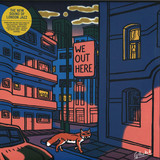
A primer on London’s bright-burning young jazz scene, this new compilation brings together a collection of some of its sharpest talents. A set of nine newly-recorded tracks, We Out Here captures a moment where genre markers matter less than raw, focused energy. Looking at the album’s running order, it could easily serve as a name-checking exercise for some of London’s most-tipped and hardworking bands of the past couple of years. Recorded across three long, fruitful days in a North West London studio, the crossover between each of the groups speaks to the close-knit circles which make up the scene.
Surveying the way that London’s jazz-influenced music had spread outside of its usual spaces in recent years, this album bottles up some of the vital ideas emanating from that burgeoning movement. Giving a platform to a scene where mutual cooperation and a DIY spirit are second-nature, it’s a window into the wide-eyed future of London’s musical underground.
Ubiquitous, much-lauded saxophonist Shabaka Hutchings is the project’s musical director. His own recent projects span from South Africa-connected, spiritually-minded jazz players Shabaka and the Ancestors to Sons of Kemet, who match diasporically-connected compositions with viscerally-direct live shows. His entry on the album, ‘Black Skin, Black Masks’, is typically difficult-to-define: with an off-kilter, shifting rhythmic backbone, repeated phrases – mirrored between clarinet and bass clarinet – shape the track with an alluring hue. His input ties together a deft, genre-agnostic sensibility that’s shared through all the players on the record.
Theon Cross – who’s also part of Sons of Kemet with Hutchings – starts his track, ‘Brockley’, with the solo, distinctive low rumble of his tuba. Winding and mesmeric, it sees tuba and sax lines winding together in rhythmic and melodic parallels. Ezra Collective – whose drummer and bandleader Femi Koleoso has toured with Pharaohe Monch – run a tight, Afrobeat-tipped rhythm on ‘Pure Shade’, with the final third changing gear into a melodic, momentous closing stretch.
Joe Armon-Jones, whose ludicrous chops on the piano have seen him touring with the likes of Ata Kak, showcases earworm-like, insistent motifs on ‘Go See’, balanced with a playful, improvisatory approach with room for ad-libbing and solos a-plenty. Taking a softer tact than many of the other entries, Kokoroko – whose guitarist Oscar Jerome has been making waves with his solo material – spin a lyrical, steady-paced meditation on ‘Abusey Junction’, matching chanted vocals with gently-played guitar.
Nodding to spiritual jazz influences, Maisha’s ‘Inside The Acorn’ is a wandering, explorative rumination, balancing delicate washes of piano and percussion with sharp interplay between flute and bass clarinet. In contrast, Nubya Garcia’s ‘Once’ is taut and carefully-poised, her tenor sax guiding a carefully-built energy to an explosive conclusion. And finally, Triforce’s ‘Walls’ is a performance in two parts: starting with Mansur Brown’s languorous, lyrical guitar, the second half switches up to a low-slung, g-funk-tipped groove.
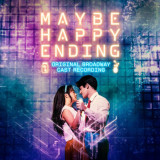
"Maybe Happy Ending Original Broadway Cast Recording
Ghostlight Records invites you to experience the Original Broadway Cast Recording of Maybe Happy Ending, the critically acclaimed new Broadway musical hailed as “One of The Very Best Scores to Hit Broadway in Years” by USA Today.
Set in the future, Maybe Happy Ending is a beautifully offbeat story about two outcasts near the end of their warranty who discover that even robots can be swept off their feet. Starring Emmy and Golden Globe Award winner Darren Criss (Glee, The Assassination of Gianni Versace: American Crime Story, American Buffalo, Little Shop of Horrors), Helen J Shen (The Lonely Few, Teeth), Dez Duron (NBC’s The Voice), and Marcus Choi (Wicked, Flower Drum Song), the album features an enchanting score by Will Aronson and Hue Park, and captures the heart of the show with standout songs like “World Within My Room,” “The Rainy Day We Met,” “The Way It Has to Be,” “Jenny,” ""Where You Belong,"" and ""Hitting The Road"
- A1: So Many Miles Away
- B1: Groovy Thang
Chicago recording artist Reggie Soul (real name Reginald Stone) recording career consisted of three 45singles spread over 3 separate labels. Firstly, the funk outing “I Got Jody” backed with the soulful “I Feel So Bad” for the Red Balloon label. “I Feel So Bad” was a Lee Sain composition which Lee himself recorded under the title of “Baby Don’t Leave Me” for the Broach label. Reggie’s “I Got Jody” also came out a second time on Nation Time Records as the flipside to “Soul Walkin’” a cover version of the James Brown song but mis-credited as the performing artist Reggie Smith?
Reggie’s third release “My World of Ecstasy/Mighty Good Loving” was released on the Scott Brothers owned Capri Records label in 1968. The fledgling Capri Records Company having been set up in premises at 409, East 47TH Street in Chicago’s Southside, used the front of the building as a record store with the rehearsal studios situated at the rear, the final recording sessions took place initially at some of the smaller independent studios across the city before using the major Columbia and RCA Recording Studios as Capri Productions grew. Reggie co-wrote both sides of his Capri 45 with Charles and Walter Scott respectively. The arrangements were provided by John Jackson and Bill McFarland who alongside Claude Williams provided the horn section to many of the Scott’s future productions. The Scott Brothers were also the house band at one of the Southside’s most popular night clubs ‘The Bonanza Lounge on 7641, South Halsted. Besides performing, they used the club to scout for potential artists for their label and it is believed that’s where their business relationship with Reggie Soul initially began.
Surviving witness accounts always cite Reggie as a solo performer which begs the question who are the credited ‘The Soul Swingers’ on the Capri 45? Well, it transpires that this was a pseudonym used by the Scott Brothers present on the recording, Charles (Chuck) drums, Tommy (bass guitar) and Walter (Rhythm guitar).
At the beginning of Soul Junction’s working relationship with Scot-Tees a further Reggie Soul unissued session was mentioned and sure enough two tape boxes arrived one containing “My World Of Ecstasy/Mighty Good Loving”, great, but disappointingly the second named tape had been reused as a rehearsal tape of several recognizable riffs of later Scott-Tees productions, doh!
Then months later lady luck intervened, a box containing two unmarked acetates held together with a nut and bolt was found. After considerable investigation, it transpires that they are the missing Reggie Soul tracks which we now present to you. Both songs are A.C Carson compositions, The A-side “So Many Miles Away” is a wonderful crossover song that shares some lyrical similarities to fellow Capri stablemate Judson Moore’s released Chicago Music Bag 45 “Lisa” while the flipside of our release features Reggie’s interpretation of Judson’s “Groovy Thang”. So, at long last Soul Junction are able to present to the lost Reggie Soul sessions that several veteran soul scribes who known their onions have likened to another great Chicago recording artist, the mighty, Tyrone Davis.
- Through The Heat Waves
- Eight Miles High Alone 07:46
- In Motion
- Inhale
- Crystalline 06:38
- Exhale
- One More Rush
- Silence Is Gliding 05:56
- Cloud Surfing
Marconi Union, one of the most influential names in contemporary ambient and electronic music, announce their twelfth studio album, The Fear of Never Landing, set for release 6th June via Just Music. The news is paired with the release of first single Eight Miles High Alone, out 20th March on all major streaming platforms.
Known for their ability to craft cinematic, immersive soundscapes that blur the lines between ambient, electronic, and experimental music, the Manchester-based duo once again push the boundaries of sonic exploration. The Fear of Never Landing takes us on a dynamic journey that’s atmospheric, diaphanous and never short of mesmerising. While the new record is certainly infused with a sense of hope, there’s more than a soupçon of anxiety too, as the title suggests.
A 55-minute odyssey presented as one seamless piece divided into nine movements, they transcribe the nexus of modern living into a mostly wordless odyssey. The album encapsulates Marconi Union’s ability to translate the complexities of the human experience into sound, all while maintaining a stunning sense of cohesion.
While the music feels effortless, the creative process was anything but. During the two years it took to complete the album, members Jamie Crossley and Duncan Meadows faced creative struggles that even led them to briefly question the band’s future. A pivotal moment came when they performed a live soundtrack to the 1975 skateboarding film Downhill Motion, rekindling their connection to atmospheric composition. By testing new material live and returning to their roots, Marconi Union redefined their creative process, leading to some of their most emotionally impactful work to date.
“We’ve always made atmospheric music but we had started to lose that aspect. Other than some rough ideas, we had no sense of what we were doing anymore, a kind of musical wilderness. Eventually a couple of things fell into place, and it was like, ‘Ah, okay.”
With a foundation to build upon, they went back to basics and decided to take their time going forwards. “We tried out a few new tracks live which gave us the opportunity to see what worked and what didn’t. We've never given ourselves that luxury before.”
The first track to be shared, Eight Miles High Alone, is a mesmerizing sequencer-driven track that builds an immersive, atmospheric soundscape. Its hypnotic pulses and intricate layers evoke a sense of solitude and weightlessness, perfectly capturing the album’s blend of tension and introspection. “Eight Miles High Alone was the first piece that we managed to complete and helped to inform our approach to the rest of the album.”
Formed in Manchester in 2003, their debut album, Under Wires and Searchlights (2003), introduced their signature sound, but it was their 2011 release of Weightless that brought international acclaim. Developed in collaboration with a sound therapist, Weightless was scientifically recognised as “the world’s most relaxing song”, praised for its ability to reduce anxiety and heart rates. With over 900 million streams and widespread coverage across media, the track remains a cultural phenomenon.
Over the years, Marconi Union has continued to evolve, producing critically acclaimed albums such as Signals (2021), Ghost Stations (2016), and Tokyo+ (2017). Their work has been hailed for its emotional resonance and sonic depth, with The Quietus noting their ability to find “beauty in the bleakest places” and The Sunday Times describing them as “amongst today’s most talented musicians.”
Beyond their studio albums, Marconi Union has collaborated with visual artists, provided soundtracks for installations, and remixed notable acts like Max Richter and Vök. Their invitation by Brian Eno to perform at Norway’s Punkt Festival further cemented their reputation as innovators in the ambient music sphere.
With The Fear of Never Landing, Marconi Union once again showcases their unmatched ability to create immersive soundscapes that resonate deeply. The album reaffirms their position as masters of atmosphere and emotional storytelling, making it an essential addition to their storied catalog.
- A1: Say Ahhh
- A2: Mind Melt
- A3: Buttersweet Loving
- A4: River Of Freedom
- B1: Somebody
- B2: When You Told Me You Loved Me
- B3: Stay In Bed, Forget The Rest
- B4: Call Me
- C1: Music Selector In The Soul Reflector
- C2: Sampladelic
- C3: Bring Me Your Love
- C4: Picnic In The Summertime
- D1: Apple Juice Kissing
- D2: Party Happening People
- D3: Dmt (Dance Music Trance)
- D4: What Is This Music?
When one makes mention of Deee-Lite, the 90's house-funk trio of Lady Miss Kier, and DJs Dmitry and Towa Tei, invariably their Billboard smash single “Groove Is In The Heart” will come up, and for good reason. With its Herbie Hancock-sampling bassline, some classic rhymes from Q-Tip, and guest vocals by Parliament-Funkadelic legend Bootsy Collins, the song became an indelible classic of 90s music, a massive commercial hit for Deee-lite and is widely considered one of the greatest dance songs of all time. Although a massive success for the group, “Groove Is In The Heart” led to some pigeonholing from critics and reviewers, who had specific expectations for future records. Rather than deliver more of the same free-wheeling, breezy dance music of World Clique, Deee-lite took a more politically-minded approach with their second album, spurred largely by front-woman Lady Miss Kier, who had a lengthy history of political activism prior to forming the group. 1992's Infinity Within rendered several Dance-chart hit singles, but was not as commercially or critically lauded as its forebear. Deee-lite were undaunted by their change in commercial fortune, regrouping with the addition of junglist DJ Ani, replacing the absent Towa Tei to record their third record. 1994's Dewdrops In The Garden was the result of their efforts, which struck a remarkable balance between the celebratory grooves of World Clique, and the social justice-driven Infinity Within. Lady Miss Kier had done a lot of world-traveling in the time between albums, and the material in Dewdrops was a reflection of her experiences, applying a spirit of global togetherness to their house-funk grooves. Regrettably, Dewdrops In The Garden was not a commercial success, yet it still managed to render its share of #1 Dance Chart singles; the atmospheric techno bounciness of “Bring Me Your Love”, and the spacious funk-house track “Call Me.” Though Deee-lite would disband soon after Dewdrops In The Garden's release, the record remains an unheralded favorite among dance music devotees for its coupling infectiously bright, and soulful melodies, with banging dance-floor grooves, and unshakably optimistic vibes.
“NO FUTURE. Una generación sin promesas, solo pulsos.”
La Tercera referencia del sello DIALECTO PERIFERICO ya esta disponible en formato físico de 12”. En ella estan los artistas: Dark Vektor, Large-scale aggressor aka Amper clap, Vema-Diodes, Spectrums Data Forces, ODR Lups Digga y Bocabeats & Ricchezza.
NO FUTURE es un manifiesto sonoro desde el colapso. Seis artistas, seis visiones que traducen el vértigo de vivir sin horizonte en beats industriales, sintetizadores quebrados, ritmos insurgentes y distorsión emocional.
Desde la melancolía sintética de Barrika’s Sunset hasta la ironía explosiva de Bullish, el álbum atraviesa el electropunk, el footwork, el techno y la abstracción electrónica para levantar una arquitectura de ruido, rabia y lucidez. Aquí no se canta al mañana: se le niega. El futuro está cancelado. Lo que queda, suena así.
Mysticisms is delighted to present the music from one of the inspirations for the whole Dubplate series, the lesser known, but admired Digi Dub label. Hailing from the late 80s / early 90s South-East London squat scene, the music of label head Lee Berwick and cohorts was unlike any other at the time. Not simply a retake on digital dub emanating from Jamaica, Digi Dub mixed the heritage of reggae with the alternative-culture of Britain to forge a unique version.
Inspired by punk and the early electronics of the likes of A Certain Ratio, Cabaret Voltaire and Throbbing Gristle, Berwick came to music production later, after first quitting a career as a computer programmer to travel through Asia, returning after several years just as electronic “computer music” was gaining a fundamental new lease in 1988. A regular at Jah Shaka gigs over the burgeoning rave scene of the time, he steadily built a studio centered around the Akai Sampler.
Based, at the time, in South-East London, it’s lack of underground “Tube” lines and challenging transport links, helped create its own social and music eco-system. Squatted houses, shops, clubs and parties all thrived around the triangle of Bermondsey, New Cross and Camberwell. After meeting Kenny Diezel and the Mutoid Waste Company, he started to formulate his “dubby electronic sound” by literally play live to thousands of wide-eyed Ravers at Mutoid Waste parties.
Recording as Launch DAT, the first tracks with Kenny formed, soon joined by Harry and Nick, the trio progressed from building a sound system to L.S. Diezel being created. Friends since their teens Harry and Nik progressed from playing in bands, jamming Sly and Robbie dubs to moving from the countryside of the Home Counties to urban Peckham and into the orbit of Mutoid Waste and the squat and party scene.
Progressing to include Atari S1000HD, Akai S3200XL, Alesis Sequencer and Roland 303, the sound expanded but the raw spirit remained. The early recordings with Berwick, in the beautiful “Lovers style” that is For The Love Of and its stripped-back instrumental “Stepper” dub accompaniment in Bad Boys, as well as an early take on take on the merging of digital dub and hip hop in Skunk Funk, all capture the essence of that London period.
However, the inclusion of the seminal Suicidal Dub, that appeared as the title to their debut album and was recorded on a bus a few years later after Mutoid had relocated to Rimini, Italy, offers a glimpse to the future. Heralded as a proto-dubstep classic it has long been sought after and its inclusion makes for the essential.
Mutate The Mystery.
Repress of 2018’s classic compilation from Brownswood.
A primer on London’s bright-burning young jazz scene, this new compilation brings together a collection of some of its sharpest talents. A set of nine newly-recorded tracks, We Out Here captures a moment where genre markers matter less than raw, focused energy. Looking at the album’s running order, it could easily serve as a name-checking exercise for some of London’s most-tipped and hardworking bands of the past couple of years. Recorded across three long, fruitful days in a North West London studio, the crossover between each of the groups speaks to the close-knit circles which make up the scene.
Surveying the way that London’s jazz-influenced music had spread outside of its usual spaces in recent years, this album bottles up some of the vital ideas emanating from that burgeoning movement. Giving a platform to a scene where mutual cooperation and a DIY spirit are second-nature, it’s a window into the wide-eyed future of London’s musical underground.
Ubiquitous, much-lauded saxophonist Shabaka Hutchings is the project’s musical director. His own recent projects span from South Africa-connected, spiritually-minded jazz players Shabaka and the Ancestors to Sons of Kemet, who match diasporically-connected compositions with viscerally-direct live shows. His entry on the album, ‘Black Skin, Black Masks’, is typically difficult-to-define: with an off-kilter, shifting rhythmic backbone, repeated phrases – mirrored between clarinet and bass clarinet – shape the track with an alluring hue. His input ties together a deft, genre-agnostic sensibility that’s shared through all the players on the record.
Theon Cross – who’s also part of Sons of Kemet with Hutchings – starts his track, ‘Brockley’, with the solo, distinctive low rumble of his tuba. Winding and mesmeric, it sees tuba and sax lines winding together in rhythmic and melodic parallels. Ezra Collective – whose drummer and bandleader Femi Koleoso has toured with Pharaohe Monch – run a tight, Afrobeat-tipped rhythm on ‘Pure Shade’, with the final third changing gear into a melodic, momentous closing stretch.
Joe Armon-Jones, whose ludicrous chops on the piano have seen him touring with the likes of Ata Kak, showcases earworm-like, insistent motifs on ‘Go See’, balanced with a playful, improvisatory approach with room for ad-libbing and solos a-plenty. Taking a softer tact than many of the other entries, Kokoroko – whose guitarist Oscar Jerome has been making waves with his solo material – spin a lyrical, steady-paced meditation on ‘Abusey Junction’, matching chanted vocals with gently-played guitar.
Nodding to spiritual jazz influences, Maisha’s ‘Inside The Acorn’ is a wandering, explorative rumination, balancing delicate washes of piano and percussion with sharp interplay between flute and bass clarinet. In contrast, Nubya Garcia’s ‘Once’ is taut and carefully-poised, her tenor sax guiding a carefully-built energy to an explosive conclusion. And finally, Triforce’s ‘Walls’ is a performance in two parts: starting with Mansur Brown’s languorous, lyrical guitar, the second half switches up to a low-slung, g-funk-tipped groove.
Mysticisms arrives majestic at 20, transformative ceremonial offerings. Ritualistic, rhythmic, spiritual, chemistry.
The deep house of Elements Of Life returns, the forever sound. Alex From Utopia is a rising name. Utopia Records releasing a myriad, ambient to esoteric, Balearic to breaks, a discerning DJ found in smarter, darker London nightspots. He unearths and sanctifies the rare and lesser known Are You With Me Love?. Alex’s bump and swing version overlays the ambient original in to a late night groove for those hallowed hours. Find the Eternal.
Øyvind Morken comes fresh, How Bleep Is Your Love? all pure Detroit electro and Chicago jack beats, reminding where it’s at. Elemental, creative, demanding attention. The sound intensifies, gliding, heralding the past and future. Find the Control.
Eirwud Mudwasser & Romansoff are the nod’n’wink jack in the pack, popping and locking, Cherrie is all polyrhythmic pots and pans, crackles and unshackled, dubby beats ripple, psychedelic waves overflow. Find the Elixir.
Label brother N-Gynn appears, the on-going uplift of his Superlux label and DJing the globe, from Ibiza to Thailand, always the man who’s hard to pin. Dream house Es Vedra TB Deluxe floats across White Isle waves, embracing Rimini memories, 303 bubbling, fermenting the magic, alchemists all, gold in the sunrise. Find the System.
Nach ihrem von der Kritik gefeierten Debütalbum 'Dogsbody' (Pitchfork Best New Music, Rolling Stone Future 25, NME The Cover) präsentiert sich das Model/Actriz-Quartett aus Brooklyn auf seinem zweiten Album 'Pirouette' sexy und divenhaft. 'Pirouette' ist inspiriert von Lady Gaga und Grace Jones bis hin zu klassischem Ballett und dissonanter Dance-Musik. Wie eine gut geölte Maschine gibt sich die Punk-Aggression von Model/Actriz dem Queer-Pop hin und findet dabei verblüffende neue Wege, frei zu sein.