One of Yusef Lateef’s best albums from one of the
finest periods of his esteemed career, the 1964 LP
Live at Pep’s showcases the reedman backed by
trumpeter Richard Williams, pianist Mike Nock,
bassist Ernie Farrow, and drummer James Black.
Taped at a live performance at Pep’s Lounge in
Philadelphia, Pennsylvania, the album was so
successful that a full second LP was culled from
the same sets. The program alternates between
hard bop originals and covers of jazz classics such
as Leonard Feather’s “Twelve Tone Blues” and
an unorthodox version of Ma Rainey’s “See See
Rider”. On “Sister Mamie”, “Number 7”, and “The
Magnolia Triangle”, Lateef moves away from strict
jazz, although he retains his improvisational flair. Live
at Pep’s received the maximum five-star rating on
AllMusic, with critic Ron Wynn stating that: “This was
a pivotal date in Lateef’s career, and those unaware
of it will get a treat with this disc”. 180-gram VIRGIN
VINYL LIMITED GATEFOLD EDITION.
Cerca:da move
- A1: Hasta La Cumbia
- A2: Carnaval Arco Iris (Feat Veronica Ferriani)
- A3: Vem Desacatar (Feat Lucas Santtana)
- A4: Cade Renan
- A5: Eu Te Conheco (Feat Suzana Salles)
- A6: Cheia De Manias
- B1: O Capitao Do Sax (Feat Jucara Marcal)
- B2: Cara Do Apetite (Feat Tulipa Ruiz)
- B3: Shabab'la
- B4: O Trombonista
- B5: Hino Da Charanguinha (Feat Veronica Ferriani)
- B6: Nao Para (Don't Stop'till You Get Enough) (Don't Stop'till You Get Enough)
- B7: Oba Ina
São Paulo-based carnival collective and brass band combine retro horns with cumbia, baile funk, jazz, Michael Jackson & more
A Espetacular Charanga do França started as a political act, part of a recent movement which has seen the people of São Paulo reclaim their streets, turning their city into a revelation of Brazilian carnival. The group takes equal inspiration from the powerful charanga horn and percussion bands that stir the crowds at Brazilian football matches, and the expertly-arranged sounds of 60s
samba, finding that sweet spot between musicianship and music that makes you lose your shit. And they do it with humour, clear as day in their covers of Michael Jackson and pagode pop hits, and the baile funk and Balkan rhythms that sneak their way in to the tunes.
Since forming in 2013 the group have become an iconic staple of São Paulo’s revived carnival, generating crowds 15,000 strong. Though COVID-19 put a stop to them hitting the streets this year, in 2020 they made their way to carnival with over 60 brass players and 30 percussionists, declaring their bloco an anti-fascist zone, their reply to a political climate in Brazil that is suffocating human rights, culture and any hope for equality.
“I like to think that Charanga is an oasis in the middle of all the shit that we live, where you don't have to be worried about who you are, what are your preferences, whether you can be comfortable. If you want to parade with us wearing a tea towel you can, you won't be harassed. And it's also about music, it's about listening to music. We do this thing the whole year, we rehearse all year, we do too much so that people can just get crazy and not care about the music.” Thiago França
The group is the brainchild of saxophonist Thiago França, best known as a founding member of Afro-punk explorers Metá-Metá, and one of São Paulo’s most in-demand horn men, with credits on influential albums by Criolo, Elza Soares, Céu and Lucas Santtana. A
"Inner Eye" and "That Voodoo You Do" originally released in digital as "Every Dog Has Its Day vol.12" (2020)
"Nocturnal Moves" originally released in digital as "Every Dog Has Its Day vol.9" (2020)
Axis Expressionist Series:
A collection of vinyl and limited digital releases, curated by Millsart, an alias of Jeff Mills, of his most eclectic and transcendent compositions that derive from his Every Dog Has Its Day project as well as new unreleased works.
Vernacular creations that fall off from the "other side" of the Electronic Music tree, this project is designed for the experienced Techno music listener, and its goal is to reflect upon the pure artistry of the craft of storytelling. A realization between music and life.
Whereas "dancing" is the goal of Dance Music, the goal of this music is about "reflecting on the complexity and simplification of life". Soundtracks for people in their evolutionary process.
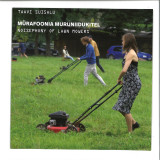
Taavi Suisalu is an Estonian media artist particularly interested into complex and adventurous sounds, field recordings and harsh audio emergencies, organized under the form of symphony or as a result of performative interactions.
In 2014 Suisalu received the Young Estonian Artist Prize as curator of Project of In-existent Villages, an articulate exhibition full of installations and site-specific sound performances. The use of peripheral spaces and the crossovers, sometimes extremely creative, of human interactions, data, sounds and technologies, are recurring in the works of Suisalu, whose subjective perspective unconventionally investigates different social and cultural phenomena. He is always attracted by the different forms of technologies. It can be an old seismograph he reconstructs to record the underground vibrations of a volcano, or, it can be some 3D models he uses to analyze a grain of soil coming from the ancient Pompei. The results of the researches would lead to the installations. The whole set of data is often the premise of a narration, a datafiction, as in the case of the signals recorded from some abandoned satellites, who are later presented with a speed set by the position of other satellites gravitating above the gallery hosting the event.
“Noisephony of Lawn Mowers" was originally composed in 2013, but it was unreleased until now, when Staalplaat, a fundamental label for its unusual experimental connections and for the sound events performed in unconventional spaces, decided to publish it. It's a score for lawnmowers, whose making is given to a conductor and executed by a group of artists. Suisalu reminds us that historically, lawn has been a symbol of power and wealth as it required substantial upkeep and unused land. Today, it still indicates wealth, but is mainly maintained by the owners themselves. This puts us in a schizophrenic situation where we strive to be privileged by taking the role of the servants.
“Silver Meets Ted” is the other track included in the selection. It's a recording of over ten minutes, whose trend cryptically moves on and with some unsettling minimal tolls, always more metallic. Some deaf beats follow, and then we have a splash of water and some slightly hinted neighs, chirps, different spills of liquid, more intense and measured, clackings and vibrations, some hardly identifiable frequencies and again a series of punctuated metal bells. The work by Taavi Suisalu stands out as a calibrated combination of mathematical coherence and elements of surprise, automatized and causal processes, some small oblique utopias, that work well together by improving highly subjective resources and create some slightly unsettling final results.
Essential UK experimental composer Richard Skelton returns to Phantom Limb for new album selenodesy, interweaving his newfound love of electronics and synthesis with mastery of gritty organic texture.
Skelton’s music has always been rooted in landscape, in the loam and grit of the earth: from his 2009 Pennine Moors-inspired modern classic Landings to his more recent Moraine Sequence of geological excavations, his work has been bound inexorably with the stark and untended wilderness of northern landscapes. With this new album, however, Skelton shifts his gaze skyward — in part the result of a move in 2017 to the countryside near the Kielder Observatory, and to a so-called ‘dark sky’ region of the UK. In this remote landscape, light pollution is minimal, allowing the austere majesty of the night sky to be seen with greater clarity.
The resulting album, selenodesy, reveals a new, reverberant spaciousness to Skelton’s use of electronics. It marries the twin worlds of his previous Phantom Limb release - 2020’s These Charms May Be Sung Over A Wound, and its abandoned-factory threnody - with the landscape-revering arcana of his earlier work, which saw him bury instruments in the soil to return months later to recover and record with them, newly imbued with the land they occupied. selenodesy was prefigured by a period of insomnia and the relief found
in stargazing, during which Skelton tried to transcribe his hypnagogic visions: “much of this music came to me in the early hours, in that nowhere state between dreaming and waking. I’d look out the window and the night sky would be swirling with stars. Mars or Venus would be hovering in the corner of the room. I’d lie there and watch the Aurora Borealis dance across the ceiling.”
In selenodesy, we find the lingering, distorted sine waves of album opener “Albedo” that thrum and fizz with an icy, foreboding moonlight, rays of subtle movement that illuminate and darken alternately. Next follows lead single “The Plot of Lunar Phases”, whose passive shrieks echo about a cold, yawning space, reaching an ecstatic crescendo of hissing sonics and swirling celestial drone. Its dynamic range acts like the light of a lunar passage, from utmost darkness to radiant luminosity. Elsewhere, the pulsing, precessional bass of “Faint Ray Systems” gradually opens to reveal mournful, elegiac synthesis that reaches high into the night sky with an unearthly beauty. It is as if, during those long months of lockdown in the Scottish countryside, Skelton tapped into a series of sidereal electromagnetic transmissions, and transposed them into musical form.
Since relocating to Brazil some years back, Needs Music co-founder Lars Bartkuhn has returned to his long-held love of musical improvisation. Although it’s a product of his jazz roots and classical training, the German producer has constantly found new ways to apply it to his work in the sphere of electronic music.
‘Dystopia’, his first solo album for almost nine years, was born out of two interlinked ideas: a desire to create improvised music without the aid of computer sequencers or an electronic drum set, and a deeply held love of storytelling through sound. Bartkuhn set to work improvising with modular synthesizers, acoustic instruments and hand percussion, later adding light-touch overdubs to a handful of pieces. When he listened back to the recordings, an aural narrative emerged, and you’ll hear it if you listen to the album from start to finish, as is intended.
As you’d expect from a musician and composer of Bartkuhn’s undoubted ability, ‘Dystopia’ is a stunning album – an undulating, expansive ambient journey packed with emotional resonance. While Bartkuhn naturally sees it as a logical progression of his previous ambient-leaning work with Kabuki as The First Minute of a New Day (and particularly their self-titled 2020 album Séance Centre), ‘Dystopia’ also features subtle nods to many of his long-held musical loves, including John Hassell’s ‘fourth world’ recordings, the impossible-to-pigeonhole 1970s catalogue of deep jazz imprint ECM, and the far-sighted American minimalism of Terry Riley and Steve Reich.
The album’s emotional depth is evident early on, with the slow-burn title track – all bubbling electronics, billowing chords, clarinet-style notes and gently strummed guitars offering the most melancholic and bittersweet of openings. The becalmed ‘A Drop Of Water In The Ocean’ follows, with discordant aural textures and hand percussion mimicking the rolling ocean, before ‘Largo (Calm Before The Storm)’ hints at unsettling times ahead.
‘Water and Warm Air’, the only track on the album whose starting point was not Bartkuhn’s cherished modular set-up, bleeps and bubbles across the sound space, adding a starry and otherworldly slant to proceedings, while ‘Disembodied Journey (Parts 1, 2 and 3)’ is a sublime, slowly unfurling journey in three movements – all Tangerine Dream style synthesizer motifs, Pat Metheny-esque guitars and jazz-fusion instrumentation.
So the album continues, with the poignant warmth and looped motifs of ‘Still Existing’ and the sparse, dubbed-out minimalism of ‘Do You Know How To Get Out?’ – a kind of 21st century jazz-fusionist’s take on sparse electronic hypnotism – giving wat to closing cut ‘Into The Waves’, a gentle combination of undulating electronic arpeggios and echoing instrumentation that offers a hopeful and undeniably picturesque conclusion.
Fittingly, the album cover features a painting by the late Dutch artist Franz Deckwitz (1934-94), whose images of alien landscapes were used by Phillips on a series of music concrete compilations. The image featured on the cover of ‘Dystopia’, depicting a deep blue ocean and shoreline, was painted by Deckwitz in Amsterdam in the late 1970s and inspired by a trip to the island of Ponza, Italy.
Matt Anniss
Cavernous, mystical beat tribalism from the GT zone; loose yet conscious-minded dub-wise runnings land on planet Earth. Murderous tempos create fiery, twisted percussion dances, lifted and buried in blazing licks of dabbed bass-weight. 808 moves left to right, upside down, with a melodic, hypnosis-minded sway. DEEP transforms waves of metallic drum machines, isolated melodies, and wooden beats into rooted sonic spiritualism recalling distant, future bygone eras. Hand made cover artwork.
In hand-stamped, paper taped sleeve.
Without a doubt, Kiriku is the hottest upcoming producer of contemporary Balearic Beat music of this year.
Kiriku lives between London and Ibiza, two poles which are well audible in his versatile style, ranging from
groovy Downtempo to clubby House. Uplifting Balearic atmospheres meet jazzy club vibes, featuring loose
drum programming, jazzy chords, bouncy basses, laid back vocals and sophisticated sampling. From song
structures to straight up club track, his tunes always combine electronic and acoustic instruments, which
results in a throughout warm and organic feel.
His new EP for The Magic Movement is co-produced and mixed by The Magic Movement' label head
honcho Noema, who gave "Washingtonia" an extended balearic club treatment. If you liked Dj Gregory's
"Elle" back in the days, this will be right up your alley. "Santa Rita" features the vocalists Monblume , Yalisaxx on Saxophone and comes with an bouncy uptempo club version of Brazil' own Kurup. "Jacaranda" features Hallyx on Vocals and is accompanied by a remix by no one else then legendary Balearic Beat DJ, poducer and label owner Chris Coco, who gave the track a dubby and extended chill-out sunset-sound treatment. Smell the sea, and feel the sky. Let your soul and spirit fly!
Brooklyn-based Malik Hendricks does a fine line in raw, deep but visceral house sounds that cannot fail to make an impact both physically and emotionally. He has done so on the likes of Bliss Point, Coloring Lessons and Darker Than Wax before now and here arrives on People Of Earth with more compelling cuts. 'Move On Up' is a steamy and sweaty house thumper with impassioned vocal swirls, 'All Mine' layers in some heavenly melodies that manage to uplift the mood in a subtle fashion and 'Feeling Like Larry' references the great Mr Heard, surely, with its balmy cosmic pads and spiritual house depths. 'The Way' (feat Tane) is licked with acoustic guitar riffs that bring to mind open-air dancing by the Med.
Limited one time pressing of 1000. Raising the bar yet again, Night Owls' first single of 2023 lays yet another set of classic soul songs on you, flipped into the band's signature style. On Side A we find The Flamingo's beloved Doo-Wop/soul hit from 1959, "I Only Have Eyes For You," re-imagined to wind your waistline with Night Owls' longtime friend and collaborator - the one-and-only Chris Dowd from Los Angeles' legendary Fishbone on vocals. Known for tunes like "Pouring Rain" and "Everyday Sunshine" Dowd brings his signature soul drenched delivery with a hint of rude boy grit to match the rhythmic and tonal stylings of the group. Wanting to take things to the next level, producer Dan Ubick called in veteran underground Jamaican legend Tippa Lee (Stones Throw, Dub Club, Jammy's, Greensleeves, etc.) to sprinkle his magic rasta dust on top and deejay/toast on the track and the results are burning hot.
But wait, that's not all!! On Side B we find the beloved beat diggers classic "Live And Let Live," originally performed by Jimmy Jones in 1970 on Deke Records out of Chicago. For the Fender Rhodes-driven reggaefied version here, Night Owls roped in another longtime friend - Los Angeles kingpin and mover ’n' shaker, "Music Man" Miles Tackett to add his soulful vocals to the track and it's as buttery as cornbread from Cracker Barrel! Tackett is the mastermind behind globe-trotting funk/soul collective Breakestra (of which Night Owl Dan Ubick was a member) and legendary weekly L.A. dance parties like Funky Sole, Root Down and The Breaks. This side also includes Destani Wolf, who many will remember was featured on Night Owls’ version of “Let’s Stay Together”, providing the beautiful ‘verbed out backing vocals
Erland Cooper, der schottische Komponist, Produzent und Multiinstrumentalist, stellt nun sein innovatives viertes Studioalbum „Folded Landscapes“ vor. Bekannt dafür, moderne klassisch-elektronische Musik mit eindrucksvollem Geschichtenerzählen und Konzeptkunst zu verschmelzen, teilt Erland seine eindringliche
Beobachtung zu Klimawandel, Temperatur und Zeit. Dieses ergreifende Werk taut sowohl bildlich als auch buchstäblich über sieben Sätze hinweg auf und gibt den Blick frei auf Elektronik, Poesie, Sopran, Klavier, Cembalo, Field Recordings und Samples. Der kreative Prozess ahmte die ansteigende Temperatur des Stücks von eiskalt zu einem drohenden Brand nach – Musiker wurden bei Minusgraden aufgenommen und das Audio-Masterband wurde am heißesten Tag in der Geschichte Großbritanniens von der Sonne verbrannt.
Hitze, Feuchtigkeit, Salz und Sonnenlicht haben sich in den Stoff des Tapes eingearbeitet, das in die fertige Arbeit integriert wurde, und unterstreichen die Arbeit mit einem beunruhigenden Brennen, das knistert und knackt. Ergänzend finden sich die Stimmen des britischen Poeten Laureate Simon und der Aktivistin Greta Thunberg sowie einige weitere auf dem Album.
Another beautiful & booming release from Piezo on his rock solid Ansia imprint, conjuring up 5 tracks of frenetic & kinetic mind/body music that are distinctly his own with a reverent nod to such genres as UKG, grime, techno, gqom & footwork.
Evolving beyond the manufactured nostalgia that populates today's current dance milieu, Piezo takes bass science into the realm of the metaphysical.
“jRj” & “Big Room Technow” emanate metric tons of somatic energy for the club crowd, the former building up momentum on a gqom-infused grime pattern, while the latter is like a tin robot whistling an odd melody inside a peak-time 4/4 banger.
“Sensory Overdraw” is an outstanding UKG curveball with a distinctive metallic bassline and intricate head swimming programming for the headphone listener.
A similar approach is applied to “Cutest Kitty Content”, which teems with bizarre ear-candies, but moves with a different and faster framework. Footwork with outsider insight.
Finally you have the digital exclusive “Zing Zang”, which slows things down but still keep the same balance between mind and body requirements.
The genre references aren't blanketing the tracks as much as they are being manifested through pure passion and love: these tunes are all encompassing bin shakers that knock and sway the lucky participants that are awakened enough to be open to the journey.
This is a rare release where you can see the forest from the trees and yet both can simultaneously be experienced and enjoyed.
DEAD SEA APES are back with a passion to deliver their most essential and cohesive album to date. Formed in 2009, DEAD SEA APES have become a fixture of the psych scene, sharing stages with the likes of Part Chimp, The Heads, Acid Mother Temple and Mugstar while producing a distinctive body of work, ranging from psychedelic punk to experimental dub, from freeform jams to constructions of loops and drones. Following a slew of collaborations and split releases, REWILDING sees them return to a power trio of Brett Savage (guitar), Jack Toker (bass) and Chris Hardman (drums). From the chaotic blast of opener ‘Denialist’, beaming out like a maniacal emergency broadcast, through to the monolithic pounding of the title track, REWILDING is unrelenting, taking in blown-out guitar wails and jet black psych noise while the irrepressible rhythm section moves from claustrophobic motorik beats to a thunderous rolling juggernaut. These blackened pearls have been recast and refined over the course of the past three years, strung out deeper than the night and now embodying our present uncanny, disorienting times, as we emerge into an altered world to find Mother Nature reasserting herself while the human madness intensifies, locally and globally. Savage and uncompromising, this is DEAD SEA APES at their most direct and visceral. REWILDING is released by Cardinal Fuzz (UK/Europe) and Feeding Tube Records (USA) as an edition of 750 on black vinyl.
180g Black Vinyl. Limited to 100 Copies
Formed in Cardiff, Sock make guitar-driven alternative rock, taking inspiration from psychedelic music. Known for their creative melodic arrangements and blending of genres, the band describe their music as “a rather progressive affair”.
Following on from the bands debut album ‘Fresh Bits’, in 2018, this is Sock’s much anticipated self-titled follow up. The album features Jacob on Rhythm Guitar & Vocals, Billy on Lead Guitar, Sam on Bass & Keys, and Simon on Drums & Percussion. Produced by the band, the album was recorded during the pandemic and sees the music move into a heavier and more refined sound.
Chalke aka Life On Mars aka Forces Of Nature is a bit of a mystical legend in the drum & bass circles. An old school friend of LTJ Bukem, the two of them grew up together in North London and it is down to him that Bukem started to DJ, with Chalke as his original MC!
This is the second release Chalke has done with Vinyl Fanatiks – his first was VFS002 which has long since sold out and already a collectable repress on Discogs.
Chalke was so far ahead of the curve in his production and ability to create tracks that surprisingly these two tunes were written in 1993 and 1994 and pre-date the whole ‘intelligent’ drum and bass movement that took over the globe in the mid-90s!
Both tracks were never released and have sat on DAT for 30 years… until now. ‘Moonbase Alpha’ is a cult track in the drum and bass world as it was played by Bukem during the mid-90s, both in his sets and on his Kiss show. Deep, rolling and beautifully progressive for the era. ‘Quosh Up’ is equally as stunning, musical and rolling… like one of Bukem’s DJ sets during the Good Looking era.
Limited pressing on 180g heavyweight black vinyl, presented in a black inner sleeve with a Vinyl Fanatiks 3mm spined housebag.
Ghost Producer aka Badawi (aka Raz Mesinai aka Bilal ibn Yakub al-Badawi) is a prolific producer and artist who has been on the forefront of underground experimental jazz and electronic music scenes around the world for over thirty years, with a catalog of albums on labels as ROIR, Asphodel and Tzadik under various monikers dating back to the late 1980s.
Ghost Producer released his first albums starting in the late 80’s under the monikers Psy Co. and Ruff Riddim Productions, selling his cassette tapes in NYC. He produced, on average, at least one album per week since 1988 until today. One of the twenty or so monikers was Badawi, later being signed to ROIR Records and releasing the seminal experimental dub, punk albums »Bedouin Sound Clash« and later »The Heretic of Ether« on Asphodel. Spending time as a child between Occupied Jerusalem, the West Bank (Balata) and New York City (Rock Steady Park) during the height of the B-Boy era in the 70s and 80s informed Ghost Producer’s singular sound of heavy driving Sufi rhythms, sonic experiments, percussion, piano playing and sound design which has connected him to a wide variety of artists ranging from Maryanne Amacher to John Zorn, to added elements of darkness to music by such artists as Hanz Zimmer (Black Hawk Down) and rappers Danny Brown (Pneumonia) and Skepta and Double D (Don) among many others.
At age 14, Ghost Producer was discovered by visionary jazz and rock musician, Juma Sultan (Jimi Hendrix) whom later trusted Ghost Producer with producing the archive of over 2000 hours from recordings from »Studio We« and the Free Jazz Loft Movement in NYC in the 60s and 70s. As a composer, he has worked with Kronos Quartet and has had premiers at Carnegie Hall (Cross Fader, The Echo of Decay) and Lincoln Center (String Quartet For Four Turntables). In addition, Ghost Producer has released several albums on John Zorn’s Tzadik label, where he explored producing to the books of Franz Kafka (Before The Law, Resurrections for Goat Skin, Cyborg Acoustics)
As a composer for film, he coined the term »score design» to describe his work in conceiving and producing scores for films with particularly demanding needs, working on such films as A Late Quartet (director Yaron Zilberman composer: Angelo Badalamenti), The Fountain, Black Swan and The Wrestler (Darren Aronofsky/Clint Mansel), Black Hawk Down (Ridley Scott/Hans Zimmer) and many more. In 2014, he was awarded as a fellow in the Sundance Composers Lab.
In 2015, Ghost Producer formed the Underground Producers Alliance, a unique program for developing producers, performers and composers, with co-founders Scotty Hard (Wu Tang Clan, Medeski Martin and Wood, De La Soul), HPrizm aka High Priest (Anti Pop Consortium), Honeychild Coleman (the 1865, The Slits) and Prince Paul (Jungle Brothers, De La Soul), where Ghost Producer produces entire albums with student participation in his master course.
This album, »The Book of Jinn«, is one of many productions done within the course, featuring players/mentors Juma Sultan (percussion), Chandenie (voice) and Shahzad Ismaily (electric bass), with additional student participation from Adam Culbert and Jonah Sollins (aka Goodnight 1500) on synths and percussion as well, then all remixed and rearranged by Badawi into what you hear here, The Book of Jinn.
Veyl welcomes Blind Delon to the label for their third album, La Métamorphose. Founded in 2016 by Mathis Kolkoz, the project released several EPs leading up to their first full length, Discipline (Khemia / Unknown Pleasure Records, 2019) and their subsequent follow up, Chimères (Manic Depression, 2020). Originally a three
piece before the departure of guitarist Theo Fantuz after their second album, the project then focused on refining their sound and energy through alternative projects and more EPs before adding a new member ahead of their latest opus. The band currently consists of Mathis Kolkoz (Vocals, Guitars), Coco Thiburs (Bass) and Thom Mayor
(Synths, Guitars).
Fueled by cold bass lines and synthesizers of yesteryear, French post-punk and black romanticism, Blind Delon shatters genres and styles to create an evolved strain of synthpunk that wears its influences proudly while mutating into something totally new. La Métamorphose represents a fresh direction - a heavy, post-metal sound that’s full of emotion and raw intensity. 'Le Crépuscule' opens the album with a hard hitting piece that commences the experience perfectly. Next up, the group kicks things into high gear with the speedy, heavy-synth play of 'La Violence' featuring vocals by Fivequestionmarks, followed by 'La Mort', a blackened post-punk cut
featuring the one and only Curses. Label head Maenad Veyl makes a guest appearance on the fourth track, 'L’Homme', which drifts into deep experimental melancholy with a cinematic feel.
Keeping with this mood is the powerful 'L’Affront' featuring The KVB, which descends further into darkness before resurrecting with the immense feelings of 'Le Sarcasme'. Track seven, 'La Noyade', drills into the skull with growling vocals and menacing synths which bleed nicely into 'La Foule', slowing things back down with a subtle yet lingering sense of dread. French project Poison Point arrive on 'L’Envie' which moves guitars back to the forefront for a raucous ballad that sets up the final piece and title track, 'La Métamorphose', the glorious grand finale of an album teeming with emotion and begging to be played again
and again.
BAG X COLLAPSING DRUMS is a collaboration between experimental producer Collapsing Drums (Charlie Behrens) and spoken word/electronic duo BAG (Jody DeSchutter and Dan Allison). Modular synth, spoken word, field recording, experimental play and abstract guitar are a few of the practices visited by the project.
Momentary Lapses was born of an improvisational outburst sewn into a back and forth process, the three diverse perspectives nurturing creation and dissection along the way. This album maps multiple landscapes and conditions as drawn by the trio in an exploratory document, providing a journey through textures and atmospheres, beats and spaces, construction and reassembly. During the 18 months of the album’s creation, a series of bereavements disrupted and informed BXCD’s journey.
DeSchutter’s dada-esque verse moves purposely forward, fragmented through synaesthetic habitats. Her words, woven into the electronic compositions of Behrens and Allison, touch on themes of re-interpretation, incongruity, and longing. Momentary Lapses celebrates all that is unknown, pluralistic, and paradoxical as proposed antidotes to a binary mode of knowing. Sonically bridging the gaps between postpunk, IDM and experimental, BAG X COLLAPSING DRUMS promises a fresh take on the possibilities of sonic abstraction.
A precedent of sorts to, erm, Armand van Helden vs Fatboy Slim’s 1999 bout, ‘The Heavyweight Sound Fight’ takes pride of place among iDEAL’s hall of oddities with one of the zaniest recordings by three international leaders of the avant-garde. Double LP with an LP-sized 12-page booklet designed by Sean McCann of Recital.
Adapting all the pomp and ceremony of a boxing match to ludicrous ends - including a flier depicting each artist with their dukes up - they produced what sounds like a great night out for NYC’s experimental cognoscenti with Charlie Morrow (USA) vs Carles santos (Spain) each backed by a band - Soho Baroque Opera Company with the assistance of the New Wilderness Foundation - while Sweden’s Sten Hanson acts as referee, and Armand Schwerner takes the role of announcer in thick, nasal New York brogue. It’s brilliantly daft and subversive but accomplished in a witty way that maybe escapes too many solemnly po-faced avant-garde conceptualists nowadays, and remains a strange outlier in the history of NYC avant garde and beyond.
“Operating as an aural window into an happening that occurred more than 40 years ago, “The Heavyweight Sound Fight” unveils a different context of experimental music than is not often encountered today. Running across the album’s four sides, within all the seriousness of art and technique, is the unmistakable presence of humor, play, and the absurd. The audience can’t help but laugh and cheer as the announcer - effecting a deep New York accent and nodding toward notable attendees like Allison Knowles, Dick Higgins, and Jackson Mac Low - takes an active role in the fight, each artist delivering an array of vocalizations - from extended technique utterances to rants - against the next, with the bands weighing in and engaging in their own battles, ranging from big band dirges and marches, to outright experimental electronic madness. It’s a trully raucous affair that brings that radicalism carried by its sounds into entirely new zones.
According to Marrow, he was deemed “winner” in an “off-script” move by the judges, and Santos never spoke to him again, continuing the wild and wonderful mystery and humor of the performance into the present day. Who knows what Santos, who sadly passed away in 2017, would say.”