Studio One was founded by Clement "Coxsone" Dodd1 in 1954, and the first recordings were cut in 1963 on Brentford Road in Kingston.[1][2] Amongst its earliest records were "Easy Snappin" by Theophilus Beckford, backed by Clue J & His Blues Blasters, and "This Man is Back" by trombonist Don Drummond. Dodd had previously issued music on a series of other labels, including World Disc, and had run Sir Coxsone the Downbeat, one
of the largest and most reputable sound systems in the Kingston ghettos.
In the early 1960s, the house band providing backing for the vocalists were the Skatalites[3] (1964–65), whose members (including Roland Alphonso, Don Drummond, Tommy McCook, Jackie Mittoo, Lester Sterling and Lloyd Brevett) were recruited from the Kingston jazz scene by Dodd. The Skatalites split up in 1965 after Drummond was jailed for murder, and Dodd formed new house band the Soul Brothers (1965–66), later named the Soul Vendors (1967) and Sound Dimension (1967-). From 1965 to 1968 they played 9 a.m. to 5 p.m., 5 days a week, 12 rhythms a day (about 60 rhythms a week) with Jackie Mittoo as music director, Brian Atkinson (1965–1968) on bass, Hux Brown on guitar, Harry Haughton (guitar), Joe Isaacs on drums (1966–1968), Denzel Laing on percussion, and on horns (some initially and some throughout): Roland Alphonso, Dennis 'Ska' Campbell, Bobby Ellis, Lester Sterling, among others on horns during the era of Rock Steady. Headley Bennett, Ernest Ranglin, Vin Gordon and Leroy Sibbles were included among a fluid line-up, to record tracks directed by Jackie Mittoo at Studio One from 1966-1968.
During the night hours at Studio One from 1965-1968, singers like Bob Marley, Burning Spear, The Heptones, The Ethiopians, Ken Boothe, Rita Marley, Marcia Griffiths, Judy Mowatt, Alton Ellis, Delroy Wilson, Bunny Wailer[4] and Johnny Nash, among others, would put on headphones to sing lyrics to original tracks recorded by the Soul Brothers earlier each day. These seminal recordings included "Real Rock" (by Sound Dimension), "Heavy Rock", "Jamaica Underground", "Wakie Wakie", "Lemon Tree", "Hot Shot", "I'm Still In Love With You", "Dancing Mood", and "Creation Rebel".
Jackie Mittoo, Joe Isaacs, and Brian Atkinson left Studio One in 1968, recorded drums and bass for Desmond Dekker's and Toots' biggest hits at other Kingston studios, then moved to Canada. Hux Brown stayed in Jamaica to record on the soundtrack The Harder They Come, The Harder They Fall, and toured in Nigeria with Toots and the Maytals and Fela Kuti. The Soul Brothers (a.k.a. Sound Dimension) formed the basis of reggae music in the late 1960s, being versioned and re-versioned time after time over decades by musicians like Shaggy, Sean Paul, Snoop Lion, The Clash, String Cheese Incident, UB40, Sublime, and countless other Billboard originals and remakes trying to emulate their original Rock Steady sound at Coxsone's Studio One.
Buscar:da move
- A1: Etapp Kyle - None
- A2: Dasha Rush - Raw 21
- A3: Shdw & Obscure Shape - Deep Rising
- B1: Onyvaa & Mattia Trani - Body Smile
- B2: Marcel Fengler & The Advent - One Shot
- B3: Vril - Hybris
- C1: Steya - Prototype X
- C2: Scalameriya - Rzarzarza
- C3: Gerald Vdh - The Movement
- D1: Cratan - Lazka
- D2: Chontane - Dira
- D3: Rodiaz - Those Ancient Sages
As 2022 concludes, Marcel Fengler opens a new career chapter with the announcement of '10 Years IMF', an inspiring compilation that marks a decade of his influential label Index Marcel Fengler. A "heart project" two years in the making, the work showcases 12 cuts from artists across the generations exclusive to the compilation, and in-line with the imprint's ethos, unites established and emerging artists.
At the same time, true to Fengler's own vision, it presents productions that span the full breadth of the techno genre - whether it be funky, elegant, industrial, atmospheric or broken beat, right through to the harder techno variety, '10 Years IMF' stands as Fengler's personal manifesto of techno and the artistic possibilities of the genre.
Each record includes a 10 Years special collectors item.
AZMLP01COR[19,29 €]
Part 31[19,71 €]
Part 6[14,92 €]
Part 4[14,92 €]
Part 15[14,92 €]
Part 43[14,92 €]
Part 17[14,92 €]
Part 26[14,92 €]
Part 27[14,92 €]
Part 12[14,92 €]
Part 9[19,71 €]
Part 2[19,71 €]
Part 7[19,71 €]
Part 41[19,71 €]
Part 40[19,71 €]
Part 37[19,71 €]
Part 39[19,71 €]
Part 44[19,71 €]
Part 38[19,71 €]
Part 29[19,71 €]
Part 20[19,71 €]
Part 19[19,71 €]
Part 33[19,71 €]
Part 42[19,71 €]
Part 45[22,06 €]
Part 21 Standard[22,06 €]
Part 22[22,06 €]
Part 5[29,79 €]
Part 8[29,79 €]
Part 18[29,79 €]
Part 35[29,79 €]
Part 16[29,79 €]
Part 3 Black/Orange Vinyl[26,01 €]
White/Purple Vinyl[26,01 €]
Part 21 Edition Or[26,01 €]
Concerto Pour Détraqués" was ranked 52nd best French rock album by Rolling Stones magazine in 2010.
Eleven tracks like so many vitriolic pictures of a sick society: rape, extreme right-wing, psychiatric confinement, security paranoia, alcoholism and all the other crap that the future seems to hold. Loran and François express more than ever their rage and their refusal of the adult world in a recital with three chords: more aggressive guitars, more incisive lyrics and voices while an armada of chorus members and a saxophone come to heckle or underline this darkness.
"Concerto Pour Détraqués" is the band's reference album, with a string of hymns to insubordination and freedom: Petit Agité, Vivre Libre ou Mourir, Les Rebelles, Porcherie, Hélène et le Sang...
The band's name alone evokes the epic of alternative rock: rebellious and committed.
Born by mistake on a February evening in 1983, Bérurier Noir soon found itself the driving force behind a vast "Youth Movement", determined to take control of its life in the face of a society that was ultra conservative at the time. Times have hardly changed.
From the first self-produced records distributed by hand to the creation of self-managed labels, from concerts in squats and wild appearances in demonstrations, on the street or in the metro to endless tours, from interviews given to fanzines and free radio stations to unclassifiable appearances in the mainstream media, Bérurier Noir has waged the most exciting war of independence in the history of French rock, with only a microphone, a guitar, a drum machine, a few red noses and patched-up theatre masks.
The last finger of honour of this turbulent and irrecoverable raia, François, Loran and their "Troupeau d'Rock" commit hara-kiri, at the peak of their glory, during three last concerts in the heart of Paris in November 1989.
Forty years after its birth, Bérurier Noir's work still resonates, whether in demonstrations or free parties, nourishing the hopes of those who wish to overthrow this world to build a truly libertarian, united and fraternal society.
The label Archives de la Zone Mondiale reminds those who missed this unprecedented adventure, 8 discographic parts of the group Bérurier Noir in the form of reissues on particularly original colour vinyls (crown finish), in a limited series and distributed throughout the year.
Purple Vinyl
London’s abundant waterways and parks provide an oneiric muse for Cucina Povera and Ben Vince’s resounding debut full-length collaboration, an engrossing suite of weightless sax, synth and disklavier-bedded soundscapes that land somewhere between Grouper and Terry Riley.
As a newcomer to London, Rossi was caught up in a sort of wondrous reverie - a feeling that seeps through every movement of thia almost hour long album. Vince's plasmic echoes and Rossi's aerial delivery form a poetic union, twisting and painting each sound in pearlescent shades, finding a musical confluence between Rossi's words - fluid, dreamy, hazy ideations - and Vince's shadowy renditions.
Rossi's folk roots shine through like cracks of dawn sunlight on 'Sumu Puistossa' ("fog in the park"), reverberating over organ and dream-zone sax; her words tip into muted surrealism thanks to the controlled chaos of Vince's bleak treatments. His grasp of jazz is transfixing: bending sax motifs like ghostly memories of music from another timeline, smudging them into the soundfield. It’s most effective on the title tracx, where sickly, dissonant notes flicker like an almost-extinguished candle alongside motorised furniture music courtesy of a Disklavier.
From the Terry Riley-esque transcendence of '∞' to the sacred incantation of long-form closer 'Pikku Muurahaiskeko' ("little anthill"), the pair expose a new layer of creativity with each turn, gradually zooming out from discreet, vulnerable beauty to encompass a gently orchestrated chaos of sustained, sublime tension
[b] 02. [_]
Paul Wise aka Placid is the driving force behind ‘We’re Going Deep’ – a thriving online community and record label that keeps you coming back for more. Born out of a lifelong affair with the many shades of electronic rhythm and an obsession for collecting records since 1988, Paul is known and respected by many in the realms of underground House and Techno. Renowned for making hips and feet move at parties, clubs and fields across the UK and beyond over the last few decades.
As a label owner, his mission couldn’t be clearer - releasing new music for heads of all persuasions. Fresh cuts aimed squarely at the dance floor, front room or even just your headphones. Rather than staying too hung up on the past, he continues to serve up the freshest in Acid, Electro, Techno, Deep House alongside sweet slices of Electronica.
Sticking to the format of 4 superlative cuts from equally talented producers, the quality remains unquestionably consistent on Volume 8 of his various artist series. Kicking off A1 in style with a family affair from Acid House aficionado Affie Yusef and his daughter Leila, ‘Dublovr’ is a Class A slice of pure late night chug that rides clockwork rhythms to a rolling bassline. As dubbed out synths ring out to lift you skywards – eerie sweeping undertones add another dimension. Tried and tested since the summer season, the added layer of a TB-303 brings everything nicely to a head. Not to be outdone, Bristol based Electro emissary Zobol delivers a pure slice of machinist joy on A2 ‘Sense The Consesus’, showing his ability to finesse and balance uplifting melodies with warm synthesis on this finest of jams.
Over on the flipside, Maltese producer Acidulant takes up the reins with the hushed tones of ‘The View of Her Shade’ on B1 – a thoughtful excursion into electro hinterland that’s a textbook lesson in making more with less. Last but not least, mysterious I Love Acid affiliate Type-303 turns out an exquisite IDM inflected serving of woozy broken Electronica on the mysterious ‘Knowhere’. Steeped in rippling melodies and aquatic
Ya’ll know it is time to get ready for some bass drum pressure. So there is a number eleven on their roster from JJ Fortune. The moniker of an Irish DJ and a producer who at the moment lives in Melbourne, Australia. Now he is mostly releasing new music on his own Pachinko and Rizzwax record labels, like the serious guys do. But now it is time to take a step further from the homeland and check in with Moscow.
Classic deepest deep house-ish style grooves with some extra spices and cream but also edgy 8-bit passages on top. With all the respects to the roots this young man will show up with some new school body movements. Fresh Irish blood is definitely ready to boil up the dance music scene a bit. B-side remix duties are
Vimana takes flight with Aprieta: a collection of polyrhythmic dance tracks produced by Phran. The EP is the physical manifestation of a movement started in 2015 with gatherings in Barcelona and Berlin and was composed in collaboration with friends and artists residing around Barcelona’s Poblenou district.
The tracks on side A contain restrained grooves with deep dembow jams. ‘Aprieta’, ‘Mazatech’ and ‘Sons’ feature collaborations from oma totem (Hivern Discs), Tunik (My Own Jupiter) and
Ribes.
Side B starts off with a remix of the title track ‘Aprieta’ by Dengue Dengue Dengue, before providing the mystical club cuts ‘Faylan’ and ‘Syntorama’, featuring ELO (aka DJ Leeon) and Ribes.
Mixed by Ribes & Phran. The Vimana label image was crafted by Planet Luke (Klasse Wrecks, Graffiti Tapes). Vimana is distributed by One Eye Witness.
Finally the two main protagonists of the current live electronic movement and founders of our fair label Carl Cox and Christopher Coe have stepped up to the plate with this truly innovative and uncompromisingly live collection of techno tunes that defy categorization and are certain to land us fair and square on the dancefloors of the underground clubs of the world!
What can we say.. This EP just bangs! Improvised, recorded live and straight to 2 track in one day, this 4 tracker comes straight from the machines of Carl and Christopher’s collaborative studio in Australia and onto wax!
It is with great delight that we can present this collaboration straight after the release of Carl’s first solo album in 10 years.
This is a statement of definition from the boys, they have planted their feet firmly in the live scene with this edgy, experimental and jackin’ collection of beats!
The mindset is real.
It’s not often that an artist creates something so unique
and unpredictable that an entire genre is created
because of it, but here we are, Scene Queen and
‘BIMBOCORE’ have arrived.
Fed up with a genre of music filled with gatekeepers
and judgmental hard rock purists, Scene Queen has
unleashed the most daring, provocative, indefinable
music the world has ever seen.
Songs like ‘Pink Rover’ and ‘Pink Panther’ are as
daring and raunchy as they are inclusive and
community building.
In Scene Queen’s world, one can wear pink and like
‘girly things’ while gutturally screaming relatable lyrics
over a metal riff.
Blending metal, hard rock, and explosive pop, Scene
Queen is making music for a genreless TikTok
generation - the alt kids, the misfits, and the ones that
don't fit in.
With a heavy following on TikTok and a wildly
entertaining live show that is an experience of a
lifetime, ‘BIMBOCORE’ is the debut of a young scene
kid emerging into the leader of a movement.
For fans of Ashnikko, Bring Me The Horizon, Poppy.
Recently performed at Reading & Leeds Festival and
The Great Escape. Upcoming touring with Palaye
Royale (US) and Wargasm (UK).
After a couple of solo EPs to start the label, FAC-3 is comprised of four different artists, each with their own unique sound. Although a mix of up-and-coming and established producers, old and new music, there’s a common thread running through the EP.
First up, Justin Zerbst’s Waverider is an atmospheric nod to Detroit. Unearthed from a 90’s DAT, it’s built around some heavily modulated chords and 808 percussion which carry the track through to its string-laden climax.
Italian mainstay Luca Piermattei’s Venice is distinct end-of-night fare. Haunting pads sit atop a deftly-programmed bass which provides most of the movement over a tight drum groove.
While the A side has a undoubted warmth to it, the B dials things back and ups the intensity with two techier cuts. UK producer Skelter’s first release is a spacious acid groove, with the bassline taking centre stage amidst a nervy backdrop of percussive textures and reverb hits.
Finally, Brisbane’s Loif rounds things off with the simmering Digiburra; a dense, electro-tinged breakbeat aimed squarely at the dancefloor.
In the late '70s Wild Fire was one of the more popular groups in Trinidad. Formed by Oliver “Stompy” Chapman back in 1962 the group was originally named the Sparks. By the disco era Wild Fire were the house band at night clubs like Disco Tracks and the Upper Level. The group was very influenced by disco, especially the famous British group, Hot Chocolate known for the classic disco hit ”You Sexy Thing.” Hot Chocolate’s chief songwriter, Tony Wilson was originally a Trinidadian native and also great friends with Oliver Chapman. The opening track on this compilation is "Try Making Love", a floor-filling track written by Tony Wilson in 1977 and recorded at Coral Sound Studio in Port of Spain. It was there that Oliver Chapman laid down the unforgettable bass line, solidifying its status as a surefire hit. The infectious tune held steady at the number one slot for six weeks in Trinidad and eventually climbed to the top of the charts in Barbados. Recorded at KH Studios, “Living On A String” with its unique disco synth sound by keyboard player Calvin Duncan was about the hard living of one trying to survive as a musician and hoping to one day partake in the material strappings of fame. “The Rebels” was more about the political struggle for the young in the country at the time. There was a lot of corruption in the government and a lot of young people out of work. The song called to stand up and rebel against the regime. And years later in 1990 it did happen when the Muslim group Jamaat al Muslimeen stormed the Red House (Trinidad’s Parliament House) and took cabinet members hostage. Wild Fire would go on to tour the Caribbean extensively including stops in Barbados, Antigua, St. Thomas and Guadeloupe. The group had a massive local hit with their track “Say A Little Prayer.” The group would disband in 1985 and Oliver Chapman would move to America. Wild Fire - Dance Hits is a collection of Wild Fire's more dance friendly material.
- A1: Logic System - Unit
- A2: Kraftwerk - Computerwelt (2009 Remastered
- B1: Whodini - Magic's Wand
- B2: Rocker's Revenger - Walking On Sunshine (Feat Donnie Calvin
- C1: Klein & Mbo - Dirty Talk (European Connection
- D1: Liaisons Dangereuses - Los Niños Del Parque
- D2: Yello - Bostich
- E1: The The - Giant
- F1: The Residents - Kaw-Liga
- G1: Clan Of Xymox - Stranger
- G2: A Split - Second - Flesh
- H1: Severed Heads - Dead Eyes Opened
- H2: The Weathermen - Poison!
- I1: New Order - Blue Monday
- J1: Anne Clark - Our Darkness
- J2: 16 Bit - Where Are You?
- K1: Phuture - We Are Phuture
- K2: Model 500 - No Ufo's (Vocal
- L1: Frankie Knuckles Feat Jamie Principle - Your Love
- L2: Quest - Mind Games (Street Mix
- M1: Jasper Van't Hof - Pili Pili
- N1: Guem Et Zaka Percussion - Le Serpent
- N2: Hugh Masekela - Don't Go Lose It Baby
- O1: Sly & Robbie - Make 'Em Move
- Q1: The Ecstasy Club - Jesus Loves The Acid
- R1: Foremost Poets - Reason To Be Dismal?
- S1: Lhasa - The Attic
- S2: A Guy Called Gerald - Voodoo Ray
- T1: M/A/R/R/S - Pump Up The Volume - Usa 12" Mix
- T2: Bobby Konders - Nervous Acid
- U1: Meat Beat Manifesto - Helter Skelter
- V1: Raze - Break 4 Love
- W1: Sueño Latino With Manuel Goettsching Performing E2-E4 - Sueño Latino (Paradise Version
- X1: Off - Electrica Salsa
- O2: Brian Eno - David Byrne - Help Me Somebody
- P1: Primal Scream - Loaded (Andy Weatherall Mix
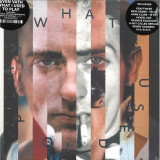
For this uniquely personal retrospective spread over twelve vinyl discs, Sven Väth takes us back to the early days of his DJ career. On What I Used To Play we meet great pioneers of electronic music, gifted percussionists, obscure wave bands, and innovative producers of a bygone 'new electronic' era. Rough beats and irresistible grooves from the identification stage of house, techno, and acid remind us not just how far electronic music has evolved over the past four decades, but how great it was to dance to EBM, techno, and house for the very first time.
If there is one protagonist of the electronic music scene who has remained curious, innovative and at the very cutting edge of music for over four decades, it's Sven Väth. His multi-layered artist albums and Sound of the Season mix compilations have been defining the genre for over two decades, and even today, he is constantly on the lookout for the next top tune to add to the highlights of his next set. At least, that's the case when he's not producing them himself as an artist or remixer. "Actually, it's always been part of my DNA to think ahead," and nothing had been further from his mind than looking back at his past, but when in spring of 2020 the international DJ circuit had to be scaled down to virtually zero, the 'restless traveler' suddenly had time. Time to stop and reflect on "how it actually was back then, at the very beginning of my career..."
"It was a great trip and with every track, beautiful memories came flooding back".
In the London apartment, he had just moved into, Sven has set up a "little music room", where he cocooned himself for several days, "to look way back for the first time and review my musical journey through the eighties, so to speak."
The interim result was six thematically oriented playlists with a grand total of 120 tracks from 'early 80s' to 'Balearic late 80s', together with excursions into afrobeat, European new wave, and EBM sounds and a few epochal techno/house tracks from the USA in between. From these 'Best of Sven Väth's favorites', the project What I Used To Play crystallized. Sven remembers how the Cocoon team reacted to his proposal: "They found the idea of making a compilation out of it MEGA from the beginning and everyone said 'Sven, go for it', but then, of course, the work really started, namely, to clear the rights and to get clean sounding masters of the up to 40-year-old tracks. There was also disappointment, of course. We couldn't clear certain titles because the rights holders in the USA had fallen out with each other or simply disappeared from the scene. In short, it wasn't easy, but now I can safely say we got the most important tracks."
Finally, after two years of research, curation, design, and administrative fine-tuning, the "little retrospective" from 1981 to 1990 is available. The exquisitely packaged, and three-kilo heavy box set is not only physically impressive, WIUTP is also the definitive record of Sven Väth's musical development. On each of the twenty-four sides of vinyl, you can trace track by track, what influenced him during which phase, and how he took off as a DJ from his parents' Queen's Pub straight into the spotlight at Dorian Gray. There and at Vogue (later OMEN), Sven became the style-defining player in the DJ booth that he still is today.
1981 - 1990: Future Sounds of Now
In the early eighties, the crowd in clubs like Vogue and Dorian Gray danced to what nowadays we call 'dance classics' - mainly disco, funk, soul, and chart pop. It was up to a new generation of DJs, including Sven Väth, the youngest protagonist in the Rhine-Main area at the time, to create their own club-ready music mix. Good new tracks and potential floor-fillers were rarities that had to be sought out and found, in order to prove oneself worthy.
Without MP3s, internet streaming, or other digital download possibilities, music didn't just gravitate to the DJ, instead, it had to be tracked down. In well-stocked record stores in Frankfurt and Wiesbaden or even in Amsterdam, London, or New York, Sven and friends sourced the material for countless magical nights. On WIUTP we can follow Sven's very personal journey through this wild, innovative era in which synth-pop, funk, hip-hop, and disco were successively replaced as 'club music' by house, techno, acid, and breakbeat. By the end of the decade, it was clear to see that these once exotic 'fringe' phenomena would soon become 'mass' phenomena.
Early 80s
Dirty Talk by the Italian-American duo Klein & M.B.O. represents the most innovative phase of the Italo-disco genre in the early eighties like no other track. Mario Boncaldo (I) and Tony Carrasco relied entirely on the original synthetic drum and percussion sounds of the Roland TR-808, coupled with the raunchy vocals of Rossana Casale and guitar accents of Davide Piatto. Of course, other tracks from this period were also influential in style, most notably Unit by Logic System, which worked as the perfect soundtrack to the laser lighting system at the legendary Dorian Gray club. With stomping beats and robotic rap interludes, Bostich by Yello also belongs on Sven's eternal playlist - after all, it caught the attention of Afrikaa Bambaataa, who invited the Swiss duo to perform at the Roxy in New York in 1983.
EBM Wave - Mid 80s
From today's point of view, the almost ten-minute-long, downtempo track Giant by Matt Johnson's band project The The, would probably not be considered an obvious club classic. However, a closer (re)listen reveals the rhythmic intricacies of the percussion overdubs by JG Thirlwell (aka Foetus) on Johnson's composition, and it becomes clear why this exceptional piece of music is one of Sven's absolute favorites. Other classics from this phase include Kaw-Liga by the mysterious The Residents, the hypnotic-synthetic Our Darkness by Anne Clark (and David Harrow), and last but not least, the somber, monotonous anthem Where Are You? by 16Bit, one of Sven Väth's projects together with Michael Münzing, Luca Anzilotti from 1986.
US House - Late 80s
You certainly can't talk about Chicago house without mentioning Frankie Knuckles. The resident DJ at the Warehouse not only gave the name to an entire genre, but also produced epochal floor fillers on the Trax label like the timeless Your Love, sung (and moaned) by Jamie Principle. Acid house protagonists Phuture also hail from Chicago, and on We Are Phuture (also released on Trax) we hear the chirping acid sounds of the legendary Roland TB-303 in full effect. Another featured classic is No UFO's by Detroit's Model 500 aka Juan Atkins, who is rightly considered the 'Godfather of Techno' even if the genre-defining track from 1985 still breathes with the spirit of hip-hop and electro from the first breakdance era.
Afrobeat
Le Serpent, by Algerian-born Abdelmadjid Guemguem, is a track that sounds completely different from everything else on WIUTP. Made in 1978, it's a monumental, rousing groove created without bass or synths, just with five congas! Even though Guem sadly passed away in 2021, his immortal, acoustic beats are understood all over the world and will continue to enrich many thousands of DJ sets for years to come. Another classic that not only Sven appreciates beyond measure is Hugh Masekela's Don't Go Lose it, Baby. In addition to being one of the most important jazz pioneers, the trumpeter and freedom fighter from Johannesburg was very experimental, integrating electronic sounds into his music in later years, in a similar vein to Miles Davis and Herbie Hancock. Dutch jazz pianist Jasper van't Hof's afrobeat project Pili Pili has also aged well. The trance-like, almost sixteen-minute-long track of the same name, manages to fill a whole side on the seventh of twelve vinyl discs in the WIUTP box.
UK-US-Euro - Late 80s
Time for a change of scene, in the truest sense of the word, and from a musical perspective, this section is like landing on another planet. First up is Andrew Weatherall's classic remix of Primal Scream's Loaded, featuring the iconic Peter Fonda sample (lifted from the 1966 biker film Wild Angels) that came to personify the mood triggered by the British Second Summer of Love in the late eighties: "We wanna be free to do what we wanna do, and we wanna get loaded...". This period also saw the emergence of M/A/R/R/S whose only single, 1987's Pump Up The Volume, became a club classic with support from DJ legend CJ Mackintosh. In this most eclectic of sections, we also encounter New York house and reggae producer Bobby Konders and his seminal Nervous Acid.
Balearic - Late 80s
Those who know him, know that Sven had already lost his heart to the 'magic island' of Ibiza as a teenager, so with that in mind, the WIUTP project couldn't end without a Balearic chapter. Inspired by Manuel Göttsching's E2-E4, the immortal, eponymously titled Sueño Latino belongs in there without question. Equally popular on the island was, and still is Break 4 Love by Raze, which thinking about it, would also fit perfectly into the house chapter. Last, but not least, there's an overdue reunion with Sven Väth himself, in his role as frontman of the successful Frankfurt trio OFF. Together with Michael Münzing and Luca Anzilotti (later of Snap!) this 'Organization For Fun' created the off-the-wall club hit Electric Salsa in 1986 which incidentally turned into an international chart smash, putting Sven in the enviable position of having to decide between pop stardom and a DJ career. Well, we all know how that decision turned out and the rest, as they say, is history. A not insignificant part of his story is What I Used To Play. Enjoy!
"In the late 1960's, Decca was playing to its strengths – mass marketing classical and easy-listening recordings just as it had been doing since the late 1920's. In April of 1968, Decca entered into a venture that would see its repertoire prominently displayed by non-specialist retailers, and after much resistance, it moved into the world of budget releases, with the beginning of its much loved ‘The World Of’ series in 1968.
The first album set out the series’ stall perfectly, focusing on one of the label’s biggest-selling artists. Its whole raison d’être was to drive sales of the artist’s repertoire: inviting consumers to dip in here and discover more, while the rear sleeve clearly offered the catalogue numbers of the parent albums.
Later, the World Of ’s would also become treasure troves for rarities and one-offs.nitially, the series stayed in the ‘Easy’ territory and by the end of ’69, 54 titles were available. Unsurprisingly, given the label’s heritage, classical repertoire would also become a mainstay.
The first classical LP was one of the early issues:
The World of Johann Strauss. The series treated classical music much like pop: compiling the most popular pieces and presenting them across two sides.
• 180 GRAM HEAVYWEIGHT VINYL • CUT AT ABBEY ROAD STUDIOS
• NEWLY-COMPILED SELECTIONS FROM DECCA’S ILLUSTRIOUS CATALOGUE • Please note: The World of Nothern Soul - previous orders still stand.
Celebrating its one hundredth release, Black Truffle is honoured to present a major archival discovery: a stunning document of the only performance by the trio of Tony Conrad, Arnold Dreyblatt and Jim O’Rourke. Across a two-night programme organised by David Weinstein at legendary New York experimental venue Tonic in January 2001, Conrad, Dreyblatt and O’Rourke presented individual projects before performing a collaborative set each night, the first with members of Dreyblatt’s ensemble and the second the trio heard here. As Dreyblatt points out in the wonderfully informative and reflective liner notes written for this release, this was a collaboration across generations, reflecting the profound impact of Conrad’s pioneering minimalism on Dreyblatt and O’Rourke. Both Dreyblatt and O’Rourke came to this collaboration armed with a deep appreciation of Conrad’s music and the just intonation principles at its core, Dreyblatt having first encountered the incredible power of Conrad’s precisely tuned violin chords during his tenure as an archivist for La Monte Young in 1975, while O’Rourke had performed with Conrad in various settings since the mid-1990s (as well as admiring, reissuing, and performing Dreyblatt's music). The flyer for the concert promised ‘massive, ecstatic, pulsating overtones’, and the trio certainly delivered. From the moment this keening stream of bowed strings begins, it is clear, as Dreyblatt writes, that we are in ‘Tony’s sonic universe’, as massively amplified, slowly shifting combinations of precisely chosen pitches fill the room with complex beating patterns and ghostly difference tones. For more than twenty-five minutes, the music operates at a level of intensity comparable to classic recordings such as Conrad’s Four Violins, until the texture thins out slightly in the performance’s final quarter, allowing for the listener’s first recognition of the individual voices that make up this enormous, overwhelming harmonic edifice. The constant stream of bowed tones is broken by a beautifully rich pizzicato from Conrad on monochord, the sliding low tones and metallic shimmer of the other strings taking the set's final moments on an unexpected detour into spacious pastoral psychedelia.
Though produced by three individuals known for their own distinctive bodies of the work, this is egoless music, the perfect expression of Conrad's desire 'to move away from composing to listening', to 'working "on" the sound from "inside" the sound'. Historically important and overwhelming in sonic impact, this release also serves as a moving tribute to Tony Conrad from two musicians profoundly marked by the example set by his art and life.
What Mom Jeans have proved themselves capable of in the past 2 years is nothing short of fantastic. Growing from ordinary college students to national touring artists in a matter of months, the indie rock quartet has been on a trajectory most bands could only dream of. The DIY touring route quickly had to fall by the wayside, as 200, sometimes 300, kids were showing up to house shows in basements across the country. Often, the band wouldn’t make it through more than a few songs before police had to come shut it down. Now, you can find them in venues of increasing size around the states, as one of the most sought after acts in their genre. On a constant stream of buzz, pressing after pressing of their debut hit “Best Buds” (2016) has sold out and the fans cannot get enough of the music they have been putting out. Music that takes influence from predecessors such as Modern Baseball and The Front Bottoms, but adds that new flavor that sets them into a league of their own, The Mom Jeans craze is just beginning.
Composer Valtteri Laurell Pöyhönen presents his Nonet formation on We Jazz Records. Their debut album Tigers Are Better Looking is released 3 Feb and the ensemble features internationally renowned Finnish clarinetist Antti Sarpila, plus a strong cast of Helsinki-based musicians from several of the top Finnish groups.
Based on the writings of British-Caribbean author Jean Rhys (1890–1979), the 6-track album is a melancholy, intimate chamber jazz creation. Laurell's music swings, yet he doesn't stop there, but moves further to paint an original, richly-toned sonic image with the highly potent Nonet.
Laurell states Gerry Mulligan, Miles Davis's "Water Babies" and Charles Mingus among the key musical influences of his compositions on this album. Through Rhys's text, Laurell finds a special sense of detachment and melancholy evident in his new material. Antti Sarpila's masterful clarinet provides the icing on the cake, floating high above the clouds of sound.
James Brandon Lewis is a New York-based jazz tenor saxophonist, composer, and bandleader. His instrumental voice marries the emotional power of gospel and the grit and groove of blues and R&B to the modal and vanguard influences of Albert Ayler and John Coltrane, and Sonny Rollins" expressive melodic and tonal discipline. Moments, his 2010 debut, was followed by two outings for Sony Masterworks" revived OKeh imprint: Divine Travels in 2014 and the widely celebrated Days of Freeman the following year. After working American stages and clubs, he toured European and Asian festivals. Radiant Imprints, a duo outing with drummer Chad Taylor, appeared in 2018 and was followed by the quintet offering An UnRuly Manifesto a year later. In 2021, after he was selected as the "Rising Star Tenor Saxophonist" in the Downbeat International Critics Poll, Lewis issued The Jesup Wagon, his debut for Tao Forms. Along the way, Lewis drew the attention of many improvising artists, most notably the saxophonist and jazz deity Sonny Rollins, who doesn"t offer effusive praise very often. Moved by Lewis" deep, spirit-seeking sound, Rollins said "When I listen to you, I listen to Buddha, I listen to Confucius ... I listen to the deeper meaning of life. You are keeping the world in balance." Eye of I opens with 44 seconds of gritty, high-throttling low-down groove, an ear pulverizing opening designed to cleanse all traces of ordinary from the palette. From there, Lewis offers a prayerful cover of Donnie Hathaway"s "Someday We"ll All Be Free" and then the first of his disarmingly addictive originals, "The Blues Still Blossoms" in addition to many others.
Originally released in 2013, now re-issued on their own Extreme Eating imprint. FROM THE 2013 PRESS RELEASE - Sleaford Mods started out sometime during 2006 whilst Jason Williamson was living in Nottingham. Born out of part frustration and part accident, it quickly found its feet as an aggressive verbal onslaught on all that is contrived and connected to the day-to-day hammer of low paid employment and domestic situations arising from that trap. After a year of working ideas out in both the studio and in live performance around Nottingham, Williamson moved south and took the cause to London for a couple of years, before returning to Nottingham in 2009. Soon after that he that he met Andrew Fearn and the Sleaford Mods became a duo. The rest, as they say… “
«I am the bridge between the day and the night that never ends, I am the acid drop that beads on your dancing body, I am the metallic breakthrough that crosses your being when I catch your wet hands, I am the brutal wave that grazes your dark gaze and your tired eyes, I am the titanium and the cyprin, I am the adrenaline, I am that being that invents, desires and revolts, I am that jolt of desire that tears me when it is dark, I am a psychoactive substance diluted in honey, I am the back that you caress, I am our first and last dance, I am the one who seduces you, I am the one who obsesses you, I am the solitary dance that bewitched me the first time we met, I am the cry muffled by our restless bodies, I am the movement that pierces and unfolds as if it were the last. I am solid and liquid, mechanical and organic, I am your first and last time, I am Baraka.»
French duo Baraka present their first eponymous EP.
Dive into their cathartic universe in which they celebrate their love for club culture using powerful TR8s, incisive break beats, synthetic layers inspired by trance and trip-hop as well as cavernous female voices.
This alliance of electronic music, 90’ aesthetics and dreamy undulations intertwine like the yin and yang and promise a mystical universe with futuristic imagery.
Oscar Jerome hibernated to make what became The Spoon, his second album. The pandemic had halted his concerts, and he found himself alone in Berlin playing guitar and writing poetry. You can feel that interiority on The Spoon, a laconic piece of work of melodic melancholy. He’ll move from a whisper to a scream throughout the album, and he’s as ready to talk about his feelings of depression as he is to rage about the injustices of his home country.