"An undisputed Canterbury Scene classic for the first time in Half-Speed Mastered Edition. This 1978 critically acclaimed debut album from the supergroup National Health fused Progressive Rock with Jazz-oriented melodies to create the complex signature sound of one of the Canterbury Scene"s finest bands! The album features the outstanding talents of keyboardists extraordinaire Dave Stewart and Alan Gowen, virtuoso drummer and lyricist Pip Pyle, vocalist Amanda Parsons, guitarist Phil Miller and bassist Neil Murray. The music is essentially a fusion of contemporary classical sounds expertly performed by top-drawer rock and modern jazz players, aspiring to the highest level of musical curiosity and creativity. This half-speed mastered edition offers an unprecedented clarity and depth to the album"s already rich sound. The intricate details of each composition will shine, allowing long-time fans and newcomers alike to appreciate the technical prowess and inventive spirit that made National Health a Canterbury Scene milestone. First official vinyl reissue".
quête:da players
- 1: Swamp Thing
- 2: Death Roll Blues (Feat. David & The Devil)
- 3: What's The Weatherman Done
- 4: Anhedonia
- 5: Mister Apology
- 6: The Bone Collector
- 7: In The Dirty South
- 8: Don't Sell Your Sunshine For A Knife
- 9: Til Death
- 10: Momento Mori
- 11: Swamp Thing Returns
K.K. Hammond is a slide guitar playing songstress living in the backwoods of the UK. She takes her influence from the Delta Blues players of the 1930s, the roots music of Appalachia and its ancestors fusing the vibe of the swamp with a sprinkle of Southern gothic horror, K.K. writes traditionally inspired roots music but twists it her own unique way for an untapped sound that appeals to contemporary music listeners as well as classic blues fans.
K.K's music has garnered critical acclaim worldwide as well as airplay on a multitude of blues radio shows internationally. This includes the Cerys Matthews BBC Radio 2 Blues Show and the award winning Gary Grainger Blues Show.
A video of K.K. playing a slide guitar cover of "Nothing Else Matters" with her good friend Kaspar "Berry" Rapkin accompanying her on banjo was shared by Metallica on their official TikTok and described by them as "Incredible"!
K.K.’s biggest success to date arose from the release of her debut album Death Roll Blues. The vinyl and CD run sold out via pre-order prior to the album's official release date. Upon its release, the album hit the #1 spot in the UK iTunes Blues chart and subsequently bagged another #1 spot in the US iTunes Blues chart. It also exceeded her expectations by breaking into the #12 spot in the mainstream iTunes charts (across all genres) and the #18 spot in the UK iTunes mainstream chart. It was also the #3 best seller of all time for an iTunes Blues album pre-sale. Death Roll Blues also enabled K.K.’s first breakthrough into the Billboard Blues Charts with a #7 position.
K.K.'s has also had some great successes with her self produced and directed music videos. The music video for Heart Shaped Box winning a multitude of awards including wins at the Video Nasties Genre Film Festival, the David Film Festival in Turkey, the Euro Music Video Song awards, the Anatolia Film Festival, The Golden Wheat Awards, as well as K.K. receiving an honorable mention at the London Director Awards.
U.K. born, K.K. took an interest in guitar, Americana and roots Blues from an early age. She spent some years exploring the back roads of the USA eventually settling in the remote, forested English Countryside, where she works her farm. A self-professed hermit living in an isolated spot in the woods, K.K. enjoys exploring the wilderness surrounding her home to seek inspiration for her song writing.
- Almon Memela - Amapoyisa
- Cowboy Superman - Ntombi Kazipheli
- Mfongozi Guitar Players - Marabi Jazz
- Casper Shiki - Ngazula
- Elliot Gumede - Amasoka
- The Play Singer - Imitwalo
- The Play Singer - Kusile Dale
- Enoch Mahlobo And Shezi - Wenzani
- The Blind Man With His Guitar - Isoka Labaleka
- Nongomo Trio - Guga Mzimba
- The Play Singer - Nga Fika Ekaya
- Cowboy Superman - I Lele Insizwa
- Mbaqanga Guitar Trio - Come Again
- Cowboy Sweethearts - Sambamba Lomfana
- Cowboy Superman And Beauty - Kumnandi Kwazulu
- The Blind Guitar Player - Ungakhulumi
- Thoko And Almon - Mandlovu
- Zachariah And His Guitar - Abafana
- Mampondo And Sobantu - Themba Lami
- Baca Boys - Ngiyamqoma
- Dennis Khanyile - Thembile
- The Play Singer - U Ngi Cebe E Poisen
- Mike Khuzwayo And The Playboys - Zibedu
- The Blind Man And His Guitar - Unledo Wabantu
- Almon Memela - Lashona
"Amazing! Like stumbling on a treasure-trove of unheard Charlie Patton and Blind Willie McTell 78s, but imbued with the spirit of Mahlathini and Ladysmith." Joe Boyd
'But for this compilation of rescued songs masterfully restored from rare 78 rpm shellacs, few could imagine the diversely beautiful roots of Zulu Guitar Music emerging during the period 1950 – 1965. Story-tellers and master musicians appropriate outlaw personae, re-purpose country and western, Hawaiian and other styles, to stretch and challenge our notion of “the Zulu guitar”.
Twenty-five songs (18 on vinyl) plunge us into the depths of the migrant experience. Translations in the liner notes offer us glimpses of pugnacity, melancholy and heartache, all coloured by the paternalism that circumscribed the singers’ apartheid-dominated lives.
The early *mbaqanga* undertow in many of the songs subverts the wanderlust of Country and Western music into a fugitivity burdened by nostalgia. Something irretrievable has been lost, prompting a blending of ideas and cultures to make sense through thankless acts of musical divination. Inadvertently they have been thrust into the role of the antihero, where outwitting competition for lovers is as important as evading the Black Jacks (apartheid’s municipal cops) and their informants.
Considering the politically repressive period that this music emerges from, we can surmise that the specificity in the storytelling went a long way towards evading censure. But even when words are absent, there is a narrative arc suggested by the musical expression.
With most of the master tapes wilfully destroyed or lost, modern transcription and restoration techniques from the original shellac discs present the original sound most likely more clearly than ever heard before.'
Produced for reissue by Chris Albertyn and Matt Temple at Matsuli Music and Siemon Allen at Flatinternational.
Artwork design by Siemon Allen.
Liner note and translations by Kwanele Sosibo.
Audio restoration and lacquers by Frank Merritt at The Carvery and pressed at Pallas, Germany.
Original 78rpm recordings sourced from the collections of Chris Albertyn at Matsuli Music, and Siemon Allen at the Flatinternational Archive.
His story is entangled in the story of America, and he's been tracing it's highways and
entertaining it's audiences, and those abroad, for nearly six decades.
So, it's fitting that his new record, is entitled Look Out Highway, and it's remarkable
that a man who has spent more days on the road than off still brings such spirit and
passion to the music and the lifestyle. Throughout his illustrious career Charlie
Musselwhite has received 13 Grammy nominations and 33 Blues Music Awards. In
2014 his collaboration with Ben Harper Get Up won a Grammy and in 2010 he was
inducted into the Blues Hall of Fame. In 2023, Musselwhite was cast in Martin
Scorsese's film Killers of the Flower Moon.Charlie has collaborated with an eclectic
list of incredible artists over the years, including Ben Harper, Cyndi Lauper, Eddie
Vedder, Tom Waits, Bonnie Raitt, Gov't Mule, INXS, George Thorogood, Eliades Ochoa,
Cat Stevens, Elvin Bishop and John Lee Hooker.More than any other harmonica player
of his generation, Charlie Musselwhite can rightfully lay claim to inheriting the mantle
of many of the great harp players that came before him with music as dark as
Mississippi mud and as uplifting as the blue skies of California.
In an era when the term legendary gets applied to auto-tuned pop stars, this singular
blues harp player, singer, songwriter, and guitarist has earned and deserves to be
honored as a true master of American classic vernacular music.
Emerging from the Minneapolis underground and heading straight towards the sky, IE arrive on Quindi with a full-length album of sparkling, sophisticated wonder. Touching on kosmische grandeur, Riley-esque cyclical patterns, lounge pop and dubbed out psychedelia, the five-piece allow their songs to unfurl with a natural, hypnotic elegance which can take many different forms.
There's a loose, live quality to the recordings IE's members commit to record, which reflects their steady presence gigging in Minneapolis and the surrounding area. Since putting out their first release in 2016, they've glided from drone and synth-led jam band ambience (2018's Pome) to strung out, stoner-tinted slowcore (on 2023's outstanding Junk Body). For Reverse Earth they strike a smoky note that wraps itself around your skull across extended run times that evolve with a meditative poise.
From the deceptively driving 4/4 thrum of the opening title track through 'Divination Bag's snaking tryptamine mantras on to 'Simplify's slow and smouldering indie-soul, IE's sound is bathed in a sumptuous warm glow that rounds out the lows and the mids, creating a nocturnal shroud in which their nebulous song structures can feel deliciously endless.
Meredith Gill's drums provide rolling and tumbling undercurrents for the slowly shifting phases of the instrumental players, as Michael Gallope and Travis Workman trade keyboard parts and Workman and Sam Molstad chop and pick at their six-strings. Atop the thrum of her bass, Mariel Oliviera's vocal adapts to the scenery, from a distant, dreamlike siren song on 'Reverse Earth' to a spoken word meditation on 'Babel'.
There's space in each track for every instrument to cut through and have its moment, from a spiralling key vamp to a chicken-scratch guitar flex. The gently twisting, head-feeding groove exercises of the first four tracks give way to a slow and powerful march on 'Dark Rome', closing the record on a noirish anti-ballad fit to peal out in the closing slot at Twin Peaks' Roadhouse (circa season three).
As much as the tracks teem with composition, musicianship, and production to savor, a sound like IE's has a soporific quality that soaks in unconsciously. It's an evocative portal where the band feel as if they could just play on each piece ad infinitum - where the time itself seems to dislodge from its moorings.
- Your Reflection
- Bottleneck Blues
- Cry On Command
- Oh, Joy
- Ella Vive Sola
- Tm Joint
- Ender Neutral
- Can't Recall My Dreams
- Something Moving
- Pale Grey Light
- Just Love You
- Invasive Species
Native New Yorker, Paco Cathcart is an important progenitor of the NYC underground that birthed the likes of Water From Your Eyes, Palberta and Lily Konigsberg. Down On Them is Paco's first record by their own name after 100+ releases under the name The Cradle. "Down On Them" is about Paco's NYC homeland and living in these strange and often dark times. The record features some of the NYC's best players.
- A1: Ravi Shankar/On The Wire (Theme) - Dub Syndicate
- A2: I Walked With A (Live) Bugs Bunny Bendy Toy - The Mel-O-Tones
- A3: Wings - The Fall
- A4: Scratch On The Wire - Lee "Scratch" Perry
- A5: Please Give Me Something - The Riverside Trio
- A6: Black And Strange - Rhonda
- B1: The Need To Live - Bim Sherman And Singers & Players
- B2: What's That? - General Strike
- B3: Tall Dark Stranger - "Chop" Walker And Brenda "Beach Ball" Kenny
- B4: Ed's Original Funky Diner - It's Immaterial
- B5: Brujo Magic - Suns Of Arqa And Price Far I
- B6: Forget It All - The Whisky Priests
Celebrating 40 years of the legendary radio show "On The Wire" comes the first repress of "Bugs On The Wire", a collection of tracks donated by friends and associates, compiled by presenter Steve Barker and originally issued in 1987 on Leghorn Records via Skysaw. Featuring tunes from Dub Syndicate, The Fall, Lee Perry, Bim Sherman with Singers & Players, General Strike (David Toop + Steve Beresford), and The Suns Of Arqa with Prince Far I and more. A Lantern Rec exclusive.
- A1: Porto Feliz (Mozar Terra)
- A2: Janeiro (Ion Muniz)
- A3: Serena (Steve Sacks
- B1: A Chegada (Dom Salvador)
- B2: Para Ana (Ricardo Dos Santos)
- B3: Pra Nova (Aloisio Aguiar)
- B4: Constelação (Alfredo Cardim)
- C1: Ascensão (Mozar Terra)
- C2: Clodes (Alfredo Nascimento)
- C3: Naquela Base (Guilherme Vergueiro)
- D1: Atlantico (Ricardo Dos Santos)
Gatefold 2LP
Far Out Recordings proudly presents a landmark discovery in Brazilian jazz: the long lost album by drumming pioneer Edison Machado. Recorded in New York City in early 1978 but never released, Edison Machado & Boa Nova captures a pivotal figure in Brazilian music history at the height of his artistic powers.
Combining North and South American jazz traditions with Machado's revolutionary samba innovations, Edison Machado & Boa Nova represents a triumph against the odds. After facing persecution under Brazil's military dictatorship and being forced to sell his drum kit in 1976, Machado found renewed creative purpose in New York with the Boa Nova ensemble. The resulting album captures the essence of his genius - sophisticated yet wild, controlled yet daring, leading an ensemble of some of the best jazz, samba and bossa nova players of the day.
At just fifteen years old, Machado revolutionized Brazilian music through an accident that would change everything - when his snare drum broke during a performance, he began playing samba rhythms on the cymbal. This innovation, known as "samba no prato" (samba on the cymbals), brought new layers of dynamism to samba and proved instrumental in the development of bossa nova alongside contemporaries like Antonio Carlos Jobim and João Gilberto.
A complex and passionate figure, Machado was notorious for his militant perfectionism and "attacking" style of drumming. Having spent some years of his youth in the Brazilian army, musicians often remarked that he played as if he were at war. But his innovative style, while exhibiting complete control and sophistication, somehow so often danced right on the edge of chaos and wild abandon.
After making his name in Rio's legendary Beco das Garrafas (Bottles Alley) in the 1950s and early '60s, Machado went on to form Bossa Três - the world's first instrumental bossa nova group. His influence spread internationally through collaborations with Stan Getz, Sergio Mendes, Antônio Carlos Jobim, Milton Nascimento, and Chet Baker, while his 1964 album Edison Machado É Samba Novo stands as a masterpiece of Brazilian jazz.
At 80 minutes in length, Edison Machado & Boa Nova, the lost 1978 New York sessions, is a singular achievement in Brazilian jazz. The format itself is a rarity in the canon. It’s packed full of exceptional technical precision and creative vitality, with sophisticated arrangements and masterful improvisation from its exceptional sextet of Brazilian and US musicians: Paulinho Trompete (flugelhorn/trumpet), Ion Muniz (tenor saxophone), Steve Sacks (baritone saxophone), Mozar Terra (piano), and Ricardo dos Santos (double bass).
The album features unheard compositions by Brazilian masters Dom Salvador (Salvador Trio, Harry Belafonte, Edu Lobo), Guilherme Vergueiro (Raul De Souza, Leon Ware, Joyce), Aloisio Aguiar (Arthur Verocai, Airto) amidst the plethora of captivating original material by the members of the Boa Nova ensemble.
- A1: It's Your Thing
- A2: Lost Times
- A3: Can't Get Next To You
- A4: The House That Jack Built
- A5: Look A Py Py
- B1: Bossa Blue
- B2: Spacing Out
- B3: Where Are We
- B4: Latin Lips
Spacing Out is an instrumental masterpiece only ever issued in Bermuda at the turn of 1970. A mix of the band's out-there original compositions and extravagant covers of The Meters, The Temptations, Aretha Franklin and The Isley Brothers, it established this band as one of the greatest instrumental bands of any genre, and helped kickstart the retro-soul/funk scenes that birthed the likes of Daptone and Big Crown Records. It's certainly a lodestar for Now-Again Records. This reissue was done with the license and participation of the entire Invaders band, with their story told in great detail in an oversized booklet penned by Jefferson "Chairman" Mao, complete with rare photos of this rarely seen ensemble. From the proverbial stank face-inducing opening bars of reverb-drenched drums and congas that announce Spacing Out, you're thrust into something visceral and fleeting: a pocket universe in which technical excess, chemistry between players, and the uninhibited energy of youth align in a kind of glorious imperfection. Spacing Out is one of the greatest instrumental albums of its or any period in that unmistakably raw - as in honest - way only a crew of largely self-taught young uns could catch a groove
- This War Of Mine
- Some Place We Called Home
- When The Night Comes
- These Cold Days
- No Good Choice
- We Keep Going
- Things Right And Wrong
- Alone
- Still Alive Inside
- A Girl From Pogoren
- Never Forget
- Not A Game (Outro)
This record marks not only the first-ever release of the This War of Mine original game soundtrack but also a milestone 10th anniversary of the game. With its bestselling status, cult following among players, educational usefulness and recognition as a poignant symbol of war's threat to human lives-underscored by honours such as the recent Special Award from Amnesty International-it has been a decade of remarkable success. Yet, we cannot truly celebrate while wars continue to claim lives, stripping away humanity with relentless and senseless cruelty. To mourn in silence, however, would be equally futile. Instead, we're once again using This War of Mine as a platform for change through the Forget Celebrations charity DLC, now available for the PC (Steam) version of the game. Composer Piotr Musia? is looking back at the creation process for the music of This War of Mine and points out the significance the soundtrack still has for him: "This War of Mine was one of those projects, where picking up an electric guitar and playing on it felt like a good idea, although I'd never done it before. It gave the music this unpolished character - it's rough around the edges to match the grim atmosphere of the game. Just like its characters, I felt lost at first and it took me a while to figure it all out. For this and many reasons, it was an emotional ride and the music still feels special to me."
- Web Of Unfolding Appearance
- Figure Of Reflected Light
- Trancher And The Inheritors
- True Dimension (From The Opaque-Spike)
Entering its 26th year of activity, the morphing, Los Angeles based experimental outfit, Sissy Spacek, joins Shelter Press with Entrance, among the project's most captivating outings to date. Encountering the duo of John Wiese and Charlie Mumma joined in various configurations by an incredible cast of collaborators - Tim Barnes, Marco Fusinato, Aaron Hemphill, Brad Laner, Katsura Mouri, Ralf Wehowsky, and C Spencer Yeh - collectively transformed into a series a deeply intimate and delicate gestures of musique concrète, Entrance radically repositions the possibilities presented by group improvisation outside of time and place. Founded at the end of the last millennium, the Los Angeles based project, Sissy Spacek, initially emerged from the knotted, fiery context 1990s American noise and grindcore, producing sheets of visceral sonority that quickly set the scene on its head. Going through numerous evolutions, before eventually settling as a duo of John Wiese and Charlie Mumma - joined by a rotating and often recurring cast collaborators - over the last 25 years the band has continuously entered states of evolution that have defied the expectations of its own context, seeding the sonic extremes noise with subtle and sophisticated approaches to free improvisation and musique concrète. Fiercely positioning its efforts within the outer reaches of contemporary experimental music, while resisting the constraints of a singular sound or proximity, Wiese regards Sissy Spacek as being primarily centred around the practice of musique concrète and the pursuit of extremes. From its earliest releases - collage treatments of material gathered from the band's full throttle practice sessions - the project's conceptual framework has continuously evolved within a deeply engaged process of experimentation, not only reworking tactical approaches, but also definitions and perception regarding the location and action of their work. In recent years, this has led to an increasingly varied and diverse output. Percolating within, is a thread marked by a striking sense of delicacy and intimacy, driving forward while doubling as an unexpected challenge, in real time, to perceptions connected to the band's past. Entrance is the most recent of these. Embarking upon the four compositions that comprise the finalized four sides of Entrance, Wiese and Mumma enlisted longstanding collaborators, Tim Barnes, Marco Fusinato, Aaron Hemphill, Brad Laner, Katsura Mouri, and C Spencer Yeh, as well as new initiate, Ralf Wehowsky (of the seminal German electronic noise collective P16.D4), requesting a contribution of sounds from each, determined by a general set guidelines that dictated certain qualities the given sonorities, while allowing for the expression of each player's distinct creative voice. The sets of resulting recordings were then chopped, harvested, manipulated, and reassembled as the four tape compositions that make up the album - Web Of Unfolding Appearance, Figure Of Reflected Light, Trancher And The Inheritors, True Dimension (From The Opaque - Spike) - each blurring the lines of authorship and clear creative proximity in remarkable ways. Where historical gestures of musique concrète tend to draw upon non-instrumental sound sources - regarding its sonorous material as raw elements, unburdened by inherent meaning or association, to be transformed and imbued with musicality - Sissy Spacek turns this position on its head. Entrance comprises works of musique concrète that not only draw upon instrumental sound sources, with all their possible meanings or associations, but also individual characters and personalities of their players, crediting each resulting piece to its respective configuration of contributors. As such, Entrance is an effort of sound collage defined by a rare sense of intimacy and humanity: four pieces that often take on the resemblance of group improvisation, but have, in fact, been assembled outside of time and place. Bent under the ever-present hand of Wiese's tape treatments and manipulation, each of the album's four compositions unfurl startling states of sonic abstraction and percolating texture, marked by a striking sense of hard-shifting structure, that culminate as tense, driven manifestations of ambient music: scrapes, squeals, rattles feedback, rolling drums, bouncing tones, whispers, bent electronics, electric artefacts, and seemingly everything else under the sun, configured into immersive, sublime mediations in sound from the most improbable events.
»Even The Horizon Knows Its Bounds« explores sound’s relationship with architecture, inspired by the Naala Badu building at the Art Gallery of NSW. Created from sound prompts responded to by artists like Jim O’Rourke and claire rousay, the work reflects on space, collaboration, and the fluid nature of sonic environments.
I like to think that sound haunts architecture.
It’s one of the truly magical interactions afforded by sound’s immateriality. It’s also something that has captivated us from the earliest times. It’s not difficult to imagine the exhilaration of our early ancestors calling to one another in the dark cathedral like caves which held wonder, and security, for them.
Today the ways in which sound occupies space, the so-called liquid architecture, holds just as much wonder, albeit one that is often dominated by functionality and form. Beyond those constraints however, how sound operates in the material world is something that exists at the fundament of our understanding of music, and moreover within the broad church we know as the canon of sound arts.
Even The Horizon Knows Its Bounds is a record born out of these relations. In a direct sense, the record is the product of an invitation by curator Jonathan Wilson to create a sound environment, reflecting on the Naala Badu building at the Art Gallery Of NSW. The building’s name, which translates from the Gadigal language to ‘seeing water’, was opened in 2022 and this piece was offered as an atmospheric tint to visitors walking through the building throughout the year following its opening.
It’s also a record born out of a recognition for the porousness sound affords, especially as a device for collaborative endeavour. This composition is one born out of generosity and acoustic solidarity. Even The Horizon Knows Its Bounds is comprised not just of my sounds, but also that of an incredible array of artists who have also operated in the orbit of the Art Gallery Of NSW. The players include Amby Downs, Chris Abrahams, Chuck Johnson, Claire Rousay, Dean Hurley, Jim O’Rourke, JW Paton, Madeleine Cocolas, Norman Westberg, Stephen Vitiello and Vanessa Tomlinson.
The piece was constructed around two long form sound prompts that each musician responded and contributed to. These materials there when digested into the final piece you hear. The work could not exist without the substantial offerings these artists made, and I am immensely grateful to each of them.
I’ll finish with a little note that appears on the LP itself.
Place is an evolving, subjective experience of space. Spaces hold the opportunity for place, which we create moment to moment, shaped by our ways of sense-making.
Whilst the architectural and material features of space might remain somewhat constant, the people, objects, atmospheres, and encounters that fill them are forever collapsing into memory.
Lawrence English
Performed by Amby Downs, Chris Abrahams, Chuck Johnson, Claire Rousay, Dean Hurley, Jim O’Rourke, JW Paton, Madeleine Cocolas, Norman Westberg, Stephen Vitiello, Vanessa Tomlinson
"For nearly four decades, Alison Krauss & Union Station have upheld their legacy as one of the most influential and widely celebrated acts in bluegrass and roots music. Krauss is a 27-time Grammy winner and was inducted into the Bluegrass Music Hall of Fame in 2021. Known for an immaculately crafted but endlessly surprising sound that transcends the boundaries of roots, country, rock & roll, and pop, Alison Krauss & Union Station are making their long-awaited return with Arcadia – their first LP since the 2011 masterpiece Paper Airplane—a critically lauded, multiple Grammy Award winning LP that debuted at #1 on the Billboard Country, Bluegrass, and Folk Album charts. This spring, they will embark on a 73-date tour of North America, their first since 2015.
Arcadia was produced by Alison Krauss & Union Station with additional production by 10-time Grammy winning producer Gary Paczosa, who has worked extensively with the band. The players – Alison Krauss (fiddle, lead vocal), Jerry Douglas (Dobro, lap steel, vocals), Ron Block (banjo, guitar, vocals), Barry Bales (bass, vocals), and welcoming highly acclaimed and celebrated tenor vocalist Russell Moore (guitar, mandolin, lead vocal) as the newest member – are five distinct personalities, each of whom also enjoys a flourishing solo career. But when they come together, they transform into a peerless group of musicians who share a singular focus."
Steeped in classic dancefloor rhythms and sounds, ARTIFACTUAL RHYTHM presents a re-interpretation of club and DJ music through the lens of a live band with a jazz edge. Tapping into sounds of the 90s and 2000’s while keeping his foot very firmly in the now and beyond, Flood’s new body of work is both for the dancefloor and the listener.
Dubbed 'nu-jazz', 'jazztronica' and 'jazz house music', at its core Alex’s sound takes influence from house, UK garage, drum n’ bass, and broken beat. 'Artifactual' can be defined as 'made by human hands', and that’s exactly what Alex explores with this record; taking sounds and styles that are inherently electronic and giving them new life through the rawness of a live band underpinned by jazz and improvisational explorations. Music made by human hands.
Recorded live in a studio in Naarm / Melbourne and engineered, mixed, and co-produced by Lewis Moody (Energy Exchange Records), the album features a list of some of the finest players 'Down Under' including Erica Tucceri (flute), Finn Rees (keyboards), Dylan Paul (bass), as well as guest vocal features from the lyrical legend Cazeaux O.S.L.O on LIFE IS A RHYTHM, Kara Manasala on UK garage cut DON’T WAIT 4 ME, and New York soul queen Vivian Sessoms heating up some classic house energy on CAN’T GET ENOUGH.
Alexander Flood is one of Australia’s commanding beat-masters, possessing a unique and finessed arsenal of groove, power, and expertise on the drums. Leading his own band from the drum chair, Alex’s music pushes a fresh rhythmic and dynamic realm of live dance music leaning on nu-jazz, deep-house, broken beat, DnB, funk, and experimental sounds. The band has recently featured at Wellington Jazz Festival, Melbourne International Jazz Festival, SXSW Sydney, WOMADelaide, JazzMontez Frankfurt and various clubs across Europe and Australia.
Winning Australia’s Best Up and Coming Drummer Competition in 2016 was just the beginning of Flood’s accelerating trajectory in music. After graduating top of his University jazz degree in 2017, Alex signed with US label Stretch Music to release his debut album HEARTBEAT, followed by his sophomore release The Space Between in 2022. Later that year Alex toured Europe with heavyweight 6x GRAMMY nominee Christian Scott aTunde Adjuah’s band. While in Berlin Flood recorded his third album 'Oscillate' with an all-star lineup including Horatio Luna and Abase, releasing via Jakarta Records in May 2023. In 2023 Alexander was also the recipient of the highly prestigious Young Achiever Award at the Ruby Awards, as well as receiving the Robert Stigwood Fellowship (Government of South Australia).
2024 sees Alex join forces with Atjazz Record Company to release new music from his forthcoming album ARTIFACTUAL RHYTHM, as well as touring his band across Australia, New Zealand, Europe and the UK.
Some notable collaborators of Alex’s include Chief Christian Scott aTunde Adjuah, Abase, Horatio Luna, Atjazz, Vivian Sessoms, Cazeaux O.S.L.O, Nelson Dialect, the ASO, WASO, QSO, as well as working with brands including Red Bull Music and Istanbul Cymbals.
- Skrag Theme
- Vivea
- Safeless
Unearthed from the neolithic tar that eventually swathes all history, Aerial M"s early-98 Peel Session is once again among us. Compared to the studio takes, played strictly and singly by Aerial/Papa M-astermind David Pajo, these versions swing from the necks of road-burned players, breathing more bestially than their canonical cousins, glinting "pon the dark metallic roots that fed all of Pajo"s best guitar lines, winding thru time immemorial.
- Dwell Like A Ghost
- My Spirit
- Arise And Shine
- Blue In Green
- Trance Dance
- Search For The New Land
- New Moon
Of all the artists who recorded for the Black Jazz label, keyboardist and composer Doug Carn was the most prolific, releasing four albums for the imprint. 1972’s Spirit of the New Land was his second Black Jazz release, but the first one (of two) to co-feature his wife, vocalist Jean Carn. It’s the most collectible of the bunch, showcasing Carn’s innovative approach of adding lyrics to jazz standards like Miles Davis’ “Blue in Green” and Lee Morgan’s “Search for the New Land,” while originals like “Arise and Shine” and “My Spirit” soar with spiritual fervor on the wings of his wife’s five-octave range.
Along for the ride are a stellar cast of players, including trumpeter Charles Tolliver, co-founder of the Strata-East label; saxophonist George Harper, who played with Herbie Hancock and Jimmy Smith among others; trombonist Garnett Brown, who appears on albums by Roland Kirk, Albert Ayler, and Art Blakey among his hundreds of album credits; tuba player Earl McIntyre, whose discography spans from Carla Bley to the Band; and drummer Alphonse Mouzon, founding member of Weather Report. This beautiful, uplifting album also comes with liner notes by Pat Thomas, author of Listen, Whitey! The Sights and Sounds of Black Power 1965-1975, that feature excerpts from a freewheeling interview conducted with Doug Carn himself. Pressed in blue with black swirl vinyl limited to 750 copies!
- Alone Together
- How High The Moon
- It Never Entered My Mind
- Tis Autumn
- I Talk To The Trees
- If You Could See Me Now
- September Song
- You'd Beso Nice To Come Home To
- Time On My Hands
- You And The Night And The Music
- Thank Heaven For Little Girls
The complete LP + 2 bonus tracks - limited edition pressing on 180g vinyl
Although Chet Baker and Bill Evans were both highly lyrical and introspective players who could have made a fabulous partnership, they only ever recorded together on a couple or so occasions. By the time the recordings here were made, Chet Baker had been a star for less than a decade and this wholly instrumental album presents him accompanied by other great jazz stars with whom he would also rarely play and record with again.
"Chet Baker's penultimate session for Riverside produced an all-star lineup to support him, including jazz heavyweights Pepper Adams, Bill Evans, and Kenny Burrell. Each of them makes important contributions to the session. A good place to hear Baker's special way with the horn is made even more attractive with the presence and contributions of top jazz artists." - ***** Dave Nathan, AllMusic
Demonstrating the poignant power of experience + human connection + innate musicality + operating in the present moment, Jeff Mills' Spiral Deluxe collective unveil their second album - The Love Pretender. Driven by the free expression and creativity of improvised performance, Spiral Deluxe is an electronic jazz fusion project comprised electronic music visionary Jeff, along with legendary keyboardist Gerald Mitchell (Underground Resistance/ Los Hermanos), Japanese rocker Yumiko Ohno (Buffalo Daughter/Cornelius) on Moog synthesizer and the Japanese bassist, adopted New Yorker, Kenji "Jino" Hino - son of Terumasa Hino, the world famous jazz trumpeter. Together, the four key players formed a band centred around completely improvised journeys through sound.
During their unrestrained performances, what Jeff describes as sonic "conversations" arose between the musicians, as they each contributed to full-length live shows, and studio sessions. Within the boundless parameters of freeform spontaneity, they developed an unspoken understanding of one another, finding balance and poise within the unplanned performances. The resulting recordings have been used for three releases so far: Two EPs, Kobe Session (2016) and Tathata (2017), and their debut album Voodoo Magic in 2018. With The Love Pretender, we're presented with another stunning collection of "tracks" extracted from one long improv session.
With each musician proficient in their specialism and, of course, an all-out music lover, the communication between the group members became almost telepathic. Very little preparation was needed, and their performances flowed naturally and organically. This can be heard, and felt, throughout The Love Pretender. Tracks like 'The Soloist' evolve effortlessly, each new shift subtly influenced by one of the musicians nudging the conversation into a different phase, and the rest responding accordingly, or vice versa. It's music that embodies the true nature of mindfulness and letting go of fear. In their unstructured, liberated cocoon the artists thrive and create musical moments that have, fortunately, been captured for us all to immerse ourselves in. Jazzy notes fill the air, combined with electronic bass, synthesised beats, sparkling keys and an all-round warm and welcoming atmosphere, with the slight edge you can only get from improvised performance.
Sylvain Luc's posthumous appearance on the album is of significance too. The French guitarist died in March 2024 at the age of 59. His natural flair adds another dimension to the album, bringing a touch of that laid back 1980s American California Coast feeling to tracks such as 'Society's Man'. These contributions to the LP, recorded separately, add character - a final sprinkling of humanity to complement the aliveness and presence of this body of work. Three other musicians also added their creative energy to the project. They were; TOKU, a Japanese jazz musician who specialises in wind instruments, especially the cornet, trumpet and flugel horn. And there's Masa Shimizu, who also has wide-ranging with the guitar, as well as being a producer.
Themes on the album include the optimism one can have by simply trusting the process and trusting that everything will work out in the end. By playing together in the way they do, Spiral Deluxe place their trust in the mystery of what will happen next. Getting comfortable with not knowing is key to a sense of peace with regard to the future and this energy is vital to their collective musical output. By embracing the notion of the unknown, you become an eternal optimist, living in the moment, rather than projecting into the future. This cultivates excitement, an antidote to anxiety.
Meanwhile, the title alludes to the shifts and changes that have occurred in today's society, whereby it's possible to achieve success through pretending. The superficiality, and falsehood, that can often be presented via social media, can lead to questions about what's real and what's not. From AI to the fake personas that populate the dominant platforms, The Love Pretender speaks to a process that is symbolic of the time we're living in. Behaviour that has become acceptable in today's world, which may not have been as welcomed a few decades ago. But this is part of the cycle of life...
Jeff's intention with this music is to present it in high-fidelity, to be listened to over and over and over again. In post-recording he worked for hours to ensure the audio quality was as high as it could be. The goal is to create music that people can live with their entire lives, from his solo work to these masterful improvisations. Music that comes to life, music that has a voice we can replicate with our own vocals. Expressive, unstructured, and alive...
With The Love Pretender Jeff Mills continues his mission to experiment with music outside the bounds of what is typically expected. It's freeing, enlivening, vibrant and uniquely human. As ever, Jeff's visionary outlook and bold approach to musical performance and recording has produced a body of work that epitomises his often revolutionary capabilities. There's no pretending here, just pure unadulterated sonic transmissions from a wonderfully daring, inspiring and optimistic ensemble...
- The Devil's House
- The Good Englishman
- Queen Of The Angels
- Oh What Love Is Made For
- Infamous Immoral Sister
- Tempest And Storm
- O Dayspring
- A Creature Came Slinking
- An Apocryphal Dream
- Born At Dawn And Dead At Sunset
A valentine for black hearts! An electric array of magic sounds! The shock return of a missing legend! The surprise formation of HOUSE Of ALL by five former members of The Fall was bound to provide some pleasant surprises, not the least of which being the creation of an identity distinct from that of any specific Fall line-up, and here the band offer an steep evolution of sound of their two previous albums . . . darker, more elliptic and can we say it? A more mystical sum of talents than most groups ever manage. They've kept their open door policy to former members of The Fall and expanded it. Phil Lewis, who's stepped in live for Pete Greenway, makes his studio debut, and the long-lost Karl Burns has emerged from his mystery lair to add a third set of drums to the line-up . . . besting The Glitter Band by 50%! How this will work live has yet to be determined, but the band has already scheduled dates in Spring, 2025. House Of All Souls is somewhat more psychedelic than its predecessors, and despite seven players, each with his own particular style, the songs and production are shockingly cohesive. From the breakneck pace of first tune, Tempest And Storm to the superb album closer, Born At Dawn And Dead At Sunset, there's quite a lot to unpack - it's an album-lover's album, each track magnificent in its own way and impossible for us to pick a fave from the lot of 'em. Plenty has been written about The Fall, whose 50th birthday is just a few years off, but rare is the group with an equally perverse and persuasive influence in that period. When HOUSE Of ALL debuted, Martin Bramah remarked on it being "part of the Fall family continuum" - a matter of actual fact, given the pedigree of its members. With this, HOUSE Of ALL's third full-length album, it's proven fact that the bright lights of those multiple talents behind the band have yet to dim.
- A1: Will You Still Be Mine?
- A2: I See Your Face Before Me
- A3: I Didn't
- B1: A Gal In Calico
- B2: A Night In Tunisia
- B3: Green Haze
Released in 1955 on Prestige Records, The Musings of Miles is the first 12” LP from legendary trumpet player Miles Davis. With Davis as bandleader, other players include Red Garland (piano), Oscar Pettiford (bass) and Philly Joe Jones (drums). This new edition of the album is released as part of the Original Jazz Classics Series on 180-gram vinyl pressed at RTI with all-analogue mastering from the original tapes at Cohearent Audio and a Stoughton Tip-On Jacket.
- A1: Ritual (5:24)
- A2: Your Move (15:36)
- B1: All Burning (5:23)
- B2: Argot (12:01)
Pink Vinyl[16,60 €]
"Every night we've been listening to RATTLE. They have a stark yet deep trance percussion vibe that is both holistic and rocking." Thurston Moore
“Quietly dramatic and loudly intimate.” The Quietus
“Two drum sets. Two voices. One great idea.” MOJO
Rattle are Katharine Eira Brown and Theresa Wrigley, they formed in 2011 after meeting on the live circuit whilst both playing in other bands. Katharine was a guitarist who had recently started playing drums in the band Kogumaza, whilst Theresa was the drummer in Nottingham band Fists. They’ve since released two long-players, 2016’s self-titled debut album Rattle (Upset The Rhythm / I Own You) and 2018’s Sequence (Upset The Rhythm) to much critical acclaim in the music press, and with James Acaster discussing the debut on his BBC Sounds podcast Perfect Sounds!
Rattle have honed the four songs that make up ‘Encircle’ by playing them live over the last few years, adapting and stretching them into endlessly inventive new shapes, playing with the concept of time and expectation. ‘Encircle’ was recorded at Foel Studios, Wales, produced and mixed by Mark Jasper, and mastered at Liminal Audio by Shaun Crook. The stunningly colourful artwork was created by Martha Glazzard, who was also responsible for Rattle’s other mesmeric covers.
‘All Burning’ opens the album, a live favourite of cyclical tumbling and evolving wordplay. ‘All Burning’ was built up gradually layer by layer with Theresa’s cumulative snare work and Katherine’s urgent calls for action: “hold your doctor, hold your daughter, hold your horses”. If ‘All Burning’ represents fire, then it’s accompanying 12-minute long track on Side 1, ‘Argot’, is informed by the air. ‘Argot’ is a song about uncertainty, with Katherine singing wordlessly across the majority of the track. “I prefer to sing wordlessly often because it feels a bit more expressive and universal” asserts Katherine. The track feels truly epic with a satisfying release that comes with the eventual introduction of the bass drum and snappy hi-hat section.
Side 2 also pairs a shorter song with a long-form composition. ‘Ritual’ is worked up from a simple snare drum pattern which becomes more and more overlapped into an elliptical form of waltz. Katherine considers ‘Ritual’ as “very earthy song - lots of low lying mist on the ground swirling around and the drums coming together to summon something”! ‘Ritual’ was inspired by a visit to the ruins of Boleskine House so multi-dimensional themes and occult practice loom large. ‘Your Move’ is a step-up gear change with the band wanting it to feel like the tape had suddenly started to spin faster, urging movement, venturing action. Clocking in at over 15 minutes, ‘Your Move’, is mesmeric and boundless, hypnotic in its minimalism of doubled-drums and almost tribal vocal cycles.
With ‘Encircle’ Rattle have grown again, these songs are alive with elemental power. They build-up and disintegrate, existing in two places at once, embracing the nuance, tracing the circle’s edge. These are modes of song as pure gesture and eternal imagination, refined in mirrors after midnight.
Rattle has performed at The Barbican, London and toured the UK with Animal Collective and Thurston Moore Group and Europe with The Julie Ruin and Protomartyr, and performed with Hot Snakes, Bill Orcutt Quartetand Codeine.
Black Vinyl[16,60 €]
"Every night we've been listening to RATTLE. They have a stark yet deep trance percussion vibe that is both holistic and rocking." Thurston Moore
“Quietly dramatic and loudly intimate.” The Quietus
“Two drum sets. Two voices. One great idea.” MOJO
Rattle are Katharine Eira Brown and Theresa Wrigley, they formed in 2011 after meeting on the live circuit whilst both playing in other bands. Katharine was a guitarist who had recently started playing drums in the band Kogumaza, whilst Theresa was the drummer in Nottingham band Fists. They’ve since released two long-players, 2016’s self-titled debut album Rattle (Upset The Rhythm / I Own You) and 2018’s Sequence (Upset The Rhythm) to much critical acclaim in the music press, and with James Acaster discussing the debut on his BBC Sounds podcast Perfect Sounds!
Rattle have honed the four songs that make up ‘Encircle’ by playing them live over the last few years, adapting and stretching them into endlessly inventive new shapes, playing with the concept of time and expectation. ‘Encircle’ was recorded at Foel Studios, Wales, produced and mixed by Mark Jasper, and mastered at Liminal Audio by Shaun Crook. The stunningly colourful artwork was created by Martha Glazzard, who was also responsible for Rattle’s other mesmeric covers.
‘All Burning’ opens the album, a live favourite of cyclical tumbling and evolving wordplay. ‘All Burning’ was built up gradually layer by layer with Theresa’s cumulative snare work and Katherine’s urgent calls for action: “hold your doctor, hold your daughter, hold your horses”. If ‘All Burning’ represents fire, then it’s accompanying 12-minute long track on Side 1, ‘Argot’, is informed by the air. ‘Argot’ is a song about uncertainty, with Katherine singing wordlessly across the majority of the track. “I prefer to sing wordlessly often because it feels a bit more expressive and universal” asserts Katherine. The track feels truly epic with a satisfying release that comes with the eventual introduction of the bass drum and snappy hi-hat section.
Side 2 also pairs a shorter song with a long-form composition. ‘Ritual’ is worked up from a simple snare drum pattern which becomes more and more overlapped into an elliptical form of waltz. Katherine considers ‘Ritual’ as “very earthy song - lots of low lying mist on the ground swirling around and the drums coming together to summon something”! ‘Ritual’ was inspired by a visit to the ruins of Boleskine House so multi-dimensional themes and occult practice loom large. ‘Your Move’ is a step-up gear change with the band wanting it to feel like the tape had suddenly started to spin faster, urging movement, venturing action. Clocking in at over 15 minutes, ‘Your Move’, is mesmeric and boundless, hypnotic in its minimalism of doubled-drums and almost tribal vocal cycles.
With ‘Encircle’ Rattle have grown again, these songs are alive with elemental power. They build-up and disintegrate, existing in two places at once, embracing the nuance, tracing the circle’s edge. These are modes of song as pure gesture and eternal imagination, refined in mirrors after midnight.
Rattle has performed at The Barbican, London and toured the UK with Animal Collective and Thurston Moore Group and Europe with The Julie Ruin and Protomartyr, and performed with Hot Snakes, Bill Orcutt Quartetand Codeine.
- A1: Ventilateur - Esmer
- A2: Ventilateur & Luca Missiaen - For Better Days
- A3: Ventilateur - Aloam
- A4: Ventilateur - Steenweg
- A5: Ventilateur - Tour De Force
- B1: Ventilateur & Sebastien Dewaele - Volk
- B2: Ventilateur & Nathan Daems - Brûl
- B3: Ventilateur - New Houses, Lost Memories
- B4: Ventilateur - Steenweg (Reprise)
- B5: Ventilateur - Hysbak
- B6: Ventilateur & Reena Riot - Rage De Vivre
VENTILATEUR is an instrumental project combining sounds from the vivid worlds of contemporary jazz and postpunk. The three-piece band, consisting of Iben Stalpaert on drums, Jasper Hollevoet on bass and Daan Soenens on guitar, uses angular rhythms and flowing melodies to construct compositions that embody both contrast and cohesion. Originally from Bruges, the band currently has Ghent as its homebase.
The trio released its self-titled debut EP on 22 March 2019. VENTILATEUR won awards at Fresh Fish, Red Rock Rally and Burgrock that same year and was one of the laureates of the then brand new Sound Track. Thanks to Sound Track 2020, the band received a residency at Het Entrepot in Bruges and a year of professional coaching from VI.BE and other national players in the music landscape.
In 2020, VENTILATEUR joined forces with young Ghent theatre collective Camping Sunset for the performance Happiness. The band composed the soundtrack for the play and also performed it live during the five-week run of the production. The music was subsequently recorded and released under the title A Soundtrack For Happiness at the Brussels label Sentimental.
In 2022, VENTILATEUR released its first full-length album with W.E.R.F. Records. Hoofdplaat, titled after the village near the manor house that served as its recording location, is the result of a long process of purification. VENTILATEUR presents the essence of their sound, stripped from all ballast.
VENTILATEUR balances on the border between the ‘niche’ world of instrumental jazz and the accessible world of the pop-rock circuit. From this position, the band aims to bring instrumental music to a wider audience. Apart from being purely intrinsically artistic, the trio's ambition is to excite a new audience for cultural participation and specifically the rich genre of jazz. Through their choice of accessibility within the experimental, the band aims to form a bridge between a wider audience and a musical world still too often labelled as ‘niche’. The musicians not only focus on the club and festival circuit, but have already written soundtracks for some short film projects and are also reaching out to the theatre world.
In its early years, VENTILATEUR was mainly known within the Flemish arts landscape on the Bruges-Ghent-Brussels axis. A soundtrack for Happiness and Hoofdplaat introduced VENTILATEUR to a new audience. Songs from the albums got airtime from Radio 1, Klara and other stations, and singles appeared in national playlists. The band’s music was also picked up by VRT, which used the single Nectar during several programs. In 2023, the band scored their biggest gig yet: Ghent Jazz on a podium curated by their label, W.E.R.F. Records.
VENTILATEUR as a project can count on the support of organisations such as W.E.R.F. Records, Cactus Music Centre, Het Entrepot and VI.BE. The band also has close ties with theatre companies such as Camping Sunset, Compagnie Cecilia and Ontroerend Goed and, of course, numerous connections within the Flemish and Brussels music scene.
Panamá-born, Chicago-based drummer Daniel Villarreal is known to many for his work in Dos Santos, Wild Belle, The Los Sundowns, Valebol Rudy de Anda, and many more. He's one of the busiest players on the Chicago scene. If you're in the Windy City, find him almost any night of the week at a bar, club, or venue near you, either behind the drumkit or behind the turntables, donning a beaver skin stetson hat, with his baby blue vintage Mercedes parked out front. For his lead artist debut Panamá 77 he engages a diverse array of friends and collaborators - including Bardo Martinez (Chicano Batman), Jeff Parker (Tortoise), Marta Sofia Honer (Adrian Younge), Anna Butterss (Jenny Lewis), and Aquiles Navarro (Irreversible Entanglements) - to create a vibrant and verdant suite of multi-textural psychedelic instrumental folk-funk.
- A1: I Cried Like A Child Of Three / Tôi Đã Khóc Như Một Đứa Trẻ Lên Ba
- A2: Xăm Hường
- A3: Early Night With Fa And The Dang Brothers / Đầu Hôm Với Fa Và Anh Em Nhà Họ Đặng
- A4: La Palanche / Đòn Gánh
- A5: The Universe Is A Rabid Creature / Vũ Trụ Là Con Thú Điên
- A6: Hanoi - The Motorcycle Empire / Hà Nội - Đế Chế Xe Ôm
- A7: A Conversation Under The Night Sky / Cuộc Chuyện Dưới Trời Đêm
- B1: Altar / Bàn Thờ
- B2: Roóng Poọc
- B3: Chàm Islands
- B4: Lục Bát
- B5: The Perfume River / Sông Hương
- B6: Tuj Lub
- B7: Đông Ba Market
- B8: Home Is A Fire / Nhà Là Một Ngọn Lửa
It took a village to create Le Motel’s Odd Numbers / Số Lẻ. Beneath its pulsing, shimmering tones, the record is alive with the sounds of everyday life—purring mopeds, idle whistling, the din of kitchens and whisper of rain, voices joyful and contemplative, scenes of bustling cities and domestic intimacy.
Le Motel—who runs the Brussels-based record label Maloca—gathered sounds, photographs, and videos while traveling in Vietnam in 2023. From Hanoi he ventured to Hmong communities in the mountains near the border with China, building out a network of contacts gathered from friends and friends of friends. But Odd Numbers / Số
Lẻ—which takes its title from traditional Vietnamese numerological beliefs and customs—is wholly unlike the extractive product typical of exploitative modes of Western tourism; the album’s final shape was deeply dependent upon the participation of the people the artist met in Vietnam.
Back in Brussels after his travels, as Le Motel began working with his materials, he sent early drafts to his contacts, inviting their input. This back-and-forth eventually yielded a dynamic collective effort in which nine of the album’s 15 tracks feature multiple composer credits. Among the album’s diverse collaborators are Yvonne Quỳnh-Lan Dươn, an educator and ethnomusicologist; Chi Chi, the daughter of a Hmong shaman; and Phapxa Chan, who contributes three poems inspired by landscape and Le Motel’s own music (and, in one case, psychedelics).
The result is an album that is not about making sound, broadcasting it as a one-way communication, but instead about the empathic practice of listening—about listening as an integral and even ethical part of musical creation, even (especially!) when that music is created on a computer, rather than conjured by a group of players sharing space in real time. It’s an album that adopts many of the traditional trappings of ambient music while reminding us of the importance of intentional modes of creation. Brian Eno famously said that ambient music must be as ignorable as it is interesting, but Le Motel’s Odd Numbers / Số Lẻ suggests, to the contrary, the richness of experience available to us should we make the effort to open our ears.
Complementing the album, Le Motel’s Odd Numbers / Số Lẻ also takes the form of a multimedia exhibition including photographs, video, and text-based works created in collaboration with Belgian designer and programmer Antoine Jaunard and Vietnamese poet Phapxa Chan. The exhibition is on view from January 23 until March 2, at Brussels’ 254Forest gallery, as part of Photo Brussels Festival 2025.
‘4th DIMENSION’ is the last and probably greatest album ever recorded by Italian piano Maestro Mario Rusca. This monumental music produc"on features tracks in Nonet, Quintet and Trio. Along with the faithful rhythm sec"on composed by Riccardo Fioravan" on bass and Maxx Furian on drums, on this slamming cinema"c jazz album Mario Rusca teamed up with two extraordinary wind players: legendary Flavio Boltro (of Michel Petrucciani Quintet fame) on trumpet and Gabriele Comeglio on sax alto.
As far as the choruses are concerned, Nicole4a Tiberini, Mar"na Rossi and Alice Macchi, from Maestro Rusca’s ensemble music courses at the Civica di Jazz School, provide inspired and swinging backing vocals. The cherry on the cake, the element that gives to ‘4th DIMENSION’ a pulsa"ng and swinging’ drive, is the par"cipa"on on the album of Marco Fadda, one of Italy’s leading percussion players.
This heterogeneous ensemble has shaped, during 5 days of intense studio recordings, an absolute masterpiece full of swinging rhythms along with a few magical in"mate moments. In his 65 years career, Italian piano legend Mario Rusca has shared the stage and recording studios with luminaries such as Chet Baker, Cur"s Fuller, Gerry Mulligan, Lou Donaldson, Art Farmer, Lee Konitz, Dusko Gojkovic, Enrico Rava, Tullio De Piscopo, Kenny Clarke, Stan Getz, Toots Thielemans, Gianni Basso, Pepper Adams, Steve Lacy and Tony Sco4 (with whom he formed an indissoluble partnership).
Being accompanied in this album by extraordinary musicians, Rusca chooses to flow in a repertoire that, like in his most recent records for Mono Jazz, bridges between original pieces and revisited standards from the American Jazz Songbook, approached with unprecedented sensi"vity and depth.
The journey of ‘4th DIMENSION’ is an extraordinary cinema"c musical voyage across various styles ranging from Bop, Hard Bop, Cool, Funk and La"n Jazz. ‘4th DIMENSION’ is a perfect follow up to the interna"onally acclaimed Easy Tempo legacy! In these 13 tracks, “il Maestro” embraces and enhances a ‘cinema"c’ component in his music - an a4ribute he has long cul"vated through original soundtracks and library albums recorded for diverse cult Italian labels.
This, as we were saying, is achieved through the addi"on of percussionist Marco Fadda, who introduces a series of rhythmic nuances across several tracks, and of the extraordinary female vocal trio reminiscent of I Cantori Moderni of Alessandro Alessandroni & Edda Dell'Orso, used in the tradi"on of Italian composers of ‘60s and ‘70s film music.
This natural progression reflects Italy's history, where jazz musicians have long been involved in soundtracks and film scoring since the late ‘50s. Italian jazz has integrated this approach into its composi"on and arranging styles, as demonstrated in the first 10 volumes of the Easy Tempo series. A spirit and tradi"on that Rusca's ‘4th DIMENSION’ record con"nues. Listening to some of the tracks on the record evokes the legendary works created for cinema by Piero Umiliani, Piero Piccioni, Lelio Lu4azzi, Armando Trovajoli, Gianni Ferrio and others.
Hardly Cricket sees the band truly lean into their rock tendencies. Those who have enjoyed their past forays into 70s style dual guitar leads will find much to latch onto here. Explosive, high energy tunes like “New Music” and “Sacred Heart” are instantly infectious and truly set the tone with high flying guitar action from all the players. However, as always, Shirese keeps it varied. With songwriting duties being more evenly spread throughout the group this time around, listeners will find 60s garage, country, and even doo-wop inflected songs as well. Matt Paolilo’s ever present vocals and tongue-and-cheek lyrics keep listeners on their toes. While the occasional descent into tape spliced experimental madness still finds its place in the grooves. Shirese continues to evolve as their lineup continues to cement. Gone are the days of a revolving cast of characters, and in its place we find a group of friends who mesh tightly, pushing beyond their perceived limits to true rock’n’roll glory! A Grapefruit Records and C/Site Recordings co-release. Limited to 300 copies.
- A1: Dear John
- A2: Angel Artist Feat Tom Misch
- A3: Ice Water
- A4: Ottolenghi Feat Jordan Rakei
- A5: You Don't Know Feat Rebel Kleff & Kiko Bun
- A6: Still
- A7: It's Coming Home
- A8: Desoleil (Brilliant Corners) Feat Sampha)
- B1: Loose Ends Feat Jorja Smith
- B2: Not Waving, But Drowning
- B3: Krispy
- B4: Sail Away Freestyle
- B5: Looking Back
- B6: Carluccio
- B7: Dear Ben Feat Jean Coyle-Larner
Loyle Carner will release his highly anticipated sophomore record, 'Not Waving, But Drowning' on 19 April via AMF Records.
'Not Waving, But Drowning' follows Loyle's BRIT (Best Male, Best Newcomer) and Mercury Prize nominated, top 20 debut 'Yesterday's Gone'. The bedrock of honest and raw sentimentality that you heard on 'Yesterday's Gone' left an inextinguishable mark on music in general and UK Hip Hop in particular, standing out as an ageless, bulletproof debut.
'Not Waving, But Drowning', Loyle's new album, gives yet more evidence - as if it were needed - of his razor-sharp flow and his unique storytelling ability. Yes, he can rap, but he allies that with the sensitivity of a poet, the observational skills of a novelist, and warmth of your best friend. The album opens with 'Dear Jean', a letter to his mother in which he's telling her that he has found the love of his life, 'a woman from the skies', and he's moving out.
It goes without saying that Loyle's music is hard to categorise, but what is even more impressive is that for someone who grew up listening to Mos Def, Biggie Smalls, Roots Manuva, and Wu Tang Clan, he doesn't sound like any of them. Although he might from time to time give lyrical nods to them, he's no imitator.
Loyle loves cooking. There are two tracks on this album named after chefs. The British-Israeli chef Yotam Ottolenghi, and the now deceased Italian chef Antonio Carluccio. 'Ottolenghi' the first single from the album was featured on the BBC Radio 1 B-list, BBC 6 Music A-list and has already been streamed over 5 million times.
Loyle refers to real life for everything, the title of 'Yesterday's Gone' came from a song of his step father, the title of his new album 'Not Waving, But Drowning' comes from a poem by his grandfather, which in turn came from a Stevie Smith poem. What you hear on the track 'Krispy' is real. He is pouring his heart out to his best friend Rebel Kleff after their relationship went downhill, he invites him on the track to say his piece but he doesn't turn up, so we get a flugel solo instead.
Loyle also has his own personal black consciousness movement. When he refers to his 'fathers' in the track 'Looking Back' he really is referring to two fathers. His biological father, a black man who he knows, but knows very little of, and his step father, a poet and musician who happens to be a white man but died a sudden unexpected death from epilepsy (SUDEP). With no real emotional ties to his biological father, but a deep connection with a deceased step-father, where does a young child turn He succinctly captures many of the great, unspoken, cultural and historical paradoxes of multicultural Britain on 'Looking Back'.
An album like this is hard to find. It is for those who like their Hip Hop to have soul, and their soul to have spirit. This is because it works on so many levels, but it is reflecting the personality of its creator. There are a host of collaborators here, Jorja Smith, Rebel Kleff, Kiko Bun, Kwes, Jordan Rakei, Sampha, Tom Misch and more, but none are overpowering. They blend righteously into place.
Loyle is not bitter with people who have let him down, or a society that lets so many down, but the combination of anger and love he has gives his voice the perfect blend of strength and vulnerability. This might be a coming of age album, but it's also a coming of ageless album. Loyle's 2019 Spring tour - which includes London's Roundhouse - sold out within 20 minutes of being on sale.
Not Waving, But Drowning
A rapper that raps about family is hard to find. The boys in the 'hood' tend not to be that interested in how much a 'brother' loves his mother, or how much he misses his dad, or even how much he misses his best friend. The boys in the 'hood' tend to be obsessed with the size of their cars, girls, bank accounts, and other personal 'possessions'. Loyle Carner's Mercury and BRIT Prize nominated debut 'Yesterday's Gone' (Released 2017), made it clear that he wasn't that kind of rapper. In fact, every time I talk to him about his work we talk about the world, and we tended to confuse ourselves by calling his work rap, poems, or songs, sometimes in the same sentence. They are in truth all of these things.
Here's some poetry.
Honestly I need them.
I hate them but I grieve them
I think I've finally found the reason
Trust
Like the fire needs the air.
I won't burn unless you're there.
'Not Waving, But Drowning', Loyle's forthcoming new album, gives us yet more evidence, (if it were needed), that he still has what rappers call, flow, but he hasn't lost any of his story telling qualities. Yes, the boy can rap, but a rapper with the sensitivity of a true poet, the observational skills of a novelist, and warmth of your best friend. The album opens with 'Dear Jean', a letter to his mother in which he's telling her that he has found the love of his life, (a woman from the skies), and he's moving out. He really loves the woman from the skies, but he still loves his mum, and so he reassures her that there is no competition, and tells her that 'She's not behind me or behind you, but beside we and beside two', his words. Or to put it another way, moving out without moving out. My words.
It goes without saying that Loyle's music is hard to categorise, but what is even more impressive is that for someone who grew up listening to Mos Def, Biggie Smalls, Roots Manuva, and Wu Tang Clan, he doesn't sound like any of them. Although he might from time to time give lyrical nods to them, he's no imitator. He says finding his own voice was something he always found easy. Although young, (in terms of a musical career), he has confidence in his own words and his own voice, and has never been tempted to sound like he's been hanging out in the USA, or rolling in 'Grime' on the mean streets of East London. And so when it comes to the creative process he doesn't simply find a beat to jump on and ride. Beats are important, but they are tenderly layered with samples, keyboards, or live drums, all imaginatively assembled for the laying on of words. Some tracks start with the idea, some with poetry, and some with a verse from a singer or some other melodic inspiration, but there is no formula.
Here's some poetry.
Don't hold any memories of us
Rather hold you everyday until the memories are dust
Yo we only caught the train
Cos you know I hate the bus
A prolific reader, who has dyslexia is hard to find. Add ADHD (Attention deficit hyperactivity disorder) to that and life should become even more difficult. To deal with your difficulties you devise coping strategies, which can differ from person to person. Loyle loves cooking. There are two tracks on this album named after chefs. The British-Israeli chef Ottolenghi, and the now deceased Italian chef Antonio Carluccio. Loyle describes himself as 'weird' because he is happy to read a cookbook as if he was reading a novel or a book of poetry. He has opened a cookery school for young adults not just because he loves food and wants to make more of it, but because it is one of the few things that can focus the ADHD mind. And when it comes to his other love, football, his approach is the same. Focus. He wanted to be a striker he says, up front scoring goals, but found his best position was in midfield because he was able to focus, check options, and see passes ahead of time, providing passes for other players just when they needed them. He says, 'You don't grow out of ADHD, you grow into it.' Loyle is also working with Levi's® on their music project where he is mentoring young musicians over a six month period, culminating at Liverpool Sound City festival.
More poetry.
When the going is tough
I wait till it falls on deaf ears
Hearsay
Without the boundaries of love
He also said, 'Ask most people and they will say that they love their mothers, but most are not going to rap about her'. On his first album Loyle's mum Jean wrote about the 'scribble of a boy' that growing up would take things apart to see how they worked. On this album she speaks with pride about a man who has found his place in the world.
Yes, poetry.
I'm still looking for the answers
Trying to find the right questions
Still waiting for my fathers
But can't break them in to sections
This poetry is serious. Loyle has his own personal black consciousness movement. He told me that he always felt safe at home, and being the darkest one in the family never meant a thing, but then when he had to face the outside world he felt hostility. It shook him up. Now he had to start asking questions, but what were the questions. This is serious. When he refers to his 'fathers' in the verse above taken from the track 'Looking Back' he really is referring to two fathers. His biological father, a black man who he knows, but knows very little of, and his step father, a poet and musician who happens to be a white man but died a sudden unexpected death from epilepsy (SUDEP). So to whom would a young black (or mixed race) kid turn He succinctly captures many of the great, unspoken, cultural and historical paradoxes of multicultural Britain when he says, 'My great grandfather could of owned my other one.' We are a people descended from enslaved people on one hand, and enslavers on the other, something we are still struggling to come to terms with, and this can be apparent in one family. A big book could have told you that, but here we get it in one line on the track, Looking Back.
Loyle refers to real life for everything. The album is peppered with captured moments that he records on his phone. These moments can range from conversations with taxi drivers, to capturing the moment when England scores a goal in the world cup. The title of 'Yesterday's Gone' came from a song of his step father, the title of his new album 'Not Waving but Drowning' comes from a poem by his grandfather, which in turn came from a Stevie Smith poem. What you hear on the track 'Krispy' is real. He is pouring his heart out to his best friend after their relationship went downhill, he invites him on the track to say his piece but he doesn't turn up, so we get a flugel solo instead. Yes people, this is real.
An album like this is hard to find. It is for those who like their Hip Hop to have soul, and their soul to have spirit, this is an album for those who have, (I'm sorry, I'm going to say it), emotional intelligence. This is because it works on so many levels, but it is reflecting the personality of its creator. There are a host of collaborators here, Jorja Smith, Rebel Kleff, Kiko Bun, Jordan Rakei, Sampha, Tom Misch and more, but none are overpowering. They blend righteously into place. Loyle is not bitter with people who have let him down, or the society that has let him down, but the combination of anger and love he has gives his voice the perfect blend of strength and vulnerability. This might be a coming of age album, but it's also a coming of ageless album. His first album worked, and this second album is a continuation of that work. Not creating a form, but being formless, as someone like Bruce Lee once said.
And here's some poetry from mum.
We talked long in to the darkest hours
Until we saw the burnished sky
And our eyes stung
As our words blurred and became thoughts
As we were silenced by the dawn
We clung to each other like sailors in a storm
Original artwork / Black vinyl / 505 mcn paper / Lucid lamination / Greyscale 30 x 30 cm insert printed on 300 mcn DNS paper with condensed interview to Saheb Sarbib and exclusive pictures.
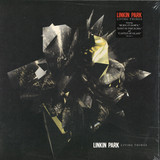
Personnel:
Daunik Lazro - Alto Saxophone, Bass Clarinet, Percussion
Saheb Sarbib - Double Bass, Reeds, Flute, Percussion
Jonathan Dickinson - Drums, Percussion
Manuel Resende - Electric Piano, Piano, Percussion
Notes:
The bass, that metronome that marks the time for musicians of every style, of every era, that secluded, silent, but essential character for a band. Without the bass, the music would be deflated, the heart notes would leave a wasteland of rowdy high frequencies without any rules. But bass players who have character can elevate those low frequencies and even make them loud at times. Who knows if free jazz, if we want to call it that, is exalted by the Arabic background, those semitones between the first and second degree that also make the bass sparkling? In his records, Saheb elevates the bass to a mother instrument, gives it life as vibrant as the spring that is coming. Solos are on par with that of the reeds and stand up to listening without waiting for another antagonist to return to take back the scene. This is one of the most playful and entertaining records we have reissued to date. Take a tour of the world of Saheb!
The hornsman instrumental has a long legacy in the realms of reggae music. Don Drummond, Tommy McCook, Vin Gordon, Rico Rodriguez, Eddie Tan Tan. The list players behind this tradition could go on and on. The notes they played across eras from ska to rock steady to the deepest dubwise steppers bellow through the wind and the wire like a Warrior Charge ….
…It is within this tradition that Ital Counselor’s next weighty contribution to the musical world of QUALITY reggae fits…
…From the very first sonorous note emanating from the mighty Soothsayer’s Horn Section the listener can tell the Dub Organiser means business. That’s right. Once again, the Ital Counselor teams up with Chris Lane of Fashion Records for a cantankerous churning steppers meant to burn out all weak heart sound who try come test.
As evidenced from this 12”s namesake, the humble Soul Dragon Temple of Tone Sound System and IC partners in crime out of Philadelphia, USA, the Soul Dragon Anthem breaths some serious fire. The hard hard rhythm churns relentlessly while the bassline rolls like Dragon’s breath calling all in the dance to spring heel skank straight through all four cuts.
The Dub Organiser stirs a cauldron of dense dub at points conjuring aspects of Lee Perry’s classic Black Ark sound while maintaining his own distinctive spin on the mystical mixing arts. Shards of sound echo and delay. Mr. Lane takes the bassline to aquatic depths as the DRAGON DIVES DEEP……Cut 1…Cut 2…Cut 3…Cut 4…
This one is dedicated to all home town hi-fi’s forwarding reggae and sound system culture outernationally. So without further ado, all soundman and woman worth your salt it is time to DROP the needle on this track. Watch the Dragon FLY and let the Dub Organiser and the Soothsayer Horn’s “Soul Dragon Anthem” BREATH FIRE through your SPEAKER BOX!!!!!!
- La La La
- Cruz
- Lost Angel
- Taquero
- Dream Suite
- The Mystery Of Miss Mari Jane
- Cha Cha Cha
- Sea Changes
- Cinema Lover
- Die Again, Yesterday
- Hollywood Ten
As Jess Sylvester finished his Hardly Art debut as Marinero in the fall of 2020, he realized it was time for a change. Sylvester grew up in Marin County, on the doorstep of San Francisco. It was a nurturing community for a high-school punk with a pompadour and, later, for a sober songwriter with a proclivity for moody psychedelia. But he wanted to be challenged and inspired by a new setting and scenario around strangers who prompted him to approach his music in unexpected ways. So in September 2020, as the world continued to reel in lockdown, Sylvester headed several hours south to Los Angeles, a city that, despite the relative proximity, the film buff knew largely from classic and cult films situated there. When he arrived, he kept digging into that cinematic past-Robert Altman's The Long Goodbye, with John Williams' classic theme, or classic 90s movies about East LA, many featuring Edward James Olmos. They shaped his understanding of his new town just as it began to open. This is one pillar of the multivalent and endlessly lush La La La, Marinero's new album about sobriety, identity, and fantasy that is playfully named both for the city that helped shape it and the sophisticated pop it contains. Sylvester wrote about characters outside of himself, whether considering the heroine reckoning with her own version of keeping clean or the screenwriters whose work was deemed communist simply as a political convenience. He linked those songs with motivational anthems about self-acceptance and playful numbers about flirting through food, shaping a 12-song set rich with humor, empathy, and encouragement. Sure, La La La is a continuation of the slippery genre play Sylvester started with 2021's Hella Love, 2019's Trópico de Cáncer, or even before that. But it also feels like a fresh beginning for Marinero, as Sylvester realizes how boundless this project can be. He began to think about the music of his childhood, how his mother is from San Francisco with Mexican roots, and how he'd heard so much salsa growing up as an impetuous teenager. So he wrote "Taquero," a red-hot salsa tune that uses tacos and their trappings as a source of endless metaphors for come-ons. And then there was the Ray Barreto or Santana-inspired "Pocha Pachanga," with organ gliding and percussion pulsing beneath his yearning vocals, warped as if by desert winds. In Los Angeles, he found a wealth of players who spoke this music like language itself (including Chicano Batman's Eduardo Arenas), all ready to play with and push these familiar forms. Sylvester has also been sober for 21 years, since a cross-country sojourn to attend college in Boston ended in a chemical haze. Today, he sees friends facing the same decisions he made two decades ago, and he brings bits of that experience to bear in songs that feel like self-help anthems. Recorded with a musical hero (and labelmate) of his, Chris Cohen, "Sea Changes" feels like sunshine breaking through dark clouds, as Sylvester acknowledges the newfound confidence and clarity in a friend who has stepped away from destructive habits. In the past, Sylvester has been intractably linked to his identity as a Mexican-American, born to parents from Mexico and Irish- American descent who settled in San Francisco. That can be limiting, of course, tying him to notions of sound and style that aren't always correct. On La La La, he simultaneously steps into and out of those preconceptions, singing tracks above salsa in joyous Spanish or pondering the dynamics of the Hollywood Ten and blacklists above mysterious lap steel and teasing trumpet. His identity, then, should now be clear: He is a Californian, making music shaped by the diversity of encounters and experiences that are a central part of that state's fabric. Never before has he presented himself so fully and unabashedly on tape as with La La La, an album Sylvester built with new inspirations to deliver new charms.
- 1: A Day Walks By
- 2: Glow Emits
- 3: Window Dream
- 4: Poem
- 5: Flex
- 6: A Go To
- 7: Explain A Green
- 8: Something New All Day
- 9: Shedding Shredding
- 10: Do You Know What I Mean
The Durutti Column, Linda Perhacs, Penguin Cafe Orchestra, Judee Sill. Hello and welcome to Decide Which Way The Eyes Are Looking, the new record by Lina Tullgren. It is a deeply gorgeous intervention, a carefully ornamented dilemma, the most inviting crisis. Made with a host of Los Angeles musicians, Decide exposes Tullgren's daring and trust. Each song is a ring of curious sound: the skip of harp strings, the flutter of woodwinds, the ratchet of percussion, the euphonium's sigh. And at the center of each wreath, Tullgren sings, finding this space between Judee Sill and Sam Jayne. It's a tone that signals weariness, but a weariness hand-in-hand with tenacity. There's a clarity, a kind of immovability. Lina Tullgren's first record came in 2016, a homemade, under-the-skin set of laments. Subsequent LPs and constant touring cemented Tullgren's reputation as a composer of "wide-eyed wonder paired with a resonant despair." 2019's Free Cell showed Tullgren lingering in the margins of their songs, finding places both aloof and spare. Floodgates opened; Tullgren spent the subsequent years exploring deep listening, improvised music, and extended technique. They developed a patience and faith in cooperation that ranged at the far edge of song. Collaborations with Mayo Thompson and Claire Rousay furthered this development. This was not a break with the past for Tullgren, rather it was an opportunity to see how far a song could go. And from that distance, deep in a landscape of drone and tension, Tullgren returned to the bright vulnerability of a lyric and a hook. Weaving together the affective and the radical, Tullgren took the quiet isolation of a shoreline cabin to write the songs that would become Decide Which Way The Eyes Are Looking. For Tullgren, Decide is a culmination of all the work they've done throughout their life: the melodic, the dense, the confessional, the unknowable. It's also a tribute to collaboration. Describing the sessions as having "a lot of space and a lot of ease,"" Tullgren invited musicians from a vast field of songmaking to play on the recording: Leng Bian, Zach Burba, Luke Csehak, Corey Fogel, Jenny Hirons, Tara Milch, Tim Ramsey, Michael Sachs, Jude Tedaldi, Marta Tiesenga and Ben Varian. Jonny Kosmo's backhouse was offered as a cozy, easygoing space for the players to create their parts together, and the record was completed by Tullgren and Luke Csehak together at their Los Angeles home. In Tullgren's words: "I feel really strongly that this album is a portrait of the community I found in Los Angeles." Decide Which Way The Eyes Are Looking is a quiet masterpiece: a generous, memorable journey. It is the result of five years of labor, the product of abandoning the pop song entirely and starting over. Whatever wanderings or doubt fueled it, Decide is also entirely at ease: a record on which Tullgren sings "and I know/what to do now" and "I know exactly what to do" in subsequent songs, clear in the revelations this path has given the
First Word Records is extremely proud to welcome aboard Takuya Kuroda.
A highly-respected trumpeter born in Kobe, Japan, Takuya is a forward-thinking musician that has developed a unique hybrid sound, blending soulful jazz, funk, post-bop, fusion and hip hop music.
After following the footsteps of his trombonist brother playing in big bands, he relocated to New York to study jazz & contemporary music at The New School in Union Square; a course he graduated from in the mid-noughties. It was here that Takuya met vocalist José James, with whom he worked on the 'Blackmagic' and 'No Beginning No End' projects.
Following graduation, Takuya established himself further in the NYC jazz scene, performing with the likes of Akoya Afrobeat and in recent years with DJ Premier's BADDER band (also including acclaimed bass player, Brady Watt). Premier said "The BADDER Band project was put together by my manager, and an agent I've known since the beginning of my Gang Starr career. He said, 'What if you put a band together that revolved around a trumpet player from Japan named Takuya Kuroda? He's got a hip-hop perspective and respect in the jazz field…"
Takuya Kuroda is already incredibly prolific, releasing five albums in the past decade and fortifying a solid reputation in the global jazz scene. 2011 saw the release of Takuya's independently-produced debut album, 'Edge', followed by 'Bitter and High' the following year and 'Six Aces' on P-Vine in 2013. Takuya was signed to the legendary Blue Note Records in 2014 for his album 'Rising Son', as well as appearing on their 2019 cover versions project, 'Blue Note Voyage'. He released his 5th album 'Zigzagger' on Concord in 2016, which also featured Antibalas on a reimagining of the Donald Byrd classic 'Think Twice'.
Late Summer 2020, Takuya Kuroda returns with his sixth album 'Fly Moon Die Soon'.
In his words, "this album is about the irony between the greatness of nature and the beautiful obsceneness of humanity. Melodies and grooves fly back and forth from being spiritual to being vulgar."
It took two years to make this album. In 2018, I decided I just couldn't make albums the same way I had been in the past anymore. As a birthday treat to myself, I booked a studio in Brooklyn for two days, with only myself and an engineer, Todd Carder. I brought along some tracks I'd been building at home to see if we could complete them within that time. We began replacing sounds and adding texture, sampling noises from all over the studio; me sipping coffee, hitting a 26" kick drum, speeding up snares. At the end of the two days we were like "wow, I didn't know we could make tracks this good in this way". This is how the process of the full album started. Everything was based on my beats I made at home, inviting musicians in one by one, adding or replacing parts. I was very careful when developing these tracks; just note by note, part by part. I wanted to make the music effectively from a blend of two different recording methods; one very slickly produced part and one very organic part played by live musicians. I remember mixtapes from when I was kid, and wanted to make an album that wasn't just a bunch of flashy singles, trying to catch people's attention in the first 30 seconds, or full of guest features. Instead, I'm essentially just trying to let the grooves breath."
The album consists of nine tracks of excellence. The uptempo jazz-funk of 'ABC' and 'Moody' sit alongside soulful jazz cuts like 'Fade' and 'CHANGE', also featuring Corey King on vocals. The title track is a downtempo groove lead by a heavy Moog bassline, whilst 'Do No Why' contains an infectious piano riff throughout. Aside from Takuya's original compositions, he revisits two classics from Ohio Players ('Sweet Sticky Thing' featuring Alina Engibaryan on vocals) and Herbie Hancock ('Tell Me A Bedtime Story') whilst the album closes with the epic 'TKBK'.
Takuya adds "this special cover was inspired by the Golden Moon I saw during a photoshoot in Death Valley with my homie Hiroyuki Seo".
Takuya Kuroda is a truly unique talent, and this album is a realisation of the evolution of his sound.
'Fly Moon Die Soon' is released on Worldwide Award-winning UK label First Word Records on vinyl & digital in September 2020.
‘In Session’ is the new album from platinum selling & MOJO Awards winning artist Rumer. Having moved to the USA for a period of time, Rumer began working on a studio project to celebrate the work of Joni Mitchell. It was then that she first collaborated with London based, funk band Redtenbacher’s Funkestra, the original and mostly instrumental wall-to-wall Jazz Funk Collective of world class players who have previously collaborated with esteemed musicians such as Brand New Heavies, Cory Wong (Vulfpeck) and Andy Snitzer (Paul Simon).
Through new arrangements of music that emerged during their work together, the idea of presenting an ‘In Session’ record was born. Coming together at James Welch’s Masterlink Studios, the songs that made her a worldwide million-seller like soulful singles “Slow” and “Aretha,” have been re-recorded here with Redtenbacher’s
Funkestra to offer a timeless collection for the seasoned fan and newcomer alike.
‘In Session’ is the new album from platinum selling & MOJO Awards winning artist Rumer. Having moved to the USA for a period of time, Rumer began working on a studio project to celebrate the work of Joni Mitchell. It was then that she first collaborated with London based, funk band Redtenbacher’s Funkestra, the original and mostly instrumental wall-to-wall Jazz Funk Collective of world class players who have previously collaborated with esteemed musicians such as Brand New Heavies, Cory Wong (Vulfpeck) and Andy Snitzer (Paul Simon).
Through new arrangements of music that emerged during their work together, the idea of presenting an ‘In Session’ record was born. Coming together at James Welch’s Masterlink Studios, the songs that made her a worldwide million-seller like soulful singles “Slow” and “Aretha,” have been re-recorded here with Redtenbacher’s
Funkestra to offer a timeless collection for the seasoned fan and newcomer alike.
- Lights On The Way
- Open Roads
- Rolling Gold
- Evergreen
- Sunlight Daze
- Radio Song
- Seeds Of Light
- La Mesa
- Wheels
- The Walls
COKE BOTTLE CLEAR VINYL[29,20 €]
Rose City Band"s music is sun-kissed timeless country rock whose seemingly effortless momentum carries the joy of its creation without ignoring the darkness pervading our consciousness. Led by guitarist/vocalist Ripley Johnson, the music of Rose City Band is rooted in his love of private press records of the mid to late 70"s. The band, in addition to Johnson, features pedal steel guitarist Barry Walker, keyboardist Paul Hasenberg and drummer John Jeffrey who enmesh a keen sense of rhythmic drive and melody with gentler, sumptuous atmospheres. Nuanced performances and interplay between players unfurl like desert flowers splashing color onto an arid landscape. The ensemble"s buoyant moments still glide with ease, but there is room to revel in respite of the shade of a dark cloud. Across the album, Johnson"s tasteful guitar interjections and soothing voice are met in kind with the versatile playing of Walker, Hasenberg, and Jeffery, with special guest performances by synthesist/vocalist, Sanae Yamada. Album closer "The Walls" perfectly captures the band"s explorative and expansive songs, Hasenberg"s soulful organ driving the album to an emotionally cathartic conclusion. Throughout his prolific career with Wooden Shjips, Moon Duo and now Rose City Band, Johnson"s music has consistently centered around exploration and discovery. Sol Y Sombra imbues his penchant for space and resplendent tonality with a denser amalgam of his influences through a delicate balance of the somber and the serene, of subtle evolutions and familiar sounds, Sol Y Sombra makes for a holistically joyous experience, finding solace in both sun and shade.
For roundabout a decade now, The Lavender Flu has been pumping their inimitable, underground group-sound way past all manner of lesser modern muck, moving only and always as their varied inspirations prompt them. As players, Chris Gunn, Ben Spencer, and Scott Simmons remain open to where any given moment might take them, which has resulted in thrilling experiences both live and on record at every turn. Tracing The Sand By The Pool, their latest album for In The Red, finds The Flu firing at their most crisp and direct, a full-band collection of meander-free hits triumphantly captured to tape by the lads themselves. Moments will tug, others will stun, but there can be no doubt this new communiqué is their mightiest. The record unfolds from “Within,” born out of a Kiwi brightness that is methodically guided through a series of near-crashes and sly, inward moves, spotlighting the key pillars of the band’s songcraft and tailored to convert the uninitiated. Gunn’s guitar work continues to fascinate and marvel, boasting too many moments of both melodic sweetness and violent shattering to detail here. Their cover of the hangmen’s “I’m Gonna Love You” capably inverts Suicide’s menace to a hopeful, romantic sheen. Of critical note are a pair of guest contributions from The Spatulas’ Miranda Soileau-Pratt, who lends vocals to multiple songs including the deceptive 80s dosed pop of “Snail On The Map”, and The Tube Alloys’ Shelby Jacobson, who takes lead on a cosmos-injected cover of Fleetwood Mac’s “That’s Alright,” as well as “Patron Eyes (Cocoon 2069),” the most vicious, smashingly punk moment the band has unleashed to date. From the jump to its final rest, the album is boundless and full of gifts.
From day one, Linkin Park built the band upon the premise of fusing all of their favourite styles of music-as disparate as they might be-into one signature sound. Fast-forward 12 years to LIVING THINGS and the same six players have not only developed new tools to make that philosophy a reality, but they're finally comfortable embracing-and coalescing-every aspect of their career. OK, maybe not the XXL work shirts and neon hair dye of the early days. But in their music, the band has spent the past year reinventing how to tastefully bridge the gap between all the musical destinations they've visited, and how to marry all the ideas they've accumulated. And as LIVING THINGS began taking shape, for the first time Linkin Park was eager to use every tool in their toolbox. With each song, they flexed their expertise with both cutting-edge and classic gear, and they infused their vocals with an honest, thrilling enthusiasm; they picked apart their own ideas of what defines a song, and what defines Linkin Park. LIVING THINGS is a personal album, centered on human emotions and relationships implied by the title. It is informed by and built upon all previous Linkin Park albums, while still pushing the band's sound into new territory. It's spirited, energetic, daring and unafraid to hybridize the past, present and future. It's absolute proof to a radical theory six musicians have devoted their lives to testing.
With his Electric Blues All-Stars, Kai Strauss has made a name for himself all over Europe with dynamic, driving live shows and award-winning CDs, featuring an individual style that’s based on the urban blues tradition, but taking in big chunks of soulful and funky grooves. And this band knows how to rock the house!
For “Wailin’ In Vienna”, Kai has realized his long-standing plan to record an old-school blues album, going back to his roots and beyond. And the results are nothing short of spectacular, with 15 self-composed songs that cover lot of traditional ground: swinging R&B, 50’s Chicago blues, instrumental shuffles, even some bluesy jazz, a minor-key cha-cha and a tribute to Bill Doggett and his guitarist Billy Butler.
Although the shadows of T-Bone, the three Kings and others loom large over the proceedings, Kai Strauss never fails being his own man. Of course it helps when you can realize such a project with a team comprising some of the best players in this style: Dani Gugolz and Peter Müller have been a steadily swinging rhythm team for 35 years. Pianists Dave Ruosch and Andreas Sobczyk combine tasteful chordal work with cascading treble runs. Sax Gordon has been a first-call R&B horn man for decades. Gerry Lülik’s is one of Austria’s foremost bluesharp players. Pianist Christian Dozzler, who came up in Vienna but has long made his home in Texas, can be heard with the likes of Anson Funderburgh when not doing his own thing. Finally, the two guitar greats heard alongside Kai hardly need much introduction: Rusty Zinn and Alex Schultz have been among the top tier of traditional blues string-benders since the 1990’s. Here, they are mostly heard in a supporting role for their friend and colleague, but ready to step out in style when called upon.