Swedish Meatballs Vol 2 - The Psychedelic Hard Rock
Underground 1970-1977
Way-out heavy psych mindblowers with blistering guitars and pounding
drums! Sweden " heaven and hell
Strictly limited edition of 500 copies only. Comes with a striking day- glow
coloured sleeve and a massive 16- page booklet cram packed with photos and
previously untold stories. Subliminal Sounds swings open the portals to the long
lost, ultra-rare, or previously unreleased, music and history of these loud and hairy
underground hard rocking champions. Possessed zit covered Viking teens going
berserk and blasting loud and heavy sounds at youth halls making the stoner kids
go meatball crazy. Mini skirt moose hunters. Mid-70s communal people parks
hedonistic punch- drunk all- night benders. Local biker club bacchanalias with
fierce lesbian bikers make out on stage as the band's rambles on. Heavy metal
greasers in their imported American muscle cars chicken racing with ice bears.
Hard rock glam rockers accompanying XXX live shows and a previously unknown
connection to all mighty Bathory goat. All in a day's work for the Swedish
Meatballs. This is a tasty new release in our series: The Swedish Hard Rock
Underground " A Smorgasbord of Heavy Sounds !
Cerca:da posse
Chuck Sherwood von INCANTATION präsentiert seine neue Band und diese knallt gewaltig. 6 hammerharte
Death Metal Songs hat Chuck zusammen mit Daniel Gonzalez (POSSESSED), Alex Bouks (IMMOLATION)
und weiteren Gastmusikern eingespielt, die nun mit der EP ”Augurium Senarius Umbrae” auf die MetalGemeinde losgelassen wird. Ein Feuerwerk derber Metal-Riffs, krassen Vocals und mega-schnellen Drums!
- jetzt auch als 12” Vinyl
Tiny Blue Ghost are a band possessed. Haunt- ing, melodic vocals soar over a dreamy landscape of floating guitars, washy drums, and meandering bass that can pull suddenly into focus at a mo- ments notice. Moving seamlessly across genre to genre, Tiny Blue Ghost can’t simply be defined by any single label- unless you want to come up with a new term for a band that blends the best parts of bedroom pop, shoegaze, twee, indie, post-rock, and college rock.
Industrial Techno to Hard Techno Acid... Definitely dark ambiances, deep and dry...
A bunker ambiance. Hot stuff chasing the strobo dark dancefloor !
Black Vinyl[30,67 €]
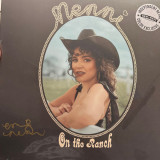
The sun sets over the ranch, a can of beer cracks, and an acoustic guitar
wrangles the day's thoughts and memories into a semblance of orderDuring moments like these, California-born and Nashville-based singer
and songwriter Emily Nenni chronicles her life through delicate songcraft
rife with honky-tonk spirit and spiked with just the right amount of soul
In possession of a deep understanding of music stoked by a lifelong passion and
sharp chops shaped by endless sets in smoky bars and sizzling doublewides, she
asserts herself as the consummate country storyteller on her full- length debut
album, On The Ranch.
All-star group recording led by Swiss trumpeter/composer Franco
Ambrosetti and featuring John Scofield, Scott Colley, Uri Caine and Peter
Erskine, plus strings arranged by Alan Broadbent
Growing up in Lugano, Switzerland, the son of a pioneering bebop alto
saxophonist on the 1940s European jazz scene, a teenaged Franco Ambrosetti
came under the sway of his father's heroes - Charlie Parker, Dizzy Gillespie and
Clifford Brown. They became his heroes too as the aspiring trumpeter began
emulating their blistering chops and visceral abandon. Now, at age 80, Franco is
following a different muse. After nearly 40 albums as a leader, he has reached a
point in his career where caressing each note is more important to him than
showcasing chops. "When you're in your 20s, you want to play as fast as you can
and as high as you can, like Clifford," he said. "But somewhere after turning 50,
then you concentrate on more important things and you try to say something with
just a few notes, but the right ones, like Miles Davis did."
Franco plays all the right notes in typically elegant fashion on 'Nora'. Backed by an
all- world group of pianist Uri Caine, bassist Scott Colley and drummer Peter
Erskine, with a guest turn by guitarist John Scofield, plus Grammy- winning
pianist- arranger Alan Broadbent conducting a 22- piece string orchestra,
Ambrosetti plumbs the depth of emotion on this program of romantic ballads,
delivered with rare intimacy and grace. Possessing a golden tone on flugelhorn,
he ruminates and tells stories on each of these melodic gems.
repress
Levon Vincent returns with his fourth full-length studio album Silent Cities a striking departure from his previous records. This, his first release experimenting with the cassette format, Silent Cities is a kind of mixtape through more private moods and personal pitches (literally given Levon’s non-standard tunings).
While Levon has always pro
duced dance floor jams with the intention of raising people’s heart rates, Silent Cities began with 72 bpm: his average resting heart rate, and the concept of tuning the music he was making to his own body rather than increasing anything. This brought the tempos down to 72 bpm or even half of that, at 36bpm. Programming the record during the empty cityscape of Berlin lockdowns, this is the first time Levon’s created an album for the home stereo or for headphone listening whilst navigating through a city. A mixtape specialist in his youth; he was always wanted to play with the cassette format. The results are sure to delight any listener, with the ever-present ambient, krautrock, shoegaze, hip-hop and electro influences coming to the foreground on this work.
“I was expanding further along the lines of a surprise favourite from my previous LP, a song called She Likes To Wave To Passing Boats which was not a 4 on-the-floor piece to play in clubs but a more impressionistic piece of music that I wrote to expound some emotions one day” says Levon. “It was a song written using just intonation. I really love how warm the pure 4ths sound, so when working on the new LP Silent Cities I decided to use my own tunings”.
Historically, the use of just intonation has meant that such instruments could sound "in tune" in one key but at the expense of more dissonance in the other keys. None of the songs on Silent Cities use standard Western equal temperament, Levon created his own scale designs coupled with the ancient ratios found in just intonation.
Born in Houston in 1975, Levon’s life changed dramatically when his parents moved their family to New York in 1981, uprooted from what he knew, the shock, the change from Houston to New York at 6 years old, is referred to constantly in Levon’s Musical output over the years. Levon's family moved houses in and around NYC from 1981 -2010, never more than a mile or two from the WTC. He lived on the Lower East Side during his teenage years and early 20s. This time period and this locale are also a big theme recurrent in his music as he tries to convey how the "downtown" lifestyle and culture-melding affected him so much at a tender age. He cut his teeth working in record shops around lower Manhattan, and while working at the Halcyon Record shop in Brooklyn he (alongside DJ Jus-Ed) was instrumental in creating the wave that came to be known as the "NYC House Renaissance" circa 2010. During the Y2K years he studied 20th C post-minimalism at Purchase college of New York under James McElwaine (who tangentially produced Man Parrish’s Self-Titled proto-hip-hop debt LP). Levon was fortunate to study theory with avant-garde composer Dary John Mizelle and orchestration under conductor Joel Thome. He undertook masterclasses with Philip Glass and also served as intern for John Kilgore, engineer for Steve Reich, where he was present for notable mix sessions such as “Violin Phase.”
Post-minimalism clearly remains an influence not to mention the early sampler stars of 80s freestyle and synth pop. Mixing such far-reaching influences is something Levon executes tremendously well. The first track Everlasting Joy moves at a head nodding 96 BPM tempo, reflecting formative influences like Paul Hardcastle’s Rainforest or Art Of Noise’s Moments in Love. “Those types of songs were a big eye opener for me as a youth, because it was where I realised songs in popular culture didn’t have to be kept to just 3 minutes, and they didn’t require vocals either. So, Everlasting Joy is a song with that intention, one that might be radio-friendly, despite the long arrangement and without vocals. You could say it was inspired by 107.5 in NY because that was a station I listened to a lot in the 1980’s.”

The majority of demos on Silent Cities were recorded before Covid-19 hit the world - when Levon had found a studio space outside of home in his adopted city of Berlin. It was a career first - working on music outside the bedroom. This riding the train or bicycling ‘going to work’ in Berlin opened up a new mood in his music, using the time back and forth to be inspired - commuting as an NYC transplant who still feels as a tourist in Berlin, with a pair of headphones, looking out the window on the train, or stopping on bridges and parking his bike to enjoy Berlin's skyline and horizon. Then, the pandemic struck and “work” came to a halt. Levon had recorded so much material during that year in the studio out of house it seemed like an inflection point for him to lighten the burden of the possessions he was carrying.
“People close to me have watched me give away synths and hardware regularly and I have given away my record collection every few years for my whole life. As a struggling artist in my 20s who had worked in record stores that whole time, I learned that moving constantly with 12k records just wasn't the way to live. So, in light of the pandemic, I set up a shop online, and sold all my music equipment. I also created a separate shop for all my sneakers and clothes. Easy come, Easy go. This provided me with a slow drip type of income that carried me quite well through the pandemic and it allowed me to focus on my own art and music. Getting rid of all my possessions felt like a weight being lifted from my shoulders and I was able to stay the course and remain committed to the music. I needed a further 2 years to mix and arrange the LP. If it weren’t for the pandemic, I would not been able to make this type of LP, so in light of everything, I was able to turn a depressing time in to something lasting and musically very positive.”
You can hear how his approach to a cassette release retains the "Medium is the Message." ethos. Silent Cities is a spooling, warm piece about life memories and embodiment.
For Fans Of Garage Punk, Power Pop, Cheap Trick, Dollyrots, Suzi Moon, Pretenders, Blondie, The Muffs, 5.6.7.8’s. One part pop, one part poison, all “poolside glitter punk,” Hayley and the Crushers offer up a tsunami of bad girl power. Anointed “the naked embodiment of power pop punk” by New Wave icon Josie Cotton (who signed the band to her Kitten Robot Records in 2021), Modern Adult Kicks is their most ambitious and self-possessed album to date. Produced by legendary LA punk producer and ex-Screamer Paul Roessler (TSOL, Josie Cotton, Richie Ramone), the album conjures up the electricity of first-car freedom, the woes of suburban isolation and the lurid pleasures of Y2K chat rooms all wrapped in the warm glow of a late-night infomercial. While the content is no doubt “adult,” there’s no shortage of kicks to be had. The California-to-Detroit transplants have injected even the most bummer of subjects (addiction, heartbreak) with a potent venom of caffeine and heart. Sure, BUST Magazine once likened the band to a bag of Sour Patch Kids, but this new album reveals fresh depths of flavor. Crafted in a post-Covid world, Modern Adult Kicks is exactly what it advertises to be: a more put-together, wiser “big sister” to the band’s sunny 2020 release, Vintage Millennial. Like finally being old enough to party with the babysitter, Kicks is a shining example of how growing up can actually rule. In the Crushers’ world, growing jaded isn’t an option and there’s never a good reason to stop dancing. Tracks 1 Taboo 2 Cul de Sac 3 She Drives 4 Broken Window 5 I Fall 6 Click and 7 Act Now 8 Lost Cause 9 California 10 Sober 11 No Substitutes 12 Overexposed
Treviso, Italy-based two piece Kill Your Boyfriend will release their fourth album 'Voodoo' on October 14th via Sister 9 Recordings (Europe), Little Cloud Records (North America) and Shyrec (Itay). A frantic and hypnothising bacchanalia of Psych & Industrial tinged soundwaves, the new album is a collection of reverb laden necromantic charms, summoning the souls and bones of the greats in the Rock & Roll pantheon of the 1950s. The duo delivers such glittery dark enchantment via 7 hoodoo hymns, travelling with a crumbling, ghostly and magically whizzing Rocket 88, in the company of Marie Laveau and madame Lalaurie. It's a relentless whirl of Voodoo-Psych, Industrial-Billy, Electro-GrisGris, which you can dance to. The new LP follows 'Killadelica', where Kill Your Boyfriend had refined their debut signature sound, bridging the gap between the semi-obscure but hauntingly fascinating tradition of Veneto's Post-Punk (Death In Venice, Evabraun, Pyramids, etc.) and contemporary Psych-Nouveau. With 'Voodoo', Matteo Scarpa and Antonio Angeli, explore new genres and expand the sonic borders, without losing their original intent. They replace the synth bass with a bass-guitar, adding more fluidity and weight to a renewed and punchier rhythmic section. Electronic and acoustic percussion are fuller and heavier, and the band's new stomp-machine is a hyper-convulsive version of the saturated Rock & Roll and R&B drumming, from the cheap garage studios of 1950s indie labels. Sida A is the most Rock & Roll of the two, and it is inspired by Michael Ventura's essay "Hear that Long Snake Moan", which brought forward the idea that "the Voodoo rite of possession by the god became the standard of American performance in Rock’n’Roll" where the performers "let themselves be possessed not by any god they could name but by the spirit they felt in the music”. Each song invokes one or a set of the lost souls of the Rock & Roll era, with 'The Day The Music Died' referring to the infamous 3rd of February 1959. Side B descends deeper into the magic swamps of Creole magic, with music taking on a much more liturgical function, conjuring shamanic possessions via extra layers of tribal percussion. The band says of side B: "we see it as a one long ritualistic descent into a psychedelic underworld made of echoing voices, claustrophobic spaces populated by lost souls, enchanters and witchdoctors."
TRACKLIST 1. The King 2. The Man In Black 3. Mr Mojo 4. Buster 5. The Day The Music Died 6. Papa Legba 7. Vodoo
Throughout the last decade, Strange Ranger have been crafting seamless
indie music that feels both already classic and precisely of its time
From Daymoon's strains of the Microphones by way of the Pacific Northwest-era
indie scene to the dark elation and Cure-reminiscent stylings of Remembering the
Rockets' they've become one of the rare standouts of a crop of bands that have
managed to grow up with us. More than just a stopgap along that progression,
the new mixtape entitled No Light In Heaven holds some of the band's most
experimental and ambitious work yet. Stitched together through a series of
sessions at both a house in rural NY and Strange Ranger's home studios in both
Philadelphia and NYC (where Eiger and Woodman moved in 2021, the mixtape
possesses something both abstract and astute; the product of a band in
transition and a group of people making something effortlessly transcendental
out of their new surroundings. Heralded as unpredictable and expansive, a
thrilling document of a band with an ever- changing muse,with songs that are
packed with hooks and an abundance of feeling (Stereogum). This outpouring of
evocative emotion makes the band's more traditional song structures read like a
new breed of pop music in its purest form. From Needing You 's effervescent
euphoria to string- laden album close It's You, the record seamlessly fuses
together a multitude of genres, where the industrial punch of In Hell sits
alongside the chopped up vocals and melodic keys of Get Right Up to the Mic.
"No Light in Heaven" marks the beginning of a bold new era for the band & the
groups first release with Fire Talk.
Clear Vinyl
Downwards’ deep bonds with NYC catalyse the debut LP by Jim Siegel’s Vivid Oblivion, a reveberating post-industrial salvo produced by adopted Brooklynite Karl O’Connor (Regis), and co-mixed by Anthony Child (Surgeon) and Simon Shreeve, who also mastered it. It’s a super deep, highly atmospheric beast somewhere between Valentina Magaletti’s most expressive percussion work, Bark Psychosis, and classic, moody 4AD, which is coincidentally referenced via the artwork, made by Chris Bigg - legendary graphic designer and longtime assistant to Vaughan Oliver.
Invoking the density, vertiginous scale, and dark grimy nooks of NYC, ‘The Graphic Cabinet’ was realised by Jim Siegel - hardcore legend and occasional/regular drummer with everyone from Raspberry Bulbs to Damo Suzuki and Boredoms, made in close collaboration with Karl O’Connor aka Regis during 2021.
Stemming from intently deep listening sessions immersed in LPs by Viennese aktionist Hermann Nitsch and the myriad eras of Killing Joke, while also absorbing the atmospheres of classic Tarkovsky flicks, the album began life as gonzo field recordings of Siegel smashing the f*ck out of his drum kit, zither, scrap metal and gongs in an array of abandoned warehouse spaces. The recordings formed the basis of Karl’s compound productions, which add depth charge bass and sonorous metallic atmospheres to the mix, along with birdsong and gibbon hoots, plus guitar textures by Nick Forté (Raspberry Bulbs, Rorschach) for a dread-lusting jag deep in the belly of the Big Apple.
With a palpable tang of rust and blood in the air and grime under the fingernails, the seven tracks evoke a resoundingly brutalist portrait of space and place. Siegel’s nervy percussive discipline is framed in alternating barometric and light settings from cut to cut, variously snaking from the poltergeist clang and haunted resonance of ‘Converging and Dissolving’ to slamming motorik thrum in ‘Oblivion’ via imaginative descent into cyberpunk simulacra of the city as jungle-at-night in ‘Remnant Corridor’, replete with animalistic atmospheres that recall Organum.
While the raw attack and devilish swerve of the rhythms are utterly fundamental to the record, Karl’s atmospheric content and the animist mixing magick of Anthony Child and Simon Shreeve most potently give flesh to its bones. Patently evident on the stepping pulse and searching zither that keens into detuned orchestration on ‘Immediate Possession’, the zoned-out klang of ‘Stand Aside’ or in the flooded warehouse chaos of ‘Test For Traps’. The attention to spatial, textural and proprioceptive detail is tightened throughout, peaking with ‘Bargemaster’, a dense slab of tension that sounds like Jon Mueller’s Silo recordings fed through The Caretaker’s fogged machinery.
It’s one of the most impressive records on Downwards for a long while, bound to gnaw and spark the nerves of experimental rock and post-industrial’s greats, anything from The New Blockaders to Faust, Flying Saucer Attack and into iconic Blackest Ever Black releases in the modern era.
The legendary Brownsville duo of Lil Fame and Billy Danze followed up their first group single "How About Some Hardcore" with their first full-length studio album, To The Death, in the Spring of 1994, and they haven’t let up the pressure since. While some solo offerings came earlier - most notably Fame’s appearance on The Hill That’s Real compilation- the classic aggressive energy the two emcees exhibit while trading rhymes back and forth is what street-rap fans have come to know and love from the group. If you are not into the that smash-ya-face-in style, then simply put, the Mash Out Posse is not for you. The album was produced entirely by DR Period, except for track "Guns N' Roses" (produced by Silver D), and it solidified what has become a successful 30 year career for M.O.P. Fame and Danze haven’t waivered from their grimy, crimey, high-energy boom bap style to this day, and the songs on this album established that fact early on. Tracks like "Rugged Neva Smoove", “Blue Steel”, “Guns N’ Roses”, and the robbery-story driven "Heistmasters" are early indicators of the ruckus they would later bring on anthems like “Stick To Ya Gunz” and “Ante Up”.
Trauma and tragedy transfer from one generation to the next. As difficult as it may be, we still possess the power to break the cycle and start anew. Fit For A King ponder the pain of these cycles and the possibility to end them on their seventh full-length offering, The Hell We Create Solid State. The Texas quintet—Ryan Kirby [vocals], Bobby Lynge [guitar], Daniel Gailey [guitar], Ryan “Tuck” O’Leary [bass], and Trey Celaya [drums]—explore this ebb and flow with a deft, yet delicate balance of sharp metallic intensity and soaring melodic energy. Drawing on real-life experiences, the band members collectively rallied around Ryan and his family as they endured seemingly unending turbulence… “The album is a reflection of the events that happened throughout the pandemic,” recalls Ryan. “In short, my wife and I adopted children and had to homeschool them. She almost died from a stroke. The Hell We Create is by far the deepest and most personal record we’ve ever written.” “Falling Through the Sky" represents the mental struggles I had dealt with during the pandemic, and how little my upbringing prepared me to deal with it. Between adopting two children, my wife having constant health issues, and me losing almost 70% of my income, I was an absolute wreck. I thought my religious upbringing and faith would be enough to help me when adversity struck, but when the tidal wave came, I struggled immensely. So many think just having faith is enough to pull you through anything life throws at you, but the reality is, it makes a lot of us complacent in our personal growth.
- 1: Give It Up (Feat. J-Live)
- 2: Supa
- 3: Renaissance 2.0 (Feat. Hell Razah, Tragedy Khadafi, And Timbo King)
- 4: Windows Of The World (Feat. Ayatollah And Dynasty The Emp)
- 5: Uncommon Valor: A Vietnam Story (Feat. Jedi Mind Tricks)
- 6: Who's Dat Guy (Feat. Havoc Of Mobb Deep)
- 7: L.i.'s Finest
- 8: Stanley Kubrick
- 9: Cunt Renaissance (Feat. The Notorious B.i.g.)
- 10: 3 Kingz (Feat. Kool G Rap And Big John)
- 11: Smithhaven Mall
- 12: Posse Cut (Feat. Hell Razah, Jojo Pellegrino, Remedy, And Blaq Poet)
- 13: What The Fuck (Feat. Akinyele)
- 14: Poor People
- 15: 50,000 Heads (Feat. Sadat X)
- 16: Effin' Yo' Bitch
- 17: Every Record Label Sucks Dick
- 18: The Greatest (Feat. Marcella Puppini) (Bonus)
Reissue! Before the acclaimed albums "Legends Never Die" and "All My Heroes Are Dead" brought his career to new heights, R.A. The Rugged Man spent years as an underrated rap enigma, with a slew of storied records to his name that had never received a proper release.
With the 2009 compilation "Legendary Classics Vol. 1, R.A. finally unleashed many of the lost gems that earned him a reputation as one of hip-hop's most feared lyricists, showcasing his undeniable history.
An essential collection from a true hip-hop original, the album features appearances by The Notorious B.I.G., Havoc of Mobb Deep, Jedi Mind Tricks, Kool G Rap, J-Live, Hell Razah, Tragedy Khadafi, Akinyele, and Sadat X, along with track-by-track commentary from the Rugged Man himself. This "Legendary Classics Vol. 1" reissue also includes the new bonus track “The Greatest” featuring famed Italian singer Marcella Puppini, which has never before been available on vinyl.
- A1: Rock This Mother
- A2: Talk To Me Girl
- A3: You Can Find Me
- A4: Check This Out
- A5: Jesus Going To Clean House
- A6: Hope You Understood
- A7: Is It What You Want
- A8: Love Is Everlasting
- A9: This Is Hip-Hop Art
- A10: Opposite Of Love
- A11: Do You Know What I Mean
- B1: Saving All My Love For You
- B2: Look Out Here I Come
- B3: Girl You Always Talking
- B4: Have A Great Day
- B5: Take My Hand
- B6: I Need Your Love
- B7: Your Town
- B8: Talk Around Town
- B9: Booty Head/Take A Little Walk
- B10: I Love My Mama
- B11: I Never Found Anyone Like You
Vinyl LP[23,49 €]
As the sun sets on a quaint East Nashville house, a young man bares a piece of his soul. Facing the camera, sporting a silky suit jacket/shirt/slacks/fingerless gloves ensemble that announces "singer" before he's even opened his mouth, Lee Tracy Johnson settles onto his stage, the front yard. He sways to the dirge-like drum machine pulse of a synth-soaked slow jam, extends his arms as if gaining his balance, and croons in affecting, fragile earnest, "I need your love… oh baby…"
Dogs in the yard next door begin barking. A mysterious cardboard robot figure, beamed in from galaxies unknown and affixed to a tree, is less vocal. Lee doesn't acknowledge either's presence. He's busy feeling it, arms and hands gesticulating. His voice rises in falsetto over the now-quiet dogs, over the ambient noise from the street that seeps into the handheld camcorder's microphone, over the recording of his own voice played back from a boombox off-camera. After six minutes the single, continuous shot ends. In this intimate creative universe there are no re-takes. There are many more music videos to shoot, and as Lee later puts it, "The first time you do it is actually the best. Because you can never get that again. You expressing yourself from within."
"I Need Your Love" dates from a lost heyday. From some time in the '80s or early '90s, when Lee Tracy (as he was known in performance) and his music partner/producer/manager Isaac Manning committed hours upon hours of their sonic and visual ideas to tape. Embracing drum machines and synthesizers – electronics that made their personal futurism palpable – they recorded exclusively at home, live in a room into a simple cassette deck. Soul, funk, electro and new wave informed their songs, yet Lee and Isaac eschewed the confinement of conventional categories and genres, preferring to let experimentation guide them.
"Anytime somebody put out a new record they had the same instruments or the same sound," explains Isaac. "So I basically wanted to find something that's really gonna stand out away from all of the rest of 'em." Their ethos meant that every idea they came up with was at least worth trying: echoed out half-rapped exhortations over frantic techno-style beats, gospel synth soul, modal electro-funk, oddball pop reinterpretations, emo AOR balladry, nods to Prince and the Fat Boys, or arrangements that might collapse mid-song into a mess of arcade game-ish blips before rallying to reach the finish line. All of it conjoined by consistent tape hiss, and most vitally, Lee's chameleonic voice, which managed to wildly shape shift and still evoke something sincere – whether toggling between falsetto and tenor exalting Jesus's return, or punctuating a melismatic romantic adlib with a succinct, "We all know how it feels to be alone."
"People think we went to a studio," says Isaac derisively. "We never went to no studio. We didn't have the money to go to no studio! We did this stuff at home. I shot videos in my front yard with whatever we could to get things together." Sometimes Isaac would just put on an instrumental record, be it "Planet Rock" or "Don't Cry For Me Argentina" (from Evita), press "record," and let Lee improvise over it, yielding peculiar love songs, would-be patriotic anthems, or Elvis Presley or Marilyn Monroe tributes. Technical limitations and a lack of professional polish never dissuaded them. They believed they were onto something.
"That struggle," Isaac says, "made that sound sound good to me."
In the parlance of modern music criticism Lee and Isaac's dizzying DIY efforts would inevitably be described as "outsider." But "outsider" carries the burden of untold additional layers of meaning if you're Black and from the South, creating on a budget, and trying to get someone, anyone within the country music capital of the world to take your vision seriously. "What category should we put it in?" Isaac asks rhetorically. "I don't know. All I know is feeling. I ain't gonna name it nothing. It's music. If it grabs your soul and touch your heart that's what it basically is supposed to do."
=
Born in 1963, the baby boy of nine siblings, Lee Tracy spent his earliest years living amidst the shotgun houses on Nashville's south side. "We was poor, man!" he says, recalling the outhouse his family used for a bathroom and the blocks of ice they kept in the kitchen to chill perishables. "But I actually don't think I really realized I was in poverty until I got grown and started thinking about it." Lee's mom worked at the Holiday Inn; his dad did whatever he had to do, from selling fruit from a horse drawn cart to bootlegging. "We didn't have much," Lee continues, "but my mother and my father got us the things we needed, the clothes on our back." By the end of the decade with the city's urban renewal programs razing entire neighborhoods to accommodate construction of the Interstate, the family moved to Edgehill Projects. Lee remembers music and art as a constant source of inspiration for he and his brothers and sisters – especially after seeing the Jackson 5 perform on Ed Sullivan. "As a small child I just knew that was what I wanted to do."
His older brother Don began musically mentoring him, introducing Lee to a variety of instruments and sounds. "He would never play one particular type of music, like R&B," says Lee. "I was surrounded by jazz, hard rock and roll, easy listening, gospel, reggae, country music; I mean I was a sponge absorbing all of that." Lee taught himself to play drums by beating on cardboard boxes, gaining a rep around the way for his timekeeping, and his singing voice. Emulating his favorites, Earth Wind & Fire and Cameo, he formed groups with other kids with era-evocative band names like Concept and TNT Connection, and emerged as the leader of disciplined rehearsals. "I made them practice," says Lee. "We practiced and practiced and practiced. Because I wanted that perfection." By high school the most accomplished of these bands would take top prize in a prominent local talent show. It was a big moment for Lee, and he felt ready to take things to the next level. But his band-mates had other ideas.
"I don't know what happened," he says, still miffed at the memory. "It must have blew they mind after we won and people started showing notice, because it's like everybody quit! I was like, where the hell did everybody go?" Lee had always made a point of interrogating prospective musicians about their intentions before joining his groups: were they really serious or just looking for a way to pick up girls? Now he understood even more the importance of finding a collaborator just as committed to the music as he was.
=
Isaac Manning had spent much of his life immersed in music and the arts – singing in the church choir with his family on Nashville's north side, writing, painting, dancing, and working various gigs within the entertainment industry. After serving in the armed forces, in the early '70s he ran The Teenage Place, a music and performance venue that catered to the local youth. But he was forced out of town when word of one of his recreational routines created a stir beyond the safe haven of his bohemian circles.
"I was growing marijuana," Isaac explains. "It wasn't no business, I was smoking it myself… I would put marijuana in scrambled eggs, cornbread and stuff." His weed use originated as a form of self-medication to combat severe tooth pain. But when he began sharing it with some of the other young people he hung out with, some of who just so happened to be the kids of Nashville politicians, the cops came calling. "When I got busted," he remembers, "they were talking about how they were gonna get rid of me because they didn't want me saying nothing about they children because of the politics and stuff. So I got my family, took two raggedy cars, and left Nashville and went to Vegas."
Out in the desert, Isaac happened to meet Chubby Checker of "The Twist" fame while the singer was gigging at The Flamingo. Impressed by Isaac's zeal, Checker invited him to go on the road with him as his tour manager/roadie/valet. The experience gave Isaac a window into a part of the entertainment world he'd never encountered – a glimpse of what a true pop act's audience looked like. "Chubby Checker, none of his shows were played for Black folks," he remembers. "All his gigs were done at high-class white people areas." Returning home after a few years with Chubby, Isaac was properly motivated to make it in Music City. He began writing songs and scouting around Nashville for local talent anywhere he could find it with an expressed goal: "Find someone who can deliver your songs the way you want 'em delivered and make people feel what you want them to feel."
One day while walking through Edgehill Projects Isaac heard someone playing the drums in a way that made him stop and take notice. "The music was so tight, just the drums made me feel like, oh I'm-a find this person," he recalls. "So I circled through the projects until I found who it was.
"That's how I met him – Lee Tracy. When I found him and he started singing and stuff, I said, ohhh, this is somebody different."
=
Theirs was a true complementary partnership: young Lee possessed the raw talent, the older Isaac the belief. "He's really the only one besides my brother and my family that really seen the potential in me," says Lee. "He made me see that I could do it."
Isaac long being a night owl, his house also made for a fertile collaborative environment – a space where there always seemed to be a new piece of his visual art on display: paintings, illustrations, and dolls and figures (including an enigmatic cardboard robot). Lee and Issac would hang out together and talk, listen to music, conjure ideas, and smoke the herb Isaac had resumed growing in his yard. "It got to where I could trust him, he could trust me," Isaac says of their bond. They also worked together for hours on drawings, spreading larges rolls of paper on the walls and sketching faces with abstract patterns and imagery: alien-like beings, tri-horned horse heads, inverted Janus-like characters where one visage blurred into the other.
Soon it became apparent that they didn't need other collaborators; self-sufficiency was the natural way forward. At Isaac's behest Lee, already fed up with dealing with band musicians, began playing around with a poly-sonic Yamaha keyboard at the local music store. "It had everything on it – trumpet, bass, drums, organ," remembers Lee. "And that's when I started recording my own stuff."
The technology afforded Lee the flexibility and independence he craved, setting him on a path other bedroom musicians and producers around the world were simultaneously following through the '80s into the early '90s. Saving up money from day jobs, he eventually supplemented the Yamaha Isaac had gotten him with Roland and Casio drum machines and a Moog. Lee was living in an apartment in Hillside at that point caring for his dad, who'd been partially paralyzed since early in life. In the evenings up in his second floor room, the music put him in a zone where he could tune out everything and lose himself in his ideas.
"Oh I loved it," he recalls. "I would really experiment with the instruments and use a lot of different sound effects. I was looking for something nobody else had. I wanted something totally different. And once I found the sound I was looking for, I would just smoke me a good joint and just let it go, hit the record button." More potent a creative stimulant than even Isaac's weed was the holistic flow and spontaneity of recording. Between sessions at Isaac's place and Lee's apartment, their volume of output quickly ballooned.
"We was always recording," says Lee. "That's why we have so much music. Even when I went to Isaac's and we start creating, I get home, my mind is racing, I gotta start creating, creating, creating. I remember there were times when I took a 90-minute tape from front to back and just filled it up."
"We never practiced," says Isaac. "See, that was just so odd about the whole thing. I could relate to him, and tell him about the songs I had ideas for and everything and stuff. And then he would bring it back or whatever, and we'd get together and put it down." Once the taskmaster hell bent on rehearsing, Lee had flipped a full 180. Perfection was no longer an aspiration, but the enemy of inspiration.
"I seen where practicing and practicing got me," says Lee. "A lot of musicians you get to playing and they gotta stop, they have to analyze the music. But while you analyzing you losing a lot of the greatness of what you creating. Stop analyzing what you play, just play! And it'll all take shape."
=
"I hope you understood the beginning of the record because this was invented from a dream I had today… (You tell me, I'll tell you, we'll figure it out together)" – Lee Tracy and Isaac Manning, "Hope You Understand"
Lee lets loose a maniacal cackle when he acknowledges that the material that he and Isaac recorded was by anyone's estimation pretty out there. It's the same laugh that commences "Hope You Understand" – a chaotic transmission that encapsulates the duality at the heart of their music: a stated desire to reach people and a compulsion to go as leftfield as they saw fit.
"We just did it," says Lee. "We cut the music on and cut loose. I don't sit around and write. I do it by listening, get a feeling, play the music, and the lyrics and stuff just come out of me."
The approach proved adaptable to interpreting other artists' material. While recording a cover of Whitney Houston's pop ballad "Saving All My Love For You," Lee played Whitney's version in his headphones as he laid down his own vocals – partially following the lyrics, partially using them as a departure point. The end result is barely recognizable compared with the original, Lee and Isaac having switched up the time signature and reinvented the melody along the way towards morphing a slick mainstream radio standard into something that sounds solely their own.
"I really used that song to get me started," says Lee. "Then I said, well I need something else, something is missing. Something just came over me. That's when I came up with 'Is It What You Want.'"
The song would become the centerpiece of Lee and Isaac's repertoire. Pushed along by a percolating metronomic Rhythm King style beat somewhere between a military march and a samba, "Is It What You Want" finds Lee pleading the sincerity of his commitment to a potential love interest embellished by vocal tics and hiccups subtlely reminiscent of his childhood hero MJ. Absent chord changes, only synth riffs gliding in and out like apparitions, the song achieves a lingering lo-fi power that leaves you feeling like it's still playing, somewhere, even after the fade out.
"I don't know, it's like a real spiritual song," Lee reflects. "But it's not just spiritual. To me the more I listen to it it's like about everything that you do in your everyday life, period. Is it what you want? Do you want a car or you don't want a car? Do you want Jesus or do you want the Devil? It's basically asking you the question. Can't nobody answer the question but you yourself."
In 1989 Lee won a lawsuit stemming from injuries sustained from a fight he'd gotten into. He took part of the settlement money and with Isaac pressed up "Saving All My Love For You" b/w "Is It What You Want" as a 45 single. Isaac christened the label One Chance Records. "Because that's all we wanted," he says with a laugh, "one chance."
Isaac sent the record out to radio stations and major labels, hoping for it to make enough noise to get picked up nationally. But the response he and Lee were hoping for never materialized. According to Isaac the closest the single got to getting played on the radio is when a disk jock from a local station made a highly unusual announcement on air: "The dude said on the radio, 107.5 – 'We are not gonna play 'Is It What You Want.' We cracked up! Wow, that's deep.
"It was a whole racist thing that was going on," he reflects. "So we just looked over and kept on going. That was it. That was about the way it goes… If you were Black and you were living in Nashville and stuff, that's the way you got treated." Isaac already knew as much from all the times he'd brought he and Lee's tapes (even their cache of country music tunes) over to Music Row to try to drum up interest to no avail.
"Isaac, he really worked his ass off," says Lee. "He probably been to every record place down on Music Row." Nashville's famed recording and music business corridor wasn't but a few blocks from where Lee grew up. Close enough, he remembers, for him to ride his bike along its back alleys and stumble upon the occasional random treasure, like a discarded box of harmonicas. Getting in through the front door, however, still felt a world away.
"I just don't think at the time our music fell into a category for them," he concedes. "It was before its time."
=
Lee stopped making music some time in the latter part of the '90s, around the time his mom passed away and life became increasingly tough to manage. "When my mother died I had a nervous breakdown," he says, "So I shut down for a long time. I was in such a sadness frame of mind. That's why nobody seen me. I had just disappeared off the map." He fell out of touch with Isaac, and in an indication of just how bad things had gotten for him, lost track of all the recordings they'd made together. Music became a distant memory.
Fortunately, Isaac kept the faith. In a self-published collection of his poetry – paeans to some of his favorite entertainment and public figures entitled Friends and Dick Clark – he'd written that he believed "music has a life of its own." But his prescience and presence of mind were truly manifested in the fact that he kept an archive of he and Lee's work. As perfectly imperfect as "Is It What You Want" now sounds in a post-Personal Space world, Lee and Isaac's lone official release was in fact just a taste. The bulk of the Is It What You Want album is culled from the pair's essentially unheard home recordings – complete songs, half-realized experiments, Isaac's blue monologues and pronouncements et al – compiled, mixed and programmed in the loose and impulsive creative spirit of their regular get-togethers from decades ago. The rest of us, it seems, may have finally caught up to them.
On the prospect of at long last reaching a wider audience, Isaac says simply, "I been trying for a long time, it feels good." Ever the survivor, he adds, "The only way I know how to make it to the top is to keep climbing. If one leg break on the ladder, hey, you gotta fix it and keep on going… That's where I be at. I'll kill death to make it out there."
For Lee it all feels akin to a personal resurrection: "It's like I was in a tomb and the tomb was opened and I'm back… Man, it feels so great. I feel like I'm gonna jump out of my skin." Success at this stage of his life, he realizes, probably means something different than what it did back when he was singing and dancing in Isaac's front yard. "What I really mean by 'making it,'" he explains isn't just the music being heard but, "the story being told."
Occasionally Lee will pull up "Is It What You Want" on YouTube on his phone, put on his headphones, and listen. He remembers the first time he heard his recorded voice. How surreal it was, how he thought to himself, "Is that really me?" What would he say to that younger version of himself now?
"I would probably tell myself, hang in there, don't give up. Keep striving for the goal. And everything will work out."
Despite what's printed on the record label, sometimes you do get more than one chance.
- A1: Science (Intro)
- A2: Flashlight
- A3: Birth Night
- A4: Fire
- A5: Darkness Bout Ya (Flashlight Ii)
- A6: Shit Hot
- A7: All John Travolta
- A8: Nuff Imports
- A9: Chillin In The Morning
- A10: Pure Niceness (Flashlight Iii)
- A11: Shockout Business
- A12: Pure Wicked Tune
- A13: Work To Do
- A14: Sweetback (No Poll Tax)
- A15: Canning Town Posse
- A16: Hello Stranger (Flashlight Iv)
- A17: Special Birthday Request (Find A Partner)
- A18: Set Speed Operator
- A19: For All Those Who Never Hear It Proper (Outro Chop)
Pure Wicked Tune is a mixtape-style collection of extracts & cut-ups, taken from DIY cassette recordings featuring rare groove and "soul blues" soundsystems playing at early morning house parties and blues dances - mostly in South & East London - between the mid 1980s & early 90s.
Sounds like Funkadelic, Touch of Class, Latest Edition, JB Crew, Manhattan, 5th Avenue (and the many more featured on this tape) originally began to form in the mid-1980s. With lovers rock dwindling, and the reggae scene becoming dominated by harder digital-style dancehall, these sounds provided a tight but loyal crowd with a potent alternative - playing a mixture of killer rare soul, funk and boogie records in an inimitably reggae soundsystem style, complete with toasting, sirens and effects aplenty.
They were most well-known for playing at house parties and blues dances, typically in small flats or warehouses, with timing of such events generally running from the early morning hours until late the next afternoon. Though the popularity of the sounds faded following the dance music explosion of the early 1990s, there has been continued demand for revival sessions ever since. Whilst the influence of key British reggae & dancehall soundsystems on subsequent UK sounds like hardcore & jungle is relatively well documented, a similar line can just as easily be drawn from these sounds and the aforementioned styles' tendency toward sampling popular rare groove cuts, particularly well evidenced in the work of Tom & Jerry, 4hero, Reinforced & LTJ Bukem among others.
This represents the first outing in a series of collections exploring the sounds of UK soundsystem culture, via extracts from archival DIY cassette recordings of blues parties, dances & clashes made between the late 70s and early 90s. Often duplicated and shared widely, these ruff and ready "sound tapes" provided keen ears with music that wasn't otherwise readily available on the airwaves or in the record shops, and would go on to leave a deeply-rooted but too often overlooked influence on the UK's musical landscape.
Black Vinyl[23,66 €]
During the 13 years of existence of our label we have managed to turn many a dream project into reality and reissued countless numbers of forgotten and overlooked gems. There has, however, been one dream we've chased for years that is now finally manifesting itself on vinyl - the albums of the most remarkable Finnish post rock band Magyar Posse and especially the second of their three records, Kings of Time. Magyar Posse's debut album We Will Carry You Over The Mountains (2001) was already an impressive, ambitious work in which the band effortlessly mixed Goblin and Ennio Morricone influences into their melodic and atmospheric blend of instrumental post-something. It was, though, the second album Kings of Time, that took the band from the darlings of the local alternative music press to such levels of artistic expression that even the mainstream media had to pay attention. The album, consisting of seven untitled songs, sounds like music to an imaginary sixties new wave film that mixes Soviet space drama with spaghetti western gunfights on a scorching hot desert, all covered with slavic melancholy. The record was released originally covered in a striking red and black 20's Soviet avantgarde style cover design. The Svart Records vinyl reissue comes in a blue cover that better reflects the changed times. The vinyl also includes a booklet full of memorabilia and text that look back to the creation of this spectacular album.
Ltd Yellow Vinyl[25,42 €]
During the 13 years of existence of our label we have managed to turn many a dream project into reality and reissued countless numbers of forgotten and overlooked gems. There has, however, been one dream we've chased for years that is now finally manifesting itself on vinyl - the albums of the most remarkable Finnish post rock band Magyar Posse and especially the second of their three records, Kings of Time. Magyar Posse's debut album We Will Carry You Over The Mountains (2001) was already an impressive, ambitious work in which the band effortlessly mixed Goblin and Ennio Morricone influences into their melodic and atmospheric blend of instrumental post-something. It was, though, the second album Kings of Time, that took the band from the darlings of the local alternative music press to such levels of artistic expression that even the mainstream media had to pay attention. The album, consisting of seven untitled songs, sounds like music to an imaginary sixties new wave film that mixes Soviet space drama with spaghetti western gunfights on a scorching hot desert, all covered with slavic melancholy. The record was released originally covered in a striking red and black 20's Soviet avantgarde style cover design. The Svart Records vinyl reissue comes in a blue cover that better reflects the changed times. The vinyl also includes a booklet full of memorabilia and text that look back to the creation of this spectacular album.
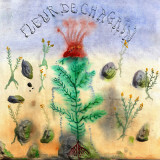
Following the compass of an entrancing debut, Flore Laurentienne's Volume II presents another palette of rich orchestral sound, where changing forces of water inspire metaphorical markers that navigate passages of life and loss. Mathieu David Gagnon resumes his voyage into environment and emotion with Volume II, drawing inspiration from the rivers and rugged wilderness of the composer's native Quebec. In his return as Flore Laurentienne - the namesake of an inventory documenting St. Lawrence Valley flora - Gagnon assembles vivid melodic motifs and delicate modulation with a vast string ensemble to emulate the tides of human experience. Listeners of Volume I will recognise Gagnon's signature approach towards reworking and reframing an emblematic melody or concept across a series of works in Volume II, a process he likens to that of a painter creating multiple sketches of the same view. Continued from the first album, the enigmatic "Fleuve" series is conjured to evoke the multiple personalities of the great St. Lawrence River, and the "Navigation" works ("III" and "IV") wade through dappled progressions and expansive streams of string, the latter of which harbors the gentle meanderings of improvised clarinet. In the world of Flore Laurentienne, complexity emerges from simplicity as the composer roams familiar environments in constant flux. Gagnon extracts beauty through repetition and constraint, utilizing the writing style of counterpoint for which one of his greatest musical inspirations, Johann Sebastian Bach, is renowned. The lilting waves of "Canon" possess the eponymous formation of melodic 'leader and follower' motif, and magnify the softness of the album's eighteen string musicians into a force of full euphoric resonance. In Volume II, Gagnon continues his expansion of classical composition archetypes to meet a new realm of sonic romanticism. Thematic conventions of wandering the pastoral sublime become altered into glimmering refractions, relaying the emotional and kinetic power of natural energies. Volume II forms an estuary where streams of auditory microcosm reach a horizon of dynamic contrast, and reflect the parallel tenors of nature and humankind.
- A1: Ecstatic (Dancing On My Mind) 04 07 Min
- A2: I’m Only 03 50 Min
- A3: Another Casualty 02 50 Min
- A4: Here We Go 01 28 Min
- A5: It Doesn’t Really Matter 03 41 Min
- B1: Territory (Phone Home) 02 30 Min
- B2: No, Not Today 02 30 Min
- B3: Ch-Ch Check My Position 03 36 Min
- B4: Spaced Out 02 48 Min
- B5: Scaffolding For Support 03 37 Min
Advanced Style. It’s only human. Bell Tower’s most intimate musical output to date. Promoting thoughtful, subtle, tongue in cheek electronic pop music since 2005.
This 10 Track LP has it all, deep & ecstatic (goofy many) moments.
Life is too short not to listen to this Album, still if you don’t it doesn’t really matter.
Or does it? Life’s a mystery…
- A1: C Brand - Wired For Games (Long Version)
- A2: Ritz - Workin' Out
- B1: Fonda Rae - Live It Up (Short Vocal Version)
- B2: Feel - Got To Have Your Lovin' (Short Vocal Version)
- B3: Mynk - Get Up An' Dance (Dance With Me) (Dance With Me)
- C1: Fatback - Spread Love
- C2: Glory - Let's Get Nice
- C3: Blaze - We Come To Jam
- D1: Body - Have Your Cake
- D2: Lonnie Youngblood - Sing A Song
• 1980s New York was where modern dance music took its first steps; a phoenix rising out of the ashes of disco’s over-exposure and demise. The underground scene was the very opposite of the celebrity-sprinkled commercialism of Studio 54 – “Lofts & Garages” looks at how the Spring label, with its brand new 1980s subsidiary Posse, reacted to the new movement.
• As an independent New York label, it was perfectly placed to understand new trends in the clubs; it worked with some of those who would go on to define the dance music of the era, and for a glorious summer tracked the important early work of Arthur Baker, Maurice Starr and Michael Jonzun. These began their careers with productions that included Ritz, Glory and Blaze – records that sounded perfect for 12-inch singles and mixed electronic instruments with a real feel for the dancefloor.
• Label mainstays Fatback were always searching for a new groove and kept an eye on the floor. Their final single for the label, ‘Spread Love’, was remixed by Morales and Munzibai. Fatback’s Bill Curtis and Gerry Thomas also produced the sought-after boogie single ‘Get Up An’ Dance (Dance With Me)’ for Mynk.
• Others featured include one of the most distinctive voices in dance music, Fonda Rae, with her single ‘Live It Up’, released here in its rare radio edit; veteran soul man Lonnie Youngblood with his gospel-influenced ‘Sing A Song’; Detroit dance pioneers C-Brand’s ‘Wired For Sound’ and Body’s ‘Have Your Cake’, which has an early mixing credit for dance music legend Timmy Regisford.
• These records may not have all worked on the floor of the Paradise Garage, but they were part of the energy that was given off by that and the rest of New York’s vibrant post-disco era.
- A1: Wide Open Space Motion (2:19)
- A2: Incessant Efforts (2:28)
- A3: Pink Sails (2:09)
- A4: Relaxed Mood (4:18)
- A5: Transiency (1:14)
- A6: Driving Sequences (3:26)
- A7: Action And Suspense (2:06)
- B1: Southern Mentality (2:43)
- B2: Hovering (2:13)
- B3: Bows (4:30)
- B4: Outset (1:39)
- B5: Constellation (1:38)
- B6: Changing Directions (2:39)
- B7: Neutral Position (1:49)
- B8: Departure For Universe (2:10)Or Universe (2:10)
They say: "Contemporary synthesizer sounds illustrating wide open space activities, environment and research."
We say: Panoramic proto-techno underwater-electro library dynamite.
One of the hardest pulls on the seminal Coloursound, Open Space Motion (Underscores) isn't just regarded as one of the best releases from library-funk overlord Klaus Weiss. It's one of the very best library records ever.
As cult as it gets when it comes to library music, the Klaus Weiss sound was built on top of sometimes funky, sometimes frenetic, but always hard-hitting drums. AND YET! Open Space Motion departs from his drum-heavy approach by being completely...BEATLESS! That's right, the virtuoso beat smith, Mr "drumcrazy of Deutschland", a man known for snapping necks at will, crafted one of the most horizontally sumptuous, elegantly sweeping electronic masterpieces, sans-drums, a good decade before chill-out rooms became a thing. It features organic instruments married to pulsing synth bass atop brilliantly subdued yet irresistibly funky percussion. Possessing a very special vibe, that's at once futuristic yet cinematic, it overflows with atmosphere.
The highlights - unsurprisingly - are many. The very first track - the unstoppable "Wide Open Space Motion" - is a sinister, string-fried electro bomb that rides an unrelenting bass loop. "Incessant Efforts" is more reflective, with pastoral yet probing flutes atop strutting synth chords and head-nod percussion that really swings. The heavenly, uber-kosmiche "Pink Sails" hovers over swirling neon-synthy-strings and yet more unobtrusive percussion. The beautiful "Transiency" is a dramatic piano-led underscore, its creeping unease created by patient strings, unhurried percussion and some wonderfully strident keys. "Driving Sequences" is perhaps the key tune here, and if the Detroit crew weren't listening to this staggering piece then, well, imagine if they *were*.
The bubbling rhythms of "Southern Mentality", at first ominous, give way to a more optimistic vibe as the movement progresses. The lush, gorgeous "Bows" is deep-sea slow-motion magic whilst the bright-eyed "Outset" feels as fresh as the dawn, and no less beautiful. How these tracks haven't been gobbled up by sample-driven producers is beyond us. Equally calming is the sweeping majesty of "Constellation", again conjuring images of being at one with and fully beguiled by the wonders of nature, of space, of underwater worlds. "Changing Directions" is another fidgety, propulsive non-Detroit beatless bomb.
As with all our library music re-issues, the audio for Open Space Motion comes from the original analogue tapes and has been remastered for vinyl by Be With regular Simon Francis. Richard Robinson has brought the original Coloursound sleeve back to life in all its metallic silver glory.
- A1: Another Sketch
- A2: Be Cool (Feat Little Dragon)
- A3: Vera (Judah Speaks) (Judah Speaks)
- A4: Leave It (Feat Charlotte Day Wilson)
- A5: September
- A6: To The Floor (Feat Badbadnotgood)
- B1: Backwards (Feat Sampha)
- B2: What If? (Feat Skiifall)
- B3: Colours
- B4: About Us (Feat Elmiene)
- B5: Still (Feat Sampha & Ghetts)
- B6: Ends Now (Feat Serpentwithfeet)
One of the UK’s most consistently inventive production minds of recent times, Lil Silva has perhaps one of the most varied resumes in the world. Causing a seismic effect on the world of club music with smashes such as ‘Seasons’ and releases with the likes of Night Slugs, production credits for a diverse range of artists such as Adele, BANKS, Mark Ronson and serpentwithfeet, and a collaborative project with George FitzGerald as OTHERLiiNE even before factoring stellar solo releases under the Lil Silva moniker using his own vocal, he has continuously combined a broad range of influences to create a transformative, varied discography. After the release of ‘Backwards’ last month alongside Sampha, today Lil Silva announces his long awaited debut album, Yesterday Is Heavy.
Over 10 years in the making, ‘Yesterday Is Heavy’ is a cumulative product of an already remarkable career filled with highlights. An album about stepping out: outside of a comfort zone, and, for Lil Silva, outside of himself. It’s a debut album of heft and heart, but most of all hope – and trusting the process. Buoyed on by the encouragement of long-time collaborators like Jamie Woon and Sampha early in his career (they both implored him to commit his own voice to record), and bolstered by incomparable session experience working with Mark Ronson, Adele and more, the Lil Silva story that started aged 10 in Bedford is beginning full circle. Created primarily in the town he grew up in (and continues to live now), the pervading solace of home courses through the project, while providing the thrilling moments of sleight of hand that Silva has always been capable of.
As he so often does, Lil Silva shares the spotlight with an astonishing international cast of guests. He fuses well-versed modern legends in the shape of Sampha, Ghetts, and Little Dragon with rising stars serpentwithfeet, Charlotte Day Wilson and Skiifall to thrilling effect, the whole time never allowing his deftly dynamic yet considered touch to be outshone throughout. The album has also been created with musical direction from Louis Vuitton musical director and BBC Radio 1 tastemaker Benji B, as well as creative direction from award winning visual artist BAFIC. It’s with the opening track ‘Another Sketch’ however, where his singular talent introduces itself.
With a visual directed by UKMVA Award winner Fenn O’Meally, ‘Another Sketch’ is a prime example of the vast array of talents that Lil Silva possesses. A video that transcends generations of Black Britons (featuring Lil Silva’s own family as well as Sampha), ‘Another Sketch’ focuses on the subject of time. Looking at generations of black britons as monuments, the visual centres on the idea that despite time being able to wear down your appearance, what’s inside of you can never depreciate. The main centrepiece of this is heritage, with archive and newly recorded footage showing Silva’s family and friends enjoying the same activities they did generations ago, spliced with footage and voice notes from one of the lands of his dual heritage, Jamaica. The track itself focuses on a central theme of actions, their consequences and changing our inevitable future, with Lil Silva’s stunning falsetto shining alongside background vocals from serpentwithfeet and an instrumental that initially opens minimalistically before gradually unfurling to unveil elements of his electronic beginnings; a thumping hip hop infused beat and swelling melodic embellishments.
With ‘Yesterday Is Heavy’, Lil Silva reaps the rewards of over a decade of influence to create the debut album he’s always imagined. Simultaneously riding the line between pertinent storytelling and virtuosic production, ‘Yesterday Is Heavy’ charts the story of one of UK music’s unsung heroes taking his time to build something that is truly timeless. Yesterday Is Heavy, but tomorrow is forever.
Debut solo album from Julia Kugel (The Coathangers). Limited edition first LP pressing on heartbeat pink color vinyl, includes DL (1500 copies). If you can’t trust yourself, who can you trust? This is the crucial question at the core of Julia, Julia, the moniker for Julia Kugel, founding member of garage punk icons The Coathangers and the dream pop duo Soft Palms. On her first solo full-length album Derealization, Kugel shifts her focus from collaboration and band dynamics towards a singular artistic vision and private self-discovery. Steeped in the beguiling pop elements of her past work, Derealization is a meditative deep dive into the mind of a person struggling to understand a crumbling internal and external world. The album traverses a landscape of ethereal folk, atmospheric deconstructed pop, and dubbed-out country ballads, all centered around straight forward and direct lyrics. This juxtaposition of nebulousness and lucidity gives the album a sense of clarity emerging from the haze, an apt refection of Kugel's personal growth and journey toward self-acceptance. Derealization is based on weaving the unreal, unsaid, and unknown into an undulating sonic fabric. Vocal layering and abstract instrumentation convey a blurred desperation to connect to an emotional and psychological focal point. Moody, dark, and sumptuous, the record is a flow chart of Julia Kugel coming into herself as an artist and songwriter. The album finds Julia playing almost all the instruments and taking her first stab at engineering at COMA, her and her husband's home recording studio in Long Beach, CA. “You know how touring musicians often speak of whether home is real or tour is real? Well, it can lead you to lose grasp on ‘reality,’ especially when touring is taken away and you are left to wonder if anything was ever real, including yourself. Like you we're just playing a character,” Kugel says of her headspace leading up to the creation of Derealization. “Honestly, I kinda lost it, and through making this record I made peace with it and reconciled myself as a real person. I forgave myself and in turn forgave those around me. The song ‘Forgive Me’ is the apology I wanted to say and to hear. I wrote every song from that place and gained the confidence I was pretending to possess.” This raw and personal approach to the lyrics is present throughout Derealization. On the opening track "I Want You," Kugel creates a woozy sense of space with reverb-soaked drums and spaghetti western guitars while she lists off her desires for a mysterious “you.” Is she actually listing off her desires for herself? For the people around her? As she repeats "do you feel it?" in the song’s chorus, it feels as if she’s conjuring a magical thread by which we are all connected, showing us how our desires are all the same. On "Fever In My Heart" the listener is treated to a lush, acoustic techno track detailing the exhilarating madness of an emotional breakdown. Simple truths percolate to the surface on "Words Don't Mean Much,” as if clearing away the murk of platitudes and empty gestures. The journey continues on the detached and conflicted "Do It Or Don't,” an alluring walk through the winding road of lonely choices. The name for the project Julia, Julia is a look in the mirror, a reflection of what is hidden and unanswered, of what is real and what is transient. The experience of living life not as you planned it but as it unfolded, and the mysterious, magical pain that creates meaning.
Tracklisting 1. I Want You 2. Forgive Me 3. Impromptu 4. Fever In My Heart 5. Words Don’t Mean Much 6. Do It Or Don't 7. No Hard Feelings 8. Big Talkin' 9. Paper Cutout 10. Where Did You Go 11. Corner Town
2022 Repress!
Clark kehrt mit "Superscope" zurück zum klassischen Techno-Sound, zum Dancefloor, immer mit fortschrittlichem Ansatz. Seine neuen Tunes passen in ein Underground Resistance Set wie auch zu zeitgenössischen DJs wie Jacques Greene oder der Night Slugs-Posse. Passend dazu Clarks neue audiovisuelle Liveshow namens "Phosphor": purer und klassischer Acid.
Here’s artist Max Kuhn on hearing the new Ralph White recordings for the first time: “I was driving a familiar round trip across the high desert when I first put it on. It immediately spoke to me. In the lyrics there's a familiar geography for me, a familiar emotional landscape for all of us. And maybe it was driving an almost 40 year old truck on sun baked & cracked asphalt in July, but it's like you can hear his songs coming apart- the cadence, the rhymes stumbling & defying expectations, consistency but they just keep moving. You have no choice but to go with it. Probably a good lesson for how to live in this era we're in, cracking up but keeping it all running somehow, trying to make something pretty with the time.” Recorded in Austin, Texas in March of 2020, just days before the city and the rest of the world shut down, Ralph White spent two days with producer, Jerry David DeCicca (Will Beeley, Ed Askew) and recording engineer, Don Cento, capturing a raw and wild set of performances. Ralph, having recently converted his van into a mobile living and touring quarters equipped with a wood-burning stove, left Austin, the city where he was born 70 years ago, and retreated to an Arizona commune where he began building a new house in the desert hills to escape the virus and insanity of daily living. Ralph takes us on a journey through his myriad of travels: from Dock Boggs to Syd Barrett to William Faulkner to Stella Chiweshe to Blind Uncle Gaspard…scratching banjo, rasping train whistle hollers, rolling kalimba, rousing accordion, taut shimmers of guitar, caustic fiddle and lyrics - that could have been hidden amongst the dusty inner groove of a lost Harry Smith 78 - weaving in and out of streams of consciousness, time and place. In addition to his solo work, White has recorded or performed with a diverse group of folk and avant-garde musicians: Thurston Moore of Sonic Youth, Jandek, Jack Rose, Eugene Chadbourne, Michelle Shocked, Sir Richard Bishop, and Michael Hurley. “This is what Ralph White really sounds like. It’s what time passing really sounds like. It’s what a look really feels like. This record is someone touching you all over!” --Bill Callahan “Striking, electrifying acoustic music from an underappreciated legend of the American Southwest. Here, tight song structures meet open, unadorned instrumentation: guitar, banjo, kalimba, accordion, fiddle, and White's elastic voice, unspooling pitches and syllables. White draws listeners in on his terms. Lyrics wind and twist and pull back: "Motel 6, Motel 6, Altoona, Altoona; missing you, missing you so, great big hole in my--..." Brave, beautiful, a high point in White's long career. And this is just Volume 1!” - Eli Winter. "What Ralph White puts on albums and onstage is so mind-boggling and vast, it forces those of us in the description business down a treacherous path." --Darcie Stevens, Austin Chronicle. “White was a member of well-loved punk bluegrass outfit Bad Livers, but his solo work is possessed of a much more lonesome spark, exaggerating the implied drone at the heart of the music of Dock Boggs and The Stanley Brothers…White plays wooden six-string banjo, violin, button accordion and kalimba and his voice has a high, eerie quality to it…extremely psychedelic.” --David Keenan, The Wire Tracklisting: 1. Gun Barrel Polka 2. Misinformation Shuffle 3. El Golfo 4. Something About Dreaming 5. Rye Straw 6. The Stovepipe Blues 7. No Stranger 8. Morning Sickness 9. Lord Franklin
- A1: Rock This Mother
- A2: Talk To Me Girl
- A3: You Can Find Me
- A4: Check This Out
- A5: Jesus Going To Clean House
- A6: Hope You Understood
- A7: Is It What You Want
- A8: Love Is Everlasting
- A9: This Is Hip-Hop Art
- A10: Opposite Of Love
- A11: Do You Know What I Mean
- B1: Saving All My Love For You
- B2: Look Out Here I Come
- B3: Girl You Always Talking
- B4: Have A Great Day
- B5: Take My Hand
- B6: I Need Your Love
- B7: Your Town
- B8: Talk Around Town
- B9: Booty Head/Take A Little Walk
- B10: I Love My Mama
- B11: I Never Found Anyone Like You
Cassette[11,72 €]
As the sun sets on a quaint East Nashville house, a young man bares a piece of his soul. Facing the camera, sporting a silky suit jacket/shirt/slacks/fingerless gloves ensemble that announces "singer" before he's even opened his mouth, Lee Tracy Johnson settles onto his stage, the front yard. He sways to the dirge-like drum machine pulse of a synth-soaked slow jam, extends his arms as if gaining his balance, and croons in affecting, fragile earnest, "I need your love… oh baby…"
Dogs in the yard next door begin barking. A mysterious cardboard robot figure, beamed in from galaxies unknown and affixed to a tree, is less vocal. Lee doesn't acknowledge either's presence. He's busy feeling it, arms and hands gesticulating. His voice rises in falsetto over the now-quiet dogs, over the ambient noise from the street that seeps into the handheld camcorder's microphone, over the recording of his own voice played back from a boombox off-camera. After six minutes the single, continuous shot ends. In this intimate creative universe there are no re-takes. There are many more music videos to shoot, and as Lee later puts it, "The first time you do it is actually the best. Because you can never get that again. You expressing yourself from within."
"I Need Your Love" dates from a lost heyday. From some time in the '80s or early '90s, when Lee Tracy (as he was known in performance) and his music partner/producer/manager Isaac Manning committed hours upon hours of their sonic and visual ideas to tape. Embracing drum machines and synthesizers – electronics that made their personal futurism palpable – they recorded exclusively at home, live in a room into a simple cassette deck. Soul, funk, electro and new wave informed their songs, yet Lee and Isaac eschewed the confinement of conventional categories and genres, preferring to let experimentation guide them.
"Anytime somebody put out a new record they had the same instruments or the same sound," explains Isaac. "So I basically wanted to find something that's really gonna stand out away from all of the rest of 'em." Their ethos meant that every idea they came up with was at least worth trying: echoed out half-rapped exhortations over frantic techno-style beats, gospel synth soul, modal electro-funk, oddball pop reinterpretations, emo AOR balladry, nods to Prince and the Fat Boys, or arrangements that might collapse mid-song into a mess of arcade game-ish blips before rallying to reach the finish line. All of it conjoined by consistent tape hiss, and most vitally, Lee's chameleonic voice, which managed to wildly shape shift and still evoke something sincere – whether toggling between falsetto and tenor exalting Jesus's return, or punctuating a melismatic romantic adlib with a succinct, "We all know how it feels to be alone."
"People think we went to a studio," says Isaac derisively. "We never went to no studio. We didn't have the money to go to no studio! We did this stuff at home. I shot videos in my front yard with whatever we could to get things together." Sometimes Isaac would just put on an instrumental record, be it "Planet Rock" or "Don't Cry For Me Argentina" (from Evita), press "record," and let Lee improvise over it, yielding peculiar love songs, would-be patriotic anthems, or Elvis Presley or Marilyn Monroe tributes. Technical limitations and a lack of professional polish never dissuaded them. They believed they were onto something.
"That struggle," Isaac says, "made that sound sound good to me."
In the parlance of modern music criticism Lee and Isaac's dizzying DIY efforts would inevitably be described as "outsider." But "outsider" carries the burden of untold additional layers of meaning if you're Black and from the South, creating on a budget, and trying to get someone, anyone within the country music capital of the world to take your vision seriously. "What category should we put it in?" Isaac asks rhetorically. "I don't know. All I know is feeling. I ain't gonna name it nothing. It's music. If it grabs your soul and touch your heart that's what it basically is supposed to do."
=
Born in 1963, the baby boy of nine siblings, Lee Tracy spent his earliest years living amidst the shotgun houses on Nashville's south side. "We was poor, man!" he says, recalling the outhouse his family used for a bathroom and the blocks of ice they kept in the kitchen to chill perishables. "But I actually don't think I really realized I was in poverty until I got grown and started thinking about it." Lee's mom worked at the Holiday Inn; his dad did whatever he had to do, from selling fruit from a horse drawn cart to bootlegging. "We didn't have much," Lee continues, "but my mother and my father got us the things we needed, the clothes on our back." By the end of the decade with the city's urban renewal programs razing entire neighborhoods to accommodate construction of the Interstate, the family moved to Edgehill Projects. Lee remembers music and art as a constant source of inspiration for he and his brothers and sisters – especially after seeing the Jackson 5 perform on Ed Sullivan. "As a small child I just knew that was what I wanted to do."
His older brother Don began musically mentoring him, introducing Lee to a variety of instruments and sounds. "He would never play one particular type of music, like R&B," says Lee. "I was surrounded by jazz, hard rock and roll, easy listening, gospel, reggae, country music; I mean I was a sponge absorbing all of that." Lee taught himself to play drums by beating on cardboard boxes, gaining a rep around the way for his timekeeping, and his singing voice. Emulating his favorites, Earth Wind & Fire and Cameo, he formed groups with other kids with era-evocative band names like Concept and TNT Connection, and emerged as the leader of disciplined rehearsals. "I made them practice," says Lee. "We practiced and practiced and practiced. Because I wanted that perfection." By high school the most accomplished of these bands would take top prize in a prominent local talent show. It was a big moment for Lee, and he felt ready to take things to the next level. But his band-mates had other ideas.
"I don't know what happened," he says, still miffed at the memory. "It must have blew they mind after we won and people started showing notice, because it's like everybody quit! I was like, where the hell did everybody go?" Lee had always made a point of interrogating prospective musicians about their intentions before joining his groups: were they really serious or just looking for a way to pick up girls? Now he understood even more the importance of finding a collaborator just as committed to the music as he was.
=
Isaac Manning had spent much of his life immersed in music and the arts – singing in the church choir with his family on Nashville's north side, writing, painting, dancing, and working various gigs within the entertainment industry. After serving in the armed forces, in the early '70s he ran The Teenage Place, a music and performance venue that catered to the local youth. But he was forced out of town when word of one of his recreational routines created a stir beyond the safe haven of his bohemian circles.
"I was growing marijuana," Isaac explains. "It wasn't no business, I was smoking it myself… I would put marijuana in scrambled eggs, cornbread and stuff." His weed use originated as a form of self-medication to combat severe tooth pain. But when he began sharing it with some of the other young people he hung out with, some of who just so happened to be the kids of Nashville politicians, the cops came calling. "When I got busted," he remembers, "they were talking about how they were gonna get rid of me because they didn't want me saying nothing about they children because of the politics and stuff. So I got my family, took two raggedy cars, and left Nashville and went to Vegas."
Out in the desert, Isaac happened to meet Chubby Checker of "The Twist" fame while the singer was gigging at The Flamingo. Impressed by Isaac's zeal, Checker invited him to go on the road with him as his tour manager/roadie/valet. The experience gave Isaac a window into a part of the entertainment world he'd never encountered – a glimpse of what a true pop act's audience looked like. "Chubby Checker, none of his shows were played for Black folks," he remembers. "All his gigs were done at high-class white people areas." Returning home after a few years with Chubby, Isaac was properly motivated to make it in Music City. He began writing songs and scouting around Nashville for local talent anywhere he could find it with an expressed goal: "Find someone who can deliver your songs the way you want 'em delivered and make people feel what you want them to feel."
One day while walking through Edgehill Projects Isaac heard someone playing the drums in a way that made him stop and take notice. "The music was so tight, just the drums made me feel like, oh I'm-a find this person," he recalls. "So I circled through the projects until I found who it was.
"That's how I met him – Lee Tracy. When I found him and he started singing and stuff, I said, ohhh, this is somebody different."
=
Theirs was a true complementary partnership: young Lee possessed the raw talent, the older Isaac the belief. "He's really the only one besides my brother and my family that really seen the potential in me," says Lee. "He made me see that I could do it."
Isaac long being a night owl, his house also made for a fertile collaborative environment – a space where there always seemed to be a new piece of his visual art on display: paintings, illustrations, and dolls and figures (including an enigmatic cardboard robot). Lee and Issac would hang out together and talk, listen to music, conjure ideas, and smoke the herb Isaac had resumed growing in his yard. "It got to where I could trust him, he could trust me," Isaac says of their bond. They also worked together for hours on drawings, spreading larges rolls of paper on the walls and sketching faces with abstract patterns and imagery: alien-like beings, tri-horned horse heads, inverted Janus-like characters where one visage blurred into the other.
Soon it became apparent that they didn't need other collaborators; self-sufficiency was the natural way forward. At Isaac's behest Lee, already fed up with dealing with band musicians, began playing around with a poly-sonic Yamaha keyboard at the local music store. "It had everything on it – trumpet, bass, drums, organ," remembers Lee. "And that's when I started recording my own stuff."
The technology afforded Lee the flexibility and independence he craved, setting him on a path other bedroom musicians and producers around the world were simultaneously following through the '80s into the early '90s. Saving up money from day jobs, he eventually supplemented the Yamaha Isaac had gotten him with Roland and Casio drum machines and a Moog. Lee was living in an apartment in Hillside at that point caring for his dad, who'd been partially paralyzed since early in life. In the evenings up in his second floor room, the music put him in a zone where he could tune out everything and lose himself in his ideas.
"Oh I loved it," he recalls. "I would really experiment with the instruments and use a lot of different sound effects. I was looking for something nobody else had. I wanted something totally different. And once I found the sound I was looking for, I would just smoke me a good joint and just let it go, hit the record button." More potent a creative stimulant than even Isaac's weed was the holistic flow and spontaneity of recording. Between sessions at Isaac's place and Lee's apartment, their volume of output quickly ballooned.
"We was always recording," says Lee. "That's why we have so much music. Even when I went to Isaac's and we start creating, I get home, my mind is racing, I gotta start creating, creating, creating. I remember there were times when I took a 90-minute tape from front to back and just filled it up."
"We never practiced," says Isaac. "See, that was just so odd about the whole thing. I could relate to him, and tell him about the songs I had ideas for and everything and stuff. And then he would bring it back or whatever, and we'd get together and put it down." Once the taskmaster hell bent on rehearsing, Lee had flipped a full 180. Perfection was no longer an aspiration, but the enemy of inspiration.
"I seen where practicing and practicing got me," says Lee. "A lot of musicians you get to playing and they gotta stop, they have to analyze the music. But while you analyzing you losing a lot of the greatness of what you creating. Stop analyzing what you play, just play! And it'll all take shape."
=
"I hope you understood the beginning of the record because this was invented from a dream I had today… (You tell me, I'll tell you, we'll figure it out together)" – Lee Tracy and Isaac Manning, "Hope You Understand"
Lee lets loose a maniacal cackle when he acknowledges that the material that he and Isaac recorded was by anyone's estimation pretty out there. It's the same laugh that commences "Hope You Understand" – a chaotic transmission that encapsulates the duality at the heart of their music: a stated desire to reach people and a compulsion to go as leftfield as they saw fit.
"We just did it," says Lee. "We cut the music on and cut loose. I don't sit around and write. I do it by listening, get a feeling, play the music, and the lyrics and stuff just come out of me."
The approach proved adaptable to interpreting other artists' material. While recording a cover of Whitney Houston's pop ballad "Saving All My Love For You," Lee played Whitney's version in his headphones as he laid down his own vocals – partially following the lyrics, partially using them as a departure point. The end result is barely recognizable compared with the original, Lee and Isaac having switched up the time signature and reinvented the melody along the way towards morphing a slick mainstream radio standard into something that sounds solely their own.
"I really used that song to get me started," says Lee. "Then I said, well I need something else, something is missing. Something just came over me. That's when I came up with 'Is It What You Want.'"
The song would become the centerpiece of Lee and Isaac's repertoire. Pushed along by a percolating metronomic Rhythm King style beat somewhere between a military march and a samba, "Is It What You Want" finds Lee pleading the sincerity of his commitment to a potential love interest embellished by vocal tics and hiccups subtlely reminiscent of his childhood hero MJ. Absent chord changes, only synth riffs gliding in and out like apparitions, the song achieves a lingering lo-fi power that leaves you feeling like it's still playing, somewhere, even after the fade out.
"I don't know, it's like a real spiritual song," Lee reflects. "But it's not just spiritual. To me the more I listen to it it's like about everything that you do in your everyday life, period. Is it what you want? Do you want a car or you don't want a car? Do you want Jesus or do you want the Devil? It's basically asking you the question. Can't nobody answer the question but you yourself."
In 1989 Lee won a lawsuit stemming from injuries sustained from a fight he'd gotten into. He took part of the settlement money and with Isaac pressed up "Saving All My Love For You" b/w "Is It What You Want" as a 45 single. Isaac christened the label One Chance Records. "Because that's all we wanted," he says with a laugh, "one chance."
Isaac sent the record out to radio stations and major labels, hoping for it to make enough noise to get picked up nationally. But the response he and Lee were hoping for never materialized. According to Isaac the closest the single got to getting played on the radio is when a disk jock from a local station made a highly unusual announcement on air: "The dude said on the radio, 107.5 – 'We are not gonna play 'Is It What You Want.' We cracked up! Wow, that's deep.
"It was a whole racist thing that was going on," he reflects. "So we just looked over and kept on going. That was it. That was about the way it goes… If you were Black and you were living in Nashville and stuff, that's the way you got treated." Isaac already knew as much from all the times he'd brought he and Lee's tapes (even their cache of country music tunes) over to Music Row to try to drum up interest to no avail.
"Isaac, he really worked his ass off," says Lee. "He probably been to every record place down on Music Row." Nashville's famed recording and music business corridor wasn't but a few blocks from where Lee grew up. Close enough, he remembers, for him to ride his bike along its back alleys and stumble upon the occasional random treasure, like a discarded box of harmonicas. Getting in through the front door, however, still felt a world away.
"I just don't think at the time our music fell into a category for them," he concedes. "It was before its time."
=
Lee stopped making music some time in the latter part of the '90s, around the time his mom passed away and life became increasingly tough to manage. "When my mother died I had a nervous breakdown," he says, "So I shut down for a long time. I was in such a sadness frame of mind. That's why nobody seen me. I had just disappeared off the map." He fell out of touch with Isaac, and in an indication of just how bad things had gotten for him, lost track of all the recordings they'd made together. Music became a distant memory.
Fortunately, Isaac kept the faith. In a self-published collection of his poetry – paeans to some of his favorite entertainment and public figures entitled Friends and Dick Clark – he'd written that he believed "music has a life of its own." But his prescience and presence of mind were truly manifested in the fact that he kept an archive of he and Lee's work. As perfectly imperfect as "Is It What You Want" now sounds in a post-Personal Space world, Lee and Isaac's lone official release was in fact just a taste. The bulk of the Is It What You Want album is culled from the pair's essentially unheard home recordings – complete songs, half-realized experiments, Isaac's blue monologues and pronouncements et al – compiled, mixed and programmed in the loose and impulsive creative spirit of their regular get-togethers from decades ago. The rest of us, it seems, may have finally caught up to them.
On the prospect of at long last reaching a wider audience, Isaac says simply, "I been trying for a long time, it feels good." Ever the survivor, he adds, "The only way I know how to make it to the top is to keep climbing. If one leg break on the ladder, hey, you gotta fix it and keep on going… That's where I be at. I'll kill death to make it out there."
For Lee it all feels akin to a personal resurrection: "It's like I was in a tomb and the tomb was opened and I'm back… Man, it feels so great. I feel like I'm gonna jump out of my skin." Success at this stage of his life, he realizes, probably means something different than what it did back when he was singing and dancing in Isaac's front yard. "What I really mean by 'making it,'" he explains isn't just the music being heard but, "the story being told."
Occasionally Lee will pull up "Is It What You Want" on YouTube on his phone, put on his headphones, and listen. He remembers the first time he heard his recorded voice. How surreal it was, how he thought to himself, "Is that really me?" What would he say to that younger version of himself now?
"I would probably tell myself, hang in there, don't give up. Keep striving for the goal. And everything will work out."
Despite what's printed on the record label, sometimes you do get more than one chance.
"Kontakt Audio and Infinite Fog Productions proudly present the 25-th anniversary reissue of the one of most unique albums on avantgarde/neoclassic music – Ihor Tsymbrovsky – Come, Angel.
Recorded in 1995 in Ukraine and released in 1996 just as a small run on cassette on Polish label Koka Records, the album without any promotion little by little became legendary and madly wanted by many fans all around the world. And from the first seconds, you can hear why it is so. Pretty hard to explain what songs play Ihor, moreover that would be senseless. “Come, Angel” is one of those albums which are so unique that takes you in a vacuum of verbal forms in an attempt to describe the record. In a few words, this is definitely very intimate and deeply emotional music with an absolutely incredible voice. The first associations could forward you to Antony Hegarty from Antony And The Johnsons, Marc Almond, Arthur Russell, Baby Dee, Bjork. Experienced listener familiar with these great artist knows that all of them are inimitable and Ihor Tsymbrovsky is totally inimitable as well.
In 2016 well-known German label Offen Music published 3 tracks from the album “Come, Angel” which brought a lot of attention to Ihor’s music. This time we’re excited to announce the first full album reissue on CD, Double vinyl, and tapes. Beside the full version of the album, you’ll find an exclusive bonus song from the cult compilation “Music The World Does Not See” – Nefryt Records 2000.
~
“For me, music is a certain way of cultural survival. Here I do not set myself theoretical problems or experiments.
The connotations of life are important: rhythms, melodies, their connection with language, poetry, real life, virtual or imaginary space. It is very important to me how the recitation of work sounds, how consonant and vowel sounds dissolve in singing, how they combine musically. I understand sound space as a field of my interpretations, preferences, priorities, and I do not use direct imitation. If I hear a melody or a musical phrase, and it is fixed in my memory, later I extract it in my own interpretation, as already formed by this field. In art, the goal is in the work itself, not outside it. For me, the expression “To be is to create a new reality” is another winged reality.” – Ihor Tsymbrovsky
~~
“Tsymbrovsky – an architect, musician, a poet, an artist; one of the most underestimated musicians in Ukraine’s artistic world. Many critics pulled their hair out trying to get to the bottom of Tsymbrovsky’s music. It has been inspired by jazz, minimal, modern, ethnic, and meditation music. Tsymbrovsky is not a virtuoso, however, he creates whole worlds with his astonishing falsetto. Although Cymbrovsky’s music is simple it is made of many elements. Filled with magic and unusual sensitivity and warmth it can be therapeutic for the listener. This is that kind of music, which can be listened to many times – in a different way each time.” – Koka Records.
~~~
“Igor Tsymbrovsky’s only album “Come Angel” (1995) still remains perhaps the most bizarre phenomenon in Ukrainian music since independence. The story of its author is a vivid example of cultural amnesia. In the pre-Internet era, Tsymbrovsky was a prominent figure in the Ukrainian underground, performed on the “Red Route”, went on tour in Germany. However, he left a minimum of evidence of his activity and became a silent legend for a few. We talked to Igor to find out where he came from and where he was going.
The album “Come Angel” is eight compositions performed with a falsetto to the accompaniment of a piano. (Tsymbrovsky’s falsetto is a legacy of the Lviv Dudaryk choir, where he sang as a child.) It would seem that it could be easier. But, despite such ascetic tools, Tsymbrovsky managed to create a phenomenon unique to Ukrainian culture. Some people compare him to Benjamin Clementine and Anthony Hegarty, but no comparison will be exhaustive. The lyrics of the songs attract special attention: two of them were written by Tsymbrovsky himself, the others demonstrate his remarkable literary knowledge. Here and Guillaume Apollinaire, and Mikhaijl Semenko, and even less obvious poets, such as Mykola Vorobyov or Jozsef Attila.
The young performer’s first performance took place in 1987 in the club of the Forestry Institute. It is quite symbolic that this room used to be a Jesuit church because such a chamber environment suits his songs about angels much better than the noise of big festivals. However, there were also many festivals in Tsymbrovsky’s career: in 1989, Chorna Rada and Chervona Ruta, in 1991, Kharkiv’s Nova Scena and Ukrainian Nights in Gdansk, Alternativa in Lviv. Ihor calls his first performances musical performances and notes that they sounded completely different. Unfortunately, we will never know exactly how.” – Amnesia
~~~~
“The magicians at Dusseldorf’s Offen Music pluck a madly beguiling pearl of late-night songcraft by Ukraine’s Ihor Tsymbrovsky to follow their vital releases by Toresch and Rex Ilusivii. Come Angel was first recorded in Lviv, Ukraine, in 1995, and issued on cassette by Poland’s Koka Records in 1996. There appears to be no prior mention of the release or artist on the internet and quite how it came into of Offen Music possession is not disclosed, and that only ratchets the record’s enigma to astonishing degrees once you’ve heard the music. In a quivering, high register, androgynous trill, Ihor Tsymbrovsky beckons heavenly beings in the remarkable A-side Come, Angel against a swirling backdrop of phasing, subtly delayed organ. It was recorded in one take (this is the 2nd version), and, if we’re not mistaken, you can hear the keys being pressed rhythmically in the background, which seems to be the song’s only tangible connection to this mortal world as Ihor vaults octaves high and close-in-the-mix with the sort of alien, dreamlike vocal that requires pinching oneself to make sure you’re awake. Spellbinding is definitely the word. On the other side he (we’re assured it is a ‘he’ in the promo text) sets two poems by Mykola Vorobyov and Mykhal Semenko, respectively, to emphatic piano keys, this time more shy of FX save for some delay, placing that willowing, avian vocal at a dreamy arms reach in Roses for the Poet, and with a sort of liturgical dark jazz feel, sorta like Lewis repenting his sins as a castrato monk, in the spare atmosphere in By the Sea. This is gold-seal business, we tell ya. Clock the clips and clear some swooning room.” – Boomkat
credits:
Music By – Ihor Tsymbrovsky
Lyrics By: Ihor Tsymbrovsky (tracks: C2, D1)
Atilla Joszef (tracks: B1)
Mychajl Semenko (tracks: B2, C1,C3, D2)
Mykoła Worobjow (tracks: A1,A2)
Engineer – Edward Hryhorjew
Remastering – Ihor Tsymbrovsky"
Brighton sextet Opus Kink share their debut EP ‘‘Til The Stream Runs Dry’,
via Nice Swan Records (Sports Team, Pip Blom, FUR, English Teacher).
• Partnering up with the cult indie label for their first extended release, the
enigmatic collective - comprised of Angus Rogers, Sam Abbo, Fin Abbo, Jed
Morgans, Jazz Pope and Jack Banjo Courtney - lend a blend a dizzying
array of influences in their ever-evolving enigmatic style, producing an
experimental patchwork of explosive material that’s consistently earned
widespread plaudits since bursting onto the scene.
• With EP lead singles ‘I Love You, Baby’, ‘The Unrepentant Soldier’ and ‘Dog
Stay Down’ attracting praise from all corners of the press landscape (NME,
DIY, So Young, Dork, Clash, Gigwise), not to mention countless BBC 6
Music (Steve Lamacq, Lauran Laverne) spins, the six-piece are clearly
primed for a busy summer.
• Having already ticked off live dates alongside labelmates Malady and
Mandrake Handshake, in addition to a sold-out headliner at London’s
legendary 100 Club last month, the band have a slew of festival appearances
lined up in the months to come, as well as shows with FEET and Bull.
• Detailing their EP, Opus Kink stated: “You may begin by dipping one stained
and rancid toe, but you know that once those waters have been tasted
there’s only one way to go - into the stream, away down the valley like
flotsam and windfall. Here lie six songs of bad love, ill winds, possession,
stagnation and earthly delights.”
• “Horn-fuelled filth-funk, where punk & jazz combine in grimy circumstances” -
NME
• “A land where growled-jazz meets the blues in a showdown to end all
perceptions of genre… Opus Kink have succeeded in turning listeners on
their head” - So Young
• “A frenetic groove-filled glimpse of what’s to come” - DIY
• “Intense blast of guitar pop” - Clash
• “There is a sense that they are still only just beginning to hit their stride” - M
Magazine
Tourdates - August 20 Beautiful Days, September 28 Oslo London, 29 Record
Junkee Sheffield, 30 YES (Pink Room), Manchester.
repressed !
It's no understatement that London Grammar's forthcoming album is one of the most highly anticipated debuts this year. Confirmed for release on September 9, the album is a result of 18 painstaking months spent writing and recording. Each of the 11 tracks is testament to the trio's innate understanding of the roles that subtlety, contrast and restraint have played in the creation of memorable, timeless and transcendent music. 'That's how this all started,' says Dan, 'and it's always been our primary goal, to keep space in the music. The way that, say, the guitar and vocal interact is massively important to us.'
Heavily involved in every decision made on the album, the band handpicked their team, working closely with producers Tim Bran (The Verve, Richard Ashcroft, La Roux) and Roy Kerr AKA The Freelance Hellraiser. Drafting in Roc Nation's KD (Outkast, Beyoncé, Jay-Z) to mix the album, with Grammy-winning Tom Coyne (Adele's 21), joining them to master.
Tracks like If You Wait and Flickers possess that strange duality of lament and defiance, filled with textures, colours, shadings and interjections that are subtle yet deliver devastating power. The next single, Strong, out on September 1 is the final, killer blow. Building - as you would expect from London Grammar - from nothing, from the barest of bones, Hannah's soaring vocals propels the song to its crashing climax.
More than delivering on their promise, London Grammar's electrifying debut solidifies them as being one of the most exciting and innovative bands to emerge in 2013.
Note price increase and cat number change from last time around. In the late 1960s, the American trumpet player and free jazz pioneer Don Cherry (1936-1995) and the Swedish visual artist and designer Moki Cherry (1943-2009) began a collaboration that imagined an alternative space for creative music, most succinctly expressed in Moki's aphorism "the stage is home and home is a stage." By 1972, they had given name to a concept that united Don's music, Moki's art, and their family life in rural Tagårp, Sweden into one holistic entity: Organic Music Theatre. Captured here is the historic first Organic Music Theatre performance from the 1972 Festival de jazz de Chateauvallon in the South of France, mastered from tapes recorded during its original live broadcast on public TV. A life-affirming, multicultural patchwork of borrowed tunes suffused with the hallowed aura of Don's extensive global travels, the performance documents the moment he publicly jettisoned his identity as a jazz musician, and represents the start of his communal "mystical" period, later crystallized in recordings such as Organic Music Society, Relativity Suite, Brown Rice, and the soundtrack for Alejandro Jodorowsky's The Holy Mountain. The musicians in Don Cherry's New Researches, hailing from Brazil, Sweden, France, and the US, converged on Chateauvallon from all over Europe. The five-person band Don and Moki Cherry, Christer Bothén, Gérard "Doudou" Gouirand, and Naná Vasconcelos performed in an outdoor amphitheater and were joined onstage by a dozen adults and children, including Swedish friends who tagged along for the trip and Det Lilla Circus (The Little Circus), a Danish puppet troupe based in Christiania, Copenhagen. The platform was lined with Moki's carpets and her handmade, brightly colored tapestries, depicting Indian scales and bearing the words Organic Music Theatre, dressed the stage. As the musicians played, members of Det Lilla, led by Annie Hedvard, danced, sang, and mounted an improvised puppet show on poles high up in the air. The music in the Chateauvallon concert aspired to a universal language that would bring people together through song. In a fairly unprecedented move, Don abandoned his signature pocket trumpet for the piano and harmonium, thereby liberating his voice as an instrument for shamanic guidance. The show opens with him beckoning the audience to clap their hands and sing the Indian theta "Dha Dhin Na, Dha Tin Na," and the set cycles through uplifting and sacred tunes of Malian, South African, Brazilian, and Native American provenance including pieces that would later appear on Don's albums Organic Music Society and Home Boy (Sister Out) all punctuated by outbursts of possessed glossolalia from the puppeteers. "Relativity Suite, Part 1" notably spotlights Bothén on donso ngoni, a Malian hunter's guitar, prior to Vasconcelos taking an extended solo on berimbau. A vortex of wah-like microtonal rattling, Vasconcelos's masterful demonstration of this single-stringed Brazilian instrument is a harbinger of his work to come as a member, with Don, of the acclaimed group Codona. The sounds of children playing on the ensemble's achingly tender rendition of Jim Pepper's oft-covered beacon of spiritual optimism, "Witchi Tai To," lends the proceedings an especially intimate, domestic glow. Given the context of the star-studded international jazz festival, the concert's laid back, communal vibe feels like an attempt by the Cherrys to show Don's jazz audience that he was moving on. At the same time, however, Don was extending a warmhearted invitation for them to come along for the ride. With liner notes by Magnus Nygren. Track list: 1. Intro: Dha Dhin Na, Dha Tin Na 2. Butterfly Friend 3. Elixir 4. Amazwe 5. Interlude with Puppets 6. Ganesh 7. Elixir Reprise / Witchi Tai To 8. Resa 9. Relativity Suite, Part 1 10. Berimbau Solo 11. Interlude / North Brazilian Ceremonial Hymn 12. Elixir Reprise / Ganesh 13. Ntsikana's Bell / Traditional Melody
The mastermind behind long-running Inner Sunset Recordings out of San Francisco and the elusive Imperial Pressings has once again resurfaced, and resurfaced with ferocity! Inaugurating the all-new imprint PDG Discs, Homero G.’s “March of the Mighty Club Heroes” is a superbly crafted 4-track E.P. that hearkens back to the days of old, when music had unforgettable stories to tell and partying went hand in hand with making memories that lasted a lifetime.
Blast off into outer space with A1, “Red Planet”. The bassline rumbles and the breaks roll with an intensity that propels you forward in a swirl of intergalactic pads. Track A2, “Rusty Robofriend”, is awesomely twinkly, grindy, happy-go-lucky breakbeat jam that your grandfather’s childhood toy robots secretly dance to when nobody is looking. B1’s “Triple Tab Fantasy” is a perky, skippy, stabby, organ-filled breakbeat delight that joyfully progresses with bursts of refreshing positivity around each and every corner. And B2, “March of the Mighty Club Heroes”, is a deep and rainy piano-adorned, break-laced anthem that gives a beautifully sentimental and heartfelt nod to all the true heads out there who will let absolutely nothing stand in their way of going to the club. Not even bad weather.
A fantastic record that’s 100% built for true connoisseurs of dance music, old-schoolers and all-around music lovers alike, “March of the Mighty Club Heroes” possesses a level of detail and emotion-filled storytelling that is rarely witnessed in electronic music these days.
Once again Homero G. delivers, and delivery massively. He’s notorious for not repressing prior releases, regardless of how sought after they may be later on, so grab your copy now. Because when it’s gone, it’s very likely gone for good.
Frauenpower einmal GANZ anders: Die All-Female Death Metal CASTRATOR mit ihrem neuen album auf DARK DESCENT Records!
Mit Gastbeiträgen von: Dan Gonzalez (Possessed/Gruesome), Obituary (Kenny Andrews) und Moises Kolesne (Krisiun)
Für Fans von: Cannibal Corpse, Suffocation
Montréal singer/songwriter Laroie with an EP of low key radio hits produced by Gene Tellem with Gabriel Rei and Robert Robert.
‘Seductive sadness. Powerful vulnerability. Precise yet irresistible vocals. A few words to describe Laroie as she steps forward in full possession of her means, following up on her debut and namesake EP released in August 2020, and on the recent singles "Can't Let Go" and "One More". Here she is with Speed of Life, an extended play destined to be absorbed and listened to in one sitting. Funny how it sounds both familiar — you feel like you’ve known these songs your whole life — and brand new, all at once. In this nostalgic and emotional territory, standing at the borders of her influences, Laroie's talent shines through.
Skilfully navigating the electro-pop sonic palette, the artist crafts a comfortable, soothing canvas where dance, soul, and R&B from the late 90s and early 2000 also hop into the mix. From the bewitching slow garage "Elevate" to the cathartic and luminous "Can't Let Go", and through the trip-hop infused "One More", the very danceable "A Place on Earth", "Moonlight", reminiscent of the best of TLC, Brandy and Monica, and the title track’s addictive vocal melody, Speed of Life, just like a silky everyday soundtrack, is enjoyable on repeat.’
For the first time ever, T-Rock’s debut solo album, Conspiracy Theory will be available on Vinyl, CD & Cassette in time for the album’s 20 year anniversary! The album was first independently released in 2002 on CD-only through Secret Service Inc., the year after T-Rock left Three 6 Mafia's Hypnotize Camp Posse. With guest features from Kingpin Skinny Pimp, Wylecat, Area 51, Odd 1, J-Love, C.I.A., Chilly Rakin, Lyrical Child, 6ix Shot, C-Mac, Miss T., Da Crime-Click, II Tone & 240 North, this album is considered an underground classic amongst fans and critics. This special edition release is pressed on classic black vinyl (limited to 200 copies) as well as a high dispersion silver, and transparent blue variant limited to 150 copies each.
He might be vocalist in bands such as Brighton-based progressive act Diagonal and psychedelic outfit Baron, but when it comes to his solo work Alex Crispin has typically worked in more wordless fields. Last year the songwriter, vocalist and producer released a triptych of ambient albums, consisting of two older albums in 'Idle Worship' and 'Open Submission', as well as new meditative work in 'Resubmergency'. On his new self-titled album, however, Crispin re-emerges from the cavernous soundscapes to – for the first time – put his vocal and song writing stamp on a record under his own name. “I personally find it easier to create more guarded, moody music, but I was at a point where I wanted to embrace a more universal, intimate and open side to what I might say” Crispin says. “Over time I’d got over certain blocks or preoccupations and so wanted to create something accessible and open hearted, which became a big driver for this record.” Pointedly self-titled to reflect the newfound confidence in his song writing away from the collective of a band, the album’s nine tracks are a warm embrace amidst troubled times. Musically there’s nods to everything from tropicalia and Brazilian MPB, to 80’s dusk pop balladeers The Blue Nile and Paul Simon’s explorations into African music. Lyrically aware of the snowballing turbulence that surrounds us, Crispin in reaction tries to see hope and looks around at the relationships and connections in his life that provide him strength. He opens 'Invisible (To Us)' with the words “Before the world did end, there was just one moment when, everybody thought there might be time, to look around again, to laugh to cry to sing.” Elsewhere, 'Listen & Learn' strikes at the heart of other underlying themes of the record, of the rarity of people opening up, taking on new ideas and allowing change. It’s accompanied with a rich, maximal sound palette of flute and sax that play around each other as Crispin’s vocal chips in with gentle encouragement. “One of the main markers on the album that I was aware of from the start, was to let myself express joy and positivity in the music” he says. “I have come to greatly prize the power of accessibility and universality over artistic 'coolness or trend', much in the same way that so often for me, the greatest pieces of art humans make nowadays are things like Pixar movies, with their combination of undeniable human talent and craft, alongside genuinely moving and accessible themes.” Indeed, there is a cinematic feel to much of Crispin’s own music, something brought over from his ambient creations – although his self-titled album possesses a panorama all of its own. Something like 'When I Reach The Ocean' has a hazy, pastoral feel to it like something out of the Canterbury Folk scene; there’s space between the notes though, which in turn pushes the track out to a greater expanse than the comparatively soft-edged and modest sound palette used to create it. Similarly, the likes of 'Effert' revel in the space afforded to them - in the case of the aforementioned in particular, Crispin lets his voice take a back seat and creates an open wash of sound that he allows the guitar to probe and explore within. “In making any music I am definitely conscious of trying to put in only what is effective” Crispin says. “It is so easy to clutter tracks without realising it, just having the ability to add stuff can just become addictive as it’s so easy to do with recording setups now.” The album started coming together at the end of 2020, with Crispin getting most of the songs to a concrete state, before starting recording in May 2021 with Diagonal bandmates Luke Foster (drums) and Daniel Pomlett (Bass), who put down rhythm tracks. Jazz saxophonist Rob Milne then added parts which would become the glue that held the whole organic aesthetic of the album together. There’s no doubt that lockdown played a part in proceedings, with a kind of forced focus resulting in a need for joyful expression. However, Crispin and his partner also suffered a bereavement which led to her travelling for large periods of time. “It was a very intense and difficult time and I think some of the intensity of emotion of that situation coupled with being alone must have inevitably contributed to the work itself” he says. It's perhaps why when even in moments of sheer happiness, such as the 'Sabu’s' breezily euphoric opener, Crispin ponders: “No-one really cares beyond this moment, and even when it's here, it's never here”. It’s the first of several bittersweet moments on the record that give the album its weight. On this new LP, Crispin recognises that sadness doesn’t mean throwing out hope, and that even in moments of joy there’s still a path ahead of you to take.
Dana Kelley, aka DKMA, is a much revered writer, producer, remixer, performer and creative force whose releases have become timeless classics and Holy Grails amongst DJs, music heads and collectors alike. A true artist and innovator, his productions possess the unique ability to engage, transport, challenge and enthral as only next level musicians can.
Grounded in the deep, soulful US House sound of the mid '90's, his earliest releases can be found on Strictly Rhythm, before moving on to produce under his DKMA alias as well as releasing music as Callisto on Guidance. Although Dana sadly passed away in 2013, he left us with a remarkable body of work that has remained both exciting and relevant throughout the last 2 decades and beyond.
Boston Boy Vol.2 is the 2nd in a series of compilations that focuses on Dana's visionary work as DKMA, during his most compelling and creative phase between 1997 and 2002. The compilations themselves are collated from an incredible & far reaching archive of over 20 of Dana's original DATs that have been generously shared with us by the Kelley Family. In the archive, some of Dana's most sought after & cherished works were uncovered, restored and meticulously assembled alongside previously unheard archival material.
The tracks themselves are bold, clever and inventive, characterised by a need for innovation. Passages of deep soulful house underpin more forward thinking electronics without ever losing dance floor appeal. Jazz solos sit imaginatively on top of gritty swinging rhythms, deep infectious b-lines, eerie textures and chord sequences are warm and effortlessly soulful yet with a sound design, sonic range, dynamism and a technical prowess that most could only dream of.
These compilations celebrate the life, vision and art of one of house music's most hallowed producers. Unique and essential, these collections pull together DKMA's most coveted works. Respectfully sourced, restored and compiled from all audio sources courtesy of the Kelley family and Above Board Projects.
Mastered by Frank Merritt at The Carvery, London, with special artwork by Atelier Surplus featuring a special unseen image of Dana from his family's photo albums.
It's hard to believe it's taken this long for a proper retrospective of legendary Los Angeles collective CVE. "We Represent Billions" is a crucial portrait of one of the West Coast's most low-key influential crews - a hydra-like collective of rappers, producers, designers and engineers who were key members of the Good Life Cafe's open mic scene, going on to inspire artists like Jurassic 5, Kendrick Lamar amongst many other. Initially called Chillin Villain Posse before morphing into Chillin Villain Empire in the late 1980s, they eventually centered around the core trio of Riddlore, NgaFsh and Tray-Loc. The crew were years ahead of their time, self-producing music without samples and pioneering a stream of consciousness lyrics that still sound fresh and innovative. CVE were self-sufficient and motivated from the beginning, named "Chillin Villains" because that's how they were perceived by white America. This social motivation was channeled into their groundbreaking performances at Good Life Cafe, the South Central session that evolved into Project Blowed and later on came to influence LA club night 'Low End Theory'. It was chronicled by Ava Duvernay, herself an MC in short-lived duo Figures of Speech, in her "This is the Life" documentary, where she interviewed CVE alongside Jurassic 5, Freestyle Fellowship, Abstract Rude and Busdriver. On "We Represent Billions", we're treated to a snapshot of the CVE sound from 1993-2003, their most prolific era. The retrospective collects music from the handful of albums the crew released on their own Afterlife Recordz label (mostly as limited edition CD-R's) plus many previously unreleased tracks and highlights their untethered eccentric creativity and sheer breadth of influence. Whether twisting twitchy West Coast electro on 'All Over Da Globe' or free associating over horror synths and foley sounds on 'Made in Chillz Ville' there's a sense that their music was just too future for its time. Assembled from heaving industrial samples and graced by back-and-forth tongue twisting flows, 'Thugs and Clips' is as eerie and hard-hitting as anything 2Pac's "The Don Killuminati: The 7 Day Theory" full-length. Fuzzed-out and unsettling, 'Calistylics' welds an ambient synth loop and bone-rattling percussion to Tricky-esque percussion, while the flickering closer 'Unicycle' is a cross between Dr. Dre's icy G-gunk pressure and Three 6 Mafia's pitch black lo-fi funk. In many ways, 2022 is the perfect time to rediscover this music: an urgent, creative fusion of spine-tingling pre-grime electronic minimalism and mind bending wordplay that still sounds completely idiosyncratic and utterly alien. Tracks: 1 All Over Da Globe 2 Thugs and Clips 3 C.V. Vault 4 Made in Chillz Ville 5 Bring It On 6 Calistylics 7 No Feelins 8 Let's Get It On 9 Today Was A Fucked Up Day 10 Untitled (Freestyle) 11 Unicycle