
Buscar:da x
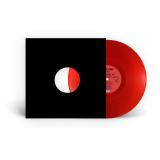
Do You Feel Me sees New York house staple NY’s Finest (Victor Simonelli) return with one of his most iconic productions, bringing the unmistakable garage house sound back to vinyl.
Built around uplifting piano lines, soulful vocal elements and groove-led rhythms, the track captures the feel-good energy of classic New York dancefloors and remains a timeless cut for DJs.
A recognised name within the New York house scene, Victor Simonelli’s productions sit comfortably alongside legendary artists such as Masters At Work, Todd Terry and Tommy Musto.
Back on fresh 12" red vinyl and featuring full suite of mixes including Club Mix, Instrumental, Dub, Bonus Beat and Piano Pella, this release brings an essential garage house record to a new generation while maintaining strong appeal for long-time collectors.
- 1: When Hamlet Left Town 0:32
- 2: Radio Four 05:45
- 3 34: E 03:34
- 4: Solid Ground 0:25
- 5: Arc 04:37
- 6: Aelita 03:12
- 7: All Tomorrows Past Part Ii 04:26
- 8: Interlude 03:26
- 9: Henry & The Ghosts 03:22
- 1: Space Minor 03:22
- 2: Loop D 03:36
- 3: Tomorrows Past Part I 0:11
- 4: Modest Farewell 03:5
- 5: Nordlead 03:3
- 6: Momo 03:12
15
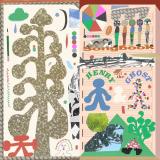
On his new album, Micha Acher rearranged compositions for bands such as Tied & Tickled Trio and Ms. John Soda from previous years.
Why are we interested in ghosts? What fascinates us about the eerie? According to cultural theorist Mark Fisher, the allure that the eerie possesses is not captured by the idea that we „enjoy what scares us“. It has, rather, to do with a fascination for the outside. For that which lies beyond standard perception, cognition or experience, as he writes in his book „The Weird and the Eerie“.
In fact, also none of the 15 pieces from Henry and the Ghost is really scary. On the contrary, they all feel strangely familiar. Like revenants or doppelgängers, which in fact they are. They have all been released before. But in a different form. In different line-ups. With different band projects such as Tied & Tickled Trio, The Notwist or the Alien Ensemble.
With the „Songbook“, Micha Acher's aim was, as he says, to find out how the familiar pieces sound in a chamber music instrumentation. Therefore he met with Theresa Loibl (bass clarinet, piano), Timm Kornelius (bassoon), Markus Rom (guitar, banjo, electronics) and Simon Popp (drums, percussion) in his living room for a musical séance in the summer of 2022. The séance lasted two days. Afterwards, Markus Rom (Oh No Noh), added some haunting electronical ideas.
The mood of most of the pieces is melancholic. There are surprising twists and siren-like melodies. Just as ghost stories should be. However, most of the songs sound very light-footed. With their feet in pop, folk, jazz and classical music. Pieces such as „Johanna“ with its wheezing harmonium and spooky piano, or the dreamy „Modest Farewell“ on the other hand have a cinematic flair. Immediately faces and scenes arise in the mind. But at the beginning, there is „Hamlet“. It starts with ghostly electronics and merges into a calm, almost classical guitar piece. Could it be that the ghost of Hamlet's father is hiding between the strings?
„34E“ begins with a banjo. Then the deep humming of Micha Achers sousaphone and the other brass instruments kick in. In the slow, solemn „Aelita“, the sousaphone starts a dialogue with a children's piano. With the banjo and the other wind instruments acting as mediators. The title of „All Tomorrow's Past“ brings Velvet Undergrounds „All Tomorrow's Parties“ to mind. Another ghost from the past. What connects the two pieces is free-floating percussion, which accompanies the sumptuous melodies.
„Arc“ takes us on an exhilarating voyage at sea, with the sousaphone providing powerful propulsion. Towards the end, things get quite turbulent. With the clarinet stirring up the water, before the sea calms down again. „Henry and the Ghost“ is characterised by a ghostly mood change between major and minor. In „Radio Four“ the banjo with its stoic chords keeps the lively brass section in check. „Solid Ground“ is imbued with melancholy. „Space Minor“ takes us into outer space, with the power of sousaphone and percussion.
„Tomorrows“ is filled with cautious optimism. And the concluding „Nordlead“ turns out to be a revenant of the instrumental „N.L.“ from The Notwist's legendary album „Shrink“ from 1998. In the new version, the piece sounds like a distant echo. One that also brings to mind how Micha Acher's music has evolved. Which new worlds he explored and opened up since the nineties. And yet Acher's signature is recognisable in every single note of this fascinating „Songbook“.

8
Maria is the debut album from renowned Brazilian electric bassist and composer Moyses Dos Santos. A homecoming for the London-based artist, Moyses’ debut reconnects him with his North-Eastern roots while assembling an international cast of collaborators including legendary Brazilian arranger Arthur Verocai, US trumpet sensation Theo Croker and London-based vocal star Lynda Dawn.
After relocating from Brazil to London in the early 2000s, Moyses dos Santos quickly became one of the capitals’ most in-demand players, sharing stages, studios, and writing credits with best-selling artists including Nile Rodgers, Janelle Monáe, Emile Sandé, Gregory Porter and Omar.
In 2022, Moyses toured with Brazilian jazz-funk legends Azymuth, completing the rhythm section alongside Brazilian drumming master Ivan "Mamão" Conti. "It felt like he was my wise Brazilian grandfather figure." Moyses recalls. "When you spend so many years working internationally, you unconsciously start to leave certain parts of yourself behind. Mamão encouraged me to reconnect with Brazilian music, and that's where this record really began."
Brazil’s North-east, where African, indigenous and European traditions collided and fused most intensely, produced a musical heritage unlike anything else on earth, Moyses dos Santos is a product of this syncretism. On Maria, named after his mother, Moyses brings the musical vocabularies of his youth to the fore. From the soul of the church band where he began to learn his trade as a musician, to the rolling batucadas – maractus, baiaos, sambas and frevos – which he played throughout his teenage years.
Drawing on the lineage of North American electric bass giants like George Duke, Jaco Pastorius, and Stanley Clarke, Moyses runs Brazilian musical traditions through jazz, funk, soul and disco: his sound charged with the cosmopolitan energy of London's contemporary jazz scene.
Lead single and album opener “Boa Viagem’ is joyous, carnivalesque dancefloor jazz: a timeless groove for the nightclub and street party alike. Calling directly to a higher power “Brazilian Spirit” is an astral-jazz phenomenon, featuring the transcendent trumpet playing of Grammy nominated Theo Croker. On “Saudade” Moyses calls upon iconic Brazilian maestro Arthur Verocai, whose signature string arrangements cascade around the divine vocals of ascendant London artist Lynda Dawn.
With impeccable style, charisma, warmth and virtuosity, Moyses steps forward with his stunning debut Maria: out on vinyl, LP, CD and digitally on the 12th June 2026.
13
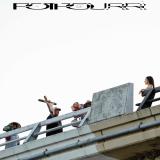
As the so-called “Latin boom” becomes a new anchor for hard-swung club sounds, it is crucial to recognize that the region’s musical culture extends far beyond dembow edits and the pop-trap hybrids that have edged into the mainstream. Monterrey-born, New York City-based producer and DJ Delia Beatriz, aka Debit, returns to NAAFI with Potpourri, a generous and kinetic collection of dancefloor-oriented tracks filled with percussive flourishes, squelching 303 basslines, and rhythmic mutations that actively challenge the status quo. Rather than rebuilding “Latin sounds” as a fixed category, the album rethinks their internal logic, tracing the evolution of techno and house in cities like Detroit, Chicago, and New York alongside parallel innovations emerging in Mexico, Colombia, and across the wider Latin world. Positioned on the bridge between Mexico and the US, Potpourri does not seek synthesis as a gesture of smooth fusion, but as a site of disruption.
The album can be heard as a loose follow-up to System (2018), Debit’s NAAFI-released EP that expanded the sonic potential of tribal guarachero through triplet-driven rhythms, industrial pressure, and noisy reconstruction. Potpourri retains guaracha as a structural backbone while drawing further influence from veteran DJ and producer Javier Estrada—who also appeared on System—and particularly from his fast-paced, nonlinear style of mixing. That approach becomes a formal principle here: canonical structures are dismantled, repetition is avoided, and tracks evolve without sacrificing propulsion. Coming after the introspective temporal inquiry of Desaceleradas and the speculative historical acoustics of The Long Count, Potpourri arrives as a deliberate surge of energy. As Beatriz explains: “It’s a manifesto for rethinking form and sound in dance music. By stepping outside traditional structures and embracing the potpourri approach, I’m creating new meaning with familiar rhythms. I’ve also been applying this to my DJ sets, using it as a tool to break free from established norms and explore new narrative possibilities.”
Years in the making, Potpourri imagines an alternate timeline in which the psychedelic squelch of acid—echoing pioneers such as DJ Pierre and Mr. Fingers—and the dub-inflected atmospheres of Basic Channel entered into direct and sustained contact with Latin American club mutations. Those references are legible, but never merely quoted. Instead, they are folded into syncopated hi-hats, overdriven kicks, and unstable arrangements that absorb both the intensity of the parties Beatriz remembers from Monterrey and the abrasive edge she sharpened at DIY noise shows in New England. The result is unmistakably a dancefloor record—heard in tracks as forceful as “Pero like” and the peak-time pressure of “tuvesuerte”—but one saturated with grotesque, psychedelic atmospheres, where sounds dissolve into hoarse croaks, acidic smears, and anxiety-inducing growls. Here, the rave becomes not simply a site of release, but a platform for navigating identity, hybridity, and artistic formation across borders. Moving through peaks and ruptures, Potpourri reveals a party narrative that is not linear but multidimensional.
By folding together the fluidity of DJ culture, the experimental charge of acid, and the rhythmic vitality of guaracha, Potpourri proposes a space of formal and political innovation within Latin America’s rapidly expanding electronic music landscape. It is a record that refuses containment, pushing against the templates through which Latin electronic music is often consumed, and insisting instead on friction, instability, and transformation as generative conditions for the dancefloor.
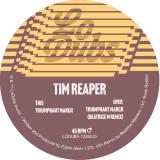
A little over a year ago Tim Reaper made his first appearance in the town LoDubs is based in, Portland, Oregon, at the always forward thinking westside venue Barn Radio. The bill was rounded out by yours truly, Jon AD, who set the standard for the night, which was a boggy, thick warehouse vibe, even though the venue was more of a tightly packed repurposed storefront with an overactive fog machine.
This stop turned into a bit of a several day stopover for the TR, who saw the town, met up with other Portland people, and after that was left with a bit of a aural vision of the whole experience, the DIY ethos of the Portland, and the desire to document these impressions on the label of his bill mate for the aforementioned night, LoDubs.
Shortly thereafter "Triumphant March" arrived at the LoDubs mailbox, and reverb heavy, oozing slab of Jungle funkiness.
Upon realizing this would be good material for a dubby remix, the next step was reaching out for people to do so, and Beatrice M was at that time really getting noticed with their take on Dub. This year has seen them really move up the ranks, needless to say.
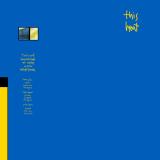
- 1: Testcard
- 2: Horizontal Hold
- 3: Not Waving
- 4: Water
- 5: Twilight Furniture
- 6: 24 Track Loop
- 7: Diet Of Worms
- 8: Music Like Escaping Gas
- 9: Rainforest
- 10: The Fall Of Saigon
- 11: Testcard (Locked Groove)
‘They went beyond punk before punk had properly started…the entire album is a controlled explosion of ideas. Nearly fifty years on, This Heat’s debut is something the world has still not completely caught up with.’ - Simon Reynolds
‘Over the years, there have been bands to play as aggressively, or even as strangely, but very few have been able to rise from their collective influences and histories to create music so singularly distinctive and inspiring.’ – Pitchfork 9/10
‘This Heat sounded like the future then ... and still do now.’ - Dan Snaith (Caribou)
Although widely considered to be Post-Punk’s finest, This Heat actually began performing and recording their music in 1976, the early days of London’s punk era. Within their two albums and an EP they perfected a strange and volatile new strain of avant-garde rock that time has proved to be massively influential, a blueprint for much that would follow: post-rock, math rock, homemade musique concrète, experimental electronica.
Numerous critics have recognised the band's influence on the music of Sonic Youth, Glenn Branca, Steven Wilson, Public Image Ltd., Radiohead, Swans, Shellac, Young Knives, Black Dice, Lightning Bolt and numerous other experimental and post-rock bands. Disbanding in 1982 they have left an undeniable legacy that has only continued to grow in stature and relevance.
The album This Heat, also known to fans and critics as the ‘Blue and Yellow’, was their eponymous debut release, recorded in sessions between February 1976 and September 1978 in a variety of studios including their own Cold Storage, a converted cold storage room in the Acme Studios complex. Innovating throughout, they combined loops and tape manipulation (producing for example the proto-drum and bass ‘24 Track Loop’) with live performance and haunting vocals to a complex, dissonant whole. The band recorded everything they ever did – including gigs – and tracks such as “Water” were entirely improvised in the studio.
Having recently passed the 50 year anniversary of their first gig, and the recording of material that appears on their debut album, the group’s surviving members Charles Bullen and Charles Hayward, true to their DIY roots, have set up an imprint to release their recordings for their growing fan base that is increasingly recognising their influential place in music history.
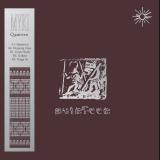
Particles of the oxymoron walking on a basalt canal, dazzled by the riot’s rays stilled, yet unsure.
A telepath counts the voices, a transparent monk whispers; and a silver nettle-bush dances, shivering in its quiet flame. All creatures born of love belong to Quanteen. W&P and produced by MYKI Vocals on Quanteen by Yaara Haim Artwork by O.neblina Mastered by Justin Drake Manufactured by KPM Distributed by KMA60
11
In Lande’s words: “It’s a daydreaming song about wanting a life of excitement and adventure rather than a dull and ordinary life - one where people underestimate you and belittle you. And where you’re forced to buy into capitalism and become a pathetic, losing player in a game that you hate. I’d rather escape and live in a queer space fantasy and be brave.”
Available on limited turquoise vinyl and digipack CD
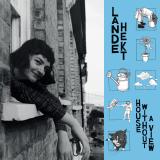
It is with both pride and excitement that we announce the reissue of ‘House Without A View’, the out-of-print second album by singer-songwriter Lande Hekt – the first of a three-part reissue series on Circuitry, with ‘Going To Hell’ and ‘Gigantic Disappointment’ (first time physically) to follow in the coming months.
With a new album ‘Lucky Now’ released on Tapete in January, supported by an extensive spring UK tour (dates below), Lande’s contemporary twist on the classic C86 indie sound - with a queer feminist punk identity lyrically explicit throughout – is drawing in an ever-growing audience of devotees, such is the consistent quality of her songwriting, and the personality within.
The opening track of the album is ‘Half With You’ which “is about growing into yourself as a queer person, and enjoying who you are after not enjoying it for so long,” says Lande. ‘Cut My Hair’ is about how her relationship with her gender has changed over the last few years, becoming more comfortable in herself and understanding more about what makes her happy. “It’s also about how easy it is to not talk to people when you’re struggling, which is something I did for a long time,” admits Lande.
The title track of ‘House Without a View’ deals with childhood trauma and how events of our formative years “affect us so much into our adult lives and are intrinsic to our personalities and the way we cope (or don’t) with life and relationships,” says Lande. Although there’s darkness and sadness within the record, there’s also some shining beacons of positivity and a light-hearted side, albeit with a side of frustration. ‘Lola’ was written about Lande’s cat shortly after she came to live with her and her girlfriend. “She’s the first pet I’ve ever had and I wasn’t quite ready for how hard it would be to not be able to verbally communicate with her. I worried constantly that she was depressed because all she did was sleep, but my girlfriend assured me that that was regular cat behaviour.”
APRIL 2026 DATES: 4th Cardiff/5th Trowbridge/6th Penryn/7th Portsmouth/9th Ramsgate/10th Cambridge/11th Norwich/12th Nottingham/13th York/19th London/20th Brighton/21st Bristol/22nd Exeter/23rd Manchester/24th Sheffield/25th Oxford
- A1: Al Lark
- A2: Premier Contact
- A3: Verba Aliena
- A4: Breach
- A5: La Baleine Et Le Musicien
- A6: Speaker
- A7: Caudale
- A8: Cap Lahoussaye
- B1: Insomnia
- B2: Zodiac
- B3: Lingua
- B4: Breathe In Feat. Yael Naim
- B5: Megaptera Novaeangliae
- B6: Panimal
- B7: Try Again
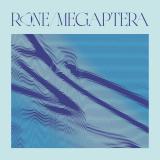
MEGAPTERA, the scientific name of the humpback whale, is also the title of the new album by French producer and composer Rone.
Born from an ambitious film project, the record was largely composed at sea, off the coasts of Brittany and Réunion Island, using a modular synthesizer and melodic sketches developed for an almost unreal proposition: attempting to resonate with whales through music.
Following Room With a View—a soundtrack to a performance created with the alternative dance company La Horde, exploring collapse and rebirth—Rone continues his investigation into new imaginaries. If that earlier work emerged from reflections on ecological, social, and technological tipping points, MEGAPTERA marks a shift: away from the city, toward the sea.
Gradually, he moved away from performance toward a more craft-based approach, extending his practice beyond the studio into a wider space of listening, exchange, and fieldwork. Early footage of sailors broadcasting his work into open water—seemingly answered by whale presence—circulated online, generating fascination, but also a growing unease for the artist regarding what these projections might imply.
This tension became the starting point for a longer period of field experimentation, developed in dialogue with scientists, environmentalists, sailors, and bioacousticians. The resulting 15-track album reflects this open-ended inquiry — not only into whether human-made sound can reach whales, but also into how this process can shape a new form of electronic music, and open it towards new deep-sea soundscapes.
Rather than seeking imitation, Rone works with reduction. Drawing on research into cetacean vocalisation, he pares back his language—focusing on frequency bands, repetition, and suspended structures. Minimalism appears less as reference than as natural convergence.

- A1: Overture
- A2: Where Do You Go
- A3: Flirting With Hanuma
- A4: Longing (Slow)
- A5: Longing (Fast)
- A6: Sulphur Bath
- A7: Jazzy Waltz
- A8: Cadence
- B1: Main Theme (Opening)
- B2: Woodwinds (Part 1)
- B3: Woodwinds (Part 2)
- B4: Bridegroom Riding Homewards
- B5: Bridesmaid
- B6: Guests Arriving
- B7: A Clash
- B8: Bossa Nova
- B9: Battle March
- B10: Main Theme (Piano Lead)
- B11: Main Theme (Swinging And Swaying)
- B12: Dance
- B13: Happy End
- C1: March
- C2: Main Theme
- C3: Taia Taia Jam
- C4: Lyrical Line
- C5: Dog Mating
- C6: Tranquility
- C7: March (Pizzicato)
- C8: Main Theme (Intermezzo)
- D1: Classmates
- D2: Lyrical Line (Alternative Take)
- D3: Main Theme (Uptempo Take)
- D4: Lyrical Line (Piano Lead)
- D5: Lyrical Line (Uptempo Take)
- D6: Cooking Jam
- D7: March (Alternative Take)
35

6
Following his debut 12" on Futura Resistenza, Aukio Sound returns with a new release on Turbo Guidance Entertainment — a deep dub techno exploration rooted in heavy reggae influence, featuring the late Baba Ras. A solemn tribute to a singular voice. Like Rousseau's Tiger in a Tropical Storm, this record paints a dense, dreamlike fresco — where rhythm and texture grow wild beneath the surface. The record also includes a remix by Non Posso, a mysterious duo. Mastered by Carsten Dämbkes and pressed on 180g vinyl for the full listening experience.

- 1: Lam Intro
- 2: Ma'at
- 3: Current
- 4: Egungun
- 5: Cocoon Interlude
- 6: Painted Lady
- 7: Being Here
- 8: Puaj
- 9: Si Chomphu
- 10: Rammana
También disponible
Marble Vinyl[34,41 €]
Salin, gefeierte Schlagzeugerin, Produzentin und Komponistin, geboren in Thailand, wohnhaft in Kanada, ist bekannt für ihre innovative Verschmelzung globaler Rhythmen. Ihr bahnbrechendes Album "Rammana" erhielt 2025 eine JUNO-Nominierung als "Global Music Album of the Year" und wird nun flächendeckend auf Tonträger erhältlich. "Rammana" ist eine zutiefst persönliche Reise, die die Klänge Nordostthailands mit dem psychedelischen Soul Westafrikas der 1970er-Jahre verwebt – gefiltert durch Salins modernen Produktionsstil. Inspiriert von traditionellen Trommeln und Volksliedern der Urak Lawoi, einem indigenen Nomadenvolk Thailands, ist Salins Album eine Hommage an die musikalische Migration und den Austausch zwischen Ost und West. Ihre Musik reflektiert Themen wie Identität, Spiritualität und Menschlichkeit, gepaart mit einer Prise Lebensfreude, und erschafft eine einzigartige Klangreise für die Zuhörer. Salin tourte durch Nordamerika und Europa (u.a. Jazztage Dresden, Überjazz, Trans4JAZZ-Festival, JazzOne+ Festival) und trat als Support für Kokoroko und Yussef Dayes auf.
Salin, gefeierte Schlagzeugerin, Produzentin und Komponistin, geboren in Thailand, wohnhaft in Kanada, ist bekannt für ihre innovative Verschmelzung globaler Rhythmen. Ihr bahnbrechendes Album "Rammana" erhielt 2025 eine JUNO-Nominierung als "Global Music Album of the Year" und wird nun flächendeckend auf Tonträger erhältlich. "Rammana" ist eine zutiefst persönliche Reise, die die Klänge Nordostthailands mit dem psychedelischen Soul Westafrikas der 1970er-Jahre verwebt – gefiltert durch Salins modernen Produktionsstil. Inspiriert von traditionellen Trommeln und Volksliedern der Urak Lawoi, einem indigenen Nomadenvolk Thailands, ist Salins Album eine Hommage an die musikalische Migration und den Austausch zwischen Ost und West. Ihre Musik reflektiert Themen wie Identität, Spiritualität und Menschlichkeit, gepaart mit einer Prise Lebensfreude, und erschafft eine einzigartige Klangreise für die Zuhörer. Salin tourte durch Nordamerika und Europa (u.a. Jazztage Dresden, Überjazz, Trans4JAZZ-Festival, JazzOne+ Festival) und trat als Support für Kokoroko und Yussef Dayes auf.
- 1: Four Legs Good, Two Legs Bad
- 2: There Are Fairies In The Garden
- 3: Hurry On Sundown
- 4: The Demented Man
- 5: Tortured Mind
- 6: Land Of Min
- 7: Part Of Human Behaviour (No Sex Allowed)
- 8: Those Days Of The Underground
- 1: Out Of Luck
- 2: Psi Power
- 3: Human Zoo
- 4: The Judge And The Fisherman
- 5: Goonhilly Down
- 6: Ocean's Spiral
- 7: Traveller Of Space
8
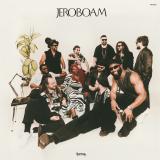
Original Funk Band from Paris
With just three years on the scene, Jéroboam is already considered as one of the most exciting and essential new voices in contemporary soul funk.
A true manifesto for live music and the dancefloor, this 11-piece live machine hits the stage like a juggernaut and doesn’t just play funk, they live and breathe it.
After a slew of certified underground classic releases on Space Grapes and Chuwanaga which have been supported worldwide by tastemakers and connoisseurs, Jéroboam is now presenting its long awaited first LP on Favorite Recordings.
From boogie-funk to 2-step soul crossover, Jéroboam delivers 8 heartelf songs, combining razor-sharp compositions with genuine and relatable lyrics.
Achieving such an exciting and challenging piece of work is the outcome of a long and inspiring process started more than 10 years ago in Paris.
From their early beginnings on the local scene, the core musicians of Jéroboam thrived on their mutual love for funk music under the name and concept of Echoes Of.
Building on these successful experiences and expanding its line up over the years, the band has been able to sharpen its sound, craft a distinctive crossover identity and create its own original music under a brand new entity : Jéroboam.
This momentum culminates in their debut full-length album, set for release in june 2026 on Favorite Recordings, a defining moment for one of Europe’s most vital modern funk acts.
4
Balancing dub techno depth, Detroit spirit and peak-time functionality with class and precision. Parallel 41 Records returns with P41005, a powerful statement built for the darker edges of the dancefloor. On Sakura EP, Manuel Di Martino lays the foundation with two hypnotic originals and remixes that move between stripped-back pressure, dub-soaked depth and raw Detroit-inspired drive.
4
For the next Respect The Craft Enterprises release, the myth, the legend — Santos — joins forces with Tripmastaz for a powerful combo EP.
Showcasing what both artists do best, the release delivers raw house and garage beatz, driven by complex, detailed layers of production, and topped with crispy, loud, club-focused mastering.
Designed with the dancefloor in mind yet rich in character, this vinyl EP represents a true meeting of minds — uncompromising, high-energy, and rooted in craftsmanship.


Makebo Shares New Four-Track The Universe EP
Woven with textured sound design and warped synthwork, The Universe presents a detailed and deliberate journey shaped by contrast and progression across its 32 minutes. The title track sets the foundation with crunchy low-end and hypnotic percussion that steadily pull the listener inward. ‘Galaxy’ follows with buoyant rhythms that introduce a sense of lift, while ‘Save Me’ deepens the mood with gritty basslines and mystical vocals, adding emotional weight without disrupting the EP’s flow. Closing with ‘Birth Of A New Sun,’ Makebo delivers a club-driven finale that encapsulates The Universe’s expansive, forward-moving themes.
