Buscar:dan march

Estilos
Todo
The Ganjas - Generation

The Ganjas

Generation

12inchBYM085
BYM Records
16.12.2022

New Studio Album after long 8 years! Produced by Jack Endino in Chile and Mastered by Tony Cousins (The Verve, The Stone Roses) at Metropolis Studios U.K, Lacquer cut by Richard Simpson (Beck, Flamin’ Groovies, Lou Reed). After 8 long years The Ganjas returns with a new studio album, a joint production between Jack Endino and the band. Like the 2012 album ‘Resistance’, this LP combines sounds and styles that have marked the band since its inception; long space rock songs, neo grunge guitars, Manchester-reggae rhythms, and ballads with R&B vocal harmonies. For fans of: Sundial, Keith Richards, The Stone Roses, Swervedriver
A job that very well summarizes the more than 20 years of uninterrupted career. After the compilation album ́Ghost River ́ (2015) and having finished the European tour in September of the same year, the drummer changed, the long-lived founder Aldo Benincasa left and Nes entered, who had already replaced him on a couple of occasions. In March 2017 they embark on a trip to El Médano a mountain refuge that is on the border between Chile and Argentina, and in there for several days they shaped the songs that gave life to this album. Then, in 2018, Jack Endino, an old acquaintance of the group, travels from Seattle to Santiago to record 10 songs with different nuances and colors, lyrics in English and Spanish, radio cuts and long durations, rock, groovy and power ballads, at Estudios Lautaro. The album has songs like ‘America’ and ‘Ex-Pilot’ an opening and closing of almost 10 minutes in a cadenced and hypnotic groovy march, spatial and psychedelic in the purest style of The Verve's A Northern Soul album. While ‘Space Trees’ and ‘10.000 Años’ are short, powerful, fast and acid songs with the grunge and alternative rock stamp that sounded in the 90's, nothing to envy to Sundial and Swervedriver. There is room for Manchester-reggae moments in ‘New Berlin’, an instrumental dance song that was born in that city thanks to the collaboration with Andrés Bucci and ‘Listen To The Lion’, a trippy and deep Dub-Reggae cut. R&B ballads have always been part of the group's work and on this album they stand out with ‘Generation’, the title that gives the album its name, with a sound reminiscent of Keith Richards solo songs and the emotional nirvana-esque ‘Far Along The Way’. The mix was carried out in 2019 between Seattle and Santiago de Chile, during upheaval and social protests as a result of the October outbreak and was mastered in 2020 at the Metropolis studios in the U.K. by Tony Cousins, an engineer who had already worked with The Verve and The Stone Roses, influences recognized by The Ganjas. Due to the pandemic the release was postponed to the end of 2022. For the likes of: Sundial, Keith Richards, The Stone Roses, Swervedriver. Genre: Alternative / Indie

Reservar16.12.2022

debe ser publicado en 16.12.2022

26,68
The Broadside Hack - Live from Real World

Following their debut Glastonbury Festival performance, Broadside Hacks in collaboration with British Underground today announce the UK premiere of The Broadside Hack; a new documentary telling the story of the young vanguard of UK artists sharing radical interpretations, proto-feminist narratives and queer histories through the lens of British traditional folk song. An accompanying live album of the songs performed in the film will also be released in December on LP and digitally. Having enjoyed its US premiere at SXSW in March, The Broadside Hack is a short music documentary produced by British Underground, created with the aid of a grant from Arts Council England and PRS Foundation. Directed by Crispin Parry and filmed by The Northern Cowboys, It explores the influence of traditional folk songs on a new generation of musicians, filmed just as the UK was emerging from the dark days of the pandemic. The documentary was made in collaboration with music collective Broadside Hacks and features influential artists and groups from the new folk scene, including Rough Trade signees caroline, former Goat Girl bassist Naima Bock, whose acclaimed album Giant Palm was released on Sub Pop earlier this year, Shovel Dance Collective, Thyrsis, Broadside Hacks and Boss Morris. Discovering a fresh vitality in the tunes and new histories in the stories they tell, the film includes conversations, dances and intimate performances filmed at Peter Gabriel’s Real World Studios in Box, Wiltshire between 17th and 19th August 2021. The live concert and screening of The Broadside Hack arguably marks the close of the first chapter in the story of the UK’s new folk scene; a story in which Broadside Hacks has been central. Initially formed as a folk night, the pandemic forced it to change its shape, morphing into a collective of young, like-minded musicians who met to play folk music in South London. “An adventurous exploration of traditional music by the young and folk curious” - The Times // “All your favourite players in one Sunday League team” - Loud And Quiet // "The band play old folk songs, those so old their authors have been lost in time, and inject in them such life, depth and emotion that it's extremely affecting" - The Quietus // Side 1 A1 Boss Morris - Up The Hill A2 Interview Shovel Dance Collective - ‘A Collective Authoring of History’ A3 Shovel Dance Collective - The Bold Fisherman / My Husband Has No Courage In Him A4 [Interview] Thyrsis - ‘Collaboration Across Space and Time’ A5 Thyrsis - Single Sailor A6 [Interview] Naima Bock (Broadside Hacks) - ‘Retracing Beginnings’ A7 Broadside Hacks - Gently Johnny. Side 2 B1 Shovel Dance Collective - Merrily Kissed the Quaker B2 [Interview] Shovel Dance Collective - ‘Queering Folk Songs of the Past’ B3 Thyrsis - Godstow Bridge B4 [Interview] Naima Bock (Broadside Hacks) - ‘The Broadside Hacks Folk Club’ B5 Broadside Hacks - Rain and Snow B6 Boss Morris - Young Collins

Reservar16.12.2022

debe ser publicado en 16.12.2022

23,11
Pleasure Pool - Love Without Illusion

Pleasure Pool are Finn O’Hare, Andrew Robertson and a rolling cast of Glasgow-based musicians, performers and artists. They sound like nothing else to have come out of Glasgow recently, exploring the territory between live performance and club culture through their collaborative ethos and party-starting attitude. Their debut EP, Night Scars, arrived in early March 2020 and now comes Love Without Illusion, Pleasure Pool’s debut album, released on Optimo Music.

Love Without Illusion adds layers of complexity and introspection to Night Scars’ squarely dance floor-focused brew, though the record still oozes danceable energy. Open Hours is like opening a door and finding a party already in full swing, an assortment of recurring Pleasure Pool motifs – echoing, dubbed-out vocals, gorgeous, impossibly airy synth melodies, louche percussion, cowbells, rising and falling flecks of trumpet – all introduced in short order. Lick The Bag, which prominently features vocalists Chloe Charlton and Raissa Pardini, has a controlled chaos befitting its morning-after-the-night-before name.

The rest of the album rides this glimmering, night-magic mood at varying frequencies, with the title track a gentle storm of grandiose walls of synth and pulsing vocal fragments. The slow and low flickering funk of album closer Zero Hours pulls all that has come before it together to end things in the woozy bliss of a walk back home in warm, gentle sunlight.

Love Without Illusion is a dazzlingly complete expression of Pleasure Pool’s intoxicating sound and vision. Dive on in and explore.

No en stock

Haga su pedido ahora y le encargaremos el artículo en nuestro proveedor.

19,71

Ültimo hace: 3 Años
The Waterboys - An Appointment With Mr Yeats LP 2x12" (2022 Remaster)

An Appointment with Mr Yeats sees the words of W B Yeats, one of Ireland's greatest literary sons, merged with the music of The Waterboys, one of Britain and Ireland's greatest rock bands, in a truly unique and ambitious musical undertaking. The album was originally released in 2011, and has been fully remastered for re-issue, and now contains 6 previously unreleased bonus tracks. The Waterboys vocalist Mike Scott, first delivered a new dimension to Yeats' poetry in 1988, when he wrote a musical accompaniment for the classic poem The Stolen Child, during the making of the Waterboys seminal album 'Fisherman's Blues'. Five years later he set another Yeats poem to music, Love and Death, which appeared on their 'Dream Harder' album. Over the years, Scott had been quietly crafting a wealth of material similarly based on the writings of Yeats. A number of these were performed by him at the Abbey Theatre during the Yeats International Festival in 1991, but most had remained in Scott's private songbook awaiting the right vehicle. An Appointment with Mr. Yeats was that long-awaited context. Scott's love of literature is firmly embedded throughout the work of The Waterboys. He has also put the writings of Robert Burns, James Stephens, Kenneth Grahame and George MacDonald to song. Speaking on his literary influences and loves, Scott explained: "I grew up in a house full of books so literature - and language - have always been important to me. Working with other peoples' words is something that comes as natural to me as working with my own. In a way it's even more immediate; I've always found writing music an easier process than the writing of lyrics, and setting words of the quality of Yeats' to music is an enormous privilege and treat." An Appointment with Mr. Yeats is a unique and memorable opportunity for lovers of great music and great literature to celebrate the union of song and word in one spectacular record.

Reservar02.12.2022

debe ser publicado en 02.12.2022

33,82
rampue - Tragweite 2x12"

Rampue

Tragweite 2x12"

2x12inchHYG023
Hold Your Ground
28.11.2022

Berlin-based producer Rampue has not released an album in 14 (in words: fourteen) years. Between 2008 and 2020 he toured the world and worked mainly on his live sets in the meantime. So now only a worldwide pandemic had the power to prevent the traveling musician from continuing this hustle and bustle and eventually share a new record with the public. Corona was what brought this standstill and the otherwise well- traveled individual experiences cabin-fever during lockdown. Hence, the new Rampue album "Tragweite" came into existence in February 2021, which portrays the artist's desire for experimentation.
Inspired by a modular synthesizer (Buchla), Rampue has seemingly put himself into a kind of trance, in which he lets the machines work and combines randomly created sounds with airy structures such as low drums or simple grooves. Rampue accomplished to break free by using random sounds as a new impulse and a way out of a creative crisis, which stemmed both from the enforced home isolation and from the self-perceived paralysis. The result is literally unique, as many of the sound products cannot be reconstructed and are preserved in album form for the general public.
Listening to "Tragweite" one gets the impression that the dialectical relationship between chaos and order, further supported by its production, is the defining theme of the album. After an initially perceived chaos, a delicate order, which is determined by structuring drum patterns and basslines, takes over throughout the course of the album.
Later, it frays and loses itself again in sounds and tones created mechanically However, it never seems arbitrary, but willful and skillfully staged. For instance, "Furo?" begins with apparent arrhythmia. The combination of bass and subtle percussion, however, gives this arrhythmia a shape, guiding the track which gradually becomes more and more driving without losing its original playfulness.
Although one might be inclined to think of genres such as Downtempo or Ambient at the beginning in the further course of the album results in such a diverse sound and rhythmic landscape that one willingly questions one's own perception of music while listening and finally throws every type of categorization overboard joyfully. The listening experience is too intoxicating and enlightening to stick to simple genre boundaries. The musical spectrum ranges from straight arrangements that live entirely without a drum foundation ("Fu?r Dich") to almost meditative sound collages ("Regengesicht") to the four-to-the-floor banger "Kembang" which adds a grimmer note with a certain industrial appeal to the overall rather melancholic-progressive curation. "Direct Faden" on the other hand, surprises with its simple guitar-based foundation on which the omnipresent synth snippets and pads are allowed to let off steam towards the end of the record. The track that most closely combines the progressive production style with a danceable club atmosphere is probably "Phobia". Wafting, partly breaking away synthesizer sounds rise higher and higher, while the driving mixture of bass and drums consistently march forward.
Rampue breaks with his old, musical habits as "Tragweite" creates the impression of improvisation and jam character without getting lost. Rampue takes his listeners on a journey that is stirring and moving, sometimes demanding or even a bit disturbing, yet always one thing: incredibly exciting.

No en stock

Haga su pedido ahora y le encargaremos el artículo en nuestro proveedor.

25,17

Ültimo hace: 3 Años
sjush - Danger Dance

A relatively new name in the world of hard edged techno, Irish DJ & producer sjush made his presence felt with a string of selfreleased EPs and an appearance on SPEED'S free download series in 2021. The young up and comers' taste for raw, bewitching techno combined with a penchant for rave has left listeners in hypnotic euphoria, making him one to watch and gaining support from Manni Dee, Yasmin Gardezi, Pelin Vedis, Riot Code & more. Now on his first vinyl release, sjush produces four relentless and brooding cuts of late-night techno on TITDM.

'Aura' sets pace with an array of pounding kick drums and its commanding sensibility; inducing primal states through carefully selected grooves and propelling synths. 'Burner' then enters the fray with bone crushing percussion, also underlining sjush's solid grasp of mixing both aggressive techno with a 90s sheen. 'Cataclysm' feels more detached and spacey, still engrossed in powerful low end and foreboding pads, before the EP comes to a cinematic close with 'Grain Feeder'. Marching kick drums meet with equally relentless leads, while percussion that could easily replicate the noises from predator form to create a mindexpanding, sensory experience best heard under the cover of darkness.

No en stock

Haga su pedido ahora y le encargaremos el artículo en nuestro proveedor.

11,39

Ültimo hace: 2 Años
Yleiset Syyt - Toisten Todellisuus

“Toisten Todellisuus” compiles two 7”s by Helsinki, Finland’s YLEISET SYYT: their self-titled EP, originally released in 2019, and 2021’s “Umpikujamekanismi”. Despite members playing in well-known underground Finnish bands like KOHTI TUHOA and FORESEEN, YLEISET SYYT has flown under the radar in the Anglophone world, with only a small fraction of their records’ tiny pressings making it outside Finland. Fortunately for you, the hardcore fanatics at Sorry State and La Vida Es Un Mus have our ears to the ground, and we agreed that a band this killer deserves a much wider audience. YLEISET SYYT’s sound is both blistering and anthemic, moving nimbly from full-throttle rippers like “Hygieeninen Ruumis” to tracks like “Hyväntekijä” and “Luovan Keskiluokan Takapihalla,” whose big chorus hooks could have anchored a Riot City or No Future A-side. The combination of ferocious performances and songwriting chops might remind you of older Finnish bands like LAMA, MELLAKKA, and APPENDIX, but MINOR THREAT, THE FIX, and NECROS are equally apt comparisons. If you like your early 80s-style hardcore tightly-wound, razor-sharp, and bristling with hooks, you’re gonna love “Toisten Todellisuus” as much as we do (Daniel Lupton) Side A recorded in Helsinki, February 2019. Side B recorded in Helsinki, March 2021. Recorded, mixed and mastered by Ville Valavuo. Artwork by Fetal Brain. Genre: Alternative / Punk

Reservar25.11.2022

debe ser publicado en 25.11.2022

24,33
Broken Bells - INTO THE BLUE

Broken Bells are back with their third full length album, INTO THE BLUE. Featuring two of the bigger names in indie and alternative music -- the Shins' singer/guitarist James Mercer and producer/multi-instrumentalist Brian Burton, aka Danger Mouse -- Broken Bells combined the pair's greatest strengths. On 2010's Grammy-nominated self-titled debut and 2014's more structured After the Disco, Mercer's gift for indelible, slightly spooky melodies and Burton's atmospheric productions complemented each other perfectly. In the late 2010s, the duo reconvened to release a succession of singles ahead of their third album. Mercer and Burton were inspired to collaborate when they met at 2004's Roskilde music festival in Denmark, where they discovered they were fans of each other's work. However, they didn't start writing and recording together as a band until March 2008, when Mercer holed up in Burton's home studio in Los Angeles. They took a different approach to working together than with their other projects: Burton avoided the sample-heavy style he used on The Grey Album and Beck's Modern Guilt, and played only live instruments; Mercer broadened his vocal style to include falsettos and deeper registers. Mercer and Burton made their official debut as Broken Bells in 2009, releasing their debut single, "The High Road," late that year. Their self-titled debut album came out in March 2010; it reached number seven on the Billboard 200 Albums chart and was nominated for a Best Alternative Album award at the 2011 Grammy Awards.

No en stock

Haga su pedido ahora y le encargaremos el artículo en nuestro proveedor.

25,17

Ültimo hace: 3 Años
Biosphere - N-plants LP

Biosphere

N-plants LP

12inchBIO06LP
Biophon Records
21.11.2022

Repressed !

Early February 2011: Decided to make an album inspired by the Japanese post-war economic miracle. While searching for more information I found an old photo of the Mihama nuclear plant. The fact that this futuristic-looking plant was situated in such a beautiful spot so close to the sea made me curious. Are they safe when it comes to earthquakes and tsunamis? Further reading revealed that many of these plants are situated in earthquake-prone areas, some of them are even located next to shores that had been hit in the past by tsunamis. A photo of Mihama made me narrow down my focus only to Japanese nuclear plants. I wanted to make a soundtrack to some of them, concentrating on the architecture, design and localizations, but also questioning the potential radiation danger (a cooling system being destroyed by a landslide or earthquake, etc). As the head of the Nuclear and Industrial Safety Agency said the plants were so well designed that "such a situation is practically impossible." The album was finished on February 13th. On March 17th I received the following message from a FB friend: "Geir, some time ago you asked people for a photo of a Japanese nuclear powerplant. Is this going to be the sleeve of your new coming album? But more importantly: how did you actually predict the future?"


“N-Plants is a master craftsman's reaffirmation of a fundamental but lapsed tenet of electronic ambient: You set up a conversation between the machines, and then you step out of the way.”

Brian Howe — Pitchfork

No en stock

Haga su pedido ahora y le encargaremos el artículo en nuestro proveedor.

27,69

Ültimo hace: 11 Meses
INSTANT HOUSE (JOE CLAUSSELL) - LOST HORIZONS EP

Before he co-founded the legendary Sunday afternoon event Body & Soul with fellow New York DJs Danny Krivit and Francois Kevorkian in 1996, Joaquin "Joe" Claussell was the driving force behind Instant House, an eclectic production outift who released a series of uplifting deep house records, several of which were spun by David Mancuso at the 90s iteration of his influential Loft parties.

In 1993, Instant House released their deepest single, Lost Horizons, through Jungle Sounds Recordings. The A-side, ‘Lost Horizons (The Mind Travel Saturday Night Sunday Morning Mix)’ is a seventeen-minute and twenty-second sojourn into the vibrant club sounds of early 90s NYC. Driven by a Latin-accented man-machine beat that marches into infinity, it comes backed by two shorter mixes, ‘Lost Horizons’ and ‘Lost Horizons (Percussion Bonus)’. Twenty-nine years later, Isle of Jura presents an official vinyl and digital reissue of this slow-burning deep cut.

The Instant House story begins in the late 80s at Dance Tracks, an East Village record store established by the businessman, DJ, and graphic designer Stan Hatzakis. Patronised by New York trendsetters like Frankie Knuckles and Larry Levan, Dance Tracks was considered one of the world's best underground dance music retailers.

During the winter of 1991, Stan got together with one of his best customers, Tony Confusione, to make music. A wall street guy by day and a keyboardist by night, Tony was also a serious DJ. Not long after their first recording sessions, they invited another Dance Tracks fixture, Joaquin "Joe" Claussell, to join them in Tony’s state-of-the-art home studio in Long Island. He brought a vibrant, percussive edge to the sample-based tracks Stan and Tony were cooking up. Emboldened, the three DJs began recording together as Instant House. That year, they released the Dance Trax EP.

In 1992, after Instant House had dropped two certified classics, 'Over' and 'Awade', for Jungle Sounds Records, Stan exited the group and sold Dance Tracks to Joe and his business partner, Stefan Prescott. Following Stan's departure, Joe and Tony headed into the studio for a special recording session. “I just remember how powerful the connection was while we were making that record,” explains Joe, recalling the creation of ‘Lost Horizons (The Mind Travel Saturday Night Sunday Morning Mix)’. “It was a very spiritual encounter in the studio.”

While laying out the drum patterns, sound effects, and arrangement, Joe explained the vibe to Tony, who played the lush cosmic chords and an effortless keyboard saxophone line over the top. “That was Tony completely feeling himself,” Joe reflects. “He performed majestically.”

After the release of the Lost Horizons 12”, Joe received a phone call from Cisco International Corp. A plane flight later, he was sitting in their label offices in Tokyo, talking to a senior record executive who wanted to introduce Lost Horizons to Japan. “What they were primarily doing at the time was pressing classical records - we’re talking thousand dollar plus classical reissues - and they wanted to license and distribute Lost Horizons,” Joe remembers. Three years later, Joe and Tony released 'Asking Forgiveness', their final 12” as Instant House, before parting ways with full hearts.

In the context of his career as a DJ, remixer, and producer, Joe is known for long songs and compositions. As Lost Horizons illustrates, he’s carried that impulse with him since his foundational days. “When I produce, I don’t believe in the beginning or endpoint of anything,” Joe explains. “I really despise the rules. To me, that’s not true to the art of creation. I just believe there is a flow in creation. When we were making music in the 90s, we were restricted by format, but that record could have gone on forever.”

The 12” is housed in a full sleeve jacket by Bradley Pinkerton based on the original release design.

No en stock

Haga su pedido ahora y le encargaremos el artículo en nuestro proveedor.

12,40

Ültimo hace: 11 Meses
Adam BFD - No Advice EP

Originally from Normandy now residing in the country's capital, French DJ and producer Adam Boufeldja (aka Adam BFD) has been making a serious name for himself, having put out a string of self-released singles and curating his own self-titled Youtube channel.

Adam’s tracks have always been vivid, detailed portraits; drawing from memories and influences from around the world, and his latest EP is no exception; using his eclectic tastes to produce a record truly unique, and brimming with personality.

‘I’ll be walking’ meanders through an always evolving city, creating space and a sense of an otherwise chaotic and fleeting world. The track’s softly spoken synths hold the torch, while the effortless drums walk us home. ‘Call A Taxi’ follows suit, a fruitful marriage between shuffling drum patterns and hypnotic tones, while the track's subtle low-end provides the glue; closing off an A side that feels more like a story being told than another dance-floor memento.

Title track ‘No Advice’ launches the B side on a slightly more ominous tone, in a microcosmic portrait of opposing forces; before ‘An Ode To La Condesa’ glides through like a letter from an old friend, the smell of fresh ink still prevalent on the page as we’re whisked away through the wide-tree lined avenues of La Condesa. The EP comes to a close with ‘For The Good Times’ combining nostalgic tinged leads, forward-marching drums and sprawling pads that act as a backdrop to another highly impressive EP from one of France’s best emerging artists.

No en stock

Haga su pedido ahora y le encargaremos el artículo en nuestro proveedor.

5,84

Ültimo hace: 3 Años
Terra Form - Entering The Void

Terra Form

Entering The Void

12inchCYBERDOME006
CYBERDOME
11.11.2022

DJ Different dons his Terraform alias as he begins his journey in ‘Entering The Void’ on CYBERDOME; exploring phat electro bass-lines and party-starting ghettotech energy with its crosshairs fixated firmly on the club environment.

Born and raised in the culturally rich city of Malmo, the Swedish producer has previously released on London based label Deeply Cultured, Distant Hawaii, Mood Of Era, 1Ø PILLS MATE and Traxx Underground, spanning atmospheric techno, ethereal breakbeat and chunky electro.

‘Ultrasonic’ is an ear-wriggling cut of stripped-back psychedelia. As David Holmes would say, all the best electronic music tracks are made up of only a few components. Here, typical electro synth stabs, robotic vocal sampling and sparse precision allows the track room to breathe, whilst maintaining a deep and funk-driven groove.

‘Ghettotech’ sounds how you would expect it to; pounding kicks, frantic atmospherics and lairy screw-face hype combine on a certified fire-starter, before ‘Exiting The Void’ introduces itself on a footwork vibe that evolves into a sequence of interstellar-dungeon dub-electro.

‘The Rise of the Slavs’ takes its inspiration from the diverse group of tribes who lived in Central and Eastern Europe in the 6th to 10th centuries, establishing the foundations for the Slavic nations; it’s marching rhythm beaming historical context into 21st Century dance music.

No en stock

Haga su pedido ahora y le encargaremos el artículo en nuestro proveedor.

11,35

Ültimo hace: 2 Años
KODE9 - ASTRO-DARIEN EP

Kode9

ASTRO-DARIEN EP

12inchFLAT2
Hyperdub
11.11.2022

`Astro-Darien' is a 26-minute sonic fiction about the break-up of Britain, narrated by synthetic Scottish voices and framed as an eponymous video game. It is the second release on Hyperdub sub-label Flatlines; a dark green 10" in triple gatefold sleeve, with artwork by Kode9's long-time collaborators Lawrence Lek and Optigram, presented as a limited edition of 500 copies. From a Caledonian heart of darkness to a supernova Scotia? The documentary fiction spirals between the role of the catastrophic Darien Scheme in the late 17th century in the founding of the UK, when Scotland failed to colonise part of present-day Panama, and the contemporary disintegration of the Union. In a somewhat wild extrapolation of the race to become the Scotland's first vertical satellite launch station currently playing out between Sutherland Space Port and the Shetland Space Centre, independence is speculatively framed as an exercise of escapology, a jailbreak and exodus to an orbital space habitat, with all the risks and dangers that entails. The loose plot follows a game designer from the fictional `Trancestar North' company who, in attempting to lift the dark spell cast by Darien, models a counter-future by ingesting cosmism, the history of racial capitalism and the demise of Empire into T-Divine, the geopolitics simulator of the game engine. She follows the Brexit algorithm as it runs to its logical conclusion. Initially conceived as an audio essay for diffusion on François Bayle's 50-speaker Acousmonium for INA-GRM in Paris in March 2020, but subsequently postponed by the pandemic, `Astro-Darien' first surfaced as a three-screen A/V installation on the dance floor of Corsica Studios in June 2021, finally reaching the Acousmonium the following October. In July 2022, an instrumental rhythmic version entitled `Escapology' was released on Hyperdub. A live A/V set relating to the `Astro-Darien' game universe will debut at Unsound Festival in October 2022.

Reservar11.11.2022

debe ser publicado en 11.11.2022

24,16
Kode9 - Astro-Darien

Kode9

Astro-Darien

10inchFLAT002
Hyperdub
11.11.2022

‘Astro-Darien’ is a 26-minute sonic fiction about the break-up of Britain, narrated by synthetic Scottish voices and framed as an eponymous video game.

It is the second release on Hyperdub sub-label Flatlines; a dark green 10” in triple gatefold sleeve, with artwork by Kode9’s long-time collaborators Lawrence Lek and Optigram, presented as a limited edition of 500 copies. From a Caledonian heart of darkness to a supernova Scotia? The documentary fiction spirals between the role of the catastrophic Darien Scheme in the late 17th century in the founding of the UK, when Scotland failed to colonise part of present-day Panama, and the contemporary disintegration of the Union. In a somewhat wild extrapolation of the race to become the Scotland’s first vertical satellite launch station currently playing out between Sutherland Space Port and the Shetland Space Centre, independence is speculatively framed as an exercise of escapology, a jailbreak and exodus to an orbital space habitat, with all the risks and dangers that entails.The loose plot follows a game designer from the fictional ‘Trancestar North' company who, in attempting to lift the dark spell cast by Darien, models a counter-future by ingesting cosmism, the history of racial capitalism and the demise of Empire into T-Divine, the geopolitics simulator of the game engine. She follows the Brexit algorithm as it runs to its logical conclusion.Initially conceived as an audio essay for diffusion on François Bayle’s 50-speaker Acousmonium for INA-GRM in Paris in March 2020, but subsequently postponed by the pandemic, ‘Astro-Darien’ first surfaced as a three-screen A/V installation on the dance floor of Corsica Studios in June 2021, finally reaching the Acousmonium the following October. In July 2022, an instrumental rhythmic version entitled ‘Escapology’ was released on Hyperdub. A live A/V set relating to the ‘Astro-Darien’ game universe will debut at Unsound Festival in October 2022.

Reservar11.11.2022

debe ser publicado en 11.11.2022

41,98
Ron Carter & Richard Galliano - An Evening With

Ron Carter and Richard Galliano decided to risk intercontinental
collaboration for the second time after 1990, when they recorded their
acclaimed album "Panamanhattan" in Paris
Here the French accordion master, whose fingers fly over the keyboard with
acrobatic ease and can make the instrument weep in melancholy or rejoice with
joy. There the American bass wonder, whose deeply tuned strings enhance more
than 2,500 (!) recordings and are among the cornerstones of the complete artistic
works of Miles Davis, Eric Dolphy, Archie Shepp, Herbie Hancock, Aretha Franklin,
Roberta Flack and Antonio Carlos Jobim. Two who have already gained hero
status in their own worlds and can actually only lose when they transgress into
each other's terrain. "Believe me, there is nothing more real than to go on stage
with a gambler," Carter raved about the refreshed liaison with his Gallic buddy.
The two rediscovered the once lost central thread in March 2016 at Jazz Week in
Burghausen as a short intermezzo during a joint appearance with the WDR Big
Band. The provisional climax was then the recording made in Theaterstu?bchen
in Kassel on October 29. Galliano recalled: "Before we got going, I said to him:
"Can you believe it? Twenty- seven years have passed, we are still the same and
I'm still playing the same accordion. To which Ron just responded: "And we have
still same fingers!" With these 20 nimble tools, the two protagonists of the
musical joint venture interact without fear of contact. Neither remains in his
accustomed position. Like two intrepid mountaineers, they balance over a
yawning abyss, perform daring maneuvers and clear the way for each other time
and again. The longer the intimate wanderings of subtle nuances and sensitive,
dancing elegance last, the greater the familiarity seems to be. "Richard really
seizes every rhythmic and harmonic chance," the American marveled about his
French partner. And he replies gallantly: "Ron still looks so young, fresh and
elegant like three decades ago. And he is still enthusiastic, straightforward and
comes straight to the point." An often thoughtlessly used image rarely fits better
than on this very special evening: Ron Carter and Richard Galliano create a
universal musical language, whose vocabulary consists of notes. Risk- free
enjoyment

Reservar11.11.2022

debe ser publicado en 11.11.2022

26,01
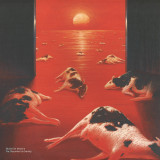
MICHIEL DE MALSCHE - THE DISCOMFORT OF EVENING LP

The Discomfort Of Evening is the incredible and original soundtrack by prolific Belgian composer Michiel de Malsche to 2020 International Booker Prize winner The Discomfort of Evening by Marieke Lucas Rijneveld. Visceral and virtuosic, Rijneveld's novel follows Jas, a girl growing up in a devout Christian family that runs a Dutch dairy farm, whose brother dies in an accident after she wishes he would die instead of her rabbit. Lost in grief, her family falls apart as she becomes consumed by increasingly dangerous fantasies.

Michiel de Malsche has captured the atmosphere and spirit of Rijneveld's book perfectly, moving through moments of confrontation and introspection, sinking into spirals of despair, stasis and subtle hope and change. Brooding ambient basslines, driven by droning murmurs, are offset with melismatic electro-acoustic pieces that embody the novel's haunting and dissonant world, whilst also incorporating manipulated field recordings such as animal sounds and a church service, allowing for a full manifestation of Jas’s world in a completely new way.

De Malsche achieves this by rallying an unusual combination of acoustic instruments (16 in total) played by top-of-their-field musicians, creating a truly unique sound world and tonal palette, including an Ondes Martenot, a 7-stringed Chinese instrument called a guqin, a marimba, a string 6-tet, a toy piano and a bass flute.

De Malsche always confronts all emotional levels of his source material head-on, making his soundtrack into much more than just a fever dream. It is a precise description of, and accompaniment to, a devastatingly impactful book.
Michiel De Malsche is a Belgian composer, multi-instrumentalist and sound designer. He studied classical composition at the conservatories of Rotterdam and Ghent. His music has been performed all over the world and he has composed and produced dozens of soundtracks for contemporary dance, theatre, movies and documentaries.

Besides his work as a contemporary classical composer, he is active as a studio musician and producer in the world of electronic music.

No en stock

Haga su pedido ahora y le encargaremos el artículo en nuestro proveedor.

16,77

Ültimo hace: 3 Años
What Are People For? - What Are People For?

What Are People For? make the perfect kind of dystopic dance music for our times. Born from a collaboration between artist Anna McCarthy and musician/producer Manuela Rzytki, the band could be the illicit lovechild of Tom Tom Club and Throbbing Gristle, displaying the ideal balance of hip shaking vibes and dark provocative content.

On their collaborative debut, McCarthy and Rzytki share songwriting duties. The album was produced by Rzytki herself. They are joined by Paulina Nolte on backing vocals and Tom Wu on drums, while Keith Tenniswood mastered the record.

The whole project stems from a publication and exhibition by McCarthy laying the foundations for the content and lyrics of the album, which is humorous, poetic and political. As a lyricist, McCarthy uses her storytelling ability to explore anxieties and desires, digging into free surreal word associations reminiscent of Su Tissues’ tongue in cheek experiments with Suburban Lawns, but also explosive and gripping like a Kae Tempest rap.
Rzytki’s precise sonic palette and talent at penning structured bangers perfectly complement McCarthy’s playful and subversive language manipulations. Rzytki's beats are rooted in old school Hiphop loop principles and an authentic love for the analog. Her use of an array of synthesizers and other "real" instruments adds to WAPF's depth, soul and sincerity.

The album opens with a joyful anthem, full of energy and melodic hooks. The audience is confronted with the quintessential titular question What Are People For? and told that they are just a mere disposable commodity. Throughout the album, lyrical themes revolve around underground aspects of society, violence, political ideologies, sexuality and mysticism. The content is deep but the album is as danceable as it is biting.

73, with its drum machine hysteria and hypnotic synth basses is a a text collage written on the 73 bus through London, consisting of situations and conversation snippets encountered along the way. Drones indulges in the narrator’s paranoia as they feel they are being watched by cigarette machines, whilst the haunting choir is half spoken, half sung, ending on the orgasmic chanting of the word “mummy”. Nursery Rhyme brings more soothing incantations. There is definitely an affinity for fairytales, albeit adult ones and especially the anarchistic ones such as The Moomins, who were a consistent influence on the band. The artwork for the record, created by McCarthy, is a beautiful children's book-style painting of the group in a forest, seemingly about to engage in a magical encounter to which we are invited.

WAPF? have absorbed and digested a variety of influences. Trip hop, Punk and Techno are rubbing shoulders on Party Time. 1977 was coined “Summer of Hate” in the UK and unsurprisingly in WAPF?’s Summer of War, ethereal singing alternates with a powerful marching Garage/Grime chorus reminiscent of street protests and UK culture.

Mz. Lazy starts like an invitation to meditation and references Gertrude Stein’s book Ida in which she develops the idea that publicity is a new religion and people are now famous for being famous. Repressed anger explodes into violence and freedom at the end of the song as our heroine eventually grabs an axe to destroy her oppressors.
Fantasize, on its part, is raw, sexual and liberating while the closing track Bring Back the Dirt is a welcome hymn into a world that is becoming more and more sanitised.

While exploring deep subject matters throughout their album, WAPF? manage to remain satirical, exciting and funny. Each and everyone of their songs have a cathartic quality.

The visual identity of the band is intrinsic to their appeal. Live, they are eccentric, wild and unapologetic, wearing see-through costumes, bright miniskirts and intricate headpieces while delivering their songs with sharp intensity. Their performances radiate queer sexiness and transcend B52's thrift store aesthetics, creating a space for collective dreaming.

WAPF? is a rare combination of contemporary punk energy, irresistible groove, absurdist dry humour and astounding depth of field. They have the mighty power to create a party with their music and soon you will find yourself lifting your arms as if controlled by an external force, to chant: WAPF? WAPF? WAPF?

– Marie Merlet (Malphino, Little Trouble Girls, London)

Reservar21.10.2022

debe ser publicado en 21.10.2022

18,45
Peter Maffay - Tabaluga - Die Welt ist wunderbar 2x12"

Doppel-LP, Coloured Vinyl in Tabaluga Grün. Gatefold."Wir schauen auf dieselbe Sonne und auf denselben Mond. Wir teilen uns dieselbe Erde, sind alle im selben Boot".So lauten die beiden ersten beiden Zeilen des Refrains von "Königreich der Liebe", der ersten Single aus dem neuen Drachenabenteueralbum "Tabaluga - Die Welt ist wunderbar". Zu mitreißend-anschwellendem, vielleicht ein bisschen an Elton Johns Hymne "Circle Of Life" erinnerndem Piano-Pop zeichnen Peter Maffay und seine Duett-Partnerin Stefanie Heinzmann (die hier ausnahmsweise auf Deutsch singt) in der kraftvollen Ballade das Bild von einer besseren Welt. "Es geht nicht um Farbe deiner Haut oder um das, woran du glaubst", heißt es in dem Lied weiter, und dann: "Komm, wir bauen ein Königreich mit Liebe auf dem Thron." Mit einer stärkeren Botschaft - und einem stärkeren Song - könnten die Feierlichkeiten zum vierzigsten Geburtstag des kleinen grünen Drachen kaum eingeläutet werden. 1983 erfand Peter Maffay die kindgerecht-kluge, wenngleich etwas stoffelige Figur zusammen mit Gregor Rottschalk, Rolf Zukowski und Helme Heine. Seither hat die liebenswerte Märchengestalt auf sechs Alben, mit zahlreichen Tourneen, einem Musical, einer Zeichentrickserie und einem Kinofilm immer wieder neue Generationen von Kindern und Eltern in Entzückung versetzt, aber auch zum Nachdenken gebracht.Denn Tabaluga steht für Unterhaltung mit einer klaren, positiven Botschaft. Auf dem neuen Album, so viel sei verraten, wird der ewige Drachenjunge zusammen mit seinen Freunden und der geballten Power der regenerativen Energien gegen die Klimakatastrophe antreten. Maßgeblich verstärkt wird Tabalugas Team erstmals von Lucy, einem schlauen, gemeinsam mit dem langjährigen Partner Volkswagen, entwickelten Glühwürmchen-Charakter. Tabaluga ist also definitiv so politisch relevant wie nie, und das, unterstreicht sein Mitschöpfer, sei auch dringend geboten. "Natürlich erzählen wir eine utopisch anmutende Geschichte", sagt Peter Maffay. "Aber zu dieser Utopie sehe ich keine Alternative. Wenn wir nicht mehr an die Zukunft glauben, dann geben wir uns selbst - und unsere Kinder - auf. Wir waren noch nie so gefordert, den Zusammenhalt zu stärken, wie jetzt".Für Peter Maffay (72) krönt das neue Tabaluga-Werk ein ereignisreiches Jahr. Am 18. August ist er erstmals im TV als neuer Juror bei "The Voice of Germany" zu sehen, und einen Tag zuvor startet - mit zwei Jahren Verspätung - endlich seine große Hallentournee.

No en stock

Haga su pedido ahora y le encargaremos el artículo en nuestro proveedor.

33,57

Ültimo hace: 3 Años
Lee Tracy & Isaac Manning - Is it What You Want

As the sun sets on a quaint East Nashville house, a young man bares a piece of his soul. Facing the camera, sporting a silky suit jacket/shirt/slacks/fingerless gloves ensemble that announces "singer" before he's even opened his mouth, Lee Tracy Johnson settles onto his stage, the front yard. He sways to the dirge-like drum machine pulse of a synth-soaked slow jam, extends his arms as if gaining his balance, and croons in affecting, fragile earnest, "I need your love… oh baby…"

Dogs in the yard next door begin barking. A mysterious cardboard robot figure, beamed in from galaxies unknown and affixed to a tree, is less vocal. Lee doesn't acknowledge either's presence. He's busy feeling it, arms and hands gesticulating. His voice rises in falsetto over the now-quiet dogs, over the ambient noise from the street that seeps into the handheld camcorder's microphone, over the recording of his own voice played back from a boombox off-camera. After six minutes the single, continuous shot ends. In this intimate creative universe there are no re-takes. There are many more music videos to shoot, and as Lee later puts it, "The first time you do it is actually the best. Because you can never get that again. You expressing yourself from within."

"I Need Your Love" dates from a lost heyday. From some time in the '80s or early '90s, when Lee Tracy (as he was known in performance) and his music partner/producer/manager Isaac Manning committed hours upon hours of their sonic and visual ideas to tape. Embracing drum machines and synthesizers – electronics that made their personal futurism palpable – they recorded exclusively at home, live in a room into a simple cassette deck. Soul, funk, electro and new wave informed their songs, yet Lee and Isaac eschewed the confinement of conventional categories and genres, preferring to let experimentation guide them.

"Anytime somebody put out a new record they had the same instruments or the same sound," explains Isaac. "So I basically wanted to find something that's really gonna stand out away from all of the rest of 'em." Their ethos meant that every idea they came up with was at least worth trying: echoed out half-rapped exhortations over frantic techno-style beats, gospel synth soul, modal electro-funk, oddball pop reinterpretations, emo AOR balladry, nods to Prince and the Fat Boys, or arrangements that might collapse mid-song into a mess of arcade game-ish blips before rallying to reach the finish line. All of it conjoined by consistent tape hiss, and most vitally, Lee's chameleonic voice, which managed to wildly shape shift and still evoke something sincere – whether toggling between falsetto and tenor exalting Jesus's return, or punctuating a melismatic romantic adlib with a succinct, "We all know how it feels to be alone."

"People think we went to a studio," says Isaac derisively. "We never went to no studio. We didn't have the money to go to no studio! We did this stuff at home. I shot videos in my front yard with whatever we could to get things together." Sometimes Isaac would just put on an instrumental record, be it "Planet Rock" or "Don't Cry For Me Argentina" (from Evita), press "record," and let Lee improvise over it, yielding peculiar love songs, would-be patriotic anthems, or Elvis Presley or Marilyn Monroe tributes. Technical limitations and a lack of professional polish never dissuaded them. They believed they were onto something.

"That struggle," Isaac says, "made that sound sound good to me."

In the parlance of modern music criticism Lee and Isaac's dizzying DIY efforts would inevitably be described as "outsider." But "outsider" carries the burden of untold additional layers of meaning if you're Black and from the South, creating on a budget, and trying to get someone, anyone within the country music capital of the world to take your vision seriously. "What category should we put it in?" Isaac asks rhetorically. "I don't know. All I know is feeling. I ain't gonna name it nothing. It's music. If it grabs your soul and touch your heart that's what it basically is supposed to do."

=

Born in 1963, the baby boy of nine siblings, Lee Tracy spent his earliest years living amidst the shotgun houses on Nashville's south side. "We was poor, man!" he says, recalling the outhouse his family used for a bathroom and the blocks of ice they kept in the kitchen to chill perishables. "But I actually don't think I really realized I was in poverty until I got grown and started thinking about it." Lee's mom worked at the Holiday Inn; his dad did whatever he had to do, from selling fruit from a horse drawn cart to bootlegging. "We didn't have much," Lee continues, "but my mother and my father got us the things we needed, the clothes on our back." By the end of the decade with the city's urban renewal programs razing entire neighborhoods to accommodate construction of the Interstate, the family moved to Edgehill Projects. Lee remembers music and art as a constant source of inspiration for he and his brothers and sisters – especially after seeing the Jackson 5 perform on Ed Sullivan. "As a small child I just knew that was what I wanted to do."

His older brother Don began musically mentoring him, introducing Lee to a variety of instruments and sounds. "He would never play one particular type of music, like R&B," says Lee. "I was surrounded by jazz, hard rock and roll, easy listening, gospel, reggae, country music; I mean I was a sponge absorbing all of that." Lee taught himself to play drums by beating on cardboard boxes, gaining a rep around the way for his timekeeping, and his singing voice. Emulating his favorites, Earth Wind & Fire and Cameo, he formed groups with other kids with era-evocative band names like Concept and TNT Connection, and emerged as the leader of disciplined rehearsals. "I made them practice," says Lee. "We practiced and practiced and practiced. Because I wanted that perfection." By high school the most accomplished of these bands would take top prize in a prominent local talent show. It was a big moment for Lee, and he felt ready to take things to the next level. But his band-mates had other ideas.

"I don't know what happened," he says, still miffed at the memory. "It must have blew they mind after we won and people started showing notice, because it's like everybody quit! I was like, where the hell did everybody go?" Lee had always made a point of interrogating prospective musicians about their intentions before joining his groups: were they really serious or just looking for a way to pick up girls? Now he understood even more the importance of finding a collaborator just as committed to the music as he was.

=

Isaac Manning had spent much of his life immersed in music and the arts – singing in the church choir with his family on Nashville's north side, writing, painting, dancing, and working various gigs within the entertainment industry. After serving in the armed forces, in the early '70s he ran The Teenage Place, a music and performance venue that catered to the local youth. But he was forced out of town when word of one of his recreational routines created a stir beyond the safe haven of his bohemian circles.

"I was growing marijuana," Isaac explains. "It wasn't no business, I was smoking it myself… I would put marijuana in scrambled eggs, cornbread and stuff." His weed use originated as a form of self-medication to combat severe tooth pain. But when he began sharing it with some of the other young people he hung out with, some of who just so happened to be the kids of Nashville politicians, the cops came calling. "When I got busted," he remembers, "they were talking about how they were gonna get rid of me because they didn't want me saying nothing about they children because of the politics and stuff. So I got my family, took two raggedy cars, and left Nashville and went to Vegas."

Out in the desert, Isaac happened to meet Chubby Checker of "The Twist" fame while the singer was gigging at The Flamingo. Impressed by Isaac's zeal, Checker invited him to go on the road with him as his tour manager/roadie/valet. The experience gave Isaac a window into a part of the entertainment world he'd never encountered – a glimpse of what a true pop act's audience looked like. "Chubby Checker, none of his shows were played for Black folks," he remembers. "All his gigs were done at high-class white people areas." Returning home after a few years with Chubby, Isaac was properly motivated to make it in Music City. He began writing songs and scouting around Nashville for local talent anywhere he could find it with an expressed goal: "Find someone who can deliver your songs the way you want 'em delivered and make people feel what you want them to feel."

One day while walking through Edgehill Projects Isaac heard someone playing the drums in a way that made him stop and take notice. "The music was so tight, just the drums made me feel like, oh I'm-a find this person," he recalls. "So I circled through the projects until I found who it was.

"That's how I met him – Lee Tracy. When I found him and he started singing and stuff, I said, ohhh, this is somebody different."

=

Theirs was a true complementary partnership: young Lee possessed the raw talent, the older Isaac the belief. "He's really the only one besides my brother and my family that really seen the potential in me," says Lee. "He made me see that I could do it."

Isaac long being a night owl, his house also made for a fertile collaborative environment – a space where there always seemed to be a new piece of his visual art on display: paintings, illustrations, and dolls and figures (including an enigmatic cardboard robot). Lee and Issac would hang out together and talk, listen to music, conjure ideas, and smoke the herb Isaac had resumed growing in his yard. "It got to where I could trust him, he could trust me," Isaac says of their bond. They also worked together for hours on drawings, spreading larges rolls of paper on the walls and sketching faces with abstract patterns and imagery: alien-like beings, tri-horned horse heads, inverted Janus-like characters where one visage blurred into the other.

Soon it became apparent that they didn't need other collaborators; self-sufficiency was the natural way forward. At Isaac's behest Lee, already fed up with dealing with band musicians, began playing around with a poly-sonic Yamaha keyboard at the local music store. "It had everything on it – trumpet, bass, drums, organ," remembers Lee. "And that's when I started recording my own stuff."

The technology afforded Lee the flexibility and independence he craved, setting him on a path other bedroom musicians and producers around the world were simultaneously following through the '80s into the early '90s. Saving up money from day jobs, he eventually supplemented the Yamaha Isaac had gotten him with Roland and Casio drum machines and a Moog. Lee was living in an apartment in Hillside at that point caring for his dad, who'd been partially paralyzed since early in life. In the evenings up in his second floor room, the music put him in a zone where he could tune out everything and lose himself in his ideas.

"Oh I loved it," he recalls. "I would really experiment with the instruments and use a lot of different sound effects. I was looking for something nobody else had. I wanted something totally different. And once I found the sound I was looking for, I would just smoke me a good joint and just let it go, hit the record button." More potent a creative stimulant than even Isaac's weed was the holistic flow and spontaneity of recording. Between sessions at Isaac's place and Lee's apartment, their volume of output quickly ballooned.

"We was always recording," says Lee. "That's why we have so much music. Even when I went to Isaac's and we start creating, I get home, my mind is racing, I gotta start creating, creating, creating. I remember there were times when I took a 90-minute tape from front to back and just filled it up."

"We never practiced," says Isaac. "See, that was just so odd about the whole thing. I could relate to him, and tell him about the songs I had ideas for and everything and stuff. And then he would bring it back or whatever, and we'd get together and put it down." Once the taskmaster hell bent on rehearsing, Lee had flipped a full 180. Perfection was no longer an aspiration, but the enemy of inspiration.

"I seen where practicing and practicing got me," says Lee. "A lot of musicians you get to playing and they gotta stop, they have to analyze the music. But while you analyzing you losing a lot of the greatness of what you creating. Stop analyzing what you play, just play! And it'll all take shape."

=

"I hope you understood the beginning of the record because this was invented from a dream I had today… (You tell me, I'll tell you, we'll figure it out together)" – Lee Tracy and Isaac Manning, "Hope You Understand"

Lee lets loose a maniacal cackle when he acknowledges that the material that he and Isaac recorded was by anyone's estimation pretty out there. It's the same laugh that commences "Hope You Understand" – a chaotic transmission that encapsulates the duality at the heart of their music: a stated desire to reach people and a compulsion to go as leftfield as they saw fit.

"We just did it," says Lee. "We cut the music on and cut loose. I don't sit around and write. I do it by listening, get a feeling, play the music, and the lyrics and stuff just come out of me."

The approach proved adaptable to interpreting other artists' material. While recording a cover of Whitney Houston's pop ballad "Saving All My Love For You," Lee played Whitney's version in his headphones as he laid down his own vocals – partially following the lyrics, partially using them as a departure point. The end result is barely recognizable compared with the original, Lee and Isaac having switched up the time signature and reinvented the melody along the way towards morphing a slick mainstream radio standard into something that sounds solely their own.

"I really used that song to get me started," says Lee. "Then I said, well I need something else, something is missing. Something just came over me. That's when I came up with 'Is It What You Want.'"

The song would become the centerpiece of Lee and Isaac's repertoire. Pushed along by a percolating metronomic Rhythm King style beat somewhere between a military march and a samba, "Is It What You Want" finds Lee pleading the sincerity of his commitment to a potential love interest embellished by vocal tics and hiccups subtlely reminiscent of his childhood hero MJ. Absent chord changes, only synth riffs gliding in and out like apparitions, the song achieves a lingering lo-fi power that leaves you feeling like it's still playing, somewhere, even after the fade out.

"I don't know, it's like a real spiritual song," Lee reflects. "But it's not just spiritual. To me the more I listen to it it's like about everything that you do in your everyday life, period. Is it what you want? Do you want a car or you don't want a car? Do you want Jesus or do you want the Devil? It's basically asking you the question. Can't nobody answer the question but you yourself."

In 1989 Lee won a lawsuit stemming from injuries sustained from a fight he'd gotten into. He took part of the settlement money and with Isaac pressed up "Saving All My Love For You" b/w "Is It What You Want" as a 45 single. Isaac christened the label One Chance Records. "Because that's all we wanted," he says with a laugh, "one chance."

Isaac sent the record out to radio stations and major labels, hoping for it to make enough noise to get picked up nationally. But the response he and Lee were hoping for never materialized. According to Isaac the closest the single got to getting played on the radio is when a disk jock from a local station made a highly unusual announcement on air: "The dude said on the radio, 107.5 – 'We are not gonna play 'Is It What You Want.' We cracked up! Wow, that's deep.

"It was a whole racist thing that was going on," he reflects. "So we just looked over and kept on going. That was it. That was about the way it goes… If you were Black and you were living in Nashville and stuff, that's the way you got treated." Isaac already knew as much from all the times he'd brought he and Lee's tapes (even their cache of country music tunes) over to Music Row to try to drum up interest to no avail.

"Isaac, he really worked his ass off," says Lee. "He probably been to every record place down on Music Row." Nashville's famed recording and music business corridor wasn't but a few blocks from where Lee grew up. Close enough, he remembers, for him to ride his bike along its back alleys and stumble upon the occasional random treasure, like a discarded box of harmonicas. Getting in through the front door, however, still felt a world away.

"I just don't think at the time our music fell into a category for them," he concedes. "It was before its time."

=

Lee stopped making music some time in the latter part of the '90s, around the time his mom passed away and life became increasingly tough to manage. "When my mother died I had a nervous breakdown," he says, "So I shut down for a long time. I was in such a sadness frame of mind. That's why nobody seen me. I had just disappeared off the map." He fell out of touch with Isaac, and in an indication of just how bad things had gotten for him, lost track of all the recordings they'd made together. Music became a distant memory.

Fortunately, Isaac kept the faith. In a self-published collection of his poetry – paeans to some of his favorite entertainment and public figures entitled Friends and Dick Clark – he'd written that he believed "music has a life of its own." But his prescience and presence of mind were truly manifested in the fact that he kept an archive of he and Lee's work. As perfectly imperfect as "Is It What You Want" now sounds in a post-Personal Space world, Lee and Isaac's lone official release was in fact just a taste. The bulk of the Is It What You Want album is culled from the pair's essentially unheard home recordings – complete songs, half-realized experiments, Isaac's blue monologues and pronouncements et al – compiled, mixed and programmed in the loose and impulsive creative spirit of their regular get-togethers from decades ago. The rest of us, it seems, may have finally caught up to them.

On the prospect of at long last reaching a wider audience, Isaac says simply, "I been trying for a long time, it feels good." Ever the survivor, he adds, "The only way I know how to make it to the top is to keep climbing. If one leg break on the ladder, hey, you gotta fix it and keep on going… That's where I be at. I'll kill death to make it out there."

For Lee it all feels akin to a personal resurrection: "It's like I was in a tomb and the tomb was opened and I'm back… Man, it feels so great. I feel like I'm gonna jump out of my skin." Success at this stage of his life, he realizes, probably means something different than what it did back when he was singing and dancing in Isaac's front yard. "What I really mean by 'making it,'" he explains isn't just the music being heard but, "the story being told."

Occasionally Lee will pull up "Is It What You Want" on YouTube on his phone, put on his headphones, and listen. He remembers the first time he heard his recorded voice. How surreal it was, how he thought to himself, "Is that really me?" What would he say to that younger version of himself now?

"I would probably tell myself, hang in there, don't give up. Keep striving for the goal. And everything will work out."

Despite what's printed on the record label, sometimes you do get more than one chance.

No en stock

Haga su pedido ahora y le encargaremos el artículo en nuestro proveedor.

11,72

Ültimo hace: 3 Años
KUHN FU - JAZZ IS EXPENSIVE LP (2x12")

Am besten immer schön zwischen alle Stühle setzen, das ergibt - nicht zwangsläufig, aber oft - die interessantere Musik. Und im Falle von Kuhn Fu definitiv die lustigere. Seit 2012 hat die Band um den Gitarristen Christian Kühn eine singuläre und sehr eigensinnige Form von Jazzrock (oder Rockjazz) entwickelt, zwischen Parodie und einer großen Ernsthaftigkeit, mit der sie gegen musikalische Scheuklappen anspielt. Kühns mit John Dikeman (Saxofon), Tobias Delius (Saxofon, Klarinette), Ziv Taubenfeld Bassklarinette), Sofia Salvo (Saxofon), Esat Ekincioglu (Bass) und George Hadow (Drums) international besetztes Ensemble spielt die vor Melodien und kompositorischen Ideen überbordenden Stücke, als ginge es ums Ganze. Die Komik, die in der Musik Kuhn Fus immer präsent ist, nimmt ihr nichts von ihrer Intensität. "Ich liebe tonale Musik", erzählt Christian Kühn. "Tonal gespielt und dann überspitzt, darum geht es, deswegen klingt es immer wieder mal parodistisch." Parodie - aber auch Klamauk. Auf Jazz Is Expensive erzählt Kühn das Märchen "Vom Fischer und seiner Frau" noch einmal neu und anders. Der Vortrag Kühns trägt sein Übriges bei: Mit forciertem deutschem Akzent wird auf Englisch die Geschichte zu einem modernen Märchen umgeformt. Hauptfigur ist der Fischer Marcel De Champignon, ein Hornspieler, der auf der Suche nach der perfekten Melodie ist - "the melody that makes millions". Diesen Wunsch soll ihm der Fisch erfüllen, "Bruno the Architect" der Name.

Reservar14.10.2022

debe ser publicado en 14.10.2022

36,77
Artículos por página
N/ABPM
Vinyl