
In Stock
On Stock and ready to ship
6,68 €
On Stock and ready to ship

On Stock and ready to ship
This item has not yet been released. You can pre-order the product now.

Strong and soulful contribution to the enduring legacy of Detroit’s underground sound. With Lyfe On The Dance Floor, Detroit’s own mystical 207737 delivers a deeply authentic statement rooted in the unmistakable spirit of Detroit House. Raw, soulful and effortlessly timeless, this release reflects the kind of musical identity that can only come from a city where machine rhythm and human emotion have always moved as one.
Order now and we will order the item for you at our supplier.
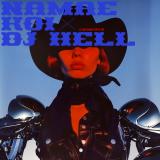
Namae Koi - AAVA (Artificial Audio-Visual Artist), voice without a body, child of cinema and code - meets DJ Hell, godfather of electroclash, myth in motion.
This record is a split mirror:
Two originals by Koi.
Two reworks by Hell.
Four versions of desire, memory, and beat.
"U Can Dance With Me" is a digital western - a flirt in boots and chrome. A line pulled from a movie that never existed.
"Mars" travels forward by looking back - retro-futurist pulses, melancholic satellites, soft resistance.
DJ Hell bends both tracks into something darker, sweatier, more physical.
Koi stays crystalline. Watching. Whispering. Undressing the beat.
A future duet with no fixed timeline.
Order now and we will order the item for you at our supplier.

'The Endless Dance' is the first collaborative album from Northern Irish producer and composer Hannah Peel and Chinese percussionist Beibei Wang. The record is grounded in the strength of ancient concepts, but comes alive with the joy and freedom of play as together, Peel and Wang travel through the 24 solar terms of the Chinese calendar with a cornucopia of sound in tow – synths and prepared piano alongside traditional and unconventional percussion.
The album is collaged together from recordings made over five days at legendary rural studio Real World, a setting which aligned with the duo’s inspiration from the natural world creating a permanent record of their shared musical landscape, informed by the flora and fauna that emerge and retreat through the seasons.
Both genre-defying, storied artists in their own right, Peel and Wang met while working on Manchester Collective’s 2023 album NEON and 'The Endless Dance' certainly represents a step-change from the duo’s shared classical backgrounds – but their knowledge and training is also the foundation of its freewheeling audacity, giving them the confidence to trust their instincts.
The album is produced by Mike Lindsay LUMP, Tunng, Guy Garvey, Jon Hopkins who, with free rein, brings added energy and creativity to the album, whilst Peel & Wang are also joined by Hyelim Kim on Daegeum, a Korean flute with “colourful overtones on every note”.
Track to track, 'The Endless Dance' is unpredictable and unexpected, which is in part due to the genuine curiosity and outside perspectives that each player brought to the sessions. “I am so familiar with Chinese heritage, but I don't see how it can present in electronics, for instance,” says Wang. “Hannah comes in with that direction, to imagine what the sounds could be together.” The characterful richness of the album stems from the commonalities they found in the sessions. “We both come from cultures where story is really important,” explains Peel. “The attention to detail comes from telling a story, and one note can set that off in a different direction.”
'The Endless Dance' is a major work from two accomplished, singular artists - but it’s also the sound of mutual curiosity and shared fun, or as Wang puts it: “Two women talking in totally different language that had a wonderful chat.”
expected to be published on 22.05.2026

During the 1950s, Tito Puente was at the height of his popularity and helped to bring Afro-Cuban and Caribbean sounds, like mambo, son, and chacha-cha, to mainstream audiences. Dance Mania, probably his most celebrated album, features the great Ray Barretto on congas. It was added to the National Recording Registry in 2002 and is listed among the "1001 Albums You Must Hear Before You Die". Includes the bonus tracks 'Oye Como Va', 'Mambo Gil' and 'Cha-Cha-Gua'.
expected to be published on 22.05.2026
We are back again for 2026 with more repress action - and this time we have Hellrazor 2 for you - an alias of DJ Sphinx. Released on a handstamped white label back in 1993, this EP contains 3 hardcore bangers plus a mad acid track too. A very collectable and rare EP.
Order now and we will order the item for you at our supplier.
Order now and we will order the item for you at our supplier.

The Naked Dance is MATISA's record label.
A platform built around the artists she believes in. Vinyl first. No shortcuts.
The label launches with four original tracks by MATISA - an opening statement that sets the tone for everything to come. Uncompromising, exploratory, and entirely her own.At its heart, The Naked Dance stands for freedom, stripping back expectation and letting music exist on its own terms. A home for singular voices and honest artistry.
Distributed by KMA60, connecting to a worldwide network of record shops, DJs, and listeners who still care deeply about how music reaches them.
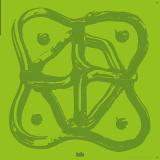
Label Boss TSVI is back with a brand new release on Nervous Horizon: Dance Tripping EP! Inspired by his early years in London, where he spent countless nights at minimal and tech house raves, the EP draws elements from these styles through stripped back productions and groove driven basslines. Moving away from TSVI’s signature percussion focused sound, the record prioritises a more sound design approach, exploring texture, movement and club functionality.
The EP opens with Music is Moving, a high energy festival weapon built around a groovy bassline and a UK garage leaning swing. A sharp, restless lead drives the track forward before exploding into a euphoric climax of phased and distorted sawtooth waves. Next comes The Wasp Track, combining pitched down leads with a rolling tech house groove, built for peak time tension and release. The title track Dance Tripping sees TSVI at his most stripped back, featuring loopy analog textures and hypnotic rhythmic elements that focus on repetition. The last two tracks Kataklisma and Turbo Motion create a literal sonic apocalypse by pounding the club with heavy reeses and mean beats.
TSVI Dance Tripping EP is the ultimate club weapon for 2026!
Order now and we will order the item for you at our supplier.

repress !
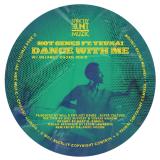
Afterlife family member Kevin de Vries invites us to Dance With Me as he returns to the label with his spellbinding new single.
Comprised undulating synth waves, punchy beats and a monotone female vocal, ‘Dance With Me’ is a compelling invitation into the enchanting realm of the dance floor. Alluring, progressive and hypnotic, its power lies in its simplicity. Kölsch handles remix duties, adding layers of funky analogue synth and ramping up the tempo for a more energised dance.
Order now and we will order the item for you at our supplier.
Order now and we will order the item for you at our supplier.

Vol.2[27,52 €]
Straight from an alternative dancefloor, a recollection of stone cold classics from huge & influential post-punk pioneers. They called it white funk once, but here you can even catch echoes of latin, dub and club influences, a mutant disco manifesto from a series of British champions such as Medium Medium, Jah Wobble, Animal Magic, Blue Rondo' A La Turk, Nightmares In Wax, Tappa Zukie and many more.
Tracklist Side A:
Blue Rondo A La Turk - Sarava
Medium Medium - Serbian Village
Jah Wobble - Invaders Of The Heart (Mix One)
Perfect Zebras - What Dance Is This?
Splat! - Yeah... The Dum Du
Tracklist Side B:
Dancing Did - Ballad Of The Dying Sigh
Animal Magic - Get It Right
Nightmares In Wax - Black Leather
Tappa Zukie – Freak
Order now and we will order the item for you at our supplier.
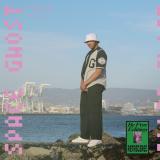
Space Ghost returns with Dance Planet – Be Free Edition, a remastered, recut and expanded edition of his beloved 2022 album. Featuring refreshed artwork, newly remastered audio, and a brand-new digital remix package from not even noticed, RAMZi, Crystalline Reality, and Space Ghost himself, this is the definitive version of a modern house classic.
Rooted in uplifting, soulful 4/4 traditions inspired by forebears like Larry Heard and Blaze, Dance Planet flows effortlessly between ambient reflection and warm, driving club cuts. The remaster brings added depth and clarity — from the lush swells of “Afterglow” and the tripped-out breaks of “Dream Weaver” to the R&B-tinged groove of “UFO. ” Dancefloor staples like “Back To The Source” and “Soul Shower” retain their warmth and punch, while “Emotional Healer” and “Be Yourself (Motivational Mix)” continue to deliver Space Ghost’s signature affirmation: don’t be afraid to be yourself, don’t be afraid to let go.
Pressed on 140g black vinyl with new artwork and including a download code for the full extended album + remixes. A timeless, feel-good house LP — restored and expanded for collectors and selectors alike
Order now and we will order the item for you at our supplier.

Order now and we will order the item for you at our supplier.

expected to be published on 24.04.2026

7 Inch Orange Dinked Vinyl in Label Branded Sleeve
Originally issued on Paul Winley Records in 1973, “Smokin' Cheeba-Cheeba”—with Ann Winley on vocals—became a cornerstone of the 1980s UK Rare Groove scene, earning cult-classic status among collectors and DJs alike. On the flip, “Dance Girl”—also released under the Rimshots name—serves up one of the era’s most revered up-tempo breaks. Its unmistakable groove has been sampled by The Roots, Large Professor, and many others, cementing its place in hip-hop production history. The creative nucleus behind both The Mighty Tom Cats and The Rimshots would later evolve into the legendary Fatback Band, adding another layer of pedigree to this essential pairing. With original copies fetching high prices on Discogs, this special-edition Orange vinyl Dinked 7-inch, housed in a branded Paul Winley Records sleeve for Record Store Day, offers a rare chance to own two deep-cut funk/soul essentials on one collectible release.
Order now and we will order the item for you at our supplier.

Vol.1[27,52 €]
Straight from an alternative dancefloor, a recollection of stone cold classics from huge & influential post-punk pioneers. They called it white funk once, but here you can even catch echoes of latin, dub and club influences, a mutant disco manifesto from a series of British champions such as Normil Hawaiians, Glaxo Babies, Playgroup, C Cat Trance, Suns of Arqa & Prince Far I and many more.
Tracklist Side A:
Normil Hawaiians - Obedience
Vee VV - Keep Beat
Spit Like A Paint - For The Life Of Me
Group Therapy - Arty-Fact
C Cat Trance - Hypnotised
Tracklist Side B:
The Chicken Granny - Quit The Body
Machine Gunn Hogg And Co - Bed Bound Saga
Playgroup - Hoggs Might Fly
Glaxo Babies - Shake (The Foundations)
Suns of Arqa feat. Prince Far I - G.D. Magik
expected to be published on 18.04.2026
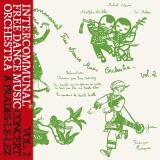
Concert at Prades-le-Lez marks the origins of the Intercommunal Free Dance Music Orchestra. In 1974, François Tusques and his companions (Michel Marre, Jo Maka, Adolf Winkler and Guem), in the spirit of Don Cherry or Chris McGregor, playfully dismantle all borders and all styles of creative music.
On this second volume, the Intercommunal builds unprecedented soundscapes around a song of revolt, a dance tune, or a burst of dissonance. The journey is unforgettable, no question about it. On repeat listening, it even becomes… lunar!
“The music that we make is primarily meant to be listened to live,” warned a leaflet from the Intercommunal Free Dance Music Orchestra. This is precisely why the (restored!) reissue of the two volumes of Concert at Prades-le-Lez, recorded on January 25 and 26, 1974 by François Tusques and his comrades, is such an important event.
In 1971, after recording a series of albums that would leave a lasting mark on French jazz (Free Jazz, of course, with Michel Portal, François Jeanneau, Bernard Vitet, Beb Guérin and Charles Saudrais, but also Le Nouveau Jazz with Barney Wilen, or the solo Piano Dazibao), François Tusques founded the Intercommunal—a grouping whose very name called for the fraternization of the various communities making up the country: Our music will help, we hope, to resolve the contradictions that exist between workers be longing to different communities, by breaking down various forms of national chauvinism, and more particularly the chauvinism of certain French people toward the cultures of Third World countries… Long live the friendship between the peoples of the whole world!
Among the great records made by the Intercommunal Free Dance Music Orchestra, the two volumes of Concert at Prades-le-Lez come first, before L’Inter Communal, Vol. 4, Le Musichien, and Après la marée noire (four titles already reissued by Souffle Continu). François Tusques and his companions (Michel Marre and Jo Maka on saxophones, Adolf Winkler on trombone, and Guem on percussion) performed on January 25 and 26, 1974 at the Moulin de Prades-le-Lez, a few kilometers from Montpellier. It was thus in the southern region of Occitanie that the first echoes of this musical vision of a borderless brotherhood were recorded.
“We’re not among the Colonels,” the Intercommunal reassures us right away, performing a stride piano tune carried by African winds that the audience cannot resist for long. The energy is already striking and it never lets up throughout these two recordings, from start to finish: jazz, blues, traditional music, minimalism, even funk… The musicians of the Intercommunal have heard a lot of great music and now delight in reinventing it by mixing it all together.
“We want the song form to take its place as a weapon in the struggle against capitalist exploitation and all those who oppress us morally and materially,” declared an Intercommunal leaflet, quoting Jean-Baptiste Clément, author of the lyrics to “Le Temps des cerises.” The struggle was therefore serious—but it did not prevent François Tusques and his group from waging it in a festive spirit: each piece on Concert at Prades-le- Lez sends out a call for love and fraternity. Fifty years later, the message remains as relevant as ever—and once again, it is François Tusques who makes it heard.
expected to be published on 17.04.2026
