Artikal Sound System is a reggae band based out of South Florida. Founded by Chris Montague (guitar) and Fabian Acuna (bass) in 2012, the band honed their chops backing a series of Caribbean singers. Along the way the boys picked up the insane and absurd keys player Christopher Cope and the heavy footed drummer Adam Kampf before finally trying something a little sonically different with their neighbor, female vocalist Logan Rex. After nearly a decade of playing together the boys sound tight and powerful, creating the perfect foundation for their jazz-influenced singer to dance around on lyrically and literally. What you hear is the sound of friendship, hard work, imagination and the hope to spread their message of love and the importance of having a good time
Поиск:dance decade
Все
In the late 1980s, as techno and house made its way around Europe, mutating as it hopped from city to city, one young DJ from Curacao made a mistake that would inspire a brand new sound. While he was performing at Den Haag's Club Voltage, DJ Moortje accidentally dropped a dancehall track at 45RPM rather than 33, and let it play out. Thirsty for a hi-NRG sound, the crowd loved the squeaky vocals and rapid beat, and bubbling (or bubbling house) was born.For the next couple of decades, bubbling was a crucial part of Holland's Afro-diasporic club landscape. And as a new generation of wide-eyed young DJs and producers began to take the reins, it evolved accordingly. In the late-2000s, Den Haag-based teenage prodigy Guillermo Schuurman followed in the footsteps of his uncle DJ Chippie (one of the genre's co-founders) and cousins DJ Daycard, DJ Master-D, Stiko Jnr and DJ Justme, and began performing and writing beats. Using Fruityloops, he fused familiar bubbling rhythms with rap and R&B samples, trance synths and electro house wobbles, and his tracks quickly became a regular fixture on the Dutch circuit."Bubbling Inside" is a collection of Schuurman's most essential cuts from the era (2007-2009), with a couple of newer productions added for context. Crafted solely for the dance, most of these tracks were never properly released and have been painstakingly hunted down and collected by the Nyege Nyege Tapes together with Sascha Roth from Pantropical in Rotterdam and De Schuurman himself. Hearing them together highlights just how forward thinking the young producer was, steering a Dutch institution into the future.2008's 'First One' is a proto-Berghain belter, with booming bass-heavy kicks underpinning the kind of cheeky melodies that remain the calling card of the genre. 'Pier Je Bil!!' ratchets up the tempo, twisting bubbling's syncopated dancehall kicks into a rapid-fire club clatter and decorating them with steel-pan melodies. Elsewhere, 2019's 'Domina' shows how Schuurman's production style has developed as he mutates trap percussion, dubstep bass and eerie synth textures, while retaining the DNA of bubbling. "Bubbling Inside" is a testament to the evolution of the bubbling genre, as witnessed by one of its most visionary producers.
- A1: Progetto Tribale - The Sweep
- A2: Onirico - Echo Giomini
- A3: Open Spaces - Artist In Wonderland
- B1: Alex Neri – The Wizard (Hot Funky Version)
- B2: M C.j. Feat. Sima - To Yourself Be Free - Instrumental Mix Energy Prod
- B3: Mato Grosso - Titanic Expande
- C1: Dreamatic - I Can Feel It (Part 1)
- C2: Carol Bailey - Understand Me Free Your Mind (Dream Piano Remix)
- C3: The True Underground Sound Of Rome - Secret Doctrine
- D1: Don Carlos - Boy
- D2: Lazy Bird – Jazzy Doll (Odyssey Dub)
Vol 2[28,99 €]
Volume 1 of this expertly curated project of 90s Italian House - put together by Don Carlos.
If Paradise was half as nice… by Fabio De Luca.
Googling “paradise house”, the first results to pop up are an endless list of European b&b’s with whitewashed lime façades, all of them promising “…an unmatched travel experience a few steps from the sea”. Next, a little further down, are the institutional websites of a few select semi-luxury retirement homes (no photos shown, but lots of stock images of smiling nurses with reassuring looks). To find the “paradise house” we’re after, we have to scroll even further down. Much further down.
It feels like yesterday, and at the same time it seems like a million years ago. The Eighties had just ended, and it was still unclear what to expect from the Nineties. Mobile phones that were not the size of a briefcase and did not cost as much as a car? A frightening economic crisis? The guitar-rock revival?! Certainly, the best place to observe that moment of transition was the dancefloor. Truly epochal transformations were happening there. From America, within a short distance one from the other, two revolutionary new musical styles had arrived: the first one sounded a bit like an “on a budget” version of the best Seventies disco-music – Philly sound made with a set of piano-bar keyboards! – the other was even more sparse, futuristic and extraterrestrial. It was a music with a quite distinct “physical” component, which at the same time, to be fully grasped, seemed to call for the knotty theories of certain French post-modern philosophers: Gilles Deleuze, Félix Guattari, Paul Virilio... Both those genres – we would learn shortly after – were born in the black communities of Chicago and Detroit, although listening to those vinyl 12” (often wrapped in generic white covers, and with little indication in the label) you could not easily guess whether behind them there was a black boy from somewhere in the Usa, or a girl from Berlin, or a pale kid from a Cornish coastal town.
Quickly, similar sounds began to show up from all corners of Europe. A thousand variations of the same intuition: leaner, less lean, happier, slightly less intoxicated, more broken, slower, faster, much faster... Boom! From the dancefloors – the London ones at least, whose chronicles we eagerly read every month in the pages of The Face and i-D – came tales of a new generation of clubbers who had completely stopped “dressing up” to go dancing; of hot tempered hooligans bursting into tears and hugging everyone under the strobe lights as the notes of Strings of Life rose up through the fumes of dry ice (certain “smiling” pills were also involved, sure). At this point, however, we must move on to Switzerland.
In Switzerland, in the quiet and diligent town of Lugano, between the 1980s and 1990s there was a club called “Morandi”. Its hot night was on Wednesdays, when the audience also came from Milan, Como, Varese and Zurich. Legend goes that, one night, none less than Prince and Sheila E were spotted hiding among the sofas, on a day-off of the Italian dates of the Nude Tour… The Wednesday resident and superstar was an Italian dj with an exotic name: Don Carlos. The soundtrack he devised was a mixture of Chicago, Detroit, the most progressive R&B and certain forgotten classics of old disco music: practically, what the Paradise Garage in New York might have sounded like had it not closed in 1987. In between, Don Carlos also managed to squeeze in some tracks he had worked on in his studio on Lago Maggiore. One in particular: a track that was rather slow compared to the BPM in fashion at the time, but which was a perfect bridge between house and R&B. The title was Alone: Don Carlos would explain years later that it had to be intended both in the English meaning of “by itself” and like the Italian word meaning “halo”. That wasn’t the only double entendre about the song, anyway. Its own very deep nature was, indeed, double. On the one hand, Alone was built around an angelic keyboard pattern and a romantic piano riff that took you straight to heaven; on the other, it showcased enough electronic squelches (plus a sax part that sounded like it had been dissolved by acid rain) to pigeonhole the tune into the “junk modernity” section, aka the hallmark of all the most innovative sounds of the time: music that sounded like it was hand-crafted from the scraps of glittering overground pop.
No one knows who was the first to call it “paradise house”, nor when it happened. Alternative definitions on the same topic one happened to hear included “ambient house”, “dream house”, “Mediterranean progressive”… but of course none were as good (and alluring) as “paradise house”. What is certain is that such inclination for sounds that were in equal measure angelic and neurotic, romantic and unaffective, quickly became the trademark of the second generation of Italian house. Music that seemed shyly equidistant from all the rhythmic and electronic revolutions that had happened up to that moment (“Music perfectly adept at going nowhere slowly” as noted by English journalist Craig McLean in a legendary field report for Blah Blah Blah magazine). Music that to a inattentive ear might have sounded as anonymous as a snapshot of a random group of passers-by at 10AM in the centre of any major city, but perfectly described the (slow) awakening in the real world after the universal love binge of the so-called Second Summer of Love.
For a brief but unforgettable season, in Italy “paradise house” was the official soundtrack of interminable weekends spent inside the car, darting from one club to another, cutting the peninsula from North to centre, from East to West coast in pursuit of the latest after-hours disco, trading kilometres per hour with beats per minute: practically, a new New Year’s Eve every Friday and Saturday night. This too was no small transformation, as well as a shock for an adult Italy that was encountering for the first time – thanks to its sons and daughters – the wild side of industrial modernity. The clubbers of the so-called “fuoriorario” scene were the balls gone mad in the pinball machine most feared by newspapers, magazines and TV pundits. What they did each and every weekend, apart from going crazy to the sound of the current white labels, was linking distant geographical points and non-places (thank you Marc Augé!) – old dance halls, farmhouses and business centres – transformed for one night into house music heaven. As Marco D’Eramo wrote in his 1995 essay on Chicago, Il maiale e il grattacielo: “Four-wheeled capitalism distorts our age-old image of the city, it allows the suburbs to be connected to each other, whereas before they were connected only by the centre (…) It makes possible a metropolitan area without a metropolis, without a city centre, without downtown. The periphery is no longer a periphery of any centre, but is self-centred”.
“Paradise house” perfectly understood all of this and turned it into a sort of cyber-blues that didn’t even need words, and unexpectedly brought back a drop of melancholic (post?)-humanity within a world that by then – as we would wholly realise in the decades to come – was fully inhuman and heartless. A world where we were all alone, and surrounded by a sinister yellowish halo, like a neon at the end of its life cycle. But, for one night at least, happy.
- A1: Intro (Feel The Positive Flow)
- A2: Stand Up
- A3: Work It Out
- A4: Joy (With Ann Nesby)
- A5: Praise Break
- A6: Life (Feat. Ron Carroll)
- A7: Without Ya
- B1: Glory
- B2: High Above (Feat. Lady Blackbird)
- B3: Exceptional (Interlude)
- B4: House Is The Religion
- B5: Say You Wanna Be
- B6: Divine Stuff
- B7: Save My Soul (Feat. Amanzi)
- B8: Your Shine (With Fly Disco Butter)
Bakermat’s upcoming album, Grace Note, is a heartfelt tribute to the powerful connection between House music and Gospel. Celebrating the joy and spiritual essence of these genres, the album invites listeners to rediscover the magic of the dancefloor, where Bakermat's music has fostered moments of joy and connection for over a decade.
X-Coast unveils 9-track 2xLP The Riviera Collection on his label Riviera Records.
Hot on the heels from remixing instant dance hits such as Shygirl's '4eva' and DJ Gigola's 'La Batteria' and spotted in the studio with adored vocalists Eartheater and Miss Bashful, Serbian-born, NYC-based DJ/producer X-Coast returns with a collection of signature tracks that feel like the lost treasure chest of his dance island.
X-Coast is your favorite DJ's favorite producer, whose tracks you’ve undoubtedly danced to, whether on a massive festival stage or at an intimate, underground rave. Over the past decade, he has quietly but consistently shaped the pulse of dancefloors worldwide, with a distinctive style that traverses genres like house, techno, electro, drum and bass, and trance. This rare versatility has led X-Coast to release on the likes of Mall Grab’s Steel City Dance Discs, Diplo’s Higher Ground, Anetha’s Mama Told Ya and DJ Haus’s Unknown To The Unknown, to name a few.
What sets X-Coast apart is not just his ability to move fluidly between styles but the unique character embedded in every track. His productions have an undeniable warmth and authenticity, often evoking the raw, euphoric spirit of the 90s and 00s rave era. This nostalgic yet forward-thinking approach makes his music feel timeless, effortlessly blending old-school rave energy with modern production techniques. It's a quality that has made him a go-to for DJs across the board, whether they’re playing peak-time techno sets or deep, groovy house sessions.
On The Riviera Collection, released on his own label, Riviera Records, X-Coast opens the vault to reveal a diverse range of tracks that showcase his deep connection to multiple eras of electronic music. This collection reflects the breadth of his eclectic DJ sets, where various sounds and styles converge into a cohesive journey. Each track feels like a contemporary reimagining of a classic moment in dance music history.
From the early 2000s tribal influences layered with X-Coast’s signature chord work on ‘Neapolis,’ to the soaring, synthetic trance energy of ‘Desert Storm,’ and the infectious, camp vibe of the diva house ‘Hold Me Baby,’ the collection takes us on a nostalgic trip back to the origins of rave culture. It echoes a time when DJs crafted a journey through genres, playing everything from house to trance to techno in one seamless night.
The collection’s first hidden gems and long-awaited singles are “Da Boing Boing Trak” and "Put Your Hands Together". Both staples in his sets at iconic venues and festivals like Pitch Music & Arts, fabric, Circoloco, AVA Festival, Melt!, and Intercell, this track has been in high demand among fans, finally seeing its release. With The Riviera Collection, X-Coast continues to cement his status as a versatile producer capable of bridging the gap between past and present, while delivering music that moves crowds everywhere.
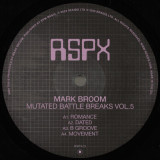
Mark Broom drops the fifth volume of ‘Mutated Battle Breaks’.
Mark Broom’s ‘Mutated Battle Breaks’ series on Radio Slave’s Rekids Special Projects dates back to 2021; since then, he’s released four volumes, with its next chapter arriving to mark the label’s first EP of 2025. Each ‘Mutated Battle Breaks’ EP consists of an extended runtime of eight tracks, supported by the likes of Robert Hood, Ben UFO, I.Jordan, Pariah, Carista, Mumdance, Lauren Flax, and many more.
Across volume 5 of ‘Mutated Battle Breaks’, Mark Broom primes eight more dancefloor-ready cuts complete with rugged grooves, punchy stabs, and wild Techno sequences. From the opener ‘Romance’ and its frenzied arrangement, through to the rolling bleep-infused ‘Ranger’, Broom once again shows his mastery of rhythm and the breath of his Techno productions - one thing is certain: he continues to be one of the most significant producers in Techno after more than three decades.
Techno, House, and rave, Mark Broom is one of UK dance music’s legends and has a myriad of production credits to his name dating back to 1989. Warp, M-Plant, Hardgroove, and his own Pure Plastic and Beardman imprints are just a handful of the labels he’s worked with, while studio collaborations with the likes of Baby Ford and James Ruskin have cemented his reputation as a storied and vital part of electronic music culture.
1/4" / 15 IPS / Dolby A Analogue Copy to DSD 256 to analogue console to lathe
Carlos Santana and Company Return to a Dynamic Blend of R&B, Latin, Funk, and Rock: Amigos Aims for the Hips, Spreads Joy, and Includes “Europa (Earth’s Cry Heaven’s Smile)” Amigos has been beloved for decades by both long-time and recent Santana admirers, with multiple generations of fans drawn in by the record’s contagious blend of R&B, Latin, rock, and funk elements. As well as its immense accessibility. Coming off a series of albums that heavily leaned into jazz fusion, the band returns to the more dynamic and concise approaches of its earlier works without losing the sense of adventurousness, craftsmanship, and virtuosity that turned it into a juggernaut embraced by both the mainstream and experimentally minded communities.
Mastered at Mobile Fidelity’s in-house studio in California, pressed at Fidelity Record Pressing, and strictly limited to 3,000 numbered copies, Mobile Fidelity’s 180g 33RPM LP of Amigos presents the 1976 album in audiophile sound for the first time on a domestic release. Part of the reissue label’s Santana series, this collectible version features quiet surfaces and black backgrounds that help reveal the intricate details, distinguished tones, and cohesive interplay that cause Santana’s music to take flight.
The enhanced aural perspectives extend not only to Carlos Santana’s intoxicating fills and solos, but to the rich tapestry of the rhythmic, melodic, and vocal elements that help Amigos feel as fresh today as it did several decades ago. This LP shines a beaming light on the surrounding musicians that simultaneously feed off and inspire their bandleader. The solidity and depth of the bass lines; the wash of the organ; the scope and carry of the vocals; the grip and weight of the low-end frequencies; and, possibly the most enticing traits, the textures of the acoustic guitars, numerous percussive devices, and then-modern synthesizers: all come across with tremendous presence and energy.
Entirely appropriate for a set that kicks from the start, with the opening “Dance Sister Dance (Baila Mi Hermana)” true to the song title’s combination directive-invitation meaning. Tropical, soulful, upbeat, and liberating, it beckons hips to shake and delicious libations to pour. Clinking cowbells, spirited background vocals, hand-tapped congas, and Carlos Santana’s six-string magma pour forth with abundance. The song sets the mood and expectations for a record that contains not an ounce of filler, and which inspires and spreads joy at practically every turn.
On the gold-certified Amigos, the ensemble never seems to run short of zest or happiness. Key in on the Latin bite and searing guitar architecture of “Take Me With You,” an instrumental that shifts tempo at its midpoint and sparkles with a samba-like outro that aims to put everyone in earshot on the dance floor. Surrender to the slow-burn of “Tell Me You Are Tired,” sent up with Greg Walker’s sympathetic vocals and spun around with whirling funk accents. Marvel at the Spanish guitar introduction, Mexican folk foundation, group vocals, and extroverted grooves of the forward-propulsive “Gitano,” with lead singing by conga/bongo expert Armando Peraza.
Having reached the Top 10 in the United States and spawned the hit “Let It Shine,” Amigos marked the final stint for bassist David Brown, the last of the group’s famed Woodstock lineup to depart. His contributions feel especially spirited throughout the album, compass readings that the group uses to chart their course. Just listen to how his passages pop on “Let Me” and frame the can’t-get-it-out-of-your-head “what you need is what you want” refrain. And while Carlos Santana remains the centerpiece of the brilliant and meditative “Europa (Earth’s Cry Heaven’s Smile),” Brown serves as a trustworthy anchor and friendly advocate.
- A1: Dance On A Volcano
- A2: Entangled
- B1: Squonk
- B2: Mad Man Moon
- C1: Robbery, Assault & Battery
- C2: Ripples
- D1: A Trick Of The Tail
- D2: Los Endos
180-gram 45 RPM double LP. Pressed at Quality Record Pressings. Tip-on old style gatefold double pocket jacket with textured stock by Stoughton Printing
Genesis' seventh studio album was released in February 1976 on Charisma Records and was the first to feature drummer Phil Collins as lead vocalist after the departure of Peter Gabriel. The album was a critical and commercial success in the U.K. and U.S., reaching No. 3 and No. 31 respectively. A Trick Of The Tail was a landmark album for the band, and it still stands today as one of their best with classics such as "Dance On A Volcano" and "Squonk."
In the wake of Peter Gabriel's departure from the band, the remaining members of Genesis were determined to forge ahead, showcasing their songwriting prowess and recording prowess in the absence of their iconic frontman. This period marked the genesis of A Trick of the Tail. In mid-1975, the band embarked on an intensive creative journey, crafting new compositions and diligently rehearsing them. Their quest for a new lead vocalist led them to sift through a staggering 400 audition tapes.
As the autumn leaves began to fall, Genesis found themselves at Trident Studios in October, accompanied by producer David Hentschel. Surprisingly, the recording sessions began with an air of uncertainty regarding who would take on the role of lead vocalist. However, fate intervened when Phil Collins was persuaded to step up and deliver a powerful rendition of "Squonk." The strength of his performance not only won over the band but also paved the way for him to assume lead vocals for the entirety of the album.
Genesis has always been synonymous with grandeur and innovation, both in their electrifying live performances and their trailblazing studio albums. From timeless classics such as Nursery Cryme, Foxtrot, Selling England By The Pound, to the epic concept album The Lamb Lies Down On Broadway, the band has consistently pushed the boundaries of musical creativity.
Pressed on 180-gram vinyl at Quality Record Pressings, and housed in a tip-on old style gatefold double pocket jacket with textured stock by Stoughton Printing.
Over the span of four remarkable decades, Genesis has left an indelible mark on the music industry, having sold a staggering 150 million albums worldwide. Their influence extends far and wide, inspiring artists ranging from the indie rock stylings of Elbow to the experimental sounds of The Flaming Lips, and even the soulful resonance of Jeff Buckley. A Trick of the Tail stands as a testament to their enduring legacy and their ability to adapt and thrive in the face of change.
- 1: Jylitys Part
- 2: Vilnis Part 1
- 3: Cilpas
- 4: Gambasta 1
- 5: Voltas
- 6: Vilnis Part 2
- 7: Gambasta 2
- 8: Jylitys Part 2
- 9: Gambasta 3
BASta! is the solo project of double bass player and composer Joris Vanvinckenroye, in which he explores and pushes the limits of the double bass. In this project, using looping and effect pedals, Joris creates an almost orchestral sound, using the full range of his instrument-from the deepest basses to the highest notes. These layered compositions weave complex rhythms and melodies into a rich and compelling soundscape.
The debut album of BASta!, Cycles, was released in 2009 on the label Homerecords.be and marked the beginning of an adventurous journey that brought BASta! to numerous stages, both solo and in collaboration with multidisciplinary productions by Rode Boom and Retina Dance Company, among others. Besides BASta!, Joris has been active for decades in bands such as Aranis, Troissoeur and MOTYK (formerly Flairck), with which he performs internationally, from Mexico to China and from Oman to the United States. He also composes music for dance, theatre and multidisciplinary productions, including Rode Boom's successful production Unknown Evidences, which has been performed over 600 times in France, Morocco and Denmark, among others.
Joris Vanvinckenroye:double bass, Viola da Gamba
Composed and recorded by Joris Vanvinckenroye,
Mixed at Studio Cucurucu by Jesse De Roo
Mastered at Elektropolis by Uwe Teichert
Album produced by Nik Bartsch
Pipa Records is back again, with the highly anticipated release of Viktor Udvari's seminal masterpiece Tatar Jaras. A track that has been circulating in the scene for almost a decade, causing magical moments on the dancefloors, a favorite to dj's, dancers, house, techno and minimal lovers all around the world. After a seemingly endless journey it finally finds a home under the guardian arms of Pipa Records, accomplained by a partner for life, in the form of a remix by label owner B-Squit.
2025 marks the vinyl release of Changes 2, the pioneering album by legendary vocalist, keys player and composer Mike Lindup.
A remarkably engaging body of work with wide ranging elements, Changes 2 plots a course through upfront soul, deep funk, jazz riffs and disco vibes, tied together with the melodic magic and engaging vocals for which Mike Lindup is widely known.
As an internationally renowned musician with decades of achievements and accolades, Mike Lindup's outstanding career has taken him on a unique journey. With the band Level 42, he consolidated a place in music history with some of the greatest hits of the era, gaining a dedicated fanbase that see the band still touring to this day. As a soloist, the first Changes album and a notable release on Naim records, as well as his work with UK/Brazilian outfit Da Lata, have all allowed further development of a burgeoning creativity, now ultimately culminating in Changes 2 - an enthralling representation of where Mike Lindup is today.
Changes 2 features various excellent guest artists that demonstrate the diverse nature of the album, including the stellar vocals of Omar and Tony Momrelle, bass magic from Yolanda Charles and even an appearance from the comedian and impressionist Jon Culshaw! The album has also inspired two funk- fuelled dance remixes from Dave Lee and the inimitable Louis Vega. All of these talented individuals enhance the project greatly, making valuable contributions to Mike Lindup's distinguished work.
Speaking about the album, Mike Lindup says: "Changes - so many since I began recording this album, and as the saying goes, the one thing you can be sure of in this life. During the four years of making this album I've been reflecting on the world as I see it, the actors and actions on this grand stage of life, love, death, prejudice, politics, separation, longing, hopes and dreams. Musically, many of the seeds of these songs took hold a while ago and wouldn't let go, but to be fulfilled they needed input and inspiration from my producers Toni and Mike, and the talents of the singers and musicians that are featured within. My wish is that some of these themes will resonate with you."
With Gilles Peterson, undoubtedly one of the UK's most influential DJ's and tastemakers describing Mike Lindup as "one of his all-time favourite vocalists" and high praise from many other leading music broadcasters and writers, Changes 2 destined to be enjoyed by a multitude of discerning music and vinyl lovers the world over.
Mint Condition - A record label focused on excavating the outer fringes of classic House and Techno. Unreleased mixes, classics, overlooked gems and never heard before material, mined from the last 30+ years of contemporary dance music are the order of the day. From Chicago, Detroit and New York, London, Berlin and beyond. Mint Condition have got their digging hats on to bring you exclusive heat and those rarer than rare jams that have been in your wants list for years. Dig in......
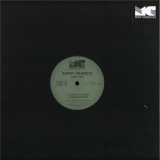
Rewind to 1997 and Uk's finest clubs are alight to the tech-house sounds emanating from South London. Terry Francis, a key figure in the scene, needs no introduction, Fabric resident, Wiggle co-founder, as well as part of the seminal Housey Doingz collective, 'Dubtown' was his first solo outing, all 4 tracks are instant classics, and the EP itself has become his most sought after release to date.
The tracks themselves are varied and brilliant, EP opener 'Hannah's House' kicks off with an infectious bass line and builds with expertly programmed percussion. Simple yet effective riffs intertwine with warm pads and deep chord stabs. 'Hannah's Dub' strips the track down, eerie synths add a tuneful swagger without ever losing dancefloor appeal. 'As You Cry' broadens the sonic palette with swinging rhythms, crisp snares and dreamy chords that deliver the peak time funk and bump. Lastly 'Reggae's House' is a deep dub infused jam, acidic 303 touches combine effortlessly with pads and stabs, whilst echoing bursts of percussion make some real tripped out musical moments.
All 4 tracks are deep winners, tweaked to maximum effect by a master of the genre. A rarity for decades now available once more. 'Dubtown' has been legitimately re-released with the full involvement of Terry Francis, lovingly remastered by London's Curve Pusher from the original sources especially for Mint Condition. 100% legit, licensed and released. Dug, remastered, repackaged and brought to you by the caring folks at your favourite reissue label - Mint Condition!!
Brooklyn Sounds legendary second album from 1972, full of heavy Nuyorican underground salsa dura propelled by raw trombones, off-kilter piano and in-your-face percussion. A perfect blend of barrio attitude and Caribbean swing, the album proves Brooklyn has sabor y salsa! Pressed on 180 g vinyl, our reissue includes liner notes featuring never-before seen photos. “Libre – Free” is the now legendary second album by the short-lived Brooklyn Sounds and is arguably even better than their self-titled debut, displaying a more mature and practiced sound, no doubt honed by their experiences playing more gigs in support of their first record. Brooklyn Sounds were one of a handful of garage salsa bands from the independent scene that was gathering steam in the early 1970s in the New York boroughs, despite little support or exposure in the mainstream Latin music industry from more dominant labels like Fania, Mericana, Cotique and Alegre. As with many others, Brooklyn Sounds briefly fluoresced in a burst of creativity and defiance, yet flamed out shortly thereafter, dying like a flower among the ruins of burned-out apartment blocks in the barrios of its home city. Though the band only cut two LPs and a couple singles in their brief half-decade of existence, and never really broke out of the cuchifrito circuit in the tri-state area of New York, New Jersey and Connecticut, their music gradually spread far and wide, eventually becoming a sought-after global commodity by the late 1990s. In contrast to the first album “Libre – Free” is uptempo and ebullient, with fewer slow songs and more confident, creative arrangements, full of heavy Nuyorican underground salsa dura propelled by raw trombones, off-kilter piano and in-your-face percussion. Standout tracks include the uplifting, anthemic ‘Libre soy’, and ‘Ha llegado el momento’, with its minor key ‘Moliendo café’ quote at the
beginning—both of which have become dance floor anthems over the years. Another mid-tempo killer is ‘Guaguancó tropical’, a favorite in Colombia since the 1970s. A perfect blend of barrio attitude and Caribbean swing, the album proves Brooklyn has sabor y salsa!
Mint Condition - A record label focused on excavating the outer fringes of classic House and Techno. Unreleased mixes, classics, overlooked gems and never heard before material, mined from the last 30+ years of contemporary dance music are the order of the day. From Chicago, Detroit and New York, London, Leeds, Berlin and beyond. Mint Condition have got their digging hats on to bring you exclusive heat and those rarer than rare jams that have been in your wants list for years. Dig in......
Following on from highly successful releases on seminal labels such as Surreal, Low Pressings and their own Geek imprint, Andy Davies & Dave Clements, aka Spincycle, unleashed 'Making Faces' on Bushwacka's legendary Oblong Imprint. Originally released in 2002, this release perfectly showcases the duo's unique take on the tech-house & garage sounds that fuelled the UK underground. Over the next 2 decades this classic would become an in demand rarity, as the eye watering discogs prices will attest, so a reissue has been long overdue.
'Making Faces' opens with infectious bongo led percussion, building with crisp hats and snares, the heavyweight bass is deep and warm, dreamy chords add to the atmosphere, before a soaring lead line that oozes with techy soul, builds and drops in all the right places. Next up, UKG inspired 'Twister' is more raw and uncompromising in its approach. Energetic swinging rhythms underpin a monstrous sub bass line to die for, as if that wasn't enough, the duo manage to add yet another rolling bass line showcasing production and programming skills of the highest order.
This is indeed a killer 12", packed with energy and heat that sounds as fresh and exciting as ever, and what's more your dancefloors will shudder!! 'Making Faces' has been legitimately re-released with the full involvement of Spincycle, lovingly remastered by London's Curve Pusher from the original DATs especially for Mint Condition. 100% legit, licensed and released. Dug, remastered, repackaged and brought to you by the caring folks at your favourite reissue label - Mint Condition!!
- A1: Madonna & Maluma - Everybody (You Can Dance Remix Edit)
- A2: Into The Groove (You Can Dance Remix Edit)
- A3: Like A Prayer (Remix- Edit)
- A4: Express Yourself (Remix- Edit)
- B1: Vogue (Single Version)
- B2: Deeper & Deeper (David Radio Edit)
- B3: Secret (Junior Luscious Single Mix)
- B4: Frozen (Extended Club Mix Edit)
- C1: Music (Deep Dish Dot Com Radio Edit)
- C2: Hollywood (Calderone & Quayle Edit)
- C3: Hung Up (Sdp Extended Vocal Edit)
- C4: Give It 2 Me (Eddie Amador Club 5 Edit)
- D1: Girl Gone Wild (Avicii Umf Mix)
- D2: Living For Love (Offer Nissim Promo Mix)
- D3: Medellin (Offer Nissim Madame X In The Sphinx Mix)
- D4: I Don't Search I Find (Honey Dijon Radio Mix)
Madonna is the first and only recording artist to have 50 #1 hits on any single Billboard chart. To celebrate this historic milestone, Madonna curated a new 50-track collection titled FINALLY ENOUGH LOVE: 50 NUMBER ONES which includes her favourite remixes of those chart-topping dance hits that have filled clubs worldwide for four decades as well as an abridged 16-track version, titled FINALLY ENOUGH LOVE. This 140-gram 2LP gatefold jacket includes single covers and a track-by-track on all featured 16 number one singles.
This collection highlights You Can Dance, Madonna’s first ever remix collection. Celebrating 35 years this year, You Can Dance has sold more than five million copies worldwide and is still the second best-selling remix album of all time. The collection also pays homage to “Everybody,” Madonna’s first single. Each remix was newly remastered for the collection by Mike Dean, who produced Madonna’s two most-recent studio albums, Rebel Heart (2015) and Madame X (2019). Along with those rarities, this album also introduces the “Offer Nissim Promo Mix” of “Living For Love” as its first official release.
Mike Dunn is a pivotal house artist who brought his own famously raw and stripped-back style combined with infectious hip hop elements. He is behind plenty of well-known anthems, most famously 'Dance You Mutha' and 'God Made Me Phunky', and founded Dance Mutha in 1988. It released music by MD Connection, Gershon Jackson and I-ROC-T, while Dunn also co-founded seminal acid labels Warehouse Records and Muzique Records which played a key role in the development of Chicago and acid house. Dunn has continued to produce over the ensuing four decades and has landed on the likes of Defected, Nu-Groove, Classic, Trax and many more. The relaunch of the Dance Mutha label has been inspired in part by Dunn's discovery of a raft of 'lost' unreleased masters from the late '80s and early '90s. It's these tracks that provide the jumping-off point with this new release. '43:31' is the first out of the blocks and brings prickly acid texture to raw analogue drums. Slapping hits add extra bite to this most stripped-back and effective slice of pure warehouse music. Then come the snappy snares and deep bass of 'Acid Feet (Phaze 1)'. This spare, impactful cut is riddled with shapeshifting acid and caustic synth textures that bring the rugged drums to life. Last of all, the excellent Time Machine' will indeed take you all the way back to the dark, delirious and delicious days of the earliest acid house with its wonky 303s burrowing deep into the night next to coarse claps and ice-cold hits.
Russian vinyl botherer and producer DJ Vadim has pulled in some serious reggae talent on his 11th album.
It all kicks off with a double whammy of Demolition Man’s classic pipes on the rootsy Fussin N Fighting and the dubby Sometimes, featuring Inja shouting out to the people struggling to rise from dark situations. The mariachi trumpet, married to the smooth chorus vocals, provide a subtle counterpoint to the rapper’s imploring flow. Sultry dancehall’s the order of the day for Call On Me, with Eva Lazarus pushing out a proper earworm of a chorus that plays beautifully off the Jamaican-accented Brummie spit of Serocee. Three tracks in, and Vadim’s already traversed several decades of musical development whilst keeping the narrative pleasingly consistent.
Murder Murder channels the spirit of Damian Marley for a politically-charged reggae hip hop rampage, then the unmistakable voice of Max Romeo pops up on Judgement, a fire and brimstone cut in the great tradition of such offerings. It also showcases one of the main themes of this release: the bringing together of cultures and musicians. Abstract Rude and YT provide rap responses to the veteran, with the production lightly upgrading the familiar sonics with a few echo-electro flourishes here and there.
AYA Records presents: Humazapas' debut with 'Sara Mama', homage to the land and Kichwa tradition. The concept of "getting back to your roots" rarely has such a literal meaning, or at the same time such an ancestral meaning, as in the case of the Ecuadorian group Humazapas. Usually in the music industry this concept is used when an artist returns to a past sound, going back to that moment of newness, exploration and ingenuity, perhaps. But not Humazapas. These natives of the Kichwa communities of the Ecuadorian Andes, who have been working on this project for a decade, see "getting back to your roots" as a profound connection with their cultures, language, dance, the rituals that connect them to their deities and, of course, music.
Back In Stock!
Throughout the past decade Paris-based producer, DJ and label owner Dj Steaw has gained widespread recognition as a bastion of raw, authentic music in the contemporary scene.
His material has found its way onto the likes of PIV Records, Hot Haus, Meta and of course his own Rutilance, Steaward and House Puff imprints.
Here we see him joining Kerri Chandler’s Kaoz Theory with his latest release and the title-track ‘Colour Of Mind’ opens the package with shuffled, dynamic drums and hypnotic vocal chants alongside bumpy stabled bass, squelchy acid licks and airy dubbed out chords.
‘Dance To The Rhythm’ follows next, stripping things back to low slung drums, echoing stab sequences, subby swells and breathy vocal cuts.
‘I Can’t Feel It’ follows on the flip-side next, heading back to a more classic house aesthetic with a gritty bass hook, organ lines and ethereal textures running atop crunchy drums.
‘Star Ready’ finally concludes the EP on a deeper tip, bringing circling synth swells, elongated bass tones and skippy percussion into the limelight.
Upfront DJ Support:
Kerri Chandler
Dennis Quin
Chris Stussy
Fabe
Cinthie
Franck Roger
Ben Rau
Jimpster
Ruff Stuff
Julietta
Chrissy
Demuir