INTEMPORARY AND INDETRONABLE FRENCH COLD WAVE CLASSIC in a SPECIAL EDITION to celebrate the 40th anniversary of this mythical album.
This edition includes a 45T with 2 previously unreleased tracks, available nowhere else.
Thierry Müller, who initiated the RUTH project, is not at his first try when the album POLAROÏD/ROMAN/PHOTO including the eponymous track is released in 1985. His older brother Patrick along with one of their cousins make his musical education and he quickly becomes familiar with contemporary and experimental music. He starts quite early to tinker sounds on old tape recorders by himself but it is in 1977 that Thierry launches with some friends his first group, ARCANE, while studying at the School of Applied Arts. Their sound is weird, a mixture of saturated scratches and feedback tapes: there is no discographic or scenic testimony of this experience.
Alongside ARCANE, Thierry is already working solo on his ILITCH project / concept, an experimental and innovative work, whose first album Periodmindtrouble is released in 1978 on the Oxigène label. Despite insubstantial sales, this album brings Thierry recognition and success in the very elitist circles of experimental and underground music.
ILITCH’s musical bias was too narrow for Thierry’s ceaseless experimental curiosity, parallel to these activities, he therefore develops a Punk project called RUTH ELLYERI with the author, actress and photographer Murielle Huster. The title is an anagram of Thierry Müller (the complete name is Ruth M. Ellyeri). The character is meant to impersonate one of his schizophrenic facets and allows him to extend his field of expressions to musical styles differing from those in ILITCH.
From this work, the very cult punk piece Mescalito emerges, song that can be found on the mythical but unfortunately very rare compilation 125g de 33 1/3 tours (1979) of the Oxigène label (first “french punk” sampler). At the end of 1978, he meets Philippe Doray at the Oxigene office. Doray is another big name of French experimental music. Thierry moves to his home near Rouen, a remote farmhouse with a music studio made of odds and ends.
They work on their respective creations but meet from time to time on experimentations in common, including CRASH (a tribute to JG Ballard) As early as 1982, a first version of the track Polaroïd/Roman/Photo is out under the name of the project RUTH. “I wanted to write a piece to make the girls dance and make fun of the boys. I plugged a small handmade clock on my Farfisa organ as a sequencer. I had a small Roland synth-guitar, I put the organ in it and that’s how it started.” Philippe is quite amused by the idea of working on a more Pop project and offers to write the text. Thierry works on other tracks for the future LP and asks some friends to write other texts : Edouard Nono, visual artist, writes the lyrics of Mots, Frédérique Lapierre those of Misty Mouse and Tu m’ennuies . It is her voice you hear on these 2 tracks and on the first version of Polaroïd/Roman/Photo. Later, Thierry settles down in the Anagramme recording studio to carry out acoustic sound recordings. But when the sessions are over, the 2 musicians are not too happy with the results of Polaroïd/Roman/Photo: according to them, they lack “flamboyance”. They decide then to record a new female voice with a professional singer and the sound engeneer Patrick Chevalot offers to mix the track in the Synthesis studio “so that it blows out”.
With his tape ready and the help of Jacques Pasquier (S.C.O.P.A. / Invisible records where Ilitch’s second album, 10 Suicides, is released) he starts to contact record companies. “I visited almost all the major record companies and was thrown out every time. Only at RCA’s I found someone interested in my music. It was Francis Fottorino who had signed Kas Product but when it reached the the big boss, no way! Philippe Constantin from Virgin records raised some hope but in vain.
The album was finally released in 1985 with Paris Album, a small independant label.” The album barely sells 50 copies in 1985, despite the eponymous title as a potential success. « In 2004, 2 DJs Marc Colin and Ivan Smagghe discover the track Polaroïd/Roman/Photo and decide to exhume it from oblvion. They release it on a compilation called So Young but so cold (Tigersushi) and then with Born Bad records on the BIPPP compilation in 2008. Thanks to them, the track and the album start a new life.
Alongside his activity as graphic designer, Thierry Müller carries on producing music under his name, those of ILITCH and RUTH for his own creations and various collaborations.
Search:dance inc
Celebrated DJ, producer, and sonic explorer Auntie Flo (aka Brian d’Souza) — described by The Guardian as “one of global club culture’s most vital voices” — returns this autumn with ‘Birds of Paradise’: a rhythmically rich, emotionally resonant, and ecologically grounded new album, out 23 October via his A State of Flo imprint. The album will be launched with a special live show at London’s Jazz Caféon the same day.
‘Birds of Paradise’ draws on d’Souza’s global club experience while deepening his connection with the natural world. Built around classic Roland drum machines and iconic vintage synths, the record is a joyful, body-driven celebration of rhythm and movement, but one grounded in ecology and place. The album’s spiritual centre lies in Saligao, Goa, near d’Souza’s maternal homeland where his Auntie Florie (where the name is derived from) is buried. Where he found his ‘paradise’ nearby, staying in a converted fisherman’s hut and recorded dawn choruses from a riverside studio overlooking mangrove-lined waters. Environmental textures from Japan also make their way into the music, creating a sonic map rooted in lived experience.
“Birds of Paradise is about finding beauty and rhythm in a chaotic world. It’s about listening, to nature, to our bodies, to what’s real. It’s a reminder that dance music can be both joyful and grounded.” The album blends Afro-Latin polyrhythms with Western 4/4 patterns, fusing instinctive, dancefloor energy with field recordings that anchor the music in the earth. Described by d’Souza as “tropical with a few deeper edges, a balance of light and dark.”
The new record follows the acclaimed ‘In My Dreams, I’m A Bird and I’m Free’, which earned 4 stars and Global Album of the Month from The Guardian, featured in Disco Pogo’s Albums of the Year, and received support from Luke Una, Resident Advisor, Juno, Bandcamp, Mixmag, DJ Mag, Electronic Sound, The Skinny, Beatport, Ban Ban Ton Ton, and more. The album’s launch show at Omeara London sold out. Other recent projects include the ‘Outernational Dance’ EP on cult label Multi Culti, event series ‘Plants Can Dance (and Mushroom’s Sing)’ which explore plant and fungi bioelectricity as a means of live composition, and ‘Black Beacon’, a haunting cassette release and soundwalk series recorded on the abandoned military island of Orford Ness. There, d’Souza explored the eerie intersection of nature, decay, and deep time, gaining special access to restricted buildings to capture long-form soundscape compositions.
Alongside his production work, d’Souza has emerged as a leading voice at the intersection of sound and science. He curated music for Imperial College’s groundbreaking psychedelic therapy trials, developing six-phase playlists to guide participants through psilocybin-assisted sessions treating conditions such as fibromyalgia and gambling addiction. His five-hour ambient set at Watching Trees Festival, selected as Resident Advisor’s Mix of the Day, continued this exploration into the therapeutic potential of sound in altered states. He also spent six months collaborating with BBC producer Tom Raine on a documentary for BBC World Service, centred on a two-week journey through Kenya and Goa. There, he performed live, led plant music workshops, and joined a deep listening retreat rooted in field recording. “I realised my studio isn’t just four soundproofed walls filled with instruments — it’s the journey itself. It’s the people I meet, the natural world I listen to, and the connections I feel.”
This same commitment to deep listening fuels his live concept Plants Can Dance, a project that combines the biosonification of plants and fungi with modular synthesis. The next event, on 14 September at Hideout Hackney Wick, will feature performances by Stella Z and Lapalace, with d’Souza and resident Lamine playing live alongside responsive plants in collaboration with Repot Hackney Wick and the label Music To Watch Seeds Grow By. “I’ve spent years exploring how electronic music can connect us, not just to each other, but to the natural world. Whether it’s translating mushroom data into melody or capturing birdsong at dawn, it’s about finding resonance across bodies, ecosystems, and machines.”
Rooted in his Goan and Kenyan heritage and shaped by years of travel and collaboration, d’Souza’s creative mission is simple: to reconnect the electronic world with the natural one. Through A State of Flo, he continues to blur the boundaries between club culture, sound art, and ecological awareness.
The "Every DJ" – The Unreleased Kenny Dope Project 7-inch vinyl on the Blazing Record Label is a must-have for fans of hip-hop breaks and classic reggae samples. Featuring Kenny Dope’s signature production style, this track utilizes a vocal sample from "The Stopper" by Cutty Ranks, blending reggae dancehall vibes with hip-hop breaks to create a perfect party track for the turntables.
This release is an essential addition for DJs, collectors, and hip-hop enthusiasts who appreciate the fusion of reggae and hip-hop with infectious breaks and deep basslines. The track's energy makes it perfect for DJ sets and vinyl crates.
DUSTY DONUTS ISN’T JUST A LABEL — IT’S A TURNTABLE MANIFESTO.
Since its inception, the collective of vinyl scientists behind Dusty Donuts has been applying their signature "Dusty Formula" to every cut – a potent blend of deep crate knowledge, razor-sharp edits and roots firmly planted in the Hip-Hop culture. Each 45 is crafted with the instincts of seasoned DJs and the ears of lifelong diggers, spinning like a secret weapon on the decks: restructured classics and forgotten gems, reimagined with just the right bounce for today’s dance floors.
Now, with their new imprint DUSTY DONUTS CLASSICS, the crew levels up – kicking things off with a standout collaboration featuring the incredibly talented Emma Noble, who they first crossed paths with at the legendary Mojo Club. Emma’s soulful style and versatility made her the perfect fit for the launch of this new venture.
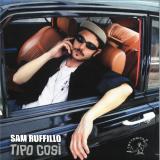
Italian producer, musician, DJ, and groove architect Sam Ruffillo drops his long-awaited debut album Tipo Così on Toy Tonics – a sun-drenched, genre-blurring statement that blends classic house with Mediterranean flair, romantic funk, and tongue-in-cheek Italo vibes. Over 11 expertly crafted tracks, Ruffillo delivers a dancefloor-ready, emotionally rich LP that connects deep musicality with irresistible rhythm and light-hearted elegance.
After three acclaimed EPs and collaborations with revered artists such as Barbara Boeing, Kapote, and Fimiani, Ruffillo has firmly cemented himself as a core artist on the Berlin-based label. Known for his unmistakable signature sound — a warm mix of vintage disco, 90s house, and Italian vocals — Sam’s music has garnered widespread DJ support from tastemakers like Gerd Janson, Palms Trax, Seth Troxler, and DJ Tennis, while becoming a staple on Italian airwaves. His infectious summer anthems like Danza Organica and Perfetta Così have soundtracked countless club nights and festivals, creating a loyal following that eagerly awaited this full-length debut.
Tipo Così is the natural culmination of a musical journey that’s both playful and profound — a travel diary written in grooves, synth stabs, and melodies that feel like postcards from a parallel Mediterranean universe. The album expands and deepens Ruffillo’s world into a fully immersive experience: lush emotional chords meet tight syncopated grooves, vintage synth textures collide with irresistibly catchy pop refrains, and the boundary between sincerity and playful irony is exquisitely blurred.
Entirely written, produced, and recorded in Italy, in his beloved hometown of Bologna, the album finds Ruffillo at the helm on keys, drum machines, and production, supported by a talented cast of musicians contributing live bass, guitar, and other organic elements — further enriching his trademark fusion of electronic grooves and natural instrumentation. There’s a tactile warmth in these tracks, a hands-on feel that adds soul and depth to every beat.
This album also marks Ruffillo’s heartfelt return to singing in Italian, with standout tracks like House Tipo Così, Mi Fa Volare, Ancora, and Dentro Di Me, where romantic naïveté meets pulsing club energy in a way that feels both timeless and refreshingly new. The vocal performances add an intimate, human touch to the music, reinforcing the personal stories woven into each song. There’s poetry in the casual, a bittersweet elegance in the way the lyrics float over groove-heavy production.
Having toured extensively across Europe, Australia, Indonesia, New Zealand, and Mexico — with sets at iconic venues like Panorama Bar and festivals such as Sónar Barcelona — Ruffillo has fine-tuned much of this album in front of live audiences. The real-world testing ground infused the record with a dynamic energy and immediacy that only comes from genuine crowd interaction. These songs weren’t just made in the studio — they were lived on dancefloors around the world.
Tipo Così is not just a collection of tracks. It’s a philosophy — playful, stylish and unmistakably personal. A modern club album bursting with heartfelt emotion and sophistication. Music for dancers with taste; for lovers of beauty, rhythm, and the little imperfections that make things feel real.
But what exactly is Tipo Così? More than just a phrase, it’s a way of being. It’s about embracing elegance without effort, mixing irony with sincerity, and letting nostalgia slip into the room without taking over the party. It’s Sam Ruffillo’s signature language: relaxed, confident, meticulous yet never rigid — where a chord progression can say as much as a lyric, and every beat carries intention.
The album’s visual identity complements this vision perfectly. The artwork and promotional materials lovingly reference Italian design from the ’80s and ’90s, combining bold graphic elements with playful pop culture nods. This aesthetic mirrors Ruffillo’s music — a fusion of vintage warmth and contemporary freshness, delivered with authenticity and charm.
Sam Ruffillo belongs to a new generation of European artists who are reshaping electronic music by blending past and present, analog and digital, groove and emotion — without nostalgia or pose. His artistic universe is coherent, vibrant, and alive; a rich tapestry of sound, images, and stories that coexist with lightness, precision, and a distinctive voice.
Reflecting on his artistic journey, Sam describes music as a vital, deeply human impulse — a tribal connection to rhythm and body that has driven him since he was a teenager. His creative process balances meticulous planning with room for spontaneity, usually sparked by clear melodic ideas that evolve naturally. Collaborations with close friends, especially vocalists like Ninfa, add warmth and authenticity, exemplified in tracks like “House Tipo Così.” For Sam, music is honest self-expression — crafted for listeners who crave memorable melodies and rhythms imbued with genuine feeling.
While technical perfection is tempting, Sam prioritizes emotion, knowing that what truly resonates is the soul behind the sounds. His long-standing partnership with Toy Tonics has been key in nurturing his vision, offering a blend of creative freedom and professional support. Looking ahead, Sam Ruffillo is excited to broaden his live performances, and release new projects that continue to blend electronic grooves with organic, heartfelt sounds — maintaining the delicate balance between playful irony and sincere emotion that defines Tipo Così.
Kurzversion:
Italian DJ, producer and musician Sam Ruffillo drops his debut album Tipo Così on Toy Tonics - a sunny blend of house, funk, Italo and pop, full of groove and emotion. Written and recorded in Bologna with live instruments and Italian vocals, it’s a playful, elegant journey shaped on dancefloors worldwide. A stylish, sincere club album where nostalgia, irony and rhythm meet in perfect harmony.
- Mi Fa Volare
Road-tested across continents and now finally released, “Mi Fa Volare” channels 90s uplifting euphoria with big breakbeats, lush chords, and Italian vocals built to stick. Somewhere between balearic bliss and piano house nostalgia, it’s a feel-good club weapon made for peak-time moments - already sung back by crowds after just one listen.
- Ancora
“Ancora” is a vibrant hi-NRG track inspired by 80s Italo disco, sung entirely in Italian. It blends driving rhythms with dreamy melodies, capturing the radiant spirit of the decade. This fresh yet nostalgic song delivers euphoric vibes and timeless energy, making it a perfect fit for both dancefloors and reflective listening moments worldwide.
- Dentro Di Me
“Dentro Di Me” channels ‘90s sensuality through a fast-paced, UK house-inspired lens. Entirely in Italian, it’s a bold and contemporary dance track where hypnotic vocals meet high-energy grooves. Blending nostalgic textures with forward-thinking production, the result is a seductive and euphoric trip - equal parts emotional and club-ready.
- Amigo
“Amigo” blends Latin groove, acoustic guitar-driven rhythm, and Mediterranean flair into a warm, magnetic, cross-cultural dance anthem. Sung in Spanish and Italian, it celebrates connection, inclusivity, and the joy of moving together - whether stranger or friend. With its unstoppable rhythm and vibrant energy, it’s a feel-good track with a unifying spirit.
- Ma Sei Fuori
“Ma Sei Fuori” is a tongue-in-cheek dancefloor bomb blending raw house energy with catchy vocal phrases and a nod to classic French touch. Driven by hypnotic vocal lines and a playful attitude, it doesn’t take itself too seriously - while still proving serious club impact. Built for late-night moments, it’s bold, bouncy, and impossible to ignore.
Frankey & Sandrino come back to Rekids with the ‘Please’ EP, landing 10th October 2025 alongside a remix from Echonomist.
They follow their 2022 ‘Brainscan’ EP on Radio Slave’s label, as well as a remix for Denney in 2023. With an irresistible bassline, smooth melody, and a nostalgia-fuelled vocal, ‘Please’ is the kind of track you hear as you walk into a busy tent at a festival, hands in the air, energy abundant. Frankey & Sandrino are masters at crafting emotional dancefloor bangers, going a little deeper on the progressive ‘Genie’, building up to busy stabs and mind-melting, futuristic sound design. Completing the EP, the pair call in Greek DJ and producer Echonomist to remix ‘Please’. The Innervisions and Exit Strategy artist strips the original back, transforming it into a dark, hypnotic groover built for smoke-lit dance floors.
Frankey & Sandrino are a German duo that has been shaping dance floors since 2009 with their distinct, trend-defying sound. With releases on Kompakt, Diynamic, and their own Sum Over Histories, and regular appearances at clubs like fabric and Stereo, they now return to Rekids with the ‘Please’ EP.Founded in 2006, Radio Slave’s Rekids has since launched the Techno-focused Rekids Special Projects in 2017 and its latest sublabel, REK’D, in 2024. With Matt Edwards as the sole A&R, Rekids has been instrumental in developing emerging artists and remains a trusted home for House and adjacent sounds, recently featuring names such as Harry Romero, Tal Fussman, Tiger Striipes, William Kiss, Oliver Dollar, The Hacker, and more.
“Is all that we see or seem but a dream within a dream?” This quote from a poem by Edgar Allan Poe sums up the lamenting, primal work that is "All That We See or Seem"; a project conceived between Finland, England and Brazil. The self-titled album consists of two long-form pieces of droning mysticism hailing from the trio of Gruth (concept, production, electronics), Ellen Southern (vocals, field recordings, percussion) and Johanna Puuperä (violin, modular synthesizer, additional vocals).
The album opens straight into a thousand yard stare with “Myrskymielellä", adapted from a 1891 poem by the Finnish national poet, Eino Leino, who wrote it at the tender age of 13. Here a blank distant droning of synths and the sounds of flowing water hover underneath like a dark river observed from the air. This is a sound and feeling that will stay constant for the entirety of the piece´s thirty minute duration. It is a trance-inducing composition that slowly unfolds elements of pagan ancestry into its own life. At first, faint female vocals are introduced as distant spatial elements, which gradually advance into waves of cries and anguish as the piece progresses and moves further into the storm. The tranquility of the first half is slowly morphed into a full blown ceremony as driving ritualistic percussion and a foreboding witch-like presence shifts the piece into a Dead Can Dance-like territory. Here a constant enveloping mixture of violins, modular synths, field recordings and vocal screams creates the feeling of a grande finale. It is an astounding piece of music that develops like a drone symphony for the beginning of time.
With the second piece, “A Dream Within A Dream”, from Edgar Allan Poe´s 1849 poem, you are transported to the shores of an undisclosed island; a place where it´s only you, your thoughts and the endless emptiness. The continual sound of waves is soon brought together with a cloud of synths and mourning violins that will keep a steady dreamlike state during most of the piece´s duration. This time the wordless vocals feel almost angelic in their pageantry. The composition flows like a slow caress of the soul and feels like the spirit twin of Gavin Bryars' “The Sinking of the Titanic” with its lamenting slow movements towards the unknown.
Truly a ghost of a record, “All That We See or Seem” is an experience hard to shake and feels like entering sacred ground. We are in a place surrounded by earth, both ancient and present. "Let loose, Vanha, the rage of an earthly storm! Detach the elements, completely open the sky! In the Earth, let an incessant storm prevail, so that in my chest I would not feel the miserable pain” - Eino Leino
- A1: West End Girls
- A2: Love Comes Quickly
- A3: Opportunities (Let's Make Lots Of Money)
- A4: Suburbia
- B1: It's A Sin
- B2: What Have I Done To Deserve This?
- B3: Rent
- B4: Always On My Mind
- B5: Heart
- C1: Domino Dancing
- C2: Left To My Own Devices
- C3: It's Alright
- C4: So Hard
- D1: Being Boring
- D2: Where The Streets Have No Name (I Can't Take My Eyes Off You)
- D3: Jealousy
- D4: Dj Culture
- D5: Was It Worth It?
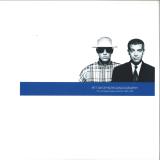
On May 30, 2025, Pet Shop Boys will reissue their 18-track greatest hits singles collection ‘Discography : The Singles Collection’ on limited blue vinyl, featuring updated 2023 remasters. ‘Discography’ was first released in 1991. The album charted No 3 in the UK album chart and includes ‘West End Girls’, ‘Always on My Mind’, ‘It’s a Sin’, ‘Domino Dancing’ and ‘Suburbia’.
Pet Shop Boys are an English synth-pop duo formed in London in 1981. Consisting of vocalist Neil Tennant and keyboardist Chris Lowe, they have sold more than 100 million records worldwide and were listed as the most successful duo in UK music history in the 1999 edition of The Guinness Book of Records. Pet Shop Boys have won three Brit Awards and have been nominated for 6 GRAMMY Awards. At the 2009 Brit Awards in London, they received an award for Outstanding Contribution to Music. In 2016, Billboard named Pet Shop Boys the number one dance duo or group since the chart's inception in 1976. In 2017, the duo received NME's Godlike Genius Award, and in 2024, they were awarded the Pop Pioneers award at the MTV Europe Music Awards.
Returning with its final instalments, Die Schachtel's Decay Music series extends its explorations of inspired contemporary experimental efforts of the ambient, ethereal, and emotively abstract with Luigi Turra and Elio Martusciello’s “Liminale” and Sergio Armaroli and David Toop’s “And I Entered Into Sleep”, two astounding electroacoustic gestures of blurred space and time, plumbing complexity of meaning bound to sonority. Creatively groundbreaking and inspired, radically rethinking the terms of what ambient music can be perceived to be, they stand among the most striking efforts to appear within the series to date.
Reconfiguring the notion of bridge building on a multitude of terms, it feels fitting that the tenth and final installment of Die Schachtel’s Decay Music series, Sergio Armaroli and David Toop’s “And I Entered Into Sleep”, was co-created by an artist whose work featured in the first suite of LPs issued by Brian Eno’s Obscure Records in 1975, the groundwork toward which Decay Music’s own efforts nod. Since that auspicious debut, “New and Rediscovered Musical Instruments” — his split with Max Eastley — David Toop has been regarded as a pioneer in British experimental and improvised music: a sonic voyager who has continuously challenged the sources and materiality of sound through rigorously thoughtful performances, a vast catalog of recordings, and a steady flow of highly influential texts. Be it as a member of Alterations, his group breaking group with Peter Cusack, Terry Day, and Steve Beresford that ran between 1977 to 1986, or through is noteworthy work with artists like Rie Nakajima, Thurston Moore, Paul Burwell, Rhodri Davies, Lee Patterson, Ryuichi Sakamoto, Akio Suzuki, Elaine Mitchener, and numerous others, collaboration has always played a central role within Toop’s singular practice, but few can claim the sprawling sense of beauty and intimacy that’s achieved by “And I Entered Into Sleep”, his first recorded outing with Sergio Armaroli.
A composer, percussionist, vibraphonist, and multidisciplinary artist, Armaroli has been issuing radical and forward-thinking musical gestures for decades, working as one of Italy’s most noteworthy interpreters of composer’s like Giacinto Scelsi, John Cage, Franco Evangelisti, Giancarlo Schiaffini, and Walter Branchi, as both a solo performer and member of the highly regarded Rib Trio, as well as forging a singular practice as a composer, intertwining his efforts as a painter, concrete percussionist, fragmentary poet and sound artist, within a total art, rooted “within the language of jazz and improvisation” as an “extension of the concept of art”. Like Toop, Armaroli’s career has been populated by many collaborators, notably with Riccardo Sinigaglia, Alvin Curran, and Walter Prati, among others, setting the stage for a remarkable meeting between the pair.
Featuring Armaroli on vibraphone and prepared vibraphone and Toop on electronics, “And I Entered Into Sleep” is “a sonic journey, a Proustian suggestion à la Recherche, into the unconscious between electronic and acoustic sounds”. Using a bell that sounds at the beginning of Proust’s “À la Recherché du Temps Perdu”, which reappears more than 3,000 pages later — signaling a transition of phases, as well an auditory trigger of memory — as a departure point, as an association to the percussive vibraphone pulses that thread the album’s two sides, the pair weave a striking interior world of immersive psychological depth. Feeling almost subaquatic at times, like captured glimpses of rumbling, shadowy ecosystems lost within murky ambiences, before washing ashore in a series of pointillistic, highly detailed alien landscapes of the mind, each artist’s markedly different sound-sources, and treatment of the subsequent material elements, dance in abstract grace, incorporating subtle nods to minimalism, free jazz, and musique concrète within its seamless total form of sparse texture and tone.
Easily one of the most striking and memorable releases by either artist to appear in recent years, Sergio Armaroli and David Toop’s “And I Entered Into Sleep” traverses uncharted realms at the borders of literary reference, sound art, ambience and abstraction through delicately musical sounds, revealing new depths at every turn. Issued as the tenth and final album in Die Schachtel’s Decay Music series, highlighting inspired contemporary experimental efforts of the ambient, ethereal, and emotively abstract.
A hill repeating its own name.
Ben Beinn — mountain mountain — an imagined summit, recursive and unstable.
Poole’s new album Ben Beinn follows 2024’s In a River Shadow, and deepens his exploration of environment, voice, and abstraction. If the previous record moved with flowing water and submerged hymns, Ben Beinn climbs into elemental instability: passing storms, coded skies, and sodden ground.
Across ten tracks, Poole entangles the Celtic New Age sound world — traditional instrumentation (flute, low whistle, bagpipe, piano, strings) — with synthesis, environmental recordings, and abstracted voice. The sound palette is tactile — marked by microtonal harmony, swelling dissonance, and a breathy naïvety. Voices in Gaelic, Norwegian, and English surface and dissolve, stretched beyond recognition — more weather than word.
The album’s title refers to a tautological hill — Ben Beinn, or “mountain mountain” — a recursive site where motifs surface, fracture, and re-emerge. On 365 Days of Rain, rainfall data becomes a rhythmic lattice that slips from metrical order. 1000 opens the record in cinematic emergence: mountain icicles and frozen streams swell into strings and breathy melodic weight. Pulling from the connective folktales of hill and mountain trolls — “Dance for a thousand years,” Poole writes, “for jeg har sovet tidlig så lenge.”
Recorded in Scotland between 2024–2025, Ben Beinn draws from environmental recordings of frozen hill passes, storm drains, and peat bogs using contact mics and hydrophones. Rather than simply reflecting place, these recordings press against it — layering the sonic materiality of landscape with synthesis and song. An inflection point between fabrication — folk music as performed identity, a carrier of story — and its obfuscation through digital networks, where tradition is refracted into plural forms.
Musical reference points include the emotionally saturated textures of Inoyama Land, the folk-electronic hybrids of Eli Storbekken, the hyperrealist collage practices of Noah Creshevsky, and the disquieting sonic simulations of James Ferraro. While Ferraro captures the uncanny surfaces of networked life, Ben Beinn turns inward — toward a located listening, shaped by weather, memory, and terrain.
The second in a triptych that began with In a River Shadow, Ben Beinn continues Poole’s excavation of environmental and folk material through contemporary methods. If the first record submerged itself in flowing water and submerged hymns, this one is shaped by the slow pressures of land and sky — a music of erosion, recurrence, and elemental presence.
Fetter’s Body of Noise erupts at the threshold between ravey hypnosis and avant-pop experiment, slithering through the hinterlands of unconscious desire. Nine shape-shifting tracks conjure haunted landscapes where beauty refuses clarity and dancefloor logic warps underfoot. Vocals swoon, drift, and demand—stacking into fragments that multiply and weave through saturated pulses and shimmering, snarling synths.
Opening track "Like a Rose" traces a dreamer’s transition into the unstable physics of a perplexing but familiar dream world, where they gradually become lucid. “Beast” follows up humming with shadowed urgency, threading a path through self-sabotage and metamorphosis. “Spathiphyllums” drifts a while in a lush lostness, aching for something new before fracturing into wild, cathartic collapse. Side B’s “Do I Exist? (D.I.E)” and “The Longing” spiral into existential wonder, searching for a human origin story—both personal and collective—against a backdrop of uncertainty, while “Headache” thrusts forward as an absurd and insistent manifesto to stay the course and harness one’s own power within the madness.
Body of Noise is crafted not only for sweating bodies in motion, but for distorting time and opening psychic portals, where surrender becomes strategy and uncertainty transforms into ecstatic navigation. Rooted in all-hardware improvised production and shaped by Fetter’s years of boundary-blurring visual and performance art, their debut LP feels alive and in flux. Reminiscent of a spectral pop chorus trapped in a loop of broken machinery, or a lost broadcast from a dancefloor in a parallel realm, Body of Noise is a journey into chaos, transformation, and a bold refusal to be contained.
About Fetter:
Fetter makes clubby self-destructing noise pop to dance and weep to. Oscillating between ethereal and pounding, their all-hardware, largely improvised live sets take listeners through a foggy wilderness of saturated rhythms and menacing synth lines, a golden voice guiding the way through. Fetter is the stage moniker of multimedia artist Jess Tucker. Their performances take place in clubs as well as galleries, often incorporating video, installation, and interactive performance art elements to create other-worldly surrounds of mesmerizingly unhinged bodies and faces.
- A1: La Muchacha Y Santiago Navas – No Me Toques Mal
- A2: Gato 'E Monte – Cumbia Fumanchera
- A3: Conjunto Media Luna – Cumbia Providencia
- A4: Felipe Orjuela – Manos Limpias (Cuentas Claras)
- A5: Mau Gatiyo – Telekinea
- A6: Las Hermanas – Laura Palmer
- A7: Karen Nerak Y Cristal Prodigia – Pa La Calle
- B1: Briela Ojeda – Doña Justicia
- B2: Julián Mayorga – La Gente Que Yo Conocía Toda Se Está Muriendo
- B3: Mariscos - Garotinha
- B4: Buha 2030 – Dolor Internacional
- B5: Los Clamores – Insectos De La Asamblea
- B6: Zarigüeya – El Arriendo
- B7: Ana Mariía Vahos – Los Días
In-Correcto 15–25 marks the first vinyl compilation by Bogotá’s independent label InCorrecto, created in collaboration with Austrian imprint discos elgozo. Celebrating ten years of sonic exploration and creative resistance from the Global South, this special edition brings together a vibrant constellation of artists that define the label’s sound: La Muchacha, Ana María Vahos, Felipe Orjuela, Mau Gatiyo, Conjunto Media Luna, Briela Ojeda, Zarigüeya, Buha 2030, and many more. Between mutant cumbia, Latin American folk, introspective electronics, and borderless sonic experiments, 15–25 is both a party and a statement: a manifesto of the in-correct as an artistic and collective force.
Since 2015, In-Correcto has grown from a cultural magazine into one of Latin America’s most vital independent hubs, operating as a record label, publishing house, and creative collective. With more than 160 releases ranging from punk and ambient to trip-hop and experimental cumbia, the label has supported a generation of artists whose work is as socially engaged as it is sonically daring. Through compilations, anniversary concerts, and political projects, In-Correcto has solidified its reputation as a catalyst for collaboration, solidarity, and cultural cross-pollination in Bogotá and beyond. Based in Vienna with roots on Colombia’s Caribbean coast, discos elgozo shares this vision. Founded in 2024, the label works with Colombian artists and their diaspora, releasing music that fuses ancestral knowledge, queer-feminist expression, sonic experimentation, and joy as a political force—as a way to resist cultural erasure, reactivate traditions, and recover collective vitality. Its catalog spans salsa brava, bullerengue, psychedelic cumbia, and experimental jazz, with a strong focus on vinyl as an act of listening, memory, and resistance.
Carefully pressed, In-Correcto 15–25 is more than a record: it is a bridge between Bogotá’s underground and a global network of listeners. A sonic archive and an invitation to dance, it reaffirms that joy, experimentation, and community remain powerful tools to imagine the world otherwise.
Pioneering, uncompromising, yet frequent chart-stormer, sound designer/producer/performer Enrico Sangiuliano releases a remix EP of his seminal, startling ‘The Techno Code’. The techno manifesto dropped in April, also on his countdown imprint NINETOZERO, as part of VA EP ‘Discipline’, since when it’s won multiple plays and plaudits on dancefloors, radio and streaming platforms.
Remixes accompanying the original on the new digital EP are by Kevin de Vries & SLVR; Charlotte de Witte; Avalon & Tristan, plus a bonus DJ tool edit.
The Techno Code (Original Mix) is at once a spoken ‘how to’ of techno and a celebration of the genre, in portentous US tones reminiscent of 50s Atom bomb warning films and of Faithless’ ‘This is my church…’ as Sangiuliano builds the track according to ‘my rules – the Techno Code’ – the hi-hats, the main theme, the touch of acid…as the Voice narrates their effect on listener and raver.
‘The Techno Code (Kevin de Vries & SLVR Remix)’: starts slower, looser and stealthier, until fleshed out with ‘plucked string’ melody overlay, while a siren-like ultra-high note joins in. They’ve also darkened the bass elements while chopping, but maintaining the centrality and clarity of the spoken words.
‘The Techno Code (Charlotte de Witte’s Acid Code)’: adds hoover swoops, spacey stabs, and a brain-invading beeping backbeat. As per de Witte’s remix title, the ‘little acid’ of the original becomes a fizzing main theme. Reordering/cutting the words gives more emphasis to the ‘journey’ motif and builds on the ‘tension/anticipation’.
‘The Techno Code (Avalon & Tristan Remix)’ (Digital Exclusive): the spoken word is stripped back to a powerful intro and brief interjections, all processed with echo, robotic effects, distortion... and all about the anticipation - what you are about to hear, here it comes… The acid is raised to sulphuric levels by a pulsing tooth-tingling synth in a fast psy-trance ride.
Following a wildly successful first release, Risk/Reward returns with an outstanding EP from Bizarre Trax bossman and Felon5 member Jhobei, featuring a remix from UK electro royalty Carl Finlow no less!
Digitaria combines a groovy organ bass with psychedelic synths and progressive elements, to create a dancefloor-focused, trance-inducing bomb, guaranteed to get crowds of all sizes moving. Trippy, hypnotic but always playful, the perfect track to bring the energy up in the room.
A monster bassline, punchy drums and dreamy pads make Thinking Nodes a versatile tool, equally at home early in the night or deep into the after hours. Classic UKG swing meets deep house, plus a sprinkling of rave elements go into the recipe, making a tasty treat for DJs and collectors alike.
Beatagroove Funk see's Jhobei channel his inner Random Factor, to create an Electro House ripper, with quirky vocals, glitchy synths, a bassline straight out of a 80s new wave banger and enough drive in the drums to make this a peak time weapon.
Carl Finlow delivers an epic masterpiece on the remix of Beatagroove Funk, creating a work of sheer beauty that sounds like a blissful sunset cruise on a hover bike through a futuristic metropolis. Unexplainably detailed and emotional, this is the work of a true master of his craft and will surely go on to be recognized as some of his very best work - simply unmissable!
With heavy support from Tini, Harry McCanna, Anna Wall, Rich NxT, Voigtmann and more, Jhobei's star seems destined to keep rising, as Risk/Reward continues to establish itself as a must buy label.
Originally recorded as an unreleased demo aer Love 4 Love and later recovered by Stefano
Colombo and Davide Romani, For Loving on You has become one of the highlights of the
Embrace project.
This limited vinyl edi on features three brand new versions by Dave Lee, including a vinylonly instrumental bonus track. With contribu ons from Ma$ Cooper, Michele Chiavarini,
Julian Crampton, and Mark Beaney, the remix keeps the soul of Change alive while bringing
it to today’s dancefloors.
Jackie Mittoo’s ‘Reggae Magic’ is a new collection from the great Jackie Mittoo. The album features a mixture of classic tunes and rarities from the period 1967-74, when Mittoo was at the height of his musical powers. Mittoo’s solo career began after the end of The Skatalites in 1965. He began pushing new musical boundaries, creating a uniquely identifiable organ-led funky reggae sound that owed as much to Booker T and The MGs, Jimmy Smith, Stax and Motown as to the post-ska and emergent rocksteady island rhythms of Kingston, Jamaica. His solo work at the legendary Studio One spanned seven albums and hundreds of singles.
Aside from producer and founder Clement ‘Sir Coxsone’ Dodd, it’s hard to think of anyone more central to the sound and success of Studio One than Mittoo; keyboard player extraordinaire, songwriter, arranger, musician, truly the Keyboard King at Studio One. Jackie Mittoo had been the youngest founding member of The Skatalites (at age 16), probably the most important group in Jamaican music. After they split, he became leader of the three pivotal groups at Studio One – The Soul Brothers, The Soul Vendors and Sound Dimension. He also became musical director for Studio One, helping create countless hits for singers Ken Boothe, Bob Andy, The Wailers, John Holt, Delroy Wilson and more – unforgettable tunes like Alton Ellis’ ‘I’m Still in Love with You’, Marcia Griffiths’ ‘Feel Like Jumping’, The Heptones’ ‘Baby Why’ and others. Between 1965 and 1968, many of the tunes created at Studio One can be attributed to Mittoo – timeless instrumental tracks, recorded either under his own name or those of The Soul Brothers, Soul Vendors and Sound Dimension, that have become the basis for literally 1000s and 1000s of Jamaican songs over many decades, giving the music an unsurpassed longevity.
The endurance of his music was as a direct result of significant developments in Jamaican music in the 1970s, namely the creation of three important new styles: Dub, Deejay and Dancehall. In the early 1970s Mittoo’s instrumental tracks were used as the musical source for a series of classic Studio One dub albums. At the same time Deejays at Studio One, including Dillinger, Prince Jazzbo and Dennis Alcapone, began toasting over these same popular rhythms to create their own new songs. In the mid-70s, a new generation of Studio One singers and deejays, including Sugar Minott, Freddie McGregor, Johnny Osbourne, Michigan & Smiley and others, began once again creating new melodies over these original instrumentals, signalling the birth of a new Jamaican style that became known as ‘dancehall’.
As dancehall swept across the island, rival producers copied these now classic rhythms. These original Jackie Mittoo-driven tunes spread like a virus throughout Jamaican music; be they the instrumental cuts to tunes such as Alton Ellis’ ‘Mad Mad’ , ‘I’m Just A Guy’, Larry Marshall’s ‘Mean Girl’, Slim Smith’s ‘Rougher Yet’, and instrumentals such as Mittoo’s classic ‘Hot Milk’ or ‘One Step Beyond’, The Sound Dimension’s ‘Real Rock’, ‘Heavy Rock’, ‘Full Up’, ‘Drum Song’, ‘Rockfort Rock’ … and the list goes on. These tracks became a constant soundtrack to the island, emitting from the ever-present sound of speaker boxes strung up around dancehalls. This recycling travelled even farther afield; The Sound Dimension’s instrumental ‘Real Rock’, updated by Willie Williams on his classic ‘Armageddon Time’ was in turn covered by The Clash. Lily Allen sampled Mittoo’s debut solo single ‘Free Soul’ for number one hit ‘Smile’; Dawn Penn’s ‘You Don’t Love Me (No, No, No)’, accompanied by The Soul Vendors, was revived by Penn and producers Steely & Cleevie in 1994, since covered by Rihanna, Ghostface Killah, Stephen Marley, Damian Marley and Beyonce. And so it goes; an endless time-leaping, continent-hopping diasporic musical map of the world with all roads essentially leading back to one man – Jackie Mittoo.
Gong's Gang , a one-off project for the unique family of true musicians: Giuseppe, Lino, and Rossana Nicolosi; brothers and sisters who knew ''something'' about the Italo-boogie-funk of the early '80s, uncontaminated by the increasingly invasive electronic sound of a yet unappreciated Italo-Disco. Gimme Your Love is a gem, with Rosanna Nicolosi leading the way on vocals and cascading synths and bass blending into an intoxicating mix that should make any funk detective froth with approval. And investigating how it sounds, one discovers a certain similarity to a Charades track; strings sound a bit like Gimme The Funk (written and produced by poet Lotti Golden and Richard Sher both with Chuck Wansley and Kathrine Joyce on Warp 9), mixed in 1982 by John "Jellybean" Benitez, a very close friend of Tony Carrasco, who in 1983 produced, arranged, and mixed 'Gimme Your Love'. The two always kept an eye on each other, even from a distance, staying in touch. However, these assumptions do not detract from this stellar song: whether you prefer the vocal hit or the subtly voiced instrumental, that you can dance at any nighttime party and that absolutely deserves a second chance in the spotlight.
There's no denying that 3 Chairs sole self-titled album, first released in 2004 and now reissued in a fresh 2025 edition, is a high watermark in Detroit electronic music culture: a decidedly dusty and ultra-deep collective endeavour from Motor City heavyweights Kenny Dixon Jr (AKA Moodymann), Malik Pittman, Rick Wilhite and Theo Parrish that somehow managed to sound even better than their respective solo productions. Highlights include the chugging, Rhodes-laden beatdown sweetness of '3 Chairs Theme' (featuring Norma Jean Bell), the ultra-deep and gently jazzy dustiness of 17-minute epic 'Blackbone Waltz', the organic deep house excellence of 'Dance of Nubia' (which sounds like it could have featured on the St Germain album Boulevard) and the sample-rich, slow-motion shuffle of 'Underwater People'.
- A1: Sheila Chandra – The Awakening
- A2: Babla & His Orchestra – Sabko Maloom Hain Main Sharabi Nahin
- A3: Nazia Hassan And Zobeb Hassan - Dosti
- A4: Pinky Ann Rihal – The Indian Dance
- B1: Arundhati Bhaumik – Kaga Bole Mera (Turbito & Ragz Rework)
- B2: Musarrat – Hosh Nahin Hai Ji Mujhe
- B3: Remo – Jungle Days
- C1: Asha Puthli – Chipko Chipko
- C2: Manjeet Kondal – Ishkaan De Mamle
- C3: Shakti – Pi Pi (Turbotito & Ragz Rework)
- D1: East-West – Can't Face The Night (Club Mix)
- D2: Bappi Lahiri & Suresh – Thottu Thottu Aadavaa (Turbotito & Ragz Rework)
- D3: Mangal – Masti Bhara Sama Hai (Turbotito & Ragz Rework)
Naya Beat Records is proud to present its release Naya Beat Volume 1: South Asian Dance and Electronic Music 1983-1992. This is the first in a series of compilations and full-length album reissues dedicated to uncovering hidden electronic and dance music gems from the overlooked ‘80s and ‘90s South Asian music scene.
The compilation features future classics from India, Pakistan, the U.K., Canada, Guyana and Suriname released between 1983 and 1992. From East-West’s dancefloor filler "Can't Face The Night (Club Mix)" to Remo’s balearic masterpiece "Jungle Days" (off his seminal album Bombay City!) to other disco, synth-pop, and balearic dancefloor bangers from artists like Babla & His Orchestra, Sheila Chandra, Bappi Lahiri and Asha Puthli to name a few, this double album includes highly sought after, previously never reissued and otherwise impossible to find grails.
The double album has been mastered by multi Grammy-nominated Frank Merritt at his mastering studio The Carvery and includes some killer remixes and edits by Naya Beat co-founders Turbotito and Ragz.
Turbotito and Ragz have this to say about the release: “We’ve spent the last year meticulously remastering some of the coolest finds from our collection and have had the honor of working in close partnership with many of the original artists. We are beyond excited to bring this music out to a new generation of dance and electronic music lovers.”
Founded by former Poolside member Filip Nikolic (Turbotito) and DJ and record collector Raghav Mani (Ragz) Naya Beat (loosely translated from Hindi as “New Beat”) is building on the success of seminal South Asian dance and electronic reissues like Rupa Disco Jazz and Charanjit Singh’s iconic Ten Ragas To A Disco Beat. Turbotito and Ragz have spent years digging for records in the most unusual places, from the crowded and dusty markets of New Delhi, Mumbai and Chennai to the Guyanese corner shops in Jamaica, Queens, to the Surinamese record stores in Amsterdam and the South Asian communities of London and Birmingham. They have amassed an exceptionally deep treasure trove of dance and groove-based music that has never been reissued
- A. Junior Kahdaffie - Special Request To All Notch
- B. Junior Kahdaffie - Special Effects Version
One of our all time favorite New York dancehall tunes, finally back again. 20+ years ago, in a different era of reggae record collecting where there was little to no information to be found about so many '80s reggae records, the original 12 inch single of this one was a mythical tune among our set of friends. In fact this one was on the earliest DKR wish lists, but all good things take time. By now we expect most of our followers know Junior's digital masterpiece "Rampers Music", which we first issued in 2014, and is now back in stock. But this one is his earliest and first tune, a heavy piece of a rub a dub cut at Munchie Jackson's Sunshine Studio in the Bronx, with Jackie Mittoo at the helm of the session. The original 12 inch was self released by Junior on his own label in 1985, with one of our all time favorite label designs. The lyrics are a great snapshot of mid 80s New York, a nod to all those making their way, for better or worse, thru the posses and cliques of the Jamaican scene of the day.