Oscar Smit (DJ Oscar) has been a fan and collector of, especially the latest, Christmas music
since the 1980s. As a connoisseur, he is invited almost annually by the national Dutch radio.
As a journalist, he writes for the Christmas blog Christmas A Go Go and music magazine
OOR.
“Nowadays, there are many young acts active in the Dutch underground scene that I find
original and good. I enjoy their concerts, which usually take place in small clubs. Being a
huge fan of Christmas music, I got the idea to ask a couple of my favorite young artists to
record a contemporary Christmas song. They could do this with complete freedom. Dutch
electro-garage duo De Delegatie chose to cover a song by Daniel Lohues (singer of Skik) and
Herman Finkers from 2009. The choice of the Haarlem electro-wave band Dorpsstraat 3
goes even further back. In 1976, Dutch ‘volks’singer Andre Hazes had his very first hit with
this Christmas song. The Amsterdam punky female trio Earwurms recorded a contemporary
and adapted version of ‘Jingle Bells’. Schlager punk trio Yodel Queen also includes two
women. They provide an impression of a flexitarian at the Christmas dinner. Both girl bands
are appearing on vinyl for the first time. XA4 is Xavier Boot. He has already released an
album on Philip Glass’s label and treats us here to minimal Christmas music. In contrast,
there is the maximal danceable dark-electro from the Amsterdammer Raderkraft. He has
already released a few records and is quite well-known abroad. On this record, Stippenlift,
a one-man project from Amsterdam, has the most experience with Christmas music. Every
year, he writes a new Dutch-language track, usually sad or melancholic in tone. This very
danceable song sounds optimistic for his standards. Truus de Groot is a category of her
own. She has been making music since the early eighties, in bands like Nasmak or Plus
Instruments. She is still active and proves that you can still make urgent music after such a
long time. She is an example for many young musicians. Her song is a variant of the music
from the timeless Charlie Brown Christmas film.” — Oscar Smit.
quête:dance nation
Oscar Smit (DJ Oscar) has been a fan and collector of, especially the latest, Christmas music
since the 1980s. As a connoisseur, he is invited almost annually by the national Dutch radio.
As a journalist, he writes for the Christmas blog Christmas A Go Go and music magazine
OOR.
“Nowadays, there are many young acts active in the Dutch underground scene that I find
original and good. I enjoy their concerts, which usually take place in small clubs. Being a
huge fan of Christmas music, I got the idea to ask a couple of my favorite young artists to
record a contemporary Christmas song. They could do this with complete freedom. Dutch
electro-garage duo De Delegatie chose to cover a song by Daniel Lohues (singer of Skik) and
Herman Finkers from 2009. The choice of the Haarlem electro-wave band Dorpsstraat 3
goes even further back. In 1976, Dutch ‘volks’singer Andre Hazes had his very first hit with
this Christmas song. The Amsterdam punky female trio Earwurms recorded a contemporary
and adapted version of ‘Jingle Bells’. Schlager punk trio Yodel Queen also includes two
women. They provide an impression of a flexitarian at the Christmas dinner. Both girl bands
are appearing on vinyl for the first time. XA4 is Xavier Boot. He has already released an
album on Philip Glass’s label and treats us here to minimal Christmas music. In contrast,
there is the maximal danceable dark-electro from the Amsterdammer Raderkraft. He has
already released a few records and is quite well-known abroad. On this record, Stippenlift,
a one-man project from Amsterdam, has the most experience with Christmas music. Every
year, he writes a new Dutch-language track, usually sad or melancholic in tone. This very
danceable song sounds optimistic for his standards. Truus de Groot is a category of her
own. She has been making music since the early eighties, in bands like Nasmak or Plus
Instruments. She is still active and proves that you can still make urgent music after such a
long time. She is an example for many young musicians. Her song is a variant of the music
from the timeless Charlie Brown Christmas film.” — Oscar Smit.
“Music is my forever cove,” writes Portland, Oregon’s Luke Wyland of the ideas that give shape to Kuma Cove, his latest album under his own name. Though named after a real place on the Oregon coast, Kuma Cove casts its gaze far beyond the sightseer’s line of vision. Recorded live in the studio and blurring obvious lines between computer-based composition and electro-acoustic instrumentation, it is an album about flow, borders, transitory states, and shelter. Composed of discontinuous ripples and repetitions (“I’m forever searching for a better descriptor than looping, which feels too simple and flattened by overuse,” Wyland says), shaped into richly emotive arcs, and informed by his experience as a person who stutters, it is also an album about identity, self-expression, and the energies that sluice through and across what we perceive as linear time—like floodwaters seeking an exit, like streams running into the sea.
Artist’s Statement:
I made this record while spending significant time in the woods by the Sandy River in Corbett, Oregon,
where I've had my studio for the last five years. It is a diary of spontaneous live recordings edited to highlight the moments of clarity that emerge from long-form improvisations. These compositions express a slowing internal rhythm. An unwinding. A somatic recalibration as I enter middle age. A newly empowered vulnerability.
Here are the internalized cadences of my stutter, flowing freely from my fingers. The musicality of my disfluency is revealed in its frictions, elongations, and foreshortenings. Disruptions in linear time, where the bubbling cadences of my stutter find unexpected pathways, reveal the elasticity of the present moment. This is my idiosyncratic language, shaped and inspired by my disability. Subliminally mirroring internal processes, neural firings, cognitive entanglements...
The title, Kuma Cove, refers to a beloved cove on the coast of Oregon my wife and I return to yearly. There has always been something so magnetic about coves. The way they cradle one from the overwhelming enormity of the ocean beyond, muting a primordial fear. I experience these improvisations as ecosystems I'm able to inhabit for stretches of time, embodying the particular rhythms and sensorial textures within each. Music is my forever cove. Everything you hear is created live in Ableton on a setup I've been honing for 15 years. I celebrate MIDI and computer music as an extension of self and strive to make it as expressive as any analog instrument. I was a visual artist for the first half of my life and quickly adapted those skills to composing and producing on a computer. The transition felt natural within the landscape of DAW's interfaces, especially as a synesthete. Ableton and its community of Max creators continue to surprise me with its expansiveness.
I'm forever searching for a better descriptor than looping, which feels too simple and flattened by overuse. I envision sonic loops as tangled masses of time, three-dimensional knots spinning on tilted axes, or overlapping wreaths refracting out a myriad of colors. My practice is continually refocusing my ear to what is revealed in the repetitions, searching for the fingerprint of each. I find it incredible how technology lets us manipulate time like this. Nothing on this record is quantized or locked to a universal bpm. Experiencing numerous tempos at once feels important. Recordings as mirrors. Freedom from expected (conversational) flow as we hold time for each other.
-Luke Wyland, August 2024
Artist Bio:
Luke Wyland is an interdisciplinary artist, composer, and performer based in Portland, OR (USA). Wyland has been releasing critically acclaimed records for the past 20 years in the groups AU and Methods Body, as LWW, and under his own name, working with such labels as New Amsterdam, Beacon Sound, Balmat, The Leaf Label, and Aagoo Records. As a person who stutters, Wyland’s approach to music is informed by his idiosyncratic relationship with language. Wyland believes deeply in the cathartic power of live performance as a means for collective healing. Through an interdisciplinary art practice that focuses on improvisation, somatic embodiment, bespoke tuning systems, the cadences of disfluent speech, and time manipulation technologies, he’s collaborated with choreographers, high-school choirs, filmmakers, sound designers, and renowned musicians such as John Niekrasz, Holland Andrews, Colin Stetson, and Abraham Gomez-Delgado. He’s also the co-creator of the “It’s A Fucking Miracle” dance class with Tahni Holt.
Wyland has toured nationally and internationally and performed at the Whitney Museum, Ecstatic Music Festival, Issue Project Room, PICA’s Time-Based Arts Festival, End of the Road Festival, and Les Nuits Botanique, among others.
"Can machines sing? With his Synthetic album cycle, Rich Aucoin answers that question with a resounding, exuberant ""yes."" The four-part project sweeps listeners through a gallery tour of synthesis history, giving voice to a chorus of specimens from the past century of electronic sound. On Season 3, Aucoin deepens his dive into the variegated genealogy of dance music, charting a joyful course through the many flavors of rave euphoria.
From March 2020 through February 2024, Aucoin recorded Synthetic: Season 3 during a series of visits to the National Music Centre in Calgary and the Vintage Synthesizer Museum in Los Angeles. Among these collections, he found historic synthesizers ranging from the ubiquitous to the esoteric, each with its own voice just waiting to be jolted to life. During these sessions, Aucoin took the opportunity to air out some of synth history's most iconic instruments.
From the mass-produced to the bespoke, each synthesizer on Synthetic: Season 3 sends a transmission from its makers' own historical vision of the future. The instruments' tactile interfaces -- from fields of patch jacks to 50-year-old optical discs to rows and rows of voltage dials -- all lend embodied dimension to the practice of shaping sound from raw electricity. Each of them carries a story about what might have tumbled into being from the moment of their creation. In awakening these machines, Aucoin cross-pollinates a choir of futures into an ecstatic, reverential present."
Amp Fiddler was one of Detroit's most prominent musicians of the past 40+ years, widely known as a longtime member of George Clinton’s Parliament Funkadelic touring outfit, a collaborator with luminaries like Prince, Raphael Saadiq and J Dilla, and was a co-writer and performer on classic singles such as Seal’s “Kiss from a Rose” and Maxwell’s “Til The Cops Come Knockin.”
Amp was well known for teaching a young J Dilla to play the Akai MPC drum machine, as well as effectively catapulting him towards a successful career by introducing him to Q-Tip from A Tribe Called Quest in 1994 on the Lollapalooza tour.
Amp Fiddler passed away in December 2023, shocking the music world and receiving published obituaries in the New York Times and Los Angeles Times, as well as nationally-televised recognition at the Grammy Awards and BET Awards.
Detroit City Council declared May 16 as Amp Fiddler Day in the city of Detroit, planned as a yearly event, as defined by the Detroit Free Press as "a “collective acknowledgment” by the Detroit community of his impact and legacy."
Will Sessions are a mainstay on the Detroit music scene, having released masterful full-length projects in vastly different styles, from the faithful hip hop recreations of “The Elmatic Instrumentals,” the futuristic jazz of 2022’s “Electromagnetic Reality,” and the deep 70’s funk of 2017’s “Deluxe.”
Dames Brown is a Detroit-based vocal trio who have a forthcoming full-length LP ”As I Am” on dance-music powerhouse Defected Records, as well as a self-titled EP on Sessions Sounds dropping in 2025.
The overlooked 2018 boogie masterpiece from Detroit maestro Amp Fiddler and jazz/funk virtuosos Will Sessions is finally back on vinyl! "The One" transports you to a time when rich arrangements and big-studio production values didn’t mean sacrificing the funk!
Fronted by powerhouse lead vocals from Amp, "The One" features everything you want out of a roller disco classic: analog synths, snappy guitars, air-tight percussion, Fender Rhodes & Clavinet mastery, and plenty of slap bass. Sprinkle in some lush string and horn arrangements, and the cherries on top are supreme background vocals from the unstoppable female trio Dames Brown.
Camelot, the legendary seat of King Arthur's court in Early Middle Ages Britain, was probably not a real place. A corruption of the name of a real Romano-Briton city, the word "Camelot" accumulated symbolic, mythic resonances over centuries, until achieving its present usage as a near-synonym of "utopia." In the mid-20th century alone, Camelot inspired an explosion of representations and appropriations, among them the violent, affectless Arthurian court of Robert Bresson's 1974 film Lancelot du Lac and the absurdist iteration of Monty Python's 1975 Holy Grail, both of which feature armored knights erupting into fountains of blood; the mystical Welsh world of novelist John Cowper Powys's profoundly weird 1951 novel Porius, with its Roman cults, wizards and witches, and wanton giants; and the nationalist nostalgia of President John F. Kennedy's White House. Unsurprisingly there are fewer Camelots in more recent memory. Camelot, Canadian songwriter Jennifer Castle's extraordinary, moving 2024 chronicle of the artist in early middle age, charts a realer, more rooted, and more metaphorical place than the fabled Camelot of the Early Middle Ages (or its myriad depictions), but it too is a space more psychic than physical. In Castle's Camelot, the fantastic interpenetrates the mundane, and the Grail, if there is one, distills everyday experience into art and art into faith, subliming terrestrial concerns into sublime celestial prayers to Mother Nature, and to the unfolding process of perfecting imperfection in one's own nature. Co-produced by Jennifer and longtime collaborator Jeff McMurrich, her seventh record is at once her most monumental and unguarded to date, demonstrating a mastery of rendering her verse and melodies alike with crisply poignant economy. For all their pointedly plainspoken lyrical detail and exhilarating full-band musical flourishes, these songs sound inevitable, eternal as morning devotions. "Back in Camelot," she sings on the lilting, vulnerable title track, "I really learned a lot / circles in the crops and / sky-high geometry." The album opens with a candid admission of sleeping "in the unfinished basement," an embarrassing joke that comes true. But the dreamer is redeemed by dreaming, setting sail in her airborne bed above "sirens and desert deities." If she questions her own agency_whether she is "wishing stones were standing" or just "pissing in the wind"_it does not diminish the ineffable existential jolt of such signs and wonders. This abiding tension between belief and doubt, magic and pragmatism, self and other, sacred and profane, and even, arguably, paganism and monotheism, suffuses these ten songs, which limn an interior landscape shot through with sunstriped shadows of "multi-felt dimensions" both mystical and quotidian. The epic scale and transport of "Camelot," with its swooning strings, gives way dramatically to "Some Friends," an acoustic-guitar-and-vocals meditation in miniature on Janus-faced friends and the lunar and solar temperatures of their promises_"bright and beaming verses" versus hot curses_which recalls her minimalist last album, 2020's achingly intimate Monarch Season. (In a symmetrical sequencing gesture, the penultimate track, the incantatory "Earthsong," bookends the central six with a similarly spare solo performance and coiled chord progression, this time an ambiguous appeal to _ a wounded lover? a wounded saint? our wounded planet?) Those whom "Trust" accuses of treacherous oaths spit through "gilded and golden tooth"_cynics, critics, hypocrites, gurus, scientists, doctors, lovers, government, the so-called entertainment industry_sow uncertainty that can infect the artist, as in "Louis": "What's that dance / and can it be done? What's that song / and can it be sung?" Answering affirmatively are "Lucky #8," an irrepressible ode to dancing as a bulwark against the "tidal pools of pain" and the "theory of collapse," and "Full Moon in Leo," which finds the narrator dancing around the house with a broom, wearing nothing but her underwear and "big hair." But the central question remains: who can we trust, and at what cost faith, in art or angels or otherwise? Castle's confidence in her collaborators is the cornerstone of Camelot. Carl Didur (piano and keys), Evan Cartwright (drums and percussion), and steadfast sideman Mike Smith (bass) comprise a rhythm section of exquisite delicacy and depth. This fundamental trio anchors the airiness of regular backing vocalists Victoria Cheong and Isla Craig and frames the guitars of Castle, McMurrich, and Paul Mortimer (and on "Lucky #8," special guest Cass McCombs). Reprising his decennial role on Castle's beloved 2014 Pink City, Owen Pallett arranged the strings for Estonia's FAMES Skopje Studio Orchestra. On the ravishing country-soul ballad "Blowing Kisses"_Pallett's crowning achievement here, which can be heard in its entirety in the penultimate episode of the third season of FX's The Bear_Jennifer contemplates time and presence, love and prayer_and how songwriting and poetry both manifest and limit all four dimensions: "No words to fumble with / I'm not a beggar to language any longer." Such rare moments of speechlessness_"I'm so fucking honoured," she bluntly proclaims_suggest a state "only a god could come up with." (If Camelot affirms Castle as one of the great song-poets of her generation, she is not immune to the despairing linguistic beggary that plagues all writers.) Camelot evinces a thoroughgoing faith not only in the natural world_including human bodies, which can, miraculously, dance and swim and bleed and embrace and birth_but also in our interpretations of and interventions in it: the "charts and diagrams" of "Lucky #8," a daydreamt billboard on Fairfax Ave. in LA in "Full Moon in Leo," the bloody invocations of the organ-stained "Mary Miracle," and all manner of water worship, rivers in particular. (Notably, Jennifer has worked as a farmer and a doula.) The album ends with "Fractal Canyon"'s repeated, exalted insistence that she's "not alone here." But where is here? The word "utopia" itself constitutes a pun, indicating in its ambiguous first syllable both the Greek "eutopia," or "good-place"_the facet most remembered today_and "outopia," or "no-place," a negative, impossible geography of the mind. Utopia, like its metonym Camelot, is imaginary. Or as fellow Canadian songwriter Neil Young once sang, "Everyone knows this is nowhere." "Can you see how I'd be tempted," Castle asks out of nowhere, held in the mystery, "to pretend I'm not alone and let the memory bend?"
. For Fans Of: The Weather Station, Weyes Blood, Adrianne Lenker, Phoebe Bridgers, Joan Shelley, Lana Del Rey, Cass McCombs, Angel Olsen & Neil Young. Camelot, the legendary seat of King Arthur’s court in Early Middle Ages Britain, was probably not a real place. A corruption of the name of a real Romano-Briton city, the word “Camelot” accumulated symbolic, mythic resonances over centuries, until achieving its present usage as a near-synonym of “utopia.” In the mid-20th century alone, Camelot inspired an explosion of representations and appropriations, among them the violent, affectless Arthurian court of Robert Bresson’s 1974 film Lancelot du Lac and the absurdist iteration of Monty Python’s 1975 Holy Grail, both of which feature armoured knights erupting into fountains of blood; the mystical Welsh world of novelist John Cowper Powys’s profoundly weird 1951 novel Porius, with its Roman cults, wizards and witches, and wanton giants; and the nationalist nostalgia of President John F. Kennedy’s White House. Unsurprisingly there are fewer Camelots in more recent memory. Camelot, Canadian songwriter Jennifer Castle’s extraordinary, moving 2024 chronicle of the artist in early middle age, charts a realer, more rooted, and more metaphorical place than the fabled Camelot of the Early Middle Ages (or its myriad depictions), but it too is a space more psychic than physical. In Castle’s Camelot, the fantastic interpenetrates the mundane, and the Grail, if there is one, distills everyday experience into art and art into faith, subliming terrestrial concerns into sublime celestial prayers to Mother Nature, and to the unfolding process of perfecting imperfection in one’s own nature. Co-produced by Jennifer and longtime collaborator Jeff McMurrich, her seventh record is at once her most monumental and unguarded to date, demonstrating a mastery of rendering her verse and melodies alike with crisply poignant economy. For all their pointedly plainspoken lyrical detail and exhilarating full-band musical flourishes, these songs sound inevitable, eternal as morning devotions. “Back in Camelot,” she sings on the lilting, vulnerable title track, “I really learned a lot / circles in the crops and / sky-high geometry.” The album opens with a candid admission of sleeping “in the unfinished basement,” an embarrassing joke that comes true. But the dreamer is redeemed by dreaming, setting sail in her airborne bed above “sirens and desert deities.” If she questions her own agency whether she is “wishing stones were standing” or just “pissing in the wind” it does not diminish the ineffable existential jolt of such signs and wonders. This abiding tension between belief and doubt, magic and pragmatism, self and other, sacred and profane, and even, arguably, paganism and monotheism, suffuses these ten songs, which limn an interior landscape shot through with sunstriped shadows of “multi-felt dimensions” both mystical and quotidian. The epic scale and transport of “Camelot,” with its swooning strings, gives way dramatically to “Some Friends,” an acoustic-guitar-and-vocals meditation in miniature on Janus-faced friends and the lunar and solar temperatures of their promises—“bright and beaming verses” versus hot curses which recalls her minimalist last album, 2020’s achingly intimate Monarch Season. (In a symmetrical sequencing gesture, the penultimate track, the incantatory “Earthsong,” bookends the central six with a similarly spare solo performance and coiled chord progression, this time an ambiguous appeal to … a wounded lover? a wounded saint? our wounded planet?). Those whom “Trust” accuses of treacherous oaths spit through “gilded and golden tooth” cynics, critics, hypocrites, gurus, scientists, doctors, lovers, government, the so-called entertainment industry sow uncertainty that can infect the artist, as in “Louis”: “What’s that dance / and can it be done? What’s that song / and can it be sung?” Answering affirmatively are “Lucky #8,” an irrepressible ode to dancing as a bulwark against the “tidal pools of pain” and the “theory of collapse,” and “Full Moon in Leo,” which finds the narrator dancing around the house with a broom, wearing nothing but her underwear and “big hair.” But the central question remains: who can we trust, and at what cost faith, in art or angels or otherwise? Castle’s confidence in her collaborators is the cornerstone of Camelot. Carl Didur (piano and keys), Evan Cartwright (drums and percussion), and steadfast sideman Mike Smith (bass) comprise a rhythm section of exquisite delicacy and depth. This fundamental trio anchors the airiness of regular backing vocalists Victoria Cheong and Isla Craig and frames the guitars of Castle, McMurrich, and Paul Mortimer (and on “Lucky #8,” special guest Cass McCombs). Reprising his decennial role on Castle’s beloved 2014 Pink City, Owen Pallett arranged the strings for Estonia’s FAMES Skopje Studio Orchestra. On the ravishing country-soul ballad “Blowing Kisses” Pallett’s crowning achievement here, which can be heard in its entirety in the penultimate episode of the third season of FX’s The Bear Jennifer contemplates time and presence, love and prayer and how songwriting and poetry both manifest and limit all four dimensions: “No words to fumble with / I’m not a beggar to language any longer.” Such rare moments of speechlessness “I’m so fucking honoured,” she bluntly proclaims suggest a state “only a god could come up with.” (If Camelot affirms Castle as one of the great song-poets of her generation, she is not immune to the despairing linguistic beggary that plagues all writers.) Camelot evinces a thoroughgoing faith not only in the natural world including human bodies, which can, miraculously, dance and swim and bleed and embrace and birth but also in our interpretations of and interventions in it: the “charts and diagrams” of “Lucky #8,” a daydreamt billboard on Fairfax Ave. in LA in “Full Moon in Leo,” the bloody invocations of the organ-stained “Mary Miracle,” and all manner of water worship, rivers in particular. (Notably, Jennifer has worked as a farmer and a doula.) The album ends with “Fractal Canyon”s repeated, exalted insistence that she’s “not alone here.” But where is here? The word “utopia” itself constitutes a pun, indicating in its ambiguous first syllable both the Greek “eutopia,” or “good-place” the facet most remembered today and “outopia,” or “no-place,” a negative, impossible geography of the mind. Utopia, like its metonym Camelot, is imaginary
- A1: New Gold Dream (81-82-83-84)
- A2: What Can You Do For Me
- A3: Soulution
- B1: Believe In Me
- B2: Too Much To Swallow (Part 1)
- B3: Something Good
- B4: I Want You
- C1: States Of Mind
- C2: Trance Atlantic Glide
- C3: Kinetic Synthetic
- C4: My Mind Must Be Free
- D1: Highlander - Cj Bolland Mix
- D2: Ohio - Dj Misjah Mix
- D3: Star - Union Jack Mix
" Utah Saints are one of the most important acts since the inception of electronic dance music. Early adopters of sampling, they brought the artform - used chiefly in hip-hop in the 1980s - into new realms.
" Incorporating rock, dance and hip-hop elements into their music, they scored 5 Top 40 UK singles including 'Something Good' and 'What Can You Do For Me' and a Top 10 album in the space of just two years.
" Out of print since its original release over 30 years ago, Utah Saints' eponymous debut album returns on 2LP - remastered & extended with 3 sought after remixes by CJ Bolland, DJ Misjah and Union Jack. Includes special limited edition mirror board packaging, for National Album Day 2024.
This year is set to be another vivid chapter for Rarefied, whose special brand of Dubstep has stretched the genre into outer-national and psychedelic headspaces with transmissions from Soukah, T.A.R and Sibla.
The newest artifact from Primer is par-for-the-course. Four tracks that weave field recordings from windswept bogs, worldly sample digging from molding phonographs found in dusty basements, and loose rhythmic constructions that are a mongrel blend of contemporary rap, Croydon Dubstep, and Brainfeeder.
From the ghostly oud playing that graces across the homespun percussion of 'Nowhere and Nothing', the refracted horn sections of 'Drowned' to the shimmering addendum of 'Tal pt.II, Primer chalks a fine line between headphone moments and dance floor material. Ultimately, the melodic, hypnagogic fragility of 'I Had a Faraway Dream' is an especially poignant curtain call for Rarefied's first record of 2019.
For the past two decades, Dr Roman Belavkin (Solar X) has been deeply involved in AI research and mathematics at British universities. His albums from the 1990s are a testament to an era defined by the early internet-bulletin boards, FTP sites and mailing lists. In keeping with this, Solar X's music sounds surprisingly futuristic, a romantic artifact of a time eagerly anticipating tomorrow.
Following the re-issue of Solar-X's "Xrated" in 2019, GALAXIID is releasing his debut "Outre X Mer". All tracks are from the original DAT tapes and have been remastered for this release. "Pozdno Utrom", "Dileg" and "Solar X" were originally released on the "Outre X Mer EP" on Defective Records in 1995. Other tracks are out on vinyl and digital platforms for the first time.
"I was homebound for two years between 1992 and 1994, and the only way I could escape was through computer networks and writing," Belavkin recalls. Before the nasty car accident he was a member of the USSR/Russia national wushu team. Confined to his home, Belavkin started creating tracks based on ideas from his school days in the late 1980s, when he first recorded melodies on cassette tapes. This time, however, he fused those sounds with Soviet analogue synthesizers and PC sound cards. He shared these tracks via email with friends in different countries, becoming part of the "Analogue Heaven" mailing list, a community of enthusiasts united by their passion for analogue synthesis dating back to the 1960s.
During his initial pursuit of a PhD in Computer Science, Roman wanted to explore the intersection of what electronic music could offer humanity, the potential for AI to experience emotions, and whether emotions enhance or hinder intellect. These themes resonate in the music of Solar X. The album embodies ambient techno with intricate rhythms and ear caressing melodies, choppy percussion and blissful synths, making it both tranquil and danceable. Like a shimmering spaceship navigating between anxious dreams and visions, it transports the listener to a naively hopeful era yet to come.
- A1: Sam Ruffillo & Fimiani - Mediterranea (Party Mix Extended)
- A2: Tommiboy Feat Dm Disco Band - La Sfinge
- B1: M¥Ss Keta & Kapote - Italomania Intermezzo
- B2: Severino & Giacomo Moras Ft M¥Ss Keta - Maledetto
- B3: Stump Valley Feat Femmina - Non Dire Di No (Extended Version)
- C1: Munk & Kapote - La Musica (Hot Dj Version)
- C2: Fimiani & Angeleri - Sessospaghetti (Extended Version)
- C3: Kapote - Sono Tropical (Extended Version)
- D1: Giovanni Damico - Tropica (Feat Martina)
- D2: Lele Sacchi Feat Elasi - Malamore (Extended Version)
- D3: Daniel Monaco Band - Milly
Toy Tonics ITALOMANIA Vol. 2 is a compilation dedicated to NEW ITALIAN DISCO. (Not Italo Disco.)
13 young contemporary Italian producers made new organic disco, indie dance, avant pop and house tracks with Italian vocals.
Everything on this compilation has been produced in 2023. Fresh dance music by Italian indie electronic star Myss Keta together with DJ Severino (of Horse Meat Disco) and newcomers Sam Ruffillo, Fimiani, Magou, Tommiboy, Daniel Monaco, Giovanni Damico. And new music by artists Stump Valley (from Dekmantel), Munk (Gomma records), Rodion (Slow Motion Records) and DJ legend Lele Sacchi,
The ITALOMANIA compilation was initiated by Toy Tonics boss Kapote. The idea is to show the status of Italian Disco of today. It’s like a „manifesto“!
Kapote invited the most relevant Italian producers to make new tracks with Italian vocals and show different styles of modern Italian disco, dance and house music.
with Italian vocals. All tracks compiled by Kapote aka Mathias Modica aka Munk. Italo-German producer, DJ, keyboarder and head of Toy Tonics and Gomma records.
Italian Disco is not Italo Disco.
While the last years the slightly trashy pop music of the 1980’s called Italo Disco (with English lyrics) had a big revival. But now also the attention for more quality and organic dance music with Italian language is rising. This compilation is about this Italian Disco,
It’s a fact that not just in Italy but also in France and Germany there are now artists singing in Italian or using Italian words and names - even if they are not Italian.
Let’s not forget: The world’s culture of party, dancing, showbizness and pop music would be unimaginable without the heritage and creativity that Italians contributed.
Italy is not just the country of good food, beautiful beaches and high fashion, but it’s also the original country of dance music. Since almost 3000 years, since the ancient roman times the Italians have been making (dance) music culture, creating popular culture and being the maestros in organizing parties.
Also the disco wave of the 1970ies and the Pop music of the 1980ies has been co-created by Italians (and Italo-americans in New York).
The ITALOMANIA artists & tracklist:
M¥SS KETA
The most famous artist on the compilation is singer M¥SS KETA. The Italian press calls her "the Italian Lady Gaga“. M¥SS KETA is an edgy performer that reached the top of the charts with indie pop songs, but is also well rooted in the Milan art, fashion and LGTB scene.
To create a song for Italomania she teamed up with DJ Severino. The Italian part of London’s Horse Meat Disco DJ collective. Probably the world leading queer DJ team. (M¥SS KETA recently was invited to perform Berghain in Berlin).
Sam Ruffillo
Sam Ruffilo has contributed a new (party) version of his song Mediterranea. A organic disco track with lyrics in Neapolitan dialect. Sam Ruffillo is an upcoming Italian DJ and producer and one of the lead artists of Toy Tonics (along with Coeo, Kapote and Cody Currie). He had a few underground hits combining leftfield disco and Lofi House with Italian vocals creating a new genre that is finding lot of fans right now. One of his songs (Chiamami Subito) made it into the rotation of big Italian radio station M20. On Instrgam you can see his DJ sets where hundreds of Italians sing his songs at Toy Tonics parties.
Munk
Toy Tonics head honcho Kapote reworked the Munk song ‚La Musica‘ for this compilation. Munk is the former producer name of Mathias Modica aka Kapote. The creative mind behind Toy Tonics and Gomma records. ‚La Musica‘ is an Italo house song that he originally released 2010 when he was doing his former label Gomma records. Now there is this new version of this catchy dance song with the Italian hookline that became almost iconic when first released.
It made sense to include a new version of this track on ITALOMANIA because its a blueprint of italian disco and sounds so fresh again now.
Giovanni Damico
The south Italian DJ, producer made „Tropica“. The song is a tribute to the music of the Italian discos of south Italy of the 1980ies. A Balearic session that can be great at a beach in the afternoon, but also for dancing in the early morning. Damico is part of the new Italian disco scene releasing his dance tracks on international labels like Lumberjacks in hell and White Rabbit records since 2013.
Kapote
His new song „Sono tropical“ is an ironic Latin pop song based on a classic salsa piano riff and a strong Latin soul bassline. It reminds the big tunes from the 1970ies New York Salsa Scene (Tito Puente, Willie Colon, Fania All Stars). The vocals performed by Kapote are a mix of Italian and Spanish. The girl’s voice is also performed by Kapote. But transferred into a female voice by an AI. All instruments played by Kapote who before starting to get into the DJ and label business used to to study jazz piano. Before starting Toy Tonics Kapote he released 3 albums under his former name Munk and produced records with big names from the electronic music scene like James Murphy of LCD Soundsystem, Peaches, The Rammellzee and three albums of Danish band WhoMadeWho. Mathias/ Kapote also worked with artists like Franz Ferdinand, The Rapture and Asia Argento.
Lele Sacchi
Lele Sacchi is an Italian DJ legend and host of Italy's most important DJ radio show on RAI national radio. He has been djing all around the world playing from Circoloco Ibiza to Avalon LA. He has Besides being on Italian national radio he has been doing shows on NTS Radio or guest on BBC Six. He produced for labels like Soul Clap, !K7, Internasjonal, Nervous, Snatch, Crosstown Rebels, Poker Flat and his own Stolen Goods imprint.
Sacchi teamed up with young vocalist Elasi, a new talent from Milano that is making waves in Italy for a few songs she released in a indie disco style. Their song is an interpretation of late 70’s cult slow disco pop classic ‘Malamore’ by the underdog Enzo Carella. A mix of slow house and playful pop with a slight touch of acid!
Tommiboy
Tommiboy made a nasty, disco rock song called Sfinge. Only 26 years old he is one of the most hyped up Italian disco diggers and collectors. Originally from Rimini, the capital of discos, he is the son of a father who was a regular dancer in Rimini’s clubs of the 1980is and fed his son with all things disco.
Tommiboy started to do parties and compilations under the name Disco Stupenda three years ago. By now he and his parties are a big thing in Italy and has fans all around the country. He also is DJ for fashion brands like Gucci and he is the guy who re-introduced 1980s stars like Pino D’Angio.
Fimiani aka BPlan
The DJ und producer from Napoli is part of the new, vibrant disco scene from Napoli. (NuGenea, Mystik Jungle, Manny Whodamanny )
His collabo with italian 1980ies crooner Angeleri called SessoSpaghetti is a remake of a song originally released in 1983, but never became famous when it came out. The drums on the song are played by Napoli legend Tullio De Piscopo and the guitar by Lucio Battisti guitar player Massimo Luca.
The new version is a ironic summer disco with sexy vocals and Italian fun rapping about beach life, beautiful girls and sex on the beach. Fimiani also does edits of rare italo disco under the name of BPlan
Daniel Monaco
Daniel Monaco is a multi-talented artist, producer, and bass player DJ, bandleader and producer from Napoli - but has been living for many years in Amsterdam where he hosted show on Red Light Radio released on Labels of the likes of Rush Hour and Bordello a Parigi. Is one of the key figures of the scene due to unique fusion of Italo Disco, Proto House, Obscure Disco, and a captivating tropical touch. His latest EPs came out on Slow Rush Hour records and Periodica Records contributed the song ‚Milly‘ for Italomania. Played with a 5 person band.
Stump Valley
The two DJs, producers and vinyl collector are experts in all things Italo Disco and Balearic music. Before joining Toy Tonics they released an album on Dekmantel records. One of the guys (Brain de Palma) is the favorite DJ of Peggy Gou. He is regularly opening the shows of Peggy as a warm up DJ and releases his solo records on Peggy's label Gudu records. For this compilation they made Non dire di no. An old school piano house track with catchy vocals in the finest tradition of the piano house style that Italians invented in the early 1990ies.
- Battle Of The Dancers Introduction
- Feelin' Alright
- Let's Go For Sunshine
- Fool Of Your Nation
- Robot Pigeons' Anthem
- Super Hyper Wonder Pigeon
- I'm Just A Pigeon
- Feathers And Gold
- Leaving The Nest
- I Welcome Mindfulness
- Spread Your Love
- The Queen Of The Queens
- A Feathered Dragon
- Rebel Driving Pigeons
- Searching For A Battle
- Silver King
- Coo Coo Coo
- Big Pigeon's Club
- King Coo
- To The Sky With You
- The Birds Of The People
- A Winter In The Sancy
- Move Your Feathers, Baby
- The Star Of The Night
- Preparing For The Battle
- Bourrée Auvergnate
- All Pigeons On Deck!
- Tranquillity To Sky
- The Headbangers' Anthem
- The Feather Highway
- The Bird Gods
- Gaspard Feat The Marquis
- Coo-Coon
- Pigeonosaur
- Peaceful Sky
- P'tit Pigeon
- Pixel Vs Real Life
- Your Own Way
- Live At The Grey Note
- Claws And Beaks
- Lost In Space
- Yeah For All Pigeons
- Pigeon Zombie
- Savannah Crumbs
- No Crumbs
- Cooing In The Sun
- Hatched In The '60S
- Spy-Geon
- Migration With Flamingos
- Pigey Vs Evil Coo
- A Far West Dance
- Pigeon's Full Capacity
- Battle Of The Dancers Outro
- Little Peckie
Coke Bottle Green & Transparent Orange Vinyl. This soundtrack features 54 tracks from the game "Headbangers - Battle of the Dancers", the latest game mode in "Headbangers: Rhythm Royale". This exceptionally diverse album was entirely composed and performed by Charles Bardin and Valentin Ducloux, with additional vocals by Priscilla Cucciniello on several tracks. Get ready to ruffle your feathers to the rhythm of all these pigeon-themed songs! Composer Charles Bardin: "With Battle of the Dancers, we wanted to create the most varied soundtrack in the history of video games. This was our intention from the very beginning. The 54 tracks on this album draw their inspiration from a wide range of musical styles: rock, funk, electro, pop, folk, reggae, punk and many more. We conceived this soundtrack as a tribute to music in all its diversity, all combined with silly lyrics about our pigeon friends."
By the time Chick Corea - the venerated 27-time Grammy winner and National Endowment for the Arts Jazz Master - went into Mad Hatter Studios in Los Angeles to record the third album with his Elektric Band, the lineup had been solidified through constant touring the previous year. Dedicated to his father Armando, a trumpeter who led a Dixieland band in Boston in the 1930s and 1940s, Eye of the Beholder reflected a tightening of the ensemble playing and a greater showcasing of the individual solo prowess of these consummate musicians.
With this fresh sounding five-star recording, it is clear that Corea was more open to showcasing this band’s collective muscle and individual virtuosity. The group rips, in no uncertain terms, on showcases like “Cascade, Part II,” “Trance Dance,” and the staggering “Amnesia.” There are experimental excursions into the kind of atmospheric, ambient music realms that Brian Eno pioneered on “Cascade, Part 1” and may be the most profound musical statement of the collection, on par with past Corea high points, “Beauty.”
Originally released on GRP Records in 1988, the album is a high-water mark for Corea and his Elektric Bandmates.
The mighty U Roy is the originator, the man who put the DJ phenomenon on the map and made it an artform. From Kingston Jamaica to the corners of all the Dancefloors, Clubs and Sound Systems across the world. U Roy (B. Ewart Beckford, 1942, Kingston, Jamaica) began his musical career spinning records for Doctor Dickies Sound System way back in 1961. The mid sixties saw him working for Sir George The Atomic before moving in 1967 to the man who best shaped his sound King Tubby on his Home Town HI - FI. Tubbys work in the dub field, dropping out vocals on his versions for the Sound Systems allowed U Roy to voice over these spaces adding to the excitment of the Dance!!!
U Roy moved into the recording arena firstly cutting two disc's for Producer Lee Perry 'Earths Rightful Ruler' and 'OK Corral' and then following this with 'Dynamic Fashion Way' and 'Riot' for Producer Keith Hudson. Producer Duke Reid seeing the protential in this new found form brought U Roy to his Treasure Isle Studios to voice over his back catalogue of Rocksteady Hits. His first three releases for Duke Reid 'Wake The Town', 'Rule The Nation' and 'Wear You To The Ball' held the Top 3 positions for 12 weeks in early 1970's.
We have compiled some of U Roy's best loved cuts from his mid 70's period when all were still looking at him for guidence. The opening cut Call On Me sees him working over Delroy Wilson's 'Got To Be There'. You Never Get Away gets U Roy answering Delroy Wison's 'Keep On Rocking'. Johnny Clarke's 'Time Gonna Tell' with rootsy bassline turns into Every Knee Shall Bow. Cornell Campbell the Gorgon himself gets his 'Check Mr Morgon' turned into Gorgon Wise. Johnny Clarke's Hold On gets reworked. Jeff Barnes 'Blowing In The Wind' tuned into Number 1 and alongside King of The Road which sees Lennox Brown blow his saxophone over the instrumental 'In The Swing of Things', was one of U Roys first releases. Linval Thompson's 'Let Jah Arise' is versioned to Joyful Locks. I Originate which lends us to the title of this compilation, says it as it is, a classic built over Dave Barker's 'Shocks of Mighty'. Linval Thompson again provides the backbone with his Cool Down Your Temper cut for U Roys version. The mighty Burning Spear's Creation Rebel although providing our next track, it is Johnny Clarke's version that gets worked over. Leo Graham's 'Birds of A Feather' turns into Stick Together. Soul Syndicates instrumental 'Goliath' grows into Riot. A big hit for Max Romeo Wet Dream sounds great under U Roy's new rendition.
Two extra tracks for the CD release of this album sees the great voice of Slim Smith on his 'Let's Stick Together' becomes ‘Ain’t To Proud To Beg’ and Cornell Campbell's 'Stand Firm' works with
U Roy to sign us off with ‘I Shall Not Remove’. A fine collection i hope you agree to the Daddy of all DJ's who in his own words ''I Originate, so you must appreciate, while the others got to imitate'' says it all really……
The impact, influence, and importance of Run-D.M.C.'s self-titled debut – the album that invented hardcore hip-hop and bridged rap, rock, and funk in then-unparalleled ways – cannot be measured. The first full-length record released by Profile Records, the 1984 set permanently changed the sound of music, broadcast streetwise wisdom to every corner of the country, and made the notion of a one-man band a distinct reality. Bolstered by an incendiary blend of staccato deliveries, stark beats, aggressive exchanges, evocative hooks, and socially conscious messages, Run-D.M.C. still hits listeners in the jaw with the same intensity it did nearly 40 years ago when it could be heard booming from ghetto blasters carried around city blocks nationwide.
Sourced from the original master tapes, pressed on MoFi SuperVinyl, and strictly limited to 3,000 numbered copies, Mobile Fidelity's 180g SuperVinyl 33RPM LP is the definitive-sounding version of the groundbreaking work cited by Rolling Stone as the 378th Greatest Album of All Time. This reissue also represents the first time this gold-certified effort has been presented in audiophile quality. Benefitting from the ultra-low noise floor, superb groove definition, and dead-quiet surfaces of SuperVinyl, Run-D.M.C. now plays with a clarity, immediacy, punchiness, and directness worthy of the artistry, urgency, and intellect of the trio's material.
The brilliance of Russell Simmons and Larry Smith's production comes into view as if the music is being broadcast on a giant system in a small club — only more focused, lively, and unlimited. Free of dynamic constraints and fatiguing harshness, this LP invites you to turn up the volume and experience the raw, rough, invigorating songs that changed the look, sound, and feel of hip-hop overnight. Think the trio’s sparse framework of drum machines, tag-team rhymes, keyboard accents, and turntable scratches is stuck in the mid-80s? Spin MoFi’s SuperVinyl LP and gain new appreciation for the music, messages, and production on display on Run-D.M.C.
Recorded in the wake of two successful and pioneering singles, both included on the album, Run-D.M.C. effectively took a sheet of coarse-grit sandpaper to the polish, sheen, and linear presentation of all the hip-hop that preceded it. Stripped to bare-bones foundations, the songs grab your attention and shake you by the collar with a combination of industrial-leaning rhythms, staggered deliveries, dance drama, and hard, minimalist percussion. Then there are the lyrics.
The LP broadcasts a smart mix of boots-on-the-ground reports, uplifting advice, and then-nascent b-boy culture. In one fell swoop, its narratives and music rendered the scene’s proclivity toward glamor and softness passé. Run-D.M.C.’s tough, cool-minded fashion sense showed the trio walked its talk and gave fans — particularly those living in long-ignored urban areas — heroes which with they could identify. Kangol hats, black jeans, leather jackets, Adidas sneaks, and gold chains were the new currency.
In every regard, Run-D.M.C. signifies the birth of modern hip-hop. Never more obviously than on the groundbreaking “Rock Box,” where rap and rock were first fused. As the first hip-hop video to receive regular rotation on MTV, the track eviscerated racial and social boundaries, awakened musicians and listeners to new possibilities, and redefined both popular music and, ultimately, popular culture. As the Roots’ Questlove has stated, it “ knocked down many obstacles, enabling hip-hop to become the new gospel."
Such teaching includes the real-world scripture of “Hard Times,” utopian hopefulness of “Wake Up,” and observational truths of “It’s Like That.” Released as the group’s debut single well before its eponymous album, the latter tune established themes and outlooks Run-D.M.C. would embrace during its career. Namely, the keen awareness of various prejudices, economic ills, and disruptive violence as well as the knowledge that education, self-motivation, and hard work were the ways to escape disadvantages and disillusionment.
Inspired and inspirational, the song reflects the spirit and shrewdness that courses throughout Run-D.M.C. That includes a detailed account of the trio’s not-so secret weapon (“Jam-Master Jay”), purpose statement (“Hollis Crew (Krush-Groove 2)”), and a revolutionary hybrid autobiographical narrative-dis track (“Sucker M.C.’s (Krush-Groove 1)”) widely regarded as one of the best hip-hop songs ever created. The same can be said for every moment on Run-D.M.C.
MoFi SuperVinyl
Developed by NEOTECH and RTI, MoFi SuperVinyl is the most exacting-to-specification vinyl compound ever devised. Analog lovers have never seen (or heard) anything like it. Extraordinarily expensive and extremely painstaking to produce, the special proprietary compound addresses two specific areas of improvement: noise floor reduction and enhanced groove definition. The vinyl composition features a new carbonless dye (hold the disc up to the light and see) and produces the world's quietest surfaces. This high-definition formula also allows for the creation of cleaner grooves that are virtually indistinguishable from the original lacquer. MoFi SuperVinyl provides the closest approximation of what the label's engineers hear in the mastering lab.
repress !
“Tubby did three original dub albums, ‘Dub From The Roots’. ‘The Roots of Dub’ and the third is ‘Brass Rockers’ with Tommy McCook ‘pon the flying cymbals. Where he mixed it with the horn going in and out in a dub way and one named ‘Shalom Dub’ you can call Tubby’s too because he mixed the versions as they were off forty fives’’
Bunny ‘Striker‘ Lee
King Tubby and Producer Bunny ‘Striker’ Lee are intertwined in the birth of Dub Music. After discovering a mistake that made a ‘serious joke’ ( more of which later...) they went on to release the first pressings of this new musical genre namely ‘Dub Music’. Tubby’s vast knowledge of electronics and Bunny’s vast catalogue of rhythms would lay the foundations of what today is taken as a standard... the Remix / Version cuts to an existing vocal tune.
Osbourne ‘King Tubby’ Ruddock was born in Kingston, Jamaica on 28th January 1941 and grew up in the High Holborn Street area of downtown Kingston. He studied electronics at Kingston’s National Technical College and also on two correspondence courses from the U.S.A... When he had qualified Tubby began repairing radios and other electrical appliances in a shack in the back yard of his mother’s home. His work in the early days included winding transformers and building amplifiers for Kingston’s Sound Systems. Tubby built his first Sound System in 1957 playing jazz and Rhythm & Blues at local weddings and birthday parties. His reputation as a man who knew and understood both electronics and music grew steadily and as the sixties drew to a close. Tubby purchased his own basic two track equipment. He installed this alongside his dub cutting machine, a home made mixing console and his impressive collection of Jazz albums in the back bedroom of his home at 18 Dromilly Avenue which he christened his music room.
Tubby and Striker were at Treasure Isle Studio’s one day while Ruddy from Spanish Town was working with the engineer Byron Smith....
“Tubby and myself was talking when Ruddy was cutting some dub but Smithy (engineer) made a mistake through we were talking and forgot to put in the voice. It was two track recording in those days. Ruddy said ‘No Man! Make it stay! and so they cut the rhythm. When I went over to Ruddy’s that Saturday night a dance was in progress and when they played the vocal to the tune... then he said we’re going to play ‘Part Two’. They never called it ‘Version’..and then he played the rhythm track. The song was a catchy song and everybody started to sing along and the deejay started to toast so everything went down well. On Monday morning I went up and I said ‘Tubbs the mistake we made was a serious joke.It mash up Spanish Town! The people went wild. So you have to start to do that now ‘cause when the man put on the ‘Part Two’ everyone start singing this song. It played about twenty times. I said you try Tubbs!’...Well the next Saturday night now when Tubby strung up down the farm U Roy said he’s going to play ‘Part Two’ but Tubby did it different now. He started with the voice then dropped it out and let the rhythm run and then he brought in the voice in the middle and from there Tubby started to get really popular.’’
Bunny ‘Striker’ Lee
Dynamic Sounds upgraded to sixteen track recording in 1972 and Tubby purchased, again with the help of a deal brokered by Bunny Lee. The old four track equipment and the MCI console from their Studio B. The four tracks now gave him far wider scope to work with and he began to create a new musical form where the bass and drum parts were brought up while the faders allowed Tubby to ease the vocal and rhythm in and out of the mix. It was only a matter of time before Tubby’s dub plate experiments began to make it on to vinyl and the first ever long playing King Tubby releases would feature a collection of his mixes to a selection of Strikers rhythms. So please sit back and enjoy this historic set of sounds. Lovingly restored and with a few extra gems added to the CD Editions. These releases were the first to carry the name of King Tubby and the first to credit the great musicians that contributed so much to the rhythms that made these albums possible.
From 2019 to 2023 Lindsay Reamer worked as a field scientist. With a guitar and a bag of books in tow, she would leave her home in Philadelphia for the postcard scenes of the American landscape to gather data on visitation in National Parks. She counted cars and RVs, surveyed visitors, and made a temporary home for a few weeks at a time wherever she landed. All the while, she collected her own observations like specimens and slowly weaved the songs that would form her debut full-length, `Natural Science.' Recorded throughout 2023 by Lucas Knapp, `Natural Science' paints with a full spectrum. Humor rubs elbows with heartbreak. Acoustic guitars brush up against synthesizers, cradling Reamer as she sings about the American Chestnut tree extinction, employee gossip at a Day's Inn, fishing beside a power plant, turf grass farms, and waking up next to day-old take-out. The indifferent beauty of nature is held up next to the everyday as Reamer does her very best to find clues for navigating the latter by musing upon both. Following the release of her self-produced EP `Lucky' (Dear Life Records) in 2021, Reamer assembled a band with musicians from Philadelphia's vibrant music community and began working her once solo-acoustic songs into full band arrangements. After a brief flirtation with dance music which led to 2022's viral single "Touch Tank," Reamer settled into a sound that lies somewhere in the folkrock-pop matrix, explored with the humor and lightness of songwriters like Sheryl Crow or Melanie. Reamer reflects: "When I heard the songs with the band, I knew it was time to make the record. It felt like something I had been working towards my whole life. I grew up around musicians but I never thought I was good enough to be in a band or even to make my own music. My grandmother Joan gave me voice lessons after school, my mom was an opera singer, and my dad a guitar player. But it wasn't until a few years ago that I realized I could do it. It didn't matter if I could shred on the guitar or something. It was like some illusion shattered." Reamer is a sincere storyteller. The self-doubt and heartbreak expressed in songs like "Spring Song," "Sugar," or "Red Flowers" give way to the triumphant moments of self-acceptance and love in "Lucky," "Necessary," and "Figs and Peaches." `Natural Science' chronicles a path to confidence, an honest reflection of someone with the capacity to hold a deep well of emotion who also makes sure to not take it all too seriously. "Gardens on the land / Castles on the beaches / I trust my hand and / Pluck my figs and peaches," Reamer sings, as she works to reconcile the strange difficulty we have at finding happiness despite the obvious beauty all around us.
Repress.
The re-release series of original Ethiopian classic vinyl continues -- the finest Ethio jazz by Mahmoud Ahmed and his band from 1975 plus two tracks from 1978.The liner notes: 'Melancholy blues, piercingly minimalist country airs, brassy, danceable urban jazz, heart-wrenching, off-key crooners: a rich and stirring patchwork of sounds, crossing Afro-beat, Latino-swing moves and Eastern arabesques (Ana�s Prosa�c).' Such were the first -- informed and enthusiastic -- opinions of the music press when the first strains of modern Ethiopian music sounded on our shores. This was in 1984-1985. Such a positive note, struck about such a country at such a time, created plenty of reverb. The country had been so thoroughly trashed by the media's feeding-frenzy, which spewed out a mix of horror and pious pity, bitter denunciation and humanitarian appeals, wallet-tickling clich�s and refusal of identity. In one brutal swoop, TV-reality transformed Ethiopia into a cursed nation, forsaken by God and by man. In contrast to these tragedies, but in the same hackneyed tones, Mahmoud Ahmed's life resembles an edifying fairy-tale where destiny, talent and achievement combine to triumph over poverty, fate and the evil eye. Biography, history and legend, with the help of God, infallibly weave the lesson of merit rewarded. But who can argue, in spite of the mockery that celebrities invariably draw, when faced with one of the greatest voices in all of Africa? Once upon a time, there was a street urchin in Addis Ababa, who started off as a shoe-shine boy and went on to become one of his country's biggest stars, opening the door to Ethiopian music to Western audiences. --Francis Falceto
Outsider ambient soundscape by two musicians from the Paris alternative : Désiré Bonaventure & Zach.
An enchanted yet psychedelic dream-like ballad recorded in one take in an ephemeral delirium; borrowing from dub, drone, IDM & techno, reflecting singular inter-worlds and inviting us to join them.
--
Rue des Garderies is a distillate produced by the spontaneous collaboration of Désiré Bonaventure and Zach, two musicians evolving in the Parisian alternative scenes and so named in homage to a former local hotspot of other-music Rue des Gardes - now bygone - where this improvisation took place. Accustomed to exorcising time and space with the multidisciplinary collective †een▲ge g:-)d, Zach has also been evolving in various frequencies - beatmaking, mastering - for over 15 years. Désiré Bonaventure, on the other hand, is a member of the duo Euphonic Alliances Ltd. and R.A.F. Soundsystem.
Rue des Garderies was recorded in one take, using samplers and effects, amidst a tangle of cables, with eyes closed, as dawn approached, in anticipation for another moment of the present. Here, Désiré and Zach delve into the in-between worlds (musical, but not limited to), immersing themselves in their cracks, folds and emanations, attempting to narrate them to us.
From this material they shape a new alchemy lasting over 1h30, akin to a prolonged journey into psychedelia, drawing from various currents (such as ambient, drone, IDM, dub techno, and the English electronic scene of the 1990s), rich in organic and analogue textures that overlap, stretch, fold and expand.
The result is a grand and ethereal fresco, with shifting colours and textures, evoking astral projections and sporadic rhythms; a whole other world, populated by shapes, hues and new lives, forming a complex but enchanting sound essay.
Born of a fragile chaos, Rue des Garderies is an ephemeral harmony that accompanies moments of existence; a dance without tangible movement.
Habibi Funk is thrilled to share a second collection of deep grooves and unreleased songs from Algeria's Ahmed Malek, often compared to Italian heavyweight Ennio Morricone. Malek’s music effortlessly switches between thematic jazz, funk, reggae and Algerian folk – creating indelible soundscapes that intersect the musical innovations made in African jazz by Mulatu Astatke, Bembeya Jazz National along with some of Europe’s finest experimental composers like Piero Piccioni and Janko Nilovic. “Musique Originale de Films, Volume Deux” is out June 28th, 2024 via Habibi Funk.
Whenever an interview asks about a “memorable moment” in Habibi Funk label history, one we always reference is how we got in touch Ahmed Malek’s (22K Spotify Followers, 285K Spotify Monthly Listeners) music and subsequently his family. It all started with us coming across Ahmed Malek’s music on YouTube in 2012. We were mesmerized by how effortlessly the music would switch between jazz, funk and Algerian folk while counterweighting it with an undertone of melancholia. Musical perception is different for every person, but there is a chance that his music will touch you in one way or another. At the time, we had just started the Habibi Funk label and we felt Ahmed’s music might be a good fit for the sound we were trying to highlight. Fast forward three years: we had become captivated with the idea of reissuing some of Ahmed Malek’s music. We knew some people had tried to locate his family but, but with no success. In the end it was an incredible amount of luck that made it possible for you to read these words and listen to Ahmed’s music. We were on a DJ gig in Beirut playing old Arabic records and we mentioned our passion for Ahmed Malek’s music to a friend. She said she knew one person in Algier, and as much as it would be a shot in the dark, she could ask her if she had an idea of how to find Malek’s family. Two weeks went by before we heard back, and what we got was incredibly good news - her Algerian friend was the neighbor of Ahmed Malek’s daughter! We’re not spiritual people, but it felt like the universe wanted to see the release happen. We started to speak with Henya, Ahmed Malek’s daughter and she was more than happy with our idea. She assured us that her father would have loved the plan as well. She provided us with tons of awesome material, from great photos, to unseen video footage and unreleased tracks. Eventually we visited Henya in Algeria and we licensed some of her father’s music, first for one (Habibi 003), then for another (Habibi 005), then we eventually organized an exhibition in June/July 2019 – Planète Malek – Une Rétrospective – at the Musée Public National D’Art Moderne & Contemporain in Algiers, focusing on Ahmed Malek’s artistic life. We also produced a small movie about him that our friend Paloma Colombe shot and directed. “Musique Originale de Films, Volume Deux” is a deep collection of unreleased songs and stemmed grooves from the Algerian master, from jazz, funk, psych to reggae rhythms and Latin flavors, all under the sonic umbrella of “Planète Malek;” and to quote the maestro, “I didn’t choose music, music chose me.” Lead single is the subtlety funky “Thème Rythme Léger,” out May 3rd along with LP Pre-Order (coincided with Bandcamp Friday for a larger impact) a delicate sonic dance between flute, piano and Spanish guitar with a Bossainfluenced groove. The steady, swingin’ drum groove is cloudlike - definitely toe-tapping friendly so just grab a partner to feel the Rhythme Léger. Second single out May 17th is the reggae-infused “L’Empire Des Rêves” – a sultry sax melody weaves through a prismatic rocksteady thematic groove. 3rd and final single “Thème Djalti feat. Aïda Guéchoud” – is a true Western-inspired ode to his Italian counterpart Ennio Morricone. “Thème Djalti” features the haunting vocals of Aïda Guéchoud, and combines elements of baroque and Bossa-jazz in a timelessly thematic way that seems grandiose yet remains uniquely personal to your ears. Swelling strings, trumpet, fem vox, flute, and plucked guitar expertly arranged, feels like you’re riding a horse into the sunset. Focus track “La La La” is fiery afro-arab-funk of the highest order! Put on your dancing shoes as Ahmed cuts the rug and gets us grooving along. Sonically the cut sounds like if Ahmed ran into The JB’s and Fela Kuti at a Cymande concert. Driving guitar and organ solos vie over pulsating bass riffs and afro-funk drumming that’ll have you out on the dance floor in no time. As always, both vinyl and CD come with an extensive booklet featuring background and interviews with Ahmed compiled through found newspaper clippings and newsreels, also including unseen photos, scans and more. “Ahmed Malek: Musique Originale de Films, Volume Deux” will be out everywhere June 28th.
All Nations Records present a new 12" with 2 original instrumental tracks, followed by their own dubs.
Thoses 2 tracks are the result of a collaboration between Higher Meditation and Simon Nyabinghi.
Simon sent the drum patterns to Addis from Higher Meditation, for him to play the rest of the instruments. A task he accomplished brilliantly!
The stunning melodies and bass fit perfectly with the raw drums.
Side A offers "Conquering Dub", a stepper tune that will surely be played on sound system sessions, as it has all the ingredients selectors and massives need when the dances get hot.
On B Side you will find a different groove, a tune called "Lion Dub", more down tempo, but as interesting as the first track.
LP, 2024 Repress - half speed mastering
"The 50 best IDM albums of all time"
Pitchfork
"A liquidy headbox of aural shapes, whose forms hardly change yet seem to encompass infinite viscosity within them, like rainbow pools of oil on water"
Wire
"Before IDM became a nation of Aphex and Autechre cosplayers, the genre was less defined by aesthetics than by a shared ideology. Here was a loosely connected axis of post-rave kids, united by little more than a shared willingness to subvert the tools of their techno idols and create sounds that hadn't previously been imagined. No record of the era better embodies this find-a-machine-and-freak-it ethos than Islets in Pink Polypropylene, the otherworldly debut by British producer Anthony Manning."
Pitchfork
"It’s refreshing to hear an all-electronic album that sounds so organic yet so totally alien."
Fact
"One of the UK’s first post-rave ambient records proper; sharing much more in common with Autechre’s Amber or AFX’s Selected Ambient Works Vol. II - which were both released in that same year - than anything else before or around it."
Boomkat
For fans of avant everything innovative and experimental music.
About The Album>>>>
The whole album was composed and realized on the Roland R8 drum machine. It followed the same process as the Elastic Variations pieces, with the major addition of many, many hours of editing.
Each piece was composed as a series of patterns, of varying lengths ( 5,6,7 bars long ). The stock R8 sounds were embellished with one of several ROM sound library cards ( mostly the Dance card, number 10 ).
These patterns were created by tapping out a rhythm, then, in real time, using the Pitch slider as the pattern looped, to create improvised melodies for each of the pattern's voices.
The rough version of each piece was built by stitching the patterns together as a song, listening to each addition over and over, to make sure the melodies flowed into each other in a vaguely coherent manner.
Once this initial rough structure was in place I set about fine tuning every single note.
The R8 doesn't allow you to assign a pitch to a note in the conventional sense. It's not possible to assign a pitch of Middle C to the first note of the first bar. Instead, it assigns a numerical value to a note's pitch, between -4800 and +4800 ( I think those numbers are correct - that little screen is seared into my memory ).
If you restrict all notes within a piece to a multiple of, say, 400, you therefore create the possibility of a sort of scale. For multiples of 400, you have a total number of 24 permissable notes. However, most of the percussive sounds, when pitch shifted, only sounded 'good' over a reduced range.
The first editing step was to go through the entire piece, and change every note's pitch to its nearest multiple of 400.
The second step was to draw out the entire piece on graph paper, the Y axis being pitch, X being time. This drawing gave me a visual sense of a melody's flow. It was easy to see too many notes clustering around too tight a pitch range for instance, or a single note straying way down into the lower register while all others at that point in the melody were in the upper.
Once these first 'clearing-up' edits were complete I could set about re-writing elements that didn't sound right melodically. Often this meant stripping out whole chunks of superfluous notes, to reveal a cleaner melody line, then shifting its shape slightly. If the flow of the line of dots on the graph 'looked' balanced and sweetly sinuous, then often it sounded so.
This entire process took many weeks per piece. Weeks of doing almost nothing else. Listening. Re-drawing. Re-writing. Listening. Round and round and round. When I could hear the whole thing in my head, from beginning to end, and nothing seemed to jar ( too excessively ), I knew it was done, time to move on.
I imagine it's very similar to the process of stop animation. Your days are filled with painfully tiny incremental changes that seem to be getting nowhere. Then, slowly, a shape, narrative, starts to appear. Then, all of a sudden, somehow, it's done.
When all the pieces were complete the R8 was taken into Irdial's studio where some simple effects were added, each voice recorded individually for clarity onto 8-track tape and mastered onto an ex-BBC half-inch tape deck.
Then I slept. And vowed never to do it again.
*****
And the title ?
Soon after finishing the pieces I happened to read a magazine article about Christo's "Surrounded Islands" installation with the music playing in the background.
There was something about a particular cluster of words within a random sentence that seemed pleasing and somehow appropriate.
"Islets in Pink Polypropylene" seemed to make as much sense as anything else.
- A1: Back On Top Again
- A2: Another Love Lay Over Feat Shirley Diamond
- A3: I Lost My Baby On Face Book Feat Donnie Mckisic
- A4: Keep It On The Hush Hush
- A5: Get In Touch With Me
- B1: What Happened To The 0-0 Wee
- B2: Can I Still Be Your Friend
- B3: I'd Be A Fool 2 Fool Around With You
- B4: I Put A Claim On That Thing
In the history of Black American soul music many recording artists have been called “Legends” some deservedly and perhaps some not so deserving of this current over used accolade? I might be a tad biased here, perhaps? but in my book one James Howard McCelland a.k.a Jesse James has surely earned the right to be called a “Legend” this octogenarian performer has weathered many storms and shifts in musical trends and styles over the years but like the trouper that he is albeit in lower keys these days he still manages time and time again to come up with the goods! “Back On Top Again” is Jesse James latest production album, a project filled with recent and current recordings in a southern soul style that has likened in passing by several respected soul scribes to the Malaco Sound I’ll let the record buying public make their own minds up on that one, I’m sure veteran DJ Bob Jones won’t mind me using his quote below:
The album also features two of Jesse’s friend’s with Donnie McKisic providing the rapping and additional backing vocals on the upbeat “I Lost My Baby On Face Book” and Shirley Diamond who you may recall from Soul Junction’s recent 45 release “You Don’t Know Who You Sleeping With” (SJ1021) returning with another excellent Diamond & James duet “Another Love Lay Over” as a further foot note the featured song “I’d Be A Fool 2 Fool Around On You” is an excellent cover version of what was a previously unissued Harvey Scales song until Soul Junction released it as the flipside their thirteenth 45 single release way back in 2011.
Album Sleeve Notes:
At the dawn of the 1960’s a young aspiring soul singer from Richmond, California by the name of James H. McClelland was honing his performing skills in several local nightclubs. At one particular show the compere struggled to pronounce the young performer’s surname and to hide his embarrassment he hurriedly introduced him as ‘Jesse James’, which became Jesse’s Stage name to the present day.
Jesse’s big break came through his aunt who at that time just happened to be dating West Coast Blues and R&B Legend Jimmy McCracklin. The aunt suggested to McCracklin the he should take a listen to her talented nephew, suitably impressed McCracklin produced Jesse on a song he’d written “I Will Go” for the local Shirley label. The release is credited to Jesse James & The Royal Aces a bunch of local musicians that Jesse had grown up with which included Slyvester Stewart a.k.a Mr “Dance To The Music” himself Sly Stone” on guitar. “I Will Go” was quite a popular record locally and led to a further four Jesse James releases on Shirley culminating in Jesse’s most sought-after record the delightful “Are You Gonna Leave Me”in 1966. The following year Jesse recorded the minor hit “Believe In Me Baby” released by the local ‘Hit’ label before being picked up by 20th Century for national distribution. While signed to 20th Century Jesse recorded a self-titled album and three other 45 singles before leaving the label.
Following a solitary 45 release for the Uni Label in 1969 Jesse formed his own Production and Publishing company ‘South Richmond Music’ releasing 45’s on his own label logo’s Zea and Zay before returning to 20th Century for a second time during 1974, releasing two 45 singles of which the sublime “If You Want A Love Affair” reaching #92 in the Billboard R&B charts in 1975, a song that would later receive worldwide acclaimed and is now regarded as Jesse’s signature tune. Ron Carson had been the producer on the later 20th Century releases and it was he that placed one of Jesse’s songs “The Same Thing Happens” on the Happy Fox label’s blaxploitation album “Black Fist”.
Into the 1980’s Jesse leased some of his songs for release on the Atlanta Georgia, Midtown label, a solitary release on the Moonlite Hope Music label (a lead single for a proposed album that never materialised) followed before Jesse joined Max Kidd’s Washington based TTED label. The TTED imprint was to yield Jesse’s biggest hit record “I Can Do Bad By Myself” reaching #61 in the R&B Charts. Following TTED Jesse formed Gunsmoke records releasing “Love On The Side” in 1988, from there on Jesse has continued to regularly release numerous studio albums though the 90’s into the new millennium and on to the present day.
Now well into his seventh decade as a performer this most resilient and enduring performer, has never been one to let the grass grow under his feet. He still performs live shows and is actively writing, producing and recording fresh new material. Soul Junction have now gathered together some of Jesse’s most recent and new recordings to form this album project which is aptly titled “Back On Top Again” Ride on Jesse James!
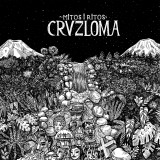
Mitos & Ritos, the debut EP by the Ecuadorian group Cruzloma, consolidates in its six songs a spirit of promoting traditional rhythms in contemporary styles, a process of reinvention and self-discovery in homage to the indigenous peoples of the Ecuadorian jungle and the riches of ceremonial music all in a mix featuring electronica, global bass and dembow. The hostile times humanity is going through have awoken a need to get back to our roots, reclaim ancestral knowledge, and question where the excessive exploitation of natural resources has led us. We have heeded that urgent call to care for everything that seems unlimited but which is increasingly scarce. And so we have looked to the past to understand our relationship with what surrounds us and establish a dialogue between the past, the present and the uncertain idea of the future. Applied to music, this has aroused the interest of artists and producers who use the rich folklore and traditions of Latin America to replicate that dialogue between what was and what will be. With this in mind, Mitos & Ritos ("Myths and Rites"), the debut EP by the Ecuadorian group Cruzloma, consolidates in its six songs a spirit of promoting traditional rhythms in contemporary styles, a process of reinvention and self-discovery in homage to the indigenous peoples of the Ecuadorian jungle and the riches of ceremonial music, based around the bambuco style from Esmeraldas on the northern coast, and the bomba del chota and the san juanito from Imbabura province. On this EP there are also sacred prayers of the Shuar nation, called Ujaj and Anets, including ceremonies like the taking of ayahuasca and of the tzan tza, all in a mix featuring electronica, global bass and dembow. It is a journey into mysticism, the jungle and the dancefloor, reflecting a search for musical identity that is at once contemporary and futurist.
ohann Wolfgang von Goethe is always a reliable source for a good quote: "We must always change, renew, rejuvenate ourselves; otherwise, we harden." Sure as death, there is an excerpt of his that states the opposite. In the case of Robert Dietz, it holds true. Since his first appearance on Running Back in 2009 (Forward Snipping), he did a marvelous job staying on his toes as a producer and DJ.
Rejuve-Nation showcases his talent in various alleys of electronic (dance) music with Crane Song being the prime cut here. You will get exposed to proggy house with an intelligent brush in two slightly different mixes. Imagine if Euro dance went to get a college degree or a bumper car floor and you are almost there: an almost irresistible sing a long without lyrics.
If you need help afterwards, Deranged Self Therapy is exactly what you need. IDM meets new wave drums, poignant synths mix with an upbeat hook to create a ballet piece for lovesick robots.
Centro Di Gravita reconnects those qualities with the aforementioned Crane Song ones, while giving it an acid spin, before the ambient salts of Any Plan(t)s This Weekend closes the EP off like a confident sketch for the end of a beautiful summer. A bouquet of bangers for different needs.
Short: One Rejuve-Nation EP under a groove with Robert Dietz' return on Running Back. Proggy meets acid house, IDM leanings mix with stylistic devices of new wave and extra special ambient aerobatics round out the EP. Special attention goes to Crane Song and its peak time perfection. A bouquet of bangers for different needs.
"After an acclaimed run of performances at the National Theatre in 2018, Hadestown returned to London in February 2024 for its long-awaited West End premiere at the Lyric Theatre, Shaftesbury Avenue.
This Grammy award winning recording represents the Broadway show in its entirety. It features vocal performances by Reeve Carney (Spider-Man: Turn Off the Dark); Tony nominees Eva Noblezada (Miss Saigon), Patrick Page (Spring Awakening), and Amber Gray (Natasha, Pierre and the Great Comet of 1812); and Tony winner André De Shields (The Wiz).
Following two intertwining love stories - that of young dreamers Orpheus and Eurydice, and that of King Hades and his wife Persephone - Hadestown, the 8x Tony-winning musical (including Best Score and Best Musical) by celebrated singer-songwriter Anaïs Mitchell, invites audiences on a hell-raising journey to the underworld and back.
Mitchell's beguiling melodies and innovative director and Tony Award nominee Rachel Chavkin's poetic imagination pit industry against nature, doubt against faith, and fear against love.
Performed by a vibrant ensemble of actors, dancers, and singers, Hadestown delivers a deeply resonant and defiantly hopeful theatrical experience. This album was produced by Grammy® winner David Lai (the 2009 West Side Story Cast Album) alongside Todd Sickafoose and Anaïs Mitchell, who also collaborated on Mitchell’s celebrated modern folk album Young Man in America. This is a new 2LP version in standard packaging making it cheaper than previous deluxe versions. 2 x 140g discs in a gatefold sleeve"
- 1: Desmond Dekker & The Aces – 007 (Shanty Town)
- 2: Lee "Scratch" Perry – I Am The Upsetter
- 3: Pat Kelly – Somebody's Baby
- 4: Delroy Wilson – Once Upon A Time
- 5: The Rulers – Wrong Emboyo
- 6: The Sensations – Right On Time
- 7: Austin Faithful – I'm In A Rocking Mood
- 8: The Maytals – 54-46 That's My Number
- 9: The Paragons – Memories By The Score
- 10: The Rulers – Copasetic
- 11: Derrick Morgan – Conquering Ruler
- 12: Stranger & Gladdy – Seeing Is Knowing (With Lyn Taitt & The Jets)
- 13: Val Bennett – Baby Baby (Aka 5-10-15 Hours)
- 14: The Uniques – People Get Ready Do Rock Steady
- 15: Val Bennett – The Russians Are Coming (Take Five)
- 16: Desmond Dekker & The Aces – A It Miek
- 17: Roy Shirley – Hold Them
- 18: The Kingstonians – Winey Winey
- 19: The Viceroys – Lip And Tongue (Alternate Version)
- 20: The Overtakers – Girl You Ruff
- 21: Lloyd & The Groovers – Do It To Me Baby
- 22: The Upsetters – Return Of Django (Feat. Val Bennett)
- 23: The Ethiopians – Train To Skaville
- 24: Desmond Dekker & The Aces – Intensified '68 (Music Like Dirt)
- 27: The Tennors – Ride Your Donkey
- 28: Derrick Morgan – Judge Dread In Court
- 25: The Uniques – My Conversation
- 26: Stranger & Gladdy – Over Again
The immediate successor to ska, the soulful, melodic sound of rock steady first developed during the long hot Jamaican summer of 1966 and reigned supreme thereafter for two glorious years before finally being superseded by the more energetic style of reggae.
Despite its relatively brief period as the island’s national sound, the rhythms of many of its biggest hits have continued to influence and inspire music-makers to the present day, resulting in renewed interest in the sub-genre among record buyers in recent years.
This superb 2xLP vinyl collection features 24 of the most popular recordings of the rock steady era, including the UK hits, ‘007’, ‘Train To Skaville’ and ‘It Miek’ and The Maytals’ anthemic dance-filler, ’54 46 That’s My Number’.
Pressed on high quality 140gm vinyl and presented in a stylishly designed sleeve, the album not only provides the ideal introduction to this hugely popular and influential sound, but is also a must for established fans of the Jamaican sub-genre, with many of the tracks appearing on vinyl for the first time in decades.
Introducing the next release in Names You Can Trust's long-running collaboration with the prolific and symbiotic musical universe of Bogotá, Colombia. Mau Gatiyo y Los Años Maravillosos formed in 2021, arising from the very same fertile ground of the Teusaquillo neighborhood that has spawned many records and musical mischievousness. At the heart of this experimental movement is what can only be described asTropicanibalismo, where a deep hunger for the roots of Colombian tropical music are only satiated by dissecting it, consuming it and ultimately creating something new again as some kind of untraditional, unholy, and yet referential form of musical sustenance.
Within this concept, there's a clear lineage of inspired and visionary artists that have been featured throughout NYCT's record catalog for the last 15 years that includes luminaries Frente Cumbiero, Meridian Brothers, and Romperayo. Each of these artists' tentacles have touched several parallel projects from their talented neighbors and friends, and whether through production, playing, engineering, or mixing, these collaborations have heavily contributed to a very fruitful and colorful scene that could only exist within Colombia's capital, while also gaining notoriety in the nooks and crannies of northern latitudes like New York, Chicago, and Los Angeles.
Mau Gatiyo, a talented accordian player and vocalist, together with his group (translated as The Wonder Years), is precisely one of these projects, a collective that has found their calling in the echoes of thevallenatosandcumbiasthat once populated the nation's airwaves throughout the 20th century. It's a traditional format that has always lent itself to storytelling, whether it be anecdotes about daily life, or using one's voice to raise uncomfortable questions in protest against the system. This is where Mau Gatiyo's poetic, almostnew wavetimbre finds a lane of its own, straddling a 2020s societal landscape under the guise of ostensibly old-time accordion music.
The debut 7-inch from the group, an excerpt from their recently released album Baño Unisex, was recorded at Mambo Negro studios by Ivan Medellin (La Sonora Mazurén) and mixed by Eblis Alvarez of Meridian Brothers, both familiar names and contributors to the NYCT catalog. Alvarez himself, who has emerged in recent years as an international beacon of this new tropical avant-garde, is no stranger to flipping traditional styles on their head, or at least respectfully off-kilter. Mau Gatiyo y sus Años Maravillosos proves to be another great vessel for this veryBogotano expression, draping the classical playing of its group members in a modern day cosmopolitan expression of righteousness, both outwardly in their dashing, performative fashion sense, and lyrically with their cheeky "420, Reloj"ganja-tune promotion – or even their outward dissenter objections to paramilitary and firearm power in "Poder Militar."
Ultimately, these songs lie at the crossroads where two cultural eras connect and become something unique, a protestation one with performance, dance, and artistic expression. This cathartic ritual of protest has a storied history in music, and these two new entries into the NYCT catalog will hopefully find their place amongst a modern day canon, or at the very least, have your feet moving and your head nodding in just approval.
Mexican sensation Pahua comes to Razor-N-Tape via a huge remix project featuring some of the hottest producer names in current outer-national dance music. This special 7 inch version features two newcomers to the RNT remix roster.
On the A side, global groove merchant Poirer delivers a stripped down and hypnotic mix in his signature style Pahua’s uptempo anthem ‘Espantapájaros”.
On the B side, Detroit Latin production legend John Beltran adorns the melancholic ‘Flor de Jazmin’ with a samba-inflected rhythmic foundation and a lush horn arrangement that transports you straight to Cafe del Mar, Ibiza.
This package honors the essence of the original music, while flipping it in quintessential RNT club-ready fashion.
Disco Segreta breathes new life into two of the most elusive and coveted italo disco tracks of all time!
Originating from the paradisiac island of Sardinia, Italy, Susy Pintus embarked on her musical journey alongside her brother at Radio Cagliari Centrale, one of Sardinia’s very first “free radios,” which opened its doors in 1977. Her singing career took flight in 1978, and by 1979, she attained national acclaim with her single “C’Est Magnifique,” a disco reinterpretation of the renowned Cole Porter track.
However, Susy’s most sought-after single undoubtedly remains her 1986 italo-disco 45 featuring the tracks “Fragile” and “Live for Your Love”. These compositions, expertly arranged by Italian jazz piano virtuoso Danilo Rea and superstar musician Aldo Tamborrelli, weave a captivating tapestry of sound using instruments like Yamaha DX7 and CP80, Roland Juno 60 and JX 8P, as well as the omnipresent Linn 9000. The result is a distinctive blend of italo-disco, synth-pop, and a touch of the “balearic” vibe.
Originally released in a limited run of 1500 copies on a 45, these tracks have become exceedingly rare over time, finding their way into the wishlists and collections of discerning italo-disco enthusiasts.
Now, Disco Segreta proudly reissues these two exceptional italo disco gems, granting them the expanded 12” treatment they rightfully deserve.
This deluxe edition includes the original tracks, meticulously remastered to meet contemporary standards without destroying the feel of the originals, along with two remixes of “Fragile” and “Live For Your Love” by Italian wonder Cosimo Mandorino aka Cosmo Dance.
Belgian Johan van Roy has had one of the longest careers in electro-industrial music, rising from humble beginnings in the '80s EBM scene to become a figurehead of the genre.
Suicide Commando's music is characterised van Roy's nasty, ultra-nihilistic worldview and his unflinching exploration of the dark side of human nature, combined with the intense, dancefloor-focused sounds in which it was packaged.
Now, exactly 20 years after its original release in 2003, Suicide Commando’s legendary Axis of Evil album is re-released with lots of brand new goodies.
South African Warrick Sony is a ground breaking composer who was behind the Kalahari Surfers project which now gets a vital spotlight courtesy of Emotional Rescue. This compilation shows how effortlessly eclectic his sound was - from jive rhythms to jazz, tabla to political speeches and much more in between. A Hindu pacifist who was once conscripted into the South African Defense Force, he founded this group as a way out getting his ides out there, calling on other musicians as and when he needed them. It was the first radical white anti-apartheid pop in South Africa and as this vital collection shows it explored polyrhythms, slow motorik, dub sound collage and even a goofy cover of Nancy Sinatra.
In the ever-evolving landscape of the underground music scene, few bands have made an impact quite like Selofan, an immensely talented duo of Joanna Pavlidou and Dimitris Pavlidis, has carved a niche for themselves within the international pantheon of darkwave, post-punk, and '80s synthpop, blending these influences to create a sound uniquely their own. Their journey, marked by a commitment to artistic integrity and evolution, has taken them from the cozy confines of local venues to the grand stages of international festivals, earning them a dedicated following and critical acclaim along the way. Their sixth album, Partners in Hell, released in October 2020, navigated the band through unprecedented times, testing their adaptability and resilience. Despite the hurdles to performing live and the global pandemic's challenges, Selofan emerged stronger, embarking on international tours with a newfound appreciation and connection with their global audience, during this period of introspection and isolation, Joanna Pavlidou embarked on a new venture, GIOVANNA, released under Selofan’s house label, Fabrika Records. GIOVANNA, which places Pavlidou at the helm of vocal and lyrical composition, represents a full on foray into synth-pop. showcasing a different facet of her artistic identity, with lyrics entirely in Greek. In 2023, Selofan hit the circuit hard, lighting up revered festivals with their presence. They stood shoulder to shoulder with heavy hitters like Molchat Doma and Lebanon Hanover at Grey Scale and performed with with the likes of The Sisters of Mercy, VNV Nation, and She Past Away at the Death Disco fest in their hometown of Athens. With each album they have released Selofan made significant strides in their evolution, deepening their engagement with their art. And their forthcoming seventh full length studio release, Animal Mentality, is poised to be their most compelling work yet. Animal Mentality unfolds as a labyrinthine journey through the elemental aspects of human emotion and experience, set against the backdrop of Selofan's signature darkwave sound. Each track on the album delves into different facets of the human condition, from the depths of desire to the pangs of isolation, encapsulating the duo's profound understanding of the intricate spectrum of human emotion and subjective experiences. The album kicks off with "Sticky Fingers," a track that melds cinematic scope with a haunting storyline, reminiscent of Jean-Michel Jarre's icy synths and a lyrical nod to Joy Division. This opening salvo revisits the tragic allure of classic car accident songs, weaving a tale of joy turned to sorrow amidst the snowy Alps. "Love's Secret Game" delves into the depths of forbidden desire, with vocals that echo the melancholy timbre of Xmal Deutschland, Lebanon Hanover, and Nico. It's a tale of passion and ephemeral connection, promising an enduring presence despite the inevitable fracture of time and distance. In "Lucille," sung by Dimitris Pavlidis, the plot is ensnared in the machinations of a tempestuous affair, with gothic undertones evoking the dramatic soundscapes of Ultravox and Clan of Xymox. The lyrics are steeped in danger and desire - a dance with the shadows. "Sacrifice Me" plunges into the abyss of despair, driven by a Bauhaus-esque bassline. It's a plea for release from the chains of alienation, a yearning for a final gesture of solace in the face of overwhelming darkness. "Bluebirds" offers a poignant reflection on solitude, with the fleeting imagery of bluebirds symbolizing the elusive quest for happiness. The song serves as a meditation on the internal struggle to maintain hope in a world shaded by sorrow. The narrative shifts with "Glassplitter," where German lyrics paint a portrait of deceptive allure and toxic entanglement. We are confronted with irresistible danger, masked by a veneer of beauty. "Ignoranz" continues the exploration in German, pondering the universality of misunderstanding. It's a reflection on the subjective nature of truth and the shared human experience of ignorance. "Behind My Eyelids" closes the odyssey, a contemplation on melancholy and metamorphosis. The phoenix rises from the ashes of betrayal to the brighter realm of renewal - a beautiful homage to the resilience of the human spirit amidst the often harrowing cycles of life. More than just an album, Animal Mentality is a milestone in Selofan's career, marking a decade of musical innovation and growth. It's a testament to their enduring spirit and a bold step into new realms of artistic expression. As Selofan continues to evolve, they remain at the forefront of their genre, pushing boundaries and exploring the depths of the human psyche through their haunting melodies and poignant lyrics.
Rich in ancestral flows, between Ghana and Europe, powered by deep, conga led rhythms and seductive warm horn riffs come Jembaa Groove, whose new album and newly rendered sound, reminds us that jazz, in its contemporary, soulful form is not just a London ‘ting’. Highlife is Ghana’s colourful national tradition and is at the heart of Berlin based Jembaa Groove’s groove. And this newly crafted follow up to their debut album. Susuma from 2022, goes even further in provoking new perceptions of jazz and soul music helped by young and senior blood from Ghana and its diaspora. Vocal masterclasses come via Sheffield (UK) based K.O.G and original veteran of the 70s and 80s highlife scene Gyedu Blay Ambolley with Ghanian multi-instrumentalist and producer Kwame Yeboah (Kwashibu Area Band) also providing inspiration.
Yet this is not a breakout moment. For the last 2 years Jembaa Groove have been entertaining discerning dancefloors worldwide. They continue to ratchet up a solid and loyal fanbase buoyed by breakout performances at SXSW (USA), ESNS and Supersonic Jazz Festival (Netherlands). And now looking through the keyhole of 2024, with live headline and album launching dates in April confirmed in London, Paris, Madrid and Berlin and an exciting touring schedule ahead, the future of contemporary, highlife inspired Afro-Jazz is in motion and spreading like gospel.
- A1: Brand New Girl - Billy Garner
- A2: Mister Bass Man - The Fatback Band
- A3: Bad On Bad - Chet Ivey
- A4: Grits And Gravy - The Fame Gang
- A5: Foolish Man (Part 1) – The Huck Daniels Co (Featuring Johnny Adams)
- A6: Funky Kingston - Tribe
- A7: Over Dose (Of Your Love) – The Two Things In One
- B1: Stop! - Camille "Lil" Bob
- B2: Hypocrisy - Millie Jackson
- B3: Do It - Billy Sha-Rae
- B4: Mother Popcorn - The Mello Matics
- B5: Here Comes The Judge - Larry & Tommy
- B6: Soul Feeling Pt 1 - Eddy Giles
- B7: Get Me Back On Time, Engine #9 – National Soul Review
This Is Street Funk” is part of a new series aimed at vinyl buyers who want a genre specific compilation to excite their ears. They will appeal to long-standing, discerning music acolytes and recent converts alike. Two sides of fantastic music, at an affordable price, hand-picked with TLC from Ace and its associated catalogues.
Compiled by Dean Rudland, who also writes the liner notes, “This Is Street Funk” brings you 14 tracks of hard hitting, heavy funk, and sums up the sound of 70s Black America. A combination of fatback drums, syncopated bass, rhythmic guitars and explosive vocals.
The line-up of tracks includes classics from the Fatback Band and Millie Jackson, dancefloor favourites from Billy Garner and Billy Sha-Rae and screaming organ instrumentals from the Fame Gang and Larry & Tommy.
This is fourteen tracks that defy you to start dancing.
The Left Side is the latest body of work from the Iggy Pop-endorsed teens since the release of their acclaimed second EP We Aren’t Getting Out But Tonight We Might in summer 2022. With Saul at the creative helm, The Left Side is a mature and cerebral body of work with Saul once again writing and producing the entire EP (with co-production by Ali Chant (Yard Act, Katy J Pearson, Dry Cleaning) on ‘Conman’ and ‘ITSA’). Written in Saul’s bedroom, the EP is a retrospective insight into the young band’s journey so far as they tie up their teenage years.
A coming of age saga, the EP acts as a vehicle for Saul to dive into the psyche behind emotional evolution, and to unpack the complexities of maturity and the ability to say goodbye to the past. These themes present themselves not only in the songs, but right down to the title of the EP itself - which refers to the fact that the left side of the brain is responsible for comprehension.
Summarising the EP, Saul says: “It’s the closest we have been to knowing what picture we want to paint. It’s another window into the musical space we wish to explore, yet I think we’re closer to having our sound. I think the project signifies the end of a section in our lives, moving out from the haze of the moment and reflecting on our teenage years and all its chaos with more understanding.”
L’objectif have drawn instant acclaim across their two EPs to date with support coming from key tastemakers at 6 Music (where previous single ‘Feeling Down’ was daytime playlisted after being premiered by the station’s Steve Lamacq) such as Amy Lamé, Tom Robinson, and of course Iggy Pop, BBC Radio 1’s Jack Saunders (who made the band his Next Wave featured artist and featured
‘Burn Me Out’ and ‘Do It Again’ as Daily Delivery) and Gemma Bradley, Radio X’s John Kennedy, Apple Music 1’s Matt Wilkinson, and Australian national broadcaster triple j. The effervescent young band have already received ‘ones to watch’ tips from national media outlets NME (First On), The Line Of Best Fit (On The Rise), The Observer (One to watch), The Sunday Times Culture (Breaking Act), and more.
Circus of Desire is the much anticipated third studio album from Grammy-nominated folk singer-songwriter Olivia Chaney. Worked up over five eventful years, this collection of lovingly wrought songs was recorded in NYC with long-time collaborator, producer and musician Thomas Bartlett (David Byrne, the Magnetic Fields, Sufjan Stevens, The National, St. Vincent, Father John Misty)
Consisting of ten originals and one cover (a revoicing of Dory Previn’s haunting ballad ‘Lady with the Braid’), this album is Olivia set free. Taking their departure from real life experiences, these songs strain towards the universal. The title track blends the carnivalesque and meditations on ancient wisdom with an anthemic, dancy refrain. ‘Calliope’ is a tribute to Olivia’s daughter, named after the Greek muse of music and epic poetry, picturing this little life as part of the ever-revolving cosmos. ‘To the Lighthouse’ tells the story of her sister who left the capital to live on a remote island. Like ‘Mirror, Mirror’ and ‘Why’, a pair of tracks about erotic love, this song reflects upon our capacity to flee and transcend inherited trauma. ‘Zero Sum’ is a setting of a metaphysical number poem by Olivia’s grandfather, a mathematician and poet. ‘I Wish’ - the album closer, is the ultimate breakup song.
Whilst staying true to her folk roots, Olivia enters new musical territories with Circus of Desire, venturing into the realms of pop and dance. The record features cameos from a number of friends, including string arrangements by Nico Muhly and banjo and guitar from Sam Amidon. The result of this rich blend of musical influences is an album that looks honestly, sometimes despairingly, but primarily hopefully at the carnival that is life - ‘we’re in a dance with death, with fire…we’re all in a circus of desire’.
Circus Of Desire by olivia Chaney, released 22 March 2024, includes the following tracks: "Why", "Galop", "Bogeyman", "Mirror, Mirror" and more.
This version of Circus Of Desire comes as a 1xLP.
Rock & Roll, indeed. Ruth Brown’s sizzling full-length debut — also known by its eponymous title — symbolizes what was exciting, fresh, invigorating, and raw about the burgeoning style in its halcyon days. Originally released in 1957, and reissued here in audiophile quality for the first time in partnership with Atlantic Records’ 75th anniversary, the set remains a testament to one of the most pioneering and talented vocalists to ever command a stage.
Mastered on Mobile Fidelity Sound Lab's renowned mastering system in California, pressed at RTI, housed in a Stoughton jacket, and strictly limited to 2,000 numbered copies, Mobile Fidelity’s 180g mono LP of Rock & Roll plays with an immediacy, vibrancy, and fullness that showcase the reach, power, and emotionalism of Brown’s voice. The sound of her support musicians — brassy horns, swinging rhythm combos, echoing backing vocalists, rollicking pianists, jaunty guitarists — is made clear and vivid, helping the upbeat fare to jump, juke, and jive with newfound energy and exuberance. In a related manner, Brown’s slower, more understated material crackles with an intimacy and passion that let you know you're in the presence of a woman who has lived what she sings. The longtime Rock and Roll Hall of Fame member deserves nothing less.
In an era dominated by big-throated vocalists, few — if any — came grander than Brown. The singer, whose repeat million-selling ‘50s success with Atlantic Records led many to call the then-indie label “The House That Ruth Built,” charted two dozen R&B hits in the span of a decade for the fledgling imprint. Rightly coined “Miss Rhythm,” the extroverted Brown put Atlantic on the national map, became the best-selling female musician of the ‘50s, and established a precedent that would ultimately lead to Grammy and Tony Awards. Her early works have lost none of their fire or flair.
Akin to many full-length LPs of its era, Rock & Roll doubles as a collection. Its 14 tracks comprise some of the more famous sides Brown recorded for Atlantic, beginning in 1949 with the all-time-great rendition of the ballad “So Long,” and continuing through 1956. After the song caught the public’s ear, the Virginia native briefly became known for her smoldering style with lovelorn material and torch songs, approaching them (see “Oh What a Dream,” “Old Man River”) with a combination of pained sadness and hardened resilience that had no contemporary equal. Encouraged to pursue the style by Atlantic Records co-founder Ahmt Ertegun, her R&B-driven material soon made her a constant chart presence.
Demonstrating what fellow legend Bonnie Raitt deemed “sex with class and dignity,” Brown merges blues and jazz, swing and gospel in electrifying fashion. She dares you not to move, dance, and get on your feet. A majority of Rock & Roll explodes with uptempo runs and jaunty readings of hot-blooded R&B numbers. Sweaty and sultry, bawdy and bold, Brown eclipses the anthemic blare of the saxophones and joyful clatter of the 88s, singing with a slight catch in her voice and hurricane-gale force that threatens to blow the roof off whatever room her voice occupies.
Evidence abounds. Listen to her prod the band and encourage the band members to blow a fuse on a sizzling “Hello Little Boy,” complete with cries and wails; stretch her phrasing to the heavens on the swaying “Wild Wild Young Men,” laden with romp-and-stomp beats; plead and persuade on the snaking “5-10-15 Hours,” which flips the script on the age’s notions of dominance; use her raspy tones, high notes, and breath control to mesmerizing effect on the smash “Mama He Treats Your Daughter Mean,” recorded with a group led by Ray Charles; survey the scene and take charge on the steaming “As Long as I’m Moving”; and tap a classy albeit flirtatious vein on “Lucky Lips,” which dented the pop charts as her first crossover hit.
Throughout Rock & Roll, Brown knows the lyrical connotations and spirited architecture of the songs inside-out. Her assertive voice — never harsh, strident, or false — is the epitome of the passionate desires and sonic strains that turned into nascent rock ’n’ roll. Brown played a pivotal role in helping the style develop, the record a timeless reminder of a lasting legacy that will never be forgotten.
In 2005, an 18-year-old Raphael Gimenes left the sunny shores of Brazil behind, embarking on a journey to a distant and wintry land. "Dinamarca," the Portuguese name for Denmark, became his new home, where he has lived for almost two decades. Today, he presents his third album, a deep exploration of his life in Scandinavia. Rather than being a nationalistic tribute, "DINAMARCA" tells chapters from Gimenes" life story as a Brazilian living in the northern corners of the world. It guides us through the enchanting nordic woods, the vast fields stretching to the horizon, and the timeless sea resting beneath an endless sky. The melodies of blackbirds, the dances of red deer, and the whispers of ancient oaks form the backdrop for his musical stories. Within his songs, we experience moments of deep solitude and boundless inspiration, moments where reflection and creative passion intertwine. Gimenes skillfully turns the power of love into harmonies, dedicating songs to both his companion and his closest friends. Beyond these experiences, he leads us on journeys to Denmark"s neighboring lands, Norway and Sweden, where revelations and encounters with the mystical found their way into the lyrical fabric of his songs. The album"s orchestration includes Gimenes" vocals and the resonant chords of his classical guitar. Accompanying him throughout the album are Jan Kadereit"s multilayered percussion, and Lucas Delacroix"s bass synth, who also plays the electric guitar at times. The music further unfolds with the nuances of a string quartet, and a brass quintet, both recorded in the tropical highlands of Minas Gerais. Other guest musicians feature on individual songs, such as pianist Sebastian Macchi, flautist Flavia Huarachi, cellist Lucas Almeida, and singers Gaby Echevarria, Cecilia Pahl, and Cris Ferro. Gimenes has garnered acclaim and accolades across continents. His debut release, "Raphael Gimenes & As Montanhas de Som," delved deep into the rhythms and traditions of Brazil. It rose to prominence as the top Brazilian release in 2016 in Holland and was hailed as a "conceptual masterpiece" in Japan. His second album, "A Tongue Full of Suns," co-produced with Faroese multi-artist Teitur, ventured into the English language, blending Gimenes" inspirations from the world of prog-rock. Danish rock legend TimChristensen praised it as "top-shelf neo-folk," while Brazilian website80minutos described it as "hypnotizing." The music within "DINAMARCA" delves deep into the soul of a man who embraced a new land with open arms, while staying true to his roots. It unites elements from both of Gimenes" prior works, embarking on a journey across new musical horizons. The result is music that transcends borders, weaving itself into an intricately beautiful tapestry - a soul that has learned to harmonize with two worlds.