Magic Source is back with an exclusive 2 tracks single filled with their special rootsy cosmic funky touch.
Led by producer & notorious tape operator Björn Wagner (of Mighty Mocambos, Bacao Rhythm & Steel Band and Mocambo Records), the group follows up to the release of their 2nd LP last year, Voyage Spectral. This time again, the German band dives into the Tropical and international aspects of Disco and Funk music, always using 100% organic production and recordings material.
On this 2 tracks single, you’ll first find a blazing and unexpected covers of “Voodoo Ray” the classic acid-house track by A Guy Called Gerald, with special vocals by Mounam & Gizelle Smith. Following up to this already dancefloor classic, comes “Interplanetary Bounce”, a new and exclusive composition from the band also tailored to make you move, with its Boogie touch and heavy breaks.
out of Stock
Last delivered 8 months ago available to reorder, subject to availability
A new full-length from THE ORB following last year's acclaimed album MOONBUILDING 2703 AD.
An expertly crafted ambient experience from two pioneers at the height of their creativity
180g standard vinyl version comes with download code of the full album
Being pioneers with a new album created in no more than 6 months, THE ORB are bound to be exposed to fan expectations running high, while quizzical questions about little fluffy clouds and the good old times take over. It's especially jarring as the duo of accomplished soundsmiths Alex Paterson and Thomas Fehlmann has become known for its genre-bending curiosity and surprising sonic detours, exploring experimental soundscapes as well as club-friendly beats.
The funny thing is, though, that whatever the context, you know a track from THE ORB when you hear it. Case in point: COW / CHILL OUT, WORLD!, their latest full-length offering - a masterful ambient album that branches out in many directions, but unmistakably sounds like THE ORB in either ear (and probably to your third ear, too).
"The idea was simply to make an ambient album", Dr Paterson explains, "we didn't look back and study earlier recordings, but wanted a more spontaneous approach, a focus on THE ORB today, our vibe in 2016."
In contrast to their much-acclaimed previous full-length MOONBUILDING 2703 AD (KOMPAKT 330 CD 124) - which took years to prepare and finetune -, the new album was produced over the course of only five sessions in six months, directly following the like-minded ALPINE EP (KOMPAKT 339): "it got so spontaneous that a track like 9 ELMS OVER RIVER ENO (CHANNEL 9) consisted only of material collected at North Carolina's Moogfest in May - second-hand records from local stores, field recordings, live samples from gigs that we liked, and of course an excursion to the Eno River, which actually exists. This geographic intimacy and the spontaneity are among the top reasons why we love this album so much."
Herr Fehlmann sees the duo's relentless gigging schedule as a formative influence on the new album: "the countless performances we've played in the last years - probably up to 300 - have brought us closer as a musical unit. The spice of our concerts is improvisation - a fertile process that we've brought to the studio, where we operate with very simple rules of engagement (in this case "ambient") and go wherever the flow takes us." It's an approach that one might expect from traditional acoustic instrumentation, not necessarily an electronic set-up, but for THE ORB it works wonders: "we're quite happy and also a little bit proud that we've reached this level of unscripted levity with purely electronic means. We're finessing ourselves, sort of, always looking for the next sonic surprise that leaves us rubbing our eyes about how the heck we got there."
Once more, THE ORB's trademark playfulness is on full display on COW / CHILL OUT, WORLD!, and it doesn't limit itself to the multi-layered sampling and psychedelic sound composites that the duo has become known for - you'll find it in the album title as well. The simple invitation (or order) to chill out (relax Calm the eff down) is converted into an acronym - and the cow that you might expect to find on a Pink Floyd cover or with iconic UK chill-out/dance pranksters The KLF. It's not so much an obscure trope coming full circle as a perfect example for THE ORB's multitimbral approach to sound and meaning - a compelling, immersive journey to diverse places and impressions.
Each track title is a conceptual work in its own right, playing with multiple references, some of which remain highly personal and mysterious. But the greatest feat of THE ORB's latest outing might just be how all this semantic doodling never gets in the way of the actual listening, at all times directly relating the artists' sonic vitality and cheerful nosiness. Chill out world! and treat yourself to an outstanding new ambient experience from THE ORB.
Barker makes solo debut on Ostgut Ton with new experimental dancefloor EP
Sam Barker has had a long ongoing relationship with Berghain and Ostgut Ton, having released two LPs and various EPs as one half of Barker & Baumecker and hosting regular nights at the club since September 2008 as co-founder of the label Leisure System. 2017 marked the beginning of his solo residency, 2018 sees his first solo release with Ostgut Ton.
Both as a musician and label owner, Barker operates on the fringes of techno, balancing experimentation with functionality. On Debiasing, he takes a hard look at the musical elements often
considered necessary to maintain dancefloor momentum, with four distinct tracks of morphing synth stabs and paired down metronomic rhythms in varying time signatures. While there is no kick, snare, or clap to be heard, the result is not experimental techno deconstructions but driving, hypnotic and unlikely dancefloor tools.
Inspired by the psychology underpinning relationships between producer/DJ and audience, Debiasing is an exercise in creating alternative paths within a techno framework. In Barker's own words: If you have ever sat down with a drum machine and tried to elude the rules of dance music, you will find at whatever tempo, and however you arrange the rhythms of each sound, you inevitably end up somewhere. I've generally tried to get away from that, but you always hit against this problem of an all-encompassing taxonomy and the baggage that comes with it. For a long time, music only seemed to show me how deeply locked into our habits and patterns we are.
out of Stock
Last delivered 40 days ago available to reorder, subject to availability
Mit ihrem Debütalbum, 'Portraits', aus dem Jahr 2015 und dem ebenso hochgelobten 'Kingdom In Colours' aus dem Jahr 2018 haben Maribou State die Weltbühne betreten und gefühlvolle Downtempo-Electronica für eine neue Generation neu definiert. Ihre Musik wurde von Medien wie Kulturnews, Beat, TV Spielfilm & TV Today, Piranha & Start und wurde beim Münchner Radiosender, egoFM, sogar das Album des Jahres! International gab es zudem Support von u.a. NME, Complex, GQ, Clash und Crack Magazine, Mixmag kürte Maribou State zu einem ihrer 'Künstler des Jahres' und BBC 6Music huldigte 'Kingdom In Colours`' als „Album des Tages“, während Annie Mac, Gilles Peterson, Pete Tong und viele andere die Band unterstützten, sowie US-Radioplay von KCRW & KEXP - wo sie auch eine spezielle Live-Session spielten. Außerdem gab es Welttourneen, Auftritte an majestätischen Orten wie der Sydney Opera sowie Auszeichnungen als Künstler des Jahres und mit „Feel Good“ auch eine äußerst erfolgreiche Single mit Khruangbin. Bei 'Hallucinating Love' hat sich das Warten jedenfalls definitiv gelohnt: es ist ehrgeizig, vollgepackt mit erhabenen Hymnen und gespickt mit rastloser Energie, schwebenden Streichern und umwerfendem Gastgesang von Holly Walker, mit der sie schon seit vielen Jahren zusammenarbeiten, und neuen Freund:innen, wie der MOBO-nominierten Künstlerin Andreya Triana. Es unterstreicht Maribou States sich entwickelnde Balance zwischen Intimität und Komplexität, sowie ihr Talent, epische Musik für Sonnenuntergänge zu machen. Die engere Zusammenarbeit mit anderen half auch dabei, musikalisches Gold zu schürfen, und zwar bei verschiedenen Aufnahmesitzungen in idyllischen Gegenden im ganzen Land. Liam und Chris luden Kollaborateur:innen wie den unglaublich talentierten Produzenten Jack Sibley und den Bassisten Jonjo Williams ein und schufen so überall, wo sie hinkamen, kleine provisorische Gemeinschaften. Das verlieh ihrer Musik eine neue Energie.
out of Stock
Last delivered 19 months ago available to reorder, subject to availability
Schrödinger’s Box welcome Catalonia’s Adrian Marth into the fold. The Iberian artist has been drawing crowds and turning heads with his analogue inspired productions and dancefloor inhibitions.
This five tracker sees the Italo Moderni founder explore the glittering angles and brooding shadows of his machines. The punishing percussion and beaming laser lights of “Labyrinth Mind” give way to the tumbling drums and racing synthlines of the addictive “Sex Tonight.” The flip opens with the sleazy grandeur of “Beverly Hills”, looming melodies and retro flourishes combine in this operatic ode to the 1980s. Speaking of the 80s, the inspiration for the penultimate comes from a figure who symbolised the bombastic bravado of the era. “Divine on the Late Show 88” is a tribute to the Pink Flamingos legend, beats sparkle as her sequenced dresses and larger-than-life attitude screams into the present. Danny Wolfers takes the helm to close. Donning his familiar Legowelt moniker, the behemoth of all thing electronics delivers a saturated and spiralling rework of “Divine on the Late Show 88” to the close.
out of Stock
Last delivered 10 months ago available to reorder, subject to availability
Mint Condition - A brand new record label focussed on excavating the outer fringes of classic House and Techno. Unreleased mixes, classics and overlooked gems mined from the last 20+ of contemporary dance music are the order of the day. From Chicago, Detroit and New York to London and beyond, Mint Condition have got their expert digging hats on to bring you exclusive heat and those rarer than rare jams that have been on your wants list for years! Dig in.... Another dyed-in-the-wool house classic here, from all the way back in the golden mists of 1987 on the tiny, cult Danica label. Don't forget, Mint Condition's mission is to bring you the classics too, a nice, new copy to play out in the club so you can keep your original nice and fresh! We care about these things. That's why we're happy to present this monumental slab of Chicago house history from one of the absolute gods of this culture - Mr. Frankie Knuckles - this time operating under his Night Writers alias. We're not sure too much needs to be said about this one, it's all here really, that classic Knuckles deep touch, the musicality, the vibe... Ricky Dillard's vocals encapsulating that feeling when the music takes over, pure abandon. The pairing of these two talents results in what would eventually become a bona-fide house CLASSIC. No arguments. If you're not familiar you're in for a treat, if you already know then you're nodding your head and agreeing with everything you've just read. Simple really - YOU NEED THIS ONE ! 'Let The Music Use You' has been legitimately re-released with the full involvement of all license holders for 2017 and remastered by London's Curve Pusher from the original sources especially for Mint Condition. 100% legit, licensed and released. Dug, remastered, repackaged and brought to you by the caring folks at your new favourite reissue label - Mint Condition!
Mit ihrem Debütalbum, 'Portraits', aus dem Jahr 2015 und dem ebenso hochgelobten 'Kingdom In Colours' aus dem Jahr 2018 haben Maribou State die Weltbühne betreten und gefühlvolle Downtempo-Electronica für eine neue Generation neu definiert. Ihre Musik wurde von Medien wie Kulturnews, Beat, TV Spielfilm & TV Today, Piranha & Start und wurde beim Münchner Radiosender, egoFM, sogar das Album des Jahres! International gab es zudem Support von u.a. NME, Complex, GQ, Clash und Crack Magazine, Mixmag kürte Maribou State zu einem ihrer 'Künstler des Jahres' und BBC 6Music huldigte 'Kingdom In Colours`' als „Album des Tages“, während Annie Mac, Gilles Peterson, Pete Tong und viele andere die Band unterstützten, sowie US-Radioplay von KCRW & KEXP - wo sie auch eine spezielle Live-Session spielten. Außerdem gab es Welttourneen, Auftritte an majestätischen Orten wie der Sydney Opera sowie Auszeichnungen als Künstler des Jahres und mit „Feel Good“ auch eine äußerst erfolgreiche Single mit Khruangbin. Bei 'Hallucinating Love' hat sich das Warten jedenfalls definitiv gelohnt: es ist ehrgeizig, vollgepackt mit erhabenen Hymnen und gespickt mit rastloser Energie, schwebenden Streichern und umwerfendem Gastgesang von Holly Walker, mit der sie schon seit vielen Jahren zusammenarbeiten, und neuen Freund:innen, wie der MOBO-nominierten Künstlerin Andreya Triana. Es unterstreicht Maribou States sich entwickelnde Balance zwischen Intimität und Komplexität, sowie ihr Talent, epische Musik für Sonnenuntergänge zu machen. Die engere Zusammenarbeit mit anderen half auch dabei, musikalisches Gold zu schürfen, und zwar bei verschiedenen Aufnahmesitzungen in idyllischen Gegenden im ganzen Land. Liam und Chris luden Kollaborateur:innen wie den unglaublich talentierten Produzenten Jack Sibley und den Bassisten Jonjo Williams ein und schufen so überall, wo sie hinkamen, kleine provisorische Gemeinschaften. Das verlieh ihrer Musik eine neue Energie.
out of Stock
Last delivered 16 months ago available to reorder, subject to availability
Legendary House don Harry Romero joins Rekids for the first time with the ‘Nice To Meet You’ EP comprising two massive tracks with classic NY House DNA with the sort of modern twist Romero’s become synonymous with throughout his two-decade-plus career. The Bambossa Records founder now lands on Radio Slave’s flagship label following an impressive 2024, which featured releases on Faith, Nu-Groove, and Defected.
After his appearance on Rekids’ podcast series in August, House hero Harry Romero starts the label’s 2025 with the ‘Nice To Meet You’ EP. First up is the title track, a uniquely hypnotic cut with a bold kazoo melody and raw, club-ready low-end that shines on the breakdowns and high-impact drops. ‘Danny’s Groove’ is next, a track with real Romero energy, its rhythm carefully layered with an organic drum shuffle at the centre, an ear-catching whistle melody in the back, and plenty of synth hits in between - the ‘Nice To Meet You’ EP is a masterclass in building and releasing energy on the dancefloor.
Radio Slave’s Rekids imprint was founded in 2006 and has since spawned successful offshoots with the Techno-focused Rekids Special Projects in 2017 and its newest sublabel, REK’D, in 2024. With Matt Edwards as the sole A&R, Rekids has been crucial in developing early artist careers and has become a haven for established acts operating in House and adjacent genres, having recently featured the likes of Hilit Kolet, William Kiss, Bushwacka, Mathias Kaden, Katerina, Sean Johnston, and many more.
out of Stock
Last delivered 6 months ago available to reorder, subject to availability
For this fifth album, the musical frequencies emitted by Vaudou Game have spread beyond the confines of the city and country, crossed the Atlantic, and reached Colombia. Drawn like magnets, tropical waves traveled along the equator from Latin America to Togo, arriving at the doors of the OTODI studio. They, too, wanted to join in and take advantage of its legendary analog equipment. Welcomed by Peter Solo, they weren’t the only contributors to the band’s renowned hypnotic groove.
The sedans parked outside tell their own story. From Lomé’s bustling market, the Nana Benz of Togo arrived to weave the delicacy of their beguiling vocal harmonies into call-and-response exchanges with Peter Solo. Meanwhile, Lomé Vio, a youth group whose instruments were provided by Peter during turbulent times, lent the strength of their trio of voice, guitar, and accordion.
Still operating under the supreme authority of funk guided by the esoteric and mystical essence of the Vaudou scale, Vaudou Game brings together the hands of highlife and cumbia in perfect unison. With guitars, percussion, horns, and future-vintage keyboards setting hips in motion or creating the most intriguing atmosphere, Peter delivers his messages hidden behind his iconic, inextricable mask. Whether political, human, or environmental, these messages are always wrapped in thick layers of sarcasm and humor, cleverly disguised to serve the exclusive purpose of joyful, dance-driven trance.
With the subliminal mantra to repay Africa—its people, its land—Vaudou Game calls out: FINTOU!
out of Stock
Last delivered 20 months ago available to reorder, subject to availability
I first saw Hugh and Jackson play together at Good God’s ‘Soft Future Piano Bar’ at the Sydney Opera House in 2017. That year was a fruitful year for the two as artists and for the Sydney music community in general. I remember that all of us, along with Greville and Brad, hosted a DIY party in a tunnel under a highway somewhere near Sydney Airport. Is that the same tunnel that Tunnel Dancers derived their name from? 7 years after that first meeting at the Sydney Opera House, Hugh and Jackson have released an album. Listening to these songs there is an audible patience and understanding between two musicians. They probably could have released something else a long time ago, but chose to wait - instead enjoying bowls of laksa on their lunch breaks and sharing long, quiet conversations at The Babylon Sauna & Spa. When the next warm bowl of noodle soup arrives on your table, how long will you let it sit before you dive in? Soup first or noodle first? If you learn from these songs, perhaps you will know to first observe the whole bowl. Observing in this way, the moment settles and hovers and remains for much longer than a moment.
out of Stock
Last delivered 17 months ago available to reorder, subject to availability
Innershades comes with a follow up on his Clone Jack For Daze debut from 2019 with his buddy Betonkust.. This time he digs in the local history from his homebase Belgium. The country that brought us the New Beat craze which had its breeding grounds in club's such as Boccaccio. A venue which used to be one of the prime locations in the Benelux to hear the latest House and Techno releases in '89,'90 and '91. All the fresh new sounds from Chicago, Detroit, the big New York labels and producers, Early UK rave and of course the local producers from the Benelux and specificaly those on labels such as R&S, Music Man and USA Import records could be heard in this euphoric club. No surprise that Serge, the founder of Clone records has some fond memories of his visits to Boccaccio and no surprise that this era always has been a huge influence on Innershades. This Homage EP brings a collection of tracks drenched in bleepy acid lines, topped with choir pads and slightly detuned slowly phased chords and dominant mixed bass sections. Energetic tracks that capture the spirit of those days with a contemporary touch from Innershades. Tracks that fit perfectly to the Clone Jack For Daze series inspired by these early days, where people danced for daze on all these energetic and futuristic sounds from the underground.
out of Stock
Last delivered 4 days ago available to reorder, subject to availability
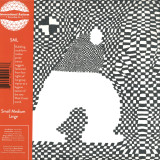
SML is bassist Anna Butterss (Jeff Parker, Daniel Villarreal, Makaya McCraven), synthesist Jeremiah Chiu (Ariel Kalma, Marta Sofia-Honer), saxophonist Josh Johnson (Jeff Parker, Makaya McCraven, Nate Mercereau, Marquis Hill), percussionist Booker Stardrum (Amirtha Kidambi, Carl Stone, Lee Ranaldo, Patrick Shiroishi), and guitarist Gregory Uhlmann (Sam Wilkes, Meg Duffy, Perfume Genius). Their debut album Small Medium Large began as a collection of long-form improvisations recorded during two
separate two-night stands at beloved Highland Park venue ETA, a major development site for the burgeoning new LA jazz & improvised music sound, which unfortunately closed its doors permanently at the end of 2023.
The venue, perhaps best known outside of LA for Jeff Parker’s 2022 album Mondays at the Enfield Tennis Academy, was the perfect location for the start of SML, especially given that both bassist Anna Buterss and saxophonist Josh Johnson are in the quartet featured on that record. Small Medium Large was engineered and recorded in stereo direct to Nagra by Bryce Gonzales and compiled, arranged, and edited with additional production, recording, and
studio composition by SML.
While editing, chopping, and rearranging stereo mixed improvisations is hardly a new concept (for a modern and relevant example we can look to Makaya McCraven’s output on IARC) these results are a stunning expansion of the Teo Macero / Miles Davis editing concept explored on classics like Bitches Brew, On The Corner, and Get Up With It. Stylistically though, these recordings have more in common with the proto trance repetitions of Harmonia, and with Holgar Czukay’s re-assemblage technique used in his work with Can. Throw in a supremely intuitive utilization of Susumu Yokota’s floating patterns polyrhythm concept and we have a truly entrancing take on time-clocked electronic rhythms augmenting with live percussion, yet maintaining that elusive human sway.
out of Stock
Last delivered 22 months ago available to reorder, subject to availability
30 years of Fuse. That’s 1,560 weekends of love, techno, I LOVE TECHNO, Motion Room, party flyers, La Demence, renovations, label nights, sound isolations, Jeu de Balle, long shifts, noise complaints, stylus replacements, after-hours, legendary b2bs, compilations, resident DJs, On The Beach, emergency loops, and an unfathomable amount of tickets boisson.
2024 marked the nightclub Fuse’s 30th year of continuous operation on Rue Blaes in Brussels. Belgium is home to cultural visionaries, break-the-mould characters, and prolific producers who helped shape the foundations of the electronic music scene we enjoy today. As a result, Fuse’s story traces the outlines of the house and techno history at large. Through striking visuals, quotes, research, and storytelling, this book connects the dots between the rise of renowned artists and uniquely Belgian characters that crystallised Fuse as a temple of underground dance music.
From Detroit to the Marolles, Ricardo Villalobos to DJ Pierre, Carl Craig to Trish Van Eynde, Daft Punk to Deg, Laurent Garnier to Charlotte de Witte, Warp to Music Man Records, even Depeche Mode to Björk, this book documents not only the iconic performances and moments over the years but also the stories of those who took the risk of running a nightclub and the tens of thousands of dancers who poured their love, sweat, and tears into the labyrinthine walls of Fuse.
An essential for any raver or lover of electronic music history, this book is an archival work dedicated to the music heads who have kept their minds and ears open since 1994.
Lara Sarkissian’s long-awaited debut full-length, ‘Remnants’ is an ornate patchwork of ancient and modern sonic shapes that uses the vernacular of electronic music to reformulate Armenian traditions and memories. Taking digitally modeled instruments (such as the kanun, a large zither, and the duduk, an ancient double reed woodwind instrument), vocals, davul and dhol drums, tenor saxophone (from acclaimed Paris-based player Adrien Soleiman) and myriad electronic elements and techniques, Sarkissian tangles the old and the new, creating an immersive, narrative-driven experience that’s powered by history, mythology and her own familial connection to the West Asian landscape. It’s an album that’s best absorbed like a film; only multiple encounters can reveal its layered themes and references to industrial music, noise, various club styles, ambient and traditional folk.
Born and raised in San Francisco and currently based in Los Angeles, Sarkissian has developed her unique approach to composition over years of relentless experimentation across various disciplines. Her interest in music production initially stemmed from her filmmaking and video editing work, when she began to sculpt her own sound collages and scores to accompany the visuals. Since then, she’s constantly blurred the boundary between dance and experimental music, DJing around the world, producing AV installations and scoring film and video projects that have been exhibited in Berlin’s Gropius Bau, Montréal’s Musée d’art contemporain, the Music Center Los Angeles and other prestigious institutions, and releasing music with labels such as Tresor, Knekelhuis, All Centre, Silva Electronics and CLUB CHAI, the label and event series she co-founded. In recent years, she’s also been able to advance the theory behind her art, publishing a conversation with ethnomusicologist Sylvia Alajaji in the Journal of the Society of Armenian Studies in 2021, and unveiling her methodology in Norient’s ‘This Track Contains Politics – The Culture of Sampling in Experimental Electronica’ a year later.
‘Remnants’ is a new stage in Sarkissian’s evolution as an artist; not only is it her first proper album, but it’s the inaugural release on her new platform btwn Earth+Sky. She sees the label as a place to encourage collaborations between musicians and producers and prioritize sound in visual arts realms, and ‘Remnants’ is the ideal proof of concept. It opens with ‘Heaven, or Paradise; and Hell’, a track that’s inspired by the layout of the Armenian sharakan (or hymn) ‘Aravot Luso’. Sarkissian imagines the original piece’s harmonies and melodies as parts of a dreamy electronic opera, using digital kanun sounds to punctuate her woozy, evocative synths. Soleimen joins on tenor sax in the third act, while Sarkissian repeats the chant and Jace Akira adds ghostly traces of electric guitar and bass. And on the rousing ‘Our Dead Can’t Rest (Old Jugha Flute Dance)’, Sarkissian chops urgent davul and dhol drum rhythms with spine-chilling shvi woodwind sounds lifted from a documentary about Old Jugha. The title is a reference to the moving of graves by Armenian families; the area initially housed over 10,000 elaborately carved khachkars (cross stones), one of which is pictured on the album’s cover, provided by historian Argam Aivazian’s archive.
On ‘Miracle’, Sarkissian samples atmospheres from the post-Soviet Armenian comedy film ‘Կիսանդրի’ (Kisandri). She takes this opportunity to lighten the mood a little, powdering her smudged samples with tightly edited breaks and bass thumps. It’s not until the album’s middle section that the duduk, perhaps Armenia’s best-known instrument, makes its appearance. Its familiar reedy tones, popularized by Djivan Gasparyan on his many Hollywood soundtrack appearances, emerge on ‘Unraveling (Interlude)’, weaving through the acidic ‘Zephyr’ and ‘Far from the eye far from the Heart’, a post-punk inspired stomper. Sarkissian mutates the instrument almost beyond recognition, pitching and layering it into a voice-like wail that creeps between her woody, dancefloor-primed percussion on the former, and turning it into a gentle, ghostly moan on the latter. And she brings ‘Remnants’ to a close with two of her most cryptic tracks, marrying digital kanun strings with Soleiman’s resonant tenor hums on ‘What Solace Can I Give’, and looping the same saxophone sounds until they dissolve into the air on the beatless closer ‘…nothing matters more than touching you although i haven’t touched you yet’.
It’s an album that ties up Sarkissian’s various interests and experiences, finding a romantic, poetic glimmer of light in history’s darkness. But most of all, ‘Remnants’ is about the optimism of starting anew, and rebuilding a life from the pieces of everything that’s been left behind.
out of Stock
Last delivered 84 days ago available to reorder, subject to availability
Here’s the first release of the Hungarian Alliwant Wax limited VINYL series including label owner James Cole’s 2 original tracks beside the remix of one of the scene’s most inspiring and respected producers, Diego Krause and another remix from the Israeli Mike Sharon.
Both original tracks bring back the oldschool deep house wrapped in modern sound. The deep sexy groove, the catchy vox and melody work really well on the dance floor.
Diego Krauses remix operates with his characteristic sound, its minimalistic build-up features dynamic grooves. Mike Sharon’s version is more epic and more emotional using the pads of classic deep house - we’ll love it!
Just like before, HOW003 will be released in a restricted, vinyl-exclusive edition.
out of Stock
Last delivered 67 days ago available to reorder, subject to availability
We’re happy to cordially invite you to the REGRESSION SESSION, hosted by eternal Philadelphia scene flag bearers ZILLAS ON ACID!
And if you think this sounds awfully lot like a scam, you’re probably right: „Regression Session“ is just a front of their illegal black market operation, trading raw uncut gems on a large scale. Just listen to the opener and title track and you won’t exactly have a strong case for the Zillas selling out, but rough as it is, this thing is capable of destroying any dancefloor it touches.
Looking at their recent releases it’s fair to say the Z’s are on quite a run, putting out music on labels like Permanent Vacation, Throne Of Blood, Multi Culti or Ivan Smagghe’s Disques de la Mort. Tunes like the sneaky rough slow burners „Underling“ or „Start Digging“ sound like they could be lifted from the latter’s infamous DJ sets, while the deceptively titled „Cha Cha Cha“ or closer „Casual Observer“ justify the „Acid“ in the artist name. „Shining Snakes Across The Lake“ is what some years might have been called a mid-tempo house roller and probably counts as downtempo these days. Speaking of tempos, the penultimate „Sweet Days Of Discipline“ starts of masquerading as reaaally downtempo, but ends up throwing 155bpm kick drums at you, so better watch out, all you k-hole ravers! Let’s not forget to talk about „bquiet“, which is what you’d call mid-tempo house these days (125bpm) and uses the eternally banging combination of a jacking beat, a polyrhythmic bass line, some lead-synth stabs and talking vocal slices. You can practically smell the sweat.
So what’s left to say? What you see is what you get: They are Zillas, and they are on Acid. And they provide a collection of eight tunes that probably each don’t necessarily have a double-digit amount of tracks in their DAW projects, and that’s exactly what makes them so forceful. Join the regression session!
out of Stock
Last delivered 5 months ago available to reorder, subject to availability
The dark lord of the dance returns to Sneaker with the 'No Favours' EP, another ominous set of non-conformist shellers rough-cut from obsidian and set in steel.
We first broadcast our love of Christoph de Babalon's distinctively destructive, hard-boiled hardcore via the Evident Ware compilation back in 2020, but a longer release has been an ambition of ours ever since. From his early years on Digital Hardcore through his prolific return in the 2010s across a broad tapestry of underground operators, de Babalon has left a fascinating trail of albums, EPs and scattershot tracks behind him that feed into the cult fervour around his music.
As this EP demonstrates in reliably gritty fashion, the magic in the German producer's music lies in his ability to take the tropes of jungle and hardcore and subvert them through signal chains which owe more to noise and industrial than dance music. The structure of his tracks is equally maverick, pushing and pulling according to its own whims rather than following the dancer-centric energetic flow of a standard club record. Somewhere in this alchemy between classic ingredients and confrontational experimentation, he evokes the original chaotic spirit of hardcore when it seemed anything was possible within the music.
'For Nothing' is the perfect example — a tunnelling odyssey of ferrous atmospheres, roundhouse drums and bass bloated into the red on a force-fed diet of saturation. 'Total Deceit' turns up the pressure on the break chopping science de Babalon is capable of, teasing gamelan flurries and elegiac swirls that hit at the emotional depth he can wrench amidst such bludgeoning material. 'Jaded Memory' funnels Mentasm bass into a strange new form amidst staggering, tightly clipped drumfunk, leaving enough space for haunting ballroom reveries stretching out across the mid-section. That leaves it to 'Dearth Mill' to mop up with gloriously creepy detuned piano notes slopping over each other in between the most ferocious blasts of drums on the whole record.
You didn't expect something straight-forward, did you?
out of Stock
Last delivered 20 months ago available to reorder, subject to availability
A1 Dharma
Opening the LP in lively fashion, JLM liberally flecks a detailed composition with exquisite breaks cymbals playing a key role in the evolving patterns as the track progresses while heavy layers of synth work forms a substantial atmosphere. Musical and resonant with micro melodies and sprinkles of FX, Dharma encapsulates JLMs everimpressive attention to detail throughout its seven minutes.
A2 Artha
Where to start with Artha Setting the scene immediately with an epic synth intro that whooshes through your mind to prepare you for what is to come, its immediately obvious JLM has crafted a modern day classic here. Crisp Hot Pants breaks drop before we are treated to inspiring, continually developing and rousing melodies with a tuneful 808 bassline playfully dancing below. One to drop any chance you get Artha deserves to be heard.
B1 Moksha
Delightfully clear, characterful percussion introduces Moksha, a dancefloor friendly piece which rolls along beautifully thanks to old school breakbeats seizing the initiative while fluid keys, filtered synths and waves of serene effects punctuate the production. The
kick-light breaks will stay long in the memory as perfect for both the headphones and the discerning dance floor, just as weve come to expect from JLM.
B2 Kama
Taking you back to the early Progression Sessions era with a modern scifi twist reminiscent of your favourite space operatics, Kama will sit effortlessly alongside tracks from those days and now with its simple yet memorable core wind melody, sprawled
across energetic breakbeats and wide layers of synths & pads to a typically appropriate bassline. Another fine example of the evolving diversity in JLMs production with Spatial.
C1 Boundary
Switching things up, JLM treats us to a notably laid back vibe as Boundary is introduced by understated, filtered synth work and explorative kicks before a mellow yet chunky break pattern provides energy to the track. Detailed as ever, a myriad of effects and
samples are introduced and dance around the mix with a wistful complexity, in a track destined to be in your playlist for some time to come.
C2 Hexis
Kicking things off with a filtered DJ friendly beat intro, Hexis soon drops with constant old school jungle synth work and periodical strings alongside rasping, striking breakbeats that drive the track forward with impressive energy. The breaks reverberate in and out of the mix at intervals as JLM toys with the listener at will, creating a tonally unique and vibrant composition very much worthy of our attention.
D1 Ideal Forms
Low pass breaks echo and jostle for position with FX free counterparts early doors in the finely crafted intro to Ideal Forms, slowly developing with a triumphant assortment of keys and synths before a third layer of breaks are added which underpin a detailed, yet never busy, breakbeat landscape. Occasional breakdowns offer respite in a glistening wilderness of comforting melodies and light ambience.
D2 Physis
JLM rounds the album off very much on form with Physis a suitably climactic piece that opens with a detailed array of percussion, synths and effects before superbly programmed breaks take over the mix. An occasional, all encompassing sci fi synth rush
permeates the atmosphere to almost cinematic levels, while a melodic bassline nestles below leaving you with a track (and an album) you will not forget.
Words by Chris Hayes (Spatial / Red Mist)
out of Stock
Last delivered 26 days ago available to reorder, subject to availability
Second release on Robert Pollard's new Splendid Research label is a vinyl & CD reissue of a 1984 demo cassette by Children's Crusade, post-punk teenage band of Guided By Voices' Doug Gillard. The Cleveland guitarist went on to record for Scat, Homestead and Restless Records with the bands Death of Samantha, Cobra Verde, My Dad Is Dead, and Gem, before joining GBV (1996-2004), then Nada Surf (2010-2016), then rejoining GBV (2016-present), as well as playing on albums by Richard Buckner, Neko Case and others. 1980s Cleveland was a hotbed for indie rock, following in the Northern Ohio footsteps of Pere Ubu, The Dead Boys, The Styrenes, Mirrors and Devo. "Children’s Crusade was a fleeting blotch on the wild, mid-80s Cleveland underground music scene, slowly seeping through like a drop of oil on the uniformly black jeans of that era – noticeable only after it settles, spreads, and you realize it won’t come out in the wash."
Oakland's Naked Roommate have been slinking around the Bay Area lighting up stages, shaking asses & confounding listeners since 2018, when the group - originally just the duo of real-life partners Andy Jordan & Amber Sermeno (both formerly of The World) - self-released a cassette of demos (2018's "Naked Roommate"). Members Michael "Mig" Zamora & Alejandra Alcala (Blues Lawyer) joined soon after to augment the sound & live band with their proper full-length album "Do The Duvet", co-released in September of 2020 via UK label Upset! The Rhythm & Trouble In Mind. 2024 finds the lineup expanded even further to incorporate the horn section of Geoff Saba & Jeanne Oss on tenor & alto saxophones as well as percussion & marimba as the band readies their sophomore effort, the dizzyingly ecstatic "Pass The Loofah" Recorded by members Andy Jordan & Mig Zamora from 2021-2023 as time & restrictions allowed, "Pass The Loofah" retains the wild energy of their debut, but leans into the rhythmic throbs perpetuated by forbears like Kid Creole & The Coconuts, Lizzy Mercier Descloux & ESG; the signature sound of UK's On-U Sound & NYC's 99 Records, but with a decidedly West Coast irreverence & a knack for absurdist exposition. Make no mistake, this is music designed to make your body MOVE & Naked Roommate won't stop until they 've made sure every ass is shook. The band freely incorporates elements of the dancier side of post-punk (think A Certain Ratio or Liquid Liquid) as well as disco, funk, & house music. However, the group's uplifting melodicism belies a deeper subtext, understanding the importance of the sense of community of dance music & the culture surrounding it and leaning into a Neo-socialist lyrical context. Shit is fucked, & we get thru it by helping one another & acknowledging & addressing the failures of disaster Capitalism & tech-bro hegemony (a state the band is all-too familiar with, living in The Bay Area) Take the first single "Bus"; a four-on-the-floor banger & salutary paeon to the ups & downs of the people's transport that throbs & pulses with a late-night sashay (and a bridge that launches the tune into the stratosphere). Elsewhere, "Fight Flight "s funky horn stabs and Sermeno's slinky vocals swoon over Numan-esque synth squiggles that are fortified & funkified toward the dance floor. "Broken Whisper " edges into new territor y for the group, adding a Caribbean flavor a'la Kid Creole or The Specials that punctuates the persistent & synthetic beats underneath. Meanwhile instrumental interludes like "Ducky & Viv", "G-Y pt. 1" & "G-Y pt. 2" oscillate into zones of sci-fi meets soap opera soundtracks, sounding not unlike the electronic experiments of UK industrial pioneers Chris & Cosey. Album closer "I Can't Be Found" might be the album's secret weapon; It 's swooning synth melody & processed vocals recall early Daft Punk or MGMT by way of Derrick Carter & The Au Pairs. It 's a beautiful song; perfect for the late night (or early morning) car ride home from the club. "Pass The Loofah" is released worldwide on October 25th, 2024 via Trouble In Mind Records digitally via most DSPs & on black vinyl & limited "disco ball " silver vinyl.
Limited metallic silver/white "disco ball" splatter vinyl available while supplies last.
Oakland's Naked Roommate have been slinking around the Bay Area lighting up stages, shaking asses & confounding listeners since 2018, when the group - originally just the duo of real-life partners Andy Jordan & Amber Sermeno (both formerly of The World) - self-released a cassette of demos (2018's "Naked Roommate"). Members Michael "Mig" Zamora & Alejandra Alcala (Blues Lawyer) joined soon after to augment the sound & live band with their proper full-length album "Do The Duvet", co-released in September of 2020 via UK label Upset! The Rhythm & Trouble In Mind. 2024 finds the lineup expanded even further to incorporate the horn section of Geoff Saba & Jeanne Oss on tenor & alto saxophones as well as percussion & marimba as the band readies their sophomore effort, the dizzyingly ecstatic "Pass The Loofah" Recorded by members Andy Jordan & Mig Zamora from 2021-2023 as time & restrictions allowed, "Pass The Loofah" retains the wild energy of their debut, but leans into the rhythmic throbs perpetuated by forbears like Kid Creole & The Coconuts, Lizzy Mercier Descloux & ESG; the signature sound of UK's On-U Sound & NYC's 99 Records, but with a decidedly West Coast irreverence & a knack for absurdist exposition. Make no mistake, this is music designed to make your body MOVE & Naked Roommate won't stop until they 've made sure every ass is shook. The band freely incorporates elements of the dancier side of post-punk (think A Certain Ratio or Liquid Liquid) as well as disco, funk, & house music. However, the group's uplifting melodicism belies a deeper subtext, understanding the importance of the sense of community of dance music & the culture surrounding it and leaning into a Neo-socialist lyrical context. Shit is fucked, & we get thru it by helping one another & acknowledging & addressing the failures of disaster Capitalism & tech-bro hegemony (a state the band is all-too familiar with, living in The Bay Area) Take the first single "Bus"; a four-on-the-floor banger & salutary paeon to the ups & downs of the people's transport that throbs & pulses with a late-night sashay (and a bridge that launches the tune into the stratosphere). Elsewhere, "Fight Flight "s funky horn stabs and Sermeno's slinky vocals swoon over Numan-esque synth squiggles that are fortified & funkified toward the dance floor. "Broken Whisper " edges into new territor y for the group, adding a Caribbean flavor a'la Kid Creole or The Specials that punctuates the persistent & synthetic beats underneath. Meanwhile instrumental interludes like "Ducky & Viv", "G-Y pt. 1" & "G-Y pt. 2" oscillate into zones of sci-fi meets soap opera soundtracks, sounding not unlike the electronic experiments of UK industrial pioneers Chris & Cosey. Album closer "I Can't Be Found" might be the album's secret weapon; It 's swooning synth melody & processed vocals recall early Daft Punk or MGMT by way of Derrick Carter & The Au Pairs. It 's a beautiful song; perfect for the late night (or early morning) car ride home from the club. "Pass The Loofah" is released worldwide on October 25th, 2024 via Trouble In Mind Records digitally via most DSPs & on black vinyl & limited "disco ball " silver vinyl.
. By his early 20s, Kurious was already an in-demand voice on the mic. His 1994 major label debut album, A Constipated Monkey, is a classic of its style, marked by heavy beats and nimble rhymes that are razor-sharp yet frequently hilarious. Despite being hailed as one of hip-hop's most compelling lyricists, he didn't release another solo IP for the rest of that decade, but he continued to be sought after. Rap fans the world over know him for his verse on "?," one of the standout songs from his longtime friend and collaborator MF DOOM's heralded Operation: Doomsday. As he prepares for the release of his new album, Majician-the nickname his peers blessed him with a generation ago-Kurious is well on his way to establishing the legacy he's long deserved. The LP, which was executive produced by MF DOOM before his passing, is a mesmerizing blend of technical wizardry and personal introspection. Take "Eye of Horus," where the pulsing drums convey an urgency that borders on panic; Kurious weaves a complex tapestry of history and insight, but does so while ducking through and under each pocket in the beat. Produced in its entirety by Mono En Stereo, Majician is filled with songs like "Eye of Horus," which dance on the line between confession and confrontation. "Separation Anxiety" is a personal bloodletting in the form of lyrical exercise; "Par For the Course," which features the elusive Mr. Fantastik, makes drum breaks from the early Reagan era sound totally revitalized. Through the radical amount of work Kurious put into the writing and recording of this material, he's removed all ambiguity from the question of whether he can stand as one of the premier MCs of his time.
The 1980 space disco hit you probably never heard of. Now officially remastered including new stunning edits by Peaking Lights and Korkut Elbay. Picture sleeve with an outstanding painting by Antonia Freisburger.
'Inside' with loads of synths and some vocoder on top is a wild jam that is propelling more and more into a frenzy during its course.
Following the orginal is a dancefloor-edit by Korkut Elbay which puts the vocal part into focus. Korkut Elbay, part of the Cómeme camp and an integral part of Cologne's electronic music scene for over 20 years, crafted an edit in its purest form.
On the flipside Aaron Coyes of the California-based duo Peaking Lights stretches out the original and reaches higher grounds with his stomping rework. He gently adds some more keys and puts you into a trance with his soothing melodies. Now dance!
But what's the story behind this unearthed gem stone? In the late 1970s a marketing company owner faced an increasing competitve market and wanted to work indepently from the professional studios which were charging high rates for commercials back then. The solution was to build his own sound studio. So he set one up in the basement of his company in Saarbrücken, Germany. He hired a studio operator and a composer that got quite a reputation in the local scence back then and besides daily job routines 'Inside' was created.
Live At the Opera House ist die allererste vollständige Veröffentlichung von Sylvesters legendärem Konzert
im San Francisco War Memorial Opera House aus dem Jahr 1979, das bisher nur als stark bearbeitete
Ausschnitte erhältlich war. Das Album enthält 13 ungeschnittene Songs aus dem Konzert sowie eine Aufnahme der Zeremonie in der Mitte des Konzerts, bei der Sylvester der Schlüssel zu San Francisco überreicht
wurde. Das Ganze gipfelt in über einer Stunde bisher unveröffentlichter Musik und einer Gesamtlaufzeit
von über 2 Stunden.
out of Stock
Last delivered 2 years ago available to reorder, subject to availability
Belarusian post-punk / synth pop group Molchat Doma have always exuded the kind of brutalist aesthetic of the architecture that adorns their album art. It's cold, gray, imposing, industrial and yet there are human hearts beating within those foundations. In the wake of their breakthrough success in 2020, the trio endured a polarity of experiences, from the nadir of an uprooted life and forced relocation away from their native Minsk to the apex of headlining massive shows across the world. It was in this headspace that the band settled into their new home of Los Angeles to finish writing their fourth album Belaya Polosa, a testament to change in difficult times, a love letter to the digital pulse of the `90s, and a technicolor reinvention of the band's somber dancefloor anthems. From the opening synth swell and drum machine throb of "Ty Zhe Ne Znaesh' Kto Ya," to the goth / post-punk austerity of "Son", to the swirling electronic textures mixed with reverb-drenched guitar flourishes, expansive space, and yearning vocals of title track "Belaya Polosa" - that suggests Depeche Mode at their most reflective or The Cure at their most downtrodden - to the sultry and seductive "Chernye Cvety"_ a track reminiscent of Duran Duran's early `90s output in its fusion of dreamy guitars and authoritative mechanized beats _ and the interwoven layers of instrumentation, soaring chorus, and melodic sophistication of "Ya Tak Ustal", it's clear that Molchat Doma are operating on another level. Molchat Doma gained following with earlier albums that sound like third-generation bootlegs of banned recordings from the Eastern Bloc made after a few key entries in the Factory Records catalog were smuggled in from the West. Belaya Polosa propels them into a new direction while retaining their cold minimalist delivery they're known for. The basement grime and dirty tape-head sound of their previous work are now making space for digital luster and shimmering production values. And while Molchat Doma's broadened aural spectrum adds a synesthetic power to Belaya Polosa, the mood remains rooted in stark and unflinching self-reflection. Molchat Doma retain the duality of being both cold and feverish in their delivery while pushing their music into expanded territories through an armory of new textures. The trio continue to harness the sound of harrowing beauty thriving under harsh realities.
out of Stock
Last delivered 17 months ago available to reorder, subject to availability
Belarusian post-punk / synth pop group Molchat Doma have always exuded the kind of brutalist aesthetic of the architecture that adorns their album art. It's cold, gray, imposing, industrial and yet there are human hearts beating within those foundations. In the wake of their breakthrough success in 2020, the trio endured a polarity of experiences, from the nadir of an uprooted life and forced relocation away from their native Minsk to the apex of headlining massive shows across the world. It was in this headspace that the band settled into their new home of Los Angeles to finish writing their fourth album Belaya Polosa, a testament to change in difficult times, a love letter to the digital pulse of the `90s, and a technicolor reinvention of the band's somber dancefloor anthems. From the opening synth swell and drum machine throb of "Ty Zhe Ne Znaesh' Kto Ya," to the goth / post-punk austerity of "Son", to the swirling electronic textures mixed with reverb-drenched guitar flourishes, expansive space, and yearning vocals of title track "Belaya Polosa" - that suggests Depeche Mode at their most reflective or The Cure at their most downtrodden - to the sultry and seductive "Chernye Cvety"_ a track reminiscent of Duran Duran's early `90s output in its fusion of dreamy guitars and authoritative mechanized beats _ and the interwoven layers of instrumentation, soaring chorus, and melodic sophistication of "Ya Tak Ustal", it's clear that Molchat Doma are operating on another level. Molchat Doma gained following with earlier albums that sound like third-generation bootlegs of banned recordings from the Eastern Bloc made after a few key entries in the Factory Records catalog were smuggled in from the West. Belaya Polosa propels them into a new direction while retaining their cold minimalist delivery they're known for. The basement grime and dirty tape-head sound of their previous work are now making space for digital luster and shimmering production values. And while Molchat Doma's broadened aural spectrum adds a synesthetic power to Belaya Polosa, the mood remains rooted in stark and unflinching self-reflection. Molchat Doma retain the duality of being both cold and feverish in their delivery while pushing their music into expanded territories through an armory of new textures. The trio continue to harness the sound of harrowing beauty thriving under harsh realities.
out of Stock
Last delivered 19 months ago available to reorder, subject to availability
Belarusian post-punk / synth pop group Molchat Doma have always exuded the kind of brutalist aesthetic of the architecture that adorns their album art. It's cold, gray, imposing, industrial and yet there are human hearts beating within those foundations. In the wake of their breakthrough success in 2020, the trio endured a polarity of experiences, from the nadir of an uprooted life and forced relocation away from their native Minsk to the apex of headlining massive shows across the world. It was in this headspace that the band settled into their new home of Los Angeles to finish writing their fourth album Belaya Polosa, a testament to change in difficult times, a love letter to the digital pulse of the `90s, and a technicolor reinvention of the band's somber dancefloor anthems. From the opening synth swell and drum machine throb of "Ty Zhe Ne Znaesh' Kto Ya," to the goth / post-punk austerity of "Son", to the swirling electronic textures mixed with reverb-drenched guitar flourishes, expansive space, and yearning vocals of title track "Belaya Polosa" - that suggests Depeche Mode at their most reflective or The Cure at their most downtrodden - to the sultry and seductive "Chernye Cvety"_ a track reminiscent of Duran Duran's early `90s output in its fusion of dreamy guitars and authoritative mechanized beats _ and the interwoven layers of instrumentation, soaring chorus, and melodic sophistication of "Ya Tak Ustal", it's clear that Molchat Doma are operating on another level. Molchat Doma gained following with earlier albums that sound like third-generation bootlegs of banned recordings from the Eastern Bloc made after a few key entries in the Factory Records catalog were smuggled in from the West. Belaya Polosa propels them into a new direction while retaining their cold minimalist delivery they're known for. The basement grime and dirty tape-head sound of their previous work are now making space for digital luster and shimmering production values. And while Molchat Doma's broadened aural spectrum adds a synesthetic power to Belaya Polosa, the mood remains rooted in stark and unflinching self-reflection. Molchat Doma retain the duality of being both cold and feverish in their delivery while pushing their music into expanded territories through an armory of new textures. The trio continue to harness the sound of harrowing beauty thriving under harsh realities.
out of Stock
Last delivered 23 months ago available to reorder, subject to availability
“Chiroptera” is the soundtrack of « Acte 2 : Retour à la Caverne », a creation by JR with Thomas Bangalter and choregraph Damien Jalet , performed in Paris in front of the Opéra de Paris (Opéra Garnier) on November 12th, 2023 by more than 150 dancers.
out of Stock
Last delivered 2 years ago available to reorder, subject to availability
The records is released in two options. Both hvae 180g vinyl records. The first version has two black vinyls and the second limited edition (numbered 100 pieces) has one turquoise vinyl and the other red.
Over the last three decades, Auckland, New Zealand, has given birth to several generations of musicians, DJs, and producers who operated within the interzone between jazz, blues, soul, funk, Latin music, hip-hop, house, boogie, and broken beat. Across two slow-cooked albums that sit at the intersection of machine funk and vivid live instrumentation, Odyssey (2016) and their forthcoming sophomore release Long Road (2024), After 'Ours - the group project of pianist and composer Michal Martyniuk and drummer, guitarist and producer Nick Williams - have comfortably located themselves within this antipodean tradition.
Born and raised in Auckland, Nick Williams grew up surrounded by music from a young age. At home, his mother, Mary Anne, a record collector and DJ with deep, diverse vinyl crates, kept his ear sharp. By the time he was eight years old, he was regularly joining his musician father on stages across Australia in his blues rock band Slippery Sam. In his early twenties, Nick began leading the eleven-piece Auckland Latin-dub-funk fusion big band Tangent, who performed regularly until the late 2000s.
Michal Martyniuk, on the other hand, grew up on the opposite side of the world in Szczecin, Poland. After playing classical music for twelve years and attending jazz school, he relocated to New Zealand with his family in his teens. While studying at Auckland University Jazz school, Michal came into the orbit of the legendary New Zealand saxophonist, composer, producer, and band leader Nathan Haines, who brought him into the same world as future collaborators like Tama Waipara, Batacada Sound Machine, Sola Rosa and Nick.
Inspired by the rich stories of jazz, neo-soul, electronica, and dance music from both sides of the Atlantic Ocean and the open-eared Auckland scene they emerged from, After 'Ours formed in 2011. Born out of a friendship cultivated through playing together at bars and nightclubs around town and home studio sessions. "Nick had family and work, so I had to wait all day," Michal says. "We'd come to the studio at 10 PM and go till 3 AM. That's how we came up with the name.
Session by session, After 'Ours revealed itself to be a creatively fertile meeting of minds. "We both have our angles, but it works well in the end," Nick reflects. "It takes the music to a place we can't get to by ourselves."
Between 2011 and 2016, they wrote and recorded Odyssey with a cast of musical collaborators that included KP, Sharlene Hector & Kevin Mark Trail (UK), Matt Nanai, Nathan Haines, Jakub Skowronski, Nick's partner Ange Williams (nee Saunders) and British producer Mike Patto from the lauded UK future jazz group Reel People. Influenced by the smooth yacht rock of Steely Dan and Donald Fagan, the warm midtempo bounce of A Tribe Called Quest and J Dilla, and the complex jazz/RnB bop of Robert Glasper, Odyssey was a labour of love that emphasised community, warm-hearted hospitality, and care.
Seven years on, they're finally ready to return with Long Road, an album that contains some of their best work yet. As well as reconnecting with past collaborators Kevin Mark Trail and Ange Williams, Long Road sees After 'Ours calling on assistance from Louis Baker, Jakarta-based saxophone player Kuba Skowroński, bassist Dan Antunovich, Los Angeles-based drummer Chris Bailey and the journeyman British soul artist Omar Lyefook.
Across ten songs that plot a stargazed course through their antipodean spin on UK broken beat, jazz, modern soul, and blues rock, Nick and Michal build on everything they learned while writing and recording Odyssey. In the process, they take their joyful musical visions to sublime new heights.
out of Stock
Last delivered 23 months ago available to reorder, subject to availability
The records is released in two options. Both hvae 180g vinyl records. The first version has two black vinyls and the second limited edition (numbered 100 pieces) has one turquoise vinyl and the other red.
Over the last three decades, Auckland, New Zealand, has given birth to several generations of musicians, DJs, and producers who operated within the interzone between jazz, blues, soul, funk, Latin music, hip-hop, house, boogie, and broken beat. Across two slow-cooked albums that sit at the intersection of machine funk and vivid live instrumentation, Odyssey (2016) and their forthcoming sophomore release Long Road (2024), After 'Ours - the group project of pianist and composer Michal Martyniuk and drummer, guitarist and producer Nick Williams - have comfortably located themselves within this antipodean tradition.
Born and raised in Auckland, Nick Williams grew up surrounded by music from a young age. At home, his mother, Mary Anne, a record collector and DJ with deep, diverse vinyl crates, kept his ear sharp. By the time he was eight years old, he was regularly joining his musician father on stages across Australia in his blues rock band Slippery Sam. In his early twenties, Nick began leading the eleven-piece Auckland Latin-dub-funk fusion big band Tangent, who performed regularly until the late 2000s.
Michal Martyniuk, on the other hand, grew up on the opposite side of the world in Szczecin, Poland. After playing classical music for twelve years and attending jazz school, he relocated to New Zealand with his family in his teens. While studying at Auckland University Jazz school, Michal came into the orbit of the legendary New Zealand saxophonist, composer, producer, and band leader Nathan Haines, who brought him into the same world as future collaborators like Tama Waipara, Batacada Sound Machine, Sola Rosa and Nick.
Inspired by the rich stories of jazz, neo-soul, electronica, and dance music from both sides of the Atlantic Ocean and the open-eared Auckland scene they emerged from, After 'Ours formed in 2011. Born out of a friendship cultivated through playing together at bars and nightclubs around town and home studio sessions. "Nick had family and work, so I had to wait all day," Michal says. "We'd come to the studio at 10 PM and go till 3 AM. That's how we came up with the name.
Session by session, After 'Ours revealed itself to be a creatively fertile meeting of minds. "We both have our angles, but it works well in the end," Nick reflects. "It takes the music to a place we can't get to by ourselves."
Between 2011 and 2016, they wrote and recorded Odyssey with a cast of musical collaborators that included KP, Sharlene Hector & Kevin Mark Trail (UK), Matt Nanai, Nathan Haines, Jakub Skowronski, Nick's partner Ange Williams (nee Saunders) and British producer Mike Patto from the lauded UK future jazz group Reel People. Influenced by the smooth yacht rock of Steely Dan and Donald Fagan, the warm midtempo bounce of A Tribe Called Quest and J Dilla, and the complex jazz/RnB bop of Robert Glasper, Odyssey was a labour of love that emphasised community, warm-hearted hospitality, and care.
Seven years on, they're finally ready to return with Long Road, an album that contains some of their best work yet. As well as reconnecting with past collaborators Kevin Mark Trail and Ange Williams, Long Road sees After 'Ours calling on assistance from Louis Baker, Jakarta-based saxophone player Kuba Skowroński, bassist Dan Antunovich, Los Angeles-based drummer Chris Bailey and the journeyman British soul artist Omar Lyefook.
Across ten songs that plot a stargazed course through their antipodean spin on UK broken beat, jazz, modern soul, and blues rock, Nick and Michal build on everything they learned while writing and recording Odyssey. In the process, they take their joyful musical visions to sublime new heights.
out of Stock
Last delivered 2 years ago available to reorder, subject to availability
From 2019 to 2023 Lindsay Reamer worked as a field scientist. With a guitar and a bag of books in tow, she would leave her home in Philadelphia for the postcard scenes of the American landscape to gather data on visitation in National Parks. She counted cars and RVs, surveyed visitors, and made a temporary home for a few weeks at a time wherever she landed. All the while, she collected her own observations like specimens and slowly weaved the songs that would form her debut full-length, `Natural Science.' Recorded throughout 2023 by Lucas Knapp, `Natural Science' paints with a full spectrum. Humor rubs elbows with heartbreak. Acoustic guitars brush up against synthesizers, cradling Reamer as she sings about the American Chestnut tree extinction, employee gossip at a Day's Inn, fishing beside a power plant, turf grass farms, and waking up next to day-old take-out. The indifferent beauty of nature is held up next to the everyday as Reamer does her very best to find clues for navigating the latter by musing upon both. Following the release of her self-produced EP `Lucky' (Dear Life Records) in 2021, Reamer assembled a band with musicians from Philadelphia's vibrant music community and began working her once solo-acoustic songs into full band arrangements. After a brief flirtation with dance music which led to 2022's viral single "Touch Tank," Reamer settled into a sound that lies somewhere in the folkrock-pop matrix, explored with the humor and lightness of songwriters like Sheryl Crow or Melanie. Reamer reflects: "When I heard the songs with the band, I knew it was time to make the record. It felt like something I had been working towards my whole life. I grew up around musicians but I never thought I was good enough to be in a band or even to make my own music. My grandmother Joan gave me voice lessons after school, my mom was an opera singer, and my dad a guitar player. But it wasn't until a few years ago that I realized I could do it. It didn't matter if I could shred on the guitar or something. It was like some illusion shattered." Reamer is a sincere storyteller. The self-doubt and heartbreak expressed in songs like "Spring Song," "Sugar," or "Red Flowers" give way to the triumphant moments of self-acceptance and love in "Lucky," "Necessary," and "Figs and Peaches." `Natural Science' chronicles a path to confidence, an honest reflection of someone with the capacity to hold a deep well of emotion who also makes sure to not take it all too seriously. "Gardens on the land / Castles on the beaches / I trust my hand and / Pluck my figs and peaches," Reamer sings, as she works to reconcile the strange difficulty we have at finding happiness despite the obvious beauty all around us.
Imagine a Latin remake of Back to the Future. The mad scientist is Arsenio Rodriguez (the godfather of salsa) and the young student who travels through time with him is Eblis Alvarez (Meridian Brothers). This album can only be described as the perfect soundtrack for that movie that never was.
After the massive buzz generated by his first solo album, Mentallogenic, Alex Figueira got back in the studio to work in a more collective fashion this time, carefully assembling the second album of his largest project to date, Conjunto Papa Upa; a team of 6 musicians, spanning 3 generations of some of the best talent in the Latin and avant-garde scenes.
In an era where tropical music is dominated by purely electronic and rhythmically uniform sounds, the ten songs encompassed in “Fruta Madura” (“Ripe Fruit”) wander through the most diverse tempos, rhythms, and motifs effortlessly. A real breath of fresh air that gracefully incorporates soul, funk, jazz, psychedelia, and electronics into a solid tropical, irresistibly polyrhythmic foundation, without ever succumbing to the many genre clichés.
The distinctive production and catchy songwriting of Figueira shine in a very distinctive light on this second full-length. Living up to his reputation (Miles Cleret, founder of Soundway Records, called him “one of the scene's truly authentic and eccentric producers”), he takes the opportunity to show he’s not afraid to keep walking his own path.
Taking the band for a wild ride through the traditions of Africa, America, and the Caribbean; contrasting them with a ridiculously wide plethora of vintage, contemporary, and futuristic sounds, and pivoting on the exuberant musicality displayed by his musicians; the result leaves no doubt: this album is destined to be considered a future classic of the exciting tropical psychedelic music of the 21st century.
Addressing the most diverse themes in this new collection of songs, things take on a much more mature tone, as the title clearly suggests.
The opening track “El segundo es más sabroso” (“The second one is tastier”) sets the tone in the most assertive way imaginable, with the band boldly declaring, through multiple metaphorical references (laid upon a crazy mix of Dominican merengue, Detroit techno, classic and free jazz, dub, and electro), that the bar will be set higher with this second album.
The remaining compositions touch upon the most diverse subjects, with a fair dose of humor, sarcasm, and postmodern “magic realism”. “El Algoritmo” (The Algorithm) is a parranda-cumbia hybrid (for lack of a specific term) about the omnipresence of technology in our lives. The sophisticated Latin soul of the titling track “Fruta Madura” makes a case for the beauty of the maturity process. Some key philosophical teachings of Marcus Aurelius (the role of causality, the impositions of “the logos” and the importance of self-control) get a twisted cumbia treatment on “Reos del Deseo” (Prisoners of Desire). “No le pongas Coca-Cola” (“Don’t put Coca Cola in it”) shows us the most satirical side of the band, accusing those who mix Coca Cola with Rum of committing "sacrilege", on a powerful base of Dem Bow (the grandfather of Reggaeton), intertwined with touches of soul, salsa, and Cuban comparsa.
"Háblame Claro" (“Talk to me clearly”) is a story of heartbreak that evokes in its first part the spirit of the erotic salsa of the 80s (a subgenre deeply despised by purists), and after an unexpected samba interlude, leads to the hardest salsa of the 70s (a subgenre adored by purists), to end up in the surprising form of pure Afro-Cuban ceremonial music.
“Tu mamá tenía razón” ("Your Mom Was Right") is an attempt to exalt the spirit of the Latin American soap opera in the key of “acid bachata”, to recount a real-life case, witnessed by the band on countless occasions: the partying woman who arrives at the show accompanied by her bitter husband, who obviously does not like to dance. A very cheeky song to talk about the very serious and pertinent topic of female empowerment.
“La misma vaina” (“The same thing”) with its indescribable blend of bantú, candomblé, and Mozambique rhythms with abstract synthesizers, is an ode to adventure in favor of the aversion to taking risks and seeking predictability.
“Amigas picadas” (“Salty friends”) is another humorous song recounting another real-life case witnessed by the band on countless occasions: a love encounter sabotaged by the girlfriend's friends, who all happen to fancy the same guy. A jazzy take on the ancient Dominican rhythm of pambiche (grandfather of merengue), with generous psychedelic touches, resembling the classy late 60s releases of Guadeloupe's legendary producer / label owner Henri Debs.
“Vinimos a hablar” (“We came to talk”) takes sarcasm to the highest level, to ridicule the absurdity (also experienced by the band firsthand) seen in live music venues where people pay a ticket to go and have conversations that could be carried out much better on any bar, where no band is playing. The music alternates between a delicate melody with loose, sparse percussion and a full-on, pumping Angolan semba, with a techno kick drum included; bringing things to an apotheotic grooving finale, where the peculiar swing of Venezuelan calypso from the Callao region is thrown on top of all the precedent elements; closing the album in the most uplifting, “end of the carnival parade” feel.
The artwork is a delicate and impactful oil painting by Colombian artist Kevin Simón Mancera, who has collaborated many times with the label before (“Maracas, tambourines and other hellish things” tape and the Lola’s Dice LP).
What the experts are saying:
“Alex (Figueira) dove into this work with a brutal cohesion between lyrics and synths. Timbre poetry, sound poetry (you name it). And that, superimposed on his always impeccable percussive base, confirms the title of “avant-garde visionary of our beautiful Latin music”".
EBLIS ALVAREZ (MERIDIAN BROTHERS)
“Papa Upa's infectious quirkiness is a balm against boredom. A mature album, but without an expiration date”.
GLADYS PALMERA
“Here there is a lot of strength, drum, cadence and psychedelia, lost dance rhythms, united in an intercontinental Latin/African/and Caribbean journey, a unique winning combination that we could consider the new “Ritmo Figueira”.
DISCODELIC
All songs written by Alex Figueira.
Arranged and performed by Conjunto Papa Upa.
Recorded, produced, mixed and mastered by Alex Figueira at Heat Too Hot, Amsterdam.
Veiga lands straight on the dancefloor, no ambiguity about it. Spurred by the guys from RS Produções, he's been honing his DJ skills since he was 17 (currently 23), initially with partner Nunocoox, who gave him even more motivation. Production came naturally sometime in 2020. We venture: maybe one of the good things coming out of the lockdown? Summer of '22, his debut at Musicbox (at the Príncipe monthly residency) is recorded as a festive, lively set, punctuated by the kind of crowd shouts only heard when things go really happy and sweaty. Since then, Veiga's name has been spotted regularly in the afro club scene, growing in reputation
This side of kuduro, "Leandro" is as expressive as it gets, with percussive forces pulling in deceitfully different directions, much in the same style as the slower form of tarraxo. But we can call this house, yeah? No niceties, however: little over 3 minutes and the track abruptly cuts into silence, exuding the raw power of something made for the mix, not in the least "for the people". In a similar pragmatic mode, the stabs in "Sem Nome" get the party started unannounced. Full mode, for the duration. Minimal groove, broken beats and emotive highlights. "Boiler Room" may be wishful thinking, an interpretation of what is required to rock the place or, ultimately, just a title to wrap up the project. In any case, here's a feisty vocal-and-whistle driven stormer, building up to perfection over three and a half minutes. All elements exactly where they belong. Relentless pace in "X de Destroi", a dark side operation, unreal ambiance, breakneck beats, a purgation?
The title "Tudo É No Guetto" contains all the necessary theory. Everything happens in the ghetto. This uplifting house slab celebrates life as it is, freezing hardships for a moment, the ghetto seen as welcoming, a natural place to be. Vocals stashed away in his cell phone come from the animação crew Os Twinni (he joined them for a while). Clipped, repeated and manipulated to convey the very simple feeling of good times. Veiga himself talks about growing up with minimum resources but still happy. That is the memory he retains from being a kid in the ghettos of Amadora, just outside of Lisbon, born to a Cape Verdean father and Portuguese mother. Though the music sounds carefree and the message is chilled, let us not be tempted to rebrand Reality.
out of Stock
Last delivered 2 years ago available to reorder, subject to availability
Ursprünglich im September 2000 auf Science/Virgin veröffentlicht, festigte Solaris Rupert Parkes' Rolle als unverwechselbare Kraft im Bereich des Underground-Dance und führte einige seiner Zuhörer in die Irre, indem es sich vom mathematischen Drum and Bass seines Debüts Modus Operandi entfernte. Diese Wiederveröffentlichung wird hier mit akribischer Aufmerksamkeit für die Details der ursprünglichen britischen Erstpressung präsentiert und ist auf zwei 140g-LPs erhältlich. Modus Operandi wurde 1997 veröffentlicht und war sowohl ein Kritiker-Liebling als auch ein kommerzieller Erfolg, der Photek als eine Art schattenhafte Leitfigur in der Welt des Drum and Bass etablierte, nachdem er in den Jahren zuvor bei Metalheadz gelernt hatte. Solaris, das drei Jahre später erschien, wurde mit Spannung erwartet; hier spielte Photek mit Form und Genre. Glamorama mit seiner stark verhallten Bearbeitung der Stimme der Künstlerin Marie-Jos Jongerius klingt nicht unähnlich zu David Byrnes und Brian Enos klassischen Cut-ups von My Life In The Bush of Ghosts. Wo Solaris von seinem Vorgänger abweicht, ist der wunderschöne Deep-House-Sound von Mine To Give und Can't Come Down, die beide von der Chicagoer Legende Robert Owens gesungen werden und Photeks Techno-Seele mehr Herz verleihen. Wie um seine Kritiker zum Schweigen zu bringen, zeigten die unerbittlichen achteinhalb Minuten von Infinity, dass nur wenige die Grenzen von Drum and Bass so weit hinausschieben können wie Photek. Photek ist heute ein etablierter Film- und Fernsehkomponist in Hollywood. Dennoch wird seine Arbeit liebevoll in Erinnerung behalten und sehr respektiert.
out of Stock
Last delivered 7 months ago available to reorder, subject to availability
the early 2010s have been a prosperous era for a lotta fast dance and bass music. dubstep's magic was fading due to brosounds taking over but the idea of some fresh air inbetween drums and basslines was thankfully carried on into the jungles too. not only halftime but also tribal beats grew strong, whether it being in warm dubby or cold darker reincarnations.
speaking of living on, this plate is not only a sequel to that era but also a tribute to the one like morphy, who brought dubby tribal brushy jungle onto alphacut around that time. it light up a spark to head for new territories, its soul is vibing on in 45seven and especially in this new alphacut - post morphem!
rude operator are opening with a minimal dancehall feel, wriggling from 8bar to 8bar, switching tensions with patterns with a slice of footwork dna inside - zero chances to freeze!
rainforest is stepping on with enlightening skanks and mystic basses under a riddim one simply can't escape as well.
paradox effects is not only flipping sides but vibes pretty much too. keeping it tribal and one-seventy but much darker with an amen from the vaults in a bunker-conrete jungle - the raw and free sound of leipzig.
dreadmaul is closing with a masterpiece which could have been executed by the homaged dubbing don himself. moody pads meet distant dub sirens and robotic amen leftovers step up into a hypnotising groove, taking you back down in the woods.
we are happy to be back with a solid round-up package which should never leave your tribal crates again, zooom!
out of Stock
Last delivered 2 years ago available to reorder, subject to availability
From the deep confines of the universe, we receive emissions of HC Records’ 21st release - Those Dark Whims by UHF, the production duo and Gladio Operations label heads José Castillo and David Aragón. An exciting digital LP from which a selection of tracks have been extracted for vinyl along with remixes by two label regulars, Estrato Aurora and The Lost Boys.
Skynet Was Shy opens both the LP and the vinyl, a hypnotic starting point in which the most vibrant and crystalline electro fuses with acid sequences to generate a state of pure trance, complimented and driven by spiralling sequences and mantra-like vocals. The second track on the LP and A2 on the vinyl is The Lost Boys' remix of Skynet Was Shy. A rough and sharp reinterpretation where the use of 303 sequences continues but focuses on more of a physical than a mental dance.
Hanging Baskets reactivates the state of infinite mental suspension that underlies this powerful and bold composition with deft and minimalistic use of elements: sharp broken rhythms, a dense melodic environment but with occasional moments of pure light and a new vocal message that ignites in our minds.
The B-side kicks off with Estrato Aurora's remix of Day Dream, which as usual in the work of the acclaimed Valencian producer, extends the original version to 8 minutes, giving it an unusual emotionality created by an amalgam of sound textures that interweave multiple pads, mutant melodies and pulsating percussion. Closing the vinyl, UHF's machines join forces with the lyrics of another electro heavyweight in Protestas En Las Redes Feat. Dark Vektor, a combative discourse in which the powerful and robotic vocal message of the Terrassan producer ascend alongside the futuristic melodies, extra-dimensional violins, spatial arpeggios, and metallic rhythms of the Madrid duo.
out of Stock
Last delivered 10 months ago available to reorder, subject to availability
After touring the globe showcasing their A/V moshpit-inducing live show, they are revealing their new musical creations to an unsuspecting public. Never Sleep are proud to present a landmark moment in the Japanese hardcore new rave scene. The blinding lights of DEATH RAVE point to an untraveled journey, a sci-fi fusion of black metal, gabber, cyberpunk, performance art and techno. It’s their first for the Berlin label (founded by Gabber Eleganza) following 2021’s EP Principle of Light Speed Variance. Full description VMO aka Violent Magic Orchestra break through the darkness and herald a spectacular mould-melting sound on their forthcoming album DEATH RAVE. After touring the globe showcasing their A/V moshpit-inducing live show, they are revealing their new musical creations to an unsuspecting public. Never Sleep are proud to present a landmark moment in the Japanese hardcore new rave scene. The blinding lights of DEATH RAVE point to an untraveled journey, a sci-fi fusion of black metal, gabber, cyberpunk, performance art and techno. It’s their first for the Berlin label (founded by Gabber Eleganza) following 2021’s EP Principle of Light Speed Variance. Ahead of the release VMO have brought their digital harcore to festivals around the globe, including Roadburn Festival, BANG FACE Weekender, Brutal Assault extreme music festival, Le Guess Who?, CTM Berlin and Dark Mofo. Their performance is the ultimate extreme visual music project in which techno, black metal, and industrial unite to create a ritual from the near future, 2099. All visual art and stage setting is provided by non-touring member, artist and programmer Kezzardrix (who has been visual director for millennium parade and BABYMETAL previously).The power consumption of a VMO show is equivalent to 56 guitar amplifiers, 5000W, a mind-expanding supreme noise and light experience. The band members all go by the names of classic black metal bands rendered in the Japanese katakana script; “ダークスローン”; “メイヘム”, and “エンペラー”. Their new LP is the first to feature lead vocalist ザスター. The record features guest vocals from extreme metal icon Attila Csihar, known for singing with Mayhem and Sunn O))). Other featured artists include Dylan Walker, singer of Full of Hell, punk-techno artist Infinity Division (aka Ash Luk), Icelandic darkwavers Kælan Mikla and Ican Harem of Gabber Modus Operandi. The result is a leap forward from their 2016 debut, where they have found a singularity where death metal meets Kraftwerk, or Rephlex goes black. Dressed in corpse paint and other hell-raising looks, onstage they are like “Shinigami (death gods) from the Death Note manga”. Singles Venom, Supergaze and Martello Mosh Pit featuring Gabber Eleganza have been released in the lead up to the record and have been shocking techno dance floors too with their hi-NRG-symphonic doom-gaze. They have shared their video for Planet Helvetech (here), created by Berlin-based Patrick Defasten. Helvetech combines the Norwegian word for hell (hevlete) with techno and is a reference to the infamous black metal shop founded by Mayhem’s Euronymous. It’s a song that imagines time travel from 2099 on the planet Helvetech (where VMO comes from) to 1990s Oslo. In 2023, they performed at the CTM festival in Berlin, as well as at Berghain, receiving rave reviews. At Sydney’s leading multi-sensory SOFT CENTER festival they drove the crowd into a frenzy on the 17 metre X 30 metre jumbo screen. They have also collaborated with artists, performing at the two day installation by the trailblazing Tianzhuo Chen - The Shepherd - at the Kyoto International Performing Arts Festival in 2021 here. At Sónar 2023, VMO provided the music for Taiwanese visual artist Yuen Hsieh’s work about virtual life after death DIGITAL AFTERLIFE AGENCY here. VMO will tour the world again for the new record, with appearances at ROSKILDE and media art and music fest Sónar 2024 announced so far and the DEATH RAVE experience getting bigger and bigger.
out of Stock
Last delivered 2 years ago available to reorder, subject to availability
Operating from the depths of London’s musical underground since the late ‘90s, Infinity Plus One has been quietly toiling away, letting his music do the talking for the past two and a half decades. Cyphon Recordings draft in the veteran producer for a rare four-track EP of Detroit-infused, future-facing house and techno laced with the compelling lyricism of JaronX.
The Rebellion EP sees Infinity Plus One in some of his finest form to date. Leading the charge, ‘Context is Broken’ opens with JaronX’s poignant and passionate lyric on the state of global media, where sensationalism sells more copies than facts. From there, you dive headfirst into a hit of heavy-duty, contorted house. Crisp hats, punchy kicks and echoing stabs are interspersed with twisted electronics and JaronX’s arresting vocals. A sub-rattling bassline hits you square in the chest taking this neural club cut to the next level.
‘Say The Truth’ follows. A glitching, syncopated roller, woven with an entrancing monologue that is modulated and layered into tripped-out harmonies that echo around your brain.
On the flip side, ‘Identity Keeps Changing’ is a morphing techno weapon, where voices and synthesisers oscillate through different forms with every new turn. Rave-infused synth lines, breakbeats and a warped bassline channel that ‘90s warehouse flavour for a kinetic dose of dancefloor bedlam.
Rounding off the EP, the surging chords of ‘Utopia’ ping between your ears. A pulse that rides the kick drum, as dizzying arps and heavenly strings are layered into the mix to form a transfixing, gravity-defying techno immersion.
Fusing lyricism with the depth and dynamism of house and techno’s roots, Infinity Plus One hardwires meaning within his music. Visceral and thought-provoking, it’s a welcome respite in a sea of conformity.
out of Stock
Last delivered 19 months ago available to reorder, subject to availability
WARM4 is Ecler's newest rotary analogue mixer, inspired by New York's Paradise Garage, described by François
Kevorkian as the "temple of music" and whose influence has significantly shaped some of today's best clubs.
Designed and manufactured in our Barcelona facilities, WARM4 is a mixer that keeps in mind the classic Ecler mixers structure, with completely redesigned circuitry and mechanics. This goes from the new PCB board that further improves noise level and dynamic range, to the front-plate screw potentiometers, carefully handassembled by our production team.
Keeping alive its innovative spirit since the first A4 mixer in 1971, Ecler introduces a dj tool never included in a mixer before: an analogue subharmonic synthesizer. Inspired by the original device installed in the Paradise Garage booth, we have created our own circuit that allows the subharmonic generator to be tuned to different frequencies so that the dj can adapt it according to the recorded song and the features of the sound system.
In WARM4 you will also find the 4th order Isolator filter already included in WARM2, as well as 4 mixing channels, 3-band full EQ cut per channel and Alps metal shaft high quality potentiometers. Using your favourite external effects module has never been easier.
WARM4 offers you the opportunity to send the PRE/POST fader signal, as well as regulate and pre-listening to the amount of effects return.
WARM4 is specially designed for sound systems capable of reproducing this type of subsonic frequencies, clubs, festivals and events where subwoofers are of vital importance. Bring to your audience an unprecedented experience on the dancefloor and a different way of feeling the music.
Der WARM4 ist Eclers neuester analoger Rotationsmixer, inspiriert von der New Yorker Paradise Garage, die von François Kevorkian als "Tempel der Musik" bezeichnete und dessen Einfluss einige der besten Clubs von heute maßgeblich geprägt hat.
Der WARM4 wurde von ECLER Werk in Barcelona entwickelt und hergestellt und ist ein Mixer, der die klassische Struktur der Ecler-Mixer beibehält.
Ecler-Mixer erinnert, mit völlig neu gestalteten Schaltkreisen und Mechanik. Angefangen bei der neuen Platine, die den die den Rauschpegel und den Dynamikbereich weiter verbessert, bis hin zu den Schraubpotentiometern an der Frontplatte, die von unserem Produktionsteam sorgfältig von Hand montiert werden.
Produktionsteam.
Unter Beibehaltung des Innovationsgeistes, den Ecler seit dem ersten A4-Mischpult im Jahr 1971 an den Tag legt, stellt das Unternehmen ein DJ-Tool vor, das noch nie in einem Mischpult enthalten war.
Eingebaut ist: ein analoger subharmonischer Synthesizer. Inspiriert von dem Originalgerät, das in der Paradise Garage Kabine installiert war, hat ECLER eine eigene Schaltung entwickelt, welche es erlaubt, den Subharmonischen Generator auf verschiedene Frequenzen einzustellen, so dass der DJ ihn je nach dem aufgenommenen Song und den Eigenschaften des Soundsystems anpassen kann.
Im WARM4 finden Sie auch das Isolator-Filter 4. Ordnung, das bereits in WARM2 enthalten ist, sowie 4 Mischkanäle, 3-Band-Full-EQ-Cut pro Kanal und hochwertige Alps-Potentiometer mit Metallschafft. Die Verwendung Ihres bevorzugten externen Effektmodul war noch nie so einfach.
Der WARM4 bietet Ihnen die Möglichkeit, dass PRE/POST-Fadersignal zu senden, sowie sowie die Menge des Effekt-Returns zu regulieren und vor hören zu können.
Der WARM4 wurde speziell für Beschallungsanlagen entwickelt, welche in der Lage sind, diese Art von Unterschallfrequenzen wiederzugeben, für Clubs, Festivals und Veranstaltungen, bei denen Subwoofer von entscheidender Bedeutung sind. Bringen
Sie Ihrem Publikum ein noch nie dagewesenes Erlebnis
auf dem Dancefloor und eine andere Art, die Musik zu spüren.
PRODUCT OVERVIEW
WARM4 is a professional four channel analogue rotary DJ mixer, designed and manufactured by ECLER in Barcelona.
Featuring 4 phono/line channels, 2 MIC inputs, classic sharp filters and a 4th order Isolator. WARM4 includes an unique feature, an Analogue Subharmonic Synthesizer selectable per channel, specially designed to generate and reinforce ultra-low frequencies.
KEY FEATURES
• 4 Mixing channels.
• 4 PHONO inputs.
• 4 LINE inputs.
• 2 MICRO inputs.
• Master Output on XLR and RCA connectors.
• Booth Output on XLR and RCA connectors.
• Headphone Monitor Output on 6.3mm J ack and 3.5mm
mini-jack.
• 3 band isolator full cut EQ.
• 3 band isolator (300Hz and 4KHz, -∞ /+12dB, 4th order
24dB/oct ).
• Analogue Subharmonic Synthesizer for sub-bass
frequency reinforcement selectable per channel.
• Maximum Output without distortion: 21dBV (23dBu).
• FX Send control and Pre/Post fader selector per channel.
• FX Return control and PFL.
• Alps metal shaft high quality potentiometers.
• Mechanized from a solid block of aluminum knob, without
visible screw. Ecler Unique design.
• Wooden side panels included.
APPLICATIONS
• Night Clubs
• DJ s studios
• Itinerant DJ performances
WARM4
AUDIO PERFORMANCES
Inputs
Number of Inputs LINE 4 Stereo Unbalanced Inputs
PHONO 4 Stereo Unbalanced Inputs
MICRO 2 Mono Balanced Inputs
FX RETURN 1 Stereo Unbalanced Input
Connectors type LINE 1-2-3-4 RCA STEREO
PHONO 1-2-3-4 RCA STEREO
MICRO 3 XLR3-F
MICRO 4 Combo XLR3F-6.3mm TRS BAL
FX RETURN RCA STEREO
Inputs Sensitivity nom/Impedance LINE 0dBV/50kΩ
PHONO -40dBV/50kΩ
MICRO -50dBV/>1kΩ
FX RETURN 0dBV/>6kΩ
Performances
Frequency Response LINE 10Hz÷30kHz -1dB
MICRO 10Hz÷25kHz -1dB
PHONO RIAA ±0.5dB
FX RETURN 10Hz÷50kHz -1dB
THD+N LINE 75dB @ 1kHz
Signal Noise Ratio LINE >105dB
MICRO >90dB
PHONO >100dB
FX RETURN >110dB
Trim control INPUTS 1-2-3-4 ± 15dB
Tone control Inputs 1-2-3-4 BASS +10/-30dB
MID +10/-25dB
TREBLE +10/-30dB
Tone control Isolator BASS +12/-70dB
MID +12/-40dB
TREBLE +12/-70dB
Tone Filter cut frequency at -6dB
(slope 12dB/oct)
BASS
MID
200Hz
200Hz÷6.8kHz
TREBLE 6.8kHz
Isolator cut frequency at -6dB
(slope 24dB/oct)
BASS
MID
300Hz÷4kHz
TREBLE 4kHz
Analogue Subharmonic Synthesizer Input selective filter 50÷120Hz
Harmonics
synthesis
25÷60Hz
Max Output level +12dBV
Number of Outputs HOUSE 1 Stereo Balanced Outputs
1 Stereo Unbalanced Outputs
BOOTH 1 Stereo Balanced Outputs
1 Stereo Unbalanced Outputs
HEADPHONE 2 Stereo Unbalanced Outputs
FX SEND 1 Stereo Unbalanced
REC 1 Stereo Unbalanced
Connectors Type HOUSE XLR3-M STEREO
RCA STEREO
BOOTH XLR3-M STEREO
RCA STEREO
HEADPHONE J ack Stereo 6.3mm
J ack Stereo 3.5mm
FX SEND RCA STEREO
REC RCA STEREO
Outputs Level/Minimum Load HOUSE (BAL) 0dBV/600Ω 1V *(+12dB 4V)
HOUSE (UNBAL) 0dBV/2.2kΩ 1V *(+12dB 4V)
BOOTH (BAL) 0dBV/2.2kΩ 1V *(+12dB 4V)
BOOTH (UNBAL) 0dBV/2.2kΩ 1V *(+12dB 4V)
REC 0dBV/10kΩ
HEADPHONES 200mΩ/200Ω THD 1%
FX SEND 0dBV/2.2kΩ
Max Undistorted Output Level HOUSE (Electr.BAL) 21dBV (23dBu)
BOOTH (Electr.BAL) 21dBV (23dBu)
HOUSE (UNBAL) 21dBV (23dBu)
BOOTH (UNBAL) 21dBV (23dBu)
MISCELLANEOUS
Control Mode Rotary with Alps Blue Velvet Potentiometers and Alps RK09L
potentiometers
Phantom Voltage 18VDC/5mA Max (Default ON)
Input VU-Meter LED 12 segments (-38dBV ÷ +10dBV)
House-Mix-Booth VU-Meter LED 12 segments (-30dBV ÷ +20dBV)
Subharmonic Output VU-Meter LED 3 Segments (-20dBV / 0dBV / +4dBV)
ELECTRICAL
Power Supply Internal
AC Mains Voltage 90-264VAC 47-63Hz
AC Main Connector 15A IEC inlet connector
Rated power consumption 39 VA
PHYSICAL
Operating Temperature -5˚C ÷ 45˚C / 23˚F ÷ 113˚F
Operating Humidity 20 - 90% RH (no condensation)
Storage Temperature -10°C ÷ 50˚C / 14°F ÷ 122˚F
Storage Humidity 1kΩ
FX RETURN: 0 dBV / >6kΩ
LEISTUNG:
—
Frequenzgang:
LINE: 10Hz÷30kHz -1dB
MIKRO: 10Hz÷25kHz -1dB
PHONO: RIAA ±0.5dB
FX RETURN: 10Hz÷50kHz -1dB
THD+N:
LINE: 75dB bei 1kHz
Signal-Rausch-Verhältnis:
LINE: >105dB
MIKRO: >90dB
PHONO: >100dB
FX RETURN: >110dB
Trim-Steuerung / Klangregelung für Eingänge 1-2-3-4:
EINGÄNGE 1-2-3-4: ±15dB
BASS: +10/-30dB
MITTE: +10/-25dB
HÖHEN: +10/-30dB
Trim-Steuerung / Klangregelung für den Isolator:
BASS: +12/-70dB
MITTE: +12/-40dB
HÖHEN: +12/-70dB
Klangfilter Cut-Frequenz bei -6dB (Flankensteilheit 12dB/Okt):
BASS: 200Hz
MITTE: 200Hz÷6.8kHz
HÖHEN: 6.8kHz
Isolator Cut-Frequenz bei -6dB (Flankensteilheit 24dB/Okt):
BASS: 300Hz÷4kHz
MITTE:
HÖHEN: 4kHz
Analoger Subharmonics-Synthesizer:
Selektiver Filter für den Eingang: 50÷120Hz
Harmonics-Synthese: 25÷60Hz
Maximaler Ausgangspegel: +12dBV
AUSGÄNGE:
—
Anzahl der Ausgänge:
HOUSE: 1 Stereo symmetrische Ausgänge / 1 Stereo unsymmetrische Ausgänge
BOOTH: 1 Stereo symmetrische Ausgänge / 1 Stereo unsymmetrische Ausgänge
KOPFHÖRER: 2 Stereo unsymmetrische Ausgänge
FX SEND: 1 Stereo unsymmetrischer Ausgang
REC: 1 Stereo unsymmetrischer Ausgang
Anschlusstypen:
HOUSE: XLR3-M STEREO / RCS STEREO
BOOTH: XLR3-M STEREO / RCS STEREO
KOPFHÖRER: Klinke Stereo 6.3mm / Klinke Stereo 3.5mm
FX SEND: RCS STEREO
REC: RCS STEREO
Ausgangspegel / Minimale Last:
HOUSE (symmetrisch): 0dBV/600Ω 1V *(+12dB 4V)
HOUSE (unsymmetrisch): 0dBV/2.2kΩ 1V *(+12dB 4V)
BOOTH (symmetrisch): 0dBV/2.2kΩ 1V *(+12dB 4V)
BOOTH (unsymmetrisch): 0dBV/2.2kΩ 1V *(+12dB 4V)
REC: 0dBV/10kΩ
KOPFHÖRER: 200mΩ/200Ω THD 1%
FX SEND: 0dBV/2.2kΩ
Maximaler unverzerrter Ausgangspegel:
HOUSE (elektrisch symmetrisch): 21dBV (23dBu)
BOOTH (elektrisch symmetrisch): 21dBV (23dBu)
HOUSE (unsymmetrisch): 21dBV (23dBu)
BOOTH (unsymmetrisch): 21dBV (23dBu)
ELEKTRISCH
Stromversorgung: Intern
AC-Netzspannung: 90-264VAC 47-63Hz
AC-Netzstecker: 15A IEC-Einlassstecker
Nennleistungsaufnahme: 39 VA
SONSTIGES
Steuerungsmodus: Rotary mit Alps Blue Velvet Potentiometern und Alps RK09L
Potentiometern
Phantomspeisung: 18VDC/5mA max (Standardmäßig EIN)
Eingang-VU-Meter: LED 12 Segmente (-38dBV ÷ +10dBV)
House-Mix-Booth VU-Meter: LED 12 Segmente (-30dBV ÷ +20dBV)
Subharmonics Ausgangs-VU-Meter: LED 3 Segmente (-20dBV / 0dBV / +4dBV)
PHYSIKALISCH
Betriebstemperatur: -5˚C ÷ 45˚C
Betriebsfeuchtigkeit: 20 - 90% RH (keine Kondensation)
Lagertemperatur: -10°C ÷ 50˚C
Lagerfeuchtigkeit: <90% RH (keine Kondensation)
Installationsmöglichkeiten: Tisch- oder Rackmontage mit optionalen Zubehörteilen
Im Lieferumfang enthaltenes Zubehör: IEC-Kabel EU
Abmessungen (BxHxT): 34,0 x 8,1 x 37,2 cm
Gewicht: 5,32 kg
Versandabmessungen (BxHxT): 49,5 x 17,5 x 43,5 cm
Versandgewicht: 6,74 kg
Although both Ella Fitzgerald and Louis Armstrong had met and performed together previously, they wouldn't be heard on record together until January 18, 1946, when they waxed a single 78-rpm disc ("You Won't Be Satisfied) for Decca. They went on to record a few more singles together until in 1956 when producer Norman Granz paired the two together between 1956 and 1957 on three albums that were both critically acclaimed and commercial successes - appealing to audiences in and beyond the confines of jazz per se: Ella & Louis, its sequel Ella & Louis Again, and the selection of songs from George Gershwin's opera Porgy & Bess. While Porgy & Bess was recorded with a big band, the first two albums (featured in this release) were made in small group formats with the great Oscar Peterson Trio plus drummers Buddy Rich or Louie Bellson, resulting in some of the most fascinating jazz and popular music ever produced