
- 1: Johnny's Dreamworld
- 2: Neptune Girl
- 3: Offerings
- 4: Killing A Dog
- 5: Daniel
- 6: Fork/Heart
- 7: Blessed Day
- 8: Dashboard Mary
- 9: The Garden
1
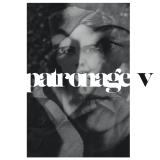

Hekt's debut album Forever is released 1st May 2026 on Numbers, with the first single "Someday" featuring Valeria Litvakov out now.
Made with his friends Henriette Motzfeldt & Catharina Stoltenberg (solo and together as Smerz), Copenhagen-based composer/producer Fine Glindvad (who records as Fine), and Valeria Litvakov, Forever is built around juxtaposition: pop and bass brushing shoulders with dopamine fueled EDM. The record is a funhouse of mirrors where polystyrene arpeggios skitter underneath uplifting chords.
As Hekt describes the record: "Forever is desire and digital synthesis, car rides and lingering perfume. It’s missing someone who was never really there, holding on to something you didn’t want in the first place. The songs you hear when you’re falling in love on the dancefloor, and the songs you hear when you open your eyes and realize it’s just you alone with the DJ, the last one to leave. Songs to make out and break up to. A party so good you get depressed it can’t last forever."
Forever is a continuation of Hekt's work exploring the emotional core of pop music. "Someday" is the soundtrack to a hundred imagined futures with strangers in the club, as pristine arps and heartswelling chords skitter under Valeria Litvakov's ruminations, both lovestruck and terrified. Smerz add a level of fantastic to the slanted otherworldly pop of "Up in the Air, So" and "Forever." On both tracks, the melodies are squishy and impressionistic, the sound of all those memories we make in dance floors, taxis home, and in the blurry morning sunshine as we adjust to reality.
And while guest vocalists abound on Forever, Hekt also takes a turn at the mic himself. On "Without You" he shakes up a perfectly mixed cocktail of melancholy and beauty. And on "Promise" his voice is turned into another melodic accent against the fragile IDM sound design. Elsewhere he turns up the aggro. Dueting with Catharina Stoltenberg on Boys Noize's secret weapon, "Anytime Anywhere," the two trade bars across a compressed field of static and feedback while little hints of sub and wiry synths circle the edge of the stereo.
Hekt's music has always attempted to redefine what club music can and might be. This reimagining of the very basic building blocks of the dance floor is felt across Forever where he leans into the emotions of 2010s EDM. "What I loved about hardstyle and jumpstyle was the emotional intensity that kind of music can bring if you’re in the right setting. And I think that is what has stuck with me from EDM too. Emotional intensity," he explains. "It’s just been the soundtrack to some of the most fun moments in my life." On "But I Can't Really Show You," he compresses the EDM-era into 3-minutes. Vocal catharsis, dubstep womp, and soaring chords make it sound like the entirety of Tomorrowland being processed through MAX/MSP. This Skrillex-meets-Calvin Harris colossus is designed to destroy every sub woofer as it pulls on every last heart string.
And then there are the straight-up club stompers. "Baby" is UK club music reimagined with the steely lines of Danish modernism - think DJ Q going b2b with Errorsmith. It has a bassline made out of flubber with a vocal chopped beyond recognition as it bounces across chromatic synth lines. Even when he strips things down on the slinky garage-esque "Big Things," there are still unexpected twists and turns. The melody sounds like an Ibiza House compilation played in reverse, alongside drums that swing in and out of psilocybin bleeps and bloops. On other tracks like "Dream" and "You Won't Believe," the tropes of dance musics past, present, and future are dissolved in baths of synthesis and polished sound design.
Forever is a record where club music and Scandinavian EDM seamlessly mixes into avant-garde pop. Hekt has crafted singular and unclassifiable love songs alongside effortless bangers, making an ode to those eternal dance floor moments where time stops and you start hoping for something big.
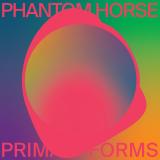
After their last album six years ago, "Primal Forms," the new album by Phantom Horse, finally arrives. The German duo of Ulf Schütte and Niklas Dommaschk have long established a reputation for expertly crafted, hypnotically slow-burning electronic music, and we do not hesitate to say that "Primal Forms" stands among the epitomes of their discography.
The sequencing of "Primal Forms" cannot be underestimated. It is an album in the classic sense. It demands to be listened to in its entirety, which also points to a closer affinity with Krautrock. Likewise, a touch of dub is perceptible, wafting around the songs, which, as usual, bear clandestine titles. It is not unreasonable to see in these compact compositions a clear statement against multitasking.
Phantom Horse are not trumpeters of dystopia. They present themselves resolutely, almost stoically, turned away from the world. This turning away is clearly a statement that can be contemplated in the Mariana Trench as well as in comet belts. In any case, it is best experienced in a space without any human beings. This does not mean that grumpy hermits are tinkering with synths behind closed shutters, armed with wooden walking sticks. This is still open minded music with a connection to current developments. The approach itself is what is audible, and with it, Phantom Horse proves once again that their main connection to time is timelessness.
In an age of all-encompassing distraction on every sensory, thematic, and semantic level, Phantom Horse explores the possibilities of reduction, searching for simplified melodic arcs without resorting to the vocabulary of classical minimalism. The overall impression is more electronic; the slowly shifting, polyrhythmic compositions repeatedly lead to a peculiar danceability. However, these are perhaps the dances of mechanical birds, undeterred by anything.
Written and produced in Hamburg, Nijmegen and Ojén by Niklas Dommaschk & Ulf Schütte
Mastering by Rafael Anton Irisarri at Black Knoll
Artwork by Daniel Castrejón
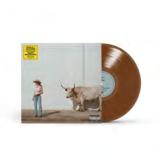
Splattered Vinyl[28,15 €]
Mit „Middle of Nowhere“ veröffentlicht die achtfache Grammy-Gewinnerin Kacey Musgraves ihr sechstes
Studioalbum. Das Album klingt unverkennbar nach Kacey: ehrlich, furchtlos, mitreißend und stets bereit,
den Wendungen des Lebens mit einem Augenzwinkern zu begegnen. Klanglich kehrt Musgraves bewusst
zu ihren Texas-Wurzeln zurück. Das Album enthält Features von Willie Nelson, Miranda Lambert, Billy
Strings und Gregory Alan Isakov und wurde von Kacey Musgraves gemeinsam mit Daniel Tashian und
Ian Fitchuk produziert. Als eine der meistgestreamten Künstlerinnen ihres Genres prägt Musgraves den
modernen Country-Sound wie kaum eine andere. Ihr Erfolgsalbum „Golden Hour“ wurde 2018 vom Rolling
Stone in die Liste der „500 Greatest Albums of All Time“ aufgenommen und festigte ihren Status als eine
der einflussreichsten Stimmen des Pop-Countrys.
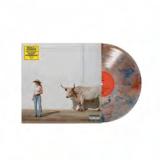
Dark Red Vinyl[28,15 €]
Mit „Middle of Nowhere“ veröffentlicht die achtfache Grammy-Gewinnerin Kacey Musgraves ihr sechstes
Studioalbum. Das Album klingt unverkennbar nach Kacey: ehrlich, furchtlos, mitreißend und stets bereit,
den Wendungen des Lebens mit einem Augenzwinkern zu begegnen. Klanglich kehrt Musgraves bewusst
zu ihren Texas-Wurzeln zurück. Das Album enthält Features von Willie Nelson, Miranda Lambert, Billy
Strings und Gregory Alan Isakov und wurde von Kacey Musgraves gemeinsam mit Daniel Tashian und
Ian Fitchuk produziert. Als eine der meistgestreamten Künstlerinnen ihres Genres prägt Musgraves den
modernen Country-Sound wie kaum eine andere. Ihr Erfolgsalbum „Golden Hour“ wurde 2018 vom Rolling
Stone in die Liste der „500 Greatest Albums of All Time“ aufgenommen und festigte ihren Status als eine
der einflussreichsten Stimmen des Pop-Countrys.

Time for more tracks from around that different corner! The EP kicks off with Reel Des Jumelles, some kind of hommage to accordion dance music that moves with a steady forward leaning house beat, winding staircase melodies and some well-paced tom fills. Arrak is more of a slow, howling midnight creeper. The B-side consists of two cuts from Anders’s live repertoire, meaning deep modular bass n’bleeps, dubby chords and some drum box autorhytm presets (merengue, salsa…) thrown in for good measure. Includes digital download code, and the digital version comes with two fabulous remixes by HEROES. Alexi Delano and Daniel ”Fagge” Fagerström! Edition of 100, mastered by Andrea Merlini.

Rocksteady Disco returns with more heat for the heads, this time from Glenn Echo & Daniel Meinecke delivering a stunning 7" that bridges various eras of dancefloor magic. Their take on Sylvester and Patrick Cowley's 'I Need Somebody To Love Tonight' is pure cosmic seduction with New Orleans vocalist Mark-Anthony Thomas channelling Sylvester's spirit while Meinecke's synth work and Glenn's rich production elevate the classic into a shimmering modern anthem. Flip it and Lucky 7s takes a left turn into dub-funk psychedelia with chunky drums, low-slung bass, wild time signatures and futuristic vocoder texture. Red hot so handle with care.

Launched in 2000, Post Office quickly became a landmark compilation series, featuring artists such as Ricardo Villalobos, Daniel Bell, Robert Hood, Dimbiman, Matthew Dear, Seth Troxler, Craig Richards, Losoul, Ark, Mr Oizo and many more. Each new edition stands as both a milestone in Logistic Records’ story and a forward-looking vision of the global electronic scene.

Following their recent appearance covering Sylvester and Patrick Cowley's 'I Need Somebody to Love Tonight' on Rocksteady Disco, the enigmatic cosmic pairing of Glenn Echo & Daniel Meinecke channel deep, shimmering disco and nu-disco vibes while calling on ethereal, cosmic textures. The throbbing 'Home Rule' opens with a warm, hypnotic pulse and well-worked vocals that deliver recognisable rhymes, while 'Love Letter' slows down to a heavyweight crawl with warped and twisted pads and plenty of texture. Both tunes here highlight the duo's skill at blending dancefloor immediacy with atmospheric nuance and feel like a journey through mirrored lights and late-night reverie.

For two decades, Gun Outfit has been a band defined less by genre than by continuity, patience, and a commitment to making music that reflects their lived experience.
Formed in Olympia, Washington in 2006 but long since rooted in Los Angeles, the group has evolved from a raw duo into a quietly formidable five-piece, their sound growing from scrappy post-punk beginnings into something spacious yet intimate, and always underpinned by an experimental edge.
On Process & Reality, Gun Outfit return with their most ambitious and immersive work to-date, a sprawling 80-minute double album shaped by time, environment, and philosophy. Recorded over the course of a single month in the late summer of 2020, on an 80-acre ranch in Pine Flat, California, while a massive forest fire burned less than ten miles away, the seeds of these songs were stark and strange.
Its title, Process & Reality, draws from the central work of philosopher Alfred North Whitehead, whose philosophy places intuition, experience, creativity, and relationality at the center of existence.
The band’s current lineup reflects both longevity and openness. Sharp and Keith remain the band’s primary architects, joined by longtime drummer Daniel Swire, multi-instrumentalist Henry Barnes, and bassist Kayla Cohen. Additional collaborators include Chris Cohen, Warren Lee, and Danny Sasaki all of whom add further depth, leaving subtle fingerprints across the album.
Musically, the album expands the band’s palette without abandoning its core sensibility. Dulcimer, autoharp, sitar, melodica, keyboards, homemade electronics, and a wide range of acoustic and electric textures appear throughout. The sound is mellow yet expansive, songs move between fragility and hefty atmospheric passages.
Influences surface obliquely rather than overtly. Elements of reggae and dub inform the production’s spatial sensibility. Echoes of long-form European jam bands coexist with sharp post-punk. British folk traditions, American country, and classic West Coast songwriting drift in and out of focus; the band is never afraid to lead or follow.
Strain presents its second vinyl release: a five-track VA exploring different moments of the dancefloor, from early tension to peak-time intensity. The record brings together producers from Argentina, Italy, and Uruguay, connecting distinct scenes and sensibilities within a cohesive sonic journey.
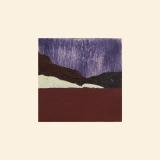
Passages in Time, the third album from Kasper Bjørke Quartet, traces the contours of a blend of spiritual jazz reverence and the calming grandeur of '80s ambient. Inspired by Christopher Nolan's observation that "time is the most fundamental part of our human experience," the compositions are approached as fragments of time and memory. Meditations on the elusive nature of time form the heart of the work, merging freeform jazz improvisations with cyclical synthesizer patterns that mirror its quiet undulations.
Dreamy synths intertwine with guitar, harp, trumpet, flugelhorn, saxophone, and flute, creating a spacious environment for contemplation. The music invites reflection on the choices that shape our lives and the lives of those closest to us, and on the quiet weight of our priorities within the brief span we call life on this planet. Each passage unfolds as a fleeting moment suspended in time. The subtitles hint at fragments from someone's diary, tender observations of love, parenthood, and connection. Together, the passages form a musical memoir of sorts, where memory and emotion are gently woven into the compositions.
Passages in Time does not impose structure or meaning, it reflects them, offering an open space as the instruments drift in and out of focus, tracing time's subtle rhythms and inviting the listener to infuse their own memories and meaning into these passages.
The album also marks a transformation for the Quartet project itself. Langstrakt (Claus Noreen), part of the original ensemble, continues to operate the synthesizers alongside Bjørke, while the wider constellation of contributing musicians has evolved. Strings and piano give way to flute and saxophone by Oilly Wallace, guitars by Danish ambient composer Anna Roemer, trumpet and flugelhorn by Malthe Kaptain, and cascading orchestral harp by Katie Buckley, principal harpist with the Icelandic Symphony Orchestra.
The cover painting is by American artist Marcus Leslie Singleton, courtesy of V1 Gallery, and reflects the meditative and timeless atmosphere of the music.
Passages in Time is released on Bjørke's own imprint, Sensitive Records, following the two previous Quartet albums released on Kompakt Records: The Fifty Eleven Project (2018), a debut that introduced Bjørke's ambient and neoclassical explorations, and Mother (2022), which expanded the ensemble's sound with emotive choir compositions and guest appearance by Sofie Birch (Unsound / Stroom). Together, these three albums trace a journey of artistic growth, from introspective experimentation to a fully realized, contemplative expression of time, memory, and human connection.
shubostar, originally from south korea and currently based in germany, began releasing her own works in 2018. she quickly attracted attention with releases on prins thomas’s label internasjonal.
this work, her debut release on mule musiq, presents a new disco sound that updates elements of cosmic, italo disco, and new wave for a contemporary context.
a1, “abbiamo,” is an electric disco piece reminiscent of the french disco classic magic fly by space.
a2, “gambi,” can be described as a cosmic disco track akin to a disco version of klaus schulze that might be played by dj daniel baldelli.
b1, “starlight arcade,” offers a more dub-oriented, club-friendly new wave disco sound.
b2, “tip top” appears to draw influence from artists such as jah wobble, combining uk new wave with ebm elements into a proto-house style track.
her refined production style, which stands apart from typical disco-oriented artists, may be attributed to a distinct sensibility.
this release marks the emergence of a notable new artist.
For this edition, the label meets this duo of producers, that has been created by the musical synergy between Zonker and Daniel Gorziza, who go by the name – “SameSame”. This disc has been titled “Unconditional Society” and has been crafted with a mission to be brought to the worldwide dancefloors and to be foreseen by the adepts of the sound it conveys. The A side is opening with a deep trancey burner “Suspect Zero”, with time passing this side of the record is morphing into the prime-time speaker ripping sound of “Rip the Jacker. The B side will see more mellow feel to it and sometimes even could be said that the vibe turns relatively melancholic by the time the record reaches its natural conclusion. The words that have been shared do not translate the profoundness of the subject that the artists have carried through, but then again, sometimes them letters have to be present even if they are kept to the slightest. The frequencies communicate much superior to the words and by now you can stop reading this and immerse yourself into the sound.

Following his debut on ICONYC in late 2024, Italian producer Daniel Tagliaferri returns to the label as Ivory with "Want", a four-part suite that deepens his sonic language and sharpens his emotional vocabulary.
With a precise command of space, rhythm, and tension, "Want" feels less like a follow-up and more like a statement of intent, one that situates Ivory among the most sensitive sculptors of the modern dancefloor.
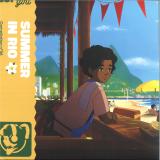
Feel the sun, samba, and soul that define summer in Rio.
Summer in Rio blends smooth bossa grooves with mellow lofi beats, capturing the laid-back energy of Brazil’s most iconic city. Born on Rio’s beaches in the late 1950s, bossa nova fused samba rhythms with jazz harmony and soft vocals, a sound both timeless and deeply expressive. This 28-track compilation brings that spirit to life: the first 14 tracks dive into bossa lofi with guitars and syncopated rhythms, while the last 14 ease into warm, expansive summer lofi.
From beachside mornings to golden hour evenings, this is summer on loop.
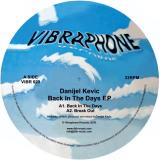
Vibraphone Records is back from winter break with a new release by Danijel Kevic!
Classy retro Acid House with this remakeble Vibrapohone sound.
Highly recommended!
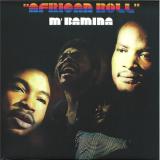
Gatefold Sleeve
M’Bamina – African Roll (1975)
The story of an album born between Africa, Italy, and the nightclub culture of the 1970s
In the heart of 1970s Italy — a country undergoing profound social change and a music scene just beginning to open itself to distant sounds and cultures — an extraordinary, almost improbable story took shape. It is the story of a group of young African musicians who found their way to Europe, of a Turin nightclub that became a crossroads for communities and experimenters, and of an album which, released in small numbers and largely unnoticed at the time, is now considered a rare jewel of Afro-fusion.
The band called themselves M’Bamina — an ensemble of musicians from Congo, Cameroon, and Benin, who arrived in Italy in the early Seventies. Settling between northern Italy and the Pavia area, they began performing in small clubs and community events, bringing with them a vibrant rhythmic heritage: African polyrhythms, call-and-response vocals, funk-infused bass lines, and Caribbean or Afro-Latin colours absorbed along their musical journeys. Their raw, contagious energy on stage quickly drew attention.
Meanwhile, in Turin, another story was unfolding. There was a venue becoming almost legendary: Voom Voom, one of the city’s liveliest nightclubs, run by Ivo Lunardi. The club attracted an eclectic crowd — students, artists, foreigners, night owls — and Lunardi quickly understood that the dancefloor wasn’t just a place for music, but a melting pot for a new kind of cultural energy. Out of this vibrant atmosphere came his idea: to turn the club’s name into a small independent record label, Voom Voom Music, capable of capturing the spirit of those years and giving voice to unconventional projects.
When Lunardi heard M’Bamina, he immediately sensed that this was the sound he had been searching for: fresh, different from anything circulating in Italy at the time, and capable of blending African tradition with funk and European sensibility. He brought them into the studio.
Production was handled by Lunardi along with Christian Carbaza Michel, while the engineering was entrusted to Danilo Pennone, a young sound technician with a sharp, intuitive ear.
The recording sessions — held in Turin in 1975 — produced a remarkably warm and direct sound. The music feels almost live: grooves rooted in African tradition, but open to funk-rock structures and modern arrangements. It is a natural fusion, never forced. Tracks move between tribal rhythms, funk basslines, light electric guitars, congas and Afro-Latin percussion, with call-and-response vocals and melodies that echo both Congolese tradition and the lineage of Latin jazz. Not by chance, one of the album’s most striking tracks, Watchiwara, reinterprets a Latin standard through M’Bamina’s own rhythmic language.
The album was titled African Roll — a name that was already a statement of intention. It is African music that “rolls,” that moves, adapts, transforms within a new geographic and cultural setting. It is not strictly Afrobeat, nor Congolese rumba, nor Western funk: it is a spontaneous, hybrid blend, shaped more by lived experience than by any calculated aesthetic program.
When African Roll was released, the world around it barely noticed. Distribution was limited, and 1970s Italy had yet to develop a cultural framework for receiving such music. The national music press rarely paid attention to African or “world” productions. The album slipped into silence — though the band’s own story did not.
M’Bamina continued performing across Europe and Africa, even sharing a stage in Cameroon with none other than Manu Dibango. By the late Seventies, they moved to Paris, signed with Fiesta/Decca, and recorded a second LP, Experimental (1978). Meanwhile, the peculiar record they had made in Turin began to resurface quietly among vinyl collectors, Afro-funk enthusiasts, and DJs hunting for forgotten grooves.
That is when the album’s fate began to shift.
Over the decades, African Roll emerged as an almost unique document: a snapshot of an intercultural Italy before the word “intercultural” even existed, a fragment of migrant history, a spontaneous experiment in musical fusion born far from major industry circuits but rich in authenticity. Original copies began commanding high prices on the collector’s market, and the album became recognized as one of the hidden classics of European Afro-fusion from the 1970s.
Today, more than fifty years later, this reissue finally restores visibility and dignity to a project that deserves to be heard, studied, and celebrated. It is not simply an album: it is the testimony of a rare cultural encounter, born in an Italy unaware of how fertile such exchanges would one day become.
It is the story of a visionary producer, an extraordinary band, and a fleeting moment in which music, migration, and nightlife came together to create something genuinely new.
African Roll is — now more than ever — the sound of a bridge: between continents, between eras, between cultures. A record that, after rolling far and wide, has finally come home.
