2x12"
The first LP from Scorn since 2010’s Refuse; Start Fires, Cafe Mor is Mick Harris in his happy place. Which just happens to be in studio, demolishing all standards and rules for electronic bass music, and embodying the darkest, deepest sound in dub. Cafe Mor takes risks outside of the conventional Scorn apparatus, and with these risks come substantial rewards.
The album is comprised of powerful dub excursions, from the deep dark dank of the front two tracks Elephant and The Lower The Middle Our Bit, and gaining steam towards the ultraviolence of Mugwump Tea Room to Never Let It Be Said to the CRUSHING DEATH KICK of Who Are They Which One. A quick drive under the lights with a lasered out snare on Dulce, then we come across the appearance from Sleaford Mods frontman, Jason Williamson, on the standout track on the LP, “Talk Whiff”. A cruise around the Midlands sighting the Broke Fridge and Tinder Surprise, with an instant classic refrain:
“Talk Whiff // I’m a busy person // I’ve had enough of it”
Cafe Mor culminates in the all-in-one dub affair SA70, letting rip all the new mixer and fx techniques of Harris’ most recent incarnation of Scorn. The album is the official soundtrack for all smoked out backroom deals, situations and arrangments, cancelling all small tours, and mongoose rhinocharging the bass to level 24.
All tracks Created and Mixed by MJ Harris in the Lad’s Old Room
B14 Mastered by Daniele Antezza for Dadub Mastering Studio
Artwork, Layout by MachineTM
Suche:daniel la ro
Edition of 100 copies only.
Side A: 'Vodou'. Head priest: Gran Sèvitè Jean-Daniel Lafontant. Vodou priests: Oungan Eddy Saint-Jean and Anperè Jean Céus. Vodou priestesses: Manbo Françoise Célestin, Manbo Christine Lamour, Manbo Marie-Marthe Similien and Manbo Jacqueline Thélus. Other participants: Ounsi and members of Sosyete Na-Ri-VéH. Percussionists: Ountògi and the drummers of The Sacred Temple Na-Ri-VéH 777. Side B: 'Rara'. All-female rara band: Forever Rara Fanm of Belair.
Grand Rue recordings made by AMé in front of the Atis Rezistans, Port-au-Prince on 21 December 2015, 4:54pm to 5:18pm. Vodou ceremony and all-female rara band recorded by AMé at Temple Na-Ri-VéH 777 in Port-au-Prince, 16 December 2015, 9pm to 1am. Edited by Philip Marshall with AMé in Cologne, 16 May 2016. Mastered by Zachary James Watkins at Stank House, 3 August 2016. Artwork by Stefan Fähler. AD&D by Don Wyrm.
With thanks to: Ghetto Biennale, Leah Gordon, Atis Rezistans, Gabriel Toso, the priests and priestesses, the members of the all-female rara band, the percussionists, Clocktower Radio and all the Haitian People.
An introduction to Vodou music and Rara, by Gabriel Toso:
"Tanbou prete pa janm fè bon dans" ("A borrowed drum never makes good dancing")
"Music is to Vodou what water is to our bodies or fire to our hearts: all embracing, all inflaming. The spirits of Vodou are called upon and energised by the inexhaustible rhythms of Africa. Brought by the slaves to the New World, and merged with indigenous and European traditions, their magical power is the soundtrack of Vodou itself, its life-force.
Dancing, singing, praying are all fundamental aspects of Vodou; but above all it is the drumming that plays a major role during the ceremonies, an invitation to the lwas (gods) to join and partake in the rituals. Like the heartbeat of an infant in its mother's womb or the vibrations of our planet, the percussions of the tanbou (drum) are at once instrument and creator. Different batteries of drums correspond to different rites, countless rhythms to a multitude of nations of laws. The drum is not only a musical instrument but a sacred object, an expression of the divine. Its sound guides the initiates to their appointment with the spirit world.
Rara festivals are yearly celebrations that begin following Carnival during the Catholic Lent season, when the activity of the Vodou temples is at its quietest. During those six weeks Rara bands parade for miles playing music, dancing, and performing rituals for Afro-Haitian laws, while wearing specific costumes and using a variety of musical instruments. Probably originated in Haiti during the colonial period, Rara bands and their vast repertoire of songs are both politically and socially engaging while keeping an amusing, irreverent, and at times risqué personality. Traditionally connected with a Vodou temple, Rara bands leave the ceremonial spaces to interact in the public sphere through parading, thus reminding both participants and spectators of the physical presence of the lwas." – Gabriel Toso, London, 3 November.
There must be something in the air just now over in Italy with a steady stream of brilliant disco and house releases emanating from the country. Of all artists doing the business recently DJ Rocca has definitely stood out as being behind more than his fair share of incredible music.
Rocca is a veteran of the scene producing since the 1990’s. Recently he has had stand out tracks working with some of the key artists of the scene including Dimitri From Paris and Daniele Baldelli. There have also been a huge number of solo projects and remixes for everyone from Blaze to Andrew Weatherall to Soul Clap. It’s a varied and expansive list which shows the depth of his production skills.
His latest release a three track EP ‘Journey to Kizimkazi’ comes courtesy of one of the stand-out labels of 2019 in Samosa Records. This one is heavy on the Afro Disco feels with Combo Rox, Ju Ju Jackie and Kuma Rox all coming from slightly different angles of the genre.
Lead track ‘Combo Rox’ is peak-time hands-in-the-air disco goodness. Huge brass hooks cruise next to a bounce of a bassline, ever so funky guitars, smooth keys and a monster vocal hook. This is a track with everything in needs to cause a serious dancefloor commotion.
On the flip ‘Ju Ju Jackie’ combines a much heavier percussive drum line with multiple percussive motifs, it’s a track which will take no prisoners. Yet more off the wall vocal hooks merge perfectly with the carnival atmosphere of the percussion and some crazy brass licks. A unique and exciting track.
Last up is Kuma Rox a deeper hypnotic groove of a track, warm tribal vocals, smooth keys, a sparse but hooky bassline and brilliant percussion give this one a real timeless class.
Another top of the class release from Samosa.
From Far Out Recordings’ in-house producer, Daniel Maunick’s debut solo album Macumba Quebrada conjures scenes of collective hedonism from start to finish. Spanning Afro-Brazilian spiritual dance ceremonies, late-eighties Detroit techno parties and jungle and broken beat raves in nineties London, Maunick celebrates our instinctive, age-old desire to come together and lose our sense of self.
Daniel Maunick practically grew up behind the mixing desk. As the son of Brit-funk legend Jean-Paul ‘Bluey’ Maunick (of Incognito fame), he found himself immersed in music from an early age, and quickly became involved in London’s drum n’ bass, acid-jazz, house, broken beat and soul scenes, releasing his first production at the age of sixteen on Gilles Peterson and Norman Jay’s Talkin’ Loud label. Since then, he has produced albums by the likes of Azymuth, Marcos Valle, Terry Callier, Incognito, Ivan ‘Mamao’ Conti and Sabrina Malheiros.
Reflecting his dual residence between Rio de Janeiro and East London, Macumba Quebrada features deep house stompers and broken bangers littered with Brazilian rhythms - in the form of both dusty percussion and Maunick’s intricate drum programming. But the album sees Daniel draw inspiration from across the black music continuum, and the rich histories of communal celebration in Detroit techno, Chicago house, London D’n’B and New York disco. Bringing all this together in explosive peak-time club tracks, moments of eerie ambience, South American swing and tribal earthiness, Macumba Quebrada expands on Maunick’s recent vinyl-only EPs ‘A Vicious Circle’ and ‘Sombra Do Dragao’, with a 13-track double LP and 14-track CD and digital release.
Taking its title from a syncretism of South American spiritual practices, the cover art is photograph taken by acclaimed French photographer and self-taught ethnographer Pierre Verger, who travelled the world documenting civilizations that would soon be effaced by progress. Settling for good in Salvador, Brazil, Verger became initiated into the Candomblé religion, eventually officiating rituals and ceremonies within the community. Without having become an ordained priest, Daniel Maunick shares both Verger and Far Out Recordings’ love for Brazil: its people, its culture and its music.
"He's been producing Azymuth and all kinds of great musicians in Brazil, and finally his debut album is about to be released." Gilles Peterson (BBC 6 Music)
"This one is a good one. Thanks!" Derrick Carter
"Wow couple of killers on there so it sounds!! Thanks a lot" ?? San Soda
"He is always brilliant!" Voclov (Neroli)
"Energetic, summery and full of groove. "It's like Theo Parrish went to Brazil and never decided to come back." Errol (Touching Bass)
"Super dope release from Daniel! proper Venom / Viper Squad vibes!!" Pablo Valentino (MCDE/Faces Records)
"Organic and bumpy...healthy dance music!" Mad Mats (Local Talk)
"really diverse, great sound" Chris Todd (Crazy P)
"super dope" Nick Tyson (XOA)
"Keep em coming man! ... Nice one" Earl Jeffers
"Feeling this! As always with Mr Maunick." Opolopo
"Dirty Trix is real nice!" Jkriv (Razor N' Tape)
"This is great!" Danny MoodyManc
"He's right on the money with this one, isn't he? Deep, profoundly funky stuff that Larry Heard would be proud of. You can feel it!!!!" Mark Webster (BBC 5 LIVE)
"this is so dope" Alex Attias (Visions Recordings)
"Love these tracks" Serkan Cetin (SunSplash)
"Great release, I love It! I-Robots approved!" I-Robots
"This is excellent. Dirty Trix and Somra Do Dragao are the ones!" Dane (The Love Below)
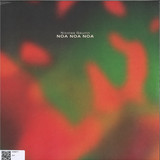
"Nicolas Gaunin's surreal sound experiments lift you out of the everyday and transport you to an off-world Tiki lounge set high amongst the tree tops of a tropical rainforest, where you're surrounded by bizarre, colourful creatures and weird psychotropic plants. Noa Noa Noa is modern Dada, a neon soundtrack to your most outlandish fever dreams.
Nicolas Gaunin is the alter ego of Nicola Sanguin, part of the vibrant experimental music scene around Padua, Italy where he plays in outsider rock groups The Lay Llamas and Orange Car Crash. Nicolas Gaunin is his solo electronic project, a bright and playful cosmic mash-up that uses the rhythms of traditional African percussion groups and skews them slightly to create unsettling, off-kilter grooves. These drum machine experiments are laid over a teeming microscopic sound world of bird calls, insect chatter and weird jingles reminiscent of advertising earworms or video game soundtracks.
Noa Noa Noa takes its influences from music from around the world, and inspiration from high and low culture; from composer Gyorgy Ligeti to the cosmic sounds of Italian DJ Danielle Baldelli, from the experimental music of Moondog or Harry Partch to the playful sounds of Francis Bebey or the exotica of Martin Denny, from Iannis Xenakis to 8-bit video game music. Noa Noa Noa ends up sounding something like the imaginary soundtrack to the Nintendo Gameboy version of a lost William S. Burroughs novel.
Incredibly, most of the tracks on Noa Noa Noa were recorded live in one take with the express intention of creating music that is, in contrast to much of today's electronic music, bright, sunny, light-hearted and mischevious. The resulting album is both totally essential and also completely throwaway.
These tracks were originally released in 2018 by Artetetra Records (Italy) as Noa Noa (cassette & digital) and Danse de l'Oiseau (digital only). Hive Mind Records are proud to present Noa Noa Noa on vinyl for the first time."
Two dope Island Boogie tracks by Experience, an Afro Reggae group hailing from Germany. - Very nice steeldrumming in these tunes..
Experience’s “Share It With You” and “Happiness” can both be found on the private LP release “Oh! What A Feeling” from 1982. The group consisted of Anthony Flaverney from Trinidad, Curvin Murchant from Jamaica, Daniel Kofi Jefferson from Ghana and John Innies from Trinidad and was founded in Hamburg.
Anythony Flaverney, the lead singer on both songs, was active as songwriter and musician in Germany since the mid-1970s, most notably appearing on the Peter Herbolzheimer arranged “Caribbean Rock“ album by Malcolm's Locks (be sure to check their funk version of Bob Marley’s “Get Up Stand Up”!). Curvin Merchant, a highly respected drummer from Jamaica, settled in Germany around the same time. Before forming Experience, he was a member in several groups, including highly successful pop acts like Boney M. Later he became known as "Germany’s Grandfather of Roots Rock Reggae", among other things buildung up the "Reggae Center" in Hamburg. Flaverney and Merchant are joined by Daniel Jefferson on bass and John Innies on steel pan. The band existed for about 2 years, touring in Germany and Europe, unfortunately recording only one album which features a unique mix of Reggae and Funk.
The first track “Share It With You”, should give any serious music lover goose bumps. It was written by Flaverney and features a deep groove, steel drum solos and fantastic soulful vocals. It’s that type of tune you will play in a DJ set and people will come up to you and ask what it is. The single version is slightly edited.
Side B continues with Happiness, an equally great track with positive vibe and attitude, written by Flaverney and Jefferson. Again, the steel pan sounds give it that special compelling “Island” vibe from Trinidad.
The single is limited to 300 copies and comes in a beautiful picture sleeve showing part of the original artwork from the “Oh! What A Feeling” album.
The producer behind Sorcery has lent his unique live drummer presence to the techno scene throughout various contributions and collaborations including with Kangding Ray, Belief Defect, Dadub and Powell just to name a few. This musicianship has led him to perform twice at Atonal festival and release on the Atonal imprint with SUMS (Kangding Ray + Barry Burns/Mogwai). Manufactured Conflicts is the hard-hitting precision engineered debut from one of electronic music's most acclaimed experimental underground's drummer. Samuel Kerridge thoughtfully re-engineers 'Orbature' re-pacing the structure and contributing additional textures to the piece. Mastering for digital support by Daniele Antezza @Dadub Studio Vinyl mastering and cut by Simon at The Exchange
Artwork by Rosmarie Weinlich
Philippe Cam is the Thomas Pynchon of the electronic music world. Little is known about him and only a couple of pictures have been put online since he emerged on this planet to write his first and only album18 years ago. We know he worked as a sailor and that’s it. If you dig deeper you might find out that he worked as a DJ in the beginning of the 90ies in Brussels and began to study electronic music there and also began to write music for theaters and ballets.
The American distributor Forced Exposure once wrote that about him: „Philipe Cam is a star in his own field. He is among the few people who have succeeded to write hypnotic dance music without a conventional beat still conveying a thrilling, dramatic feel. Cam has developed an accurate, intense and complex formula of modulation-techno. Starting with music similar to Pan Sonic in 1996, his music turned towards a more elegant form of minimal music. Abstract soundtracks lead to an organic form of music, which was equally influenced by modern techno as Wolfgang Voigt's Studio 1/Gas or Basic Channel/Maurizio. Cam's music corresponds heavily to the Cologne scene, where his music is appreciated and played throughout the clubs by the likes of Michael Mayer, Tobias Thomas and various other DJs as well as experimental djs from the A-musik corner.“
So what’s new with his music? Basically the art of filtering is still his passion. Maybe he can be less associated with techno and the themes of his new tracks emerge in a more distinctive pattern? Well that’s hard to say, we would comment the energy of his early techno days in Brussels have returned here in a fierce way with some oft he tracks. The rhythmic movements are classy and stick with you. Whereas other tracks look for a distinctive relaxation of some kind.
We are releasing the album as a double clear vinyl with cover art by Yvette Klein who also designed the cover for his Philippe Cam’s album 18 years ago. Graphics for "Rotterdam" come from Cologne designer Daniela Thiel. We also would like to thank the cultural department of Cologne for supporting us to finance the album and to see the artistic value in this piece of minimalism.
The album kicks off with the mellow and soothing "Cocoa Beach". A Gentle beat that moves like bodies swaying in the hot summer sun. The clock moves a step forward and then a step backward as evolution takes a rest.
"Manga" feels like an acceleration to the moon, the contemplative moments come in spurts and hide in the intervals of the chords which are on the loose. Philippe Cam is the most energetic person in the world when it comes to core activity, this is head banging stuff for the ambient lounge.
"Short Summer" is a heavy and violent recognition. As intensive as it is it knows when to stop and disappear. In the ear and brain of the listeners it leaves an indisputable echo which lingers on for minutes. We suggest not to make a pause but jump directly into "Vermillions Sands".
What can be said about into "Vermillions Sands"? Be prepared some Terry Riley might lure around the corner to offer you some oranges on a silver plate, but don’t eat them. This is luring and beautiful at the same time. Maybe the best ambient track ever written and yet who can ever venture to say that without making a fool of himself. "Vermillions Sands" comes in waves and they could be longer we think.
"Rotterdam" the home of Philippe Cam for a long time but not anymore. He moved away. So that changes the perspective. But when was the track written? "Rotterdam" seems mechanical and rusty and spooky and divided. This arrangement is very different to all the other tracks so far and is almost dub in style but way more fractured. A steady stop and go emerges. But the longer it runs the better it gets. At minute 6 the brain resets itself and tries to grasp what has happened so far, reconstruction as a result of its own phantasmic imagination and hardly true at all, wonderful. Applause included!
Here comes "Bis", a short episode of a track and before we can comment on it, it is already over.
"The Game" is a mule of a track. It has a quiet stubborn sequence that bites and kicks you in the back without any change in near sight. We can hear a voice whispering, which sounds like a miniature vocoder featuring the voice of a child calling out - never stopping. This is treadmill to some extend but starts to breathe towards the middle of the track and slowly changes perspective. In fact there are some changes taking place here which go beyond a sound design that works heavily on the stereo image. Stick with it and the experience will be a great one.
"Ultimate Fly For Halloway" somehow orchestrates how you might feel after you climbed a 8000 meter high mountain and reached the top. A rejoicing off a special kind. Lava for the ears. No cheerleader murder plot sorry.
"Last Track" is a perfect example of a true minimalistic pice of music that manages to make contact with other genres and does this with elegance, determination and a lot of soul.
key selling points: The key selling point is the fact that Philippe Cam once was referred to as one of the main protagonists of the minimal music scene along with Wolfgang Voigt's Studio 1/Gas and Basic Channel/Maurizio. A true artist with a vision which is very rare.
Philippe Cam has picked up the sound he was famous for but has developed it further without selling out to any genre and expectation that rules our daily business.
Exactly this is the strength of the album to create a vivid world of impressions by using instruments in a whole different way than all software developers would suggest.
"Rotterdam" is a piece of art that can set off a firework when you listen to it and it owes nothing to anyone.
* Debut LP from a UK based band
* Simiah on MPC, Dan Somers on Keys, Craig Crofton on Sax
* Lacquer cut by Pete Norman, mastered by Strype Audio
* Design by Rolling Drums Studio
* 300 copies. LP in PVC sleeve with sticker
* For fans of jazz, instrumental hip hop
The band was formed in Bristol, England and consists of 3 members; Simiah (MPC), Dan Somers (keys), & Craig Crofton (tenor & soprano sax).
The album is a collection of jazz inspired, hip hop instrumentals with MPC drums and live instrumentation. Simiah is well known for his live double MPC show cases and has performed alongside other live musicians so this new project is like a studio album of what he does naturally on stage. The unique sound has been developed through a monthly residency at Bristol's Gallimaufry bar where the band has improvised new material and fine-tuned ongoing compositions while welcoming special guests from the local jazz scene to sit in.
“In October 2018 we took several recordings in and around Eddie Prévost’s home village of Matching Tye in Essex, where he has been living for the past fifty years. The majority of the pieces that made it to this LP took place in All Saints Church, High Laver, the burial site of John Locke. This fact was notable in the choice of title for this set of recordings, and it seemed necessary to put forward Eddie’s own take on Locke that he offered in our correspondences:
“Scholars of Locke’s philosophy will be familiar with the idea of mixing labour with materials as a fore-running notion of possessive individualism and basis for private property. Such ‘mixing’ is a persuasive description of a creative act. But the theory is more worthy of a social dimension.” As for the individual titles for each of the studies on the LP, each takes ideas and elements from music past. For example, MaxPlus makes a nod towards bebop pioneering drummer Max Roach who offered an earlier hit-hat study. Eddie utilises such examples, offering further creative insights which can then be woven back into the common wealth of sound. The final track, returning to the bowed cymbal method of the first, was recorded outdoors on a breezy green, and is pictured on the back cover of the sleeve. It was an attempt to capture the playing in its ‘metamusical’ relationship with the untempered sounds of the external environment.
Eddie has written about Metamusic in his book The First Concert (Copula, 2011): invoking childlike ‘protomusical’ behaviour, or the sense of music that a person might possess before the inevitable influences come to play any role in their productive, and appreciative, musical development.
Ross Lambert provided a few words along side his cover drawing entitled ‘The Metamusician’: “The eyes would symbolise for me things like searching, examining, closeness or friendship I think; engagement with the world. Decisions in making the image were completely intuitive, this is just me looking for the meaning, post-analysing, post rationalising.””
- Daniel Kordik & Edward Lucas, March 2019
Music by Davide Luciani (guitar, organ, synth and electronics). Recorded and mixed in Berlin in between 2017-2018 by Davide Luciani. Mastered by Simon Scott at SPS Mastering. Illustration by Anna von Hausswolff.
Biography:
Davide Luciani is an Italian electronic music composer and media designer, based in Berlin since 2011. He has a background in the Italian noise-rock scene with projects dating back to 2005. "Calming Counts" is Luciani's first solo release.
His solo practice places acoustic instrumentation into analogue/digital synthesis to create works that bridge the territories of noise, drone rock and minimal music. His approach to electroacoustic music – which he voices with guitar, piano, strings, accordion, synthesisers, VST sorcery and loopers – has a distinct harmonic hue, with layered repetitive patterns and instrumental polyphonies.
As sound and visual designer he has directed and curated a wide variety of projects from soundtracks to space design. His collaborations have been hosted at highly regarded institutions and venues such as Venice Biennial, Berlin Atonal, Ström Festival, Bayreuth Festspiele, Museum Omero, Tresor and MUSMA.
Luciani was a member of the label/platform Dromoscope and has collaborated as visual artist with Grün (Daniele de Santis) and Claudio Rocchetti. In 2014, together with sound artist Fabio Perletta, he co-founded Mote, a multidisciplinary design studio whose practice addresses arts and music.
- A1: Boards Of Canada - Olson
- A2: Erasmo Carlos - Vida Antiga
- A3: Gene Williams - Don't Let Your Love Fade Away
- A4: The Chosen Few - People Make The World Go Round
- A5: Esther Phillips - Home Is Where The Hatred Is
- A6: Delegation - Oh Honey
- B1: Velly Joonas - Käes On Aeg
- B2: Stereolab - The Flower Called Nowhere
- B3: Kiki Gyan - Disco Dancer
- B4: Admas - Anchi Bale Game
- C1: Francis Bebey - Sanza Nocturne
- C2: Thundercat - For Love I Come
- C3: River Tiber Ft. Daniel Caesar - West
- C4: Charlotte Day Wilson - Work
- C5: The Beach Boys - Don't Talk (Put Your Head On My Shoulder)
- C6: Donnie & Joe Emerson - Baby
- D1: Les Prospections - Lido
- D2: Grady Tate - And I Love Her
- D3: Badbadnotgood - To You (Exclusive Andy Shauf Cover Version)
- D4: Steve Kuhn - The Meaning Of Love
- D5: Lydia Lunch - You, Me And Jim Beam (Exclusive Spoken Word Piece)
Canadian quartet BADBADNOTGOOD take on creating the ultimate late night' selection of tracks from their record collections, set for release on 28th July 2017. The original trio of Matthew Tavares, Alex Sowinski and Chester Hansen formed while studying music at Toronto's Humber College (they've recently added Leland Whitty to the line-up). A shared appreciation of hip hop and instrumental covers of Gucci Mane and Earl Sweatshirt suggested a worldly outlook and reciprocated love from Tyler The Creator and Ghostface Killah, which whom they made 2015's Sour Soul.
This is an international effort: Velly Joonas' Estonian version of 'Feel Like Makin' Love', Kiki Gyan, Admas and Francis Bebey representing Africa (Ghana, Ethiopia and Cameroon respectively), Les Prospection from France, Scots' Boards Of Canada and fellow Canucks River Tiber and Charlotte Day Wilson.
Finally, there's the no-small-matter of the Late Night Tales cover version, in which BADBADNOTGOOD take on Andy Shauf's 'To You' is turned into a mournful delight. while the Queen Of Siam herself, Lydia Lunch, delivers a sexual sermon involving only you, her and Jim Beam.
We were really excited to have the chance to put together a Late Night Tales compilation, it's a great organisation. We decided to use it as a vehicle to show everyone all the amazing music we have gotten to experience by touring and meeting new people. Every track on this comp was either shown to us by an incredible person or made by one of our friends. We also included a little cover of a song by one of our favourite current musicians, Andy Shauf.
These artists, as well as many, many others, have infuenced us to create and kept our deep love of music alive. This mix will keep you company on a quiet night by yourself or with friends. You can check it out on the plane, the bus, a long walk, or any situation where you want a soundtrack for reflection and meditation.' - BADBADNOTGOOD May 2017
Italian producer and musician DJ Rocca (AKA Luca Roccatagliati) is back on Nang. Rocca has been around the dance music block a few times; having collaborated with the likes of Howie B, Zed Bias, Daniele Baldelli and Jazzanova. He has also remixed a whole host of artists such as Oliver Koletzki, Luke Solomon, Blaze and even Flock of Seagulls.
Now our friend gets his own spotlight to shine with his debut solo artist album, Isole.
'Isole' consists of eight eclectic songs; the steady, deep beats of 'Alcatraz','Taquile' and 'Hong Kong' juxtapose the euphoric 'Tokyo', a warm sunset of a track. 'Nassau', written with fellow Rome-based Rodion showcases sensual and percussive waves of synth, whereas 'Favignana', written with Kool Water (aptly named after an Island off the southern coast of Italy) takes you deep underwater through its distorted build-up. 'Stone Town', written with Dimitri from Paris who is influenced by 1970s funk and disco, encompasses the marimba in keeping with the beachy feel of the record. Finally, the jazzy track 'London' written with Jukka Reverberi could have been inspired by DJ Rocca's work with the critically acclaimed jazz musician Franco D'Andrea, with whom DJ Rocca created the 'Electric Tree Project' which fuses jazz and electronics.
DJ Rocca has been touring his energetic sets globally over the last few years in clubs in Berlin, Paris, London, Oslo, Bruxelles, Vienna, Zurich, Bern, Helsinki, Brazil, Turkey and Croatia. Stay tuned for more solo and collaborative venture on Nang too.
One half of esteemed house duo Waifs and Strays, Amos, launches his new alias: Part Time Lover. Debuting on Crosstown Rebels with Don’t Hesitate, the EP is a stunning six track release that features vocals from Danielle Moore and Oli Gosh, as well as remixes from PBR Streetgang.
The EP opens with Don’t Hesitate. A pure house groover, Oli Gosh’s vocals provide the track with a seductive flare, whilst the swinging bassline rolls alongside dynamic pulsing keys. Second up is the dub version of Don’t Hesitate. Stripped back yet still wholesome, the mix features whirring pads. Tied comes next, as Danielle Moore’s incredible soulful vocals coat the record with a dance-ready warmth. PBR Streetgang are first up on remix duties, providing
an acid-flecked reinterpretation of Tied that harks back to the 80s with electro-like synths and distorted kicks, before their dub mix continues in a similarly driving vein.
English vocalist Oli Gosh has featured on Dutch house music label Armada Deep. Danielle Moore has been the lead singer of Crazy P since 2002, releasing on the likes of Wolf Music Recordings and Smoke ‘N’ Mirrors. PBR Streetgang released their standout album Late Night Party Line last year on the esteemed Skint label.
- A1: Bees Around The Lime Tree
- A2: Memory Gore
- A3: Confession Bay
- A4: It`s A Low
- A5: Decompression
- A6: Carcass
- B1: The Golden Bough
- B2: Palm Hex Arndale Chins
- B3: Babes Of The Plague
- B4: Four Bibles
LIME W/ SMOKE Vinyl[20,97 €]
Coming out of London and the South West of England, Hey Colossus are one of Europe's great live bands. Since 2003 the 6-piece has been driving around the continent with their “pirate ship” backline of broken amps and triple-guitar drang, elevating audiences in every type of venue imaginable; a doctor’s waiting room in Salford, an industrial unit in Liege and a vast field next to a river in Portugal. Wherever they may roam.
Four Bibles is their twelfth studio album and the first to be released by London label ALTER, whose sole proprietor (the electronic producer Helm) encountered the group at their first gig in 2003. Recorded by Ben Turner at Space Wolf Studios in Somerset, it's their most direct album yet and follows a well-documented trajectory of evolution that began (in the truest sense) with 2011’s RRR for Riot Season and continued across three albums for Rocket Recordings. Lead vocalist Paul Sykes sounds more in focus than before, dialling down the effects and using reverb / delay to carry his lyrics rather than smother. The band has also fine-tuned to leave some room for extra depth. Piano, electronics and violin (by Daniel O'Sullivan of This is not This Heat / Grumbling Fur) all find a way in amongst a familiar mesh of interlacing guitars, wrapped round a taut rhythm section. Like every other Hey Colossus record before, the line-up has altered and the sounds reflect this.
From the weight of “Memory Gore”, to the subtlety and swag of “It's a Low”, via the sonic extremes of “Palm Hex/Arndale Chins” this is exactly as the band are live; raging & rail-roading but somehow in control. Grooves for those who want to dance or for those who want to hug a wall and nod...bleak dystopian imagery submerged in relentless rhythms and low-end rattle. The songs breath life and soul - Hey Colossus have never sounded fresher or more on point.
Celebrating its 25th anniversary, Far Out Recordings proudly presents two albums of previously unheard Azymuth demo recordings from 1973-75
Since their debut album release in 1975, Azymuth have risen to rank alongside the world’s greatest jazz, funk and fusion artists. As young men in Rio de Janeiro, they stood out for both their exceptional talent as musicians, and their wild rock ‘n’ roll antics in the predominantly middle-class worlds of bossa nova and jazz. Their signature ‘Samba Doido’ (crazy samba) sound ruptured the tried and tested musical structures of the day, resulting in what can only be described as an electric, psychedelic, samba jazz-funk hybrid.
Before they became Azymuth, José Roberto Bertrami (keyboards), Ivan ‘Mamão’ Conti (drums), Alex Malheiros (bass) and Ariovaldo Contesini (percussion) played backing band to just about every major artist in Brazil. Bertrami was also contracted as an arranger and songwriter at some the biggest labels of the era: Polydor, Philips, Som Livre, and EMI being just a few. Azymuth’s name can be found on record sleeves by the likes of Jorge Ben, Elis Regina, Marcos Valle, Ana Mazzotti and countless others. But at the dawn of the seventies, fascinated by developments in improvisational music - from jazz in the US, to progressive rock in the UK and of course samba, bossa and tropicália on home turf - the energetic young group were inspired and ready to move forward. Any spare moment in which they weren’t in sessions and writing music for other artists, they would be carving out their own sound.
These previously unheard recordings took place between 1973-75 at Bertrami’s home studio in the Laranjeiras district of Rio de Janeiro. At the time of recording, there was nothing in Brazil, less the world that sounded anything like them, so perhaps it’s unsurprising that when Bertrami presented his demos to the record companies he had been working for, he was turned away, and told in effect that the music was ‘wrong’.
One of the demos ‘Manhã’ would be picked up by Som Livre and Azymuth released their seminal debut album in 1975. Throughout the late seventies and eighties, the group released a series of now classic albums for Milestone Records, before taking an indefinite hiatus to pursue their individual careers.
When English producers Joe Davis and Roc Hunter arrived in Brazil in 1994 to record the first Azymuth album in over a decade, Bertrami dug out the demos which had sat virtually untouched for over twenty years. Joe recalls how he was “blown away by the freedom and intensity of the music, as well as the genius of the ideas musically.” Beginning a long and fruitful relationship, ‘Prefacio’ would be the first track Azymuth recorded for Far Out Recordings and was released on the Carnival album (1996).
Along with ‘Manhã’ and ‘Prefacio’, only a handful of these demos were ever professionally recorded and released, making this the first opportunity to hear many of these early Azymuth compositions in their raw, original form.
On every track the frenetic energy in the studio is palpable, giving the recordings a beautifully personal feel and a sense of the phenomenally creative vision Bertrami, Malheiros and Conti were realising at the time. Fifty years on, Azymuth’s earliest recorded music retains an ineffable, futuristic quality, standing amongst their most captivating and moving work.
Credits:
Keyboards: José Roberto Bertrami (Mini Moog Series One, Arp Omni, Arp 2600, Arp Solina Strings, Fender Rhodes 88, Hammond B3 with box speaker, Clavinet with Wah Wah)
Drums: Ivan ‘Mamão’ Conti
Bass: Alex Malheiros
Percussion: Ariovaldo Contesini
Produced by Azymuth and Jose Roberto Bertrami
Recorded at José Roberto Bertrami’s home studio in Laranjeiras, Rio De Janeiro, Brazil between 1973–1975.
Issue and project co-ordinator: Joe Davis
Tape transfers by Roc Hunter (thanks to Simon Hitner)
Mastered by Daniel Maunick at the Sugar Shack, Lanark, Scotland
Mastered by Frank at Carvery Cuts
All tracks published by Far Out Music Publishing/Westbury Music LTD
Celebrating its 25th anniversary, Far Out Recordings proudly presents two albums of previously unheard Azymuth demo recordings from 1973-75
Since their debut album release in 1975, Azymuth have risen to rank alongside the world’s greatest jazz, funk and fusion artists. As young men in Rio de Janeiro, they stood out for both their exceptional talent as musicians, and their wild rock ‘n’ roll antics in the predominantly middle-class worlds of bossa nova and jazz. Their signature ‘Samba Doido’ (crazy samba) sound ruptured the tried and tested musical structures of the day, resulting in what can only be described as an electric, psychedelic, samba jazz-funk hybrid.
Before they became Azymuth, José Roberto Bertrami (keyboards), Ivan ‘Mamão’ Conti (drums), Alex Malheiros (bass) and Ariovaldo Contesini (percussion) played backing band to just about every major artist in Brazil. Bertrami was also contracted as an arranger and songwriter at some the biggest labels of the era: Polydor, Philips, Som Livre, and EMI being just a few. Azymuth’s name can be found on record sleeves by the likes of Jorge Ben, Elis Regina, Marcos Valle, Ana Mazzotti and countless others. But at the dawn of the seventies, fascinated by developments in improvisational music - from jazz in the US, to progressive rock in the UK and of course samba, bossa and tropicália on home turf - the energetic young group were inspired and ready to move forward. Any spare moment in which they weren’t in sessions and writing music for other artists, they would be carving out their own sound.
These previously unheard recordings took place between 1973-75 at Bertrami’s home studio in the Laranjeiras district of Rio de Janeiro. At the time of recording, there was nothing in Brazil, less the world that sounded anything like them, so perhaps it’s unsurprising that when Bertrami presented his demos to the record companies he had been working for, he was turned away, and told in effect that the music was ‘wrong’.
One of the demos ‘Manhã’ would be picked up by Som Livre and Azymuth released their seminal debut album in 1975. Throughout the late seventies and eighties, the group released a series of now classic albums for Milestone Records, before taking an indefinite hiatus to pursue their individual careers.
When English producers Joe Davis and Roc Hunter arrived in Brazil in 1994 to record the first Azymuth album in over a decade, Bertrami dug out the demos which had sat virtually untouched for over twenty years. Joe recalls how he was “blown away by the freedom and intensity of the music, as well as the genius of the ideas musically.” Beginning a long and fruitful relationship, ‘Prefacio’ would be the first track Azymuth recorded for Far Out Recordings and was released on the Carnival album (1996).
Along with ‘Manhã’ and ‘Prefacio’, only a handful of these demos were ever professionally recorded and released, making this the first opportunity to hear many of these early Azymuth compositions in their raw, original form.
On every track the frenetic energy in the studio is palpable, giving the recordings a beautifully personal feel and a sense of the phenomenally creative vision Bertrami, Malheiros and Conti were realising at the time. Fifty years on, Azymuth’s earliest recorded music retains an ineffable, futuristic quality, standing amongst their most captivating and moving work.
Credits:
Keyboards: José Roberto Bertrami (Mini Moog Series One, Arp Omni, Arp 2600, Arp Solina Strings, Fender Rhodes 88, Hammond B3 with box speaker, Clavinet with Wah Wah)
Drums: Ivan ‘Mamão’ Conti
Bass: Alex Malheiros
Percussion: Ariovaldo Contesini
Produced by Azymuth and Jose Roberto Bertrami
Recorded at José Roberto Bertrami’s home studio in Laranjeiras, Rio De Janeiro, Brazil between 1973–1975.
Issue and project co-ordinator: Joe Davis
Tape transfers by Roc Hunter (thanks to Simon Hitner)
Mastered by Daniel Maunick at the Sugar Shack, Lanark, Scotland
Mastered by Frank at Carvery Cuts
All tracks published by Far Out Music Publishing/Westbury Music LTD
Schmer Schmer has been looking for the next Prototype 909 since 1995. While they may never be found, we have instead found a few artists that with the same spirit of adventure have taken electronic music to new frontiers of unimaginable creativity. Primary among them is Lena aka Galcid aka Lenacid.
Lena's electrifying live performances utilizing eurorack modular synths with vintage and modern machines follow three simple 3 rules:
NO PCs, NO Presets, NO Preparation!
She has been called Jeanne d'Arc of modular because her style her appearance and her fearlessness.
For Schmer, Lena has created an EP made for the melting of your mind, if it doesn't first melt your speakers.
Lena uses her electronics in the most effective way possible. The classic acid machines are deployed to establish the themes the modular synths bring in sounds that take these tracks to another level. The eponymous track will hypnotize you into the state of focus necessary to allow you to go deep inside. Then the Acid Police show up! A funky drum machine rocker sure wake you out of your trance. Steel Vein has the intensity to rewire your modular mind. bpmf provides an hard driving aggressive take on Melting to help us turn on the switch.
Legendary DJ and producer Hisashi Saito has been making acid and techno since the early 90s. Using his unique
skills this EP has a rare clarity of sound not often heard on such ambitious recordings. Lenacid “Melting EP” opens up a new frontier for acid, for Schmer and for Lena that you are invited to explore with us this spring.
As Galcid, she has played alongside world renowned artists such as Nina Kraviz, Daniel Miller, Oval, DJ Nobu, Isao Tomita, Takkyu Ishino, Ken Ishii, G-man (LFO) among others. In 2016, she was invited by the Japan Media Art Festival to play at the special exhibition, held at the Eyemyth Media Arts Festival in Mumbai, India. Her 1st album “Hertz" received a worldwide release in digital format on the Detroit Underground label. The release attracted the attention of Karl Hyde (Underworld), Chris Carter (Throbbing Gristle) among other well-known musicians the world over. Shortly thereafter, Galcid played at "Boiler Room Tokyo". In July 2017, she embarked on her first EU tour playing shows in Barcelona, London, and Madrid, after she came back, she participated in Iron Island Festival and Mutek Japan garnering high praise in the media. In December 2017, she was invited to headline Future Mix's 20th Anniversary event and workshop in Shenzhen where she performed and held a talk with techno pioneer Mijk Van Dijk.
Pangia was composed of Barry Gun (vocals), Jim Daniel (Drums), Tony Cimorosi (Bass), Cliff Korman (Keys), Roberto Santos (percussion) and Marlon Graves (Guitar).
Influenced by Funk, Jazz and R&B and with some world music mixed into the musical gumbo, Tony started writing songs for the band with Barry Gun writing most of the lyrics.
Rosemary Santos met Tony at a recording session he was working on with latin singer Juan Lan Franko and liked Tony’s arrangements. She approached Tony with the idea of creating a record company to feature him as an artist and producer. Rosemary then created Man-Rose Records with Manny Montero and financed Pangia’s first release. “Tell Me” and “Dancin And Singin” were recorded by Bob Blank at Blank recording studio NYC
n 1984. It was the only release on Man-Rose Records.
Has there ever been a better time to fuck off to the stars? Is a prison breakout ‘escapism’? Crisis carve some wound-space to let the dreams back in. In nights we turn to fire, in flight we burst into stone, where are the exits in this theatre of the damned? Strict luggage allocations – guitar (D. Knight), saxophone (S. Thrower) – and all the electronics your thoughts can carry. Headspin echoes, round and around, tilt wind-sails at a dark horizon, cut a stutter through the distance barrier. In to be out through the structure of the eye, encrusted with rotor-slime, pushing on through border erosions as everything melts into smoke, burning objects may be closer than they appear. Nebulae dazzle the shadows, tunnel through memories and the pulp-mass of neurons, forwards heading backwards, end of tether snapped, slide into the earth like ancient worms and breathe.
UnicaZürn’s core instrumentation blends analogue synthesiser, mellotron and electric piano with electric guitar and saxophone. Knight is reknowned for his pioneering multi-textured fretwork with Danielle Dax and Shock-Headed Peters, and his ambient guitar settings for Lydia Lunch, while Thrower’s reed playing provided rage and melancholy in Coil and turns to electro-acoustic texture in Cyclobe.