Alongside with the release of the new album “Tote Winkel”, Sankt Otten will be delighting us with another limited vinyl bonus release. “Hymnen und Helden” (hymns and heroes) is a collection of cover versions created over the last few years. As the album title suggests, it pays homage to self-proclaimed musical hymns and heroes from the seventies and eighties.
HYMNEN UND HELDEN – track by track: A well-known Moog sequence leads us on the way into the cover album. Giorgio Moroders 1977 disco classic “I feel love” has been tackled here. Sankt Ottens instrumental interpretation starts out familiar, but ends in a slightly disturbing disharmony of mellotron and ebow guitar.
The instrumental version of the melancholy Wipers anthem from 1983 starts with a rather unusually fast 808 beat for Sankt Otten. The 80s electronic echoes suit the punk rock earworm “Doom Towen” surprisingly well.
Without Deutsch Amerikanische Freundschaft, more unusual electronic music would hardly have been conceivable in Germany in the early 1980s. “Alles ist gut” tribute to this band and singer Gabi Delgado-Lopez, who passed away in 2020 and with whom they shared the festival stage in 2015. Gabi‘s lyrics are rendered by text- to-speech software with the voice of an unknown Claudia.
“Wishing (If I had a photograph of you)” was made famous in 1982 by A Flock of Seagulls. This record was regularly played on Stephan Ottens turntable back then. Reason enough to remember this with “Sehnen (Hät- te Ich von dir eine Fotografie)”. The recordings for this album were made in 2007 and have been updated and completed in the last year. Carsten Sandkämper, who was also featured on Sankt Ottens debut album “Eine kleine Traurigkeit”, contributed the vocals and lyrics.
The Swiss band Grauzone became famous with the NDW hit “Eisbär”. Instead of this title, they took on the B-side of this single with “Ich liebe sie”. A synthpop love song full of innocence, stylishly sung by Carsten San- kämper and refined with Kraftwerk-like choral sounds and an herbaceous motorik beat.
The band has enjoyed a personal friendship with Harald Grosskopf since their collaboration in 2013 on the album “Messias Maschine”. With “So weit, so gut”, they take on his little hit from the album “Synthesist”, which is one of the gems of the synthesizer albums of the eighties.
“Kriegsmaschinen, fahrt zur Hölle” is an anti-war song from 1974 by Günter Schickert, the Berlin master of the echo guitar. Unfortunately, the lyrics are still relevant. Oliver Klemm contributes the delay guitars and Stephan Otten puts the lyrics through a vocoder. Sankt Otten compress the 17-minute original to just under 5 minutes and move it musically from the 70s to the 80s.
Sankt Otten’s adaptation of David Bowies “Heroes” is equipped with warm Juno 106 sounds, ebow guitar and synthesizer pads. The German “Helden” version, known from the movie Christiane F. – Wir Kinder vom Bahnhof Zoo, is sung in a touching way by Carsten Sandkämper.
New York-based Rafael Anton Irisarri was responsible for mastering the record. As part of the series with graphic covers, this die-cut artwork was also created by Mexican designer Daniel Castrejon. The one time only vinyl pressing, limited to 350 copies, comes in a beautifully designed die-cut cover and colored vinyl. The Osnabrück duo Sankt Otten, founded in 1999, have been releasing on Denovali since 2009. The band has dedicated itself to the holy trinity of Krautrock, Ambient and contemporary Electronics.
d Sehnen [Haette ich von Dir eine Fotografie]
Search:daniel r
Yamila presents her second album on Umor Rex, Noor. Following Visions, Yamila returns with a work that merges nature-experience listening with expansive musicality. Noor was born from her time in an ecologist community, where she sought refuge in stillness, learned from animals, and tried to forget the human. In this communion with nature, she discovered a new compositional approach: reducing acoustic noise to allow unheard voices to emerge, transforming music into a possibility for interspecies dialogue.
Since ancient times, sound has been used to care for herds, to call across distances, to communicate with the non-human. Noor reimagines that ancestral role in a contemporary language, where epic harmonies collide with delicate micro-tonalities, and where rhythm unfolds not only as pulse but as movement for the body, a natural extension of Yamila’s work with dance companies and choreographers.
Her voice is interwoven with electronics and the resonant strings of Echo Collective, creating sonic landscapes that radiate intensity and fragility. At times monumental, at others almost whispered, Noor oscillates between composition and spontaneity, structure and suspension.
The album unfurls as a dialogue between the organic and the artificial, where sound grows like a sprout breaking through hard soil. Yamila’s music here is not only to be heard, but to be inhabited: a choreography of air, vibration, and resonance. Noor is both shelter and revelation, a reminder that music can still be epic, luminous, and deeply human, while listening beyond the human.
All music and voices by Yamila Ríos. Recorded at Destelheide by Christophe Albertijn. Strings by Trio Echo Collective (Violin: Margaret Hermant, Viola: Neil Leiter), (Cello: Stijn Kuppens), (Arrangements: Pierre Slinckx). Mastered by Rafael Anton Irisarri at Black Knoll Studio, NY. Photos by Assiah Alcázar. Design & layout by Daniel Castrejón.
TrioRox is a project born from the encounter between three leading figures on the Italian music scene (and beyond):
pianist Giovanni Guidi, bassist Joe Rehmer, and electronic musician DJ Rocca (Luca Roccatagliati).
Three individuals boast eclectic and impressive resumes. Guidi, a child prodigy of jazz piano, has released several
albums for the prestigious ECM label and has collaborated with top jazz and electronic musicians, from Enrico Rava
to Matthew Herbert, Joe Lovano, and Ricardo Villalobos. Joe Rehmer, an American living in Italy, is one of the most
sought-after bassists, sharing stages and recording studios with such luminaries as Bob Mintzer, James Moody, and
Danny Gottlieb. DJ Rocca has been a DJ and musician since the 1990s, boasting numerous albums, singles, and
remixes with and for key figures in the alternative dance scene (Andrew Weatherall, Dimitri From Paris, and Howie
B), as well as a stint in the jazz scene, releasing several albums with Franco D’Andrea.
The trio's music is a blend of electronic, dance, jazz, and pop, with hints of groove in house and techno, as well as
blends of electro, classical, and minimalism. A melting pot of styles between Keith Jarrett and Carl Craig. The album
will be released on IRMA Records in September 2024, featuring guests Luigi Di Nunzio, Gianluca Petrella, Dan
Kinzelman, and Jacopo Fagioli.
This EP of remixes is by:
Zed Bias: Manchester-based electronic musician, producer, and DJ in the Garage/2-step, Broken, and Funky
Breakbeat genres.
Alexander Robotnick: Italian record producer, DJ, and composer considered a cult figure in the New Wave and Italo
Disco scene.
Daniele Bladelli: One of the first and most important Italian DJs, famous for pioneering Afro and Cosmic music.
Bjorn Torske: Norwegian house and breakbeat producer. He has collaborated extensively with Röyksopp.
- 1: The Cat
- 2: Der Verpasste Kaffee
- 3: Amnesie
- 4: Sugar Sprinkles
- 5: Pixelwissen
- 6: Iceberg
- 7: Paper Memories
- 8: Im Nebel
A unique collaboration between two of the most inquisitive and important artists in modern avant-garde electronic music.
Paper Masks marks a striking new collaboration between visionary Mute labelmates Phew and Danielle de Picciotto. Developed quietly over nearly five years, what began as an experiment between friends gradually evolved into a fulllength album. Phew composed and arranged all the music, weaving in dePicciotto’s voice and freely reshaping it to create something entirely new. Performed in both German and English, the result is an exploratory work that balances electronic minimalism with emotional immediacy.
Described by Pitchfork as “a Japanese underground legend”, Phew - former member of Osaka punk pioneers Aunt Sally - has forged a remarkable solo career, collaborating with Ryuichi Sakamoto, members of Can, and many others. In parallel, Danielle de Picciotto, an American-born interdisciplinary artist based in Berlin, co-founded the Berlin Love Parade and has performed internationally, working with Crime & the City Solution, Gudrun Gut, Space Cowboys, and her partner Alexander Hacke (Einstürzende Neubauten and frequent Phew collaborator) in hackedepicciotto.
Paper Masks stands as a mesmerizing exchange between two singular voices in experimental music - an intimate dialogue across distance, language, and sound, and a compelling addition to both artists’ evolving legacies.
Available on limited edition jellyfish color vinyl, featuring lyrics and poetry, and on CD, housed in an eco card-pack with a lyrics and poetry booklet.
- A1: Disc 1
- A2: Opening Title
- A3: A Nice Guy Like Me
- A4: Mcdonald's Idea (Lightbulb)
- A5: Sentencing
- A6: Photograph
- A7: Plan Of Escape
- A8: Danger (Becky)
- A9: Toys 'R' Us
- A10: Out Of Hiding
- A11: Setting Up
- A12: Baby Monitor
- A13: They Forgot About You
- A14: Marking Calendar
- A15: Bag Of Toys
- A16: Meeting Leigh
- A17: I Like Being John
- A18: Disc 2
- A19: It's A Date
- A20: Becky On Bike
- A21: There Is A Storm Coming
- A22: Naked Man
- A23: We Got A Beater
- A24: Pawn Shop
- A25 50: K
- A26: Danger
- A27: Leigh Questioned
- A28: Burning Dental Office
- A29: I Am Where I'm Supposed To Be
- A30: End Credits
- A31: Testimonials
Based on an unbelievable true story, Roofman follows Jeffrey Manchester (Tatum), an Army veteran and struggling father who turns to robbing McDonald's restaurants by cutting holes in their roofs, earning him the nickname: Roofman. The film's score was composed by Grizzly Bear multi-instrumentalist Christopher Bear, with contributions from The War on Drugs' Jon Natchez. Christopher Bear is a drummer and multi- instrumentalist member of the Brooklynbased indie-rock group Grizzly Bear. He continues developing his independent career, most recently working on arranging soundtracks for the HBO series High Maintenance, and scoring the 2023 film Past Lives alongside his bandmate Daniel Rossen.
- A1: Stop Crying - Feat. Cappadonna & Elaine Kristal
- A2: Butterfly Effect - Feat. Rj Payne
- A3: Black Ops - Feat. Hanz On
- A4: Guillotine
- A5: Live From The Meth Lab - Feat. Redman, Krs-One & Jojo Pellegrino
- A6: Switch Sides - Feat. Jadakiss, Eddie I, 5Th Pxwer
- B1: Act Up - Feat. 5Th Pxwer
- B2: Training Day - Feat. Cortez
- B3: King Of New York - Feat. Carlton Fisk & Chunk Bizza
- B4: Find God - Feat. Intell & Iron Mic
- B5: Last 2 Minutes - Feat. Iron Mic
- B6: K.a.s.e. - Feat. Hanz On & Carlton Fisk
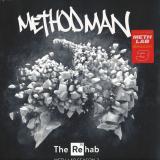
The Meth Lab returns for its third instalment with “Meth Lab Season 3: The Rehab,” a sharp, hard-hitting chapter that cements Method Man’s place as one of hip-hop’s most consistent and enduring voices. Executive produced by longtime collaborator Handz On, this project finds the Wu-Tang legend in rare form—polished, precise, and laser-focused.
“The Rehab” pulls listeners back into the world Meth has been building since the first Meth Lab sessions: a mixtape-style showcase blending razor-sharp lyricism with streetwise storytelling, packed with energy and attitude. Method Man’s flow remains timeless, weaving between gritty boom-bap, polished modern production, and the unmistakable Wu-Tang aesthetic. A strong lineup of guests brings extra fire to the set—Cappadonna, RJ Payne, Redman, KRS-One, JoJo Pellegrino, Jadakiss, Carlton Fisk, Hanz On, Intell, Iron Mic, 5th Pxwer, Chunk Bizza, Eddie I, Cortez, and more—each stepping into Meth’s world with their own hard-edged energy. Behind the boards, producers like P. Version, Rockwilder, Eric Sermon, Adam McLeer, Daniel C. Wells, Darnell Norman McConnell, and Joshua D. Zimmerman craft a gritty yet refined sonic framework that elevates every performance.
More than just another chapter, Season 3: The Rehab feels like a victory lap: a culmination of decades of craft, a celebration of the Staten Island movement, and a reminder that Method Man still out-rhymes rappers half his age. It’s a must-own for Wu-Tang fans, East Coast purists, and anyone who appreciates sharp writing and decades-deep mastery.
A chance meeting in Mexico City set Points of Inaccessibility into motion. When Ibero-American composer Rafael Anton Irisarri crossed paths with Dutch media artist Jaco Schilp at MUTEK in 2024, a conversation about how technology shapes perception revealed an unexpected common ground. Schilp invited Irisarri to a spring 2025 residency at Uncloud, the Utrecht-based collective he co-founded, where Irisarri's sound began to take form amid an environment shaped by Schilp’s visual research.
The Uncloud studio was located inside the former Pieter Baan Centre, a forensic psychiatric prison where suspects of violent crimes were once confined. Its long history of silence and containment shaped the atmosphere in which the project developed. Within this setting, Irisarri coaxed long bowed-guitar tones through a network of pedals and looping systems. The raw gestures thickened into a vaporous and architectural field of sound. Schilp processed the material through a custom point-cloud software patch that produced images in continuous flux. The visuals flickered, dissolved and reformed like memories that resist coherence, functioning as a digital Rorschach that reflected the observer’s own perception.
Amid these spectral echoes, the project evolved into an examination of how the past persists within present signals. Memory endures as residue and interference, continually shaping perception even when its source has faded.
Schilp’s visual process required a continuous stream of sound in real time. Irisarri improvised throughout the residency, generating material that allowed the visuals to develop in parallel. Once back in his New York studio, he began shaping the recordings by carving pathways through the improvisations and mapping selected passages into MIDI. This process allowed him to build outward from the bowed-guitar material with minimal overdubs, adding Prophet 5 textures, Moog bass and strings that expanded the harmonic field while keeping the original performances at the center. To refine the structure, Abul Mogard provided editorial input, working with Irisarri’s stems to guide transitions and strengthen the overall pacing. The material, originally created under conditions of immediacy and constraint, evolved into a fully realized work through careful revision, patience and sustained reworking.
The title engages the geographic concept of the Poles of Inaccessibility, locations defined solely by their distance from all surrounding points. Irisarri adapts this idea to the conditions of digital life, where new forms of inaccessibility arise through the informational enclosures that structure perception. What appears to be a fully connected network often produces a deeper kind of separation, one shaped by the filtering logic of the systems that mediate experience. In this sense, the digital sphere mirrors its geographic counterpart. We inhabit spaces saturated with signals, yet the possibility of genuine contact becomes increasingly remote.
At its core, Points of Inaccessibility considers what can be understood as the new rituals of capitalist realism. Irisarri uses the term digital shamanism to describe the forms of simulated connection that organize contemporary life. These systems promise comfort through algorithms, influencers and AI interlocutors, yet they often reproduce the same conditions that generate loneliness in the first place. What appears as connection becomes the echo of connection, a sequence of gestures that imitate solidarity while withholding it. Like the geographic poles, these rituals are defined by distance. They pull us into environments where everything is illuminated, yet meaningful proximity becomes increasingly rare. In this sense, the work approaches a hauntology of the present, a reflection on futures that have stalled and intimacies that have been thinned by the algorithmic infrastructures that surround us.
This thematic tension unfolds across the album’s four movements. Faded Ghosts of Clouds introduces the work with textures that rise and dissipate in slow cycles, creating an atmosphere that resists clear definition. Breaking the Unison occupies a pivotal position in the sequence and focuses on the moment when the individual and the system fall out of alignment. Its shifting patterns trace the scattering of signals that once suggested connection, revealing the instability at the heart of contemporary perception. Signals from a Distant Afterglow forms the center of the album and features vocals by Karen Vogt, whose presence enters the sound field like a fragile transmission shaped by distance and delay. The closing piece, Memory Strands, follows motifs that appear, recede and briefly intersect before returning to quiet. Across these movements, the album outlines a landscape in which emergence and disappearance continually inform one another.
Listening to Points of Inaccessibility is an encounter with a sound field that is constantly in flux. Elements surface briefly, shift position and recede, creating a sense of motion that resists stable interpretation. The music moves between closeness and vastness, carrying traces of memory while withholding a clear point of resolution.
The album’s visual identity completes the project’s conceptual arc. In Mexico City, where Irisarri and Schilp first met, Daniel Castrejón transformed stills from Schilp’s point-cloud visuals into the cover image. The final artwork captures a single suspended frame of the digital material, a moment extracted from a field that is normally in constant motion. Its surface recalls the texture and abstraction found in the work of Catalan artist Antoni Tàpies, where material presence and erasure coexist within the same plane.
What emerges is a work that examines the tension between technological systems and human presence. Points of Inaccessibility asks whether connection is still possible within environments shaped by mediation and delay, or whether we have become isolated points within the very networks that promise proximity. What possibilities for relation persist within environments organized by algorithms and interruption? And how are we meant to understand presence when so much of it is constructed at a distance?
Points of Inaccessibility will be released on BioVinyl on February 6, 2026, with audiovisual performances planned throughout 2026.
Mastered by Stephan Mathieu
Artwork by Jaco Schilp
Design and layout by Daniel Castrejón
Artist photo by Iulia Alexandra Magheru.
- A. Existence (Justin Robertson's Five Green Moons Dub)
- B. Some Night (Hawksmoor Dance Of Shiva Remix)
Remix EP featuring remixes by Justin Robertson and Hawksmoor
Magick Knives is a four-piece band conjuring cinematic post-punk from the sandy shadows of the Sonoran Desert. Drawing from gothic rock, darkwave, and cinematic atmospheres, their music is less composed than summoned, blending hypnotic basslines, ghostly guitar textures, and synths that shimmer.
Formed by vocalist/bassist Sonia Campbell and visual artist + guitarist/synth wizard Daniel Martin Diaz (Trees Speak), the band emerged through instinct and alchemy. Rounded out by lead guitarist Daniel Singleton and drummer Daniel Thomas, Magick Knives quickly found a shared sonic language that is brooding, immersive, and otherworldly.
- A1: Everybody’s Gotta Learn Sometime' From “The Eternal Sunshine Of The Spotless Mind” Soundtrack (2004)
- A2: ‘Love' From “Starbucks Sweetheart (2014)
- A3: I Can’t Help Falling In Love' From “Resistance Radio The Man In The High Castle” (2017)
- A4: ‘Ramona' From “Scott Pilgrim Vs The World” Soundtrack (2010)
- B1: Michelangelo Antonioni' From “A Tribute To Caetano Veloso” (2012)
- B2: Your Cheatin’ Heart (New Recording)' Originally From “Timeless A Hank Williams Tribute” (2001)
- B3: I Only Have Eyes For You' From Doug Aitken’s “Song “ Exhibition (2012)
- B4: True Love Will Find You In The End' (New Recording) Originally From The Tribute Album "The Late Great Daniel Johnson” (2004)
Das Album „Everybody’s Gotta Learn Sometime“ ist eine Sammlung von Becks Liebesliedern, die alle
bereits veröffentlicht wurden, mit Ausnahme von zwei Titeln, die Beck zwar schon früher veröffentlicht,
aber für dieses Album neu aufgenommen hat: „True Love Will Find You in the End“ und „Your Cheatin’
Heart“.
Mit legendären Titeln wie „Everybody’s Gotta Learn Sometime“ aus dem Soundtrack zu „Eternal Sunshine of the Spotless Mind” und einer gefühlvollen Interpretation von „I Can’t Help Falling In Love“ ist dies
eine liebevoll zusammengestellte Songsammlung von Raritäten, Bonusmaterial und Coverversionen exklusiv
auf rotem Vinyl.
- 1: Intro
- 2: Return Of Ravens
- 3: The Shadowshires
- 4: Solitude
- 5: Leave A Room
- 6: Sorcerers
- 7: Can Die No More
- 8: Nathalie And The Fireflies
- 9: Let Us Go As They Do
- 10: Down The Nile
- 11: Outro
Transparent Blue Vinyl[28,53 €]
Transparent Green Vinyl[28,53 €]
Transparent Lime Vinyl[28,53 €]
As the fifth chapter in the band's discography, " The Neonai" arrived at a critical juncture in Lake of Tears' career, marking both an end and a reluctant new beginning. Released in 2002, three years after the melancholic masterpiece Forever Autumn, the album came to life under less-than-ideal circumstances.
Despite the commercial and critical success of its predecessor (the band's best- selling album to date) Lake of Tears found themselves adrift, unsupported by their label at a time when the world expected them to rise higher than ever. Instead of world tours and deserved recognition, the band withdrew, disillusioned, and made the difficult decision to put all activities on hold. But one last obligation remained: to deliver a final album to Black Mark Productions. What could have been a soulless, contract- bound release turned out to be anything but. "The Neonai" pulses with haunting melodies, infectious refrains, and a deeper embrace of keyboards and electronic textures, without ever losing the emotional gravity and sorrowful beauty that define Lake of Tears.
If this album was truly written "in haste," then let us hope Daniel Brennare continues to compose under pressure, for rarely has urgency sounded so inspired. As with the previous vinyl releases, we do not single out any specific tracks. Each song, like every Lake of Tears album, carries its own unique charm, its own shade of shadow and light. "The Neonai" is not simply a continuation, it is a transformation, an echo from a band caught between endings and new beginnings. Another gem in the band's catalogue, a masterpiece where the doom/ gothic equation tilts gracefully in favor of the latter. A deeply cherished album, long adored by Lake of Tears' devoted followers, who have waited patiently for 23 years to finally see it released on vinyl. After all, every ending is but the beginning of something new. And as we've said before: The end for Lake of Tears has not yet come, and we truly hope it won't come for a long, long time.
Transparent Orange Vinyl[28,53 €]
Transparent Green Vinyl[28,53 €]
Transparent Lime Vinyl[28,53 €]
As the fifth chapter in the band's discography, " The Neonai" arrived at a critical juncture in Lake of Tears' career, marking both an end and a reluctant new beginning. Released in 2002, three years after the melancholic masterpiece Forever Autumn, the album came to life under less-than-ideal circumstances.
Despite the commercial and critical success of its predecessor (the band's best- selling album to date) Lake of Tears found themselves adrift, unsupported by their label at a time when the world expected them to rise higher than ever. Instead of world tours and deserved recognition, the band withdrew, disillusioned, and made the difficult decision to put all activities on hold. But one last obligation remained: to deliver a final album to Black Mark Productions. What could have been a soulless, contract- bound release turned out to be anything but. "The Neonai" pulses with haunting melodies, infectious refrains, and a deeper embrace of keyboards and electronic textures, without ever losing the emotional gravity and sorrowful beauty that define Lake of Tears.
If this album was truly written "in haste," then let us hope Daniel Brennare continues to compose under pressure, for rarely has urgency sounded so inspired. As with the previous vinyl releases, we do not single out any specific tracks. Each song, like every Lake of Tears album, carries its own unique charm, its own shade of shadow and light. "The Neonai" is not simply a continuation, it is a transformation, an echo from a band caught between endings and new beginnings. Another gem in the band's catalogue, a masterpiece where the doom/ gothic equation tilts gracefully in favor of the latter. A deeply cherished album, long adored by Lake of Tears' devoted followers, who have waited patiently for 23 years to finally see it released on vinyl. After all, every ending is but the beginning of something new. And as we've said before: The end for Lake of Tears has not yet come, and we truly hope it won't come for a long, long time.
Transparent Orange Vinyl[28,53 €]
Transparent Blue Vinyl[28,53 €]
Transparent Lime Vinyl[28,53 €]
As the fifth chapter in the band's discography, " The Neonai" arrived at a critical juncture in Lake of Tears' career, marking both an end and a reluctant new beginning. Released in 2002, three years after the melancholic masterpiece Forever Autumn, the album came to life under less-than-ideal circumstances.
Despite the commercial and critical success of its predecessor (the band's best- selling album to date) Lake of Tears found themselves adrift, unsupported by their label at a time when the world expected them to rise higher than ever. Instead of world tours and deserved recognition, the band withdrew, disillusioned, and made the difficult decision to put all activities on hold. But one last obligation remained: to deliver a final album to Black Mark Productions. What could have been a soulless, contract- bound release turned out to be anything but. "The Neonai" pulses with haunting melodies, infectious refrains, and a deeper embrace of keyboards and electronic textures, without ever losing the emotional gravity and sorrowful beauty that define Lake of Tears.
If this album was truly written "in haste," then let us hope Daniel Brennare continues to compose under pressure, for rarely has urgency sounded so inspired. As with the previous vinyl releases, we do not single out any specific tracks. Each song, like every Lake of Tears album, carries its own unique charm, its own shade of shadow and light. "The Neonai" is not simply a continuation, it is a transformation, an echo from a band caught between endings and new beginnings. Another gem in the band's catalogue, a masterpiece where the doom/ gothic equation tilts gracefully in favor of the latter. A deeply cherished album, long adored by Lake of Tears' devoted followers, who have waited patiently for 23 years to finally see it released on vinyl. After all, every ending is but the beginning of something new. And as we've said before: The end for Lake of Tears has not yet come, and we truly hope it won't come for a long, long time.
Transparent Orange Vinyl[28,53 €]
Transparent Blue Vinyl[28,53 €]
Transparent Green Vinyl[28,53 €]
As the fifth chapter in the band's discography, " The Neonai" arrived at a critical juncture in Lake of Tears' career, marking both an end and a reluctant new beginning. Released in 2002, three years after the melancholic masterpiece Forever Autumn, the album came to life under less-than-ideal circumstances.
Despite the commercial and critical success of its predecessor (the band's best- selling album to date) Lake of Tears found themselves adrift, unsupported by their label at a time when the world expected them to rise higher than ever. Instead of world tours and deserved recognition, the band withdrew, disillusioned, and made the difficult decision to put all activities on hold. But one last obligation remained: to deliver a final album to Black Mark Productions. What could have been a soulless, contract- bound release turned out to be anything but. "The Neonai" pulses with haunting melodies, infectious refrains, and a deeper embrace of keyboards and electronic textures, without ever losing the emotional gravity and sorrowful beauty that define Lake of Tears.
If this album was truly written "in haste," then let us hope Daniel Brennare continues to compose under pressure, for rarely has urgency sounded so inspired. As with the previous vinyl releases, we do not single out any specific tracks. Each song, like every Lake of Tears album, carries its own unique charm, its own shade of shadow and light. "The Neonai" is not simply a continuation, it is a transformation, an echo from a band caught between endings and new beginnings. Another gem in the band's catalogue, a masterpiece where the doom/ gothic equation tilts gracefully in favor of the latter. A deeply cherished album, long adored by Lake of Tears' devoted followers, who have waited patiently for 23 years to finally see it released on vinyl. After all, every ending is but the beginning of something new. And as we've said before: The end for Lake of Tears has not yet come, and we truly hope it won't come for a long, long time.
"Tranquilizer is, Ambience by force" - Oneohtrix Point Never
"Tranquilizer" klingt nicht nach Beruhigung, sondern nach Wiederauftauchen. Daniel Lopatin verurteilt nicht unser Bedürfnis nach Flucht, sondern erkundet vielmehr, was danach passiert. Sein neues Album zeichnet eine Bewegung von schwereloser Ruhe hin zu etwas Bodenständigerem nach – keine Heldenreise, sondern der notwendige Kreislauf von Rückzug und Rückkehr, der uns in einer ebenso überwältigenden wie banalen Welt den Verstand bewahrt.
Wir stürzen aus der triefenden Glückseligkeit von "Lifeworld" in die traurige Melancholie von "Cherry Blue" und die spastischen Grooves von "Rodl Glide". Wie immer bei OPN kollidiert das Reale mit dem Unwirklichen. Wer genau hinhört, hört das Kratzen von Fingern auf einem Griffbrett, einen Stein, der über einen Kerkerboden gleitet, das Quietschen einer sich öffnenden Tür. Lopatins Musik war nie ein abstraktes Farbfeld; sie hat Gewicht, Kanten, Schatten. Während "R Plus Seven" nur aus kristallinen Arpeggiatoren bestand und "Garden Of Delete" ein fieberhaftes Erbrechen gurgelnder Synthesizer war, fühlt sich "Tranquilizer" an, als würde man aus einem Traum fallen, den man noch berühren kann.
Originally released in 2005, this standout EP returns as part of the much-anticipated reissue campaign from cult New York imprint Drugsex — a label that quickly became a treasured name among heads who lived and breathed the underground. Born from the creative partnership between UK producers Rob Pearson and Simon Copleston, Drugsex carved out its own raw, hypnotic corner of the international tech house movement.
For the second instalment in the reissue series, label head Rob Pearson teams up with Daniel Poli under their Distant Strangers moniker — a project that, even back then, was whispered about among selectors for its deep, rolling grooves and stripped-back intensity. Both artists had already made their mark with releases on some of the most respected labels of the era — from Rekids and Swag Records to Evasive Records, Rescue Recordings, and beyond.
The pair’s first collaboration, the Lost Souls EP, became a highly limited, in-demand underground gem, pressed in small quantities and played by those in the know. This follow-up, crafted at Online Studios in Croydon, took their sound to the next level — two original tracks built for dancefloors that like things hypnotic, physical and uncompromising.
On the A-side, Virtual Morality is a slick and driving slice of tech house pressure. Crisp percussion, rolling low-end and a subtle but addictive hook make it a peak-time weapon that never goes out of style. Flip it over for Take Us In Deeper — a track that lives up to its name with a shadowy groove, atmospheric layers and a perfectly balanced push and pull that draws dancers further into the late-night haze.
Adding even more weight to the release, Adam Collins — known for his work with Omni AM and Euphoria Records — steps in with a remix of Virtual Morality on B2. His version injects an unmistakable acid edge, elevating the original into a tripped-out, floor-focused burner that fits as comfortably in a basement sweatbox as it does on a sunrise terrace.
Nearly two decades later, these tracks still carry the same raw power and effortless groove that made them cult favourites in the first place. This reissue isn’t just a nod to the past — it’s a reminder of why this sound endures.
- A1: Excerpt
- A2: Living With The Law
- A3: Big Sky Country
- A4: Kick The Stones
- A5: Make The Dirt Stick
- A6: Poison Girl
- A7: Dust Radio
- B1: Phone Call From Leavenworth
- B2: I Forget You Every Day
- B3: Long Way Around
- B4: Look What Love Has Done
- B5: Bordertown
In 1991, Chris Whitley made his debut with the beautiful album Living with the Law, which immediately showcased his brilliant songwriting and unique guitar playing. Blending blues, roots and folk, the debut was positively received by critics and aficionados of these more traditional genres. Growing up, Whitley listened to Southern radio, which played artists such as Muddy Waters, Howlin' Wolf, Bob Dylan and Jimi Hendrix. His career started by playing with artists like Arto Lindsay and Michael Beinhorn. Interestingly, Whitley lived in Belgium for a short time in the 1980s, where he started his career playing guitar for 2 Belgen and Nacht und Nebel. In the 1990s, he started his solo career at Kingsway Studio in New Orleans, owned by none other than Daniel Lanois. The result was an album characterized by the use of traditional instruments such as the slide guitar and banjo. All of this is accompanied by his splendidly timbred voice and honest lyrics exploring themes such as freedom, desire and human struggle. Sadly Chris Whitley passed away in 2005, but his influence on contemporary songwriters and blues artists remains strong. a_Living with the Law is available as a 35th anniversary edition of 1000 individually numbered copies on gold coloured vinyl and includes an insert.
Gelbes Vinyl, limitiert auf 200 Exemplare. Exklusiv für den Indie-Handel. Kommt mit Texblatt und Downloadcode. Great Resignation! So wird das massenhafte Kündigen von Bullshitjobs während der Corona-Pandemie bezeichnet. Die Verweigerung die eigene Arbeitskraft zu den widrigsten Bedingungen zu verkaufen, wenn es nicht mal zum Leben reicht. Auch wenn man sowieso bald wieder ran muss - nur für einen Moment spüren, die Macht zu haben alles lahm zu legen, hörten einfach alle auf: Wertschöpfung, Broligarchie, Kaufland, Deutschland. pogendroblem haben sich also nochmal zusammengerauft und ein neues Album gemacht. Drei Jahre für ein neues Album? In der Tat: Great Resignation. Oder zu wenig die Brotjobs gekündigt? Und wenn sie die Arbeit so hassen, warum haben sich pogendroblem dann noch weiter in die Musikindustrie reinbegeben? Widersprüche schärfen und aushalten. Ambiguitätstoleranz. Nachdem AWINHSMK Ende 2022 bei Audiolith erschien, ging es für die Band wild hin- und her zwischen Pop-Festivals, Punkbühnen, Preisverleihungen und Solishows für selbstverwaltete Kulturzentren oder gegen die extreme Rechte. Nun der Nachfolger Great Resignation bei Kidnap. Das Schulterklopfen der Kulturförderung darf natürlich auch nicht fehlen. Zwölf Tracks auf 1:22 bis 2:30. Ästhetisch nochmal diversifiziert und dennoch aus einem Guss, entstanden unter Regie von Gregor Hennig im Studio Nord Bremen, gemischt von Daniel Roesberg und gemastert von Christian Bethge. Musikalisch klarer und pointierter als zuvor. Obviously (Post-)Punk, poppige Niedlichkeit, Garage Vibes, bisschen Hamburger Schule, bisschen Kraut, etwas düsterere Gitarren und natürlich Brotschneidemaschine durch FX geballert. Große Resignation! Die große Traurigkeit zieht sich durch die Platte hindurch, auch in den auf den ersten Blick lustigen Liedern. Denn hier sind sich pogendroblem treu geblieben, es geht um absurde Alltagsgeschichten, um Subjektivierung, die nicht mehr zu funktionieren scheint. Um Fragmentierung von Gesellschaft, Arbeitsbeziehungen, der Linken. Wie durch die Zeit der Monster (Antonio Gramsci) navigieren, fragen pogendroblem. Wie weiter machen gegen Faschisierung und Klimakrise? Klar ist: Es kann nicht immer so weitergehen.
"Brooklyn-based pianist Eva Novoa returns with The Freedom Suite: Novoa / Carter / Mela Trio, Vol. 2 — the second radiant release from her compelling trio with saxophone icon Daniel Carter and celebrated drummer Francisco Mela. This marks Novoa’s sixth album with 577 Records. The trio first came together live in 2021, followed by a series of performances, including appearances in Cambridge (Boston) and later at the Brooklyn edition of the NY Forward Festival.
"The Freedom Suite is an homage to jazz titan Duke Ellington — particularly his masterful big band suites and legendary orchestra featuring Johnny Hodges and other luminaries who helped define an era of jazz greatness. In contrast, Novoa presents her Suite in a more intimate format: the piano trio. The album comprises twelve pieces — mostly brief — with a few extended tracks such as Free to Be Free and Cyborgs.
"For this recording, Novoa also steps in as a vocalist on several tracks, including Mainstream Media, Big Grande, Global, Free to Be Free, Dream, and Cyborgs. These pieces often feature a vocal dialogue between Novoa and Mela, whose expressive, word-infused style draws from rich Cuban traditions.
'Words are powerful,' says Novoa. 'They define who we are, where we come from, and who we hope to become. Without words, there is no conversation — and without conversation, there is no real sense of time, space, or connection.'
The Freedom Suite emerged from deep philosophical and creative conversations — spoken, written, and improvised — between Novoa, Carter, and Mela. In the studio, Novoa introduced printed texts that served as thematic foundations for spontaneous, in-the-moment musical interpretation. The result is an urgent and organic interplay, where instruments speak to one another in a language as fluid as it is fearless.
"Standout track Cyborgs begins with Novoa’s percussive piano, exemplifying the trio’s dynamic, conversational energy. Creative Destruction features Novoa on electric harpsichord in a wild, electric exchange. While Free to Be Free stands out as the album’s leading single, it also captures the essence and message of the entire Suite.
"Recorded in 2021 at New York City’s legendary Sear Sound Studio, the album captures a creative explosion of sound and spirit. Novoa dazzles on piano, Fender Rhodes, electric harpsichord, Chinese gongs — even whistle — showcasing her expansive sonic palette. Together, the trio embodies the power of free improvisation and emotional storytelling.
"Originally from Barcelona, Spain, Eva Novoa has been cultivating her distinctive voice since childhood. Now a staple of the New York creative music scene, she has performed across the globe and collaborated with some of the most adventurous voices in jazz and beyond."