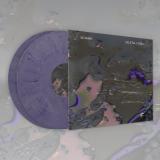
The pioneering electronic sounds of Daphne Oram reimagined by TAAHLIAH, Cosey Fanni Tutti, Marta Salogni, Arushi Jain and others using tapes from Oram's archive.
To mark the centenary of overlooked electronic pioneer Daphne Oram, Nonclassical - together with Oram Trust and Oram Awards - have commissioned new music by a set of contemporary visionary minority-gender electronic artists celebrating the next generation of trailblazers.
This group of artists span early-career to high-profile DJs and musicians across diverse electronic worlds, representing a spectrum of distinct practises - from uncompromising club beats, performance art and sound art to ambient music and deconstructed future-forward Arabic dance music.
The artists have created these new works using samples from Oram's archive - housed at Goldsmiths, University of London - which features a mix of sound clips covering not only her innovative Oramics machine and other electronic music, but also match strikes, cat purrs, scraped objects and commercial jingles as well as recordings of Oram's own voice.
Look out for gigs around the UK and at London's Barbican Centre around the release.
Search:daphne oram
- 1
The British composer, musician and audio engineer Daphne Oram was a pioneering figure in the use of electronic music. Coming to prominence through her work with the BBC Radiophonic Workshop, which she co-founded, Oram was one of the first British composers to feature electronic instruments in her work and has been rightly hailed as helping musique concrete to become accepted in Britain. Born in 1925 and raised in rural Wiltshire, close to Stonehenge and the ancient stone circle at Avebury, Oram eschewed a place at the prestigious Royal College of Music to take a junior engineering role at the BBC in 1942, she was often tasked with creating sound effects, leading to cut-up experiments with tape recorders and the development of synthetic sound; her composition Still Point, involving two orchestras, two turntables and five microphones, was deemed too radical by the BBC, though she was promoted to studio manager in 1950, leading to the gradual introduction of electronic music and musique concrete techniques on BBC soundtracks. In 1957, she composed the music for the play Amphitryon 38, using a sine wave oscillator and homemade filters, and this and other subsequent works led to the establishment of the BBC Radiophonic Workshop the following year, but Oram soon tired of the conservative constraints of the BBC, leading to her resignation in 1959 to pursue her own vision at the Oramics Studios for Electronic Composition, located in Tower Folly, a former hop kiln located at Fairseat, near the village of Wrotham in rural Kent. Oramics was a radical sound composition technique that sought to transform images to music, enacted by drawing onto 35mm film, which would then be read by photo-electric cells; in addition to its use in Radiophonic Workshop material, Oramics was also employed for sound installations, theatre productions and feature films, such as The Innocents, though financial pressures forced Oram to seek a range of commercial engagements in addition to creating her own artistic works. The Listen Move And Dance series of BBC programmes were devised as a radical new technique to help British schoolchildren learn how to dance; on the LP releases, Vera Gray arranged short adaptations of classical pieces by Bartok, Stravinsky, Shostakovich and others, designed for “stamping, punching, kicking and jumping” movements, as well as “running lightly, dancing on toes” and “shaking all about,” which contrasted sharply with Oram’s electronic abstractions, which seemed to have been beamed in from outer space.
Justin Moore
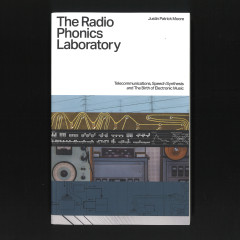
The Radio Phonics Laboratory - Telecommunications, Speech Synthesis, and the Birth of Electronic Mus
The Radio Phonics Laboratory by Justin Patrick Moore is the story of how electronic music came to be, told through the lens of the telecommunications scientists and composers who helped give birth to the bleeps and blips that have captured the imagination of musicians and dedicated listeners around the world.
Featuring the likes of Leon Theremin, Hedy Lamarr, Max Matthews, Hal 9000, Robert Moog, Wendy Carlos, Claude Shannon, Halim El-Dabh, Pierre Schaeffer, Pierre Henry, Francois Bayle, Karlheinz Stockhausen, Vladimir Ussachevsky, Milton Babbitt, Daphne Oram, Delia Derbyshire, Edgar Varese & Laurie Spiegel.
Quotes
“From telegraphy to the airwaves, by way of Hedy Lamarr and Doctor Who, listening to Hal 9000 sing to us whilst a Clockwork Orange unravels the past and present, Moore spirits us on an expansive trip across the twentieth century of sonic discovery. The joys of electrical discovery are unravelled page by page.”
Robin Rimbaud aka Scanner
“Embark on an odyssey through the harmonious realms of Justin Patrick Moore’s Radio Phonics Laboratory echoing the resonances of innovation and discovery. Witness the mesmerising fusion of telecommunications and musical evolution as it weaves a sonic tapestry, a testament to the boundless creativity within the electronic realm. A compelling pilgrimage for those attuned to the avant-garde rhythms of technological alchemy.”
Nigel Ayers (Nocturnal Emissions)
“In this captivating exploration of electronic music, Justin Patrick Moore unveils its evolution as guided by telecommunication technology, spotlighting the enigmatic laboratories of early experimenters who shaped the sound of 20th century music. A must-read for electronic musicians & sound artists alike—this book will undoubtedly find a prominent place on their bookshelves.”
Kim Cascone
Canadian performer and composer Sarah Belle Reid’s 2021 acclaimed album, first time on vinyl, expanded with two new incredible songs, remastered featuring new artwork. From distant ocean song to the clang and howl of a murky forgotten memory, MASS is a dreamlike collage of shrill shrieks, gasps, corroded brass choirs, and melting modular synth soundscapes, all heard through a mist of hiss and noise. Fused with equal parts spastic improvisation, shrouded ritual, and meticulous arrangement, it presents a sonic topography at once tongue-in-cheek, sensitive, and nightmarish. With discordant chorales and angular trumpet improvisations churning in an ever-evolving wash of whispers and howls, MASS is a collection of three hazy, harsh, and frightful sound worlds. With tracks meandering between aggressive rhythms, eerie ambiances, and abrasive cut-up electronic textures, MASS draws inspiration from early tape music, horror film soundtracks, and grindcore. It was assembled between listening to extended doses of Else Marie Pade, Daphne Oram, Eliane Radigue, the Locust, Edgard Varèse, Maryanne Amacher, Dick Raaijmakers, Naked City, Mr. Bungle, and Thomas Ankersmit, bringing a little bit of all of them along with it. MASS was recorded and mixed over the course of three weeks in January–February 2021 while in the midst of a cross-country move. Recorded entirely in short-term housing away from her studio (and most of her instruments), Reid relied exclusively on her voice, trumpet, flugelhorn, household objects, and Make Noise's Strega semi-modular synthesizer for all sound materials. Original sound materials were recorded loosely and independently with little to no overdubbing, instead relying on meticulous editing and processing in the manner of classic tape music.
- A1: Intro
- A2: Drumgita
- A3: Ancient Boogie (Mantra)
- A4: Artnam
- A5: Mantra
- A6: (One) Boogie Home Going
- B1: Going Home Boogie (One)
- B2: Un Minuto (One)
- B3: Un Minuto (Two)
- B4: Going Home Boogie (Two)
- B5: Going Home Boogie (Three)
- C1: Drumsong (One)
- C2: Drumsong (Two)
- C3: Drumsong (Three)
- C4: Strumelody
- D1: Drumelody (One)
- D2: Drumelody (Two)
- D3: Ydolemurd
- D4: Hum Drum Dring (One)
- D5: Hum Drum Dring (Two) (The Freedrum Song)
Occasionally, you find music outside the commercial mainstream, outside of everything – the music of visionaries, eccentrics, inventors, loners, the keepers of secrets, the path-finders. Moondog, Daphne Oram, Harry Partch are from this mould. And so too is Lori Vambe.
New on Strut, the first ever reissue of Vambe’s privately pressed original albums from 1982, Drumland Dreamland and Drumgita Solo. A self-taught drummer, inventor, and sonic experimentalist, Lori Vambe is a unique figure in British music. Creator of his own instrument, the drumgita (pronounced ‘drum-guitar’) or string-drum, Vambe intended to create a kind of music that had never been made in order to pursue access to the fourth dimension.
Vambe was born in Harare, Zimbabwe and his father, Lawrence Vambe, was a noted Zimbabwean journalist and author. Moving to London in 1959, Vambe immersed himself in the Brixton squat movement of the early 1970s, teaching himself to drum and creating a short-lived performance group, The Healing Drums of Brixton (Vambe, the sculptor Alexander Sokolov and outsider musician Michael O’Shea). Vambe later had a dream-vision involving a feeling of ecstasy while playing an unknown instrument that extended from his own umbilical cord; the instrument would manifest itself as the drumgita. In 1982, he privately produced a pair of home recordings, the diptych set Drumgita Solo and Drumland Dreamland, releasing them on his own label Drumony. On these records, he rejected any commercial aesthetic and employed tape effects, temporal shifts, reversed sound and overdubbing to investigate space-time and access the fourth dimension. Combining layered drums with the rhythmic throb of the drumgita and, on Drumland Dreamland, an improvised piano performance by Brazilian concert pianist Rafael Dos Santos, the albums are both hypnotic and perturbing.
Both albums were cut at Portland Studios by Chas Chandler and stand as a concealed monument of Black British experimental music. 500 copies of each record were originally pressed, and both were released together. The albums were never performed live.
For this first ever reissue of Drumland Drumland and Drumgita Solo, Strut presents the two albums in their original artwork, housed in a deluxe slipcase including an additional 8-page 12”-sized booklet featuring unseen photos, liner notes and an interview with Lori Vambe by The Wire magazine writer Francis Gooding. Both albums are fully remastered by The Carvery.
Imagine if Eric Carle had been signed to Ghost Box, or if the Look Around You team had ended up taking over the Radiophonic Workshop. If you can picture that kind of sound, we’re ready to welcome you to the Cosmic Neighbourhood.
Cosmic Neighbourhood’s Gatherings is an album made for wild imaginations and deep daydreams. Its fourteen tracks provide the kind of trip you can take if you close your eyes tight enough and let your mind wander. It’s the music of small things, groovy sounds from way underground that’s inspired as much by Martin Rev and Moondog as it is by walking trees, pine cones catching the bus, nocturnal farmyard symphonies and the movements of butterflies reimagined through restless drum machines. Sounds good? Come join the gathering. There’s room for everyone.
Cosmic Neighbourhood is the musical alias of York-based illustrator and musician Adam Higton. Adam’s work encompasses comic strips, collage and sound art and documents the daily goings-on of the forest folk within the realm of the Cosmic Neighbourhood. His two albums on Kit (|Collages I and II) see each song acting as a response to a series of paper-and-scissors compositions. Sonically, these records straddle new and old, taking modular electronics, flutes, bells and softly pattering drum machines, before colouring them all with the amber glow of some forgotten, psychedelic kids' TV programme. Higton's benign toots and echoing jingles bring to mind Daphne Oram's early delay experiments or the meandering playfulness of Tom Cameron. Radiophonic and time-worn, it still somehow sounds like the future.
Gatherings follows previous Cosmic Neighbourhood albums Library Vol 1 and Collages I and II. Previous Rivertones releases include spoken word and found sound collages by Robert Macfarlane & Chris Watson, poetry and elemental music by Will Burns & Hannah Peel and the soundtrack to Wolfgang Buttress’ Hive structure at Kew Gardens by Be.
We're extremely proud to present HAPPENSTANCE, a sprawling jazz-concrète project produced by Johannesburg composer and double bass player Shane Cooper. Approached in 2020 by interdisciplinary arts space The Centre For The Less Good Idea to create audio work, Cooper drew on his network in the thriving South African jazz scene, bringing in Bokani Dyer (piano), Cara Stacey (bows), Daliwonga Tshangela (cello), Gontse Makhene (percussion), Jonno Sweetman (percussion) and Micca Manganye (percussion).
Two days of free-flowing composition, improvisation and investigative recording followed, with the results captured on a vintage reel-to-reel tape machine. This tape was fractured and reassembled by Cooper, bringing into surreal focus tiny ecosystems of sound, like curls of static clasped from the air and brought under the magnifying glass. The results - two long, standalone pieces - are dizzying, weightless; musique concrète melding with jazz-schooled virtuosity in a dubbed out bricolage of interludes and u-turns.
Recommended for fans of Abdullah Ibrahim, Tony Allen, Floating Points and Daphne Oram.
2x12"
Having made initial waves on Cold Recordings and Osiris, Eric Baldwin returns now to Tectonic to release his eponymous album ’Cocktail Party Effect’, bringing his South London roots to Berlin for an all-weekender, under strobe lights.
Drawn by his appetite for powerful rhythmical forms and inspired by the likes of Daphne Oram, The Residents and Captain Beefheart - Eric takes uses background in sound design, knowledge of hacking VST software and adapted spring reverbs and other hardware, to create a truly unique vision of contemporary electronic music. It sits somewhere between Jeff Mills, Aphex Twin & Squarepusher - held together by a connective UK Bass Music spinal chord. A weird but intriguing beast.
We open the track with Japanese cocktail recipes, before moving into the only vocal track of the album, ‘Talking To Bricks’ featuring Bristol vocalist Redders on fine form - charged with disjointed energy and run ragged across a technologically charged dancehall style beat. The LP progresses through the rolling breaks and bleeps of ‘For The Memory Exchange’, into an IDM side-step in the shape of ‘Brutalism’, moving into the gentle, beautiful flickering glitches of ‘PDA’, before we get to the hyperactive twitching alien charge of ‘War On Codex’.
Taking a leap in another direction, we reach ‘Cause For Bad Shelving’, which sounds a bit like Squarepusher when he was on late 90s, immaculate form - taking the tempo up a few notches, while building melancholy. ‘Lack Of Wrong Format’ then gives us a moment to breathe, before diving into ‘Deerhorn’ which brings us right back to the dancefloor. Things are then turned inside out with the jittery wonder of ‘I Get It (Lost Banknote)’, redirected via the industrial clangs of ‘Low_Rise’, before rounding off our sonic adventure with the ponderous tones of ‘Loner’ - which leave you glowing and drifting off into space.
A bold album that’s just brim with a strong sense of originality, direction and grand narrative. From international dancefloors to post-clubbing ear-worms, Cocktail Party Effect is just getting started and you’ll be hearing his name more and more now.
'There's a lot of serendipity involved in wrestling grooves out of these awkward machines', says Richards about the process behind the record. 'A large part of the composition is making the machines and the patches. They define the limitations of the pieces coming together. Then the performances are happy accidents - found using intuition and practice.'
Made up of two studio sessions and one live recording, PINK NOTHING reflects the unusual space Richards inhabits musically. It's partly informed by his background as a PhD student at Goldsmiths, where he re-imagined and built the Mini Oramics machine – a 'drawn sound' instrument first conceived by electronic music pioneer Daphne Oram, and finally realised by Richards in 2016.
But Richards is also an autodidact beat-maker, and much of the structures and sounds on PINK NOTHING derive from dance music, while his influences also include ritual trance, Ghanaian drum choir music, and the cellular rhythms of Steve Reich. 'It's polyrhythmic abstract electronica' – and he emphasises – 'listening music'.credits
- A1: Ikarie Xb-1
- A2: Surveillance On Standby-Alpha Centauri
- A3: A Small Stone In Space
- A4: Sunflower For A New Star
- A5: The Backwoods Of The Universe
- A6: Silver Ball (Vera In Cameo)
- A7: E.v.a. Will Teach You
- B1: The Tigers Breath
- B2: The Dark Star
- B3: Do Not Eat The Fruit
- B4: The Awakening
- B5: Voyage To The End (Of The Universe)
- B6: The White Planet
Liška, the Czechoslovakian word for fox. Beguiling in its beauty, cunning in it's charm. Said to be one of the most intelligent animals on the planet its global family consists of thirty-seven varieties; all of them recognised, respected and feared for their persuasive, creative, resourceful and elusive nature. The Liška we will talk about today is no exception to these hereditary rules and within the grooves of this record Finders Keepers present an 'elusive' musical artefact that best exemplifies every facet of this composer's animal namesake.
Had he not been born in the small Bohemian town of Smecno in the early 1920s the story of The Fantastic Mr. Liška might have well taken a different course. Alternatively, fettered by the hampers of communism, this lifelong resident of Czechoslovakia would never quite find his seat at the same table as the likes of John Barry, Ennio Morricone, Michael Nyman and Stanley Myers, nor drop enough phonographic breadcrumbs to track his legacy. But having waited patiently behind the borders of the wider landscapes of international cinema, Liška's musical brood, spanning multiple stylistic decades and generations, has now started to walk proudly amongst his would-be, latter-day compeers. In an era where music lovers have almost become immune to adjectives like 'lost', 'rare' and 'unreleased' in a climate where previously lesser-known off-kilter master composers such as Vannier, Kirchin and Axelrod have become widely revered, it is perhaps the perfect time for discerning listeners to advance above the feeding trough and seek out this truly pioneering and revolutionary Eastern European composer. Rivalled only by the likes of Krzysztof Komeda and Andrzej Korzynski in Poland, alongside Alexandr Gradsky in Russia, and often splitting workloads with fellow Czech composers like Luboš Fišer, Zdenek Liska's filmography of over almost 300 fully formed movie scores virtually eclipses the achievements of these socialist era luminaries. Respected unanimously in both Czech and Slovakian by studio bosses, producers, directors and actors alike Liška is widely known for his ability to take the existing energy in a reel of film and literally change the polarity to suit his own interpretation while maintaining the full support from his 'client' who would in-turn end up working under this composer's creative direction. Not only was Liška a genius of emotive orchestral and coral composition, his grasp on small group arrangements and intimate, minimal scores set him above the competition. By utilising primitive sample techniques by 'looping' a films existing ambient noise, or rearranging found sounds and dialog into subtle melodic arrangements, Liška would independently develop his own techniques which had simultaneously become known in Paris as musique concre`te. It is a direct extension of these experiments that saw Liška also draw parallels with Walter Branchi (Ennio Morricone's main electronic sidekick) in Italy as well as Daphne Oram in the UK, making Liška a relatively untravelled pioneer of early electronic composition and sound design due to his unlikely global environment. Imprisoned, preserved or reserved; time has been kind to Liška's music.
- 1