Ranges welcomes Elias. with an exclusive reminiscent dub EP. The A-Side opens with the expansive soundscapes in “Aquatic”, followed by a beautifully designed 4/4 dub action in “Red Lantern”. The B-side puts emphasis on faster shades of dub. “Severe” delivers a reminiscent chord action accompanied by peak-time grooves. “FM Therapy” and “Fog” showcase a darker edge of dub with raw energy supported by cold yet evocative atmospheres. A compelling collection of 5 diverse tracks making a unique contribution to the label catalog. Limited 12” pressing!
Suche:dark fog
- Joyriding
- Shoot The Boss
- Black Mirror
- Bones
- Untitled Jam For Kfjc Radio
- Atmo
- Pay Me My Money Down
- One Way System
- Whatever Happened To Billy The Comedian?
- Steam Of Consciousness
- Blowing Monkeyshine
- Electric Gypsyland
- Sideways Steppers
- The Golden Age Of Avarice
- Fog
- Love The Machine
- Red Ballroom
- Bella Ciao
- Low Pressure
- Angel Station
- Oh Wow Look At The Colours
- Smash The God Offensive
- Bingo Now
- From Now On The Signs Are No Longer In The Sky
- Those Stately Fools In Granite Ships
- Angel Passing
- Pressure Point
Spaceheads sind das fehlende Glied zwischen Post-Punk und Dance. Zwei Jungs aus Post-Punk-Bands der 1980er Jahre machen experimentelle, tanzbare Live-Musik, die sich an den euphorischen Bläsern und Rhythmen des Afrofunks, den motorischen Grooves von Krautrock wie Neu und Can und dem spirituellen, kosmischen Jazz der späten 1960er und 1970er Jahre orientiert, mit Elementen des Dub, des aufkeimenden elektronischen Tanzes (der zu dieser Zeit rapide auf dem
Vormarsch war) und sogar des amerikanischen R&B und Funk der 1970er Jahre.
Time and Spaceheads versammelt Material aus den frühen Veröffentlichungen des britischen Duos (1990-2003) auf wegweisenden Labels wie Dark Beloved Cloud, These, Merge & anderen,
bemerkenswerterweise zum ersten Mal auf Vinyl. Die Musik der Spaceheads ist sowohl für sich selbst als auch für unser historisches Verständnis von Innovation und Experimentierfreudigkeit in der
Post-Punk- und UK-Dance-Kultur von großer Bedeutung. Jeder, der sie jemals spielen gesehen hat, wird bei der bloßen Erwähnung ihres Namens aufleuchten. Es ist an der Zeit, dass diese Musik, die
seit 20 oder 30 Jahren durch die Sterne und digitale Umgebungen schwebt, ihren eigenen Moment in der Sonne hat, hier in all ihrer Pracht sequenziert, um die vielen Möglichkeiten dieser beiden Männer
einzufangen, die bemerkenswert sind, und verpackt, um die Ehrfurcht zu reflektieren, die wir hören, wenn wir sie anhören.
transparent purple vinyl[11,72 €]
Ranges welcomes Elias. with an exclusive reminiscent dub EP. The A-Side opens with the expansive soundscapes in “Aquatic”, followed by a beautifully designed 4/4 dub action in “Red Lantern”. The B-side puts emphasis on faster shades of dub. “Severe” delivers a reminiscent chord action accompanied by peak-time grooves. “FM Therapy” and “Fog” showcase a darker edge of dub with raw energy supported by cold yet evocative atmospheres. A compelling collection of 5 diverse tracks making a unique contribution to the label catalog. Limited 12” pressing!
- 01: Johnny April - She Had A Pikanese (Feat. Mat Matthews Quartet)
- 02: Lu Elliott - Common Sense
- 03: Lloyd Fatman - No Big Thing (Pt.1&Amp;2)
- 04: Billy J - Teacher Teach Me
- 05: Wayne Johnson - Scram Gravy Ain&Apos;T Wavy (Feat. Brigade)
- 06: 4 Dimensions - Hipper Snapper
- 07: The Villagers - Funky Broadway
- 08: The Rippers - Honesty
- 09: Exceptional Citizens Band - Proud Mary
- 10: Gus Brendel - Sax On The Rocks
- 11: The Hornets - Seven Days To Tahiti
- 12: Bret Breitinger - Jive Samba
- 13: Downtown Trio - Summertime
- 14: Onyx - Break It Loose (Pt.1)
- 15: The Shake And Bake Band - Shake And Bake (Pt.1&Amp;2)
- 16: Lou Jackson - Outside Looking In
- 17: Energy Crisis - Tough Times Blues
- 18: Soul Unlimited - Do It
- 19: Soul Unlimited - Darkside Of Town
** INITIAL 400 LPs CONTAIN A BONUS 7" SINGLE **
MOVEMENTS Vol.12 – A bag full of rare rhythm & blues, mod-jazz, and mid 70s funk.
Side A starts with rhythm & blues from the 1960s. Most of the tracks were pulled from hopelessly obscure 7" singles. The only names of which some of you might be familiar with are most likely Mat Mathews and Lu Elliott. However, both original 45 RPM singles are pretty hard to find these days, especially in playable condition.
Side B is all about deepfunk this time. "Hipper Snapper " is a prime example of that genre. Some say its groove is reminiscent of Charles Wright's "Express Yourself. Agreed! The Villagers are responsible for the first 'aha' moment. Their (previously unreleased!) version of "Funky Broadway" would have certainly astounded even Dyke & The Blazers. Representing Germany on this volume: The Rippers, also called the "Offenburg Beatles"! Back in the USA, John Fogerty has probably never heard of this heavy school-funk cover of "Proud Mary". Drum breaks galore!
Side C begins with another German contribution. Saxophonist Gus Brendel delivers a mod-jazz belter of the highest order as do The Hornets. Definitely sure-shots for any dance floors! High time for 'aha' moment #2. Many bands have tried their hands on a cover version of the Nat Adderley jazz classic, incl. vibraphone player Bret Breitinger! The perfect choice to finish this side is Downtown Trio's smooth and groovy cover of Gershwin's "Summertime ".
Side D is reserved for proper 1970s funk. ONYX's "Break It Loose " has become a certified Rare Groove classic. Here you can enjoy it for the first time with the blessing of the band! Glenn Doughty and his Baltimore Colts Shake and Bake Band of the 70's is the first musical group consisting of former NFL All-Pro players that Tramp Records has partnered with in its history! Watch out, "Shake and Bake " will be re-released on a good old 45 RPM single, too!
Those of you who have been enjoying the detective work of the people behind the label over the past 21 years know that the Movements series can be easily considered as the flagship compilation series on Tramp. So, after having listened to the entire selection of this brand new volume we sincerely hope that we will have achieved our aim to surprise, delight, and enlighten you once again!
Key selling points:
- initial 400 LPs contain a bonus 7" of a SUPERRARE funk 45
- incl. full album download code
- deluxe double-gatefold LP with detailed liner notes & unseen photographs
- ALL but three songs appear on CD, LP & digital for the very first-time
Seablite is a four-piece pop band from San Francisco inspired by 80s/90s indie and shoegaze. Seablite was formed in 2016 when Lauren Matsui (vocals / guitar) and Galine Tumasyan (vocals / bass) bonded over a mutual appreciation of early 90's Britpop and UK underground music. The pair began writing songs and soon after Jen Mundy (ex-Wax Idols) joined on second guitar and Andy Pastalaniec (Chime School) would eventually join on drums. They have released an LP (2019’s “Grass Stains and Novocaine”) and 7" single (“Breadcrumbs” c/w “Ink Bleeds”) via Emotional Response Records and a 10" EP (“High-Rise Mannequins” - recorded and produced by Alicia Vanden Heuvel of the Aislers Set) in conjunction with Spain’s Meritorio Records. The band is among San Francisco’s current indie pop renaissance and have opened for the likes of Brian Jonestown Massacre, The Charlatans and Ladytron upon their recent Bay Area visits. Seablite has finished their sophomore album, “Lemon Lights” (due out this summer on Mt. St. Mtn). Recorded over the summer of 2022, “Lemon Lights” contains 12 dreamy pop tracks showcasing the group’s continued growth and maturity and marks a strong progression from their debut album. After recording basic bed tracks with Robby Joseph, the band finished overdubs in their practice space and Lauren's apartment. The freedom of home recording allowed them to experiment, resulting in an organic and intuitive manifestation of the band's emotions and creativity - a sonic inkblot of unfiltered pop appreciation. One may hear Manchester undertones on "Hit the Wall" and “Melancholy Molly”, or the feminine noise-pop of Lush on "Pot of Boiling Water" but Seablite are not to be mistaken for anglophile copycats. Seablite incorporates the jangle of their San Francisco “Fog Pop” contemporaries on tracks like “Hold My Kite” and a relentless and driving guitar on “Blink Each Day”, while the wonderfully dark elements on “Monochrome Rainbow” and the wistful closer, “Orbiting My Sleep” give them a wide range of sounds and vibes. Mastered by Mark Gardener of Ride.
- A1: Be Happy
- A2: There And Back
- A3: The Day Moon Died
- B1: Ikoreek
- B2: As X Is To Geff
- C1: The Hangman's Ball
- C2: Khun Cap Taxi
- D1: Distonto
- D2: Lowly Low
- E1: Cap Rot Taxi
- E2: So Young It Knows No Maturing
- E3: Mahil Athal Nadrach 05 55
- F1: Dirt Ride
- F2: Dark End Sparse
- F3: Moody Circles
- F4: Plink Plonk
- F5: Screaming Itch
The music released as Amulet (or The Amulet Edition) is Peter "Sleazy" Christopherson's semi-secret testament. Originally available in exceedingly limited quantities at live shows and via direct mail-order in 2008 as a hand-assembled 4 miniCDR set housed in a circular Thai Amulet case and never properly distributed, the material finally receives the wider re-release on vinyl and CD it so richly deserves.
Only the second and sadly already the final release in his post-Coil solo guise as The Threshold Houseboys Choir "Amulet" sees Christopherson in a more playful mood than ever, don't be fooled by reviews calling this suite of songs "incomplete" or "working stage", these are rough little diamonds, often imbued with a bittersweet melancholy joy, unsurprisingly reminiscent of some of the final Coil offerings, but additionally steeped in exotica, inspired by his new East Asian home and the ghostly voices of his digitally generated choir ("a vocalist that wouldn't crash", as he would say). At times these tracks sound like a warmer, less analytically complex counterpart to the work he created simultaneously with CoH's Ivan Pavlov in the celebrated Soisong project.
Bonus tracks feature rare earlier THBC compilation tracks and a few previously unreleased exclusive sketches. Let's be perfectly clear though, "Amulet" is not some half-finished cutting-room floor left-overs, it's a genuine but very little heard fully fledged album released by Christopherson with some of the tracks performed live on his last ever tour, the unforgettable intimate Evenings with Uncle Sleaz.
The Infinite Fog edition, presented as a 3LP in a triple heavy Gatefold sleeve and a 2CD Digipak, both including a poster of Peter Christopherson in his infamous Cruella Deville coat has been respectfully and expertly remastered by grammy-nominated Jessica Thompson. Artwork by Oleg Galay overseen and with additional guidance from "our man in Thailand" Peter Jenx.
Inspired by the winter sunrises in the city of Porto, MURK AT DAWN VA marks the beginning of a new chapter in the electronic music scene, embracing the passion for the obscure and its intrinsic beauty. The first release by the newly established Rapture label consists of a spatial composition from Maria Callapez that inherits the melancholy from those foggy mornings, followed by the intensity and vigor from two renowned Georgian artists, Hecate Legacy and Downwell. To fulfill the work from the previous producers, Alessandro Adriani presents us some of his dark hypnotic finest art, preceded by the industrial and vibrant pace of the Portuguese Dust Devices, a sonority already considered his trademark. Artwork crafted by Serafim Mendes. Tracks written and produced by Aleassandro Adriani, Downwell, Dust Devices, Hecate Legacy and Maria Callapez Mastering by João Rodrigues @ Tema Mastering Artwork by Serafim Mendes
- A1: Goldne Abendsonne, Wie Bist Du So Schön
- A2: Aprilnacht
- A3: Urin Deiner Blüten 1
- A4: Mutter Maria Zwischen Den Himmeln
- A5: Requiem Für Eine Ringelnatter
- A6: Urin Deiner Blüten 2
- B1: Apfelbaum, Kuh Und Backofen
- B2: Nie Kann Ohne Wonne, Deinen Glanz Ich Sehn
- B3: Requiem Für Ein Schwalbennest
- B4: Morgensonne
- B5: Afra Altar Maidbronx
Originally released on tape by SicSic in 2014, Aprilnacht commemorates a decade of music from Brannten Schnüre and marked the spring in a tetralogy of albums about the four seasons when it came out. Back then the Würzburg-based project consisted solely of Christian Schoppik, who later welcomed Katie Rich to take over the vocals. He used to perform as Agnes Beil, but dropped the name when, while making this album realized his music was becoming "much gentler and more fragile". Aprilnacht already captured the particular musical ideas that Schoppik would thoroughly keep exploring, delving deeper and deeper into the use and manipulation of samplers from sources so diverging as to wander between the five continents to post-war German family television and cult cinema. Heir of the ritualistic intensity of Coil, of the intricate sampler assemblies of Ghédalia Tazartès', and of the dusty, dismal old ballads from around the world, Brannten Schnüre manages to make these paths cross in a territory that is as inherent as it is uncanny; sieged by the past and intimate as a hearth. An organic approach to folk, ambient, and sound collage, where ethereal yet thoroughly textured pieces coalesce in enthralling, delicate, and innermost musical rituals.
The album cover paintings reveal the temper: dreary old towns where shadows come to dim the slow passage of crepuscular colors, a soft area of reanimation where wind and light come close and foresee the night of spring. Aprilnacht was inspired by the stories of German philosopher and writer Friedrich Alfred Schmid Noerr, whose work exhaustively examines the conflict between paganism and Christianity, safeguarding myth in a way that Schoppik describes as boldly modern, humorous and unpredictable in its variations of the Germanic folklore motifs. "I wanted to do the same with the music," he states, and the music here could as well be suitable for a night when household deities welcome wandering will-o'-the-wisps, water nymphs, and gyrovagues to discuss Perchta's leadership of The Wild Hunt, but this album is not a folk tale, it's not an elegy to worlds already gone, hidden in years; it's an intersection of routes that open mysteriously before our ears like a congregation of vapors. Aprilnacht is a gathering of voices; "There are too many children, and none of them keeps quiet," reads the last verse of «Requiem für eine Ringelnatter.»
Sensuality drips over the music to celebrate both the voluptuousness and tragic quality of nature; "It's raining on me, urine from your flowers," Schoppik sings in «Urin deiner Blüten» and later on, faced with a snake's erotic features, as if he wanted to be embraced by it: "Your quick, sharp tongue and your warm venom; that's what the pond is missing." Orality is where this profusion of contents thrives. When the voices get closer and condense, the words reveal the saliva employed to pronounce them; we feel the mouth and the tongue, but when breath envelops them in sorrow and softens their edges, they sound distant, diffused in the atmosphere, letting go of the body that held them. These two vocal facets oscillate permanently and interact naturally with the fertile assembly of samplers and instruments that develop throughout the album, which condense and disperse impersonating each other, interweaving to search for a specific syntax. Tangled whisperings of enigmatic phrases, timid voices that stick out to check the scene but hide away quickly, shivering trance chants and monastic ambiances, distant screams and clamors in between chaos and warfare swirl until bursting into subtle songs where even Mother Mary comes forth softly. Soothed by foggy atmospheres and crackling punctuations, these voices shape a vulnerable crowd, an occasion of fragility. Along this swarm of songs thrown into thin air, accordions sound like heavy-breathing lungs; clarinets sigh like curtains shaking; violin solos wander around like bees; Gjallarhorns cries distend like fleeing cattle; glockenspiels evoke remote music boxes and inherited toys; backward emanations emerge like slender waves retreating. On the banks of stretching loops and ember textures is where the songs slowly nest, collecting the words to find their tone.
A poem by Jorge Teillier says, "To talk with the dead you have to choose words that they recognize as easily as their hands recognized the fur of their dogs in the dark. To talk with the dead you have to know how to wait: they are fearful like the first steps of a child. But if we are patient one day they will answer us with a flame that suddenly revives in the fireplace." This may be Brannten Schnüre's main purpose: To find the voice to speak to those of whom we were a vision. Not in mourning, but acknowledging the obscure and volatile nature of spring's regenerative force, searching for the treasure of balance, as evidenced in the lyrics of «Requiem für ein Schwalbennest,» "Its nest was destroyed so many times before it was finished, and despite that, the shallow builds as if it is infatuated." The same idea is here in the words of Schmid Noerr, who made poetry an act of resistance to the horror of Nazism; "Since having seen the ability of a brilliant spirit to die, with a calm mouth that everyone saw, health is true again and we affirm it, even if rivers of blood flow." And as we call for the dusk's kindness, waiting to return home and eat with our kin by the stove, our ears become used to the games of the night. We feel like we're rowing on wetlands, while the "moon musick" keeps us vigilant against the slightest movement of water or sweet moan because eeriness here is imperative for survival. Do not succumb to the insipid howl of death, for nothing may last but mutability. You see, the rock has moved a little during the night; the rest is just wind fleeing from the void.
Coloured[29,83 €]
EIGHTEEN AND I LIKE IT… (MISC. COLOURED VINYL))if you survived trips 1-17 with one tiny speck of psychedelic sunshine intact, Brown Acid The 18th Trip will be your coming of age nightmare. Vintage underground '70s hard rock, coming at you from bizarre angles, local scene wasteland America when everybody was out for themselves and the drugs went bleak. The guitars kill, the attitude is twisted, even the sex is headed down the wrong road. Real people, no compromise, pure and potent. Get stoked, take the 18th Trip and know that the artists will get paid for pulverizing your soul! "People… are you ready?, 'cause the music now is getting so heavy"… Back Jack out of St. Louis, Missouri in 1974 launch our trip with "Bridge Waters Dynamite". It's an invocation to rock flashing on Mark Farner whooping up a Grand Funk crowd, then getting to the point quickly with berserk guitar assaults. Heavy riff with power chord stalks beneath as you take their advice… get loose and blow up the past. Smokin' Buku Band dropped my jaw with the audacious track "Hot Love" coming on like some fractured fever dream burlesque of Led Zep moves out of Hollywood in 1980. Swooping elongated vocals above, a total Zep chord move at the end of each verse. Writer/producer Steve Shauger aka Shag Stevens gets a brilliantly messed up sound quality here, the ideal polar opposite of slick. The extended guitar break is an epitome of serendipitously crude virtuosity, simply outrageous! Coming at you from way outta left field is "Moby Shark" by Atlantis, a hilarious and strange Baltimore pre-punk vibed dose of D.I.Y. meets hard rock. Lon Talbot is the mastermind, the flip side of this impossibly rare Mekon Records label single was featured in an obscure 1978 B-movie titled "The Alien Factor". Follow the lyrics closely, when the ominous jaws jaws jaws start coming after you you you… the song's big hook is so preposterously catchy the shark attack feels like good news. Inquiring minds should know that the band formerly known as Atlantis can now be found by searching for the Lon Talbot Group! Tommy Stuart and the Rubberband's "Peeking Through Your Window" from 1970 opens with a spooky organ riff, slips into a gushy fuzz/organ groove akin to "Mustache In Your Face” by Pretty. The singer creates downright creepy vibes, a stalker peeking through the girl's mind like a peeping Tom at the window up to no good. The lyrics evoke a disturbing scenario. Tommy Stuart also made a strange LP titled Hound Dog Man in 1977 and some terrific rare garage singles under the names Magnificent Seven and The Omen & Their Love in the mid '60s. Nothing better than an angry two chord guitar attack with cowbell to set the stage for this rant about getting "Ripped Off" by love. Taken from their rare 1977 LP on Dynamite Records, Chicago Triangle was Marvey Esparza, Dave Guereca, Jose 'Tarr' Perez and Robert Aguilera. They unleash such strong brain-scrubbing wah wah frenzy in the guitar break here that it seems to perversely mock it's own intensity! Like I said, Brown Acid the 18th Trip comes at you from all kinds of uncanny angles. Damnation of Adam Blessing out of Cleveland, Ohio unleashed a stone killer psychedelic hard rock classic "Cookbook" in the late '60s, this track "Nightmare" from 1973 has them cooking again at full power. A different singer, name change to Damnation and then Glory, unleashing a deadly dose of dark progressive heavy rock drama peaking when spooky 'oooo-wa-oooo' background vocals emerge during a bizarre spoken bit. It unfolds like a mini-epic and includes some remarkably brutal guitar and turbulent organ, too. "Swing your sword, all aboard… bid farewell to the dreamer" Dalquist exclaims. Cynical view of human nature, idealism is over, war is coming, it always does. Opens with a cold menacing riff and atmosphere reminiscent of "Synthezoid Heartbreak" by Maya. Mournful despondent vocals ride an insistent churning groove, gnarly guitar break moves into free noise territory. This rare track is from a local various artists benefit album titled Kangaroo Jam issued for the Waco Family Abuse Center in Texas circa 1980. The Pawnbrokers "Realize" is prime proto heavy rock emerging out of psychedelic garage roots in 1968 Fargo, North Dakota. Unusual arrangement, terrific sustain guitar tones like on the first Blue Cheer LP, even a rip on Hendrix "Manic Depression" with unison voice and guitar ascent near the end. They made three 45s and were active from '65 to '69. Hats off to Blake English, Kent Richey, Paul Rogne and Steve Harrison, you nailed it in just a hair over two minutes! As pure and creative as the original psychedelic garage hard rock gets. Parchment Farm from Union, Missouri gigged with the likes of ZZ Top and Foghat back in the day and unleashed the amazing "Songs Of The Dead" in 1971. Primitive riff/chord pattern dosed with some funky prog moves, sky turning black, 'is this heaven or hell' type disoriented confusion… may as well grab your guitar and sing songs to the dead. Robert 'Ace' Williams on bass, Paul Cockrum on guitar, Gary Reed on keys and Micky Waterman on drums, replacing Mike Dulany (R.I.P.) Cool that they use the Blue Cheer misspelling from Vincebus Eruptum for the band name! Ominous organ, thick minimalist fuzz riff, funky psychedelic wah wah flashes and freaky sex combine in one twisted dance titled "Rockin' Chair" by Brothers Of The Ghetto. Out of Chicago in 1975 with some Santana atmospherics and a delicious fuzz wah screamin' guitar break, the groove is highlighted by an off the wall vocal which sounds eerily detached in a subtly sleazy way. Rene Maxwell is the writer of this hard-rock boogie-down hybrid straight out of the twilight zone. It was issued on Ghetto, a subsidiary of the peculiar Kiderian label that released the Creme Soda LP. Now that your head is totally skewered, go Back Jack and play side one again! (Words by Paul Major)
Black[28,15 €]
EIGHTEEN AND I LIKE IT… (MISC. COLOURED VINYL))if you survived trips 1-17 with one tiny speck of psychedelic sunshine intact, Brown Acid The 18th Trip will be your coming of age nightmare. Vintage underground '70s hard rock, coming at you from bizarre angles, local scene wasteland America when everybody was out for themselves and the drugs went bleak. The guitars kill, the attitude is twisted, even the sex is headed down the wrong road. Real people, no compromise, pure and potent. Get stoked, take the 18th Trip and know that the artists will get paid for pulverizing your soul! "People… are you ready?, 'cause the music now is getting so heavy"… Back Jack out of St. Louis, Missouri in 1974 launch our trip with "Bridge Waters Dynamite". It's an invocation to rock flashing on Mark Farner whooping up a Grand Funk crowd, then getting to the point quickly with berserk guitar assaults. Heavy riff with power chord stalks beneath as you take their advice… get loose and blow up the past. Smokin' Buku Band dropped my jaw with the audacious track "Hot Love" coming on like some fractured fever dream burlesque of Led Zep moves out of Hollywood in 1980. Swooping elongated vocals above, a total Zep chord move at the end of each verse. Writer/producer Steve Shauger aka Shag Stevens gets a brilliantly messed up sound quality here, the ideal polar opposite of slick. The extended guitar break is an epitome of serendipitously crude virtuosity, simply outrageous! Coming at you from way outta left field is "Moby Shark" by Atlantis, a hilarious and strange Baltimore pre-punk vibed dose of D.I.Y. meets hard rock. Lon Talbot is the mastermind, the flip side of this impossibly rare Mekon Records label single was featured in an obscure 1978 B-movie titled "The Alien Factor". Follow the lyrics closely, when the ominous jaws jaws jaws start coming after you you you… the song's big hook is so preposterously catchy the shark attack feels like good news. Inquiring minds should know that the band formerly known as Atlantis can now be found by searching for the Lon Talbot Group! Tommy Stuart and the Rubberband's "Peeking Through Your Window" from 1970 opens with a spooky organ riff, slips into a gushy fuzz/organ groove akin to "Mustache In Your Face” by Pretty. The singer creates downright creepy vibes, a stalker peeking through the girl's mind like a peeping Tom at the window up to no good. The lyrics evoke a disturbing scenario. Tommy Stuart also made a strange LP titled Hound Dog Man in 1977 and some terrific rare garage singles under the names Magnificent Seven and The Omen & Their Love in the mid '60s. Nothing better than an angry two chord guitar attack with cowbell to set the stage for this rant about getting "Ripped Off" by love. Taken from their rare 1977 LP on Dynamite Records, Chicago Triangle was Marvey Esparza, Dave Guereca, Jose 'Tarr' Perez and Robert Aguilera. They unleash such strong brain-scrubbing wah wah frenzy in the guitar break here that it seems to perversely mock it's own intensity! Like I said, Brown Acid the 18th Trip comes at you from all kinds of uncanny angles. Damnation of Adam Blessing out of Cleveland, Ohio unleashed a stone killer psychedelic hard rock classic "Cookbook" in the late '60s, this track "Nightmare" from 1973 has them cooking again at full power. A different singer, name change to Damnation and then Glory, unleashing a deadly dose of dark progressive heavy rock drama peaking when spooky 'oooo-wa-oooo' background vocals emerge during a bizarre spoken bit. It unfolds like a mini-epic and includes some remarkably brutal guitar and turbulent organ, too. "Swing your sword, all aboard… bid farewell to the dreamer" Dalquist exclaims. Cynical view of human nature, idealism is over, war is coming, it always does. Opens with a cold menacing riff and atmosphere reminiscent of "Synthezoid Heartbreak" by Maya. Mournful despondent vocals ride an insistent churning groove, gnarly guitar break moves into free noise territory. This rare track is from a local various artists benefit album titled Kangaroo Jam issued for the Waco Family Abuse Center in Texas circa 1980. The Pawnbrokers "Realize" is prime proto heavy rock emerging out of psychedelic garage roots in 1968 Fargo, North Dakota. Unusual arrangement, terrific sustain guitar tones like on the first Blue Cheer LP, even a rip on Hendrix "Manic Depression" with unison voice and guitar ascent near the end. They made three 45s and were active from '65 to '69. Hats off to Blake English, Kent Richey, Paul Rogne and Steve Harrison, you nailed it in just a hair over two minutes! As pure and creative as the original psychedelic garage hard rock gets. Parchment Farm from Union, Missouri gigged with the likes of ZZ Top and Foghat back in the day and unleashed the amazing "Songs Of The Dead" in 1971. Primitive riff/chord pattern dosed with some funky prog moves, sky turning black, 'is this heaven or hell' type disoriented confusion… may as well grab your guitar and sing songs to the dead. Robert 'Ace' Williams on bass, Paul Cockrum on guitar, Gary Reed on keys and Micky Waterman on drums, replacing Mike Dulany (R.I.P.) Cool that they use the Blue Cheer misspelling from Vincebus Eruptum for the band name! Ominous organ, thick minimalist fuzz riff, funky psychedelic wah wah flashes and freaky sex combine in one twisted dance titled "Rockin' Chair" by Brothers Of The Ghetto. Out of Chicago in 1975 with some Santana atmospherics and a delicious fuzz wah screamin' guitar break, the groove is highlighted by an off the wall vocal which sounds eerily detached in a subtly sleazy way. Rene Maxwell is the writer of this hard-rock boogie-down hybrid straight out of the twilight zone. It was issued on Ghetto, a subsidiary of the peculiar Kiderian label that released the Creme Soda LP. Now that your head is totally skewered, go Back Jack and play side one again! (Words by Paul Major)
tapetopia 006 In 1983, some more subdued sounds began to waft from the GDR punk underground into the second half of the ’80s. At five to the end of time, it was perpetually striking midnight and the occasional punk band would mix a little laudanum into their potential for aggression. Portents in this vein preceded a dark wave whose foamy crest would break on fog walls of dry ice. Especially in Leipzig and East Berlin, a chain-rattling zeitgeist produced bands that drew from a dark well. Many of these bands arose from the still hot or already cold ashes of punk. The two founding fathers of Neuntage Alt, René Glofke and Taymur Streng (nicknamed “Strangler”), knew each other from the East Berlin punk scene. The third man aboard, Mike Sauer, played drums in the early 1980s for Sendeschluß, a punk band that, lost in thought somewhere in the no-man’s land between punk and post-punk, faded away in 1984. Punk was no longer the order of the day, but it was a form of expression among many and easy to combine. Glofke and Streng found common ground in experimental set-ups with such otherworldly names as Medusa Brahma or Die zeitweilige Erscheinung.
From this far-flung point of departure, a short tunnel led straight into the black light of Neuntage Alt, the coldest star in the low-hanging sky above East Berlin. Neuntage Alt appeared at the end of 1986, during the last blackout phase of the GDR, on the threshold between the underground and the so-called “other bands” – a scene that used the non-socio-critical approach of German Wutwave (“anger wave”) in order to be allowed to perform publicly. In the context of this scene, Neuntage Alt did not belong to the inner circle. Moreover, the band’s subcultural base was initially in Mahlsdorf, on the south-eastern edge of East Berlin. This was where the DIY sound studio of amplitude apostle and great modulator Taymur Streng was situated. Strangler held the position of house electrician and keyboard god in various projects. One of them had the bland alias Mahlsdorfer Wohnstuben Orchester, behind which the avant-garde court chapel of the bungalow studio was concealed. There Taymur also conspired with the East Berlin underground band Ornament & Verbrechen (tapetopia #001). Ronald Lippok of Ornament & Verbrechen remembers how once, at the opening of a joint session, he and his brother Robert attended Taymur’s engaging slide show of his collection of test patterns. Afterwards, they created a piece with the psychedelic title “Das sentimentale UfO”, which sheds an iridescent light on the bizarre atmosphere in the studio. Taymur’s obsession with technology was legendary. The home studio was also his living space; a circuit, a machine park of screwed and soldered equipment, a single keyboard orgy. His own creations were also based on circuit diagrams found in the radio amateur magazine “Funkamateur”. Its somewhat clueless subtitle “Praktische Elektronik Für Alle” (Practical Electronics for All)
Back in stock!
NULLPTR never fails. Since emerging in 2016 with the Optical LP, Eddie Symons' project has become a byword for top-draw contemporary electro productions. After triumphantly returning to Sheffield's Central Processing Unit with 2020's Future World full-length, NULLPTR follows that album up with a new quartet of machine-funk slammers. Striking a balance between highwire, twitchy rhythm programming and some deft textural work, the Terminus EP demonstrates exactly why the NULLPTR name is so respected in the world of electro.
The first half here almost showcases the two sides of the NULLPTR sound in microcosm. Opening track 'Connected' zips along like one of the racers from a Wip3out game. The 808s are all booming breakbeats and hissing-piston hats, with a jittery synth bassline nipping in and out of the spaces left vacant by the drums. Atop these swirl eerie keyboard pads, the reverb from them draping across the rest of the instruments like fog above a city. By contrast, following cut 'Mesospheric Cruise' is the yin to 'Connected's yang. Where its predecessor was tense and coiled, this lilting number is expansive and open like a primetime Virginia joint - though the point where the wistful house pads strip back to foreground the twinkle-toed electro beat still has a pleasing crunch to it.
The B-side of Terminus serves dystopian snap from the off. Genre masters Drexciya are invoked by 'Syndicate'. The needle-gun bassline here turns itself inside-out across these five minutes, and all the while the tune is laced with some evocative shadow-realm synth pads. A similar energy courses through the EP's closing title-track, a cut which also brings into play a booming four-to-the-flour that gives it an unstoppable sense of forward-motion. Like 'Connected' and 'Mesospheric Cruise' - indeed, like all of the NULLPTR material that Central Processing Unit has brought us down the years - these jams will sound positively devilish when deployed in a dark basement.
The Terminus EP sees electro don NULLPTR (Eddie Symons) deliver four slices of unadulterated machine-funk heat.
RIYL: Virginia, Cardopusher, Drexciya, Silicon Scally
In 1994, UK ambient pioneers O Yuki Conjugate recorded their landmark Equator album. To mark the 30th anniversary of this musical milestone, many of the same personnel – Roger Horberry (co-founder of O Yuki Conjugate), Dan Mudford (ex-Sons of Silence and co-creator of the Shaun of the Dead soundtrack), Joe Lamb (ex-Sons of Silence) and Malcolm McGeorge – came together to make New Meridian, reflecting the range of influences they’ve picked up over the intervening years.
Generously described as “almost like normal music”, the eight tracks of New Meridian feature instrumentation ranging from classic analogue to actual wooden logs. The result takes you on a rain-drenched, open-top ride from Electronica Avenue to the drone caverns of Uranus, with various Fourth World ambi-dub diversions along the way. File under: duress.
The vinyl edition of Klein's 2022 album: »STAR IN THE HOOD« plays like a cracked, tarnished mirror of contemporary numbing music, replacing long-form expression with tighter, more explosive and sometimes completely freeform transmissions that will wake you up from your overly comfortable environmental music slumber. Opening with cycling ghost drones, dialog and piano motifs that blur into heartfelt noise, »black star« is all loping, looping piano and chthonic vocals spiked with cheese-grater noise and chipmunked chirps. It’s Klein’s delirious vocal runs that push the album to the next level though; like her style-defining »Lagata« and the Hyperdub-released »Tommy,« she subverts the raw material that makes up R&B, turning memorable hooks into blurry impressions that will glue to your mind like a diva moment on a Suburban Bass cut.
She keels into longform on »schooled,« fogging organ drones into hazed clouds that gust into imposing shapes over a 10-minute duration, rekindling the dialog between contemporary noise and gospel music. Grandiose classical sounds receive a similar treatment on ‘Friend in the Mirror’, pulled into disorienting shapes that dispel any notions of class gatekeeping; in the final third, Klein’s voice interrupts the mood, before machine-gun percussion reminds us not to get too comfortable. If yr in search of beauty, »postcode wars« finds Klein fuzzing euphoric chords into an afterparty woosh of half-heard voices and dribbling synths. She simultaneously channels rapture and wrath, poignantly torching the contemporary societal skeleton without losing her near-at-hand community in the process.
Midway through the album there’s a thematic pivot signalled by the brief »shorty alert,« a trilling mass of carnivalesque vocal quirks that sound like spiders spitting DMT into yr eardrums. From here, things get darker and more unsettling: there’s doomed subterranean ambience on »signed and delivered«, Disney-esque piano motifs, blown-out lo-fi outsider rawk on »Swerve,« and speaker garbling free eccentric soul on »brand new day,« each struck through with that unmistakable high-vs-low culture posturing. It all brings us to the album’s unsettling one-two punch of ‘haha hehe business’, maybe the foamiest track we’ve heard from her this year, and the zonked »winter« - a piece that’s as crystal clear as Klein gets, an unprocessed heartstring-tugging vocal performance over acoustic guitar twangs.
- Precursor
- 2: Storm Crazy
- Death At Low Water
- The Tower
- Nights Between Stations
- Take Me
- Sleep Will Pass Us By
- Sandy River Moon
- The Silent Crossing
- Comfort Of A Stranger
- Life Full Of Holes
- Velvet Fog
- Never Gonna Fall
- The Cool And The Dark
- Soul Of A Better Man
- The Good News First
- Electric Wire
- New Love Ends
- Black Rope Tied
- Fear
- Swinger
- Funny How Time Slips Away
- Bingo Catastrophe
- Blue Winter Snow
- Mercury Rising
- Famous Last Words
- Made To Burn
- Runaround
- At The Twilight's Last Gleaming
- Things We Should Have Known
- Ice Station Zebra
- Taking Leave Of Our Senses
- Long Slow River
- Love Sleeps Late
- Rising Backwards
- Raise Them Hands
- Whatever It Takes
- Fly High Brave Dreamers
- Salad Days
- Fly High Brave Dreamers (String Version)
deu Chris Eckman und Carla Torgerson trafen sich 1983, als beide in einer Fischfabrik in Alaska arbeiteten. Beide waren Studenten am Whitman College in Walla Walla im US-Bundesstaat Washington. Chris und seine jüngeren Brüder Grant und Curt hatten bereits in verschiedenen Punk- und Pop-Bands gespielt, Carla war als Straßenmusikerin mit Folk-Songs aufgetreten. 1984 zogen beide nach Seattle, Washington und gründeten die Band The Walkabouts. In den 90er Jahren waren The Walkabouts mehr als nur eine Folkrock-Kultband. Ihre wunderbaren Alben "Devil"s Road" (1996), "Nighttown" (1997) und "Trail Of Stars" (1999) kamen sogar in die deutschen Charts. Anders sah es mit dem US-Duo Chris & Carla aus - obwohl die Musik keinen Deut schwächer war. Dahinter steckten Chris Eckman und Carla Torgerson, die als Walkabouts-Sänger und -Songwriter zeitweise privat ein Paar waren und als Duo auftraten, wenn die Hauptband ihnen Zeit dafür ließ. Das Box-Set enthält 3 Doppel-LPs plus drei CDs, sorgfältig remasterte Vinyl-Versionen der drei Studioalben. "Life Full of Holes" (1995) und "Fly High Brave Dreamers" (2007) und "Swinger 500" (1998) jetzt als Doppel-Vinyl-Set. Alle drei LPs kommen in einer Gatefold-Hülle und das ganze Set wird abgerundet durch eine 16-seitige (LP-große) Broschüre mit vielen unveröffentlichten Bildern und ausführlichen Liner-Notes sowie unveröffentlichten und exklusiven Bonustracks.
deu Chris & Carlas" "Life Full of Holes" präsentiert eine breite Palette an Gastmusiker*innen, die ein stimmungsvolles Album schaffen, das den Walkabouts in nichts nachsteht. Zu den Gästen gehören unter anderem Peter Buck von R.E.M. und die Tindersticks. Musikalisch ist alles dabei, von barocken europäischen Folk-Tunes bis hin zu avantgardistischem Noise. Es gibt fast zu viele Highlights, um eins herauszupicken. Jetzt als Doppel-Vinyl erhältlich
- A1: Underneath
- A2: Aida
- A3: You’ll See
- A4: Waiting
- A5: Watching
- A6: Forced
- A7: Hannah
- A8: Show Me Your Hands
- A9: Early
- A10: Foggy
- A11: Chasing
- A12: In The Back Of Our Minds
- A13: Comforting
- A14: Going In
- A15: Seeking
- B1: Aida (Lost)
- B2: The Following
- B3: Clouded Memories
- B4: Foggy
- B5: Brand New Day
- B6: Step By Step
- B7: Search For Corpses
- B8: Seeking (Reprise)
- B9: Earlier
- B12: Pulsing
- B13: The Escape
- B14: Dark Night
- B15: Waiting (Reprise)
- B16: Liebes Kind
- B10: Search Operation
- B11: Dreamscapes
• 180 GRAM AUDIOPHILE VINYL
• SOUNDTRACK FROM THE BRAND NEW NETFLIX
ORIGINAL THRILLER MINI TV-SERIES LIEBES KIND (DEAR CHILD)
• SCORE BY THE OSCAR-WINNING COMPOSER
GUSTAVO SANTAOLALLA (BABEL, THE LAST OF US) & JUAN LUQUI (THE LAST OF US, FINCH)
• LIMITED EDITION ON CRYSTAL CLEAR VINYL
Liebes Kind is the 2023 Netflix psycho-thriller series, based on the novel of the same title by Romy Hausmann. The story follows a mysterious woman’s escape from her harrowing captivity, which points investigators toward the dark truth behind an unsolved disappearance
13 years earlier. Liebes Kind starts where traditional thrillers end with redemption, but the true extent of this nightmare is revealed with the arrival of Lena’s parents at the hospital the same night.
The series is accompanied by a captivating score by the critically acclaimed duo Gustavo Santaolalla and Juan Luqui. The two released their Original Soundtrack this September with the help of Robert Messinger and Sergio Chiappetta. The globally renowned multi- instrumentalist, composer, and producer Santaolalla is also known for his Academy Award-winning scores for Babel and Brokeback Mountain, as well as the legacy score of The Last Of Us.
Despite all the dark elements of the series, the two composers were able to also capture the fragility of the characters. The Original Soundtrack for Liebes Kind is available as a limited edition on crystal clear vinyl.
‘Life And Death - The Five Chandeliers Of The Funereal Exorcisms’ pulls back the veil unto a nocturnal scene populated by shadows, embers burning coldly in the underworld. Marina Zispin is your guide, siren and protector both. Marina Zispin is the negative space between musicians Bianca Scout and Martyn Reid. Love And Death is the duo’s debut release, five chandeliers of melancholic, vibrant synth pop twinkling in the inky blackness. Both originally hailing from the North East of England and forming a musical partnership before lockdown, Bianca Scout and Martyn Reid initially worked remotely. Having relocated to South London and Newcastle respectively, Marina Zispin was born in earnest after the duo could begin writing and practising in the same space. Bianca Scout is a celebrated musician and dancer with a number of solo and collaborative works in her discographywhile Martyn Reid is a mainstay of the UK noise and power electronics scene, most recently with solo project Depletion. Marina Zispin largely eschews both Scout’s deconstructed approach to song and Reid’s focus on visceral, noise- based productions; the result is a new entity, the underground pop star that exists only in darkened dreams. Marina Zispin, then, is an avatar cajoled, nurtured and directed by Scout and Reid. Analogue electronics redolent of the early 80s Cold Wave and Synth Pop era form the base of the Zispin worldview, with Bianca Scout donning the Marina disguise, embodying the character over five songs of swooning drama, playful melodic interplays and tear-stained, doe-eyed sentiment. Flowers In The Sea opens with an austere 4/4 beat and hypnotic synth parts before Scout/Zispin floats in across the lagoon. Scout’s vocal tone is an instant winner, sweet like honey pouring down over the cold, robotic productions and stereo-panned synth work. We can almost see the petals drift into the horizon before being pulled under by the artist’s sadness. Ski Resort bursts out with a Jacno-inspired bassline and backing that could have been buried in a French disco in 1982 (think Stereo or Linear Movement) before Scout’s narrative details frivolousness and regret before a magical shift for the final coda into major key. Backworth Gold Club closes Side A, a mysterious rigid beat and minor chord synth arpeggios swimming in space, floating and obscure. On Side B, Hymn carries the tone on, church-like synths holding down the pattern for Zispin/Scout to float above in a flowing gown of reverb. The marriage of Reid’s cold musical backbone and Scout’s effortless vocal and co- production is in full flow here, the vocals at times rising to the rafters of this nocturnal place of worship, at other points they’re fuzzy samples cutting in and drifting out or sung with an extreme autotune, abstract and perfect in the moment. Surprise Party is the most straightforward pop bullet, Scout/Zispin’s vocal peering out more from the fog, perhaps revealing more than usual: vulnerability, maybe, the wandering muse of the artists behind the veil or just another layer of mystery behind the enigma? Marina Zispin’s Life & Death - The Five Chandeliers Of The Funereal Exorcisms ends as it began, scintillating in obscurity, leaving everything unanswered but open.
- 1: Chariots Of Pumpkins (Halloween Iii)
- 1: 269Th St. Bridge (Escape From New York)
- 1: 3The Alley (War) (Big Trouble In Little China)
- 1: 4Wake Up (They Live)
- 1: 5Julie's Dead (Assault On Precinct 3)
- 1: 6The Shape Enters Laurie's Room (Halloween Ii)
- 1: 7Season Of The Witch (Halloween Iii)
- 1: 8Love At A Distance (Prince Of Darkness)
- 1: 9The Shape Stalks Again (Halloween Ii)
- 1: 0Burn It (The Thing)
- 1: Fuchs (The Thing)
- 1: 2To Mac's Shack (The Thing)
- 1: 3Walk To The Lighthouse (The Fog)
- 1: 4Laurie's Theme (Halloween)
Blue Vinyl[24,79 €]
By now everyone should know, John Carpenter is not only a celebrated filmmaker but also a musical maestro whose soundtracks have become syn - onymous with the genres of horror, suspense, and science fiction. His innate talent for composition and his deep understanding of how music can elevate storytelling have left an indelible mark on the world of cinema, and a haunt - ing presence in people's record collections. Anthology II continues the celebration of his compositional genius via an ex - cellently sequenced collection of some of his most iconic pieces of music from his extensive filmography, all newly recorded with his musical collaborators Daniel Davies and Cody Carpenter . The compilation opens with "Chariots of Pumpkins" from Halloween III that perfectly captures the eerie essence of the cult classic film with its pulsating synths and haunting melodies. The listener is engulfed by a sense of unease and anticipation, before being thrust into "69th St. Bridge" from Escape From New York , a dynamic track that encapsulates the futuristic and gritty nature of the film via the use of throbbing bass lines, driving rhythms, and electronic textures. The record has also an isolating tone as it skulks through ambient leaning tracks such as "Fuchs" and "To Mac's Shack" from The Thing, and "Walk to the Lighthouse" from The Fog, all of which display a slower tempo, foreboding undertones and an ethereal atmosphere that feels like a distant whisper. All of which has been cautiously laid in preparation to the grand finale. The iconic and instantly recognizable "Laurie's Theme" from the original Halloween . Its simple yet menacing piano melody which has become synonymous with the horror genre, concludes the album by striking fear into the hearts of listeners. These tracks represent just a fraction of John Carpenter 's impressive musical repertoire. With each haunting note and pulsating beat, his soundtracks continue to resonate with audiences, forever etching his name in the annals of film music history.
- Chariots Of Pumpkins (Halloween Iii)
- 69: Th St. Bridge (Escape From New York)
- The Alley (War) (Big Trouble In Little China)
- Wake Up (They Live)
- Julie's Dead (Assault On Precinct 13)
- The Shape Enters Laurie's Room (Halloween Ii)
- Season Of The Witch (Halloween Iii)
- Love At A Distance (Prince Of Darkness)
- The Shape Stalks Again (Halloween Ii)
- Burn It (The Thing)
- Fuchs (The Thing)
- To Mac's Shack (The Thing)
- Walk To The Lighthouse (The Fog)
- Laurie's Theme (Halloween)
Black Vinyl[23,49 €]
By now everyone should know, John Carpenter is not only a celebrated filmmaker but also a musical maestro whose soundtracks have become syn - onymous with the genres of horror, suspense, and science fiction. His innate talent for composition and his deep understanding of how music can elevate storytelling have left an indelible mark on the world of cinema, and a haunt - ing presence in people's record collections. Anthology II continues the celebration of his compositional genius via an ex - cellently sequenced collection of some of his most iconic pieces of music from his extensive filmography, all newly recorded with his musical collaborators Daniel Davies and Cody Carpenter . The compilation opens with "Chariots of Pumpkins" from Halloween III that perfectly captures the eerie essence of the cult classic film with its pulsating synths and haunting melodies. The listener is engulfed by a sense of unease and anticipation, before being thrust into "69th St. Bridge" from Escape From New York , a dynamic track that encapsulates the futuristic and gritty nature of the film via the use of throbbing bass lines, driving rhythms, and electronic textures. The record has also an isolating tone as it skulks through ambient leaning tracks such as "Fuchs" and "To Mac's Shack" from The Thing, and "Walk to the Lighthouse" from The Fog, all of which display a slower tempo, foreboding undertones and an ethereal atmosphere that feels like a distant whisper. All of which has been cautiously laid in preparation to the grand finale. The iconic and instantly recognizable "Laurie's Theme" from the original Halloween . Its simple yet menacing piano melody which has become synonymous with the horror genre, concludes the album by striking fear into the hearts of listeners. These tracks represent just a fraction of John Carpenter 's impressive musical repertoire. With each haunting note and pulsating beat, his soundtracks continue to resonate with audiences, forever etching his name in the annals of film music history.
A pungent ooze emanates from the subway. As a sticky drum machine sequence rolls out like thick dark fog, ice cold synth swirls rise from the depths.
Since the debut album Europe By Night, one of the main references associated with Henrik Stelzer and his Metro Riders project has been that of cinema, and particularly the European genre films of the 1980s. With its seedy subject matters manifesting both in visual style and music, the vibe of that era has crystallized over time. Passed down to us from deteriorating video cassettes, it became an invaluable key to decoding our present day reality.
And this is true for this album as well; Stelzer does not hide the fact that he builds heavily on that vibe; referencing it through track titles and utilizing a particular recording setup consisting of a Fostex and a reel to reel in order to achieve and recreate the feeling of those soundtracks — as heard on magnetic tape rather than vinyl.
The motion picture soundtrack as an arbitrary genre definition becomes, in the hands of Stelzer, a pair of X-ray specs for him to envision a kind of music that deals in grains and contrasts rath- er than hooks and choruses. And like Roddy Piper in John Carpenter's 1988 film They Live, he hands those glasses over for us to see the true face of our times.
On Lost In Reality Metro Riders maps out an emotional geography of the cities at night, wherein the cinematic haze becomes a tool by which we can view the cities with new eyes. Not steering away from the darker alleys nor the harsh realities of modern day politics masquerading as progress. Yet escapism, in the end, seems the only viable option. But not as an endgame, but rather a stepping stone for building a new vocabulary for an utopian language.
‘Fog’ is one of most obscure and dark italo instrumental works done in 1984 late at night in Riccardo Cioni’s garage/studio by his trusty Stephen Head experimenting on PPG Wave 2.2, Linn 9000 and Phophet 5.
Mondo Groove release this 12″ 45rpm involving 4 key figures of analog electro: Morgan Geist (Metro Area), Tiger & Woods, N.O.I.A. and Daniele Baldelli.
-one of the absolute German Metal top rarities for the first time as a re-release
-audio transfer by Patrick Engel, remaster by Neudi
-LP with printed Inlay (incl. exclusive interview)
-first official re-release after several illegal CD-pressings in bad quality
In recent years many labels have tried to get the cult album „To The Top“ by the Augsburg band OVERDOSE from 1985 for a re-release - without success. Also at Golden Core the research took over a year (!) until they finally got in contact with the original member „Coco“ who agreed to a re-release.
The group was only active for about three years and neither before nor after the LP there were no further recordings.
Instead of a demo, they invested in a self-pressing. The rest is history and sheer horror for collectors who want an original of this rarity. The varied Heavy Metal, from the fast opener and title song „To The Top“ to the closing gutter hit „Rockfever“ is just not only rare, but also rousing and simply good.
The re-release on Golden Core has to do without bonus tracks this time, but the inlay offers an interview with the original member „Coco“, which finally brings light into the darkness. The audio transfer was done by Patrick Engel from an unplayed (!!) LP, the remastering was done by Neudi afterwards. Of course, a separate master was made for vinyl.
„To The Top“ is a journey back in time to the first half of the eighties and offers a metal aesthetic that no retro band can manage today.
Survival Paradox is dark machine poetry programmed in the cold dark north of Denmark. Fusing a hypnotic black & white dance of despair and anguish this release is equally enjoyable at home or on fogged out dark dance floors worldwide. His debut EP "Dysfunctionalism" is a 5 track cerebral deep dive into relentless hopelessness and confined aggression that is deceptively simple yet crawls under the listener's skin. This carefully crafted EP unveils its complexities by spreading into every cell of the timbres and sequences within. With influences ranging from minimal techno, old-school Goa Trance and 90's EBM : "Dysfunctionalism" can best be described as a kind of Hypnotic Body Music. The release includes an edit by SARIN. Released by X-IMG & available as a limited run of 300 records + digital. Mastered by Alain Paul.
Repress!
The Self Split EP features Kouhei Matsunaga at his chimeric best for Diagonal, delivering two jazzy, freehand concrète collabs with Japanese sound artist and Eartaker noise maker, Masayuki Imianishi, plus two dance-offs with himself as NHK yx koyxen and Speedy K.Gelling Kouhei's many sonic handles for a full spectrum showcase of style and pattern, the set is riddled with a singular mischievous genius at every fold and warp. The Texture Foggy pieces render a more reflective, cosmic aspect of Kouhei's character. Working with Masayuki Imianishi, he terraforms paper, radio, field recordings and synths into vivid alien ecologies of shimmering electronics and spheric melody with a highly visual quality that perhaps betrays Kouhei's talents as an illustrator. For virulent examples of Kouhei at the rave, NHK yx koyxen and Speedy K's Step Move #01 is quite possibly the wonkiest peaktime juggernaut of the year, and the acid wormhole of Early Mellow Darkness sounds like the bald - as in bad - acid offspring of Luke Slater and Ed Rush. Once again Kouhei makes us go mad at the rave, but this time with something to come home and melt into as well.
- A1: Terence Fixmer - Threetwoone
- A2: Kujo - Cardioid Resonance
- A3: Nocturnal Emissions - Settimio
- A4: Vatican Shadow - Predawn Coup D'etat
- B1: Alessandro Adriani - Lyra01
- B2: Phase Fatale – Fabricated Fog
- B3: Ancient Methods - Thus Spoke The Leviathan
- C1: Key Clef - Dreaming Sun
- C2: 3 14 - Taltos Remembers
- C3: Ezuri & Rsot - Blasphemous Bath
- D1: Junk Dna - Capacitance
- D2: Cpr - Fire Gathering
- D3: Zoviet*France - Floresiense
Summer’s here with Limbic Resonance ‘s first vinyl release giving a strong impression of our exploration into the darker sides of electronic music & ambient soundfields.
Spread over 13 tracks by pioneering artists, established current acts, upcoming new faces and under the radar mavericks, LDRR is a sound canvas representing LR ongoing interest in unpredictable & undertow sounds & atmospheres.
Compiled by Alexandra Ismalone
Limbic Resonance is a platform set up by Jeroen Lauwers (Red Stars Over Tokyo, Hot Hair Records, Testtoon), Alexandra Ismalone (Alekzandra/CPR) & Tobias Lisius (Liziuz, CPR) bringing together their solo and cooperative output.
LR conjures a sound that paradoxically traverses dark & light, a wave of dark ambient music punctured by rays of light sculpted w/ lush loops, heartbeat pulses & psychedelic electronics. Their vision is abstract primitivism and modern romanticism bypassing the artificial modern day present, a soothing meditative space w/ indefinable mysterious undertones.
Creating a “beyond logic” world & vision that melts smothered spectral ghostlike dreampop soundfields with unbound dark occult ceremony exercises. A cross pollination of two universes where space and time confront themselves and will be burned down within the ritualistic circle, the remaining void filled with warmth and sparkles, detached from their original source, a rebirth of natural primitivism.
RITUAL MUSIC AND URBAN SURVIVAL STRATEGIES
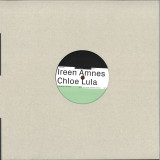
Tresor is proud to present the debut split 12" from Chloe Lula and Ireen Amnes. Meeting in the darker, harder-edged side of the Berlin techno scene in 2019, the pair have regularly collaborated and performed together, but Synergy marks the first time they've shared a record sleeve. Amnes describes Synergy as "the world we built while thinking about our journey as friends and the connection we share as people and artists," and while the record highlights their relationship and shared influences, it also showcases how each has grown into their respective lane.
Amnes' tracks lean into significantly more distorted territory, characterized by a dense fog of grainy pads punctured by sharp, expertly-programmed percussion. On "Our Bodies," these fragments are sculpted into driving hardware gear, replete with distant vocals and acidic squelches, where "Fragments of Desire" makes space for a more somber attitude, descending into murky, psychedelic electro.
In counterpoint to Amnes' deep atmospherics, Lula's contributions are driven by intricate sound design and a focus on dancefloor
impact. Taking cues from Regis and the Birmingham techno sound, she reins in the distortion of 2021's Errant Bodies for aufnahme + wiedergabe in favor of rolling techno and breakbeat-inspired rhythms that nod to her EBM influences. Making use of the extra space, she builds tension through heaving, textured basslines and crescendos of noise, and on EP closer "Event Horizon," she carves through the beat with her own metallic vocals.
Synergy includes a digital bonus track from each artist. Lula's sees her pushing deeper into finely-tooled techno territory, her drums at a swift, driving gallop, surrounded by ominous swaths of reverb. In contrast, Amnes crafts a gritty warehouse trip, sharpening the angles of her drums and detuning her synths until they sound bent and alien. Complete with the EP's physical cuts, these tracks are a testament to how the pair can simultaneously complement and contrast with each other, departing from their shared sonic origins and ending up in wildly dierent destinations.
Tucked in the heart of Koreatown, Los Angeles, lies The Libra Hotel—the titular architecture of Nick Malkin's new album and site of his musical and psychogeographic exploration. Unlike most musical "site-specific" studies, Malkin remains wholly ambivalent to the documentarian approach, instead sharpening an auteur-like focus on the site as a conceptual and highly expressive backdrop. The Libra is musically explored as a space that houses a noir fragmentation of identity—the exhausted trope of a complicated protagonist walking through rain-soaked street corners and fumy neon lights—where an inner monologue is rendered in both miniature and at a cosmic scale. Casting aside stifling tropes around field recording, ambient, and improvised music, Malkin's work finds its own unique fidelity and emotional core through the assembly and reassembly of memory. Nearly every sound on the album—from frayed saxophones, lambent pianos, and dissected jazz drum kits—are multiplied, shattered, and reconstituted into shapes that adorn The Libra in a motion-blurred fog. The narrative of the Hotel suddenly appears as if out of the mist, with intersecting characters interacting within its walls by happenstance. Adminst the languid set pieces, wraith-like sonic grains gravitate around wide subbass beams that give structural form to The Libra, a narrative tension like when a scene is shot from hundreds of different perspectives: an image both luminous and veiled.
Much like Frank Sinatra's own spatial residency immortalized on "Live at The Sands," "At The Libra Hotel" showcases an exuberant view of entertainment, hospitality, and a form of masculinity, one that can quickly detourn into darkness. Knowing this, Malkin extracts a melancholic core out of The Libra locale. The flickering shadows of American decadence are shown in their ephemeral honesty, lines that trace how even in everyday life virtue is tested, sanity is tested, even reality is tested within the confines of desire, within the night. The album is draped in fleeting textures, carefully arranged with a trance-like microtonality, the faint inflections and articulations of a jazz band cascading into dissipated stillness. Voicemails about changed locations and covert eavesdropping on guests' whispered conversations provide an atmosphere of missed connection and voyeurism—a purloined letter of desire receding into a vanishing point. Like the music itself, The Hotel, a chapel perilous at the intersection of desolation row, the center of it all, yet simultaneously at the edge of town, becomes a structure between libidinous virtuality and actuality—our inevitable half-light.
Ultimately, the pensive atmosphere of "At The Libra Hotel," powerfully asserts a plea for the kinds of intimacy only possible in transient spaces. Here, memory cascades into a force that feels like something supernatural, perhaps even religious, yet always subject to the infidelity of our imagination. Here, the album opens into its primary psychodrama, the transient nature of subjectivity itself and how this becomes fractured in the tumult between our commitments and desires. Within this nocturnal space, to quote Louise Bourgeois, "you pile up associations the way you pile up bricks. Memory itself is a form of architecture."
Glitching through pop music, cruising around the borders of the avant garde, passing by the edge of coldwave and tumbling into dance and club vibes: after her debut Bad Woman Céline Gillain is back with her second album: 'Mind is Mud'.
On Mind is Mud' Gillain let herself sink in the swamp of emotional confusion, the perpetual brain fog caused by a post Covid-world asking herself: do we have to get used to paradox as a way of life from now on?*
A musical dissection in nine songs of the mudflow, a flow which reveals its rich complexity the more Gillain dived into it: from the demanding intro 'Together' Céline opens up her highly personal and unique vision, shifting between high definition lost dimensions and emotionsthe mud slowly transfers in a crackling and sparkling stream of consciousness.
The mud is well alive in all its weirdness and unclarity. At times, it even glows in the dark.
The answer to that question is yes. The story of Mind is Mud by Céline Gillain: "Music is a place where intuiting is a work in itself. For me, it's the one place where I'm in charge, free to think and do what I want. Mind is Mud is the fruit of a collaborative practice with a DAW, a research around the palliative power of rhythm and the dancefloor, music as a space where emotions and ideas merge, storytelling, the comic potential and imaginative nature of sound. I don't really write, I copy paste and then I arrange and rearrange. Every sound I use comes from software, field recording, Instagram, movies and midi scores I collect here and there. In the hierarchy of sounds, you might call them cheap sounds. The lyrics are collages as well, made of pieces of texts from various contradictory sources. In addition to using the voice as a vehicle for ideas, I investigate its percussive and polyphonic potentialities, the possibility to have more than one voice/mouth."
- A1: Day In, Day Out
- A2: A Foggy Day
- A3: Stars Fell On Alabama
- B1: One For My Baby (And One More For The Road)
- B2: Just One Of Those Things
- B3: I Didn't Know What Time It Was
It is undeniable that Billie Holiday's singing changed in her later years. Her voice darkened and shifted to a lower range. Her economy of expression distilled her sound to its essence — a kind of heightened speech. The classic LP Songs for Distingué Lovers — her best work of the 1950’s — has also deepened and become burnished with time. Verve’s Acoustic Sounds Series features transfers from analog tapes and remastered 180-gram vinyl in deluxe gatefold packaging
Foghornia is the sequel to Tapani Rinne's previous album Radioton, which was received well by both critics and fans last year. It will be the second album to be released on the Signature Dark label, first digitally and later on vinyl.
The musical basis of the new album remains the same as earlier, consisting mainly of bass clarinet and electronic soundscapes. However, this time Tapani Rinne dives deeper into melancholic waves all the way to the depths of dark ambient.
The current state of the world has influenced the music of Rinne as well, while some of the songs are based merely on personal experiences and memories. The track Kirjurinluoto for example could be heard as the soundtrack of Tapani’s childhood hometown Pori, known both from its industrial nature as well as the home turf of internationally acknowledged Pori Jazz Festival. Tapani says ”The song is dedicated most of all to the festival and its two founders, Tapani Kontula and Jyrki Kangas, who both deceased during the last years. Without their influence i would had never made this particular album neither.” Another track, Confirmation, was originally composed for the confirmation ceremony of Tapani’s nephew. As often within art that makes strong impression, private things mold into public and vice versa. "Music is not a separate island of its own but a part of everyday life", Rinne describes.
New York painter and musician exploratory industrialist Tor Lundvall initially envisioned his 14th album, Beautiful Illusions, as an entirely instrumental affair, "inspired by memories of sitting in a church or cathedral watching the shifting sunlight through stained glass." Although he ultimately chose to wreath the majority of the tracks with hushed, poetic vocals, his original muse still resonates. These are certainly songs of shadowplay and vaulted skies, the quiet grandeur of dusk deepening on the horizon. Lundvall characterizes the lyrical subject matter, too, in ways both specific and surreal, exploring "the doubts, the anxieties and even the bleak fantasies the mind spirals into during moments of isolation, separation and distance." Tricks of the eye, mind, and ear, magnified by silence and the looming long winter. Shivering pulses and muted bass lines tread the twilight while icicle synths and wiry guitar map the melody until the voice enters, narrating oblique moods of essence and absence, tenderness and truth. Glimpses of dark humor flicker in the wordplay but the greater sonic landscape is one of falling leaves and failing light, small gestures rendered as revelation, cloaked in reverb and spatial fog. Lundvall's mastery of nuance and negative space continues to heighten, whispered brushstrokes of the invisible and the unsaid, what lies beneath and what lies beyond: "Behind the shields and false fronts is usually a sadness. The heartbreaking reflections of what might have been."
Tartelet Records is thrilled to present the debut album from Doc Sleep – 10 tracks of exquisitely rendered melodies and rhythms shaped with grit and beauty in equal measure. Birds (in my mind anyway) is a widescreen vision of electronica as a medium to express your personal situation and respond to your environment – a rave adjacent art form free from the perceived rules of the dancefloor. To date, Melissa Maristuen known as Doc Sleep has established herself in the context of the club – first engaging with the culture in San Francisco before moving to Berlin. She helps run the Room 4 Resistance party, DJs on Refuge Worldwide, co- owns the Jacktone label and has released on Detour, Dark Entries and her own label. But in making Birds (in my mind anyway) she set herself an ultimatum.
“At the time of recording this album, my life, all my routines and priorities had to change – music was no exception. I decided if I couldn't be happy making an album free of the dancefloor, I was finally going to be done with music. Instead, I found a musical voice free of tempo and textural restriction. Eventually, I had a sound, and once I had the sound, the album came pretty quickly. It was a very different process writing music for no one...except myself.”
If the impression given is one of a consistent style across the album, think again. Doc Sleep moves freely between tempos and themes, even if there are some recurring qualities binding the music together. She weaves fluttering arps with poise, lending them an almost choral quality which gives the album a very human touch. But they’re equally emotionally ambiguous or pockmarked with sonic interference – reflections of the collisions and conflicts
that typify the human experience.
Every inch of the album is a personal touch – the title was pulled from Doc Sleep’s mother’s response to hearing the album, while her friend Kiernan Laveaux offered a beautiful text which appears on the back. Those closest to her all fed into the artwork process, which captures the curious dichotomy between urban brutalism and botanical finery often found in the parks of Berlin – a vital place of respite when she was making the album.
This land runs through Katherine Paul’s blood. And it called to her. In dreams she saw the river, her ancestors, and her home. When the land calls, you listen. And KP found herself far from her ancestral lands during a time of collective trauma, when the world was wounded and in need of healing. In 2020 she made the journey from Portland back to the Skagit River, back to the cedar
trees that stand tall and shrouded in fog, back to the tide flats and the mountains, back to Swinomish.
It is a powerful thing to return to our ancestral lands and often times the journey is not easy. Like the salmon through the currents, like the tide as it crawls to shore this is a story of return. It is the call and response. It is the outstretched arms of the people who came before, welcoming her home. The Land, The Water, The Sky is a celebration of lineage and strength. Even in its deepest moments of loneliness and grief, of frustration over a world wrought with colonial violence and pain, the songs remind us that if we slow down, if we listen to the waves and the wind through the trees, we will remember to breathe.
There is a throughline of story in every song, a remembrance of knowledge and teachings, a gratitude of wisdom passed down and carried. There is a reimagining of Sedna who was offered to the sea, and a beautiful rumination on sacrifice and humanity, and what it means to hold the stories that work to teach us something.
Chord progressions born out of moments of sadness and solitude transform into the islands that sit blue along the horizon. The Salish Sea curves along her homelands, and when the singer is close to this water she is reminded of her grandmother, how she looked out at these same islands, and she’s held by spirit and memory.
The Land, The Water, The Sky rises and falls, in darkness and in light, but even in its most melancholy moments it is never despairing. That is the beauty of returning home. When you stand on ancestral lands it is impossible to be alone. You feel the arms and hands that hold you up, unwilling to let you fall into sorrow or abandonment. In her songs Katherine Paul has channeled that feeling of being held. In every note she has written a love letter to indigenous strength and healing.
There is a joy present here, a fierce blissfulness that comes with walking the trails along the river, feeling the sand and th stones beneath her feet. It is the pride and the certainty that comes with knowing her ancestors walked along the same land, dipped their hands into the water, and ran their fingertips along the same bark of cedar trees.
This is a story of hope, as it details the joy of returning. Katherine Paul’s journey home wasn’t made alone, and the songs are crowded with loved ones and relatives, like a really good party. And as the songs walk us through the land it is important we hover over the images and the beauty, the moments that mark this album as site specific. The power of this land is woven throughout, telling the story of narrow waterways, brush strokes, salmon stinta, and above all healing.
Let it take you. Move through the story and see the land through her eyes, because it is a gift, a welcomed sʔabadəb.*
*The word “gift” in Lushootseed, the language of the Coast Salish people“
- A1: Awake Asleep (Bms Master)
- A2: Into The Warm Embrace Of Deviancy (Bms Master)
- B1: It's So Easy To Corrupt A Soul (Bms Master)
- B2: Silent Riot (Bms Master)
- C1: The Tendon Harp (Bms Master)
- C2: The Tao Of The Scarred (Bms Master)
- D1: The Procession Of The Neutral (Bms Master)
- D2: Tasting Hate From The Cup Of Gods (Bms Master)
Catharsis third strike in double vinyl format comes with brutal precission: Hydraulic techno func meets the sinister & scornful whispers of decaing Medusas, Roaring Drill Mechanisms in constant rotation, shuffling saws bending through a fog of noise & relentless bass drum rumble. The roaring sounds of dying matter orchestrated by the one and only. Terrifying Shadows is a representation of what Jung called the Shadow, through the lense of shadow work via Integral Zen, and the realms of dark Buddhsm as it brushes close to the nihilism of atheistic stanism. It is the tension between these philopsophies that are explored in this album. It is quite within the bounds of possibility for a man to recognise the relative evil of this nature, but it is a rare and shattering experience for him to gaze in the face of absolute evil. The shadow of the human being reaches all the way to hell. Cover art by Steve Voidloss.
- 1: A Single Thunder In November
- 1: 2 Silence Wore A Silver Coat
- 1: 3 A Body Of Strange Beauty
- 1: 4 Under The Weeping Mulberry Tree
- 1: 5 In My Darkness
- 1: 6 A Matter Of Days
- 1: 7 From The Edge Of A Dream
- 1: 8 Winter Queen (In Summer)
- 1: 9 Selling Disappointment
- 1: 0 Lily
- 1: Frozen Air
- 1: 2 Wild Patience
- 2: 1 Known & Unknown
- 2: Sorrow Had A Brother
- 2: 3 Run Towards The Wasteland
- 2: 4 As Water Drops On Leaves
- 2: 5 The Rains Hair
- 2: 6 London Fog
- 2: 7 The Sky Was Empty
- 2: 8 A Special Kind Of Lostness
- 2: 9 All Things Return
- 2: 10 The Lady Of The Southern Seas
- 2: 11 Emptiness Follows
- 2: 1 All Saints & All Souls
Stella Sommer, das ist diese Frau, die so zwingend nach Stella Sommer klingt Nach vier Alben mit ihrer Band Die Heiterkeit und zwei Soloplatten übertrumpft sie sich mit ihren 24 neuen Songs auf "Silence Wore a Silver Coat" nun selbst. Auch, was das schiere Volumen, die immer dichtere Stimmung ihres sehr eigenen Universums angeht, an dem sie mit diesem Doppelalbum mit vehementer Konsequenz weiterbaut. Wie bei ihren vorherigen Solowerken ist es auch auf ihrem neuen Album ihr glänzender, dunkel changierender Gesang, der vor wildwachsenden Klanglandschaften leuchtet und ihre stimmliche Ausnahmestellung in Deutschland bestätigt. Immer noch gilt: So hoffnungslos schöne und attitüdelos stolze Popmusik schreibt sonst niemand in diesem Land. Wir hören einmal mehr eine große Songschreiberin und Arrangeurin, die ihre Kunst mit leichter Hand beherrscht, und damit ein gänzlich unangestrengtes, kalkülfreies Meisterwerk schafft. Zum ersten Mal hat Sommer ihr Album mit der ihr eigenen beiläufigen Souveränität auch selbst aufgenommen und produziert, denn warum sollte man das nicht tun, wenn man es kann. "Northern Dancer" und "Was Passiert Ist", ihre beiden jüngsten Werke, solo und als Die Heiterkeit, waren in sich geschlossene, durchkomponierte Alben - dramaturgisch fein konstruiert folgten sie beim Hören wie ein kooperatives Wildpferd am hängenden Führstrick ihrer Erschafferin.
Ingredient is the elegant collaboration of Toronto poets, composers, producers and dear friends Ian Daniel Kehoe and Luka Kuplowsky. Their self-titled release is an enigmatic electronic avant-pop record attuned to the micro and macro perspectives of the natural world. Ingredient is an album whose lyrics are more poem than lyric, and whose songs exist in a merger of house music, philosophically-minded lyricism and contemporary R&B. One might recall electronic and art-pop luminaries such as Yukihiro Takahashi, The Blue Nile, and Arthur Russell, or connect it to contemporaries like Nite Jewel, Westerman and Blood Orange. A distinct world of dance, of questions, of secrecy and ultimate softness.
Eight years of friendship forges strange telepathy.
In the summer of 2020, Ian Daniel Kehoe was entrenched in a new feeling of heaviness; psychosomatic symptoms had started to proliferate; stress made new pores across the body, bending sensitivity into pain. His days were met with confusion, detachment, sleeplessness and pain without causation. Disfigured, he felt that what had been central and centering was blown out to the periphery of things. In a moment of self-preservation he reached out to his dear friend Luka Kuplowsky to make an album together. For Kehoe, it was an instinctual grasp for the anchoring truthfulness of deep friendship and the potential for a dedicated creative collaboration. Kuplowsky’s presence was light, supportful and curious, eager to explore musically the sounds they were mutually drawn to: house music, ambient pop, dub. The duality between Kuplowsky and Kehoe – between the Aflight and the Unmoored – is a portrait of a friendship whose exchanges came easy and produced an outpouring of song. Creation and therapy crisscross. In email correspondence that catalogs their process of collaboration, affection abounds: “feels bare without the Luka Licks”, or “Love you so much”, or “Kinda just overwhelmed with deadliness coming in at all angles.” When their voices first come in together on “Wolf,” that harmony arrives in a dramatic avant-pop sound that is bold and wondrous.
Kuplowsky and Kehoe both arrive at Ingredient as established artists whose works are committed to language’s propensity to provoke and mystify. Kuplowsky’s 2020 album Stardust is an idiosyncratic and otherworldly blend of pop and jazz romanticism grounded by Cohen-esque vocals and a stirring philosophical curiosity. Kehoe’s entrance into the new decade has hatched four records of pop experimentation, most recently 2022’s Yes Very So, a euphoric and bold album of poetic synth-pop and meditative ambient instrumentals. Kuplowsky and Kehoe’s union as Ingredient is a beautiful and unusual chemistry that integrates their distinct approaches while bringing forth a newness: a sound that alternates between cinematic technicolor and dubbed out fogginess; a lyricism that exchanges their lucid and clear poetics for a playful and obtuse verse. The album intuitively taps into the opposing emotional states of Kuplowsky and Kehoe during the conception of the record, contrasting the buoyancy of trumpeting keyboards (“Resurface”), angelic synthesized voices (“Come”), and rolling bass (“Photo”) with the record’s underlying darkness of whirring buzzsaw textures (“Transmission”), whooping sirens (“Wolf”) and murky ambience (“Illumination”). Lyrically, this duality arises in the record’s flux between openness (“Variation”, “Raindrop”) and existential dread (“Wolf”). “Illumination” most clearly crystalizes this opposition, reconciling the verses’ neurotic yearning for enlightenment with the chorus’ liberating doctrine of negation: “no more devotion… no more delusion”. Amidst the gradations of light and dark, Kuplowsky and Kehoe trade indelible, lush melodies as though their voices are made of a substance that melts easily one into the other. The harmony of poetry, sound, and texture cuts through your brain fog like a wet diamond.
Ingredient’s self-titled record was assembled by Kuplowsky and Kehoe over the course of six months in a home studio they frequented daily. Amidst synthesizers and drum machines they composed, re-composed, and workshopped a wide array of music, ultimately focusing on a set of eight songs that lived in a shared musical and philosophical world. Recording days often ended in basketball games at a local court or a rooftop commune over a pot of tulsi tea and a crossword puzzle. Kuplowsky brought in the Blue Cliff Record – the classic anthology of Chan Buddhism – whose inscrutable and sublime insights remained constant throughout the recording process as an activator of reorientation and reflection. While Kehoe was frequently rendered physically immobile by bouts of anxiety, a patience and mutual caring governed the pace of their creation; rest, stretching and meditation became equally important as the act of arrangement. Invited into their intimate circle of composition was Thom Gill, whose heavenly voice uplifts “Variation” and “Raindrop,” and Karen Ng, whose alto sax simmers and dances around the funky strut of “Raindrop.”
The lyrics on Ingredient reflect the persistence of change, the infinite variability of nature where randomness and divergence are no accidents. In Daoism, duality, in the form of Yin and Yang, is not contradictory as it is in Western idealist philosophy, but rather composes the eternal and lived paradox of our changeless-changing universe: changeless because all is change, and changing because the dynamism of the Dao makes each moment transformational. Kuplowsky and Kehoe refract this way of seeing the world, as in Variation: “Variation in the natural world / there it is.” Ingredient is an experience of the manifold ways of saying there it is of the transformational world, and there it is, unfolding. Elsewhere, change and ephemerality is addressed through the record’s preoccupation with non-human perspectives, reorienting the listener to the wolf, the mouse, the emerald frog, the centipede, the bird, the fly in the lamp. The album cover visualizes this fascination with the striking image of a reddish-orange frog atop a defamiliarized landscape of dark green leaves. Mirroring the exploratory process of the record’s collaboration, the frog also signals the amphibian’s natural inclination to leap into boundless potential. Kuplowsky and Kehoe’s lyrics manifest philosopher and ecologist Timothy Morton’s concept of “the mesh,” drawing attention to the “vast, entangled web” of interconnectedness that connects all life forms and interweaving the songwriters’ shared wonder into the Animal’s unknowability. As Luka narrates in the breakdown of the dance-floor ready “Photo,” “the closer we observe things, the further they retreat into abstraction.” In Ingredient’s ecosystem, perception is a reversible fractal where the world’s minutest details mirror the shape of the cosmos.
According to the Dao, the path to healing starts by reorienting perception away from the self and toward the self’s subsumption in Totality. For Kehoe, collaborating with Kuplowsky became the reorientation necessary for the self-preservation he was seeking, opening up a shared creative practice to navigate and soften the complexity of his psychological shattering. The album begins with Kuplowsky intoning “colossal faith” which bounces around the stereo field in a cloud of echo, and it is the enormity of “faith” that centers both Kuplowsky and Kehoe’s collaboration and their inquisitiveness in the vast mysteries of our very being. Truth in Ingredient is not an essential nugget, but a bending of the light – it is the equivocal entanglement of how we are in nature as nature, but with a plea or prayer under our breath that marks our felt distance from what we are a part of: “carry me towards the mountains of my birth / returning to the nest / the silence of the earth.”
16)- return with their heaviest and most devastating record to date, Into Dust. The new album, a collection of cautionary tales of survival and redemption, is set to an amalgamation of sludge, punk, metal, hardcore, and stoner riffs, that could only be built through 30 years of commitment to their dark sonic craft, which -(16)- continues to improve upon. From the frantic opening of "Misfortune Teller" to the undeniable pounding and swagger of "Scrape the Rocks", Into Dust lives up to its name, as -(16)- beat the listener into submission through the lowest of ends and the sour, palpable malaise prevalent throughout the album's dozen tracks. "There's a story arc in the lyrics that start with an eviction notice served amid the ruins of Hurricane Irma in the Florida Keys, to running aground metaphorically and drowning in midlife, bearing witness to the modern suffering of hunger and poverty on the Mexico California border," guitarist and vocalist Bobby Ferry says. The negativity persists on tracks aptly titled "Null and Eternal Void", and the dizzying, pill-induced "The Floor Wins". Elsewhere, "Born on a Bar Stool" sends the listener off with a sobering album closer; ending on a foggy and rainy jazz-tinged San Francisco night, with an anti-drinking drinking song, proclaiming "Raise your glass all things pass".
Clear Vinyl
Downwards’ deep bonds with NYC catalyse the debut LP by Jim Siegel’s Vivid Oblivion, a reveberating post-industrial salvo produced by adopted Brooklynite Karl O’Connor (Regis), and co-mixed by Anthony Child (Surgeon) and Simon Shreeve, who also mastered it. It’s a super deep, highly atmospheric beast somewhere between Valentina Magaletti’s most expressive percussion work, Bark Psychosis, and classic, moody 4AD, which is coincidentally referenced via the artwork, made by Chris Bigg - legendary graphic designer and longtime assistant to Vaughan Oliver.
Invoking the density, vertiginous scale, and dark grimy nooks of NYC, ‘The Graphic Cabinet’ was realised by Jim Siegel - hardcore legend and occasional/regular drummer with everyone from Raspberry Bulbs to Damo Suzuki and Boredoms, made in close collaboration with Karl O’Connor aka Regis during 2021.
Stemming from intently deep listening sessions immersed in LPs by Viennese aktionist Hermann Nitsch and the myriad eras of Killing Joke, while also absorbing the atmospheres of classic Tarkovsky flicks, the album began life as gonzo field recordings of Siegel smashing the f*ck out of his drum kit, zither, scrap metal and gongs in an array of abandoned warehouse spaces. The recordings formed the basis of Karl’s compound productions, which add depth charge bass and sonorous metallic atmospheres to the mix, along with birdsong and gibbon hoots, plus guitar textures by Nick Forté (Raspberry Bulbs, Rorschach) for a dread-lusting jag deep in the belly of the Big Apple.
With a palpable tang of rust and blood in the air and grime under the fingernails, the seven tracks evoke a resoundingly brutalist portrait of space and place. Siegel’s nervy percussive discipline is framed in alternating barometric and light settings from cut to cut, variously snaking from the poltergeist clang and haunted resonance of ‘Converging and Dissolving’ to slamming motorik thrum in ‘Oblivion’ via imaginative descent into cyberpunk simulacra of the city as jungle-at-night in ‘Remnant Corridor’, replete with animalistic atmospheres that recall Organum.
While the raw attack and devilish swerve of the rhythms are utterly fundamental to the record, Karl’s atmospheric content and the animist mixing magick of Anthony Child and Simon Shreeve most potently give flesh to its bones. Patently evident on the stepping pulse and searching zither that keens into detuned orchestration on ‘Immediate Possession’, the zoned-out klang of ‘Stand Aside’ or in the flooded warehouse chaos of ‘Test For Traps’. The attention to spatial, textural and proprioceptive detail is tightened throughout, peaking with ‘Bargemaster’, a dense slab of tension that sounds like Jon Mueller’s Silo recordings fed through The Caretaker’s fogged machinery.
It’s one of the most impressive records on Downwards for a long while, bound to gnaw and spark the nerves of experimental rock and post-industrial’s greats, anything from The New Blockaders to Faust, Flying Saucer Attack and into iconic Blackest Ever Black releases in the modern era.
Not content with a double 12” of acid drenched delinquency, Schrödinger’s Box have drafted in four 303 addicts to bring their own acrid fire to Hard Ton’s Bigger is Better.
To get the bitter ball rolling, Larionov opens. Known for his dark electro and EBM leanings, this reinterpretation of “Transcend Your Body” is a bruiser of throbbing pulses, lancing lines and stabbing synths to pierce the fog and strobe. Rude 66 follows with his beloved vocoder doing battle with Massimo Bastasi’s original vocals. The result is a duel of distant rhythms and shimmering wordplay. The flip sees Nightwave on the attack. Brawny beats elbow lyrics in this driving audio onslaught. Bulging rusted basslines crush speaker cones as a blistering remake takes hold, blasts of body bending brutalism turning Hard Ton’s original into an even sweatier brute. An artist born and raised on analogue squawk and squelch finishes. Posthuman, one of the infamous figures behind the I Love Acid nights, takes the tongue-in-cheek Brit Pop flashback of “Girls and Boys” and contorts it into a grimy Chicago jam.