Domestic Exile are proud to present the devastatingly deplorable and malevolent recordings (that are sure to corrode yet electrify your ears) by Glasgow's very own KLEFT.
KLEFT aka Vickie McDonald is rooted in and has actively propagated the underground DIY radical queer punk and feminist movement here in Glasgow. Their projects have included the skull crushing sludge doom of Cartilage, the unflinching and infamous multi- membered hard core stars that were DIVORCE and the sacrificial, druid drone glitch of MOURN. Alongside these projects they have uncompromisingly disrupted, motivated and facilitated collective endeavors to take down the capital power structure of the dominant system of patriarchal club venues and abhorrent fuckers in this town.
For this record 'H+ Sexualis', KLEFT explores the neo-modern space where flesh is left behind. Negotiating, analyzing and tearing to shreds the relationship and balance between flesh and technology. KLEFT's expansive and palpable sonic offerings delve into themes of transhumanism and body hacking and seep into our collective skin begging the question; can flesh ever be created digitally. Does a lack of physicality alienate human experience in a post transhumanism society Are we all destined to be skinless yet digitally connected Will the body become superfluous Toward "the utopian dream of the hope for a monstrous world without gender," as stated on Donna Haraway's essay ''A Cyborg Manifesto.'
From the opening track 'Ossein' the listener grasps a foreboding lethargic build up, lurking out of the spatial ritualistic shadows into a sea of suffocating nothingness. A void where there is no gravity. Skeletal and brittle shattering rhythms which echo DMZ / Skull Disco dubstep alongside the more frozen, glacial ominous explorations of grime are often felt proving KLEFT is an artist whose inspirations run deep and wide and generally exist in the darkest recesses of our subconscious. These fearful, disjointed rhythms are set against weightless atmospheric oscillated synths, as if roaming through bleakly opaque, claustrophobic narrow corridors on a first person survival horror video game such as Resident Evil.
Moving through to 'CMBR', KLEFT's dissonant, degrading soundscape ferociously ascends. The resilient kick drum is propulsive and pulverizing akin to 'ardcore tekno - or intense gabba if you have the guts to adjust the tempo up to +8 - aesthetics that overwhelm and agitate finally revealing it's grotesque biological / amorphous bio structure. Elevating the repetitive 4/4 kick to a destructive, distorted banger of a track as layers of converging atonal noise and sound design simultaneously further enhances the sense of imminent radioactive contamination.
Next is 'Writhe, Squirm, Broken' continuing the convulsive, nauseating permutations of the prior track but reconfigured like a mangled, gruesome Cronenberg-esque parasite that has infiltrated an open wound, excruciatingly feeding off of the inner anatomy of it's hosts body from within. Repulsively reformulating the shape and dimension. The intro is akin to a panic stricken bouncy ball contracting and expanding, the spring reverb building momentum and traveling further away in distance and speed.
'Hackfleisch Deluxe' is a muuurrderous stomper and is one of the more grime / bass orientated tracks that deconstructs and disrupts the tempo familiar to sub-low producers on Black Ops / Jon E Cash / DJ Dread D. The crawling, plummeting frequency of the synth is a nauseating rush of coagulating blood to the heed; a deep throbbing sensory depravation in sharp, paradoxical contrast with the driving harmony layered on top which proves to be infectiously addictive. Furthermore are splintering programmed vocal samples that gives a sense of artificial disorientation, mind over matter, a possible hint at our evolving sentient cognition within a nightmarish simulated, augmented reality
Second to last we have 'Keratin' which is filled with the near fatal dissolving thud of Djax-Up acid that gives the impression that you're a biologist peering through a microscope into a petrie dish and witnessing the rapid and furious genetic cellular replication of bacterial and viral organisms.
Culminating in 'Bruised and Bleeding Hands' where the squashed density of a deflated and depressurized helium filled balloon and elastic umbilical cords, barbed wire and copper wires grind n' coil around the lens of a zooming camera. Taking no prisoners, this is a punishing grime weapon. A phat, surgical kick drum bulldozes its way thru causing carnage, syncopated punching snares after every rave stab and dizzying third beat. It won't be long until ye hear this on Silver Drizzle's youtube channel in the near future.
This record transports us to the hyperkinetic mutation scene on the cult cyberpunk film Tetsuo The Iron Man where the organic flesh / mechanical rust of the Iron Man metamorphoses with the Metal Fetishist during the rebirth sequence and we say 'LONG LIVE THE NEW FLESH!''.
Search:dark reality
Soundwalk Collective is a multi-disciplinary audio-visual collective founded by Stephan Crasneanscki, including members Simone Merli and Kamran Sadeghi.
The Collective's approach to composition combines anthropology, ethnography, non- linear narrative, psycho-geography, the observation of nature, and explorations in recording and synthesis. The source material of their works is always linked to specific locations, natural or artificial, and requires long periods of investigative travel and field work.
Their recent projects include a collaboration with Patti Smith and reworking the archive of recordings on Jean-Luc Godard's film set.
For the 8th Marionette publication, Soundwalk Collective present 'Death Must Die'. A sound piece that began in 2004 and ended up as a composition for the PS1 radio in NY. For this New release the Collective has revisited the piece in a more musical way.
'Death Must Die' is based on Stephan Crasneanscki's multiple visits to the sacred Indian city of Varanasi, originally known as Kashi and Banares. Sacred texts maintain that Varanasi isn't even a city, but rather a lingam of celestial light, the subtle and cosmic form of Lord Shiva which manifested itself as a city for the sake of seekers of liberation. To bathe in the holy Ganga is to be purified of your sins. To die in Varanasi, is to attain liberation and to bring an end to the cycle of rebirth known as transmigration. Determined to capture the elusive reality of this ancient city, Stephan has day by day recorded and re-imagined his understanding of how to perceive the continuously moving stream of the holy Ganga; performing a simple form of sadhana, which request is to be very alert but also to allow your mind to be quiet, making it easier to slip into the streams, and into the current that both the city and the river are offering.
'Death Must Die' begins before the rising of the sun and reproduces the cycle of a day in Varanasi, going down the river that is believed to be the divinity descended to this Earth in the form of water. She grants us happiness and salvation. The composition attempts to emulate the vibration of Kashi that encourages the kind of interiority that enables a person to get a better perspective on reality than one might have, while constantly being in the current of human life. A vibration dedicated to eliminating the distinction between human and non-human, between alive and dead, between light and dark.
With a string of resonating releases and progressively improvised live-shows, ANNANAN have been expanding and refining their stylistic range across gritty Acid psychedelia, explosive, dark-waving Electro and a raw blend of Techno and House that is as fierce as it is fragile. The duo's first album on their own imprint MACHINE JAZZ does take all of this into account - and yet it's crucially different to everything else they've put out so far. - You' is a captivating electronic pop adventure, an experimental amalgam aligning Anne Ghost's polymorphic lead vocals with Tom Aaron's vast and versatile analogue productions in unexpected ways. Dominated by reduced rhythms and a carefully crafted melodic shape, the result of this dialogic fusion are irresistible, forceful songs that draw from diverse contemporary and traditional sources: you'll even hear Trap fragments, an R&B trained voice, reminiscences of the Knife as well as cinematic synth excursions. While exhibiting a broad set of moods, claims and longings, the LP attains emotive poignancy from beginning to end through its bold openness. Annanan's first album is stripped down, immediate and full of surprises - but don't you worry, there's no lack in bang either!
:
This special limited edition DAVID BOWIE 7" picture disc, is a double A-side of the radio edits of 2018 versions of ZEROES and BEAT OF YOUR DRUM. Both tracks are from NEVER LET ME DOWN (2018), a new version of the 1987 album featured in the forthcoming boxset LOVING THE ALIEN (1983-1988) which is released on 12th October.
NEVER LET ME DOWN (2018), is a new production of Bowie's final 'solo' album of the '80s. Producer Mario McNulty worked on the tracks at Electric Lady Studios in New York with longtime Bowie musicians Sterling Campbell (Black Tie White Noise, Outside, 'hours...', Heathen, Reality and The Next Day) on drums, Reeves Gabrels (Tin Machine, Black Tie White Noise, Outside, Earthling and 'hours...') & David Torn (Heathen, Reality and The Next Day) on guitars and Tim Lefebvre (Blackstar) on bass.
ZEROES, the lyrics of which reference Prince's Little Red Corvette was Bowie's salute to the '60s. He described it as 'The ultimate happy-go-lucky rock tune, based in the nonsensical period of psychedelia'. Mario McNulty commented, "Stripping this song down to its core revealed a track that could have been right at home on Hunky Dory, I kept Peter Frampton's sitar (which was originally owned by Jimi Hendrix) as it still fits against the new guitars from Reeves Gabrels'.
Of BEAT OF YOUR DRUM Mario McNulty says, 'David Torn's ambient guitars start the song that now lead into a much darker world than its shiny predecessor. David sang all the backing vocals on this which I have kept.'
Y
The keeping of pets marks humans' attempt at taking possession of a part of reality that is not at his disposal. Dressing a piece of the real that lives according to entirely non-human rules and which only in the saddest case does not resist the discipline of the human symbolic order vehemently and in a sustained matter, is a violent act of protection. Because in the non-place of the real, all that which we are helpless in the face of looms: the non-logical and the nameless, the violence and the noise, yet also the unrestrained and unfiltered desire.The innocuous figure of the pet marks a gateway to an investigation of these eerie milieus, while electronic dance music lends itself to this investigation in an outstanding way. This constellation marks the subject of Column's 'Pets II.'
Column is the name of Cologne based renaissance man Jan Philipp Janzen, who, as chief emissary of Cologne's pop internationalism, has been playing the field in various functions for Von Spar, Cologne Tapes, Urlaub in Polen, Owen Pallett, Scout Niblett or The Field, and who has also, in one way or another, been involved in most relevant records coming out of Cologne for the past number of years. After his excellent solo debut 'Pets I' (Areal, 2016), Janzen presents another extraordinary record in 'Pets II,' perfectly complemented by another ghostly oil work of Burkhard Mönnich on the cover.Sonically, 'Pets II' marks a clear development for Column. In its exploration of the thresholds of the real, it sets two points of focus, corresponding with the split in sides A and B.
Side A, on which Janzen teams up with long-time friend myr. (PNN), explores the uncanny as a fissure of the symbolic order, and the subsequent breaking in of the real. It opens with two peaktime rockets that have their wooden, nether-regional groove narrated by grim, down-pitched vocals. The ethereal remix by Leibniz (hundert) seems to be observing the situation from a hiding place, and is the side's clandestine and no less dark closer.
Side B, for which Janzen invited studiomate Marvin Horsch (Dorfjungs/Beats in Space) along, delivers two swaying synthesizer workouts, the second of which, 'Molly and Swerve,' is directed firmly at the dancefloor again. What is at stake here is the transition between a free, undirected jouissance of the real and a more ordered becoming-lust. Here, as in Map.ache's (Kann/Giegling/Altin Village) remix which closes out 'Pets II,' it becomes clear what connections dance music can foster between a free, impersonal desire and the sphere of interpersonal wanting, but also the losses that are negotiated in it. Above all, however, it becomes evident what a courageous daring project 'Pets II' is in all of its conceptual and aesthetic determination; with Von Spar's standout 'Garzweiler' 12' (Altin Village & Mine, 2017), it documents a New Cologne Realism.
Described by Crack Magazine as a 'hypnotic slow-burner' and noted by Ransom Note as one of the most interesting albums to emerge in 2017, not only did Dollkraut's second album 'Holy Ghost People' herald the launch of Jennifer Cardini and Noura Labbani's adventurous new label with fitting mystic gusto... It also gave us a beguiling LP that keeps on giving, exciting and inspiring over a year later. Proof can be found in these three superlative remixes. Subversive Berlin duo OTTO take the lead with a warm, Arabic twist on the album opener 'Bonnie Says' by lifting the groove with a little organ-squeezing spring while maintain its faraway haze and mystique. Accurately hyped Romanian-also-in-Berlin Borusiade follows with an overwhelming floor-ready update on 'Have I Told You'. Already a familiar face with the label, she weaves a chasm-like new-wave narrative that sucks you deep into the mix and galvanises the pundit attention she's getting right now. Finally Mannequin Records founder Alessandro Adriani joins the party with a tunnelling twist on the somnambulant aesthetic of 'Valium'. Flipping the dreams for a much darker 3am reality, it will leave your dancefloor pining for more. Don't worry, there's plenty more to come. Dischi Autunno are only just warming up...
originally released in 1990-with Liz Lamere - Never released on vinyl-
Born in Brooklyn, Alan Vega was reared on the rock 'n' roll sound of Elvis Presley and Roy Orbison, but originally struck out on a career as a visual artist and light sculptor, making pieces out of electronic debris. But on the occasion of seeing Iggy Pop fronting the Stooges at The Stooges at the New York State Pavilion in 1969 was an epiphany for Vega. It showed me you didn't have to do static artworks, you could create situations,' he said. That show was the first time in my life the audience and the stage merged into one." It was that eradication of barriers between the two that Vega took to heart.
Their first two albums, 1977's Suicide and their 1980 follow-up, remain two of the era's greatest touchstones, beacons for others seeking to transform their worlds with sound. And even during the group's hiatus through the 1980s, Vega continued to pursue his singular vision across an individualistic solo output. From his 1980 self-titled debut and rockabilly-infused albums like Saturn Strip, through bracing albums like Power On to Zero Hour and IT, Vega forged his own singular path.
For all the darkness and despair that encompasses this moment in our world - and despite his work being depicted as bleak and nihilistic - for Vega there was always a sense of hope and a place for dreams to become reality. People have always told me that my music is angry,' he said. To me, it was always just an energy. It was the way I perceived the world. The key Suicide song was 'Dream Baby Dream,' which was about the need to keep our dreams alive. I knew back then that something poisonous was encroaching on our lives, on all our freedoms.' He fought to his very last breath for that freedom.
originally released in 1993 - with Ric Ocasek & Liz Lamere-Never released on vinyl-
Born in Brooklyn, Alan Vega was reared on the rock 'n' roll sound of Elvis Presley and Roy Orbison, but originally struck out on a career as a visual artist and light sculptor, making pieces out of electronic debris. But on the occasion of seeing Iggy Pop fronting the Stooges at The Stooges at the New York State Pavilion in 1969 was an epiphany for Vega. It showed me you didn't have to do static artworks, you could create situations,' he said. That show was the first time in my life the audience and the stage merged into one." It was that eradication of barriers between the two that Vega took to heart.
Their first two albums, 1977's Suicide and their 1980 follow-up, remain two of the era's greatest touchstones, beacons for others seeking to transform their worlds with sound. And even during the group's hiatus through the 1980s, Vega continued to pursue his singular vision across an individualistic solo output. From his 1980 self-titled debut and rockabilly-infused albums like Saturn Strip, through bracing albums like Power On to Zero Hour and IT, Vega forged his own singular path.
For all the darkness and despair that encompasses this moment in our world - and despite his work being depicted as bleak and nihilistic - for Vega there was always a sense of hope and a place for dreams to become reality. People have always told me that my music is angry,' he said. To me, it was always just an energy. It was the way I perceived the world. The key Suicide song was 'Dream Baby Dream,' which was about the need to keep our dreams alive. I knew back then that something poisonous was encroaching on our lives, on all our freedoms.' He fought to his very last breath for that freedom.
Do you like Love songs After spending a lifetime spent avoiding this subject in song, Joel Sarakula finally admits that he does. On his new album "Love Club" Sarakula relives the golden age of Soulful and Romantic Pop music and connects it with a modern aesthetic. While a deeper message of love and peace flows through the record, Joel Sarakula is no old fashioned hippie: ",Love Club' is about connecting to reality and re-framing the idea of romantic love and loss in the present, loveless age ". Featuring eleven songs touching all genres from disco to blues, from soul to soft-rock, Joel Sarakula's "Love Club" is a profound pop statement.
Joel Sarakula has travelled the world in search of his muse, experiencing everything from being a victim of Caribbean carjackings to performing in the remote fishing villages of Norway, via the dive bars of Europe and the US. It was the hodge-podge musical tapestry of England's capital that finally drew him to a settling point, in the wake of seemingly never ending run of shows. With personal tastes that span from the more avant-garde to soul and pop greats like Sly Stone, Todd Rundgren and Hall & Oates, there are clear nods to contemporaries like Unkown Mortal Orchestra, Erlend Oye and Toro Y Moi in terms of ambition and style.
With his last two albums "The Golden Age" and "The Imposter" collecting strong radio plays at BBC Radio 2, BBC 6, BBC London, XFM Joel Sarakula has been play-listed nationally in Europe including Flux FM, WDR 5, Radioeins, Bayern 2, Deutschlandfunk and Deutschland Kultur Radio in Germany as well as in Benelux and Italy and Spain. He is a regular fixture on the live festival and club circuit in the UK, Europe and internationally including appearances at SXSW, Primavera Sound, Glastonbury, The Great Escape, Liverpool Sound City, Scala London, Tallinn Music Week, V-ROX (Vladivostok) and Reeperbahnfestival Hamburg.
"Love Club" is Sarakula's bold and unashamedly emotional next step. In essence the album is a homage to the soulful singer & songwriter artistry of the Seventies filtered through a darker contemporary lens - fitting for these uncertain times. "I always shied away from generic love songs," the Sydney, Australia born songwriter admits, "but on this record I embraced the subject wholeheartedly... and intellectually, looking at themes of love, lust, loneliness and everything in-between." Take the first single "In Trouble", co-written with Michele Stodart of The Magic Numbers, as the best example for Joel Sarakula's unique, and honest approach to making music. "We Used To Connect" questions the changing nature of relationships in our social-media addicted world: 'We used to connect in the real world too, now the touch of your hand is a digital cue'.
"Coldharbour Man", on the other hand, examines the identity of the song's narrator and the artist vs. fan dynamic all wrapped up in a disco love song: "There's a lot going on in this particular track. I feel my writing has grown emotionally...", explains Joel Sarakula. "Just best to listen yourself and make up your own interpretation!: 'We met in a song come to life like some fantasy cliché, though I'm known for my moves in the dark you flooded sunshine on my day'. Then there's "Baltic Jam", capturing romantic love and loss in authentic 70s confessional singer & songwriter style and of course "Dead Heat", a song about how there is struggle in the most perfect relationship pairings as the match is so even: "I recall an ex-girlfriend of mine... when we first met, we thought we hated each other but we eventually flipped that emotion and realised we had a deep passion and love for each other, there just was a lot of underlying sexual tension!" : 'It's a battle we could only win, if we lose. We'd be stronger if these lonely ones became two'.
More than a year in the making, Joel Sarakula recorded "Love Club" in various studios around London and Berlin capturing soulful performances from his many musical comrades on vintage analogue equipment. "This record has truly been a labour of love. Recording and privately sharing these performances amongst my collaborators started to feel like a bit like a club - I guess that lead to the album title! I was surprised how much I actually enjoyed the 'love-making process' and I look so much forward to playing these new songs on stage with my band." We can't wait, Joel Sarakula.
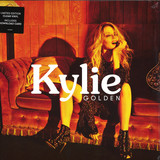
Limited Edition Clear Vinyl
Includes 12' Vinyl and Deluxe CD album, 30 page hard back book
Now that I've been to Nashville,' Kylie Minogue says with audible affection, I understand. It's like some sort of musical ley-line...'
Golden, Kylie's fourteenth studio album, is the result of an intensive working trip to the home of Country music, a city whose influence lingered on long after the pop legend and her team returned to London to finish the record: We definitely brought a bit of Nashville back with us,' she states. The album is a vibrant hybrid, blending Kylie's familiar pop-dance sound with an unmistakeable Tennessee twang. It was Jamie Nelson, Kylie's long-serving A&R man, who first came up with the concept of incorporating a Country element' into Kylie's tried-and-trusted style. That idea sat there for a little while, with Minogue and her team initially unsure about how to bring it to life. Then, when Grammy-winning songwriter Amy Wadge's publisher suggested Kylie should come over to collaborate in Nashville, a city Kylie had previously never visited, something clicked. You know when you're so excited about something,' she recalls, that you repeat it an octave higher and double the decibels I was like that. 'Nashville! Yes! Of course I would!'. I hoped it would help the album to reveal itself. I thought 'If I don't get it in Nashville, I'm not going to get it anywhere.''
Kylie's Nashville trip involved working alongside two key writers, both with homes in the city. One was British-born songwriter Steve McEwan (whose credits include huge Country hits for Keith Urban, Kenny Chesney and Carrie Underwood), and the other was the aforementioned Amy Wadge, another Brit (best known for her mega-selling work with Ed Sheeran). It was then a truly international project: Golden was mainly created with African-German producer Sky Adams and a list of contributors including Jesse Frasure, Eg White, Jon Green, Biff Stannard, Samuel Dixon, Danny Shah and Lindsay Rimes, and there's a duet with English singer Jack Savoretti.
However, the album's agenda-setting lead single Dancing was, significantly, first demoed with Nathan Chapman, the man who guided Taylor Swift's transition from Country starlet to Pop megastar. If anyone knows how to mix those two genres, Chapman does. Nathan was the only actual Nashvillean I worked with. He's got a huge studio in his house, which is probably due to his success with Taylor... there's plenty of platinum discs of her, and others on his walls.' There's something of the spirit of Peggy Lee's Is That All There Is, of Dylan Thomas' Do Not Go Gentle Into That Good Night, even of Liza Minnelli's Cabaret about Dancing, a song which not only opens the album but sets out its stall, providing a microcosm of what is to come. You've got the lyrical edge, that Country feel, mixed with some sampling of the voice and electronic elements, so it does what it says on the label. And I love that it's called 'Dancing', it's immediately accessible and seemingly so obvious, but there's depth within the song.'
The experience of simply being in Nashville was an overwhelming one, before Kylie had even arrived. Once I knew I was going to Nashville, people talked about the place with such enthusiasm. They said without doubt I would love it and, I would come back with songs. They were sending lists of restaurants, coffee shops and bars. It really was a beautiful and genuine response and it felt like I was about to have a life changing experience and in a way, I did.' The reality came as something of a surprise, when she found a far more modern metropolis than the vintage one she'd envisaged. I thought it would be like New Orleans: little houses and bars, with music spilling out onto the street. It reminded me more of Melbourne: apartment blocks going up everywhere! The main strip, Broadway, where the honky tonk bars are, that's where the street was filled with music and it was just amazing.' Mainly, Minogue remembers the heat and humidity. It was 100 degrees. It was like it was raining with no rain.' She also relished the chance to wander around unrecognised, visit a few venerable music bars and soak in the atmosphere. I didn't get to the Grand Ole Opry or the music museums but I managed to go to a couple of the institutions there like The Bluebird Cafe and The Listening Room, and just by being there, through some kind of osmosis, you get this rejuvenated respect for The Song, and the writing of The Song. There's no hoo-hah around it. There's a singer-songwriter there, talking about the song and singing the song, to an audience who are there to listen. Although, I have to confess I was guilty of starting to clap too soon during a long pause at the end of one of the songs. The guy made a bit of a joke out of it and got a laugh from it, but I thought 'Of all people in the audience, no...''
It's probably no coincidence, therefore, that every track on Golden is a Kylie co-write, making it arguably her most personal album to date. The end of 2016 was not a good time for me,' she says, referring to well-documented personal upheavals, so when I started working on the album in 2017, it was, in many ways, a great escape. Making this album was a kind of saviour. I'd been through some turmoil and was quite fragile when I started work on it, but being able to express myself in the studio made quick work of regaining my sense of self. Writing about various aspects of my life, the highs and lows, with a real sense of knowing and of truth. And irony. And joy!'
The songwriting process allowed Kylie to get a few things out of her system. Initially, she admits, it was cathartic, but it also wasn't very good. I think I was writing too literally. But I reached a point where I was writing about the bigger-picture, and that was a breakthrough. It made way for songs like Stop Me From Falling and One Last Kiss. It also meant I had enough distance to write an autobiographical song, like A Lifetime To Repair, with a certain amount of humour. The countdown in that song: 'Six-five-four-three, too many times...'. I don't know if that will be a single, but I can just imagine a girl with framed pictures of past boyfriends, and kind of going 'Oh god, when am I going to get this right'' When she listens back to Golden, Kylie can vividly hear the Nashville in it. It is, she'll agree, probably the first time that a Kylie album has sounded like the place it was made. You wouldn't normally relate my songs to the cities. Can't Get You Out Of My Head sounds more like Outer Space than London. But Shelby '68, for example, was written in London but it was done with Nashville in mind. It's about my Dad's car, and my brother recorded Dad driving it! I don't think I'd have written a number of the songs, including Shelby '68 and Radio On without having had that Nashville experience.'
The latter, she says, is about music being the one to save you.' Throwing herself into the making of the record, she says, crystallised that idea. If there's one love that will always be there for you, it's music. Well, it is for me, anyway.' That song, in particular, carries nostalgic echoes of the golden age of Country, as heard through Medium Wave transistors and tinny home stereos in the distant past. Like any child of the Seventies, Kylie had a basic grounding in Country music, mainly absorbed from older family members. My Step-Grandfather was born in Kentucky and though he lived most of his adult life in Australia, he never stopped listening to his beloved Country artists.' If there's any classic Country singer whose imprint can be heard on Golden, it's Dolly Parton.
Kylie saw Dolly live for the first time at the end of 2016, at the Hollywood Bowl. It was like seeing the light,' she beams. It was incredible. Everyone, whether they know it or not, is a Dolly Parton fan. When I was in Nashville, I did pick up a T-shirt that said 'What Would Dolly Do' Maybe that should be my mantra.' And, whether consciously or otherwise, there's a timbre and trill to Kylie's vocals on Radio On that is distinctly Parton-esque. My delivery is quite different on this album,' she says. A lot of things are 'sung' less. The first time I did that was with Where The Wild Roses Grow. On the day I met Nick Cave, when I recorded my vocals, he said 'Just sing it less. Talk it through, tell the story.' This album wasn't quite to that extreme, but a lot of the songs were done in fewer takes, to just capture the moment and keep imperfections that add to the song. I remember on my last album, a lot of producers were trying to take out literally every vibrato they heard. And that's not natural to my voice. I mean, I can make myself sound like a robot, but it's nice to sound like a human!' Working within the Country genre also gave Kylie permission to write in the Nashville vernacular. Because we were going there, I wasn't afraid to have lines like 'When he's fallen off the wagon we'd still dance to our favourite slow song', 'Ten sheets to the wind, I was all confused', 'I'll take the ride if it's your rodeo'. The challenge of bringing a Country element to the album made the process feel very fresh to me, kind of like starting over. I started to look at writing a different way, singing a different way.'
If ever Kylie lost confidence in the Country-Pop concept, and found herself pondering This is great, but back in the real world - my real world - how will this work', Jamie Nelson was there to badger her into sticking to the path. We found a way to make it a hybrid with what we'll call my 'usual' sound. It had to stay 'pop' enough to stay authentic to me, but country enough to be a new sound for this album. The closer we zoomed in, and the more we honed it, I knew Jamie was right. We sacrificed good songs that weren't right for this album, because we wanted it to be as cohesive as possible. The songs that were hitting the mark were these ones, so we decided to be strong, and that's how we wrapped up the album. What he said, that stuck with me, was that 'I'd hate to get to the end of this and really wish we'd gone for it.'' Having worked with Kylie for so long, Nelson was able to put this latest shift of direction into perspective. He said 'You've traditionally done it throughout your career. You had your PWL time, then you did a complete turn when you went to deConstruction, then another complete turn with Spinning Around, and R&B dance-pop, and then another turn with Can't Get You Out Of My Head, icy synth-pop, and this is another one.' He was right. It felt like the right time to have a change sonically. New label, new stories to tell, and a new decade almost upon me.'
Kylie Minogue will, it's scarcely believable, turn 50 this year. This looming milestone is partly behind the album's title, and title track. I had this line that I wanted to use: 'We're not young, we're not old, we're golden' because I'm asked so often about being my age in this industry. This year, I'll be 50. And I get it, I get the interest, but I don't know how to answer it. And that line, for my personal satisfaction, says it as succinctly as possible. We can't be anyone else, we can't be younger or older than we are, we can only be ourselves. We're golden. And the album title, Golden, reflects all of this. I liked the idea of everyone being golden, shining in their own way. The sun shines in daylight, the moon shines in darkness. Wherever we are in life, we are still golden.' One of the album's shiniest moments is Raining Glitter, an exuberant banger which ventures closest to Kylie's traditional dance-pop comfort zone. Eg White, who is one of the producers and writers and a great character, was talking about disco one day. I said 'I love disco, but you know the brief.' We needed to be going down the Country lane, so to speak. But we managed to bring them both together. When I wrote it, I was thinking about the Jacksons video for Can You Feel It where they're sprinkling glitter over everyone. And I think there's a Donna Summer record that's got that feel to it. I think that's my job: I basically leave a trail of glitter after every show I do anyway.'
Kylie is looking forward to the challenge of incorporating the Golden material into her live shows. Mixing these songs in with my existing catalogue is going to be fun. And it could be fun to do some of those songs with just a guitar. It'll make my acoustic set interesting...'Her incredibly loyal fans - to whom one Golden song, Sincerely Yours, is intended as a love letter' - will, she believes, have no problem with her latest stylistic shift. My audience have been with me on the journey, so I shouldn't be afraid that they won't come with me on this part. I've had fun with it, and I'm sure they will too.'
The time spent making Golden has, Kylie says, been a time of creative and personal renewal. I've met some amazing people, truly inspiring writers and musicians. My passion for music has never gone away, but it's got bigger and stronger.' And if there's an overriding theme to the record, it is one of acceptance. We're all human and it's OK to make mistakes, get it wrong, to want to run, to want to belong, to love, to dream. To be ourselves.'
I was able to both lose and find myself whilst making this album.'
Montreal electronic duo Essaie Pas are back with their fifth album (their second on DFA Records).
Essaie pas always seek out fresh challenges. After all, there's a whole universe of sounds, sights, and new ideas to explore. Emerging from Montreal's sprawling electronic scene, the duo - Marie Davidson and Pierre Guerineau- feel completely free to express themselves, to sketch out hitherto unmapped musical regions.
Forthcoming album New Path takes this one step further. The duo's fifth album to date - and second on powerhouse label DFA Records -is loosely based on Philip K. Dick's A Scanner Darkly', a classic of dystopian science fiction.
I read the book a long time ago, maybe 15 years ago, and it had a strong impression on me,' explains Pierre. In our previous work we always looked to music as inspiration in our lives, but this time we felt the desire to try something different, that's not based on ourselves but on someone else's universe. It was going to be more conceptual, more political.'
New Path touches on personal ground, on addiction, loss, and the lingering strength of identity within late capitalism's mass media paranoia. It pins down the central character's destructive addiction, using this as a metaphor to explore the dichotomous rupture between our inner lives and our social environment, one that is often fed and soothed by drug abuse, social media, or any kind of dependence.
I think it touches us on many levels,' Pierre continues. We can talk about drug addiction issues, we can talk about the mass surveillance world we live in, but there's also the experience of loss, of grief. I was surprised by how the book felt so modern and accurate to the time we live in right now. Dick's visions of surveillance are the reality of social control today.'
It's a record that continually ties itself in knots, a puzzle that is outwardly beguiling while the solutions remain inherently allusive. As Pierre points out, it's even present in the title. I like the fact that it sounds optimistic, but in the book it's actually an illusion,' he explains.
But it's a challenge met with humour, picking up on the wry elements of Philip K. Dick's own writing - witness the subtle wit of songs such as 'Complet Brouillé', 'Les Agents Des Stups' or as in 'Futur Parlé's tripped-out lyrics, offsetting intense themes with something a little more playful.
The conceptual nature of New Path belies the subtle personal shifts within the band. A husband and wife duo, Essaie pas thrive on freedom, on parting to focus on outside projects in Montreal and Berlin before returning renewed, flushed with fresh inspiration.
Both personally and for Essaie pas it's good that both of us have separate projects,' he explains. Marie has been constantly touring solo for the last year. On my side I've been producing other people's music (Bernardino Femminielli, Pelada or Sleazy to name a few). Collaborating in the studio with talented people with unique aesthetics and different creative processes is really refreshing as an artist.'
The complexity of the project mirrors the complexities within Essaie pas' career to date - forever unpredictable, their wiry, individual sound offers a tangled vision of tomorrow's aesthetics. I think this was the main challenge,' muses Pierre. To adapt what we've been doing live, which before was always changing, and corner it, make it cohesive'.
Ultimately, what the duo want is a challenge, to be forced to raise their expectations again and again, to look continually to the future. This is cold music for cold times, yet beneath this lies a continual search for the humane.
recorded and produced by christina nemec in vienna and horner wald 2016
mastered and cut at dubplates & mastering, berlin 2017
artwork by susi klocker
On her latest release, chra aka Christina Nemec is sketching out a psychogeographical map, that guides you to the border of the internal and external world - 'on a fateful morning' lets you enter a sphere where the imaginary and the subliminal cross. Evoking abstract images that transcend reality, chra installs an autarchic time-and-space-continuum of vague, nocturnal beauty. Pastose bass drones, airy ambient synths and processed audio-samples form a hypnotic stream that lets you enter an altered state of mind. By subtly intertwining musical and non musical sounds chra is weaving an intensely atmospheric, poetic tableau of emptied spaces left to our imagination. It's the pulse of arcane memories that is filling these sonic landscapes, operating deep within our subconscious.
'on a fateful morning' is haunting music to play in the dark - conspirative, uncanny, with a dystopian smack.
After more than a year of silence, the French duo VTCN RADIO releases its debut album "'Mydriase"
Mysterious and audacious odyssey, 'Mydriase' presents itself as a sensory and confidential journey. Fruit of a nocturnal composition guided by a need of musical introspection and a decisive encounter with an owl, the writing of this album will cut off its creators in an alternative reality for three years. Behind VTCN RADIO are the French producers Nathan Bokobza - a pianist fascinated by the romantic repertoire and the harmonic research of the impressionists - and Louis Martinez, a guitarist passionate about digital technologies and their uses in the process of sound creation. The group revealed its existence at the end of 2015 with the esoteric Riddle Song and continues to surprise the spirits with the release of the compositions Late Night Shuttle and Venus Flytrap in 2016, before creating in 2017 their own label "Five to Six Records". VTCN RADIO presents with Mydriase an experience based mainly on the dialogue between two entities - a dark, deep and a purer and luminescent - to constitute an elegant music, and ambivalent by its capacity to propose different interpretations. This self-produced album marks the first release of their label Five to Six Records, and presents us for the first time in a broader way the hallucinatory and singular universe of VTCN RADIO.
children are laughing and playing in the back, a baby screams happily: handsome field recordings welcome the listener to the final chapter of fred p's fp-oner trilogy for mule musiq.
the opening tune is called smiles, so children's laughter fit the mode. the idea is that smiles and cries are natural for children and as they grow to adulthood the reality becomes more, therefore the duality of life itself is obvious in the mood of the song.
the new york city native that is working on his very own music for almost 20 years explains about the beginning of his new album that features eleven tunes for deep meditative club use and beyond.
it brings the listener house music full of cosmic realities, odd jazzing moments, japanese spoken word pop, synth spheres for ambient use and an overall outer-national atmosphere, that handsomely dances between roughness and subtle tuned in deepness.
i chose to base this project on numbers in order to impart a bit of depth and substance. 5, 6 and 7 have a meaning in both the literal and esoteric sense. we as a species are a combination of matter and energy, so it is a matter of relating the two in harmony.
my experience as an artist expresses this. it's like a testimony to the human condition and how we relate to treat and mistreat one another. this view is the base of a philosophy that is close to me, be-cause art imitates life.
so rather than doing a project that highlights ego posture, my intent is more about what can i give to the listener. as a human being, as an artist, what can i share it's a part of a philosophical tug of war that goes a lot deeper than the expectation of what one might think a dance album or rather an elec-tronic music album should be.
it's food for thought, not candy and a soft drink, but real substance that stays with you.he reveals about the profundity of his trilogy. at large it is a journey inward, compelling, mesmerising and en-chanting.
for the final chapter fred p mostly produced in his studio in berlin on various synths and with a bunch of mysterious samples, all later organized and programmed in ableton. this project has a beginning mid-dle and end. the record 5 was intended to introduce a meditative energy within a rhythmic construct as the number 5 represents the dynamic and unpredictable.
the whole album carries the energy of that ilk. the album 6 is of an earthly and more harmonious dis-cord. i attempt to bring the inner conflict in the form of natural unnaturalness. the raw energy of the search in this project i think is self explanatory, which is the point i believe to show how flawed one can be but express very specific themes honestly.
finally, with 7 my goal is to merge the two into balance, as one focused state of mind as 7 is the thinker beyond understanding or beyond the illusion. this is my hope people take away from this: a feeling of growth, optimism and positive energy. we are dealing with vibrations every person resonates with, so the idea is where do you want to take that
what do you want to do with that as an artist you can do some good or some harm. for me i choose to give the best that i can and i hope that the people that participate get a sense of that.' true words by a kind and gentle soul that loves to speak in music.
they explain much and then leave things in the dark too, as he basically says: let the music play. so listen deeply, open your doors of perception, dance the atomic mess around, stay small, be true and don't forget: fp oner's music is a traveling zone with a universal meaning. it can mean many things to different people. but thus is the purpose of art.
In this space between chaos and conformity disorderly moments welcome new phases into existence, leading to the awakening of an elevated version of the self. Between highs and lows, Transitions of Life remain; the concept behind Synthek's first solo full length sound narrative on his Natch Records imprint. Unfolding across a vexing two-year transformation phase, Synthek's crossings along rough roads are the tribulations to reveal this intimate personal journey of reve- lation through emotional downshift, spiritual upheaval and cerebral quandary. In this dominion, Synthek shapes the eleven track escapade along a sophisticated array of synths and warm analog drums, while contrasting the build and decline of atmosphere through deep bass soundscapes.
Pivotal turning points execute the programming of the album's three part sound design; beginning from darkness and repression, evolving to a more colourful aerial majesty of lucid dream state, morphing into the developed nature of life lessons learned; Transitions of Life making its incarnation into the discovery of the self and re-entry into reality.
*Transitions of Life is a 2x12' release made available through Natch Elements, intro- spective extension to the Natch Records imprint. Visual embodiment of the project artfully presented with photographic time capsule by Salar Kheradpejouh of Berlin, Germany with graphic work curated by Jacopo Saveritano, co-founder of Natch Records.
French producer Moresounds makes a welcome return to Cosmic Bridge five years after his debut. The Paris-based dub scientist was one of the first artist Om Unit picked for the label and the co-sign helped launch his career, which has since included contributions to Astrophonica, Doc Scott's 31 Records, and remixes for Machinedrum as well as a growing touring schedule that saw him take his unique live show to Asia and America in 2016. Mutation Experts catches Moresounds in a more experimental vibe with four cuts that play with the rhythmic potentials of jungle in a different style. Ting N Tings sets the mood with rolling breaks in a sea of soothing pads, subtle loops, vocal samples, and recurring sound effects anchored by deep bass to create a subtle, implied tension. Mutation Experts makes use of a catchy melody to take the listener along and once again the mood is one of subtle changes and blissful exploration, a junglist daydream. Ruff Times is the darker of the tracks on offer, a creeping roller wrapped around a two-note melody and drenched in dub, a hypnotic descent down a rabbit hole. The EP closes with Positive Yourself a mellow, downtempo production that plays with African motifs and samples for a gentle return to reality. Mutation Experts offers a perfect example of how Moresounds combines the rhythmic appeal of jungle with the transformative potential of dub, sidestepping obvious signifiers to play with possibilities. Mutation Experts invites you to take a different trip with Moresounds as your guide
Jacob Long's newest recordings under the Earthen Sea moniker deepen his compelling synthesis of shadowy rhythms and opaque atmospherics, drawing on the most potent qualities of melancholic ambient and dub techno.
An Act Of Love' follows 2015's Ink,' released via Ital's Lovers Rock imprint,
and was inspired by internal tribulations and the experience of exploring an empty nocturnal metropolis. Careful waves of tones drift and decay, beats materialize and pulse across twilit landscapes, a noir mood reigns.
Given Long's background as bassist for revelatory tribal-punk trio Mi Ami, An Act Of Love' showcases a musician in the midst of transcendent redefinition, crafting an immersive language of texture and motion.
From Jacob Long:
This record was made over the course of the most emotionally difficult and stressful year in my life thus far. As such, it is both a reflection of that experience and also something that gave me space to begin working through issues to see a way forward, to a better place both psychically and physically.
An idea that was also central to my thoughts while creating the album was the concept and reality of being out in the city at night, wandering around a large urban area after dark - the contrast of empty streets but with life still going on all around, and the openness and possibilities that can bring. This music was an attempt to capture that feeling.
THE ASSISTENZ is the culmination of a four year creative hot streak as vivid as any part of CRISTAN VOGEL's long career. The trio of dance oor-oriented records formed by 2012's The Inertials, 2014's Polyphonic Beings and now THE ASSISTENZ are sensual pleasures rst and foremost: a lifetime of study of frequencies and rhythms on the frontline of the world's clubs has been put into the creation of sounds that interface with the nervous system and emotional re- sponses with extraordinary immediacy. But there's much more too: together with the more ab- stracted album Eselsbru¨cke, these form an enticing sonic narrative, encoded themes running through them, each part revealing more about the whole. THE ASSISTENZ, then, is many things: a personal document, a tribute to Copenhagen where it was recorded and after whose famous cemetery it is named - but also the nal piece in this bigger puzzle, which unlocks untold secrets from the previous three records.
There's a deeper history, of course. CRISTIAN's productions going back to the start of the 1990s have woven their way into the fabric of underground culture. His own recent remasters of his early albums, and the Sub Rosa Classics 1993-1998 collections have shown just how potent his early work remains. But his new work exists in a very different world to those past works, and is far removed from the recent electronic generations who he has in uenced too. In fact, as you listen to THE ASSISTENZ, you realise that there's no point making comparisons with other elec- tronic producers at all. While you will certainly hear some of the most fundamental and enduring vectors of underground music - dub, electro, acid, funk - owing through the tracks, even those things are rebuilt from the molecular level, created completely afresh with new, precise, but some- what skewed vision.
CRISTIAN's understanding of music now is spectral. That is to say, with every step through his exploration of sound over the years, he has made more and more detailed analyses of the specif- ic frequencies that make up speci c sounds and produce speci c effects on the human mind and body. And as a result, his own sound synthesis - increasingly done via the Kyma programming platform - is more and more able to reach beyond the 'synthetic' and impact in uncanny and wonderful ways. The most obvious sense of this is the way his sounds touch on the human voice: not just in the chattering, shimmering, singing tones of THE ASSISTENZ's ghostly centrepiece 'Barefoot Agnete', in the alien radio signals of 'The Merman's Dream' or even in the subliminal 'aaah's hiding in the background of the noisy 'Vessels', but in the way any sound, anywhere in any track can sound peculiarly vocal, heard from the right angle.
And it's not just the boundary between human and non-human, or that between acoustic and synthetic, that get blurred to the point of non-existence. CRISTAN's creative methodology now is all about leaving you so uncertain about where anything came from, or what scale the sounds are operating on, that you have no choice but to let go of preconceptions and standardised criti- cal faculties and go with it. Sometimes that can take you to places where darkness and physical- ity close in on you as on 'Vessels' or 'Telemorphosis', or into haunted spaces on the edge of the void like those of 'Snowcrunch' and 'Barefoot Agnete', but even in those, there is euphoria. And in the voluptuousness of 'Hold' or the body-rocking funk of 'Cubic Haze', all the abstraction is grounded in the sheer pleasure of your own bodily responses to the sound.
So many of the science ction dreams of the 1990s are now (virtual) reality. We live in a time when social networks consciously manipulate our emotions, where data is money, where ma- chines learn, where images can't be trusted, and where the synthetic can feel more real than real. Over some 25 years, CRISTIAN's experiments have traced much of this weirdness and evolved with it, and his understanding of synthesis and algorithmic processes to create structure makes him one of the most important composers working today. But THE ASSISTENZ doesn't just ex- periment with the interfaces between mind, body and machine: it expresses those relationships in ways that are beautiful, troubling, moving and scary, and which even make you want to dance. Together with the preceding three albums it enacts a glorious, endlessly-explorable mapping of just what electronic music can do.
he second time around: fred p aka fp-oner is back on mule musiq with another record that demonstrates the many cosmic qualities of his deeper shade of soul.
it is the second part of a trilogy that features his detailed sonic landscapes that are full of mystery and power. while his last fp-oner album 5' was leaning more to the jazzier, relaxed and atmospherically side of his artistically deep house expressions, the runner-up grinds even deeper into spherical worlds that enhance deep meditative highs.
they are not made for club use only. in fact all eleven compositions work also massively without big speakers. again the new york city native that is working on his very own music for almost 20 years produced a journey inwards that is compelling, mesmerising and enchanting.
you find cosmic dust in it as well as dark entropies, percussive power, sweet seducing melodies and rolling bass power that shakes your inner and outer profoundly. the tracks are listening to names like awakening co creator', alternate reality' or adjusted perception' and the album title 6' stands for a meaning,
that fp-oner describes like this: 6 represents the number of man and his or her limitations, weakness and imperfections.
this body of work examines and looks towards one awakening. adapting to a new way of being creating an alternative and reaping a higher state of mind and being. enhanced by love and serenity, satisfaction and joy.'
all tunes are produced around the world, as he is a guy who never stops feeling in sound. that is why he caries his studio around to get up in the middle of the night or right in the morning after a sweaty party to transfer his emotions directly into sound. the result is massively powerful music with slow, intimate passages for treacly melodies, stirring synth-lines and little rhythmical quaintness.
an almost lyrical house journey that works like a musical sculpture in which organic machine grooves float along keys on air. the evolution of the each track is impeccable and their power grows with any new listening session. fp-oner himself characterizes his art like that: 'my music is designed to enhance deep meditative, or altered states, to allow the listener to personally connect to the creator of all that exists in the universe.
my music style is to first create a foundation using cyclic, polyrhythmic music, then build several layers of improvised leads and rhythms that allows you to transcend time and space... we have memories of past lives that reverberate in our hearts like echoes from ancient caves'.
there is nothing more to add, except that those who do not know fp-oner so far should know that he danced in his younger years in legendary new york city clubs like the red zone, sound factory or tunnel to dj sets of larger-than-life selectors like david morales, frankie knuckles or danny tenaglia.
during those nights he learned that sometimes less is more. and that he should rather listen to your heart and soul, then to the susurrus of the music market. most of the eps and albums that he produced under his other monikers like fred p or black jazz consortium have been released via his very own label soul people music, which exists since more then ten years.
as fred p he also dropped 12inches on jus-ed's underground quality imprint as well as on toshiya kawasaki's mule musiq label. for the latter he now is working on a trilogy under the fp-oner alias. this little paper introduces the second part of it. the final one will hit your heart and soul in an unwritten future. whatever circumstances of life will be around by then: you can be sure that fp-oner will transfigure them into a dynamic emotional and spiritual terrain.
We celebrate our number 30 with a double pack, featuring one of the creators of techno in Spain: Groof.
Roberto Gemelin, from Madrid, is Groof. He's Robert Calvin too. No matter which of his alias you know him by, he's one of the most active producers in the Madrid arena.
Aka Robert Calvin, he released materials with Turbo (Tiga's label) in 2004, having previously collaborated with Star Whores in a joint release with Alek Stark (2002).
Also important are the remixes he did for Disko B or for Sindicato Records and MSX, paying tribute to Megabeat with his recreation of the great classic Strange.
His background as Groof is even more extensive, as his early steps go back to the times of Minifunk (the cheeky and shameless label from Barcelona that was then managed by Omar and Dj Loe). With them he recorded Mambo! (1999) and I want you (2000). He has also recorded with WarmUp, Fieber, Rainwaves or Shareware Records.
At the end of the ninetees Groof shared Quite Unusual with Oscar Mulero: the start of a deep friendship that nowadays brings us WU30 mini-album.
'Angel exterminador' is on the A side; modern and dark techno, based on cemented beats and deep synth work. A track that is constantly growing and evolving; quality and punch in one track.
'Diagrama esporadico' goes next: relaxed BPM, 909 beats, spacey arpeggios, and analogue synth percussions for a mental feeling.
'Gummy' starts with weird flanged noises, fed with distorted drums and drones that create an elastic feeling, hence the gummy name. Scientific techno.
'Amb' goes back to darkness, subtle ambiences and drones, fixed sequences and a clever arrangement.
'Vac 04' continues on the same mood: obscure synths, classic drum machines, sharp hats and white noise.
Closing the release, 'Islands' is a liquid track based on lush keyboards, and a dubby feeling with those endless delays. A classy number.
A nice mini-album which is diverse, complex, classic and futuristic at the same time.