Saxophonist, producer and composer Brian Allen Simon explores darker hues, transposing waking and altered states under his studio veil Anenon. On the deeply evocative new album 'Dream Temperature', he shifts electronic processing to the foreground, introducing digitized wind instruments and unworldly atmospherics, not heard since his innovating mid-late 2010s output.
A longtime Los Angeles resident, born and raised, Brian Allen Simon has expressively operated under the moniker Anenon, releasing the highly revered 'Petrol' (2016), 'Tongue' (2018) and the viscerally beautiful 'Moons Melt Milk Light' (2023), in a line of unwavering musical dialogues. While the penultimate album was a deliberate, reductive, entirely acoustic detour that was born out of a want to unplug, 'Dream Temperature' sees Brian primed with a newly discovered wind synthesizer as his central compositional tool, alongside acoustic piano and tenor saxophone. The entirety of the album's electronics are triggered by Brian's lungs, generating otherworldly synths modulated by expressive breath control, channelled through the laptop as the core processing chamber for added textural components and field recordings.
A free floating and heavy emotional resonance marks 'Dream Temperature' from beginning to end, invoking the feeling of waking up, still heavy from a night of half-remembered dreams, and continuing one's day in this state. Simon maps out the album's spatial voice early on the statement title track, a deep, yet compact cut, generated from digital saxophone rasps that whistle by in close proximity, along with haze filled textures and sub bass. There is a sonic oscillation of urban grit and pastoral drift throughout as tracks pass by like introspective thoughts, fueling both a tense and ethereal quality that underpins the album. Interluding solo and part-solo piano improvisations 'Last Sun 1' and '2' are positioned adjacent to the buffering digital soundscapes. Their softer, still processed timbres pierce the melancholic exterior, offering a contrasting tenderness that could echo the grace of Ry?ichi Sakamoto, the spiritualist rigor of ECM's Keith Jarrett and a touch akin to Aphex Twin's piano miniatures. 'Nulle Part 1+2' signals the first appearance of an acoustic wind instrument, as tenor saxophone flourishes are juxtaposed against noisy drones, all shouting at the void, with notes resurfacing like lost digital data.
The album was recorded at home during either sunset or nocturnal hours between September of 2024 and October of 2025, a period in which Brian found himself craving more lengthy and intimate studio time as he searched for more pronounced textural qualities amidst his new sonic ambitions. 'When The Light Appears, Boy' shows further evidence of this deeper universe, revealing a grittier edge as the album's essential blueprint is sonically inked. A sprawling expanse of wind synths rhythmically encircle the listener before a dreamy, ghostly ambience blankets 'Toyama'. The sound is evocative of the productions of post dubstep era luminaries such as Burial or the productions of HTRK's Nigel Yang. More isolating and enveloping than the previous all acoustic record, this is music both disorienting and yet warmly inviting all at once. A sonic diarist at heart, personal field recordings were also taken from Sardinia, Japan, Big Sur and LA which intersect at unexpected moments throughout the album's 31-minute play time.
'Dream Temperature' is a vital coalescence of both Simon's electronic and acoustic practices with repositioned electronics akin to earlier works, both haunting and elegant, yet still profoundly personal. Simon continuously resonates as an experimental outlier treading an enthralling, non-linear musical path. This music resolutely glows with an unknowing aura, like an untapped energy source waiting to be discharged.
Buscar:darker than red
- 1
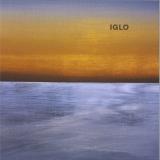
With Severance, IGLO returns to Figure with a focused yet exploratory EP that reflects his open-ended approach to contemporary techno. The release moves fluidly between restraint and expression, combining functional structures with subtle, unconventional elements that give the tracks a distinct sense of character. Rather than settling into a fixed formula, Severance highlights IGLO's curiosity and willingness to push his sound forward while remaining grounded in precision and control.
Connection opens the release with a restrained, heads-down groove. A firm low-end foundation and sparse percussion lock into a steady momentum, while understated melodic elements add depth without breaking the track's linear drive.
On Kauriraris, the energy tightens. Nervous synth motifs and crisp rhythmic details create a sense of urgency, pushing the track forward through constant micro-variation. It's a lean and effective tool built for sustained pressure.
Flipping the record, Blink Twice moves into darker, denser territory. Murky textures and a weighty groove unfold gradually, building tension through repetition and space. The track thrives on its slow burn, making it well-suited for late-night transitions.
Alive introduces a more open and flowing feel. Warmer tonal elements and a subtle swing soften the edges, while the groove remains firmly anchored and forward-moving.
Digital-only track Forlornly closes the EP with a spacious and introspective mood. Reduced rhythms and airy melodic layers create a calm, drifting atmosphere that rounds off the release with control and restraint.
With Severance, IGLO delivers a tightly structured EP that emphasizes clarity, tension and functionality - a confident addition to the Figure catalogue.
Tape
International Chrome continues its Data Planet cassette series with a cinematic long-player by The Thousand Order, a collective comprising Detroit's Francois Dillinger with British producers Cyphon and Obzerv.
A darker offering than standard International Chrome releases, The Thousand Order follows classic sci-fi themes of assimilation and networked hive minds across ten tracks of upfront electro.
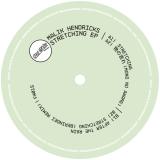
- A1: Stretching
- A2: 物の哀れ (Mono No Aware)
- B1: After The Rain
- B2: Stretching (Beringei Remix)
Making his first appearance on Flat White Records, NYC’s Malik Hendricks arrives with Stretching, a four-track EP that leans comfortably into the grey space between Deep House and Techno. Across three original cuts, Hendricks delivers warm, hypnotic, and quietly confident sounds that are unmistakably his own.
Rounding out the release is a remix from London-based, Spain-born producer Beringei. Known for his broken-beat excursions, Beringei with a 4x4 workout that still carries his unmistakable percussive touch, proving that even when stepping outside his usual lane, his identity remains firmly intact.
With previous releases on respected imprints like Eglo, Darker Than Wax, and Phuture Shock Muzik, Hendricks arrives in trusted company, thus making it an easy call to hand him the reins for our 15th release.
Born in the ’80s and raised in the ’90s, Malik Hendricks is a product of transatlantic club culture, drawing inspiration from Detroit’s futurism, New York’s grit, and the UK’s rhythmic experimentation. A DJ for over a decade, he approaches music with an almost academic curiosity, seeing the dancefloor as a shared space for cultural exchange.
Recently, his work has caught the attention of heavyweights like Eli Escobar, Byron the Aquarius, James Bangura, and Roy Vision, all stepping in to remix his material. With Stretching, Hendricks continues to prove that subtlety, craft, and groove still go a very long way.
Early DJ Support from: Shy One, LDLDN, Louise Chen, Dam Swindle, LTJ Bukem, Christophe Salin, Franck Roger, Jazzanova, Mr Redley, Last Nubian, Glenn Davis, Seven Davis Jr, Stonie Blue, Stu Clark (WOLF), Adriatique, Marco Weibel, Mr Ties, Tereza, Cottam, Joyce Muniz + MORE
- A1: Hosanna (Meridian)
- A2: First Born (Redeemed)
- A3: When Angels Speak Of Love
- A4: Doubleupptown (Larocque)
- A5: W-I-S (Above Every Other)
- A6: Pistol Poem (Leadbelly)
- A7: Whip Appeal (Pipn8Ez)
- A8: Seven Trumpets
- A9: Giz'aard ($Uckets)
- A10: Helpmeet (Iyadunni)
- B1: Flir2A
- B2: U&Me (Decemberseventeen)
- B3: Illbethere, 4Everandever
- B4: Alàáfía (Cita's World)
ALTERNATE COVER[27,52 €]
Honour's debut album is a ligament stretching from Lagos to London and to New York, curling across the diaspora and brushing the darker hues of blues, hip-hop, free jazz, ambient, gospel with Christian mythology and Yoruba folklore. As cinematic as it is painterly, Alàáfíà is a meditation on themes of life, death and love that pulls inspiration from the unexpected poetic profundity of casual conversations, field recordings, literature, ephemera, or personal archives. The result is an impressionistic vision in Black and Blur that both exhausts and implicates language_substantiating a mythos proposed by Fred Moten that sublimates boundaries between everywhere and nowhere; history and the present; the individual and the universal. Alàáfíà delineates a gothic landscape cut by overdriven beats, swooping orchestral blasts, choral bursts and ear- splitting fuzz, where the fleshly and spiritual realms commune. Dedicated to Honour's late grandmother, the title track began to take form after their last embrace and remains steeped in her influence and spirit_a tape-saturated composition that starts in Lagos and ends in London's smoke-stained cityscape, the song's dream-like quality developed out of the artist's grief and PTSD coping with this loss. Beneath the stretched guitar drones and stuttering loops, their grandmother's shared faith bubbles to the surface. "When Angels Speak of Love," borrows its title from two works by Sun Ra and bell hooks, respectively. Sculpting echoes of praise music into disorienting spirals perforated with syrupy DJ Screw-inspired breaks and sharp splinters of melancholic guitar, "When Angels Speak of Love" engages a conceptual dialogue with the spirits of both late thinkers, folding them into Honour's pantheon of ancestral guides. The album's ninth track, "Giz Aard ($uckets)," is a dirge of regimented drums which anchor this somber melody as it whirls into a blizzard of heartache, uncertain if its consequence will be death or eternal joy. The album's sole lyrical offering, "Pistol Poem (Lead Belly)," begins with a darkly humorous bar, "He went thru hell and back/ came back/ 2 get the strap," that swells into a haunting allegory based on the life of Philip "Hot Sauce" Champion. A modern take on the Blues, Honour's lyrics reify the artist's status as a student of both literature and popular culture, crossbreeding the artist's clever wordplay with additional references to Richard Pryor, Robert Johnson, Kelly Rowland & Bryon Gysin. Setting core principles of hip-hop, R&B, jazz and gospel music to atemporal soundscapes and compositions, Honour crafts a record that marinates in its own knotty contradictions. The ghosts that sit on the artist's shoulders have never been more tangible than with this emotive debut.
2025 Repress
Yes! Tommy Guerrero’s much-loved 4th LP – the smooth West Coast classic From The Soil To The Soul - gets its first ever vinyl release. As the follow up to his revered Soul Food Taqueria, this album was originally released by Quannum Records 2006 but only on CD. Working with Tommy directly, the LP has been fully remastered, cut on to heavyweight wax, and comes with artwork freshly reworked by the man himself.
From The Soil To The Soul represents a continuation of Tommy’s blissful guitar-soul whilst demonstrating increasingly complex chops and a slightly darker side to his distinctive sound. His spare, effortless funk is blended here with elements of Americana, heavy psych, lo-fi fuzz and intoxicating Latin rhythms. Combined with his typically breezy, laid-back San Franciscan style, it’s a vibe from start to finish.
Recorded primarily in his home studio, Tommy wrote, arranged and played nearly all the instruments, including bass, guitar, keyboards, percussion and kalimba. Renowned street artist Barry McGee, aka Twist, designed the cover art which Tommy has now recast in a deep, deep red for the vinyl version.
As ever with Tommy, the highlights are many and memorable. From twinkling, sun-drenched opener “Hello Again” to the penultimate, punk-rocking track “Let Me In Let Me Out” (featuring the melodic yet fearsome rapping of Lyrics Born), the variety across the LP is relentless, but satisfying, and without once losing focus.
We’re treated to the gorgeous hip-hop blues of “The Under Dog”, Meters-style Hammond B-3 jams like “War No More” and “No Guns More Glory” and Balearic bangers like Bing Ji Ling’s star-turn on the sleazy “Don’t Fake It.”
Curumin’s soulful guest vocal elevates the already-great Brazilian lounge feels of “Salve” to hitherto unscaled heights and the heavy, driving basslines - funky and warm on “Badder Than Bullets”, sombre and intense in “Tomorrow’s Goodbye” and “Molotov Telegram” – never fail to move both body and soul.
But our favourite track is the beautiful breezy pop of “Just Ain’t Me”. A bittersweet, skipping ballad which boasts an incredibly rare instance of Tommy singing. “What you want from me, I can never give” he repeats throughout, lending the already-melancholic atmosphere greater poignancy. It would’ve been number 1 across the planet in a parallel universe.
A heavyweight lineup of dub techno talent comes together for a deep and textured journey. Krystian Shek and Milly James join forces on Promise, delivering two original productions alongside with reworks from Yagya and grad_u. As a bonus, this collection expands even further with digital-exclusive remixes from Raytek and Noosa Sound System that come with the original purchase.
'Glow & Shine' locks into a hypnotic groove from the outset, its analog warmth and weighty percussion forming a solid foundation. A crisp snare and hi-hat pattern provide an irresistible swing, while chords and vocals land together in perfect sync, draped in a rich layer of delay. Spacey breakdowns allow the ride cymbal to subtly emerge, giving the track an evolving energy. The closing moments strip things back, with the chords guiding everything to a natural finish. 'Better That Way' shifts into a more melodic space, balancing intricate drum programming with an emotive vocal delivery. The initial rhythmic stutter adds a unique touch before settling into a flowing beat. As layers build, the chords and voice intertwine seamlessly, evoking a deep, contemplative feel. The breakdown smooths everything out, allowing the track to breathe before a striking bassline shift in the final section brings fresh momentum. The last ambient passage is particularly stunning, offering a moment of reflection.
The legendary Icelandic producer Yagya creates his interpretation of 'Glow & Shine' sees it drifting into dreamlike territory, wrapping the original's elements in a lush, aquatic atmosphere. More of a song than a club tool, it glides effortlessly, capturing a serene, almost weightless mood. On the flip side, grad_u reshapes 'Better That Way' into a crisp, rolling dub excursion. Airy chords swirl above a commanding groove, with well-placed melodic flourishes adding an elegant touch. The arrangement continuously morphs, deepening its hypnotic pull.
Raytek's remix of 'Glow & Shine' injects a sharper rhythmic intensity, pushing the track into darker, more driving territory. The vocal treatment becomes a focal point, cleverly reshaped to make the singing the true hook. Meanwhile, Noosa Sound System takes 'Better That Way' into stripped-down, immersive terrain. The off-kilter drum work and layered percussion create a mesmerizing flow, while the winding structure makes it a DJ-friendly tool.
This well-rounded collection that explores multiple shades of dub techno, this release has both dancefloor energy and introspective depth. With a strong roster of contributors, it delivers a blend of classic textures and fresh perspectives.
- A1: To The Hilt Of Humanity
- A2: Cloisters
- A3: Panicle Of Lowliness (Hawley Bog Hymn)
- B1: Unforgeable Key
- B2: Eastern Woodland Reverie
- B3: Moss Stone
- C1: Clairvoyance Anxiety
- C2: The Dimunitive Principle
- C3: Aphelion
- D1: Annulment
- D2: Hall Of Mages
To give you an idea of what the New Jersey, USA band Cowardice sound like, “Atavist” exists somewhere on the spectrum between the sombre strains of Bell Witch and the tormented tones of Body Void, with the first half of the album (“Suzerain”) erring more towards the bleakly melodic style of the former, while part two (“Sentinel”) shifts the focus towards a darker, dirgier approach; somewhere on the edges between melancholic doom and experimental sludge metal. Perhaps inevitably, it’s not quite that cut and dry - the gut-churning grind of “Unforgeable Key” for example, is just as nasty and gnarly as anything found on “Sentinel”, while the desolate disharmonies of “The Diminutive Principle” channel a similarly angst-ridden aura as much of “Suzerain” - but this distinction between the two halves, subtle as it may be, plays a big role in giving the whole album its sense of direction and progression.
And while it is always recommended to listen to the totality of “Atavist” so as to get the most out of it - especially if you’re a fan of the likes of Cavernlight and/or Chained To The Bottom Of The Ocean, both of whom also serve as useful touchstones for any prospective listener - also pay extra attention to the gorgeously gloomy slow-burn of opener “To The Hilt Of Humanity”, the haunting melodies and heaving grooves of the sludge-soaked “Clairvoyance Anxiety” and the morbid majesty of “Hall Of Mages”, as some of the record’s major highlights. Indeed, it’s this last track which will both test your resolve and prove, once and for all, that “Atavist” is more than worth every second you’ve invested into listening to it so far, with every crushing, cathartic chord and ringing, harmonic note… every tortured, suffering snarl and trembling, melancholy melody… coming together over the course of seventeen absolutely massive minutes to demonstrate that, despite its imposing size and intense sound, “Atavist” is nothing to be afraid of. Green and red coloured double vinyl edition.
After Denzel’s debut EP ‘Techniques 4 Life’ last year, the quest for finding those approaches continues. The Helsinki night owl draws from a range of influences here on his sophmore EP ‘Glorified Intake’, taking things into a murkier territory than his previous, made during a transitional period of his life between two cities, H & B.
The first track HKI 13 is an ode to roots. The track is held together by a swerving astral arpeggio combined with chants from a village dance off and stabs that liken to that one Balearic house anthem… The Sun is well on its way below.
Nightrun reduces things to a darker core, howling into the night, embodying a state rather than telling a story. Time goes by, how is it already tomorrow? An after hours tune with a bassline for a hook. Doesn’t get much sleazier than that. Getting down, getting low.
On the flipside, we’ve made it to the beginning of the end, phased out the doubts and gathered up the strength to go on — things are looking brighter. A voice inside your head — trust only yourself.
Finally on the last stretch, light has subsided and darkness has landed once again. We’ve thrown out any notion of what, where and who. Those things don’t matter anymore: we’ve perfected “the state”. It’s go time.
Amputechture Beneath the technical flash, the fury, the fearless creative brinkmanship of the first two Mars Volta albums lay a potent seam of the blues, an existential vexation that powered every twist and turn of Omar and Cedric’s imaginations. That mournful vibe would come to the surface of the group’s third full-length Amputechture, a simmering/blistering set that was unquestionably the group’s darkest yet. There was no overarching theme here, no interlinking concept binding the songs together, though Cedric concedes that, lyrically, the album was influenced “by a lot of stuff I was going through, a really bad break-up and a lot of other crazy stuff, and trying to put that feeling into the record.” But Amputechture – its name another of the late Jeremy Michael Ward’s invented words – was no downbeat bummer. Opener Vicarious Atonement might’ve been a deliciously gloomy, slow-burning thing, capturing Cedric in delirious duet with Omar’s swooning guitar lines, accompanied by squalling saxophone by Adrian Terrazas-Gonzales and dream-frequency fuckery by the group’s new sonic manipulator, former At The Drive- In member Paul Hinojos. But second track Tetragrammaton swiftly set pulses racing, an epic-in-miniature and containing more ideas within its 16 minutes than most bands manage over an entire career, its proggy, complex guitar figures tessellating in infinite configurations and converging as if conforming to mathematical formulae from another reality. The raw material Amputechture was hewn from started life on the road. Omar now travelled with his own mobile recording studio – a little Neve ten-channel tape recorder and an array of microphones – and was able to work on new ideas on tourbuses, in hotel rooms and during soundcheck (and, occasionally, after the show was done). After touring for Frances The Mute was complete, Omar relocated to Amsterdam, staying with his photographer friend Danielle Van Ark and her partner, Nils Post. It’s here that he demoed Amputechture, flying in engineer Jon DeBaun, drummer Jon Theodore and his brother, Chino, to work on these raw sketches. He later returned to Los Angeles, where the album was finally recorded. Omar ceded guitar duties to his dear friend and kindred spirit John Frusciante, instead assuming the role of musical director. “I wanted to hear the sound of the band,” he says. “I thought, I’ll be able to sit at the console, feel the air of the speakers moving, the unified sound of everything, and not feel distant from it. It was fun, but it was also challenging.” Part of Omar’s new method was to teach the musicians their parts only moments before the tapes rolled. “To keep things fresh, and to keep everyone on edge,” he says, before chuckling. “No, not on edge – on their toes. Amputechture would prove The Mars Volta’s most diverse set yet, drawing into the group’s tornado of influences moments of fiery jazz spirituality and esoteric folk introspection, finding space for passages of devastating subtlety and also their most fierce and full-on moments to date. The aforementioned Vicarious Atonement found its meditative mood echoed by Asilos Magdalena, an intimate, acoustic piece that invoked traditional Latin folk music, as Cedric sang in Spanish a sorrowful tale of a lost soul’s quest for sanctuary within a Magdalen Asylum, a refuge set up by the Catholic church for “fallen women”. The shadowy, sinister closer El Ciervo Vulnerado, meanwhile, tapped into the darker side of spiritual jazz to further explore the album’s themes of redemption and religious myth and magick. Elsewhere, the interplay between guitar and clarinet on Viscera Eyes created complex, unsettling counter-melodies, while the coiling, ornate Meccamputechture – Cedric’s wild fusion of sacred texts, occultism and dystopian science fiction – proved a great showcase for Ikey Owens’ swarming, infernal organ runs, in concert with Frusciante’s arcane guitar-play. But it was Day Of The Baphomets that would prove Amputechture’s most ambitious and most defining epic. Cedric’s lyrics tore into the hypocrisy of religious cant and myths of sin and punishment. “I wanted to make a song that was like the movie The Believers, where this cabal stole kids and did some occult shit with them,” he explains. “But I wanted it to be like, ‘What if the people you hire to do jobs you don’t wanna do rise up one day and then pull some shit like that?’ Like it was the guerrilla warfare, them taking over – wouldn’t that be some fucked up shit? And the music just lent itself to that – the big intro, the bass solo, and all of the ruckus that occurs.” That ruckus was some of the most thrilling Mars Volta music yet, as Omar directed his musicians to rumble through fiery modes of wild tribal groove, ransack-the-palaces riot- rock and supreme progressive experimentalism. Amputechture, then, is the sound of The Mars Volta in imperial mode: fearless, insatiable, unstoppable.
- A1: Hosanna (Meridian)
- A2: First Born (Redeemed)
- A3: When Angels Speak Of Love
- A4: Doubleupptown (Larocque)
- A5: W-I-S (Above Every Other)
- A6: Pistol Poem (Leadbelly)
- A7: Whip Appeal (Pipn8Ez)
- A8: Seven Trumpets
- A9: Giz'aard ($Uckets)
- A10: Helpmeet (Iyadunni)
- B1: Flir2A
- B2: U&Me (Decemberseventeen)
- B3: Illbethere, 4Everandever
- B4: Alàáfía (Cita's World)
Original Cover[27,52 €]
Honour's debut album is a ligament stretching from Lagos to London and to New York, curling across the diaspora and brushing the darker hues of blues, hip-hop, free jazz, ambient, gospel with Christian mythology and Yoruba folklore. As cinematic as it is painterly, Alàáfíà is a meditation on themes of life, death and love that pulls inspiration from the unexpected poetic profundity of casual conversations, field recordings, literature, ephemera, or personal archives. The result is an impressionistic vision in Black and Blur that both exhausts and implicates language_substantiating a mythos proposed by Fred Moten that sublimates boundaries between everywhere and nowhere; history and the present; the individual and the universal. Alàáfíà delineates a gothic landscape cut by overdriven beats, swooping orchestral blasts, choral bursts and ear- splitting fuzz, where the fleshly and spiritual realms commune. Dedicated to Honour's late grandmother, the title track began to take form after their last embrace and remains steeped in her influence and spirit_a tape-saturated composition that starts in Lagos and ends in London's smoke-stained cityscape, the song's dream-like quality developed out of the artist's grief and PTSD coping with this loss. Beneath the stretched guitar drones and stuttering loops, their grandmother's shared faith bubbles to the surface. "When Angels Speak of Love," borrows its title from two works by Sun Ra and bell hooks, respectively. Sculpting echoes of praise music into disorienting spirals perforated with syrupy DJ Screw-inspired breaks and sharp splinters of melancholic guitar, "When Angels Speak of Love" engages a conceptual dialogue with the spirits of both late thinkers, folding them into Honour's pantheon of ancestral guides. The album's ninth track, "Giz Aard ($uckets)," is a dirge of regimented drums which anchor this somber melody as it whirls into a blizzard of heartache, uncertain if its consequence will be death or eternal joy. The album's sole lyrical offering, "Pistol Poem (Lead Belly)," begins with a darkly humorous bar, "He went thru hell and back/ came back/ 2 get the strap," that swells into a haunting allegory based on the life of Philip "Hot Sauce" Champion. A modern take on the Blues, Honour's lyrics reify the artist's status as a student of both literature and popular culture, crossbreeding the artist's clever wordplay with additional references to Richard Pryor, Robert Johnson, Kelly Rowland & Bryon Gysin. Setting core principles of hip-hop, R&B, jazz and gospel music to atemporal soundscapes and compositions, Honour crafts a record that marinates in its own knotty contradictions. The ghosts that sit on the artist's shoulders have never been more tangible than with this emotive debut.
Cardinal Fuzz and Feeding Tube Records are proud to present to you the 2nd LP from TOMOYUKI TRIO (Tomoyuki Aoki, Mike Vest & Dave Sneddon) following their debut LP ‘Mars’ on the esteemed Riot Season Record Label. Tomoyuki Aoki is the founding member and lead guitarist of the legendary Tokyo Psych Monsters UP-TIGHT. Of all the Japanese psych-rock groups that emerged in the late nineties and early noughties, Up-Tight are the most reverent, the most directly plugged into the source, from their name (Velvet Underground) with knowing referential song titles like “Sweet Sister” to their extended heavy, dark black clad acid fried one chord psych melters -- we're talking bands like Fushitsusha, White Heaven, Kousokuya, Shizuka, and the grandaddies of 'em all, the deservedly-legendary, Les Rallizes Denudes. Shitsuren If anything has got an even heavier, dronier edge than what we heard on the last one. Super fuzzed guitars, sad ballads, grinding distorto epics and numbed, narcotic rhythms. This is one to play at maximum volume so that you can soak up its molten magik as over 2 sides of Shitsuren’s grueling guitar hypnotics you uncover the darker side of the ensembles personality to find them digging deep to drag the audience with them into the shadows of stoner psyche. If you can picture Okhami No Jikan, Asahito Nanjo. Musica Transonic & Toho Sara then you’re close to the outrageous levels of psychedelic excess captured here, a riotous concoction of ferociously brooding, locked down heavy bearing intensity of fierce/brutal speaker battering in the red levels.
180g, red marble vinyl. This album features Babe Ruth's iconic LIVE performance in Montreal on April 9th, 1975, featuring 4 out of the 5 original band members in their prime. With every track, the band's unparalleled musical craftsmanship takes center stage, showcasing their ability to blend rock, jazz, and Latin influences into a unique auditory experience. The collectible status of this record makes it a must-have for any aficionado of classic rock. So, immerse yourself in the cool, creative vibes of "Babe Ruth - Live in Montreal April 9th, 1975," and let the transcendent sounds of a bygone era enchant your modern soul.
180g, red vinyl. This album features Babe Ruth's iconic LIVE performance in Montreal on April 9th, 1975, featuring 4 out of the 5 original band members in their prime. With every track, the band's unparalleled musical craftsmanship takes center stage, showcasing their ability to blend rock, jazz, and Latin influences into a unique auditory experience. The collectible status of this record makes it a must-have for any aficionado of classic rock. So, immerse yourself in the cool, creative vibes of "Babe Ruth - Live in Montreal April 9th, 1975," and let the transcendent sounds of a bygone era enchant your modern soul.
2x12"[41,39 €]
“The place where I’m taking my inspiration from is a place of pure harmony and light. I’m just like everyone else – I’m very anxious, I have my issues and demons, but there is a place inside me which is much more in peace and harmony, so I took inspiration from this part of myself, rather than the dark part.”
As the world we live in grows darker and more bewildering with every passing day, the transformative power of music has never been more vital. Formed in the small French town of Bagnols-sur-Cèze at the dawn of the century, underground icons Alcest have always been clear about their desire to transport listeners to somewhere different, somewhere better. Led by founder and multi-instrumentalist Neige, the French artists have been one of the most consistently radical voices in all of heavy music, with a sound that eschews metal’s often myopic devotion to casting shadows, in favour of a sublime blend of darkness and blinding bright light.
The release of Alcest’s debut album Souvenirs d’un Autre Monde in 2007 blazed a unique trail through the underground metal world, eliciting high praise and feverish condemnation in equal amounts. Ostensibly a black metal project, Neige’s crew gifted an entirely new perspective to the black metal scene: wherein beauty, fragility, melody and positive vibrations co-exist with the fast, furious aesthetic of true extreme metal. Almost instantaneously influential, Alcest were able to steadily establish themselves as a unique force, both with a series of acclaimed albums and a sturdy reputation as a transcendent live act.
From the enlightened primitivism of 2010’s Écailles de Lune, and the definitive, holistic squall of Les Voyages De L’Âme (2012), to the magical, post-rock splendour of Shelter (2014) and the dark, dynamic Kodama (2016), Neige’s vision has been presented in the most vibrant and revelatory colours. Meanwhile, the legions of like-minded “blackgaze” bands that have followed in Alcest’s wake speak volumes about the Frenchmen’s profound and enduring influence.
Released in October 2019, Alcest’s sixth studio album marked another grand milestone in their story. Their first record for Nuclear Blast Records, Spiritual Instinct deftly sustained the conceptual and musical preoccupations of past achievements, while taking Neige and long-time drummer Winterhalter into new sonic realms, both grittier and more nuanced than ever before. Inevitably, plans to tour their new music were eventually scuppered by the global pandemic that broke out early in 2020. But Alcest’s creative journey continued regardless, and the results can be heard on the band’s latest album, Les Chants de L’Aurore.
Having redirected his artistic energies, Neige began work on the follow-up to Spiritual Instinct, newly inspired by the experiential essence that first led him to his band’s ground-breaking musical life. As with Souvenirs d’un Autre Mode, Les Chants de L’Aurore draws inspiration from the spiritual childhood experiences that have shaped Neige, both as a musician and a human being. A liberated nosedive into the very notion of consciousness and the layered mists of reality, the seventh Alcest album amounts to a euphoric homecoming.
picture LP[31,51 €]
“The place where I’m taking my inspiration from is a place of pure harmony and light. I’m just like everyone else – I’m very anxious, I have my issues and demons, but there is a place inside me which is much more in peace and harmony, so I took inspiration from this part of myself, rather than the dark part.”
As the world we live in grows darker and more bewildering with every passing day, the transformative power of music has never been more vital. Formed in the small French town of Bagnols-sur-Cèze at the dawn of the century, underground icons Alcest have always been clear about their desire to transport listeners to somewhere different, somewhere better. Led by founder and multi-instrumentalist Neige, the French artists have been one of the most consistently radical voices in all of heavy music, with a sound that eschews metal’s often myopic devotion to casting shadows, in favour of a sublime blend of darkness and blinding bright light.
The release of Alcest’s debut album Souvenirs d’un Autre Monde in 2007 blazed a unique trail through the underground metal world, eliciting high praise and feverish condemnation in equal amounts. Ostensibly a black metal project, Neige’s crew gifted an entirely new perspective to the black metal scene: wherein beauty, fragility, melody and positive vibrations co-exist with the fast, furious aesthetic of true extreme metal. Almost instantaneously influential, Alcest were able to steadily establish themselves as a unique force, both with a series of acclaimed albums and a sturdy reputation as a transcendent live act.
From the enlightened primitivism of 2010’s Écailles de Lune, and the definitive, holistic squall of Les Voyages De L’Âme (2012), to the magical, post-rock splendour of Shelter (2014) and the dark, dynamic Kodama (2016), Neige’s vision has been presented in the most vibrant and revelatory colours. Meanwhile, the legions of like-minded “blackgaze” bands that have followed in Alcest’s wake speak volumes about the Frenchmen’s profound and enduring influence.
Released in October 2019, Alcest’s sixth studio album marked another grand milestone in their story. Their first record for Nuclear Blast Records, Spiritual Instinct deftly sustained the conceptual and musical preoccupations of past achievements, while taking Neige and long-time drummer Winterhalter into new sonic realms, both grittier and more nuanced than ever before. Inevitably, plans to tour their new music were eventually scuppered by the global pandemic that broke out early in 2020. But Alcest’s creative journey continued regardless, and the results can be heard on the band’s latest album, Les Chants de L’Aurore.
Having redirected his artistic energies, Neige began work on the follow-up to Spiritual Instinct, newly inspired by the experiential essence that first led him to his band’s ground-breaking musical life. As with Souvenirs d’un Autre Mode, Les Chants de L’Aurore draws inspiration from the spiritual childhood experiences that have shaped Neige, both as a musician and a human being. A liberated nosedive into the very notion of consciousness and the layered mists of reality, the seventh Alcest album amounts to a euphoric homecoming.
This Album serves as a 2023 wrap up, focusing primarily on two releases: Energy Exchange Records Vol. I and 30/70 ART MAKE LOVE. In the spirit of the Energy Exchange family, we have shared the duties of remixing/re-imaging some of our most in demand cuts from the year utilizing our in-house production team and extended family 30/70 collective. Keep it locked, we are just warming up!
Support from : Severino (Horse Meat DIsco), Stu (Wolf Recordings), Mali (Rhythm Section), Quinton (Strut Records), Mr Redley, Jonny Alexander, Aly Bandcamp, Gilles Secretsundaze, Lucas Benjamin, Dean Chew (Darker Than Wax), Aroop Roy, Alex Attias, Louis Mixmag, Marcel Vogel, cosmosofi, Delfonic
"Humble Pie was formed by ex- band member of the Small Faces' Steve Marriott, former Spooky Tooth's Greg Ridley, Peter Frampton, and Jerry Shirley. The supergroup recorded eleven studio albums in total, including the 1970 self-titled album. They recorded it with producer Glyn Johns, who worked with many of the most famous rock artists including the Rolling Stones, the Beatles, Led Zeppelin, the Who and many more. The material was darker than their previous two albums and includes Peter Frampton's gentle ""Earth and Water Song"", a cover of ""I'm Ready"" originally by Willie Dixon, and ""One Eyed Trouser-Snake Rumba"". The front cover features artwork by English illustrator-author Aubrey Beardsley, who is known for his Japanese woodblock influenced grotesque and erotic illustrations. Humble Pie is available in its original gatefold sleeve. "
Humble Pie by Humble Pie, released 29 March 2024, includes the following tracks: "One Eyed Trouser-Snake Rumba", "I'm Ready", "Red Light Mamma, Red Hot!" and more.
This version of Humble Pie comes as a 1xLP in a(n) Gatefold Sleeve packaging.
Vocal Shades And Tones is a miraculous leftfield library classic from the genius mind of celebrated UK composer/singer/vocal arranger Barbara Moore. It's a heavenly groove-based blend of jazz, Latin, soft-psych, folk-funk and gospel soul. Recorded for the legendary Music De Wolfe in 1972, it's an audacious start-to-finish listen, as dizzying as it is dazzling. It's a perfect snapshot of a musical era, supported by Moore's glorious vocal arrangements. Widely regarded among collectors, DJs, and lounge/easy-listening acolytes as an absolute essential it is viewed as the holy grail by many production music heads, rarely appearing for sale and disappearing in a flash when it does. Indeed, originals now go for over £300 and it's easy to see why. Just one of the reasons why this fresh Be With reissue, part of a wider De Wolfe reissue campaign, is so utterly crucial.
Racing out the gate, the driving "Hot Heels" is a bright, sophisticated scat groove which sounds Brazilian, richly produced as if coming by the hand of Arthur Verocai. Yes, *that* good. It's followed by "It's Gospel" which is, er, a wonderfully slow and deeply soulful gospel treasure. The appropriately monikered "Steam Heat" is a darker, breathy gem, one for salacious crates and one of the record's most infamous tracks. "Fly Away" is pastoral West Coast soft rock, very much in conversation with John Cameron and Keith Mansfield's epochal KPM recording, Voices In Harmony. "His Name Was" is a stop-you-dead-in-your-tracks Beach Boys accapella church-organ stunner, whilst "Swing Over" is another carefree, richly produced sun-dappled smasher. The gentle Bossa and sunshine soul of the aptly-titled "Touch Of Warmth" closes out a virtually perfect A-Side.
The B-Side opens with the easy grace and dramatic build of "Voice Force Nine". The jaunty "Very Fine Fellow" may be the only track to slightly grate so we advise heading to the slower, moody "Shades-Tones", eminently more compelling with sparkling, hypnotic piano throughout, underpinning the gorgeous wordless vocals. Just beautiful. It was sampled by Redman for his Method Man-featuring "Do What Ya Feel" on the great Muddy Waters. We're back in Brazilian territory with the cool, uptempo "I'm Feather" before swooning to the warm, relaxed "Drifting", another total highlight which was famously sampled by Koushik on his legendary remix of Madvillain's "America's Most Blunted (Doom's Verse)". The penultimate track, "Take Off" is a bright, organ lounge groove before this remarkable set is rounded out by the beaty "Fly Paradise". It's so so good, it sounds like Rotary Connection fronted by The Mamas & the Papas. As noted in a recent Guardian article on Moore's life, "there is a plushness and electricity in the tight vocal harmonies that spring out, sung with the precision of cathedral choristers decades before Auto-Tune." Amen.
In the 1960s, Barbara Moore was a member of Top of the Pops’ resident vocal-harmony group, The Ladybirds and sang backing vocals for Dusty Springfield’s TV show. Her own outfit, the Barbara Moore Singers, were regulars on TOTP, singing with Jimi Hendrix when he performed "Hey Joe" live in Lime Grove Studios. An important detail for Moore was the shepherd’s pie she bought Hendrix when she found him alone, looking emaciated, near the BBC canteen. By 1970, she was working as a session singer for De Wolfe and, by 1972, was composing her own tracks for De Wolfe and working within their tight creative strictures. Each short track had to evoke an obvious mood and theme, with no significant key or tempo changes. Her response, this very album, managed to stay between the lines while cohering as an overarching artistic masterpiece.
The audio for Vocal Shades And Tones has been carefully remastered by Be With regular Simon Francis, ensuring this release sounds better than ever. Cicely Balston's expert skills have made sure nothing is lost in the cut whilst the records have been pressed to the highest possible standard at Record Industry in Holland. The original, iconic sleeve has been restored here at Be With HQ as the finishing touch to this long overdue re-issue.
Traversing the everyday in 2023, the need for ritual catharsis only grows stronger. The need to lose oneself in a force bigger than ourselves, and to venture into inner space the better to sculpt armour for the battles outside. Luckily this is the job of Bonnacons of Doom, aural soothsayers and progenitors of Trans Pennine hypnotic music. ‘Signs’ - their second album for Rocket Recordings - marks both a portent of things to come, and a roadmap of the psychic pathways to survival. This masked troupe, subsumed to mystery and amassed from across the North of England, have stepped up their mission accordingly. Building on the intimidating intensity of their self-titled 2018 debut, this series of fiercely charged mantras and premonitory transmissions is possessed of a new level of communal intensity. The band’s choice of weapons- the monomaniacal intensity of the riff, the liberating binary spirit of electronics and the incantatory vocals of ceremonial leader Kate Smith - here coalesce into a metaphysical force which stands defiant of easy categorisation. Within these otherworldly manifestations lurks solace in a place where the transcendent power of heavy amplification, cosmically aligned sonic explorations and strange forces darker and more unknowable can coalesce to cathartic and redeeming effect. ‘Signs’ marks out a supernatural landscape where ancient and modern, earthly and alien congregate in the eternal now, whilst Bonnacons Of Doom transcend era to light a path for the future
Bob Dylan was at several crossroads in the mid-1970s. Artistically, he was largely written off as being past his prime. Emotionally, he was suffering through a painful divorce from his then-wife Sara Lowndes. Creatively, he appeared at a stalemate, his previous decade's unprecedented run of transformational brilliance finished. Then came Blood on the Tracks.
A start-to-finish cycle that documents a lover's pursuit of, entanglement with, and loss of a woman, the bracingly intimate 1975 effort remains one of the most encompassing break-up albums ever made and ranks as the most personal statement of the Bard's career. To hear it is to experience the agony, frustration, trauma, highs, lows, confusion, sadness, and, ultimately, requisite redemption associated with intimate relationships gone astray. Dylan maintains it's a work of fiction, but it's evident close-vested autobiographical premise is what helps make it universal: It's the icon singing through tears, going out of his mind, battling hallowing emptiness, firing shots across the bow, and accepting culpability. It is, in short, a consummate expression of love's darker sides and the consequences of what happens when dreams unravel.
As part of its Bob Dylan catalogue restoration series, Mobile Fidelity is thoroughly humbled to have the privilege of mastering the iconic LP from the original master tapes and pressing it on dead-quiet LP at RTI. The end result is the very finest, most transparent analogue edition of Blood on the Tracks ever produced – and the first-ever proper analog reissue. Fantastically presenting both the solo acoustic and band-supported songs with the utmost clarity, dynamics, presence, immediacy, spaciousness, imaging, and balance, this version shines a high-powered light on the fluid vocal phrasing, timbral shifts, functional rhythms, and inward-looking strumming that contribute to every song here serving as a wound-exposing confessional.
For all the melancholic pain, unresolved questions, shattered memories, wasted times, unrequited dialogues, and weary regret within, Blood on the Tracks remains as daring as it is reflective. Rather than follow for a monotone caustic vibe, Dylan's songs burrow into the subconscious for the manners in which they are even-keeled, mellow, and occasionally, even peaceful. Dignity, honour, poignancy, and fairness – all traits uncommon in any situation in which partners dissolve histories, change hearts, and attribute blame – instil the record with equilibrium on par with the consistency of the flowing melodies.
Throughout, tunes come on and proceed as if they could continue forever, Dylan spinning poetic verses and conversations amidst finely tied knots of acoustic notes, chords, and fills, the deceivingly simple architecture conjuring the intertwined refractions of a bezeled jewel, various angles, colours, and textures conjoining into a gorgeously inseparable whole. Backed by Tony Brown's flexible albeit subtle bass, Buddy Cage's country-streaked pedal-steel guitar, and Paul Griffin's soul-baring organ – an instrument used to shadow, tuck-point, and illuminate here as effectively as any time in rock history – Dylan pours soulful emotion, open his veins, and bleeds.
Ranked 16 on Rolling Stone's list of the 500 Greatest Albums of All Time, and replete with existential thought, piercing directness, raw singing, and majestic arrangements,
Given the sonic and artistic merit of this album, we anticipate huge demand.
*The product of a move from South Carolina to Berkeley, CA and the subsequent extended separation from loved ones, Toro Y Moi's third full-length, Anything in Return, puts Chaz Bundick right in the middle of the producer/songwriter dichotomy that his first two albums established.
*There's a pervasive sense of peace with his tendency to dabble in both sides of the modern music-making spectrum, and he sounds comfortable engaging in intuitive pop production and putting forth the impression of unmediated id.
*The producer's hand is prominent- not least in the sampled "yeah"s and "uh"s that give the album a hip-hop-indebted confidence- and many of the songs feature the 4/4 beats and deftly employed effects usually associated with house music. Tracks like "High Living" and "Day One" show a considerably Californian influence, their languid funk redolent of a West Coast temperament, and elsewhere- not least on lead single, "So Many Details"- the record plays with darker atmospheres than we're used to hearing from Toro Y Moi. Sounding quite assured in what some may call this songwriter's return to producer-hood, Anything in Return is Bundick uninhibited by issues of genre, an album that feels like the artist's essence.
*Born and raised in Columbia, South Carolina, Chaz Bundick has been toying with various musical projects since early adolescence. Having spent his formative years playing in punk and indie rock acts, his protean Toro Y Moi project has been his vessel for further musical exploration since 2001. During his time spent studying graphic design at the University of South Carolina, Chaz became increasingly focused on his solo work, incorporating electronics and allowing a wider range of influences- French house, Brian Wilson's pop, 80s R&B, and Stones Throw hip-hop- to show up in his music. By the time he graduated in spring 2009, Chaz had refined his sound to something all his own. Music journals across the board touted his hazy recordings as the sound of the summer, and he released his debut album, Causers of This in early 2010.
*Since then, Bundick has proven himself to be not just a prolific musician, but a diverse one as well, letting each successive release broaden the scope of the Toro Y Moi oeuvre. The funky psych-pop of 2011's Underneath the Pine evinced an artist who could create similar atmospheres even without the aid of source material and drum machines. His Freaking Out EP, a handful of singles and remixes, and a retrospective box-set plot points all along the producer/songwriter spectrum in which he's worked since his debut, and Anything In Return is another exciting offering that shows he's still not ready to settle into any one genre.
- A1: A Day In The Bebop (Long)
- A3: A Hole To The Universe
- A4: What Planet Is This??
- A5: After Image
- A6: Ana’s High Class Damp 1-2
- B1: Ana’s Rouge
- B2: Two Detectives
- B3: Jet’s Investigative
- B5: Faye’s Sky Fall
- B6: Time
- B7: Teddy’s Ika Pod
- B9: Headphone
- B10: Ein
- C3: Respect For Sergio
- C7: Kimmie’s Birthday
- D1: Sad End Fad
- D2: Muddy Road
- D4: Sushi2
- D5: In The Noir
- D6: The End Of Friendship
- D8: Earthland Entrance
- D9: El Rey Bar
- D10: G Blues
• Sony Masterworks is happy to announce the vinyl release of the Netflix live-action series Cowboy Bebop which premiered in November 2021 and is available on Netflix.
• Yoko Kanno and the band SEATBELTS, the artists behind the music in the original anime series of Cowboy Bebop, have returned to bring their signature dynamic, jazzy sound to the Netflix live-action show. The resulting compositions are characters themselves - constant companions to the crew of the Bebop and brimming with just as much personality.
• Cowboy Bebop (Soundtrack from the Netflix Original Series) is a treat for Bebop fans in an additional way - it features over twenty new tracks only available on vinyl! This wide release is pressed on red marble vinyl discs in a gatefold jacket with printed inner sleeves.
• COWBOY BEBOP is an action-packed space Western about three bounty hunters, aka “cowboys,” all trying to outrun the past. As different as they are deadly, Spike Spiegel (John Cho), Jet Black (Mustafa Shakir), and Faye Valentine (Daniella Pineda) form a scrappy, snarky crew ready to hunt down the solar system’s most dangerous criminals — for the right price. But they can only kick and quip their way out of so many scuffles before their pasts finally catch up with them.
• Original anime series director Shinichirō Watanabe is a consultant on the series, and original composer Yoko Kanno returns for the live-action adaptation. The series also stars Alex Hassell and Elena Satine.
• Yoko Kanno is a Japanese composer, arranger and musician best known for her work on the soundtracks of anime films, television series, live-action films, video games, and advertisements. She has written scores for Cowboy Bebop and its live-action adaptation, Darker than Black, Macross Plus, Turn A Gundam, The Vision of Escaflowne, Ghost in the Shell: Stand Alone Complex, Wolf's Rain, Kids on the Slope, Genesis of Aquarion and Terror in Resonance, and has worked with the directors Hirokazu Kore-eda, Yoshiyuki Tomino, Shinichirō Watanabe and Shōji Kawamori. Kanno has also composed music for pop artists Maaya Sakamoto and Kyōko Koizumi. She is also a keyboardist and is the frontwoman for the SEATBELTS, who perform many of Kanno's compositions and soundtracks.
Death Is Not The End launch sub-label 333 with a first-time vinyl reissue for the late Devon Russell's Darker Than Blue LP - put together as a tribute to the great Curtis Mayfield. First issued in 1993 but featuring material originally recorded as far back as 1979, the collection includes a cast of prominent players across it's 10 tracks - featuring musical contributions from Sly Dunbar, Aston "Family Man" Barrett, Earl "Wire" Lindo, Dean Fraser, Bobby Ellis, Leroy "Horsemouth" Wallace, Prince Lincoln Thompson and many others - plus production & arrangment from Earl "Chinna" Smith, Sly Dunbar & King Tubby's Firehouse Crew alongside Russell himself. Limited to 333 copies.
"The concept for Darker Than Blue dates back to 1979. Returning from South Amerrica with my partner (in duo Lloyd & Devon) Lloyd Robinson, we did "Red Bum Ball" which had been a massive hit in the 60's. It was around this time that Earl Chinna Smith (of The Wailers and Soul Syndicate fame) approached me with the idea of re-making some Curtis Mayfield songs. "Darker Than Blue" was the first track we did, followed by "Move On Up" in 1981, both of which received great reviews.
On returning to Jamaica from a UK tour in 1986, my good friend King Tubby had taken on five men from my school of music, from which the Firehouse Crew were born. Within 3 years they had matured to become Jamaica's No.1 instrumental band, winning the Rockers award. Then in the spring of 1990, together we managed to record the album "Money, Sex & Violence", during a tour of the UK & France, on which we did Mayfield's "Give Me Your Love". The track was played to Steve Barrow who suggested we do more Curtis tracks.
Sly Dunbar and I have known each other for as long as I can remember. We grew up in the same hood and used to jam regularly in our youth. I told Sly about the further Mayfield tracks I wanted to do and he agreed that it would be a good idea. So Sly, myself and The Firehouse Crew went to work at the Leggo Studios in Kingston, Jamaica and created the remaining tracks for the Darker Than Blue LP, a tribute to Curtis Mayfield.
We grew up on the sounds of Curtis Mayfield and The Impressions. Everyone in Jamaica loved them. His death was a terrible thing, but while there is life, there is hope."
- Devon Russell, 1994.
333, under license from Prestige Elite Records Ltd.
- A1: The Perfect Crime
- A2: Smilers Strange Politely
- A3: Material Condition
- A4: Butchering The Punchline
- A5: Up To My Elbows
- B1: I'm In The Water
- B2: Tricks On Everything
- B3: Caveats
- B4: Figure Eights
- B5: The Bell
LTD Clear Vinyl[24,79 €]
RIYL: Guided by Voices, Pavement, The Clean, XTC, Flying Nun. The title of The Stroppies' newest LP, Levity, serves as a creative statement of intent and an acknowledgment of the dichotomy between the music they have made and the conditions in which they were produced. For a group that started over an initial idea to "create open ended music, quickly and haphazardly”, the logistical challenges of creating their second album in the midst of a pandemic, in a city that endured the longest lockdown in the world, created a need to redefine process. Levity, The Stroppies strongest creative statement to date, is the result of this new approach to creative process. Playful yet focused, but broader in scope and experimentation than previous efforts, the ten songs that comprise Levity continue the band's exploration of the pop song as both foil for experimentation and conduit for personal reflection. Whereas the group's debut LP Whoosh! demonstrated their ability to craft clean, concise jangle pop, Levity takes a different route by utilizing a darker pallet of sounds to create its impressionistic whole. Fuzz and distortion are employed to add weight to songs built on tape loops and Motorik drum patterns. Warbling synthesisers and modulated keys add new moods and dimensions to The Stroppies unique brand of pop classicism. Thematically, the band continues their exploration of the personal refracted through the lens of the absurd, though this time around the music feels a few shades darker, a somewhat inevitable consequence of the collective trauma of the past 24 months. While the narrative around the 'lockdown record' is increasingly commonplace, there are unavoidable realities involved in making creative decisions under such circumstances that can't be overlooked, especially for a band that thrives on collaboration. "The restrictions around COVID really informed the way we made the record', says Angus Lord, the band's co-founder and guitarist. "It meant that there was a lot less opportunity to meet and build ideas collaboratively, which is how we’ve worked in the past. Instead, ideas were developed in isolation, then shared digitally, developing slowly over correspondence and only bearing fruit when we were able to be in a room together. I think this had a big effect on the songwriting and execution.” This process even extended to the studio, where The Stroppies found a kindred spirit in John Lee of Phaedra Studios, who mixed the record in isolation, somehow managing to synthesise the band's pop sensibilities with their penchant for studio experimentation. Furthermore, the addition of new member Zoe Monk, known for playing in a diverse array of Melbourne acts (Eggy, Thibault, The Opals) contributed both synthesiser experimentation and rock solid rhythm guitar, a huge addition to the band's developing sound, an infectious combination of the off-kilter 90s US underground, British artpunk ala Wire and a more than generous love of classic Pop songwriting. The Stroppies have managed to craft a record of weight and substance. Through Levity the Stroppies have, at least temporarily, found their feet amongst the chaos
3x12"
Extraordinary musical talent returns with a deeply textured third outing on Blu Mar Ten Music.
Having made serious waves with the release of his debut album "Coeur Calme" in 2014 and the incredible 2016 follow up album "Zawadi", Kimyan Law steers his sound in a darker, more introspective direction with the twelve heavily themed set-pieces of his new album, "Yonda".
The album title, "Yonda", homophonically flits between a location in Kimyan Law's native Congo and definitions of something situated at a distance but still visible, foreshadowing the artist's move away from his typical uplifting palette into less playful territory.
While previous work seemed to be a personal exploration of joy-tinged melancholy, "Yonda", feels much more sober and pensive, infected with external events. In conversation with Kimyan Law the artist described one piece ("Krieg") as his "portrait of war", with the music moving through phases of violence, silence, panic, redemption and peace. Ever the allegorist, Kimyan Law relates themes of conflict and war not just to obvious geopolitics but also to his own physical struggles, and even an obsessive battle with the music itself, ("Yonda" has been more than three years in the making). In 2017 the artist wrote, "I've reached a point where I couldn't sleep because it bothered me so much... I have found myself unable to make any music except for Krieg".
An accomplished drummer in his own right, Kimyan Law's intricate rhythmic sensibility is the lifeblood that runs throughout the album, incorporating ever more outlandish sources of percussion recorded from his natural surroundings and filtered through technology.
"Yonda's opener, "Jaardin", is deceptively gentle, with off-kilter rhythms and pianos providing fertile ground for Elyn's delicate singing before the whole piece careens off into what can only be described as orchestral proto-jungle territory. It soon becomes apparent that this placid introduction is misleading, with subsequent tracks fluctuating between pounding tribal beats ("Arboreal Epitone" / "Kin"), chilling orchestration ("Byo" / "Krieg") and rehabilitated jungle forms ("Seven Ant Foley"). A constant mix of light and dark, futuristic yet primitive atmosphere hangs over the album, with waves of luscious synths and deeply musical string arrangements lovingly cloaked over the razor-sharp drum work.
Unusual conceptual themes litter "Yonda"; "Dor Rhythm" is about a Dung Beetle's journey, "Lampion" is about paper lanterns, "Nova" is about plant growth while "Kilele" is a song about peace, featuring Kimyan Law's own vocals in a new language he created himself, conjuring memories of Cocteau Twin's Liz Fraser.
While "Yonda" contains moments of incontestable beauty it can often be a difficult listen, an illustration of an anxious mind yearning for peace. An obsessive and intricate musician, Kimyan Law's use of African percussion, finely honed polyrhythmic patterns and celestial sprinklings of keys melded with slabs of sub-bass power and sheer energy makes for an intoxicating listen. As ever, Kimyan Law has delivered a profoundly serious piece of work that expands the vocabulary of his genre. Despite the darkness saturating the work, a soft light still breaks through the window. It is the east, and Kimyan Law is the sun.
Take cover: there’s a storm coming !
With its lyrical thunderbolts, lightning-flash fretwork and ground-shaking grooves, Black Wind Howlin’ is a record to blow your roof off – and Samantha Fish is stood at the eye of the hurricane. Released on September 20th through Ruf Records, Black Wind Howlin’ flips a finger at the cliché of the ‘difficult second album’, firing off 12 classic tracks that chart Samantha’s evolution as songwriter, gunslinger
and lyricist. While lesser artists work to a template or settle into a pigeonhole, Samantha shifts her shape across the Black Wind Howlin’ tracklisting. She can be brutally rocking on cuts like the tourbus snapshot of Miles To Go (“Twelve hours to Reno/ten hours til the next show”), the swaggering Sucker Born (“Vegas left me weary, LA bled me dry/skating on fumes as I crossed the Nevada line…”) and the
venomous Go To Hell (“Oh, this ain’t my first rodeo/You hit yourself a dead end/ Your voodoo eyes, ain’t gonna cast a spell/ So you can go to hell!”). And yet, elsewhere, backed by the versatile production of Royal Southern Brotherhood guitarist and longtime collaborator Mike Zito, you’ll find Samantha shifting gears to the aching slide- guitar balladry of Over You (“Echoing words, said I’d never make it on my own…”) and the redemptive country strum Last September (“Don’t
remember the curves of my face/Can’t feel the warmth in my embrace/Well I’m here to remind you…”). She might stop off for a gritty cover of Howlin’ Wolf’s.
Who’s Been Talkin’, and co- wrote Go To Hell with Zito, but all other tracks are Samantha’s self-penned originals, and it’s a mix to keep listeners on their toes. “I wanted this record to have a modern rocking sound,” she explains of the lightfooted vibe. “I also wanted it to have elements of Americana, country and roots.”
Therefore she had support from a first- call band that included Royal Southern Brotherhood rhythm section Yonrico Scott (drums) and Charlie Wooton (bass), back- up guitar and vocals from Zito, plus guest appearances from Johnny Sansone (harmonica), Bo Thomas (fiddle on Last September) and Paul Thorn (vocals on Go To Hell). So here it is. Harder, darker, bolder and better than even its revered predecessor (Runaway), this is the sound of an artist on the brink of the huge-time with both hands on the wheel.
Halloween has been and gone for another year, but darkwave-inflected hardcore punk never goes out of fashion, right? And frankly, who gives a solitary fuck if it does? Nag’s sinister second album is too busy being an ear-bleeding good time to care about shit like that. It’s too wrapped up asking questions like ‘is this real reality?’ - too caught up in pushing Bernard Sumner minimalism into furiously energetic bruisers and ever-darker corners. It’s the record you’ve been waiting for throughout 2021, whether you knew it or not. This RIPS. Formed in Atlanta, GA, Nag have already dropped an LP (last year’s ‘Dead Deer’, on Die Slaughterhaus) and a handful of 7”s - all must-haves - but they’ve never quite cut loose like this. Vocalist Brannon Greene pitches his delivery somewhere between a caustic holler and a dead-eyed sneer, taking the blank generation for a midnight drive and hurtling straight into a brick wall. Meanwhile, the band nab ideas from no-wave, the wilder ends of Goner Records’ almighty roster, and the best (and sometimes synthiest) aspects of gothed-out post-punk - the resulting concoction may be composed of familiar elements, but it feels like no one else other than Nag. A more hyperbolic and verbose hack than me might say this is the moment that signals the band have ‘arrived’, but not me. I’d just say this is a damn fine record - one of the very best things to have emerged from the wider punk rock mess in the last 12 months. Oh, and I’d add that if you don’t buy it, you may as well sever those things called ears, toss ‘em into the woods and let any of their redeeming qualities seep out into the soil, ‘cause that’s the only way you could continue to argue that they’re serving any useful purpose. But you know, that’s just me. You do you, friend. Actually, scratch that. Buy this record, you idiot.
There’s an ancient Japanese legend in which a horde of demons, ghosts and other terrifying ghouls descend upon the sleeping villages once a year. Known as Hyakki Yagyō, or the Night Parade of One Hundred Demons, one version of the tale states that anyone who witnesses this otherworldly procession will die instantly—or be carried off by the creatures of the night. As a result, the villagers hide in their homes, lest they become victims of these supernatural invaders.
Such is the inspiration for the latest album from EARTHLESS. “My son is really into mythical creatures and old folk stories about monsters and ghosts,” bassist Mike Eginton explains. “We came across the ‘Night Parade of One Hundred Demons’ in a book of traditional Japanese ghost stories. I like the idea of people hiding and being able to hear the madness but not see it. It’s the fear of the unknown.”
Whereas 2018’s Black Heaven featured shorter songs and vocals from guitarist Isaiah Mitchell on much of the album—an unprecedented move for the San Diego power trio—their latest is a return to the epic instrumentals EARTHLESS made their unmistakable name on. Night Parade Of One Hundred Demons is comprised of two monster songs—the 41-minute, two-part title track and the 20-minute “Death To The Red Sun.”
The scenario that allowed for this kind of exploration was a stark contrast to that of Black Heaven. At that point, Mitchell was living in the Bay Area, which made it difficult for the band to get together and work on the type of long instrumental pieces they’re known for. But in March 2020, the guitarist moved back to San Diego. More specifically, he moved back the night the pandemic lockdown kicked in. Bad timing, perhaps—or maybe perfect timing.
Plus, they were all on the same page about not wanting to do another record with vocals. “In a way, I think this album was a reaction to our last record,” Eginton says. “Black Heaven was outside our comfort zone. I think it was a good record, but it was challenging to write songs in a more traditional verse-chorus-verse format. This one was more enjoyable. I’m sure we’ll do more vocal tracks in the future, but for the time being I see that album as a one-off.”
Given the record’s inspiration, it should come as no surprise that Night Parade of One Hundred Demons strikes a more sinister tone than the rest of the band’s catalogue. “It definitely has a darker, almost evil kind of vibe compared to stuff we’ve done in the past,” Rubalcaba says. “There’s more paranoia and noise, and some of Isaiah’s whammy-bar stuff kind of reminds me of these Jeff Hanneman moments in Reign In Blood, where it just seems like everything is going to hell. It’s pretty fun.”
Night Parade of One Hundred Demons was recorded in San Diego with Rubalcaba’s childhood friend Ben Moore, who’s worked with everyone from DIAMANDA GALAS and BURT BACHARACH to CEREMONY and HOT SNAKES. When Eginton wasn’t tracking his bass parts, he worked on the album’s incredible sleeve art. “He really dedicated himself to the project,” Rubalcaba says. “He’d be drawing in the studio with, like, a coal-miner’s lamp on his head while we were doing overdubs. He really knocked it out of the park.”
All told, Night Parade of One Hundred Demons isn’t just a return to the band’s traditional format—it’s a return to their very beginnings. “This album actually has the very first Earthless riff in it,” Eginton reveals. “We just recorded it 20 years after we wrote it. But we’re really happy with how this record came out. We feel it might be our finest to date.”
‘The record is inspired by the idea of humanity’s ever-increasing entanglement with technology and artificial intelligence, balancing fears and moral concerns with the possibilities of evolution’s next phase’
A new Soccer96 album is a chance for Danalogue (Dan Leavers) and Betamax (Maxwell Hallett) to return to something of a spiritual creative home. Between them, the keyboardist and drummer have become synonymous with the thriving London jazz scene and, in their mind-bending incarnation as the astral synths-and-drums pairing, they’ve traversed stylistic worlds. Over nearly a decade, the duo have metamorphosed from a DIY outfit whose rough-edged recordings hit with a punk spirit, to cosmic dreamers that use sound to travel the reaches of the mind.
First single Dopamine features Nuha Ruby Ra on vocals who sings from the perspective of human and machine throughout the track. This concept overlaps with the music seamlessly, forming a meeting point between technological and human exploration.
Dialogues between the band and Nuha crystallised a shared vision of a future where humans and artificial intelligence are entangled in a codependent relationship based on the giving and receiving of pleasure hormones, the robots only source of dopamine is to receive it from humans, and the humans’ ability to unleash the monsters of the worst of human emotion.
Danalogue and Nuha sing together ‘It’s a Long Way down’ .. the feeling of jumping from the cliff of our current state as humans and ‘free-falling’ into the unknown of robot-human intertwining. By the outro they are pleading with each other over their dopamine co-dependency, in terms of both giving and receiving the hit. "Dependency leads to free-falling integration, a moment of freefall into robotic consciousness. Humans and machines are locked in a dance of addiction." explains Betamax.
Soccer96 has always been a vessel for Danalogue and Betamax to find clear water from their multitude of other collaborations, their most notable being as two-thirds of The Comet Is Coming alongside Shabaka Hutchings. Danalogue’s other recent production credits include Snapped Ankles and Calabashed, whilst Betamax has been making music with Champagne Dub and Coma World.
“Through collaborating with various artists and developing our own sonic language, it feels like we have created a sound of our own,” says Danalogue. “Now we think less literally and take more liberties to not necessarily sound like a duo. It’s more like a production team that can be augmented or stripped back depending on what the music calls for.”
Dopamine, though, sees the pair back together once again, incubating their findings of the past two years and moving Soccer96 into new territories. The record is maybe darker in some senses than what they’ve put out before; it’s inspired by the idea of transhumanism and humanity’s ever-increasing entanglement with technology and artificial intelligence It balances fears and moral concerns with the possibilities of evolution’s next phase. “The LP title Dopamine refers to the type of neurotransmitter associated with pleasure, that enables technology to hack into our minds and control us, creating addiction, dependency,” Betamax explains.
Dopamine began life as a sonic reaction to the graphic novels of ‘Moebius’ Jean Giraud. The duo then started swapping reel-to-reel tape ideas through each other’s letterboxes in lockdown, before eventually convening in the studio and displaying one of the revered French artist’s images in the middle of the studio for inspiration.
“All musical decisions would centre around this image,” Betamax says. “It was a depiction of a cosmic traveller gazing across a desert at a sort of crystal city. If the music was resonating with the image then we knew we were on the right path. We are both glad there is a lot of emotional warmth underpinning the whole thing. We are trying to connect with the human essence at all times.”
LIMITED TRANSPARENT BLUE WITH BLACK SWIRLS DOUBLE VINYL HOUSED IN A NEWLY REDESIGNED FULL COLOUR GATEFOLD SLEEVE/JACKET.
Nine years after it’s initial release, 'The Ripper At The Heaven's Gates Of Dark' is back. The original black vinyl and CD editions sold out pretty quick, and have been a constant source of repress requests ever since. So, at Makoto’s personal request here it is. And I agree with him that it’s definitely the best AMT studio album from that short lived four piece line up.
With the exception of the album's opener 'Chinese Flying Saucer' and it's unashamedly obvious musical references to Led Zeppelin II (hello 1969!) the rest of the album locks into a much more laid-back groove than on recent AMT releases. This dynamic shift is best displayed on the 22 minute jam, 'Shine On You Crazy Dynamite' and also the album's closer 'Electric Death Mantra'. The band opt for less frantic explosions of electric guitar overload and fuzz, replacing those elements with a more epic, blissed-out and at times brooding Japanese psychedelia, with more emphasis on acoustic guitars, sitar, organ, synthesiser and at times, really trippy vocals (most prevalent on 'Back Door Man Of Ghost Rails Inn'), recalling the twisted psychedelics of early Pink Floyd. Yet still, their sound remains so expansive that it is easy to become totally immersed in this album.
Epic in proportions, cloaked in a cosmic haze and shimmering in a synth utopia. 'The Ripper At Heaven's Gates Of Dark' maintains AMT's status as masters of out-of-this-world music and reveals their darker side of the moon.
Acid Mothers Temple & The Melting Paraiso U.F.O. at the time of this recording were :Tsuyama Atsushi : monster bass, voice, soprano sax, cimpo flute, soprano recorder, acoustic guitar, cosmic joker Higashi Hiroshi : synthesizer, dancin'king Shimura Koji : drums, latino cool Kawabata Makoto : electric guitar, electric bouzouki, sitar, organ, percussion, electronics, speed guru
Recorded at Acid Mothers Temple, Japan Produced & engineered by Kawabata Makoto
Digital mastered by Yoshida Tatsuya.
LIMITED TRANSPARENT RED WITH BLACK SWIRLS DOUBLE VINYL
Nine years after it’s initial release, 'The Ripper At The Heaven's Gates Of Dark' is back. The original black vinyl and CD editions sold out pretty quick, and have been a constant source of repress requests ever since. So, at Makoto’s personal request here it is. And I agree with him that it’s definitely the best AMT studio album from that short lived four piece line up.
With the exception of the album's opener 'Chinese Flying Saucer' and it's unashamedly obvious musical references to Led Zeppelin II (hello 1969!) the rest of the album locks into a much more laid-back groove than on recent AMT releases. This dynamic shift is best displayed on the 22 minute jam, 'Shine On You Crazy Dynamite' and also the album's closer 'Electric Death Mantra'. The band opt for less frantic explosions of electric guitar overload and fuzz, replacing those elements with a more epic, blissed-out and at times brooding Japanese psychedelia, with more emphasis on acoustic guitars, sitar, organ, synthesiser and at times, really trippy vocals (most prevalent on 'Back Door Man Of Ghost Rails Inn'), recalling the twisted psychedelics of early Pink Floyd. Yet still, their sound remains so expansive that it is easy to become totally immersed in this album.
Epic in proportions, cloaked in a cosmic haze and shimmering in a synth utopia. 'The Ripper At Heaven's Gates Of Dark' maintains AMT's status as masters of out-of-this-world music and reveals their darker side of the moon.
Acid Mothers Temple & The Melting Paraiso U.F.O. at the time of this recording were :Tsuyama Atsushi : monster bass, voice, soprano sax, cimpo flute, soprano recorder, acoustic guitar, cosmic joker Higashi Hiroshi : synthesizer, dancin'king Shimura Koji : drums, latino cool Kawabata Makoto : electric guitar, electric bouzouki, sitar, organ, percussion, electronics, speed guru
Recorded at Acid Mothers Temple, Japan Produced & engineered by Kawabata Makoto
Digital mastered by Yoshida Tatsuya.
New Finnish imprint VIENO, kicks off with 10 track compilation of Finnish ambient, electronica & experimental music. Selection draws an emotionally infused red line throughout.
Travelling starts with "Pumpuli". Beautiful soft opener for ears and other senses. However, more deeper agenda follows. For darker soul searching Roberto Rodriguez provides 80´s synth driven "Third Act" followed by techno producer Satoi´s melancholic journey "Unohda".
B-Side goes on with dubby triphop influnced "Heimo M" by Aleksi Myllykoski with Finnish saxosphone legend Tapani Rinne. Paving the way for young and gifted Sansibar´s spacey techno breathing "ISS". Last track of the compilation, ”Ukki”, is a very personal, intriguingly gloomy, yet unpolished piano composition dedicated for recently deceased great grandfather of the artist, Mierka.
”I was just asked what’s my reason to create VIENO and bring out this compilation just now? I’ve been exploring the Finnish urban music and club scene for more than two decades and I recognize the space and craving is now present. Now is the right time to recreate and bring life to this art of subtle melancholy we Finns have always carried deep in us. In a way i´m tryin´to awaken the emotional energy more than just to paint insipid and expectedly ear friendly, atmospheric soundscapes.” - Jaako Hurme
The latest project by belgo-moroccan producer Reda Senhaji, alias Cheb Runner, focuses on breeding a new style of music between electronics and Gnawa. Taking inspiration from New Beat to Techno, Acid House and Gabber, the grooves are relentless, stiff and club oriented, relying heavily on analog synths and drum-machines. The sound is darker, more experimental and mature than his previous Gan Gah project.
Cheb Runner digs into the acoustic sounds of his youth, for an organic feeling of warmth and celebration. The syncopation of the classic Gnawa percussions, the “Tagnawit”, its groove is undeniable. Featuring two traditional Gnawa singers based in Brussels, Mâalem Driss and Mâalem Hicham, the EP is a reunion for the belgian Gnawa scene, keeping the vibe alive.
In a world of dematerialized culture, we tend to forget where we come from : by putting Gnawa music at the center of his production, Cheb Runner creates a bridge with the past. The young producer is a son of Gnawa himself, this is the music he grew up with and played as a kid.
Now he brings it to the club scene; Cheb Runner’s first EP is experimental, brutal, innovative. Getting past definitions and genres, it opens new horizons for North-African producers, showing them how to use their roots to make new beats. It encourages both tradition and modernity in Music. In 2019, Gnawa music, dance and culture was added to the UNESCO Intangible Cultural
Heritage list, demonstrating both the relevance of the genre and the necessity to preserve it.
of the genre and the necessity to preserve it.
Cheb, the Arabic word for “young boy”, is traditionally used to describe the young generation of Raï singers – like Cheb Hasni, Cheb Mami or Cheb Khaled. It means the new generation is here, to create something new with something old. The reference to the Ridley Scott movie Blade Runner is just that: while the Cheb comes from the bled, a moroccan village in the Agadir region, the beats come from the club scene of an industrial city, like Berlin, Detroit or Molenbeek/Brussels.
Cheb Runner takes you on a trip through space and time, as well as to pass on ancient rhythms to inspire the next generations.
Known for its 808s, Bass, Alligators, & Cocaine Cowboys, Florida is the home of Vanguard Sound's Chris Mitchell, who follows his contribution to Squirrels On Acid with an EP of four absolute Rippers at the intersection of classic booty bass & new-school goth electro.
“Every Asshole” announces its presence with an up-tempo red-lined booty beat that will shake the walls of the Strip Mall Strip Club in any neighborhood. Funk is the key ingredient, and it is added generously, even when the synthesizer melodies bring in a darker texture. “Grippers” is more sinister, but no less funky. Dirty South Cold Wave at full frequency, propulsive & punk rock, but this is strictly party music at its core. The drum patterns stay in perpetual motion, programed with skill & precision. “Sh4” is another banger. The sound of a malfunctioning Fairlight over intricate drums & angular arpeggios. Mitchell's tracks never sit still, and again here, the drum programming shines. This is someone who has put in their 10, 000 hours on the MPC, and it shows. “Land Of Make Believe” slows things down & turns ups the Goth. Cybertron Sci Fi Soundtrack moods, but rump shaking nonetheless, wordless alien vocal textures & synth strings weave with the drums, which here are slightly more sparse than the previous tracks, but programmed with the same attention to detail.
If you're familiar with Chris Mitchell, this EP will not disappoint, & if this is your introduction to his music, you'll be wanting to hear more. This sixth release from the world of Squirrels is NOT for standing around at the party looking cool. This for shaking the tail, sweating with strangers at legendary all-ages club & birthplace of Miami Bass the Pac Jam in hedonistic abandon.
- A1: Frequency Guide
- A2: Just Like A Melody
- A3: In Every Way
- A4: A Brand New Day (Feat Asm & Balkan Bump)
- A5: Can\'T Love You More
- A6: Walking Through A Sunlit Forest
- A7: Solace
- B1: Lessons About Life
- B2: Ghetto Child (Feat Awon & Eme)
- B3: Darts Is Not A Sport
- B4: When It\'S Gone
- B5: No Need To Worry
- B6: Melatonin
With more than 220 million cumulated streams in 2013, Poldoore is far to be unknown from international future-beat and hip-hop scenes. His new record, Mosaïc, comes back confirming to be the spearhead of a booming music genre, where beatmakers emerge from the shadows to the light, to assert themselves as artists in their own rights. Coming from Belgium, more precisely Louvain near Bruxelles, Thomas Schillebeeckx began to explore his parents record collection at age 5, when the family moved to the US. Since, the will to combine this musical heritage to his more modern surrounding sounds never left. Because Poldoore music has a credo: assembly the era with sampling, mixing the genres to create a new musical touch.
Since his beginning in 2013, with the album The Days Off, the young musician talents gave him the opportunity to perform for an international tour with famous venues such as Gilles Peterson's Worldwide Festival, Dour Festival, or the giant Tomorrowland. Everything you need to create a huge fanbase, one that never let you down through your musical evolutions. At this stage, Poldoore is already ahead of his time, playing a music focused on the future, making his place among lasting artists by getting to the top sales on Beatport. Six years after, he's still here, more than ever.
The following of his career brings him to Bulgaria, Spain, Turkey, Germany, Greece, and developing remixes for international artists such as Selah Sue, Wax Tailor, Declaime or Talib Kweli.
He is also nominated at the Red Bull Elektropedia Awards in Belgium, for both Album of the Year and Best Newcomer of the year, mostly thanks to the hit: the remix of the classic Fugees song, Fu-Gee-La. Everything to set the stage for his second album, The Days Off in 2016. The natural identity of Poldoore music rings out more than ever, and allows him to sign several projects and EPs on prestigious labels: Chinese Man Records, Nowadays, Cold Busted or Darker Than Wax.
His forthcoming album Mosaïc is a pure exploration of genres. The offbeat hip-hop, beautifully embodied by the track Lessons About Life, the electro-funk with Darts Is Not A Sport, his beloved jamaïcan sounds on A Brand New Day (featuring ASM and Balkan Bump), or the break-electronic on Solace. But it's mainly his unusual ability to give a second groove to 70s soul samples and epic strings, that makes this record truly essential. The whole tracklist is haunted, whether on the excellent Walking Through A Sunlit Forest or on Melatonin, last of the 13 tracks. Always seeking to marry different musical periods, always linking the past and the future. With Mosaïc, Poldoore is not only showing us his talent, but takes the listener through out Time. And isn't it what the music is supposed to do
vailable on 7-inch red vinyl single (includes free digital copy on MP3). Vinyl is limited to 500 copies.
Les Disques du Crepuscule presents All Through the Night, the first of two of newly recorded 7-inch coloured vinyl singles by The Passengers, the late 1970s new wave group from Brussels who subsequently became cult Factory/Crepuscule band The Names.
In 1978, with the Brussels scene still in the grip of raw punk, The Passengers offered a fresh, pop-oriented sensibility, mingled with the darker accents of later post-punk. This was young music in every sense, with none of The Passengers older than 22, shaped more by American than British influences, notably the Velvet Underground, whose radical style was in turn echoed by late Seventies bands like Richard Hell and the Voidoids, Talking Heads and Television. The presence of Isabelle Hanrez on vocals also made comparisons with Blondie inescapable.
With their first gigs in the five-piece quickly became a local sensation, and in March 1978 won a battle of the bands known as the 'First Belgian Punk Contest' - only to reject the prize (a one-off single deal) as a cynical commercial ploy. Instead, the band chose to tape All Through the Night for Brussels punk imprint Romantik Records, only for the label to fold before this came to pass.
The Passengers parted company soon after, with Michel Sordinia, Marc Deprez and Christophe Den Tandt becoming The Names on Factory Records, while Hanrez formed own pop-punk outfit, Isabelle et les Nic-Nacs. Four decades on, the original Passengers quintet decided to record and issue the singles denied a release at the time, recorded and played as if it were still 1978!
Cover portrait by Eric de Merkline. Design by Atomluft.
Redsonja Records presents: Reference number 17, 'Mercury', a 3 track EP, on Digital and Vinyl signed by two internationally renowned English artists, highly acclaimed on the global electronic scene. We are talking about none other than Mark Broom and Silicon Scally (Carl Finlow).
Mark Broom delivers the goods with 2 original tracks exclusively for Redsonja Records.
'Mercury' is techno in its purest form, a beautiful groove delineated by an accompanying string meandering synthetically along the track from start to finish, at times broken up by Broom's generous use of delay and reverberating claps, making the track compact and ready for the dance floor. Whereas a darker and more complex techno sound, alive with trademark Broom percussion, identifying with the current techno club scene can be heard spilling out of his second track '77S3'
Carl Finlow also presents us with a little gem of a track, surprising us once again, this time with an electro remix of 'Mercury' in true Silicon Scally style. The resources he puts to use define him as a serious producer, successfully maintaining significance and groove whilst distorting the soundscape by overlaying the sinister rhythm with captivating fettles and shapes of sound, the end result being literally extraordinary.
This EP makes for a must have in any techno sympathiser's collection, as RS17 is an all round excellent and authentic production, made with lots of care and attention.
Terence Fixmer's path through the changing techno landscape of the past 20 years has been anything but direct. Indeed, the French born producer, musician and Planete Rouge label founder has long been influenced by the periphery of continental European dance music subgenres from electronic body music, new beat and acid, before combining them into his own pioneering hybrid of futuristic, EBM-inflected techno with classic releases such as 2001's Muscle Machine or the collaborative Between The Devil LP with Nitzer Ebb's Douglas McCarthy as Fixmer/McCarthy. While the sound in recent years has been rediscovered and recast in diverse contexts by a new generation of producers, Through The Cortex sees Fixmer gravitating toward a different kind of industrial-tinged electronics, led as much (or more) by analogue sequencers, melodies and ultra-saturated sounds of synthesizers than drums and percussion. Across eight tracks at a compact but varied 40 minutes, the LP touches on an aesthetic hinted at in recent Ostgut Ton releases (2016's Beneath The Skin EP and 2017's Force EP), revealing a sonic narrative through noisy, screaming synth/vocal riffs with a jagged, guitar- like post-punk sensibility. Through The Cortex is techno with a voice - or rather multiple voices - guiding listeners through hypnotic, space- and social-themed terrain as a kind of dark soundtrack to darker days. The result ranges from the slow John Carpenter-inspired Escape From Precinct 13 funk of 'Expedition' and the patient yet muscular stomp of 'Fury' to the mesmerizing Suicide-like pop of single 'Accelerate', where Fixmer, using his voice as an instrument, chants the track's ambiguous title in an invocation of systemic change/collapse. Elsewhere, the story is told with more abstract and wailing vocals like on 'Shout in A Black Hole', or in the warm, entrancing chords floating across the stereo image in ostensibly changing time-signatures on 'A Halo Somewhere' - the LP's uncharacteristically kosmische musik come-down. The track, and Through The Cortex as a whole, reflect what can be described as Fixmer's idiosyncratic take on both techno subgenres as well as the larger pool of electronic music in general. This broad approach translates into a sound that is not only difficult to pin down, but also one that lends itself to multiple listens.
This special limited edition DAVID BOWIE 7" picture disc, is a double A-side of the radio edits of 2018 versions of ZEROES and BEAT OF YOUR DRUM. Both tracks are from NEVER LET ME DOWN (2018), a new version of the 1987 album featured in the forthcoming boxset LOVING THE ALIEN (1983-1988) which is released on 12th October.
NEVER LET ME DOWN (2018), is a new production of Bowie's final 'solo' album of the '80s. Producer Mario McNulty worked on the tracks at Electric Lady Studios in New York with longtime Bowie musicians Sterling Campbell (Black Tie White Noise, Outside, 'hours...', Heathen, Reality and The Next Day) on drums, Reeves Gabrels (Tin Machine, Black Tie White Noise, Outside, Earthling and 'hours...') & David Torn (Heathen, Reality and The Next Day) on guitars and Tim Lefebvre (Blackstar) on bass.
ZEROES, the lyrics of which reference Prince's Little Red Corvette was Bowie's salute to the '60s. He described it as 'The ultimate happy-go-lucky rock tune, based in the nonsensical period of psychedelia'. Mario McNulty commented, "Stripping this song down to its core revealed a track that could have been right at home on Hunky Dory, I kept Peter Frampton's sitar (which was originally owned by Jimi Hendrix) as it still fits against the new guitars from Reeves Gabrels'.
Of BEAT OF YOUR DRUM Mario McNulty says, 'David Torn's ambient guitars start the song that now lead into a much darker world than its shiny predecessor. David sang all the backing vocals on this which I have kept.'
Y
The Works of John B. McLemore, the star of one of last years biggest podcasts, S-Town, which is coming out on Dais. The story behind this release is truly fascinating.. the music itself is ambient remixes of Tor Lundvall's best works, but with John's idiosyncratic slant on them, with some having been woven together using the horde of clocks he use to keep in his basement. This story is really worth a read if you get a chance."In September 2012, I received an e-mail from someone named John B. who said he had assembled a lengthy remix of my music, which also incorporated some of his own material. John asked if I'd mind if he posted this recording on YouTube, to which I agreed. He also mentioned that there was a second part to his mix that was "roughed out", but never completed. I was curious to hear both parts, so shortly afterwards, John mailed me two CDrs which I enjoyed very much. The recordings were hypnotic and haunting, evoking images of vast fields at twilight. I was especially fond of the second disc which had a darker atmosphere and featured more of John's original material, beginning with ghostly clock chimes and ending with a mysterious piece using dried seed pods and other cryptic sounds that slowly built-up into an intense, almost claustrophobic environment.
My correspondence with John lasted about two months. In one of his final e-mails, John said "I have to observe that your paintings seem to have a great deal of loneliness involved in them... even multiple characters seem to be together alone, so to speak... I really appreciate looking at your paintings as well as your music, I think I have connected with the spirit of them both as much as anyone can." He went on to discuss his struggles with depression, caring for his aging mom and his concerns about the future. I tried to encourage his music as a possible outlet, perhaps as a means to help transform his feelings of loneliness into a more content solitude. Always easy to say, but as I well know, not always easy to do.
In his last e-mail in late October 2012, John sent me a beautiful slideshow of his Fall flower beds and his dogs. I was touched and I told him how much watching his video had brightened my day. That was the last time I heard from him.
Last year, I visited John's YouTube channel to see if Part One of his mix was still posted, which it was, and still remains. I was shocked and saddened to read in the comments section that he had passed away. The comments also suggested that John had received some sort of national attention recently. This quickly led me to the S-Town podcast. Although I had mixed reactions after listening, I was thankful that S-Town shed more light on John and his remarkable life... but somehow, I just couldn't place the person in the podcast with the person I had corresponded with. Had I not listened to S-Town, I would have remembered John as a very private, somewhat dark and lonely person. He may have been these things, but there was obviously far more to him than that.
After finishing the final episode, I decided to play the second, unreleased CDr of John's recordings for the first time in years. Listening to his clock chimes ringing in the dark was an eerie and chilling moment. I was reminded of a line from my song "29" which says "I live with dreams and a lonely mind, my clock is set to a different time". I wondered what those lyrics might have meant to him.
John had mentioned that he wasn't satisfied with his final mix, but I felt his work was too special not to be heard. I hope that these recordings offer another glimpse into the creative mind of a unique, complex and gifted individual who tragically left this world all too early."
Tor Lundvall
January 17th, 2018
JOHN B.'s NOTES:
This is what was intended to be the second part of my Tor Lundvall Remix series. Unfortunately I am dissatisfied with it due to a few defects, and it is highly unlikely that I will ever be able to complete it. Still it serves as a testament to my interest in the work of Tor Lundvall that I made it this far. Defects are as follows: The first movement is too 'fussy', and the first section of the fifth movement seems a bit long and may bore the listener, but since it consisted of so many slow moving textures, I don't know how I could redo it and still achieve what I was wanting to accomplish. Additionally, this recording was done just days before my Father died, and there are many feelings of guilt associated with the time spent on it. If you are receiving this recording, either you are one of my better friends, or you are a great admirer of Tor Lundvall, and requested that I send it to you.
1st Part: Basically a track of me fiddling around with old clock bells, and air turbulence mixed with Tor Lundvall and Field Recordings of rain, birds, cicadas, frogs and such.
2nd Part: My interpretation of Lundvall's Dark Spring. This track was inspired by the music of Carl Michael von Hausswolff.
3rd Part: Very ambient Field Recordings inspired by the work of Francisco Lopez.
4th Part: A Very Quiet passage consisting of delicate Field Recordings.
5th Part: Music performed entirely by me inspired by the Darker paintings of Tor Lundvall. Most of the instruments on this piece consisted of dried seed pods from the plant; Showy Rattlebox (Crotolaria Spectabilis), that I had collected and dried the previous Fall. There are other sounds from my own environment as well.
This mix was assembled in the Late Fall of 2003. There are some very Quiet passages in this piece, so it requires a nearly Isolated listening environment... It should be heard After Midnight, in the Late Fall of the year, and, not surprisingly, a Very Long Attention span is a Prerequisite.
John B. McLemore
September 10, 2012
*The product of a move from South Carolina to Berkeley, CA and the subsequent extended separation from loved ones, Toro Y Moi's third full-length, Anything in Return, puts Chaz Bundick right in the middle of the producer/songwriter dichotomy that his first two albums established.
*There's a pervasive sense of peace with his tendency to dabble in both sides of the modern music-making spectrum, and he sounds comfortable engaging in intuitive pop production and putting forth the impression of unmediated id.
*The producer's hand is prominent- not least in the sampled "yeah"s and "uh"s that give the album a hip-hop-indebted confidence- and many of the songs feature the 4/4 beats and deftly employed effects usually associated with house music. Tracks like "High Living" and "Day One" show a considerably Californian influence, their languid funk redolent of a West Coast temperament, and elsewhere- not least on lead single, "So Many Details"- the record plays with darker atmospheres than we're used to hearing from Toro Y Moi. Sounding quite assured in what some may call this songwriter's return to producer-hood, Anything in Return is Bundick uninhibited by issues of genre, an album that feels like the artist's essence.
*Born and raised in Columbia, South Carolina, Chaz Bundick has been toying with various musical projects since early adolescence. Having spent his formative years playing in punk and indie rock acts, his protean Toro Y Moi project has been his vessel for further musical exploration since 2001. During his time spent studying graphic design at the University of South Carolina, Chaz became increasingly focused on his solo work, incorporating electronics and allowing a wider range of influences- French house, Brian Wilson's pop, 80s R&B, and Stones Throw hip-hop- to show up in his music. By the time he graduated in spring 2009, Chaz had refined his sound to something all his own. Music journals across the board touted his hazy recordings as the sound of the summer, and he released his debut album, Causers of This in early 2010.
*Since then, Bundick has proven himself to be not just a prolific musician, but a diverse one as well, letting each successive release broaden the scope of the Toro Y Moi oeuvre. The funky psych-pop of 2011's Underneath the Pine evinced an artist who could create similar atmospheres even without the aid of source material and drum machines. His Freaking Out EP, a handful of singles and remixes, and a retrospective box-set plot points all along the producer/songwriter spectrum in which he's worked since his debut, and Anything In Return is another exciting offering that shows he's still not ready to settle into any one genre.
- 1