Percussionist Jamie Muir was a member of King Crimson during the recording of Larks' Tongues In Aspic, in 1973. Staying less than a year with Robert Fripp, the Scot had already cut his teeth with another master guitarist, Derek Bailey, as part of the Music Improvisation Company, along with Evan Parker, Hugh Davies and Christine Jeffrey, whose eponymous 1970 album was one of the first releases on ECM. Muir and Bailey recorded Dart Drug eleven years later, in 1981.There's no shortage of great percussionists in the brief history of free improvised music but on the strength of Dart Drug alone Jamie Muir deserves a place at High Table. Unlike for example Han Bennink and John Stevens, though, you can't hear echoes of any particular jazz drummer in Muir's playing, even if he has expressed appreciation for Milford Graves (who himself sounded like nobody else who'd come before him).What on earth did Muir's kit consist of Some instruments are clearly identifiable (bells, gongs, chimes, woodblocks); others could be... well, anything. Old suitcases thwacked with rolled up newspapers Tin cans and hubcaps inside a washing machine Who cares It sounds terrific - but if you're the kind of person who faints at the sound of nails scraping a blackboard, you might want to nip out and put the kettle on towards the end of the title track.Dart Drug is consistently thrilling, and often very amusing - but it's certainly not easy listening. In music we talk about playing with other musicians, whereas in sport you play against another opponent (or with your team against another team). Why not play against in music, too That's precisely what happens very often in improvised music, and Bailey was particularly good at it. How can a humble acoustic guitar hope to compete with a Muir in full flight Sometimes Bailey's content to sit on those open strings, teasing out yet another exquisite Webernian constellation of ringing harmonics and wait for the dust to settle in Muir's junkyard, but elsewhere he sets off into uncharted territory himself.'The way to discover the undiscovered in performing terms is to immediately reject all situations as you identify them (the cloud of unknowing) - which is to give music a future.' Bailey evidently concurred with this spoken statement by Muir, including it in his book Improvisation.Derek Bailey is no longer with us, of course, and Muir gave up performing music back in 1989. All the more reason for seeking out this magnificent, wild album.
Buscar:dart
- 1: Searcher
- 2: Believe
- 3: Wandering
- 4: Sorry
- 5: Ick
- 6: Letter To The Editor
- 7: Lose You
- 8: So Long
- 9: No Matter Now
- 10: If
- 11: Black Velvet Cloak
Murder by Death has earned a much needed break. The 25 years the band has spent on the road have been catching up to them lately, so they’ve decided to take a step back from touring before it grinds them to dust. This year, they’ll be embarking on a massive farewell tour, hitting more than 50 cities in the US, UK, and Canada. And as their parting gift, they are leaving behind their tenth album, Egg & Dart. Murder by Death has accomplished more than they’d ever dreamed since forming in Bloomington, Indiana, in 2000, when Turla and cellist Sarah Balliet started the project with fellow college dorm-mates under the name Little Joe Gould. They traveled the world several times over, released ten studio albums, built an intensely dedicated following, and shared stages with artists from a wide array of genres.
A new Metal + Metal... Brilliant Hardcore old school opus, with a superb David Lagon, 203 BPM cruiser... Then comes a Morgan Hardcore mental speedcore 220 BPM kicker. B side opens with a Radium 195 BPM rockin' tune, dancefloor special weapon as usual. Speedloader finished the job at 205 BPM with an old school shaker. Once again Metal Plus Metal instal its own hardcore sound and style, united force of the old school ^^
- A1: Sanpedrox - Fury 161
- A2: Duff Tmlp & Picatch - Mukz
- B1: David Keta - You're All Bastards
- B2: Dj Speedloader (As The Dark Dart) - Appetite For Darkness
2026 Repress
Maltese talent Human Safari debuts on Mutual Rytm with jazz-influenced techno EP, 'Culture Shock'.
Human Safari is a key player in his native scene in Malta. He's a resident at Glitch Festival, has played cult spots, and has a dynamic sound that brings jazz improvisation to techno, often featuring live instrumental elements. His music has found its place on top labels like R&S Records, and most of this new EP for SHDW's Mutual Rytm imprint was produced during his Colombian summer tour last year - written and recorded amongst inspiring and unusual settings with just a laptop and headphones.
"This EP represents embracing new beginnings that, though might bring uncertainty and fear, the
light always guides you to where you were always meant to be." - Human Safari.
Opener 'Mouse on Keys' has been a key cut for the label boss across the past year, a unique track that peaks curiosity from dancers to DJs whenever it's played. Its cantering techno rhythm is overlaid with delicate, heartfelt piano keys straight from a smoky jazz bar, making for a great counter to the physical drums. 'Fragments' is a deeply personal track dedicated to the artist's late grandfather. It's a funky, soulful techno roller with blissed-out and sunny chords full of hope.
Next, 'Classique' gets more gritty with loopy drums and bass and glitchy percussion that fizzes with energy, while 'The Labyrinth' features piano motifs recorded in just one take. It brings a dark paranoia in the uneasy, off-grid keys which dart about with nervous energy over the booming low ends. There is just as much intensity and edge to the unresolved keys that loop over the raw drums on 'A Rainy Day in Bogota', before digital bonus cuts 'Dorian' and 'Phantom' bring more jazzed out techno madness with warped keys and expressive elements bringing great invention.
- A1: Fear
- A2: After The Fear
- A3: Sorry Not Sorry (Featuring Braxton Cook & Tallulah Rose)
- A4: The Heart Part 2 (Featuring 3Ddy)
- A5: He Is
- B1: Waiting For You (Featuring Reggie Dartey)
- B2: You Are
- B3: Rest Here (Featuring Marco Bernadis)
- B4: Walk With Me (Featuring Sheila Maurice-Grey)
- B5: The Rock (Featuring 3Ddy)
On Psalm Funk, Bnnyhunna deepens the artistic language he first articulated on his celebrated debut Echoes of a Prayer. Rather than retracing familiar ground, the Amsterdam-based composer and producer expands his palette, allowing rhythm and space to carry as much narrative weight as harmony and lyricism.
While Echoes of a Prayer felt personal and devoted, Psalm Funk opens things up. Gospel harmonies stay central to his music, but now they are energized by smooth funk rhythms and heightened by the flexibility of jazz improvisation. Bnnyhunna moves between styles effortlessly, in a way that nothing seems borrowed, but everything feels lived in.
At the center of the record is an understanding of space. Silence acts not as an absence but as a structure. Breath, restraint, and patience shape the music just as much as basslines and backbeats. This awareness of dynamics allows the album to grow without losing its focus. It signifies a subtle but important change in Bnnyhunna as an artist, moving from inward reflection to forward momentum, from prayer as personal dialogue to prayer as a physical expression. The clarity, discipline, and emotional depth that marked his debut remain, now directed into something more rhythmically confident and spiritually uplifting.
Fusing gospel, funk, jazz, and African rhythmic traditions, Psalm Funk serves as both a meditation and an outpouring. It invites deep thought while demanding a physical response.
The album includes collaborations with American saxophonist Braxton Cook, trumpeter Sheila Maurice-Grey of Kokoroko, 3DDY, and Reggie Dartey, among others. The singles "Sorry Not Sorry" and "Waiting For You" have already hinted at the project's range, while the latest single, "The Heart Part 2," further expands on the album's dynamic and emotional scope.
To celebrate the release, Bnnyhunna will tour the Netherlands in April, with performances in Amsterdam, Rotterdam, and Nijmegen before heading to the UK for a show at The Great Escape.
Released in October 2024, Bnnyhunna's debut album Echoes of a Prayer was created as a dialogue with God, a personal call expressed through sound. The record resonated both with fans and media, gaining support from platforms like 3voor12, Rolling Stone Africa, and Afromixx. It reached the airwaves of BBC Radio 1 in the UK, KEXP in the US, J-Wave in Japan, and 3FM in the Netherlands, and landed in playlists such as BUTTER, Morning Rhythm, and Vanguard.
In 2025, Echoes of a Prayer earned the Edison Pop award for Soul/R&B/Funk and received Grammy consideration for Best Alternative Jazz Album. On stage, Bnnyhunna established his presence with performances at festivals such as Lowlands, Couleur Cafe, Brick Lane Jazz Festival, Dour, and Super Sonic Jazz, as well as his first tour in Japan.
Upcoming live shows:
10/04/26 - BIRD, Rotterdam (NL)
11/04/26 - Doornroosje, Nijmegen (NL)
12/04/26 - Tolhuistuin, Amsterdam (NL)
13/05/26 - The Great Escape, Brighton (UK)
JNJS are Jay Nortown and Jacobo Saavedra, Ibiza residents and a dynamic duo who have made moves on the likes of Dias De Campo, Nothing But and UVAR. This time out they land on the influential Politics Of Dancing with three crisp, twisted takes on tech house. 'Between Us Two' is an easy to latch onto groove with fleshy bass and lithe chords darting about up top. 'Infection' has a swirling and rapping lead that brings more off-balance movement and 'Go Back' shuts down with some psychedelic leads smudged and smeared across the sky as the fulsome drums work down low. A Terence :Terry: remix brings bigger drums and more swag to this effective EP.
Five years on from her debut on the label, Surgeons Girl returns to Livity Sound with an EP of explorative, synth-rich techno. In the time since A Violet Sleep announced Sinead McMillan's fulsome analogue sound, she's maintained a considered presence with live, hardware-rooted performance and a select handful of releases.
On A Moment To Machine EP, McMillan showcases a widescreen strain of techno that leans into the expressive, emotional weight of powerful synth composition while maintaining a fierce physicality tuned up for the club. 'Under This Space' and 'Razor's Whip' dart along upwards of 150 without sacrificing depth and subtlety, while 'Steps Right' and 'Silken Place' shelve drums in favour of cascading arpeggios. 'Rested' brings balance to the record with needlepoint rhythmic exploration and pensive pads, rounding out Surgeons Girl's ever-developing, highly personal approach to techno.
The label say "Fresh from impressing with the pulsating techno of Boris Werner and the fuzzy live house jams of San Proper, Tom Trago's Voyage Direct label turns to a man who needs little introduction: Dutch legend and man of many pseudonyms Danny Wolfers.
Best known under his Legowelt alias, Wolfers has spent the last two decades flitting between strobe light acid house, 808 electro, fluorescent techno and shimmering space disco. Throughout, he's kept his productions pleasingly analogue-heavy, making great use of classic drum machines and vintage synthesizers. While his music may be steeped in the past, Wolfers' productions always sound like the future.
For this first outing on Voyage Direct, Wolfers resurrects the House of Jezebel alias - a pseudonym previously only used for the twinkling deep house warmth of 2010's 'Love & Happiness' - and delivers two tracks of synth-laden analogue house goodness.
'Back In Dogtown USA' sets the tone, as Wolfers layers rising chords, darting electronics and wide-eyed synthesizer melodies over a clattering analogue house groove. As with much of the legendary Dutch producer's work, the track ripples with rush-inducing melodic intent. It's the soundtrack to a party on Jupiter, and we're all invited.
Wolfers' ups the tempo dramatically on 'I Took A Train In 1979', transplanting us to the far reaches of our galaxy via jackin' techno drums, picturesque organ melodies, drifting chords and intoxicating pads. There are echoes of classic Detroit techno, surging Rotterdam electro and vintage cosmic disco, yet it doesn't really sound like any of these things. Like 'Back In Dogtown USA', 'I Took A Train In 1979' sounds like the past, reconfigured and rearranged for the consumption of future generations. In other words, it's a classic Wolfers production."
Yamaha's DX series of synthesizers has long been a source of inspiration for Tom Trago. The DX7, in particular, appeals to the Dutch producer thanks to a unique sound that he describes as glassy but classic and icy'. 34 years after it went on sale - the same year as Trago was born, interestingly - the synthesizer's sound still bristles with futurist appeal.
.
Trago, who was partially trained in how to use the DX7 by studio friends Bok Bok, Sterac Electronics and Juju and Jordash, has decided to pay tribute to this most distinctive of synthesizers by using it as inspiration for Serene Waters, his first EP for Voyage Direct since 2014 epic Hidden Heart of Gold.
Across the course of five sparkling, spacey and melodious tracks, the Voyage Direct chief showcases the variety of sounds that can be teased from the DX7. Compare, for example, the delicate and rush-inducing melodies of dreamy, deep electro opener Harvest' and the two contrasting mixes of Opulent'', variations on a throbbing, futurist techno theme rich in glacial melody lines, bustling synth-bass and spacey chords. The dancefloor possibilities of the synthesizer's sound palette comes to the fore on the stripped-back Within Mix', where Trago's rolling stabs and cascading melodies are wrapped in tougher, denser drums.
The sparkling nature of the DX7's trademark sounds also come to the fore on XYZ', a crunchier and snappier electro outing that recall the effervescent brilliance of Trago's sometime label mate, Sterac Electronics. The track's combination of darting bass and mind-altering, alien electronics is as kaleidoscopic as they come.
Nestled slap bang in the centre of the EP is Red Room', where Trago manipulates his machines to get a far more psychedelic sound. While there's vibrant warmth thanks to some seductive background pads and stretched-out chords, it's the bubbling electronincs and futurist tunefulness that catches the ear. Like much of the rest of the EP, it tiptoes the fine line between poignancy and rush-inducing colourfulness.
Continuing his refraction of the rave continuum into pointedly dislocated, delicately bruising sound system meditations, Low End Activist returns to Peak Oil with a second instalment in his Airdrop series. This time around, he channels the ghosts of foundational tech-step and the quantum leaps of late-90s D&B to provide the inspirational fuel for his skeletal, astral constructions. A strong stylistic thread continues to weave through the LEA output from his earlier self-released EPs and Sneaker Social Club albums, where haunted atmospherics, blown out subs and snatches of breaks dart around each other in empty dancehalls, but the finer point of the sound design and synthesis makes very specific references to landmark moments in hardcore's evolution.
By weaving his own autobiography into the music, the Activist maintains a fundamental theme of his work to date. 'Colin's Golf', 'Smithy's Porsche,' 'Merv's Lazy Eye' and 'Brillo's Teeth' are all personal codes harking back to the formative Oxford rave scene. With the framework in place, he uses textures, timbres and studio tricks from scene-leading pioneers and local heroes of the era as ingredients in thoroughly modernist concoctions. None of the reference points are deployed as literal callbacks — they're waymarkers for the creative process and faint triggers bedded deep into Airdrop II's strange formations. Fleeting sonics might trigger latent memories for those who were there. For everyone else, Airdrop II is another step further along rave's eternally unspooling odyssey, guided by decades of precedents on a path into the future.
Experienced Dutch producer Tom Ruijg rightly won praise for his first 12' as Tracey, Skyfall, which surfaced on Voyage Direct in early 2017. Combining elements seemingly inspired by vintage Detroit futurism, '90s ambient techno and his own love of colourful synthesizer melodies, the EP saw Tracey set out his stall in impressive fashion.
.
Compare and contrast, for example, the two A-side cuts. While Testarossa' is far-sighted and spacey, with Tracey wrapping intergalactic electronics and lilting synthesizer melodies around a darting synthesizer bassline and swinging, electro-influenced house drums, Sidekick' is blissful and almost overwhelmingly melodious: all 16-bit new age motifs, head-in-the-clouds electronics and driving, locked-in machine drums.
The contrasts continue on the B-side, too. Many DJs may instinctively be drawn towards Made My Love', whose energy-packed groove (think vintage Chicago jack with a dollop of slick NYC house soul) is peppered with spacey chords, undulating electronic motifs and glacial melodies. Yet the track that follows, the wild and windy electro workout that is Interceptor', is every bit as potent when played over club sound systems. The track's inherent hustle, seemingly the product of Ruijg's darting synth stabs and feverish audio textures, is almost impossible to resist.
A song about Colostomy - from the opening bars you might think so. but it gets worse. 'X rated' stuff.
the label say 'Djoko is no stranger to Voyage Direct. Having first appeared on the label way back in 2012, he's returned numerous times since, becoming an integral member of the imprint's growing family of artists. Elsewhere, he's delivered material on Tuskegee, Mobilee and Leftroom, amongst others, developing an approach that takes inspiration from numerous styles of house and techno. However, little he's previously released can match the raw, eyebrow-raising lust and sexually charged funk of Dirty Talk'.
Driven forward by Djoko's sleazy, whispered spoken word vocal, the original version combines the rubbery, bass-heavy rhythms of classic, Dance Mania-style ghetto house, the delay-laden guitar flashes of vintage NYC proto-house, and the kind of darting, funk-fuelled keys - provided by fellow Dutch producer Kid Sublime - that recall the glory days of '80s electrofunk. Djoko provides an alternate version in the shape of the thrusting, stripped-back Club Dub', with his breathy Accapella' rounding off the A-side.
On the flip, two Voyage Direct stalwarts take it in turns to rework the track. First up is label boss Tom Trago, who builds on Djoko's elastic percussion with some dense new drum hits of his own. These are combined with spacey synths and sharp string stabs, giving Dirty Talk' a more classic techno/house fusion flavour. In contrast, Werner uses the opportunity to turn in a triple-X-rated interpretation full of bounding, Chicago-influenced beats, intergalactic pads, sleazy acid lines, and sweaty, surging drum fills. It's a fittingly breathless remix.'
Two years after making their bow via a fine contribution to the Claremont Editions 3 compilation, Nuremberg’s Neumayer Station are ready to drop their debut full-length excursion, the mesmerising and immersive Crossings.
The brainchild of drummer-turned-producer Michael Kargel, a musician with a bulging CV that includes stints in various German indie-pop and rockabilly bands, Crossings was co-produced and mixed by Frank Mollena (best known to Claremont 56 fans as the man behind the Fürsattl and Bambi Davidson projects), with additional contributions by Alexander Sticht and an impressive roll call of guest musicians plucked from Nuremberg’s vibrant musical underground.
Recorded at different points over the last three years, the eight tracks showcased on Neumayer Station’s inspired debut album draw influence from the hypnotism of classic German ‘kosmische’ recordings, the freewheeling and stoned headiness of CAN, and the gently unfurling beauty of sun soaked Balearica. Kargel, Mollena and their collaborators set the tone with opener ‘Unterführung’, where Sticht’s layered and sonically hazy vocalisations rise above space-rock guitar motifs, droning analogue synth sounds, languid bass and slow-motion drum breaks. With effects aplenty and all manner of melodic electronic flourishes, it’s a deeply psychedelic and mind-expanding affair.
‘Nalut’ follows, with Kargel’s own atmospheric howls and whistles cannily combining with sun-bright tropical guitars, echoing chords and delay-laden saxophone solos riding the dub-flecked, low-slung groove. The collective’s Balearic influences are explored in more sonic detail on ‘A Gentle Flow’, a shuffling and soft-focus affair marked out by emotive piano & jazz guitar, brushed percussion, sunrise-ready synths and pleasingly stretched-out electronic textures. Neumayer Station return to this drifting, morning-fresh and eyes-closed sound later in the LP, via the wonderous ‘Von der Morgenröte’.
The heady influence of spaced-out dub production techniques comes to the fore on ‘Bassrutscher’, an Alexander Sticht co-production rich in Americana-influenced guitar textures, metronomic dub bass, rim-shot heavy drums, mazy organ and orange-hued sundown sounds. It ushers in the more up-tempo shuffle of ‘Zielgerade’, an inner space, out-of-mind affair whose driving but loose-limbed groove provides a platform for exotic, droning and otherworldly guitar, sax and synth sounds. As with all great albums, Crossings gently builds towards a triumphant and memorable conclusion. The spacey Balearic/kosmische crossover of ‘Feeling Forst’, where darting intergalactic synth sounds rub shoulders with gentle acoustic guitars in a hallucinatory soundscape, tees up closing cut ‘Crossings’, the krautrock-rooted, sax-sporting slab of enveloping late-night beauty that first introduced listeners to Neumayer Station back in 2023. It’s a fitting conclusion to a staggeringly good debut album.
Pyatigorsk-born dynamo b0n dishing out some naughty breaks for his debut on X-Kalay sub-label, Another Place.
Four distinct traxxx going from full-blown seismic tremors to lithe, dreamier fare. A love letter to the halcyon days of ‘90s hardcore, perhaps?
Synths darting (just how we like ‘em), ragga vocal samples enhancing that UK kinda feel. First track sounds a bit like something you might have heard in some disused airplane hangar circa ’92.
Kicking off with a trio of straight-to-the-point accelerators and closing on some lush, levitational gear. Hi-octane rave utopia or blistering ride into oblivion? You decide.
He said not to mess with his breaks. Nuff said really.
2025 Repress
More than once Jay Richford and Gary Stevan’s Feelings has been described as the greatest library record ever released. Of course Be With can’t be seen to be playing favourites, but we have to admit, it’s pretty good. Insanely rare and immensely sought-after, it’s a tough funk, street jazz masterpiece coveted for many years by collectors of all musical genres.
Since its original release on Italian label Carosello in 1974, Feelings has appeared on several labels with different sleeves and even under a different artist. Indeed cult library label Conroy put it out in one of their iconic red sleeves in 1976 and yes, Feelings has indeed had more than one modern re-issue since these “original” releases. But a record this special deserves to be kept in press and we think it deserves the Be With treatment.
No, Jay Richford and Gary Stevan aren’t two of the most Italian sounding names. As the story goes these were the pseudonyms adopted by Stefano Torossi and Giancarlo Gazzani who wrote the album but couldn’t use their real names on the original release for legal reasons. But Stefano Torossi himself later both clarified and confused the tale further by explaining that Feelings was the work of four people not just Gazzani and himself. Fellow composers and musicians Sandro Brugnolini and Puccio Roelens also worked on the album and as Torossi himself explained “we all worked together”, with all four gents “dividing the royalties in equal parts… that’s the story.” Right, so, with that all sorted out let’s get back to talking about the music. And what music it is.
Long hailed as a holy grail of library music, Feelings is the epitome of the sort of cinematic orchestral jazzy funk that is “that 70s library music sound”. Infectiously funky, deliciously melodic and with impeccible, elegant production, this record is the showcase for a stunning set of compositions and arrangements and with performances that are nothing short of virtuoso.
The record’s first side lifts off with “Flying High”, soaring brilliant and shimmering. Funk licks, menacing strings and swaggering horns combine for an ice-cold intro groove that Isaac Hayes would surely have envied, before the steady-paced drums deliver the slo-mo TKO. The string-drenched cop-funk of “Going Home” raises the tempo. All funky quick-fire bass lines and killer electric guitar soloing. A real thriller.
“Walking In The Dark” positively drips in blaxploitation-funk drama strings and horn struts, all laced with delicate drums, velvet piano and more filthy wah-wah. “Fighting For Life” is another funk-fuelled workout built around an effortlessly relentless drum track that refuses to give up until even the stiffest-necked head is nodding.
The loping, open drum break that guides the much-loved “Feeling Tense” through its early stages would be good enough on its own. The heavy bass gloss, swirling strings and ominous horns that follow take things to the next level.
The second side opens with another favourite “Running Fast”, and the track does precisely that. This is one fine rollicking chase theme underpinned by frenetic (yet funky) Fender Rhodes and skipping bass and drums. Those sweeping strings are a gorgeous extra. It’s a deliciously feel-good groove that sets the heart racing.
“Loving Tenderly” envelops us in warm, velvety night-time vibes with easy listening horns and slinky strings dialing up the seduction. Definitely one for the lithe lovers out there. The pace picks up on the electrifying “Fearing Much” where strings dart around deep bass, buzzing guitars and another funky drum break. The lush, melancholic “Being Friendly” is another easy beauty, all warm Rhodes and strings. Majestic stuff that puts an aural arm around you. The climactic “Having Fun” rides a pulsating, bass-heavy drum break with snatches of a funky guitar refrain, some luxurious keys, sweeping strings and triumphant horns. Sensational.
A1 - Course Of Action
Opening the EP with a thoroughly entertaining, unique breakbeat workout of the ilk we've come to appreciate from Eusebeia, we are treated to sharp snares ripping into the mix backed by a lethal apache break dripping with old school appeal. An ever-evolving atmosphere is guided by intense vocal samples and shimmering synth backdrops, interspersed with intense melodies and darkly effects to complete a mesmerising collage of sound.
A2 - Embracing Imperfection
Next up we see Embracing Imperfection, a sci-fi inspired track littered with a detailed myriad of synthwave-esque melodies, transporting you to an ethereal episode of the X Files as Eusebeia flexes atmosphere and breaks intertwined with synths and whooshing FX. The breaks are superbly effective as ever with distinctive cymbal hits and echoed samples adding flecks of detail to an impressive composition.
AA1 - Point Of Isolation
A tense introduction punctuated by a reverberating melody evoking enigmatic mystery slowly unfolds, as Point of Isolation displays Eusebeia's diverse repertoire of breakbeat editing techniques. Darting metallic snares and deep kicks & basslines ebb and flow, a tangled maze of rippling energy lifted straight from the soul. This track is equally suited to the headphones and the dancefloor, causing ructions to both.
AA2 - Soul Searching
Closing the EP, Soul Searching sees Eusebeia release a gradually enveloping system of seductive breakbeats, twisting and intertwining with a whole host of vivid soundscapes delivered through pulsing synthwork and jostling micro-melodies. Throughout the track, the distinctively thick breaks are the true star of the show, encompassing the sensibilities of Spatial perfectly. Until the next time.
Words by Chris Hayes (Spatial / Red Mist)
Planet Harvest is not just a vinyl—it’s an encrypted artifact from the outer fringes of the galaxy. Limited to 200 vinyl only copies, this analog drop is both a musical release and an in-game item from the Kizi 404 universe, our post-apocalyptic, sci-fi infused, sonic rebellion.
Each track on the record is a fragment of the original soundtrack to our retro video game Planet Harvest, a terraforming simulator and galactic resistance adventure. The game puts players aboard the DIY spaceship Kizi 404 as they navigate hostile planets, fight off Darth Bezos’ neoliberal fleet, and gather rare materials to power an interstellar radar built to chase the elusive Signal—a frequency that might just save humanity.
NZO goes sick on a standout debut album for Demdike Stare’s DDS, distilling 2-step UKG, R&B and computerised funk within whirring mechanisms adjacent to mutant jungle and footwork - the proper good stuff.
On ‘Come Alive’ SoYo’s NZO bruks wild but tight on nine tunes chiselled from a distinctive percussive palette cut into fidgety, soulful samples. She dances in and around the cracks of myriad styles with a canny grasp of limb-animating, rhythmic diffraction; all stop/start rhythms and stuttering diva-vocaloids arranged with a rudely shatterproof, grooving pliability. More simply put: it’s dance music for those who like to get super loose and freaky with it.
Chopped up and stitched together over six months in Sheffield, it’s not hard to hear a lineage of advanced Afro-American rhythm science that also feeds into SND’s jerky-but-sexy angularities, and subsequently Rian Treanor’s rugged pugilism, now morphing back to the source, but heavily skewed with it. Her judicious sampling of R&B gems is offset in obliquely funked-up structures in ways that knowingly mess with conditioned anticipations yet never lose sight of the ‘floor, and we’re here for it.
Jumping in with the writhing darkside tekkerz of ‘Rolling Around’ and clocking out with a standout downbeat pearl ‘Looking For’, we hear her displace amapiano closer to halfstep D&B in ‘AXMM’, and decimate 2-step like Akufen on ‘CFML’, while ‘K-space baum bap’ appears to dart in the spaces between UKG and singeli, and the sloshing congas, bass motifs and dub chords of ‘Deadweight’ settle to a sort of aqueous UKF.
Running some cranky, tempestuous currents on the latest, courtesy of Berlin’s Okain.
A quartet of the meanest cuts to grace the label for a minute as he pulls no punches on propulsion. Hurtling through the temporal plane at break-neck speed.
Proper strapping accelerators rooted somewhere between third portal freak-out and girder-strength tech house flex. All four built like a brick shithouse, but the foundations have given out and we’re falling down a wormhole. Transcending epochs and realities with one foot in the free party and another in the big room.
Organ synth, searing 303 and lysergic flourish in abundance. Synths darting, drums impeccable.
Trippier than we’ve come to expect from the Talman Records founder, but no diminishing returns on dancefloor potency.
From the same recording sessions as Bézier's first EP on Körperspannung records 'Negative Velocity', 'Contraption' channels a few moods and scenarios.
On the a-side 'Contraption' is an insignificant droplet darting through the sky. Soon it joins a disarray of objects positioned above the atmosphere, maneuvers in formation to reveal randomized, decentralized nodes packed for mayhem.
On the b-side Bézier shows a slice of his lived experience. Back in 2004 he used to go to house parties around East LA with friends they grew up with every weekend to listen to music. Winding through the Southern Californian roadway sprawl they'd drive 1/2 an hour to 1 hour on the I-10 (sometimes diverting to Route 60 if gridlock is expected) to get to the location, usually in a residential neighborhood. Being respectful of the communities and the struggle of the progenitors of this music, Bézier presents 'Blue Halo' as an homage to that sound with a twist: Cumbia-Synth to provide a little sauce for your ears. Dave Easlick joins the milieu to provide a percussive framework for this tune.
Lastly, 'Bit by an Electric Wire' showcases Easlick's drumming with an overlay from Bézier. As Dave rips and shreds through his drum kit the OCD machine living inside Yang's brain switches on and organizes, collates and files that dataset into a hardcore rhythm track.
- A1: Montego Bay - Everything (Paradise Mix) 04 59
- A2: Atelier - Got To Live Together (Club Mix) 06 06
- A3: Golem - Music Sensations 04 56
- B1: The True Underground Sound Of Rome Feat. Stefano Di Carlo - Gladiators 05 26
- B2: Eagle Parade - I Believe 04 26
- C1: Dj Le Roi - Bocachica (Detroit Version) 05 28
- C2: Green Baize - Synthetic Rhythm 01 41
- C3: M.c.j. Feat. Sima - Sexitivity (Deep Mix) 05 30
- D1: Kwanzaa Posse Feat. Funk Master Sweat - Wicked Funk (Afro Ambient Mix) 06 31
- D2: Progetto Tribale - The Bird Of Paradise 06 29
- D3: Mbg - The Quite 06 59
Vol 1[28,99 €]
Googling “paradise house”, the first results to pop up are an endless list of European b&b’s with whitewashed lime façades, all of them promising “…an unmatched travel experience a few steps from the sea”. Next, a little further down, are the institutional websites of a few select semi-luxury retirement homes (no photos shown, but lots of stock images of smiling nurses with reassuring looks). To find the “paradise house” we’re after, we have to scroll even further down. Much further down.
It feels like yesterday, and at the same time it seems like a million years ago. The Eighties had just ended, and it was still unclear what to expect from the Nineties. Mobile phones that were not the size of a briefcase and did not cost as much as a car? A frightening economic crisis? The guitar-rock revival?! Certainly, the best place to observe that moment of transition was the dancefloor. Truly epochal transformations were happening there. From America, within a short distance one from the other, two revolutionary new musical styles had arrived: the first one sounded a bit like an “on a budget” version of the best Seventies disco-music – Philly sound made with a set of piano-bar keyboards! – the other was even more sparse, futuristic and extraterrestrial. It was a music with a quite distinct “physical” component, which at the same time, to be fully grasped, seemed to call for the knotty theories of certain French post-modern philosophers: Gilles Deleuze, Félix Guattari, Paul Virilio... Both those genres – we would learn shortly after – were born in the black communities of Chicago and Detroit, although listening to those vinyl 12” (often wrapped in generic white covers, and with little indication in the label) you could not easily guess whether behind them there was a black boy from somewhere in the Usa, or a girl from Berlin, or a pale kid from a Cornish coastal town.
Quickly, similar sounds began to show up from all corners of Europe. A thousand variations of the same intuition: leaner, less lean, happier, slightly less intoxicated, more broken, slower, faster, much faster... Boom! From the dancefloors – the London ones at least, whose chronicles we eagerly read every month in the pages of The Face and i-D – came tales of a new generation of clubbers who had completely stopped “dressing up” to go dancing; of hot tempered hooligans bursting into tears and hugging everyone under the strobe lights as the notes of Strings of Life rose up through the fumes of dry ice (certain “smiling” pills were also involved, sure). At this point, however, we must move on to Switzerland.
In Switzerland, in the quiet and diligent town of Lugano, between the 1980s and 1990s there was a club called “Morandi”. Its hot night was on Wednesdays, when the audience also came from Milan, Como, Varese and Zurich. Legend goes that, one night, none less than Prince and Sheila E were spotted hiding among the sofas, on a day-off of the Italian dates of the Nude Tour… The Wednesday resident and superstar was an Italian dj with an exotic name: Don Carlos. The soundtrack he devised was a mixture of Chicago, Detroit, the most progressive R&B and certain forgotten classics of old disco music: practically, what the Paradise Garage in New York might have sounded like had it not closed in 1987. In between, Don Carlos also managed to squeeze in some tracks he had worked on in his studio on Lago Maggiore. One in particular: a track that was rather slow compared to the BPM in fashion at the time, but which was a perfect bridge between house and R&B. The title was Alone: Don Carlos would explain years later that it had to be intended both in the English meaning of “by itself” and like the Italian word meaning “halo”. That wasn’t the only double entendre about the song, anyway. Its own very deep nature was, indeed, double. On the one hand, Alone was built around an angelic keyboard pattern and a romantic piano riff that took you straight to heaven; on the other, it showcased enough electronic squelches (plus a sax part that sounded like it had been dissolved by acid rain) to pigeonhole the tune into the “junk modernity” section, aka the hallmark of all the most innovative sounds of the time: music that sounded like it was hand-crafted from the scraps of glittering overground pop.
No one knows who was the first to call it “paradise house”, nor when it happened. Alternative definitions on the same topic one happened to hear included “ambient house”, “dream house”, “Mediterranean progressive”… but of course none were as good (and alluring) as “paradise house”. What is certain is that such inclination for sounds that were in equal measure angelic and neurotic, romantic and unaffective, quickly became the trademark of the second generation of Italian house. Music that seemed shyly equidistant from all the rhythmic and electronic revolutions that had happened up to that moment (“Music perfectly adept at going nowhere slowly” as noted by English journalist Craig McLean in a legendary field report for Blah Blah Blah magazine). Music that to a inattentive ear might have sounded as anonymous as a snapshot of a random group of passers-by at 10AM in the centre of any major city, but perfectly described the (slow) awakening in the real world after the universal love binge of the so-called Second Summer of Love.
For a brief but unforgettable season, in Italy “paradise house” was the official soundtrack of interminable weekends spent inside the car, darting from one club to another, cutting the peninsula from North to centre, from East to West coast in pursuit of the latest after-hours disco, trading kilometres per hour with beats per minute: practically, a new New Year’s Eve every Friday and Saturday night. This too was no small transformation, as well as a shock for an adult Italy that was encountering for the first time – thanks to its sons and daughters – the wild side of industrial modernity. The clubbers of the so-called “fuoriorario” scene were the balls gone mad in the pinball machine most feared by newspapers, magazines and TV pundits. What they did each and every weekend, apart from going crazy to the sound of the current white labels, was linking distant geographical points and non-places (thank you Marc Augé!) – old dance halls, farmhouses and business centres – transformed for one night into house music heaven. As Marco D’Eramo wrote in his 1995 essay on Chicago, Il maiale e il grattacielo: “Four-wheeled capitalism distorts our age-old image of the city, it allows the suburbs to be connected to each other, whereas before they were connected only by the centre (…) It makes possible a metropolitan area without a metropolis, without a city centre, without downtown. The periphery is no longer a periphery of any centre, but is self-centred”.
“Paradise house” perfectly understood all of this and turned it into a sort of cyber-blues that didn’t even need words, and unexpectedly brought back a drop of melancholic (post?)-humanity within a world that by then – as we would wholly realise in the decades to come – was fully inhuman and heartless. A world where we were all alone, and surrounded by a sinister yellowish halo, like a neon at the end of its life cycle. But, for one night at least, happy."
Spanish imprint Clock Poets returns with its sixth release, a nicely curated three-track V.A. that brings together Dan Andrei, Root, and label founders Marco and Javier (Clock Poets). Aptly titled Surrealism, the EP explores different shades of minimal techno and micro-house, offering a dynamic range of textures and grooves.
Dan Andrei sets the tone with 'Si Un Ecou' (A1), a stripped-back, bass-heavy roller with a raw, hypnotic energy. Laced with eerie, Hitchcockian tension, the track simmers with understated menace until a burst of heavily modulated synth chords cuts through the groove like a sudden flash of light — turning the mood on its head. Subtle yet striking creative decisions like these highlight Andrei's refined sonic evolution. On (A2), Root's 'Apophis' is a swing-heavy slice of classic micro-house. Shuffling drum patterns dart unpredictably, locking the dancefloor into a stealthy groove while growling synth textures add an air of mystique and atmospheric tension. A nod to the golden era of the genre, yet firmly grounded in the present.
Clock Poets close the EP with 'Galaxy' (B1), a sprawling 14-minute live-recorded behemoth, through microscopic sound design and intricate rhythm programming. Filtered, syncopated drum patterns weave through evolving bass stabs and delicate melodic fragments, crafting a hypnotic groove that pulls listeners deeper with every loop.
"Surrealism" is a carefully balanced record with a range of moods and styles for the lovers of thoughtful minimal dance music, and yet another compelling addition to the Clock Poets catalogue — refined and immersive.
Matching breezy, Bossa nova-tinged sophistication with softly spiralling psychedelia, Testbild! arrive in the Quindi lounge as though they've always been there. On their 12th album, Bed Stilt, the Swedish collective cast their attention back to the earlier days of their 25-year trip through sweetly mysterious pop-not-pop rendered in warm tones and shot through with surrealism. It's tricky to get a precise fix on the story and structure of Testbild! The project was spearheaded by Petter Herbertsson in his hometown of Malmö in the late 90s, although the story on their website credits the inspiration and source material to a chance meeting and unpublished manuscript from a retiring scientist. The collective's evolution since then is a tangled web of facts and fiction spun by a revolving cast of collaborators including Siri af Burén, Katja Ekman, Rikard Heberling, Douglas Holmquist, Mattias Nihlén and Petter Samuelsson. Along the way, their music has touched on chamber pop, post-punk and modern jazz with the elaborate harmonies and catchy songwriting charm of the Canterbury scene. The tracks which make up Bed Stilt were in fact track recorded in Malmö back in the mid- 00s, lying in wait for the right opportunity to be brought to light with some delicate overdubs and finishing flourishes in the here and now. The core musicians working on the record were Herbertsson and Douglas Holmquist on a similarly expansive list of vocals, guitars, bass, synths and keys, Siri af Burén on lead vocals and Mattias Nihlén on synths and additional mixing. Meanwhile Tomas Bodén - better known as Civilistjavel - lent some additional synth work as well as mastering the record. Musically, Testbild! stay true to their idiosyncratic approach on Bed Stilt with six immaculately rendered sojourns through lilting harmonies and brushed rhythms, feeling nostalgic but beguiling in equal measure. Theirs is a luxurious sound, not least on the opening strains of 'The First New Years Eve,' which purrs to life draped in silky Rhodes and chiming vibes. Behind this comfortable veneer the enigmatic lyrical themes unfurl through Herbertsson, Holmquist and af Burén's vocal harmonies like fractalized puzzles waiting to be solved. The finger-picking delicacy and languid harmonica of 'Streams' strike a pastoral mood neatly countered by the elegant slide into dislocated ambience for the track's final stretch. By contrast, 'And Her Eyes Are Red' surges with a big beat urgency which plays beautifully with the mellow jazziness of the chord sequences, boldly toying with song structure to dart down curious tangents without losing the immediate impulse of a great pop record. Somewhere in this tension between clarity and chaos we can understand the addictive charm of Testbild! - a band steeped in the considerable craft of making accomplished and unconventional music so very easy to sink into. If that doesn't make for a perfect addition to the Quindi catalogue, we don't know what does.
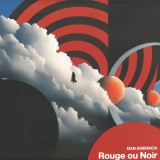
Dan Ghenacia's influence on the European underground over the last 25-plus years cannot be overstated. He has run vital labels, hosted essential parties, laid down definitive DJ sets, and produced seminal sounds both solo and as part of the tastemaking Apollonia trio with friends Shonky and Dyed Soundorom. His understanding of house music across the ages and continents is second to none, and he brings all that experience to this fantastic new solo EP.
The bumpy and infectious 'Rouge Ou Noir' opens with looped and funky guitar riffs and neon synths winding their way through dusty, dynamic drums. Cooing vocal stabs ramp up the steaminess of this most tasteful party starter. The superb 'Chilly' has a bustling blend of louche rhythms and rugged synth arps that dart about the mix. They hurry along beneath swirling vocal sounds up top with hints of Metro Area magic and tripped-out colours, all making it a characterful groove. Last but not least, 'Chilly' gets dubbed out and becomes a more low-slung sound with a fleshy bassline popping up the choppy, playful and synth-infused rhythm.
2024 Repress
Lars Huismann is back on Mutual Rytm with the much-anticipated third volume of his 'Sounds From The Past' trilogy.
A core part of SHDW & Obscure Shape's ever more crucial Mutual Rytm imprint thanks to his timeless techno offerings as part of his ongoing 'Sounds From The Past' series, Berlin-based DJ/producer Lars Huismann's stock continues to rise release by release as a talent merging influences from the past with forward-thinking nuances of the future. Drawing on the early 2000 techno sound, he embellishes it with his own perspective, as evidenced by his earlier releases on the label. This latest six-track offering is another accomplished outing from this unique talent as he concludes the three-part series on the label in style.
The title track 'Sound From The Past III' opens up with a finely filtered chord groove that provides a smooth and hypnotising foundation. A subtle bassline, buoyant kick drums, and embedded vocal patterns harmonise with the synths, unveiling a smooth linear groove that soon sweeps you up.
'Fusion' brings more intensity with its barreling drum kicks, a dirty driving bassline, and melodies flashing by like headlights on an intergalactic motorway, with the overhanging pent-up energy inescapable. Next, 'Shimmer' rides on vast, heavy layered drums that are warm, and comforting as the track travels through a journey of diverse dub techno elements.
Like in 'Loucura', taken from 'Sounds From The Past II', Lars again showcases his strong influences from Brazilian and Latin music. On 'Estar Farto', the drums and bass are tightly interwoven, racing beneath bright and funky synth lines that bring ever-evolving shades of colour. A jazz drummer himself, the music transports into the groove via intelligent brass chord progressions and fine-tuned vocal and percussion elements.
It's straight dance floor business on the closing vinyl production 'Bittersweet', with its muted synth smears darting over more macho drum programming, while digital bonus 'Dusty Lick' is an unrelenting, jazzy, percussion-driven banger that hits hard and heavy in all the right places.
2024 Repress
Berlin techno talent Regent is next up on Mutual Rytm as he returns with a compelling new five-track 12" titled 'Coral Knife', plus a digital bonus cut.
Regent emerged only in 2020, but has fired out quality tunes on Planet Rhythm Records, Arts Collective and Warg Records since then. His already extensive catalogue of standout releases combines tough and rapid grooves with cerebral qualities and a real depth of writing and sound design, resulting in timeless yet avant-garde material optimised for the dance floor. For that reason, he is one of the new forces emerging from the German capital and why his next EP, 'Coral Knife', sees him find a perfect home on SHDW's Mutual Rytm imprint as he returns with his first 12" on the label following his appearance on the 'Federation Of Rhythm II' compilation earlier this year.
The tight and funky 'Brickyard' opens with a high-speed groove and a taught synth riff darting about the mix to seductive effect, before 'Driftage' gets more raw with rickety percussion over bulky drums. The synths are dubby and liquid as they get smeared about the mix to bring dynamism to the groove. There is then darkness and heaviness to 'Nocta' with weighty kicks and alluring vocal sounds drifting through the late-night airwaves.
Title track 'Coral Knife' cannot fail to sweep dancers off their feet with its fizzing synths and smooth drum loops overlaid with icy hi-hats that get you into a meditative state, while 'Encoder' layers up bleeps and squeaks over a signature linear groove that is detailed with muffled vocals and distant cosmic stars.
As always with Mutual Rytm, the package rounded out with an impressive digital bonus in the form of 'Multiversa' - a driving and thunderous techno cut that closes the show emphatically.
Through the medium of a distinctly synthesised, sustained ambience, seasoned artist and composer Jasmine Guffond arrives on OOH to explore the tension between technology and human creativity in an increasingly ambiguous playing field.
Alien Intelligence came into being during Guffond's residency at fabled Parisian institution GRM in 2021. While learning how to generate sound and make music with the in-house Serge modular synthesiser, the Australian artist noticed the typical role of human input for machine output was being subverted by the behaviour of certain electronic elements, which came to exercise their own influences on the direction of the music.
Taking this idea one step further, Guffond proceeded to explore the programming environment MaxMSP, a customisable interface which allowed her to blur the lines between human input and machine directives even further. Across the three extended pieces which make up Alien Intelligence you can hear the results of Guffond's inquisitive approach as she coaxed the machines into bringing their own ideas to bear on the music.
The tension inherent in this thematic duality is mirrored by the contrast between glacial ambience and chaotic interference across the album. On 'Serge & Maxine Variation One' the presiding mood is a slow and patient one, as undulating waveforms rich with harmonic overtones spill out over one another across 10 minutes. The track's latter passage, driven by steadily intensifying oscillations, is then interrupted with an unexpected flurry of pitch shifting. This kind of complex technical movement features more prominently at the start of 'Serge & Maxine Variation Three', which then gradually shifts into a gentler ebb and flow of rising and falling frequencies.
Angled slightly differently and residing on the B side of the album, 15-minute quiet epic 'Serge & Maxine Variation Two' bookends a louder passage of synth work with serene, sustained notes that ring out a sort of hymnal melody. Throughout, the movement in the music evolves in subtly modulating, hypnotic, ways, but there are also unexpected turns or melodic diversions which feel much more incongruous. In its closing stretch, the notes dart around more freely as though played by hand, but it's hard to be sure whether these shifts in the otherwise delicate tonal music were a human conceit or a programming by-product. In the end, the two inputs logically become one.
As Guffond says herself, "More-than-human logics emerge, a kind of alien intelligence that questions an assumed central position of human subjectivity in socio-technical assemblages and considers the philosophical, socio-political and cultural implications beyond music practice in an increasingly technologically mediated world."
As AI creeps into art as much as other aspects of modern life, Guffond applies her playful instinct to the theme of these works by re-considering machine intelligence as 'alien', crediting its contributions with a more robust yet enigmatic identity in the creative process, leading to an end result which is far from artificial.
►Mastered by Giuseppe Ielasi, cover art by Ilan Katin, layout by incepBOY, photo by Camille Blake, words by Oli Warwick
A holy grail for fans of French boogie, early hip hop, Arabic funk and Balearic bops,"Ettika" has been seriously sought after since Vidal Benjamin found it in the 1€ bin back in 2006. Teasing the ears of the underground via Vidal's 'Balearic Nightmare' mix for Noncollective, copies of the original were soon snapped up completely, and the later adopters were sated by a Blackdisco edit from Alexis Le-Tan (himself gifted Vidal's second copy), which is now also rare as hen's teeth. The fervour for the track is easy to understand.
Underpinned by an endlessly buoyant bass groove, chanted female vocals dart out the speakers like a post- modern mantra while synth vamps flare in stuttering stereo.
Middle-Eastern motifs add an air of mystery, but this truly belongs in a dance floor utopia. That the track was the product of a 'back-to-work' scheme aimed at unemployed immigrant youth in Rouen only adds to the appeal. Led by teacher Bernard Guégan, a quartet of students delivered lyrics in French and Arabic inspired by their rejection letters, serving a little social commentary and a lot of funk. If you're mad on Ahmed Fakroun and Shams Dinn, or even those folks in the Bush of Ghosts, then this is a must have for you.
Tape Reworks, Vol. 2is the fourth project by Langham Research Centre released onNonclassical. Following the success of theirTape Works, Vol. 1and subsequentTapeReworks, Vol. 1(which featured remixes by Jim O'Rourke and Group A), this EP presentstwo remixes of tracks fromTape Works, Vol. 2:'Movable Fields', remixed by Kara-LisCoverdale, and 'Nachholbedürfnis', remixed by Beatriz Ferreyra. Kara-Lis Coverdale's 'Movable Fields' is an icy soundscape, gently moving at a glacial pace, evoking the feel of a field recording from a strange planet. 'Movable Fields' draws from elements of twoTape Works, Vol. 2tracks, 'Accarezzo' and 'Terminal Voltage Traces'. Ferreyra's remix of 'Nachholbedürfnis' is a dadaist cacophony of bleeps and lo-fi scratchy samples, darting chaotically throughout the track in true GRM fashion. The original album utilizedrecordings made in specific locations, particularly brutalist buildings, as an audiomanifestation of modernism.
Jaga Jazzists legendäres zweites Album, „The Stix“, kombiniert die digitale Dancefloor-Affinität ihres Debüts mit der Ausgelassenheit, Wärme und dem Fluss ihrer Live-Shows. Mit ihren stilvollen Produktionen, ihrer mitreißenden Bühnenpräsenz und ihren internationalen Einflüssen, die aus Hoxton über Oslo bis nach Berlin reichen, wurden sie schnell zu einer der beliebtesten Bands des erweiterten Jazz-Genres.
Im Jahr seit ihrem Debüt haben Jaga Jazzist weltweit einen großen Eindruck hinterlassen, insbesondere aber im vereinigten Königreich: die Debütsingle, „Going Down“, wurde damals vom NME zur 12“ der Woche gekürt, wurde u.a. vom jungen Gilles Peterson angepriesen und war eine von Muziks Singles des Jahres - und war folglich sofort ausverkauft. Und nun aber endlich wieder auf Vinyl erhältlich, en detail auf - wie bei Ninja Tune-Releases der Umwelt zuliebe seit einigen Jahren üblich - nicht auf 180 g sondern auf 140 g schwerem und rot-orange schimmernden Vinyl in einem 2LP-Gehäuse mit bedruckten Papp-Innenhüllen und einer 12" Reverseboard-Gatefold-Hülle.
In 1975, under the oppressive air of military dictatorship in Brazil, brothers Lelo and Zé Eduardo Nazario invited bassist Zeca Assumpção to join their musical experiments in a basement under Sao Paulo’s Teodoro Sampaio Street. As teenagers, the trio had already been playing together in Hermeto Pascoal’s Grupo, alongside guitarist Toninho Horta and saxophonist Nivaldo Ornelas, and it was while working together under Hermeto’s direction that the Paulista rhythm section (as they were then known) began to realise their own potential.
With many nightclubs and venues closed in the mid-70s and government censors dictating the output of radio, TV and art galleries, many Brazilian artists fled during the years of dictatorship. But underground, Grupo Um were fusing avant garde ideals with contemporary jazz and Afro Brazilian rhythm; making phenomenally free and expressive music - in stark contrast to the sterile, conservative conditions being imposed above ground.
Just like Hermeto Pascoal’s Viajando Com O Som from the following year, Starting Point was recorded over two days at Vice-Versa Studios, by revered engineer Renato Viola. The studio was one of the best in Sao Paulo and musicians communicated with engineers through cameras and a monitor, allowing the group complete immersion in the process. They also made use of the studio’s hemispherical tiled room, which served as an acoustic reverberation chamber.
The album begins with Zé Eduardo Nazario’s thunderous drum solo on “Porão da Teodoro”, before clearing the clouds with the lone Berimbau which opens “Onze Por Oito”. Built around a hypnotic electric bass line, heady Fender Rhodes improvisations, and more rip-roaring drums, it’s a rapturous, electrifying freak-jam in 11/8.
Like some invertebrate deep-sea curiosity, the free-form “Organica” is made up of Lelo Nazario’s playfully eerie prepared piano, with Zé Eduardo’s percussion flurries darting around Assumpçao’s double bass. The equally non-conformist, percussion-only piece “Jardim Candida” features many of Zé Eduardo’s home-made instruments, including a long saw blade played with vibraphone sticks and violin bow. While working with Hermeto, Zé Eduardo famously built his own all-in-one percussion set-up known as the “Barraca de Percussão” (Percussion Tent) - the first of its kind in Brazil, which he would also use on Hermeto Pascoal’s Viajando Com O Som and throughout his career.
“Suite Orquidea Negra'' (Black Orchid Suite) was written by Lelo Nazario as the score for an imaginary movie - the story of a rare, black orchid which produced a substance meant to cure all diseases, but which had mysteriously disappeared from the laboratory… “As a screenplay it’s not very good” reflects Lelo in jest, “but the music ended up being very interesting, the way its parts are chained to one another carries a little of the mystery I imagined for the movie.”
The album closes with the triumphant “Cortejo dos Reis Negros” (Procession of Black Kings) - a groovy variation on the Maracatu rhythm, with a two-note bassline underpinning piano improvisations, exultant wordless vocals, cuicas, slide-whistles and a very special guest appearance from Zé’s dog Bolinha.
Starting Point was to mark the inception of one of Brazil’s most daring instrumental groups. Their debut now sits in the lofty echelon of otherworldly 70s Brazilian music, alongside the likes of Marcos Resende & Index’s self-titled debut, Cesar Mariano & Cia’s Sao Paulo Brasil, Azymuth’s debut and indeed Hermeto Pascoal’s Viajando Com O Som. But just like all of those titles, which were either shelved or largely ignored at the time, Grupo Um - so radically ahead of their time - struggled to find a label to release their debut album. So Lelo kept the tapes safe in his archives, which is where they sat for almost half a century. Finally, almost fifty years later, this mesmerising piece of history is here, and it was only the beginning...
Grupo Um’s Starting Point will be released by Far Out Recordings, on vinyl LP, with an insert featuring unseen photos and liner notes by the Nazario brothers, as well as a CD on 17th February 2023.

Utrecht label U-Trax welcomes 90s legend P.A. Presents for an enhanced re-release of his first two releases on this label, namely "Salicylic Acid" and "Flight Simulator".
Ironically P.A. Presents aka Peter Aarsman is the only artist on U-TRAX that actually is born and bred in the city of Utrecht. Even more irony lies in the fact that he hasn't lived in the city for 25 years and has only recently returned home. He was an early player in the hip hop and boogie scenes and long before house landed in Europe he was playing disco and Italo which helped establish him as a truly vital DJ talent. The two reissue EPs presented here marked his production debut back in 1993, both of which are hugely sought after and pricey techno records on second hand markets. In 2019 he returned to the music scene with two new EPs on U-Trax in the the form of Swirling Gas and Sax Madness and new releases are planned for 2020.
The release kicks off with 'Mesopmorph', an effervescent, nostalgic cut with a deeply buried techno rhythm that eventually takes over in tribal style. 'Pop' is a brilliantly tense and dense track wired up with fizzing synths, chattering claps and haunting effects as well as pending drums, then 'Theme' is cosmic industrial, with powerful hits and metallic sounds married to searching laser synths.
'Vera S' is classic 90s techno with mad vocal sounds and frantic synth lines darting about the mix, then things grow deeper and more heady on the stripped back intergalactic journey that is 'Flight Simulator.' The timelessness continues on the dancing analogue drums and hi hats of the classic Detroit styled 'Experiental' and 'A Gasp' before 'Vexillum' brings more warm solar winds and molten techno grooves whist 'Long Metal' closes out with pounding kicks, skewed synths and real sense of space travel.
These are essential early techno tracks that sound as fresh and relevant now as ever and come with remastering and restoration from Thee J Johanz.
Pressed on 2x12" 180 grams grey marbled vinyl.
Bakey has been smashing out hit after hit this year, sharing beats cooked up with his brother, Breaka and collabing with Bristol head Sam Binga. The young producer comes back to Time Is Now, following up the best-seller Take It Further EP from last year with a tasty five tracker of UKG experimentation.
Title track, "Bring It Back", uses a playful sound palette of 00s grime that swirls into a hardcore onslaught of breaks, bassline and screeching ruffage, kicking of the record with a statement. Manchester vocalist Slay joins the party on "Vibing Season", building up in long
atmospheric chords before Slay's bars spiral into play, pacey, dirty and clever over explosive glitches and ear candy pops. Bringing it right back down to minimalism with sparing two-step, "No Name Groove" features Kasia's soulful piano echoing throughout with call-and-response sampling, a classy take on early garage tracks.
On "Reduced Vision", otherworldly sub bass chases down vocal stabs, rumbling underneath this expansive heads down number. "Poison Dart" rounds off the instant hit EP with sirens, dnb tension and ragga mc lines.
- A1: Die Prophezeiung (Hadone Version)
- A2: Der Weg Des Kriegers (Mrd Version)
- B1: Die Augen Des Teufels (Stigmata Version 1)
- B2: Blick Des Bösen (Exium Version)
- C1: Kein Entkommen (Héctor Oaks As Djkaos11 Version)
- C2: Bisswunden (Introversion Version)
- D1: Verlorene Seelen (Ø Phase Version)
- D2: Feuersturm (Dj Boss Version)
- D3: Die Augen Des Teufels (Stigmata Version 2)
Repress !
From Another Mind celebrates its fifth anniversary with 'Versionen 008’, a mammoth remix package of SHDW & Obscure Shape tracks from Héctor Oaks, Ø Phase, Exium, and more.
Comprising nine remixes of the German producer/DJ outfit, 'Versionen 008' covers four sides of vinyl and features adaptations from a wealth of modern techno talent, rising stars, and scene veterans alike,
with Hadone, MRD, Stigmata, Exium, Héctor Oaks AKA DJKAOS11, Introversion, Ø Phase, and DJ Boss making contributions.
With the influences across the release darting between acid, techno, and rave, 'Versionen 008' is a no holds barred journey into the sounds of dark, cavernous rooms and sweaty basements alike, providing a
keen insight into who SHDW & Obscure Shape are passionate about as artists.
From the fast-paced, dub techno infused MRD version of ‘Der Weg Des Kriegers’, the explosive energy in Exium’s remix of ‘Blick Des Bösen’, to the two versions of ‘Die Augen Des Teufels’ by Stigmata, who effortlessly provides a dose of early 2000’s nostalgia, all aspects of the pair’s musical tastes are covered. Héctor Oaks takes ‘Kein Entkommen’ in an otherworldly direction, painting the track with his
signature voice, while Ø Phase brings his powerful and hypnotic sound to the duos ‘Verlorene Seelen’.
Elsewhere on the release, ‘Die Prophezeiung’ receives a shot of trancey energy from France’s Hadone and Introversion breathes new life into ‘Blisswunden’, developing the track into a melodic dream
amongst metallic percussion. The penultimate ‘Feuersturm’ gets the DJ Boss treatment, as the Slovakian DJ/producer transforms the track into a dynamic late-night roller.
Taking in these variety of moods across the remixes, the compilation sways between different strains of techno, from anthems to DJ tools, covering both modern and vintage to provide a diverse compilation
that will no doubt be warmly welcomed by DJs and listeners alike.
Favouring fiercely high-energy and gritty productions, the duo has used the label as an outlet for their dark, intense sound to the rapturous responses from DJs and dancefloors and 'Versionen 008' sees them celebrate five years of the imprint in typically uncompromising fashion.
Audience’ was a 14-track record that signalled a shift back to Hayes Bradley's dancefloor roots. It was a collision of breakbeats, trip-hop, and ambient textures that perfectly balanced nostalgia and forward-thinking sounds, and now it gets spun into all new worlds by some of the scene's most acclaimed contemporary stars.
Special Request, aka UK powerhouse Paul Woolford, has shaken up the scene with his thrilling mix of jungle, bass, techno, rave, and hardcore in recent years. The hugely prolific producer knows exactly how to blow up the club and does that here with two reworks of '& I Love U'. The Special Request Extended Mix is a meticulously crafted jungle workout, featuring precision drums, rising synth tension, and gorgeous melodies that dart throughout and will appear on the vinyl release only. The VIP version focuses more on celestial memories for a heavenly escape.
Next is Shanti Celeste, a house and garage favourite who crafts emotional, high-impact sounds on her own Peach Discs. Her remix of 'Play It As It Lay' is a bubbly, soft-focus, late-night sound with earworm synth motifs and rich bass that sinks you in deep for a nice, heady trip.
Piori is an alias of Canadian musician Francis Latreille, who has built a sprawling discography full of hyper-detailed techno steeped in science fiction and fantasy. He flips 'Awareness' into a zoned-out affair, with broken beats and cosmic synth waves over a bold bassline that shows, once again, why his productions are in such demand.
Last but not least is Kaifeng-born sound artist, DJ, and producer Yu Su, whose truly unique sound has made her a cult underground star. She flips 'Dear Treasure' into a slow motion and sleazy chugger with dark disco energy and raw live drums, shady vocal loops and otherworldly melodies that seep into your consciousness.
Taroug is the solo project by drummer and electronic music producer Tarek Zarroug with roots in the suburbs of the Tunisian desert and having grown up in Germany. Following the release of his 2020 EP, "Perpetual," as well as a number of notable remixes for artists such as Archive, Taroug has continued to refine his musical aesthetic.
Taroug's debut album Darts & Kites, set to be released on Denovali Records, draws inspiration from the Penrose tiling and explores themes of change and transformation. Fascinated from the pattern's unending possibilities, Taroug incorporated its infinite permutations not only into the album's nine tracks, but also in the cover art design. Darts & Kites showcases a blending of genres and styles, resulting in a sonic landscape, that is both hunting and beautiful. Experimental and abstract soundscapes are enriched by oriental influences, collected field recordings, pulsating dark beats and hypnotic vocals.
The album also features the contributions of other notable artists, including Beate Wolff's cello performance on Jewels I. Benedikt Koch's saxophone adds a sense of controlled chaos with delayed and swelling notes to the track Deguech, while Timo Schieber's piano provides a crucial element of the album's title track, Darts & Kites. Niklas Genschel lends his vocals to Queen of Carthage, which also features the saz playing of Abdallah Abozekry.
Created in collaboration with architect and designer Marie Brosius, the album artwork captures different ornaments reflecting the album's content. Darts & Kites is a mosaic of sound, blending together elements of unfamiliar and familiar.
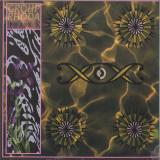
Group Rhoda returns to Dark Entries with Phase 5, a new LP of synthesizer-driven art-pop. An integral member of the West Coast electronic music scene, Mara Barenbaum has been writing, performing, and plunging into oneiric depths as Group Rhoda since 2009. Barenbaum’s songcraft is at once stylistically diffuse and laser-focused, a synesthetic approach that allows her to effortlessly glide between genres and soundworlds while centering her singular poetics. On Phase 5, her fifth LP as Group Rhoda, we find Barenbaum waxing nondualistic. Lines between fairytale and fact, between nature and art, between subject and object all dissolve under contemplation.
The songs on Phase 5 are perpetually in-between states, deftly shifting form at the blink of an eye. With sleight of hand, “Field Tone” transmutes from brooding John Carpenter-esque electro into vocoder-driven space disco. “Dragon Pine” darts from cosmic dub to cybernetic dancehall and back again. The uptempo darkwave-leaning number “Aeolian Crossing” dissolves into the void, like sand falling through one’s fingers, like a retreating wave. The cover artwork for Phase 5 is by Shawn Reed, and features purple lilies and light refracted through water. All songs on this album were mastered by Ruud Lekx. The digital version of Phase 5 will be released via Katabatik, a label and sound system that Barenbaum has had close ties to for the past decade.
Rhiza Semar presents its fourth chapter with Yildizlara, a four-track odyssey shaped from shadow, rhythm, and elemental texture. Crafted as both visceral tools and introspective journeys, the record navigates between ominous density and luminous release, guided by a deep awareness of space, myth, and matter. As an artist, Hitam paves the way for a new sound emerging from his burrows to build bridges between electronic subgenres while shaping a landscape unmistakably his own. Orb Weaver opens the cycle with jagged IDM rhythms that coil and release like threads of a web pulled taut. Originally composed for the graduation project of fashion designer Tim van der Plas, who's collection was inspired on climbing out of depression, its atmosphere is dark and ceremonial, with textures scraping against silence until catharsis emerges from the tension. A confrontation between inner turmoil and release. On Vanishing of the Anasazi, cavernous reverbs carry traces of lost structures, percussion echoing as if across ruins. A relentless drive holds the ghost of ritual processions, summoning a spectral energy that feels at once monumental and hollowed-out. The track suspends itself between presence and absence, architecture and collapse, leaving the listener in a space where echoes become the only surviving form of memory. Mesh Grip plunges downward into subterranean force. A thundering groove rumbles like minerals being unearthed, goblin-like figures at work in hidden shafts, chiseling away at stone in endless rhythm. From this pressure, a sudden swell of melancholy pads rises, reframing the heaviness with emotional resonance as if the whispers of angelic guardians seep into the caverns, transforming extraction into elegy. What begins as pure drive of endurance evolves into an introspective meditation. Closing the release, Yildizlara unfolds as an epic ascent. Layered rhythms rush forward with urgency, intricate yet propulsive, while chopped vocals bring back a sensual human element, scattering like signals across the night sky. Animalistic atmospheres dart through the mix as spectral cries and furtive movements, adding a primal dimension to the drive. What begins as erratic and untamed slowly converges into warmth and ultimate catharsis: a cosmic tale inscribed in sound, both intimate and monumental, familiar yet born of hidden memory. Yildizlara is both innovative and ancestral; a release where turbulence becomes ritual, and where rhythmic complexity unearths fragments of hidden memory. Beneath its dark and erratic surfaces lies a strange familiarity, like echoes of a primal past resurfacing through sound, reminding us of worlds once known but long concealed. Words by A. Veyra