Suche:daughters
Local Action is proud to present Daughters, the debut album by Jennifer Walton.
Walton is a beloved figure across various sectors of the alternative music underground. Outside of her own music and soundtrack work, she has been a live drummer for Kero Kero Bonito, collaborates with Sarah Midori Perry on the pair’s Cryalot project, has remixed Metronomy and worked with Iceboy Violet, BABii and more. She also makes music and DJs with close friends aya and 96 Back under the name Microplastics, and recently contributed to London collective caroline’s acclaimed caroline 2 album.
The first seeds of Walton’s debut album were sowed during touring North America in 2018, where whilst ticking off life-long music goals, Walton’s father was dying of cancer. Grief is a constant presence throughout Daughters, and specifically the surreal nature of having to process it amongst a blur of airports, flight connections, hotel rooms and battles for stolen medication with the American healthcare system. Strip malls, drug deals, panic attacks; the artificiality of downtown American city districts dovetailing with reality in its most brutal form. Miss America for a day while life is changed forever.
Weaving between real life diary entries, travelogue-style storytelling, imagery that ranges from mechanical to religious and a scattering of fiction (though we are obliged to mention that ‘Shelly’ is based on a true story), Daughters climaxes with the staggering run of ‘Saints’, ‘Miss America’ and its title track. Sampling unattended machines harmonising bleeps into the void in a London hospital ward, ‘Saints’ narrates Walton taking her father to and from cancer research trials, “sat, hunched and sick in the concourse as minutes became hours”. And to be very real for a moment, Jen is a friend, and first hearing the ‘Miss America’ demo is up there with the most emotional moments we’ve had in 15 years of running this record label.
Finished in London across the second half of 2024, Daughters features musical contributions from some of the closest friends and collaborators that Walton has made in her time as a musician: aya (who also mixed the album), Daniel S. Evans, Joshua Barfood and Nick Granata (all of Shovel Dance), Alex McKenzie (of caroline and Shovel Dance), Aga Ujma and Bob Lockwood.
Die verbitterte Tochter eines toten Predigers, die in einem Exodus gefangen ist, schlängelt sich durch einen schwindelerregenden Ausbruchsversuch
aus ihrer erstickenden Erziehung, nur um am Ende in deren Fängen zerquetscht zu werden.
Hayden Anhedönia, die Frau hinter dem Vorhang, ist die Architektin der viszeralen und eindringlichen Welt von Ethel Cain. Nach über vier Jahren
akribischer Arbeit an ihrem Debütalbum und der dazugehörigen visuellen Welt wurde Preacher's Daughter im Mai 2022 veröffentlicht und von den
Kritikern hoch gelobt. Das Album fand großen Anklang bei der Fangemeinde ihrer Töchter und wurde von der New York Times, Vogue, NPR, Billboard,
Vice, TheFADER, NYLON, Paper Magazine, Pitchfork, W Magazine, V Magazine und vielen mehr bewundert.
Die verbitterte Tochter eines toten Predigers, die in einem Exodus gefangen ist, schlängelt sich durch einen schwindelerregenden Ausbruchsversuch
aus ihrer erstickenden Erziehung, nur um am Ende in deren Fängen zerquetscht zu werden.
Hayden Anhedönia, die Frau hinter dem Vorhang, ist die Architektin der viszeralen und eindringlichen Welt von Ethel Cain. Nach über vier Jahren
akribischer Arbeit an ihrem Debütalbum und der dazugehörigen visuellen Welt wurde Preacher's Daughter im Mai 2022 veröffentlicht und von den
Kritikern hoch gelobt. Das Album fand großen Anklang bei der Fangemeinde ihrer Töchter und wurde von der New York Times, Vogue, NPR, Billboard,
Vice, TheFADER, NYLON, Paper Magazine, Pitchfork, W Magazine, V Magazine und vielen mehr bewundert.
His Three Daughters is a captivating family drama, written and directed by Azazel Jacobs.
The score is composed by Brazilian singer-songwriter, multi- instrumentalist, composer and arranger Rodrigo Amarante.
He is part of the bands Los Hermanos, Orquestra Imperial, and Little Joy, and released his first solo record, Cavalo,
in Brazil in late 2013. He also wrote and performed the Narcos theme song “Tuyo”.
His Three Daughters is now available on vinyl. This is a limited edition on yellow vinyl and includes an insert.
"Detroit Stories" is the name of this cool social project happening in Motorcity, USA, aka Detroit. It's a rad way to capture and show off the history and present of the city and its peeps. They're doing it by interviewing OG residents and immigrants from way back, the ones who lived through all the ups and downs of the Motor City. You've got stories of good times, hard work, opportunities, but also struggles, violence, and social movements that shaped Detroit's rise and slow fall. This city's always had a lot to offer in terms of music, culture, and beyond.
And guess what? DJ and producer Luca Fronza gets in on the action, finding some of those interview podcasts. He's turning their stories, the vocals, and speeches into some killer beats, with the distinctive motorcity raw house touch that we absolutely love here at Flexi. And to top it off, you've got a remix by the master himself, Prins Thomas! It's gonna be lit!
All tracks (except B2) produced and composed by Luca Fronza Remix of “Gipsy” is by Prins Thomas
Reuben's Daughters is not a band, it's a name for all of the musical works by Reuben Myles Tyghe, a pure product of Bath's musical scene. Reuben performs solo, write and record albums featuring a wide pool of guests, collaborate with other artists, has a six piece live band... it's all Reuben's Daughters. The daughters part of the name allows all of his musical endeavours to have a fluidity... And the album is full of this light and smotth fluidity that gets directly to the listener's hear without fighting it. Or, in the words of Keely Stoltz: "“Playful and adventurous pop where solid grooves undulate underneath technicolor island slide guitars. Who knew some of the sunniest new music in the world could be crafted in the southwest of England?”
Formed in Oakland in the early 1970s, the Sons and Daughters of Lite recorded Let The Sun Shine In, their only LP, which has now achieved holy grail status among collectors. Let The Sun Shine In is a spiritual recording filled with soul, funk, jazz, and African percussion. The musical collective described themselves as a mix of African rhythms, Latin flavors, and Far Eastern textures. This album was virtually unknown to DJs and collectors until Michael McFadin's discovery in the late 80s. He then scoured the bay area and bought up multiple copies for his record store The Groove Merchant on Haight Street in San Francisco, many of which were bought from flea markets and the dollar bins of other shops. The outrageously funky title track became a jazz dance classic, courtesy of heavy radio and club play by top UK DJ and tastemaker Gilles Peterson.
- A1: Daughters Of Darkness (Opening)
- A2: Love On The Rails
- A3: Red Lips
- A4: Arrival At The Manor
- A5: Countess Bathory (Halo)
- A6: Ballad In Bruges
- A7: The Countess And The Inspector
- A8: Tale Of Torture And Vampires
- A9: Valérie, Ilona And Stefaan
- A10: The Dunes Of Ostend, Flagellation
- B1: The Countess Kiss
- B2: The Countess Bite
- B3: The Phantom Organ And Piano
- B4: Pursuit On The Dunes Of Ostend
- B5: Accident And Cymbalum
- B6: Daughters Of Darkness (Ending)
- B7: The Bruges Band
- B8: Dracula 68 Woodstock (Of Fish And Men)
Libby Weitnauer’s first solo release is a contemporary exploration of two
traditional ballads.
One tells of a fierce fight against a male attacker, the other of heartbreak and
abandonment. Together with producer Mike Robinson, Weitnauer creates a
new soundscape for the tales and trials of women told in old songs.
This 45rpm 7” vinyl allows the listener to hear the stories unfold in their living
rooms much like they have been told for centuries.
- A1: Bonnie
- A2: Violet
- A3: Polly
- A4: Celeste
- A5: Melody
- A6: Alice
- A7: June
- A8: Odette
- B1: Vivian
- B2: Marcy
- B3: Jude
- B4: Sabine
- B5: Isla
- B6: Claudia
- B7: Jane
- B8: Christine
Blue Chemise documents the hermetic soundworld of Australia's Mark Gomes. 'Daughters of Time' follows 2017's brilliant full-length 'Influence on Dusk,' released in micro-edition on Gomes' own Greedy Ventilator imprint. It is an elegiac set of vignettes recorded straight to dictaphone with minimal post-production. These pieces function in a manner akin to Loren Connor's evocative 'airs,' conjuring poignant, intangible senses of longing and nostalgia then disappearing well before overstaying their welcome. Regarding their genesis, Gomes points to a quote from Australian artist Robert Hunter: "It's like I'm external to them. They develop their own assertion and character; their becoming finished is a thing they decide themselves. It's unexplainable."
- A1: Daughters Of Darkness (Opening)
- A2: Amour Sur Les Rails / Love On The Rails
- A3: Les Lèvres Rouges / Red Lips
- A4: Arrivée Au Manoir / Arrival At The Manor
- A5: La Comtesse Bathory (Halo) / Countess Bathory (Halo)
- A6: Ballade À Bruges / Ballad In Bruges
- A7: La Comtesse Et L’inspecteur / The Countess And The Inspector
- A8: Le Récit Des Tortures Et Des Vampires / Tale Of Torture And Vampires
- A9: Valérie, Ilona Et Stefaan
- A10: Les Dunes D’ostende, Flagellation / The Dunes Of Ostend, Flagellation
- B1: Le Baiser De La Comtesse / The Countess’s Kiss
- B2: La Morsure De La Comtesse / The Countess’s Bite
- B3: L’orgue Et Le Piano Fantômes / The Phantom Organ And Piano
- B4: Poursuite Sur Les Dunes D’ostende / Pursuit On The Dunes Of Ostend
- B5: Accident Et Cymbalum / Accident And Cymbalum
- B6: Daughters Of Darkness (Ending) Bonus (Not Used In Movie)
- B7: La Fanfare De Bruges / The Bruges Band
- B8: Dracula 68 Woodstock (Des Poissons Et Des Hommes / Of Fish And Men)
- B1: Les Lèvres Rouges
- B1: Les Dunes D’ostende, Flagellation
Daughters of Darkness is a 1971 English-language Belgian horror film. Directed by Harry Kümel this cult erotic vampire film stars Delphine Seyrig, Danielle Ouimet, John Karlen, and Andrea Rau. The film was well received, and a retrospective poll by Time Out in the early 2010s placed the film at number 90 in their top 100 horror films.
Its score was created by multiple award winning composer François de Roubaix. It has long been a much sought after title, with De Roubaix’ son Benjamin commenting that the “composer achieves a perfect balance and the result is a bleak and eerie soundtrack that stands on a par with the music of Ennio Morricone in A Lizard in a Woman’s Skin or - in a different style - that of Isaac Hayes for Shaft”. Parts of score would eventually be sampled by several hip- hop artists, including American rapper Lil Wayne on his song “President Carter”.
- A1: City Song
- A2: Long Road, No Turns
- B1: Satan In The Wait
- B2: The Flammable Man
- B3: The Lords Song
- C1: Less Sex
- C2: Daughter
- C3: The Reason They Hate Me
- D1: Ocean Song
- D2: Guest House
Daughters, the Rhode Island-based noise
impresarios, release their first new album in eight
years, 'You Won't Get What You Want', via Ipecac
Recordings.
On the heels of their 2010 self-titled offering, the
members engaged an indefinite hiatus. One fated
dinner and two sold out hometown shows in
Providence in 2013 saw them pick up where they
had left off. Throughout the next four years the
band recorded, eventually culling down 150 ideas
to the ten comprising 'You Won't Get What You
Want'.
'London Fog' coloured vinyl LP.
For fans of The Jesus Lizard, The Birthday Party,
Dillinger Escape Plan
Like a bolt from the blue comes this track by Daughters & Sons. An afternoon of fun in the studio with Stefano Giordani and his nylon guitar has needed, to give life to this little masterpiece, perhaps a secret weapon for the summer of 2014. A solar track, enjoyable and danceable, which is already a modern classic.
First LP in new series from Finland, this subdue jazz drone album has the quality of dusk, but is never darker than the Nordic summers. Atonal & forceful at times, still padded and invitingly warm, it has 4 classy pieces that enjoy being on the fringes while slowly capturing the ear when organs drone, the TR-808 thumps, the percussive double bass and the saxophone layers fog of melodic growing waves of groove.
- A1: Dungtitled (In A Major)
- A2: Articulate Silences Part 1
- A3: Articulate Silences Part 2
- A4: The Evil That Never Arrived
- B1: Apreludes (In C Sharp Major)
- B2: Don't Bother They're Here
- B3: Dopamine Clouds Over Craven Cottage
- C1: Even If You're Never Awake (Deuxieme)
- C2: Even (Out) +
- C3: A Meaningful Moment Through A Meaning(Less) Process
- D1: Another Ballad For Heavy Lids
- D2: The Daughters Of Quiet Minds
- D3: Hiberner Toujours
- E1: That Finger On Your Temple Is The Barrel Of My Raygun
- E2: Humectez La Mouture
- E3: Tippy's Demise
- F1: The Mouthchew
- F2: December Hunting For Vegetarian Fuckface
2023 Repress
"I simply feel that they are making the most important music of the 21st century." Ivo Watts-Russell - 4AD label founder
"Crushingly sad, lightly melancholic, or even uplifting, depending on the state of mind of the hearer... a sound divorced from intention and its ambiguity is its strength." Pitchfork
"The sound of deep sea disintegration... a work of art." Tiny Mix Tapes
"Music of such quiet and devastating power it can silence a room in ve minutes without the volume knob on the stereo being manipulated. Deeply moving... virtually anyone who encounters it will be in some way moved by the impure music it contains." AllMusic
"Traces the uid contours of a void through diaphanous lines that reveal all of its miasmal abstraction." Dusted
"A two-hour juggernaut of careful dynamics and warm tones." XLR8R
- A1: Natural Selection
- A2: Mother And Daughters Now Mothers
- A3: Forbidden Fruit
- B1: Epsilon Transmission
- B2: Epsilon
- B3: Love Lies Bleeding
- C1: Time Capsule
- C2: Mind And Matter
- C3: Retrospective
- C4: Solo
- C5: Extra Vehicular Activity (Eva)
- C6: Life Support
- D1: Telescopic One
- D2: Telescopic Two
- D3: Telescopic Three
- D4: Sane
- D5: Angel Falls
- D6: Mothers Too
- D7: Deaf Out
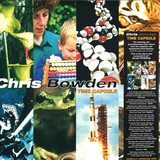
The Stunning And Ground-breaking Album From The Composer And Saxophonist Chris Bowden.
'this Is The Album That Connected It All.' Gilles Peterson 2018
Chris Bowden's Debut Album Time Capsule Was First Released On Soul Jazz Records In 1992 To Universal And Widespread Critical Acclaim. Now 20 Years On A New Wave Of Current Jazz Artists Led By The Likes Of Kamasi Washington In The Usa And A Host Of British Artists - Shabaka Hutchings /sons Of Kemet, The Ezra Collective, Moses Boyd, Nubya Garcia, Fourtet, Yussef Kamaal, Tenderlonious, Binker & Moses - Have Brought This Original Ground-breaking Album Into The Limelight Once More As A Pivotal Starting Point, Sharing Many Of The Aesthetics Of These Current Artists At Work Today.
Musically All Are Inspired By The Spiritual Jazz Of John Coltrane, Alice Coltrane, Pharoah Sanders, Archie Shepp, Don Cherry Et Al Paired With A Modern Electronic Music Sensibility. Chris Bowden's Time Capsule Has Stood The Test Of Time Like Few Other Albums (as The Title Of The Album Suggested), And Remains A Pivotal, Wholly-successful And Original Experimental Musical Collage, A Radical Inspiration And Forebearer To Many Of The Best Progressive Jazz And Electronic Artists Working Today.
The Album Has Been Fully Hi-spec Re-mastered And Is Available As A Limited-edition Heavyweight Double-vinyl Release With Gatefold Sleeve (+ Free Download Code), Slipcase Cd And Digital Album.
- A1: Horace Andy - Illiteracy
- A2: The Heptones - Be A Man
- A3: The Manchesters - Natty Gone
- A4: The Gladiators - Down Town Rebel
- A5: Willie Williams - Calling
- B1: Roland Alphonso & Brentford All Stars - Sir D Special
- B2: Keith Wilson - God I God I Say
- B3: Alton Ellis - Almost Anything
- C1: Bobby Kalphat & The New Establishment - Adis A Wa Wa
- C2: Peter Broggs - Sing A New Song
- C3: Mystic Revelations Of Rastafari - Let Freedom Reign
- C4: Larry & Alvin - Free I Lord
- C5: Ernest Wilson & The Sound Dimension - Freedom Fighter
- D1: Jackie Mittoo - Happy People
- D2: Prince Lincoln - Daughters Of Zion
- D3: High Charles - Zion
- D4: Winston Jarrett - Love Jah Jah
This Is The Second Installment Of Deep Roots Rastafarian Reggae At Studio One And Features Classic Music From Some Of The Most Important Figures In Reggae Music - Alton Ellis, The Heptones, Jackie Mittoo, The Gladiators - Alongside A Host Of Rarities And Little-known Recordings, Such As A Truly Rare Mystic Revelation Of Rastafari Seven-inch Single, Willie William's First Ever Recording 'calling' And Horace Andy's Righteous (and Equally Rare) Masterpiece 'illiteracy. Black Man's Pride 2 Extends The Legacy Of Studio One's Ground-breaking Path In Roots Reggae Which Began At The End Of The 1960s And Continued Throughout The 1970s. The Album Tells The Story Of How The Rise Of Studio One Records And The Rastafari Movement Were Interconnected, Through The Adoption Of The Rastafari Faith By Key Reggae Artists - Everyone From The Skatalites And Wailers In The 1960s, Major Singers Such As Alton Ellis And Horace Andy At The End Of The Decade, Through To Major Roots Artists Such As The Gladiators In The 1970s - And How Clement Dodd Consistently Recorded This Heavyweight Roots Music Throughout Studio One's History.
The Sleeve-notes To This Album Also Discuss The Links Between Rastafari And Studio One In Time And Place, Noting How Both The Religion And Clement Dodd's Musical Empire Had Their Roots In The Intense Period Of Pre-independence Jamaica In Kingston, Expanded In The 1960s Following The Visit Of Haile Selassie In 1966, And How Roots Music Then Came To Dominate Reggae Music In The Early 1970s. Also Discussed Is How The Outsider Stance Of Both Reggae Music And The Rastafari Movement Relate Back Many Hundreds Of Years To The Original Rebel Stance Of The Maroons, Escaped Slaves Who Set Up Self-sufficient Enclaves In The Hills Of The Jamaican Countryside.
- A1: Never Run Away Dub Source:coming From The Top/Cornell Campbell
- A2: Natty Dreadtime Dub Source:i'm Still In Love/Queen Tiny&The Aggrovators
- A3: Only Lover Dub Source:only Lover/Cornell Campbell
- A4: Jah Jah Dub Source:jah Jah We Are Waiting For You/Johnny Clarke
- A5: Dub On My Pillow Source:tears On My Pillow/Johnny Clarke
- A6: Part Time Dub Source:babylonking Rhythm
- B1: Fat Dub Source:fat Rhythm /Zoot Sims And The Aggrovators
- B2: Many Rivers To Dub Source:many Rivers To Cross Cornell Campbell
- B3: Control Your Dub Source:control Your Daughters /Cornell Campbell
- B4: Do You Dub I Source:do You Love Me /Johnny Clarke
- B5: Peace & Love Version Source:peace & Love In The Ghetto/Johnny Clarke
- B6: Lambs Bread Herb Dub Source:death Trap Rhythm
- B7: Reggae Train Dub Source:mule Train Rhythm
King Tubby's Hometown Hi-Fi was one of the great Sound System in Jamaica.
It also proved a fantastic outlet for the Dub Plate Specials cut at Tubby's studio, providing exclusive cuts to be played out and to entice the dance's audience.
The tracks at the time were mainly cut over producer Bunny'Striker'Lee rhythms, that Bunny stored at Tubby's studio, 18 Drumilly Avenue, Kingston, Jamaica.
The versions were given eclusive plays at Tubby's sound before some finding their way on to vinyl, ass the b-side version cut to it's a-side vocal.
It proved so popular that the records were often brought fir its version side over its vocal counterpart.
We have compiled a selection of cuts that were all tried and tested on Tubby's Home Town Hi-Fi Sounf System and that worked a great set of Bunny Lee's rhythms in fine style.
Some of these cuts found a release as version b-sides but many on this set were exclusive Dub Plates unreleased until now.
As Cornell Campbell says on track one of the set 'King Tubby and Bunny Lee will never go away'
Hope you enjoy the set......
- A1: Control Your Daughters - Cornell Campbell
- A2: Children Of Israel - Dennis Brown
- A3: Rockers Time Now - Johnny Clarke
- A5: Crisis Time - I Roy
- A6: I Don't Like It - Leroy Smart
- A7: R.o.c.k (Rockers) - Lloyd Chambers
- B1: In God We Trust - Morwells
- B2: No Man's Land - Cornell Campbell
- B3: Whip Them Jah - Dennis Brown
- B4: Channel 1 Crash - Jackie Mittoo & The Aggrovators
- B5: Money Money - Horace Andy
- B6: Money In Jamtown - Ben Sherman
- B7: Peace And Love In A Ghetto - Johnny Clarke
The Rockers Sound (aka Steppas) came from the mid 70's and was created during sessions with The Revolutionaires band at Channel 1.
Drummer Sly Dunbar came up with a new 'Militant' style double drumming on the snare drum that seemed to add some credence to the political /Rasta based lyrics that were so prominent around this time.
So for this compilation we have pulled together some of the best cuts from this period when producer Bunny Lee was on the top of his game and the sound in town to get on board with was 'Rockers'...
So sit back and enjoy another period in Reggae's history that still sounds as good as when it was created way back when...
EVERYTHING ROCKERS....
D a4 | DEVIL'S THRONE - Junior Delgado
- You Are A Runner And I Am My Father's Son
- Modern World
- Grounds For Divorce
- We Built Another World
- Fancy Claps
- Same Ghost Every Night
- Shine A Light
- Dear Sons And Daughters Of Hungry Ghosts
- I'll Believe In Anything
- It's A Curse
- Dinner Bells
- This Heart's On Fire
Sub Pop und Wolf Parade bringen eine neue Pressung ihres legendären Albums ,Apologies to the Queen Mary" auf pinkfarbenem Vinyl raus. Diese Ausgabe lässt das lange vergriffene Album wieder in seinem ursprünglichen Single-LP-Format erscheinen, kurz nachdem die TV-Serie ,Heated Rivalry" in 2025 die Single ,I'll Believe in Anything" aus dem Album einem riesigen neuen Publikum vorgestellt hat, wodurch der Song zu einem echten Viral-Hit wurde. Wolf Parade wurde 2003 in Montreal, Quebec, gegründet. Nach zwei selbstbetitelten EPs veröffentlichte die Band - Hadji Bakara (Elektronik), Dan Boeckner (Gitarre, Gesang), Spencer Krug (Keyboard, Gesang) und Arlen Thompson (Schlagzeug) - im September 2005 ,Apologies to the Queen Mary", das auf breite Zustimmung stieß. Das Album wurde von Modest Mouse-Frontmann Isaac Brock und Toningenieur Chris Chandler bei Audible Alchemy in Portland, Oregon, aufgenommen. ,Apologies to the Queen Mary" stürmt mit voller Kraft und atemlos durch Songs, die in den ersten Jahren der Band Wolf Parade geschrieben wurden. Die eingängige, energiegeladene Dringlichkeit des Albums machte sie sofort zu einer der prägenden Kräfte des Indie-Rock der 2000er Jahre. Es wurde 2006 für den renommierten kanadischen Polaris Music Prize nominiert; The Guardian schwärmte: ,insgesamt großartig"; Pitchfork gab ihm eine Bewertung von 9,2 und meinte: ,Das wahre Talent von Wolf Parade besteht darin, das Alltägliche in etwas Beispielloses zu verwandeln." Später schloss sich Pitchfork dem Chor der Kritiker an, die es zu den besten Alben der 2000er Jahre zählten. Zwei Jahrzehnte später hat "Apologies to the Queen Mary" nichts von seiner Lebendigkeit eingebüßt und gewinnt weiterhin neue Generationen von Fans für sich.
- Artefact
- A New Way
- Sit For The Road
- Hollow Chapters
- You Were Gone
- Turn That Groove Around
- The Falconer
- Three Wishes
- Fingertips
- Poor Wayfaring Stranger
An album with reflection, resilience, journey, and elemental connections at its core, Hollow Chapters is a collection of original songs written and performed by the Marsh Family - Dad (Ben, 49), Mum (Danielle, 48), sons Alfie (19) and Tom (18), and daughters Ella (16) and Tess (14). Recently featured in The Observer, the multiinstrumentalist family group of six from Kent have a significant international online following passionate about their mix of folk- pop harmonies, uplifting messages, authentic imperfections, and sense of connection and heart. Hollow Chapters ranges across genres (from acoustic protest songs to funk and reggae rock), but has a vintage organic style, rooted in natural analogies, ideas of journey and lifecycle, and epic and inspirational themes. It promises to move people emotionally, whether through ballads about departed loved ones or stirring tracks designed to forge collective action and hope. The songs tell stories using the different voices of family members, drawing inspiration from poetry, landscape, and artefacts.
The International Archives of Popular Music (AIMP), affiliated with the Ethnographic Museum of Geneva (MEG), is a label and collection dedicated to the preservation of world music. Founded in 1944 by musicologist Constantin Brăiloiu, it gathers over 18,000 recordings, from wax cylinders to digital formats. AIMP releases albums and collaborates with artists such as Midori Takada, exploring the connections between sound archives and contemporary creation. Through these projects, the label preserves and reinterprets musical traditions on a global scale.
- A1: Montego Bay - Everything (Paradise Mix) 04 59
- A2: Atelier - Got To Live Together (Club Mix) 06 06
- A3: Golem - Music Sensations 04 56
- B1: The True Underground Sound Of Rome Feat. Stefano Di Carlo - Gladiators 05 26
- B2: Eagle Parade - I Believe 04 26
- C1: Dj Le Roi - Bocachica (Detroit Version) 05 28
- C2: Green Baize - Synthetic Rhythm 01 41
- C3: M.c.j. Feat. Sima - Sexitivity (Deep Mix) 05 30
- D1: Kwanzaa Posse Feat. Funk Master Sweat - Wicked Funk (Afro Ambient Mix) 06 31
- D2: Progetto Tribale - The Bird Of Paradise 06 29
- D3: Mbg - The Quite 06 59
Vol 1[28,99 €]
Googling “paradise house”, the first results to pop up are an endless list of European b&b’s with whitewashed lime façades, all of them promising “…an unmatched travel experience a few steps from the sea”. Next, a little further down, are the institutional websites of a few select semi-luxury retirement homes (no photos shown, but lots of stock images of smiling nurses with reassuring looks). To find the “paradise house” we’re after, we have to scroll even further down. Much further down.
It feels like yesterday, and at the same time it seems like a million years ago. The Eighties had just ended, and it was still unclear what to expect from the Nineties. Mobile phones that were not the size of a briefcase and did not cost as much as a car? A frightening economic crisis? The guitar-rock revival?! Certainly, the best place to observe that moment of transition was the dancefloor. Truly epochal transformations were happening there. From America, within a short distance one from the other, two revolutionary new musical styles had arrived: the first one sounded a bit like an “on a budget” version of the best Seventies disco-music – Philly sound made with a set of piano-bar keyboards! – the other was even more sparse, futuristic and extraterrestrial. It was a music with a quite distinct “physical” component, which at the same time, to be fully grasped, seemed to call for the knotty theories of certain French post-modern philosophers: Gilles Deleuze, Félix Guattari, Paul Virilio... Both those genres – we would learn shortly after – were born in the black communities of Chicago and Detroit, although listening to those vinyl 12” (often wrapped in generic white covers, and with little indication in the label) you could not easily guess whether behind them there was a black boy from somewhere in the Usa, or a girl from Berlin, or a pale kid from a Cornish coastal town.
Quickly, similar sounds began to show up from all corners of Europe. A thousand variations of the same intuition: leaner, less lean, happier, slightly less intoxicated, more broken, slower, faster, much faster... Boom! From the dancefloors – the London ones at least, whose chronicles we eagerly read every month in the pages of The Face and i-D – came tales of a new generation of clubbers who had completely stopped “dressing up” to go dancing; of hot tempered hooligans bursting into tears and hugging everyone under the strobe lights as the notes of Strings of Life rose up through the fumes of dry ice (certain “smiling” pills were also involved, sure). At this point, however, we must move on to Switzerland.
In Switzerland, in the quiet and diligent town of Lugano, between the 1980s and 1990s there was a club called “Morandi”. Its hot night was on Wednesdays, when the audience also came from Milan, Como, Varese and Zurich. Legend goes that, one night, none less than Prince and Sheila E were spotted hiding among the sofas, on a day-off of the Italian dates of the Nude Tour… The Wednesday resident and superstar was an Italian dj with an exotic name: Don Carlos. The soundtrack he devised was a mixture of Chicago, Detroit, the most progressive R&B and certain forgotten classics of old disco music: practically, what the Paradise Garage in New York might have sounded like had it not closed in 1987. In between, Don Carlos also managed to squeeze in some tracks he had worked on in his studio on Lago Maggiore. One in particular: a track that was rather slow compared to the BPM in fashion at the time, but which was a perfect bridge between house and R&B. The title was Alone: Don Carlos would explain years later that it had to be intended both in the English meaning of “by itself” and like the Italian word meaning “halo”. That wasn’t the only double entendre about the song, anyway. Its own very deep nature was, indeed, double. On the one hand, Alone was built around an angelic keyboard pattern and a romantic piano riff that took you straight to heaven; on the other, it showcased enough electronic squelches (plus a sax part that sounded like it had been dissolved by acid rain) to pigeonhole the tune into the “junk modernity” section, aka the hallmark of all the most innovative sounds of the time: music that sounded like it was hand-crafted from the scraps of glittering overground pop.
No one knows who was the first to call it “paradise house”, nor when it happened. Alternative definitions on the same topic one happened to hear included “ambient house”, “dream house”, “Mediterranean progressive”… but of course none were as good (and alluring) as “paradise house”. What is certain is that such inclination for sounds that were in equal measure angelic and neurotic, romantic and unaffective, quickly became the trademark of the second generation of Italian house. Music that seemed shyly equidistant from all the rhythmic and electronic revolutions that had happened up to that moment (“Music perfectly adept at going nowhere slowly” as noted by English journalist Craig McLean in a legendary field report for Blah Blah Blah magazine). Music that to a inattentive ear might have sounded as anonymous as a snapshot of a random group of passers-by at 10AM in the centre of any major city, but perfectly described the (slow) awakening in the real world after the universal love binge of the so-called Second Summer of Love.
For a brief but unforgettable season, in Italy “paradise house” was the official soundtrack of interminable weekends spent inside the car, darting from one club to another, cutting the peninsula from North to centre, from East to West coast in pursuit of the latest after-hours disco, trading kilometres per hour with beats per minute: practically, a new New Year’s Eve every Friday and Saturday night. This too was no small transformation, as well as a shock for an adult Italy that was encountering for the first time – thanks to its sons and daughters – the wild side of industrial modernity. The clubbers of the so-called “fuoriorario” scene were the balls gone mad in the pinball machine most feared by newspapers, magazines and TV pundits. What they did each and every weekend, apart from going crazy to the sound of the current white labels, was linking distant geographical points and non-places (thank you Marc Augé!) – old dance halls, farmhouses and business centres – transformed for one night into house music heaven. As Marco D’Eramo wrote in his 1995 essay on Chicago, Il maiale e il grattacielo: “Four-wheeled capitalism distorts our age-old image of the city, it allows the suburbs to be connected to each other, whereas before they were connected only by the centre (…) It makes possible a metropolitan area without a metropolis, without a city centre, without downtown. The periphery is no longer a periphery of any centre, but is self-centred”.
“Paradise house” perfectly understood all of this and turned it into a sort of cyber-blues that didn’t even need words, and unexpectedly brought back a drop of melancholic (post?)-humanity within a world that by then – as we would wholly realise in the decades to come – was fully inhuman and heartless. A world where we were all alone, and surrounded by a sinister yellowish halo, like a neon at the end of its life cycle. But, for one night at least, happy."
From Chillán, Chile, emerges Marcelo, a genuine talent,
He started in a band, singing and playing bass, now embracing electronic music's element.
His first EP "Got a Pineapple," a very organic and groovy, complete jazzy concept with intricate details, setting the mood smoothly.
"Rolling Out", brings a genuine bass killer, Perfect for the dance floor, a track that delivers thrill and thrillers.
Completing the debut is the legendary Losoul, a Playhouse icon, No introduction needed; his catalog speaks for quality, his talent not gone, minimal touch you can enjoy. Minimal master piece from Gathaspar for second remix very mental like he do always.
Together, they form an excellent combo, continuing our mission,
To print records of quality music, transcending shallow ambition.
For cover the daughters of Carmen Piemonte, Carmen Valbuena Piemponte.
Sev Dah delivers dreamy string-work and funky percussive techno with crunchy stab-driving beats.
Anybody asked for faster and harder? Then you are about to be surprised with Sev Dah's approach on PROLETARIJAT012!'Azici 89' is setting the direction into dreamy string-work and funky percussion, followed by crunchy stab-driving tight beats on 'Makac'.On the flip side is a collaboration between him and his daughters, where old rusty drum machines meet three playful minds on 'Singing Like'.'Tamic' is completing the 12th release in known manners à la Sev - straight forward, dusty and shaky!
After a successful career in the corporate world, marketing guru and full-time mom Cristina has taken a bold step into the music scene, inspired by the minimal grooves emanating from Romania.
Her Satya debut EP, titled "Plan B," showcases a unique and tasteful fusion of drum-based dance floor beats and hypnotic melodies.
Growing up composing on the piano and studying harmony, Cristina's musical roots strongly influence her creative process, resulting in tracks that offer a perfect balance between rhythm and musicality. With a focus on key themes such as family, music, and life philosophy, "Plan B" is a strong musical package filled with intention.
Her collaboration with friend and fellow artist Francesco Mami - "Les Filles” - a peak-time jam dedicated to their respective daughters - adds spice to the already flavorsome solo concoctions.
Sepp’s remix of the title track, infused with his Romanian and Macedonian folk roots, rounds the EP in a wonderfully playful manner.
Scheduled for release on May 17, 2024, "Plan B" is poised to make waves and gain attention from house music connoisseurs! Cristina's transition from the corporate world to the dance floor promises a refreshing and dynamic addition to the ever-evolving music landscape.
(Produced, Arranged and Conducted by Claus Ogerman)
Not long after the dawn of her career, as a teenager in Rio de Janeiro, Joyce was declared “one of the greatest singers” by Antonio Carlos Jobim. Yet despite reputable accolades and the fact that she has since recorded over thirty acclaimed albums, Joyce never quite achieved the international recognition of the likes of Jobim, João Gilberto and Sergio Mendes, all of whom became global stars after releasing with major labels in the US.
There was a moment when it seemed she might be on the cusp of an international breakthrough. While living in New York, Joyce was approached by the great German producer Claus Ogerman. Ogerman had already played a pivotal role in the development and popularisation of Brazilian music in the 1960s, recording with some of the all-time greats like Jobim and João Gilberto, as well as North American idols like Frank Sinatra, Billie Holiday and Bill Evans.
"I met him in New York City, in 1977”, recalls Joyce. “I was living and playing there, and João Palma, Brazilian drummer who used to play with Jobim, introduced me to Claus. We had an audition, he liked what we were doing and decided to produce an album with us.”
Featuring fellow Brazilian musicians Mauricio Maestro (who wrote/co-wrote four of the songs), Nana Vasconcelos and Tutty Moreno, and some of the most in-demand stateside players including Michael Brecker, Joe Farrell and Buster Williams, the recordings for Natureza took place at Columbia Studios and Ogerman produced the album, provided the arrangements and conducted the orchestra.
But mysteriously, Natureza was never released, and what should have been Joyce’s big moment never happened. As Joyce remembers, “I returned home, but Claus and I remained in contact, by letters and phone calls. He was very enthusiastic about the album and tried to hook me up with Michael Franks. He wanted me to go back to NYC in order to re-record the vocals in English with new lyrics, which I actually wasn’t too happy about. But then I got pregnant with my third child and could not leave Brazil. And little by little our contact became rare, until I lost track of him completely. And that was it. I never heard from him again."
While Claus was known to be something of an elusive character, the album’s disappearance might also have been a result of timing. The Brazilian craze was coming to an end, making way for disco and new wave at the end of the seventies, and Ogerman struggled to find a major label interested in a new Brazilian sensation. Additionally, as Joyce mentions, it wasn’t quite finished. Ogerman wanted to add finishing touches to the mix and to record alternative English lyrics for the US and international markets - a critical artistic difference between Joyce and Ogerman.
As the military dictatorship’s grip on Brazil began to subside in the 1980s, Joyce had a handful of hits in her home county, including a tribute to her daughters ‘Clareana’, and the iconic ‘Feminina’ - an intergenerational conversation between mother and daughter about what it means to be a woman. But already a feminist pioneer, these successes were hard fought. Joyce had caused controversy as a nineteen-year-old when she became the first in Brazil to sing from the first-person feminine perspective, and the institutional sexism she faced was worsened by the dictatorship who would often censor her music. Even once the Junta was out of the way, Joyce found herself up against the male-dominated major record companies in Brazil, who sought to dictate her career and sexualise her image, before dropping her for refusing to play along.
A few years after the success of her albums Feminina and Agua E Luz in Brazil, Joyce’s music began to find its way to the UK, Europe and Japan, and “Feminina” and “Aldeia de Ogum” became classics on the underground jazz-dance scenes of the mid to late-eighties and early-nineties.
The full-length version of “Feminina” from the Natureza sessions was first heard on a Brazilian Jazz compilation in 1999 and “Descompassadamente” was licensed for a CD compiling the work of Claus Ogerman in 2002. Following these, word began to get out about an unreleased Joyce album with Claus Ogerman and the legend of Natureza grew.
Forty-five years since it was recorded, Natureza finally sees the light of day, as Joyce intended: with her own Portuguese lyrics and vocals. Featuring the fabled 11-minute version of ‘Feminina’, as well as the never before heard ‘Coração Sonhador’ composed and performed by Mauricio Maestro, Natureza’s release is a landmark in Brazilian music history and represents a triumphant, if overdue victory for Joyce as an outspoken female artist who has consistently refused to bow to patriarchal pressure.
***Disclaimer! While “Feminina” and “Descompassadamente'' were mixed by legendary engineer Al Schmitt and mastered from the original master tapes, the remaining five tracks are unmixed. Due to significant deterioration of the master-tapes, the best audio source for these tracks was an unmixed tape copy Joyce had kept of the recordings. The best care has been taken in the restoration and mastering of this release, but the sound quality may differ from other releases on Far Out Recordings. We advise listening to sound clips before buying where possible.
- 1: Kellen
- 2: Owerri Disco
- 3: Tourist
- 4: Okra Bilalli (Feat. Bilalli)
- 5: Oluwasam
- 6: Stutter
- 7: Daughters Always Listening I
- 8: Niger River
- 9: Daughter's Always Listening Ii
- 10: Struggle For Kasawa
- 11: Realised
- 12: Yellow Trumpet
A fiery blend of cinematic soul, psychedelia, and Afrobeat exploring the in-betweens of identity, music, and culture in the 21st century—Owelu Dreamhouse’s debut LP is a deeply orchestrated journey through memory and imagination, led by ex-Saskwatch bandmates Nkechi Anele and Nic Ryan-Glenie, and produced by Henry Jenkins (Surprise Chef).
The band's namesake is a play on Nkechi’s grandmother's village—Owaelu—in Nigeria. Growing up as a woman of color in a predominantly white Australia, Nkechi had fear and hesitation around expressing her Africanness and Nigerianess, and this album is about her journey. Both archival and contemporary, the album’s DNA is laced with musical and historic references as well as a cohesive vision of the present.
- 1: Sunshine Kisses
- 2: Louisiana Hound Dog
- 3: Two Of Hearts
- 4: Anything Without You
- 5: Baby, Please Don't Go
- 6: I Went To The Levee
- 7: Deep River
- 8: Tall Lonesome Cowboy
- 9: Lovely Lonely
Sabine McCalla creates her own version of multi-cultural American roots music. It's a sound that crosses borderlines, pulling everything from Brazilian samba to southern soul to British rock & roll into its orbit. On Don't Call Me Baby, Sabine filters those influences through the lens of her Haitian heritage and her music community of New Orleans, creating a debut album that's every bit as multi-faceted as the woman who wrote its songs.
The daughter of first-generation Haitian immigrants, Sabine was raised in the suburbs of New York City, where she grew up alongside her sister Leyla McCalla (Sons of Our Native Daughters, Carolina Chocolate Drops). Introduced to chamber music at an early age, Sabine began playing classical violin in orchestras, music camps, and conservatory classes as an 8 year old. Back at home, she filled her head with Motown classics, girl group hits, Bob Marley albums, Beatles standards, and Haitian folk music. It was a wide constellation of sound that spanned more than a half century, and Sabine made it all her own, drawn to the connections binding everything together.
Don't Call Me Baby shines a light on those connections. The follow-up to her critically-acclaimed Folk EP, whose pre-war sound earned her a slot at the Newport Folk Festival in 2019, the album transcends genre and generation, creating a raw, rich mix of country, R&B, folk, and soul that exists on its own timeline. Co-produced by Sam Doores of the Deslondes and featuring a cast of New Orleans’ most spirited and gifted (including guest vocals from Riley Downing, Leyla McCalla, and The Lostines), Sabine McCalla reaches beyond her beloved New Orleans Americana scene with Don't Call Me Baby, building a bridge between the world-spanning sounds that have captured her attention.
- 1: Motion (Feat. Jacob Collier & Seamus Blake)
- 2: Nosso Amor Vadio (Feat. Zelia Duncan) / Banzo (Feat. Omar Sosa)
- 3: Paisagem (Feat. Anat Cohen)
- 4: Hermanos (Feat. Yamandu Costa)
- 5: Chamego No Salao (Feat. Lenine)
- 6: Onde Nascem As Ondas (Feat. Ed Motta)
- 7: Botero (Feat. Eduardo Farias)
- 8: Nossa Valsa (Feat. Leila Pinheiro)
- 9: Catarina E Teresa (Feat. Hermeto Pascoal)
Featuring 10 of his own compositions, Grossi's renowned virtuosity flows with deep sensitivity through various genres, reflecting the solid trajectory of one of the greatest instrumentalists and most creative musicians in Brazilian music. Collaborating with prominent names from both the national and international music scenes, 'Plural' showcases Grossi's music without borders, offering the world a glimpse of his extensive career. For this celebration, outstanding guests were invited to join the musical journey. Several tracks also highlight Grossi's sensitivity as a songwriter and lyricist. In 'Onde Nascem as Ondas', Ed Motta delivers a soulful ballad carried by his distinctive timbre. Zelia Duncan, sings a unique samba in 'Nosso Amor Vadio' with a captivating cadence. 'Chamego no Salao' captures the spirit of north-eastern Brazil and is brought to life by Lenine's vibrant voice and joyful interpretation, adding a playful tone with a jazzy touch. The art of improvisation is beautifully represented by 'Catarina e Teresa', an improvised composition created in collaboration with the legendary Hermeto Pascoal and dedicated to Grossi's twin daughters. Other tracks include 'Banzo', which showcases a rhythmic dialogue featuring Cuban pianist Omar Sosa. 'Motion', with the brilliance of both Jacob Collier and Seamus Blake, merges jazz and pop in a seamless melodic conversation.
With an open mind and without boundaries, he invites us to explore a vast musical universe, embracing art with profound emotion and passion. This is what you will hear and experience in 'Plural': a deep love for the art of sound and a profound respect for musical diversity - qualities that have defined his career.
- 1: Two Daughters And A Beautiful Wife
- 2: Three Dimes Down
- 3: The Righteous Path
- 4: I'm Sorry Huston
- 5: Perfect Timing
- 6: Daddy Needs A Drink
- 7: Self Destructive Zones
- 8: Bob
- 9: Home Field Advantage
- 10: The Opening Act
- 1: Lisa's Birthday
- 2: That Man I Shot
- 3: The Purgatory Line
- 4: The Home Front
- 5: Checkout Time In Vegas
- 6: You And Your Crystal Meth
- 7: Goode's Field Road
- 8: A Ghost To Most
- 9: The Monument Valley