Around this time, he watched singer Robert Soeterboek perform live with Bodine, his former early- eighties heavy metal band. "His vocals truly impressed me, a rarity!" Lucassen recalls. "He had the charisma and power of singers like David Coverdale and Robert Plant. Discovering that we really got along personally, we decided to collaborate on some songs, just for fun." "We started writing songs together and found a natural flow, leading to a wealth of ideas," remembers Soeterboek.
"Our friendship grew as we spent more time together, and I remember that there were lots of shenanigans and laughter." The album encapsulates a glorious treasure trove of 11 original songs with a loving 70s and 80s nod. It's a blistering romp through the good time rolling rocker of "Let It Ride", the Beatles- esque "Doctor Robert's Medicine Show," the bluesy groove of "Annie Moore," the chugging glam stomp of "High-Speed Chase" to the 80s metal of "Ice on Fire", whilst "The Preacher" would fit on a number of Arjen's back catalogue records. The bonus disc features all the demos and some more newly recorded tracks.
Search:david c
- 1: Do Or Die (Feat. Nathan James)
- 2: Pressure (Feat. Brandon Saller Of Atreyu)
- 3: Imposter Syndrome (Feat. Lzzy Hale)
- 4: Let It Hurt (Feat. Chris Robertson)
- 5: Runaway (Feat. Michael Starr)
- 6: Fall Of Man (Feat. Matthew K. Heafy)
- 7: Lost (Feat. Cole Rolland)
- 8: Hanging On (Feat. Lauren Babic)
- 9: Avalanche (Feat. Trevor Mcnevan Of Thousand Foot Krutch)
- 10: Won't You Come (Feat. Marisa Rodriguez)
- 11: Judge And Jury (Feat. Tyler Connolly)
Sophie Lloyd is one of the most prolific guitarists on the world wide web, a trailblazer who is redefining the concept of a "bedroom" guitarist. A talented composer and accomplished musician, Sophie graduated from the prestigious BIMM in 2018 with a First Class Honours BMus in Popular Music Performance, honing and refining a talent she has nurtured since childhood. Since then, she has amassed the kind of following that even the guitar gods she grew up idolizing would be envious of, with a reach surpassing 3 million followers across her social channels, built through a steady stream of sharing her talent via guitar "shredleys", covers and her own original material. In addition to her own content, Sophie's talent and popularity has led to collaborations with brands such as Amazon Prime, Hard Rock Cafe, LiveNation and Harley Davidson, her own Guitar course on Truefire and a stunning performance at Paris Fashion Week for Redemption Brand Clothing. She has also released her own signature guitar, becoming the first female artist to do so for exclusive Californian Guitar maker KIESEL.
Most recently, Sophie could be seen shredding on stage as guitarist for multi-platinum recording artist Machine Gun Kelly on his recent Mainstream Sellout World Tour, which included sold out shows at legendary venues such Madison Square Garden in New York and Wembley Arena in London.
At 27 Years Old, Sophie Lloyd is just getting started, with the upcoming release of her debut solo album. The first few songs have already been released to rapturous reception, including "Fall Of Man (Feat. Matthew K Heafy)", "Do Or Die (Feat. Nathan James)", "Lost (Feat. Cole Rolland)" and "Runaway (Feat. Michael Starr)" with some more exciting names including Lzzy Hale (Halestorm), Chris Robertson (Black Stone Cherry), Tyler Connolly (Theory Of A Deadman) and Brandon Saller (Atreyu) all appearing.
Suffering can be a borderline experience, opening doors to the divine. Canadian black-metal-outfit GIVRE has dedicated its fourth album to this concept, well known throughout Christian history: On "Le Cloitre" (engl. "The Cloister") the band continues its exploration of the atoning side of pain and the austere aspects of faith through music that goes all the way from elegiac elegance to disturbing outbursts. Even the band deals with Christianity, through a historic lense, they should not be understood as religious band in any way!
The group was founded back in 2010 in Rouyn-Noranda by David Caron-Proulx (Composition, guitars, keys), Jean-Lou David (research, vocals), and Mathieu Garon (bass) when they were just 16 years old. They self-produced a demo album, then moved away from their hometowns. David is now a composer for film and mixed media and Jean-Lou is a writer and historian. In October 2020, ten years after their first collaborative endeavors, they reunited and recorded two more albums: "Le Pressoir mystique" and "Destin Messianique".
The creation of "Le Cloitre" was a lengthy process. While most recordings were made right after "Destin Messianique" in 2021, extensive work was done over an extended period of time to add layers and perfect the album's concept. Each of the six songs corresponds to a holy woman from Christian history. The lyrics are taken directly from their writings or hagiography (an idealized biography), delving into their connection to the divine through suffering. The words are sometimes rearranged, but they are all direct citations without anything new added to them, from the symbolic poetry of Hildegard Von Bingen (1098-1179) to the disturbing and factual depictions of Marthe Robin (1902-1981).
The compositions vary to reflect these different perspectives: sometimes dark and eerie, other times blissful or sorrowful. Therefore, a crucial addition to the album's atmosphere was the inclusion of female vocal performances. Additionally, samples from the French film "Le dialogue des Carmelites" from 1959 are incorporated. Excerpts of a piece by Hildegard von Bingen are used in the song dedicated to her. The album was recorded in the band members'home studios. Mixing and mastering were done by long-time-collaborator Gael Poisson-Lemay (Gris, Sombre Forets, Miserere Luminis), who also contributed guitars to the song about Marthe Robin. Vinyl mastering was done by Greg Chandler (Esoteric) at Priory Recording Studios.
After a hiatus of five years, The Pearlfishers, Glasgow"s finest, return with their ninth album for Marina - most probably their best and most immediate one so far. Driven by main man David Scott"s exceptional songwriting and sophisticated arrangements, Making Tapes For Girls is a goldmine of pop gems - full of witty & colourful lyrics about the affirmative & healing power of music and pop escapism. The title track evokes memories of those days of compiling a C-30/60/90 for your loved one or secretly adored one: "I didn"t know how to say the right thing / So I left it to Joni and Paul...". Those mix tapes that came straight from your heart & soul - "the nub of it, the truth of it, the "you" of it." It is another Pearlfishers classic in the vein of My Dad The Weatherfan and Even On A Sunday Afternoon and also David Scott"s nod to Terry Hall"s The Colour Field.
An exciting new addition to the Spazio Disponibile family. For their 29th release Neel and Donato Dozzy welcome close friend and highly respected French electronic musician David Letellier as Kangding Ray. On his Polar EP he pushes his excellent sound design once again and delivers a pack of beautiful sparkling experimental techno.
Black Truffle is pleased to announce the first vinyl reissue of Trancedance, a wild slice of Swedish Afro-fusion from Christer Bothén, originally released in 1984. A major figure in Swedish jazz and improvised music since the 1970s, often heard on bass clarinet and tenor sax, Bothen studied doso n’koni (the large six-stringed ‘hunter’s harp’ of the Wasulu) in Mali in 1971-2 before turning to the guinbri (the three-stringed lute of the Gnawa/Gnauoua) in Marakesh later in the decade. In between, he performed extensively with Don Cherry during his Organic Music Society period and taught Cherry the doso n’koni. In the later 70s and 80s he worked with the most important figures in the distinctive Swedish jazz-rock-world fusion scene, joining Archimedes Badkar for their African-influenced Tre and participating in Bengt Berger’s legendary Bitter Funeral Beer Band. Many of the musicians who played on the Bitter Funeral Beer Band’s ECM LP (including Berger on drums, Anita Livstrand on voice and percussion and Tord Bengstsson on piano, violin and guitar) joined Bothén for one of the sessions that produced Trancedance, the first release under his own name, dedicated to his compositions. The other session introduced his seven-piece group Bolon Bata, heard on the second track of each side. The title track opens the album with the rubbery buzzing strings of the doso n’goni playing a hypnotic ten beat pattern, soon joined by bass and piano before the entire nine-piece group kicks in with a rollicking Afro-jazz workout, Berger’s drums driving an intricate, winding melodic line played by the horns with Mattias Helden’s cello throwing in pizzicato slides and smears. Bothén then takes centre stage on tenor sax, soloing with a wide, vibrating tone and moving seamlessly from soaring melodies to guttural stutters. After a return to the composed horn lines and a solo from Elsie Petrén on alto sax, the piece builds to an ecstatic conclusion of yelping voices and handclaps, gradually simmering down to return to the solo doso n’koni where it began.
The hypnotic sounds of the hunter’s harp carries over to ‘Mimouna’, where it is joined by Bothen’s overdubbed guinbri. The piece develops into a haunting whispered and sung invocation, gradually building momentum until the organic textures of strings, voices, and hand percussion are ruptured by Lennart Söderlund’s distorted guitar, which brings an unmistakable touch of 1984 to the otherwise timeless sound. Joined by chicken scratch guitar and increasingly dominated by the insistent clang of three of Bolon Bata’s members on karqab (a kind of cast-iron castanet), the grove develops frenetically.
The B side opens with the multi-part epic ‘9+10 Moving Pictures for the Ear’, at over 16 minutes the record’s longest piece. Though Bothen is heard only on horns on this piece, the hypnotic repeating bass line carries on the first side’s link to African musical traditions. Using an expanded 16-piece ensemble, the music balances untethered improvisation with carefully arranged passages of knotty ensemble playing that at points suggest Mingus, Moacir Santos or some of the ambitious post-free work being done in the same years by figures like David Murray or Henry Threadgill. The piece ends with a triumphant passage of looping unison melody reminiscent of the Scandinavian folk explorations of Arbete och Fritid (whose Kjell Westling is heard on bass clarinet and soprano sax here). The sound of Bjorn Lundqvist’s fretless bass introduces the odd left turn made by the record’s final track, a spaced-out expedition into bluesy horn lines and distant guitar atmospherics set to a semi-reggae beat, perfumed by the core Bolon Bata group and bearing the appropriate title of ‘The Horizon Stroller’. A must for fans of the Swedish scene around groups like Arbete och Fritid and Archimedes Badkar, as well as any listener who has been seduced by Louis Moholo’s Spirits Rejoice!, The Brotherhood of Breath, or, more recently, the guinbri grooves of Natural Information Society, Trancedance is a lost classic ripe for rediscovery.
- A1: Samba 00 04:58
- A2: Panorama 00 04:39
- A3: Golfo Mistico 00 04:34
- A4: Open Sky With Tears Of Blue 00 04:56
- A5: Contemporary Lullaby 00 03:05
- A6: Requiem 00 02:55
- B1: Whispers 00 04:19
- B2: Modular Clouds In Rome 00 03:21
- B3: Piano Bells 00 03:30
- B4: Space Call From Mars 00 03:01
- B5: Tuning The Orchestra With Tears Of Blue 00 03:22
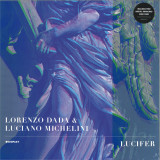
With Lucifer, Kompakt presents an album of rare beauty from two masters of modern music. A family affair, it’s a collaboration between the Italian father-and-son duo of Luciano Michelini and Lorenzo Dada, whose combined histories bring to Lucifer a depth of experience alongside clarity of vision and a finely tuned, neatly developed combined compositional voice. A lovely, beguiling suite of music that combines the electronic and the acoustic, the urban and the pastoral, its gorgeous night-eye vision and tender melancholy sits neatly within the Kompakt universe, while offering the curious listener some rich new perspectives.
There is already plenty to know both artists by. Lorenzo Dada creates across multiple fields – a techno producer and DJ who has already worked with the likes of Jay Haze, Fete, Leo Benassi, and Der, he’s released a small clutch of stylish, smartly designed EPs, and a solo album, Second Life (2018). His complementary background in classical music and composition informs his ensemble project, Tears Of Blue (who appear on Lucifer), where Dada paints with neo-classical tones for a quartet of violin, viola, cello and grand piano, supplemented by electronics for live performance.
Luciano Michelini’s history is yet richer. He may be best known, to many, for his piece “Frolic”, the theme to Larry David’s Curb Your Enthusiasm series; it was also sampled by Snoop Dogg for 2022’s “Crip Ya Enthusiasm”. But there’s much more to Michelini’s story. A successful soundtrack composer, Michelini both studied and taught at the Conservatoro di Santa Cecilia, and worked for RCA from the sixties to the eighties; his soundtracks from this period are gorgeous examples of the form, particularly his work for Il Decamerone Nero (1972), L’Isola Degli Uomini Pesce (1979), and the devastatingly gorgeous Dimensione Donna (1977).
In the eighties, Michelini and his wife Anna Gutling founded the Electronic Music Division studio and academy in Rome, which is where the majority of Lucifer was recorded. Dada reflects on the experience: “We never worked together before, so it was all new for both of us,” with Michelini adding, “I truly love this experience with my son. He’s a talented pianist and composer. I am not very familiar with electronic music nowadays, but we did it fluently.” There’s certainly a familial energy at play through Lucifer, and you can hear how Dada and Michelini, through exploration and experiment, find a shared language, balancing Dada’s tendency toward minimalism, and Michelini’s composerly voice.
Lucifer flows as a suite that interweaves electronic music with acoustic instruments: the lonely sigh of saxophone; Michelini’s lush, verdant piano; the weeping strings of Tears Of Blue (recorded at the studio of Michelini’s friend, the late Maestro, Ennio Morricone). These multiple voices are located within the electronic sighs and swarms from Dada’s kit; there are moments of propulsion, and passages of lambent drift, where the album revels in its tonal sweetness. If it flows so effortlessly, that’s because Lucifer was designed that way, as a suite or a sonata of sorts.
And the title? Dada reflects, “Lucifer was an angel who decided not to be one anymore. The miracle of life is that we can decide what we want to be, even if we are born as angels or vice versa.” This feels somehow apposite: there’s certainly something of the transformative, and the transportive, in Lucifer, a unique family collaboration of rare poetry and sensitivity, where two generations meet in the modern crucible that is the electronic music studio.
- A1: Yellow - The Ghetto (Getto/Yellow In Kyoto) (Getto/Yellow In Kyoto)
- A2: Quincy Jones & Ray Brown Orchestra - Fat Cat Strut
- B1: Miguel Angel Fuster - Polvo Lunar
- B2: Michel Sardaby - Welcome New Warmth
- B3: David Alexrod - Mucho Chupar
- C1: Brute Force & His Drum - Weird & Wonder
- C2: Johnny Frigo - Thank You
- C3: John Sangster - Hair
- C4: Boris Gardiner - Ghetto Funk
- D1: Fred Wesley - Blow Your Head
- D2: The Motherhood - Back In The Dark
- D3: Leo Acosta - Rencorosa
- D4: The Bridge - Alles Klar
"Everything's been fucked since David Bowie died or they started up the Hadron Collider" say The Janitors. This feeling is epitomised in the title of their riveting new album: An Error Has Occurred. Marking over two decades of activity for the Swedish psych-rockers, the recording is informed by heartbreak and loss as well as the dismal state of the entire planet. For The Janitors, these two polarities intertwine constantly: "What's personal is political and vice versa." To channel their frustration and anger, the band revived certain songs they'd shelved during the pandemic when working on the acclaimed Noisolation Sessions. They added others, written since, that suited the mood of sticking a middle finger up to the oppressive world around us. Whereas previous recordings were often layered up gradually, this time the full band (Henric Herlenius, Jonas Eriksson, Anders Thorell and Wilhelm Tengdahl) rehearsed intensely together before laying down everything live, over two days and nights, in a converted missionary church. The songs on Side A have the menace of Melvins, the swagger of The Stooges and the cosmic heft of The Heads. These are the more simply constructed and poppier pieces... or so the band believe. (One friend of theirs did consider this "delusional".) 'In A Bliss' acts as the album's radiant centrepiece. A palette-cleansing love song which recalls The Jesus And Mary Chain at their most starry eyed, it finds The Janitors searching for solace and strength in straightforward companionship. After this come the dronier numbers, drawn out with soundscapes and textures influenced by The Velvet Underground's sonic experiments and the equally immersive atmospheres of electronic acts like Massive Attack. Hence, 'Operator' swings threateningly like a space-rock Swans, while the approach on 'Farewell Spacegirl' is jazzier and more meditative. "It can be hard to muster up some, or even any, positive energy at this point in time," says Henric. "We are eternally grateful to have the creative output that this constellation gives us. Neither me or Jonas would probably be here, or be the same people we are, if it wasn't for The Janitors. We'll leave you with a quote from an old anarchist: 'Every society gets the criminals it deserves.'"
"After an acclaimed run of performances at the National Theatre in 2018, Hadestown returned to London in February 2024 for its long-awaited West End premiere at the Lyric Theatre, Shaftesbury Avenue.
This Grammy award winning recording represents the Broadway show in its entirety. It features vocal performances by Reeve Carney (Spider-Man: Turn Off the Dark); Tony nominees Eva Noblezada (Miss Saigon), Patrick Page (Spring Awakening), and Amber Gray (Natasha, Pierre and the Great Comet of 1812); and Tony winner André De Shields (The Wiz).
Following two intertwining love stories - that of young dreamers Orpheus and Eurydice, and that of King Hades and his wife Persephone - Hadestown, the 8x Tony-winning musical (including Best Score and Best Musical) by celebrated singer-songwriter Anaïs Mitchell, invites audiences on a hell-raising journey to the underworld and back.
Mitchell's beguiling melodies and innovative director and Tony Award nominee Rachel Chavkin's poetic imagination pit industry against nature, doubt against faith, and fear against love.
Performed by a vibrant ensemble of actors, dancers, and singers, Hadestown delivers a deeply resonant and defiantly hopeful theatrical experience. This album was produced by Grammy® winner David Lai (the 2009 West Side Story Cast Album) alongside Todd Sickafoose and Anaïs Mitchell, who also collaborated on Mitchell’s celebrated modern folk album Young Man in America. This is a new 2LP version in standard packaging making it cheaper than previous deluxe versions. 2 x 140g discs in a gatefold sleeve"
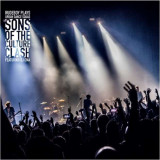
Rapper Rudeboy and DJ DNA play the work of the legendary crossover band Urban Dance Squad. The group quickly broke through with their unique mix of funk, soul, jazz, punk, rock and hip hop. Their influence extended to bands like Rage Against the Machine, while
they were like-minded peers of The Beastie Boys and Red Hot Chili Peppers.
Worldwide tours, an impressive live reputation, and recognition in the United States, including invitations from David Bowie and U2 as support, have characterized their career.
Certainly one of the most obscure and perhaps one of the most fascinating work of the English jazz revolution. Master of ceremonies is cellist Paul Buckmaster, known for his work with the Third Ear Band and for his (later) collaborations with Miles Davis, David Bowie and Elton John. Chitinous is his the only album as leader and it was recorded between 31 March and 13 April 1970, by an orchestra of no less than 51 players, with violins, violas and cellos. In this enormous line-up we find the cream of English musicians involved, starting with trumpeter Ian Carr and ending with drummer John Marshall. The leader is on cello, his main instrument, but also on keyboards, which he shares with the excellent Pete Robinson. The music is organized in suites, with very broad suggestions that draw from classical and contemporary music and then move back into jazz territory.
José James - the forward-looking, genre-defying Jazz singer for the hip-hop generation - has done it again. “1978” (his 12th studio album since 2008’s “The Dreamer'') announces an instant classic, combining James’ deep love of jazz and hip-hop with songwriting and production nods to R&B heroes Quincy Jones, Michael Jackson and Leon Ware. Produced by James and featuring an all-star ensemble including Grammy nominees Pedrito Martinez (Camilla Cabello, Eric Clapton), Marcus Machado (Daniel Ceasar, Pharoahe Monch), Jharis Yokley (Sleigh Bells, My Brightest Diamond) Chad Selph (Bilal, FREELANCE) and David Ginyard (Solange, Blood Orange), “1978” pulsates with the socially conscious feel-good vibes of Marvin Gaye, Prince and Stevie Wonder. James also skillfully explores the boundaries of Black music, featuring Brazilian rising star and recent Latin Grammy nominee Xênia França as well as Congolese-Belgian rapper/filmmaker Baloji.
The artist Dennis Busch (James Din A4, Joyride, Pop Dylan, Pastor Fitzner, etc.) returns after over 12 years of electronic abstinence under his pseudonym James Din A4 with his new album Ins Licht (Into the light) on David Rauer's label Blubbernugget.
Hedonistic dissociative techno tracks meet twisted, light-drenched house anthems and are gently, yet brutally transformed into a multi-dimensional state of pure euphoria in dream-like sequences and abstractions. Here you can dance like nobody is watching and at the same time put your innerspace time travel on autopilot. This is a record as energetic as a Hi-Frequency crystal. It's 2024. Welcome to the age of I AM.
Musik & Artwork: Dennis Busch
Master & Cut: Loop-O
Special Guests on the record include: Mark Cisneros, Joe Lally, Derrick Decker, Bob Berberich, Clint Walsh, Dave Grohl, Onam Emmett, John Goetchius, Jerry Busher, Amy Pickering, Ian MacKaye, Amanda MacKaye, Brian Baker, Randy Austin, Martha Hull, Michael Reidy, Nate Bergman, Bobby Madden.
Scream formed in 1979. Drummer Kent Stacks, bassist Skeeter Enoch Thompson and the brothers Pete and Franz Stahl attended school together in Bailey’s Crossroads, Virginia, when they began to discover the punk and new wave scene in DC and the provocative power of making music.
Like most of the punk bands in DC, they were influenced by the Bad Brains, but their rock and roll sensibilities set them apart. In 1982, they went into Inner Ear Studio with Ian MacKaye and Eddie Janney to record Dischord's first full length album, Still Screaming.
Scream followed this with a second full length album, This Side Up, in 1984. The band toured throughout the US and were one of the first US hardcore bands to tour Europe and the UK. In 1987, they released Banging the Drum, which was recorded at both Southern Studios in London and Inner Ear. In 1988, No More Censorship was released on reggae label RAS records. Scream returned to Dischord to release Fumble in 1993.
They made a few line-up changes along the way, including the addition of their friend Harley Davidson on second guitar, and, when Kent Stacks (RIP) left the band to start a family, they asked a young local drummer, Dave Grohl, to take over. After a number of years with "the Scream team," Dave went on to join Nirvana and form The Foo Fighters.
In 1996, at a Christmas reunion show, Kent Stacks returned as Scream’s drummer; the show was recorded and released as the CD “Live at the Black Cat.” Over the next few years, everyone branched out in different directions – Franz joined the Foos for a short period and Pete played with Goatsnake and earthlings? The band returned as a unit, with Clint Walsh on second guitar, in 2011 to record the Complete Control Sessions, which was released as an EP on Side One Dummy and was, until now, the band’s most recent release.
Scream’s newest album, DC Special, will be released in the fall of 2023 on Dischord Records. For this record, Scream invited their extensive music community to help create a unique project that weaves the history of music in Washington DC into the story of the band. Recorded by Don Zientara just weeks before his studio was evicted from its longtime location, the record is rich with both the sounds of Inner Ear and those of friends and musicians who influenced Scream and who shaped DC music over the past six decades. DC Special embodies the same sense of community and politics that inspired Scream from the start and is a truly special collection of new music that speaks to the present and also tells the story of DC music, Scream, and the influences that shaped them.
Bonus Download Tracks
Faces
Politics is Entertainment
Black and White
Lifeline Redux
Smile and Bleed
I Saw Ya (Wanna Be Like Captain)
With his new instrumental album Ventas Rumba, the French composer (and singer) returns to his signature instrument, the piano, blending it with warm synth tones. This album represents a "return to his roots ", allowing Ezéchiel Pailhès to reinvent himself in a seamless way while still exploring ballads and ritornellos, halfway between light-heartedness and melancholy. Ezéchiel Pailhès has been meaning to write a solo piano album for as long as he can remember. Hardly surprising, of course, for this academically-trained pianist, brought up on classical music and then studied jazz. Yet, since his 2001 debut with the electro-pop duo Nôze, and his subsequent four albums, the artist had constantly postponed this project that was so close to his heart. Then in 2022, just as he was getting ready to start producing an album of new songs, this long-standing aim finally materialized.
The melodies he wrote seemed to stand on their own naturally, spurring him on to compose this series of fourteen tracks, recorded in sessions split between France and Latvia.
A new piano: the Una Corda
Ezéchiel wanted this project dedicated to the piano to begin a new narrative, to explore new instrumental terrain and new tones, something far removed from the familiar piano he has been playing all his life. He opted for the Una Corda piano, designed by David Klavins, a groundbreaking instrument builder renowned for his distinctive pianos with vertical shapes and frames.
The Una Corda, created in 2014, is an upright piano with a single string per note (unlike three strings on traditional pianos). Enticed by the "crystalline and unique" tones of this instrument, which is hard to find in France, Ezéchiel travelled to Kuldiga, Latvia (where David Klavins set up his workshops and studios), to record the first part of the album. Although the title of the album may initially conjure up images of a distant, sensual dance, the reality is quite different. Ventas Rumba indeed refers to the waterfall and rapids (in Latvian: rumba) of the river Ventas, which runs near this small village in the western part of the country. Ezéchiel chose to blur the lines, as the sound and musicality of the title likely evoke both his short stay in the Baltic country, and also a form of distant exotic imagery perfectly in tune with his own mischievous wit. Tracks as short stories
Back in France, Ezéchiel enhanced the first tracks recorded in Kuldiga with subtle synth tone layers, and added other tracks composed and recorded at his Montreuil studio. The album reflects a deliberate and sensitive orchestration of piano, synth keyboards and digital effects, as he puts it: "playing to erase the differences between the tones of the various instruments", as if each instrument's texture echoed the others. According to Ezéchiel, you can listen to Ventas Rumba as you would leaf through "a collection of short stories", through compositions that rarely exceed three minutes and evoke figures of movement, lightness, curves or modulation, such as "La ligne", "La valse des singes" or "Fly Finger". Others more seriously relate to a kind of spirituality, which quietly infuses such different tracks as "Ferveur", "Éclair" and "Louanges". Ezéchiel adds: “I’m by no means religious, but I like what God has managed to get musicians to achieve (laughs)". "Louanges", for instance, despite its electronic edge, "refers to Olivier Messiaen, a very devout composer who I greatly admire". Other tracks are directly inspired by the classical music he listens to on a daily basis. For example, Chopin's “8th Nocturne” formed the backdrop of “Pianovado”. Likewise, the harmonic structure of Beethoven's “Waldstein Sonata No. 21” inspired “Opus 53”. Aside from these multiple references and inspirations, which quickly recede behind a style that is uniquely his, Ezéchiel Pailhès keeps exploring ideas already found on his first solo albums, this time in an instrumental format, undoubtedly purer, fostering an imaginary world that evokes the shapes and themes of ballads, ritornellos, light-heartedness, passing time, reverie or a universal subdued melancholy.
Contemporary classical composer Sophia Jani and violinist Teresa Allgaier announce their new collaborative work Six Pieces for Solo Violin on Squama Recordings. Characterized by its calmness and poise, each movement focuses on a particular technical aspect, bending the boundaries of the instrument while maintaining the illusion of simplicity.
Sometimes the most complicated thing anyone can do is to try to create something that feels uncomplicated. Arvo Pärt, ballet, a delicious meal we didn’t cook ourselves, Ella Fitzgerald, a safe place to lay our heads at night, a quiet pine forest – … In all these things, it takes a lot of effort to make us feel as if something is effortless.
– David Lang (from the liner notes)
One of the most essential works from Nurse With Wound, coming in an extended luxury 3x picture LP and 2CD edition, with many unreleased, alternative versions and songs.
This album is the sister album to Current 93’s same titled album and it’s a crownjewel for collectors of avantgarde and experimental music.
The original release of Nurse with Wound’s gargantuan “Thunder Perfect Mind” in 1992 coincided with that of Current 93’s homonymous genre-defining album. Legend has it that the gnostic name initially appeared to Steven Stapleton in a dream as the title of Tibet’s then still nameless upcoming album. Both records feature contributions from David Tibet, Colin Potter, Rose McDowall, John Balance of Coil, Alan Trench of Orchis and Joolie Wood amongst others. The title and the partial overlap of the personnel on both albums isn’t quite where the similarities end, both albums have since become undisputed milestones in their respective artists’ oeuvre. At the core of the definitive 2023 Infinite Fog re-release fully overseen by Steven Stapleton are the two original tracks “Cold” – a classic unsettling rhythmic Nurse collage-fest, significantly closer to jittery psychelia than the oft-cited “industrial feel” and the epic “Colder Still”, easily one of the most mind-bending breathtaking NWW compositions up to this point and well beyond. The track soothes ghostly atmosphere and reveals new surprises with every listen, not least of which is a direct link to its sister release from c93 as well as the first appearance of the signature rhythm loop that would mutate and re-emerge on several later tracks. The album also is the first full-length collaboration with genius sound wizard Colin Potter who has since become a ubiquitous sidekick both on Nurse albums as well as in live performances. As a follow-up to what is widely acknowledged as one of the best-loved exercises in drone of the 20th century “Soliloquy for Lilith”, TPM is a much more varied but at least equally rewarding experience. Infinite Fog are beyond pleased to be able to offer a significantly enhanced, remastered and extended 3 LP version for old and new fans alike.
Mit "Eggsistentialism" kehrt das Psych-Punk-Pop Duo The Lovely Eggs nach einer fast vierjährigen Pause seit ihrem Indie-Nummer-Eins-Album "I am Moron" zurück. In dieser Zeit haben sie ihre eigene Fernsehsendung Eggs TV gemacht (mit Ian McKaye, Stewart Lee, Katie Puckrik, Maxine Peake, David Shrigley und anderen), ein Duett mit Iggy Pop gegeben, eine Menge ausverkaufter Konzerte und Festivals gespielt und eine Kampagne zur Rettung der Lancaster Music Co-op (ein gemeinschaftlicher Proberaum und Aufnahmestudio, in dem sie leben) geführt.Wie der Titel schon andeutet, erforscht "Eggsistentialism" eine viel persönlichere, introspektivere und nachdenklichere Seite der Welt von The Lovely Eggs und lässt die Eggs neue Klänge erforschen und in unerforschten musikalischen Gebieten experimentieren."Wir haben seit 2020 keine neue Platte mehr veröffentlicht und in der Zwischenzeit haben wir hier versucht, das Recht auf einen Lebensstil zu verteidigen, den wir hier in dieser Stadt in den letzten 30 Jahren als arbeitende Musiker genossen haben, die sich weigern, einen "normalen" Job zu bekommen. Es geht darum, an etwas zu glauben und nicht loszulassen. Aber dieser Unwille, aufzugeben, fordert letztendlich seinen Tribut. Es fängt an, dich zu zerstören, und das Album ist eine Art Dokumentation dieser Zerstörung und des Zusammenbruchs sowie der Stärke, die wir haben, um das alles zu überstehen. Letztendlich ist dies ein hoffnungsvolles Album über das Überleben." Aufgenommen zu Hause in Lancaster, produziert zusammen mit Dave Fridmann (u.a. MGMT, Sleater Kinney, Mercury Rev sowie Grammy für Flaming Lips), wurde das Album in den Tarbox Road Studios in New York mit von ihm und der Band abgemischt. Atemberaubendes Artwork wieder von Illustrator Casey Raymond.