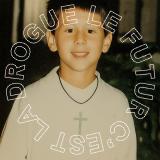
Baccanalia is the new EP from PS5 : a collection of visionary dances inspired by the world of classic mythology. The syncopated rhythms and the ritual chants evoke war dances, satyrs ‘ parades and rites of passage and transformation. A deep sonic trip emerges, in which stylistic features of contemporary jazz interlace with ancestral suggestions creating a musical experience that is both physical and mystical. Pietro Santangelo is among the most prominent and recognizable voices of the contemporary Neapolitan music scene. Starting from the seminal experience of Slivovitz and the underground of the Crossroads Improving improvisation collective, in recent years it has given shape to PS3 and PS5, two of the most innovative ensembles in Italian jazz in recent years.The sound of his saxophone has characterized iconic records such as Nu Genea ’s Nuova Napoli and Dario Bassolino’s Città Futura, is featured in bands such as Fitness Forever, Funkin’ Machine, Khalab, Ex Generation (Napoli Exchange), Circolo Psiconautico, and many others.
Suche:de de mo
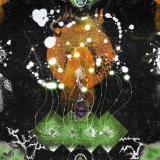
Blue Hour is the most recent release from Friday Night Plans, recently signed by Modern Obscure Music. The project marks FNP's shift from their 'pop' roots towards a more experimental and ambient sound. Friday Night Plans is pioneered by singer/songwriter Masumi who has collaborated on this project with acclaimed Japanese producer Ena. Together, they have created a collection of songs that represents the quiet introspection and emotions of the AM hours, using improvisation during the production process to create a cyclical record that is described as 'dreamlike'. Masumi attributes the project to a journey consisting of fragments of memory through each song; a reflection of how nostalgia and recollection connects us to emotions.
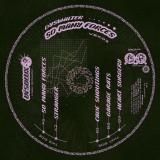
Desert planet house from inner spaces - the mountain people‘s premiere full EP outside their own imprint. Featuring sand shattering subbasses alongside vintage stabs, wobbling chords and otherworldly chanting. Something you will not dig up easily from your discogs collection and which will further enchant the children of the light.
Play or face the Gom Jabbar.
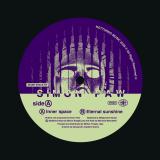
FELT wade deeper into the murky waters of contemporary Scandinavian electroacoustic music following the recent reissue of Johan Wieth’s Health & Safety project on sub-label LEFT and established gems from the likes of Civilistjävel!
Gintė Preisaitė, a Lithuanian artist and graduate of Copenhagen’s Rhythmic Music Conservatory, reveals her first solo release under her own name, following a collaborative effort with Toshimaru Nakamura in 2025 and a number of cassettes as “Baraboro”. The deliberately genre-blurring sound Preisaitė deploys works with composed pop vignettes, sustained drones, FX manipulations and guttural bursts of noise. Sparse piano movements, sample-laden psychedelia and moments of big beat/trip-hop rhythms gel with crowd noise, close mic’d intimacy and experimental percussion with a focus on instrumental timbres and extended techniques.
With a background in composing for large ensembles, Preisaitė's multi-instrumental approach is evident across the eight tracks, moments of dense concrète-style sound collages anchored by the human voice never being far away. She laments on fantasy, absurdity and relationships as a cast of players contribute string, brass, accordion, and guitar parts. Passages move from delicate acoustic folk motifs through to wide-eyed, cut-and-paste glitch electronics and spectral melodic riffs, making the album an unorthodox and welcome addition to Denmark's current world-class music scene.
Maybe it was inevitable that Vilhelm Bromander and Fredrik Rasten would find each other. A symbiotic musical alliance of suggestive combinatory magic that stretches back to the interstitial two day space that separates their dates of birth and manifests here as the movement between ‘perfect’ or ‘just’ intonation and the ragged, psychoactive energy of the slippages from and towards that togetherness that render otherwise simple patterns or generally understood repetitions as wildly other and alive.
Astral Twins shares ‘twin’ works by each composer. The patiently unfolding real time retuning of Fredrik Rasten’s guitars on the a-side’s Sojourns and Vilhelm Bromander’s quickened steps and spry looping melodies on the flip’s Partially Dancing.
Both artists have history of going deep into the aesthetic and acoustic impact of intonation (how you think about what is ‘in tune’). Where their first LP (...for some reason that escapes us, 2019, Differ Records) shared a gorgeous set of sustained tone colour fields, this time they lean more explicitly into the folk music traditions of Scandinavia and further afield, whilst echoing the zoned minimalist atmosphere of Arthur Russell’s classic Instrumentals.
Recorded up close and in real time at Fylkingen’s soon-to-be-abandoned temporary location in Stockholm’s southern suburb of Bredäng, Astral Twins sings with the possibility that one plus one can equal more than two.
Fredrik Rasten:
Sojourns explores the live retuning of guitar and double bass in a sequence of just intonation harmonies. A guitar ostinato runs throughout the piece where the retuning becomes an integral part of the composition. The slow pace reveals every detail in the transition from one harmonic arpeggio to another — how interfering waves emerge and disappear as the tonal interactions settle in electric clarity. The double bass shadows the guitar's process and comments with occasional pizzicato tones and register jumps, at times providing a low foundation for the sound and sometimes soaring together with the guitar. This is music that is deeply listening; experimental and at the same time humbly inviting many kinds of being with sound.
Vilhelm Bromander:
As the title suggests, this song has a partially dancing character. The title also has a double meaning with reference to the partials and harmonics that dance together. The basic idea was to write music in just intonation that instead of being drone-based is reminiscent of a lightly dancing folk music, where the joyous feeling of just being in the music — “musicking" — is allowed to lead the way.
The double bass plays repeated overtone double stops in an open harmonic progression with subtle modulations that is inspired in equal parts by Steve Lacy's persistent repetition of phrases as east-asian khaen music. The guitars and mandolin have a freer role, with plucked retuned strings that enhance the bass's modulations and provide forward movement. The music invites to both melodic and spectral listening, suddenly halting so that other focal points can reveal themselves. For example, a chord sequence suddenly transitions to a more spectral part where Fredrik is playing a bowed guitar with a chain, several plucking guitars, voices, and pitch pipes. I wanted to make something ‘orchestral’ with just two people and no overdubs: a dance of overtones and open resonant strings, where we seamlessly take turns standing in the foreground.
TRANSPARENT VINYL[28,78 €]
Am 29. Mai 2026 erscheint das erste Album von GÖRL: "Dark Silver Moon Light". Hinter GÖRL stehen mit DAF-Legende Robert Görl und die stilprägende DJ- und Produzentin Sylvie Marks zwei Pionier:innen der elektronischen Musik. Robert Görl gründete 1978 mit Gabi Delgado die legendäre Postpunk-Gruppe Deutsch Amerikanische Freundschaft (DAF). Mit radikal reduzierten, ikonischen Sequenzen, brutalistisch anmutenden Drums und provokativer Ästhetik gelangen DAF zeitlose Hits wie "Der Mussolini". Sylvie Marks wiederum war die erste und einzige weibliche Resident-DJ des legendären Frankfurter Clubs Dorian Gray. Später veröffentlichte sie als Produzentin internationale Club-Hits und trat auf Festivals wie Roskilde auf. Seit sechs Jahren verbindet Robert Görl und Sylvie Marks eine funkensprühende Kreativpartnerschaft, die in der Veröffentlichung ihres ersten gemeinsamen Albums als GÖRL gipfelt, "Dark Silver Moon Light". Das Album denkt die ästhetische Tradition von DAF mit und transzendiert sie zugleich in Gegenwart und Zukunft.
Black Vinyl[28,78 €]
Transparentes Vinyl. Am 29. Mai 2026 erscheint das erste Album von GÖRL: "Dark Silver Moon Light". Hinter GÖRL stehen mit DAF-Legende Robert Görl und die stilprägende DJ- und Produzentin Sylvie Marks zwei Pionier:innen der elektronischen Musik. Robert Görl gründete 1978 mit Gabi Delgado die legendäre Postpunk-Gruppe Deutsch Amerikanische Freundschaft (DAF). Mit radikal reduzierten, ikonischen Sequenzen, brutalistisch anmutenden Drums und provokativer Ästhetik gelangen DAF zeitlose Hits wie "Der Mussolini". Sylvie Marks wiederum war die erste und einzige weibliche Resident-DJ des legendären Frankfurter Clubs Dorian Gray. Später veröffentlichte sie als Produzentin internationale Club-Hits und trat auf Festivals wie Roskilde auf. Seit sechs Jahren verbindet Robert Görl und Sylvie Marks eine funkensprühende Kreativpartnerschaft, die in der Veröffentlichung ihres ersten gemeinsamen Albums als GÖRL gipfelt, "Dark Silver Moon Light". Das Album denkt die ästhetische Tradition von DAF mit und transzendiert sie zugleich in Gegenwart und Zukunft.
Chins For Lefty is the debut album and first recording by Gichard, a new duo chronicling the absurdities of end-stage capitalism and mouldering social rituals from their vantage point in Glasgow, Scotland. Recorded primarily in the band’s home studio straight to tape, Chins For Lefty combines gorgeous, ramshackle melody, DIY kosmische punk, drum machine + synth and, in vocalist/lyricist Lisa Jones, an absurdist commentator on the human condition as it navigates the anxieties of the modern world. Instrumentalist Chas Lalli’s swirling music accompaniment stitches an evocative mix of musical styles, the ragged wind beneath the lyrics’ wings.
Although the duo first collaborated in their previous group Dragged Up, their disparate musical and artistic backgrounds make for an alluring mix in Gichard. Lalli has spent the last 20 years in the Glasgow underground, most notably in the noise rock group VOM, while Lisa Jones’s practice was in poetry and spoken word. Beginning as co vocalist in her previous band, in Gichard her lyrics are centre stage; the vision concocted alongside Lalli amounts to a total world-build.
Chins For Lefty scans almost like a novel, with each track elucidating a skewed universe that bears only some resemblance to the one you and I partake in. Like all works of fiction Gichard’s songs are rooted in reality and the lived experiences of its authors, but here characters are exaggerated, social mores and habits are pulled apart to reveal their inherent alienness. Universal emotions are laid bare, the bright light of anxious examination searching out every hairline fracture in our relationships. Distorted and cracked, the mirror that Gichard hold up to our world is also pretty damn funny.
Opener Cholesterol Test launches an expansive, cosmic guitar and synth intro that belies the Tascam-tape recorder it was recorded onto, like a Chromatics cut substituting anxiety for overt sexuality. Here Jones intones an apology to a non-responsive recipient, in the medium of a long voice note forensically deconstructing an interaction from the night before. Over punk guitars and shuffling, lo-fi drum machine splutters, the narrator in Asking The Apes “prefers things to people” before being taken hostage in the city zoo to confess an obsession which consumes the protagonist, ending with the immortal two liner “I sleep in a cocoon of old newspapers at the end of your street / And I think I have been fired from my job,” On album standout Posthumous Hologram, the narrator is faced with a human simulacra, in this case an undead pop star; the face of the encroaching technological singularity. Yes, it does requests, it can do My Way in 200 different language options. But what are the implications? While you’re left pondering, the alternating deadpan verse delivery and undeniably catchy chorus keep you company.
By the time Break Up With Johnny Dogbirth rattles into view, the band are satirising a suburban inanity blown up to cartoon proportions, soundtracked with a drawled musicality that recalls Rowland S. Howard’s post-Birthday Party balladeering. This approach is furthered on Human Resources: over an angular guitar+bass track, Jones’s short story recalls Dry Cleaning’s erudite lyrical post punk. On Soft Face, Lalli’s guitar and drum machine are swathed in echo and delay, as Jones dissects dating rituals with a west of Scotland drollness. Hamming It Up brings a porcine perspective in a short story that begins with the line “I was breastfeeding discreetly in the service station. She didn’t mind.” What follows is a passage punctured with canned laughter and a narrative involving tribute acts, modern farming techniques.
Brilliant first single Your Private Hell closes the album, the closest the group get to earnest perhaps, filtered through a surreal central Scottishness. While Your Private Hell might seem like a sardonic take down of romance, perhaps it’s the very distillation of love in all its awkwardness, selflessness and weirdness. Here there’s a distinctive Glasgow-ness to this doomed romance: the protagonist falls for an outsider, offers them cheap jarred hot dogs and carbolic soap (the infamous, excoriating soap dished out in schools and government buildings throughout Scotland), offers to cover up a murder, stalks them in the all-night Spar. It’s a short story of intrigue, murder and the irresistible pull of self-sacrifice to share in someone else’s suffering. If that’s not love, what is it? You can see this vision mapped out in black and white on their video for 'Your Private Hell'.
- A1: Vine Solita
- A2: De Todas Las Flores
- A3: Pasan Los Días
- B1: Llévame Viento
- B2: El Lugar Correcto
- B3: Pajarito Colibrí
- C1: María La Curandera
- C2: Caminar Bonito
- C3: Mi Manera De Querer
- D1: Muerte
- D2: Canta La Arena
- D3: Que Te Vaya Bonito Nicolás
With the release of De Todas las Flores, Natalia Lafourcade returned with an album of entirely original material for the first time in seven years.
Musically, De Todas las Flores, dives into a wide variety of Latin jazz and folk genres, such as bolero, cumbia, bossa nova, and samba. Lafourcade describes the album as her musical diary, exploring themes of heartbreak, loss, and grief. She drew inspiration from nature, particularly her home garden in Xalapa, Veracruz.
Lafourcade enlisted the help of her former neighbour, Adán Jodorowsky, for production. The musical touch came from musicians such as the guitarist Marc Ribot (Tom Waits, John Zorn) and the bassist Sebastian Steinberg (Soul Coughing, Eddie Vedder, Fiona Apple).
De Todas las Flores is available as a limited edition of 2000 individually numbered copies on transparent vinyl and includes an insert and printed inner sleeves.
The crown jewel of Finnish Death Metal, reissued in a band-approved new 30th anniversary edition. Features a new vinyl master from the original source by Noise for Fiction, plus a booklet with a lengthy feature by Hippo Taatila and some visual memorabilia. As an added vinyl bonus there's a large poster by the original cover artist Rob Smits creating a new vision of the album cover for the new millennium. Together with bands like Demilich, Abhorrence, Disgrace, Xysma and Sentenced, Demigod from the wastelands of Loimaa, southern Finland, put Finland on the map in the global death metal scene in the late 80's and early 90's. Having risen to underground fame with their demo Unholy Domain, Slumber of Sullen Eyes was a hugely expected debut album. When it was finally released in 1992 after a complicated creation process at Tico-Tico Studios in northern Finland, it was received with open arms and drooling excitement by the then very active underground death metal scene. That scene was, however, short lived,and by 1994 pretty much every band had switched from death metal to something else entirely. What was left after the bands had left the building was a number of classic albums that constitute the legacy of Finnish Death Metal. Among them, Slumber of Sullen Eyes is one of the most original and ferocious. There was nobody like Demigod.
- 1: Soul Steady Situation
- 1: 2Guess That's Just Loving You
- 1: 3There Must Be Something
- 1: 4Don't Let Go
- 1: 5In My Arms
- 1: 6For You
- 1: 7Driftin
- 1: 8Don't Be Late
- 1: 9Bolsita
- 1: 0One More Night
- 1: Situation 2
OPAQUE ORANGE VINYL[23,49 €]
Wenn Sie Joey Quiñones fragen würden, woher er die Inspiration für seine Musik bezieht, müssten Sie nicht weit von dem Ort suchen, an dem der Sohn aus East LA aufgewachsen ist. Wenn man seine Werke hört, fühlt man sich in einen Umkreis von zwei Blocks seines Viertels versetzt - vom Spirituosengeschäft zum Plattenladen ,Sign of Music" am Whittier Boulevard und zurück zum Haus eines Freundes. In diesen zwei Blocks hört man Cumbia aus den Geschäften dröhnen, Punk-Proben aus einer Garage, Oldies aus dem Garten eines Nachbarn - eine Reizüberflutung, die Sie bis nach Hause begleitet, all diese Genres, die gleichzeitig in Ihrem Kopf erklingen. Für langjährige Fans von Quiñones' Musik ist das keine Überraschung. Er hat sich als einer der führenden Interpreten seiner Generation etabliert und seine Karriere der Vermittlung seiner einzigartigen Perspektive auf das Chicano-Soul-Songbook gewidmet. Doch vor Thee Sinseers, vor den üppigen Orchestrierungen und den perfekten Harmonien, die zu seinem Markenzeichen wurden, sammelte Quiñones erste Erfahrungen als Leiter verschiedener Begleitbands für jamaikanische Ska- und Dancehall-Acts, die durch Südkalifornien tourten. Er beschreibt diese Jahre als Reggae-College, in dem er von jedem jamaikanischen Künstler, der eine Platte herausgebracht hatte, angeschrien wurde. Diese Jahre der Ausbildung in Rocksteady und Roots-Reggae prägten alles, was danach kam - und auf seinem neuen Soloalbum ,Inna Soul Steady Situation" stellt Quiñones diese Einflüsse endlich in den Vordergrund.
- A1: Chihei Hatakeyama / Gloaming Western Ocean
- A2:
- A3: Kaoru Inoue / A Distant Coast
- A4: Yakenohara / Heavenly Pale Waves
- A5: Calm / Shiono Ka
- B1: Natural Calamity / Wipe Out
- B2: Shimon Hoshino / Blue Horizon Memory
- B3: Hiroto Taniguchi / Still
- B4: Moshimoss / Unsaid
- B5: Yosuke Konuma / In Harmony With The Flow
■ The latest installment in the popular ocean themed compilation series “SALT... meets ISLAND CAFE”, curated by the beach life magazine/media SALT...,
is DEEP BLUE the series’ first ever ambient music compilation. Centered around the title concept inspired by the deep, tranquil blue of the ocean, the album
presents soothing music tailored to modern lifestyles, spanning chillout, Balearic, meditation, and healing sounds.
■ Ten artists each highly trusted by discerning listeners across the ambient, chillout, Balearic, and surf‑music scenes have created brand‑new, original ambient
tracks inspired by the theme. From pioneers active since the ’90s to cutting‑edge trackmakers, this compilation brings together a stunning collection of
ocean‑themed ambient music.
■ Mastering is handled by ambient/Balearic maestro Calm, who is also featured as one of the contributing artists, delivering an exceptional sonic experience.
Enjoy all ten tracks, each expressing its own unique interpretation of DEEP BLUE.
■ The artwork features an artistic photograph by Pedro Gomes, a Brazil born, Japan based surf photographer, with design by Masato Maekawa (tAnkers inc.),
known for his work across apparel and outdoor brands. Under the supervision of SALT..., the visuals perfectly capture the compilation’s immersive world.
[b] a2. [.que] / deeply
Cinthie’s Collective Cuts sub-label of her 803 Crystal Grooves label welcomes the UK’s Black Eyes onto its roster this March with his ‘Hydrocity Reflex’ EP, comprised of four original soul drenched House Jams.
Cinthie’s 803 Crystal Grooves Collective Cuts welcomes Black Eyes with a fresh four-track EP that distils the Manchester-born, Berlin-based artist’s signature aesthetic into its purest form. Fusing deep, trippy and soulful house with a raw, Detroit-leaning sensibility, Black Eyes channels the influence of House music’s roots into rolling rhythms and fluid textures alongside shaped by his enduring love of water. Now firmly embedded in Berlin’s underground while carrying the grit of his northern roots, he delivers a release that feels both immersive and driving a natural fit for 803 Crystal Grooves’ dance floor focused sonic vision.
Opening the EP is ‘Can You Dig That Depth’, an emotive slice of House driven by saturated keys, soulful vocal lines, heavily swung drums and a buoyant bassline. ‘Pressure Malfunction’ follows, stripping things back to organic percussion, sweeping filtered funk loops and intricately processed spoken-word chants. The B-side begins with ‘Loyalty To Tha Deep’, living up to its name as it embraces classic Deep House sensibilities through choppy, airy chord progressions, hypnotic breathy vocals, fluttering melodies and slow-slung, crunchy drums. ‘Funky Oxygen’ then brings the release to a close, channelling the spirit of Motor City House with a refined blend of cut-up samples, shuffled percussion, jazzy keys and a snaking bass groove.
- 1: Prelude
- 2: Rockstar (Ft. Marlon Dubois & Jazz Lambaux)
- 35: Year Plan
- 4: Rather Be Alone (Ft. Fgs)
- 5: Downtown Clown
- 6: Pan Night
- 7: Let's Keep In Touch
- 8: Settle The Score
- 9: Nothing Lasts Forever (Ft. Dylan Baldi)
- 10: Sorry To Hear That
- 11: Tell Jeff
Jack Callahan und Jeff Witscher waren echt müde. Seit der Jahrtausendwende hatten sie sich beide in der amerikanischen Underground-Experimental-Musikszene abgemüht, unter Namen, die du vielleicht kennst oder auch nicht: Rene Hell, Marble Sky, die Reihe, um nur einige zu nennen. Ihr erstes Album Think Differently war das Ergebnis einer Reihe von Endpunkten: der Auflösung ihrer Underground-Szene und, nicht zuletzt deswegen, der Tatsache, dass die abstrakte Musik, die sie seit jeher getrennt und gemeinsam gemacht hatten, nicht mehr so gut ankam wie früher. Wo sonst sollten sie hingehen als auf die andere Seite des Hufeisens: zur Popmusik. Warum also nicht den Zeichen der Zeit folgen? Eine Gitarren-Pop-Rock-Hymne zum Jahrtausendwechsel aufnehmen, die davon handelt, dass man als alternde Underground-Musiker keine Noise-Musik mehr machen will. ,Sorry to Hear That" ist ein Album über ,Think Differently". Wenn ,Think Differently" ein meta-konzeptuelles Album war, dann ist ,Sorry to Hear That" ein meta-meta-konzeptuelles Album. Meta Meta+Hodos. Es wurde über einen Zeitraum von 9 Monaten nach dem ersten Album aufgenommen. Es war eine Zeit persönlicher und beruflicher Umbrüche: Der anfängliche Optimismus aufgrund der Aufmerksamkeit, die "Think Differently" erhielt, schlug schnell in Fanatismus um und mündete unweigerlich in Angst, Enttäuschung und Zerwürfnis. Das Album, das sie schließlich aufgenommen haben, ist ein Dokument und eine Erzählung über diese Zeit. ,Sorry to Hear That" ist eine Fortsetzung, die klanglich und konzeptionell dort ansetzt, wo das erste Album aufgehört hat. Hier gibt es mehr Gitarre, mehr Breakbeats, mehr selbstbezogenes Unwohlsein und mehr humorvolle Selbstironie. Es fängt perfekt ein, was das Duo von Anfang an vermitteln wollte: Es ist ein mitreißendes Album voller Kommentare von beiden Seiten, dem Spieler und dem Gespielten, die bis ins Unendliche gesteigert werden. ,Sorry to Hear That" hat eine Reihe von Gastauftritten von alten und neuen Kumpels aus der Independent-Musikszene: Marlon DuBois, Frontmann von Shed Theory, Dylan Baldi und Jayson Gerycz von Cloud Nothings, Flannery Silva alias F.G.S., Jazz Lambaux und andere.
- 01: Parasita
- 02: Cicatrizes
- 03: Profecia
- 04: Simulacro
- 05: Advertência
- 06: Reflexo
- 07: Feitiço
- 08: Possessão Coletiva
- 09: Em Transe
Brazilian duo DEAFKIDS returns with a vital and combustive new album, CICATRIZES DO FUTURO (SCARS OF THE FUTURE).
This nine-track sonic assault forges a path beyond the conventions and boundaries of static musical genres. Here, electronic fury and feverish organic percussion collide with a relentless Latin American punk spirit.
Vinyl is opaque orange with black dot splatter. Limited
PRESS FOR PREVIOUS ALBUM ‘METAPROGRAMACAO’ (NR113)
LEAD REVIEW IN WIRE MAGAZINE: 'BRAZIL'S DEAFKIDS PERFECT AN UNHOLY COLLISION OF DUB, METAL AND PSYCH ON THEIR CACOPHONOUS NEW ALBUM'
'OPENER 'MENTE BICAMERAL' SOUNDS LIKE BAD-TRIP MINISTRY AND THE SEVEN MINUTE CENTREPIECE 'RAIZ NEGATIVA' IS ABSOLUTELY HUGE' 4.5/5 NARC
“ONE OF THE MOST INDIVIDUAL ENDEAVOURS OUR COMMUNITY WILL DELIVER THIS YEAR” ZERO TOLERANCE.
9/10 REVIEW IN LOUDER THAN WAR: “. IT'S NOISY, IT'S INDUSTRIAL, IT'S PUMMELLING AND ULTIMATELY, IT'S COMPLETELY SATISFYING..
Conceptually, the album is a visceral diagnosis of a world intoxicated by its own fictions
of power, tracing the anatomy of a systemic grand deception and exploring its mechanics
of psychological, social, and material domination, the indelible marks imprinted on bodies
and minds and its catastrophic consequences.
It is a journey from the poisoned and addicted collective psyche to the desperate search for an antidote, while the future seems to be already cursed by the very forces that pretend to build it. Yet, for all its thematic weight, CICATRIZES DO FUTURO is hypnotically danceable - physical and ritualistic music that demands body movement as a form of mental cleansing. The album doesn’t just reflect a fractured and violent world — it breathes desire to live and resist through new sonic paths
- 1: Clive Zanda - Ogun
- 2: Michael Boothman's Family Tree - Tabu
- 3: Lancelot Layne - Umbawa
- 4: Andre Tanker - River Come Down
- 5: Black Truth Rhythm Band - Save D Musician
- 6: Art De Coteau - Kerieka Woman
- 7: Mansa Musa - Beat The Drum
- 8: Sensational Roots - Calypso Zest
- 9: Frends - Mystery Music
- 10: Abdul Malik De Coteau - More Weight
Kaiso Power is a collection of rare jazz, calypso and percussive gems from Trinidad and Tobago from the revolutionary generation of the 1970s, bringing radical new political vision and reclaiming ancient spiritual consciousness through music. At the dawn of the 70s a shift was taking place all around the world. The streets of Port of Spain thronged with Black Power marches, trade union demonstrations and Carnival protest bands - one epicentre in a growing global exchange of ideologies and strategies among Pan Africanist circles in Jamaica, Guyana, London, New York, Montreal, Lagos, Accra and beyond. And when the meetings were over, the revolution moved to the cramped secret dance halls, the Carnival fetes, the steelband yards. The music always had a sharp edge. Searing commentary has always been part of the various types of music in Trinidad, and in the absence of lyrics, the defiant use of the drum maintains the resistance, as well as the re-framing of the playing of European instruments to the needs of the message. Lancelot Layne, Delano Abdul Malik De Coteau, Andre Tanker, Clive Zanda, Mansa Musa were more than artists, they were teachers, community workers and advocates for justice. These recordings are as raw as an all-night Carnival jam, the horns loud, the percussion ringing out, the bass dripping with joy and rebellion. Under the modern influences is a solid rhythm, an unbroken connection to Africa, the songs and keys and cadences brought across the middle passage. These songs are a peep into the untapped treasures of a revolutionary generation, looking at the world with fresh eyes and believing that music was a central part of the mission to build consciousness and regain confidence.
- 1: Weight Of Words
- 2: Shadow Purposes I. Patterns Of Goodbye
- 3: Shadow Purposes Ii. Path To An Unlit Horizon
- 4: Shadow Purposes Iii. New Tectonics
- 5: Shadow Purposes Iv. The Blue Cascades
- 6: Shadow Purposes V. A Sea Lit By Stars To Swallow Us
- 7: Blood And Black Ink
- 8: Decision Tree
Christopher Tignors ,Bleeding Past the Edges" ist ein bewusster Kontrapunkt zur heutigen, von KI geprägten Musiklandschaft und stellt die menschliche Hand fest in den Mittelpunkt des Schaffensprozesses. In einem kleinen Studio voller Geigen, Stimmgabeln, Pedalen und maßgeschneiderter Software hat Tignor ein Performance-System entwickelt, das sich weniger wie eine Maschine, sondern eher wie ein lebendiges Instrument verhält. Anstatt sich auf Loops oder Backing-Tracks zu verlassen, generiert er jedes Stück in Echtzeit und fängt Klänge ein und formt sie um, während er spielt. Geigenstreichmelodien erweitern sich zu vielschichtigen Mustern, perkussive Schläge lösen sich entwickelnde Strukturen aus, und selbst eine einzelne Stimmgabel kann sich zu einem ganzen harmonischen Feld entfalten. Das Ergebnis ist ein immersiver, orchestraler Klang, der live von einem einzigen Interpreten erzeugt wird, der sich durch ein eng verwobenes System aus Gestik, Timing und Code bewegt. Jedes Element beginnt als physische Handlung und bleibt damit verbunden, was der Musik ein Gefühl von Unmittelbarkeit, Risiko und Präsenz verleiht, das sich durch das gesamte Album zieht. Auf dem Album bewegt sich Tignor fließend zwischen rhythmisch geprägten Kompositionen, die das Instrument als perkussiven Motor behandeln, und melodischeren Werken, die im expressiven Kern der Violine verwurzelt sind. Die Lead-Single ,Weight of Words" unterstreicht diese Balance und entfaltet sich mit einer narrativen Klarheit, die Tignors Kompositionsansatz widerspiegelt. Er beschreibt diese Stücke oft als ,Kurzgeschichten", in denen Melodien als roter Faden dienen und jedes Werk durch wechselnde Strukturen und emotionale Bögen führen. Der Titel ,Bleeding Past the Edges" verweist auf Momente, in denen die Musik über ihr ursprüngliches Konzept hinausgeht, in denen sich die Struktur lockert und der Klang nach außen fließt. Tignor vergleicht den Prozess mit ,einem Seiltänzer", bei dem sorgfältige Vorbereitung auf die Möglichkeit einer Transformation in Echtzeit trifft. Obwohl die Systeme streng ausgearbeitet sind, behält jede Aufführung ein Element der Unvorhersehbarkeit, wodurch sich die Musik ständig weiterentwickeln kann. Im Laufe von zehn LPs, die über Western Vinyl und New Albion erschienen sind, hat sich Tignor in klassischen und experimentellen Kreisen breite Anerkennung erworben. The Guardian bezeichnete ihn als ,absurd talentiert", während Bandcamp seine ,schiere technische Meisterschaft" hervorhob und The New York Times seine seltene Fähigkeit lobte, Computer bei Live-Auftritten nahtlos mit akustischen Instrumenten zu verbinden. The Wire lobte seine Kompositionen zudem für ihre fließenden, sich entwickelnden Strukturen. Über seine Soloarbeit hinaus hat Tignor mit Künstlern wie Rachel Grimes, Helios, Jefre Cantu-Ledesma, John Congleton und This Will Destroy You zusammengearbeitet. Sein Hintergrund verbindet verschiedene Disziplinen: Er hat einen Doktortitel in Komposition von der Princeton University, einen Master in Informatik vom NYU Courant Institute und einen Bachelor vom Bard College, wo er bei dem Dichter John Ashbery studierte. Mit ,Bleeding Past the Edges" führt Tignor diese Stränge zu einem Werk zusammen, das sich sowohl streng konstruiert als auch lebendig anfühlt - ein Album, das Performance, Körperlichkeit und die anhaltende Ausdruckskraft menschengemachter Klänge in den Vordergrund stellt.