This EP was made during a period where my whole outlook on everything was transforming. The Voidloss project started as an investigation, I was conducting a lot of research and study on the mind, the occult, on different thought modes, and the Voidloss project represented this. The idea was about a leap in to the void. A leap of abandonment into the dark, with total acceptance, total commitment. The idea was to lose myself to the void. This was mainly a spiritual journey for me, and could be best explained by 3 things, the void of Miyamoto Musashi from Go Rin No Sho, The concept of the Tao from the writings of Lao Tzu, and the concept of the abyss from the works of Aleister Crowley. Part of this journey deep inside the self was frightening and horrific, the total loss of self, of all identity and ego, and part of it was beautiful and enlightening. I wanted the music to reflect this, and I wanted the music to change as I changed, as I went to and through all these interesting places. In essence this was about freedom. So fast forward some years and I felt I had sharpened my mind quite effectively, the music had twisted and changed and flowed with me. At the point I began making the music for this EP, I had grown quite angry with the amount of conformity I was perceiving in life. Politically, socially, musically, there was this drive of conformity in the world. I think part of it, and only a part, comes from the prevalence of social media, the need to belong and to be liked, the idea of judging yourself and your works through the perception of others. Musically I felt that within techno there was a tendency for the music to fit within a set of confines dictated by fashion and hype, and this was reducing the diversity of the music, it seemed also that the practices of commercial music were seeping in to techno as the music became more popular. Hype and business driven decisions, brand building and so on. I always felt techno was more about art, and I began to get frustrated. Equally I felt that politically there was less and less choice, as all decisions seemed to lead to the same outcomes. I became more interested in the concept of anarchism, of the idea that government was no longer needed. I have always in my life had a drive to question everything. I've always been 'naughty' and rebellious and done things my way, to my advantage or my disadvantage, I could never accept being anything other than myself all the way. If everyone walks in one direction, I will walk the other way, even if it takes me over the edge of a precipice, just to see what is there. All this stuff influences my music, and during the period of making this EP I was angry, kicking against the things I no longer liked or wanted, screaming dissent. There is a lot of anger and rage, and of course rebellion. I wanted the music to capture that unbridled fury you have when you are in your late teens, when you just start learning about yourself and you start rebelling and questioning things around the time the world is really pushing you to conform. I was soundtracking my own philosophical riot. Previous to this my Voidloss stuff had been more introverted, more pensive and melancholy, more self destructive, more cerebral. For this new music I wanted something more immediate but without being too obvious. In terms of the choices I made I still leaned more towards broken rhythms for beat structure. I find it very difficult to do anything interesting with 4x4 kicks any more, it's too rigid for me, it limits my freedom. I like the looseness you get from more 'drummer' like beats, I guess probably because I have been playing drums all my life. The challenge is to get the same rolling power from broken rhythms as you get from 4 to the floor. It's not easy, there is a ridiculous amount of trial and error and the rejection percentage is high. I also was trying to use less 'synthy' sounds. I wanted to try to take a more acousmatic approach to sound design. With the current modular synth revival in techno I was hearing a lot of 'old' synth sounds re-emerging, and this didn't seem like a progression to me. I wanted to make sounds that were hard to source for the listener, where they weren't sure if it was synth or real world sample, digital or analogue. This involved a lot of experimentation. My process involved a lot of field recording, especially with contact microphones, which open up a whole new world of interesting sounds. You are effectively recording sounds through objects in the environment, 'hearing' the world as these objects hear them, I was using guitars, feedback loops, handmade instruments as well. So I was combining this with different synthesis, granular synthesis, sample synthesis, physical modelling, FM synthesis and of course analogue. Everything was reprocessed and re-synthesised, I tried hard to obscure the source and make something new as much as possible. The stuff on this EP was part of my live PA for some time, so as I learned how the music worked live I could go back and make changes, sometimes the environment I was playing in transformed the sound as well, and so I would try to go back an incorporate this in to the music. For remixes I wanted to choose artists that I respected for their vision as well as for their output, so my list of people I wanted was extremely short. Inigo Kennedy has always been an artist I have respected greatly. His music has always been unique to himself, he remains outside of fashions and trends even though his name has become very big recently. He takes risks with his work, experimenting and exploring, yet remaining relevant to the club, and just tirelessly forging ahead, seemingly for the sake of art above all else. And he's just a really nice guy to deal with. His remix is everything I expected it to be in that it is the unexpected. Regis is another artist who forges his own path in music, you cant really even begin to discuss the avantgarde in techno without including his name, he is one of the foundation stones for artistry and the outsider mentality in techno. His music is always unique to his own vision, and along with it comes an interesting artistic philosophy taking in situationism, post punk and industrial ideology and a good dose of tricksterism ala PT Barnum, all of which comes out in his music and the way it is presented. The man is a truly singular force and it is an honour to have him on this record. Overall the concept here is that of rebellion and dissent. Of asking questions, following your own path, of maintaining some place in yourself that burns like a forest fire.
Whether or not I have succeeded I guess is down to the listener, I'm never happy with my music, I keep wanting to move forwards, or somewhere else, and am constantly trying and failing to capture some essence of perfection. But like Bukowski said
'It's the only good fight there is'
Cerca:de effect
Mostly known for her work with Trinity & Beyond, having releases with the likes of Luke Hess, Alexkid, XDB and Klartraum. Nightime Drama brings to you a a new solo ep. from the Australian based producer along with remixes from Eric Cloutier and label boss Vibrio. For those of you who were in Berlin in recent times may have caught one of her brilliant live or DJ sets at Tresor or Studio R as well as playing at Harry Klein in Munich.
Side A kicks off with Slippin, a solid groove construction that builds with echoes of dubby stabs and edgy percussion. Combined with warm, glowing atmospheres the build up and tension will hold you to the end. Accompanied with a deep and outstanding thought provoking remix by Eric Cloutier, stripping it down to it's bare minimum,re inventing the atmospheres and stabs. This alternative draws you in and sends you out on a moody and peculiar late night dubbed out trip.
Diving Deep, the title says it all. A fine palette of percussion exploring dreamy echoes with beautiful depth and production methods. Sustaining a simple yet effective chord progression, it enhances the mood as the track builds and modulates through time. Followed by Vibrio's drama cut remixing the track with a little more drive makes for a fine chaperone to the original.
- A1: Pega A Voga Cabeludo
- A2: Canastra Real
- A3: Módulo Lunar
- A4: Volksvolkswagen Blue
- A5: Tão Longe De Mim
- A6: Carolina, Carol Bela
- B1: Feitiço
- B2: Planador
- B3: Espiral
- B4: Gotham City
- B5: Momento B/8
- B6: Que Maravilha
LP[27,10 €]
Rare and highly sought after in its original format, Os Brazoes self-titled album was originally released on RGE Discos in 1969. It is a psychedelic masterpiece that fuses samba, r'n'b and rock 'n' roll influences using fuzz guitars, synths, percussion, lush vocals and effects.
Os Brazoes formed in Rio de Janeiro in the late 1960's. They backed Gal Costa during her Tropicalia period, yet apparently never recorded in the studio with her. Miguel de Deus, the bands front man, recorded the highly sought after 'Black Soul Brothers' LP in 1977, which became an important record in the 'Black Rio' movement. Mr Bongo released the title track from that LP, on the 'Brazilian Beats: Brooklyn' compilation in 2006 and recently as part of their Brazil 45's re-issue series.
'Os Brazoes' features covers of Gilberto Gil's 'Pega a Voga, Cabeludo' and Jorge Ben and Toquinho's 'Carolina, Carol Bela'
The Mr Bongo LP reissue is manufactured in Japan, presented in a super high quality card sleeve with replica original artwork. The CD is presented in a 4-page digi-pack.
With this release, Anne Arbor's jakbeat man delivers 6 minutes of electronic mania; a piece of repetitious, dance-inducing machine funk with a hook that hits you like a punch in the face with a velvet glove, brooding pads, and a top line like steel drums on acid. D'Marc Cantu twists the sound of Detoit techno and Chicago house with his own visceral production style and makes it his own.
"Sonically I'm reminded of old home videos, a lower quality presentation of a memory. Decay has that quality to it that reminds of a time gone but stills feels familiar and comforting" DMC
"Rival was the first experiment of my first alias, Rival. It was recorded in with a Volca drum machine the first day I got it, no effects and no edits, as is the basis of the alias, unedited analog sessions. One take" DMC
Repress
Part 1 of Slam's Reverse Proceed Interpretations with reworks from Planetary Assault Systems, Flug, Edit Select & Slam themselves.
Confirmed Press & Promo:
Press - * DJ Mag, Mixmag, Tilllate, Raveline, Groove, Daily Record, Edinburgh Evening News, TopDJ Ua, Nightshade Mag, Nitebeat, Posivision, DJ Times, Time Out NY. Sound Effect Magazine
Radio - * Carl Cox Global, Laurent Garnier Radio, Kiss 100, Ministry of Sound, Galaxy Network, Radio Scotland, Dinamo FM, Acik Radio, BBC Radio Ulster, Future Radio, Reconwarriors, The Beat Delivery, Anton Banks, XM Satellite Radio, RTE. Dance Under The Blue Moon (Anja Schneider), WHCR, KVRX, Power FM, Dinamo FM, Rise, Pulse Radio, Proton Radio, BBC Radio Cardiff, The Radio Dept, Fresh FM (Holland), Mystic Vibes (NYC), Show B, An Taobh Tuathail, RTE RnaG, Untitled Music, Ibiza Sonica, 88.1FM WESU (USA), Sutil Sensations. Global Dance Sessions
Online - * Soundwall.IT, Ibiza Voice, Radio Magnetic, Mixxradio.fr, CHRY, WESU, Untitledmusic, Ibiza Global Radio, Paris_One Reverse, Doce Pulgadas Spain, Ibiza Sonica, Andres Aguirre - KVRX student radio, FACT, Little White Earbuds, mnml ssgs, Gridface.
Soma mainstay Deepchord returns with part 2 of the Luxury Series. This Double A release feature Deepchord's signature atmosphere rich tones and lush environments and also mark a slight upturn in terms of pressing on a more Techno vibe.
Luxury 3 opens as spacious as can be as the dynamic Modell crafts otherworldly pads and haunting tones, driven by muted kicks and driving subs. His effective use of delay and reverb knows no bounds as he subtly shifts synth stabs and background noise through the dimensional barrier, creating rhythms so refined they defy the natural law. His usual percussive wizardry is at work here that, whilst vigorous, retains a light atmospheric feeling keeping fully in line with the melancholic tones of the track. Clocking in around 14minutes, this is Modell as his most immersive.
Luxury 4 has a distinct Detroit heart to it. Those almost instantly recognisable saw waves, moulded by layers upon layers of processing, swirls and evolve and Deepchord slowly works in various elements of the track to unparalleled levels. Fairly reminiscent of earlier, more stripped work, subtle percussion brings things to life fairly quickly as Modell allows the layers of ethereal synths and processing to blend and fuse naturally, creating a cohesive background to which the listener can easily spend hours listening to, every time finding ever so slight nuances to each cycle of the track.
Deepchord never fails to impress with every release and can easily change his style up from previous incarnations based in pure atmospherics to his own unique brand of legendary Dub Techno.
Adonis' comically named "Endless Pokers" project is no joke, in fact, this is some serious Chicago ACID House!
Originally released in 1987 and featuring Adonis' trademark staccato drum machine rhythms, creeping acid lines and cowbells "The Poke" is a classic (Watch out for those vocal stabs too!).
All 3 mixes featured on this 12" bring something new to the table, twisting and turning that acid line into a frenzied buzz. This is pure old school business, Chicago style! Raw, simple box jams of the highest order! A definite essential, a record like this in the right hands can produce some devastating effects and still sounds incredibly fresh today.
Re-mastered, re-pressed and brought to you in conjunction with DJ International Records.
Saxophonist Sean Khan is a multi-instrumentalist distinguished for his ability to fuse traditional jazz with contemporary styles. His involvement in the West London broken beat scene as band leader of the cult soul/ jazz outfit SK Radicals and as a collaborator with the likes of the Bugz in the Attic collective, have seen his unique breed of jazz put to full effect in London's clubs, at nights like the legendary bruk orientated 'CoOp'.
In anticipation of Sean Khan's second album on Far Out Recordings: 'Muriel', this four track 12' release features remixes from 4hero and Nicola Conte with father of British Neo-Soul, Omar on vocal duties. 'Don't Let The Sun Go Down' is uplifting and sophisticated dance-floor jazz. Dego and Marc Mac (4hero), two pioneers of broken beat, jungle and UK dance music as a whole, re-work the single from 'Muriel' into a delicately crafted downtempo number, which tames the original somewhat with club focused intentions, yet retains all of its fluidity and groove. Along with the eminence of rhythmic elements, Omar's instantly recognizable, thick and soulful vocals are sparsely and subtly layered to create beguiling, unconventional harmonies. Elevating the track to its peak, Sean Khan's exquisite alto sax solo demonstrates both his technical prowess and keen understanding of jazz's history, whilst working to carve out its future. The B side hosts Nicola Conte's remix of 'Things to Say'. Renowned for his input and influence in the lineage of acid jazz and fusion, as a producer, Dj and musician, Nicola Conte provides a deeper, darker take on Sean Khan's unique blend of jazz. A bouncy 4/4 house beat skips along beneath contemplative, whirring Rhodes, while the ghostly soulful vocals of Diana Martinez and samples of Sean Khan's expressive sax playing see the track taken to more introspective yet still clearly club focused territory. The final track is the intro to 'Sister Soul', previewing more material from Muriel, Sean Khan's forthcoming studio album on Far Out Recordings.
Bell Gardens combines the musical visions of Kenneth James Gibson (formerly of Furry Things, now recording as
*Bell Gardens' origins began arguably as more of an experiment than the duo's current 'experimental' projects - McBride's drone- and string-laden ambient symphonies, and Gibson's ventures in dub and minimalist techno - as they sought to manifest their mutual reverence for folk, psychedelia and chamber pop in a traditional band structure without cannibalising any particular past genre. Bell Gardens' sound is less reliant on effects and studio trickery than the pairs' independent guises, laying bare as it does vocals and live instruments with emotional sincerity, and presenting songs imbued with an almost pastoral or gospel simplicity and timelessness.
Slow Dawns for Lost Conclusions was again recorded mostly at home studios, but additionally the band made use of a friend's desert cabin in Wonder Valley, California, and it seems this willingness to retreat from the city has lent an expansiveness to the tracks, in particular the spacious, ceremonial 'Silent Prayer' (written in a snowbound mountain cabin in Idyllwild, C.A.) and the crepuscular 'She's Stuck in an Endless Loop of Her Decline' (mapped out under the stars in the desert).
While the addition of strings (contributed by Lauren Chipman of The Rentals and The Section Quartet) and trumpet (Stewart Cole of Edward Sharpe and The Magnetic Zeros) provides a double rainbow of tonal textures throughout, the nine tracks of Slow Dawns for Lost Conclusions are united by an understated elegance belying the newly expanded, communal effort in the studio: each instrument earns its place, nothing is overwrought or conspicuous. Moreover, it is McBride and Gibson's artistry in building stirring soundscapes from the barest of materials in their other guises that lends such assurance and sophistication to these arrangements.
The band is a result of the complimentary cross-pollination of Gibson and McBride's musical tastes - borne from a late-night conversation between the two that grew wings - and it is the universality of the sentiments and their restrained, reflective approach to writing and recording that allows the music to simultaneously straddle the past and the present. The music avoids pastiche, its pedal steel, sleigh bells and harmonies giving a nod to the ghosts of musical genres past, but never overriding or distracting from the emotional content of the sum of its parts.
The album ends with the glorious 'Take Us Away' - one of the first demos Gibson gave McBride when he was on tour with Stars of the Lid - neatly bringing their work to date full circle and exemplifying the band's mindfulness of their own serendipitous beginnings: the dawning of an auspicious, unique musical force.
Bell Gardens - Take Us Away -
Harmonies alert!! Actually, this is rather lovely. Slow-tempo, just the right side of 'twee' and packed full of strings, as if Air and Midlake had been taking balloon trips over the mid-West and sprinkling good-vibes dust across the land. From L.A. and subconsciously plugged into the '60s dream-pop scene, taking in a little bit of Mercury Rev and Brendan Perry en route, stopping off at Pearls Before Swine and Big Star's house for inspiration, before getting stoned with '70s era Brian Eno and Harold Budd.
Davide Squillace, the Italian DJ and producer behind the This And That Lab and Hideout imprints, has kept up a hugely productive schedule since the 1990s, and lands on Luciano's Cadenza Music this fall with the 'Goiânia' single release. Previous musical output on a multitude of labels such as Primate, his own Sketch Music & Minisketch labels, Ovum, Supernature and M_nus has also seen the artist collaborate with plenty; Guti, Martin Buttrich and Philip Bader among those who he has conjured up some inventive and dancefloor-centric minimal electronic music with. On the lead track 'Goiânia', Squillace opens up a highly musical pot of orchestral stabs and brass hits, morphing bottom end and freestyle synth licks, cavorting around a steady percussive beat to great effect.'Blossom' comes heavier in vibe, but maintaining the classical atmosphere developed on the EP's opener. Pizzicato synths play a call and response with dramatic strings whilst an electro tinged drum pattern and sizzling hats lay the foundations of a track with more than a nod to the classic house sounds developed on labels like Innervisions and Ibadan. 'Unit 9 closes the release, and Squillace goes on a Galactic ride through meteoritic bleeps and humungous pads for a cosmic and pacey techno number, dubbing it up midway for a most enjoyable ride and a fitting closure to a classy release on Cadenza.
Mark Henning returns to Soma with yet more jacked up machine funk in Titan. Mark has firmly established him self within the Soma mainstays and continues to further his sound on the label. This latest EP sees him take to the street with two energetic drum workouts laden with his unique flavour.
Title track Titan is very typical Henning, keeping the ingredients simple yet effect and created live. A solid groove from his trusty 909 that just oozes dance floor compatibility hooked up with a quirky synth stab, weird vocals and a eerie organ-like riff all rounded off with a fantastic arrangement makes for one seriously infectious track
Roots gives of a real ghetto-tech feel, as once again a 909 groove is enough to get things going while squelchy synth hits bounce of rimshots working up to a subtle rolling bass line. Mark's skill in the arrangement process take hold as he allows the tracks to develop into a full drum workout with mutes here and there and the simple addition of more stuttering percussion help to pick up the pace.
Henning as the enviable talent of being able to create dance floor burners with the simplest of elements, a task he delivers of with blinding result on this EP.
The Viennese duo, otherwise known as Tosca, confound expectations on their new album, 'Outta Here'. The sonic collages and smooth downbeat jams with which they made their name are replaced with a soul/jazz/blues confection that's closer to a band like Brand New Heavies than anything else. 'It's called 'Outta Here' for a reason,' explains Rupert Huber. 'The title stands for change, a change to the concept we've had so far. It refers to a change in energy and dynamic. We've been know for an almost ambient sounds. The new songs are much more beatoriented and direct. Basically, it's just a lot more energetic.' it certainly is that. See tracks such as 'Crazy Love' for evidence. Built on a muscular bassline, it sees Rob Gallagher (ex-Galliano) doing his slinky, soulful thing, while keyboards and muted sound effects flare in the background. The rare groove revival starts here. 'Swimswimswim' reworks the same elements, with the addition of Cath Coffey (Stereo MCs) into a irresistible pulse of feel good vibes. Meanwhile, the title track, 'Outta Here', sounds like a lost gem from the early '90s acid jazz era. 'It was a natural evolution,' says Richard Dorfmeister. 'In the past, we were very focussed internally because we were in a studio on our own, working slowly making sonic collages. This time, because we were working more with singers the process was naturally quicker and the results more instant and upbeat. In that sense the title 'Outta Here' literally means that we got out of our studio.'
Do Tosca think the new sound will wrong foot their fans 'It's not completely different. It's still our style and mood, it's just more direct,' says Richard Dorfmeister. 'People always have a picture of you and it can take a long time to change that. You stand for something and that's how they see you. I think people see us in that laid-back and chilled kind of way. Over the last 20 years we've been described as lounge, chill out, downbeat. We always ignored it because we felt it was more about the music. We've always seen ourselves more in terms of being an alternative to commercial music. That's still what we're doing, just in a different, more direct kind of way.'
"Teilstueck" (German for part or segment) is the next excerpt of Jacob Stoy's ongoing attempt to translate his surroundings into music. It's his second EP for Uncanny Valley and is even more multifaceted than his debut "Redenswart" from 2012. With "OMG" you'll get the feeling that something sublime will happen right from the beginning. It's one of those tracks whereby time stands still until a mighty synth-line unfolds in all its glory. "CFM" comes in the same musical vein with a similar and slightly melancholic bass-synth dominating the drumming. By far more cheerful is "MKM". Based on a catchy bass line foundation, Jacob Stoy showcases wonderful synth-effects and sound with the beautifully oscillated pad making the cut. This is House music for machine lovers. The flipside starts with "HIM" and probably the most floor-friendly track on the record. The slowly but steadily rising organ chords prepare things and when the carefully targeted percussion elements come in, it feels like summer will never end. In contrast, "QFL" lives from its mysterious atmosphere and is very good example for Jacob Stoy's preference to use Electronica-like sounds for his House Music. The record is rounded up with "HHM" and a little nod towards past times when he used to play in a Jazz band. With its Delay effects, a fuzzy guitar and a great bass melody it's not far away from Krautrock either. For the artwork Jacob Stoy teams up with fellow student Chris Dietzel.
Soul Deep has established itself as one of the hottest labels bringing quality Drum & Bass to all D&B lovers. The label features a number of talented artists and a diverse sound, with songs from many different styles of Drum & Bass. Whether it's deep, liquid, jazzy, or atmospheric, Soul Deep is committed to releasing timeless songs that satisfy the Soul.
dRamatic (V RECORDS / LIQUID V / CHRONIC / GOOD LOOKING / INNERGROUND / INGREDIENTS / FOKUZ and many more) brings the funk on this latest vinyl release. Signature amen breaks laced with pure funk and heavy basslines. Cool and effective on the dancefloor, summertime fav!
Malaky & MsdoS (FOKUZ / PRESTIGE, and more) step in for the flip. Reminiscent of the wellknown Goodlooking sound, this one is another perfect anthem for the summer festival spirit. Pure funk!
Fokuz Recordings, founded early 1999 by Dreazz and Drum Origins, has been through a lot over a long, winding road. Thanks to the boundless dedication of our talented artists and the loving fans, we can now celebrate our 15th anniversary! Expect six 12'' records and a double CD packed with tracks by some of the most upfront names in present day drum & bass. This is 15 Years Of Fokuz - Episode 2.3.
In this last part of the 15 Year vinyl series we find drum & bass all star Lynx remixing 'Midnight Runaway' by Intelligent Manners & Enei. Fresh sounds all over, we're very happy to have him as a part of this project. On the flip Amaning and Dramatic deliver the goodness with Moods! Superb rolling sounds that are perfect for sunny, chilled days. Better get both tunes for the full effect!
During the '70s, work days at Umiliani's Sound Workshop Studios were hectic; thousands of sessions were held in order to keep up with a very busy Italian movie industry: Hundreds of soundtracks alongside with music library were recorded and released on vinyl in very limited quantities for TV and film production use only. Those LPs are now proper collectors' items, extremely hard to find.
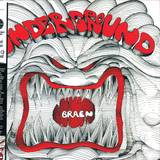
Filled with hypnotic bass lines, heavy drums and screaming fuzz guitars "Underground", the first LP of the fictitious group known as Braen's Machine, is one of the rarest and the most expensive of them all, always "reaching" sky high prices throughout the second hand vinyl market. A fast-beat jam with hammond scales and a twin lead guitar theme ("Flying") opens the A Side soon followed by "Imphormal", a classicfunk-beat-meetsfender- rhodes-and-psychedelic-guitar number. The music then switch to "thriller territories" with "Murder" which is based on prepared piano swells and a deeply hypnotic walking bass, reminiscent of the best Morricone's soundtracks for Dario Argento's movies. Two highly percussive songs complete the A Side: "Gap" is an improvised song with guitar and keyboards dwelling over an infectious drum rhythm while a marching snare and a vibraslap effect are the special features on "Militar Police".
The mood relaxes slightly on the opening of the B Side with a lazy jazz groove on "New Experience" but the rock influences are soon brought back on the following track "Fall Out". "Obstinacy" is all about keyboards with syncopated rhodes themes and distorted hammond sustained notes whilst the fuzz guitar is back again screaming through the left channel on the last song of the album, "Description". We could happly say that that was the golden age of the Italian music library. But who's behind the name "Braen's Machine" On the original cover the songs are credited to the composers Braen and Gisteri. Braen was a pseudonym often used by Alessandro Alessandroni, an extremely skilled and versatile musician, and one of Umiliani's closestcollaborators. He could write, conduct and arrange, he could sing (ever heard "Mah Na Mah Na"), he could whistle (ever heard Morricone's "For a fistful of dollars") and he could play almost anything: guitar, bass tuba, accordion, sitar and the list grows..... His first album "Alessandro Alessandroni e il suo complesso" (Sermi, 1969), had transformed the Italian library music from orchestral sound beds into the psychedelia we all love; the extremely fuzzy guitars are very "present" on "Underground" too. For a long time Gisteri's real identity was rather mysterious; often wrongly attributed to Umiliani. Gisteri was the pseudonym of Oronzo De Filippi, art name of Rino De Filippi, music supervisor to the Italian public broadcast company (RAI) between the '60s and the '70s. De Filippi composed other notable pieces such as "Riflessi" (Edipan, 1975) and "Nel mondo del lavoro" (Sermi, 1972).
De Filippi passed away few years ago but we were able to contact Alessandroni to talk about this LP. Remembering "Underground" recording session as one of the thousands he took part of, Alessandroni told us that this record was produced very quickly, in two days maximum. This was made possible by a team of wonderfully capable session musicians and the creative genius behind the mixing desk; this incredible combination helped to focus on the mood of each track even more. Unfortunately there are no liner notes but Alessandroni's memories and speculations, based on other music tracked in the same period at Soundworkshop by resident engineer Claudio Batussi, led us to identify this as the most probable lineup: Munari on drums, Majorana on bass, Vannucchi on keyboards and Alessandroni himself on guitar. For this reissue the sound has been restored and the cover art reproduced exactly as it was.
Ovum's 20th birthday celebrations continues with the return of Itamar Sagi. Itamar Sagi debuted on Ovum in 2009 with the amazing Fiona/Agnes Blue. After a five year hiatus from the label, he triumphantly returns with the Invisible Key EP. Raised in the hot spot of Tel Aviv, with his artist roots deep in the techno underground. Itamar is from the new breed of the current techno wave. Already well respected, Sagi's reputation continues to grow with his unique floor filling productions. His productions have caught the attention of legends such as Laurent Garnier, Josh Wink, Carl Craig, Francois K and others. It wasn't long before he found recognition on a worldwide scale, including reviews and interviews with many of the world's most popular dance magazines and radio stations. With releases on Ovum, Be As One, Soma, Drumcode and more, Sagi has shown that he is here to stay. The Invisible Key EP kicks off with the title track 'Invisible Key", which is classic Sagi. The track slowly brings you in with it twists and turns. The track bubbles and builds and creates a tension that will keep the dance floor wanting more and more. The second track from this EP 'New Order' harkens back to the sound of Basic Channel, G-Man, and John Ciaffone. Sagi once again builds the tension with vocal samples and effects that deliver an absolute massive punch without being over done. For the final track 'Dub Superstitions", Sagi brings us a proper techno workout. The track percolates and builds and once again Sagi's amazing use of tension deliver a proper massive finish to this stellar EP.
Pink marble vinyl / Sleeve artwork by ' The 'Warm'
Friendly Feeling Embodied in a Red-Pink One 1961 by Mcdermott & McGough.
ISNISNT offers it's second release of forward leaning electronics with a diverse group of modern techno from label head Jesse Siminski. Acting under his Heartthrob guise, Jesse initiates the release with 'Someone Called Again' a tough, but funky, bass driven tune that marries detailed production with his signature ominous melodies to great effect. Subtle modulating percussion work against harder, swung snare and synthetic drums workouts, as surprising analog synth bursts glue things together. Building smoothly into a headfirst groove, the track pressurizes and never loses it's drive as heady synth riffs keep things musical and emotionally interesting. In an even funkier tangent the two mixes of 'Cougar Juice' draw together an irresistible bass line with pushing breakbeats and precise synth stabs. These horn like synthesizer bursts mark surprising turns and recall similar moments in classic Hip-Hop jams or even tracks from Detroit's Anthony Shakir or Robert Hood- two of Jesse's production heroes. The 'Driving Past the Jail Mix' incorporates these synth stabs hypnotically within the melodic structure, while the 'Reduced Dub Mix' dials things back and focuses on the bass line, drums and dubbed out flourishes. With their funk driven momentum constantly moving forward, either mix will bring something unique to either a house or techno set. And finally 'Let Them Go' rounds out the group in a deep, yet still driving fashion. It splices sub bass pulses, a melancholic synth atmosphere, absurd bleeps and submerged voices amongst stripped down drums into a steadily building hybrid cut- not quite house and not really techno.
Nomine's third release on Tempa, following last year's spooked-out Nomine's War, is Enma / Zen Circle / Mindfulness. Containing his most expansive and exploratory music to date, pushing his already intricate and varied sound to new depths of atmosphere and intensity.
As their titles attest, the three tracks here are intense meditations as much as they are club firepower. Drawing equally on his love of UK sound system music and formally experimental composition and sound design, they further highlight Nomine's status as one of the most adventurous new producers operating in electronic music today.Lead track 'Enma' blasts from the tracks in flurries of metallic drums and plucked sino-grime esque melodies, an atmosphere heightened further on 'Zen Circle' whose reedy pipe motifs stalk through the mist like figures through a haunted forest. 'Mindfulness' rounds the EP out with shadowy, delay cloaked digital dub, riding out atop clustered kickdrums and roughly effected drums.