'Quiet Pieces' initiates Abul Mogard’s personal imprint Soft Echoes with a definitive self-portrait of calm, contemplative, and discreet inner landscapes made audible. It is the first solo album on vinyl in four years. RIYL Alessandro Cortini, William Basinski, The Caretaker.
While sifting through archived material left idle from earlier projects, a chance encounter with a late uncle’s trove of beloved 78rpm classical and opera records prompted the reworking and completion of what would eventually become the album. Spinning dusty records at 33 and 45rpm, Abul Mogard recombined their enduring spectres with unfinished sketches from his archive. The resulting soundscape blurs distinctions between his memories and those of another, exquisitely short-circuiting the senses with its waking, dream-like lucidity.
This was a process I hadn’t explored in my earlier works. I began sampling brief moments from these records, altering them with studio effects and playing them at slower speeds. In many cases, I wasn’t entirely sure how the original music sounded. These fragments, once further processed, became a source of inspiration for my new compositions. Over time, I realised that the old pieces from the archive and the new material derived from the samples naturally complemented each other.”
The resulting pieces hover over a threshold, a liminal space that harmonises the old and older material. Voluminous waves of quiet and loud undulate between consonance and dissonance, conjuring imagery of a decaying grandeur that humanity’s decadence has surrendered to the elements. Abul Mogard’s seemingly abandoned yet vast landscapes are nevertheless intimate with timbral frissons of red-lined distortion. Elusive, yet as tangible as sea spray or smog, they affect the olfactory senses with a rarified, synesthetic quality that modestly engages one’s emotional register – a hypnotic, distinguishing feature long hailed as one of the hallmarks of his work. A fidelity to memory and dream recall is sensitively probed in the journey from the stately symphonic stasis of 'Following a dream' to the almost industrial, untethered brutality evoked by a looming silhouette that’s never fully visible in 'Constantly slipping away', culminating in the foreboding coda of 'Like a bird'. Those pieces appear to shield the album’s sentimental core, where the tempestuous play of light and shadow of 'In a studded procession' escalates to breathtaking, panoramic climax, while 'Through whispers' evokes an out-of-body-like experience encountered with visceral poignancy.
Looking back, Mogard notes an unexpected influence: “I realise being inspired by Phill Niblock, whose work I had barely known at the time but explored after his passing in 2024. His album 'Boston Tenor Index' changed the way I approached dissonance. It encouraged me to push my sound further, to the edge of a space where I began to feel uncomfortable.”
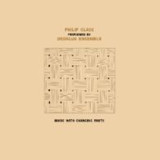
The album artwork, created by longtime collaborator Marja de Sanctis, features a photograph taken at the Temple of Jupiter Anxur, an archaeological site overlooking the Mediterranean Sea. Captured with an iPhone, the image traces the residual presence of construction techniques and architectural forms of the Romans, where material history is transcribed through contemporary tools. The convergence of ancient and modern technology aims to reverberate the site’s lasting spiritual presence – an echo persisting in what is now perceived as a quiet, emptied space. The spiral gestures towards infinity and light. Past and present dissolve into one another, reflecting 'Quiet Pieces' meditation on sound, memory, and time.
RIYL Alessandro Cortini, William Basinski, The Caretaker
Поиск:de effect
Все
- A1: Playground - Rainy Day Woman
- A2: Spinnaker - The Spirit Of America
- A3: Natalie Ann - You've Got To Feel
- A4: Shamor - Close To You (Bwela Pafupi)
- B1: Cherry Laine - Land Of No Return
- B2: Sharon & Tracy - The Sheik
- B3: Methods Of Dance - Aggravation (Instrumental)
- B4: Claudio D'ignoti - Anche Per Noi
- C1: Jennifer - Come Into My Life
- C2: Lena - Embrasse-Moi (Strumentale)
- C3: Fabrithia - I Want You (Strumentale)
- D1: Jimmy D - Rescue Me (Imagination) (Dub Version)
- D2: Alison Sheryll - You're Not Alone
- D3: Precious Child - Come Alone
Much has changed for Ilan Pdahtzur since the release of his Night City Life compilation six years ago. Back then, he was a little-known record collector who shared obscure, synth-heavy music that “captured the night-time glow” of the city he calls home, London, via a dedicated Instagram page. Fast forward to 2025 and Ilan is now a respected member of the international digger-selector community, having delivered must-check mixes for the likes of Bordello A Parigi, Bayete, Hunee’s Lifetones and Sound Metaphors.
It seems a fitting time, then, for Spacetalk to unleash Night City Life II, a second deep dive into Ilan’s distinctive, neon-lit sound world – a place where European synth-pop rarities, Italo-dance treats, dancefloor-focused post-boogie instrumentals soundtrack strolls around shuttered skyscrapers, dockside housing estates and wharf-side warehouse conversions.
In the six years that have passed since the release of Night City Life, Ilan has uncovered many more rarities, private-press gems and slept-on treats, with 14 of these featuring on the dusty-fingered crate-digger’s sublime sequel. As with its predecessor, much effort has been made to track down the artists behind the synth-heavy songs on show, with the vinyl edition featuring extended liner notes where some tell the story of their track in detail. Musically, there’s much to set the pulse racing within Ilan’s superb selections, from the slow-motion shuffle of Playground’s self-released 1984 B-side ‘Rainy Day Woman’ and the brilliance of Shamor’s 1985 South African synth-pop special ‘Close To You (Bwela Pafupi)’, to Sharon & Tracy’s ‘The Sheik’ – a belly-dancing inspired slab of TB-303 bass-driven house – and the kaleidoscopic, piano-rich 1992 Euro-house brilliance of ‘Come Into My Life’ by Jennifer.
Dive deeper into the collection and more under-appreciated musical masterpieces make their presence felt. There’s Sicilian musician Claudio D’Ignoti’s lesser-known boogie-era single ‘Anche Per Noi’, where rubbery bass guitar, Nile Rodgers style disco guitar licks and spacey synths dominate the sound space, Lena’s fashion circuit-inspired, early Pet Shop Boys-esque ‘Embrasse-Moi (Strumentale)’ – one that members of Milan’s Paninaro movement would surely have enjoyed – and a sublime, spaced-out and effects laden dancefloor dub of ‘Rescue Me (Imagination)’ by Jimmy D, a genuinely sought-after jam originally released on a now impossible-to-find seven-inch single. Offering another genuinely distinctive, carefully curated collection of lesser-known musical treats, Night City Life II is another essential, immersive and synthesizer-powered journey through Ilan’s unique sonic world.
- A1: Music With Changing Parts (1) 13'17
- B1: Music With Changing Parts (2) 13'56
- C1: Music With Changing Parts (3) 13'56
- D 1: Music With Changing Parts (4) 13'45
Founding work of minimalism, Music with Changing Parts is a piece with free instrumentation.The musicians choose which part to play among the 8 staves of the score. At each indicated cue, the musicians can change part, which produces an abrupt change of instrumentation. While the music is based on a melodic material limited to a few notes that are repeated in patterns that expand or contract, the changes in orchestration refresh the listening experience by producing sonic contrasts. These techniques at work
in Music with Changing Parts , written in 1970, will lead Philip Glass to renew his language and move from the monochromatic works that precede it to more dramatic works such as music in 12 parts and especially the opera Einstein on the Beach. When Philip Glass began rehearsing the piece, he was surprised to hear long notes when everything was written in eighth notes. After making sure that none of the musicians were playing held notes, he realized that the fact that the same notes were played by all the instruments in the ensemble produced, through a psycho-acoustic effect, a harmonic substrate of resonant frequencies. He then decided to add to
the score the possibility of playing long notes to reinforce this effect
Rinse France branches out with a brand new label of its own and who better to inaugurate it than Paris-based Beatrice M. The producer makes a knowing nod to dubstep's golden era on this debut with the first version of 'Magic.' It is built on steppy rhythms with seriously wobbling basslines that are all-consuming. Glitchy effects and shimmering synths finish it in style and leave you dreaming of dubstep dances gone by. The B-side is a Techno Mix that reimagines the original with a driving four-on-the-floor rhythm and plenty of richly atmospheric pads.
- Flush In The Cheeks 04:24
- Crow Speech 04:00
- Feiform Tabs 03:28
- So Light 05:25
- Orbital Rings 03:09
- Ivy 04:23
- Taoist Face Wash 03:26
- Blended Medal 02:32
- Alyosha 03:47
- Flintstone Meal
Quickly on the heels of their debut, Cuneiform Tabs return with Age, an LP that takes a massive leap forward in both melodic sensibilities and inventiveness. Bathed in late night psychedelia and the looping repetition of a drone sample, the group's experimental penchants remain, yet this time wrapped around tunes too sweet to be denied. In pulling back a little of the crackle and haze that made their first album so inviting, the Tabs have revealed more of their pop instincts. The overall effect is a perfect set of early Animal Collective demos or Syd Barrett attempting a Television Personalities cover at 3am.
The duo of Matt Bleyle and Sterling Mackinnon continue their system of trading 4-track tapes between the Bay Area and London, a furtive correspondence until sonic nuggets are fully formed. While these songs are very much the product of the Tascam and rudimentary software that is integral to the band, this album is truly the embrace of their songwriting talents – not unlike the recent breakthrough of labelmate Cindy Lee.
With the dream-like strum of "Ivy," slow shimmer of "Orbital Rings" and enchanting, madcap swirl of "Blended Medal," this is hypnagogic pop at its finest. Age is the record Bob Pollard hears in his head every time he steps down to the basement to pick up a guitar. This is the sound of riding in an elevator hearing McCartney singing "Blackbird" in the distance, only to have it draw closer and closer with each floor as you finally race down the hallway, putting your ear to each door searching for the source. This is Leonard Cohen smoking in the middle of the street outside a Suicide show. If all of this sounds phenomenal, it is.
COLOURED DELUXE EDITION[42,23 €]
In 2012 Gruff Rhys embarked on a solo 'investigative concert tour' through the heart of America following the route taken by his distant relative John Evans. Every night he presented songs augmented by a power point presentation that detailed his relative's unbelievable history, along with any new piece of information that had come his way during the day. He was ultimately looking for Evans's lost unmarked grave. Along with many major cities, the tour took him to play shows at the Mandan and Omaha tribe reservations, a Missouri vineyard, villages that no longer exist and lay at the bottom the Mississippi river and a New Orleans bordello. What transpired from that ‘investigative concert tour’ was a 2014 album, American Interior, plus a book, film and exhaustive tour of the same name. With the aid of the dusted-off power point presentation, Gruff Rhys and a full band revisits the project in 2025 to perform the songs that formed both the album, and the soundtrack to the film.
Gruff says of the reissue -
“Revisiting American Interior 11 years later, feels very prescient. In following the unusual story of explorer John Evans (1770-1799) it becomes clear that faked narratives can have profound and unpredictable consequences in real life. His barely believable journey of verification in searching through continental scale wilderness for a fictitious Welsh speaking tribe believed to be living on the Great Plains of North America (an ancient folk tale perpetuated by the Elizabethan court following the subjugation of Wales, to make colonial claims on behalf of the British on the Americas) had a dramatic political effect on the fledgling USA and a devastating impact on himself and some of those who helped him on his way. I wrote an album of songs inspired by his life; American Interior, which also served as a soundtrack to a documentary film based on a book that detailed his journey, intertwined with my own investigative concert tour, all three of which I worked on simultaneously during a 2-year fever 2012-14. By far the most ambitious undertaking I’ve ever attempted. Living with one foot in the 18th century, wearing the same clothes (for cinematic continuity) for that entire period, left me pretty exhausted. (Imagine a cold extra from The Revenant movie). It took me a while to process the whole experience and its lessons and feel I owe it to my former self to take these songs back on the road for a couple of months and re-tell the story for a new decade. To celebrate it further Rough Trade will reissue a remastered version of the album with previously unreleased tracks.”
- A1: American Exterior
- A2: American Interior
- A3: The Whether (Or Not)
- A4: The Last Conquistador
- A5: Lost Tribes
- B1: Liberty (Is Where We'll Be)
- B2: Allweddellau Allweddol
- B3: Walk Into The Wilderness
- B4: Sugar Insides
- C1: 100 Unread Messages
- C2: That's Why
- C3: The Swamp
- C4: Media Quake
- D1: Cylchdro Amser
- D2: Iolo
- D3: Y Gwenan Gorn
- D4: Year Of The Dog
- D5: Tiger's Tale
- E1: I Grombil Cyfandir Pell
- E2: Ar Goll
- E3: Y Madogwys Neu Angau
- F1: Power Point Presentation
- F2: American Exterior (Extended Version For Two Synthesizers)
Black Vinyl[26,68 €]
In 2012 Gruff Rhys embarked on a solo 'investigative concert tour' through the heart of America following the route taken by his distant relative John Evans. Every night he presented songs augmented by a power point presentation that detailed his relative's unbelievable history, along with any new piece of information that had come his way during the day. He was ultimately looking for Evans's lost unmarked grave. Along with many major cities, the tour took him to play shows at the Mandan and Omaha tribe reservations, a Missouri vineyard, villages that no longer exist and lay at the bottom the Mississippi river and a New Orleans bordello. What transpired from that ‘investigative concert tour’ was a 2014 album, American Interior, plus a book, film and exhaustive tour of the same name. With the aid of the dusted-off power point presentation, Gruff Rhys and a full band revisits the project in 2025 to perform the songs that formed both the album, and the soundtrack to the film.
Gruff says of the reissue -
“Revisiting American Interior 11 years later, feels very prescient. In following the unusual story of explorer John Evans (1770-1799) it becomes clear that faked narratives can have profound and unpredictable consequences in real life. His barely believable journey of verification in searching through continental scale wilderness for a fictitious Welsh speaking tribe believed to be living on the Great Plains of North America (an ancient folk tale perpetuated by the Elizabethan court following the subjugation of Wales, to make colonial claims on behalf of the British on the Americas) had a dramatic political effect on the fledgling USA and a devastating impact on himself and some of those who helped him on his way. I wrote an album of songs inspired by his life; American Interior, which also served as a soundtrack to a documentary film based on a book that detailed his journey, intertwined with my own investigative concert tour, all three of which I worked on simultaneously during a 2-year fever 2012-14. By far the most ambitious undertaking I’ve ever attempted. Living with one foot in the 18th century, wearing the same clothes (for cinematic continuity) for that entire period, left me pretty exhausted. (Imagine a cold extra from The Revenant movie). It took me a while to process the whole experience and its lessons and feel I owe it to my former self to take these songs back on the road for a couple of months and re-tell the story for a new decade. To celebrate it further Rough Trade will reissue a remastered version of the album with previously unreleased tracks.”
- 1: Playful Slowed
- 2: Ether Circus Harmonics
- 3: Celestial Piano
- 4: Stuck Run Baby
- 5: Seagulls
- 6: Downwards Spiral
- 7: Stuck
OONA Recordings is proud to announce the upcoming release of the soundtrack for The Girl With The Needle by Frederikke Hoffmeier. Hoffmeier, whom performs under the stage name Puce Mary, brings a raw, intense and atmospheric score to this Oscar-nominated film, which is contending for Best International Feature. Known for her bold, experimental approach to sound, Hoffmeier’s composition immerses listeners in the film’s dark, emotionally-charged world. Directed by Magnus von Horn, The Girl With The Needle premiered at the Cannes Film Festival, where it earned praise for its uncompromising vision. The film went on to receive a Golden Globe nomination for Best Non-English Language Film and won two prestigious awards at the European Film Awards, including Best Score for Hoffmeier’s hauntingly powerful work. The score to The Girl With The Needle is as dark as it is compelling, a masterclass in creating tension, unease, and raw emotional weight. Hoffmeier’s sound design is equal parts abrasive and intimate, drawing the listener into a world of fractured beauty. Her use of organic textures, electro-acoustic undertones, and dissonant, atonal melodies challenges traditional notions of film music, offering something deeply visceral and unpredictable. The Guardian described Hoffmeier’s score as "nerve-abrading," highlighting the relentless, uncomfortable energy that underpins the film. The Chicago Reader similarly calls the score haunting, noting how it amplifies the film’s stark atmosphere. Drawing comparisons to the intense works of composers like Mica Levi, Awards Radar Magazine praises Hoffmeier for pushing the film’s emotional core to its breaking point, deepening the agony of the protagonist. Throughout the film, Hoffmeier’s score becomes as much a character as the people on screen. Her collaboration with von Horn is marked by a shared vision of pushing the limits of cinema and sound. Screen Daily describes the score as "daring," with its aggressive, contemporary tones standing in stark contrast to conventional film scores. The result is a uniquely modern, avant-garde work that reflects the film's visceral and unsettling nature. Hoffmeier crafts a world of sound that lingers long after the credits roll. The soundtrack’s fusion of organic instrumentation with electro-acoustic elements and bold industrial sounds sets it apart from the ordinary. The British Film Institute notes how Hoffmeier’s "atonal score" creates an "enervating effect," pulling listeners deeper into the film’s raw emotional depths. The combination of brutal sound design and haunting melodies builds a layered, evocative listening experience, one that grows increasingly intense with every listen.
- 1: No És Casa Teva
- 2: Ascko Total
- 3: Private
- 4: Vaig Veure Un Cartell
- 5: Private
- 6: Ossos Ets I Ossos Seràs
- 7: Private
- 8: Benvingut Al Forat
- 9: Private
- 10: Ckaos Total
- 11: Private
- 12: Si Vosaltres Sou El Punk
- 13: Private
- 14: Me Begut La Vida
- 15: Private
- 16: No Puc Viure En Societat
- 17: Private
- 18: I Ara Que Faràs?
Tàrrega 91’s straightforward take on Discharge-inspired hardcore punk is a glass of fresh water in a polluted sea of bands trying to break through the algorithm and grab a few seconds of our ever-decreasing supply of attention. There are no gimmicks on Ckaos Total, just simple three and four-chord riffs, a driving drumbeat (you can guess which one), and thoughtful lyrics delivered with power and passion. Tempos vary from fast, to really fast, to ultra fast, with most songs in the latter category. Without studio effects, silly costumes, or metal chops to distract, the focus falls on the songs themselves, which distill a profound sense of hopelessness and frustration into a few defiant words to yell into the void. In their lyrics and artwork, Tàrrega 91' continues to draw inspiration from the 1991 uprising in their town that ended with the arrest of 86 young people, a history that makes them keenly aware of exactly what they’re pushing against. While so many contemporary bands emulate the aesthetics of punk’s classic era, on Ckaos Total Tàrrega 91 taps into the power of bands like Discharge, Wretched, and MG-15 by creating simple, sincere—and sincerely pissed—protest music.
'Test Driving The New Prius' is a 35 minute radio play (with sound effects) written and performed by Jim Fry (Earl Brutus, Pre New) and Luke Haines. (The Auteurs, Baader Meinhof a.o.). Just as that other modernist masterpiece Ulysses depicted a day in the life of Leopold Bloom, Test Driving The New Prius follows the life in a daze of Endgame Man. In this tale of derring-do our hero acts out a perilous adventure in the 400 yards between his home, his local pub and the off-licence. With nervous system reduced to a series of involuntary twitches and reality reduced to a background hum of decades of half absorbed mindless daytime TV wittering. Can Endgame Man get home and make it through to Wednesday with only his spirit familiars - an endless trail of 75cl bottles of Glen's vodka to guide him? With cameos from Jayne MacDonald, Brian Eno, Martin Degville /sigue Sigue Sputnik) and the cast of Blankety Blank (1980). Written and executed by Jim Fry and Luke Haines Originally Broadcast as a Radio Play in 2022, now a limited-edition 12-inch vinyl LP on berry red vinyl,exclusively released for RSD 2025
Bob The Egoist presents his first solo EP released via Wide Awake; Felipe Gordon's own record label. This three-song EP features a broad pallet of Bob's musical abilities, beginning with A1 "Fever", co-written with his close Berklee friend and collaborator Bedo. This track kicks-off the EP with chord-heavy grooves and simple, yet effective vocals. It follows up with "New Beginnings", an emotive tune which showcases the intricacies of the songwriter approach to house music: meaningful lyrics and heavy grooves.The EP ends with "Ride Club" a jazzy dance floor tune which features heavy use of cymbals and scat vocals, this is a must-have release for every deep jazz head out there!
- A1: Submarinobambino
- A2: Frontera Extraterrestre
- A3: Elafuhr Oliasson (Defog Remix)
- A4: Vltimodespiroriuita
- A5: Vltimodespiroriuita (The Exaltics Digital Zen Remix)
- B1: Submarinobambino (The Exaltics Double Groove Treatment - Slow) 04 48
- B2: Submarinobambino (The Exaltics Double Groove Treatment - Fast) 04 21
Many of the greatest artists of all time found inspiration in their dreams... and pdqb is known to be an absolute pro when it comes to creatively exploiting the REM cycles.
Recently, for example, he dreamed of Gunnar, who had witnessed the rise and fall of electronic dance music, which had once held simple-minded creatures in its thrall. The beats had a peculiar effect on them, drawing them into euphoric trances. But Gunnar, allergic to its hypnotic frequencies, stood apart, unaffected. However, eventually, in a hidden enclave in the highlands of Reykjavík, he met Dr. Amara El-Amin, a neuroscientist fascinated by his unique immunity. Together, they discovered that Gunnar's resistance was a gift, offering insights into human consciousness and the power of music. With this knowledge, Gunnar inspired a global movement celebrating frequencies that resonate...differently. Though EDM had become a relic, Gunnar Oliasson remained a legend - a bad taste survivor who embraced a symphony of pure electrical potential, a language of circuits and oscillations beyond sound.
He woke with a jolt, the phantom music still echoing in his mind. He scribbled furiously, equations and diagrams mixing with strange, abstract notations. The dream, he knew, was a glimpse into a world where his inventions would dance, not just function.
For Synaptic Cliffs, it is an extraordinary honor to be able to offer you, dear listeners, the soundtrack of pdqb's world-changing dream: Four beautiful genre-defining Electrocognition tracks, embracing the depths of the human wetware. And three jaw-dropping sonic remodels from a human-like being called The Exaltics.
Like their previous output, the album features the duo’s unique mosaic of clicks n’ cuts style beat work, murky dubwise melodicism, and chilling otherworldly textures. However, there is a refinement on display on Battens.
Clay and Ian have accentuated their trademark elements to maximal effect. The beats seem to have a more brandish, near swagger that was only fleetingly referenced in some of their previous works. The melodies, which formerly have felt primarily of alien origin, almost feel a glint of humanity. Having such a unique ideology for nearly 25 years has allowed Loess to work at a pace and level of refinement evident on Battens.
Loess is a challenging project to describe, yet their ruminative style of experimental electronica sets them apart from their contemporaries and still sounds fresh today.
- A1: Cáin Chairr
- A2: Fear Liatroime Páirt 1
- A3: Maidin Heinz
- A4: Fear Liatroime Páirt 2
- A5: M'anam Go B'ea
- B1: Teach Tuí Bhearna
- B2: Cé Mo Dhuine Siúl Sa Hi-Vis
- B3: Monty Phádraic Jude
- C1: Ndáiríre Tho, Meastú Cén Fáth Nach Mbíonn Signal Ag An Bhfón Thart Ar Shiopa An Phobail
- C2: Fear Liatroime Páirt 3
- C3: Yung Fella
- C4: Bóthar An Chillín
- D1: Maidin Heinz Athrach
- D2: Cáin Chairr Athrach
- D3: Monty Athrach
'Trá Pháidín are an Irish nine piece collective from Conamara, Galway, a wild coastal region of West Ireland where Gaeilge remains the first language. The group are currently lighting up Ireland's underground with their joyful noise, a unique and unpredictable blend of traditional Irish folk, post-rock, jazz, and Dadaist absurdity. The glorious album An 424 takes us on a psychogeographical journey along the 424 bus route which follows this remote stretch of coastline, introducing us to the landscapes and the characters who depend on the buses. Expect wild improvisational flights filled with brass, woodwinds, harp and fiddles alongside relentless grooves.
Here's what the band themselves have to say about the album:
Psychogeography is a funny aul term......the effect geography and landscape of a certain area has on the psychology, identity and nature of the local people...........I suppose
Notoriously, Conamara is famous place for psychogeoraphy due to the work of the great Tom Robinson. He walked every coastline in every area contemplating the geography, culture, history, Gaelic language, English language and folklore of the area while he was drawing it's best map with great depth and detail.
Right, so I've given context, a few buzzwords and some interesting names, now it's time for the absurd stuff....
"Bóthar Chois Fharraige" (the R336 and whatever anglicized name they call it) is well known by everyone in the South Conamara Gaeltacht (Gaeltacht is an area where Irish/Gaeilge is the dominant language, there aren't many because we were colonized by the British and our government doesn't care about its own language). The people of Conamara travel this road almost every day by car, by bike, on Peadar Óg's buses or of course, through the medium of the 424 (the bus service provided by Bus Éireann, Ireland's public-private bus company). From Bearna to Carna (maybe sometimes a detour in Casla going as far back as an Cheathrú Rua and/or Leitir Mealláin)
Every passenger is well versed of gorgeous views of the landscape that is on offer on this journey. Included are Cuan na Gaillimhe/Galway Bay, An Bhoirinn/the Burren, na hOileáin Árann/the Arann Islands,Aillte an Mhothair/the Cliffs of Moher, Portach Mhaigh Cuilinn/the bogs of Maigh Cuilinn, Bóthar Loch an Iolra/Eagle lake road, Cuan Casla/Casla Harbour, Cuan an Fhir Mhóir/Greatman's Bay, Cnoc Mordáin/Mordáin hill, Sléibhte Mhám Toirc/the Maamturk Mountains and Na Beanna Beola/the twelve pins. Passengers would also be well used the unique character of the bus. Depending on the day, you will get a unique perspective of the "complicated identity" of the Gaels as the bus travels from the Gaeltacht into anglophone Ireland, or maybe going the other way.
This is a topic you could write a PhD about (and maybe someone already has). But, if you are someone who grew up or lives in this region, you have a particular understanding at this stage of how complicated Gaelic psyche is and the kind of spectrum of identity along bóthar Choise Fharraige. With the landscape in mind, this bus journey is a great meditation of the various topics of life.
‘Bhfuil tionchar ag an mbus ar nádúr na ndaoine?
Nó an bhfuil tionchar ag na daoine ar nádúr an bhus?'
'Does the bus effect the nature of the people?
Or do the people affect the nature of the bus?'
Le gach dea-ghuí,
TP.
(translated from Gaeilge by Peadar-Tom Mercier)'
Berlin-based French-Irish multimedia artist Zoe Mc Pherson levels up on their third full-length "Pitch Blender", mangling years of experience DJing and performing live into a tight set of cybernetic soundsystem experiments that flicker between the rave and the art space.
Cast your mind back to February 2020 for a moment, when Mc Pherson released their last album "States of Fugue". The world seemed less tangled somehow, and yet Mc Pherson's precision-engineered fusion of exploratory sound design and visceral club pressure seemed to hint at a cataclysmic event none of us were really expecting. Only a few weeks after its release the world changed forever, and the majority of us were grounded - forced to consider our lives and the movement (or lack thereof) surrounding us. The philosophy of this extended time period is welded into the bones of "Pitch Blender", Mc Pherson's supple third album. They have learned plenty in the last two years, and infuse all of that anxiety and spiky emotionality into a spread of tracks that sound as powerful in headphones as they do over a well-tweaked soundsystem, soldering vocals, environmental recordings and instrumental flourishes to unpredictably pneumatic, cybernetic beats.
Anyone that's caught one of Mc Pherson's energetic live performances over the last few months will have an idea of what "Pitch Blender" is made of. They're an artist who's somehow able to match the raw energy of post-punk and no-wave music with the brain-altering potential of the best experimental club tracks, vocalizing an incongruous post-lockdown reality over beats that sound as if they're in a permanent state of flux. 'On Fire' splutters to life in a frenetic patter of drums that blur into oddly soothing hoover sounds, snaking lysergically towards a drop that's teased constantly, and never comes. We're forced to wait until 'The Spark' for that, fighting through choppy, pitch-mangled guitar and rolling beats until a gruesome kick drum forces its way through the psilocybin mists and heaving Bristol-inspired bass clonks. Backed up with just the inverted traces of recognizable breaks, this vigorous pulse lies at the heart of "Pitch Blender", the driving force that powers Mc Pherson's sound even when it's only hinted at.
'Blender' is the moment where Mc Pherson show their full hand, using crackling sound effects, ghost vocals and uneven rhythms to build a textural landscape that's so evocative you can almost taste it. Squealing modular synth effects sound like gameshow buzzers being triggered in another dimension and propel the track forward - it's club music, just about, but Mc Pherson's motivation is world-building, and their world is colorful, abstract, and dizzyingly surreal. "Obsolete user," their voice echoes over driving airlock kicks. But they take a swift left turn with 'Lamella', reducing the kinetic club rhythms to a longing simmer and letting loose with powerful vocals, intoning with robotic, gender-fluxed intensity. On 'Wait', New York City's clacking crosswalk signal - already an effective club track on its own - is transformed into a reminder to slow down, juxtaposed with booming sub-heavy kicks, acidic synths and effervescent percussion that rattles in time with the vibrations. It's foley rave, built for pure psychedelic intensity to blur the line between real life and sonic fiction.
One of the album's most galvanic tracks, 'Power Dynamics' curves a double-time rhythm around breathless HQ sound design squiggles until it hits a polyrhythmic crescendo, striking a queasy balance between rave hedonism and ritualistic hand drum energy. It all builds towards eerie closing track 'Outside' that acts as an important wind down, spotlighting Mc Pherson's ability to operate outside of the rhythmic spectrum, using cinematic scrapes and flickering neon synths to create music that's tense but never terrifying. The track feels like the end credits of a particularly bewildering movie - something between the cyberpunk dystopia of "Ghost in the Shell" and the vivid, sky-scraping beauty of "Koyaanisqatsi". Mc Pherson has managed something special with "Pitch Blender": mashing together genres with rare focus, and sharpening their engineering skills to a fine point, they've concocted an antidote to contemporary malaise - a wakeup call that's begging us to loosen our limbs and move.
Len Faki returns to his own label Figure for a first release after the arrival of his giant FUSION LP.
Opener Zig Zag stays emblematic for Faki’s signature style, a lean and effective slice of modern day techno: muscular and well-balanced, this driving tool keeps it simple but dynamic and the energy always moving. Loop 10 is a collaboration track from long-time label mates Len Faki, Jeroen Search and UBX127. Combining the best of three worlds their distinct loopy elements are talking back and forth, gluing the track together - can you figure out who is who?
Another strong collab, Morgana is a piece of mesmerizing dub techno, created together with the new Figure addition Jancen (check out his recent EP Inner Labyrinth!). Spacious yet powerful, this one builds patiently before it comes crashing down with elegant force. Finishing off x48, Faki adds a version of his own opener, detuning the unnerving synths, fragmenting percussion and adding some atmospheric vocals.
12" EP. Azmari is thrilled to announce the release of their fourth opus, 5-track EP 'In Oculis'. The EP is a reflection of the band's collective desire to reinvent themselves. With a more minimalistic approach, the four musicians have created an eclectic, intense, and vibrant body of work, recorded during various residencies in Belgium and abroad. The result is a fusion of genres that range from powerful grooves to cinematic jazz, from floating melodies to entrancing soundscapes.
For this new project, Azmari teamed up with a long-time collaborator, Guillaume Souffrice (alias Mosso Mosso), who had already been Azmari's guitarist in the band's early days. Souffrice's expertise as a music therapist and multi-instrumentalist, combined with his passion for cross-cultural rhythms and melodies, adds a new depth and dimension to the band's sound.
Souffrice's extensive travels have taken him from Iranian Kurdistan, where he studied the daf (a large frame drum used in Sufi ceremonies), to northern India, where he immersed himself in the modal subtleties of the shehnai (Indian oboe). His love for psychedelic guitar tones and the classic wha-wha pedal remains at the heart of his musical approach, creating a fusion of tradition and experimentation.
The EP opens with 'Night Plants Can Run,' a track that starts with a rhythmic loop on the Berimbau, a Brazilian percussion instrument traditionally used in Capoeira. The song offers a steady, groovy journey between Rio de Janeiro and Sarajevo, with a guitar theme doubled by the saxophone, all underpinned by a deep 4/4 groove. The middle part of the track introduces a lot of percussion (an Azmari signature move) that gives a sense of urgency and chase, inspired by the band's experience playing the track in the studio, imagining a pursuit through the depths of the Amazon.
Next, 'Disassembling the Matrix' takes listeners on a 9/4 march that feels both elusive and powerful. Born from a jam session where an arpeggiator loop wouldn't stop, the band decided to continue with it, highlighting the beauty of a spontaneous creation once again. 'Lizzard's Dream' is a guitar-driven trip that gradually intensifies in energy. The song surprises with a sudden groovy break - a moment that was initially the core of the track - before returning to its soft and introspective theme, closing out the A-side of the vinyl.
The fourth track, 'Eyelights,' was born from the shores of Vevey Lake in Switzerland. It reflects the result of a long period of mental observation and rhythmic exploration. Three different time signatures were used to create the song's intro, which comes together as they go along. The melody loops with a peaceful and nostalgic vibe, creating a dreamlike atmosphere. Under the direction of Frederik Segers, who produced the EP, 'Eyelights' takes on a cinematic feel, with classical upright piano sounds that are a first for Azmari.
The EP closes with "17th Tiger Print," which takes us to the banks of the Ganges. Souffrice's shehnai leads the track into a hypnotic, hallucinatory dimension, where the interplay between his instrument and the baritone saxophone creates a textured, mystical atmosphere. This track encapsulates the essence of Azmari, a sound that bridges cultures and emotions in a minimalist yet highly effective way.
'In Oculis' marks another milestone in Azmari's musical evolution, blending the band's signature style with new influences and experimentation. Whether you're a longtime fan or new to their sound, this EP promisesto take you on another ride around the world.
Two years after releasing the acclaimed Crash Recoil, Anthony Child aka Surgeon returns to Tresor with new LP, Shell~Wave. Retaining the minimal equipment list and studio-version-of-live-show-sets approach of the previous album in order to focus on the work itself, Shell~Wave is a deeply personal document of both where Surgeon is and has been, converging three decades of experience with a continued curiosity in the untested.
“To make this project, I had to dig really deep in terms of what my relationship was to techno; I’ve been involved with it for a really long time and there’s a lot about it I feel dislocated from, so I had to really think hard about what techno is to me. I often get asked “what is techno to you?” but I can’t answer that with words; this album is the answer.” From the complex, twisting track Infinite Eye to the caustic Soul Fire, the eight tracks that make up the body of the album are single-take explorations of the vast, hard yet minimal techno Child is synonymous with.
Neatly dividing the record in two, the emotional centre of the record comes in the form of Dying, a vibrating, beatless piece that with a mantra-like vocal loop steeped in reverberating effects. Further echoes of dub production appear throughout the record as tracks like Divine Shadow, and Empty Cloud have an almost ever-present mist of reverberation, driven by the appearance of a new delay unit in the equipment list; while much of the philosophy of Crash Recoil’s creation is present, the process and the instruments have changed as Child again switches up his approach to studio work.
This insistence on trying novel techniques doesn’t preclude returning to old ones, as this use of modern digital machines with live, hands-on takes that are as inspired by 60s producer Joe Meek and 70s reggae as they are by this year’s synthesiser expos.
“For me, it’s an interesting experience returning to old techniques again after 30 years. I’m always exploring and finding myself back at the beginning. Connecting the present with the past.”
This philosophy of ‘time travel’ is inherent to the music itself as the synchronised loops repeat while the delay and effects branch out, forming unique eddies; distinct quantum moments within the circular whole; the future leaking through the spaces between the sounds. All of the concepts on the album are perfectly communicated through the painting by Taiwanese artist Jazz Szu-Ying Chen which suggests the movement of water, sound waves, and the chitinous shells of sea creatures.
- The Hurdy Gurdy Man
- Peregrine
- The Entertaining Of A Shy Girl
- As I Recall It
- Get Thy Bearings
- Hi It's Been A Long Time
- West Indian Lady
- Jennifer Juniper
- The River Song
- Tangier
- A Sunny Day
- The Sun Is A Very Magic Fellow
- Teas
Audiophile 180g Vinyl 33RPM LP
All Analogue Mastering by Chris Bellman at Bernie Grundman Mastering!
Pressed at RTI
Impex Treatment packaging featuring a 4-page heavy-stock booklet with rare photos and new historical notes by producer/author/historian Charles L. Granata
"Although Donovan had already captivated listeners with hits like 'Sunshine Superman' (a #1 Billboard Hot 100 hit in September of 1966) and 'Mellow Yellow' (#2 on the chart in December of that year), it's The Hurdy Gurdy Man issued in the fall of '68 that became a benchmark of the psychedelic era. The album artfully captured the essence of the moment with its fresh, smart and stylistic approach to songwriting, endearing melange of rock, pop, drone, folk, world and jazz overtones (coupled with deeper psychological undertones, i.e. transcendental consciousness and a yearning for an 'ideal' world).
"Musically, Donovan and producer Mickie Most made liberal use of multiple feels inspired by a wide range of styles, most remarkably the drone: a harmonic effect in which a note or chord is continuously repeated throughout a composition and commonly forms the tonality on which the piece is built. This brought an unusual and memorable quality to many tunes on the album, as did Donovan's whimsical, spiritual-esque vocals. Then, too, both 'The Hurdy Gurdy Man' and its namesake album reflect a tougher rock sound than the singer's earlier recordings."
—Charles S. Granata
Our AAA HQ-180 33.3-rpm LP was mastered from Epic Records' analog master tapes by Chris Bellman at Bernie Grundman Mastering, plated and pressed at RTI for flat and silent surfaces and incredible detail. The 4-page insert features a new appreciation by producer, author, and historian Charles S. Granata that puts in context the positive effects of Donovan's clever, innovative writing and performances.
Ira James continues the fine curation of his excellent Vessel Recordings label here with a pair of legends taking care of a new three-track EP. Doc Martin and Joeski are long-time house royalty and they open up here with 'Join Hands' which is low-slung tech with rolling drums and some majestic piano chords that light up things with real emotion next to a passionate vocal. 'It's Time' pairs things back and allows a nice live-sounding and funky bassline to shine under percussive drums and 'Roots' has more swing to it as organic sound effects and crunchy snares all add detail.