'Loukoumades' is the latest album from the Dave De Rose led international improvisation project Agile Experiments, released in full on November 15th on None More Records.
The title 'Loukoumades', which is the Greek word for doughnut, was inspired by J Dilla's album "Donuts", tipping the hat at the connection between the Greek location of the sessions, the musical style of Penka's hip-hop/funk drumming and the Agile Experiments avant-garde sonics the project was founded on. The record is built on breaks and beats layered with eerie loops and effects, calling on hip hop, post-punk, psychedelia, dub and further out-there experimental textures. 'Loukoumades' brings to mind the textures of El-P's production work for the likes of Cannibal Ox or DJ Shadow in his Endtroducing era, whilst the live drums and bass guitar give the album a real energy and tightness reminiscent of Portishead's Third or Can at their funkiest.
Cerca:de effect
Proudly presenting a 7-inch reissue of this mythical, raw funk rarity by the Miami-based, Cuban rock band, Pearly Queen. Featuring the hugely sought after, infectious cut ‘Quit Jive’ In’ and a fantastic cover of The Rascals ‘Jungle Walk’, this is a double header of mid ‘70s funk fire.
Originally released on Cuban record producer Manuel J. Mato’s Sound Triangle Records in 1974, who had emigrated to the US in 1960, this scarce funk gem has long been a prized funk 45 find. DJs and collectors such as Keb Darge and Jazzman Gerald brought this to our attention in the 1990s, with the status of the track amplified by its inclusion on DJ Shadow & Cut Chemist's landmark 7" DJ mix ‘Brainfreeze’. DJ Shadow, also used the drums and horns break to masterful effect on his track 'The Number Song' (1996) taken from his infamous 'Endtroducing.....' album on Mo Wax.
Written by Ray Fernandez of Ray & His Court fame, 'Quit Jive' In' is a swaggering funk throwdown, dripping in groove and underpinned by heavy breaks and punchy horns. Whilst on the B side, the rock-funk 'Jungle Walk', is a cover version of The Rascals 1972 original. Penned by the singer, songwriter and guitarist Buzzy Feiten, it wouldn’t be out of place as part of the soundtrack to a Tarantino movie.
We can't think of many deep funk tracks we love as much as this beauty. Sadly, for collectors, this original 7" has remained elusive to even some of the most hardened and dedicated diggers, so it feels a fitting release to re-issue for all to savour.
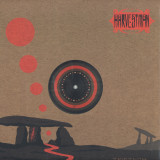
Woven together from home studio recordings that span two decades, and with some notable guest appearances including; The Bug, Douglas Leal of Deafkids, Wayne Adams of Petbrick, Dave French of Yob and Sanford Parker, this final part of the Harvestman Triptych seeks once again for a lost world, with the voice of poet Ezra Pound extolling the virtues of "gathering from the air a live tradition".
Cloudy Clear plus Black Galaxy effect vinyl in dub style jacket. Limited and Non-Returnable.
At its heart, music has always been a questioning of inheritance – a dialogue with predecessors and forebears, the forging of one’s own perspective in relation to what has come before, and for some, a plunge into the boundless realms between. For Steve Von Till, that process has always taken on an added dimension to become the most sacred of tasks. Whether through the apocalyptic uprising of Neurosis, the sonic deconstructions of their sister project, Tribes of Neurot, the invocatory intimacy of his eponymous solo albums or his instrumental psychedelic reveries in the guise of Harvestman, that dialogue has never just been with musical influences, but with what underpins them: the primordial, elemental forces now banished to the peripheries of our contemporary consciousness, yet still broadcasting a signal for all who will listen.
Drawn to the megaliths, ruins and ancient sites mapped out along the British and European mainland’s geographical and psychic landscapes, the folklore and apocrypha forever resurfacing as portals from a rational world, Triptych is a meditation forged from traces and residues, and an hallucinatory recollection of artists who have tapped into that enduring otherworldliness embedded within us all. It’s a dream diary narrating a passage through Summer Isle where Flying Saucer Attack are wafting out of a window, a distant Fairport Convention are being remixed by dub master Adrian Sherwood, celestial scanners Tangerine Dream are trying to drown out Bert Jansch and Hawkwind are playing Steeleye Span covers, all prised out of time yet bound to its singularity.
"Herne's Oak" provides seismic bass waves that physically halt the track in its steps - giant footfalls as Herne's antlers themselves are dragged along a corridor. Another curious and mysterious piece of British folklore brought to life by Harvestman.
If Triptych is a multi- and extra-sensory experience, it extends to the remarkable glyph-style artwork of Henry Hablak, a map of correspondences from a long-forgotten ancient and advanced civilization. As with Triptych itself, it’s an echo from another time, an act of binding, a guide to be endlessly reinterpreted, and a signpost to the sacred that might not indicate where to look, but how.
Cover art is by Henry Hablak, who also designed the art for Part One and Part Two.
For the DJs we present a 7" single of Gorjeios b/w Jararaca Snake (Remix)! The a-side, Gorjeios, is a hypnotic blend of Brazilian rhythms and dreamy melodies. Zé Nigro’s ethereal vocals intertwine seamlessly with Arthur Verocai’s instrumental magic. The b-side, a remix version of Jararaca Snake, is a pulsing dub synthesizer journey featuring Zé Nigro’s effected vocals describing his endless quest for knowledge of why we are here.
This third volume of Universal Synthesizer Interface delves further into early MIDI sequencing software for personal computers, focusing on Intelligent Music Software founded by Joel Chadabe in 1984. In a short period of time (1986-1990) Intelligent Music published a series of MIDI sequencing software titles that would have rippling effects throughout the music world: M, Jam Factory, UpBeat, MidiDraw, Ovaltune, Realtime, as well as an unreleased first version of Miller Puckette’s Max. These programs were a reflection of Chadabe’s desire to create interactive and intelligent algorithmic tools for home computers. Intelligent compositional tools had been floating around for decades in mainframe computer labs, but they had largely only been accessible to people working in academic or corporate laboratories. With the birth of Intelligent Music, these tools became available to anyone with a home studio. As the personal computers of this era had become less expensive and more accessible, they had also grown exponentially in processing power and seeming intelligence. In the music press from this time, we find the same two words used again and again to describe algorithmic computer systems: smart and intelligent. The tone of such articles may seem quaint by today’s standards, when AI and algorithmic control underpin so much of our technology, but the question of machine intelligence remains. Universal Synthesizer Interface VOL III Focuses exclusively on one of the more obscure of Intelligent Music’s software creations - UpBeat: The Intelligent Rhythm Sequencer, released in 1987, and hailed by reviewers of the time as “the world’s best drum machine.”
A1 Northern Lights
Darkly, tense tones take center stage as Northern Lights kicks the LP off, introduced with an eerie synth before classic, striking old school breaks that aficionados will recall from the likes of John Bs Secrets drop, chopped expertly by our Spatial duo to create a quietly vengeful beat pattern with heavy kicks and a unique stuttering detail. Circling menacingly around the mix we are treated to swathes of choral detail, subtle vocal samples and shimmering ambience..
A2 Sunset on Mars
Showcasing the strengths of both producers through a delightfully rich atmosphere, Sunset on Mars opens with soothing echoed effects that ooze a welcoming sense of wonder. Delicate in composition yet still packing a punch, the breaks sit over a sumptuous deep sub bassline which carries our journey through simple key melodies, vivid mood-changing synths superbly to create a pure, wholesome atmospheric bliss.
B1 Totality
Dominant hats and cymbals surf the peaks of the mix early in Totality, detailed old school breakbeats quickly seizing our attention constructed with an effortless attention to detail. A stark, thick atmosphere is carved from a broad backdrop of sound blending vocals and synths, enveloping the listener with a dense, bleak soundscape that develops continually as the breaks roll on with memorable intent.
B2 Reincarnation
A deeply evocative, interstellar intro opens Reincarnation, generating images of lonely spacewalks with trademark Spatial aplomb. The vibe continues through a barrage of heavy analogue amens which crush the mix, edited with a chunky, commanding panache. The listener can picture pillars of isolation and thundering defiance dancing in duality as the elements weave their way fluidly throughout.
C1 Seraphim
Into an intense, epically atmospheric piece next as Seraphim channels the spirit of yesterday for a journey into the souls core via scene-trademark Hot Pants breaks, a moody 808 bassline and swirling atmospheric pads, melodies & synths. Layered with detailed FX demanding repeated listens to soak it all in, Seraphim is a special track which will take over your setlist and the journey home.
C2 Prism of Light
Sit back and relax to another slice of classic atmospheric bliss with Prism of Light, opening with a DJ-friendly hi hat intro before melodic synths generate an instantly unforgettable late-90s vibe. Hot Pants breaks drive us forward with a wondrously simple yet effective mix of 2 step and double kick edits, as blissful ambient washes and vocal hits are drizzled over the mix. Delightful.
D1 Harmonic Function A uniquely constructed beat pattern guaranteed to move you opens Harmonic Function, building up from rushing cymbals and hats intertwined with a fantastic crunchy, metallic half-time snare. Throw in a slew of mournful melodies and blanketed pad work around the mix and youre left with a superbly laid back yet danceable piece from ASC & Aural Imbalance, continually innovating in their music as ever on Spatial.
D2 Fade to Grey
Old school rhythms are on the agenda as our duo close out the album with a tense, meandering exploration through space, circling the planets through mellowed out beats before a layer of dense, analogue breaks are added to the mix as the atmosphere escalates. Exquisitely programmed vocals provide texture and feeling, while an understated bassline rumbling on below, completing a timeless collage of sound.
Words by Chris Hayes (Spatial / Red Mist)
"Incubus carved their own musical niche and earned a huge following by tireless touring and releasing ever-improving quality albums. A Crow Left Of The Murder came out in 2004, and hit the album charts at number two. The album was produced by Brendan O'Brien, who's known for his Pearl Jam production work. O'Brien shaped an album that Incubus needed in this stage of their development: crisp and clean, but still heavy enough to allow for an effective variation between heavy riffing and fine acoustics. A Crow Left Of The Murder is available as a limited edition of 2000 numbered copies on transparent red coloured vinyl. "
Gavin Vanaelst runs the space Aboli Bibelot in Antwerp where exhibitions and musical performances can happen side to side with dealings in centuries-old furniture and unique pieces of folk art or volkskunst. Gavin makes music under the aliases DJ Charme, Kassett and So Sorry. This is the first album under his birth name. Takeaway Loops cycles back to the days when Gavin was working as a courier for .
is a food delivery company. Their couriers - ehm, brand ambassadors, as the company prefers to call them - dressed in bright orange, they race their bikes around the city. They deliver meals and groceries for all sorts. Thanks to them, the privileged can stay tucked in their private spaces. Interaction between the two groups - the privileged and the brand ambassadors - is mostly kept to the bare minimum. And sparse communications are often driven by annoyances - “my Coke is warm because you kept it too close to the French Fries.” And on the streets the general public dis-approaches the brand ambassadors with pity. We tell our peers: “That’s not a good job,” and “stay away from the Sharing Economy.” Because, you know, in our capitalistic dollhouse we all stand our grounds and play our parts wholeheartedly.
During his shifts for , Gavin recorded location sounds on his phone at fast food restaurants while waiting on the orders he had to pick up and deliver. Later in his home studio Gavin added piano and electronics to this source material. The result: a gloomy soundtrack for a shadow world. Seven songs in evening blue with a bright orange glare.
A few years ago, our favorite Belgian publishing house Het Balanseer released Seizoenarbeid by Heike Geissler (available in English trough Semiotext(e)). Geissler writes about her job at Amazon in Leipzig. Because her writing and freelance work did not pay the bills any longer, she was forced towards this underprivileged shadow-world of unwanted jobs. Seizoenarbeid shed a light on freedom in an unfree world. A monument of ‘we are all in this, but not together’. Takeaway Loops gives us a similar peak in a world that is at the same time so visible, but then also very veiled for many. A world that we prefer to use, yet that most of us prefer not to see - a world that we don’t like to enter.
Last year at Harbourland subway station in Kobe i was mesmerized by its sound design, created by Hiroshi Yoshimura. For each part of the subway station he composed a short phrase. While walking trough the station, a full composition grows in your head. The looping melodies guide you trough a microworld. Trough a blue world of commuters, of the homeless, of the lonely, of the fast paced, of the tourist. Gavin creates a similar effect with Takeaway Loops. The tonality somehow corresponds to Yoshimura’s work. Yet instead of being guided trough a building, we are now taken to the after dark. You feel the concrete evening heat of the city. You hear the rain. Stiff fingers during cold winters’ nights. You are alone on the bike, cruising. Your maps app telling you where to go. You just left the fake leather bench of the well-lit pastiche interior of a fast food restaurant.
Next order, number ECN44! Please wait outside, sir?
Incubus carved their own musical niche and earned a huge following by tireless touring and releasing ever-improving quality albums.
A Crow Left Of The Murder came out in 2004, and hit the album charts at number two. The album was produced by Brendan O’Brien, who’s known for his Pearl Jam production work. O’Brien shaped an album that Incubus needed in this stage of their development: crisp and clean, but still heavy enough to allow for an effective variation between heavy riffing and fine acoustics.
A Crow Left Of The Murder is available as a limited edition of 2000 numbered copies on transparent red coloured vinyl.
There are few hidden gems that we can find on the different streaming channels, and it is precisely our job to have them for you. This Saturday we want to bring you a Chilean band that is born from transversal rock and its variants. We talk about The Cruel Visions. The Cruel Visions is the name that Pablo Giadach (founder) proposes to imagine a luminous and nostalgic interior landscape, expressed in songs of subtle composition and evocative beauty. The guitarist and musician in the bands Casino, Trancemission and The Ganjas, brings with him an album weathered by the passage of time in nightly improvisations and his recording studio, influenced mainly by the sounds of the early 80's, new wave, paisley underground, post punk and dark wave. The Cruel Visions was born from the idea of grouping together different recordings that Pablo made in parallel to his work with The Ganjas between 2015 and 2017 at different times and formats. Most of the album is a collection of demos and improvisations with a Rickenbacker 12-string guitar, an echo chamber and a drum machine, which were then worked on for almost 3 years in the free time at Estudio Lautaro, where he also performs. as an engineer and producer. His authorial present discovers the ethereal and light sounds that bands like The Cure or The Jesus and Mary Chain decanted, who left the initial rawness to give way to a more atmospheric and personal repertoire, which, although luminous, maintains traces of the darkest noise of the post-punk era. This time the path taken in other formations where Pablo provides precise sounds, completed with effects such as reverb and distortion, gives shape to a more personal list of songs that sails with the wind in its favor through foggy waters, already known to listeners of English 80's alternative music. Vocals and some arrangements were done at Woodbine St Recording by John A. Rivers, who has produced records by Love and Rockets, The Specials, Nikki Sudden, Close Lobsters and Dead Can Dance, among many others
- Ashes Of Stone
- Paulk Effect
- This Malignance
- I'll Follow You All The Way To Your Fiery Grave
- Swing From The Heart
- Heavy Heart, Heavy Hands
- A Landscape Abraded
- It Ends Here
- Feminism Is Not A Tool To Get You Laid, Motherfucker
- Snake Oil Over Science
- Tapercut Silence
- Nantucket Red Delicious
Continuing our quest to get all of the classic early AMT albums released on vinyl, we turn to 2004’s 'Mantra Of Love’, and with the help of Makoto Kawabata’s studio wizardry, we’ve made it possible.
This latest instalment in the ‘Acid Mothers Temple Vinyl Archives - First Time On Vinyl’ series (as with the three previous SOLD OUT releases in the series) have all been meticulously put together with the help of Makoto Kawabata with the original CD artwork recreated for these vinyl editions from archive photos stored in the vaults at the Acid Mothers Temple in Osaka, Japan and the original audio remastered by James Plotkin.
Here’s what others had to say upon it’s original CD only release back in 2004 …
“Acid Mothers are strong folk. You'd think they'd tire quickly, all tucked away on their island, strewn about on tree roots while baking their lungs and throats to a knotty green tinge. But instead of waltzing through life like hippies, they manage to not only tour and put out records every year, but also to fill those albums with 30-minute jams and assorted freakouts. And while evil jam bands would fill that space with guitar work taken from the Classic Rock Manual of Clichés, Makoto Kawabata and company assault listeners with frighteningly dense walls of white noise, psychedelic swirl effects and, yes, even guitar solos-- albeit ones that are more Merzbow or Keiji Haino than Gary Rossington. Truly, AMT's endurance and threshold for cosmic lashings are both worthy of admiration.
But how much AMT can you take in one sitting? If there's anything this band has taught us-- via records such as 2002's Electric Heavyland and the ferocious Acid Mothers Temple & the Melting Paraiso U.F.O-- it's that they're not afraid to reach for the upper regions of consciousness. On Mantra of Love, they offer two titles over the course of one hour, never faltering along the way, and it's as if we listeners are just brief visitors passing through a never-ending, spontaneous group trip. For all I know, Kawabata has hundreds of hours of this stuff on his hard drive-- at any single moment, this record's sheer volume of sound is a clamor to behold. However, if you aren't dialed into that the particular space AMT inhabits (for me, it's the mystical fire-baptism standby), you might not hear their glorious noise for all the, well, glorious noise.
"La Le Lo" begins as a lengthy psychedelic ballad sung by Cotton Casino (who doubles on "beer & cigarettes"), who is accompanied by her own ghostly backing vocals. The band is playing a mantra as Casino waxes earth-mother stylings to the moon. The serenity is broken by a patented AMT rave led by Kawabata's electric sitar (!) solo. Ace rhythm section Tsuyama Atsushi ("monster bass") and Koizumi Hajime hold things together, as does the generally decent recording quality (not a given for these guys), but the real money is in effects-- lots and lots effects. Much like France's Richard Pinhas or AMT's countrymen in Les Rallizes Denudes and High Rise, the band understands the collaborative power of solo + overdriven Moog sirens and screams. And, also like those artists, Acid Mothers can go on all night if need be. About 25 minutes into this piece, any hell that hadn't already broken loose gets its due, and the band speeds to a fiery climax before winding down into glimmering astro-ambience.
The second track, "L'Ambition dans le Miroir", also begins as a minor ballad featuring Casino's haunting solo vocal. The Mothers set her up with a faux-blues drag and a thick buffer of synth-rays; when Casino actually enters, she fights for airtime with an array of falling stars and cosmic dust. However, this time there is no overwhelming solo to power the comedown. Casino intermittently coos in the background while droning horns keep the auxiliary pixie haze from evaporating. As they showed on In C and La Novia, AMT are more than adept at creating calmer storms-- listeners just have to catch them in the right light. Mantra of Love doesn't necessarily capture the most inspired moments in their canon but as usual with this band's records, it's rarely at a loss for moments of horror or grandeur.”
Acid Mothers Temple & The Melting Paraiso U.F.O. : Cotton Casino - Vocal, Beer & Cigarettes - Tsuyama Atsushi - Monster Bass, Vocal, Cosmic Joker - Higashi Hiroshi - Synthesizer, Dancin' King - Koizumi Hajime - Drums, Percussion, Sleeping Monk - Kawabata Makoto - Guitar, Bouzouki, Electric Sitar, Violin, Hammond Organ, Speed Guru
Amp Fiddler was one of Detroit's most prominent musicians of the past 40+ years, widely known as a longtime member of George Clinton’s Parliament Funkadelic touring outfit, a collaborator with luminaries like Prince, Raphael Saadiq and J Dilla, and was a co-writer and performer on classic singles such as Seal’s “Kiss from a Rose” and Maxwell’s “Til The Cops Come Knockin.”
Amp was well known for teaching a young J Dilla to play the Akai MPC drum machine, as well as effectively catapulting him towards a successful career by introducing him to Q-Tip from A Tribe Called Quest in 1994 on the Lollapalooza tour.
Amp Fiddler passed away in December 2023, shocking the music world and receiving published obituaries in the New York Times and Los Angeles Times, as well as nationally-televised recognition at the Grammy Awards and BET Awards.
Detroit City Council declared May 16 as Amp Fiddler Day in the city of Detroit, planned as a yearly event, as defined by the Detroit Free Press as "a “collective acknowledgment” by the Detroit community of his impact and legacy."
Will Sessions are a mainstay on the Detroit music scene, having released masterful full-length projects in vastly different styles, from the faithful hip hop recreations of “The Elmatic Instrumentals,” the futuristic jazz of 2022’s “Electromagnetic Reality,” and the deep 70’s funk of 2017’s “Deluxe.”
Dames Brown is a Detroit-based vocal trio who have a forthcoming full-length LP ”As I Am” on dance-music powerhouse Defected Records, as well as a self-titled EP on Sessions Sounds dropping in 2025.
The overlooked 2018 boogie masterpiece from Detroit maestro Amp Fiddler and jazz/funk virtuosos Will Sessions is finally back on vinyl! "The One" transports you to a time when rich arrangements and big-studio production values didn’t mean sacrificing the funk!
Fronted by powerhouse lead vocals from Amp, "The One" features everything you want out of a roller disco classic: analog synths, snappy guitars, air-tight percussion, Fender Rhodes & Clavinet mastery, and plenty of slap bass. Sprinkle in some lush string and horn arrangements, and the cherries on top are supreme background vocals from the unstoppable female trio Dames Brown.
Sometimes, in order to readjust yourself, you need to free yourself from what you know best and detox from your constantly connected life. In the case of Philipp Lorenz, it specifically came down to embracing the countless possibilities that buzz around the edges of today’s dance floors, sealing himself off from any new music, and leaving his familiar setting in Berlin in favor of making new experiences in Italy’s capital.
Lorenz is best known as one half of producer duo Feeling Valencia and the founding member of acclaimed club
outfit Gheist. Under the newfound Bi Disc moniker, he now reveals a musical spectrum that aims at nothing less
than offering the most authentic version of himself.
“Pieces, Falling“ marries the analog with the electronic, and hints at the numerous musical influences of the
renowned composer. Mixed by famed German producer Olaf Opal, the result is a beautiful, deeply personal, and triumphant album filled with cluttered collages made from strings, manic drumming, field recordings, vocals, and layered melodies. Where other producers try to effectively build their songs to something anthemic, Bi Discs debut delivers one elaborate, victorious climax instead, where nothing feels forced but deeply felt.
Less than a year after Botanical Illustration takes patience and Skill EP, Giovanni Natalini aka CO-PILOT, comes back on Simona Faraone’s label, New Interplanetary Melodies, with the Green Machine album, which is its natural prosecution: inside it we also find the three tracks previously published by the same label in audio cassette format only (NIM001- MC).
Green Machine is a concept album, which takes up and develops the ecological issues already treated by the artist in his previous work, namely the increasingly tricky dichotomy between nature and machine and the harmful impact of humans on it.
The A side opens with the already published Botanical Illustration takes patience and Skill (A1), an 8 minutes suite in which the powerful Live drum breaks are perfectly combined with synths and vocal samples, transporting us to the tops of exotic mountains, to continue with the ecstatic Himawari (A2) that sounds like a “desert session” made on Mount Fuji, for a result of pure musical mysticism and finally, Mother Love Nature pt.1 (A3), a track that takes us back to more familiar territories, winking at the most experimental British trip hop of recent memory and Mother Love Nature pt.2 (A4) characterized by a background of modular synths and nature sounds effects that precede Giovanni’s powerful drums, underlining once again this perfect fusion of organic and synthesized sounds.
Side B opens with the psychedelic choruses of Dancing Like Fela (B1) supported by synthetic arpeggios and a frenetic drumline sounds like a breakbeat. Continuing along this side, we come to the unsettling use of vocal samples on the beautiful Halo (B2), the ethereal and danceable art-pop of Lost You - In Translation - (B3) to conclude with the evocative Playing the Zurna in Ulan Bator (B4), a track with a pressing rhythm and elegant arrangements that once again underlines Giovanni Natalini’s mastery in mixing sounds and suggestions that are apparently far away but that always find the right place.
Green Machine sounds like a valid attempt to finally find a “solid” balance between humans and nature, but it also demonstrates how the continuous mixing of sounds is the most effective way to escape from the homologation that is increasingly widespread in contemporary society.
Emerging from the UK’s vibrant electronic music scene of the early 1990’s, DEFSET has gained recognition for his unique ability to merge elements of dub, ambient, techno, and experimental music, whilst drawing on the acid house, hardcore and jungle of his early career, crafting immersive soundscapes that resonate with listeners on both an emotional and intellectual level.
Following on from his debut album in 2021, DEFSET has spent time developing his sound and on sophomore album ‘Ok, Accept, Continue’ there is more of an organic tone. Blending trip-hop, Gambian kora music and sound system culture through collaborations from MC Spyda and Jally Kebba Susso, DEFSET adds a layer of humanity to the album and attempts to embody the human experience of loss and recovery and it’s accompanying feelings of sadness, anger, and self-medication, as a form of creative expression from grief’s intensity.
DEFSET is the musical moniker of Leo Neelands, a multi-talented artist known for his work in both electronic music and the visual effects industry. With a background in creating stunning visual effects for major Blockbuster films, Neelands brings a cinematic flair to his music, crafting immersive soundscapes that blend atmospheric electronic and techno influences. In addition to his work in music, DEFSET’S background as a VFX Supervisor has allowed him to infuse his music with a distinctive, visual storytelling quality, making him a compelling force in the electronic music landscape.
Closely following the release of the last Borderland single, the focus returns on Transport, the last collaborative album by Juan Atkins and Moritz von Oswald.
Long time friend and studio partner of Moritz von Oswald, Carl Craig provides a new take on 'Transport'. Extending and stripping the original sequence to its bone, the illustrious Planet E president and illustrious Detroit proponent also summons a stepping drum sequence and a swaying array of moving delays.
This 12' edit is cut on the A-side. The full version of Carl Craig's remix clocks just above 20 minutes and is available digitally. Both are available to anyone who purchases the record, through the enclosed download card.
On the flip, DJ Deep & Roman Poncet rework Carl Craig's remix, adding their signature grooves and myriad of tough drums, to full effect.
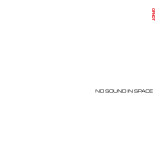
Blake Lee has always been fascinated by the unknown, and space, in its isolating, mysterious vastness, embodies this theme immaculately. The open void, captured so memorably by Stanley Kubrick in '2001: A Space Odyssey', is Blake's far-reaching canvas on 'No Sound In Space', a cinematic meditation on the cosmos that's painted in nuanced, emotionally sincere colors. The Los Angeles-based composer has been contemplating his full-length debut since 2021, using his guitar as a sonic paintbrush rather than find himself snared in its traditional aesthetic constraints. Transforming its characteristics with effects and subtle processes, he layers sustained tones and intimate improvisations, creating richly visual polychromatic utopias teeming with unknown life.
Since 2011, Blake has been most known for being the guitarist and a music director for Lana Del Rey, notching up three songwriting credits on her acclaimed ‘Ultraviolence’ full length. He sees his solo work is a form of escapism, a place where he can experiment and find comfort and catharsis outside of expectations and formal structure. The album was written instinctively, and Blake made sure he didn't force anything, letting go and getting out of his own way, listening intently as sounds and textures materialized organically. "I didn't want to ruin it by being a perfectionist," he laughs. And his collaboration with Kenyan sound artist KMRU, who runs the OFNOT label and contributes to two of the tracks on the album, occurred similarly organically.
Blake was moved to reach out to KMRU when he caught a performance of 'Natur' at Los Angeles' Zebulon in 2022, leading to a prolonged back-and-forth. They didn't meet in person until earlier this year, by which time they'd become firm friends, continuously sharing music and conversation. KMRU had lent a valuable ear to Blake, who sent early playlists of 'NSIS' that, over the months, slowly evolved into the finished album. It's the first release on OFNOT that's not by KMRU himself; the label emerged last year with the release of KMRU's own 'Dissolution Grip', and Blake's debut immediately expands its sonic universe. Alongside the playlists, Blake also provided KMRU with the tracks' raw stems, which KMRU began to edit and expand in his Berlin studio. 'Miura' and 'Waiting' are the result of this process, two sublime abstractions that augment Blake's dreamlike, euphoric tones with KMRU's pebbly distortions and booming low-end rumbles. And this same playful sense of freeness seeps into Blake's other compositions.
On the misty 'In A Cloud', he surrounds cascading string tones with soft-focus pads that swell until they're like crashing waves, and on the two 'Echoplexx' pieces, he uses delay and reverb to smudge his sounds until they're viscous residue, the harmonies obscured by whooshes of white noise and distant chimes. The mood is quieted somewhat on 'Moving Air', as Blake's swirling tones form half-heard lullabies, coalescing into a dense, melancholy crescendo, and he fills out the sound with reverberant airport recordings on 'Pan Am', letting pitchy My Bloody Valentine-esque drones warble beneath the transitory chatter. Each track melts into the next, forming a billowing, cryptic narrative that leaves more questions than answers. Blake is constantly searching, and fills his unoccupied space with warmth, perception and sensitivity.
Blake Lee has always been fascinated by the unknown, and space, in its isolating, mysterious vastness, embodies this theme immaculately. The open void, captured so memorably by Stanley Kubrick in '2001: A Space Odyssey', is Blake's far-reaching canvas on 'No Sound In Space', a cinematic meditation on the cosmos that's painted in nuanced, emotionally sincere colors. The Los Angeles-based composer has been contemplating his full-length debut since 2021, using his guitar as a sonic paintbrush rather than find himself snared in its traditional aesthetic constraints. Transforming its characteristics with effects and subtle processes, he layers sustained tones and intimate improvisations, creating richly visual polychromatic utopias teeming with unknown life.
Since 2011, Blake has been most known for being the guitarist and a music director for Lana Del Rey, notching up three songwriting credits on her acclaimed ‘Ultraviolence’ full length. He sees his solo work is a form of escapism, a place where he can experiment and find comfort and catharsis outside of expectations and formal structure. The album was written instinctively, and Blake made sure he didn't force anything, letting go and getting out of his own way, listening intently as sounds and textures materialized organically. "I didn't want to ruin it by being a perfectionist," he laughs. And his collaboration with Kenyan sound artist KMRU, who runs the OFNOT label and contributes to two of the tracks on the album, occurred similarly organically.
Blake was moved to reach out to KMRU when he caught a performance of 'Natur' at Los Angeles' Zebulon in 2022, leading to a prolonged back-and-forth. They didn't meet in person until earlier this year, by which time they'd become firm friends, continuously sharing music and conversation. KMRU had lent a valuable ear to Blake, who sent early playlists of 'NSIS' that, over the months, slowly evolved into the finished album. It's the first release on OFNOT that's not by KMRU himself; the label emerged last year with the release of KMRU's own 'Dissolution Grip', and Blake's debut immediately expands its sonic universe. Alongside the playlists, Blake also provided KMRU with the tracks' raw stems, which KMRU began to edit and expand in his Berlin studio. 'Miura' and 'Waiting' are the result of this process, two sublime abstractions that augment Blake's dreamlike, euphoric tones with KMRU's pebbly distortions and booming low-end rumbles. And this same playful sense of freeness seeps into Blake's other compositions.
On the misty 'In A Cloud', he surrounds cascading string tones with soft-focus pads that swell until they're like crashing waves, and on the two 'Echoplexx' pieces, he uses delay and reverb to smudge his sounds until they're viscous residue, the harmonies obscured by whooshes of white noise and distant chimes. The mood is quieted somewhat on 'Moving Air', as Blake's swirling tones form half-heard lullabies, coalescing into a dense, melancholy crescendo, and he fills out the sound with reverberant airport recordings on 'Pan Am', letting pitchy My Bloody Valentine-esque drones warble beneath the transitory chatter. Each track melts into the next, forming a billowing, cryptic narrative that leaves more questions than answers. Blake is constantly searching, and fills his unoccupied space with warmth, perception and sensitivity.
On his latest full-length, Low End Activist swerves towards weightless grime and suspended hardcore miniatures to tell a very personal story. The UK-rooted producer continues his habit of zeroing in on a distinct approach for each release, leaving a logical breadcrumb trail of soundsystem science in his wake as he channels decades of bass absorption into 14 atmospheric cuts that prize patience and precision over obvious club functionality.
Municipal Dreams plays out as a semi-autobiographical tour through the Blackbird Leys estate that the Activist grew up on. It’s a lived reflection on inequality and the ripple effect it has in working class communities, using the sonic palette to set the mood and scattering pointed samples throughout to spell out the story.
In sampling the exhaust of a stolen Subaru Impreza, ‘TWOC’ looks back to the recreational car theft which was standard entertainment for the kids in his community. There’s an underlying idea that this ‘council estate sport’ wouldn’t have been so prevalent if there were public services and opportunities presented to the scores of disaffected youth looking for somewhere to direct their energy and frustration.
In ‘Just A Number (Institutionalised)’ LEA alludes to the shattered juvenile detention system, growing up seeing friends and family members locked up at ease with little to no support on being released back into society, just meant that the same cycles of behaviour would play out over and over.
‘Violence’ samples from a short film shot by the drama division of the Blackbird Leys Youth Club to evoke the physical threat which formed a background hum to life on the estate. The industrial mechanics of the local car factory, which served an integral role as a workplace for many in the community, gets sampled in ‘They Only Come Out At Night’ while the ‘Everyone I look up to are either junkies or criminals’ sample in ‘Broke’ looks to a lack of positive role models.
Municipal Dreams isn’t a one-note indictment of life on the estate, ‘Innocence’ captures the simplicity of a child at birth before their environment has time to shape them. The Hope interludes cut through the grim honesty of the longer tracks while a subtle thread of wry humour finds its way into some of the talking heads cutting through the signature LEA murk.
But honesty is the operative word here, and the message feels all the more meaningful at a time when the UK’s social divisions are laid bare in the wake of a devastating stretch of austerity. Returning to Blackbird Leys to shoot images for the photo-zine and album cover, the Activist found the local community centre being demolished. The local pub stands derelict, its faded Welcome sign a grimly ironic portent of the options facing children of the estate in the wider world.
Funnelling his memories, hopes and fears into a singular twist on the bass weight tradition, LEA captures evocative scenes that land somewhere between kitchen sink realism and rave futurism.