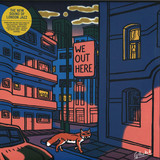
Repress of 2018’s classic compilation from Brownswood.
A primer on London’s bright-burning young jazz scene, this new compilation brings together a collection of some of its sharpest talents. A set of nine newly-recorded tracks, We Out Here captures a moment where genre markers matter less than raw, focused energy. Looking at the album’s running order, it could easily serve as a name-checking exercise for some of London’s most-tipped and hardworking bands of the past couple of years. Recorded across three long, fruitful days in a North West London studio, the crossover between each of the groups speaks to the close-knit circles which make up the scene.
Surveying the way that London’s jazz-influenced music had spread outside of its usual spaces in recent years, this album bottles up some of the vital ideas emanating from that burgeoning movement. Giving a platform to a scene where mutual cooperation and a DIY spirit are second-nature, it’s a window into the wide-eyed future of London’s musical underground.
Ubiquitous, much-lauded saxophonist Shabaka Hutchings is the project’s musical director. His own recent projects span from South Africa-connected, spiritually-minded jazz players Shabaka and the Ancestors to Sons of Kemet, who match diasporically-connected compositions with viscerally-direct live shows. His entry on the album, ‘Black Skin, Black Masks’, is typically difficult-to-define: with an off-kilter, shifting rhythmic backbone, repeated phrases – mirrored between clarinet and bass clarinet – shape the track with an alluring hue. His input ties together a deft, genre-agnostic sensibility that’s shared through all the players on the record.
Theon Cross – who’s also part of Sons of Kemet with Hutchings – starts his track, ‘Brockley’, with the solo, distinctive low rumble of his tuba. Winding and mesmeric, it sees tuba and sax lines winding together in rhythmic and melodic parallels. Ezra Collective – whose drummer and bandleader Femi Koleoso has toured with Pharaohe Monch – run a tight, Afrobeat-tipped rhythm on ‘Pure Shade’, with the final third changing gear into a melodic, momentous closing stretch.
Joe Armon-Jones, whose ludicrous chops on the piano have seen him touring with the likes of Ata Kak, showcases earworm-like, insistent motifs on ‘Go See’, balanced with a playful, improvisatory approach with room for ad-libbing and solos a-plenty. Taking a softer tact than many of the other entries, Kokoroko – whose guitarist Oscar Jerome has been making waves with his solo material – spin a lyrical, steady-paced meditation on ‘Abusey Junction’, matching chanted vocals with gently-played guitar.
Nodding to spiritual jazz influences, Maisha’s ‘Inside The Acorn’ is a wandering, explorative rumination, balancing delicate washes of piano and percussion with sharp interplay between flute and bass clarinet. In contrast, Nubya Garcia’s ‘Once’ is taut and carefully-poised, her tenor sax guiding a carefully-built energy to an explosive conclusion. And finally, Triforce’s ‘Walls’ is a performance in two parts: starting with Mansur Brown’s languorous, lyrical guitar, the second half switches up to a low-slung, g-funk-tipped groove.
Suche:de funk
- 1: Don't Lie Back
- 2: (That's When) It's Worth It
- 3: Instant Touch
- 4: Sex Without Stress
- 5: Fiasco
- 6: Intact
- 7: Tongue In Cheek
- 8: Stepping Out Of Line
- 9: Shakedown
- 10: America
Sense and Sensuality (1982) was the second and final album by seminal British post-punk band The Au Pairs. The four-piece group from Birmingham were very much in tune with the early 80s growth pangs from the first punk explosion - stripping down their music from their debut LP to a funkier, more rhythmic essence, and shifting the focus of their lyrics to the personal rather than the political.
The addition of horns and imaginative synthesizers allowed for more satisfying sonic diversity, from the disco-informed dance-punk of “Instant Touch” to the cabaret swing of “Tongue in Cheek”. While “That’s When It’s Worth It” takes several elements of popular post-punk - looping auxiliary percussion rhythms and a sporadically used horn section - and crafts them into a wild sound that’s equal parts dance, psychedelia, punk and art pop.
Their distinctly punk take on sex and gender politics, meanwhile, was their strongest thematic strain - and that’s truly where Sense and Sensuality shined. Despite only reaching #79 in the UK when first released, it’s now widely seen as one of the best post-punk albums ever.
Sense and Sensuality is now available as a limited numbered edition of 750 copies on translucent magenta coloured vinyl and contains an insert.
"Ultravisitor" ist seit seinem Release im März 2004 zum Fanliebling und einem der beliebtesten Platten in Squarepushers gesamter Diskographie avanciert. Mit seiner einzigartigen Mischung aus Studio- und Live-Aufnahmen ist es gleichzeitig ein hervorragendes Beispiel für die Vielfalt seiner Musik: vom frenetischen Titeltrack über den funky Jazz von "Iambic 9 Poetry" bis zur sonnendurchfluteten Glückseligkeit von "Tommib Help Buss" und darüber hinaus.
Zum 20. Jubiläum präsentiert Warp eine erweiterte Deluxe-Version in einmaliger, limitierter Auflage, die von Jason Mitchell (Loud Mastering) unter der Ägide von Tom Jenkinson sorgfältig von den Originalbändern remastert. Tom hat die Gelegenheit genossen, die Bänder noch einmal zu überarbeiten und den Stücken neue Dynamik und Details zu verleihen.
Das beigefügte Bonusalbum "Venus No.17 Maximised" besteht aus ultra-raren Tracks einer Ultravisitor-Promo-EP, der "Square Window" 3"-CD (die bei Vorbestellungen über WarpMart gratis mitgeliefert wurde) sowie der "Venus No.17" EP (alle aus 2004). Das beiliegende Booklet enthält seltene Fotos, Flyer und Aufnahmedokumenten, darunter einer Anleitung zu allen Geräten, die Squarepusher damals verwendete.
- On Jupiter
- Ufo
- Seductive Fantasy
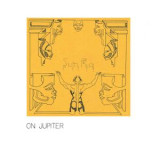
A cosmic fusion of deep funk, interstellar jazz, and avant-garde soundscapes, On Jupiter stands as one of Sun Ra"s most iconic releases. Recorded in 1979 during a prolific period at Variety Arts Studios in New York, this album captures the Arkestra at the height of their creative powers, blending futuristic improvisation with infectious rhythms and otherworldly textures.
DCTL is a unit formed by Masafumi Onishi, aka TELLY, the label owner of Troop Music Works, and DJ DUCT, who is renowned for his turntable skills that span a wide range of genres, from Hip Hop and Rare Groove Funk to Detroit Techno and Deep House. The raw warmth of analogue equipment, rough sequences mainly using samplers and rhythm machines, familiar nostalgic samples, and adorable DIY output that clearly conveys that it has been carefully crafted by hand.
- 1: Love Will See Us Through This
- 2: Bergab
- 3: Die Bestie Mit Dem Brennenden Schweif
- 4: Ich Hab Von Der Musik Geträumt
- 5: Die Satanischen Fersen
- 6: Mein Eid
- 7: Pervert The Source
- 8: Fka M & M 1
- 9: Wheelgreaser
- 10: Hab Gnade!
- 11: Funke & Benzin
- 12: Your Fears Are Well-Founded
- 13: Mein Mo(Nu)Ment (Feat. Sophia Blenda)
- 14: Inkomplett
- 15: Rosa
- 16: Nation Of Resignation
- 17: Ein Haus
Man singt und es wird: Im Zuge eines Zusammenbruchs hat Max Gruber den Soloartist Drangsal gekillt und die Band Drangsal gegründet. Am Ende des Tunnels steht das im Juni 2025 erscheinende Album, Aus keiner meiner Brücken die in Asche liegen ist je ein Phönix emporgestiegen.
Seit über zehn Jahren sichelt Max Gruber mittlerweile die Zick-Zack-Schneise Drangsal durch die deutsche Poplandschaft: Harieschaim aus 2016, Zores aus 2018 und zuletzt Exit Strategy – das ihm 2021 Platz 6 der Albumcharts bescherte – erdachte Gruber größtenteils im Alleingang. Und dann war da noch etwas nach seiner Exit Strategy: Ein Zusammenbruch. Max Gruber wusste nicht mehr, ob und wenn ja, wie er weiter Drangsal machen will, veröffentlichte im Ullstein-Verlag sein literarisches Debüt »Doch«, gründete Die Benjamins, holte so gemeinsam mit Charlotte Brandi, Thomas Götz und Julian Knoth Hans-A-Plast Frontfrau Annette Benjamin aus dem Ruhestand und reaktivierte unlängst das 2016 mit Stella Sommer gegründete Duo Die Mausis.
Und doch, von innen wie von außen, immer wieder die Frage nach einem neuen Drangsal-Album. Wenn es denn überhaupt nochmal eines geben soll, erkannte Gruber, musste er die Arbeitsweise, auf deren Grundlage Drangsal-Songs entstehen, fundamental verändern. Auf alles Ringen folgte, was unvermeidbar war: Der Reset. Max Gruber hat den Soloartist Drangsal gekillt und die dreiköpfige Band Drangsal gegründet – zusammen mit zwei Mitmusikern, die ihn aus seinen Gewohnheiten gelöst haben: Lukas Korn und Marvin Holley.
Erstgenannter ist Gitarrist und Produzent, spielt in der Band Lyschko, produzierte zuletzt das Album silber von Mia Morgan und hat seit 2020 als Bassist an der Drangsal-Liveband partizipiert. Zweiterer studierte Jazz- und klassische Gitarre sowie Komposition in Stuttgart und Wien, stand mit Sam Vance-Law und Fil Bo Riva auf der Bühne und arrangierte für Film und Theater. Lukas Korn und Marvin Holley haben dafür gesorgt, dass sich die zentrale Figur im Kosmos Drangsal dreiteilt.
Das Liedermachen in Bandkonstellation ließ alle Angst platzen: Getragen von Euphorie nahmen Gruber, Holley und Korn ab Ende 2022 etliche Songskizzen und damit den Unterbau eines siebzehnteiligen Albums auf. Nach Kreativurlauben an der polnischen Grenze und Ostsee stand eine von Max Rieger produzierte und von Lukas Korn Co-produzierte vierte Drangsal-LP. Sie trägt den schwergängigen Titel Aus keiner meiner Brücken die in Asche liegen ist je ein Phönix emporgestiegen und erscheint im Juni 2025. Gruber, Holley und Korn haben sich auf das Credo so wenig wie möglich, so viel wie nötig verständigt – und dadurch einen Umbruch im Klangkosmos Drangsals manifestiert, der völlig neue Dynamiken mit sich bringt. Aus keiner meiner Brücken die in Asche liegen ist je ein Phönix emporgestiegen hält Leerstellen aus, in seinem Zentrum stehen, statt Synthesizer, Akustikgitarren, die immer wieder an der Grenze zu Blues und Jazz wandeln. Wo speziell auf Exit Strategy noch überzuckerter Synth-Pop preschte, ist nun Klavier zu hören; Orgel, Klavinet und Cembalo; Xylophon, Violinen und Celli; von Ralph Heidel gespielte Querflöten und Saxophone.
Dazwischen drei Episoden, in denen sich Gospel Chöre und Technobeats breitmachen. Max Rieger hat die drei dazu motiviert, Echtheit, auch Imperfektion im Moment der Aufnahme zuzulassen – und großen Anteil daran, dass »Aus keiner meiner Brücken die in Asche liegen ist je ein Phönix emporgestiegen« ein realistisches Abbild des Trios bietet. Die Stimmung? Dagegen eher ein Wechselbad. Max Gruber singt von Selbstentfremdung, vom Für und Wider des Stillstands, vom Sichhingeben und Sichwegschmeißen – mal auf deutsch, mal auf englisch, mal zart, mal angewidert. Grubers Stimme klingt, nach einer klassischen Gesangsausbildung, die der Einunddreißigjährige angetreten hat, zielbewusster. Umarmungen Marke »Ich hab von der Musik geträumt und Inkomplett treffen auf Gewitterwolken à la Mein Eid und dem Sophia-Blenda-Feature Mein Mo(nu)ment. Entlang rigoroser Entkernung und Hexenjagd geht es Bergab – für dich, für mich, für Max Gruber sowieso. Er ist über weite Teile der Platte hinweg auf der Flucht vor sich selbst, den alten Geistern, dem leidigen Wachzustand: Wär’ ich doch bloß nimmermehr erwacht, ich schliefe in ewigem Glück. Gruber sucht und sucht: Nach innerem Frieden, nach Gnade, nach unverbranntem Boden, nach neuen Versionen seiner Selbst – und das vergeblich. Immerhin scheinen Erinnerungen mit der Zeit zu verschwimmen: Grubers Worte – zu sich und zur Welt – klingen im hinteren Teil der Platte sanfter, vergebender, resümierender. Ein Schlüsselmoment? Das von der Schauspielerin Rosa Lembeck eingesprochene, Monolog artig formulierte Klanggedicht Rosa – Es ist so: Man singt und es wird.
Art is a term that's often associated with Robert Hood's work and the next vinyl release on M-Plant comprises his recent digital releases - the March single "Art Form" and April's double-header "Art Class / Art School" to create the "Art Project EP".
The acidic "Art Form" is Hood's first Techno release since 2024's "Alpha Key EP". The Minimal Techno originator continues to show off his prowess with "Art Class" which stays on the Acid path we hear on "Art Form" but delves even deeper. Meanwhile, "Art School" on the B-side brings sci-fi sounds and an atmospheric punch.
Robert Hood has said of his M-Plant label: "M-Plant is what I've always wanted to hear: the basic stripped down, raw sound. Just drums, basslines and funky grooves and only what's essential. Only what is essential to make people move. I started to look at it as a science, the art of making people move their butts, speaking to their heart, mind and soul. It's a heart-felt rhythmic techno sound. M-Plant is just M. minimal."
- A1: Say Ahhh
- A2: Mind Melt
- A3: Buttersweet Loving
- A4: River Of Freedom
- B1: Somebody
- B2: When You Told Me You Loved Me
- B3: Stay In Bed, Forget The Rest
- B4: Call Me
- C1: Music Selector In The Soul Reflector
- C2: Sampladelic
- C3: Bring Me Your Love
- C4: Picnic In The Summertime
- D1: Apple Juice Kissing
- D2: Party Happening People
- D3: Dmt (Dance Music Trance)
- D4: What Is This Music?
When one makes mention of Deee-Lite, the 90's house-funk trio of Lady Miss Kier, and DJs Dmitry and Towa Tei, invariably their Billboard smash single “Groove Is In The Heart” will come up, and for good reason. With its Herbie Hancock-sampling bassline, some classic rhymes from Q-Tip, and guest vocals by Parliament-Funkadelic legend Bootsy Collins, the song became an indelible classic of 90s music, a massive commercial hit for Deee-lite and is widely considered one of the greatest dance songs of all time. Although a massive success for the group, “Groove Is In The Heart” led to some pigeonholing from critics and reviewers, who had specific expectations for future records. Rather than deliver more of the same free-wheeling, breezy dance music of World Clique, Deee-lite took a more politically-minded approach with their second album, spurred largely by front-woman Lady Miss Kier, who had a lengthy history of political activism prior to forming the group. 1992's Infinity Within rendered several Dance-chart hit singles, but was not as commercially or critically lauded as its forebear. Deee-lite were undaunted by their change in commercial fortune, regrouping with the addition of junglist DJ Ani, replacing the absent Towa Tei to record their third record. 1994's Dewdrops In The Garden was the result of their efforts, which struck a remarkable balance between the celebratory grooves of World Clique, and the social justice-driven Infinity Within. Lady Miss Kier had done a lot of world-traveling in the time between albums, and the material in Dewdrops was a reflection of her experiences, applying a spirit of global togetherness to their house-funk grooves. Regrettably, Dewdrops In The Garden was not a commercial success, yet it still managed to render its share of #1 Dance Chart singles; the atmospheric techno bounciness of “Bring Me Your Love”, and the spacious funk-house track “Call Me.” Though Deee-lite would disband soon after Dewdrops In The Garden's release, the record remains an unheralded favorite among dance music devotees for its coupling infectiously bright, and soulful melodies, with banging dance-floor grooves, and unshakably optimistic vibes.
José James just can’t leave the ’70s alone. Or maybe it’s the other way around. The singer, songwriter, bandleader, and producer was born in 1978, after all, but over his past 17 years of fundamentally forward-looking, blessedly mercurial music, he keeps getting pulled back in. His 2013 Blue Note breakthrough No Beginning No End revisited the hooky, funky, jazz-streaked songcraft of the time through a modern crate-digger’s ears. On 2020’s No Beginning No End 2 — James’ debut on his own Rainbow Blonde Records — he went back through the portal with a small army of fellow celebrated eclecticists. Just last year, there was the album 1978, a richly layered love letter to said year that felt deep, luxe, and cool. It’s as if — vested with the restless fluidity of jazz, the tuned-in sensitivity of soul, and the revisionist grit of hip-hop — he is trying to play his way into the exact moment when, culturally speaking, everything was about to change.
“I'm still so fascinated by the tension in that era of all these seemingly clashing things happening at once,” says James. “The loft scene, the jazz scene, Elton and Billy, Bob Marley, the Isleys, Funkadelic, disco being this behemoth in a way I don't think we even understand today… And then there’s where everybody went from there — into hip-hop, into punk rock, exploding jazz. It's like a summation of the ’70s, and it's about to transform. It's the peak of the rollercoaster.”
Literally breaking into history is impossible, of course, but James’ new LP, 1978: Revenge of the Dragon, does feel like breaking through or bursting out. In loving contrast to its predecessor, the fresh set plays hot, like a Friday night out at the Mudd Club in its prime. Though he’s dreamt up albums with collaborator counts approaching the dozens, James gathered a tight crew for this one. Himself and Taali on vocals. BIGYUKI on keys and analog synth. Jharis Yokley on drums. Bass split between David Ginyard (Blood Orange, Terence Blanchard) and Kyle Miles (Michelle Ndgeocello, Nick Hakim). And an all-star brass lineup: Takuya Kuroda on trumpet, young lion Ebban Dorsey on alto sax, and genre-spanning ronin Ben Wendel on tenor sax. They set up in Dreamland Studios near Woodstock, a restored 19th century church, and recorded live to tape, two tracks, drums pushed to the max — “a small homage to the rise of punk,” says James.
In that place out of time, the band laid down a handful of choice covers and some wild originals, like the single “They Sleep, We Grind (for Badu),” a decades-collapsing cut powered by an ugly groove. Steeped in dub, funk, and sampledelia, James chants an artists’ mantra (“They sleep, we grind / Man, f--- your nine to five”), makes lyrical callouts to Marley and Nas, and channels everything from George Clinton to J Dilla, not to mention the earthy mysticism of Erykah Badu. In 2023, James released and toured his Badu covers LP, On & On. “Living in her musical house for a year was transformative,” he says. “This is my summary of everything I learned through her, tying it to this idea that artists move differently. We are in society but we are outside, too, looking out and in at the same time. Our hours are different, our schedules are different.”
To that point, James and co. actually began each day in the woods, filming the album’s visual companion piece, Revenge of the Dragon, an honest-to-God kung-fu short complete with bad overdubs, training montages, camera tricks, and plot twists. The film pays tribute not only to the genre’s greatest year (1978, of course), but also its cinematic exchange with Blaxploitation, plus James’ own recent Shaolin training and admiration for Bruce Lee as a culture-bridging force (the LP’s cover recreates an iconic shot of Lee). On top of that, says James, “We had this immediacy in the studio. Live, one take, no overdubbing. I feel like that's where the martial arts piece comes in, where it's about being relaxed but also aware, and there's immediacy in your movements.”
Across the project, tribute takes that refracted, multifaceted form. From his personal late-’70s playlist, James chose four covers reflecting the era’s disco-fied churn: the MJ-meets-Quincy dancefloor masterpiece “Rock With You”; Herbie Hancock’s prescient vocoder fever dream, “I Thought It Was You”; and a pair of Black-radio hits from two bands whose fans typically wouldn’t have been caught dead in the same stadium: “Miss You” by the Rolling Stones and the Bee Gees’ “Inside and Out.” All of it gets filtered through a contemporary Black (and beyond) lens, coming out loud, free, funky, and buzzing — dynamic, yes, but also of a joyous piece.
1978: Revenge of the Dragon transports you to a crowded room where all this is playing out in real time. That feeling is helped out by opener “Tokyo Daydream,” a bass-driven swan dive into a neverending night of boutique bar-hopping and neon revelry. Later, “Rise of the Tiger” finds James bringing rare braggadocio to a propulsive track with growling synth lines and a hunger for whatever comes next. And then there’s the closer, “Last Call at the Mudd Club,” which with its upbeat energy and string of Stevie-inspired pickup lines, evokes the sort of unabashedly elated track the DJ throws on at 3:56 a.m. before everyone is kicked out. “I wanted to leave the album on that note,” says James. “If this was a night out in New York, this would be the last thing you hear before you get in that taxi and go back to your apartment.” Or, perhaps, back to 2025.
A Side – Peg (Smoove Multitrack Rework)
Smoove gets his hands on the ultimate multitrack studio separates and goes to town peeling back the layers, revealing crisp drums and iconic slap bass from Chuck Rainey, rearranging the structure to spotlight the lush backing vocals -A fresh spin on a classic, with every nuance shining through.
B Side 1 – Baby Be Mine (Smoove Multitrack Rework)
Smoove dives in from the start, isolating Rod Temperton’s iconic parts, showcasing the synth bass line with groove-heavy drums while drawing out every breath and detail in MJ’s vocals. A loving, funk-infused rework.
B Side 2 – This Time (Smoove Multitrack Rework)
Smoove takes a bold approach, stripping the track down to its essentials, creating an extended live drum intro section dubbed in space echo effects. Original vocal samples and acoustic guitar breakdowns with additional fender rhodes piano provide contrast, while the string section steals the spotlight in a stunning finale.
Mysticisms is delighted to present the music from one of the inspirations for the whole Dubplate series, the lesser known, but admired Digi Dub label. Hailing from the late 80s / early 90s South-East London squat scene, the music of label head Lee Berwick and cohorts was unlike any other at the time. Not simply a retake on digital dub emanating from Jamaica, Digi Dub mixed the heritage of reggae with the alternative-culture of Britain to forge a unique version.
Inspired by punk and the early electronics of the likes of A Certain Ratio, Cabaret Voltaire and Throbbing Gristle, Berwick came to music production later, after first quitting a career as a computer programmer to travel through Asia, returning after several years just as electronic “computer music” was gaining a fundamental new lease in 1988. A regular at Jah Shaka gigs over the burgeoning rave scene of the time, he steadily built a studio centered around the Akai Sampler.
Based, at the time, in South-East London, it’s lack of underground “Tube” lines and challenging transport links, helped create its own social and music eco-system. Squatted houses, shops, clubs and parties all thrived around the triangle of Bermondsey, New Cross and Camberwell. After meeting Kenny Diezel and the Mutoid Waste Company, he started to formulate his “dubby electronic sound” by literally play live to thousands of wide-eyed Ravers at Mutoid Waste parties.
Recording as Launch DAT, the first tracks with Kenny formed, soon joined by Harry and Nick, the trio progressed from building a sound system to L.S. Diezel being created. Friends since their teens Harry and Nik progressed from playing in bands, jamming Sly and Robbie dubs to moving from the countryside of the Home Counties to urban Peckham and into the orbit of Mutoid Waste and the squat and party scene.
Progressing to include Atari S1000HD, Akai S3200XL, Alesis Sequencer and Roland 303, the sound expanded but the raw spirit remained. The early recordings with Berwick, in the beautiful “Lovers style” that is For The Love Of and its stripped-back instrumental “Stepper” dub accompaniment in Bad Boys, as well as an early take on take on the merging of digital dub and hip hop in Skunk Funk, all capture the essence of that London period.
However, the inclusion of the seminal Suicidal Dub, that appeared as the title to their debut album and was recorded on a bus a few years later after Mutoid had relocated to Rimini, Italy, offers a glimpse to the future. Heralded as a proto-dubstep classic it has long been sought after and its inclusion makes for the essential.
Mutate The Mystery.
2025 Repress
OSLO is happy to welcome new artist Federico Lijtmaer to the family with his wonderful EP Impermanencia.
Inpermanencia on the A-side is a superb deep house track with the right kind of funkyness for the cool. Federico combines smooth bass with shifty drums and classy synth action. This track will conjure a smile on your face and we are happy as hell to be able to release this little gem.
Unselfish on the B-side is as funky as its big brother on the flip-side. A throwback to bygone times in a way, if you consider labels as Mosaic or Trelik. However, Federico definitely succeeded in terms of a modern interpretation. The inclined listener will recognize his musical roots anyway.
- A1: Lipstick
- A2: You Make That Boom
- B1: Party
- B2: We Gon'ride
With Street Funk, Mofak delivers a tight blend of G-Funk and modern funk, fusing West Coast vibes with French groove.
Packed with smooth talkbox, heavy basslines, and standout features (Dezzy Hollow, Jayson Cash), this EP is a sun-drenched gem for fans of urban funk. Turn it up loud.
Germany's iconic deep funk collective digs into a new soundscape: "A Higher Frequency" was recorded with a nine-piece live to tape at legendary MPS studio in the Black Forest, adding an airy, jazzy flavour to their trademark raw and breaks-heavy funk. Ten tracks full of spiritual grooves, soulful themes, loose funkiness and organic interplay, captured with state-of-the-art 1960s gear in a super-vibey room - but the title A Higher Frequency is not just about the pristine analogue sound quality of the recording, it is also a reference to a trancendant wavelength where minds meet and music connects.
Together with long-time friends and collaborators Daniel Kimaz on flute and Guillame Métenier, who worked his magic on the studio's historic Bösendörfer grand piano and Hammond organ, the group spent a week in the Black Forest, with full focus on the mission to capture the live energy and togetherness of the ensemble.
The result is an album bursting with positive energy and power, rooted in a universal funk groove with excursions into many colourful branches like outernational, cinematic, soulful jazz, psychedelic & disco.
The common thread is a propulsive, driving-forward feel: "Open The Gate" welcomes us with hard-hitting breakbeats and dramatic crime brass, followed by the cool groovin' piano-led soul jazz of "Get Loose", while "Spinning" takes us on a ride through cinematic horn choruses and folky-psych flute and guitars. "Back And Better" is Nichola Richards' time to shine, laying her sweet vocals over the sparse hiphop-infused soul beat to tell a comeback story. "Sweet Company" is a lighthearted uptempo tune inspired by TV and library themes of the 1960s. The swampy groove of "Sparks Of Joy" best reflects the fun of the band playing together and "Phantom Power" combines a trademark Mocambo breakin' theme with an unusual instrument, an electric phin from Thailand – a nod to the many so-called "world music jazz" recordings that the MPS studio gave birth to. On "Can't Stop This Fire", soul singer Carlton Jumel Smith from New York City takes over the mic as a special guest and brings the house down with a heavy funk delivery. "When We Roll" builds another highlight where bouncy drums play off disco-jazz horn themes and finally, the gospel-flavoured cine-soul epic "Homebound" drives it all home.
The vinyl record comes in a limited first edition in hand-made tip-on sleeve.
- A1: Hey, Uh-What You Say Come On
- A2: The Golden Rod
- A3: Keep On Walking
- A4: You & Me My Love
- A5: The Third Eye
- B1: It Ain't Your Sign (It's Your Mind)
- B2: People & The World
- B3: Everybody Loves The Sunshine
- B4: Tongue Power
- B5: Lonesome Cowboy
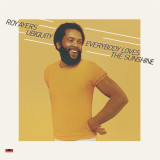
In "Everybody Loves the Sunshine" (1976), Roy Ayers seamlessly blends genres, creating a timeless sound that continues to influence musicians and DJs around the world. He makes the vibraphone the central instrument, a jazz-funk approach that defines his unique style. Over time, the album has remained an essential reference in Roy Ayers' discography and in the history of 70s Black music. Summertime soul classic! 180g vinyl.
In 1976, legendary musician and composer Roy Ayers released one of the most iconic albums of his career: "Everybody Loves the Sunshine." This album not only solidified Ayers as a key figure in the world of jazz-funk but also marked a milestone in soul music and contemporary jazz. It features a sophisticated blend of irresistible grooves, smooth melodies, and a unique sound that has endured over the years, becoming a reference for multiple generations of musicians and listeners.
By the mid-70s, Ayers had already established his reputation with his band, Roy Ayers Ubiquity, and his distinctive use of the vibraphone, which became his personal trademark. However, with this album, Ayers ventured into a smoother, more accessible sound, partly in response to the rise of disco music and the growing interest in more experimental sounds within the music scene. Throughout its ten tracks, Ayers managed to create a sonic atmosphere that evoked both the warmth of summer and the sophistication of jazz from that era, set against a backdrop of modern soul. The production was carried out by Ayers himself, along with his producer and friend, David R. Williams, and features the wonderful sound of Phillip Woo's Fender Rhodes and the powerful energy of the rest of the band, achieving an unmistakable authenticity and freshness. Some of its most well-known songs include the title track, ‘Everybody Loves the Sunshine,’ ‘The Golden Rod,’ and ‘The Third Eye,’ which quickly became classics of jazz-funk and soul. This album is crucial in Roy Ayers' career, as it demonstrates his ability to remain relevant and creative in an ever-changing music industry. Over the years, "Everybody Loves the Sunshine" has become a cult album, frequently featured in DJ sets by artists like Gilles Peterson, Theo Parrish, and Lefto. Summertime soul classic!
- A1: Been In The Train
- A2: Once Again
- A3: Fukah!
- A4: My Motorcycle
- A5: Big Decision
- A6: Back In Summer
- B1: Jazz Track Number 2
- B2: Hey Now!
- B3: You And, Me
- B4: No Distance
- B5: Exit
Flirtmachines neues Album 'California Salzburg' ist die Rock'n'Roll-Aufarbeitung der Beziehung zu ihrer verschlafenen Heimatstadt.
Trotzdem ist der schweißtreibende Indie Funk-Rock besonders der ersten paar Tracks auf 'California Salzburg' keineswegs doppelbödig, sie sind ernsthaft bei der Sache, nehmen sich dabei aber selbst mit ihrer unberechenbaren Mischung aus Indie Rock, Funk, Dada Pop und was immer ihnen im Proberaum gerade in den Sinn gekommen ist nicht zu ernst. Wie es sich für kalifornische Verhältnisse gehört gibt's dann noch ein paar Skateboard-Referenzen, bis man schließlich mit Skating to the ocean (Exit) dem Pazifik oder auch nur dem Fuschlsee entgegenbrettert.
Luv Shack Records serves up another irresistible batch of sonic treats with Disco Biscuits 6, blending sun-drenched disco vibes, hypnotic grooves, and deep-dive dancefloor goodness.
Kicking things off, Das Komplex delivers the cheekily titled Pajda Banana, a lush and sprawling jam brimming with cosmic textures and low-slung funk. Ubre Blanca follows with Renzo, a synth-driven trip balancing cinematic tension with pure Italo heat.
On the flip side, Gregory (AT) teams up with Alexander Wirth for Peaks, a shimmering House excursion with soaring melodies and a pulse built for late-night euphoria. Closing out the pack, Kelton Prima’s Strawberry Cream oozes with silky basslines and irresistible groove — the perfect sugar rush for discerning selectors.
From deep disco dreamscapes to peak-time party weapons, Disco Biscuits 6 has all the flavor you need.
Repress of 2018’s classic compilation from Brownswood.
A primer on London’s bright-burning young jazz scene, this new compilation brings together a collection of some of its sharpest talents. A set of nine newly-recorded tracks, We Out Here captures a moment where genre markers matter less than raw, focused energy. Looking at the album’s running order, it could easily serve as a name-checking exercise for some of London’s most-tipped and hardworking bands of the past couple of years. Recorded across three long, fruitful days in a North West London studio, the crossover between each of the groups speaks to the close-knit circles which make up the scene.
Surveying the way that London’s jazz-influenced music had spread outside of its usual spaces in recent years, this album bottles up some of the vital ideas emanating from that burgeoning movement. Giving a platform to a scene where mutual cooperation and a DIY spirit are second-nature, it’s a window into the wide-eyed future of London’s musical underground.
Ubiquitous, much-lauded saxophonist Shabaka Hutchings is the project’s musical director. His own recent projects span from South Africa-connected, spiritually-minded jazz players Shabaka and the Ancestors to Sons of Kemet, who match diasporically-connected compositions with viscerally-direct live shows. His entry on the album, ‘Black Skin, Black Masks’, is typically difficult-to-define: with an off-kilter, shifting rhythmic backbone, repeated phrases – mirrored between clarinet and bass clarinet – shape the track with an alluring hue. His input ties together a deft, genre-agnostic sensibility that’s shared through all the players on the record.
Theon Cross – who’s also part of Sons of Kemet with Hutchings – starts his track, ‘Brockley’, with the solo, distinctive low rumble of his tuba. Winding and mesmeric, it sees tuba and sax lines winding together in rhythmic and melodic parallels. Ezra Collective – whose drummer and bandleader Femi Koleoso has toured with Pharaohe Monch – run a tight, Afrobeat-tipped rhythm on ‘Pure Shade’, with the final third changing gear into a melodic, momentous closing stretch.
Joe Armon-Jones, whose ludicrous chops on the piano have seen him touring with the likes of Ata Kak, showcases earworm-like, insistent motifs on ‘Go See’, balanced with a playful, improvisatory approach with room for ad-libbing and solos a-plenty. Taking a softer tact than many of the other entries, Kokoroko – whose guitarist Oscar Jerome has been making waves with his solo material – spin a lyrical, steady-paced meditation on ‘Abusey Junction’, matching chanted vocals with gently-played guitar.
Nodding to spiritual jazz influences, Maisha’s ‘Inside The Acorn’ is a wandering, explorative rumination, balancing delicate washes of piano and percussion with sharp interplay between flute and bass clarinet. In contrast, Nubya Garcia’s ‘Once’ is taut and carefully-poised, her tenor sax guiding a carefully-built energy to an explosive conclusion. And finally, Triforce’s ‘Walls’ is a performance in two parts: starting with Mansur Brown’s languorous, lyrical guitar, the second half switches up to a low-slung, g-funk-tipped groove.
Divine Dances. In plural form.
The fourth album from DjeuhDjoah & Lieutenant Nicholson couldn't have a more explicit title.
Masters of emotions and feelings, the duo has always known how to express melancholy and nostalgia with precision. Yet this time, all their efforts have concentrated on a single goal: taking listeners by the hand—no, by the ear, obviously!—to bring everyone back to the dance floor and explore a variety of atmospheres together.
And naturally, a variety of styles. Funk, ndombolo, electro, hip hop or zouk, each new vibration discovered carries away the previous one to form a dancefloor where all eventually come together.
Divinely light.
The body, surrendered to this call to dance in all its forms, has been so caught up in the whirlwind of groove that the mind has fallen in behind it to continue as one. Words explode into syllables that metamorphose into notes, then perfectly align with those from the score.
One second. A bit of attention. Caught by an irrepressible groove, then comes the moment to slalom through melodies to discover, at the turn of a rhyme, a new meaning. Approached head-on, certain overly serious themes would empty the room and bring the atmosphere down to lead levels. The diagonal approach, humor, and apparent nonchalance of the two men are the best weapons at their disposal. Their Trojan horse to put substance into their form(s). To evoke transidentity, consent, economic malaise as well as the spiritual, or to tell little stories of frustrated loves, seemingly insoluble but which will end well.
Anthony Hilaire for Creole words, Sarah Solo for hip-swiveling soukous, Patrick Bebey for pygmy flute notes, and Grégoire Mahé to bring electricity to DjeuhDjoah & Lieutenant Nicholson's songs; styles blend in a musicality worked into its smallest interstices.
Gathered on this dance floor illuminated with 80s disco brilliance, you observe brassy notes slithering under the electronic veneer, synthesizer keys splashed by furious hip movements. To raise your eyes to connect with the spiritual is to watch the sky become constellated with crystalline Fender Rhodes notes, destined to fall like rain on the heavy bass of afrobeat groove.
Smiles attached to faces, no one should think they can get through the ten tracks of Divine Dances while remaining seated : he's doomed to fail.
OUT MAY 2025 DELUXE WHITE VINYL 180 G /CD / DIGITAL
I must admit to being a sucker for two-guitar bands. Ok, Hendrix pulled off a trio. But I don’t care what anybody says: The Yardbirds were a better band than anything that came out of them (Ok, maybe not Zep. But Cream?).
Maybe the reason I go back so far in my references is that, within the two-guitar band format, original new roles are difficult and rare. There’s the classic (socially problematic and often boring) “rhythm/lead” solution. There’s the JB’s or Nile Rodgers’ chicken pickin’ vs comping solution (which avoids chordal clashes by relegating one of the guitars to the role of single-note percussion instrument). There’s Ornette’s Prime Time division between Bern Nix’s rolled-off “jazz” tone and Charles Ellerbee’s trebly wah. Almost everything else is a variation on one of these.
In Ches Smith’s record Clone Row, each piece is built around a different concept for guitar interaction. The delightful and gifted weirdness of Mary Halvorson’s playing is counterpointed, contrasted, unisoned with, played off, juxtaposed (that is to say, enters every relationship possible) with Liberty Ellman’s equally amazing sound palette, chops, and imagination. This definitely ain’t your father’s guitar band.
The overall vibe of the record—despite Halvorson’s occasional noise outbursts or Ellman’s distorted guitar lines (see Mixed Fridge) is neither punk/funk, nor Zorn-ish metal—and certainly not the looser parameters of Ornette’s improvised harmolodics. Smith’s vibraphone playing, Halvorson’s guitar tone (whammy pedal squiggles aside), the brilliant electronics, and (most of all) the compositions themselves are somehow strangely West Coast cool. It’s as if I’m hearing a Jim Hall concert in which one of us did a lot of mushrooms, or (dare I write this?) some post-punk post-Dave Brubeck post-trip-hop experiment with classical form.
This recording is, most of all, about Ches as composer. He’s picked up a lot on his long, strange trip of the last few decades. The Haitian funkiness of his work with We All Break is audible—but deeply buried, encoded in the polyrhythms (check out Heart Breakthrough). His long-running side musician collaborations with John Zorn and Tim Berne are also evident but sublimated here into something new.
Not that improvising is absent. Check out the compelling collective statements in Sustained Nightmare and Ready Beat. Check out the brilliant interplay and bass soloing on Abrade With Me (a Weather Report for the age of extreme weather?) Nick Dunston is my favorite bassist of the new generation, and he plays brilliantly throughout. And Ches’ drumming here has all the groove, energy, and incredible range that have kept him in demand from Saturday night Vodou services to jazz and new music recording sessions (…the thinking man’s rock barbarian?).
The sus chords in Abrade With Me do build, for a moment, towards a fusion type of climax...but just at the moment I was gritting my teeth in anticipated defense against some horrible synth solo, the drums drop out, and we’re transported to the ambient lounge at the rave, and we suddenly understand we’re in the hands of a composer with the power to transport us just about anywhere.
So, this is a composer’s record most of all; a composer’s record performed by musicians who happen to be great improvisers. Ches Smith builds here on his reputation as a gifted new voice with an important vision, while showcasing some of the most creative musicians of our time.