Odd Nosdam really doesn’t need an introduction, unless you’ve been living under a rock for the last 20 years then undoubtedly you’ll know what’s up, and what an absolute humbling pleasure it is to now introduce Nosdam to the Where To Now? catalogue with two new cuts that flow from ethereal, meditative contemplation through to downtown abstracted machine damage..
The record opens with ‘End is Important’, A looping, spiritual lament which forces observation, or resolution around the concept of ‘Endings.’ Passages from Tsunetomo Yamamoto’s ‘Hagakure’ seep in and out of the mix throughout, where spiraling and glistening arpeggios dance across a glorious choral mantra, intended to elevate minds towards some kind of plume of awakening. This is a heady and deep cut which finds Odd Nosdam in full introspection mode.
‘Here to Know’ recalls the work of Patrick Cowley in his best downtown ultra slow swinging funk suit, or the more obvious nods to John Carpenter’s Assault on Precinct 13 OST. However, this is far from a straight up ode to creeping machine funk - Nosdam’s injection of energetic, pulsing synth stabs move the piece into a more surreal territory, creating a masterful and experimental injection of life and colour into an otherwise smoked out landscape.
“Where I found myself when Where To Now? reached out - asking if I'd consider a vinyl release with the label - was over in Barcelona spending time with loved ones at my family's apartment in the district of Sant Gervasi.
After my initial contact with WTN?, I ventured north to Cadaqués to visit Salvador Dalí's house in Port Lligat, where Gala & Dalí spent some 50 summers. While inspired asf touring the glorious property, I captured recordings from a looping video screening in an open air theater. These recordings became the foundation of Here To Know.
Sometimes there’s a break in the road. End Is Important was realized after re-watching the Jim Jarmusch film, Ghost Dog. Stealthy and evanescent, a familiar voice carries this slow-diver with a message to the world warped cruiser in all of us.” - Odd Nosdam
Search:de la swing
Green in Blue Vinyl[20,80 €]
The latest EP from Drab Majesty marks the start of a stirring new chapter in the band's majestic legacy. Written during a 2021 retreat to the remote coastal Oregon town of Yachats, Deb Demure leaned into the neo- psychedelic resonance of a uniquely bowl - shaped 12 -string Ovation acoustic/electric guitar. After early morning hikes in the rain, Deb would record ambient guitar experiments the rest of the day, tapping into "flow states," letting the sound lead the way. These sessions were then refined or recreated, and later elevated further with key collaborations by Rachel Goswell (Slowdive), Justin Meldal Johnson (Beck, M83, Air), and Ben Greenberg (Uniform, Circular Ruin Studio). An Object In Motion is true to its title, capturing the chrysalis moment of an artist evolving, reborn and untet hered, silhouetted against an open horizon. "Cape Perpetua" kicks off the collection's divergent palette: sparkling acoustic fingerpicking refracted through delay, equal parts raga and reverie. Melodies and moods congeal and dissipate, at the threshold of rustic American primitivism, brooding neo-folk, and pastoral melancholia. "The Skin And The Glove" deploys jangle to different effect baggy, soaring, grey skied kaleidoscopic pop in the spirit of Stone Roses, Primal Scream, and The Glove. Rachel Goswell lends her iconic freefall voice to The Cure - esque ballad, "Vanity," infusing poetic gravity to the doomed refrain: "If the valve breaks / then the earth quakes / and history finds a way / to put you in your place." "Yield To Force", the closing track of the EP, may be the most anomalous offering of the set. A 15 minute instrumental odyssey of cyclical strings, ominous slide guitar, and simmering synthesizer, the piece sways and spirals like a long zoom into distant storm clouds. Demure finesses the guitar with a restless but regal grandeur, unfolding a panorama of peaks, shadows, and plateaus. It's music both intuitive and prophetic, tracing the slow swing of pendulums across an endless plain. Taken as a whole, An Object In Motion presents a showcase of potential futures from Drab's evolving domain, their sound poised to bloom at the precipice of transformation.
- 1: Spectacular
- 2: Best Believe
- 3: Vibe Check (Ft. Cadence Weapon)
- 4: Baby Boy (Ft. Paul Wall)
- 5: Loosen Up (Ft. B.k. Habermehl)
- 6: Alexis (Ft. Harriet Brown)
- 7: We Still Here (Ft. Harriet Brown)
- 8: Opportunist Convention
- 9: Kickin’ In
- 10: Don’t Tap In / Contusion (Feat. B L A C K I E)
- 11: Boss Up
- 12: Make A Baby
- 13: Jasper, Tx
With I Will Make a Baby in this Damn Economy, Fat Tony embodies the kind of quixotic figure he would rap about; a singular entity who’s motivated, confident, and hungry; a perpetual-motion-machine locked in a staring contest with his country. It’s the latest album in his catalog produced entirely by L.A-based producer Taydex since 2020’s Wake Up. Later that same year Fat Tony released Exotica, and ever since he’s demonstrated he is in his own lane as a professional rapper with the mind of a magician, as quick to conjure an image as pull it out from under you, deftly manoeuvring through so many details and references a listener feels as if they have witnessed the work of an illusionist. He paints these canvases inside of songs that rarely spill past three minutes; they’re pocket-sized diaries replete with acute observations, character studies, microdoses of storytelling, and single-minded ruminations on a topic that bud, blossom, and fade before too long. Fat Tony & Taydex’s I Will Make a Baby in this Damn Economy cements Tony’s status as someone whose albums are not so much lyrically-lyrical as they are picaresque.
As with any Fat Tony project, the bars are tight as ever, but are so fluid for the 34-year-old it’s almost easy to take for granted the details, warmth, and humanity inside his free-associative tales of day-one friends who’ve passed, edgelord grifters who want to spit game, and nights on ketamine. Taydex’s production sprints through disparate yet simpatico styles, dipping its toes into Pi’erre Bourne-esque bass (see lead single “Spectacular”), house (“Loosen Up”), and even hyperpop. Meditations on loss and grief are woven throughout, but Tony throws a few curveballs as well: Consider “Alexis,” which sweetly reflects on a long-term platonic friendship. Taydex finds a Teddy Riley-indebted New Jack Swing groove just deep enough for the feeling to land and underlines the song’s sincere candor. This is the appeal of Fat Tony writ-large: his boisterous voice and genial personality invite you to the party, then you stick around to hear what he’s saying, which is frequently more introspective and complex than one assumes.
Written and recorded in Taydex’s new studio in North Hollywood, Tony says, “We had much more freedom and flexibility in making this album and you can hear it. It felt like a family project.” If the album is comfortable and loose, it is also dense and substantial. The album’s final two tracks contextualize the immediacy of what came before it—the mezcal with ices drank, Paul Wall swangin’ through to drop knowledge, the Polaris Prize-winning rapper Cadence Weapon providing a vibe check. “Make a Baby” accounts for Tony who’s seen everything, and knows he’s met the one to be a father with, and yet chooses to take his time to get it done. Taydex’s beat recalls turn-of-the-century R&B and the millennial promise of an endless good time. Sombre closer “Jasper, TX” is Tony coming to grips with the story of James Byrd, Jr., a Black man from East Texas dragged to his death by three white supremacists in 1998. These songs are not only trademarks of Tony’s fastidious rapping—they are deeply personal examples of his approach to artistry and life itself, where every decision is made in the shadow of history.
It’s here the mission statement of I Will Make a Baby in this Damn Economy comes into focus—you get the sense he means it, he’s ready for it, he’ll fight for it. He’s waiting to take the world at its word.
In the past, Mapache recording sessions have been pretty laid-back
affairs, with friends coming and going, the sessions starting and stopping
at the band's discretion--as relaxed a process as the immaculately sunny
vibes that their four albums would suggest - But on their dynamic and
ambitious fifth album of cosmic-folk, Swinging Stars, Sam Blasucci and
Clay Finch decided to take a trip and hunker down somewhere
particularly special
"It's a pretty impactful place," Finch says of the Panoramic House, the artist
retreat where Swinging Stars was recorded. "It's kind of dramatic. It's a castle-y
building on a hill, way up overlooking the Bay."
Located in Stinson Beach in Marin County, California, the Panoramic House has
recently hosted acts like My Morning Jacket, the War on Drugs, and Cate Le Bon,
and was the ideal combination of scenic beauty and self-imposed confinement to
allow Mapache to settle in for their most cohesive album yet.
"That environment yields itself to a higher level of focus because everybody's
together for a week," says Finch, explaining that the band stayed there during the
process, sharing every bit of their time and energy on a shared vision. "We were
all captive. No one could escape," he laughs.
Swinging Stars, an album of calm, second-nature swagger, is the natural result of
a band that's existed in one form or another for its founders' entire adult lives.
Finch and Blasucci first met as students at La Canada High School, just north of
Los Angeles, where they both had a guitar class: "There wasn't much supervision
or anything," remembers Blasucci. "It was really nice. And we got to just play
guitars together."
Arrangement- wise, the impulse to keep things simple was a pendulum swing
away from his Grammy-nominated 2018 album, 'Evening Machines'. "I set out to
make a record that was really bare bones," Isakov says. "I wanted to go backward
a little bit, because 'Evening Machines' was such a deep dive into arrangements. I
wanted to have more of a raw experience with this one."Isakov played many of
the instruments on 'Appaloosa Bones' himself. He recorded in a studio tucked
away in a barn on his property outside of Boulder, Colorado, where he helps grow
produce for CSA members, local restaurants, and an area food bank. The
resulting album is intimate and hushed, but maybe not as spare as what Isakov
initially had in mind. The eleven songs on the album are full of lush vocal
harmonies and layers of instrumental textures that blend guitar, banjo, piano, and
various other keyboards.
Joel Paterson has been a mainstay of the Chicago roots music scene for
over twenty years, playing with many bands and showcasing his unique
blend jazz, blues, rockabilly, country and western swing
'Wheelhouse Rag' is a 14- track collection of original rags and country blues on
solo, finger picking acoustic guitar.
The all- acoustic, 1920's- tinged 'Wheelhouse Rag' may at first seem like a
departure in genre for the guitarist - he is predominantly known for his
instrumental multitracked recordings reminiscent of Les Paul and Chet Atkins -
Joel learned to play guitar by ear from the records of acoustic legends such as
Blind Blake, Robert Johnson, Reverend Gary Davis, and Big Bill Broonzy. He later
expanded his repertoire to include techniques of the thumb-picking giants Merle
Travis and Chet Atkins. These influences can be heard throughout the album,
mixed in with many more twists and turns from the mind of the artist, to bring
you, 'Wheelhouse Rag:' the original fingerstyle guitar instrumentals of Joel
Paterson.
Original fingerstyle guitar rag and country blues instrumentals by in-demand
Chicago roots guitarist Joel Paterson, who has played with Cactus Blossoms, JD
McPherson, Kelley Hogan, and more, bringing his unique blend of jazz, blues,
rockabilly, and country & western style to the mix.
RIYL: Les Paul, Chet Atkins, Reverend Gary Davis, Cactus Blossoms, Pokey
LaFarge, Merle Travis
"Guitarist Paterson's free-ranging music defies easy categorization. He addresses
classic country, blues and Tin Pan Alley tunes as timeless works that reward
repeated listening." - Howard Reich, Chicago Tribune"Of all the "vintage" artists
injecting new life into bygone styles with originality and a sense of humor, Joel
Paterson just might top the list." - Dan Forte, Vintage Guitar Magazine
Collecting recordings made between 1953 and 1956, Miles Davis Plays For Lovers is a look at the more sensitive and sensual side of the great trumpeter, focusing on his sultry and smoky late night ballads. Mostly featuring his legendary mid-50s quintet of Coltrane, Garland, Chambers, and Jones, this collection highlights that groups ability to slow things down to a soulful, brilliant simmer. Classic jazz ballads that swing, perfect for late nights with a lover at your side.
What’s It Gonna Take? ist der Nachfolger von Van Morrisons Veröffentlichung aus dem Jahr 2021 - dem 28-Track-Doppelalbum Latest Record Project, Vol. 1 - und ist ein weiterer Beweis für die reiche kreative Ader, auf der sich einer der größten Künstler der Welt derzeit befindet.
What’s It Gonna Take? enthält fünfzehn neue Kompositionen von Van Morrison, die allesamt den unermüdlichen Drang des Künstlers widerspiegeln, Aufnahmen zu machen und live vor Publikum aufzutreten. Van Morrison ist eines der wahren Originale der Musik - absolut einzigartig und inspirierend mit einem Vermächtnis, das die letzten sieben Jahrzehnte umspannt. Der 1945 in Belfast geborene und von Blues, Country und Gospel inspirierte Musiker gründete 1964 die äußerst erfolgreiche R&B-Band Them, bevor er sich als Solokünstler in andere Gefilde begab. Als einer der produktivsten Plattenkünstler und fleißigsten Live-Performer seiner Zeit hat Van Morrison einen unvergleichlichen Katalog von Veröffentlichungen
geschaffen, der sich mühelos durch seine unzähligen Einflüsse bewegt, darunter visionäre Straßenpoesie, Jazz, Swing, Skiffle und keltische Wurzeln, und einige der beliebtesten Songs des 20. Jahrhunderts. Außerdem ist es ihm gelungen, sowohl auf der Bühne als auch im Studio eine Arbeitsmoral zu bewahren, die jüngere Künstler beschämen würde. What’s It Gonna Take? ist das 43. Studioalbum von Van Morrison.
What’s It Gonna Take? ist der Nachfolger von Van Morrisons Veröffentlichung aus dem Jahr 2021 - dem 28-Track-Doppelalbum Latest Record Project, Vol. 1 - und ist ein weiterer Beweis für die reiche kreative Ader, auf der sich einer der größten Künstler der Welt derzeit befindet.
What’s It Gonna Take? enthält fünfzehn neue Kompositionen von Van Morrison, die allesamt den unermüdlichen Drang des Künstlers widerspiegeln, Aufnahmen zu machen und live vor Publikum aufzutreten. Van Morrison ist eines der wahren Originale der Musik - absolut einzigartig und inspirierend mit einem Vermächtnis, das die letzten sieben Jahrzehnte umspannt. Der 1945 in Belfast geborene und von Blues, Country und Gospel inspirierte Musiker gründete 1964 die äußerst erfolgreiche R&B-Band Them, bevor er sich als Solokünstler in andere Gefilde begab. Als einer der produktivsten Plattenkünstler und fleißigsten Live-Performer seiner Zeit hat Van Morrison einen unvergleichlichen Katalog von Veröffentlichungen
geschaffen, der sich mühelos durch seine unzähligen Einflüsse bewegt, darunter visionäre Straßenpoesie, Jazz, Swing, Skiffle und keltische Wurzeln, und einige der beliebtesten Songs des 20. Jahrhunderts. Außerdem ist es ihm gelungen, sowohl auf der Bühne als auch im Studio eine Arbeitsmoral zu bewahren, die jüngere Künstler beschämen würde. What’s It Gonna Take? ist das 43. Studioalbum von Van Morrison.
Singer/Songwriter, Country, R&B und Bigband-Swing bringt Lyle Lovett auf seinem neuen Album ganz selbstverständlich unter einen Cowboy-Hut. In seiner langen Karriere als Musiker und Schauspieler hat er sich eh noch nie über Genre-Grenzen Gedanken gemacht. Auf seinem ersten Album seit über 10 Jahren, seinem Debüt bei Verve Records, mischt er Balladen aus eigener Feder mit swingenden Big-Band-Nummern, darunter bekannte Standards wie „Straighten Up And Fly Right“ und „Cookin‘ At The Continental“. Kein Wunder, dass Lovett in den USA längst als „national Treasure“ gilt. Seine musikalische Karriere begann er als Songwriter. 1986 veröffentlichte er sein Debütalbum, 1989 gewann er einen Grammy für die „Best Male Country Vocal Performance“. Hierzulande schaffte er es in alle Medien, als er 1993 die Schauspielerin Julia Roberts heiratete. Lovett hat bis heute auch in zwölf TV- und Kinofilmen gespielt, unter anderem in vier Filmen von Regisseur Robert Altman.
- I’ve Got My Love To Keep Me Warm
- The Song Is Ended
- You’re Laughing At Me
- Get Thee Behind Me Satan
- How Deep Is The Ocean
- Let’s Face The Music And Dance
- Always
- Heat Wave
- Suppertime
- Puttin’ On The Ritz
- Cheek To Cheek
- Let Yourself Go
- Russian Lullaby
- Alexander’s Ragtime Band
Weltpremiere eines bislang unbekannten Ella-Konzertes, aufgenommen mit dem Hollywood Bowl Pops Orchestra im August 1958!
Die berühmten Songbook-Alben von Ella Fitzgerald sind Evergreens des Jazzgesangs, die in regelmäßigen Neuauflagen und inzwischen auch digital immer wieder alte und neue Fans finden. Ellas mitreißende
Interpretationen der besten Songs von ikonischen Komponisten wie Irving Berlin, Rodgers & Hart, Cole
Porter und natürlich George & Ira Gershwin sind bis heute unübertroffen. Dass Ella Fitzgerald Ende der
1950er Jahre ihr Irving Berlin Songbook zusammen mit dem großartigen Arrangeur und Orchesterleiter
Paul Weston auch live aufgeführt hat, war längst in Vergessenheit geraten.
Jetzt wurde in der Privatsammlung von Ellas Manager Norman Granz ein Stereo-Mitschnitt dieses ganz
besonderen Abends entdeckt und von Produzent und Toningenieur Gregg Field bestmöglich digital aufbereitet. Auf LP, CD und digital laden Ella Fitzgerald, Paul Weston und das fabelhafte Hollywood Bowl Pops
Orchestra jetzt zum live aufgeführten Irving Berlin Songbook ein, ein Abend voller Swing, sentimentaler
Balladen, unsterblicher Ohrwürmer und Jazzgesang der Weltklasse
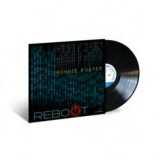
1972, vor fünfzig Jahren, veröffentlichte Hammondorgel- und Acid-Jazz-Legende Ronnie Foster sein BlueNote-Debüt „Two Headed Freap“, von dem nicht nur der Track „Mystic Brew“ ein erstaunliches Eigenleben entwickelte, spätestens nachdem A Tribe Called Quest ihn als Sample-Grundlage für ihren Song „Electric Relaxation“ auf dem 1994er Album „Midnight Marauders“ benutzten.
Die neun Songs auf „Reboot“, Ronnie Fosters Rückkehr zum Blue-Note-Label, klingen gradlinig, kraftvoll und frisch wie eh und je. Seine Art von Soul-Jazz hat in den letzten Jahrzehnen diverse Revivals gefeiert und beweist hier, dass sie eigentlich nie aus der Mode gekommen ist. In den Linernotes widmet Foster die Aufnahmen seinem 2021 verstorbenen „Bruder, Freund und Helden Dr. Lonnie Smith, einem der Weltbesten auf der Hammond B3-Orgel“.
Looooooongish Cat and Davecoin have come together for their debut album Realizer on Adeen. It is a record that swings from the dark and mysterious to the more upbeat and playful as it explores a range of techno styles. The material originates from the pair's live set so has a real dynamism to it as well as it moves through ever-evolving psychedelic soundscapes.
Vocals, synth lines, and guitars have all been laid down on tape and then resampled and deconstructed to "create an analog patchwork which floats over the hard-hitting beats and fat analog synths and bass lines." It's an immersive and inventive record that also has a fresh cover design.
First new recordings from GODFLESH since 2017's critically acclaimed full length 'POST SELF'.
'PURGE' musically, amongst the many layers of dirt, revisits and updates the concepts explored on the 'PURE' album from 1992; 90's hip hop grooves mangled and put through the GODFLESH filter to create something that is still unique and futuristic in style.
Both minimal and maximal, with layer upon layer of filth and heaviness, Godflesh deliver alien grooves that swing whilst also retaining the psychedelic / bad trip edge that Godflesh has always obsessed over. This is, and always has been, feel bad music; the title alone 'PURGE' references directly how songwriter / creator Justin K Broadrick utilises this music as temporary relief from his diagnosed autism and PTSD, a journey he has been on since he began creating music and feeling alone and as an outsider in any 'scene' or 'group' from childhood and throughout his adulthood.
Godflesh gives him the means to express a lifetime of feeling misunderstood and overwhelmed by hyper sensitivity, the band being the vehicle to give him some sense of catharsis and transcendence; a way of communicating overload and constant disenchantment at the human condition, and man's abuse of power and the systems that chain us.
The album references the cycle of horror that man has always and will always put us through; those in positions of power revel in the infliction of pain and horror upon individuals, in the name of their religion, their power, their money, their flags....
8 songs, delivered in a concise fashion for fellow outsiders.
Julian Cannonball Adderley's only Blue Note album, Somethin' Else, would likely forever be famous in music lore if just for the presence of Miles Davis. The iconic composer/trumpeter steps into the role of sideman on the 1958 set, one of just a handful of times he'd make such a move after the calendar passed the mid-1950s. Yet evaluating Somethin' Else strictly on Davis' involvement misses the big picture. Plain and simple, Adderley's jubilant work remains a jazz landmark due to the chemistry of its Hall of Fame personnel, enthusiasm of its participants, and sophistication of its arrangements – not to mention the reference-grade production and inclusion of the definitive renditions of two all-time jazz standards.
Limited to 6,000 numbered copies, pressed on dead-quiet MoFi SuperVinyl at RTI, and mastered from the original master tapes, Mobile Fidelity's ultra-hi-fi UltraDisc One-Step 180g 45RPM 2LP collector's edition pays tribute to the record's merit and includes the bonus track "Allison's Uncle." Offering reference-calibre sonics, this spectacular collector's version provides a clear, transparent, ultra-dynamic, and up-close view of a cornerstone effort that witnesses Adderley and Davis sharing horn duty alone for the only time in their fabled careers – an arrangement that occurred as a result of Adderley having joined Davis' majestic sextet a year prior.
The premium packaging and beautiful presentation of the UD1S Somethin' Else pressing befit its extremely select status. Housed in a deluxe slipcase, it features special foil-stamped jackets and faithful-to-the-original graphics that illuminate the splendour of the recording. No expense has been spared. Aurally and visually, this UD1S reissue exists as a curatorial artefact meant to be preserved, touched, and examined. It is made for discerning listeners that prize sound quality and production, and who desire to fully immerse themselves in the art – and everything involved with the album, from the iconic photos to the gorgeous finishes.
The vibrant potency reveals itself openly on an analogue set that provides full-range reproduction of an ensemble that also includes pianist Hank Jones, bassist Sam Jones, and drummer Art Blakey. Each and every snare hit, downbeat, and cymbal splash registered by the latter take on realistic proportions, blooming and decaying as they would right in front of you on a stage. Jones' foundational bass lines register with uncommon depth and palpability, the litheness of the strings and fullness of the instrument epitomizing the definition of rhythm. Stellar, too, are the surefooted 88s. Sublime in scale, tonality, and attack, with the delineation such you can practically separate the white and black keys in your mind. As for that liquid interplay between Adderley and Davis? Breathtakingly lifelike in timbre, naturalism, purity, and presence. This collector's version takes you there – there being Rudy Van Gelder's legendary New Jersey studio in March 1958 to witness it all unfold, again and again.
For reasons that extend far beyond the outstanding playing and flawless repertoire, Somethin' Else is without question a record you'll always want to watch and hear come together. As veteran critic Bob Blumenthal observed writing about the album four decades after its release, "The instant rapport achieved by the quintet is thus the product of much shared and common history, though the tensile strength that they create throughout created a totally unique feeling that can be attributed to the sensitive musicianship of all concerned, including the supposedly hard bopping leader and drummer." Such inimitable feeling, or emotion, courses throughout every passage, and no where more obviously than on "Autumn Leaves" and "Love for Sale."
Without question, the discreet interpretations of the Johnny Mercer and Cole Porter songs, respectively, found on Somethin' Else have long been considered part of jazz's alluring mystique. Adderley and Davis bring contrasting approaches to the table yet sound of a singular mind on "Autumn Leaves," with the latter's muted trumpet and the headliner's lush alto saxophone dovetailing into a performance that endures as a blueprint for expression, counterpoint, sophistication, fluidity, and linearity. Blues, melody, and romance pour from their horns. Their bandmates, picking up on the intimate vibe and calm mood here – as well as on the spry, head-over-heels spirit of "Love for Sale" – join in on the conversation with sharp economy and float-on-air roundedness.
Not to undersell the other three numbers, all deserving five-star status. Twelve measures in length, the title track offers a slow burn in swing. Written by Adderley's brother, Nat, the 12-bar "One for Daddy-O" transmits funk flavors. The closing "Dancing in the Dark" pops with lushness and temptation, its stream of bold colours and understated textures calling for a moonlight twirl, or at least fantasies suggestive of a memorable night. Somethin' else, indeed.
With the label MPS, post-war musical history was written in Germany:
noble music productions with many international greats come from the
Black Forest and are timelessly legendary
Some treasures from the archive of the label are released by HGBSBlue on highquality vinyl.
The Hampton All Stars played at the first concert of the festival "VS swingt" back
then. MPS boss Brunner- Schwer was there at the mixing desk. Some of these
recordings were released in 1978 as the MPS LP "Alive and Jumping" (MPS
15469).
"Hamp" and his All Stars were really into it and brought the audience in the Black
Forest, known as rather reserved, to a frenzy, especially after the break. The old
master worked his magic on the vibraphone, of course, but also played drums
and piano and sang with an irrepressible sense of rhythm as one who had
unmistakably internalized swing. The top trumpeter Cat Anderson was another
internationally known musician in the eight-piece all-star band with which "Hamp"
toured Europe at the time. And there was someone else who was one of HGBS's
personal favorites: pianist and organist Milt Buckner. Buckner's block chords had
not only influenced Oscar Peterson and George Shearing, but also inspired the
passionate piano freak Brunner- Schwer. The live recording with Hampton's All
Stars in Villingen was the last record of Buckner, who died a few weeks later in
the USA of acute heart failure.
The musicians can be heard in exuberant joy of playing, with "Hamp" standing out
sovereignly on vibraphone and drums, as well as Buckner with soulful organ
playing. Everything sounds unspent fresh and cheerful and shows Hampton and
his fellow players in top form. This rousing swing, which should appeal not only to
jazz fans, is available exclusively on LP.
- Unreleased live recording from 1977 in Villingen, Germany
- The last recording of organist Milt Buckner
- High-end vinyl quality 180 gr. vinyl in gatefold, matt finish with embossed
printing
When he first came on the scene, Phil Woods was often referred to as
"The New Bird," in a nod to the legendary Charlie Parker - A testament to
his genius on the saxophone to be sure
But while obviously indebted to Parker - as all modern jazz saxophonists of a
certain era were - there is no question that Phil Woods was an original. After
earning a degree in music from Juilliard in the early 1950's, Woods found himself
in the orbit of the great Quincy Jones. At Jones' invitation Woods joined Dizzy
Gillespie's infamous Jazz Ambassadors - a tour sponsored by the US State
Department as part of a global cultural diplomacy initiative - and subsequently
became a member of Jones' own touring band. This recording, his 9th album as a
band leader, consists entirely of Woods' five- part Rights of Swing Suite. An
ambitious large-scale composition based solidly on jazz traditions. A culmination
of the influences the then 30 year artist had absorbed. Arguably considered one
of Woods finest recordings, the record features a stellar section made up of
Wood's fellow Quincy Jones band members. (It should be noted that these same
musicians, for the most part, are also the section on Benny Bailey's Candid
Records recording, Big Brass, recorded a a few months prior in November of
1960). Recorded at the Nola Penthouse Studios in New Your City on two dates in
January and February of 1961, and conducted by Quincy Jones. The LP includes
extraordinary liner notes by Candid A&R man and producer Nat Hentoff, and indepth commentary from Woods himself, giving a context and insight that adds to
the experience of hearing these extraordinary performances
Reissue
Established in 2020 by DUPLOC & 140 Plates owner Pieter Grauwels and producer Hebbe, Basskruit is a label set up with the sole focus of shining a light on Belgian & Dutch produced, explosive Dubstep & 140 music.
With previous incredible releases coming from the likes of 11th Hour, BunZer0 and Hebbe himself, the imprint is now set for their eagerly anticipated 17th outing.
It comes from Netherlands-based Crowley & Schim, two producers expertly carving their reputation into the underground ‘140’ scene with their stunning, bass-driven productions which have been released on labels such as DUPLOC, FKOF & Concrete Law.
Meticulously crafted and exploding with bassweight, BSSKRT017 is a four-track EP which boldly traverses the sonic plains of ‘140’, showcasing the variety in both artist’s sound, whether it be the stripped back & swinging Moraal, the reverberating & dubbed-out Skitta or the dark & breaks-laced Wervel, which provides inspiration for a deep & hypnotic remix from Belgian artist Zygos.
Release artwork provided by Joshua Hughes-Games.
Hailing from Oxford in the United Kingdom, Timmy P has become a staple in the house scene across the past decade, racking up releases on the likes of Local Talk, Strictly Rhythm, What NxT, Nervous and of course Cécille where he returns here following 2022’s ‘Words Fail, Music Speak’ EP.
Title-cut ‘Mylo’s Groove’ leads and sees Timmy P employing a classic filter house feel via an amalgamation of choppy vocal chants ebbing and flowing amongst one another while a sturdy drum groove, gritty stab sequences and pulsating bass keep things swinging throughout.
On the flip-side is ‘Vintage B’, as the name would suggest the composition harkens back to the golden era of US, layering jazzy keys, acid squelches, brass licks and hypnotic voices atop a robust 909 drum workout.
The debut album, "Won’t Die This Way," from Cleveland-bred singer/songwriter/guitarist Erin Viancourt brings her lived-in storytelling to a gritty but gorgeously detailed batch of songs, encompassing everything from Americana to Western swing to classic outlaw country. Rooted in the warm and radiant vocal presence she’s shown onstage in touring arenas with Cody Jinks (who recently made Viancourt the first signing to his Late August Records), Won’t Die This Way ultimately reveals her rare capacity to soothe the soul and leave the listener newly empowered to live each day to the absolute fullest.