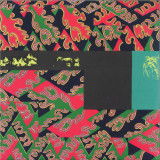
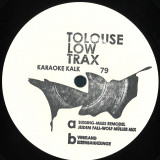
The third release from Fred Laird was recorded during the period June 2020 and January 2021 on 24trk home studio recording. It is also the first album recorded purely as a solo artist with the occasional guest and draws more from a roots style music (trad it isn’t) than previous more psychedelic releases.
‘Inspiration for the album came from listening to the self-recorded primal music of Hasil Adkins and the first solo Link Wray album for Polydor. The idea of these guys just doing what they wanted back of beyond seemed more akin to me sat in a box room during lockdown feeding off a diet of Billy Chong Kung Fu horror flicks, David Lynch, Noir crime movies, Jean Cocteau and the works of Yukio Mishima.
Musically the sound draws from early Bad Seeds or Crime and the City Solution, Gallon Drunk, Bohren and Der Club of Gore, The Cramps, Hasil Adkins and various other trash inspired twilight creatures. I also wanted to try and create that spooky organ sound that dominates the midnight movie classic ‘Carnival Of Souls’, so there’s quite a lot of organ and piano going on. I also got my hands on a baritone guitar to give the songs more of a deep growly twang!
Vocals are provided by Daisy Atkinson for the Jean Cocteau dedication ‘Orphee’ which is the nearest thing to a pop song on the album and the echoey almost Sister Lover’s sound of the title track. I got sick of my own shit voice and I just thought a female voice would give it a more fragile ethereal vibe.
Mike Blatchford provides formidable saxophone to the album’s last three tracks which were recorded on his mobile phone 300 miles away and synched into the music. The big blasted swing blues of ‘The Big Duvall’ is a dedication to Andy Duvall of Carlton Melton – a big guy who needed a big song. Who knows how big the song could have been in a proper studio. I could have dedicated it to John Wayne but Wayne couldn’t chop down trees with his bare hands like Andy can….’
Buscar:de la swing
Having impressed with his 2019 debut album on Negentropy, the breaks/tech-house/minimal techno fusion of Rhythm Tension, Zweizig has been given a chance to showcase his wares on Constant Sound's popular Constant Black offshoot. The headline attraction is undoubtedly opener 'Manipulate Our Reflections', a spaced-out chunk of hypnotic late-night science that wraps wonky, Villalobos style electronic noises and pulsing pads around a locked in (but also surprisingly swinging) tech-house groove. Relic provides a chunkier and groovier remix that boasts darker noises and a more beefed-up sound, while bonus cut 'Vvoid' is a twisted, undulating acid-jacker.
"The Shape Of Jazz To Come" - Ornette Coleman (as); Don Cherry (crt); Charlie Haden (b); Billy Higgins (dr)
It was John Lewis, pianist of the Modern Jazz Quartet, who brought Ornette Coleman to the renowned Atlantic label, having heard him play in Los Angeles. »Ornette Coleman is doing the only really new thing in jazz …« he reportedly said. The present initial Atlantic album was released just in time to coincide with the New York debut of the Coleman Quartet in November 1959. Lewis was sure that Coleman would open up new paths for jazz, and his opinion is reflected in the title of the album – "The Shape Of Jazz To Come". After the rather worn-out hard bop routine of the past years, this music was like a breath of fresh air. The fast numbers ("Eventuality", "Chronology") remind one of wildly hyped-up bebop. Other numbers ("Congeniality", "Focus On Sanity") juggle with catchy, almost folk like short motifs. This album contains two of Coleman’s most beautiful compositions: "Peace" and "Lonely Woman", which was later given lyrics and often heard in its vocal version. The Mulligan-Baker Quartet provided the model for the pianoless quartet – and when the band swings along once in a while with a moderato tempo, it is truly reminiscent of cool jazz. Be that as it may, the two wind instrumentalists just love the frenetic 'cry' and the intentionally 'imprecise' interplay. Clearly defined stanzas or traditional harmonic forms were not for them. The jazz musicologist Peter N. Wilson wrote: »A record, which is not unjustifiably so entitled« about this LP which was given 5 stars by the magazine Rolling Stone.
This Speakers Corner LP was remastered using pure analogue components only, from the master tapes through to the cutting head. More information under pure-analogue
All royalties and mechanical rights have been paid.
Recording: May 1959 at Radio Recorders, Hollywood, CA, by Bones Howe
Production: Nesuhi Ertegun
Red Vinyl
Out of any classification of musical genre, "Confusional Quartet" is a distillation of the creativity and freedom of expression that in 1977 put Bologna at the center of the international cultural scene. This record places the Confusional Quartet in the history of Italian alternative music.
dle Hands opens up 2021 with a new record from Dream Cycle. While being a new name on the label they continue on from a stellar run of records for Social Sneaker Club. Here they continue their exploration of the hardcore continuum via dubby garage, mellow house and electro.
Record opener ‘Jump Blue’ starts with dreamy pads creating blue moods; opening up into choral pads and a bouncy bassline reminiscent of early records on the label by Facta and Shanti Celeste. Next comes ‘All The Things’ which heads straight to the dancefloor with a swinging 2-step beat, chopped vocals and dubby chords.
On the flip ‘Sonntags’ is an electro track based on subtle keys and suspended chords. Perfect for the end of the night for those willing to experience the journey to the very end. Closing the record we have Deep Dream G rolling at a very casual 92bpm; low tempo vibes with style and grace.
Vinyl kommt in blau, Klappcover und bedruckter Innenhülle! Die meisten Dinge im Leben entstehen zufällig. Die große Liebe, eine schicksalhafte Begegnung und manchmal auch eine zweite Karriere. Oliver Perau alias Juliano Rossi hätte 1996 sicherlich nicht damit gerechnet, dass er 2021 immer noch als Rossi unterwegs sein würde. Damals hatte sich gerade die alternative Rockband Terry Hoax, die Perau 1988 mit einem Freund gegründet hatte, nach acht europaweit erfolgreichen Jahren aufgelöst. Doch Perau wollte sein Versprechen, bei der ersten Ausstellung des befreundeten Fotografen Olaf Heine zu singen, halten. Also fragte er den Jazzpianisten Lutz Krajenski, ob man zusammen alte Swing-Klassiker präsentieren könnte. Schließlich war Perau seit frühster Kindheit begeistert von Sammy Davis jr., Dean Martin, Burt Bacharach, Barbra Streisand, Tom Jones und Frank Sinatra. So stand Perau im Sommer '96 mit dem eilig ironisch hinzugefügten Künstlername Juliano Rossi vor Galeriebesuchern und Terry-Hoax-Fans und sang entrückt What the world needs now von Bacharach. "So viele entsetzte Gesichter habe ich selten gesehen" sagt Perau lachend und ergänzt nach kurzer Pause "aber für mich war es wie eine Offenbarung". 25 Jahre später veröffentlicht Juliano Rossi sein fünftes Album, Terry Hoax gibt es auch wieder und zusätzlich tourt Perau seit 9 Jahren durch Pflegeheime und macht Musik für Menschen mit Demenz. Ein sehr ungewöhnliches und in dieser dreigleisigen Konsequenz sicherlich einzigartiges Sängerleben, dass offensichtlich glücklich macht. So jedenfalls wirkt Herr Rossi und sein neues Album "Drunk On Love". Aus der Zeit gefallene glamouröse Songs irgendwo zwischen The Doors, Burt Bacharach und Dean Martin.
Cosmic traveller Herman ‘Sonny’ Blount became Sun Ra after an alien abduction, proclaiming that he came from Saturn and using music to point to human failure on earth, offering space as ethereal alternative. Supersonic Jazz was released in 1957 on Ra’s Saturn label and regularly reissued, even making it onto Impulse in 1974, its blend of bop, avant-garde and galactic well ahead of its time. More melodic and cohesive than many subsequent titles, ‘Advice To Medics’ is a troubling Ra piano diversion, and ‘Super Blonde’ a big-band stomp; ‘Soft Talk,’ by trombonist Julian Priester, is one of the vehicles for John Gilmore’s tenor sax and ‘Kingdom Of Not’ has uncommon swing. A must for all Sun Ra scholars!
A sonic clash of Tropical, On-U and Eastern proportions, t-woc drops 6 tracks of dope sound system bashment for Strangelove. Informed by Mick's musical wanderlust and prolific digging, Pentangle deftly blends a mélange of influences where Caribbean steel drum, Anatolian melodies and the sounds of the Maghreb all float through the mix.
Like his work for Macadam Mambo/ Emotional Response- its a sound hard to pin down and all woven into a heady brew percolating somewhere in the dance-floor twilight zone. With early works created pre-lockdown at an artist residency in The Dock in County Leitrim, the heads down groove of 'Crazy Bronco' & 'Goddy' don't sound out of place with an early 90's Uk bass culture. Elsewhere the deeper cuts rub against a little sunshine as the late night swing of Midnight Magic riffs off Junior Delgado's roots classic.
With killer artwork c/o Marius Houschyar Strangelove is super stoked to release this collection of outernational rhythms from the Irish vinyl wallah, mix engineer and producer
Vital Sales Points:
Follow up to the labels previous exotic waves of Scribble & Sjunne Ferger,
Produced by long-time friend Cate Le Bon, ‘Boy from Michigan’ is Grant’s most
autobiographical and melodic work to date. Grant stopped being a boy in Michigan aged
twelve, when his family moved to Denver, Colorado, shifting rust to bible belt, a further
vantage point to watch collective dreams unravel. Across 12 tracks, Grant lays out his
past for careful cross-examination.
In a decade of making records by himself, he has playfully experimented with mood,
texture and sound, all the better for actualizing the seriousness of his thoughts. At one
end of his musical rainbow he is the battle-scarred piano-man, at the other a robust
electronic auteur. ‘Boy from Michigan’ seamlessly marries both.
With Le Bon at the helm, Grant pared back his zingers, maximizing the emotional impact
of the melodies. A clarinet forms the bedrock of a song. One pre-chorus feels lifted from
vintage Human League. There is a saxophone solo.
‘Boy from Michigan’ ultimately swings between ambient and progressive, calm and livid.
The album’s narrative journey opens with Grant at his artistic prettiest, three songs drawn
from his pre-Denver life (the Michigan Trilogy, as Grant calls them): the title track, ‘The
Rusty Bull’ and ‘County Fair’. Each draws the listener in to a specific sense of place,
before untangling its significance with a rich cast-list of local characters, often symbolizing
the uncultivated faith of childhood.
Elsewhere, tracks like ‘Mike and Julie’ and ‘The Cruise Room’ offer an affecting plunge
deep into Grant’s late teenage years in Denver, while the midpoint of the album is
highlighted by ‘Best In Me’ and ‘Rhetorical Figure’, a pair of skittish, scholarly dance tunes
that build on the lineage of Grant’s electropop heroes, Devo.
Childhood as a horror narrative is the theme of ‘Dandy Star’, which observes a tiny Grant
watching the Mia Farrow horror movie ‘See No Evil’ on an old family TV set and finally, on
‘The Only Baby’, Grant removes his razor blade from a pocket to cleanly slit the throat of
Trump’s America, authoring a scathing epitaph to an era of acute national exposition.
Though he has lived in Iceland since 2011 - the same year he was also diagnosed HIVpositive - Grant spent his childhood and formative years in the US and maintains US
citizenship. Growing up, Grant was subjected to a deeply ingrained hatred of anyone
perceived as homosexual at school. Following the demise of his first band The Czars,
Grant left music entirely for over five years, only to achieve greater success as a solo
artist (his acclaimed 2015 solo LP ‘Grey Tickles, Black Pressure’ went Top Five in the
UK). Grant has sold out Royal Albert Hall, performed at Glastonbury, Latitude and more
and his song ‘Snug Snacks’ was featured on Pitchfork’s Songs That Define LGBTQ Pride.
BBC Radio 6 host Mary Anne Hobbs described Grant’s music: “Most songwriting, even if
it’s based on a true story ... is embellished in some way. But John's lyrics - they’re so true
they might as well be written in blood.”
Deluxe 2LP pressed on 140g black vinyl in inner sleeves with paintings by Gil Corral, 2
unique prints, 36-page photo booklet, pull out lyric sheet and digital download card, all
housed in a beautiful black velvet O-Card gatefold sleeve with Glitter Spark Eye.
Produced by long-time friend Cate Le Bon, ‘Boy from Michigan’ is Grant’s most
autobiographical and melodic work to date. Grant stopped being a boy in Michigan aged
twelve, when his family moved to Denver, Colorado, shifting rust to bible belt, a further
vantage point to watch collective dreams unravel. Across 12 tracks, Grant lays out his
past for careful cross-examination.
In a decade of making records by himself, he has playfully experimented with mood,
texture and sound, all the better for actualizing the seriousness of his thoughts. At one
end of his musical rainbow he is the battle-scarred piano-man, at the other a robust
electronic auteur. ‘Boy from Michigan’ seamlessly marries both.
With Le Bon at the helm, Grant pared back his zingers, maximizing the emotional impact
of the melodies. A clarinet forms the bedrock of a song. One pre-chorus feels lifted from
vintage Human League. There is a saxophone solo.
‘Boy from Michigan’ ultimately swings between ambient and progressive, calm and livid.
The album’s narrative journey opens with Grant at his artistic prettiest, three songs drawn
from his pre-Denver life (the Michigan Trilogy, as Grant calls them): the title track, ‘The
Rusty Bull’ and ‘County Fair’. Each draws the listener in to a specific sense of place,
before untangling its significance with a rich cast-list of local characters, often symbolizing
the uncultivated faith of childhood.
Elsewhere, tracks like ‘Mike and Julie’ and ‘The Cruise Room’ offer an affecting plunge
deep into Grant’s late teenage years in Denver, while the midpoint of the album is
highlighted by ‘Best In Me’ and ‘Rhetorical Figure’, a pair of skittish, scholarly dance tunes
that build on the lineage of Grant’s electropop heroes, Devo.
Childhood as a horror narrative is the theme of ‘Dandy Star’, which observes a tiny Grant
watching the Mia Farrow horror movie ‘See No Evil’ on an old family TV set and finally, on
‘The Only Baby’, Grant removes his razor blade from a pocket to cleanly slit the throat of
Trump’s America, authoring a scathing epitaph to an era of acute national exposition.
Though he has lived in Iceland since 2011 - the same year he was also diagnosed HIVpositive - Grant spent his childhood and formative years in the US and maintains US
citizenship. Growing up, Grant was subjected to a deeply ingrained hatred of anyone
perceived as homosexual at school. Following the demise of his first band The Czars,
Grant left music entirely for over five years, only to achieve greater success as a solo
artist (his acclaimed 2015 solo LP ‘Grey Tickles, Black Pressure’ went Top Five in the
UK). Grant has sold out Royal Albert Hall, performed at Glastonbury, Latitude and more
and his song ‘Snug Snacks’ was featured on Pitchfork’s Songs That Define LGBTQ Pride.
BBC Radio 6 host Mary Anne Hobbs described Grant’s music: “Most songwriting, even if
it’s based on a true story ... is embellished in some way. But John's lyrics - they’re so true
they might as well be written in blood.”
Deluxe 2LP pressed on 140g black vinyl in inner sleeves with paintings by Gil Corral, 2
unique prints, 36-page photo booklet, pull out lyric sheet and digital download card, all
housed in a beautiful black velvet O-Card gatefold sleeve with Glitter Spark Eye.
- A1: Anthony
- A2: The Rest Of My Life
- A3: For Colette
- A4: The Next Time
- B1: Beautiful Lies
- B2: My Irascible Friend
- B3: Believe In Me
- B4: Fermina
- C1: Where I Should Be
- C2: Fado
- C3: Madre Mio
- C4: Blue Period
- C5: War Torn
- D1: Picking Guitar For The Shrimp
- D2: The Celestial Bar
- D3: Jumble Drums, Growling Bass & The Whammy Bar
- D4: For Cameron De La Isla
Factory Benelux presents an expanded double vinyl edition of Sex and Death, the 11th studio album by lauded Factory Records ensemble The Durutti Column.
Originally released in 1994 on CD only, the album has now been re-mastered with 5 bonus tracks and appears on vinyl for the VERY FIRST TIME in a coloured vinyl edition limited to 1500 copies.
The vinyl edition is housed in a gatefold sleeve . Disc 1 is pressed in blue vinyl, and disc 2 in silver. A 2xCD edition is also available (FBN 201 CD).
The writing and recording of Sex and Death closed an uncertain period for Vini Reilly and the group following the collapse of Factory Records in 1992. Factory founder Tony Wilson remained in post as manager of the band, but Sex and Death would be their last album with producer Stephen Street, famed for his work with Morrissey, The Smiths and Blur.
Writer and master guitarist Vini Reilly remained philosophical. “People say the Durutti Column is this or that. I don’t care, so long as we make good music. There’s screaming feedback on some tracks, heavy metal guitar, Spanish picking. It’s not just this ethereal trip. Don’t listen to the form, never listen to the form. Listen to the content.”
Stand-out tracks include Anthony (dedicated to Wilson), The Rest of My Life, and Believe In Me. Guest musicians include viola player John Metcalfe, vocalist Ruth-Ann Boyle (later to form hitmakers Olive with Tim Kellett), programmer Martin Jackson (Magazine, Swing Out Sister) and bassist Peter Hook, then on furlough from New Order post-Republic.
All 5 bonus tracks are previously unreleased, having been retrieved from a long-lost DAT tape located in Tony Wilson’s personal archive. All tracks on the album have been newly re-mastered in 2020 by Peter Beckmann and Technology Works.
‘Miracle’ is the new album from Manchester singer songwriter Francis Lung,
released on Memphis Industries.
“For me, ‘Miracle’ is about the struggle between my self-destructive side and my
problem-solving, constructive side,” says Francis. “I suppose through a lot of
these songs I’m dealing with these emotional problems, acknowledging the
negative aspects of my behaviour instead of burying them, and providing an
alternative point of view for myself.”
Despite its serious subject matter, ‘Miracle’ is far from austere in sound, marrying
the cinematic, dreamlike quality of Francis’s earlier music with the pared-back
charm of great singer-songwriters like Judee Sill, Jeff Tweedy and Elliott Smith.
The album opens with ‘Bad Hair Day’, a relentlessly catchy - and deceptively
upbeat - ode to hangovers and missed connections. “I’ve been calling on you all
night / But I never get through, I just get in the way” Francis laments; “I am a
cloud in the sun’s light / Whatever I do, whatever I say.”
Elsewhere, the title track finds him pondering the fickle nature of the music
industry: “I think of [‘Miracle’] as acknowledging and even encouraging the
feelings we’re not supposed to succumb to - giving up, giving in - just because it
can be comforting to hear it from someone else. ‘Why am I climbing these social
ladders and jumping through the hoops of this creative industry? Does this make
me happy?’”
These themes of longing and lacking, missing and being missed, reoccur
throughout ‘Miracle. “When I die / Will I be missed / Or am I missing the point?”
asks ‘Say So’; while ‘Lonesome No More’, inspired by the Kurt Vonnegut book of
the same name, begs the question: if loneliness was eradicated, would we miss
it?
By confronting these feelings, Francis is able to move forward, as triumphant
album closer ‘The Let Down’ proves. Its lyrics serve as a call to action, as
Francis wills himself (and the listener) to “Get up / Get something going / Do
something, do it / Do it now.”
‘Miracle’ was produced by Francis in collaboration with Brendan Williams (Dutch
Uncles, Matthew Halsall, Kiran Leonard) and Robin Koob (who co-arranged and
performed strings). The opportunity to take creative control was one Francis
relished. “I’m quite bad at delegating,” he admits, noting that he played every
instrument except strings on ‘Miracle’. The result is a cohesive, deeply personal
record, which is as vital as it is vulnerable. “I don’t want to be defined by my
anxiety, my depression or any history of substance abuse,” Francis says, “but I
do want to reach out to other people who have had similar experiences,
especially if it’s in a way that helps them feel a little better. To me, this music is
celebrating healing as much as it focuses on the darker sides of the human
psyche.”
Germany’s Tilman inaugurates his new imprint Pleasant
Systems this June with the ‘Adventures’ EP, featuring
collaborations with Will Buck and Rhode & Brown. Mainz,
Germany based producer and DJ Tilman has been dropping
his twist on contemporary house over the past decade on
labels such as Shall Not Fade, Life Is For Living and Quality
Vibes as well as his own Fine imprint, run in collaboration
with Johannes Albert. Here though, Tilman marks a new
beginning with the launch of Pleasant Systems, a new
imprint designed to shine a light on vintage inspired house
sounds from both himself and friends. Up ¦rst is ‘What’s
Mine Is Mine’, a collaboration with Brooklyn’s Will Buck which
lays down an amalgamation of airy synth pads, choppy bass
stabs, bright piano lines and enchanting §ute like melodies
atop a swinging drum groove. ‘Strawberry Fields’ follows,
stripping things back to shu©ed percussion, billowing
ethereal textures and wandering sub bass tones while
§uttering brass tones and resonant leads ebb and §ow
within. ‘Velvet Park’ opens the §ip side, this time joining
forces with Rhode & Brown, embracing a classic sound with
raw crunchy drums, delayed piano chords, bumpy bass
stabs, cinematic strings and brass hooks throughout. ‘Lovin'’
then rounds out the release, dropping the tempo, featuring
the voice of Tilman himself and laying focus on off-kilter
organic percussion, twinkling resonant tones, eighties tinged
Weaving its way through the tapestry of influences from Lonnie Liston Smith, Softmachine and Ravi Shankar, the title track takes a more contemporary approach merging U.K. urban / spoken word, with a meandering melancholic melody, driving home the message that it’s a 'Matter of Urgency’.
Opening the recording, 'Jazz Emergency' has a laid back vibe, coasting on a hypnotic bass line, with layered wailing trilled horns, creating a blanket of tenor sax, delayed Rhodes and pianos over and around.
Crooked Urge (Part 1 & 2) (Trk: A2, B1) came about from a first time session with drummer Sergiu Fanica, Ozan and pianist Aziz. Although a jam, the band were keen to share the spirit of this recording!
The track 'Matter of Urgency' is a call to the inner self, to take care of the world around us and to pave a better world for the generations ahead. It is an enchanting fusion of wailing horns with spoken word poetry over the top.
'Sound of Pulsar' is another spaced out journey that came about from a jam night in the studio, bass line looped and off into the musical cosmos...
Once again we thank all the amazing musicians and friends sharing their creativity on this album and to those who inspire us to create!
“The term ‘Front Porch Singin’’ may actually be a metaphor for
many creative and conceptual musical ideas. But, for us, this title
has become more of an attitude than anything else. What if the
four of us were sitting on a porch together and someone begins to
sing a favorite old Gospel song, like ‘Swing Down Chariot’, or a
country and Western standard like ‘Red River Valley’, and
everyone else just joined in?
“That is what happened at RCA Studio A. But, as usual under
producer Dave Cobb’s leadership, this album turned into so much
more. The Front Porch Singin’ attitude remained prevalent
throughout, as songwriters, musicians, Dave and all four of us
kept coming to the table with terrific creative ideas to enhance our
Front Porch experience.
“This project is quite honestly one of the most heartfelt albums we
have ever recorded. Perhaps it is because we recorded these
songs in the middle of a raging pandemic that changed the face of
America and obviously took a huge toll on those of us in the music
business. It was a bit strange to social-distance from each other in
the studio, but we believe it drew us all closer and, in doing so, we
may have inadvertently recorded the perfect project for this time
period. These songs, whether new or old, reflect a certain
optimism and a deep-seated faith that God will work all of this out
as we move forward. ‘Life is beautiful’, as one song says. We must
embrace it and celebrate it with all of our being.
“Join us on The Front Porch and, if it is God’s will… Let’s keep on
SINGIN’.” - The Oak Ridge Boys
Produced by six-time Grammy award-winning producer Dave
Cobb (John Prine, Brandi Carlile, Chris Stapleton, Sturgill
Simpson, Jason Isbell & the 400 Unit), who also co-wrote several
of the songs on the album.
The Oak Ridge Boys are members of the Country Music Hall of
Fame and The Grand Ole Opry. They are Grammy, ACM, CMA
and Billboard Award winners. They have had 12 gold, three
platinum and one double platinum album, more than a dozen
national Number One singles and over 30 Top Ten hits.
Billy Harper is one of the great tenor saxophonists in the post-Coltrane mold. Originally from Houston, TX and with a degree from the venerable University of North Texas College of Music, Harper emerged on the New York City jazz scene in the late 1960s performing with Art Blakey, Max Roach, Lee Morgan and others. Known for his soulful and propulsive tone, Harper was already a highly regarded and prolific session man before the release of his debut album as a leader on the cult favorite Strata-East label in 1973.
Recorded in 1975, Black Saint was the second album for Billy Harper as bandleader and is the most acclaimed and fully realized of his long career. The inaugural release of the Italian label Black Saint – to which the album lent its name – is comprised entirely of Harper compositions; the peaceful and subdued opener “Dance, Eternal Spirits, Dance!,” the swinging and fiery “Croquet Ballet” and the side-long epic “Call Of The Wild And Peaceful Heart.” Harper’s group features trumpeter Virgil Jones - a graduate of Roland Kirk’s mid-60s groups and session player for McCoy Tyner, Charles Tolliver and others - along with Joe Bonner on piano, David Friesen on bass and Malcom Pinson on drums.
Black Saint is too melodic and swinging to be free jazz but too forward-thinking to be described as modal post-bop; Harper’s advanced compositional sense and galvanic tenor work make this an album of pure fire music. This is a beautiful album back into print on its original format for the first time in over 40 years.
Known for the soulful jazz-grooves of their self-titled 2020 debut album, Matti Klein’s Soul Trio actually began as an idea rather than a group.
However, in early 2018 three master musicians met in Berlin’s Lovelite Studio with producer/engineer Jochen Str h (Tony Allen, Ebo Taylor, Pat Thomas, Jimi Tenor) and recorded a set of well-planned and even better executed live sessions, each finding their desired space live and direct, locking into the immediacy of the groove. ‘Soul Trio Live On Tape’ contains these very first sessions of the Matti Klein Soul Trio and comprises new arrangements of songs that had primarily been composed for Klein’s band Mo’ Blow; favourites already back then, timeless classics now thanks to these exciting ‘deep-fried contemporary soul jazz’ versions.
Their leader, known for his work as musical director for the Brazilian superstar Ed Motta as well as Mo ‘Blow, can be heard on Wurlitzer and Rhodes Bass; Lars Zander (The Ruffcats, El Cartel, Lucasonic, STEREOFYSH) not only proves he is the most soulful tenor saxophonist in Berlin, but also why he has earned kudos for a bass clarinet sound that is enhanced with analog tape delays, Wah-Wah and Harmonizer-sweetenings; and drummer Andr Seidel also shows his chops, incorporating elements of rock, hip-hop, odd meter fusion and the sound of New Orleans into his own unique groove jazz style.
As for the music, ‘Rocket Swing’ is a tenor sax feature in which a hip-hop vibe meets a jazzy fifth fall, while ‘Ray’ (dedicated to Mr. Charles) is a Meters-inspired shuffle in 7/8 time. ‘No Particular Way’ showcases the funky side of the band, with singer Pat Appleton in top form over a wonderfully creaky Rhodes bass. ‘Sunsqueezed’ is created in a wide compositional arc, evoking a ray of sunshine peeking through the clouds during a long and grey 10-month Berlin winter, giving hope for the next two months.
‘Eleven Feels Like Heaven’ is a joyful, uproarious gospel blues with a brilliant odd meter drum solo. ‘Grandpa’s Fairytale’ is a hitherto unreleased piece that is dedicated to the bandleader’s grandfather, a former school headmaster who loved to read him stories and is a Wurlitzer-warmth meets bass clarinet groove in an atypical dynamic arc. Summarising their efforts, Klein states somewhat cryptically that “the band rolls in a warm, soft couch whenever there is a risk of having to sit between the chairs.”
Initially available as a limited fan item only at live shows, this document is now being released officially with the addition of ‘Grandpa’s Fairytale’. It is a journey through time, absolutely contemporary and yet wonderfully back to the future.
- A1: It Should've Been Me
- A2: Losing Hand
- A3: Heartbreaker
- A4: Mess Around
- A5: Sinner's Prayer
- A6: The Midnight Hour
- A7: Greenbacks
- B1: Bags Of Blues
- B2: The Man I Love
- B3: Doodlin
- C1: Mary Ann
- C2: I've Got A Woman
- C3: Hallelujah, I Love Her So
- C4: Lonely Avenue
- C5: It’s Alright
- C6: Am I Blue
- D1: What'd I Say (Part 1 & 2)
- D2: Come Rain Or Come Shine
- D3: Hit The Road Jack
- D4: Let The Good Times Roll
- D5: Unchain My Heart
- D6: Georgia On My Mind
Raymond Charles Robinson was not just a legend, “the genius”, a “force of nature” and “a presence”. He was also pure energy, the source of a radiant glow that dazzled everyone who ever came near him. His passion for music, women, and rhythm, coupled with his love of life and laughter, were ingredients that made his work a monument of 20th century culture. He left essential traces – in jazz, blues, soul and R&B – because music is something inseparable and Ray lived its rhythms from the inside.
Born in poverty, raised in America’s racist South, blind at seven and an orphan at 15, Ray had all it took to be a success… Those attributes, plus a few titles in his case that he’d recorded for Swing Time, made such an impression on Ahmet Ertegun that he signed Ray to Atlantic in 1952. The next ten years forged the legend of Ray Charles. And now, six decades later, the tracks on this album are still hits hummed by all generations.
- A1: Compared To What – Roberta Flack
- A2: Out Of The Garage
- A3: His Name Is Napoleon Solo
- A4: Escape From East Berlin
- A5: Jimmy, Renda Se – Tom Zé And Valdez
- B1: Mission: Rome
- B2: The Vinciguerra Affair
- B3: Bugs, Beats And Bowties
- B4: Cry To Me - Solomon Burke
- B5: Five Months, Two Weeks, Two Days - Louis Prima
- B6: Signori Toileto Italiano
- B7: Breaking In (Searching The Factory)
- C1: Breaking Out (The Cowboy Escapes)
- C2: Che Vuole Questa Musica Stasera - Peppino Gagliardi
- C3: Into The Lair (Betrayal Part I)
- C4: Laced Drinks (Betrayal Part Ii)
- C5: Il Mio Regno - Luigi Tenco
- C6: Circular Story
- D1: The Drums Of War
- D2: Take You Down
- D3: We Have Location
- D4: A Last Drink
- D5: Take Care Of Business - Nina Simone
- D6: The Unfinished Kiss
Henry Cavill (Man of Steel) stars as Napoleon Solo opposite Armie Hammer (The Social Network) as Illya Kuryakin in director Guy Ritchie’s The Man From U.N.C.L.E., a fresh take on the hugely popular 1960s television series.
Ivor Novello-winning and multi-BAFTA nominated composer Daniel Pemberton (known for “The Awakening” and the Sundance Jury winning “Enemies Of The People”) created an exciting soundtrack with relaxing lounge instrumentals full of Jazz and Swing elements. Moreover, the soundtrack contains seven original classics like “Compared To What” by Roberta Flack and “Take Care Of Business” by Nina Simone. Pemberton has also scored countless Emmy, BAFTA, Grierson and RTS winning comedies, documentaries and lifestyle shows and worked with Oscar winning directors and editors.
The Man from U.N.C.L.E. also stars Alicia Vikander (“Anna Karenina”), Elisabeth Debicki (“The Great Gatsby”), with Jared Harris (“Sherlock Holmes: Game of Shadows”) and Hugh Grant as Waverly.
Davide disanto is an amazing Italian producer born in bari, after multiple releases on excellent labels such as Let's play house, Politics of dancing or even Theory of swing, he delivers us a fabulous 12 inch which borrows as much from the heyday of the purest New-York City 90s deep house as well as the purest techno made in detroit. The 1st track from this EP seems to have come straight from an imaginary collaboration between Boo williams & Ron trent, the violence of the rhythm is counterbalanced by some airy & ultra deep pads, the aptly named Atmosfear. A banger as we rarely hear today. C'Mon, Let Me See on A2 sounds like a modern take on the awesome Jerzzey boy. On the B side, Da Love Feeling (Main Mix) & le (4am Underground Dub) revisits the 90s once again for our greatest pleasure, particularly the latter seems to have come straight out of a lost mix of the great danny tenaglia. And to end this ep in style, davide allows himself the luxury of summoning the spirit of MBG and all the best Italian deep house from the early 90s on the superb Lungomare (Ambient Reprise). ESSENTIAL ITEM !
SKYLAX RECORDS 4 EVER
Sandy Grooves Vol.1 is the debut compilation release from Boogie Bodega, a newly formed label based in Bali set up by Mexican Disco wizard Sould Out. Comprising of some of the most sought-after producers within the Disco & Edits scene of the last years, Sandy Grooves vol.1 tickles all the Disco senses with something for everyone. From laid back Balearic inspired incarnation to a more uptempo dance floor heaters, this comp focuses on the full spectrum of the Disco & Funk arena.
Opening things up, “Easy Way To Groove'' could not have a better title for the music to match, it's a definite “does what it says on the tin” kind of vibe. Hotmood works his magic once again with this bass led stomper, tidy guitar licks and cinematic string section that’s sure to get butts off seats and wiggling
Stepping up next, New York’s Razor N Tape boss JKriv fires off with his atmospheric builder “Sunshine”; a slice of filtered, loopy Disco House goodness with progressive percussive elements.
On the B side, Disco Deviance Pete Herbert & Dicky Trisco compliment the more downtempo offering of this selection with a dubbed-out guitar laden trance inducing gem that is sure to spin a few heads. Following that, Igor Gonya’s “Habibidisco” holds its place as a romantic vocal Disco funk journey through Arabia with plenty of energy - another one for the dancefloor crew.
Finally, “Keep You Burning” by Clean Is Good is a mid-tempo swinger that’s sure to heat up the listeners ears. Sleek, smooth vocals, classic disco beat and undeniable funky guitar - I dare you not to groove to this one!
What NxT is back with their latest release on vinyl, introducing 2 new artists into the fold. Agus Garcia brings his swinging live jam electro-tinged sound and Nicola Brusegan some true deep house goodness. Label Head Rich NxT supplies the remix for both artists, with his first musical appearance on the label.
- A1: The John Coltrane Quartet — Africa 16:27
- B1: Max Roach — Garvey's Ghost 7:52
- B2: Quincy Jones And His Orchestra — Hard Sock Dance 3:20
- B3: John Coltrane — Up 'Gainst The Wall 3:14
- B4: Elvin Jones/Jimmy Garrison Sextet — Just Us Blues 5:55
- C1: John Coltrane — Alabama 5:09
- C2: Charles Mingus — Better Get Hit In Yo' Soul 6:31
- C3: Shirley Scott Trio — Freedom Dance 4:50
- C4: Yusef Lateef — Sister Mamie 5:27
- D1: Archie Shepp — Malcolm, Malcolm—Semper Malcolm 4:48
- D2: Stanley Turrentine — Good Lookin' Out 5:21
- D3: Earl Hines — Black And Tan Fantasy 5:11
- D4: Oliver Nelson — The Rights Of All 3:58
- E1: Pharoah Sanders — The Creator Has A Master Plan (Edit) 9:08
- E2: John Coltrane & Alice Coltrane — Reverend King 11:03
- F1: The Ahmad Jamal Trio — The Awakening 6:22
- F2: Albert Ayler — Music Is The Healing Force Of The Universe 8:41
- F3: Charlie Haden — We Shall Overcome 1:19
- G1: Alice Coltrane — Blue Nile 7:02
- G2: Pharoah Sanders — Astral Traveling 5:50
- G3: Archie Shepp — Blues For Brother George Jackson 3:52
- G4: Michael White — Lament (Mankind) 2:28
- H1: Dewey Redman — Imani 7:09
- H2: Marion Brown — Bismillahi 'Rrahmani 'Rrahim 6:02
- H3: John Handy — Hard Work 6:58
Orange and black. Fire and ebony. Fury and pride. Wearing its signature colors proudly and raising its exclamation point high, Impulse! Records was the go-to label for music that harnessed the searching and political stand-taking of the Sixties. Launched in 1961, Impulse grew to become an inherent part of the era’s velocity as well as its volume, pulling jazz into the age of Black Power, Afrocentricity, and Spiritual Expansion. In its balance of tradition and transition, it bridged the golden age of jazz, that brief window from the late Fifties to the Seventies when players representing every jazz era were alive and active—from Louis Armstrong to Albert Ayler, from the legends of lore to a new generation of energy players. Impulse treated all its musicians as innovators, revolutionaries even—from swing and bebop, to free and Afrofuturist. The performances on Impulse Records: Music, Message and the Moment draw their staying power from a wide embrace of styles and sounds, as well as a tight focus on a historic moment when the promise of change was in the air and the message of racial harmony was in the music. Today that music has lost none of its relevance: the promise still deferred, the message still on time.
Tape
The arcane enigma from the caucasian mountains that is Natalie Beridze, treats us with a reflective concept album, her 9th solo album, focussing on buried chapters in her own work history.
“I sought after material, piled up on my old hard drives; - various sound debris, recorded and produced in the past. I recycled them beyond recognition and fudged them together into new samples to compose this album.
Mapping Debris is a term used during an investigation of a plane crash.
Special agency collects millions of infinite small pieces of shattered metal and wiring from the crash site. They later try to reconstruct an original fuselage of the plane from assembled debris, in order to recreate its story and reveal the reason that lead up to the catastrophe.
Mapping Debris is a manifestation of dematerialization in physical domain and time: shedding skin turning into dust, decaying objects, corrosion, atrophy, rot, nonsense and factual forgetfulness, which mirrors chilling fear of perishing, losing integrity, memory of events, images, smells and sensation of touch of those, who have already perished in their earthly archetype.
Yet in the aftermath of realization, one no longer dwells in colossal dead weight of inevitability of the end. The pattern perishing has a golden thread on one end - the one that makes us dwell in ceaseless possibility of rebirth, translation and remembrance.
This album is a continuation of series of works I have dedicated to my parents lives, as well as their death...”
It is an intricate poetic net one enters while surrendering to Natalies music. The spiky grit and her heartwarming, harmonic swashes that touch you like a hug, belong inseparably together and spread that multilayerd consolation, manifesting the force of music in its most glistening form. (Thomas Fehlmann/ Natalie Beridze)
Cuernavaca / Stateville / Frankincense And Myrrh / Apsara / Ancestral / Spin / Zincali
Approaching his eighty-fifth birthday, sharp and lean, Phil Cohran lives a couple of blocks from the lake on the north side of Chicago. His modest apartment is filled with a palpable richness. His cornet and trumpets, zithers, French horn, harp and frankiphones (an electric kalimba of his own invention); his beloved telescope; African art; a mural of the Chinese monastery where Muslim monks bestowed on him the name Kelan ('holy scripture'); hand-printed posters from the culture wars of 1960s Chicago; all reflect a life dedicated not just to music, but also to science and astronomy, to history and activism. In its range of subject matter the track-list of Kelan Philip Cohran & The Hypnotic Brass Ensemble embodies this invigorating and all-embracing curiosity: a Mexican hill-town filled with perfume and flowers... an Illinois state prison where Cohran taught inmates in the 1960s... heavenly dancers in the temples of Cambodia... a tribute to a sixteenth-century Venetian musicologist. Welcome to the musical world of Kelan Philip Cohran.
Cohran was born in Mississippi and grew up in St Louis. In the immediate post-war years St Louis was a jazz heartland, home of stalwarts like Clark Terry and Oliver Nelson (both of whom he played with), not to mention a genius called Miles Davis. In 1950 Cohran moved to another heartland, Kansas City, where he played trumpet in one of the hardest swinging swing-groups, led by Jay McShann (who famously had given Charlie Parker his first job). With McShann he spent 'the best year of my life', touring as far as Mexico and playing proto-rock'n'roll in Texas with the likes of Big Mama Thornton on vocals. Back in St Louis Cohran led his own group, the Rajas Of Swing, whose show involved wearing red jackets, grey slacks, blue suede shoes and turbans.
Then in the mid-50s he moved to Chicago. He had a small group with a friend, the legendary tenor saxophonist John Gilmore, whose regular gig was to play at Sarah Vaughan's weekly 'birthday' parties, an excuse for the Sassy One to splash the cash and have some fun. ('What, Sarah Vaughan would sing with you and John Gilmore' 'No way, Sarah didn't sing, she was too busy partying.') And in 1959, through Gilmore, he was invited to join Sun Ra's Arkestra, at a crucial period in the evolution of that extraordinary group. Effortlessly wrapping traditions as divergent as boogie-woogie and electronica in an Afro-centric, intergalactic mythology of his own making, Sun Ra casts a huge shadow across conventional narratives of jazz history. 'With Sunny', Cohran simply says, 'I found my own voice'.
You can hear the emergence of this voice on the LP Angels And Demons At Play, recorded in 1960 - Sun Ra's masterpiece from the period. On the track Music From The World Tomorrow, against the urgent whipped and chopped percussion of the Arkestra, it is Cohran's zither, initially bowed and then plucked and strummed, which is the track's magic ingredient. More profoundly it was Sun Ra's example - his defiant self-confidence and sense of purpose - that set Cohran on his own (to quote another Ra composition) 'pathway to unknown worlds'. Indeed this spirit of self-belief led Cohran to turn down the invitation to accompany the Arkestra when Sun Ra moved east in 1961.
Staying in Chicago, Cohran founded the Affro-Arts Theater and performed with the Artistic Heritage Ensemble, recording the group for his own Zulu Records imprint. (Co-members went on to become Earth Wind & Fire; Cohran taught the group's leader Maurice White the mysteries of the frankiphone). The AACM, a musicians' collective of immense influence and importance, had its first meeting in Cohran's front room. With Oscar Brown Jr and Gene Page he wrote and performed in a show celebrating the nineteenth-century Afro-American poet Paul Lawrence Dunbar. He taught music tirelessly in schools and prisons. His studies into music theory and history led him to the discovery of a key book in his life, Gioseffo Zarlino's treatise on harmony, published in Venice in1558. Astronomy is another passion and another area of expertise. One of the gems of the Cohran discography is African Skies, with its lovely harp playing, commissioned by the Chicago Planetarium in 1993.
In Chicago he also raised a large family. Many of his children have gone on to become professional musicians; eight of them are the Hypnotic Brass Ensemble. For each of them, their first teacher was their father, who famously insisted on giving them music lessons not just for several hours after school, but for several hours before school as well. Their father's music was all around them as children; they all vividly remember lying in bed at night not being able to sleep because their father was rehearsing with the Jazz Workshop downstairs.
For the Hypnotic Brass Ensemble, the voyage to where they are now - whether tearing up festivals from Glastonbury to Melbourne, or touring with Gorillaz, or recording their first album on Honest Jon's - has involved a necessary stepping away from their father's shadow. Phil Cohran is the first to recognise this, happily allowing their sound - heavy on the funk, with the urgency of hip hop never far away - to blossom.
But likewise this album is for all of them a natural step. Recorded in Chicago in June 2011, the idea was beautifully simple - 'my music and their band' as Phil puts it, 'we don't have to rattle on more than that'. Only to point out perhaps that here - in the majestic surge of Zincali, for instance, or in the sheer verve and bounce of Cuernevaca - is music not just filled with the warmth of home. This is music that plumbs the depths and rings with joy.
'Cuernevaca is a town in the mountains south of Mexico City. I was there in 1950 when I was on the road with Jay McShann's band. It's a place close to paradise, a city filled with the fragrance of flowers. I always wanted to go back... In 1974 I taught workshops at the prison in Stateville, the Big House where Al Capone spent time. There's a huge wall around the prison, and once I took Hypnotic there - ha - to see what the future holds for them... Makeda, the Queen of Sheba, sent a caravan of gifts to King Solomon - a caravan that took more than a day to pass one point - and the main gifts were Frankincense And Myrrh... I wrote Apsara in 1967, when Jackie Kennedy was in the news with her visit to the temple of Angkor Wat in Cambodia. Apsara were celestial beings, dancers who brought forth the civilization of ancient Cambodia, by dancing in the holy nectar called Amrita... Ancestral is a meditation drone written for my Friday-night residence at the Ethiopian Diamond Restaurant in Chicago's Rogers Park... Spin is the latest of these compositions. Everything in the cosmos spins, from the smallest objects we can see in a microscope to the largest galaxies. Spin is the motion of all things whether it looks like it or not... Zincali is a name Spanish gypsies call themselves. 'Zin', East Africa; 'cali', the people. One of the offshoots in my research into Moorish Spain has led me to Gioseffo Zarlino, the sixteenth-century master of music at St Mark's in Venice. It's said that Bach lost his sight reading Zarlino's treatise on counterpoint. His greatest composition is his setting of the Song of Songs - 'Nigra Sum', 'I am black'. This is my tribute to Zarlino and to the zincali.'
- 01: Il Vuoto - Seq. 1 (Night Jazz Per Vibrafono)
- 02: Il Vuoto - Seq. 2 (Night Jazz Per Sax Baritono)
- 03: Il Vuoto - Seq. 3 (Swing Per Sax Baritono)
- 04: Estasi
- 05: Il Vuoto - Seq. 4 (Cordovox In 6/8)
- 06: Evasione
- 07: Il Vuoto - Seq. 5 (Sud-America - Ritmico Per Voce Maschile)
- 08: Frenesia
- 09: Il Vuoto - Seq. 6 (Twist)
- 10: Il Vuoto - Seq. 7 (Blues Per Organo)
Four Flies is proud and excited to present the first full-album release of the long-forgotten soundtrack composed by Armando Trovajoli for Piero Vivarelli's 1964 movie Il Vuoto.
Rightly considered by many to be a key figure, if not the key figure, in the history of Italian jazz, Trovajoli was responsible for fostering an appreciation and understanding of jazz among the generation of music listeners and musicians raised under Mussolini and Fascist nationalism. His outstanding work as a pianist, composer and conductor contributed immensely to the popularization of the genre among the general public and to the reduction of institutional bias against it.
The collaboration between Trovajoli and Vivarelli did not happen by chance. The latter, now regarded as one of Italy's "kings of the B's" for his work in the 'exotic-erotic' genre (Il dio serpente, Codice d'amore orientale, etc.), was a great music expert, a skilled talent scout for the Italian music industry, and a true lover of jazz.
Most of Trovajoli's score for Il vuoto has a refined smoothness that is clearly reminiscent of cool jazz – many tracks on the soundtrack are performed by a sextet featuring Trovajoli himself on piano, Carlo Zoffoli on vibraphone, Gino Marinacci on baritone sax and flute, Enzo Grillini on electric guitar, Berto Pisano on double bass, and Sergio Conti on drums and percussion. At the same time, Trovajoli explores other jazz styles or sub-styles in faster, more rhythm-oriented tracks influenced by bossa nova, samba, and even rock'n'roll, where instruments like drums and percussion, electric guitar, or flute take center stage.
This stylistic variety demonstrates both the maestro's versatility as a composer and the fine skills of the musicians who performed on the soundtrack. Like Trovajoli, they were all pioneers of Italian jazz and played in Italy's very first 'institutional' jazz orchestra: the Orchestra di Musica Leggera of the RAI (the Italian public broadcasting company), formed under Trovajoli's leadership in 1956 and credited as "his orchestra" in public performances and in the album The Beat Generation (RCA Italiana, 1960).
By making available for the first time ever almost all of the music recorded by Trovajoli for Il vuoto, this LP fills an important gap in the maestro's discography. Most importantly, it offers further insight not only into the history of Italian jazz, but also into the penetration of the genre into Italian film music, which was possible thanks to Trovajoli's mastery as a composer and to the virtuosity of the pioneering musicians who performed in his orchestra.
It is with extreme pleasure that we, Basement Boys Records proudly announce our 100th single release and 30th year in the music business as an active recording label!
Holding down our 100th release is the legendary multi-faceted singer/songwriter/producer Byron Stingily. As one third of the Chicago-bred, world renown trio, Ten City and as its primary lead vocalist, Byron’s velvety falsetto graced such House Music staples as “Devotion”, “That’s the Way Love Is”, “My Piece of Heaven” along with scores of other classic House music favourites. As a solo artist, Byron went on to create such memorable House jewels as “Get Up” & “It’s Over” a classic collaboration with the Basement Boys for his project on Nervous Records.
“We Belong Together” contains four mixes. The Monday Night Vocal Dub and Instrumental are up first, with percolating congas and swinging violins that accentuate the well-paced drums and percussion of this delectable mix. The brassy horns sing in tandem with Byron as he tugs on the heartstrings with his romantic, chromatic vocal adlibs and signature riffs. The sugar-laden strings and sparkling pianos brings to mind the 90's Ten City production of Marshall Jefferson.
DJ/songwriter/musician/producer, Maurice Fulton is one of House music’s true originals, back where he started. Maurice had the first release on Basement Boys Records with Sticky People "Kong". A man with a mind-blowing complexity behind all that is deep, dark and funky.
Fulton’s mix takes a more soulful tech approach employing a host of electro sounds. A fervent polyrhythmic vortex of percussive wind chime effects, married with classic snares, tom toms & hi-hats, deep sub bass and a meaty kick all define this masterful alignment of electro and acoustic elements. At the midway point, Maurice turns the suspense-filled symphonic intro from the previous mixes into this electro breakdown groove fest sure to drive dancers into a frenzy complete with Byron’s heartfelt lyric.
Closing it out the Main Mix in all its glory, hi-powered, dense bottoms and percussive elements, sweet R&B “boogie” style chords, neatly placed horn accents with Byron slaying the lyric as he always does in his exquisite, soulful pleading falsetto telling the object of his affection, “We Belong Together”.
Following recent super-deluxe editions and multi-format releases of classic Who albums – ‘My Generation’, ‘Tommy’ and ‘Quadrophenia’, and the success of ‘Live at Fillmore’, we follow with The Who Sell Out – this set shaping up to be the most superlative of all…!!
Released in December 1967 – the album reflected a remarkable year in popular culture. As well as being forever immortalised as the moment when the counterculture and the ‘Love Generation’ went global, 1967 produced tremendous musical upheavals as “pop” metamorphosed to “rock”.
Originally planned by Pete Townshend and the band’s managers, as a loose concept album including jingles and commercials linking the songs styled as a Radio London broadcast – born out of necessity as the band’s managers wanted a new album and there weren’t enough songs.
The original plan was to sell advertising space on the album – Jaguar cars, Coca-Cola etc. The jingles pay tribute to the pirate radio stations and expose the myths of ‘pop-culture’ and mock consumer society – way ahead of their time…
The homage to pop-art is evident in both the advertising jingles and the iconic sleeve design – created by David King (art director at the Sunday Times) and Roger Law (who invented Spitting Image) producing four giant images for each band member – Odorono deodorant, Medac spot cream, Charles Atlas and Heinz baked beans (Roger apparently caught pneumonia from sitting in the cold beans for too long).
Photography by renowned portrait photographer David Montgomery (rare out-takes included)
The album is a bold depiction of the period in which it was made – the tail-end of the ‘swinging-60s’ meets pop-art mixed with psychedelia and straight-ahead pop craft. It’s glorious blend of classic powerful Who instrumentation, melodic harmonies, satirical lyrical imagery crystallised for what was only the group’s third album – the ambition and scope is unrivalled by the Who, or any others from that period.
Within the bold concept, were a batch of fabulous and diverse songs – I Can See for Miles (a Top Ten hit) is a Who classic, Rael, a Townshend ‘mini-opera’ with musical motifs that reappeared in Tommy and the psychedelic blast of Armenia City in the Sky and Relax are among the very best material of the 1960s.
One of the most extraordinary albums of any era – it’s The Who’s last ‘pop’ album. Two years later came Tommy – a double concept album about a deaf, dumb and blind kid…
“We were hoping to get free Jaguars. We got fifty tins of free Baked Beans”
Pete Townshend
Scottish producer Gavin Sutherland revives his Other Lands alias with a collection of tracks that were crafted between 1997 and 2012, and were transferred straight from the original cassette.
"What Year Is It? Who Is The President?", is Sutherlands' first full offering with PULP. After multiple remixes for the label (under his Fudge Fingas alias), the release schedule for the Other Lands guise has picked up in the last few months. This resurgence of previously unreleased material will add to Sutherland's elaborate catalog, and confirm that even bits that never saw a release at the time, are sounding relevant and superbly produced.
"What Year Is It? Who Is The President?" (PULP13) starts with "The Caged Bird", which is a synth laden, lush sounding cut that is built around a playful bass sound and beautifully orchestrated chords. The drums are swinging as ever, and the hypnotic character of the lead is present throughout.
"Kaleidoscope" is a venture into the otherworldly. Deep splashes of synth and fx come together effortlessly to create an almost meditative state. The musicality of it all is remarkable, and hard to capture in a few words. The rhythm section is always the backbone, but the fx are equally as important. Fans of Sutherland's work will surely recognize and appreciate the ambiance that is set in Kaleidoscope.
The flipside starts with "It's Something Else". The main lead is indeed something refreshing. In a sense, it's reminiscent of a guitar, but it's clearly not that. The dance floor nature of everything else is supporting the wildness of the lead. Altogether this is something to space out to. On a dance floor, at home or perhaps even during a run.
The final track on the B-side is called "Mind Like A Steel Trap". This sample heavy, hazy sounding piece of beauty is blending soulful flutes, drums and the catchphrase of the song - no more mind games - together with an astonishing ease
Rich in musical associations yet utterly singular in its voice, joyous with an inner tranquility, the music of Natural Information Society is unlike any other being made today. Their sixth album in eleven years for eremite records, descension (Out of Our Constrictions) is the first to be recorded live, featuring a set from London’s Cafe OTO with veteran English free-improv great Evan Parker, & the first to feature just one extended composition. The 75-minute performance, inspired by the galvanizing presence of Parker, is a sustained bacchanalia of collective ecstasy. You could call it their party album.
This was the second time Parker played with NIS. Joshua Abrams: “Both times we played compositions with Evan in mind. I don’t tell Evan anything. He’s a free agent.”
The music is focused & malleable, energized & even-keeled, drawing on concepts of ensemble playing common to musics from many locations & eras without any one specific aesthetic realization completely defining it.
“The rhythms that Mikel plays are not an exact reference to Chicago house, but that’s in there,” Abrams says. “I like to take a cyclic view of music history, can we take that four-on-the-floor, & consider how it connects to swing-era music? Can we articulate a through line? I dee-jayed for years in Chicago & lessons I learned from playing records for dancing inform how I think about the group’s music. The listener can make connections to aspects of soul music, electronic music, minimalism, traditional folk musics, & other musics of the diaspora as well. It’s about these aspects coming together. I don’t need to mimic something, I need to embody it to get to the spirit, to get to the living thing.”
For jazz fans, the sound of Parker’s soprano & Jason Stein’s bass clarinet might evoke Coltrane & Dolphy, even though they didn’t necessarily set out to do that & they play with complete individuality. Abrams sees a bridge to the historical precedent, too. “Since we first met in the 1990s, one of the things that Evan and I connected on was Coltrane’s music,” he says. “I hoped that we would tap into that sound world intuitively. In this case, I think that level of evocation adds another layer of depth, versus a layer of reference.”
Indeed, this is a performance in which the connections among the ensemble & the creative tension between improvisation and composition build into a complex mesh of associations & interactions. While the band confines itself to the territory mapped out by Abrams’ composition, they are remarkably attentive & responsive, making adjustments to Parker’s improvisations. When Parker’s intricate patterns of notes interweave with the band, the parts reinforce one another & the music rockets upward. Sometimes, Parker’s lines are cradled by the group’s gentle pulse & an unearthly lyrical balance is struck.
Drummer Mikel Patrick Avery is locked-in, playing with hellacious long-form discipline, feel & responsiveness. Jason Stein’s animated, vocalized bass clarinet weaves in & out with Lisa Alvarado’s harmonium to state the piece’s thematic material; the pulsing tremolo on the harmonium brings a Spacemen 3 vibe to the party. Abrams ties together melody & rhythm on guimbri, a presence that leads without seeming to. Like his bandmates, he shifts modes of playing frequently, improvising & then returning to the composed structure.
“As specific as the composition is, the goal is to internalize it & mix it up,” Abrams says. “The idea is to get so comfortable that we can make spontaneous changes, find new routes of activity, stasis & byways every gig. It’s like a web we’re spinning. If someone makes a move, we all aim to be aware of it, make room for it. Experiencing & listening is what it’s about, & Evan supercharges that.”
& “supercharged” is the word for this album. With Parker further opening up their music, descension (Out of Our Constrictions) is the sound of Natural Information Society growing both more disciplined and freer, one of the great bands of its time on a deep run.
Aguirre edition: Mastered by Helge Sten, Audio Virus, Oslo. Lacquers by Dubplates & Mastering. Liner Notes by Theaster Gates. LPs pressed on premium audiophile-quality vinyl at Pallas Records. US 2xLP edition available thru Eremite records.
- A1: Feelin (Rashad Ft Spinn & Taso)
- A2: Show U How (Spinn & Rashad)
- A3: Pass That Shit (Rashad Ft Spinn & Taso)
- A4: She A Go (Rashad Ft Spinn & Taso)
- B1: Only One (Rashad Ft Spinn & Taso)
- B2: Everyday Of My Life (Rashad & Dj Phil)
- B3: I Don't Give A Fuck (Rashad)
- B4: Double Cup (Rashad Ft Spinn)
- C1: Drank, Kush, Barz (Rashad Ft Spinn)
- C2: Reggie (Rashad)
- C3: Acid Bit (Rashad & Addison Groove)
- D1: Leavin (Rashad & Manny)
- D2: Let U No (Rashad Ft Spinn)
- D3: I'm Too Hi (Rashad Ft Earl)
Die Footwork Legende aus Chicago, DJ RASHAD, beschließt ein erfolgreiches Jahr auf Hyperdub mit seinem ersten Album für das Label und baut damit auf zwei EPs auf, die deutlich demonstriert haben, wie sich der Sound von ihm und seinen mannigfaltigen Teklife Kollaborateuren im Jahr 2013 entwickelt hatte. Benannt nach dem Freizeitcocktail aus Sprite und Kodein treffen auf ,Double Cup" traditionelle 808 Footwork Ausbrüche auf die neuesten Mutationen des Sounds und zeigen so die Vielseitigkeit und Kraft der Chicago Szene im Jahr 2013. Das Album wirft Hip Hop, R&B, Acid, House, Techno und Jungle in seinen Footwork Shredder und spuckt diese auf der anderen Seite als zusammengeklebte Fragmente wieder aus, zusammengehalten durch schnurrende 808 Subtriplets und kantige Polyrhythmen. Das Album wärmt sich langsam mit einem G-Funk Swing auf, der typisch ist für RASHAD und SPINNs Kollaborationen mit TASO aus San Francisco. Diven mit Schluckauf räkeln sich auf den Rhythmen von ,Show U How", ,Only One" und ,Everyday Of My Life" mit Raps von der Crew auf ,Pass That Shit", ,She A Go" und ,Kush, Drank, Barz". Das bereits veröffentlichte "I Don't Give A Fuck" markiert den düsteren Dreh- und Angelpunkt des Albums; das Tempo zieht in der zweiten Hälfte an mit dem treibenden Viervierteltakt des Titeltracks ,Double Cup", dem donnernd gepressten ,Acid Bit" und dem Chicago House von ,Reggie" und ,Leavin. Den Höhepunkt markiert die Breakbeat Wissenschaft von ,Let U No" und ,I'm Too Hi". ,Double Cup" ist vorausschauende Musik für die Tanzfläche und unterstreicht, dass Footwork an der Macht ist.
Winter Family is a duo made up of Ruth Rosenthal and Xavier Klaine, who met in Jaffa in 2004. Their dark, saturated and dense music is described as "Death Swing", "Weird Wave" or "Funeral Pop".
They recorded new parts of this new album in St Martin church of Maxéville, France. Xavier: "I recorded the pipe organ there, inspired by the Alsatian philanthropist organist Albert Schweitzer whose slow, bombastic performances, limited by faulty technique have always touched me deeply. In 2006, my aunt Loulou agrees to lend me the keys to the church. Ten years later, Loulou passes away, I play on this same pipe organ during her funeral. During the fall of 2018, in her room with old floral wallpapers, so cold, that I empty, surrounded by her missals and huge crucifixes I remix this pipe organs and the voice of Ruth. Through this late remixing, we wanted to deliver this woman from her agony, her eyes turned to the milkish Lotharingia sky and beyond, trying to illustrate this Catholic France of yesterday, as vain and terrifying as a month of November in this cold and humid garden, within reach of the incessant song of the A31 highway."
Compilation of all the recordings by this legendary punk band prior to their LPs: the sessions for their single 'Mucha Policía', taken for the first time in 27 years from the original tapes, which has unearthed two studio recordings unissued until now; plus rehearsals, demos and live recordings. Completely remastered. A furious, noholds-barred sonic account of a period of immense changes for Spain and the Basque Country. The origins of the most important Spanish punk group, regarded as one of the essential bands of the genre all over the Spanish speaking world.It was a time when the walls were teeming with socio-political proclamations, where the hammer and sickle - alongside the illegal Ikurriña (the flag of the Basque Country) - were the most widely used symbols. A time of general strikes and protests on the streets that often ended in an ugly manner. A time also of smoky joints, where huge speakers played loud rock and there were dreams of strawberry fields. In Santurtzi, on the left bank of the Nervión estuary, a unique band was born: ESKORBUTO. Iosu Expósito and Jualma Suarez lived in working class neighbourhoods that had grown fast. Both Kabiezes and Mamariga were, in the 50s, mainly rural areas of Santurtzi. In the 60s, industrialization and rampant development transformed them into urban areas without any investment in urbanism. Some elements for the alchemy led to the explosion: intelligent young guys who were nevertheless incapable of adhering to school discipline, a country in full swing towards freedom after 40 years of dictatorship. It was a context very familiar with the turbulence of the "Basque conflict", with neighbours seduced by the "armed fight" and the "liberation of Euskal Herria", with the question of "identity" constantly present, traumatic episodes of killings, tortures and imprisonments .One day at the end of the 70s they decided to start a band. The first period of Eskorbuto's life, before the damage done by the needle became noticeable, was incredibly fruitful. They soon found a rehearsal space, thanks to their first drummer ("Gu"), and there the first songs were born: 'Enterrado vivo', 'Busco en la basura', 'Éste es el porvenir', 'Mucha policía, poca diversión'. It was a period of line-up changes. Iñaki Laiseka played bass for them, and that role was also taken by "Seni" and "Garlopa", two precursors of "left bank" punk. Later on they found Paco Galán, who also came from a similar neighbourhood to theirs (Repélega, in Portugalete). Paco always was the necessary engine, the piece around which the rest revolved, which guaranteed continuity. His drumming also added an apparently chaotic element to the already unbridled guitar melodies and visionary texts, halfway between dirty realism and Edgar Allan Poe's nightmares. These recordings are taken from those early times of excitement and vertigo, of journeys to Madrid under a train's seat and endless trips up and down the left bank looking for "someone that I've heard is selling an amp". Now the Reina Sofía Museum exhibits their "Impuesto Revolucionario" LP and there's no Spanish speaking country without legions of fans.
Superb unreleased soundtrack from British 1972 sex comedy starring Gabrielle Drake (Nick Drake’s sister) and Rchard O’Sullivan (Gilbert O’Sullivan’s brother!). Brilliant music on many levels, 17 sexy tracks of swinging jet-set jazz, groovy scatty vocals, hell it must be good because it’s on Trunk Records.
Take yourself back to the fleapit cinemas of the early 1970s. My home town of Aldershot had two - the ABC/123 (with three screens) and The Palace (just one screen, and anything but palatial). Au Pair Girls, released in 1972, was exactly the kind of soft porn “comedy” flick with a vague plot that would, without doubt, have been playing as part of a double bill to the regular “dirty mac brigade”. Such films and such establishments guaranteed the small crowd regular titillating wide screen visions of nude women in preposterous situations and fulfilling preposterous fantasies.
The title of Au Pair Girls suggests it all of course; yes, four young women fly into London from Europe and Asia, are sent to their new employers and find themselves in unexpected and unusual situations pretty fast. There is of course full nudity, crudity and a large slab of cheese on the menu.There is also no real comedy, a sprinkling of infamous character actors (Richard O’Sullivan, John Le Mesurier), and “UFO” actress Gabrielle Drake (sister of Nick Drake) wearing nothing at all. If anything, the film has maintained a vague middle aged male following because of Gabrielle.
But there’s little to save this film from contemporary criticism - its outdated view of life, rights, sex and taste sit uncomfortably today. But the jet set soundtrack by Roger Webb was worth saving.
By 1972 Roger Webb’s career in film and TV music was taking off. He was an established songwriter and live pianist with a jazz trio. He’d already penned a few British scores and was just starting on a formidable future with library companies including Chappell, de Wolfe and Capitol. His route to Au Pair Girls was accidentally through Norman Newell, one of the giants of the post war music industry.Actress and performer Dee / Deanne Shenderry had asked Newell to recommend an artist to arrange her up and coming album. New;ee recommended Roger Webb.The two worked together and some music was produced, but to my knowledge only got to acetate stage (possibly for Apple Records). Dee husband was Kenneth Shipman, a co-owner ofTwickenham film studios.And so when Kenneth Shipman started pre
production of Au Pair Girls, Roger Webb was an easy go-to for film music composition.
Many years ago there was an original reel / master for Au Pair Girls. It was transferred to CD, DAT and cassette circa 1990 and the rapidly degrading tape was subsequently misplaced, lost or just binned. So all we had to work with was a rather shaky transfer from nearly 30 years ago, one which included numerous wobbles as well as speeding up and slowing down moments.The job of rescuing all this was left to Jon Brooks, my hero for all such musical problems. The end result is what you hear on this album. It is by no means sonically perfect but it is all we will ever have.
It’s certainly not Roger Webb’s best ever score (I have more of his ace work coming) but it has a certain charm and relentlessness.The lyrics were written by Norman Newell, and I can imagine the pair having a huge amount of fun putting the score together and recording it, with - as you’d expect - a pretty tight band and lively vocal group.The main theme does, as one reviewer state, “go on a bit”, but there’s enough musically here for me to get excited about and really want to “stick it out”. So I have.
SWINGROWERS are an Italian quartet from Sicily. They have been at the forefront of the electro swing scene for many years but have evolved beyond it more recently. Their constant touring and festival appearances from Boomtown to Glastonbury's Avalon stage, from Tokyo's Blue Note club to tours in India and more have secured them a large international following while their YouTube videos regularly reach multi-million views. Starting as a DJ/Vocal duo with the debut album in 2012, via the 5 piece band on Remote (2014) to the current line-up on Outsidein (2018) they are now poised to release their best album yet and take things up another level.
HYBRID is a lyrically ambitious project held together by ecological themes but what really sets this apart is the brilliant melodic work of a tightly-knit group working perfectly together, plus exemplary musicianship in the gypsy guitar work and alto sax department, coupled with a gorgeous voice and brilliant, original production work. This album is their masterpiece. Usual support expected from previous supporters like Craig Charles and BBC 6 Music, but this album is also likely to reach out to a much wider audience than before. SWINGROWERS have also been lucky to have many significant syncs and this album is expected to generate many more. In particular future single and video WANNABE has the standout qualities of an anthem, concerning itself with female empowerment and individuality that will have wide appeal.
- A1: Aloisio - Tema R
- A2: Orlandivo - Tem De Ser
- A3: Ed Maciel - Robot In A Robot's World
- A4: Jorge Ben Jor - Natal Brasileiro (Que Natal É Esse)
- A5: Ton Saga - Estrela Brilhante
- B1: Oscar Castro Neves - Sugarloaf Skyride
- B2: Music Machine - Black Power
- B3: Os Cereta - Nega Do Abaluae
- B4: Hugo Belardi - An American In Paris
- B5: Tempo 7 – Helenice
- B6: Pedrinho Batera - Pra Swingar
- B7: União Black - Geracao Black
- B8: Karkey And Woodward - Dirty Ole Bossa Nova
With 'BREAKOUT', Echoes of Zoo push their adrenaline fueled jazz sounds to thrilling new levels. Rarely did one single word capture an entire musical atmosphere this accurately: the gates of the cages fell open and won't ever be shut again. 'BREAKOUT' celebrates breaking loose and is constantly
seeking for unexpected and exciting encounters - both culturally and musically. Infused with an eclectic range of western, oriental and African influences, Echoes of Zoo let their psychedelic and energetic jazz roam the streets in all freedom - much like an animal that has just stepped out of his cage and looks you straight in the eye. Meeting is direct, barriers are gone, the adrenaline and energy are rushing high. The band takes a deep dive into the musical melting pots which the world's biggest cities are today:
Balkan ornaments meet Brazilian rhythms
Gipsy scales meet fuzz guitars
Beninese grooves meet Turkish makam
Bass guitars meet Sufi rhythms
Rage riffs meet Kurdish trance
Indian raga meets western guitars
Romanian drums meet swing riffs
Tallava meets drum 'n bass
...
Echoes of Zoo are profoundly inspired by the endless variety of animals and musical genres. Join them on their trip through the city in all diversity, victory and freedom. BREAKOUT.
Echoes of Zoo is a band with a unique sound, under the high tension of Middle Eastern rock music with the striking complexity of West African percussion and a few Dub flavors, all in the service of psychedelic jazz played with a punk attitude. For this project, Nathan Daems (sax) is accompanied by Bart Vervaeck (electric guitar), Lieven Van Pee (electric bass) & Falk Schrauwen (drums), musicians you probably know from other projects they are part of such as Black Flower, De Beren Gieren, Sylvie Kreusch or Compro Oro.
After releasing a first self-produced EP - 'First Provocations' - in January 2019, the group was well received by both the audience and professionals in the sector. Supported and followed by some pioneering organisations and festivals, Echoes of Zoo has already been invited to Brussels Jazz Festival, BRDCST Festival (AB), Brosella Festival (carte blanche guesting Pantelis Stoikos), Leuven Jazz Festival, Amok Festival (KAAP), Recyclart, ...
HIGHLIGHTS "A Buenaventura" is surely one of Julian y su Combo's best albums, a sought-after collector's record that is also popular with tropical DJs. We have added two bonus tracks from 1976, 'Salsa y bembé' and 'Colorin colorao' that were originally a 45 single, resulting a winning combination of familiar and obscure tunes of rich sonic variety. Presented in its original artwork and pressed on 180g vinyl. Recommended by DJ Bongohead of Peace & Rhythm DESCRIPTION During a 20-year period Julián Y Su Combo released 8 LPs on almost as many different companies and "A Buenaventura" was their only record with Medellín-based label Indústria Fonográfica Metrópoli (later reissued by INS on their Fabuloso imprint as "Descarga Salsa Y Boogaloo"). Julián Angulo described the combo's sound as afroantillano, combining Cuban, New Y ork Latin, and Puerto Rican elements with Colombia's own tropical costeño traditions. The group's swinging, jazzy arrangements were distinguished by Angulo's prominent rhythm guitar, a hot rhythm section, and the potent brass lineup of two saxophones and a trumpet (much like Cortijo Y Su Combo) but with the occasional addition of a clarinet or flute (for extra Cuban flavor). Singer José Arboleda lends an earthy, joyful Afro-Colombian sound to the vocals and the entire unit is held together by a combination of his fantastic voice and super-tight, swinging ensemble playing with the occasional expert instrumental solo at just the right interval. "A Buenaventura" is a sought-after collector's record that is popular with DJs not only for the power ('salsa brava' all the way) and diversity of its sound (with hot dance genres that range from guaracha, son montuno and guaguancó to boogaloo and descarga, as well as cumbia and currulao) but also for how well it was arranged, engineered and recorded, making it both a pleasurable listening experience and a dance floor killer. Though the credits do not list a year, most likely it was released in the late 1960s or early 1970s and then pick up again with INS in 1975. In addition to several tasty originals by Julián and other Colombian composers, there are also covers of Cuban classics as well as the funky boogaloo anthem 'Palo de mango' by New York's Eddie Palmieri (with lyrics by the Puerto Rican sonero Cheo Feliciano).
This highly collectible LP from 1974 is a nonstop salsa dura party album from start to finish, comparable with any of New York's finest like Ray Barretto and Willie Colón from the same era, but with its own unique sound and joyful vibe. Includes the anthems 'Mi Nuevo Ritmo' and 'Alma y Sentimiento/ Soul and Feeling' recorded at different sessions in Colombia and Peru. Presented in its original artwork and pressed on 180g vinyl. The highly collectible LP Alfredo Linares Y Su Salsa Star "Mi Nuevo Ritmo" (1974) is a nonstop salsa dura party album from start to finish, comparable with any of New York's finest like Ray Barretto and Willie Colón from the same era, but with its own unique swinging sound and bright, crisp, joyful vibe. There are plenty of straight up Cuban-roots based salsa tunes, plus some Latin jazz and Latin soul and a bolero. Trumpets, hand claps, loud cowbell, and vigorous vocals all make for a great listen and an even better dance experience. As the track 'La Música Brava' proclaims, "Yo no quiero que pare la música brava!" (I don't want the badass music to stop!). The record is actually a patchwork of different recording sessions made in Peru and Colombia, featuring differing studio sound and musician lineups. Linares had just returned to his adopted home of Medellín from a period spent in Peru and was looking for a record deal. He had brought master tapes with four songs recorded in Lima and was shopping them around in the hopes of securing an album contract. Linares also cut some Colombian sessions which feature Roy "Tayrona" Betancourt as well as Henry Castro and Enrique Fabián. Unfortunately, neither Discos Fuentes nor Sonolux or Codiscos were interested. At that time, vinyl for making records was scarce and over-priced due to the petroleum crisis and hence the labels were reluctant to try out a new artist. "There was nothing to be done. The only company that had vinyl stock was INS. So I did the business with them even though they didn't have a known name in Colombia. The strength of that album made them rather famous." The song 'Mambo Rock' (with 'Estricto Guaguancó' on the B side) came out on a 45rpm record in 1974, and, as Linares recounts it, "two months later the sale was at a very high level. So, partly out of gratitude, I started producing for them. It is from there that my other records and the AfroINS albums came." Unfortunately the master tapes to the LP were lost or destroyed, as with all INS releases, so the best possible vinyl sources and audio restoration has been used for this deluxe reissue.
Banoffee Pies Records Black Label Series continues with the next Various Artist compilation - 4 low slung mood tracks for early AM riding the lines between Tech-House and 2 Step.
Monika Ross opens the selection with "Cut Strategy" on the A1, a dark winter spookyness set around 2 step glitches and delay. Tom Frankel takes over on the A2 with an ode to Green via "Terp Flavours". UKG inspired micro house - lockdown business. On the flip Mariiin drops her debut release entitled "Elif" on the B1 - a head down mover setting the tone for her future sound. The release then comes to a classy finish with deep mesmerizing rhythmic melodies on N-GYNN's "Yazdah" which fades away through another swinging vocal hook. Black Label Minimal. Much love. BP x
Mastered: Optimum Mastering
This is a sensation! For the first time, the previously unreleased jazz
recordings of the legendary German bandleader Kurt Edelhagen and his orchestra,
which were recorded between 1957 and 1974 in the
studios of the WDR, are presented here in a 3-CD box with
detailed liner notes.
Edelhagen, who was also responsible for more commercial recordings, shows off his talent for arranging and leading jazz big bands and shows that his orchestra are up there
with the best large jazz ensembles of that time. The development of the orchestra is
generously shown on this 3 CD box from the swinging 1957 ensemble to the experimental band of 1974.
The names of the contributing soloists speak for themselves: Maynard Ferguson, Mark
Murphy, Philly Joe Jones, Toots Thielemans, Albert Mangelsdorff, Benny Bailey, Jiggs
Whigham, to name just a few.
Another must have archival record from Jazzline!
With a plethora of hot house releases already under his belt, Dublin remixer/producer/DJ Glenn Davis drops another stunner with his I Need You EP. Glenn’s production skills really shine on the tracks on this and trust me – you won’t be disappointed.
On 'I Need You', Lady T rocks fly and intimate vocals over Glenn’s deep and murky groove. You can hear the roots of house flowing through the track reminding the listener of producers lie Wayne Gardiner, Mood II Swing and Kerri Chandler with Glenn’s deft production touch bringing it firmly into the present.
‘Freedom’ is the second cut on the EP and this is where Glenn lets go and delivers an outstanding, uplifting sampled vocal monster, once again harking back to the glory days of underground dance music for the true heads, This track seriously goes to church! A definitive double header EP – you need this!
After a 7-year hiatus, funk legend Steve Arrington returns with his uplifting and soulful new album ‘Down To The Lowest Terms: The Soul Sessions’, with artists including Mndsgn, Knxwledge and Jerry Paper on production. The album portrays his diversity of influences, which sees Arrington drawing on funk, soul, jazz, electronic and R&B.
Steve Arrington is known for his innovative vocals on classics including ‘Watching You’ and ‘Just A Touch of Love’, with Slave, as well as his solo work with tracks including ‘Dancin’ in the Key of Life’, ‘Weak at the Knees’ and ‘Nobody Can Be You’. His music has greatly influenced the hip hop generation, having been sampled by Jay-Z, A
Tribe Called Quest, Pharrell, 50 Cent, 2Pac, De La Soul, Snoop Dogg and many more. ‘Down To The Lowest Terms: The Soul Sessions’ is Steve Arrington’s first solo album since 2009’s ‘Pure Thang’.
“Walk the dog. Exercise. Make art.’The mind is happy when the body
is.’ Things I can potentially fill my days with if I am stuck at home
for months on end…Then, one day, I hear a frenetic, free drummer
playing in his garage a few blocks from me. And I think ‘interesting’.
I stand outside his garage staring at the wall, like a fool, for a minute,
then decide to leave a note on the car parked there. This is how I ended
up meeting and working with Ted Byrnes. He wasn’t creeped out, and
he ended up sending me a pile of truly spontaneous drums recordings
from the carport to work with. I decided to have every musician
come in one at at time and just take a wild pass at their track over the
drums. None of these people had ever met or played together. I was
the connecting thread. I scratched the surface initially with electric
bass, saxophone, guitars, cuica, synthesizers, flute and effects, but
soon realized I would need heavy hitters to make this place habitable.
“Greg Coates, upright bass expressionist extraordinaire, hacked
through the dense weeds, vines and frayed cabling. He lays the map
out and makes breathing room. Space to swing a cat. Tom Dolas
(keys), my often foil, came in and began tip-toeing through the rubble
and refuse. Dotting the layout with flecks of light, flights of fancy and
potential tangential trajectories. Then the finisher, Brad Caulkins on
horns. As always, Brad came in like grace itself, scanned the floor
for food, and huffed and puffed and blew the house down. He takes a
bruiser situation and lends it some warmth and hospitality, old school.
“After I spent a bit of time mixing and editing this down to a
palatable offering I couldn’t help but think about human consumption.
...Endless Garbage seemed a fitting title. A cacophonous and glorious
sketch of ourselves. For fans of Albert Ayler, ECM records, Gong,
improvisation, sustainability and consumption” —John Dwyer
A well-known figure of the Roman nightlife, resident of the city's iconic Goa Club and its infamous Ultrabeat nights, Simona Calvani, aka DJ Red, steps up on Danza Tribale with 'The Prophets Are Smiling' - her first material to surface since the release of her 'Raw Cacao' EP on Wolfskuil in 2016, here featuring an exclusive revamp from local hero Lorenzo D'Angelo, alias Lory D.
Fitting the label's trance-triggering ethos to perfection, this new record finds the Italian DJ and producer rushing headlong into tropicalised techno grounds, halfway ethno-ritualistic music and a future-ready kind of big-room churn, primed for Berlin's fiercest subterranean raves as much as ayahuasca-induced rituals in the heart of a misty rainforest.
Dipping its toes in teeming beds of organic textures and ancient rhythmic tribalisms, 'The Prophets Are Smiling' fully gears toward awakening your senses and elevating your mind to a broader and further acute state of consciousness. Bathed in a mystique-imbued atmosphere, the track steadily oscillates betwixt a no-nonsense steely swing, glazed industrial tints and epic-sized primitive chants to better daze and confuse its audience.
Hopping on remix duty, Italian techno legend Lory D provides the wares with implacable efficiency, as he reveals the more intricate side of DJ Red original's cogs and wheels to turn it into a proper off-axis floor crusher. Rolling onto a more classic and functional pathway, 'Moon' is a paragon of hypno-tech efficiency. Channeling the pulsating energy of a thousand dancing hearts through a distinctively rich and deep melodic prism, DJ Red confirms her status as one of the Roman scene's most gifted pacesetters.
Lydmor's new album 'Capacity' is a musical maze full of alluring mysteries. At the same time, it is part of a process of liberation, which is about opening oneself up and discovering one's capacity. For her previous album, Lydmor travelled to Shanghai. But on her new album, Lydmor has mostly travelled deep into herself. 'Capacity' is a contrasting musical work where fiction and reality merge into a multifaceted sound universe. It is the electronic pop artist's most personal, complex and conceptual album to date. There is almost a David Lynch'ish cut about 'Capacity'. The album is like a winding maze where it is difficult to decipher what is real and what is an illusion. Like a book with countless narratives. Without conclusions. Ambiguous. Full of alluring mysteries, dreams, reflections and messages about gender, identity, love, guilt and liberation. Rich in contrasts: Black/white. Silence/noise. Weakness/strength. Fiction/reality. Labyrinth/compass.
Multiple media has compared the quirky voice to the likes of Grimes, Kate Bush or Björk but inevitably the comparisons fall short. (Kaltblut Magazine) - With brutal honesty, unbelievable vulnerability and yet dreamy, she sings the soul out in her pulsating electronic pop songs. The soft, bright voice is deceptive. Denmark's "hidden gem" is a must-listen. (Flux FM) - She is every bit as innovative as Madonna ever was when she started out. Lydmor ticks all the boxes; the girl has everything. For my money she’s the most ground-breaking, inventive artist in Europe right now, possibly in the world. (God Is In The TV, UK) - A unique artist who somehow manages to combine sophisticated and subtle balladry with strident electronic pop, I’ve declared previously that I believe she is only one step away from becoming a big name. Perhaps the feelings are supposed to be mutually inclusive, as the song swings musically from simply cold to complexly hot. It is one that does try to combine both sides of her song writing persona, the introverted balladry and the more elaborate, extrovert electro-pop. (Nordic Music Review) - Revolting pop pathos, primed with pumped up beats. (Negative White, Switzerland)
Back in October 2009, Strut’s Inspiration Information series was in full swing. Following an acclaimed collaboration between Mulatu Astatke and The Heliocentrics, Finnish maverick Jimi Tenor hit the studio for a mouth-watering head to head with Afrobeat drumming legend, Tony Allen.
Tenor had already built a reputation as a fascinating enigma in modern day music. Consistently one of the most inspired and unpredictable live artists around, his work since his breakthrough album ‘Intervision’ (Warp, 1997) had involved open-minded projects ranging from live film soundtracks and orchestral pieces to a series of Afro-based albums with his band Kabu Kabu. Enjoying a burgeoning revival, Tony Allen had continued to attract new fans. Celebrated as the creator of the Afrobeat rhythm and a lynchpin of Fela Kuti’s Africa 70 band, his work at the time of this recording had included the first album as The Good, The Bad & The Queen with Damon Albarn and his debut recording for World Circuit Records, ‘Secret Agent’.
Recorded at Lovelite Studios in Berlin during November 2008 ith further sessions in Finland and Paris, the Tenor / Allen collaboration whipped up a raw, heavy analogue sound mixing the full range of Allen’s Afrobeat repertoire with Tenor’s off-kilter brew of dark humour, tongue-in-cheek lyrics and tight, firing musicianship. The sessions involved key members of Tenor’s Kabu Kabu band and Berlin-based guest MC Allonymous with tracks evolving naturally from jamming ideas together over five intense days of recording, fuelled by plenty of African food and whisky. Tenor’s trademark range of home-made instruments rubbed shoulders with vintage keyboards and traditional African percussion.
The resulting set became one of the best recordings that both artists produced during this period. Tracks range from Jimi’s S&M tableau, ‘Darker Side of Night’ to the apocalyptic commentary on our times, ‘Path To Wisdom’ and the hilarious lampooning of the UK immigration system, ‘Mama England’, composed on the Tenor tour bus. The album also featured fusions based around more traditional low-slung Afrobeat structures (‘Sinuhe’, ‘Got My Egusi’) and ended with the epic freestyle juggernaut, ‘Three Continents’, a life affirming, mesmeric groove built around another rough-as-nails Allenko rhythm base. 'Inspiration Information: Jimi Tenor / Tony Allen' is re-released on 22nd February 2021 and is dedicated to the memory of the great, incomparable Tony Allen.
First reissue of long out-of-print and sought after release from 2009
Unique fusion of Afrobeat drumming and psychedelic Jazz
Vinyl cut from original sessions
- A1: Rockin’ In Rhythm
- A2: Drop Me Off In Harlem
- A3: Day Dream
- A4: Caravan
- A5: Take The ‘A’ Train
- B1: I Ain’t Got Nothing But The Blues
- B2: Clementine
- B3: I Didn’t Know About You
- B4: I’m Beginning To See The Light
- B5: Lost In Meditation
- B6: Perdido
- C1: Cotton Tail
- C2: Do Nothin’ Till You Hear From Me
- C3: Just A Sittin’ And A Rockin’
- C4: Solitude
- C5: Rocks In My Bed
- D1: Satin Doll
- D2: Sophisticated Lady
- D3: Just Squeeze Me (But Don’t Tease Me)
- D4: It Don’t Mean A Thing (If It Ain’t Got That Swing)
- D5: Azure
Ella Fitzgerald was, by any yardstick, a remarkable singer. She
had achieved much by the time she signed to the newly created
Verve Records in 1956, but it was the genius of Norman Granz,
her personal manager and Verve founder, in suggesting she
tackle the material of great contemporary composers in themed
albums that sent her career into orbit. As the New York Times
wrote on her passing in 1996, "These albums were among the
first pop records to devote such serious attention to individual
songwriters, and they were instrumental in establishing the pop
album as a vehicle for serious musical exploration." The song
selections ranged from standards to rarities, and the eight-title
series represented an attempt by Fitzgerald to cross over to a
non-jazz audience that may have been unaware of the talents
she first committed to vinyl in 1935.
We are starting 2021 with this incredibly beautiful and critically acclaimed track by Deborah Jordan, from her latest album ‘See In The Dark’ and this outstanding rework and extended edit by the songs original producer Marc Rapson. The extended edit is an exquisite journey through the original into an instrumental with stunning piano flourishes, magical strings and soaring vocals, continuing the journey of this unique and timeless track, which has been described as Deborah’s Magnum Opus. Rapson’s new Rework evokes memories of our most endeared hip-hop beat makers (Dilla, Q-Tip, Pete Rock) and takes us deep with masterful piano textures, resampled voices and the warmest bass you would have heard in years.The bonus track ‘Senses’, a standout from Deborah’s album, has also received the Rapson touch with a perfect hip-hop swing and ridiculous bass line which is exclusive to this vinyl release.
The self-titled, full-length debut from Bones Owens is a selection of songs both gloriously gritty and undeniably euphoric. In a bold departure from the moody Americana of his acclaimed EPs Hurt No One and Make Me No King, the Missouri-bred musician’s first release with Thirty Tigers delivers a powerful sound deeply inspired by ’60s garage-rock, Hill Country blues, and the swampy roots-rock of bands like Creedence Clearwater Revival (“the first record I remember stealing from my dad when I was ten and just starting to play guitar,” according to Owens). A potent showcase for his formidable guitar work—a talent he’s displayed in performing with artists as eclectic as Yelawolf and Mikky Ekko— Bones Owens arrives as a full-tilt expression of Owens’ wildest impulses, all swinging rhythms, and swaggering riffs. Featuring heavily playlisted hits like “White Lines” and “Keep It Close,” Bones Owens came to life at The Smoakstack in Owens’ adopted hometown of Nashville. With production from studio owner Paul Moak—a five-time Grammy Award nominee who’s also worked with Joy Williams, Marc Broussard, and The Blind Boys of Alabama. “This album really came from opening for some good people over the last few years, from feeding off that energy from the crowd and wanting to write more songs that would feel exciting to play live,” says Owens, who’s recently toured with Reignwolf and Whiskey Myers. “It felt like the right approach to keep the production simple and record everything to tape - I think it creates a good type of nervousness that brings out the best in everyone. Nobody wants to be the one to mess up the take. Besides, all my favorite records were made that way. You can’t fake that sound.”
- A1: Rodolfo Y Su Tipica Ra7 - La Colegiala
- A2: Gabriel Romero - La Subienda
- A3: Armando Hernandez Y Su Conjunto - La Zenaida
- A4: Adolfo Echeverria Y Su Conjunto - Amanciendo
- A5: Pedro Laza Y Sus Pelayeros - Navidad Negra
- A6: Conjunto Tipico Vallenato - Cumbia Cienaguera
- B1: Rodolfo Y Su Tipica - Tabaco Y Ron
- B2: Gabriel Romero - La Piragua
- B3: Los Immortales - La Pollera Colora
- B4: La Sonora Dinamita - Se Me Perdio La Cadenita
- B5: Los Warahuaco - El Pescador De Baru
- B6: Conjunto Tipico Vallenato - Cumbia Sampuesana
- C1: Pedro Laza Y Sus Pelayeros - Cumbia Del Monte
- C2: Combo Los Galleros - Soledad
- C3: Los Guacheracos - Baila Rosita
- C4: Los Corraleros De Majagual - Llora Acordeon
- C5: La Sonora Del Caribe - Noche De Estrellas
- C6: Los Cumbiamberos De Pacheco - Santo Domingo
- C7: Sonora Dinamita - Ritmo De Tambo
- C8: Lito Barrientos - Cumbia En Do Menor
- D1: Andres Landero - Cumbia India
- D2: Combo Los Galleros - Tabaco Mascao
- D3: Los Corraleros De Majagual - Cumbia Campesina
- D4: Climaco Sarmiento Y Su Orquesta - Cumbia Sabrosa
- D5: Monteria Swing - La Samaria
- D6: Los Guacharacos - Esperma Y Ron
Cumbia, the music and the dance synonymous with Colombia, has been around almost since the 17th century. Today, it’s a badge of identity for Colombians everywhere, but is now also enjoying a global renaissance; filling dance floors and captivating a new generation of music fans.
Originally released by World Circuit as two separate albums – ‘Cumbia Cumbia’ in 1989 and ‘Cumbia Cumbia 2’ in 1993 - this collection brings together some of the greatest recordings made by Colombia’s legendary record label, Discos Fuentes, between 1954 and 1988.
Discos Fuentes was founded in Cartagena in 1934 by the visionary musician, arranger and producer, Antonio Lopez Fuentes. It was the first important record label in the country and grew into a company of immense significance for Colombian music, responsible for thousands of hits and scores of legendary singers and musicians over six decades. Fuentes hand-picked his musicians and singers then meticulously arranged, produced and recorded their music in-house.
This collection presents thirty of these three-minute-masterpieces, showcasing the gamut of styles that make up the distinctive and irresistible cumbia sound; a sound typified by a loping 2/4 gait and a pulsing rocksteady bassline, overlaid with heavy rural percussion, brass, accordion, clarinet, electric guitar and vocals. Disc 1 features a broad range of cumbia styles with recordings from 1960 through to 1988, whilst disc 2 digs further into the classics of the past focusing almost exclusively on the 1950s and 1960s.
Featuring cumbia’s biggest hits from Rudolfo y su Tipica, Gabriel Romero, Sonoro Dinamita and Armando Hernandez, ‘Cumbia Cumbia 1 & 2’ is a flawless collection from the Golden Age of Cumbia.
Jazz Against The Machine's (JATM) cool jazz covers of 90s indierock were essentials for those in the know: virtuosity and curiosities! Franksen's remixes take the souls of Loser (Beck), Under The Bridge (Red Hot Chili Peppers) and Come As Your Are (Nirvana) to a new future. Adding much extra love and detail: Vocals, dubs, deep beats n bass propel the songs to cosy or swinging heights. In jazzhouse manner, in soulful downtempo or grooving hiphop… give 'em some love!
Franksen delivers a mere lexicon of roots n traces. A wide range of clubculture scultpured his unique style over 25 years: djing, producing and hosting public dj radioshow "hr Clubnight". From Downtempo to Dub, Disco to Deephouse or Reggae to HipHop, Breaks and more.
Swing From The Sean DeLear is the new four song 12-inch by Kid Congo & The Pink Monkey Birds on In The Red Records. It celebrates a dreamlike bridge between life and memory. Recorded and mixed with Jim Waters (Jon Spencer Blues Explosion, Sonic Youth, etc.) at Waterworks Recording in Tucson AZ, the track “Sean DeLear” is a tribute to the late, magical, and ubiquitous Los Angeles underground institution named Sean DeLear. This rocking song uses the metaphor of those passed on as swinging from a chandelier, a festive image everyone hopes is true! Side two of this 12-inch is a fourteen-minute psych, Chicano-groove titled “He Walked In.” The text is based on a visceral fever dream Kid had about his friend and Gun Club bandmate Jeffrey Lee Pierce, who passed away in 1996. Leading the listener back to the theme of feelings sustained between life and memory, the song dreams on as the band spreads their monkey bird wings, featuring Mark Cis-neros on flute, and guest tambourine-queen Cesar Padilla—lost in music but found in sound. In such uncertain times, one thing is most certain—Kid Congo & The Pink Monkey Birds will always bring the party...and the other world
„Well recommended for the freaks“ the Manchester based independent music specialist Boomkat once finished a review about a release of Düsseldorf based DJ and producer Tolouse Low Trax aka Detlef Weinrich (also known as one fourth of the German avant-band Kreidler). What a freak distinguished we do not really know - we just assume he walks this world on a different path. Tolouse Low Trax surely does!
The latest evidence of this fact are four tracks of whom two are remixes by befriended artists, and two are coming right out of the middle of Tolouse Low Trax’s very own sense for odd and catchy grooves. His friend Miles, also known as one-half of the experimental industrial techno and dark ambient duo Demdike Stare, puts hand on the track “Sussing”, originally released on Tolouse Low Trax’s latest album “Jeidem Fall” in 2012. He covers it with an enigmatic, shadowy veil in terms of sounds, space, and obscure driving arpeggios in order to give the track a “brighter haze” feeling. A subliminal hypnotic transformation that swings with a unique dark and demanding drive. The second remix was done by Wolf Müller, a Düsseldorf based musician that released two highly acclaimed EPs on the German DIY label Themes for Great Cities. His profession as a percussionist calls the tune as he mutates the original track “Jeidem Fall” into a tribal celestial dance tune that jacks with an Afro-Baroque elegance.
Also the two EP contributions of Tolouse Low Trax himself move on very different terrains but seem to come out of the same experimental laboratory. With “Vindeland” he delivers a track full of dark synthlines and drunken shuffled patterns that morphs into a nervous soigné sensation. In contrast his arrangement “Eisenbahnzunge” starts with a celestial arpeggio until a strange alienated voice appears and everything melts layer by layer into an elliptical ambient experiment beyond the usual definition. Both tracks are deeply rooted in Tolouse Low Trax’s very own spontaneous minimal hardware approach of producing bold, hypnotic dance-not-dance music that shall not only illuminate the so called freaks!
Sons of Traders 002 is a Compilation 8 Tracks Ep of loosely knit artists that surround the duo Sons of Traders (Mike Tansella Jr. and TANS). Leading the EP, the title track “Rotten to the Core” is a slow stomper with a forceful vocal sample and some various squelches. LA’s Kosmik picks up the tempo with “Murmurs” which features a hypnotic synth loop over a 4/4 beat. On “Chomping at the Bit” C.L.A.W.S. and Tyrell trade off between claps, hi hats and short delays underneath a sinister synth tone. To close the A side of the record is Future Blondes out of Texas with “2020 ultra visions”, a cut that can only be described as a sinister barrage of slamming drums and tones. The B side launches with “The Other Side of Town” by The White Lines, a dark electro workout with vocal samples, dark synths and growling bassline. Frigio label boss Juan Pablo brings us an intricate drum pattern with layers of synths on “Night Drive in Beijing”. “Self Feral” by Chris Mitchell is something with a hip hop swing, heavy drums, various feedback and vocals. Closing the EP is Dragee, a new artist from Tel Aviv. “Them” features a hard snare that holds together the demented vocals, claps and bassline that develop throughout the track.
- A1: L'eau A La Bouche
- A2: Angoisse
- A3: Black March
- A4: Les Loups Dans La Bergerie (Final)
- A5: Cha-Cha Du Loup
- A6: Strip-Tease
- A7: Some Small Chance
- B1: Rendez-Vous Au Calavados
- B2: Wake Me At Five
- B3: Solitude
- B4: Crazy-Horse Swing
- B5: Comment Trouvez-Vous Ma Soeur?
- B6: Érotico-Tico
- B7: No Love For Daddy
- B8: Rocking Horse
An original compilation featuring legendary tracks from Serge Gainsbourg's early productions for the cinema. Tracks A1-A3 were recorded in December 1959 and are taken from the 1960 EP Bande Originale Du Film "L'eau À La Bouche". Tracks A4-A5 were recorded in December 1959 and are taken from the 1960 EP Bande Originale Du Film "Les Loups Dans La Bergerie". Track A6 was recorded in March and April 1963 and is taken from the 1963 LP N° 8 by Juliette Gréco. Tracks A7-B4 were recorded at the end of 1962 and are taken from the 1963 EP Bande Originale Du Film "Strip-Tease". Tracks B5-B8 were recorded in March 1963 and are taken from the 1964 EP Bande Originale Du Film "Comment Trouvez-Vous Ma Soeur ?".
Most listeners only became aware of Billy Preston as a solo artist after he signed to Apple Records in the late 1960s. But he'd been recording for a long time prior to that, dating back to when he was a teenager. This instrumental album for Sam Cooke's SAR label (issued on its sister Derby imprint) was cut in March 1963, when Preston was still going to high school in Los Angeles. The very fact that it's wholly instrumental indicates that it's pretty early in Preston's evolution, and though he does play some piano, it's really on the more uptempo, organ-dominated tunes where he hits the best groove. In truth, these aren't any great shakes even when it comes to soul organ instrumentals, but they have a nice swinging bounce that places them a cut above period background music, though they fall a good ways short of being spellbinding. The slower numbers (including covers of hits by Sam Cooke and Ray Charles) verge on easy listening; in contrast, the more urgent cuts are cookin', with bop, jazz, and gospel influences spicing up the soul/R&B recipe. (allmusic)
'IDMEMO' would not pretend to be a representative compendium of 90’s-00’s Intelligent Dance Music. It was not Vladimir Ivkovic & Ivan Smagghe’s point when they decided on the project. It is a very personal snapshot of a moment in time, when both of them were working in record shops, when they were listening to indie and electronic music. One can not stress enough the importance of this crossing of roads, pop kids getting through to the dancefloor via Aphex Twin and nerdy house heads dissolving their four to the floor into the futuristic world of Warp compilations.
The compilation unfolds in the loosest, the best way to make some kind of sense. There are some classics (Black Dog’s lysergic 'Psyl-Cosin'), there are some rarities (that Zugzwang track), some tested late night floor melters (Reload remixing Slowdive) and some personal outlandish choices that strangely take their place (Spiritualized’s 'Anyway That You want Me-remix 3').
All in all, This is an anti-archive, a choice of tracks primarily lead by emotion, more pads than glitches,”intelligent” music depraved by that last half-pill at 6am rather than high-brow destructurations, Ivkovic & Smagghe hitting, as ever, at their own margins.
'IDMEMO' is a collaborative project between Above Board Projects, Offen Music and Les Disques De La Mort. Selected and sequenced by Vladimir Ivkovic and Ivan Smagghe. Art and design by Atelier Superplus. Mastering courtesy of Keith Tenniswood @ Curved. Manufacture and worldwide distribution by Above Board, 2020.
- A1: Wilton Gaynair - Rhythm (1959)
- A2: Lance Hayward Feat. Totlyn Jackson - Old Devil Moon (1960)
- A3: The Eric Grant Orchestra - Let’s Fall In Love (1960)
- A4: Cecil Lloyd - St. Thomas (1961)
- A5: Lennie Hibbert - I Love Paris (1961)
- A6: Ernest Ranglin - Exodus (1962)
- B1: Cecil Lloyd Group - I’ll Remember April (1962)
- B2: The Workshop Feat. Don Drummond - It Happens (1962)
- B3: The Workshop Feat. Tommy Mccook - The Answer (1962)
Talking about the foundation of Jamaican music, the Alpha Boys School in Kingston can be considered as one of the places where it all began! Back in the day, under the direction of Sister Mary Ignatius, the school was the place where young boys from the poor neighborhoods in Kingston could embrace an instrument (mostly brass and drums). Then history tells us that some of these kids became among the most influential musicians in the history of Jamaican Jazz, Ska, and Reggae. Joe Harriott, Dizzy Reece, Tommy McCook, Don Drummond, Cedric Brooks, Rico Rodriguez, Johnny Osbourne, Leroy Smart and Yellowman are just some of the fruits of such a great community art project. Now this compilation contains some rare gems produced between 1959 and 1962 by Jamaican Jazz heavyweights such as Tommy Mc Cook, Don Drummond, Ernest Rangling, Lennie Hiibert, Cecil Lloyd and others. This is highly swinging music inspired by the Black American tradition with a unique and inevitable Caribbean flavour. Don't miss it!!!
- 1: Prologue: Rain
- 2: A Trail Of Wind And Fire
- 3: Second Born Child
- 4: Tokyo Music Experience
- 5: The Rise And Fall Of The Plague
- 6: Another Year
- 7: Fragments
- 8: The Disappearance Of Dr. Duplicate
- 9: Excerpt Taken From Chapter 3
- 10: Where Is My Dream?
- 11: Part One: The Long Drought
- 12: Part Two: Crossing The Desert
- 13: Epilogue: Big Poisonous Shadows
BLACK vinyl with deluxe origami fold out sleeve & obi strip & DL Card. CD Wallet. The third album from Dutch punk-laced noiseniks adds new maturity and a conceptual feel that pulls the extremes of their sound together. A psyche-fuelled journey into the id punctuated with rhythmic kabuki modal mood swings, thunderstorms, digital beeps, traffic noise, and just plain old beautiful cacophonous reverb-drenched sound when needed. The 'third chapter' refers to the last five years that the Dutch band have spent creating their "difficult" third album. Each song spins a yarn; there are plagues, dreams, wind and fire, 'mythical' characters, and the search for the secret government warehouse. Lead single, Tokyo Music Experience, resonates with a conveyor belt-propelled modal guitar, reflecting the halcyon days of Japanese super-productivity; a mesmerising mantra, infected with news bulletin on-the-hour bleeps underlining its time-sensitive nature; a pristine super-commercial anthem to drive loyalty and reinforce solidarity with the party! Having been described as creating "underground noise with a bracing, warped pop appeal" (Mojo), their new album is a coming-of-age post-classic with a unique worldview - inspired by Van Dyke Parks (Song Cycle) Scott Walker (3 & 4), Moondog (Elpmas), White Noise (An Electric Storm) and Beach Boys (Smile). If their previous effort (Tape Hiss) was their very own sketch of a sketch for an incomplete concept album, a noisy reaction to their previous life, then 'Excerpts From Chapter 3..', with all its interlaced intricacies, is the realisation of their transition from punk-spiked-pop to psyche-pop protagonists. Evolving, testing, infectious...
Album composed, recorded and mixed by Elko Blijweert. Mastered & cut by Frédéric Altstadt. Original cover artwork painted by Joe Brockerhoff. Album pressed on 180g vinyl, in an edition of 500 copies.
Here we add a new classic chapter to tradition. A tradition known as the many exotic sounds of Maestro Elko B. The multi instrumentalist member of bands like ‘The Horse Head Bed’, ‘The Groovecats Deluxe’, ‘Dino And The Chicks’ and many more has once again composed a new solo album for Ekster. This fine and tasty selection of musical pieces vibrate colourful echoes ranging from blossoming fountains over casino-esque gambling. Space-cowboys play hide and seek with childlike innocence in an adult world. Many of the songs on “Realm of Rides & Romance”
have found its origin in Blijweert’s work as a composer of soundtracks for theatre, dance performance and artistic installations. Cinematic reflections providing EXO “Paradise Moods” by this multitrack one man band.
Recorded from 2017 to 2020, Elko has expressed finding inspiration in chance, the Sphinx, the casino, the Decap organ, colonialism, bats and frogs.
"From Nishinari Osaka Japan Weird Wild Obscure Spooky exotica burlesque toy junk Muzak Trash One Man Band music made with broken cassette desks and fucked up record players feat members of (Acid Mother Temple)" - VRR 20202 Vinyl LP, starker Karton, bedruckte Innenhülle, Download inklusive. Willkommen in der wilden obskuren und seltsamen Welt von DEGURUTIENI und seiner ONE MAN BAND. teuflisch exotischer Striptease Kinder Spielzeug Krach mit ausgedientes Tonbandgerät und zerbrochenen Plattenspielern mit Mitgliedern von ua Acid Mother Temple in einigen Songs. Dies hier ist eine Zusammenstellung mit älteren Songs (selbst Veröffentlichungen und auf kleinst Labels) und viele neue Songs die noch nie vorher veröffentlicht wurden. Ich dachte, es ist an der Zeit, dass die Welt etwas über DEGURUTIENI erfährt (ich hatte Wochen, bis ich seinen Namen richtig buchstabieren konnte, hahaha ) Er tourt ständig durch die ganze Welt (pre Covid-19) und tritt in regulären Konzertsälen sowie in Theatern, Kunstgalerien oder sogar auf der Straße auf. wenn man ihn zum ersten mal sieht ist es eine Lebens Erfahrung die man nicht wider vergisst und es bleibt ein großes Lächeln im Gesicht und ein verzerrtes Fragezeichen in deinem Gehirn. Alco Degurutieni wurde Ende der 60er Jahre im Nishinari Ghetto von Osaka geboren (Alco Degurutieni: Diese Zeit in den 1970er Jahren war eine harte Zeit für alle, einmal im Monat Unruhen auf den Straßen. Rot Licht viertel Prostitution und die Yakuza-Mafia waren uns vertraut. Diese Erinnerungen an ein jugendliches Chaos sind seitdem ein Katalysator für mein Peter-Pan-Syndrom.) Degurutieni schafft Harmonie durch Gegenüberstellung, indem er ihnen Melodie aus Chaos und Dekadenz aus Abfall extrahiert. Mit 13 Jahren bekam er seine erste Boombox und wurde der beste Kunde in seinem örtlichen Leih-Platten und Trödler laden. Er arbeitete sich durch alle Genres von den Beach Boys bis zum Black Sabbath. Ab 16 Jahren begann er, seine eigenen Songs mit den einzigen Dingen zu kreieren, zu denen er Zugang hatte; Müll, umgebaute Kinderspielzeuge und ein ausgedientes Tonbandgerät. All dies spielt noch heute eine wichtige Rolle in seiner Musik. Auf diesem Album findest du ,Acme in the afternoon, ein komplett Hit, Tom Waits Blues Jazz Burlesque, dann mit ,Blur Blur Blur, hörst du ihn super minimalistisch und verloren im All Blues, oder den unglaublichen ,Midnight Express' mit einem orientalischen Trash-Flair der dich in einen neuen Blade Runner film katapultiert, und Zigeuner Fanafare und Rock'n'roll in ,13th Floor City ' zusammen mit: Orchester du Belgistan (aus Belgien) oder mein favorit ,Dreaming party' das wie ein psychedelischer horror film Soundtrack daher kommt LINE UP Alco Degurutieni (mostly all instuments) aditional Musissians on the Album Jyonson Tsu (ACID MOTHERS TEMPLE) Machiko Kuniki (Sujiko Sumoguri) Akiyoshi Kajitani (MOHIKAN FAMILIES) Atsushi Sekitani Watanbe (BRO TÜRK,PATO LOL MAN) Naoya Takami (Ichibanboshi Crue) Kwandae Park (UMA UMA UMA) Akira Ohno Tadahiro Ishihara Keigo Matsunaga (Rock'n'TASUKE'Roll & THE CAPTAIN SWING,MOHIKAN FAMILY'S) Tom Manoury (Orchestre du Belgistan) Mbengue Ndiaga Jordi Grognard (YOKAI) Akiko Igaki (TAYUTAU,COLLOID) Kiri Mochida Takeo Touyama (PATO LOL MAN) Shuichi Hirose (HUMNED) Takeo Touyama (PATO LOL MAN)
After the tremendous success of the first two boxsets of Nuyorican goodies, Rocafort Records heads to Peru for our next instalment of Salsa & Boogaloo treats!
We have compiled six of the finest songs from Alfredito Linares' first two albums, both recorded for Manuel Guerrero's label 'MAG'. 'El Pito Y Otros Exitos' was released in 1968, followed by 'Yo Traigo Boogaloo' in 1969. Both albums are highly sought after and prized by collectors, DJs and music lovers. Not only do they showcase Linares' talents as a pianist, composer, and arranger, but they perfectly capture the infectious rhythms of the era 'con tremendo swing'.
Including liner notes by DJ Timber.
Growing Bin say sayonara to summer with these bittersweet Balearic gems from Japan’s Nuback. Emotional pop and daydream dub to make you feel younger than yesterday. While the Discogs hipsters hastily hunt down the last, lost street soul OGs, Growing Bin choose instead to indulge in a little Nuback swing. Enlisting the talents of Tokyo’s Dai Nakamura, Hamburg’s home for sensitive sounds provide a much needed vinyl release for the misty-eyed ‘When The Party Is Over’ and ‘Heartbeat Summer’. Largely operating through his own Too Young Records, Nuback trades in textured soul, sympathetic synthesis and forlorn funk - a master at making you move while breaking your heart. Back in 2013, he waved ‘Goodbye To Summer, Again’, giving a digital release to these two tracks, which lurked a little low for the radar until Dai and Basso met somewhere beyond the algorithm, soon bringing this release to bloom. Opening with a fanfare of featherlight pads and full bodied bass, ‘When The Party Is Over’ is pure sonic seduction, holding both Balearic boogie and City Pop in a tender embrace. Delicate guitar and sparkling sequences tug the heartstrings with nostalgic beauty, and Dai’s smooth vocals are made to make you swoon. Emotional pop at its finest folks. On the B-side, ‘Heartbeat Summer’ drops the tempo and soaks up the sun, losing its cares in a haze of loved up dub. As soulful keys sink into spring reverb and steam kettle synths ride a rolling bassline, this downbeat delight lays back in the long grass, making shapes from the clouds and sipping a cool koshu. For summer lovers everywhere; A facemask ruins a first kiss, so start your romance right with Nuback.
*repress*
Justin Cudmore returns to the Phonica White shelves with four new tracks, and his long-awaited first full EP since 2017's "Forget It" for The Bunker New York. With the dancefloor seeming far outside our reach right now, 'Train Dance' transports us back to a simpler time lost in the mix.
Across the disc, Cudmore reflects on the sounds and scenes closest to his heart and record bag, flexing his knack for crafting catchy hooks and the kind of ear-worm melodies that helped cement his status as one of house & techno's fast-rising stars. A1 "Train Dance" is his ode to the urban symphony of train cars whirling past his apartment in Brooklyn, with eight minutes of swingy, jacking house built for a sunny afternoon set across the pond at Panorama Bar.
"Club Fetish" shifts to a more introspective, heads-down vibe crafted instead with a dark and sweaty basement in mind. A touch of psych à la classic John Tejada, Cudmore's subtle, squelchy synths rub shoulders with cerebral drums and floating basslines.
The B-side nods to Cudmore's acclaimed acid sound for two deep slow rollers. "Expectation Game" and its no-nonsense 303s chug through a couple of understated breakdowns, while "Realize" was written with a Detroit outdoor patio in mind, with a sleazy acid bassline and cut up vocal groans sounding like Cudmore riffing on a late-night Moodymann jam.
Recorded during a productive time of new beginnings and positive headspace, ‘Train Dance’ comes out during a strange and unclear present for Cudmore and many of his contemporaries in the scene. However given it all, Justin remains excited to share new music and sounds, and hopes to return to the dance floor with everyone again as soon as safely possible.
Artwork as always is supplied by the talented Pedro Carvalho de Almeida
Alfredo "El Inca" Linares is one of the best and most beloved musicians in the history of salsa. Fans love his piano playing because of his authentic Cuban feel and 'swing' combined with progressive arrangements and uncompromising phrasing. "Lo Que Tengo" is full of rock solid dance floor killers and no filler, recorded in 1980 with some of the cream of the crop of contemporary Venezuelan salsa musicians (members of Mango, Madera, El Trabuco Venezolano, Los Dementes, Los Melódicos, Dimensión Latina, Guaco, and La Salsa Mayor) and launched there on the indie label A.L.G. Records as ¡Con Todo!, and then a year later on the much larger Velvet Records with a different cover. This a classic Alfredo Linares album, but with the updated studio sound of 1980s Caracas. With five perfectly paced salsas, one funky cha cha chá, a steamy bolero and a dance-friendly Latin jazz number to top it off, there is something for everybody on this record. Thankfully today's generation can now enjoy this rarity at a fraction of the cost of an original copy. Presented in its original artwork and pressed on 180g vinyl. Good to know: Alfredo "El Inca" Linares is one of the best and most beloved musicians in the history of salsa. Fans love his piano playing because of his authentic Cuban feel and 'swing' combined with progressive arrangements and uncompromising phrasing that puts one in mind of Eddie Palmieri. As a composer, arranger and band-leader Linares is highly respected as well. Ever since the 1960s in Lima Peru when his career began, his records have always been on point, being super tight, sharp, and hard as hell, what salseros call salsa brava con afinque. It's no surprise that Lo Que Tengo is exactly that: full of rock solid dance floor killers and no filler, played with verve and flair. Unlike some of his other records that were patched together from various sessions made in different studios (sometimes even in several countries!), this album has the advantage of being produced, recorded and mixed by Alfredo Linares all in one studio and block of time, and backed by hand-picked seasoned professionals who Linares had already played with, both in the studio and on stage, lending it a consistency and sonic integrity that is excitingly manifest in every groove. The album was recorded in 1980 in Caracas with some of the cream of the crop of contemporary Venezuelan salsa musicians (members of Mango, Madera, El Trabuco Venezolano, Los Dementes, Los Melódicos, Dimensión Latina, Guaco, and La Salsa Mayor) and launched there on the indie label A.L.G. Records as ¡Con Todo!, and then a year later on the much larger Velvet Records with a different cover. The LP was also released in Colombia (INS, 1982) and the US (Gallo, 1984), both editions utilizing the Velvet Records cover. During this time Linares had been in Venezuela for some five years and was under contract with a nightclub in Caracas. Through being on the salsa scene there he became friends with the band Mango and even guested on an album with them in 1976. After the contract was up Linares was a free agent again and he was able to draw on his friendship with Mango and assemble a band to back him, first for the Colombian/Venezuelan production Salsa de Verdad (Fonodisco, 1976) and then again with ¡Con Todo! / Lo Que Tengo. One of the distinctive aspects of Alfredo Linares tunes is the 'break' (la cierre)-there are always plenty of dramatic hand-clapping breakdowns followed by an infectious tumbao (sustained vamp) section that sends shivers up the spine and makes the dancers go crazy. In addition, Linares always lets his musicians stretch out, especially in the percussion section. Again, Lo Que Tengo is no exception: there are so many examples of typical arrangements here that one could call this a classic Alfredo Linares album, but with the updated studio sound of 1980s Caracas, which was awash in petro-dollars at the time and so had the latest equipment and a strong consumer base for the salsa market. The album's title tune (originally credited on the Venezuelan edition as 'Lo que tengo que crear'-'What I Have To Create') is by Mango's timbalero José "Cheo" Navarro and sums up Linares' central career philosophy: the musician lives every day to create music, to spread joy and create a party, without complications, wherever he goes. With five perfectly paced salsas, one funky cha cha chá, a steamy bolero and a dance-friendly Latin jazz number to top it off (note the bluesy piano solo from Linares and the sublime vibes of Mango's Freddy Roldán), there is something for everybody on this record. Thankfully today's generation can now enjoy this rarity at a fraction of the cost of an original copy.
Stephan Bazbaz heads to LOCUS to deliver his Voyage EP, backed by a remix Casey Spillman.
An artist at the heart of Tel Aviv’s blossoming house and techno scene, Stephan Bazbaz continues to showcase his skills as one of the city’s leading lights within electronic music. With releases and remixes via the likes of Djebali, hedZup and INFUSE in 2020 alone, he now closes out a fruitful twelve months with an impressive label debut via FUSE imprint LOCUS to deliver three fresh cuts in the form of his ‘Voyage EP’ – whilst INFUSE regular and LOCUS alumni Casey Spillman makes a swift return to step up on remix duties.
A low-slung and moody effort from the off, opening cut ‘300’ combines swinging percussion and icy hats whilst escalating synths and rumbling sub-bass take hold and transport the production firmly into the peak hours – unsurprisingly featuring as a stand-out track within Enzo’s sets over the past 12 months. Next up, ‘Key To Success’ offers up a groove-heavy roller, with tracky drums guiding off-kilter samples and rich piano flourishes throughout, whilst Casey Spillman’s interpretation ups the energy levels as he works punchy kicks, warping synths and menacing low-end tones to turn in a bustling remix. To close, ‘The Life’ showcases yet another side of Bazbaz’s vast production skills, opting for hazy synths and dreamy chords to round out proceedings in impressive fashion.
- A1: Mega Corp - Jon Sewi
- A2: Gladdics - Black Soyls
- A3: It's Tea Time - Renegades Of Jazz
- A4: Jagged - Serafin Plum
- A5: Opera - The Maenads
- A6: Sheikah - Double Screen
- A7: Put It On Ice - Stubby Dials
- B1: The Cards - Lucinate
- B2: Waving At A Melting Square Tooth Of A Specific Rabbit (Short Version) - Woodpecking Mantis
- B3: Lucempight - Wrenasmir
- B4: Poets And Rockets - Jay Solomon
- B5: Midnight Sun - The Motion Orchestra
- B6: What - Teis Ortved
- B7: The Last Recording From Earth - Funki Porcini
This compilation sees the coming together of independent music makers from across the globe to meet in one place and gather as a single entity. That simmering hub of warmth and affection is known as Motor Jazz - a place for artists to congregate and share their devotion for songs that are infused with rhythms created by anodic wires, buttons and other digital paraphernalia. That's electronic music to you and me, and in this case electronic music with swing, a sense of freedom and improvisation that some might call 'Jazz'.
The album opens with the ominous drone of the Mega Corp., sounding like one of the parties responsible for 2020's almost post-apocalyptic feel. It's perhaps an unlikely opener for a what's a positive and optimistic collection courtesy of young musicians from across the globe, but we all need to be reminded of who's in charge sometimes, and Dutch producer Jon Sewi does just that!
The mood soon lightens though, with the soulful strings and enticing keys of Gladdics by the mysterious Black Soyls, before well established German musical artisan Renegades of Jazz brings the family in for It's Tea Time with ticking clocks, warm tea pots and slices of cake, whilst being serenaded by a very vintage sounding horn section.
Serafin Plum almost steer us into drum & bass territory with their off-the-wall percussive nugget Jagged, whilst keeping a calming hand on the shoulder (as all good parents should) with soothing keys, before it's playtime once again.
There's nothing conventional about the Motor Jazz family though, and after tea time and play time, it's time to rave! In Greek mythology, The Maenads were female followers of Dionysus; their name literally translating as "the raving ones". Often they were portrayed as being inspired by the god into a state of ecstasy through a combination of dancing and intoxication, during which time they would dress in fawn skins and carry a thyrsus - a long stick wrapped in ivy or vine leaves and tipped with a pine cone. With a sound ranging between Jazz, Techno, Rave and Breaks their track, Opera, delivers a psyche and Jazz influenced piece with colliding styles, busy drums and rich melodies.
Heading over to Dublin, Ireland, and multi-talented producer, musician and DJ, Donal Sharpson (aka Double Screen) makes his presence known with grandiose brass preempting a four-to-the-floor wood block frenzy in the shape of Sheikah, complete with enthusiastic whoops and a persuasive bassline. Meanwhile, somewhere below the Irish Sea, aquatic artiste Stubby Dials delivers the bass worrying Put It On Ice the only way he knows how - living in a submarine, he emerges from time to time to leave his master tapes on the beach with a note saying "Release this!" before submerging, never been seen again.
Back in the Netherlands, Bram van der Hoeven, otherwise known as Lucinate, is an electronic Jazz producer par excellence. His effortless balance of organic musical roots like Fusion, Bossa Nova and Soul, into the world of modern beat orientated sounds is something to behold, and with The Cards he offsets life-affirming keys with rolling drums reminiscent of some of the seminal liquid Drum & Bass he grew up with.
As the global Motor Jazz family expands, we head to Canada, where the wonderfully monikered Woodpecking Mantis brings a little acid to the party with his squelchy, stuttering and brilliantly entitled Waving At A Melting Square Tooth Of A Specific Rabbit……. We're guessing they like acid a lot in Canada.
We're going down under to Newcastle, Australia next, where things take a more serene turn. Wrenasmir, known to his parents as Craig Smith, used to be a baroque pipe organist before he discovered samplers and synthesizers. Now he makes imaginary soundtracks at his studio for the twilight beachside city that lives in his head - full of vinyl and pixels and bittersweet memories. The gorgeous Lucempight is exactly that.
Keeping things low key and tranquil, Poets And Rockets, the latest offering from Jay Solomon is a horn driven slice of futuristic dub that makes way for The Motion Orchestra's majestic Midnight Sun, complete with Alexander Bednasch on double-bass, Mark Matthes on violins, Andy Sells on drums and David Hanke on electronics and production. Though influenced heavily by neo-classical and jazz sensibilities they occupy a musical space that sits in neither sphere, with a compositional style that deftly fuses the orchestral and electronic worlds. The full Motion Orchestra album, All One, will be released later this year on Bathurst.
Sixteen year old, self taught producer and multi-instrumentalist Teis Ortved is something of a prodigy. The Copenhagen based wunderkind has so far self-released two EPs, and if What, his offering here, is anything to go by, he's going to be making big waves across the eclectic music spectrum for years to come.
If Teis is the new kid on the block then what better way to round off this compilation that with its patriarchal figure. Funki Porcini has over a quarter of a century of recordings in his back catalogue, and has spent fifteen of those years dedicated to the independent UK behemoth that is Ninja Tune records. The Last Recording From Earth is exclusive to this album and is in many ways the perfect closing song. Perhaps more concept art than traditional piece of music, the idea behind it is that an alien archeologist has found this recording tens of thousands of years after humans have disappeared into the sand…. You never know, it might just happen, and hopefully Them To Us will take on a whole new meaning.
- A1: If I Could See Heaven Without Dying Feat Scott Burton
- A2: Ce-Les-Tial
- A3: Sunwalkers Part Two And Three Feat Bill Summers
- A4: Just A Little While Longer
- A5: African Bahia Sol Feat Dr Who Dat?
- B1: Viberian Waves 1 & 2 Feat Capitol Peoples
- B2: Broken Arted
- B3: Banana Peel (Cáscara De Plátano) Featuring Masauko Chipembere
- B4: Trop-Pics
- B5: Let The Cuica Play Feat Café And Micröclimate
In 2018 Far Out Recordings signed a record deal with Brooklyn born, nomadic producer Jneiro Jarel. Having just put the finishing touches to the recordings, Jarel suffered an ischemic stroke while living and working in Costa Rica and his wife Indigo was forced to set up a crowd fund to cover special medical transport back to the states to receive treatment. The release was put on hold, but thanks to the generosity of friends and fans around the world, Jarel was able to get the care he needed and is now on the long road to recovery. We’re overjoyed to finally announce that Jneiro Jarel’s After A Thousand Years is now set for an October 2020 release.
Throughout a career that has spanned over twenty years and seen collaborations with MF DOOM, Thom Yorke, Damon Albarn, BadBadNotGood, Portishead’s Beth Gibbons, Kimbra and Khujo Goodie (Dungeon Family), Jneiro Jarel’s consistently distinctive, forward thinking productions, as well as his love for the music of Brazil, made his partnership with Far Out a perfect fit.
Recorded between New York, New Orleans, Miami and Costa Rica, After A Thousand Years features legendary multi-instrumentalist Bill Summers, famed for his work with Herbie Hancock, Quincy Jones and Eddie Henderson. The album also features Malawian-American guitarist Masauko Chipembere who has worked with the likes of RZA from Wu-Tang Clan and Ladybug Mecca from Digable Planets.
For Jarel, After A Thousand Years is “a culmination of the longstanding musical contributions of the African diaspora.” Permeating the Brazilian music and Latin jazz Jarel has loved and drawn inspiration from, as well as the stateside jazz, soul and funk Jarel grew up around, the influence of Africa and its musical history, on both North and South America, is key to the album’s sound.
On lead single “Banana Peel”, Jarel’s outernational perspective makes for a track that is almost impossible to place geographically: you can hear the swing of Jarel’s native New Orleans jazz, the vibrance of Costa Rican rainforests as well as the influence of Jarel’s vast collection of Brazilian records. “Viberian Waves 1&2” is equally nonconformist, morphing from funky baroque-flavoured instrumental hip hop into a bossa inspired, percussive jam.
Taking its inspiration from the biblical prophecies found in the books of Isaiah, Daniel, and Revelation, foretelling the fully realized, physical and spiritual restoration of the earth and mankind after the thousand year reign of the Messianic Kingdom, After A Thousand Years contemplates and celebrates a world where everlasting love, peace, and harmony abound under a sovereign, divine rulership.
After A Thousand Years will be released on Vinyl LP and CD on the 30th October 2020 via Far Out Recordings.
FEEDBACK
“great release. Really like this!” Antal (Rush Hour)
“Banana Peel is exactly what we need now. Visionary Jneiro Jerel at his finest channelling healing sounds and rhythms from Mother Earth. A much-anticipated lens through Jneiro’s third eye. Thank you!” King Britt
“Sounding real good!” Errol Anderson (Touching Bass)
“I love it!!!!!!!” Raffaele Costantino (RAI RADIO 2)
“Sounds great. Congratulations. Will play it on my radio shows.” Batida
“Will pitch album to my editors” Dean Van Nguyen
“Please send me the full album once it's finished.” Francisco Noronha (Publico PT)
“Beautiful man. So happy that he's ok” King Hippo (WLPN-LP / Worldwide FM)
“cracking tune. already lined up to add to playlist. might go into radio show too.. love it” Oli Brunetti (Collectivo Futuro / Olindo Records)
“Amazing! Ive not heard anything from JJ for a long time but a welcome return, this is a cracking track. Looking forward to hearing more new material.” Mickey Jukes (1BTN FM)
“Very vibrant, fresh release! It gets better every time I am listening to it.” Shantisan (Superfly FM Vienna)
“This is a pretty special track , unique sound but very accessible , like it a lot and will play in my show Look forward to hearing the LP” Andy Wilson (Ibiza Sonica Radio)
“So good to hear Jneiro again, loving this cut. Thanks!” Chris Knight (Astrojazz)
“sublime !!!! will definitely play !!!” Mark Milz (Radio Corax)
“I-Robots approved!” Thanks for sharing...” I-Robots
Michel Baumann is one of Germany's most respected artists. You probably know him as Soulphiction, his iconic alias Jackmate and head chief of Philpot - a label pushing the sounds of dance music in every possible way since the beginning of 2000.
Now making his debut on the very first release from 18437 Records, after teasing everyone with his recent 12" for Matthew Herbert's Accidental label, Jackmate is back in full swing.
Opening track Modulate Nightdrive is a mind expanding, deep techno affair. Remember when techno had funk and made you sweat? This is it.
Next up is CubanLinx, a percussive machine voodoo exercise. Last but not least, Test Drive shows why Jackmate is still relevant as a producer and worthy of your record collection.
The recipe is simple, a drum machine, a few thick bass notes and whack on some chords - voila - timeless dance music delivered by Michel Baumann.
Label info:
18437 Records is a brand new label by focused on the outer fringes of house and techno.
- A1: Sookie - Love Beat
- A2: Give It Up
- A3: Disco Madonna
- A4: Lovers Concerto (Vocal)
- A5: Don't Fight The Feeling
- B1: Play Me Desires/I Wanna Love/You Are Loving Me/Burning (Parts 1-4)
- B2: Midnight
- C1: The Mystery With Me
- C2: Don't Think About It
- C3: Choco Date
- C4: Tonight
- D1: Love Somebody (Part 1)
- D2: Your Love (With Venise)
- D3: Let's Keep It Together
Cameroonian Joe Bisso's earliest musical influences didn't come primarily from his homeland, but more from the neighbouring Congo, where the kind of early 60's Congolese Rumba played by the likes of Franco / TP Ok Jazz, and Tabu Ley Rochereau was establishing itself as a musical force in the region.
Alongside this exuberant, swinging, jazz influenced sound, the growing impact of the all conquering US soul titans became inescapable, and sprinkled with a bit of Johnny Halliday & Co's smooth chanson over the top, we get a snapshot of where Jo Bisso and friends post school musical experimentation was headed in the late 60's.
As that decade drew to a close, the single minded Bisso headed off to France to begin his quest for the future, and by 1972 could afford the journey to the US that he'd long dreamed of.
Enrollment at the Berkeley School of Music in Boston soon lead to a new band coming together, and by 1974 the all conquering, multi faceted approach that marks Bisso's musical career, meant he'd written, produced and sung on his debut single for the mighty Decca Records. 'Flying To The Land Of Soul' drew heavily from James Brown's propulsive dancefloor funk, whilst wearing it's African colours loud and proud via 'African Express' chants, and drums front and centre.
At the same time, Bisso and friends had started to immerse themselves in the fast emerging disco sound pulsing outwards from Downtown NYC into the Boston nightclubs, and by the time his debut album 'Dance To It' was released on France's influential Le Disques Esperance in 1976, it was the driving, 4/4 floor power of disco that was to define Bisso's sound on that, and the following two albums.
Whilst Bisso's immersion in Disco was based around it's energy and musicality (rather than any associated hedonism), 'African Disco Experimentals (1974 to 1978)' paints a picture of an artist dedicated to the underground club side of the scene, rather than focused exclusively on the fast emerging pop potential of the sound at the time.
The album's tone is set by 3.20 mins of building, tribal percussion and rolling rhythms of the opener 'Love Beat', a 'strictly dancefloor' approach mirrored in the near 11 mins of 'Love Somebody', building from soulful keys to deep bass funk, extended percussion breaks, joyous squelchy Moog licks, breathy vocals and more (interesting footnote : Bisso is credited as Producer / Writer / Arranger, but 'Recorded by' is attributed to Joe Chiccarelli, better known in recent years for his work with The White Stripes, Shins, and Broken Social Scene.)
Still clocking in at a healthy 6 mins plus, "The Mystery With Me" (1978) makes a nod towards more radio friendly waters with it's hooky, floaty choruses and tight structures (a then 22 year old Arthur Baker is credited as sole writer on Discogs - Bisso himself doesn't seemed convinced by this idea, but that's another story...)
'Let's Keep it Together' (1977) loops the song title over a slower groove, with free form electric guitar licks adding new textures, whilst 'Disco Madonna' (1976) showcases Bisso at his most playful, combining spoken word Hispanic vocals, rattling percussion and more of the always welcome Moog, switching up keys at the end for an unselfconsciously camp finale.
And if anything sums up the ambition of Bisso's work in the field at the time, 'Play Me' (1978) can lay claim to being the magnum opus. It's presented here as a continuous 16 minute extravaganza (as opposed to the 4 parts it came in originally) : lush strings, hypnotic vocal sections, irresistible basslines, crisp drums, the odd Barry White style interjection, disco moans, the occasional nod to a chorus vocal. None of it seeming in much of a hurry to go anywhere in particular, choosing instead to joyfully revel in the expansiveness of the form.
Ltd 180g Clear Vinyl + DL Code (BU126LPC) is for Indies only. Black vinyl is 180g with DL. File Under: Funk, Dance, Breaks, Latin Soul. Harlem Hipshake sees the welcome return of The Bongolian AKA multi-instrumentalist and Big Boss Man front man Nasser Bouzida. This, the sixth album under The Bongolian moniker, follows the highly acclaimed Moog Maximus. Harlem Hipshake finds The Bongolian deeply immersed in his lifelong love for the music of the sixties New York's Latin Soul scene, particularly the music of Ray Barretto, Mongo Santamaria and Joe Bataan. Principally a drummer, percussionist by trade, Nasser has once again delivered another set of heavy breaks and percussive grooves underpinning this brand-new collection of songs which he has written and produced. Whilst Nasser performs many of the instruments (as is usual with Bongolian albums) on the album, it also features a prominent use of additional UK musicians on brass duties. These include Terry Edwards (Trumpet, Trombone, Sax, Flute), Gareth James Bailey (Trombone) and Craig Crofton (Alto Sax), James Morton (Alto Sax), Andrew Ross (Tenor and Baritone sax) and Ralph Lamb (Trumpet). From the East Side to the West Side, get ready for the Harlem Hipshake. Quotes about previous album 'Moog Maximus': All I know is that it makes me want to dance" Craig Charles House Party (Radio 2) // "That is sheer musicality" Cerys BBC 6 Music "Terrific stuff, that is" Gary Crowley BBC London // "Beautiful new breaks" Nemone BBC 6 Music "A brilliant, brilliant funk" Chris Hawkins BBC 6 Music (Googa Mama) // "Guaranteed to keep the party going" Vive Le Rock "This is the feel-good album. 9/10 " Louder Than War + // "Hipper, groovier, and funkier than ever before! Imagine Booker T & The MGs, The Duke Of Burlington, and Alan Hawkshaw taking a trip to the stars" DUSTY GROOVE (review of Outer Bongolia) // "A Latin-flavoured jazz-funk odyssey" Q "Forget your preconceptions, this is the REAL incredible bongo band." CLASH
Recorded between 1985 and 1987, this album brings together the two founders and leading performers of candombe-beat, Ruben Rada and Eduardo Mateo. They hadn´t collaborated in a project since 1969. Both artists had reached their creative prime, with Mateo having released “Cuerpo y Alma” and Rada, “La yapla mata” (which included the classic song ‘Tengo un candombe para Gardel’). 140 gram vinyl with OBI & Insert
This initiative sprang from the artists themselves. But when it was time to create, they rarely got together in the studio, preferring to work on their own. Once finished, the album failed to make an impact, since neither of them promoted it.
This revival brings that semi-hidden treasure to light. It includes two tracks of the artists strictly performing a duet, the only recordings of Mateo and Rada working alongside each other and no one else. It also contains two additional tracks where you can relish Rada accompanied by Mateo’s guitar and Mateo backed by Rada’s percussion. It includes a track where Mateo commands the instruments (as in Mateo solo bien se lame) and another with Rada’s solo on vocals and percussion. There are instances when Rada’s band of that moment and “super-group” (with Osvaldo Nolé on keyboards, Ricardo Lew on electric guitar, Urbano on the bass and Osvaldo Fattoruso on drums), makes an appearance. Sometimes, Urbano comes forth as lead singer, completing the triad of singers of “El Kinto”. All excellent songs.
This album is exceptional and one-of-a-kind, an overflow of talent, musicality, swing, imagination, rhythm, spark, and transcendence.
Guilherme de Alencar Pinto
Long sought after by collectors, DJs and lovers of hard salsa and boogaloo alike, 'Yo Traigo Boogaloo' is now lovingly reissued in replica form with the original cover art, remastered from the studio tapes, reproducing that magical MAG studio sound for today's aficionados to enjoy like it was 1969 all over again. Alfredo Linares is a globetrotting pianist, composer, bandleader and producer from Peru with a long, prolific career in latin music. His long sought after by DJs and collectors of hard salsa and boogaloo alike, 'Yo Traigo Boogaloo' is now lovingly reissued in replica form with the original cover art, remastered from the studio tapes, reproducing that magical MAG studio sound for today's aficionados to enjoy like it was 1969 all over again. Details: Alfredito "Sabor" Linares is a globetrotting pianist, composer, bandleader and producer from Lima, Peru with a long, prolific career in hot Latin music spanning more than half a century. Though Linares has come to recent international fame through his work with William "Quantic" Holland, he was already quite popular and famous in his adopted countries of Colombia and Venezuela in the 1970s and 80s during the salsa boom. However, his career began in Lima, backing timbalero Ñico Estrada at age 17 in 1961, and Alfredito's first notable recording as a sideman was a few years later on the now legendary 'El Combo de Pepe' album for IEMPSA/Odeon. Subsequently Linares would advance his career by recording two fabulous records under his own capable leadership as Alfredo Linares Y Su Sonora at the end of the decade for the MAG label. These releases capitalized on recent developments in New York Latin music, namely Latin jazz, boogaloo, descarga (jam session) and what would later be marketed as "salsa" with roots in the Cuban guaguancó and guaracha genres. One can hear direct inspiration coming from Joe Cuba, Ricardo Ray, and Eddie Palmieri, especially on the first album, 'El Pito', and yet by the second record, there are plenty of original tunes as well. More importantly there is a 'swing' and assertiveness to the playing (and arrangements) that prove every bit as authentic, tough and danceable as their New York inspirations. As Linares himself recounts, "In that era, we fought against a generation that was half-blind, because the people who understood what we were doing were few. We had to fight hard for our space in Perú, that's where the swing comes from." That special 'swing' also emanated from Linares' ace backing band, which happened to be a talented stable of MAG studio musicians who all understood Cuban and jazz music: percussionists Mario Allison and Coco Lagos, bassist Joey di Roma, Kiko Fuentes and Carlos Muñoz on lead vocals and Melcochita on coro (vocal chorus). According to Linares, the studio band was "open-ended, some musicians came some days, others on other days_Nilo Espinoza on saxophone, Betico Salas and Tito Chicoma on trumpets. Otto de Rojas played piano, and so did Charlie Palomares, who played vibraphone. Another good musician was guitarist Carlos Hayre." Though the recordings were cut "live in the studio" and many were basically composed on the spot, the intrinsic strength and maturity of the performances on 'Yo Traigo Boogaloo' stand the test of time as one of Peru's most important contributions to tropical music across the decades, establishing Alfredito Linares as a master of the idiom and serving as a harbinger for great things to come for him in Colombia and Venezuela. Long sought after by collectors, DJs and lovers of hard salsa and boogaloo alike, 'Yo Traigo Boogaloo' is now lovingly reissued in replica form with the original cover art, remastered from the studio tapes, reproducing that magical MAG studio sound for today's aficionados to enjoy like it was 1969 all over again. Pablo E Yglesias DJ Bongohead of Peace & Rhythm
Between Christmas 2000 and New Year 2001 producers Ekkehard Ehlers and Stephan Mathieu recorded an album of warm, soft, delicately crackling electronic music in the space of that week. It was christened with the ambivalent title "Heroin" and was released on CD via the label Brombron in 2001 and later in 2003 re-issued on Kit Clayton's Orthlorng Musork on double-LP with remixes the pair had commissioned as expansions.
17 years later Heroin sees its first vinyl release to include all 13 tracks from the original CD track-list on this LP + 12“ set. The centerpiece "Herz" finally receives its long deserved vinyl treatment (side C, at 45rpm) and on the flip side Thomas Brinkmann contributes a mirror in a magnificent remix of that very piece on side D.
Ehlers and Mathieu were both highly prolific solo artists during the period 2000-2004, and in just two years after the initial release of "Heroin" each had produced over half a dozen new solo recordings: among them the serial masterpiece Ehlers' "Plays" (Cornelius Cardew, Hurbert Fichte, John Cassavetes, Albert Ayler, Robert Johnson) released as 5 stunning LPs in a series on Staubgold, while Mathieu's 'Full Swing Edits' spread over five 10" records plus his album 'FrequencyLib' on Mille Plateaux, 'Die Entdeckung des Wetters' on Lucky Kitchen and ‘The Sad Mac’ on Atsushi Sasaki’s Headz label were greeted to critical acclaim.
Both artists were expanding their conceptual sonic approaches in the glow of developing laptop technologies which would to these times in 2020 seem quite primitive, but these two in that period used the state-of-the-art to aid and abet their conceptual visions, while at times the duo used unorthodox experimentation - yet always had a distinctively melodic and musical form at its heart and soul.
Ehlers can be seen as a conceptualist, as a meta-musician who interrogates the mediums and methods of sound production - reflecting on the conditions and possibilities of improvisation (e.g. "Plays Albert Ayler") and exploits ideas of mutation and distortion of popular aesthetics played out within a ghostly form of divine pop beauty in his project März.
Mathieu, originally a drummer and co-founder of what has come to be known as the Berlin 'Echtzeitmusik' scene. His approach could be similarly described as working a critical analyst and researcher: Subtly and precisely working in the realm of processing as a method of intervening in melodious/harmonic analog sound sources.
Ehlers and Mathieu may not think too much about their singular productions and publications outcomes, but instead concentrate on the process and musical personality that characterizes their gesture- style itself stays in the background - and they usher a music from small minimal sound sources coaching a patient music of slow intervention - much like a refraction of light than a concrete painting or a blurred photograph - beatus accident.
And indeed, "Heroin" is an album that embraces the happy accident being made up of reduced, often very catchy and very direct micro hooks which seem laser-guided into a space accepting obvious melodic beauty in what feels like an observation of musics unfolding and revealing it's DNA, embed with for a kind of yearning for innocence and naiveté - as if Satie were on the jukebox in "The Crying of Lot 49". Not to say the music is "reduced", but rather: 'restricted' and born from acceptance of limitations, and the artists allowing the sounds to just "be.." with some incremental degrees of coercion.
The album not only sounds like that of 2 producers who are both dreamers and scientists, but that Ehlers and Mathieu chose to work with these means in a dialogue together to reduce pop music to its musical/tonal core, it is not Pop music anymore, rather a ghostly pointilistic itteration of song. "Heroin" is located at this transition, around that point at which tracks, that were or could have become pop compositions, irrevocably slip into a static harmonic nirvana. We are invited to follow the arch of Heroin in a slow-motion morphine musical haze.
Heroin sounded timeless when originally released and proof is that it remains so, one wishes that Ehlers and Mathieu would convene again for a week, a month or an entire year to continue this process of slow rumination, picking affectionately over the sounds they both love - and then maybe when everything is condensed, evaporated they would write more songs with those sonic refractive elements that remain.
Commodo is back with ‘Stakeout’ — a standout three-track follow-up to recent EP, ‘Loan Shark’.
Out October 23, ‘Stakeout’ picks up where ‘Loan Shark’ left off, tapping back into the conceptual, crime-ridden Wild West first imagined across tracks like ‘Contraband’ and ‘Hot Pursuit’; “If anyone is working on a 22nd century film noir at the moment, this would make the perfect soundtrack” wrote Bandcamp back in June.
This sentiment echoes across the ‘Stakeout’ tracklist, which again details tracks that marry precision bass-weight and deft, nimble sampling techniques with nuanced flashes of genius; Commodo is no ordinary producer. From the swirling unease and sharp crackle of the title-track to the oddball, industrial swing of ‘Transit’ and menacing, Batman-style lurch of EP closer ‘Crooked’ Law’, ‘Stakeout’ forms the fascinating concluding chapter of Commodo’s latest Black Acre odyssey.
Soulful selector and skateboarder extraordinaire Hugh Hardie is back with his latest EP, ‘Learning To Fly’, consisting of four sublime cuts, hot on the heels of his recent‘7 Tunes In 7 Days’ lockdown project. Produced from his home studio in Bristol, Hugh’s new release features collaborations with DJ Marky and singer/songwriter Cimone.
Named after the Indian mountain city in West Bengal, opening track ‘Darjeeling’ is a faultless embodiment of Hugh’s trademark jazz-inspired groove. Filled with transcendent piano chord progressions, rolling breaks and an enchanting upright bassline, ‘Darjeeling’ is a classic example of the soulful liquid beats the Bristol-based DJ has become known for.
‘Said & Done’ sees the commanding vocal talents of Cimone take the lead as Hugh Hardie and DJ Marky team up on the buttons to create a smile-inducing bouncer drenched in feel-good summer vibrations. Infectious descending bass wobbles lay the foundations below swinging piano licks and sharp-edged, shuffling percussions. With DJ Marky being an avid supporter of Hugh and Cimone’s initial link up on ‘Raindrops’, it only made sense for the trio to jump on a track together.
‘Learning To Fly’ with graceful strings and arpeggiated plucks, leads seamlessly into a crisp drum track and driving bassline. Hugh’s delicate yet powerful and uplifting pieces of music explore a broad range of emotions, taking the listener on a stimulating musical journey.
Drawing for original jungle sounds whilst staying true to his soul-heavy style, ‘Late Night Harp’ does exactly what it says on the tin as captivating harp melodies and acoustic guitar riffs are infused with fizzing sub-heavy basslines and steamrolling breakbeats generating a no-holds-barred banger.
His ‘Learning To Fly’ EP is the second project to emerge from Hugh Hardie in the 2020 lockdown. His previous ‘7 Tunes In 7 Days’ extended EP saw him create a track from scratch every day over the course of a week, and received support from DJs across the board including the legendary LTJ Bukem. With the success of both his ‘Shadows & Silhouettes’ and ‘Colourspace’ LPs under his belt, Hugh’s dedication to ensuring that soul remains the main ingredient in his productions is cementing him as a staple figure in the world of liquid drum & bass.
The latest record from Delinquent Delivery sees label-head Stephen Mahoney round up five of Dublin’s most prolific producers. Stuey Lyons, Jon Hussey, Jack Jennings, Stephen Mahoney & Rustal have contributed to Stretching Ohms, the fifth release on Delinquent Delivery. Dancefloor directed techno at its finest.
Stuey Lyøns & Jon Hussey have teamed up for A1, a straight-shooting dancefloor oriented techno work. With over forty years of experience between them,Lyøns & Hussey’s expertise is put to work on A1. Dark, pensive and groove-oriented, A1 never deviates too far from its source, making it a useful techno tool for any DJ’s arsenal.
Jack Jennings contribution on A2 is another dancefloor directed number, featuring a dissonant lead married with a swinging percussive section which creates an infectious groove. Jennings’ production style would be synonymous with dark, late night sets, such as those by Marcel Dettmann or Chris Liebling.
Mahoney’s input to Stretching Ohms is B1, a commanding techno banger. Mahoney’s production style is similar to his DJ sets, delicately blending subtle elements throughout B1 while never losing focus of the main driving components. B1’s direct approach makes it perfect for late night sets.
Rustal rounds the record off with B2, a groovy roller which echoes Detroit through and through. Chiming in as the fastest track on the record, Rustal effortlessly balances a funky bassline with a compelling lead, reminiscent of the Belleville Three’s earlier work. B2 marks the end of Stretching Ohms, continuing on the energetic path set out before.
Stretching Ohms delivers high-octane dancefloor driven bangers of the highest quality. Each track differs in style, but combined they all have similar DNA – they’re all made in Dublin. This release highlights the talent that Ireland has to offer to techno globally.
A very welcome reissue of this amazing LP. Beautiful deep Brazilian music that soothes the soul.. Tip!!
The self-titled debut by the duo Jaime & Nair is a revelation of all sorts. Released in 1974 on CID under the influence of albums like "Clube Da Esquina" it is an expressive album full of charm through a gesture of swing. It shows an overall dreamy lullaby vibe with subtle touches of Brazilian folk and features well-known artists such as Wilson Das Neves, Orlandivo or José Roberto Bertrami as studio musicians. The outstanding and largely hailed song 'Sob O Mar' brings us back to a pure Brazilian soft-bossanova-beat adorned by luscious orchestral arrangements. It became a popular DJ tune for those in the know after being comped in the fantastic "High Jazz" series in the early 2000s, gaining this album grail status among collectors worldwide. An essential addition to any serious Brazilian music collection.
Returning home after the acclaimed Holding EP and the highly regarded Clap! Clap! Remix, Lurka continues with his journey into sonic bat country. Partials kicks off with Lurka's typical intrigue, pads swell with distant spectres of percussion build into the most saturated kick of the year slapping you in the face like wet rag, while an architecture of syncopated hats and bit crunching snares lock the angles a shower of haunting bells falls. Dancehall for witching hour. Mach steps in with an equally holo-deck soundscape. Drums swing in awkward alliance with dry wooden blocks and woozy binary language. Both tracks united in their skewed viewpoint and distinctive awkward funk.
Reissue of this long lost funky Afrobeat/Reggae classic from 1978
For fans of Fela Kuti, Peter Tosh, Bob Marley, Segun Bucknor
The year is 1978 and one hot thing from the musical underground is Reggae music from Jamaica, the USA or the UK, where most of the acts had musicians of Caribbean descent. Reggae had the groove, the rebel spirit, and the relaxed attitude all in one, to enchant a big part of the world’s inhabitants. And while at least Jamaica as a relatively poor and so-called "Third World“ country proved to spawn Reggae acts of the highest quality, literally nobody dared to look further and dig deeper into the underground except of a few maniacs who were not satisfied with spinning Marley over and over again. And maybe they stumbled over the 1970s Afro Beat sound from countries like Zambia or Nigeria and then got interested. What did they find in the simmering metropolises of this still mysterious continent? Somewhere in Nigeria, they would have certainly caught a glimpse of mind-blowing performances of The Sea Lions, a six-piece group mixing the then hip Reggae and Afro Beat styles to generate fresh and furious music with a hypnotizing atmosphere.
Polyrhythmic beat patterns build the foundation, the utterly fruitful soil for the heartwarming melodies wailed out by the guitars and the commanding vocals with their conjuring charm. Great organ work builds the link between the groove section and the melody instruments. You can imagine what a pleasant experience this band might have been live back in 1978 when their sole album "Free The People“ got released. And this album, of which copies in only good conditions already fetch prices of $450, while nice clean pieces might go up to $1200, lives up to the expectations one might have from watching a live show by the Sea Lions. The sound is vivid, transparent, powerful, and clean enough to make the music a real pleasure listening to, but earthy enough to present nothing but the band going wild here. The songs all have a similar pace, not too fast, but swinging and pulsating to spread their energy to and among the listeners. The melodies are simple but come from the depth of the heart. This feels typical for African 70s music and despite being kind of reduced, these melodies keep haunting you still even hours after the record been taken off the turntable and put back into its sleeve. They bring images of an ever pulsating city by night, warm climate, palm trees, people at the bar, a witches cauldron of sounds, smells, voice, and pictures. And you feel the magic floating through the air while this groove will not let you go so easily.
You can either dance your soul out to this ultimate reissue or you can sit down, listen and let the music tell you a story of the dark corners of the big city, the narrow alleys that lead you into a boiling labyrinth of mystical dreams. And in songs like "You Can Make It If You Try“ you will find the whole magic of the African world, a world so fascinating for us Europeans but still so unapproachable in some ways and dangerous for the weak. Do not try to resist, this is your pleasure. Grab a copy and the Sea Lions will carry you off to their place. I haven’t heard such a killer Afro Beat and Reggae album with songs this exciting and wild in a long time. If you equally love Peter Tosh, Bob Marley, Segun Bucknor, and Fela Kuti, look no further. Here is the spiritual essence of all these great artists merged into one giant act.
Aix Em Klemm is the moniker of the ambient music project consisting of Adam Wiltzie (Stars Of The Lid / A Winged Victory For The Sullen) and Robert Donne (Labradford / Anjou).
As Wiltzie told Sadness Is In The Sky fanzine, his collaboration with Donne began when “we all met during a Texas swing of a Labradford tour that Stars Of The Lid opened for back in 1996. They stayed at my house for a few days and we became close.”
A year later Wiltzie was asked to join Labradford for their Mi Media Naranja European tour of 1997 as the sound technician. This tour also included Bruce Gilbert of the legendary band Wire who was the opening act and joined them in the van for the entire tour. With Gilbert’s nightly improvisations of minidisk field recording explosions running through a Sherman Filterbank, it left a profound effect on Wiltzie and Donne, and led to inspiring internal philosophical discussions on the importance of improvisation. After concluding six weeks in the van, the idea of creating a unique collaboration separate from their other projects was realized. The duo exchanged tapes over the course of a year and then Donne ventured to Austin, TX for a week to record at Wiltzie’s home studio in 1999. The in-person collaboration moved much more quickly than the exchange of tracks by mail. One track on the Aix Em Klemm album, “Sparkwood And Twenty-One”, was written and recorded in one day. The duo took the mysterious name Aix Em Klemm and the self-titled debut was released in the autumn of 2000.
As of late, Wiltzie lives in Brussels, and Donne joined Stars Of The Lid on their last tour of Europe in 2016 playing modular synth. They still collaborate musically so new Aix Em Klemm recordings remain a possibility.
“The two extracted some morsels of sound from their respective group’s structures and constructed an altogether different and Zarathrustian ‘building of sound’—one that combines the haunting spirits of the old with the mystique of the new unknown.” —Tape Op
Red Vinyl
With this three-cut EP, Andy Vaz pays tribute to Choutsugai, a Deep House DJ-and-promoter crew who booked him for many years of Tokyo gigs. Inspired by the unit’s love for “No Fairytale Luv feat. Detroit’s Eva Soul on Vocals.” Vaz decided to put it out as red transparent vinyl for VAZ-UP-001The two originals Tracks were created at Deutztroit Studios in Cologne, with vocals by Detroit’s Eva Soul on all three and “No Fairytale Luv” receiving a charged remix treatment from fellow Detroiter Niko Marks. The EP’s sound is classic Vaz, his own productions especially. The original “No Fairytale Luv"struts mightily, its pumping groove bolting from the gate with an acidy bass pulse, congas, and sparkling synths. With Soul draping her, yes, soulful musings over the energized groove, the gurgling floor-filler indelibly brands itself as Vaz’s craftsmanship. “U Got It Unlocked” is less urgent by comparison, this one more focused on a relaxed, funk-inflected swing given a subtle Latin feel with the addition of percussive accents. Soul again muses dreamily, though this time in a production that’s as much electronic reverie as club track. Of the three cuts, the EP’s primary house banger is undoubtedly Marks’s “No Fairytale Luv” makeover, which stomps even more forcefully. This one is a floorfiller
Songs for dancing, having fun, and vibing out, B. Bravo's latest project, the "Cosmic Mind" EP, brings listeners to the dancefloor by way of a healthy dose of talk-box, retro synths and irresistable boogie grooves.
Los Angeles producer, talk-boxer, remixer, DJ & instrumentalist, B. Bravo, has been flipping interstellar references and laying down galactic beats for over a decade. From 2009's Analog Starship to 2020's Cosmic Mind EP, the funk in him is alive and well. Born in California with roots in Japan, Bravo combines his love for jazz, soul, hip hop and electronics into his own signature sound of swinging grooves, melodic synths and bouncing analog basslines.
On August 21st rising DJ/producer Haider presents the ‘Endless Clouds’ EP on his own label Breaker Breaker, where pristine future electro meets high tech funk and raw, jacking house. This new release follows praise from a wide selection of world-class DJs and media for his past 12”s, not to mention achievements as label owner, party promoter, canny early spotter of talent and general proactive instigator. Now based in Berlin but originally from Sheffield via a stint in London, there’s a commonality throughout all of Haider Masroor’s music that links both thematically and geographically. His
productions recall both Steel City bleep and its distant younger cousin bassline, using only sparse elements, with beats and bass at the fore, to deadly effect. London is audible too via
the spiky energy of grime and the swinging shuffle of UK funky, and so is Berlin, evident in the sleek sheen and efficient precision.
On ‘Maracuja’ lush pads, pitched-up vocal snippets, bleeps and proper electro beats ride atop a deep, purring bassline that unfurls like giant waves, with sub bass punctuation adding further hefty depth.
The bouncy, punchy beats and pristine gleam of ‘I Came To Destroy’ are somewhere between celestial Miami bass and the aquatic grooves of Drexciya, again propelled by gigantic slo-mo bass tones.
A modern take on the cut-up samples of 90s house, on ‘Grove Street’ Haider mixes elements of classic French touch, Chicago rawness and low fi outsider grit, to create something very enticing indeed.
Walter ‘Junie’ Morrison released his third solo LP, Suzie Super Groupie, in 1976. A slick, smooth and soulful record, it’s a genre-melting tour de force with rich elements of proto-boogie, funk and jazz. In short, this is yet another essential album reissue from Be With.
The sublime “Suzie Thundertussy”, is a favourite of Harvey and Theo, and was brilliantly sampled by Madlib for Kanye West’s “No More Parties In LA”. The track opens with a sinuous synth and combines Junie’s storytelling abilities with an emphatic vocal style and funky arrangements. The powerful bass and sinister chords create an undeniable groove, and the explosive chorus is full of ambition and joy.
“If You Love Him” is a great, mid-tempo soul song. With a swinging jazz-infused middle-eight, it demonstrates Junie was much more than a mercurial funkateer. The laconic groove of “What Am I Gonna Do” recalls “Fresh”-era Sly Stone, whilst the frantic “Super Groupie” showcases his sharp imagination and sense of fun. The lyrics range from humorous to dirty, all fuelled by an infectious groove and tight horn arrangements.
The P-Funk of B-side opener “Surrender” bounces and sparkles, with a strutting Junie backed by great harmony vocals and joyous horns. “Suzie” is a sleek, softer affair albeit with a disco pulse; a beautiful combination of bright, funky horns, fluid basslines and vigorous rhythms. “Stone Face Joe” is another character song, this time one that chugs along on a sweet boogie rhythm.
The winner for us, however, is the closing piece. An extended funk-rock jam, “Spirit” has a heart-rending spoken-word intro and, as a nod to Jimi Hendrix, creates a live concert sound, complete with screaming crowd and fuzzy vocals.
Junie made his name as the lead singer and keyboardist of the Ohio Players. As the mastermind behind “Pain”, “Pleasure”, “Ecstasy”, and the oft-sampled “Funky Worm”, he was beloved by countless musicians, not least Prince. As co-writer of some of Funkadelic’s seminal works - “One Nation Under A Groove”, “(Not Just) Knee Deep” – his standing as one of the structural fathers of funk is undisputed.
In late 2016, Solange’s “A Seat At The Table” featured a track called “Junie”, a tribute to the freedom he created in music. His work continues to be as relavent and inspiring as it was when it was first recorded.
In February 2017, Junie died, aged just 62. With records as mighty as Suzie Super Groupie, his legacy will live forever and Be With is proud to be able to do our bit to make this LP accessible again on vinyl.
For years, Frente Cumbiero has served as the torchbearer of a new wave of experimental exploration in the diverse modern-day cumbia canvas. Led by Mario Galeano Toro, a Colombian native and accomplished veteran of Bogotá's rich music scene, the group first connected with listeners outside of South America via their head-exploding 2010 debut on Names You Can Trust. "Pitchito" would become a cult favourite, a catalyst for the Brooklyn-based label, and soon after a bonafide rarity. Those beginnings of Frente Cumbiero focused on an honorary recognition of the massive musical impact that the many formations of cumbia have had over the decades within Colombia. Subgenres such as gaita, porro, vallenato, and caracolito, to name just a handful, have all played their part within the evolution of the country's tropical music lineage. That deep-digging determination coupled with a truly unique and talented musicianship has informed Frente's music, some of the most forward-thinking and reverential examples of the current tropical scene. It has led to some incredible opportunities and collaborations in Europe, Asia and the States, including genre-defying recordings with London's Mad Professor and Japan's Minyo Crusaders.
Still, Galeano Toro's assemblies with Frente Cumbiero have been scarce amongst his other exploits, splitting time as player and producer in other ground breaking projects like Ondatropica and Los Pirañas over the recent years. After three 45 single releases together with NYCT, the time away has left everybody wanting for more. Now, reassembled and seasoned with years of touring and gigging in a multitude of projects, the group's current quartet of Galeano Toro (keys and synths), Pedro Ojeda (timbales and percussion), Marco Fajardo (tenor sax) and Sebastián Rozo (bombardino) is a stripped down powerhouse of unadulterated psico-tropi swing, a beautiful Colombian musical stew, incorporating a host of flavors from the melting pots of the Pacific, Caribbean and Atlantic pathways. The final result is of course quite unclassifiable, simply a new breed of good music and a dancefloor delight.
Having earned BBC Radio 6 play from Gilles Peterson for last year’s track ‘Vortex’ , Japanese duo
Ohnesty today announce their next release, ‘Movin’ On’ EP, out on 22nd May on Highball. The
project unites two influential talents from Fukuoka’s burgeoning underground scene: BRISA, the
adventurous and eclectic producer/DJ who spans everything from nu-jazz to acid house, and shigge,
founder of the Yesterday Once More label.
The EP makes an immediate statement of intent with the title track. Underpinned by a lurching,
mechanised groove, it swings unexpectedly into a stuttering, pitch-shifted vocal cut alongside insistent
hi-hats and the kind of soulful female vocal sample that’s a hallmark of deep house. The track demonstrates Ohnesty’s unique style. On one hand, they’re constantly pushing an audacious sense
of creativity into a progressive-focused track. Yet at the same time, they never lose sight of the
importance of making it sound both engrossing and energising.
Its second track ‘K&T’ focuses those traits in a completely different direction, blending elements acid
jazz, late ‘70s disco and French Touch into their own vision. And finally ‘Need You’ echoes yacht rock
and ‘80s movie scores with sweet synths and the booming gated reverb drum sounds.
The ‘Movin’ On’ EP is completed by a remix of ‘Need You’ by British producer Happa . One of the
youngest artists to have ever DJed at Berghain, Happa’s production talents have also been called on
by the likes of David Byrne, FKA Twigs and Trim.
Ohnesty released their debut EP ‘Time To Be Honest’ last September on Yesterday Once More. It
was followed by an accompanying remix package , which included intreprations from the likes of
Metome and Daijo Kaisei.
The ‘Movin’ On’ EP is the second release from the new London-based Highball Records. Aiming to
highlight essential, forward-thinking new music from Japan, the label debuted in March with
Foodman’s ‘Dokutsu’ EP.
Having previously brought together world-renowned Theremin soloist Carolina Eyck and electronic producer Eversines for a specially commissioned collaborative mini album, yeyeh founder Pieter Jansen has now conjured up another unlikely but inspired joint album, this time featuring award-winning free-jazz vocalist Greetje Bijma and leftfield house, techno and ambient producer Oceanic.
The project has its roots in a chance meeting between Jansen and Bijma, a legendary figure on the Dutch jazz scene who in 1990 became the first woman to win the country’s top jazz accolade, the VPRO/Boy Edgar award. Apart from having previously worked with the likes of Anna Homler (aka Breadwoman), Jasper van ’t Hof, Han Bennink, Louis Andriessen and Willem Breuker and her own solo projects, she’s in a league of her own.
Jansen is a big fan of Bijma’s 1996 heavily electronic collaboration with Jasper van’t Hof and Pierre Favre, Freezing Screens, and was with the friend who first introduced him to it when he bumped into Bijma.
Excited to meet someone who had made one of his favourite records, Jansen took the opportunity to ask Bijma if she would be interested in working with young electronic music producers. To Jansen’s delight, Bijma quickly agreed.
Weeks later, Bijma stepped into the studio with Oceanic, a rising star of the Dutch electronic underground whose releases as Oceanic for Nous’klaer Audio and BAKK Plafond revolve around mechanical rhythms, opaque ambient textures, minimalist melodic movements and effervescent electronics. The pair quickly connected on an emotional and musical level, with Bijma taking her cues from Oceanic’s electronic sounds and rhythms, and Oceanic drawing inspiration from Bijma’s dexterous, mind- bending and otherworldly vocalizations.
After two hugely productive days, the cross-generational duo had completed a couple of mesmerizing songs – breathlessly haunting album opener “Swallow a Party” and chilly ambient closer “A Window Drifting” – and recorded several hours or improvisations that Oceanic later edited, layered-up and re-modelled.
The results are little less than spellbinding. The range and versatility of Bijma’s vocalizations is breathtaking, while Oceanic’s music – which cleverly incorporates the free-jazz singer’s vocal notes, tones and proclamations – swings between becalmed beauty and breathless intensity.
Some of the set’s most striking moments are those where Oceanic re-contextualizes Bijma’s varied vocal sounds with the dancefloor in mind. On the pulsating “Technicolour Memories”, up-tempo “Step Snakes” and hypnotic “Never Done”, Bijma’s scat outbursts not only ride Oceanic’s rhythms, but also form part of the densely layered percussion tracks beneath.
Like the release’s more downtempo and ethereal moments, these hybrid organic- synthetic compositions defy easy categorization, offering a unique brand of alien electronic/acoustic musical fusion that lingers long in the memory.
Following the release of Milton Nascimento’s Maria Maria, Far Out Recordings proudly presents Nascimento’s 1980 follow up. With the success of Maria Maria in 1976 behind them, Nascimento reunited with his writing partner Fernando Brant in 1980 to produce another ballet, ‘Ultimo Trem (Last train)’. This time, they chose to tackle a more contemporarily relevant subject, the impact of the closure of a train line that connected certain towns and cities in the North East of Minas Gerais to the coast. “The military government shut down the route and the whole region began to fade away,” explains Milton. “I love train rides” adds the composer, “But today there are almost no trains to Brazil. So when I go to the US and Europe, any time I can, I go by train. The longer the journey the better.”
Featuring much of the same all-star line-up as Maria Maria – including legendary Brazilian musicians Naná Vasconcelos, João Donato, Paulinho Jobim and members of Som Imaginário, amongst many others, like Maria Maria, the album holds what Milton himself considers to be the definitive versions of some of his most beloved tracks, including 'Saídas E Bandeiras' and 'Ponte de Areia'.
The title track, ‘Ultimo Trem’ – performed exquisitely by Zezé Mota with a choir and piano – is a mournful lament about the human consequences of the axed line. The ballet brought great media attention to the campaign against closure. “Most of Fernando’s lyrics have some political tone,” says Milton, “This one helped the area a lot because the politicians grew concerned about the subjects.”
Fernando’s and Milton’s shared passion for the sounds, smells and memories of trains, inspired the soundtrack for the production which premièred in 1980. ‘A Viagem (The trip)’, launched with a train’s steam whistle, sees Milton’s guitar moving to a train’s rhythm. In contrast to the usual lyricism, ‘Bicho Homen (Beastly man)’ and ‘Decreto (Degree)’ are atypically upbeat and funky, their vocals a mesh of wordless male voices resembling the then fashionable Swingles Singers’ renderings of Bach. ‘E Daí? (And so what?)’, and ‘Olho d’Agua (Water’s Eye)’ were both drawn from ‘Clube Da Esquina’. ‘Olho d’Agua’ is mellow and delicate and Milton’s homage to the great voices of Brazil whilst ‘E Daí? (And so what?)’ is a stunning mosaic of voices. The unusual ‘O Velho (The Old Man)’ conjures up an image of an old shaman singing alone into the wind against the cries of nature. Perhaps the most affecting songs are Nascimento’s ‘Itamarandiba’ and ‘Oração (Prayer)’. The latter is a cry for a change in the situation whilst ‘Itamarandiba’ ends with an upbeat, whirling Hammond organ and guitar timepiece. The closing track ‘Ponta de Areia (Sand Edge)’, was based on one of Fernando’s newspaper stories and became one of Milton’s most famous pieces, covered by musicians across the planet, including Wayne Shorter and Earth, Wind and Fire. It reappeared as a ghostly 45-seconds memory on the ‘Milton e Gil’ album, his millennial collaboration with Gilberto Gil.
After 27 years of being locked inside contracts and record company legalities, these sublime songs were finally released in 2003 as a double CD package, along with Maria Maria. Set for its first ever vinyl release for this year’s Record Store Day, on limited edition red vinyl, Ultimo Trem sounds as fresh and relevant now as when Brazilian music was still a South American secret.
This is the 1973 solo album by Ghanaian percussionist Anthony Kwaku Bah, who was given the nickname „Reebop“ by American
jazz legend Dizzie Gillespie. He passed away early at the age of 39 in Stockholm in 1983, but before made himself a name for his
works with UK 70s rock heroes TRAFFIC and German Krautrockers CAN, amongst others. If you might expect here the prototypical
Afro Beat and Afro Rock you mostly know from British bands, you will be surprised that this is only one part of the deal. Yes, there
are African elements to be found, buried somewhere in this boiling cauldron where polyrhythmic grooves are the base for jazz
improvisations by the brass section, that range from naughty swing and bebop, to freaked out free jazz and enchanting soul jazz
the way it was popular in the late 60s. The arrangements are utterly lush with so much going on here in every aspect that you
would get lost if there was no trace of melody to be discovered, but there they are and they tell you fantastic stories of exotic
places that only exist in your wildest dreams. Kwaku Bah’s rhythm patterns grab you by the horns and pull you into a world of
their own. Hypnotical, irresistible, hot and vivid. The tunes combine jazz, soul, funk and each one is constructed like a self –
contained story. One could imagine these tunes being used as library music for 70s movies from action to romance. All pieces
though are characterized by the constantly pulsating rhythm. To avoid drifting into the field of insubstantial disco dance music,
the performances witnessed here were executed with the highest possible emotional intensity and dedication. Lay back, close
your eyes and float away on a raft of sound upon the wild river of grooves and melodies. Some haunting Exotica jazz passages
with a typical „jungle“ feel get thrown in for the good measure. There are even vocals in an African language hard to identify,
which create and even more mysterious atmosphere. This is just an introduction part of another powerful speed funk groover but
the vocals stay and make this a clear standout track. Saxophone and guitars seem to have a duel here. You will not sit still while
having this tune „Iphonohimine“ coming down on you like a thunderstorm. Blues, Afro Beat, Psychedelic Rock, Funk, it can all be
found in here and the band goes wild into an everlasting improvisation that deprives you of your breath. Can this record get even better? Do not ask, just enjoy what comes next. If you think that some melodies by the giant brass section sound a bit too catchy
just reach out beyond these harmony lines and find yourself in a thicket of grooves, pulsations, bits and pieces of melody with a
dense, sultry atmosphere. Some smaller parts might make you think of cruise ship big bands and white suits, but everybody will
soon drop these and dance in their underwear for the hot blooded power funk base of the tune called „Africa“, which will take
over one’s soul and set it on fire. So clean, so nice and so filthy and dangerous at the same time, this album is a masterpiece of it’s
style. The exciting and very sensual funk rock of „Lovin‘ you baby“ with crazy fuzz guitars and a dark and haunting approach is
another reason to kneel down when you put this record onto your turntable. Great clean lead guitars give it a latin garage rock
edge Carlos Santana would commit serious crimes for. If you love bands like OSIBISA, Eric Burden & WAR, GINGER BAKER
AIRFORCE, SANTANA, Miles Davis, all around 1969 to 1973, this is what you always wanted to listen to. Grab your copy now.
Appearing on Echovolt for the very first time, Vancouver-based producer Wolfey offers up a four-track excursion that draws direct inspiration from the often-rainy climate of his sleepy home city.
"Powell St. Blues" E.P. is a dance record of rare emotional depth that sees the Canadian bring out an impressive amount of warmth and soul from the machines he uses to make music. Drawing inspiration from early house and techno producers out of Chicago, NY and Detroit, Wolfey likes to work with a small selection of synthesizers, drum machines and outboard effects processors - only using the computer to record, edit and mix-down long multi-track takes and improvised jams. The resultant tracks bristle with vivid detail and texture while evoking distinctly hypnotic and alluring atmospheres.
Side A opener “Powell St. Blues” is a bittersweet melancholic chunk of deep house with spacey chords and subtle acid style motifs slowly undulating over dusty drum machine rhythms. Wolfey’s deep and emotive electro influences come to the fore on “No Fun City”, where tech-jazz style electric piano motifs, bleeping lead lines and dubby rhythmic delays dance around a tactile 808 groove. On languid B-side opener “Overcast”, aural storm clouds gather menacingly above a moody bassline and the crunchiest of machine rhythms. S.M.P (Slim Media Player) guests on the EP’s lusciously loved-up conclusion, “Southlands Transmission”, where morphing synth arpeggios, rich sunrise-ready chords and swinging skittering hi-hats recall the pitter-patter of rain on the windows of Wolfey’s Vancouver studio. It’s a fitting conclusion to an atmospheric, mood-enhancing EP.
FELA Jonathan Loma mix When Spain meets Africa. Musician Jonathan Loma from Spain on the mix with this joyful, innovative rhythm, infused with African sounds and samples. Noticeably, Nigerian legend Fela Kuti can be heard during the latter parts of the track behind the shifting drum patterns which give this record a very catchy beat. Swinging hats and rolling snares keep the beat flowing over a loopy and swirling melody. The unpredictable and spontaneous sounds sliding in and out display creativity from the Spanish producer, but the highlight here is the subtle African background chants. Just wait for the smooth sax to appear.FELA H2H mix contrast to the Jonathan Loma mix and edging things into deeper territories, the Chez Damier and Ben Vedren (Heart 2 Heart) take on the track is a deep and driving dance floor mover. Quite literally talking toyou with an African accent throughout the majority of the track, the locked groove engages the listener and has you wondering if it will ever end. Loud claps, well-placed short and sharp snare rolls, and like that ofthe Loma take; spontaneous sounds creeping in and out are all included over this cleverly layered deep beat
Label say : We couldn’t be happier to put this disc out there. Kush’s first time on wax (his Strictly 4 My CDJs series on his Bandcamp site is essential) is four tracks that just relentlessly provide for the DJ in you. Representing the new era of NYC dance music along with artists like AceMoMa and DJ Swisha, mixing footwork and other influences with classic house and techno forms to get busy._
_The whole 12” is lethal stuff that recalls Dance Mania at it’s most melodic and spaced out, or prime-time Boo Williams. “Earth Note” pulls bright synths thru swinging Chi foundations, “Ari Dub” rocks the bells and the bass in Bronx fashion, “Worldly Rhythm” piles UR melodies and techno grandeur on a vicious bassline, and “Reso”
closes things out with a devastating mixer full of blue-hot string work. Relentless and essential. TIP TIP TIP!_
Songs for dancing, having fun, and vibing out, B. Bravo's latest project, the "Cosmic Mind" EP, brings listeners to the dancefloor by way of a healthy dose of talk-box, retro synths and irresistable boogie grooves.
Los Angeles producer, talk-boxer, remixer, DJ & instrumentalist, B. Bravo, has been flipping interstellar references and laying down galactic beats for over a decade. From 2009's Analog Starship to 2020's Cosmic Mind EP, the funk in him is alive and well. Born in California with roots in Japan, Bravo combines his love for jazz, soul, hip hop and electronics into his own signature sound of swinging grooves, melodic synths and bouncing analog basslines.
Warning! This record contains traces of acid and spaced out tripping techno!
Classic unpredictable SW. goodness straight outta SUED: Detroit hitek soul & UK broken beat vibes meet subtle swinging & warm sounding lo-fi house. Artist Info: - SW. is one of the heads behind SUED records - his album from 2017 got voted by Rolling Stone Magazine to the top 20 electronic music albums of the year - this year he is releasing also on Kimochi and a famous label from Salzburg - his past remixes were on Kimochi, Acid Test, Klasse Wrecks, Bright Sounds, and Kalahari Oyster Kult
yellow marbled vinyl / vinyl only
After a long wait we are happy to finally share the next release on Sleepless Musik and welcome Canarian artist Moises to our family!
A1. Circular
The title track is a dancefloor bomb, bursting with groove. You'll find it aptly placed on the A side, along with a remix from Sakro. The deep, rolling bassline of Circular takes similar form to previous Moises releases, a fast pace dance between low and high notes. Eery breakdowns signalled by spiralling synths accentuate the mysterious melody that dominates the track, before rave like chords creep to the forefront. Then with a cheeky hi-hat flick, the bass is back. The energy emanating from this one is enough to have a crowd going wild at peak-time.
A2. Circular (Sakro Remix)
The remix is a little more subtle, yet equally as suited for late into the night. The percussion overtakes this one with a deeper bassline. It becomes clouded with minimalistic growling and an echoing vocal, injecting the dreary trip we've got quite used to hearing in Sakro's productions.
B1. Homecoming
Flip the record over and the four-tracker becomes complete with two more of Moises' own productions, both of which retain that signature groove. Homecoming pulsates repetitive rhythms laced with chattering patter and choppy voice. A sweet layer to house the jabbing synth that follows for another dance worthy beat.
B2. Inside Out
Inside Out completes the set, representing a different approach. This feel good finale ditches the darkness and is instead full of dreamy high notes and percussive swing, making it the uplifting one of the bunch. It's fun, playful and full of life, perfect for celebrating those moments at the afters when the sun is up and so are the people.
A new sub-label of the longstanding Canadian electro imprint Suction Records, Ice Machine — focusing on old-school wave/post-punk sounds — is thrilled to present a new, deluxe reissue of “Pow Wow”, the debut 1982 solo LP from Cabaret Voltaire’s Stephen Mallinder. Now expanded to a double-LP, and also released on CD/digital, it’s a definitive reissue which now includes Mallinder’s early solo discography in its entirety. This collection of mutant dub/funk/postpunk sounds just as fresh and contemporary in 2020 as it did in 1982 (note Autechre’s inclusion of standout cut “Del Sol” in a mix earlier this year), and highlights Mallinder’s crucial contributions to Cabaret Voltaire.
Some words from Mr.Mallinder on the scene and era from which “Pow Wow” was born: “It was an interesting, and inspiring, time. The primal caterwaul of punk was dying and lots of really significant things were emerging from the fires. Much looser vibes were in the air and there was a much more exploratory feel. Punk had championed a visceral, anti-intellectual approach but in truth the real characters brought so much more to the table, and what began to happen - from people like The Pop Group to Throbbing Gristle, and emerging scenes from No New York to Factory Records - is we began to embrace the art of it all. There was acknowledgement of the importance of books, films, graphic art, and experimentation with all those mediums. We were just as interested in turning over rocks to see what lay beneath, as throwing them. There was a sense of new magik emerging.”
“Pow Wow” was commissioned by the Fetish Records label, and recorded at the Cabs’ Western Works studio, where Mallinder would spend his days recording with Cabaret Voltaire, and continue on alone into night recording his debut solo material. “I slept very little in those days,” he adds, continuing: “It was done on 8 track and very multi-tracked, so lots of recording, then bouncing, and overdubbing, to get the integrated feel of the tracks. I became very adept at pressing record then jumping onto equipment to play it - it was actually a very 'live' record in that sense. I've always seen rhythm at the core of what I do so I loved the layering of counter rhythms. The sequence/arpeggiator parts were all drum machine triggers that were played live. It was about creating a distinct groove so arrangements came from weaving in and out of those linear grooves. It was fun to play everything from drums, guitars, keys, trumpet, percussion, tapes… and record and produce it all. Prince got it from me!”
Surprisingly, Mallinder’s first solo LP would also prove to be his last - that is, until last year’s critically-acclaimed solo return “Um Dada”, on Dais.
This new edition of “Pow Wow” contains 14 songs, and is housed in a recreation of the original, iconic Neville Brody jacket, painstakingly recreated using scans of Brody’s original artwork elements. The 2LP vinyl edition is in a reverse board, thick-spine jacket, and adds a 12”x24” folded poster/insert, featuring unused elements from Brody’s original designs, sketches, and instructions for the LP. The CD edition comes in a reverse board, 6-panel digipack.
2-11 from the Pow-Wow LP on Fetish Records, 1982.
13-14 from the Temperature Drop / Cool Down 12” on Fetish Records, 1981.
12 from the Fetish Records compilation The Last Testament, 1983.
1 edit from the Pow-Wow Plus LP on Fetish Records (Japanese pressing), 1984.
Rich NxT returns to FUSE to open June with his latest EP, ‘The Swish Cheese’.
A quintessential member of the FUSE family since its formation, longstanding resident label favourite Rich NxT may well currently be in one of his finest periods of musical output to date. With recent releases and remixes via the likes of Moxy Muzik, S .A.S.H. and his own NxT Records, and fresh from his stand out remix of Planetary Notions head honcho Joe Rolét on Infuse, the London-
based DJ, producer and label boss now returns to his home imprint of FUSE in emphatic fashion to deliver three fresh original productions in the form of his ‘The Swish Cheese’ EP.
A-side and title cut ‘Swish Cheese’ is a low-slung effort that layers rumbling sub-bass and squelchy stabs beneath icy snares to reveal a twisting and hypnotic opener, whilst on the flip ‘Your Time’ welcomes rich organic percussion arrangements, soft chords amongst tripped-out vocal snippets and further warping basslines. To close, the slick ‘Heaven Base’ shapes up the package with authority as swinging drum grooves meet soaring vocals and arpeggiated synths lines, offering up yet more trademark no-nonsense Rich NxT sonics via the ever-impressing London imprint.
THE FISRT AUDIOTRIX ALBUM !!!!
10 Tracks by Ixindamix in multiple styles featuring Sim Simmer on The ones that left, Scallywag on Boom Boom Boom and Wotcha Braincells and Roberta Carrieri on Yodelix.
2 X 180G Vinyl in a beautifully designed full-colour picture sleeve with free download code inside.
What Ixindamix says !
"I’m extremely proud to present my new album “The Underground Tree” the first for over 10 years is out on 23rd May !
The title comes from a line in “Reserve the Right” – “We are family, I’ve got my possee and me, we’re fruit from the underground tree” the last track on the album, a rambling rap covering many subjects from climate change to data collection all written under the influence of a heavy hangover, where I foolishly decided it would be a good idea to get back on the mic. You can read more about that here …..
Also featuring on the album are Sim Simmer, Scallywag and Roberta Carrieri on vocals. From Bass House to Drum & Bass with a twist of Acid, Breakbeat, Ghetto, Garage and Swing, these 10 tracks are to be released on a double vinyl album available at the end of May. You can hear the megamix below.
Family is one of the most important things to us, whether it be blood or our larger sound system families, tribes or crews. They are the people that mean the most to us and make our everyday lives the best they can be. This album is dedicated to them all friends and fans the world over xxxx.
When people talk about Italian dance music, they tend to focus on Rome and Napoli rather than Bologna. Yet the city in Northern Italy not only played a key role in the development of “Italo-house” in the late 1980s and early ‘90s, but also boasts a vibrant contemporary scene. To prove the point, Boogie Café has put together “Bologna On The Move”, a four-track selection of sizzling hot cuts from some of the city’s latest wave of deep and soulful dance music talents.
Leading the charge is Sam Ruffillo, a producer who first appeared on Boogie Café last year following an impressive 2018 debut on Irma Dance floor. He kicks off proceedings with the infectious “U Make Me Sing”, a heavyweight slab of rolling breakbeat goodness rich in tight vocal samples, jazzy guitar licks and wonderfully warm and weighty bass.
Later in the EP Ruffilo returns to action alongside Brine, another rising star with links to legendary Italian label Irma. “Request Line” is a fine slab of chunky, U.S garage-influenced deep house that sees the duo pepper swinging drums and toasty bass with heady organ stabs, cut-up vocal samples and trippy electronics.
Fittingly, Brine gets a chance to showcase his skills as a solo producer via “Star Chaser”, a looser and jazzier house excursion that doffs a cap to the glory years of jazz-funk whilst championing rich deep house synth riffs, jaunty bass and more spaced-out vocal snippets.
You’ll hear a similar jazz-funk influence at the heart of the EP’s only contribution from Red Rooster founder and former House of Disco artist D’Arabia. The most experienced of the three artists on show, he offers up “Straight Outta Fire”, a bouncy, deep and percussive affair that wraps drowsy male vocals, sustained chords and harmonica samples around disco-influenced house beats and what may well be the squelchiest bassline ever to emerge from Bologna.
DJ Support:
Bedmo Disco, Lord leopard, Melon Bomb, Dave Harvey, Haze City, Aroop Roy, Lay Far , Danvers, Kassian, Dave Jarvis,
Jimmy The Twin & Cengiz.
Embarking on a journey from Italy to Anatolia and from Africa to the Americas, Nelson of the East soars over imagined landscapes in his debut, motion picture- inspired album, Kybele. Plug in your headphones, drown out the world, and set
out on a mystic voyage of Earth through the lens of Kybele, the Anatolian goddess of wild nature.
With the world in flux and isolation taking its toll, musical escapism has become a much needed pastime for today’s armchair adventurers. Treating recorded sound as a vehicle of time travel, Milanese artist Nelson of the East (N.O.T.E) takes listeners on a journey through kaleidoscopic soundscapes with his debut album Kybele released on Tartelet Records.
Skillfully weaving the sounds of East and West, the nine-track LP fuses Turkish and cosmic influences with a strong electronic backbone into an otherworldly soundtrack of our time.
“The feeling that passes through the record isn’t straight. It changes, it turns, it is never predictable. Never being able to predict which landscape you arrive at next or where the music is taking you is key to enjoying the sound journey,” says Nelson. “
Named Kybele after the Anatolian goddess of nature, fertility, mountains, and wild animals, the record is a continuous saga that takes from the Berlin-based artist’s own adventurous spirit. Following his previous EP releases Night Frames and Phase Alternating Lines, Nelson explores new territories on Kybele.
The album opener, “Explorer,” is an exhilarating build up to what could be a 80s sci-fi movie, showcasing Nelson’s knack for cinematic moods. “Draw Me,” speaks to the artist’s intention of making a “snare album,” with an irregular, dominating beat untethering it from time or boundaries. “What I realize while I was writing the rhythm part is that the more you keep a beat simple the more difficult it becomes to make it interesting. So I just put down some rules to follow. For example, using swing as smoothly as possible, or using lot of syncopated sequence over the straight 2-4 groove,” says Nicolas.
Another thing Nelson achieves in this album is ambience, or the “motion picture touch” as he calls it. Tracks like the wild and obscure Culto, with its Anatolian nuances and middle eastern-sounding scales are made by layering synths to achieve an orchestral effect.
Other tracks capture the musician’s penchant for African and Brazilian grooves, like the Saudade mix of Burning Palm. On the B side, the Italo-flavored Phase Lines comes through with shimmering synth and electronic drums complete with hazy vocals delivered by DJ Rayne and Nelson himself. Yahuda dives into dark, melancholic electro with a Detroit feel not far from the sounds of the great Drexciya.
The album closes with ZETA, a track that could easily double as an obscure cinematic composition. The nine-track LP is strictly limited to 300 copies, pressed on 180g vinyl with artwork by The Emperor of Antarctica. No repress.
A1 - Bitch - Late Nite 'DUB' Addict (Original Mix)
Is a Deep / Jackin House track with driving drum parts, deep old skool organ stabs, with lots of MPC style swing. The track is an energetic groover that could well be another hit for the (Late Nite 'DUB' Addict) who owns / runs (Digital Label) (DEEP 'N' DOPE RECORDS (UK).
If you like artists / DJ's such as (DJ Sneak / Phil Weeks / Black Loops / Dub Striker / Dumuir / Demuja / Kerri Chandler /Todd Terry / Kenny 'Dope' Gonzalez / Justin Martin / Scott Diaz / Sebb Junior + Filta Freqz) This track might be for you.
A2 - Fight For Your Rights - Late Nite 'DUB' Addict (Original Mix)
Fight for you right is most definately got the potential to become a future house anthem.
The track has allready recieved support and airplay from (London's Own) FANTASY FM
+ Groove City Radio (Scotland / Glasgow). This can only be described as deep / classic (U.S) style Garage / House / Banger, This Deep Underground but classic house track carries an abundance of energy, the track contains spoken vocals from a influential but controversial leader which gives the track an edge which just help build atmosphere and builds tension in the track - But definately in a good way. This track is a stand out groover that screams Anthem.
If you like DJ's like (Kerri Chandler / Mr V, Karrizma / Phil Weeks / Black Loops, Art Of Tones / Sebb Junior / Louis Vega, Mood II Swing / Dub Striker / DJ Pierre / Andres /Dan Shake then this energetic / warm (90's) style classic house number will be right up your street
B1 - Confessions Of A 'DUB' Addict - Late Nite 'DUB' Addict (Original Mix)
This track is a minimal style (Deep House) track that has been influenced by the early (Rave) era and early (Chicago + Detroit) House + Techno scenes. The track has a slightly darker edge but still remains jumpy and is definately made for the danecfloor in the early hours of the morning, and has a certain wharehouse 'Feel' to it. The track contains bleeps, stabs, and 808 + 909 compressed drums. The track contains poly rythums and drums which evolve and give alot of movement within the track. This is another "Big Track" from the (Late Nite 'DUB' Addict) that has also recieved support from the (legendary) FANTASY FM.
B2 - Heroes In Our Own Home - Late Nite 'DUB' Addict (Original Mix)
The (Late Nite 'DUB' Addict) states it is no secret that his productions are heavily influenced by the (U.S) Garage / House scene of (New York) in the early (90's).
An era that he said was huge in the way the house scene defined the (Deep House + Classic House) scene that is still massively current today. The DJ / Artis's that has influenced him the most from this era is (Todd Terry / Kenny Dope / Dennis Ferrer /
DJ Sneak / Mood II Swing + MK + Kevin Saunderson. This Hip / House track is the
(Late Nite 'DUB' Addicts) take on the Garage House scene / Hip House scene of
this special era!!!
Reconnected is compiled from Harold Lucious’ addictive 1990 release Connections, a visionary mix of soulful house, New Jack Swing and RnB, an American predecessor of street soul.
Deeply connected to music from an early age, Harold started his music career in the early 70s at the age of 16. He sang in his first group, The Final Seconds, who pressed a 7” single in New York City in 1973. The group would go on to record a full album called Neo Cosmic Blues, but never had the chance to press it. They would continue to perform and write together throughout the 70’s and searched in vain for a label to work with.
During that time, Harold landed a guest spot on the legendary Brother Ahh record Move Ever Onward, set up by his manager who was Brother Ahh’s sibling. Harold is listed as having played koto, but really he provided background vocals. Throughout the 80’s, Harold worked at WBI radio programming talk shows. On air, he would act out modified scripts to Richard Wright novels like “The Outsider”.
Connections was his effort to finally release a record after years of recording and playing music. Experimenting with dance music he came up with an album that was inspired by his love of house music and RnB. He sold the record out of his backpack, ending up with boxes of copies that were eventually destroyed when he had to move from his long-time apartment in Brooklyn. Few of the original LP remain, and it has become almost impossible to find.
Reconnected is a remastered redux with four songs taken from the original LP, and pressed onto a loud 45rpm 12” for maximum dance-floor potential. Mixed Signals is honoured to introduce Harold’s music to a contemporary audience around the world.
It's album release time for this Madrid-based soul/jazz organ trio who have been burning up stages and festivals throughout 2019 and who have already had a successful single out on Rocafort Records. Beat Bronco Organ Trio have not rewritten the Hammond musical handbook, but they do what it says on the tin rather splendidly – a Road Trip that grooves, swings and sashays around the familiar but much loved funky jazz theme.
Although it's impossible to listen to the album without summoning up the ghosts of Jimmies McGriff & Smith and the like, nearly all tracks here are originals and shout out personality, verve and respectful homage to the tradition. Featuring the usual leitmotifs: Shaftish film sountrack, lo-fi lounger, gospel-tinged toe-tapper, the hip shaker and much wah-wah frenesi, there's nothing not to like if the genre is your bag.
The steaming horn section on "Hard Play" thickens the sauce à la JBs and the Meters, aided along by a unique orchestra of handclaps. Vocalist and guitarist Alberto Palacios Anaut storms in with "Hey Hey", an old Dave Bartholomew classic from New Orleans, just to remind us where Fats Domino and Ray Charles got it all from. Chip Wickham makes two welcome appearances on flute, adding an extra jazzy touch to "Squirtly" and "Electro Pi" – the latter a fabulous trippy, spacious head-nodder that demands in our opinion some kind of a wigged out drum'n'bass remix. Every track is clearly dominated by variations on the vintage keyboard, be it Hammond, Clavinet or Minimoog; all roads lead to that sexy, sacred sound.
Spain is already prominent on the modern-day Funk map thanks to groups like The Sweet Vandals, Speak Low and Mighty Vamp – and it comes as no surprise that our hero trio featured at various times in all these bands. Gabri Casanova (keys), Lucas de Mulder (guitar, percussion) and Antonio "Pax" Alvarez (drums, percussion) have been busy reviving the funk gospel for some time now. Road Trip is an elegant culmination of their efforts in keeping alive a revered and timeless tradition that still today serves as a reference to where all the good stuff came from: The Church!
Just act like it didn’t happen…
Reznik & Mikesh crack open a fine vintage bottle of conspiracy with the scorching truth bomb ‘The Moon
Landing Was A Hoax’. Following their remix of Telepopmusik last year, the freshly-formed duo of
Keinemusik affiliates deliver such an acid weapon Justin Strauss insisted they release it after it caused
total Panorama Bar meltdown for him.
In case you missed the inaugural edit, ‘The Moon Landing Was A Hoax’ takes off with pure 303 bounces
before sharp vocal cuts pepper the mix leading to a heaven-opening breakdown. Total euphoria; it’s so
powerful it totally misses the lunar landscape and spins us back around our own planet faster and faster
with every emphatic layer. Reznik & Mikesh’s ‘Area 51 Infinite Mix’ adds three more minutes of feels,
creating this immense drama that sits somewhere between Chemical Brothers and Two Lone
Swordsmen.
It’s backed by a giant leap of a remix by Justin Strauss himself. Teaming up with Throne of Blood’s Max
Pask, they take it up through the gears, ramping the rolling acid tension until the last two minutes pays
out the euphoria jolt we’re waiting for. File under rocket-fuel.
There are no small steps elsewhere on this trip either; ‘The Nostromo Swerve’ goes intergalactic with
such tense, epic acid techno thunder it could dodge entire black holes while ‘Kiss My Axe’ goes all-out
Stingray-style electro with its gravity-defying breakbeat swing and sweeping layers of melancholy
synths. Total celestial immersion: in space, no one can hear you scream, dream or even make up
hoaxes… Happy landings.
Dimi is the new solo project and label of (Dimitrios Ploumpidis) one half of techno duo, AnD.
The Dimi label will be an exploration in sound, pushing techno, rave and dance floor sounds with a raw and powerful attitude.
DIMI001 kicks off with "Time Travel". Pulsating kick drums and vocal cuts interweave, creating groove with the snappy snare and lashing hi hats. When the huge synth stab and melody drop to take us straight to a hedonistic past put looking clearly into the future.
"Bang Your Face" enters the room with a tight, hard-hitting kick and serrated rave sirens building an infectious groove before being banged in the face with the old school euphoric synth line that drops in and out of the mix creating tension and dramatic shifts in the track.
"Groove Away" a throbbing bass and kick drum drop with a sinister stab for this funky techno monster. Hard in dynamics but with a maximum amount of groove this track thumps and slams while the spaced out synth line and rave stabs help keep this funky banger grooving all the way to outer space as the alien melodies propel us for take off.
"All In" syncopated delayed synth stabs build in this track with tight rhythmic percussion and distorted kick drum. The snare enters like a punch to the face but only solidifying the swing while the main synth line opens building tension ready to destroy everything in its path. This is Dimi showcasing his direct and unique take on techno music.
In October 2018 DJ Rocca and Almunia member Leo Ceccanti joined forces to deliver “Rhythm Collision”, a three-track EP of jangling, sun-kissed grooves, psychedelic dub disco and Afro-Cosmic flavours on Really Swing. 18 months on, one of that set’s standout cuts has been given a new lease of life courtesy of fellow Italian producer Alessandro Pasini AKA Deep 88. Since making his debut a decade ago, Pasini has earned a reputation as one of house music’s understated heroes – an artist whose hardware driven, retro-futurist take on deep house tends towards the timeless, melodic and atmospheric. With a deep love of turn-of-the-90s dream house, Larry Heard productions and sun-baked chords, his dancefloor-focused productions have often been called Balearic.
It’s perhaps fitting then that his reworks of Rocca and Cecanti’s “Ever Changing Bubbles” are as Balearic as they come. His “Balearic Mix” sets the tone, with Pasini layering trippy, dubbed-out and ear-catching elements – Ceccanti’s eyes-closed electric guitar solos, jangling acoustic guitar chords, warm dub disco bass, echoing spoken word samples, fluttering flute solos, drowsy organ motifs and the pair’s delay-heavy vocals – atop a crunchy, head-nodding, live style beat. While it deviates from the duo’s original version, it inhabits a similar sonic space – albeit in a more dancefloor-friendly way. Pasini excels himself on the accompanying “Balearic Dub”, stripping the cut back to its raw essentials – drums, metronomic bass –while toughening up the percussion and adding delay-laden instrumental snippets. It’s warm, woozy and otherworldly, with echoing voices, tactile musical motifs and restless delay trails combining to create a suitably hazy and intoxicating mood. By the time the touchy-feely flute and acoustic guitars begin to dance across the sound space, you’ll be lost in the groove and too happy to notice.
Bastard Jazz is proud to present the sophmore solo album by one of the gems of the New Zealand underground soul scene, Isaac Aesili. Woven through electronic soul, with threads of jazz, funk, R&B and house music, Isaac's 'Hidden Truths' is the stylistic unification of all his previous projects (Karl Marx, Funkommunity, Sorceress) into a dazzling and diverse body of work. Three years in the making, its depth is clear from the first listen, and is peppered with some of New Zealand's finest soul and jazz musical talent, including two stunning female feature vocalists from New Zealand; Ladi6 and Rachel Fraser.
The album opens with an ominous instrumental 'Mirror' setting a dark a tone for the album the start, shimmering with shades of Dilla swing snapping over metallic chords and a graceful trumpet solo that enters midway through. Wild feat. Ladi6' is a heavy downbeat future soul joint with stratospheric synths layered over driving beats that build alongside the elegant vocal weavings of New Zealand's first lady of soul, Ladi6, while 'Player' sees Isaac's unique vocals tell a tale of dangerous seduction within a synth funk-driven dancehall cum house music that feels like the Gap Band on a tropical vacation. 'Jungles' is a deep, native and ocean-like soundscape that begins with syncopated synths and beats that collide dramatically into a frantic, sweeping synth outro, followed up by'Realms' , an intricately crafted song that has sonic elements from techno-house that are other-worldly accompanied by live drums that flip after the breakdown into a swinging conclusion of the album's first half.
'Run Every Way' is an epic percussion-driven electronic blues that begins with a vocal chorus from Isaac that could just as easily be interpreted lyrically as a warning about climate change as it could an expression of the inner-self, while "Refugee" is also a heavily percussion orientated joint that fuses romantic classical strings with otherworldly synth stabs and Isaac's haunting vocals moving climactically into a tender coda conclusion. "Rain Gods" feat. Rachel Fraser is a heavenly pathway into Rachel's luxurious vocals with clever lyrics merging the soaring synths and looped bassline into a short yet memorable chorus'and 'Steps' is classic Isaac Aesili production including deep Rhodes chord changes, a knocking beat with layers of percussion, synths and horns providing a warm emotive accompaniment to Isaac's vocals. 'Last Minute' is a simple yet sophisticated jewel of space and time that concludes the vocal tracks of the album in a proper soulful style, and 'Maureen' rounds out the album as an expressive instrumental outrolude that features Isaac's trumpet.
Isaac Aesili is an Internationally acclaimed solo artist and the producer and creative force behind Funkommunity, Sorceress and Karlmarx. Isaac's original productions have been supported internationally by DJs such as Gilles Peterson (BBC Radio 6 Music), Benji B (BBC 1), and Lefto (Belgium, Worldwide FM). His trumpet playing features on many collaborations including 'Layer' by Julien Dyne (Wonderful Noise/BBE) and 'Midnight in Peckham' by Chaos in the CBD (Rhythm Section). A world-renowned musician on both trumpet and percussion, Isaac is a member of the Lord Echo band. His music fuses Soul, Funk, Jazz, Afro and Latin styles with R&B, Hip Hop and Electronic music. Isaac's much anticipated sophomore solo album "Hidden Truths" is out on Bastard Jazz (NYC) in 2020.
‘Rejoice’ is a very special collaboration between Tony Allen, the legendary drummer and co-founder of Afrobeat, and Hugh Masekela, the master trumpet player of South African jazz.
Having first met in the 70's thanks to their respective close associations with Fela Kuti, the two world-renowned musicians talked for decades about making an album together. When, in 2010, their touring schedules coincided in the UK, the moment presented itself and producer Nick Gold took the opportunity to record their encounter. The unfinished sessions, consisting of all original compositions by the pair, lay in archive until after Masekela passed away in 2018.
With renewed resolution, Tony Allen and Nick Gold, with the blessing and participation of Hugh Masekela’s estate, unearthed the original tapes and finished recording the album in summer 2019 at the same London studio where the original sessions had taken place.
‘Rejoice’ can be seen as the long overdue confluence of two mighty African musical rivers – a union of two free-flowing souls for whom borders, whether physical or stylistic, are things to pass through or ignore completely. According to Allen, the album deals in “a kind of South African-Nigerian swing-jazz stew”, with it's roots firmly in Afrobeat.
Allen and Masekela are accompanied on the record by a new generation of well-respected jazz musicians including Tom Herbert (Acoustic Ladyland/The Invisible), Joe Armon-Jones (Ezra Collective), Mutale Chashi (Kokoroko) and Steve Williamson.
in the labels 15th year history there only been a few reissues in the widely ramified discogra-phy. lydia lynch in 2006, hans-joachim roedelius in 2013, fumio itabashi in 2018 and soon skymark with his jazz album “primeiras impressões”.
the italian producer, composer, record collector and modern sun records label co-runner, that listens to the name marc friedli when he hands his tax report to the government, is no stranger to fans of modern brazil, disco, fusion, house, latin, jazz, funk, soul and all other organically swinging music that grooves classical and deep.
since 2007 he released a string of albums and ep’s on his own label as well as on imprints like neroli, mukatsuku records or rush hour, showing his impressive electric piano keyboard skills and unique communication on and with an array of vintage synthesizers like arp, proph-et, moog, roland or korg.
on his privately pressed, strictly limited to 150 copies album “primeiras impressões” he de-livered in 2013 nine gently jazzing tunes that process his experiences in the heat of the city of rio de janeiro.
they are intensely spiritual. they avoid ornamentation. and they bow before jazz history with a gentle respect, while adding an elegantly searching, thrillingly uplifting freshness to the genre with deep discreet minimal funk and light as a feather piano-melodies, as if the key-board were a saxophone.
nfernal Sounds welcome the return of the illusive Irish producer Darkimh, plating up the scorching 'Tell Me Nothin' EP' as the follow up to his #IFS009 release which hit shelves in 2018. The title track features Manchester MC T-Man (one part of Levelz), a collaboration in the works for some time, providing the ultimate weight deliverance to the dance floor, igniting rigorous energy as soon as the tune drops. Darkimh backs this stand out piece with two different flips - a more trapped out track in 'Gin Swing' and the surreal and spacious number, 'Boneclick'. All tracks are perfect for different vibes and different situations, whether it's at home on your own, out at a house party or ready to lay siege on the dance floor. The release features a full sleeve artwork piece - designed and photographed by Gabrial Deacon.
Having received major support from the likes of Commodo, Sicaria Sound, N-Type and Truth, amongst many other top drawer DJ's, this is a must-own piece of black crack - pressed on 180g vinyl.
10” clear vinyl) Five years on since their last joint outing in Stroboscopic Artefacts Monad series, Speedy J and Lucy team up again as Zeitgeber on 'Seventeen Zero Four', a new three-tracker descending deep into the filthy, tenebrous outskirts of club music.
Five years on since their last joint outing in Stroboscopic Artefacts Monad series, Speedy J and Lucy team up again as Zeitgeber on 'Seventeen Zero Four', a new three-tracker descending deep into the filthy, tenebrous outskirts of club music. Torchbearers of techno as a life-affirming vehicle for human expression, as can be experienced through their multi-dimensional back catalogue of solo records and shared live performances at some of the finest clubs and events including Concrete, Goa Club and London’s E1, it's safe to say Jochem and Luca share a certain taste for taking things off the beaten path and into new perspectives. True to their bold approach towards production, 'Seventeen Zero Four' proudly continues the pair's tradition of chiselled floor-focused shifts and divagations outside the ringfenced domain of no-nonsense 4/4 mechanics initiated on their self-titled debut album in 2013.
Drawing first blood, the title-track 'Seventeen Zero Four' submerges us in a state of amniotic solitude as hell's all set to break loose around. Sonar bleeps drip and dissolve across invisible plateaux as thunder rumbles and roars in the distance, mirroring and shattering all linearity between the bars. 'One Zero Five' then implements a further straightforward groove, sequenced hats and kicks carving out a more familiar scenario for the dancers to appropriate, whilst maintaining that oddball, slightly off kind of minimal, dubbed-out blur. Rounding off the package, 'Twenty Zero Two' throws further jazz into the mix, letting its sine curves hula hoop into the upper layers of the outer-audio-space as a shrewdly engineered industrial swing drops the hammer for an epic last stretch.
Having released his last fantastic EP Melodius Hubbub a year previous, ED1999 is back with his newest project, named Moving Glow on Porpax records, illustrated by Graphic Designer Oliver SPERL, representing Belgiums best talent. Remaining serious in sentiment but developing his sound, ED1999 uses elements of light to contrast with the dark. As his previous EP followed the theme of interpreting pathways, this EP isn’t all too much different, as it captures the autonomous and excitable nature of light. Even though the speed of light is the fastest most constant definitive, ED1999 manages to bend, warp and interpret light itself through each track’s alternate paces and elements.
That makes it no surprise that Beam of Light starts us off with a full-body feeling of suspense. His classic momentous techno beat with a gratifying and anchoring kick drives the track the entire way through. Then, as the title foreshadows, the glimmers of light - in the form of synthesisers - manage to push their way through the cracks and eventually bleed out until they’re completed absorbed by the beats and become one.
Unknown Luminescence is nothing short of a fun, intense and gyrating episode; in true groovy techno fashion, it’s designed to get any listener’s shoulders swinging and body’s sweating. The repetition of the light ambient melody throughout gives the sense of a far off signal call, drawing in techno lovers from far and wide to enjoy the experience in synchronicity.
Darker again with more sinister undertones, Flamboyant Ray is an assertive approach to techno, yet cloaked in mystery thanks to its muffled kick drums and reverbs. As a more consistent track meant to maintain intensity, it’s style and confidence hardly alters throughout its duration.
The final track on the EP, Photonic Energy, embodies the environment of electrical currents swimming through dark and damp corridors; reacting and gurgling as electricity meets moisture. Distant murmurs give the effect that the space is alive and every inch of existence is thanks
5 years, after his debut „The Being Of The Beautiful“ (ILYA) was recommended „for every shelf “ by Das Filter, Philipp Priebe inaugurates his STÓLAR imprint and opens with an EP, that is acting as a prequel of sorts to his debut album. Titlecut „The Clouds All Form A Geometric Shape“ leads on the release, fusing dusty drum sounds, a funk infused bass line and hazy, ethereal pads while the focal stages ease in an amalgamation of resonant
acidting ed flutters, metallic chimes, wind instruments and a baroque dynamism from the rhythmic elements. „St.Peters“ opens the BSide next, laying focus on crunchy, swinging drums, choppy bass stabs and intricately unfolding resonant synth licks before an enchanting organ line is introduced to carry the groove for the rest of the composition. Kim Brown then round out the release with their take on „St.Peters“, reworking the original with their own twist , bringing the rhythmic elements to the forefront in the mix and introducing their own playful acid tinged bass hook ebbing and flowing amongst the original’s cinematic elements.
- 01: Lord Beginner - Sons And Daughters Of Africa
- 02: The Lion - Royal Wedding
- 03: The Mighty Terror - The Hydrogen Bomb
- 04: Dai Dai Simba - Modern Telephone
- 05: Willie Payne & The Starlite Tempos - Wa Sise
- 06: The Mighty Terror - The Emperor Of Africa
- 07: Louise Bennett - Bongo Man
- 08: Marie Bryant - My Handy Man
- 09: Nigerian Union Rhythm Group - Tortoise Mambo
- 10: Calypso Rhythm Kings - Boul Ve Se
- 11: The Mighty Terror - Life Is Like A Puzzle
- 12: The Mighty Terror - Chinese Children
- 13: Bill Rogers - Hungry Man From Clapham
- 14: Lili Verona - Underground Train
- 15: The Lion - Highway Code
- 16: Billy Sholanke - Kana Kana
- 17: Calypso Rhythm Kings - L’année Passée
- 18: Lord & Lady Beginner - One Morning
- 19: West African Rhythm Brothers - Ema Foju Ana Woku
- 20: Trinidad Steel Band - Caroline
part 8[26,01 €]
Still deeper forays into the musical landscape of the Windrush generation. A dazzling range of calypso, mento, joropo, steelband, palm-wine and r’n'b. Expert revivals of stringband music, from way back, alongside proto-Afro-funk. An uproarious selection of songs about the H-Bomb and modern phones, prostitution and Haile Selassie, mid-life crisis and the London Underground, racism and solidarity, the Highway Code and a 100% West Indian Royal Wedding.
For example some frantic British-Guianan joropo music-hall about Eatwell Brown from Clapham, who starts out biting off a piece of his mother-in-law’s face at a party, then devours everything in his path… a chunk of Brixton Prison, a Union Jack, a policeman’s uniform. Or Marie Bryant — collaborator of Lester Young and Duke Ellington — taking time off from skewering the South African PM Daniel Malan at her West End revue, to contribute some arch, swinging filth about uber-genitalia. Superior sound, courtesy of Abbey Road, D&M and Pallas; lovely gatefold sleeve; full-size booklet, with full notes, and fabulous previously-unseen photographs, including a set from the family archive of Russ Henderson (who led the first, impromptu Notting Hill Carnival march, in 1966).
- Track 1 Murderous Horn Dub – Rocking Jamboree Rhythms
- Track 2 Wreaking Horns Dub – Wreak Up My Life Rhythm
- Track 3 Natty Congo Dub – Roots Natty Congo Rhythm
- Track 4 Tribulation Horn Dub - Tribulation Rhythm
- Track 5 Everybody Needs Dub – Everybody Needs Love Rhythm
- Track 6 Ambitious Dub – Breaking Up Rhythm
- Track 7 Finding Dub – You’ll Never Find Another Love Like Mine Rhythm
- Track 8 Catching Horns Dub – You Have Caught Me Baby Rhythm
- Track 9 Springtime In Dub – In The Springtime Rhythm
Tommy McCook was not only a founding member of the legendary Jamaican Ska group The Skatalites, but also a brilliant musical arranger. His informed understanding of Jazz, R&B and in fact most music styles would always add another layer to any song put his way. This made him the go to guy for most of the Jamaican producers, who would use his arrangement skills to pepper up their latest tunes.
Tommy McCook, (b1927, Havana, Cuba) came to Jamaica with his mother from Cuba aged 11 and entered renowned Alpha Boys School for underprivileged children, a school that placed great emphasis on musical tuition. At the tender of 14, such was his talent he has left to join Eric Deans Orchestra and took on stints with other bands led by Don Hinchman and Roy Coburn. All the bands played in the Swing and Jazz style of the times. He relocated to the Bahamas in 1954 where he further developed his Jazz technique and upon his return to Jamaica in 1962 began working Coxsone Dodd’s Studio One and became involved in the development of Ska. His knowledge of Jazz, R& B and Jamaican musical forms helped set the tone for the group of musicians he was working with and would name the Skatalites. The group, consisting of Don Drummond (Trombone), Roland Alphonso (Tenor Saxophone), Jackie Mitoo (Piano), Lloyd Brevett (Bass), Lloyd Knibbs (Drums), alongside Tommy himself on Tenor Saxophone. The group would back all the major Ska vocalists pf the day and would also go on to cut a catalogue of instrumental music. The Skatalites split up in 1965 and Tommy McCook moved over to work with Duke Reid’s Treasure Isle Studios where he formed The Supersonics. A set of musicians under his guidance that consisted of Lynn Tait and Ernest Ranglin (Guitar), Neville Hinds and Winston Wright (Organ), Gladstone “Gladdy” Anderson (Piano), Hugh Malcolm and Arkland “Drumbago” Parks (Drums), Clifton “Jackie” Jackson (Bass), and Tommy and Hernon Marquis (Saxophone). The more laid back sounds from 1966-1968 would be given the name Rocksteady of which again McCook was at the forefront. The top producers like Bunny Lee would use the musicianship of Tommy McCook and his arrangement skills to enhance this new sound.
We have compiled a great selection of rhythms that featured McCook blowing over tracks stripped of their vocals and replaced with some fantastic lead lines played by Tommy and some of his fellow horns men.
We hope you agree like we do that they do this in fine style.
The second EP of remixes from Man Jumping's reissue on Emotional Rescue features luminaries Bullion, Reckonwrong, Gengahr and William Doyle with their reversions of songs from the Jumpcut album.
Nathan Jenkins aka Bullion follows his recent rerub of Thomas Leer (ERC072) to provide two remixes. His remake of In The Jungle keeps the originals (leftfield) dance floor roots, but sprinkles the ubiquitous warm glow and off kilter fun(k) that he evokes; while his retake of Walk On, Bye drifts back, highlighting intricate percussion; congas, bass and vocal atmospherics along some breezy swing.
Reckonwrong is next; turning the bossa vibes of Sqeezi into his own new wave meets italo reversion; topped with his unique 'under the cupboard stairs' vocals. Funky, driving, this overlooked star adds to his cannon for Whities, Pinkman and DEEK.
After a string of impressive releases for Trangressive / Beggars, Gengahr make a surprise addition, lifting Down The Locale from deceptive beginnings to anthemic heights, adding echo-laden guitar and vocals to the original's underbelly, before a bass break and return lifts to the heavens.
Finally, William Doyle provides perfect closure. Moving away from his East India Youth moniker (XL Recordings), his output has drifted towards ambient introspection, however, here points to addtional layers; rebuilding Belle Dux On The Beach with added bass, guitar, drums and finally vocals that culminate in a prefect 'to the skies' outrospection.
Haven is kicking off 2020 with a boom with a new EP of politically pessimistic dance-floor-ready weapons from label boss Keepsakes. Following on from his exploration of chunky slow rippers on 2019's "Modern Anxious Vernacular", this next edition in the Haven mastermind's discography puts greater emphasis on rhythmic groove for the dancers among us.
The record starts with "And So The Feckless Fall" on the A1, featuring shuffling drum rhythms and ethereal vocal work, descending in to a menacing, swung synth-line for maximum club effect. This is followed by "Blue Boy Fucks It All" on the A2. Reminiscent of the slo-mo bangers of Keepsakes' last EP, this crawler of a track is initially propelled by its moody synth melody and booming drums, with a mid-track switch up putting melancholic pad chords front-and-centre. The flip side begins with "Ignorant Irony" - a certified floor smasher prioritizing groove with it's swinging drum rhythms, cheeky vocal samples and sinister synth sounds. The record ends with a remix of the B1 from UVB - who re-imagines the track in to a sneering, ominous slammer, with brutal yet groovy drum work and sampling closing the EP with another no-nonsense banger.
All tracks produced and mixed by James Barrett
Mastered by Simon at The Exchange Vinyl
For its second vinyl release, Eternal Ocean is proud to present ‘Static Flow’: the debut EP of Timo Bürgler AKA Awo Ojiji. Creating his own unique sonic world, Awo Ojiji has delivered a four track body of work that feels at once fresh and familiar. Opening the EP, ‘Lifeforms’ swings out of left field with an off kilter swagger sure to inspire more than a few unique dancefloor experiences. On the interior comes ‘Grainhive’, a groover that strikes a deep and rare balance of emotive texture and raw bassline energy. Flipping over, we find ‘Laura’s Lodge’, perhaps the most oblique tune of the bunch, where slick and expertly crafted percussion compliments the alien sound design that rides out the tune into its own dimension. Closing the record, ‘Swarm Align’ invites the dancer on a journey inwards, deftly maneuvering through a myriad of sonic waypoints until finally finding its way home, to be filed straight away under ‘Deep/Last Song’. Based in Graz, Austria, and having honed his skills alone and through close involvement with the disko404 family, Awo Ojiji steps up in offerance of a unique and personal statement. Taking influence from the current climate and deep history of electronic music and finding a space that is honest and genuine, this is music for the body, mind and soul.
- A1: It Don't Mean A Thing (If It Ain't Got That Swing)
- A2: I Get A Kick Out Of You
- A3: They Can't Take That Away From Me
- A4: Let's Do It, Let's Fall In Love
- A5: These Foolish Things (Remind Me Of You)
- A6: My Funny Valentine
- B1: Too Darn Hot
- B2: Let's Fall In Love
- B3: Cry Me A River
- B4: The Lady Is A Tramp
- B5: Night And Day
- B6: Mack The Knife (Live)
Ella Fitzgerald’s singing talents were simply supreme. Every one of her contemporaries looked up to her as the standard to be judged by. There are dozens of quotes from everyone including Crosby, Sinatra and virtually all the major band leaders extolling her virtues.
'Ella Fitzgerald' was undoubtedly one of the greatest jazz and pop singers and interpreters of the twentieth century.
Listeners can dance to her work, relax to it, laugh with it, cry with
it, and everything in between as she can satisfy every mood ...
This album gathers some of her very best recordings, and could serve
as a starting point for some deeper delving into her fine catalogue
of songs.
Italian production duo natural/electronic.system. is back on their homebase Tikita Recordings. With four immersive deep techno cuts they continue the journey they've started when debuting on the label back in 2016. Now they could be seen as one of the key figures on the Moroccan based imprint with 'Mediterranea' being their third full EP on the label.
'Scirocco' starts in a deep mood, on low pace and mesmerizing percussion improvisations. 'Grecale' is the most swinging cut of all four with its tribal drum flow rambling on a playful up-tempo groove. Flipping to the b-side 'Libeccio' comes in at a lower bpm but still an unavoidable catchy and danceable motive where 'Maestrale' ends this playful EP with a lush and dreamy electro jam in deep blue space atmospheres.
Joe Lucas creates music under a few monikers most often as Causa and notably has appeared on Tusk Wax, Boogie Box and Birdie.
The Causa sound elegantly touches on deep house grooves and melodic techno but with contemporary style and is an obvious choice for the Verdant family. The Locks EP is released as Sixtyone leaning towards Detroit flavours with intricate percussion layered with warm soulful keys.
Previous releases have attracted high profile remixes from Kuniyuki, Luv Jam and Young Marco and that trend continues. On the flip of The Locks Stojche provides a burly, peak time reshape of Zelo upping the Detroit vibes. Hiver's reshape of the delicate Tregnanton original adds a firm kick, swinging bassline and heady 303 sparkle with dazzling effectiveness.
"I'm always looking for ways to be surprised," says composer and multi instrumentalist Jeff Parker as he explains the process, and the thinking, behind his new album Suite for Max Brown, released via a new partnership between International Anthem and Nonesuch Records.
"If I sit down at the piano or with my guitar, with staff paper and a pencil, I'm eventually going to fall into writing patterns, into things I already know. So, when I make music, that's what I'm trying to get away from-the things that I know." Despite its musical departures, in presentation Suite for Max Brown is an informal companion piece to The New Breed, Parker's debut release on International Anthem, which was honored as one of the "Best Albums of 2016" by New York Times, Observer, and Los Angeles Times.
"I made The New Breed based off these old sample-based compositions and mixed them with improvising," Parker says. "That's in a nutshell how I make a lot of my music; it's a combination of sampling, editing, retriggering audio, and recording it, moving it around and trying to make it into something cohesive... With Max Brown, it's evolved." Though Parker collaborates with a coterie of musicians under the group name The New Breed, theirs is by no means a conventional "band" relationship.
Parker is very much a solo artist on Suite for Max Brown. His accompanists are often working alone with Parker, reacting to what Parker has provided them, and then Parker uses those individual parts to layer and assemble into his final tracks. The process may be relatively solitary and cerebral, but the results feel like in-the-moment jams-warm-hearted, human, alive. Suite for Max Brown brims with personality, boasting the rhythmic flow of hip hop and the soulful swing of jazz.
After stand out releases this year on Version and Wisdom Teeth Piezo returns to Ansia with a new 2 track EP Art Attack Gone Wrong / perccssszzzz. As has been evident with past records Piezo has always had a strong ear for using interesting sounds which have been expertly sculpted to create a unique sound universe.While releasing on other labels has allowed him to work closely with his peers the freedom of having his own label allows for him to explore his influences from the Italian rave scenes in a more direct manner. For ANSIA004 these influences are streamlined into a techno orientated sound palette with traditional four-on-the-floor beat patterns but with an approach more related to the sounds of Diagonal than Berghain.With 'Art Attack Gone Wrong' the milanese producer merges dancefloor efficiency with a playful approach to distortion, melody and sound design, while on the flip you will find 'perccssszzz', a no-frills heavy-swinged drum workout which, as the names suggests, refuses to include pretty much anything else than percussive elements. This time Ansia goes dark for the vinyl edition with white-ink stamped Tweetie on black label - and last but not least, 180gr vinyl cut deep and loud!
I felt totally unrestrained making this album” says Lindstrøm about his 6th solo album On A Clear Day I Can See You Forever (a title inspired by the 1970’s musical On A Clear Day You Can See Forever starring Barbra Streisand). “I’ve listened to Robert Wyatt’s solo albums and his Matching Mole’s debutalbum a lot lately. It so effortless, fearless and free. And not insisting. I was very inspired by this” In the autumn of 2018, Lindstrøm composed a commissioned piece for Norway’s premiere art centre Henie Onstad Kunstsenter. Sketches from the three sold-out performances became the foundation for the new tracks. “I decided to keep some of the initial ideas and develop them further. All the songs are based on long one-take recordings”, says Lindstrøm “Also I’ve been very conscious about the music on the album not exceeding the length of the physical limitations of the vinyl-format, finding that 2 long tracks on each side were the perfect balance for this album” This is also the first time ever Lindstrøm has made an album entirely with hardware instead of computer-plugins. He utilised thirty plus synthesizers and drum-machines during his performance at Henie Onstad Kunstsenter. The experience inspired him to embrace a similar set-up when making the album. “The joy of making music on actual physical objects and devices makes a lot of sense to me now. After working on a computer for over 15 years, I don’t think I’ll ever look back” he says with an almost childlike excitement. It was the accessibility to his enviable collection of music gear – largely consisting of sought after synthesizers – that allowed Lindstrøm to experiment so freely with ideas and soundscapes. “The title track is a 10-minutes improvisation on the Moog Memorymoog. I liked the loose feel so I decided to keep everything unedited. The other tracks were written and arranged prior to the recordings. I then set up the instruments needed for my sessions, then recorded more or less everything in a single take. I’m really happy with the way this album came together.” Lindstrøm has cited classical music as an inspiration the last couple of years “I used to study classical music at school. Back then I was listening to a lot of Opera, orchestral music and solo music on the piano. Listening to classical music again has been a revisit to my childhood days, just like I did when I embraced the 80s in the early 2000s”
Once embracing the freedom and the joy of making music without inhibitions, immersing himself in to the physical realm of making music with hardware, Lindstrøm learned something new not only about music – but about himself.
“I guess I've been trying to re-educate myself”
From Far Out Recordings’ in-house producer, Daniel Maunick’s debut solo album Macumba Quebrada conjures scenes of collective hedonism from start to finish. Spanning Afro-Brazilian spiritual dance ceremonies, late-eighties Detroit techno parties and jungle and broken beat raves in nineties London, Maunick celebrates our instinctive, age-old desire to come together and lose our sense of self.
Daniel Maunick practically grew up behind the mixing desk. As the son of Brit-funk legend Jean-Paul ‘Bluey’ Maunick (of Incognito fame), he found himself immersed in music from an early age, and quickly became involved in London’s drum n’ bass, acid-jazz, house, broken beat and soul scenes, releasing his first production at the age of sixteen on Gilles Peterson and Norman Jay’s Talkin’ Loud label. Since then, he has produced albums by the likes of Azymuth, Marcos Valle, Terry Callier, Incognito, Ivan ‘Mamao’ Conti and Sabrina Malheiros.
Reflecting his dual residence between Rio de Janeiro and East London, Macumba Quebrada features deep house stompers and broken bangers littered with Brazilian rhythms - in the form of both dusty percussion and Maunick’s intricate drum programming. But the album sees Daniel draw inspiration from across the black music continuum, and the rich histories of communal celebration in Detroit techno, Chicago house, London D’n’B and New York disco. Bringing all this together in explosive peak-time club tracks, moments of eerie ambience, South American swing and tribal earthiness, Macumba Quebrada expands on Maunick’s recent vinyl-only EPs ‘A Vicious Circle’ and ‘Sombra Do Dragao’, with a 13-track double LP and 14-track CD and digital release.
Taking its title from a syncretism of South American spiritual practices, the cover art is photograph taken by acclaimed French photographer and self-taught ethnographer Pierre Verger, who travelled the world documenting civilizations that would soon be effaced by progress. Settling for good in Salvador, Brazil, Verger became initiated into the Candomblé religion, eventually officiating rituals and ceremonies within the community. Without having become an ordained priest, Daniel Maunick shares both Verger and Far Out Recordings’ love for Brazil: its people, its culture and its music.
"He's been producing Azymuth and all kinds of great musicians in Brazil, and finally his debut album is about to be released." Gilles Peterson (BBC 6 Music)
"This one is a good one. Thanks!" Derrick Carter
"Wow couple of killers on there so it sounds!! Thanks a lot" ?? San Soda
"He is always brilliant!" Voclov (Neroli)
"Energetic, summery and full of groove. "It's like Theo Parrish went to Brazil and never decided to come back." Errol (Touching Bass)
"Super dope release from Daniel! proper Venom / Viper Squad vibes!!" Pablo Valentino (MCDE/Faces Records)
"Organic and bumpy...healthy dance music!" Mad Mats (Local Talk)
"really diverse, great sound" Chris Todd (Crazy P)
"super dope" Nick Tyson (XOA)
"Keep em coming man! ... Nice one" Earl Jeffers
"Feeling this! As always with Mr Maunick." Opolopo
"Dirty Trix is real nice!" Jkriv (Razor N' Tape)
"This is great!" Danny MoodyManc
"He's right on the money with this one, isn't he? Deep, profoundly funky stuff that Larry Heard would be proud of. You can feel it!!!!" Mark Webster (BBC 5 LIVE)
"this is so dope" Alex Attias (Visions Recordings)
"Love these tracks" Serkan Cetin (SunSplash)
"Great release, I love It! I-Robots approved!" I-Robots
"This is excellent. Dirty Trix and Somra Do Dragao are the ones!" Dane (The Love Below)
Orange Vinyl
With "Steamy!" Jukka Eskola Soul Trio reaches its second album on Timmion and delivers another sure-shot for the soul jazz thirsty masses. As with his first self titled debut, this troupe of premium Finnish jazzers turns all the relevant corner stones of soulful and progressive jazz, never running too far up the deep end, but always harnessed with expressive sensitivity and professional cool. It's like the 1960's and 1970's global jazz movement got condensed into a radiant ball of hipness, heady and completely unpretentious.
In addition to the two single releases "Tiny B" and "Stick Of A Branch" Soul Trio dip their groove jazz chops into numbers such as "Five On Three", the shuffling "Jongo Street" and the fatback funky "Steamy". There's also a strong strain of Brazil on several tracks from bossa nova to richly percussive rhythms. On the over 7 minute long "Smash" they mellow out into a beautiful mood that sounds like John Patton swinging with a bunch of European cats. There's even a few studio tricks that we'll leave for the listener to discover.
Calling the Soul Trio a group of virtuosic players is an understatement as all of them have been working at it on a professional level since the 1990's. Trumpetist Eskola and drummer Teppo Mäkynen were both a part of the Helsinki nu jazz movement of the time, which later evolved into the now iconic Five Corners Quintet, while organist Mikko Helevä has hammered his Hammond in underground Finnish jazz funk groups for as long as his two band mates. Together they cook up a stew, which is like a bowl of perfect bouillabaisse, rich with flavour and with nice bits to chew on.
Chief Udoh Essiet believes in rhythm. He serves it Hot-and-Spicy on his new album Afrobeat Highlife Crossing, from the depths of his soul to the beat that emanates from his hand-made
antelope-skin congas and talking drums from his native Nigeria.
Chief Udoh is a veteran artist, singer, songwriter and virtuoso percussionist. His musical journey took him from the traditional rhythms of his village to Swinging Lagos in the 70s, where
Udoh apprenticed with Dr. Victor Olaiya’s Highlife Band while still too young to reach the tops of the congas onstage. (They stood him on a Coca Cola crate!) He has personally worked
alongside the biggest artists from Nigeria in the 70s and 80s, including the legendary Fela Anikulapo Kuti, creator of Afrobeat, at the height of his fame. Afrobeat Highlife Crossing has all the elements of these Old School styles, effortlessly blending the essence of Afrobeat and Highlife grooves, resulting in a sound that’s purely original. The percussion is out of this world, the bass is melodic, the horn arrangements are next level, the BVs are perfect and the ‘Pidgin’ language Chief Udoh sings tops it off with some Nigerian seasoning, like a dash of Hot Pepper on Stew!
His lyrics speak the cold-blooded truth, telling us to look inside ourselves and fight against corrupt governments that keep getting us into corporate-sponsored wars, leaving innocent civilians to live with the consequences. His label Uwem Music’s motto is “Right now is the best time to play the record” and we agree!
Strangelove’s latest release turns left somewhere near the edge of the Atlantic, with Electricidade Estética” documenting a vibrant window into the musical landscape of 1980’s counter-culture Portugal. Compiling early un-issued works, DWART’s organic Ash-Ra Balearics meld with spikey Iberian electronics, coalescing around the floating beauty of ‘Mate’, reissued for the first time on vinyl. With emergent music technologies of the era enthusiastically adopted by Lisbon’s avante-garde, there was a collective desire by DWART and their contemporaries to push existing sonic boundaries;- Post new wave sounds melded with distinctive local sensibilities. Vítor Rua & Jorge Lima Barreto of the legendary Telectu (whom Antoñio currently tours with) were regular collaborators while composer/ guitarist Nuno Rebelo and guitarist/singer Bernardo Devlin feature throughout. Antoñio & Manuela Duarte’s search for an artistic language melded a continuing curiosity with aural and physical dualities: experimental pop integrated with performance art, mathematics sound-tracked on canvas, organic found sounds at ease alongside synthetic drum machines. The 9 songs found here document the early emergence of their own ‘Electricidade Estética’ (Big shouts to Invisible Cities & Steele Bonus- early champions of ‘Mate’) Vital Sales Points: Follow up to the labels previous releases - Frank Harris & Maria Marquez ‘Echoes’ and previous Portuguese release Lena d’Água ?- Jardim Zoológico
After an intrepid new phase in the label’s history - initiated by the “Solidarity Forever” series and followed by releases from Katerina, Mujaji The Rain, Gladkazuka and also Matias Aguayo’s “Support Alien Invasion” (w/ “Crammed Discs”) - Cómeme is happy to announce a new release by a wonderful and unique artist, who chooses to walk adventurous paths beyond nowadays musical normativity, and media spectacle: JOE.
(You might already be acquainted with his releases on the ever - exciting “Hessle Audio” label) On his first EP on Cómeme, JOE invites us to “Get Centred” via fresh sounds, perfect beats, and unusual time signatures – difficult to play, and easy to dance!
A1 GET CENTRED
New rhythms inspire new dances and new ideas, and already at the very first bars you realize that this record can be both a joyfully twisted dance floor work out as also beautiful listening experience - with its shifting arpeggios and trippy crescendos. Reminiscent of minimalist milestones it crosses the artificial barriers between body, mind and soul, satisfying those in need of getting centred, in times of accelerated alienation...
A2 LINE TO EARTH
Triplets are back and here to stay! Such as in this percussive creature Joe unleashes onto the festive crowd. This very catchy jam is clever and intense drum programming at its best, with its swirling toms that seem to float in the air. We feel them activating different body parts for futuristic popping, whereas the relentless boogie rhythm that lays the foundation for this track gives us material to twist our legs in sync to the beat.
A3 RIO LEA
Joe closes this EP with “Rio Lea” - an elegantly swinging jam that smoothly and slowly builds up to a melodic meditation. Its many decorative elements seem all - necessary to make this work and are always falling rightly into place. You can imagine this a perfect fit for a long drink on a spacecraft, watching meteorites pass by, as we are sure it will also work in a bus on headphones late at night, watching the rain rolling down the windows...
UK underground legend Roska dons his Bakongo guise for the Reverse Livity Sound label with three DJ-geared rhythm tools of swinging degraded mechanical funk, strictly for the mix.
Originally designed as a series to run concurrently with the Livity Sound label as an outlet that shares and reflects it's ideas and aesthetics, the Reverse series has evolved in to an institution of cutting edge UK dance music in its own right, featuring releases from the likes of Batu, Bruce, Forest Drive West and Hodge.
Charles Trees. Myth, tall tale, legend of a human being, one of those people who one minute you'll be scouring reddit for obscure content and the next, stepping on stage to casually DJ to thousands of people like “no big whoop” at a French music festival. Charles is unassuming, the kind of person who effortlessly mixes ghettotech into soul for lulz, who samples a speech (/rant) by Funkmaster Flex in an acid track, or rides BMG & Derek Plaslaiko’s “True Story of a Detroit Groove” with Velvet Underground’s “Sister Ray” for 8 minutes straight.
Charles' relationship with electronic music started early. In high school, Dave Shayman (Disco D) introduced Charles to DJing and he was a regular at Dubplate Pressure*– Todd Osborn's now-legendary record store in Ann Arbor. By 1998, he was already playing on raves in Detroit. A year later, he was the first person to show Zach Saginaw (Shigeto) to Ghostly International, arguably altering the course of our lives forever. In the late 2000s, they became label mates on Moodgadget, the record label of Jakub Alexander (Heathered Pearls).
Through out the years, Charles has been a musical mentor (whether DJing, producing or throwing shows) to many, danced at every weekly at every venue in Ann Arbor & Detroit, produced Hip Hop, and fronted a psych rock band. He has released music on Moodgadget (US), Musique Large (FR), Lovemonk (ES), Vanity Press (US) and JFX Lab (FR). Today, between DJing, hosting radio shows and producing new music, Charles regularly throws shows/parties/raves, and hosts a monthly at Deluxx Fluxx.
We love Charles Trees and we're proud to present "2019," the eighth record on Portage Garage Sounds.
*Additional reading: Dubplate Pressure: was the precursor to Technical Equipment Supply; how Todd Osborn was discovered by Richard D. James and signed to Rephlex Records; where Sam Valenti IV, the founder of Ghostly International, met Tadd Mullinix (Dabrye, JTC, Charles Manier, X-Altera); one of the reasons why we're all here
"Got No"
Hit the ground running.
Chopped up vocal stabs and a playful syncopated melody accompany this percussion heavy two-step shuffle as it speeds down the Lodge on a Friday night in Detroit.
"Think First"
Undeniable rhythm section pocket.
Acoustic bass and dirty ride symbols swing alongside lush keyboards and sprinkles of light melodicism in this psych house banger.
Think St. Germain with CAN playing a warped version of "Rose Rouge."
"In Arms"
Crave the rave. Whips crack and sizzle in this dubbed out techno slapper. A modern take on a classic sound. Trees conjures an era close to his heart: when the warehouse was church and service didn't stop until the sun came up.
"Acja feat. Marcus Elliot ("12 club mix)
Beautifully understated and triumphant.
This closer marks the return of Detroit Saxophonist Marcus Elliot (Detroit pt II - PGS 001). His notes dance and soar over a creeping acid line, while driving drums and warm pads effortlessly take you home in this powerful house anthem.
“Following on from Homenagem, Lugar Alto’s first critically acclaimed project, the São Paulo label's new endeavour is the reissue of another neglected masterpiece. This time, it’s “Poema da Gota Serena” turn by Zé Eduardo Nazário from 1982. This unique work gathers elements of free jazz, Brazilian Northeastern rhythms, Asian percussive instruments and electronics.
Zé Eduardo is a virtuoso drummer and percussionist with a prolific career as a musician and teacher. He was introduced to music in his youth and started playing professionally at the age of thirteen. In the late 60’s he was a regular at the famous Totem night club in São Paulo, where he performed alongside the pianist Tenório Jr. and other exceptional instrumentalists. It was there that he met Guilherme Franco, and together they formed the Grupo Experimental de Percussão. This period defined Nazário’s interest in different sonorities involving percussion, and he broke away from the more traditional genres, such as bossa nova and jazz. Over time, this distinctiveness in sound and playing allowed him to create his own path which culminated in an extensive number of remarkable works, including the colorful and psychedelic “M andala”, which examines Indian and hippie themes. He also played with Hermeto Pascoal’s group and joined him and Jaques Morelenbaum for the recording of the cult classic “Imyra, Tayra, Ypy” by Taiguara. For Egberto Gismonti’s “Nó Caipira”, Nazário performed with the khene, a mouth organ from Laos, a present from Gismonti himself.
But it is Nazário’s work with the 1976 collective Grupo Um which is his most well-known, who, during their 6-year legacy recorded, amongst movie and ballet soundtracks, 3 albums: “Marcha Sobre a Cidade”, “Reflexões Sobre a Crise do Desejo” and “Flor de Plástico Incinerada”. The combo is considered one of the most innovative formations of its time, unusually combining electro-acoustic elements, jazz and Brazilian traditional music.
Poema da Gota Serena was Zé Eduardo's first solo project and it was financed by the legendary Lira Instrumental, a collaboration between the ground-breaking venue, label and publisher for the São Paulo avant-garde, Lira Paulistana, along with the always interesting Continental Records, home to such luminaries as Tom Zé. The album was offered as a package deal simultaneously with the production of “Flor de Plástico Incinerada”, ensuring 2 studio sessions at JV studios in October 1982.
Each side of the album explores different duets which, with its suite formated tracks, give the album the feel of a cohesive whole. The first half of the A side, “Energia dos Três Mundos”, is shared with the improvised saxophone of Cacau. Nazário delves into free jazz rhythms and plays his drums with a rolling and tumbling swing, using the kit in full, demonstrating the power of Brazilian jazz fusion. The second half of the suite takes us into a more tranquil mode. “Só Prá Ouvir”, demonstrates Zé’s mastery on the glockenspiel, and Indian percussion instruments, such as the tabla and mridangam. Cacau, on his side, switches his saxophone for more delicate dancing flute driven passages, equal parts northeastern rhythms and deep Amazonian indigenous influences. The B side, with “Prá Pensar / Prá Sentir e Prá Contar”, contrasts heavily with the A side’s more organic and natural feel. In Prá Pensar Lelo Nazários’s synth clusters and electronic blasts strangely interact with the exploring, wandering percussion. This track leads into the sublime “Prá Sentir e Prá Contar” where South Indian inspired vocals, performed by Zé Eduardo, accompany the graceful synth chords and fluttering percussion. The result is a hypnotic, otherworldly feel to the music that is infectious and takes the listener on an extraordinary journey.
With Poema da Gota Serena, it is possible to hear music that extrapolates the lines of the avant-garde and popular music. It is an album the demonstrates that Brazilian jazz fusion can be both spiritual and challenging at the same time.
All the tracks were expertly remastered by Lelo Nazário, directly from the original tapes, maintaining the high quality of production that Lugar Alto are becoming renowned for. All the artwork was reinterpreted by the São Paulo design studio Sometimes Always, including an exclusive insert and unpublished images.
It seems that Lugar Alto have managed to excavate yet another gem from the seemingly bottomless Brazilian mines. Long may they continue to do what they do so well.”
Available on vinyl for the first time in 40 years, Outernational Sounds proudly presents a cornerstone document from the Los Angeles jazz underground, Flight 17 – the first appearance on record of the legendary Pan-Afrikan Peoples Arkestra, led by their founder and mastermind, Horace Tapscott.
"The Arkestra would allow the creativity in the community to come together, would allow people to recognize each other as one people and ask, “Now what can we do to make this community better? What can we do for this community together?”...That’s how the Pan-Afrikan Peoples Arkestra – the Ark – began, with the knowledge that we wanted to preserve the black arts in the community."
Horace Tapscott
Horace Tapscott’s Pan-Afrikan Peoples Arkestra (P.A.P.A.) was one of the most transformative, forward-thinking and straight-up heavy big bands to have played jazz in the 1960s and 1970s. Countless musicians passed through its ranks, and in Tapscott it was led by a musical visionary who should be ranked with the very greatest names in the music. If P.A.P.A. doesn’t have the interstellar rep of that other famous Arkestra, and if the name Tapscott doesn’t ring bells like Monk or Tyner, there’s a reason why: in an industry dominated by record labels, a band that doesn’t record doesn’t count. And the Pan-Afrikan Peoples Arkestra didn’t record for nearly twenty years. But recording success was never their concern – they weren’t about that.
First formed as the Underground Musicians Association in the early 1960s, Tapscott always wanted his group to be a community project. From their base in Watts, UGMA got down at the grassroots. They played for the people, organising fundraisers in parks and coffee houses, hosting teach-ins and workshops for young and old, and mixing it with radical theatre groups, firebrand poets, political radicals, Black separatists, community groups and churches. They lived communally, supporting each other and their people, and built an ark for the Black arts in the heart of the city. The group was renamed the Pan-Afrikan Peoples Arkestra in 1971, and soon after they established a monthly residency at the Immanuel United Church of Christ which ran for over a decade, while still playing all over LA and beyond. But through all this, they never released a note of music.
It was the intervention of Tom Albach, a fan of Tapscott and the group, that finally got them on wax. Determined that their work should be documented, Albach founded Nimbus Records specifically to release the music of Tapscott, the Arkestra, and the individuals that comprised it. The first recording sessions in early 1978 yielded enough material for two albums, and the first release was Flight 17. From the surging avant-gardism of Herbie Baker’s title track to the laid- back summertime groove of Kamonta Lawrence Polk’s ‘Maui’, or Roberto Miranda’s uptempo Latin jam ‘Horacio’, Flight 17 showcased the radical voices of the Arkestra’s members. Led out by Tapscott’s hard-swinging piano, this is the first flight on wax of the West Coasts’ foundational community big band – energised, hip and together. Open up the gates and prepare for departure!
This edition of Flight 17 contains two tracks previously only available on the 1997 CD edition: ‘Coltrane Medley’ and ‘Village Dance’, recorded live at the Immanuel United Church of Christ. It is released as a limited vinyl-only edition on a 180g pressing by Pallas. Fully licensed from Nimbus West founder Tom Albach.
- A1: Crazy Stockings On The Moon - The Swinging Astronauts
- A2: The Moon Man Is Back (Feat. Moon Man)- La La Wilson Band
- A3: Baby As Time Goes By - The Moon-Dawgs
- A4: Wir Fliegen Weiter (Mondsong) - Hase Cäsar
- A5: Walking On The Moon (Men Are Starving) - Rev. Jamel & Bob Johnson
- A6: Sputnik (Feat. North South Connection) - Sidney Owens
- B1: Moon Child - Ernest & D.l. Rocco
- B2: Mondgesicht - Orchester Ambros Seelos
- B3: Moon Child - Scott Cunningham Band
- B4: Voyage To The Moon - Black Fox
- B5: Mars In 75, Pt. 1 - Sunny Man Kado
When the Tramp Records crew read the internet-sweeping spam/story of Nigerian Astronaut and Air Force pilot Abacha Tunde, they knew that they had to spring into action to help this unfortunate fella out. Dr. Bakare Tunde, the cousin of Abacha Tunde explained the situation as follows: "My cousin was the first African in space when he made a secret flight to the Skylab Space Station in 1979, shortly before it crashed to Earth. 19 years later he was on his second spaceflight, this time to a secret Moon Base located on the far side of the Moon. In 1999 his crew members returned to earth, but his place was taken up by return cargo. There have been occasional supply flights to keep him going since that time. Although he is in good humor, he wants to come home, now, after 20 years in space."
After this hilarious story the idea of a compilation album was born - and "Trip To The Moon" is the result. The goal to raise three million dollars to cover the cost of Abacha Tunde's return flight may never be achieved. Nevertheless, a 41 year experience in the music business is the basis for a fantabulous track listing of 11 amazing and highly underrated Rare Grooves about the Moon!
The Swinging Astronauts open the set, followed by La La Wilson's equally great rhythm & blues rocker "The Moon Man Is Back". With The Moon-Dawgs, this album makes a slight turn into the 1960s garage rock era while Hase Cäsar (backed by none other than the famous Ingfried Hoffmann and his orchestra!) contributes one of two songs of german origin. Now it's time for some funk: Rev. Jamel & Bob Johnson's "Walking On The Moon (Men Are Starving)" criticizes the US government for spending millions of dollars for their space program instead of supporting their own people. "Mars in 75" is deepfunk at its best although some may lament the lack of production. Sidney Ownen's breakbeat-laden "Sputnik" is sought after in collector's circles and needs no justification as to why it is included on this album. Ernest & D.L. Rocco's "Moon Child" is our personal favourite, closely followed by the hypnotic groove of "Mondgesicht" by legendary german saxophonist Ambros Seelos. Scott Cunningham's name should ring a bell as he was featured on several Tramp compilations over the past few years. Finally, the album closes with a psychedelic folk track titled "Voyage To The Moon".
Tramp Records is absolutely convinced that this album will surely be the best way to shorten the wait for Abacha until a rescue space mission finally brings our African soul brother back home.
Key selling points:
- deluxe gatefold LP with detailed liner notes and unseen photographs
- the vinyl LP comes with a full album download code
- most of the songs appear on a 12" album for the very first-time
Koma Saxo is a highly potent new five-piece produced by the visionary Berlin-based Swedish bassist-producer Petter Eldh. The lineup brings together five heavy jazz names on the Berlin–Nordics axis, including Eldh on bass, Christian Lillinger on drums and the frontline of three saxes: Otis Sandsjö, Jonas Kullhammar and Mikko Innanen. Despite the top-billing names, make no mistake: this is not just another "supergroup", but a real working band with their own sound and musical trejectory.
Eldh's vision for the Koma Saxo sound is one step ahead of what groovy avantgarde jazz could sound like in 2019, involving postproduction work with the raw material recorded in Helsinki in connection to Koma Saxo's successful debut at the We Jazz Festival. Both studio and live tapes exist side by side, and Eldh goes deep in molding the final music to be heard on the upcoming Koma Saxo releases.
The first introduction into the world of Koma Saxo comes in the form of a 7"/digital single "Port Koma / Fanfarum For Komarum". Side A presents a restlessly dubby beat track, which would be ripe for hiphop sample use. The flip launches into a joyful full-on groovy free jazz fest which is hard to resist. Think Art Ensemble of Chicago at their swingingest but add a little "Nordic Noir" dropped right into the busy streets of Berlin's Kreuzberg.
Lance Ferguson's Rare Groove Spectrum collection of newly recorded versions of classic funk, soul, jazz and latin vinyl rarities found fans everywhere when released earlier in 2019. The extended reworking of Earth Wind & Fires' 'Brazilian Rhyme' was selected for Jazz FM's A playlist and stayed there for months.
Lance has always enjoyed imaginatively taking a classic rare groove and re-recording in it a different genre, and it has to be said that his latin-ised version of the great jazz organist Jimmy Smith's '8 Counts for Rita' is a concept no one saw coming. Kept back from the Rare Groove Spectrum album, we proudly present it here in all it's swinging, samba-fied glory!
Spanish DJ & remixer Flow Lab Kid (Sergio Cáliz López) is also along term Ferguson fan , and he delved back over 12 years to Lance's very first 'Black Feeling' album and did own 'Blessed' remix of The Blessing Song (which was originally and amusingly credited to the fictitous group The Shirley Eubanks Ensemble) but was in fact a version of jazz violinist Michael White's spiritual jazz track from his 1972 album Pneuma on Impulse Records.
Finally, there is a straight down the line funk version of the Blackbyrds Theme that also didn't make it onto the Rare Groove Spectrum album, although it was always planned that it would see the light of day and what a great way to round off Lance Ferguson's Rare Groove Spectrum - remixes and rarities.
- A1: Django Reinhardt - Nuages
- A2: Django Reinhardt & Le Quintette Du Hot Club De France Avec Stéphane Grappelli Et Freddie Taylor - Georgia On My Mind
- A3: Django Reinhardt & Stéphane Grappelli - Minor Swing
- A4: Django Reinhardt & Le Quintette Du Hot Club De France Avec Stéphane Grappelli - Hallelujah
- A5: Django Reinhardt - Django\\'S Tiger
- A6: Django Reinhardt & Le Quintette Du Hot Club De France Avec Stéphane Grappelli - Beyond The Sea (La Mer)
- A7: Django Reinhardt & Le Quintette Du Hot Club De France Avec Stéphane Grappelli - Chicago
- B1: Django Reinhardt & Stéphane Grappelli - Swing 42
- B2: Django Reinhardt & Stéphane Grappelli - Daphne
- B3: Django Reinhardt & Le Quintette Du Hot Club De France - Brazil
- B4: Django Reinhardt - Les Yeux Noirs
- B5: Django Reinhardt - I\\'Ll See You In My Dreams
Primarily based in Leeds, The Lewis Express is comprised of many of the musicians that have graced previous ATA releases: George Cooper, Piano (Abstract Orchestra) Neil Innes, Bass (The Sorcerers, The Magnificent Tape Band, Tony Burkill), Sam Hobbs, Drums (Dread Supreme, Tony Burkill, Matthew Bourne) and Pete Williams, Percussion (The Sorcerers, The Magnificent Tape Band, Tony Burkill).Recorded over an intense two-day session, 'Clap Your Hands' is heavily influenced by the classic soul jazz recordings of The Young Holt Trio / Young Holt Unlimited, and Ramsey Lewis, from who this group take their name. As with many of the classic Ramsey Lewis cuts this album was recorded live, capturing the rich inter-relationship between the players and leaving in some of that chunky room noise.
Claps your hands/Stomp Your feet was recorded during the sessions for the upcoming Album 'Clap Your Hands'. building on the template set by their eponymous debut album these tracks further explore the 60's soul-jazz of Ramsey lewis and Young-Holt and the latin boogaloo of Eddie Cano and Pete terrace. A-side 'Clap your Hands' opens with cowbell, handclaps and bass before drums and electric piano enter to carry the track onto the dancefloor. This is one for the Djs and it'll do the business in the clubs for sure, but, also perfect for a late night, sweaty house party - shoes off and beer in the sink. B-side 'Stomp Your Feet' is much more in the classic mod-jazz frame with a faster pace and funkier drums, but still with handclaps and electric piano to the foreground. Drummer Hobbs opens up 'Stomp Your Feet' in fine style, and The Lewis Express start to swing with a Ramsey-esque groover that's just made-to-measure for dancers. Everything comes together here, with a mid-60s Cadet record feel throughout. Both tracks were recorded live to tape and were recorded and mastered for a tougher sound perfectly suited for djs to fill a dancefloor.
Oblique Russian sound strategist Natalia Salmina’s latest forking path portfolio as Atariame, Voiceless, arose in the wake of a dissociative relocation to Moscow, where she found herself adrift amidst a manic metropolis, alone in a skyscraper staring out at trees: “It made me lose faith in my ability to communicate, in my ideas about life.” Days without speaking turned to weeks. Even in private she felt estranged from her voice, and soon ceased singing.
For solace she turned to her Waldorf Blofeld, mining its panoramic frequencies to craft a shivering suite of futurist-noir nocturnes and rhythmic noise vignettes, equal parts exorcism and manifestation, desperation and delirium. Track titles hint at the headspace – “Outside At 5 AM,” “Same Thought All Day,” “Stay Late” – mirroring the music’s mood of hoods up, headphones on, wandering empty urban tunnels under flickering streetlights. Enigmatically, Salmina slips in a sliver of spectral voice on the intro and exit songs (“Breathe Exercise” and “Deconstruction”), framing them as induction into and escape from the cryptic isolationist condition of the rest of the collection. Mastered by P. Nikolsky, Powerhouse Moscow. Design by Britt Brown.
The trio have also worked together on numerous collaborative projects between each other as duos, and "Ypsilon" album finds them back together, ever expanding their shared aural ideology into new territories.
Their 2016 release, “Veerian,” [eilean rec.] focused on free-flowing soundscapes, whereas this new album incorporates more overtly melodic sequences and rhythmic elements to widen its horizon. As on “Veerian,” Zahn, Hatami, and McClure paid meticulous attention to sound design for “Ypsilon.” The inclusion of subdued beats adds a swing to the textural layers, and arpeggiat- ed sequences imply rhythm and momentum.
Other tracks remain blissfully ambient, taking time to unfold and breathe without any rhythmic framework. This balance between gentle propulsion and beatless sound- scapes, melodic and ambient, lends the album a unique character and takes it into fresh new areas of experimentation for the trio.
Where To Now? Records present the debut release from Akiko Haruna. Akiko’s world is one where cacophonic distress lingers, shuffling itself over scapes of percussive damage and driven groove. Akiko presents a fresh take on the current Technoid function through her use of emotive and intentionally disruptive vocal chops and a dizzying ‘wall of sound’ approach to the dancefloor, consuming all yet somehow keeping vibes alive.
Akiko’s artistic background is primarily in Dance, and undoubtedly this performance led background has had an acute impact on her approach to melodic detail & storytelling. Akiko’s tracks rapidly shift & morph states, always restless and searching with fluidity and intent. From the ever present Micro Electronic details to sweeping swathes of Bass flutter the notion of progressive movement remains at the forefront of her sound, minute elements of detail become briefly isolated, intentionally directing the listener to their subtle presence.
‘Delusions’ Leads with ‘A Mother’s Love’ and begins a theme of resentment and dissonance. The Japanase vocal cuts throughout the track roughly translate to “you should die”, here obviously flipping assumed and supposed relationship rules and roles and exposing an inner turmoil, reflected through a continuous anxiety ridden, almost panicked siren detail which pulses over Akiko’s heads down, deep and uniform forward march.
‘Husband Established’ and the opens with the emotive vocal line “I just hate your Voice”. This is the sound of a poisonous & damaging relationship hurtling towards combustion, where Akiko’s elements gather momentum and impact as layer upon layer of detail pummel and puncture this heightened state, pausing and spiralling to evoke a standoff of aggression and imminent outburst. ‘Husband Established’ stands as a frankly stunning piece of sound design, which manages to capture a raw human emotion, and provide release for the associated junk, stress, and occasional banality of Relationship angst.
‘Hetero’ picks up where ‘Husband Established’ finished, further exploring societal character types and submissive gender tropes that are thrust into our sub consciousness from day to day. The concept of Hyperreality and its themes are continuously explored within Akiko’s practice and It would perhaps be fair to say that these themic explorations within her Music are Akiko’s own outlet for traversing human relationships within a complex, heightened, & layered reality, and it is certainly Akiko’s intention for her audience to feel some kind of relief and release within her sound world. Sonically ‘Hetero’ is a much sparser, subtler affair, where swathes of sampled voice & machine swing in and out of focus, against a weightless backdrop of affecting isolated electronics.
The EP closes with ‘Ripehus Alley’, seemingly void of any deeper meaning or message this serves more as a dreamlike parting song to what is otherwise a highly charged collection. Floating itself away from a frantic & incomprehensible world into a calmer space for final thought and reflection. ‘Delusions’ is a complex, exploratory trip, one which fans of Logos, Fis, Alva Noto, Jlin, Jesse Osborne-Lanthier etc will relish exploring.
Stepping out of the dojo with sublime focus - DJ Youngsta's subsequent addition to the Sentry discography unveils its sound system technique in abundant grandeur. Supported by the likes of UKF and Disciple Recordings, the achievements and long-standing dedication to the bass music scene of the London-based artist speak for itself. Now taking charge of the controls, The Others materializes two irreproachable cuts of undiluted Dubstep for the imprint's tenth single outing, bringing forth an exceptional display of the artist's creative ingenuity as well as technical ability, that perfectly falls in line with the label's vision and acclaimed discography.
Anticipation permeates the air. Haunting flute melodies intermingle with tribal drums in 'Shaolin' - introducing itself, saturated in tension. Surges of electric power progressively increase the strain as the sound of the final chimes strikes its apocalyptic verdict. Heading into full-frontal warfare and the midst of a sword fight, a murderous array of distorted overtones leads the way through the trenches, dug by its huge drums and minimal instrumentation. Densely loaded with ingenious sampling and off-kilter groove, the resulting soundscape will wreak havoc on any proper sound system and skanking audience.
Turning the echo up to eleven, the B-Side 'Feedback' boasts an equally effective inferno, culminating in otherworldly levels of pressure and energy. Contemplative synth melodies merge into the melancholic soundscape, feigning brief silence before promptly being reconstructed into a super-charged form. The ensuing shutdown swings to the merciless groove onslaught of its highly fissionable basslines, roaming the dance floor with rhythmic intricacy and a universe of switch-ups and creative breaks - The Other's signature style taken to its fullest extent.
Fiestas is an ultra catchy foxtrot by the Colombian clarinet player and ar-ranger Ricaurte Arias. This American-style swing spiced up with a layer of Colombian sauce is an irresistible ear worm that takes the concept of smoothness to another level. Definitely the foxiest of all foxes.
The legendary composer and band leader Pacho Galan’s take on Estambul is another example of how American swing and Colombian music can blend into a unique musical melting pot. The song starts with hard tambor breaks and maracas kicking in badly. The playful horns driven by the cumbia rhythm make it impossible not to dance on this tune.
In a landscape increasingly dominated by surface-level sonics and a lack of true organic – man-made-machine-driven - sound, the newly found and London-based Gaia Tones project rises with an unforgiving grasp over the science of improvisation and mystery. Like a gust of wind from Mother Nature herself, the duo comprised of John Swing and David Soleil-Mon breathe a new, highly perceptible form of life into the UK’s long ‘dub and ‘bass’ dynasty.
Contrary to the consumer plastics found across much of the ‘digital’ musical spectrum, the two artists impose their own vision and aesthetic to a framework of sound that has somehow always existed but never fully explored before. Heady, stoned-out and surely emanating from physical matter, their two debut tracks are set to redefine the standards going into the next decade.
The A-side “Lychees”, stutters its own brand of dread paranoia over a sea of complex, morphing percussion that together create a whole new palette of exploratory sound, loosely tied up into a hazy, nomadic groove. On the flip, “Wonkadonk” feels like its natural extension, evolving that familiarly off-kilter assembly of drums to work around a devotedly dystopian swell of bass that pushes further and further out into the ether.
In the end, the universe tends to unfold as it should.
Label artwork by Egidio Sterpa
A cryptical presence hiding behind many different aliases spread across a range of underground labels: co-owner of LiveJam Records alongside EMG, John Swing begins producing with a live and spontaneous approach that pushes the boundaries and general conceptions of club music while digging deeper into the techniques of the past.
The production process through ananlog equipment that John Swing so strongly supports with an uncompromising attitude is the key to his underground success and esteem.
With a back catalogue of over seventy releases including collaborations with established artists such as Mr. G and Ben Sims, the London based talent has been receiving recognition by established artists including Floating Points, Gerd Janson, Levon Vincent, Theo Parrish and many others.
Inspired by London's Plastic People and it's bonding vibes, through a well refined spectrum of musical knowledge John Swing engages with the dance floor in a physical yet emotional way: the strength and power of pure house is blended with black soul music in a constant crossover between underground aesthetics and cherry-picked funk and disco. His subtle understanding of the dance floor guarantees a deep-rooted experience for the mind, body and soul.
The career of Patience Africa Spanned over 40 years. After almost a decade of success on a major label with her Zulu Disco sound, and a few years in the early 80s experimenting with a more soulful sound, the funky synths of the 80's would force her to stay relevant in the quick changing times. It would be in 1987 that she would sign to the independent Ream Music which with the help of their tight knit in house production team had released hits for upcoming disco artists Makwerhu, Ntombi Ndaba, Sunset, Athena, Percy Kay and more. The label's success in the traditional market made Patience a perfect fit and could have been their first crossover artist.
With the help of owner's Danny Antill and Clive Risko they would cut a 4 track EP that like many others of the time ended up being lost in to the hyper saturated market of the emerging Bubblegum demand. Two tracks would be written by Patience, including the title "Wozani La" Musically these were more aligned with her sound of the 70's accompanied by a purely digital production, but it's the two songs written by label boss Danny Antill that appear on this release. These two songs are unlike anything heard at the time. Embracing full commitment to the digital studio and some extensive and risky experimenting the trio managed to slide heavy house bordering electro pop and a haunting swing beat groove alongside the compositions of Patience to complete this EP for both markets. Although the album had great potential, poor promotion and low sales led Patience to feel cheated and after not earning a cent for the record left the label and took her first break from music since the early 70's. She would later return to her original sound recording up to til 2006 when she released what would be her final album before her death the following year. Still loved by her fans and those who knew her, she is remembered through the Patience Africa Foundation. Founded by her son Mangaliso in 2017 to help create a better South Africa in our lifetime.
The Soulpop Continuum – by Arno Raffeiner
Six songs, one sound signature, one vision. Supreme Beats Series by Drei Farben House is an album
that firmly stands in the tradition of the big records of the disco era: a vinyl disc full of kicks and licks,
just as much as two sides in amazing sound quality can hold.
The album is the latest work of Michael Siegle, the Berlin-based producer and owner of Tenderpark
Records. 13 years after Drei Farben House's first full-length on the acclaimed Force Tracks label, it
features contributions by singer and songwriter Mavin and none other than Robert Owens who's voice
shaped house music forever. The trademark sonic elegance of Drei Farben House blends perfectly
with the timbre of the man behind Fingers Inc.'s Mysteries Of Love. Siegle's work as a producer is not
so much about turning this rich heritage upside down, but about refining it and creating a space within
that realm that's very much his own.
The title of the opening song with Owens states it: I’m Remaining Here. And Supreme Beats Series
invites you to come over and stay there, too, in a refuge of class and funkiness. The record offers
dense layers of rhythm, vintage keyboard sounds, chucking guitar, and vocal samples that indulge in a
many-voiced conversation. Not to forget the prominent, singing rather than walking bass lines
performed by the hands of Michael Siegle himself with his bass guitar.
New Release Information
You could think of Supreme Beats Series as a cross-section in time and space. It allows you to take a
closer look at the here and now of a much bigger picture, both aesthetically and socially. Siegle uses
the vocabulary of house music in a way that transcends its conception as merely a genre and speaks
of the historic evolution and the profound roots of this music as a movement. His record takes
inspiration from 60s Motown hits as well as the blue eyed soul of the 80s, you can discover influences
ranging from Philly's pre-disco craze to new jack swing and on to the heyday when house-pop divas
stormed the charts. By drawing these lines, Siegle deliberately opens up the space of a visionary
Soulpop Continuum.
In the 1950s, the American issue of Vogue magazine had their say about Coco Chanel's work and its
ever-lasting impression on fashion and design. They claimed it was all about “infinite variety within
narrow limits,“ and meant that as a compliment, of course. Michael Siegle likes to think about Drei
Farben House in a similar way. And you should, too.
Info about the artwork:
As far as the cover artwork of 'Supreme Beats Series‘ is concerned, the release of Drei Farben
House’s new album shows the second part of an image series which has been started with TDPR
release # 021 and which revolves around architectural photos taken by Achim Valbracht. Tenderpark
art director Till Sperrle and photographer Achim Valbracht like these pictures of various commercial
buildings erected in Berlin in the 1990s to be seen as a critique of investor-driven architecture which
has been dominating Berlin for several decades now.
The fascination of these pictures lies in their ambivalence of staging a normalised and globally
standardised kind of beauty, but at the same time revealing a strong sense of isolation - noticeable not
only but also in the absence of human beings. This new series of images is to some extent a
continuation of art director Till Sperrle's and label manager Michael Siegle’s interest in architectural
photography. However, at the same time the photo series also embodies a new angle on the subject
since all previous picture series on Tenderpark had been an affirmation of socially progressive
architecture which expressed a longing for socio-cultural utopia.
One half of esteemed house duo Waifs and Strays, Amos, launches his new alias: Part Time Lover. Debuting on Crosstown Rebels with Don’t Hesitate, the EP is a stunning six track release that features vocals from Danielle Moore and Oli Gosh, as well as remixes from PBR Streetgang.
The EP opens with Don’t Hesitate. A pure house groover, Oli Gosh’s vocals provide the track with a seductive flare, whilst the swinging bassline rolls alongside dynamic pulsing keys. Second up is the dub version of Don’t Hesitate. Stripped back yet still wholesome, the mix features whirring pads. Tied comes next, as Danielle Moore’s incredible soulful vocals coat the record with a dance-ready warmth. PBR Streetgang are first up on remix duties, providing
an acid-flecked reinterpretation of Tied that harks back to the 80s with electro-like synths and distorted kicks, before their dub mix continues in a similarly driving vein.
English vocalist Oli Gosh has featured on Dutch house music label Armada Deep. Danielle Moore has been the lead singer of Crazy P since 2002, releasing on the likes of Wolf Music Recordings and Smoke ‘N’ Mirrors. PBR Streetgang released their standout album Late Night Party Line last year on the esteemed Skint label.
Lars Dales & Maarten Smeets aka Detroit Swindle make their AUS debut with the 'Rhythm Girl Swing’ EP. We're extremely honoured to release the first EP away from their Heist imprint in over four years. The classy duo continue the sonic exploration heard on their superb 2018 LP ‘High Life’ and deliver 3 electronic cuts varying from warm and soulful to raw and pumping. We’ll see a lot more new music from Detroit Swindle in 2019 and we’re happy to present you their unique sound with this release.
“Ta Da” is the debut full length from J. McFarlane Reality Guest, the collective name for the trio headed by the eponymous McFarlane. As a member of the group Twerps, McFarlane has traversed guitar-centric, melodic pop music for some years while honing a highly unique, personal musical language. Ta Da is the first recorded unveiling of McFarlane’s affecting, oblique songwriting panache. Originally released in her native Australia on Hobbies Galore, Ta Da will be released worldwide by Night School in June 2019.
Wheezing into view with a troubled reed instrument set against a s of whoozy synth lines, Human Tissue Act is a foggy curtain the listener is invited to peel back. The dissonant notes are left to dance entwined, with clarinet heralding a Harry Partch-esque mallet percussion interlude. It’s a mood. With no resolution in sight, an audience dragged closer into uncertainty is suddenly drenched with the light of inter-weaving wah wah synth and saxophone. I Am A Toy introduces us to McFarlane’s vocal, an effortless and matter-of-fact, accented statement that quietly takes the reins. While McFarlane’s previous work in Twerps might reference 80s UK and antipodean guitar pop, Ta Da showcases a different influences immersed in psychedelic music and synths. It’s a brilliant, deft concoction swimming in Young Marble Giants-type minimalism washed with bare pop and harmony similar to Kevin Ayers making sense of a Melbourne suburb full of faces half-recognised in the blanching sun.
What Has He Bought begins with a Casio-keyboard rhythm pattern, palm-muted guitars and immaculately enunciated vocal give way to a burnt melodica part that elevates the spirits. Simple patterns repeated, like a well-tempered pop song that does what it needs to do and no more, build into the sound of summer leaking orange juice. They’re moments of joy, layered on top of each other like a melting cake. Do You Like What I’m Sayin’ recalls Marine Girls covering a classic ‘66 Garage nugget, organ lines fighting funk with guitar chords played just behind the percussion. “In a talking world, meanings are the same. Words want to hold on to the people they contain. Do you like what I’m sayin’?” We’re in a Beckett play perhaps, obtuse absurdities rendered pretty. Alien Ceremony is a heart-melter, given a melancholic timbre by bowed double bass it’s a tragi-comic piece that almost reeks of Robert Wyatt at his mid-whimsical twisting a fugue completely out of shape. Beneath the layers of harmony and twinkling instrumentation you sense there’s a genuine sadness somewhere even if it remains veiled.
Through out Ta Da, McFarlane plays with counterpoint and contrast to sometimes delirious effect. On Your Torturer, a simple, upbeat chord progression is hard panned, underpinning a flute solo which seems out of place, hence making it completely in place on this warmly surreal album. My Enemy is a slowly swinging eulogy to a failed relationship punctuated by analogue synth burbles, with our protagonist simply asking, in the aftermath, “can we be nice?” Here McFarlane’s vocal is straight forward, lyrically conversational but still not completely in focus, a surreal kitchen sink drama filtered through a dream where everything is in the wrong place. It’s a fine precursor to Heartburn, which similarly borrows BBC Radiophonic Workshop-style noise synths and the use of space to carve up the simple “You Will Make My Heart Burn” line. At this point, the listener has been in such close proximity to McFarlane’s show, the reality guest in a performance where they’re the sole audience member, that when Where Are You My Love rises on the horizon as a sleepy, psychedelic send off it’s uplifting. The vocal drifts away into the sunset, simple and direct. It leaves the listener slightly confused, perhaps, but grateful for the gentle surprise.
Picture Vinyl "A balance between things that you know people will like and things that you think people will like" is what John Peel had to say on his BBC homepage about Apparat's music programming concept. Apparat then appeared at the Peel Session in May of 2004 substituting like with die for in JP's statement. Indeed, it's sad but true: John Peel passed away a few months later to a heart attack while vacationing in Peru. Apparat could only find a more fitting farewell mood with the rerecording of his session: a sonic dedication to the huge mentor John Peel from Shitkatapult and their people.
Apparat is known as a fluctuating mood-maker by way of his computer companion. In this case he leaves his garb behind. Apparat swings the composer's stick with emotion to give yearning its segway by conducting pieces of lonely melancholic beauty with godly discretion. New strings are thanks to the violin and cello of Kathrin Pfänder and Lisa Stepf aka Complexácord, whose soul-drenched expression lets your mind sway.
The trio harmonizes with dream-like perfection. It reminds one once again of the experimental modus operandi combining classical instruments with electronic music. Singer Raz Ohara and clarinet/sax player Hormel Eastwood find their chosen virtuous and emotional space on this promising cloud. What remains are warm dark drops of elegiac pop the pour down the back of your heart.
This Apparat John Peel Session was remastered by Bo Kondren at Calyx Studios in February 2019 incl. the digital bonus track - Komponent as Telefon Tel Aviv Remix.
The physical appears as picture disc featuring the wonderful original design by Hanna Zeckau & Carsten Aermes on vinyl.
The original release from 2005 (Strike 153) also contained more Remixes by Bus, Rechenzentrum and Apparat himself.
Names You Can Trust's long-running Swing-A-Ling party in Brooklyn has become an epic warm weather celebration of all classic styles of Jamaican sound system music on vinyl. The party itself, set in the deepest crevices of BK's Caribbean community, has been known to stretch for 12+ hours each session, serving non-stop musical entertainment and buckets of jerk chicken & curry goat to an adoring crowd of all ages, young and old. The event has also been the occasion of some extremely limited edition record presses that have come to embody both the ethos of the party and the NYCT label. The second in the series of the playfully titled Swing-A-Ling NOW SOUNDS is a new entry in modern reggae production from The Mad Geezers. Like the party's signature sound, the tunes on this double-sided single are timeless, intriguingly left-of-center, and most importantly in deep homage of the vast influences and inspirations that have been carved to vinyl throughout Jamaican recorded history. Elements of rock steady, dub, soul and middle eastern snake charmer sounds all find their way through the hands of the Geezers' skilled musicians and the resulting 45 record is sure to be another sneaky staple in sound systems all over.
- One 140 gram RED Vinyl Disc in plain white paper inner sleeve
- 4/color Single-pocket jacket - shared with 093624903444
- 4/c over 4/c Lyric Insert - shared with 093624903444
- 2/c (PMS 186 + Black) 2.0' x 4.0' FYE Exclusive Marketing Sticker
- 1/c (Black) UPC sticker and affix directly on jacket over existing barcode.
Global superstar Michael Bublé is scheduled to release(pronounced love) as his first studio album in two years on November 16th following a two year break from public life to spend time with his family.
The Canadian singer-songwriter returned to the studio with a new perspective on life and a renewed commitment to honouring the music he has always loved.
I didn't anticipate returning to recording or performing and I was fine with that. My entire world view has changed completely these last few years. I wanted to spend all my time with my wife and kids. That was my focus. During that time, I also learned how much love and humanity is out in the world from the prayers and good wishes we received. But slowly, along with understanding what my priorities in life are, I began to feel a new commitment to express the emotions and lessons I've embraced. Whether I am the narrator, the observer, the main character, the dreamer, the broken hearted guy at a bar or having the night of a lifetime, I have stories to tell on this record. It's all there in the songs. I have had so many blessings in life and one of them is that I hold the torch to keep these songs alive for generations to come. I take the responsibility very seriously. My end game for the new record was to create a series of short cinematic stories for each song I chose and have it stand on its own. I'm so proud of what we accomplished,' commented Bublé.
Bublé co-produced his new album and brings new love to several rich classics from the American Songbook. The album opens with the idealistic and dreamy 'When I Fall In Love.' It also includes a haunting take on another Rogers & Hart standard, 'My Funny Valentine.' Other standouts are an ebullient 'When You're Smiling,' a swinging 'Such A Night' as well as Bublé's hand-picked favorites including 'Unforgettable,' 'Help Me Make It Through The Night,' and 'I Only Have Eyes For You.' Two standout tracks are Charlie Puth's swinging 'Love You Anymore' and an achingly poignant 'La Vie En Rose' -a Bublé duet featuring singer Cecile McLorin Salvant. A touching Bublépenned original 'Forever Now' demonstrates his songwriting skills, which were previously shown in such Bubléwritten hits like 'Home,' 'Haven't Met You Yet' and 'Everything.' The album closes with a show-stopping version of 'Where or When.'
was produced by David Foster, longtime collaborator Jochem van der Saag and Michael Bublé. The trio brought Bublé's visions to life with luscious arrangements surrounding his rich vocals. Michael Bublé has sold over 60 million records worldwide, performed hundreds of sold-out shows around the globe, and won four Grammys and multiple Juno Awards during the course of his extraordinary career.
Emotional Rescue returns to the Caribbean with the music of Glen Ricks and his infectious Jamaica meets Boogie goldmine that is I've Been Waiting For You.
A performer since the age of 7, Glen Ricks (born Ricketts), established a reputation for his singing range and ability to seamlessly shift from tenor to soprano, going on to sell over a million records around the world.
Having immigrated to Canada as a child, after teaming up with his first band The Fabulous Flames Ricks returned to Jamaica to create his first records. Moving effortlessly from reggae to lovers, and dancehall to soul, R&B, disco and boogie, Ricks established a successful career and he continues to perform to this day.
I've Been Waiting For You is indicative of that cross-pollination of style and sound. Released on 7" in 1983 on the short lived Seraff label, the mix of Ricks' soul voice with laid back boogie groove creates a sound full of lazy JA swing.
Now highly sought after, this special 12" reissue includes the stand out vocal and is backed with an instrumental that builds on the interplay between bass, drums, piano, guitar, keys and finally, backing vocals. To seal the deal - and in true label style - LA's rising star DJ Duckcomb presents the perfect Discomix, seamlessly cutting between both versions with some respectful dubbing in the mix.
- A1: Noel Kelehan Quintet - Spon Song
- A2: John Wadham - Floatin
- A3: Louis Stewart - Araby
- B1: Joe O'donnell - Caravan
- B2: Taste - On The Boards
- B3: Granny's Intentions - Nutmeg, Bitter-Sweet
- B4: Mellow Candle - Lonely Man
- C1: Sonny Condell - Red Sail
- C2: Supply, Demand & Curve - When You're By Yourself
- C3: Rosemarie Taylor - Mister Sleep
- C4: Apartment - Weekend
- D1: The Plattermen - Africah Wah Wah
- D2: Jonathan Kelly's Outside - Misery
- D3: Dr. Strangely Strange - Mary Malone Of Moscow
- D4: Stacc - Holy Smoke
- D5: Zebra - Silent Partners
'Buntús Rince' translates from Irish as 'basic rhythms', and this new compilation explores how Irish musicians were influenced by strands of different genres of music from around the world, merging them to create their own unique sounds. The compilation features some of the most innovative and talented figures in the history of Irish music and includes rare Irish jazz, fusion and folk outliers from the 1970s and early 1980s from musicians relatively unknown outside of Ireland.
Often regarded as a musical backwater, the 1970s finally saw Ireland begin to make its mark on international music. The nature of this feat is all the more commendable, considering how isolated and conservative the country still was in the middle of the last century. The emergence of acts like Skid Row, Thin Lizzy and Van Morrison instilled in budding young Irish musicians the belief to dream big.
Unlike many other European countries, Ireland had not benefited from the cultural impact of immigration. Pioneering Irish musicians did not have access to the type of vibrant music scenes ubiquitous to most European cities at that time. With no talented players or even in some cases recordings of the music, they had to cultivate and invent their own small scenes.
A jazz scene had begun to blossom in Dublin in the late 1950s. Self-taught players like Noel Kelehan and Louis Stewart emerged as the Irish standard-bearers. Their level of musicianship saw them play with some of the world's most renowned artists. The 1960s would see the emergence of the 'beat' scene in Ireland, with groups like Granny's Intentions, Taste and Eire Apparent finally challenging the hegemony of Irish Showbands. Change was in the air.
The late 1960s also saw many Irish emigrants returning home, bringing with them inspiration from the new styles and sounds of London and further afield. The arrival in the late 1960s of pirate radio stations like Radio Caroline, new music magazines and the availability of music on vinyl meant that different genres were now becoming more accessible. The musical landscape of the country began to transform and evolve, influencing a new generation of musicians in the process.
The 1970s saw advancements in studio technology. 8-track studios began appearing in Dublin, offering more opportunities for groups to record singles and albums. Synthesizers and other instruments were also becoming easier to acquire as the younger generation turned to electric jazz and fusion music.
While the level of musicianship was high, the levels of opportunities in Ireland were still very limited. Many groups and solo musicians had to emigrate to try and succeed.
Thankfully for those who remained, this new emerging scene didn't go totally unnoticed and local labels began to take a chance on more obscure Irish groups. Labels like Mulligan and also producers like John D'Ardis and Terri Hooley championed and documented music from the Irish underground of the 1970s.
Their valuable work is a common thread which connects many of the tracks on this compilation. From the soaring flute playing of Brian Dunning, to the swinging piano of Noel Kelehan and the sonic force of Jolyon Jackson's synthesizers; 'Buntús Rince' lifts the lid on a vastly underappreciated period of Irish music history.
One for the collectors.
Born in the 1940s in Istanbul, Italian painter and percussionist Wilfred Copello had, from the onset, a predisposition for exotic sounds.Indeed, his interest for latin music was manifest early on in his career. In 1970 he was an uncredited member of the Italian band Latins 80 who released the same year the LP Foglie Gialle All’Imbrunire which has now gained cult status.From that period onwards, Wilfred settled in Rome where he gained an excellent reputation as a studio player; he participated in a large number of projects and albums, especially on the jazz scene with his friend Romano Mussolini (The Latin Taste, Jam Session , Soft & Swing, etc.). But it is the music from Brazil that had the greatest impact on Wilfred. In 1974 he recorded ‘Viva Brasil’ with the group Expo 80, an album which was an ode to Brazilian music. A few years later, at the turn of the 80s, he formed the band Wilfred Percussion. He brought with him an all-star cast of the jazz and Latin scene in Rome which included Argentinean drummer Osvaldo Mazzei and respected trumpet player Cicci Santucci.It was actually in Cicci Santucci’s Audio Sound Studio that was recorded Wilfred Percussion’s only album.Recorded in 1983, the album is a musical gem. Self-produced, Wilfred Percussion is composed of covers and original compositions. Covers include original titles by the unclassifiable Hermeto Pascoal as well as Milton Nascimento, and are reinterpreted here in a totally unique fashion with that distinctive Italian groove. Wilfred Percussion is an album which allies funk to MPB with jazz undertones, introducing the listener to a singularly fresh and evocative opus.
The collective Beste Modus Cinthie, Diego Krause, stevn.aint.leavn, Ed Herbst and Albert Vogt launched the label in 2012 as a platform for their own material, not long after came the realisation that many other artists around them were keen to be involved with the imprints burgeoning success and this led to the birth of Beste Fruende, a home for music from friends and affiliates of the label. Kevin Over’s ‘Butchers’ leads on the package with a swinging drum groove, emotive piano chords and a garage sub-tinged sub bass line alongside resonant synth licks and infectious vocals. Rindeau follows with ‘Wax On The Moon’, taking things deeper via twinkling Rhodes lines, dusty robust drums and modulating percussion. Cuartero’s ‘Floor Paca’ opens the flip side with choppy bass stabs, soft chord hits and a subtly nuanced rhythmic drive before ‘Slow Motion’ rounds out the package, employing classic deep house tropes with airy ethereal pads, vocal chops and shuffled, strippedback drums at its core.
Heist is first and foremost a label dedicated to quality house music with an eccentric angle. Promoting great music from the Netherlands comes as a close second. After presenting a lot of notable artists from our country, it’s great to showcase another young Dutch talent with our latest release: Perdu.
You might know him from his solo debut on Let’s Play House or the follow up on Optimo Music last year. Perdu’s music gets played by the big ones in the game like Hunee, Optimo and Palms Trax to name a few; and obviously, by us. We’re proud to introduce you to his “Skye EP”. His new release includes 3 varied originals and a rave anthem made by none other than our fun loving Ozzie friend DJ Boring.
The A side kicks off with “Jane’s World” and is the track that made us fall in love with this EP when we heard the demo. It’s a worldly tinged house monster, filled with harmonized drum rolls, a counting Frenchman and a funky arpeggio for good measure.
“Sacramento” takes a more introverted approach, leaning on a broken beat and atmospheric pads. The consistency of the kalimba with the vocal gives it a certain swing that got our ears longing for more.
The B-side starts with “Morbid”, a life-affirming electronic anthem, where Perdu shows his mastery of creating a proper build up. Over the whole course of the track, there’s a lead that slowly but surely opens its filter. There’s bells, harps, hand percussion and rides that all build up towards a lovely climax towards the end, while the track never feels like it’s forcing itself upon you.
Where the 3 originals are all, to some extent, quite introverted and modest, DJ Boring’s remix is anything but that. His version of “Jane’s World” is all about ravey leads, powerful percussion and huge breakdowns, which will do wonders at any festival or club closing set.
We hope to pleasantly surprise some of you, and as always, make a musical impact on your moment in the club, at home, or wherever it is you enjoy the music of our new Heist release.
Yours Sincerely,
Maarten & Lars.
Warehouse Find!
Danish producer Paxton Fettel joins Delusions for his debut EP for the label entitled Night Waves. Despite his youth, he has notched up an enviable catalogue of original, eclectic releases including two LP's for Greta Cottage Workshop as well as EP's for Plumage, Kolour LTD and Apersonal. Paxton's unique sound and audiophile approach to production has led to remixes for Uffe on Tartelet, Chocky on Secret Reels and most recently Sunrom on edgling vinyl-only label The Bricks.
For his Night Waves EP we get a snapshot of the mans diversity across three original tracks. The opener sees Paxton in his most raw, jacking, dance oor focussed mood to date and the result is a high energy house track which punches hard on a big system. Featuring his own bass playing, snipped and squeezed through the sonic mangle, Night Waves steams along with big bold pianos, swinging hats and just the right amount of oating synths. Simple elements which combine to be so much more than the sum of its parts and one of those stand-out cuts that will be stuck in your head long after you've left the danceoor.
Flipping over we have Paxton going full-on jazz mode in Pacica 399 To Freedom. A track which once again has his beloved Sandberg California live bass part pushed to the fore, pianos, strings and synths building around the driving disco groove. Feel-good sunshine vibes oozing from the speakers as little melodies dance around the sizzling hi hats and encompassing pulse of the kick drum.
Finally we have a deeper note to close on with It's Clear. A repeating vocal hook runs throughout the intro while intricate drum programming gives a nod to the sounds of broken beat and live jazz sensibilities. The end result is a warm, loose and dubby jam which completes the package in ne style and leaves us looking forward to hearing more from this talented young producer from Copenhagen.