True audiophile joy — now cut at 45 RPM 2LP for better tracking, exceptional bass!
Remastered by Kevin Gray at Cohearent Audio from the original master tapes
Plated and pressed on 180-gram vinyl at Quality Record Pressings!
Stoughton Printing gatefold tip-on heavyweight cardboard jacket
Praise for the 33 1/3 version of The Smoker You Drink, The Player You Get:
"(Side one) ends with the appropriately titled 'Happy Ways,' a Latin-tinged guitar-fest with lovely chunky bass lines that sounds absolutely glorious on this Analogue Productions pressing. The zing of steel string guitar almost sounds dead on the CD and tired on my ancient vinyl pressing, so this is clearly not one of those remasters that's based on an umpteenth generation copy of the tapes. ... You owe it to yourself to hear this album — and it will not sound any better than this spectacular pressing." — Recording = 8/10; Music 10/10 — Jason Kenedy, Hi-Fi+, Issue 148
"An outstanding new 180gm LP reissue from Analogue Productions, with improved sound thanks to a sparkling new remaster by Kevin Gray at Cohearent Audio, makes it clear that this 1973 release remains — with the possible exception of 1978's But Seriously, Folks . . . — the undisputed highlight of Walsh's solo career. ... Another week, another beautiful-sounding, wonderfully packaged reissue from Analogue Productions." Read the whole review here. — Robert Baird, May 2017
In between his stints with the James Gang and the Eagles, Joe Walsh tackled his second solo studio album The Smoker You Drink The Player You Get which became his most successful solo outing. The 1973 LP continued the heavy and light rock mix of tracks found on his previous release, Barnstorm.
Analogue Productions has done reissue justice to the album that AllMusic decries "features some of the most remembered Joe Walsh tracks, but it's not just these that make the album a success. Each of the nine tracks is a song to be proud of. This is a superb album by anyone's standards."
To obtain the best sound possible we turned to Kevin Gray at Cohearent Audio to remaster this superb album from the original analogue tapes. Next we plated the lacquers and pressed LPs on 180-gram audiophile vinyl at the world's best LP maker, Quality Record Pressings. Top it all off with a deluxe Stoughton Printing gatefold tip-on jacket and you've got the makings for audiophile joy.
But would we stop there? Hardly. Now with our 45 RPM release, the best-sounding version of this rock music gem gives listeners an even richer sonic experience. The dead-quiet double-LP, with the music spread over four sides of vinyl, reduces distortion and high frequency loss as the wider-spaced grooves let your stereo cartridge track more accurately.
This amazingly eclectic rock album has Joe's smash "Rocky Mountain Way," his hit "Meadows," plus "Bookends," "Wolf; Dreams" and more! Walsh's ability to swing wildly from one end of the rock scale to the other is unparalleled and makes for an album to suit many tastes.

Cerca:de tu
-Debut full-length album from Miami-based soul jazz trio Fat Produce. -Featuring musicians who played with The White Blinds, Scone Cash Players, Jungle Fire, War, The Bombillas. Featured in Relix Magazine’s April/May new artist spotlight to over 250k subscribers.
-Upcoming shows in California and Florida. F-Spot Records proudly presents the debut LP "Fresh Squeeze" from Miami-based soul jazz trio Fat Produce. Led by guitarist Addison Rifkind (The Soul Vaccinators) and drummer Michael Duffy (The White Blinds, Jungle Fire), this duo is joined by world-renowned bass player Rene Camacho (Poncho Sanchez, War) to bring you 14 all-new and original soul jazz instrumental cuts that's a guaranteed head-nodder from start to finish. When Rifkind and Duffy first met on a gig with organist Adam Scone (Scone Cash Players), both felt an instant chemistry musically, and the seeds of Fat Produce were born. In sharing their passion for classic soul jazz, in addition to funk and hip-hop, Rifkind and Duffy started to dive in, taking the idea of a guitar trio to new heights unlike anything you've heard before. After a year of playing gigs and honing their craft, both descended back to their hometown of Los Angeles, CA, to meet up with Rene Camacho and spend two days recording at The F-Spot HQ under the helm of producer and label owner David M Celia. Recording all live in one room to 1/2" tape, the resulting sessions truly captured the essence of Fat Produce's sound. Forced to be in the moment tracking live with no overdubs, "Fresh Squeeze" highlights the authentic tone and feeling from those two special days spent breathing new life into the guitar trio format. From the more straight-ahead soul jazz tunes like "Sticky Beets" and "Slick" to more outside-the-box cuts like "SON!" and the afrobeat-inspired "Afrenetic," rounded out with groove-focused compositions such as "Cadillac Converter," Grease on the Range," and "818 Don't Hate," this LP brings a variety of styles and feels, while all keeping it under the same umbrella of guitar, upright bass, and drums. Highlighting the chordal and melodic stylings of Addison Rifkind, the signature drum tone and feel of Michael Duffy, and tastefully executed playing from bassist Rene Camacho, "Fresh Squeeze" is the perfect sonic experience. From the first note on side A to the last hit on side B, it's a full sound, a timeless listen, and one slated to be on repeat for decades to come
In November 2021, Portland-born rapper Aminé released his latest project, TWOPOINTFIVE. The twelve-track release finds Aminé using the project to explore new sonic territory. This exploration is best evidenced by the project’s lead single "Charmander,” the video for which was lauded by GQ as the "Most Menswear-y Music Video of 2021" for its incredible styling and featured by Pitchfork as one of the best music videos of October 2021. After six months of anticipation, Aminé has prepared a vinyl offering for fans of the project to add to their collection for the very first time. Since its release, the album has amassed over 100 million streams and garnered praise from Billboard, Complex and Highsnobiety, in addition to the aforementioned support from Pitchfork and GQ. The vinyl will be sold online this summer and in-store with select retail partners. Speaking on the project, Aminé shares: "The POINTFIVE projects are the breaks in between albums where I give myself the freedom to make music without expectations, focusing instead of spontaneity and the best of what comes from stream of conscious creation, which is why they arrive unexpectedly without a long rollout. It’s an opportunity to create for my day one fans the way I used to in my bedroom. Thanks for listening." TWOPOINTFIVE takes inspiration from various strains of club and dance music, synthesized in a way that feels distinct to Aminé and his brand of clever lyricism. TWOPOINTFIVE acts as the second act to his 2018 project ONEPOINTFIVE, which is also lead with an introduction from Rickey Thompson and arrived in between Aminé's debut album Good For You and sophomore album Limbo. ONEPOINTFIVE solidified Aminé's status as a hitmaker in the modern hip-hop landscape with tracks like "REEL IT IN" and "BLACKJACK." Listen to TWOPOINTFIVE above and stay tuned for more from Aminé coming soon. Full Press Report PDF - Artist Bio - PR Report
Within the first few seconds of the opening song on Australian troubadour Peter Bibby's latest album, we get an unvarnished look at the man behind the music as he observes the late-night scene of a local watering hole with increasingly bleary eyes:"No one seems to want to talk to me / 'cuz I'm the arsehole, probably." Indeed, that lovable ambivalence is at the heart of Drama King, Bibby's fourth studio album for Spinning Top Records. The project was produced by first-time collaborator Dan Luscombe (The Drones, Amyl and the Sniffers) and mixed by White Denim's Josh Block a frequent collaborator with Leon Bridges. An artist who has been celebrated as inherently working-class and wholeheartedly independent, Bibby comes by this caution honestly, having cut his teeth in the rough-and-tumble underground rock scene centered around Perth's Hyde Park Hotel in Western Australia. Bibby's affable personality has gotten him plenty of mileage as a live act. He's toured the U.S. with Pond and performed at the infamous open mic night at Pappy and Harriet's in the California desert. He's also taken the stage at international festivals such as Laneway, Falls, All Points East, South by Southwest and South Africa's Rocking the Daisies while notching his fair share of rowdy headlining shows.
“Not a lot of people talk about the true origins of bluegrass music,” says Swamp Dogg, “but it came from Black people. The banjo, the washtub, all that stuff started with African Americans. We were playing it before it even had a name.” Blackgrass, Swamp Dogg’s remarkable new album, is no history lesson, though. Produced by Ryan Olson (Bon Iver, Poliça) andrecorded with an all-star band including Noam Pikelny, Sierra Hull, Jerry Douglas, Chris Scruggs, Billy Contreras, and Kenny Vaughan, the collection is a riotous blend of past and present, mixing the sacred and the profane in typical Swamp Dogg fashion as it blurs the lines between folk, roots, country, blues, and soul. The tracklist is an eclectic one—brand new originals and vintage Swamp Dogg classics sit side by side with reimaginings of ’70s R&B hits and timeless ’50s pop tunes—but the performances are thoroughly cohesive, filtering everything through a progressive Appalachian lens that nods to tradition without ever being bound by it. Special guests like Margo Price, Jenny Lewis, Justin Vernon, and The Cactus Blossoms all add to the excitement here, but it’s ultimately the 81-year-old Swamp Dogg’s delivery—sly and playful and full of genuine joy and ache—that steals the show. The result is a record that’s as reverent as it is raunchy, a collection that challenges conventional notions of genre and race while at the same time celebrating the music that helped make Swamp Dogg the beloved iconoclast he’s known as today.
Brooklyn Sounds legendary 1971 debut album, full of heavy Nuyorican underground salsa dura propelled by raw trombones and in-your-face percussion, born of the barrio streets and the band’s Caribbean heritage.
Fully authorized by producer Bobby Marin, with liner notes detailing the Brooklyn Sounds story, featuring never-before seen photos and pressed on 180g vinyl.
Following the release of Eric Chenaux's last album Say Laura (2022), The Guardian wrote "the Canadian songwriter has one of the all-time great singing voices in popular music, an intensely romantic Chet Baker-ish instrument that seems to float with piercing direction, like a paper aeroplane thrown hard through mist." With Uncut describing his songcraft "as delicate and lovely as a rare orchid" and Record Collector praising the album's "sublime alien balladry" such are the accolades that have accrued throughout Chenaux's unique and consummately uncompromising solo music for well over a decade now. Delights Of My Life opens a new chapter for the singer/guitarist and formally introduces the Eric Chenaux Trio, with Toronto-based musicians Ryan Driver on Wurlitzer organ and Phillipe Melanson on electronic percussion. Driver is a longtime collaborator, appearing on several of Chenaux's solo albums (even embedded into the very title of the 2010 masterpiece Warm Weather With Ryan Driver). Melanson has a long list of involvements that include Bernice, Joseph Shabason, and U.S Girls, and a recent release with his Impossible Burger project on Chenaux's own experimental label Rat-drifting, but this marks the first fulsome involvement between the two as players on a recording. In many ways Delights Of My Life also picks up right where Chenaux's previous album left off, in its subversions of a classic, timeless jazz-inflected balladry, while the interplay of the trio formation indeed unfurls many new delights. Recording together at Chenaux's spartan home studio in rural France, Driver's harmonically warped organ and Melanson's electroacoustic sampling and percussion hold time in newfound ways. Where previously Chenaux relied on a freeze/sustain pedal and minimalist rhythmic triggers to generate both pulse and chordal foundations, Melanson now paints timekeeping with expressive and intricate colourations, through live deployments of fluid sampled percussion (including orchestral timbres like timpani, kettle drums, and woodblock) that blur the boundaries between acoustic and electronic. Driver also ramps up his role in the song arrangements (prefigured in his support playing on Say Laura), teasing out chords and melodic filigree on Wurlitzer that percolate more prominently with Chenaux's signature fried guitar solos and succulent singing. Both trio members add dulcet backing vocals, most notably on the 10-minute tour-de-force of fuzzed and ring-modulated swing "This Ain't Life" that opens the record. All seven songs on the album groove and sway, simmer and sparkle, like nothing in the inestimable Chenaux discography to date. Chenaux's tunes have the uncanny ability to sound like jazz standards; songs you feel you've heard before, though certainly never quite like this. Yet these are of course all originals, compositionally and interpretively, bent through an inimitable avant/out-music lens. Delights Of My Life conveys warm familiarity, shot through with the exuberantly experimental subversion and playful, even mischievous, iconoclasm that continues to mark Chenaux as defiantly, virtuosically, and genially one-of-kind.
Duke Ellington teams up here with bassist Ray Brown in a set reminiscent of Duke's work with Jimmy Blanton three decades before. In addition to the four-part "Fragmented Suite for Piano and Bass," the duo plays five standards (including "Pitter Panther Patter" from the Blanton days and three other Ellington-associated tunes).
THE 1968 ALBUM ON WHICH JOHNNY CASH BECAME A LEGEND: AT FOLSOM PRISON AMONG THE MOST IMPORTANT AND POTENT STATEMENTS OF THE 20TH CENTURY
Johnny Cash already knew his way around Folsom Prison when he and his band stepped inside the institution’s forbidding walls on the morning of January 13, 1968 to record At Folsom Prison. He’d played there two years prior. But this time was different.
Cash took the stage that day for two shows amid a darkening sociopolitical atmosphere and a raging war in Vietnam, as well as the knowledge his career and health hung on by a thread. The Arkansas native shared many of the long odds and abject failures of the inmates for which he performed. The songs he chose, and the conviction with which he delivered them, say as much. The point at which Cash transformed from a country star into a legendary artist, and a bold statement about the American prison state and its commitment to rehabilitation, the triple-platinum At Folsom Prison remains one the most important, potent, and fabled records of the 20th century.
You can hear it echo off the walls of the room; pulse through the itchiness of the Tennessee Three’s acoustic-based boom-chick rhythms; crackle in the announcements conveyed over the intercom; ring in the comedy of the off-cuff remarks and pair of novelty tunes; sense it in palpable energy that wells up within Cash and his audience. And you can experience it like never before via Cash’s knockout singing. The bedrock foundation of all his music, the singer’s baritone resonates with profound degrees of depth, pliability, and passion that underscore how much this appearance meant to him — and the extent he was living the narratives.
Indeed, every song on At Folsom Prison serves a purpose and speaks to the conditions — mental, emotional, physical, geographical, legal, social — the inmates confronted on a daily basis. Beginning with the explicit messages of the opening “Folsom Prison Blues,” Cash makes it clear he understands and shares many of their plights. Not for nothing did the myth of Cash having done hard time persist for decades once this record hit the streets. That’s how real it is, and how dedicated Cash remains to conveying every note with the same truth he invests in the impromptu comments he makes between and amid songs.
Listen to the sorrow, regret, pity, and loneliness of Merle Travis’ “Dark as the Dungeon,” Cash pulling syllables til they threaten to break and inhabiting the mood of bleak phrases such as “pleasures are few” and “the sun never shines.” Witness the isolation, dejection, and sadness punctuating the walking-blues “I Still Miss Someone,” matched in gravity by a solemn reading of “The Long Black Veil” — a traditional dirge that involves murder, cheating, and deception. Cash cuts even deeper on a heartbreaking solo rendition of “Send a Picture of Mother” and plainspoken version of Harlan Howard’s “The Wall,” detailing a suicide disguised as jailbreak through cliched-jaw deliveries that softly curse the impossible situation.
In chronicling temptations, mistakes, mortality, punishment, and life “inside” — for better or worse, the stories of the disenfranchised, forgotten, written-off, and unrepentant — At Folsom Prison also has a blast playing the outlaw role. Cash captures wild-eyed craziness and out-of-control mayhem on a revved-up take of “Cocaine Blues,” taking extra satisfaction in its dastardly tales by way of voice that shifts into character for the sheriff and judge. The gallows humor and racing drama of “25 Minutes to Go”; quicksilver accents and resigned acceptance of “I Got Stripes”; train-whistle blare and twangy locomotion of “Folsom Prison Blues” — all fight the law only to see the law win.
Cash remains deeply committed at every moment, and inseparably connected with the tortured souls removed from the goings-on of the outside world. No wonder all but two songs here stem from the day’s first performance that saw Cash, Luther Perkins, Marshall Grant, and company give everything. As does the Man in Black’s soon-to-be-wife, June Carter. The couple’s fiery duet on “Jackson” scorches; their combination of surrender and fortitude “Give My Love to Rose” puts us in the dying protagonist’s shoes.
And with the closing “Greystone Chapel,” famously penned by convict Glen Sherley, who watched it all happen under the watchful eye of guards, Cash separates the corporeal from the spiritual, relaying lessons about salvation and survival. Heady themes to which he’d return for the remainder of his illustrious career.
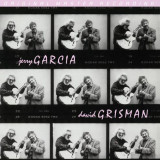
Unadorned with any post-production tricks or overdubs, Garcia/Grisman breathes with naturalism and presence. You will effortlessly detect the full body of the instruments, witness the woody grain textures, and get lost in the surprisingly velvety qualities of Garcia's lullaby-like singing. Our pressing also marks the first time this delightfully joyous affair has been issued in analogue form. You will never hear a better-sounding Americana-styled recording.
Pals since the mid-1960s, Garcia and Grisman bonded over their love for traditional folk and bluegrass. The two teamed up amidst what became a gold rush of top-notch productivity and creativity for Garcia. Partnering with bassist Jim Kerwin and percussionist/fiddler Joe Craven, the pair approaches every passage with innate ease, as if either musician could finish the others sentence. The affable chemistry and soothing interplay wash over a selection of songs as notable for their diversity as the way Garcia and "Dawg" turn them into the equivalent of old friends you haven't seen in years.
Exquisite melodies and jewel-shaped notes decorate the simple, convivial structures of tunes that hop, jump, skip, skitter, and bop. The atmosphere is reminiscent of the legendary gypsy-jazz exchanges between Django Reinhardt and Stephane Grappelli, and equally sharp. Swirling with Middle Eastern modality, the closing 16-minute-plus rendition of Grisman's rippling "Arabia" – complete with a section based on a Cuban fold theme - is alone enough worth the price of admission to this sensational session. But there's so much more.
The quartet delves into Celtic themes ("Two Soldiers"), jazz-grass ("Grateful Dawg"), old-world ballads ("Russian Lullaby"), and Appalachian flavours ("Walkin' Boss") with nonpareil skill and soulfulness. Garcia and Grisman's tandem picking throughout epitomize sublime. And for many listeners, the duo's revised version of the Grateful Dead staple "Friend of the Devil" ranks as the finest-ever recorded, the pace patient, the narrative vocals heartfelt, and the synchronous solos tailor-made for the enveloping progression. Better yet, it's all captured in astonishing fidelity.
AAA Audiophile 200g 45rpm Triple Disc LP!
Sourced from First Generation Analogue Recordings without Any Digital Corruption!
2xHD Mastering on Nagra Equipment by René Laflamme!
Sound Restoration by George Klabin & Fran Gala!
Cut All Analogue at Bernie Grundman Mastering on Tube Cutting Equipment!
There have been many guitar gods, but there's never been an electric bassist as deified as Jaco Pastorius. – Michael J. Agovino
This live album by Jaco Pastorius and the Word-of-Mouth Big Band, featuring harmonica virtuoso Toots Thielemans as special guest, was recorded in analog 24 tracks by the Record Plant mobile truck at Avery Fisher Hall in NYC on June 27, 1982, as part of George Wein's Kool Jazz Festival. This Deluxe 45rpm 200g edition is the first one to be mastered from the original 2 track master tapes that were found some 30 years later (the previous digital download versions were released from a digital remix of the 24 tracks). What we have here is the direct copy of the original pure analogue 2 track mix.
The brightest star in the electric bass firmament, Jaco Pastorius burst onto the national scene in 1976 with his audacious self-titled album on Columbia Records, featuring a line-up of top jazz musicians. With his extraordinary fretless electric bass playing as the centerpiece, Jaco Pastorius created an immediate sensation with the public and the media. His signature approach employed Latin-influenced funk, lyrical solos on fretless bass, bass chords, and innovative use of harmonics. In Jaco's work with Weather Report and beyond, the self-described "greatest bass player in the world" (an assessment shared with virtually the entire music world) established a new identity and role for his instrument and became the torch-bearer for a new way of playing both technically and conceptually. But behind it all was an ever present R&B and Latin-influenced groove and a screaming rock-'n'-roll attitude that he refined and incorporated into sophisticated jazz harmonic structures.
In addition to his extraordinary virtuosity, Jaco was also developing into an accomplished and sophisticated composer and arranger and those talents are gloriously on display on this album. The 3-time Grammy Award nominee was inducted into the Down Beat Jazz Hall of Fame in 1988, one of only seven bassists so honored (and the only electric bassist). His legacy as a bass innovator continues to this day, more than 30 years after his untimely death in 1987.
1973 was an amazing year for the pop/rock duo Hall & Oates as they ushered their superstardom further with the incredible second album masterpiece Abandoned Luncheonette.
Produced by the great Arif Mardin, this nine-song album fused with classic Philly soul, rock and acoustic pop anthems delivered in a big way for the history making duo. Including the huge hit single "She's Gone," as well as the celebrated title track, Abandoned Lunchonette was a watershed album which has rewarded them with non-stop success for the past four decades.
Abandoned Luncheonette is the most commercially successful of the duo's Atlantic Records period; the album reached No. 33 on the Billboard Top LPs & Tapes chart. Twenty-nine years after its release, the album was certified platinum (over one million copies sold) by the Recording Industry Association of America (RIAA).
This top-notch Analogue Productions reissue is pressed at Quality Record Pressings, and housed in tip-on old style gatefold double pocket jackets with film lamination by Stoughton Printing.
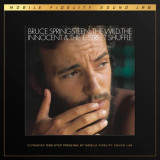
Released only eight months after his exhilarating debut, Bruce Springsteen's The Wild, the Innocent & the E Street Shuffle contains rousing dispatches from the boardwalk, the street, the beach, and the bedroom. It explodes with energy, dares to dream, teases with humour, crackles with tragedy, clings to hope, and overflows with discovery, youthfulness, and personality. It features an unforgettable cast of characters — corner boys, teenage hustlers, doomed lovers, jazz men, junk men, factory girls, fortune tellers, alley cats, pimps, escorts, and more — illuminated by vivid colour, breathtaking detail, and poetic action.
Musically, the heartfelt 1973 record is inhabited by sympathetic vignettes and cinematic arrangements steeped in rock 'n' roll, soul, jazz, and R&B. It finds the New Jersey native looking beyond the parameters of his preceding record and seeking to move on from environments he knows well (and chronicles here) by rushing headlong toward unknown territories, adventures, and people. Underpinned by the singer-guitarist's ambitious poetic enterprise and will to succeed, The Wild, the Innocent & the E Street Shuffle is the album on which Springsteen becomes the Boss.
Mastered on Mobile Fidelity's renowned mastering system, pressed at RTI on MoFi SuperVinyl, and strictly limited to 7,500 numbered copies, Mobile Fidelity's UltraDisc One-Step 180g 33RPM LP set is the definitive-sounding version of Springsteen's sophomore record. Benefitting from SuperVinyl’s nearly non-existent noise floor, superb groove definition, and dead-quiet surfaces, The Wild, the Innocent & the E Street Shuffle plays with a clarity, energy, presence, and openness that complement the expressiveness, dynamics, and scope of the seven restless songs that comprise a work Rolling Stone ranked the 345th Greatest Album of All Time.
Beyond the audiophile sonics that practically place you behind the console at 914 Sound Studios — listen to the separation between the instruments, natural decay of the notes, interplay within the widescreen soundstaging, and nothing-to-lose youthfulness of Springsteen’s voice — this reissue takes seriously this record’s influential merit by presenting it in packaging that underlines its status. Tucked in a beautiful slipcase, the LP is housed in a special foil-stamped jacket with faithful-to-the-original graphics. This reissue is made for listeners who prize sound quality and who want to engage themselves in everything involved with the invigorating set that busted Springsteen loose from the club circuit and landed him on the radio
Determined to liberate anyone within earshot and unafraid to come on strong, The Wild, the Innocent & the E Street Shuffle serves as the debut of the E Street Band — not only heard but seen for the first time by most of the public courtesy of the back-cover photograph. This is where saxophonist Clarence Clemons, organist-accordionist Danny Federici, and pianist David Sancious step out of the shadows — and drummer Vini Lopez and bassist Garry Tallent again stoke a fiery rhythmic engine that helps drive the untamed, reimagined big-band swing of “Kitty’s Back,” breathless R&B thrust of “Rosalita (Come Out Tonight),” and carefree dance steps of the funky “The E Street Shuffle.”
Of course, the main attraction remains a then-24-year-old visionary on the precipice of becoming a sensation and turning a then-bloated rock scene on its head. Recorded over three months while Springsteen and company were busy touring his debut LP, The Wild, the Innocent & the E Street Shuffle reflects the high-octane approach the vocalist embraced onstage and drifts away from the label-dictated acoustic-based frameworks of his debut. The set also witnesses Springsteen deepening his observational skills, with narratives such as the romantically tinged “4th of July, Asbury Park (Sandy)” and redemptive epic “Incident on 57th Street” mirroring changes taking place in the singer’s own life, small towns, and America at large.
A thrilling collision of memories, reflections, and composites — Sandy, Rosalita, and the latter’s parents are all based on actual people Springsteen knew, as is the community depicted in the opening track — the aptly titled The Wild, the Innocent & the E Street Shuffle resonates decades on due to its truths, authenticity, and spirit. Those characteristics — as well as the fact that many of its lengthy songs come on as the equivalent of sweaty, feverish soul revue that won’t stop until you’ve been exhausted — also explain how this now-iconic album triumphed over the reservations of industry “experts” that both demanded Springsteen re-record it and instructed deejays not to play it.
Yet there’d be no stopping a record that saw the past, present, and future, a band whose will would not be denied, and a phenomenon who was born to run. A never-ending invitation to act real cool and stay up all night, The Wild, the Innocent & the E Street Shuffle always feels alright.
This will be available on ltd edition pink vinyl, with only 250 copies pressed.
We are delighted to welcome the incredible Masal to the Up In Her Room family! Masal is a collaboration between Al Johnson and Ozlem Simsek. Ozlem is a Turkish multi instrumentalist whose middle eastern background is entwined with her western studies in classical music. Al performs psychedelic electronic music as Alien.
As Masal they weave harp, Theremin and electronics into a beautiful aural journeys. Having worked with legends such as Andy Bell & Mark Gardener of RIDE, and Sonic Cathedral, plus enjoyed radio play from the wonderful Simone Butler of Primal Scream on Soho Radio, and Mark Riley and Stuart Maconie on BBC 6 Music, we are very excited for you to see what the pair have been cooking up.
‘The Galloping Cat finds this unlikely pair of “neurodiverse nature lovers” collaborating on six meandering tracks of psychedelic grooves, electronic weirdness and motorik basslines mostly wordlessly exploring themes of self-discovery – and it’s stunning.
Sonic Cathedral – March 2023
The Galloping Cat is a work of compassion and tenderness. It’s also surprisingly funk (see ‘Dying Days’ and ‘Dokuz’) with Al revealing hitherto undiscovered Clyde Stubblefield-style chops behind the (digital) drumkit.’
Even Butterfly’s Make A Sound – March 2023
Eine Platte zu machen ist beides: Musik, die als Momentaufnahme festgehalten wird, und gleichzeitig eine Dokumentation des Zeitraums, in dem die Lieder entstanden sind. Wenn man dieser Dokumentation und dem Zeitrahmen einen Namen geben möchte (wie einem Albumtitel), stellt sich die Frage: Was ist seit der letzten Aufnahme passiert - auf persönlicher, sozialer und vielen anderen Ebenen? Was hat sich verändert? Oder ging es einfach nur um "mehr" vom Gleichen: in immer kürzerer Zeit zig Dinge parallel erledigen, optimieren, wiederholen? Entwickeln sich diese Dinge in die Richtungen, in die sie sich entwickeln sollten? Schreitet der Fortschritt überhaupt voran? Oder geht es einfach nur darum, das zu tun, was wir schon vorher getan haben - nur schneller, effizienter? Der Ausdruck "L'inertie polaire" (fast 35 Jahre alt) erklärt nicht alles, was in der Welt vor sich geht, aber eine, ziemlich unangenehme, Menge_ 3 Jahre nach Extract.Transform.Debase veröffentlichen The Antikaroshi ihr 6. Album, das inhaltlich direkt an den Vorgänger anknüpft. Das Trio setzt genau dort an, wo es aufgehört hat: Lieder, die sich Zeit nehmen, die atmen um dann im nächsten Moment hektisch zu lärmen! Die Lautstärke ist immer ein Mittel zum Zweck und das Spiel mit ihr ein Markenzeichen von The Antikaroshi. Während Drums und Bass die Grundlage bilden, aber trotzdem immer wieder bekannte Muster durchbrechen, ist die Gitarre hypnotisch und forschend. Die Vocals wechseln zwischen rezitativem und melodiösem Ausdruck und geben der Musik genügend Raum. So bilden The Antikaroshi die Welt ab, die sie umgibt: Hektik und Stillstand schließen einander nicht aus, sondern sind kulturelle Pole zwischen denen sich Gesellschaft entfaltet. Und so wird ihre Musik politisch: Während eine Handvoll superreicher Menschen bereits Abschied von diesem Planeten nimmt (Lost In Compassion), läuft die Medienmaschine geölt wie ein Uhrwerk und hat gelernt, schlechte Nachrichten als gute zu verkaufen (Shiny White Teeth). Kriege werden zu Friedensmissionen (Authority) und das Ergebnis rechtfertigt allzu oft die Mittel (Gravity), wenn es darum geht, der eigenen Schwerkraft zu trotzen. Sogar Seen stehen inzwischen zum Verkauf (Thousand Lakes) und alle verfügbaren Mittel werden genutzt (Sticky Hands). Die Menschen schwanken zwischen gegensätzlichen Sichtweisen, handeln gegen ihren Verstand und viel zu oft auch gegen ihr Herz (Doxa). Was lässt sich dem entgegensetzen? Solidarität und metaphorisch die Wölfe zu vertreiben (Homohominilupus). Und natürlich der kollektive Protest (Tang Ping).
The Telescopes Radio Sessions collects together the essence of three live session recordings in 3 different countries over a three year period between 2016-2019. This is the third in a series of radio session releases from Tapete Records that have so far included The Monochrome Set and Comet Gain. More session releases are being lined up for the rest of the year and beyond - enjoy the sonics and stay tuned. Over the years I have read a lot on people’s impressions of The Telescopes. Some folk think it’s a collective, others imagine it used to be a band and feel nostalgia towards what they consider to be the original line-up (even though many had come before, during and since) and some people refer to it as currently a solo career. In a way this is all true and none of it is. When faced with these kind of questions, along with questions about the style of music that The Telescopes make I often say The Telescopes house has many rooms, which explains things perfectly for me but for people on the outside looking in it only serves to increase their confusion. For me, confusion isn’t such a bad thing. Everything is born into confusion, the sense we try and make of that chaos is interesting and excites me. The universe often disorientates, it sends me a jumble of thoughts and impressions coupled with a feeling of something I need to express… if I could only decipher the encryption. This is how The Telescopes music comes to be and it is also how The Telescopes came to me. I regard The Telescopes as an entity of it’s own that introduced itself in my darkest hour and I was chosen as its vessel. From the second it arrived I was obsessed to the point where there was nothing else. A bit like having an imaginary friend. As the obsession grew it began to infect others, everybody loved my imaginary friend and wanted a piece of it. As its success grew however, so did the corruption, until one day the entity fell silent. The silence lasted for years, I tried everything to reconnect but it was having none of it. I had been a bad caretaker, I had let the house become infested and I had lost my way. This epiphany served to remind me of simpler times when anything felt possible with this entity by my side. It had trusted me with something so simplistically profound and I had let it down. The realisation of this was a eureka moment. I am not The Telescopes, I never was and never will be, I am the caretaker, the lighthouse keeper and if a job is worth doing it is worth doing well. With this dawning, I felt a crack open up in the cosmic egg and a familiar confusion in my head. The entity had returned. It was time to start untangling its tangled threads once more, to make sense of what it was saying, this time without corruption. It’s all about listening. I listen to what my cosmic friend sends me and channel this expression into what you hear through your speakers. It may take one person to achieve this, it may take more. There is no set line up or instrumentation that can hold The Telescopes. Whatever it takes to hit the zone, whatever is available, absolute focus is imperative. Sometimes it takes sabotage to keep that line of vision intact, there is no room for preconceptions or complacency in making the music. The Telescopes music is the now
incarnate and a state of total being is necessary to achieve. From the outside looking in... again, it’s all about listening. What comes through your speakers is the only thing that matters. The music either reaches you or it doesn’t. Everything else may seem interesting or confusing but ultimately it is corruption. So if you’ve bought the record, read the sleeve notes and bought a ticket to see a live show, don’t be surprised if the line-up is or isn’t the same as the recording. The only thing that is for sure is that The Telescopes as an entity is speaking to you in its own voice in every scenario.
Of course the difference between albums and live shows is that you can play the record over and over again to the point where you know every line and every note that was played. Whereas with live events you are left with an impression that can only be replayed in your mind. It can be frustrating at times. When you are touring with a great line-up and feel like something exciting is happening, you want everyone to hear it, not just the people at the shows but the people that couldn’t make it on the night as well. There is no guarantee that there will be the same line-up at a live show as there is on the album. This is why live sessions are important, they document a side of things that is often fleeting. Here we have three sessions, all different people transmitting The Telescopes sound on each. Some are regulars, some dip in and out and some were just passing through. In each case The Telescopes chose them as their vessel and as the lighthouse keeper I did everything I could to help them on that journey while trying to be a good caretaker to the house of many rooms. The Telescopes have been invited in for many sessions over the years, the first two were for John Peel on BBC Radio 1. We also recorded a session for Marc Riley and Mark Radcliffe before their
celebrity when they had a show on BBC Radio Manchester. We could have compiled this album from those sessions, it was certainly considered but Tapete and myself believe this selection gives an exciting glimpse into that fleeting side of The Telescopes in a constant state of flux that is left mostly to myth and imagination. For those who listen to the records but have never had the chance to take in the live experience, welcome to the other side. For those that follow us live, here’s a little reminder and a keepsake. Infinite suns. Stephen Lawrie February 2024.
Galaxy Orange/Black Vinyl. Limited to 500 copies. Data Diamond is the sound of FOUR STROKE BARON at their most confidently unhinged. Originally conceived as two separate EPs (one purely electronic - Data, one heavy - Diamond) that would then meld together on one full length release, the idea morphed into what is now the succinct sucker punch of an album that is heading our way at speed. Heavily inspired by their own work on Data Diamond's predecessor, Classics, Witt and Vallarino got to work in their laboratory creating the most potent, concentrated form of FOUR STROKE BARON possible. Data Diamond - a dizzying sub-40 minute dive into the deranged psyches of its creators. The tracks on Data Diamond are lithe yet still allow enough room for idiosyncratic flourishes that mark this out as a true FOUR STROKE BARON opus. If Classics was a Man vs. Food belly busting plate of indulgence, Data Diamond is an upmarket Gordon Ramsay dish, served with a side of insanity. Finding a co-conspirator in Cynic's Paul Masvidal, the trio get somewhat psychedelic on the album's eponymous closing - and most expansive - track, which also features Vola's Adam Janzi on drums. Thematically, this is their most murderous anthology to date. Those who find themselves embroiled in these bloodthirsty tales include a Radio Shack CEO, an internationally acclaimed cyborg, an accidental trafficker of human body parts, and the leader of a death cult located in a convenience store. FOUR STROKE BARON's anomalous view of the world takes a particularly dark turn across the songs on Data Diamond, yet, as ever the macabre tragedies are dressed up with catchy melodies, pop hooks for days and a big shimmering bow of positivity.
After five long years, Balance and Composure return with Too Quick To Forgive--newly signed to Grammy-nominated producer Will Yip's label, Memory Music, the alt-rock darlings sound more assured and adventurous than ever across two vulnerable tracks. Too Quick To Forgive is a reflection on personal perseverance in the wake of confrontation, told through two distinctly different scenarios. "Savior Mode" finds frontman Jon Simmons baring his soul in a way that is unparalleled in their discography, while "Last To Know" is an emotionally-resonant highlight that leaves a lasting impact well after its final notes play out. Simmons' vulnerability and emotional delivery across both tracks cut through with unflinching precision courtesy of Andy Slaymaker (guitar), Matt Warner (bass), Erik Petersen (guitar), Dennis Wilson (drums), and who the band considers their 6th member--producer Will Yip. In the fall of 2022, the group got together at his Conshohocken, PA studio, Studio 4, with a few ideas that Yip helped turn into these otherworldly tracks. "It was all magic," Jon says. With a renewed sense of purpose, Balance and Composure will return to the stage for a series of Too Quick To Forgive release shows in some of the biggest rooms they've ever played.
Es ist das Jahr 2007. Die Welt gehört dir und der Rest deines Lebens beginnt. DIY ist das Motto der Stunde. Nach dem überbordenden Vorgänger „Geräusch“ wirken die ärzte harmonischer und kompakter denn je zuvor. Genau dieser Moment, er ist perfekt. Mit „Jazz ist anders“ präsentiert sich die Beste Band der Welt in exzellenter Spiellaune und vervollkommnet das System BelaFarinRod. Es gibt die irre vielen zwingenden Melodien, die elektrischen Gitarren, den Quatsch, das Nachdenken, das Rausbrüllen, die ganz großen und die ganz kleinen Gefühle.
„Lied vom Scheitern“ ist die schmissige Hymne zur Selbstermächtigung, „Niedliches Liebeslied“ hebt das Genre Rodballade auf ein neues Level, „Licht am Ende des Sarges“ probt den Perspektivwechsel zum lustigen Vampir. „Tu das nicht“ ist ultimatives Statement zur Lage der Musikindustrie im beginnenden Breitband-Zeitalter. Und „Junge“ protokolliert nicht nur pedantisch allseits bekannte elterliche Sorgen, sondern schafft auch ohne Versmaß und echte Reime die Aufnahme in den Klassiker-Kanon der deutschen Popmusik. die ärzte: Jetzt gegen Angst, Hass, Titten und den Wetterbericht. Immer noch ohne Festanstellung und Barry Manilow. Dafür mit Schalala und Schalalu und ein bisschen breit. Und ständig dieser Lärm.