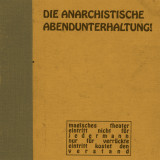
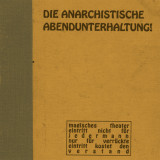
"Featuring Nate Morgan on piano, Jesse Sharps on reeds, Danny Cortez on trumpet, Rickey Kelly on vibes, Joel Ector on bass and Derek Roberts on drums. This music was recorded in Santa Barbara in July of 1987. Since the passing of the great pianist /composer / bandleader Horace Tapscott, the Nimbus West label has continued to document the underground L.A. jazz scene that Mr. Tapscott was once at the center of. A number of great musicians who once collaborated
with Tapscott, like Jesse Sharps & Nate Morgan, have recorded albums as leaders on Nimbus West. The short liner notes state that "trying to play serious music in an area as shallow & fad-driven as Los Angeles, were too much for this band to deal with..." so they didn't last too long. No doubt. This LP is proof that this collective's music was strong, spirited, original and had a great deal to offer. I
can't say that I've heard of any of the rhythm section players but all six members of the collective are excellent musicians nonetheless.
Nate Morgan's "Retribution, Reparation" is first and it has one of those McCoy Tyner-like 70's ensemble vibes with spirited piano and Trane-ish tenor sax sailing on top. The entire sextet is in great form with impressive solos from trumpeter Danny Cortez, vibist Rickey Kelly and pianist Nate Morgan. How musicians as incredible as this escaped notice, I will never understand. The sextet is ultra-tight and swings furiously throughout. Bassist John Ector's "Big Spliff" has a most memorable theme that had me smiling all the way through. The long & inspired soprano solo by Jesse Sharps and that great piano interplay & solo makes this piece even more special. The only cover on this LP is Monk's "Well You Needn't" and it too is done exuberantly. There are over 100 minutes of outstanding music on this wonderful release. Another buried treasure to add to your collection of great gifts from the gods." - Bruce Lee Gallanter, Downtown Music Gallery
quête:deal
Repressed and note new dealer price. The members of Explosions in the Sky may just be four soft-spoken guys from Texas, but on Those Who Tell the Truth Shall Die, Those Who Tell the Truth Shall Live Forever they simply tear everything apart. Combining influences from classic rock to metal to goth, the band creates instrumental soundscapes that can turn from all-out destruction to heartfelt, dreamy melodies in the blink of an eye. The result is similar to Mogwai and Godspeed a musical journey that leads listeners through the entire range of emotion without even needing words. "Greet Death" matches a crunchy Dinosaur Jr hook with warm Cure-esque bass grooves. "Moon Down" chimes and twists through ten minutes of calm night, leaving the listener with the feeling that something awesome is sure to happen. On "Have You Passed Through This Night?" one of the members of Explosions in the Sky ponders in a near-whispering Texas drawl the meaning of the world. What follows is like the climax of a tense, mind-blowing movie, driven by relentless guitars and a thundering Master of puppets Metallica drum march. "Poor Man's Memory" follows, offering some consolation in a sentimental melody. The album ends with the grand, 12-minute-long "With Tired Eyes, Tired Minds, Tired Souls, We Slept," a song that moves from Sonic Youth to Joy Division to Explosions in the Sky. Those Who Tell the Truth Shall Die, Those Who Tell the Truth Shall Live Forever is nothing short of awe-inspiring and was one of the best records of 2001. A1 Greet Death A2 Yasmin The Light A3 The Moon Is Down B1 Have You Passed Through This Night? B2 A Poor Man's Memory B3 With Tired Eyes, Tired Minds, Tired Souls, We Slept
2024 BLACK VINYL REPRESS.
One can hardly imagine the genre-busting, culture-crossing musical magic of Outkast, Prince, Erykah Badu, Rick James, The Roots, or even the early Red Hot Chili Peppers without the influence of R&B pioneer Betty Davis. Her style of raw and revelatory punk-funk defies any notions that women can’t be visionaries in the worlds of rock and pop. In recent years, rappers from Ice Cube to Talib Kweli to Ludacris have rhymed over her intensely strong but sensual music.
There is one testimonial about Betty Davis that is universal: she was a woman ahead of her time. In our contemporary moment, this may not be as self-evident as it was thirty years ago – we live in an age that’s been profoundly changed by flamboyant flaunting of female sexuality: from Parlet to Madonna, Lil Kim to Kelis. Yet, back in 1973 when Betty Davis first showed up in her silver go-go boots, dazzling smile and towering Afro, who could you possibly have compared her to? Marva Whitney had the voice but not the independence. Labelle wouldn’t get sexy with their “Lady Marmalade” for another year while Millie Jackson wasn’t “Feelin’ Bitchy” until 1977. Even Tina Turner, the most obvious predecessor to Betty’s fierce style wasn’t completely out of Ike’s shadow until later in the decade.
Ms. Davis’s unique story, still sadly mostly unknown, is unlike any other in popular music. Betty wrote the song “Uptown” for the Chambers Brothers before marrying Miles Davis in the late ‘60s, influencing him with psychedelic rock, and introducing him to Jimi Hendrix — personally inspiring the classic album ’Bitches Brew.’
But her songwriting ability was way ahead of its time as well. Betty not only wrote every song she ever recorded and produced every album after her first, but the young woman penned the tunes that got The Commodores signed to Motown. The Detroit label soon came calling, pitching a Motown songwriting deal, which Betty turned down. Motown wanted to own everything. Heading to the UK, Marc Bolan of T. Rex urged the creative dynamo to start writing for herself. A common thread throughout Betty’s career would be her unbending Do-It-Yourself ethic, which made her quickly turn down anyone who didn’t fit with the vision. She would eventually say no to Eric Clapton as her album producer, seeing him as too banal.
In 1973, Davis would finally kick off her cosmic career with an amazingly progressive hard funk and sweet soul self-titled debut. Davis showcased her fiercely unique talent and features such gems as “If I’m In Luck I Might Get Picked Up” and “Game Is My Middle Name.” The album Betty Davis was recorded with Sly & The Family Stone’s rhythm section, sharply produced by Sly Stone drummer Greg Errico, and featured backing vocals from Sylvester and the Pointer Sisters.
- Hold The Building Up
- The Prison Within
- Hold ‘Em Up
- Comin’ Down On Me
- Low Hangin’ Disco Ball
- So Alone
- I Always Get What I Want
- Playin’ Pool With The Planets
- Destroy
- Cookin’ With Heat
Downstate[34,41 €]
Straight outta Rockaway Beach, Queens, New York City, USA, THE WORLD, Prison is a state of mind, an experience, a loose collective, a band, a jam band and a bunch of psychedelic dudes who aren"t your average bunch of jambanders. All that, all at once, ALL THE TIME. You get what you"re dealing with here? No...you don"t. The only way to REALLY get it is to go to Prison -- and if you"re not from greater NYC and haven"t showed at any of the shows, here"s your best bet: their breakout album, Upstate. And whatta breakout! So high, you can"t get under it; so wide, you can"t get over it! How wide? Every song has two titles, that"s how wide. And almost everybody sings, like, all the time. That wide. Sure, you can break down the numbers -- five guys, five songs and four sides of vinyl in one gatefold sleeve -- but that won"t get you Upstate, either. Prison is the sound of everybody in the room figuring out where to go, individually and collectively. As they go through it, the meaning changes, the destination changes, the words mean something different. It"s meaning and no meaning, rising and falling, sinking and flying on the back of something massive cacophonized by three guitars, four vocals, a bass and drums. A lot of information bouncing around and enough time to really get you out of yourself! Take a look at the titles: each one a dichotomous inquest that the assembled Prison-ers march upon with fervor, glee, vengeance -- a whole spectrum of feels and perspectives woven into the jam for you to see. The Prison population changes with the seasons, and during the season this album was recorded, Sarim Al-Rawi, Mike Fellows, Sam Jayne, Matt Lilly and Paul Major were in Prison. Sarim you might know from Liquor Store, Mike"s made a bunch of scenes and records as Mighty Flashlight, Sam, who passed away in 2020 (R.I.P., brother) was in Love as Laughter -- and Paul Major you know from Endless Boogie, who Matt had roadied for -- and despite being "just a skateboarder who loves music" with no previous experience on the drums, he and Sarim inaugurated the Prison experience, like, seven years ago. Since then, it just fell together and it keeps doing so. A free thing called Prison.
German heavy metal legends U.D.O. are back at the starting line with album #19 (!), titled „Touchdown“, which is scheduled for release on August 25th. It’s astonishing, how iconic singer Udo Dirkschneider and his band, who just celebrated two important anniversaries last year (Udo’s 70th birthday, as well as 35 years of U.D.O. band history) now already come up with such a fresh, inspired new piece of heavy art – unmistakably making clear that slowing down has never been an option for them: U.D.O. continue their triumphant success and „Touchdown“ is another impressive addition to the band’s rich legacy.
Papernut Cambridge is the project started in 2010 by former Death In
Vegas and Thrashing Doves guitarist Ian Button
Over 10+ albums they've drawn on influences from psych and bubblegum pop to
indie, glam and Motown, with Button working solo, or regularly joined by a core of
contributors including Darren Hayman and Jack Hayter (formerly of Hefner),
Robert Rotifer, and Picturebox's Robert Halcrow.
Cinderella Crazy Golf is a brand new four song EP loosely based on the scenario
of an elderly couple of former psychedelicians growing old and infirm together by
the sea, still very much in love but dealing with ageing, memory loss, medication
side effects etc.
The black vinyl 7" comes with 3 double sided postcard prints featuring photos
and the song lyrics
Lovely Little Girls is a theatrical art-rock band from Chicago that features
members of Cheer-Accident and The Flying Luttenbachers - They
specialize in odd harmonies and catchy melodies served with a histrionic
flair
"Effusive Supreme", their third LP for SKiN GRAFT Records, delves into more
personal and abstract territory, highlighting the utilitarian and fetishistic
relationship to shoes on one track, while enthusiastically accepting ego- death's
indifferent embrace on the next. Equally informed by Magma and Dead Kennedys,
Lovely Little Girls pull from a range that runs the gamut yards past the finish line -
everything from Esquivel to Toto.
PRESS QUOTES:
"What makes Lovely Little Girls unique is the care for complex arrangements,
creating quirky prog- no wave hybrids... impressive psychodramas of melodic
detours and anguished explosions - full of theatrical uneasiness" - ChainDLK
"Stuns listeners into submission with heavy doses of horns and lyrical flogging.
Equal parts jazz, prog, and avant- garde, this horde of provocateurs revels in
disturbing the peace" - Razorcake
"Lovely Little Girls deal in absurd and jarring contrasts. The group's knotty,
intricate songs heave and dance and skitter - sometimes gracefully dexterous
and sometimes grotesquely lumpy - but clearly the work of formidably talented
musicians with vivid imaginations. Jacobsen's demented lead vocals flicker from
frighteningly histrionic to carefully declamatory, with eruptions of abject mania or
borderline obscenity, while behind him a chorus of singers might deliver a
pristine, almost angelic chant of "the pain, the horror"... - Chicago Reader
"Lovely Little Girls are your favourite cartoon villains, plotting the takeover of the
city before the Joker does" - The Organ
Attarazat Addahabia & Faradjallah's album came to us as quite a mystery. Our friends from Radio Martiko got access to the studio archive of the Boussiphone label and a reel labeled “Faradjallah” was among the items they had found there. After listening to the selection of reels they borrowed, Radio Martiko felt it was not a fit for their label and helped us licensing it from Mr. Boussiphone instead. We knew nothing about the band. We just had the reel with the music but very little information. What we knew was that the music was incredible and very unique. Gnawa sounds were combined with funky electronic guitars, very dense layers of percussions and female backing vocals more reminiscent of musical styles further south than Morocco. We started asking around whether anyone knew the band with no immediate success until we asked Tony Day, a musician from Morocco who helped us during our search for Fadoul’s family. His sharp memory came through once again, remembering all the names of the Attarazat Addahabia band members and even how to contact the bands singer and leader Abdelakabir Faradjallah. After visiting him at his home in Casablanca with our Moroccan colleague Sabrina multiple times, he shared his personal story. His father arrived in Casablanca from Aqqa at the age of six and his mother came from Essaouira. Abdelakabir was born in the neighbourhood of Benjdia in 1942. Abdelakabir Faradjallah studied fine arts in Casablanca, graduating in 1962. He also played soccer in the second team of "Jeunesse Societe One". His brother-in-law Ibrahim Sadr worked for one of the biggest football teams of the time in Morocco called "Moroco Sportive Union", which allowed him to travel to France occasionally. While Ibrahim was never part of the band he brought along a few instruments from trips.
Yet the majority of the instruments they could not afford to buy were build by Faradjallah and Abderrazak, Faradjallah's brother who passed away early. For instance they had built a Spanish guitar and a drum made of wood barrel and sheepskin by themselves.During the 1950s Faradjallah was booked as a singer for surprise parties with friends. He started to write his first songs including "L’gnawi" in 1967 and wanted to make people discover Gnawa culture, or maybe rather his take on the culture to be more exact. Faradjallah recalls his first interaction with the genre in the streets of the Dern neighbourhood, where he used to go to elementary school. Gnawa is one of the essential musical genres of Morocco. It combines ritual poetry with traditional dances and music linked with a spiritual foundation. Musically a lot of influences originated from West Africa as well as Sudan. Gnawa is usually played by a selection of specific instruments such as the qaraqab (large iron castanets centrally associated with the music), the hajhouj (a three string lute), guembri loudaâ (a three stringed bass instrument) and the tbel (large drums). People would put shells on their clothes and instruments and use incense at their parties. "Sidi darbo lalla - lala derbo khadem..." came from Gnawa verses Faradjallah used to sing when he was 14. The lyrics tackle a global (im)balance of power and the question of social status in this course. The band Attarazat Addahabia was formed in 1968. The original line-up included 14 members, all from the same family. They played their first small concerts here and there starting in 1969. Later in 1973 they performed bigger shows for instance at the Municipal Theatre followed by the "Al Massira Show" at Velodrome Stadium in downtown Casablanca. Their first album "Al Hadaoui" (the one you are listening to) was recorded at Boussiphone studios in 1972 and was never released before. Nobody seems to remember the exact reason why Boussiphone ended up deciding not to put the album out. The album's title track also served as the basis for Fadoul's "Maktoub Lah", who frequented the same circles as the band for some time.
Their shows sometimes could go as long as 12 hours, starting at 5pm in the afternoon, with an occasional break here and there. In the 1980s the band took a brief break. Faradjallah recalled the reason for that break like this: "Zaki, the bands drummer, had fallen in love with a young girl from Mohammedia. Soon after, he fell very ill. The group members were convinced that the girl had given him ‘s'hor’ (a kind of local Moroccan version of "black magic"). For four years, the whole group stopped playing. It was unthinkable to find another drummer to replace Zaki, even temporarily." So they waited four years for Zaki to "get back on his feet" before going back on stage. Apart from very few gigs here and there Faradjallah stopped playing music in the mid 1990s. Some members from the younger generations formed a new band and still play frequently to this day. Faradjallah runs a television repair shop coupled offerings beverages and snacks in the Belevedere /Ains Sbaa district of Casablanca. While Faradjallah was primarily a musician, he would work for the local cinema and paint their posters for new movies by hand and he designed all artworks and cover posters of the band.
And this eventually led to him participating actively in our first exhibition dealing with Habibi Funk’s work in Dubai 2018. He helped us by creating calligraphic complementations on large photo prints for that show.
Fiddlehead's third album Death is Nothing to Us is a defiant, new chapter for the band. Since 2014, the Boston-based group have been honing their unique sound, bringing together the energy of hardcore, the anthemic melodies of `90s alternative, and the unbridled passion of Revolution Summer era emo. Their previous albums, 2018's Springtime and Blind and 2021's Between The Richness, dealt heavily with grief from different perspectives, and now their latest feels like a de facto culmination, drawing together many of the catalog's through-lines sonically and lyrically. The band again teamed with producer Chris Teti for their third record, and his punchy production captures Fiddlehead's live energy while showcasing the massive guitars and undeniable catchiness that makes their music so immensely satisfying. The album's concise 27 minutes sound like a natural extension of all of the band's strengths, but is glued together by vocalist Pat Flynn's singular tuneful roar. Flynn, since his time as the vocalist of Have Heart and now as Fiddlehead's frontman, has earned a reputation as one of hardcore's most thoughtful lyricists. He interweaves his ruminations on life, death, and all the joy and tragedy in between with references to Roman philosopher Lucretius; the author Jean Améry; other musicians like Bad Brains, Alex G, or Wire, and even references to the band's own back catalog. The humanity across Death Is Nothing To Us is palpable in every note. It's the kind of art that observes pain with real honesty rather than prescribing a solution for it-and in doing so, inadvertently offers some sense of hopefulness. The album finds Fiddlehead so deeply delving into the pain, confusion, nuances, and contradictions of sadness-so willingly wrapping their arms around a concept as existentially baffling as death itself-that they've created an album that is truly life-affirming. Death is Nothing to Us exemplifies so much of what makes Fiddlehead a special band: taking these heady, unanswerable questions and wrestling with them in a very earthbound way, all wrapped up in the urgent power of a three minute punk song.
- A1: Welcome To The Party
- A2: Wild Bitches
- A3: Relax With Me
- A4: Right Now
- A5: Make A Mil
- B1: Break From Toronto
- B2: Tbh
- B3: Wus Good / Curious
- B4: Over Here Featuring – Drake
- B5: Ballin
- C1: East Liberty
- C2: Sls
- C3: Sex On The Beach
- C4: Her Way
- C5: Belong To The City
- C6: Grown Woman
- C7: Fwu
- D1: Recognize Featuring – Drake
- D2: Options
- D3: Thirsty
- D4: Bout It
- D5: Muse
- E1: High Hopes
- E2: Don’t Run
- E3: Nobody
- F1: Not Nice
- F2: Only U
- F3: Don’t Know How
- F4: Problems & Selfless
- F5: Temptations
- G1: Spiteful
- G2: Joy
- G3: You’ve Been Missed
- G4: Transparency
- H1: Brown Skin
- H2 19: 42
- H3: Come And See Me Featuring – Drake
- H4: Nothing Easy To Please
- I1: Nothing Less
- I2: Turn Up
- I3: The News
- I4: Split Decision
- J1: Loyal Featuring – Drake
- J2: Touch Me
- J3: Trauma
- J4: Showing You
- K1: Eye On It
- K2: Believe It Featuring – Rihanna
- K3: Never Again
- K4: Pgt
- L1: Another Day
- L2: Savage Anthem
- L3: Loyal Remix
This special vinyl box set contains all four PARTYNEXTDOOR studio albums - including the first album, Partynextdoor, never before issued on vinyl until the release of this completist collection. PARTYNEXTDOOR producer, songwriter and singer from Ontario released his self-titled, critically acclaimed mixtape in July of 2013 led by the singles “Over Here” and “Break From Toronto.” Contributions to “Own It” and “Come Through” on Drake’s Nothing Was the Same album and a deal with OVO Sound followed. He’s since written songs and/or produced cuts for Rihanna, Drake, Nipsey Hussle, Jay Electronica, Post Malone and many more
The Fall's fourth studio album Perverted by Language was released in 1983. The album was produced by the band's vocalist and songwriter Mark E. Smith and recorded at various studios in Manchester.
Perverted by Language features some of The Fall's most renowned tracks, including "Garden". The album's sound is characterized by its sharp and angular post-punk guitar riffs, driven by a heavy bass and drums rhythm section, all layered with Mark E. Smith's distinctive vocals.
Lyrically, Perverted by Language deals with themes of alienation, disorder, and the unpredictability of modern life. Smith's idiosyncratic and cryptic wordplay, including his penchant for inventing new words and phrases, adds to the album's overall sense of unease and dislocation.
Despite its challenging sound and lyrics, Perverted by Language is considered by many critics and fans to be one of The Fall's finest albums, showcasing the band at their creative and innovative peak. The album is available as a limited edition of 1500 individually numbered copies on pink coloured vinyl and includes an insert.
Much of Radio Red, the first full length album Laura Groves has released under her own name, was written, produced and recorded by Groves in her studio, watched over by two radio transmitting towers. “I became very drawn to them and they became like symbols to me; they were always awake, sending their messages, the red lights always came on at night and watched over whatever was going on in my life.” The album deals with themes of communication - missed and intercepted signals, chance meetings, synchronicities, the channels through which we try to express our true feelings, the outside interference that can get in the way and the joy of letting go and allowing the messages to flow freely.
Self-recording and production is a core part of Laura’s songwriting process. “I remember years ago getting hold of some basic recording software and being instantly drawn in. The idea of being able to layer up my voice was a dream, like building an orchestra out of what I had at home.” The passion for home-recording, using the resources available at the time, working through limitations and capturing textures through layering, forms the foundation of Groves’ experimental and off-centre pop music and electrified folk music. The sound world of Radio Red is made up of echoes, and snapshots of half-remembered pop songs, piano ballads, chopped up TV theme tunes, ambient synthesised sounds and electronic music; tuning in between channels without fully belonging to any one of them, with the comfort, familiarity and strangeness that can come with hearing voices on the radio.
MIZMOR, is a one-man heavy music exploration that began in 2012 as a
way of dealing with the mental and spiritual anguish mastermind A L N
feels as a person
More specifically, the content behind the project is that of the existential - primal
and innate musings about cause, purpose, self, and god. It is the search for light
and truth, or the fact that there is none. It comes from an embittered, burned,
confused, and broken heart. It is the fight for survival when reason and
foundation has turned to nothingness. It is the crashing down of towers of
falsehood and the freedom that comes through a certain kind of grief. Ultimately,
MIZMOR is the manifestation of my long-felt depression, and neither have an end
in sight.
In A.L.N.'s own words behind the new MIZMOR album "Prosaic":
"The idea behind "Prosaic" was to make an intentionally less conceptual, more
slice- of- life record. I wanted to make an album that was less precious and
obsessed-over, more honest and real; less grandiose and more human. I found it
an interesting challenge to find the line between 'you can do better' and 'you're
beating a dead horse.' I tried to make my process more efficient and even fun at
times. I simply wanted to share, but if that meant exacting all-out perfectionism, I
wasn't going to make a record. Right now I'm interested in making less selfindulgent music. The themes are the absurdity/futility/purpose/meaning of work,
mindfulness/ consciousness/ living in the present moment/ shedding illusions,
depression/ acceptance/ contentment. This is the first MIZMOR album without
any content relating to god/atheism. You also won't hear any shrieks."
Letta Mbulu was lucky when she emigrated from South Africa, where blacks were troubled and ridiculed by the Apartheid system. She was lucky to rescue a recording deal with A&M records, and even the label's founder, Herb Albert, produced the record, Johnny Mandel did the orchestrations, and Quincy Jones wrote the liner notes. However, it wasn't only luck - Letta Mbulu's talents as a singer are such that they couldn't be overheard. Her husband, Caiphus Semenya, also from South Africa and a musician, helped her throughout. There's Music in the Air from 1976 features songs varying in tempos and moods and languages, and there's a mellow aura of purity and peace, almost innocence, that captures the listener.
Mike Cooper wrote his final songwriter record, a suite of gloaming glam-rock anthems performed with a spiritual jazz trio, while living on the Costa Tropical of Granada, Spain, an era when he was considering retiring from music altogether. A chance encounter and a last-ditch record deal convinced him to make one last album, which he recorded in 1974 at Pathway Studios in London, with “The Greatest Rock and Roll Band in the World,” featuring the inventive South African jazz rhythm section of Louis Moholo and Harry Miller with UK saxophonist Mike Osborne. This first-ever reissue includes a bonus CD of Milan Live Acoustic 2018, a previously unreleased solo set that represents Cooper’s return, after forty-four years pursuing free improvisation and electronics, to a new, deconstructed approach to singing, steel guitar, and songcraft. The deluxe LP+CD edition also features a six-panel insert with additional artwork and an essay by the artist about both records. The deluxe 2xCD gatefold edition features an eight-panel version of the same insert. In the wake of his magisterial triptych of early 1970s avant-folk-rock records Trout Steel (1970), Places I Know (1971), and The Machine Gun Co. (1972) the British songwriter, guitarist, and fledgling improviser Mike Cooper retreated to the Costa Tropical of Granada, Spain. With no prospects for touring or recording again, his fiery band the Machine Gun Co. had disintegrated. Cooper sets the scene in his liner notes of the first-ever reissue of his unjustly forgotten next album Life and Death in Paradise (1974): No one came running with offers of fame and riches, and we fell apart, and I left the country and headed for the beach, disillusioned and a bit disorientated musically. I went to Almuñécar in Andalusia, a place I had been going since 1969, because a painter friend from Reading, Rowland Fade who made the collage in the gatefold of my earlier album Trout Steel had moved there in 1968. It was in this synthetic coastal “paradise,” unmoored and adrift, considering retiring from music altogether, that he began tentatively writing new songs. A chance encounter with producer Tony Hall, who offered Cooper a last-ditch record deal on Hall’s nascent Fresh Air label, convinced him to make one last album with the stipulation that he could assemble what he called “The Greatest Rock and Roll Band in the World.” I told Tony that I would do it if I could hire some of my South African jazz musician friends that I had used on my Pye/Dawn albums and some friends from Reading that I still knew and admired. I called up Harry Miller, Louis Moholo, and Mike Osborne, who were in fact a trio at the time … and several local Reading heroes, including the singer-songwriter Terry Clarke. The result, recorded live with minimal overdubbing at Pathway Studios in London, was Life and Death in Paradise, an utterly singular suite of gloaming glam-rock anthems performed with a spiritual jazz trio comprising the inventive South African jazz rhythm section of Moholo and Miller with UK saxophonist Osborne. Unlike anything else in Cooper’s extensive catalog. Fresh Air fizzled, and Life and Death became Cooper’s final record as a songwriter, having pushed the form as far as he could. Drifting north from Spain back to the UK, he fell into the scene of the London Musicians Collective (LMC) including Paul Burwell, David Toop, and saxophonist Lol Coxhill, Cooper’s bandmate in the Recedents and fully embraced free improvisation. He was still, however, interested in singing and lyrics, so, influenced by Tom Phillips, William Burroughs, and Brion Gysin, he began experimenting with text collage and cut-up techniques, arriving at his own hybrid compositional strategy for improvisatory songs. The previously unreleased solo set Milan Live Acoustic 2018 represents Cooper’s return, after more than four decades pursuing free improvisation and electronics, to a new, deconstructed approach to singing, lap steel guitar, and songcraft. Presented here together with Life and Death in Paradise, the two records provide fascinating bookends to Mike Cooper’s long, mercurial, and pioneering practice as a songmaker.
After a 9 year hiatus, Jim Lockey & The Solemn Sun return to Xtra Mile Recordings with their brand new album 'Colour' -to be released on 28th July 2022. Available on PINK vinyl, CD and digitally. The 4 piece from Cheltenham, have poured their heart and soul in to this album, the follow up to 2012's album 'Death'. Focused on prominent occurrences in Lockey’s life after ‘Death’ the album discusses the thoughts and feelings he’s most at war with. Dealing with the premature end of a marriage, rediscovering himself as an individual and finding ways through are themes that bubble under the surface throughout; with notions of all punctuating each song Written during the breakdown of the relationship, this album became a method of healing. Like the chaotic process of grieving it’s an agitated reflection that shifts back and forth - from losing everything, rediscovery and finding the resolve to move forward.
- A1: James Brown - Hundred Mile High City (Ocean Colour Scene)
- A2: Skanga - It's A Deal, It's A Steal (Tom, Nick & Ed)
- A3: Junior Murvin - The Boss
- A4: Lewis Taylor/Carleen Anderson - Truly, Madly, Deeply
- A5: Dusty Springfield - "Hortif**Kinculturist" (Winston)
- A6: John Murphy/David Hughes - Police & Thieves
- B1: Robbie Williams - 18 With A Bullet
- B2: E Z Rollers - Spooky
- B3: The Stooges - The Game
- B4: The Castaways - "Muppets" (Harry, Berry & Gary)
- B5: Stretch - Man Machine
- B6: Evil Superstars - Walk This Land
- C1: John Murphy & David Hughes - "Blaspheming Barry" (Barry)
- C2: John Murphy & David Hughes - I Wanna Be Your Dog
- C3: John Murphy & David Hughes - It's Kosher (Tom & Nick)
- C4: James Brown - Liar Liar
- C5: The Stone Roses - "I've Been Shot" (Plank & Dog)
- C6: Pete Wingfield - Why Did You Do It
- C7: Guns 4 Show Knives 4 A Pro" (Ed & Soap)
- C8: Oh Girl
- C9: If The Milk Turns Sour (With Rory)
- C10: Zorba The Greek
- D1: I'll Kill Ya (With Rory)
- D2: The Payback
- D3: Fools Gold
- D4: It's Been Emotional (Big Chris)
- D5: 18 With A Bullet
Originally released on Island Records in September 1998, the soundtrack to the box-office smash film, written and directed by Guy Ritchie, quickly became a must-own album, and is frequently cited as one of the best movie soundtracks of all time.
Lock, Stock and Two Smoking Barrels redefined the British gangster film and established Guy Ritchie as one of the greatest directing and writing talents of his generation. Using a frenetic mixture of filmic styles, humour, violence, breakdown of the fourth wall, narration, and vast amounts of swearing, it is hard to imagine a time when this film and its influence was not around. It made a star of the-then unknown Jason Statham, and, amazingly, hard man footballer Vinnie Jones, who as Big Chris, had several scene-stealing moments. Taking his cue from Quentin Tarantino, who had been meticulously curating his film soundtracks since the early 90s, Ritchie made the music to his film tell its own story, complete with memorable snatches of dialogue between many of the tracks.
It offers a beautifully eclectic selection of songs from the preceding three decades, plus then-current artists providing some of their best material, such as Hundred Mile High City by Ocean Colour Scene or E-Z Rollers' drum'n'bass masterpiece Walk This Land. Of the heritage tracks, Dusty Springfield sings her sultry take on Spooky; James Brown appears twice with The Boss and The Payback; The Stooges with I Wanna Be Your Dog, and two versions of Pete Wingfield's masterful one-hit-wonder 18 With A Bullet; in its 1975 original and a contemporary cover by Lewis Taylor and Carleen Anderson. And this is only half of it.
Borrowed Tongue is the debut solo album by Korean singer-songwriter Minhwi Lee. It’s a mysterious, strangely compelling thing, an album of rare poetry, and remarkably self-assured. Originally released in November 2016, the album made waves, winning best folk album of 2016 at the 14th Korean Music Awards. Its eight songs, written and predominantly arranged by Lee, don’t reveal their secrets easily, or at first blush; rather, they take their time slowly to unfurl in her listeners’ worlds. There are hints of other music here, from time to time: the intimacy of Stina Nordenstam, perhaps; the gauzy haze of Hope Sandoval, on the blissed-out pop of “Broken Mirror”; there are touches of acid-folk, and ECM jazz, and a slyly filmic approach to songwriting and arrangement that makes every song fit perfectly into the album’s arc.
Lee arrived at her solo music through a complex, circuitous route. After studying musicology in Seoul, she learned her trade, film scoring, in New York and Paris. She also studied classical music, blowing off steam in a wild punk duo, Mukimukimanmansu, who released one album, 2012, on Korean indie label Beatball. Subsequently, Lee has been refining her music, focusing both on her solo songs, and on writing for television series and films; she’s written scores for films by such directors as Sangmoon Lee, Jeongwon Kam, and Wanmin Lee. She also plays in the jazz outfit Cubed, and recently joined doom metal group Gawthrop on bass.
Since its release in 2016, Borrowed Tongue has slowly bewitched listeners with its idiosyncratic arrangements and evocative songwriting. It’s an album that hints at plenty, but refuses to make grand statements, something Lee seems intent to pursue: in correspondence, she’s very clear that she wants these songs to enact a kind of transmutation, to be adopted into the listeners’ lives and exist within their own imaginings. She does, however, offer a few hints to what propels these mercurial songs, explaining, “this album is about a person who again opens their mouth, which was once shut. The album deals with what it means to speak: things that are known but not said, things that should be said but are not, things that cannot be said but nonetheless are.”
This may well explain the curious mood of Borrowed Tongue, the multiple ‘voices’ that inhabit the album; Lee’s singing voice is pliable and mutable, approaching each song as its own diorama and ensuring the song is sung with just the right tone. The arrangements Lee conjures for her songs are all in service to narrative and melody; they appear to her alongside the composition, which is surely why everything here fits together so beautifully. From there, Lee approaches her songs carefully, in deference to their ‘need to be sung’ a certain way. There isn’t a moment wasted: everything on Borrowed Tongue is as it needs to be, whether a melancholy folk song taking to the air, or a psychedelic reverie dreamed into being. It’s a beautiful, poised and confident debut.