We welcome to the Moustache Records family the oldskool electro legend Martin Matiske with his Electronic disco-ish 12 inch EP release "Robotic Theatre" This is a future vision of a theatre run by robots and is the era in which machines entertain mankind. Operas are written and played in a mechanical way. The pieces of "Robotic Theatre" deal with different terms of stage work. Track A1 is called "Acting Faces" and Refers to the rehearsing of the role, as well as the interaction of the actors on stage. The well-being of the actor does not often match what is played. He has to play even If it's painful. B2 is the track called "Machinery" Human beings are machines that build machines today. The advantage is perfection and time saving. Robots as actors are reliable and precise. B1 listen to the name "Transistor Dances"its Like The Hungarian Dances by Johannes Brahms you just need a dance to express happiness and remind your culture. Dances bring people together. A robotic dance should not be missing in a play. The last track of the EP is the tune "Practise" a story about a robot the has to practise to achieve perfection and it is fun." Don'tplay this underwater order now gone is gone.
Поиск:deal
Все
- A1: Brian Bennett - The Swan 1
- A2: Francis Monkman - Stargazing
- A3: Steve Gray - Billowing Sails
- A4: Frank Ricotti - Vibes
- A5: Frank Reidy & Eric Allen - Reflections
- A6: John Cameron - Tropic 2
- B1: Orlando Kimber & John Keliehor - One Language
- B2: Johnny Scott - Utopia Revisited
- B3: Les Hurdle & Frank Ricotti - Dissolves
- B4: John Cameron - Floatation
- B5: John Cameron - Drifting
- B6: John Cameron - Trek
- B7: Alan Hawkshaw - Saturn Rings
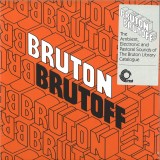
Rare musical magic from the Bruton library catalogue – ambient, spacey, pastoral and electronic. Music by John Cameron, Alan Hawkshaw, Fran-cis Monkman, Brian Bennett and more – all total masters of the scene. All very cool. All very now. All will sell very fast.
Over the last three decades Jonny Trunk has collected and written about library music. But he’s never had a great deal of luck with the Bruton catalogue. By this he means that he’s never stumbled across a massive stash, or lucked-out buying a huge run for practically nothing –that’s the kind of thing that used to happen in the 1990s and the early noughties if you were out there looking hard for library music. But he did manage to get about 25 in one hit about 20 years ago when the BBC shut down their “TV Training Department” near Lime Grove and also when a box of Brutons ended up being dumped at a hospital radio, and they didn’t want the records, so Jonny got a call.
There are lots of Bruton albums in existence – over 330 LPs in the vinyl catalogue, issued between 1978 and 1985. That’s a lot of music to wade through if you are looking for sublime modern day sounds. For many years now the “trophies” from the Bruton catalogue have been the beat or action driven LPs – the two Drama Montage albums (BRJ2 and BRJ8) have always been the big hitters, and others such as High Adventure (BRK2) too.
But Jonny has always found himself drawn to the lime green LPs, the pastoral, peaceful albums (The BRDs), which were full of the kind of gentle, lovely music that would turn up in Take Hart as Tony was paint-ing a woodpecker or a badger or an Autumn tree. The other Brutons he likes are the orange ones (The BRIs) simply because they are full of ex-perimental futuristic electronics and would remind him of 1980s ITV backgrounds. This LP series includes Brian Bennett’s cosmic classic Fantasia (BRI 10). Jonny has been knows to refer to this style of library music as “Krypton Factor library”, because it’s exactly what that strange but successful 1980s TV quiz show sounded like.
In recent years as interest in library music has expanded, we’ve watched
the price of a handful of Brutons really going through the roof - not the just the action and drama ones, but the more esoteric and experimental LPs too – like the BRDs and the BRIs. Jonny gets the vibe that people fi-nally want to hear this other more interesting and experimental side of the Bruton catalogue. So what better time than now to put together a compilation of such sublime period sounds.
Not only does this album bring together a set of fabulous cues that would cost the average man in the street a month’s wages (if the origi-nals were all wanted and if you could even track them all down), but it also chops out the need to listen to other tracks on library albums that are nowhere near as good.
The cues here all date from between 1978 and 1984. They come from the BRD, BRI, BRH, BRJ, BRM, BRR and BRs catalogues.
The composers are all legends within the genre, and here, were doing what great library composers do best – fulfilling a brief and utilising modern studio equipment to both commercial and beguiling effect.
The King & City reissue series continues with Paul Robinson's disco boogie jam Come On Sister. Moving from the Lovers sound of his early productions, his first solo recording was aimed straight at the blues, clubs and pirate stations of South London and beyond - a prolific artist on the rise.
Appearing as a 13 year old protegee drummer in The Simeons, recording for the legendary Freedom Sounds label out of Kingston; to forming the influential Roots / Lovers Rock outfit One Blood; then vocalist in the Nick Straker Band; and through to a 30 year career as "dubplate" producer / singer Barry Boom, Robinson is a man of talents and serious legacy.
This highly sought after debut, part of Neville King and Lee Laing's family of labels, followed releases in One Blood and productions for female Lovers groups Blood Sisters and Charisma. A pure disco boogie party cut, Come On Sister sees the Robinson family hit the Brit funk.
In label style, the flip is given the Discomix treatment, here by up and coming digger, dealer and producer, Bruno (Perfect Lives). Letting the horns, dub bass and drums build in anticipation before the keys and guitar join and it all drops to Robinson's vocals - Come On Sister.
»Sonic Healing« is the third full-length release by Martin Steer’s Bad Stream project. While the concept was started by one person in response to a singular situation, it fully came to life as a product of collective imagination. For the album, Steer sent a single guitar loop to twelve musicians from the extended network of his ANTIME label who improvised with the recording, which was later collaged by Steer into a single, 39 minute long track that stylistically ranges from feverish jazz to brooding ambient and abstract electronica. Together with the Iranian artist Arash Akbari’s vivid animations based on generative algorithms and real-time processing, »Sonic Healing« does not ask how one person can deal with turmoil in their life alone, but how we can create new forms of being together with art as a mediator.
Here’s a mantra, a slogan, channelled from the inner human being longing for the covid crisis to end. And yet this is a response to a much wider issue. A pandemic everyone is dealing with since years: Nationalist tendencies, the alienation that stems from it and the reality of borders. But, ‘die Welt ist ein Mitteinander’, the world is togetherness. We’re on one planet, all facing the same global problems and challenges. All sharing the same course through the cosmos. No way to escape. Tune in, abandon your ego and start chanting.
This is the 1973 solo album by Ghanaian percussionist Anthony Kwaku Bah, who was given the nickname „Reebop“ by American
jazz legend Dizzie Gillespie. He passed away early at the age of 39 in Stockholm in 1983, but before made himself a name for his
works with UK 70s rock heroes TRAFFIC and German Krautrockers CAN, amongst others. If you might expect here the prototypical
Afro Beat and Afro Rock you mostly know from British bands, you will be surprised that this is only one part of the deal. Yes, there
are African elements to be found, buried somewhere in this boiling cauldron where polyrhythmic grooves are the base for jazz
improvisations by the brass section, that range from naughty swing and bebop, to freaked out free jazz and enchanting soul jazz
the way it was popular in the late 60s. The arrangements are utterly lush with so much going on here in every aspect that you
would get lost if there was no trace of melody to be discovered, but there they are and they tell you fantastic stories of exotic
places that only exist in your wildest dreams. Kwaku Bah’s rhythm patterns grab you by the horns and pull you into a world of
their own. Hypnotical, irresistible, hot and vivid. The tunes combine jazz, soul, funk and each one is constructed like a self –
contained story. One could imagine these tunes being used as library music for 70s movies from action to romance. All pieces
though are characterized by the constantly pulsating rhythm. To avoid drifting into the field of insubstantial disco dance music,
the performances witnessed here were executed with the highest possible emotional intensity and dedication. Lay back, close
your eyes and float away on a raft of sound upon the wild river of grooves and melodies. Some haunting Exotica jazz passages
with a typical „jungle“ feel get thrown in for the good measure. There are even vocals in an African language hard to identify,
which create and even more mysterious atmosphere. This is just an introduction part of another powerful speed funk groover but
the vocals stay and make this a clear standout track. Saxophone and guitars seem to have a duel here. You will not sit still while
having this tune „Iphonohimine“ coming down on you like a thunderstorm. Blues, Afro Beat, Psychedelic Rock, Funk, it can all be
found in here and the band goes wild into an everlasting improvisation that deprives you of your breath. Can this record get even better? Do not ask, just enjoy what comes next. If you think that some melodies by the giant brass section sound a bit too catchy
just reach out beyond these harmony lines and find yourself in a thicket of grooves, pulsations, bits and pieces of melody with a
dense, sultry atmosphere. Some smaller parts might make you think of cruise ship big bands and white suits, but everybody will
soon drop these and dance in their underwear for the hot blooded power funk base of the tune called „Africa“, which will take
over one’s soul and set it on fire. So clean, so nice and so filthy and dangerous at the same time, this album is a masterpiece of it’s
style. The exciting and very sensual funk rock of „Lovin‘ you baby“ with crazy fuzz guitars and a dark and haunting approach is
another reason to kneel down when you put this record onto your turntable. Great clean lead guitars give it a latin garage rock
edge Carlos Santana would commit serious crimes for. If you love bands like OSIBISA, Eric Burden & WAR, GINGER BAKER
AIRFORCE, SANTANA, Miles Davis, all around 1969 to 1973, this is what you always wanted to listen to. Grab your copy now.
Linda “Babe” Majika’s insanely brilliant Don’t Treat Me So Bad is a tight six tracks of blistering electro-flavoured bubblegum and synth-drizzled solar-powered machine-funk. It has become increasingly hard to find, with copies currently moving for over £200. But this is definitely a case of eye-watering price equalling heart-thumping quality.
Once of the Hot Soul Singers, Don’t Treat Me So Bad was Linda’s debut LP as a solo artist. It was produced by Ace Mbuyisa of boogie-funk maestros Freeway and was originally released on Umkhonto Records in South Africa in 1988.
The enormous “Let’s Make A Deal” is probably the best known track here, and it’s definitely the best one if you ask us. Linda’s vocals drip with attitude over warm, breezy synths and an urgent, edgy electro beat to create a timeless club-ready bomb that sounds as fresh as ever. But the rest of the album is far from filler.
Opening track “Kunzima (Tabalaza Mjita)” instantly brings the sunshine vibes, strutting out the gate with that unmistakable South African steppers groove. It’s a deceptively simple song, with multiple instrumental elements arriving and taking leave with admirable restraint.
“It’s Our Home” is a powerful showcase for Linda’s vocals, enhanced by some life-affirming call and response backing vocals throughout. In fact they’re a joyous presence on the whole album. The insistent pipes and swirling, bubbling synths of title track “Don’t Treat Me So Bad” follow. A spacious proto-piano house banger that closes out the first side in phenomenal fashion.
Arriving as track two on the second side, “Unga B’Omthemba Umuntu” has the unenviable task of following the huge “Let’s Make A Deal”. It does the job with class, bringing the tempo down to a mid-paced tropical bounce with lilting harmonies and welcome traces of hi-life guitar. Wonderful stuff. “Playboy” is is another unbeatable head-nod groover rounds out the set wonderfully. That bassline high in the mix is to die for, and the chorus will make any dancefloor smile.
As ever, Simon Francis on mastering duties elevates this release, adding heft and elegance in all the right places with his customary deft touch. The memorable cover art, in which Linda appears straight out of the 1950s with her polka dot skirt and butter-wouldn't-melt pose, has been faithfully restored. But don’t let the innocent styling fool you - Don’t Treat Me So Bad is the work of one badass woman who can hold her own, and then some.
2020 marks the 30th Anniversary of ‘Bossanova’, the third studio album by Pixies.
The band continued to work with Gil Norton after collaborating to such success on their platinumselling second album ‘Doolittle’; this time choosing to record in Los Angeles over their native Boston
(the track ‘Blown Away’, however, was recorded at the Hansa Tonstudio in Berlin during a European tour in 1989).
Their third album in as many years, 1990 was a particularly fertile time for the band with Kim Deal also having success with The Breeders, who released their debut album ‘Pod’ just a few months prior.
Featuring the singles ‘Allison’ (a tribute to jazz and blues pianist Mose Allison), ‘Dig For Fire’ and ‘Velouria’, plus the first cover to feature on one of their albums, ‘Cecilia Ann’ (originally by The Surftones), ‘Bossanova’ showed a less primal side to the band, with surf and space rock rising to the fore. Lyrically, Black Francis is even more cryptic with a recurring sci-fi theme running throughout, which in turn influenced Vaughan Oliver’s classic planet design for the sleeve.
To celebrate ‘Bossanova’ hitting its third decade, 4AD are releasing a special red vinyl edition with the original 16-page booklet being reinserted, having previously only been available with the initial UK LP pressing.
Italian Disco remixer extraordinaire Moplen is back at the controls with a super sublime reworking of a wonderful and rare early 80's Leroy Burgess jam from the Salsoul vaults. 'Heartbreaker' is an underground classic, seeing Burgess back in the studio with longtime collaborator Sonny T. Davenport and Kiss FM mastermixer and producer Shep Pettibone on mixing duties. A tight and flawless early 80's production sensibility and the incredible vocal arrangements and lyrical performance of Leroy Burgess make this one a definite essential in any DJ's box. This is the real deal. If you dig that post-Disco electronic sound this one is for you, simply perfect in every way and quite tough to track down these days in its original form with copies reaching high figures on the second hand market. Needless to say, Moplen injects his own personal style into his remix and adds his unique flair creating an essential new version of this classic on the B-side. Always understanding, respectful and fresh, Moplen pumps 'Heartbreaker' in all the best ways, crafting a drum and bass heavy DJ version and new arrangement that you will be hearing for many years to come! Disco bliss.
This remix and reissue is 100% supported by Leroy Burgess, who dug Moplen's new vision of this 1983 classic. Fully licensed, sanctioned and released by Above Board distribution and Salsoul Records, 2020. Accept no imitations!
Wrapping up the single release series from Carlton Jumel Smith's album "1634 Lexington Ave.", comes the deep beat ballad "Help Me (Save Me From Myself)". Progressing from moody minor keys towards the bittersweet hopefulness of the chorus, the track sounds like fell from Menahan Street Band's debut sessions with Charles Bradley and flew across the pond to soggy Helsinki, where Cold Diamond & Mink nurtured it to it's current glory.
The track starts up in classic hip hop soul style, with open drums and cinematic Rocky horns. But after the intro, when the ghost-like piano notes hit, is when the song really gets going. Carlton delivers one of his best dark-end-of-the-street vocals, matching his Timmion debut "I Can't Love You Any More". Tuomo "Pratt" Prättälä's haunting background vocals seal the deal, lifting the chorus to seventh group soul heaven.
Whether you're completing your Carlton single series with this gem or just getting your first whiff of this contemporary soul master, we salute you.
Minyo Crusaders rework historic Japanese folk songs (min'yo) with Latin, African, Caribbean and Asian rhythms for their debut album 'Echoes of Japan'.
Releases from Ryuichi Sakamoto, Haruomi Hosono and Midori Takada have re-ignited global interest in Japanese music and 'Echoes of Japan' marks the arrival of a big band like no other.
'For Japanese people, min'yo is both the closest, and most distant, folk music' explains band-leader Katsumi Tanaka: 'We may not feel it in our daily, urban lives, yet the melodies, the style of singing and the rhythm of the taiko drums are engrained in our DNA'. Initially indifferent to min'yo, a tragic event in recent Japanese history set Tanaka on his current path: 'Following the Tohoku earthquake of 2011, I reflected on my life, work and identity. A fan of world music, I began searching for Japanese roots music I could identify
with. Discovering mid-late 20th century acts Hibari Misora, Chiemi Eri and the Tokyo Cuban Boys, I was
captivated by their eccentric arrangements and how they mixed min'yo with Latin and jazz.'
Originally sung by fishermen (Kushimoto Bushi; Mamurogawa Ondo), coal miners (Tanko Bushi) and sumo wrestlers (Sumo Jinku), these songs deal with topics such as the returning spirits of ancestors (Hohai Bushi), Japan's smallest bird (Toichin Bushi) and a bride's love for her husband's pockmarked face (Otemoyan).
Minyo Crusaders are one of the most hyped acts on the Tokyo music scene that went national in 2018 through festivals such as Fuji Rock. The band features veterans of the Tokyo roots music scene such as bassist DADDY U (Ska Flames), keyboardist Moe (Kidlat), sax player Koichiro Osawa (Matt Sounds/ J.J. Session), Yamauchi Stephan (J.J. Session), percussionist Mutsumi Kobayashi (Banda de la Mumbia), conga player Irochi (Cubatumb) and vocalist Meg (DJ collective Tokyo Sabroso).
- Wild blend of Japanese folk music with cumbia, boogaloo, Ethio jazz, Afro funk + more
- Ry Cooder, Mario Galeano (Ondatropica/Frente Cumbiero), Clap! Clap! are all fans
- European touring plans for autumn/fall 2019
- Includes Japanese lyrics + English translations
- Lacquers cut @ The Carvery
- A1: Let’s Go ‘Round Again
- A2: Whatcha' Gonna Do For Me
- A3: For You, For Love
- B1: If Love Only Lasts For One Night
- B2: Miss Sun
- B3: Shine
- C1: Kiss Me
- C2: Catch Me (Before I Have To Testify)
- C3: Into The Night
- D1: Wasn't I Your Friend
- D2: Love Gives, Love Takes Away
- D3: Growing Pains
- D4: Love Won’t Get In The Way
• Widely and rightly regarded as one of the best ever soul and funk bands, the now legendary Average White Band tore-up the rule book
and conquered the US, UK & International charts with a series of soul and disco hits between 1974 and 1980.
• AWB’s repertoire has been a source of inspiration and influence for many R&B acts and they are one of the most sampled bands in
history, remaining relevant today, continuing to reach new generations of younger audiences.
• Snoop Dogg, Fatboy Slim, Ice Cube, Puff Daddy, TLC, Rick Ross, will.i.am and Mark Ronson amongst countless others, have all borrowed
sections of their grooves.
• After the success of 1979’s ‘Feel No Fret’, the band went into the studio record their next album and in 1980, ‘Shine’ was released with
the worldwide Chart and Club hit ‘Let’s Go ‘Round Again’, reaching #14 in the UK Albums Chart. However, there was a back-story
behind the album’s release, which Alan Gorrie and Hamish Stuart have annotated in the LP notes.
• To celebrate the 40th Anniversary of ‘Shine’, AWB (past and present) have reconfigured the album as they had originally intended,
bringing in the four tracks that they had to ‘leave’ behind when they changed record labels. In addition, due to separate behind the
scenes situations, two further tracks were unable to be included on the album and remained unreleased until this century.
• ‘On The Strip – The Sunset Sessions’ is what ‘Shine’ could have been; a slightly longer 2LP set, heralding in the new decade.
• The album includes the singles ‘Let’s Go ‘Round Again’ and ‘For You, For Love’, as well as ‘Whatcha’ Gonna Do For Me’, which later
become synonymous with Chaka Khan, who recorded it the following year, having sung on an early-take for AWB, when they were
recording the album. ‘Miss Sun’ makes it long-awaited inclusion on the album for which it had been recorded until fate dealt another
hand, with permission being withheld then appearing as the lead track on Boz Scaggs’ ‘Hits’ LP; reaching #14 on the Billboard Hot 100.
• 40 years on, Average White Band still ‘shine’ brightly and remain highly influential for today’s groove-merchants and EDM DJs.
- A1: Oneness Of Juju - African Rhythms (Album Version)
- A2: Oneness Of Juju - Follow Me
- A3: Oneness Of Juju – Nooky
- B1: Oneness Of Juju – River Luv Rite
- B2: Roach Om – No Name #3 / Love Is… / My Nigger & Me
- B3: Juju – Nairobi / Chants
- C1: Oneness Of Juju – Chants / Don’t Give Up
- C2: Oneness Of Juju – Be About The Future
- C3: Juju & The Space Rangers – Got To Be Right On It (Original 45 Version)
- D1: Oneness Of Juju – Space Jungle Funk
- D2: Oneness Of Juju – West Wind (Previously Unreleased)
- E1: Juju & The Space Rangers – Plastic (Original 45 Version)
- E2: Plunky & Oneness Of Juju – Every Way But Loose (Original Version)
- E3: Okyerema Asante Feat Plunky – Sabi (Black Fire Mix)
- F1: Okyerema Asante Feat Plunky – Asante Sana
- F2: Oneness Of Juju – Bootsie’s Lament (Unreleased Version)
Strut kick off a brand new deal with the seminal independent black jazz and soul label Black Fire in May with 'African Rhythms 1970-1982', a comprehensive 2CD / 3LP compilation of Oneness Of Juju, led by Plunky J. Branch. Tracing their career from the band's earliest work in 1970 with South African exiled jazzman Ndikho Xaba in San Francisco, the compilation covers the band's journey to New York's loft jazz scene, forming Juju and releasing two landmark albums of hard-hitting percussive jazz on Strata-East. "I saw myself as a cultural warrior," explains Plunky. "We studied about Africa and tried to infuse our music with an African spirit." Moving back to his hometown of Richmond, Virginia during the mid-'70s, Plunky drew in a superb new group of musicians and vocalists and created the band's new incarnation, Oneness Of Juju, retaining the African influence but fusing his sound with funk and R'n'B on the classic 'African Rhythms' album. "We realised that, if we put a backbeat to the Afro-Cuban rhythms, people in Richmond and Washington D.C. could be drawn into it; it didn't change anything about our message." The change would lead to a series of enduring soul-jazz classics on Jimmy Gray's Black Fire label, including 'River Luv Rite', 'Plastic' and 'Don't Give Up' and their biggest crossover international hit, 'Every Way But Loose' in 1982, later famously remixed by Larry Levan. The band received renewed interest in their music during the mid-'80s as Washington D.C.'s go-go innovators cited the band as a major influence and rare groove DJs revived their albums for London dancefloors.
Re-Issue on Extreme Eating. Housed in a gatefold sleeve designed by Steve Lippert, mastered by Matt Colton at Alchemy. Everything else was done by Sleaford Mods. From Original Press Release 2015 "Key Markets was a large supermarket bang in the centre of Grantham from the early 1970's up until around 1980," explains Jason Williamson. "My mum would take me there and I'd always have a large coke in a plastic orange cup surrounded by varnished wood trimmings and big lamp shades with flowers on them. Beige bricks with bright yellow points of sale and large black foam letters surrounded you and this is why we called the album 'Key Markets'. It's the continuation of the day to day and how we see it, the un-incredible landscape." "The album was recorded in various periods between summer 2014 through to October of that year. We worked fast as we normally do, the method was the same as the other albums and like the other two, the sound has naturally moved itself along. 'Key Markets' is in places quite abstract but it still deals heavily with the disorientation of modern existence. It still touches on character assassination, the delusion of grandeur and the pointlessness of government politics. It's a classic. Fuck em." 1/Live Tonight 2/No One's Bothered 3/Bronx in a Six 4/Silly Me 5/Cunt Make It Up 6/Face To Faces 7/Arabia 8/In Quiet Streets 9/Tarantula Deadly Cargo 10/Rupert Trousers 11/Giddy on the Ciggies 12/The Blob
The late engineer and producer Paul C’s fingerprints are all over this single from Ultramagnetic MC’s, perhaps the defining release of their career. While earlier records gave notice of their strange and unique talents, they were loveably messy affairs. This, however, is the real deal, as polished as their early sound would ever be.
‘Give the Drummer Some’ grabs a fistful of different elements – from James Brown, Dee Felice Trio and James Brown – but bends them to its own purpose. This is a song with a momentum of its own and endlessly quotable lyrics. One of which, of course, was sampled by The Prodigy – huge hip-hop fans – for ‘Smack My Bitch Up’ in 1997. The now hugely rare 7” of ‘Give the Drummer Some’ edits this out to make it more radio-friendly, but this reissue reverses that cut, giving you the original lyrics. If anyone knows why Kool Keith also changes the word ‘rappers’ to ‘monkeys’ for that edit, answers on a postcard…
The brilliant B-side harks back to the time when every group had a song dedicated to their DJ. ‘Moe Luv’s Theme’ sees Kool Keith at his most straightforward, singing the praises of the turntable skills of Moe Luv. It would be throwaway were it not for the effortless repurposing of Jackie Robinson’s oft-sampled ‘Pussyfooter’. That – and the presence of one of the world’s great MC’s at the height of his powers – elevates it far above a footnote.
Another West-End sure-shot! This sublime piece of early electronic Boogie has always worn it's "classic" badge with a relaxed sense of pride since it's release in 1982, perhaps it's the languid synthed out groove supplied by studio maestros Nick martinelli & David Todd or Brenda Taylor's sublime vocals reminding us all that the game of love is always a 2 way street that are to blame
Whatever it is, this is a solid, classic slice of Disco gold, more on the down to mid-tempo tip but still big enough to keep the dance-floors packed from the Garage to the Loft & beyond with ease! The production simply sounds years ahead of it's time (still does!) & it has the FUNK in bucket-loads, this is as essential as it gets, the real deal. Featured here are all the original mixes that were on the 1982 pressing (Yes! There's a dub mix!).
Re-mastered, re-pressed & re-released for 2015 with all original West End Records label artwork intact. Done in conjunction & with the permission of all right holders.
After years of searching for the elusive sensation of heart-rending beauty, Avondlicht releases his debut album on 3 April, 2020 on all digital platforms. The LP will be out on 8/4.
Hyperromance is the culmination of an emotional and geographical journey, as Belgian producer Matthias Dziwak sought to find and examine idealised moments of true romance within the less-than-romantic reality of existence.
Having already achieved a great deal with his initial run of EPs for labels like PIAS, Fog Mountain and Unit Delta Plus, Antwerp-based Dziwak became obsessed with the concept of Hyperromance – “a moment or idea so heavily romanticised that it seems impossible to be really experienced.” The melancholic feeling it sparked in his heart set him off on a journey through Argentina, Chile and Uruguay, via a month-long stay in Amsterdam and finally to settling for six months in Portugal. Throughout this time he made field recordings and began writing pieces that would feed into the finished album. Along the way he found a full spectrum of moments that allowed him to view the world in a truly romantic way, from the majesty of the Andean mountains and the snow falling on the Amsterdamse Grachten to encountering love in Lisbon. At other times he found himself lost, adrift and heartbroken, pulled back to Earth, as is the cyclical nature of the human experience.
Musically, Hyperromance’s grapple with day-to-day reality and rose-tinted fantasy is embodied through the contrast between organic instrumentation and high-definition electronics. Dziwak began writing his songs as simple piano pieces, which then transferred to a staple of synths and sound processing as they became more wholly defined. Sonically, the sound sweeps from modern classical and bombastic electronica to evocative ambient, even touching on jungle and techno along the way. Rather than being defined by genre associations though, Hyperromance is shaped by the swooning beauty of its composition, as the music pulls you in and out of richly rendered moments of joy and pain following Dziwak on his personal journey of truth and beauty. With visceral life experiences woven into the fabric of the record, Hyperromance is expressive on the most intimate level. It’s a record that dazzles with searing bright wonderment and casts creeping shadows as the time passes – a journey as nuanced as life itself, elevated by romance and grounded by reality, beautifully told by Avondlicht.
If you’re into funky sixties or seventies B-movies soundtracks, Mustang Force is what you need! Composed of 14 tracks recorded live and composed by Sébastien Blanchon (drums, rhodes, organ, clavinet, synthesizers) and Emmanuel Marée (drums, guitar, bass,
percussion), Hollywood Hustlers is an imaginary soundtrack inspired by all these movies. 14 songs recorded live, illustratring scenes of pursuits, deals, investigations. An album which will undoubtedly delight fans of funk and rare groove.
Rising Manchester star FINN takes the helm for the next release on Ruf Kutz with two hyper-real contemporary raw bangers crafted for maximum emotional impact backed with remixes from RK big guns RUF DUG & GLOWING PALMS.
Even though he's a comparative youngun, this is by no means Finn's first time at the rodeo - he's a label boss, an NTS pioneer, a Boiler Room veteran, a Defected Records Old Boy and also holds down the coldest twitter account on the information superhighway. It's a big deal to us that we managed to snare him for a release on his ascent to whatever accelerated dimension he is headed for.
Purposely conceived as raw club tracks after a heavy Paul Johnson listening session, TRICK TRICK and BELLE THEME contain many of his beloved hallmarks while also showcasing new creative pathways - the title of the EP surely alluding to what Finn is about to pull from up his sleeve...
Opener TRICK TRICK is many things all at once - a raw turbo-jacker, a hugely emotive bassline roller, a super-fresh club banger that has few elements, yet uses them with such efficiency it's impossible not to be drawn up into its vapour trail.
BELLE THEME winds the pace & harmonic tension up with manic abandon as we find ourselves in Finn's familiar 130-plus territory but while the tempo is slamming he somehow manages to drape everything in a lacy coating, as if we were playing a bonus level from a lost Studio Ghibli PS1 beat-em-up.
Back in the real world we flip the record for 2 textbook Ruf Kutz remixes. First up label boss RUF DUG guts Trick Trick and serves up the fillet on an unashamedly tech-house bed, purpose-built for DC10 circa 2009 - meanwhile Ruffy's partner in crime GLOWING PALMS dips into his secret stash of double doves and takes Belle Theme for an unforgettable night out in a Burnley warehouse.
Of the release Ruf Dug says "It's been a big thrill to follow Finn"s development over the years since we first met. I've been hoping to collaborate with him for quite a while so for it to be finally happening especially at this stage in his career is a genuine mega buzz!"
Finn says: "Been a keen Ruf Kutz fan since Rachel's Team in 2016! So happy to contribute to the label with two rough (ruf) and ready club tracks - late night/early morning hymns"